
Riding the Wind and Waves: Farmer Sisters of the Western Sichuan Plain
At the end of 2021, while I was still working at an internet company in Shanghai, I came across a recruitment notice from Foodthink for its “Ecological Farming Internship Programme”, and it was as if something had stirred within me.
Once my application was approved, I chose Yujian Farm in Meishan, Sichuan, as my internship destination. Unluckily, just before I was set to leave for Sichuan, Shanghai went into lockdown. But there was something I absolutely had to do waiting for me, and two months was not exactly unbearable.
In late September last year, just as I was about to head from Chengdu to Meishan, the area was once again placed under lockdown due to the pandemic. Fortunately, Auntie Chen Ying at Yujian Farm helped me get in touch with Hu Xuemei Ecological Farm in Pidu District, and that is how my first farm experience began.
I. I. A Work-Exchange Stay at Xuemei Farm
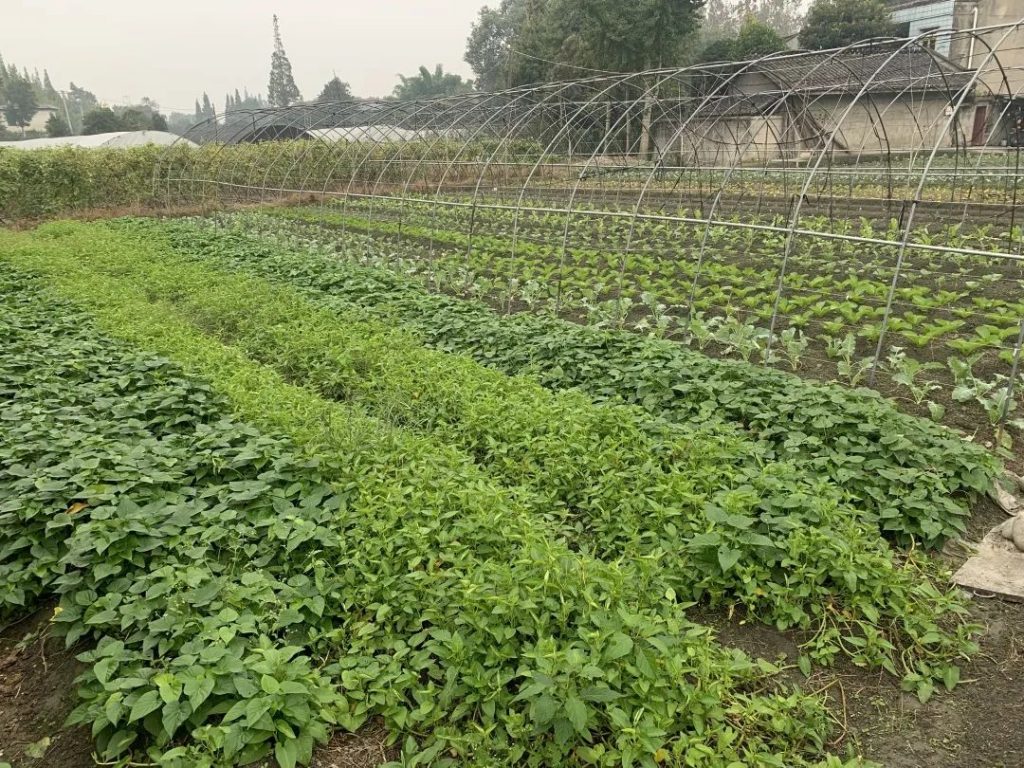
Sister Xuemei’s family currently has six mu of land (roughly an acre), tended by just the husband and wife — a family farm in the truest sense.
The natural surroundings of the farm are wonderful. Just over a hundred metres behind the house, a large river flows briskly by. It is called the Baitiao River, one of the drinking-water sources for Chengdu’s urban area. Both banks are lined with water-retention forests and wetlands, and an ecological greenway winds downstream along the river — a perfect place to cool off and take a summer stroll.
Unfortunately, the temperature dropped the moment I arrived. With no warm clothes in my backpack, I had no choice but to borrow one of Sister Xuemei’s floral padded jackets. Once I threw on this “battle armour”, as long as I didn’t open my mouth, almost no one could tell I was from out of town.
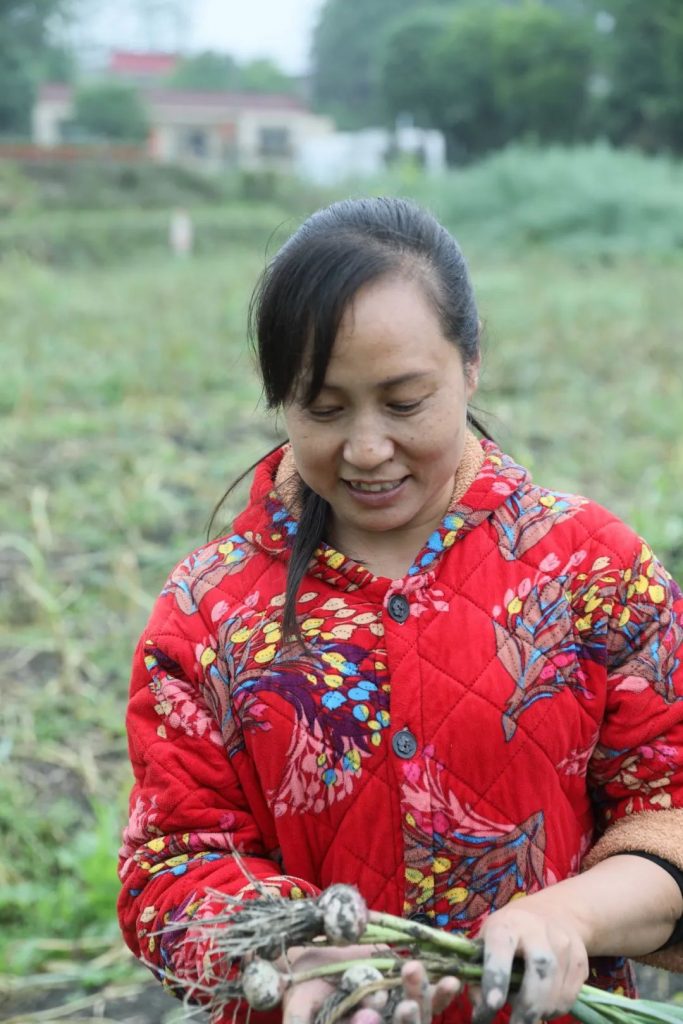
Sister Xuemei worried that I, as a northerner, might not get used to the local food, so she handed over the job of cooking all three meals a day to me. Only after finishing my proper duties as the family chef would I head out to help in the fields.
The most fun part was Wednesday and Sunday, the vegetable-preparation days. Sister Xuemei and I would set off early in the morning with baskets to gather the vegetables, then pack and send out the parcels in the afternoon. Each vegetable box held four or five varieties.
Most orders come from customers in Chengdu, and the delivery distance is very short, so parcels sent out in the afternoon are delivered by the following morning. That means they use cardboard boxes and paper bags for packing, with virtually no plastic and no overpacking. Some leafy greens aren’t even put into paper bags — they are simply placed with the other vegetables, packed in so tightly that the box fills perfectly, which is enough to stop any rattling or bruising. I truly admire these packing techniques.
Sister Xuemei, just past forty, is a remarkably capable rural woman. What makes her admirable goes beyond her organic growing skills and her management of the farm. On top of the daily demands of farm work, she actively takes part in exchange events on environmental protection and composting techniques.
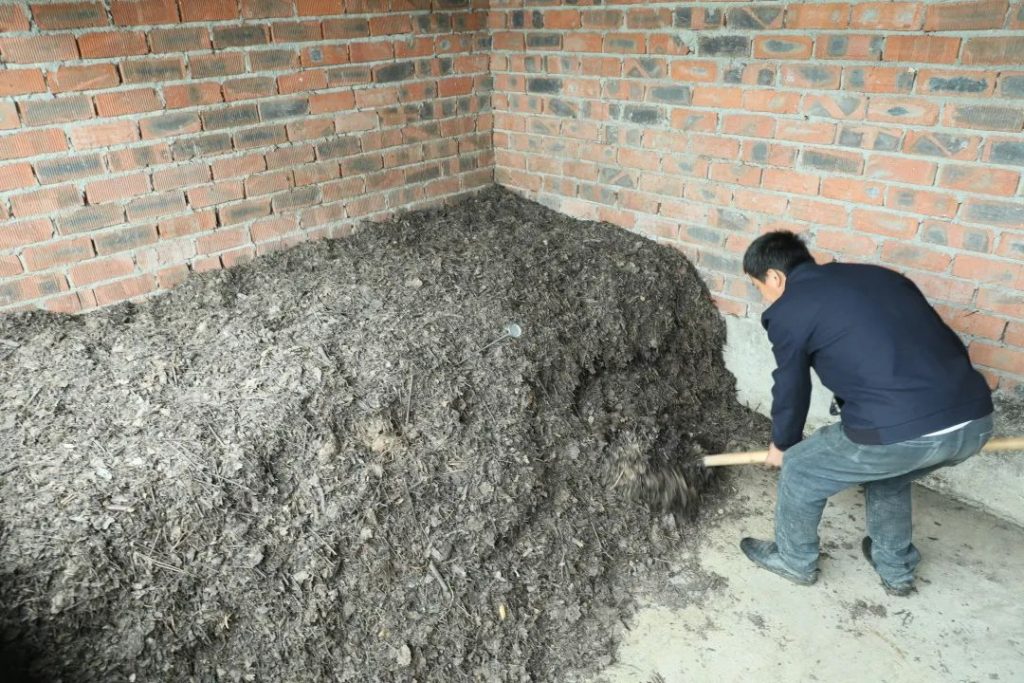
I happened to arrive just in time to catch Xuemei Farm making a compost heap: oil cake and rice bran, mixed with water at a 10:3 ratio, turned once every morning. The temperature in Chengdu at the time was about 17 degrees, and by the third day of composting, the internal temperature had already climbed to 50 degrees. When I went to turn the heap on the fourth morning, mycelium had already appeared on its surface — truly remarkable. After a while longer, the nutrients transformed by these microorganisms would be ready to be returned to the fields.
II. Autumn and Winter at Yujian Farm
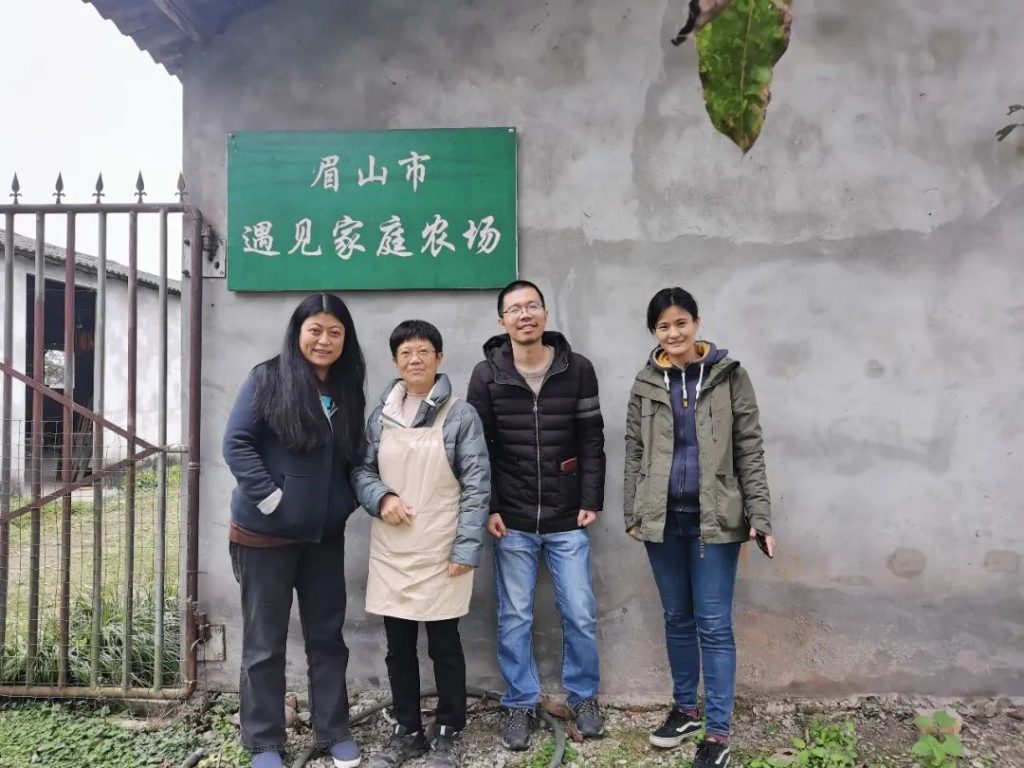
Once I was able to make the trip in mid-October, I bid farewell to Sister Xuemei and arrived at Yujian Farm in Meishan. After truly living here for two months, my understanding of farm life deepened considerably.
Those first days at the farm fell right in the local autumn-sowing season. My first task was to clear a patch of grassland alongside the farm’s year-round farmhand, Master Wang (in these parts, men who do manual work are addressed as “Master” followed by their surname).
That patch was overrun with purple nutsedge and alligator weed, both weeds whose roots are extremely difficult to clear out completely. The tubers of purple nutsedge are shaped like jujube pits, with fine rootlets on the surface, and are often encased in clods of earth — unless you break the clods apart, it is nearly impossible to pick out every fragment from the ground. Alligator weed (colloquially called “revolution grass”) has roots that are easy to recognise, but they are very easy to sever while turning the soil. The tiny broken-off pieces left in the earth look like a scatter of seeds and will readily sprout and grow again.
Master Wang and I spent two or three days before we finally cleared this patch of grassland, which was less than half a mu. Auntie Chen Ying tried planting green manure such as clover on it. The green manure did indeed sprout, but the purple nutsedge and alligator weed grew just as fiercely — it seemed the roots had not been completely cleared out after all.
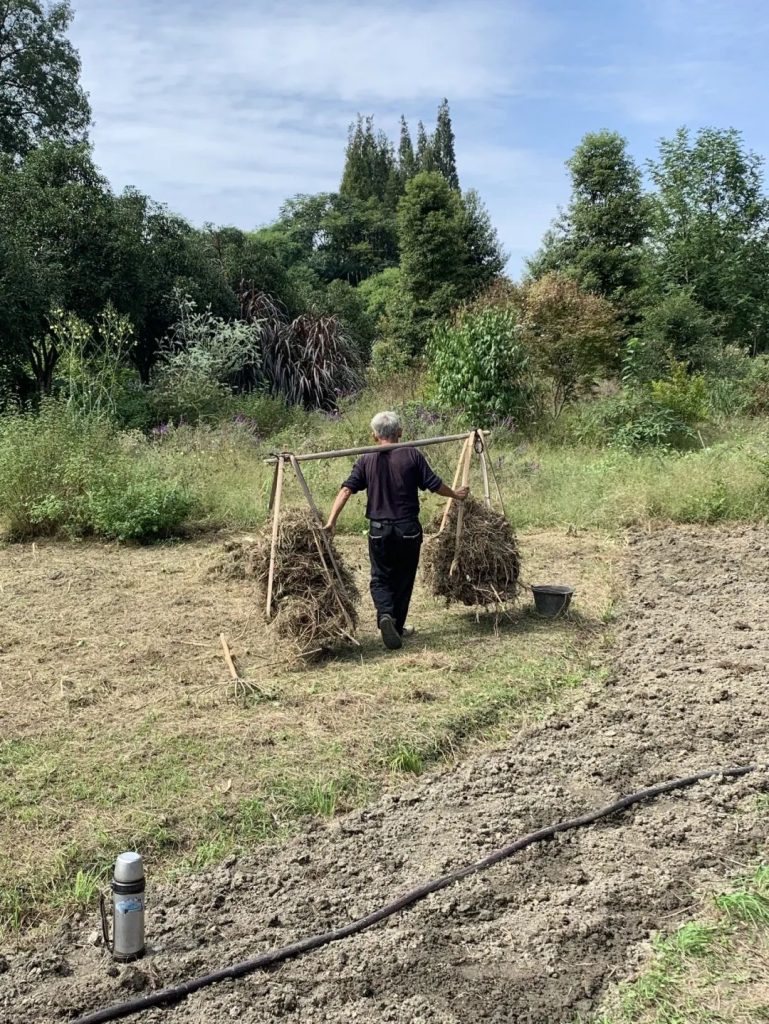
The second round of “reclaiming” was the open ground between the rows of mulberry and cherry trees. Alligator weed had taken over most of this plot. For every metre or two of soil turned over, the weed roots we picked out would pile up into a little mountain. Master Wang carried them out trip after trip on a shoulder pole with baskets at either end, saving them for the compost. Once we had cleared the ground, we sowed broad beans, peas, barley and rye, and strung netting over the plot to keep the birds from pecking at the seeds.
The third round of weed-root digging was in the vineyard. Late autumn into early winter is when you top-dress the fruit trees. We first cut back the weeds in the rows and the furrows between them, then went through and pulled out the alligator weed roots. After that, we dug a trench half a metre deep on either side of each grapevine with a hoe. We filled the trenches with compost, covered it over, and watered the whole thing with water drawn from the duck pond. This not only enriched the soil but also gave us the chance to fill the duck pond back up with fresh water for the ducks.
Before the cold really set in for winter, we gave the strawberry field a thorough going-over with the hoe to clear the weeds, and while we were at it, stripped the old leaves from each plant. After giving them a good soaking, we waited until the ground was firm enough to walk on. Then Auntie Chen Ying and I laid two-colour plastic mulch over each strawberry row, slit small openings in it, and pulled the young plants up through the gaps.
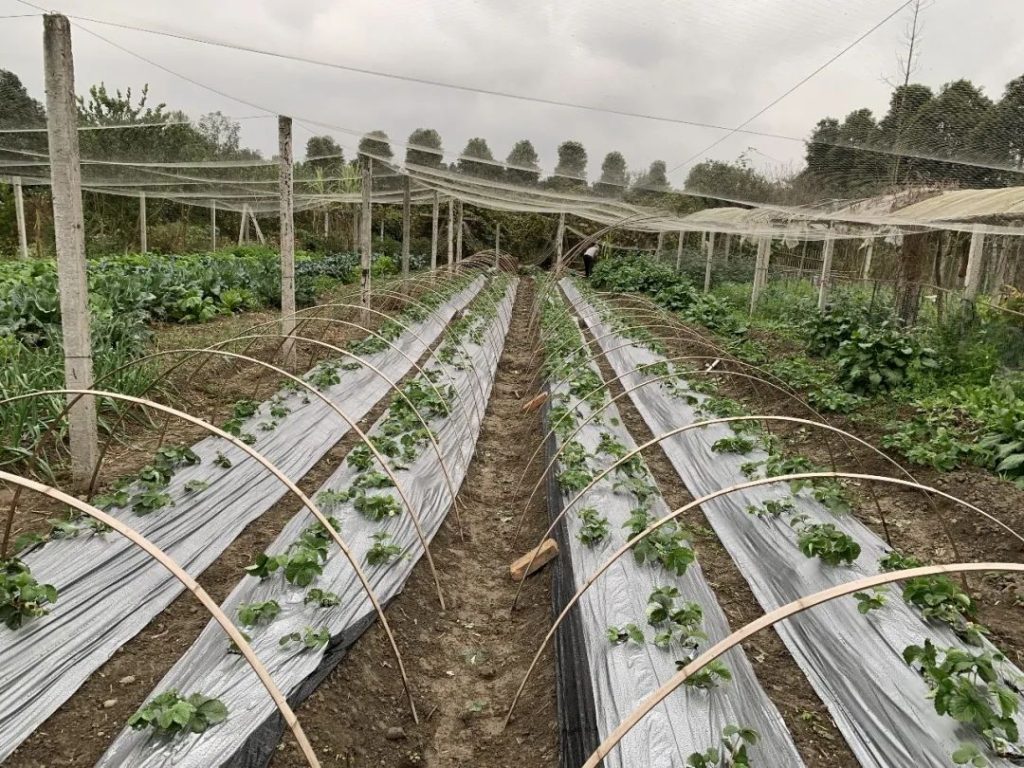
I have always been concerned about the extensive use of plastic mulch in agriculture. While we were laying the mulch and setting up plastic tunnels over the strawberries, I asked whether there were any other materials that could be used instead. I had heard that straw could also be used to insulate the plants.
Auntie Chen Ying told me she had tried straw as well, but insects would burrow out of it and eat the strawberry fruit. The plastic mulch has many advantages: it keeps pests out, retains warmth and moisture in the soil, and its smooth surface lets water drain away easily, so the parts of the strawberries that rest on the mulch don’t rot from being too damp. She had also thought about reusing last year’s film, but the slits cut in it didn’t line up with where this year’s plants were positioned, so it simply couldn’t be used.
I think that if my own farm ends up unable to avoid using plastic mulch in the future, I will have to find a way to get more reuses out of it.
III. The Path to Self-Sufficiency Around the Table
What first drew me to Yujian Farm, apart from its name — Baicaoyuan (“Hundred Herbs Garden”) — was Auntie Chen Ying’s exacting standards on where food comes from and her ambitious vision of complete self-sufficiency.
Apart from the occasional purchases from fellow farmers — flour and sweet potatoes (from Liangliang Farm, Jintang County) and apples (from Li Lijun, a fellow farmer in Shandong) — nearly everything on the farm’s table is homegrown grains and vegetables, and even everyday seasonings and snacks are made in-house. Having experienced it all firsthand, I admire her all the more.
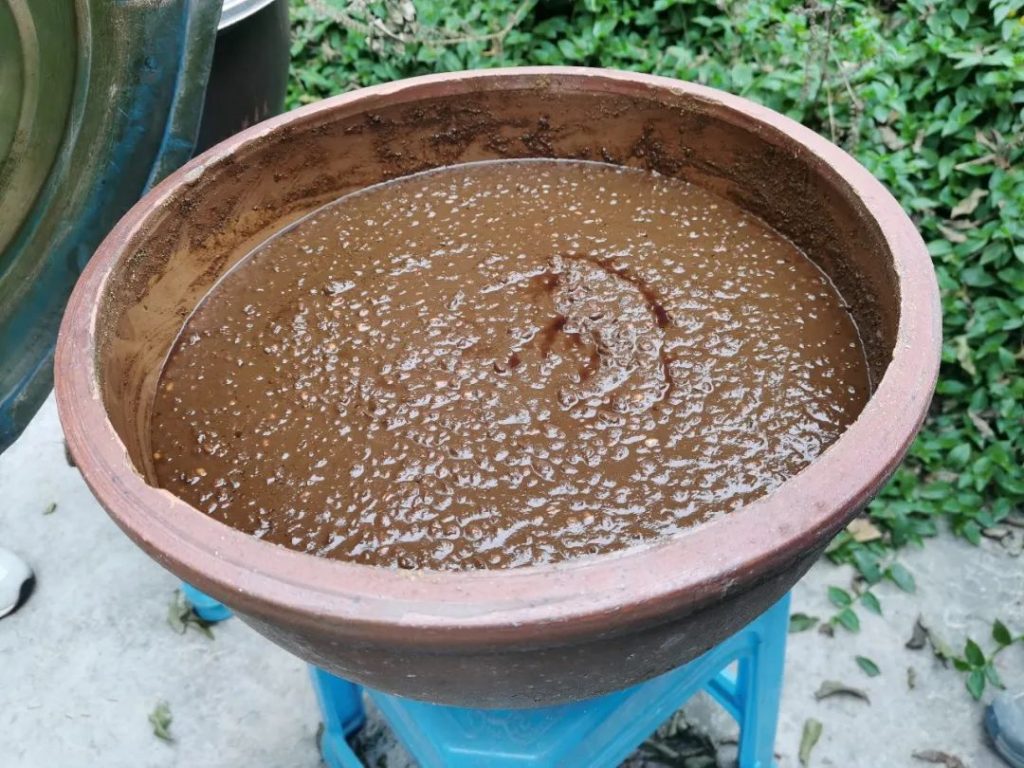
In the five or six large jars in the farm’s front courtyard, various pastes are being sun-cured: fermented soybeans, sweet wheat paste, and fermented wheat paste, among others. They need to be watched and stirred regularly so they don’t dry out or get too wet. Stirring is no light task. One time I helped turn three jars of paste, and it took the entire morning. Before the paste goes into a clean jar, it must be sterilised with high-proof baijiu to ward off contamination from unwanted microorganisms. Scooping the paste from the jar into a narrow-mouthed pot is an even greater test of patience. I had to hold my breath, keep my arm steady, take a few extra deep breaths to keep from getting impatient — by the end I felt all my temper had been ground away.
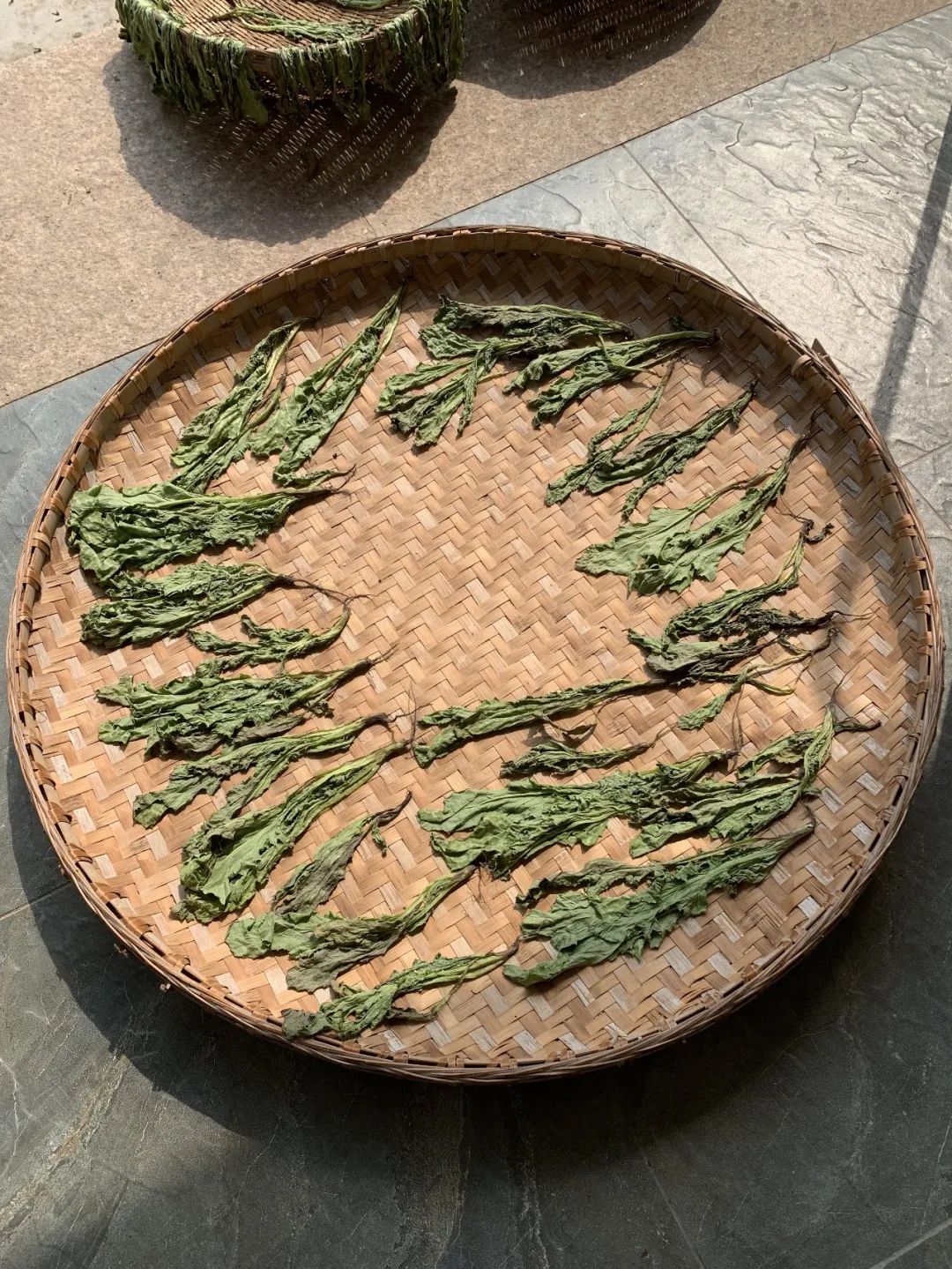
At Yujian Farm, any fruit and vegetables that can’t be used up can be sun-dried. Leafy greens go without saying, but long beans and cauliflower can also be boiled first and then dried in the sun for storage. When these dried vegetables are rehydrated and make their way back to the table, they carry an entirely different texture and flavour.
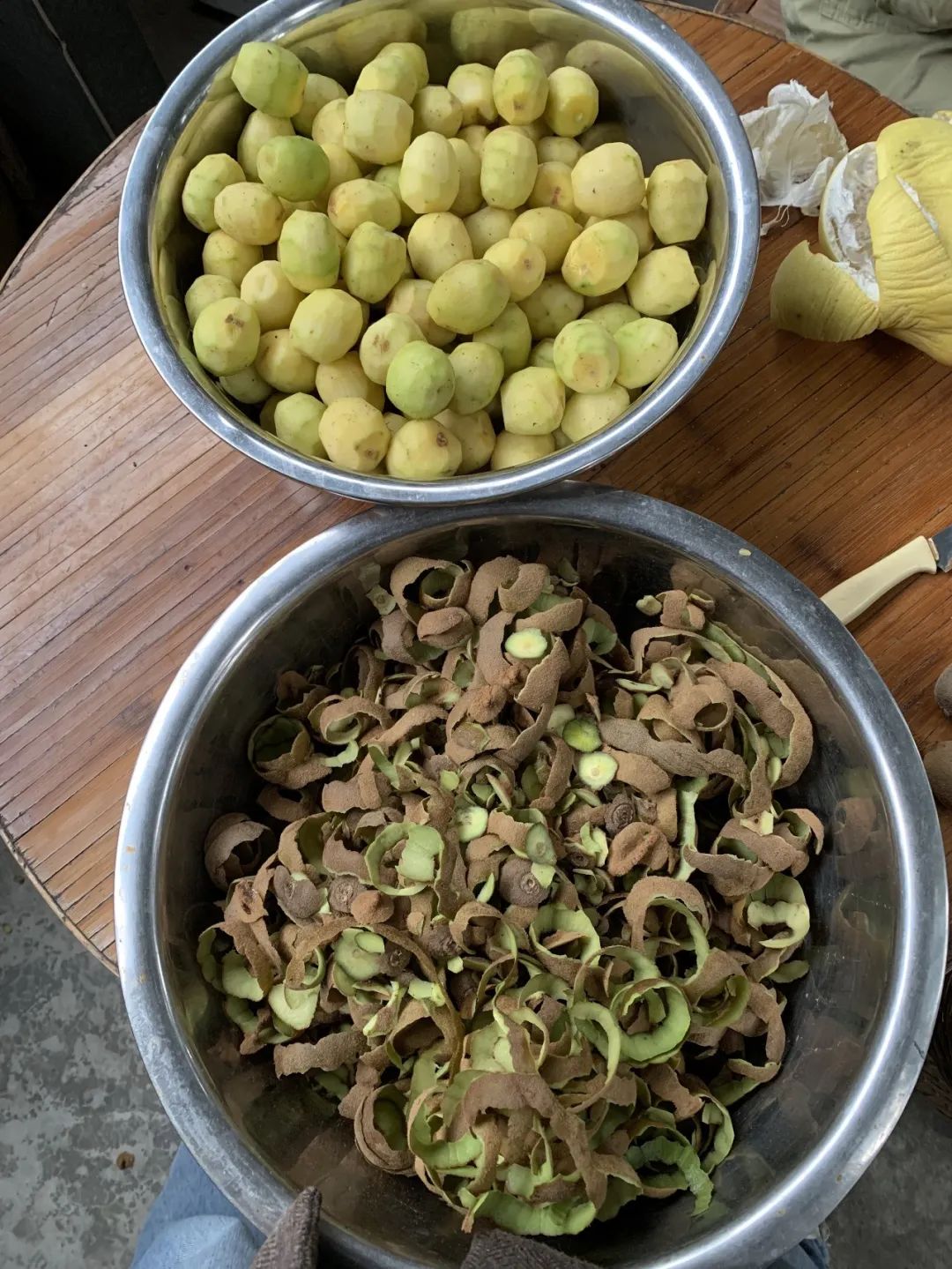
Fruit can’t simply be handled by sun-drying. The farm has acquired a small dehydrator, and the strawberries left over from spring, the peaches we can’t finish in summer, and the last kiwis of autumn are all sliced and dehydrated for everyday snacking. This year, when we were making dried kiwis, I ended up in charge of the peeling stage. Rainy days, when you can’t work in the fields, are perfect for sitting under the courtyard canopy and getting through the peeling.
The person who does most of the cooking at the farm is Uncle Zhou. He always asks me, “Little Li, do you ever feel like we eat too little meat?”
I don’t think it’s that little. Nearly all the poultry we eat is raised on the farm, and Uncle Zhou occasionally buys locally farmed freshwater fish and pork ribs to cook with. At that frequency, it fits the “eat less meat, eat good meat” way of eating perfectly.
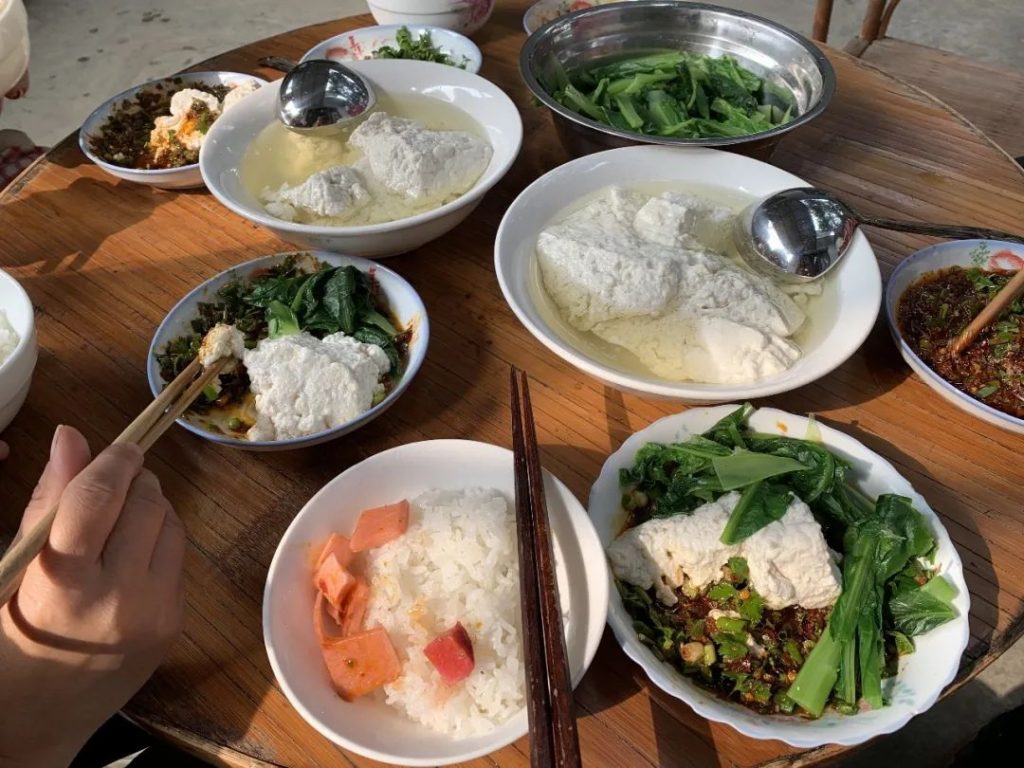
And what’s more, whenever Uncle Zhou has the time, he makes tofu pudding and says to me, “Don’t you taste the difference from the tofu pudding you get outside? This is made from our own heritage soybeans!”
I often find myself wondering what kind of drive it takes to hold food quality to such exacting standards. Of course, there are health and well-being considerations at play: Auntie Chen Ying and Uncle Zhou are about the same age as my parents, both at fifty — the traditional age of “knowing what Heaven has decreed” — with a stable household income, at exactly the stage of life when one has the time and energy to pursue quality.
But I think it is the farm’s commitment to carrying forward traditional wisdom, and its steady, grounded rhythm of life, that is the real reason such a purely organic way of living can be sustained.
IV. Epilogue
In 2022, a year when the outside world was beset by one incomprehensible event after another, I fell into a kind of political depression over suffering in distant places. I was not sure how to find my footing in an era like this, but these two farm internship experiences made me dare to imagine new possibilities.
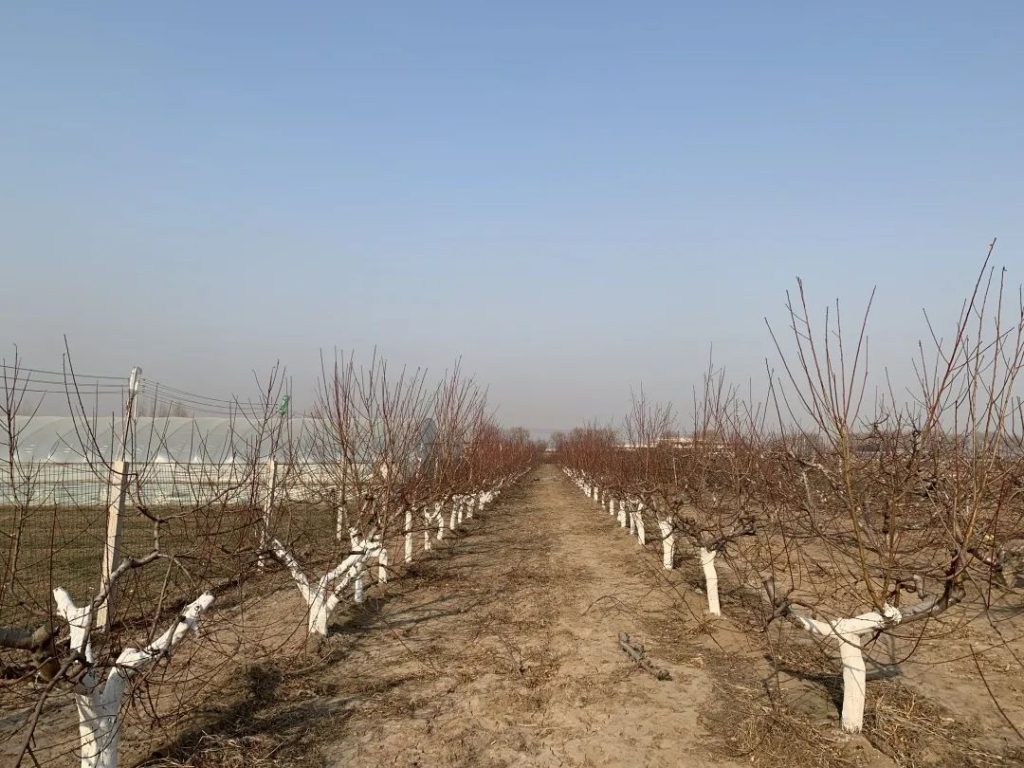
Now that my internships are over, I have returned to my hometown in Hebei, an utterly ordinary village on the North China Plain. Every household in the village farms conventionally, and my parents run a five-mu orchard there.
At first, I didn’t expect my family to understand my decision to start an organic farm. But my time at these two family farms in Sichuan showed me that family support doesn’t have to rest solely on shared beliefs — parents often back their children out of sheer love. If what I’m holding on to can withstand the test, then differences in outlook will gradually smooth out, too.
Now I have started looking for land for the farm — probably not too far from home.
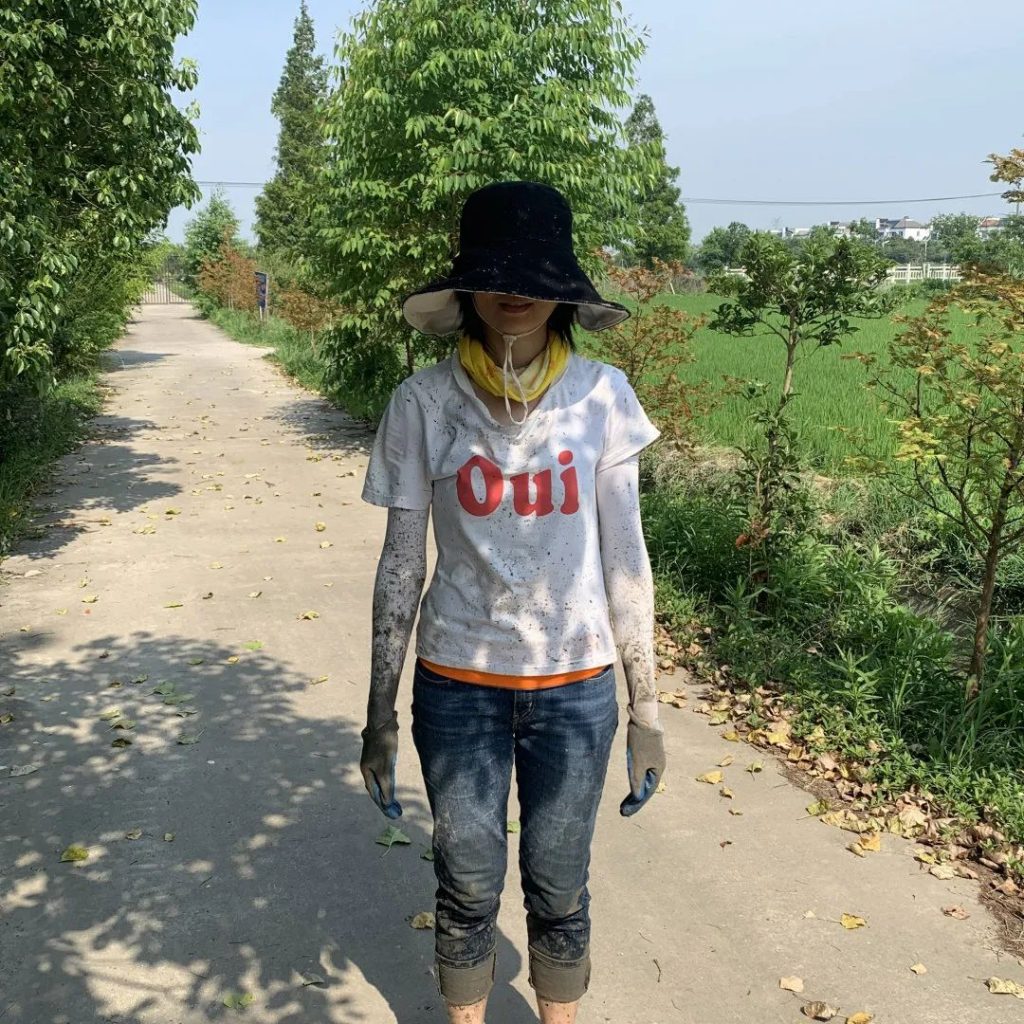
Foodthink Author: Sanyue
A programmer for nine years, she ended her career in the internet industry in 2022 and went to organic farms across the country to intern through Foodthink’s ecological agriculture internship programme. She plans to return to farming in the future, practising a sustainable way of life and living close to the land and nature.
About the Ecological Farm Internship Programme
Foodthink launched its agricultural internship programme in November 2021, at the village farm a family has already found their way. Their own family. Their steady and grounded rhythm of life, only 18 interns went to 11 farms across 8 provinces and municipalities, for internship periods ranging from two months to a year.
We hope that ecological farms can distill their valuable experience in farm management, production techniques, sales and promotion, and share it for reference by young people who wish to return to their hometowns to work in ecological agriculture. At the same time, interns with diverse backgrounds can also contribute their strengths, bring vitality to the farms, and reduce the learning and trial-and-error costs of their own future ventures back home.
In 2023, Foodthink’s second cohort — Foodthink ecological farms can distill farm management — has opened for registration. Click here or scan the QR code on the poster below for registration details.
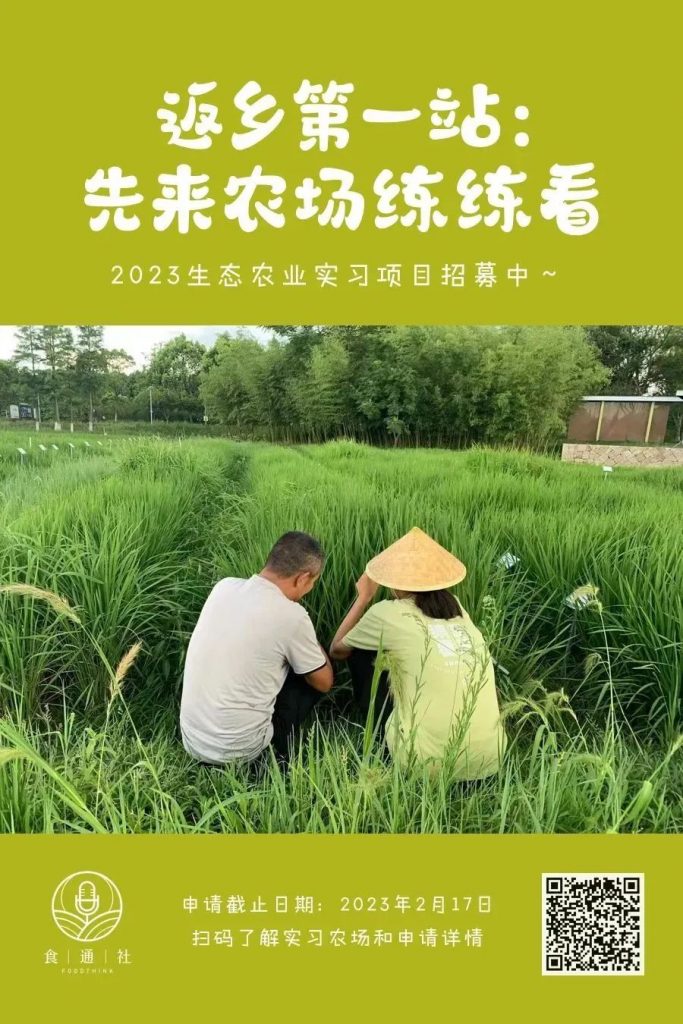
On 9 February, we will also be hosting a special public sharing session, inviting interns and mentors from the first cohort to look back on their internship experiences. We will open a Tencent Meeting and livestream it on Foodthink’s video channel. If you have any questions about the internship programme, feel free to ask. For details, please watch for upcoming posts from Foodthink.
Unless otherwise noted, all images in this article were taken by the author.
Editor: Zain