
From Local to Global: How Did Milk Become a Food for All?
Foodthink Says
At first, milk was indeed just a localised food, but in today’s modern food system it has become omnipresent. How did this happen? Why do people in the West all drink milk? Why do Asians with lactose intolerance also drink milk?
“Because milk is rich in protein and calcium” is the familiar answer from nutritional science. In contrast, Deborah Warren, author of Milk: From Local History to Global History, attempts to approach the question from the perspectives of science, the food industry, global trade, and consumer culture, offering a more complex answer.
The following is an excerpt from Chapter 9 of the book, “The Profitable Cow and Milk”. Thank you to Shanghai Academy of Social Sciences Press for authorising the publication of this article.

To understand the most authentic history, we must first recognise a very important and somewhat counterintuitive fact: before milk truly became popular as a beverage, the production of milk-based products in the Western world had already grown exponentially. One important underlying reason may be that, from the 1850s, milk had acquired a new identity as an industrial product. Gail Borden had demonstrated that tinned milk products, whether condensed milk or milk powder, possessed the portability and shelf stability that liquid milk lacked most of all. As his manufacturing process became widely used, other patented processes subsequently appeared around the world, as determined experimenters sought to improve on his process by adding or reducing ingredients (chiefly sugar) in order to produce a better product.
In 1885, milk powder was first developed in Britain, and it gradually entered the market as a commodity. Initially, it served as a supplement to baby food, and later became a basic raw material for making chocolate and confectionery products. In North America and Switzerland, the milk industry had become a highly lucrative one, with output reaching astonishing levels. The popularity of tinned milk products also raised important questions, the most obvious of which was: What were consumers mainly using tinned milk products for? Were most buyers simply pouring it into coffee? What special homemade recipes were mothers devising for babies with these tinned products? Of the tinned products sold, how many were bought for cooking purposes? All these diverse possibilities indicate that processed milk products paved the way for the future commercialisation of milk, a marketable form of liquid milk that was regarded as safe in quality and priced within reach of ordinary consumers. In any event, the huge growth in demand for dairy products also had an overall impact on the industry itself: it changed the modern, newly formed understanding of dairy farming, a shift that was especially evident during the First World War.
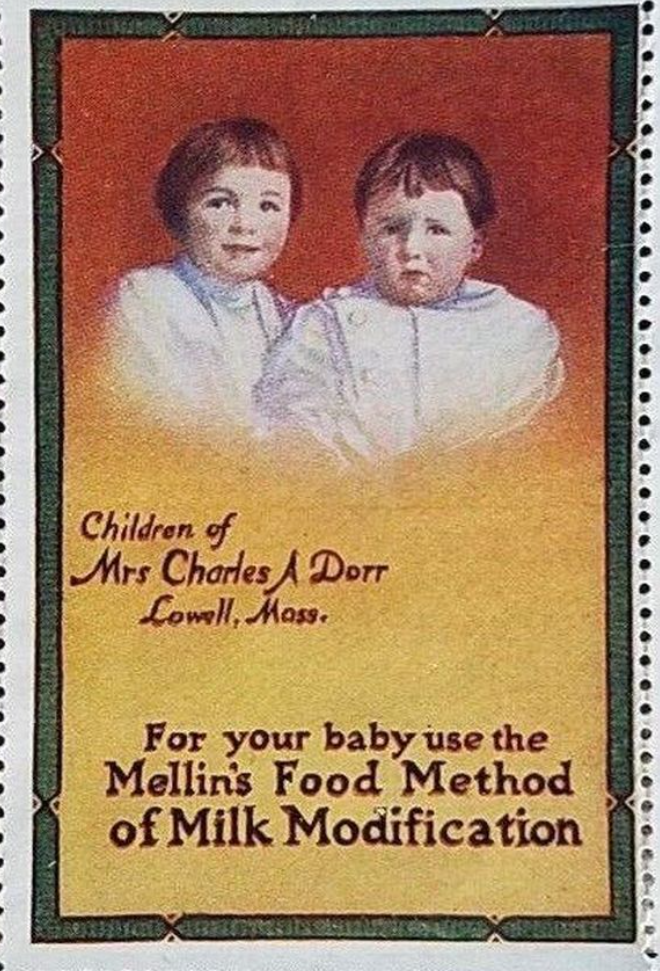
An important driving force came from North America, where dairy farming had expanded from the Midwestern states to the far western states of Oregon and Washington. The pace of expansion in the condensed milk industry reflected, to some extent, the growth of the dairy sector as a whole. Between 1890 and 1900, the total quantity of condensed milk products in the United States market had increased almost fivefold, from 38 million pounds to 187 million pounds; with the outbreak of the First World War, the figure even briefly reached 875 million pounds. During the war, demand from European markets kept sales growing, and in 1919 the United States produced over 2 billion pounds of condensed milk and 44 million pounds of milk powder. Even such enormous figures consumed only half of the total milk supply. Although the number of cows per capita in the United States rose from one to five, by 1900 milk production had already had the capacity to generate a surplus.

With the rise of corporate arrangements in the sales and distribution side of the industry, and under the combined effect of various factors, production grew explosively. Large companies emerged as major winners in the late nineteenth-century reorganisation of the capitalist economies of Western Europe and the United States. Milk processing was one of the most successful branches of the food industry at the time; thanks to the convenience of global food export networks, all kinds of products could cross oceans and enter markets previously untouched. The major companies, using new means such as cheap long-distance transport and refrigeration technology, began to compete fiercely in the world milk market. Another point that cannot be overlooked is that international commercial capital began to reorganise foreign production enterprises. Swiss firms began to establish themselves in Norway and Spain; American entrepreneurs began to turn their gaze to Switzerland; Swiss immigrants began to change the shape of the industry in the American Midwest. The new pattern of milk production for large enterprises disrupted the existing landscape of the dairy industry and overturned the established idea of milk as a familiar local product.
For example, by 1920, the Borden Milk Company had risen into “the ranks of the largest manufacturing enterprises in the United States and Canada”. Even at the time, Borden’s vertical integration looked remarkably modern: Borden owned and operated 31 condensed milk plants, 11 “raw material supply plants”, 11 canning and packaging plants, 2 confectionery factories, 2 malted milk factories and 2 milk powder plants. Its subsidiary, Borden Agricultural Products, owned “eight certified dairy farms, 156 country bottling plants and receiving stations, 70 city pasteurisation and milk-processing plants and distribution branches”; they supplied most of the fresh milk consumed in New York, Chicago and Montreal.

The countryside around Vevey in Switzerland was picturesque, its slopes dotted with charming brown cows; this was the inspiration for the German Henri Nestlé in the 1860s. As enthusiasm for new infant formula grew, Nestlé turned local colour into a product with broad appeal (and one endorsed by doctors). This product mixed milk powder made from Swiss milk with roasted grain and was first sold in pharmacies across Europe. In 1868, Henri boasted to a partner: “Believe me, promoting the same invention in four countries at the same time is no small feat.” By 1873, his product had crossed two oceans and reached 16 countries and regions, including Mexico, Argentina, the Dutch East Indies and Australia.
Nestlé set out to produce affordable Swiss milk, and founded his brand with sincerity and high ambition. He said: “It is not the rich who buy the most milk from us.” (Throughout the company’s history, Nestlé never changed his simple, blunt maxims and profit-driven calculations.) “We must keep the price of infant food within everyone’s reach. A price of 3.6 Swiss francs for two tins is far better than 2 Swiss francs for one.” On these elegant tins, a mother bird was depicted feeding newly hatched chicks in a nest. Agents had suggested that the founder use the famous cross on the Swiss flag as the brand logo, but he flatly refused. A bird formed the main image of his “coat of arms”; after all, the word Nestl in the founder’s name means “little nest” in Swiss German. Here, a personal image triumphed over a national symbol. In an age of high nationalist fervour, Nestlé’s self-interest may have been more conducive to sales. After 1871, residents in the area around the company’s factories began to accuse Nestlé of driving up local milk prices. In a country where a cheap and abundant supply of milk was regarded as a birthright, such an accusation was no light one.

Intense competition was brewing in the nearby mountain regions, showing that as early as the 1860s the pressure was already considerable. The English-Swiss Condensed Milk Company, located in Cham (a town not far from Zurich) in Switzerland, took that name not because its founder was English or Swiss, but because the two countries offered the most promising sales markets for the company’s products. Charles A. Page was born in the United States, and having served as United States consul in Zurich, he had a very thorough understanding of Swiss agricultural production. He and his brother George spent some time at Borden in the United States learning the condensed milk business and, after returning to Switzerland, founded the company in 1866. Their plan was highly successful: their best customer was Britain, which was almost an extra reward for those selling through international trade, because Britain had, in addition to its home territory, an attached colonial network. Their worst customer was Switzerland: consumers there preferred fresh, natural products.
The Page brothers displayed a distinctive flexibility; until the turn of the nineteenth and twentieth centuries, Nestlé, a single-product company, could not match them. Milk is a raw material whose output varies with the seasons; this characteristic led factories to experience periodic surpluses of raw material, so the brothers gradually diversified their product lines. In some regions, they used surplus milk to make cheese and other innovative dairy products that sound less like something from the Victorian era than like modern products from the Starbucks age, such as coffee milk, cocoa milk and chocolate milk. After 40 years of turbulence and high profits, riding the 1905 wave of corporate mergers, the English-Swiss Condensed Milk Company merged with Nestlé. Only from then did Nestlé begin to produce its now widely recognised milk chocolate.
The age of empire at the turn of the century gave rise to a huge tinned milk market network. As part of the British colonial system, Canadian farms and factories supplied consumers near and far. The Reindeer Condensed Milk Company, located in Nova Scotia, served local fishing and logging communities, where men working there urgently needed tinned milk products in their coffee cups. Mining camps in Alaska and the Yukon also purchased the product. Milk from Canadian factories was also shipped by sea to other remote parts of the British Empire; traces of condensed milk use could even be found in some cities in South Africa and Japan. (The Australian market had already been captured by Nestlé and, by the turn of the century, had become the company’s second-largest market.) In 1912, the largest customer of the Canadian company was Cuba, where the hot tropical climate made dairy production extremely difficult. Demand for tinned milk products around the world never stopped, forcing dairy cows in North America and Europe to keep increasing their output.
Nor was it only cows in North America and Europe that were affected: condensed milk factories even arose in the Far East, using milk from cows transported there. After 1868, Japan, having undergone the Meiji Restoration, was deeply influenced by Western food and culture, paving the way for the development of a domestic dairy industry. In particular, the introduction of coffee-drinking habits provided an important route for the Japanese public to come into contact with milk, and created a considerable market gap for dairy products. By 1890, Japan began scientific research dedicated to promoting the development of its domestic condensed milk industry. At the same time, the familiar pattern emerged: in 1897, Japan occupied Taiwan, China, and demanded that the locality have the same arrangements as in its own homeland; they therefore transported dairy cows from Japan to Taiwanese soil. (However, milk drinking was not widespread in China at the time, and after the Second World War, the number of dairy cows in China even declined.) Meanwhile, condensed milk output in Japan itself had reached saturation, and after the First World War, mainland China and the South China Sea islands became consumption markets for Japanese condensed milk. On the basis of some incomplete evidence, these tinned products were most likely ultimately used as infant food.
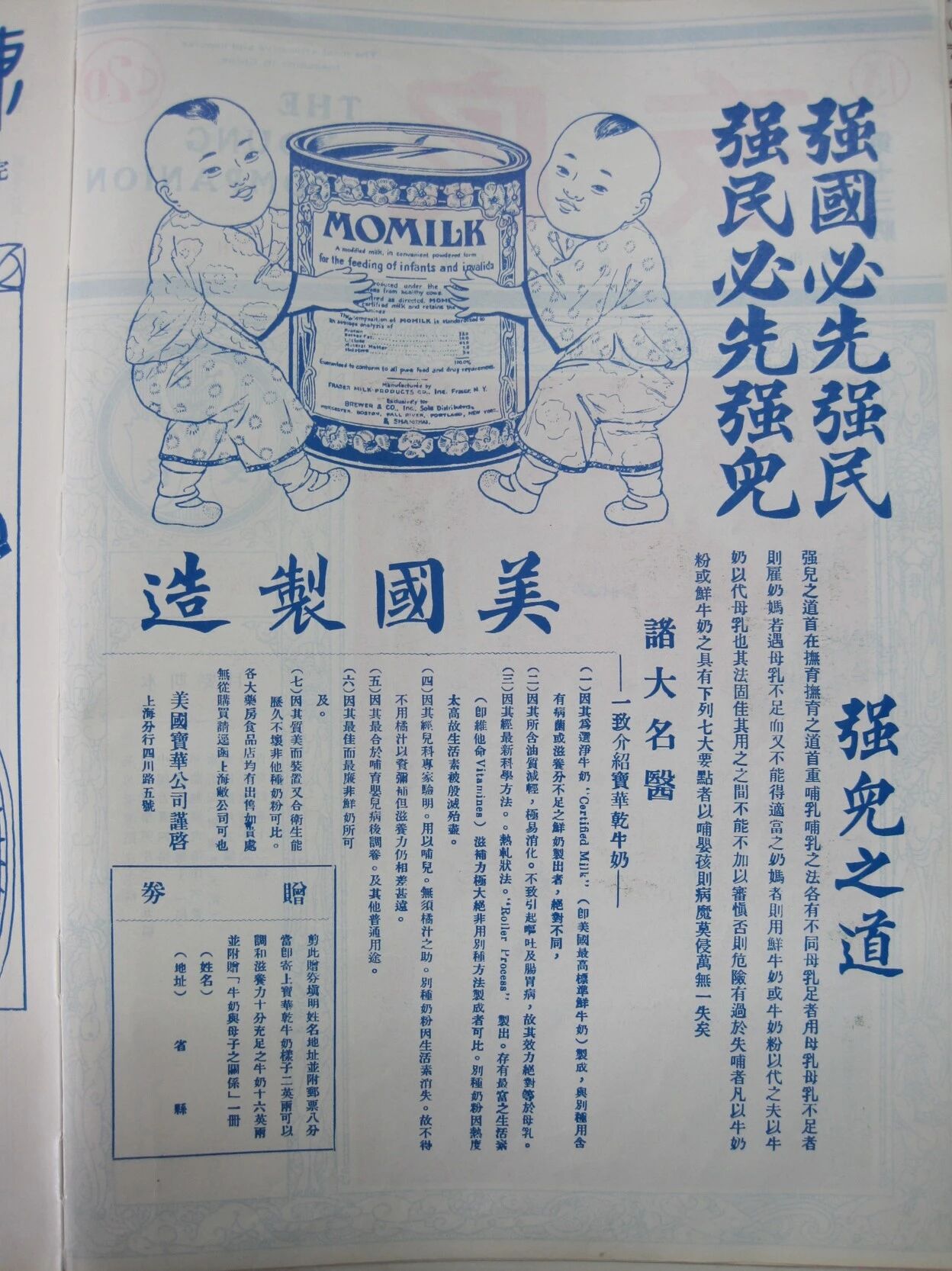
At the same time, dairy farmers themselves were striving to find ways of using industrial methods to produce good-quality, affordable and portable foods that would capture the market. Cheese “workshops” introduced a model for mass-producing cheese products and bringing them into city markets in bulk through trade agents. In reality, this model was far less industrial than it sounds: although they used equipment capable of large-scale production, the workshops made their profits less through mechanised production than through economies of scale. The factories bought milk and cream from individual dairy farmers for uniform processing, enabling them to sell large volumes of dairy products to a standardised quality specification, a model that urban distributors were happier to accept. In the 1840s, dairy farmers in New York State were the first to adopt this method, and they were hugely successful: before long, their products had defeated their biggest rival in the London market—British cheese. In terms of quality, their products did well in the mass market, which forced dairy farmers on the other side of the Atlantic to turn their livelihoods towards liquid milk. Butter factories based on the same principle sprang up like mushrooms all over Britain, ready to absorb surplus supplies of raw material. In some areas, butter factories were combined with pigsties, and the animals fed on the waste liquid produced during butter-making—the buttermilk we know—were exceptionally well-fattened.
The evolution of milk was shaped by the experience that entrepreneurs worked out in practice and by the regularities of transnational migration. A key development in the history of consumer culture followed this crucial point: in the last decades of the nineteenth century, several very successful products made from milk appeared. Malted milk, a mixture of maltose and milk powder, was one of them: a food for adults with the texture of baby food.
At the turn of the nineteenth and twentieth centuries, cold drinks and chocolate confectionery appeared, expanding the possibilities for milk to change its appearance and enter the market in disguise. “Mai Ti Sha” was one of them; it was made by “cutting malted milk dried in a vacuum kettle into strips, coating the outside with chocolate syrup, drying it and then wrapping it in tin foil”. As disposable income rose among the affluent urban population, in the food history of the nineteenth century, demand for milk became closely and importantly linked to sugar. In the mid-nineteenth century, sugar consumption in Europe and the United States surged: in Britain alone, annual per capita sugar consumption rose from 17 pounds in 1844 to 60 pounds in 1876. With the appearance of chocolate powder and chocolate blocks, both of which were innovative products requiring deep processing, demand for milk—the indispensable star ingredient in commodities people universally craved—naturally rose sharply.

The appearance of another commodity brought new, enormous pressure to milk production: ice cream, which is acclaimed as “one of the most successful products among all dairy foods”. The modern history of ice cream reveals an intriguing paradox that draws our attention to the process of commercialisation discussed in this chapter. Although ice cream has a long, multicultural history, this product ultimately acquired the characteristics of American food and cooking styles, making it an “American” commodity.
What made American ice cream so successful? Perhaps simply because they mastered the trick of mass-producing ice cream early on. As early as the 1840s, Nancy Johnson invented a hand-cranked churning device; all this device needed was a tub of ice and some salt placed around it to allow simple home production. The technique of using this churning device created a product that was noticeably more “light and soft”, because a large amount of air was added during the freezing of the cream. It is reported that, among the various types of ice cream products in the United States, this “churning” and “overrun” process “can increase the volume of the final product to 1.8 times the volume of the cream ingredient”. By a happy coincidence, the processing of ice cream also successfully replicated a signature feature of this country—bountiful abundance.
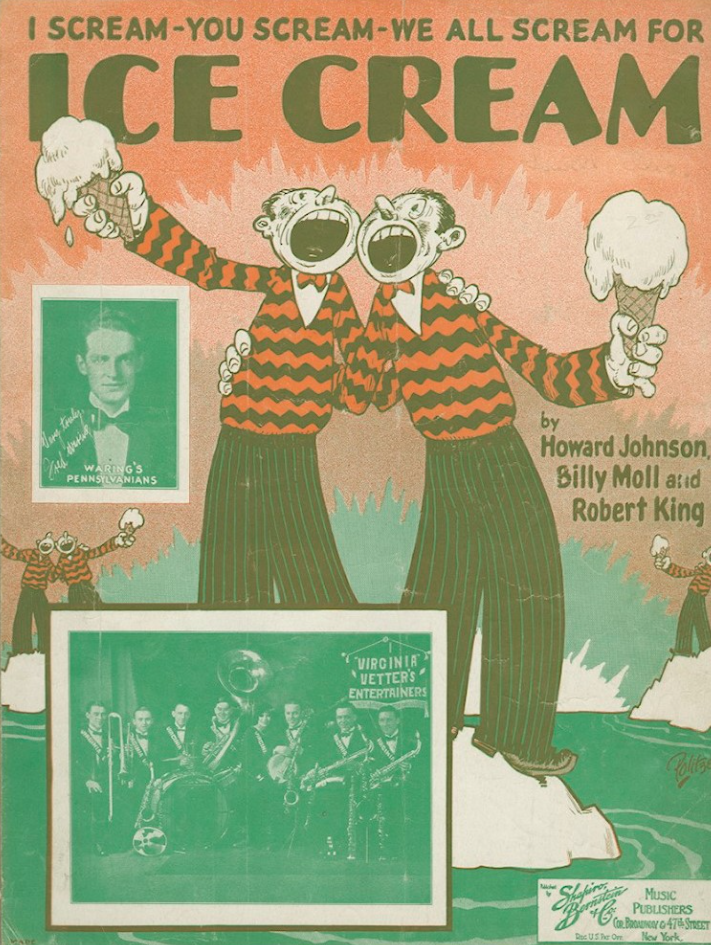
However, its success was not entirely due to the quality and quantity of the product itself; the success of American ice cream was largely due to clever marketing strategies. The various sales tactics of American street vendors are well worth noting: as early as the 1820s, a street cry similar to “Scream, ice cream” (“I scream, Ice Cream”) had already been heard on New York streets. At the beginning of the twentieth century, a new mass-market demand emerged. We should give all due respect to the legendary Syrian immigrant Ernest A. Hamwi, one of several people credited with inventing the ice cream waffle cone. At the 1904 St Louis World’s Fair, he put ice cream into a waffle cone, giving it unique portability.
Subsequently, several other innovative products quickly joined the competition in the North American market: in 1919, a chocolate-coated crispy ice lolly appeared; the “Hao Xin Qing” brand ice lolly, with various flavoured fillings inside and chopped nuts added to the crisp outer chocolate coating, was launched in 1920; by 1923, Dixie paper-cup ice cream had already been a success. Margaret Vissar said that the pronunciation of the word “Dixie” sounded both patriotic and musical, seeming lively, clean and fashionable. Vissar gave a very interesting description of American ice cream history, depicting a consumer culture that closely linked milk to the expansive spirit of capitalist enterprise.
Deborah Valenze is a professor of history at Barnard College. She has taught at Smith College, Worcester Polytechnic Institute and Brandeis University, has served as a research assistant at the Harvard Center for European Studies, and served as acting director of the Project on the Study of Women and Religion at the Harvard Divinity School in 1997–1998.
▼Click to read related articles
Small farms vs. large farms: whose milk is safer and more nutritious?
Small farms vs. large farms: who should be supported? How should they be supported?
Behind China’s dairy industry crisis: who is squeezing dairy farmers out of the market?
Chinese people with lactose intolerance: why do they still drink milk?