
Coal Ban, Straw Burning Ban: Why Are Farmers Always Subjected to One-Size-Fits-All Measures?
I. Nine Years: What Has and Has Not Changed
Subsequently, Hebei began rolling out coal-to-gas and coal-to-electricity conversion on a large scale, at one point causing a natural gas supply shortfall and the absurd situation in which farmers were not allowed to burn coal but had no gas to burn. This was the case in 2016. By the winter of 2017, the final year of the Air Ten, things were worse: at the end of November, Hebei issued a natural gas orange warning, the province-wide supply shortfall was 10–20%, and some cities had to suspend industrial gas use and vehicle refuelling services.
My family home is on the edge of a county town in southern Hebei, essentially an urban-rural fringe. That year, the natural gas supply to our kitchen was also cut off, so my mother had no choice but to stew dishes on an induction cooker. At least, in the city, the heating supply had not been cut off. Relatives still living in the village back home were not so lucky. With no natural gas and no permission to burn coal, they cooked on an induction cooker, too, and could keep warm only with electric radiant heaters and electric blankets.
I care about these issues because, in the years after the Air Ten was issued, I was an environmental journalist and personally lived through the high points of this pollution-control effort—powerful environmental policies came out one after another, environmental protection inspection teams acted decisively, environmental organisations exposed one factory secretly discharging pollutants after another and brought one stirring public-interest lawsuit after another, and experts produced a vast amount of research on source apportionment of air pollution, health impacts, and even governance mechanisms… I had assumed that, given the force of the government’s air-pollution crackdown and the attention paid by the media, public-interest organisations, and society as a whole, properly resolving the winter heating problem for North China’s farmers would surely take no more than two or three years.
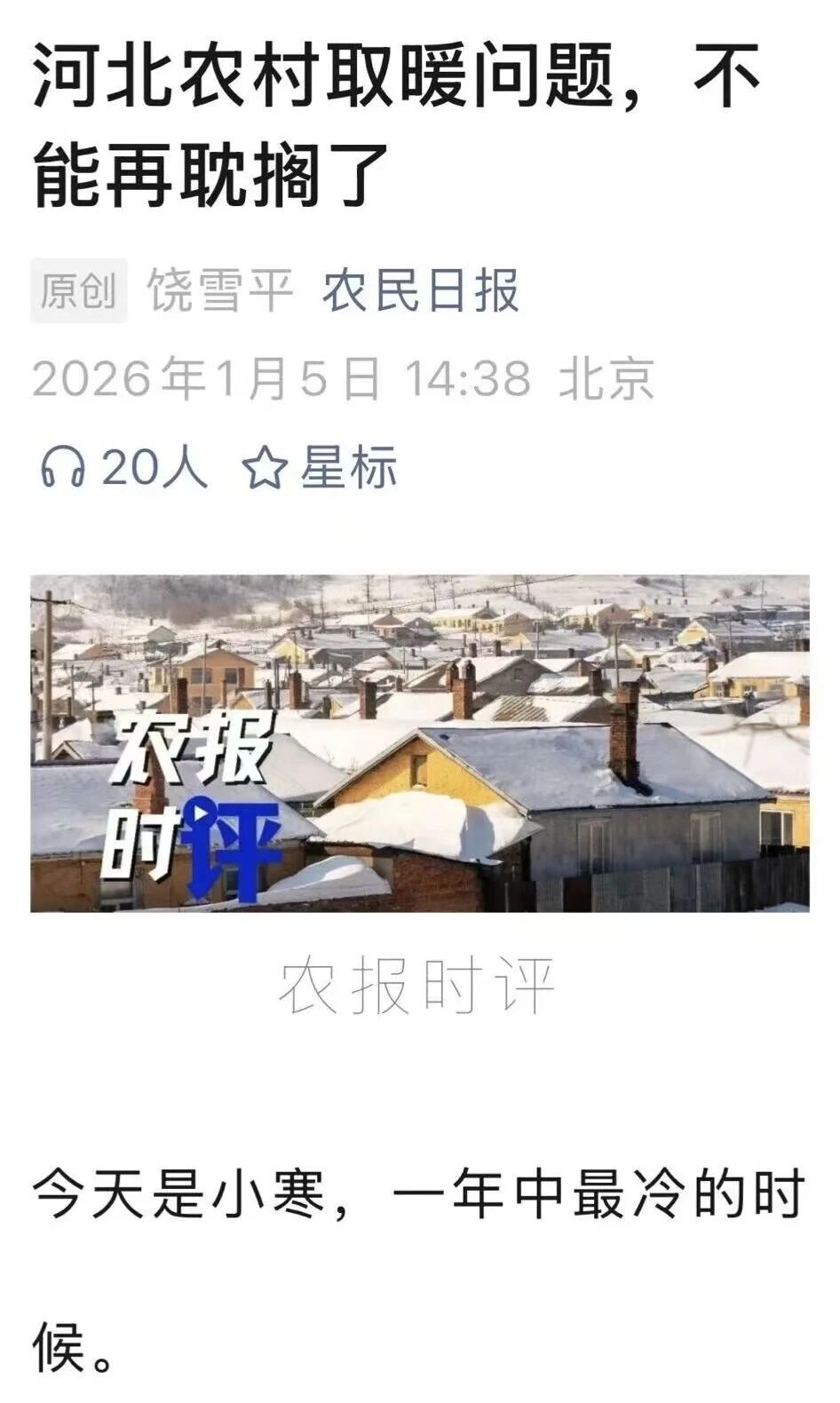
But I never expected that, nearly a decade later, the news would not even need a new headline. If there was any change, it was this—articles were deleted even faster. The Farmers’ Daily’s story speaking up for Hebei farmers on the day of Minor Cold was wiped off the entire internet the next day.
This is also why, when I saw almost at the same time that Beijing had delivered a dazzling “blue-sky report card”—with PM2.5 concentrations in 2025 down from 89.5 micrograms per cubic metre in 2013 to 27 micrograms per cubic metre, and multiple indicators reaching their best since monitoring began—I felt both relief and a chill.
II. Clean Heating: Easy to Know, Hard to Do
In 2018, the Shandong provincial government released “Shandong Province Winter Clean Heating Plan (2018-2022)”, setting a target that the average clean heating rate in the province’s rural areas would reach 75% by 2022. A local environmental protection organisation, “Lvxing Qilu“, decided to find out what this 75% target actually meant.
After several years of on-the-ground visits, they have found that although Shandong Province has already “completed” its clean heating retrofit task, in practice it has been very difficult to sustain after the subsidy phase-down. Across the province, problems have already emerged, such as subsidies not being disbursed on time and policies not being implemented in accordance with subsidy rules, leaving many farmers unwilling to continue using clean heating facilities. After analysing more than 500 valid questionnaires, they found that among respondents who had completed clean heating retrofits, nearly 1/6 had already abandoned or were preparing to abandon them, with the main reason being high heating prices; if subsidies were no longer provided in the future, 41.6% of users might also give up.
Not just farmers: the government also seems unable to continue purchasing clean coal. Lvxing Qilu searched government procurement websites and found that government purchasing of clean coal at all levels in Shandong Province has shown a contracting trend in recent years. At the same time, a district in Weihai originally had more than 40 household loose coal depots, and after being closed down under pollution-control measures, 17 were reopened.
High prices are not the only reason farmers are giving up clean heating. Energy sources for clean heating are not limited to natural gas, and renewable energy, such as solar power, is considered a cheaper and cleaner option. However, in a door-to-door survey in a village, Lvxing Qilu also found that two-thirds of the nationally subsidised solar electric auxiliary heating equipment had already been abandoned, and one-third had been sold off as scrap, because the quality was so poor that it created the awkward situation where “it can warm things when the sun is good (at which point heating is basically not needed), but cannot provide warmth when the sun is bad”.
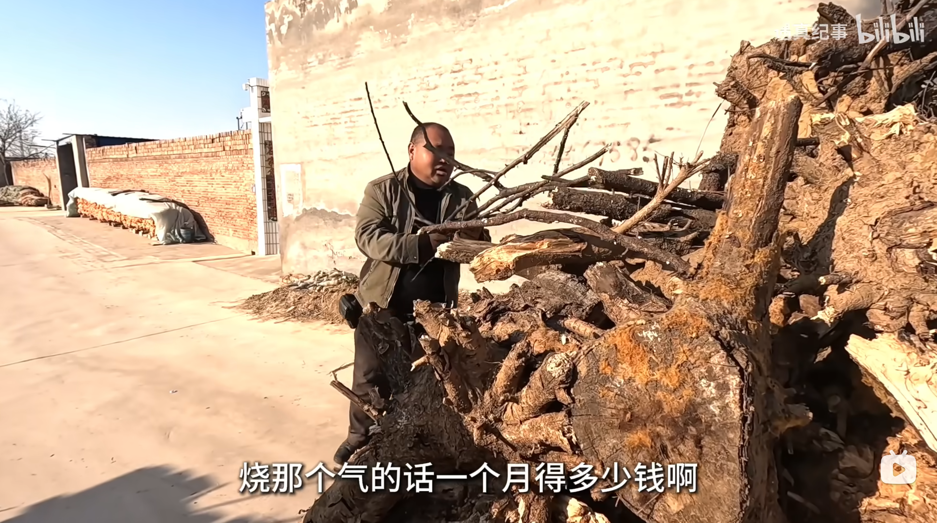
The same situation exists in other villages, and when equipment breaks, it is not repaired. In the end, villagers had no choice but to return to coal stoves—not only can they use the pipes for kang heating, but they can also heat water and cook meals, giving the stoves more uses.
“These nationally subsidised products are not products lacking a name, manufacturer, or quality certificate, but 50% had already broken down in the first year, and by the second and third years nobody was using them any more. Because of product quality problems, leaks, spills, drips and burst pipes occur frequently, so putting them on the roof is actually a risk. Branded companies are a bit better; their product quality and installation are fine, and their after-sales service is relatively responsible,” said Guo Yongqi, head of the organisation.
Government procurement websites show that between 2019 and 2021, a total of 11 solar electric auxiliary heating clean heating projects were implemented in various parts of Shandong Province through government procurement channels, covering nearly 30,000 households, with a cumulative winning-bid amount of nearly 145 million yuan. But all 11 successful bidders were local small and medium-sized enterprises, none from leading companies in the industry. In response, Lvxing Qilu called for rural areas not to become a dumping ground for low-quality goods.
Compared with the experience of Hebei farmers having no gas to burn eight or nine years ago, this year is actually an improvement—there is at least gas to burn; it is simply that subsidies have shrunk and people have to spend more.
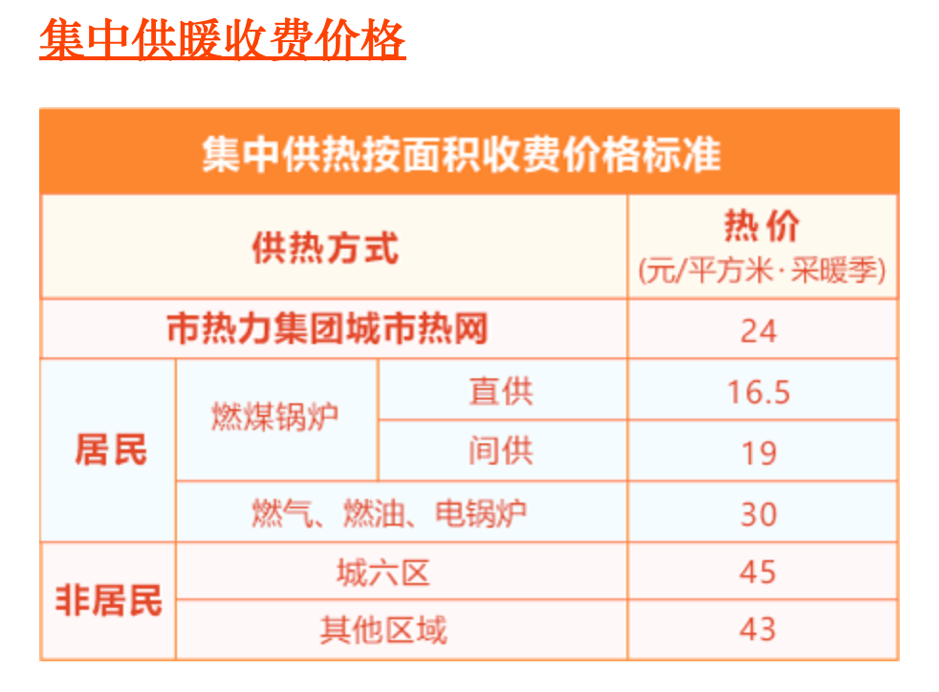
According to the deleted report in The Farmers’ Daily, natural gas prices in rural Hebei were 3.15–3.4 yuan per cubic metre, and the winter heating fee for a 100-square-metre home was about 5,000 to 10,000 yuan. In Beijing, there are several heating methods, and the corresponding prices for a 100-square-metre home are: coal-fired boiler (direct supply) 1,650 yuan, coal-fired boiler (indirect supply) 1,900 yuan, gas/oil/electric boiler 3,000 yuan (yes, centralised coal burning is acceptable, because there are end-of-pipe treatment measures for pollutant emissions, whereas loose coal is not).
In addition, according to government statistics, in 2024 the disposable income of urban residents in Beijing was 92,464 yuan, while that of Hebei farmers was 22,022 yuan.
Compared with the rapid fall in Beijing’s PM2.5 concentration (micrograms per cubic metre) and the ample central heating available to urban residents, our discussion remains on whether farmers more than 100 kilometres away deserve to use central heating in winter. This divide is so surreal that it feels as if the two are not in the same era.
III. Straw: What Else Cannot Be Burned
The “Straw Burning Ban and Comprehensive Straw Utilisation Management Measures”, issued jointly by multiple ministries in 1999, marked the beginning of administrative-level straw burning bans and set the first quantified target for the straw utilisation rate—85%. This policy, more than 20 years ago, was motivated more by public safety than by human health, because at the time there had been multiple incidents in which thick smoke from burning straw affected aircraft take-offs and landings, as well as road safety incidents. This is also why the no-burning zones explicitly defined in the Measures were all traffic trunk roads and high-voltage power lines, and did not prevent most farmers from continuing to burn what they had been burning.
A serious, comprehensive straw burning ban came after the aforementioned “Air Ten”. Although burning straw accounted for only a relatively small share of overall smog, the burning window was concentrated in summer and autumn, causing high concentrations of particulate matter to be emitted intensively over a short period, so it also became a key focus of control.
Under the central government’s strict quantitative assessment of PM2.5, local governments showed unprecedented resolve in enforcing the straw burning ban. For example, in 2015 Henan Province used the number of straw-burning ignition points officially announced by the Ministry of Environmental Protection through satellite remote sensing as the basis, at county level: for every ignition point found, provincial finance deducted 500,000 yuan from the relevant county’s fiscal resources. In one nationally impoverished county in Henan Province, nearly 10 million yuan was spent on the administrative enforcement of the straw burning ban alone that year. Even though the county set up a no-burning command headquarters in every village, sent all township cadres down to the villages and kept people on watch 24 hours a day, it was still fined a total of 20 million yuan because the straw burning ban was not enforced effectively and multiple ignition points appeared.
The government also allocated special subsidy funds for comprehensive straw utilisation, but in the face of the unprecedentedly large volume of straw produced in China’s agricultural history, these subsidies were a drop in the bucket. The straw burning ban has mainly been enforced by administrative force. News of farmers being fined or criminally detained for burning straw is all too common.
Even so, many farmers still risk secretly burning straw at night. Some, fearing discovery, leave early; flames then reach a neighbouring haystack and even cause a mountain fire. Others, afraid the fire would be discovered, simply push the straw into nearby ditches, canals, ponds and dams, causing water pollution.
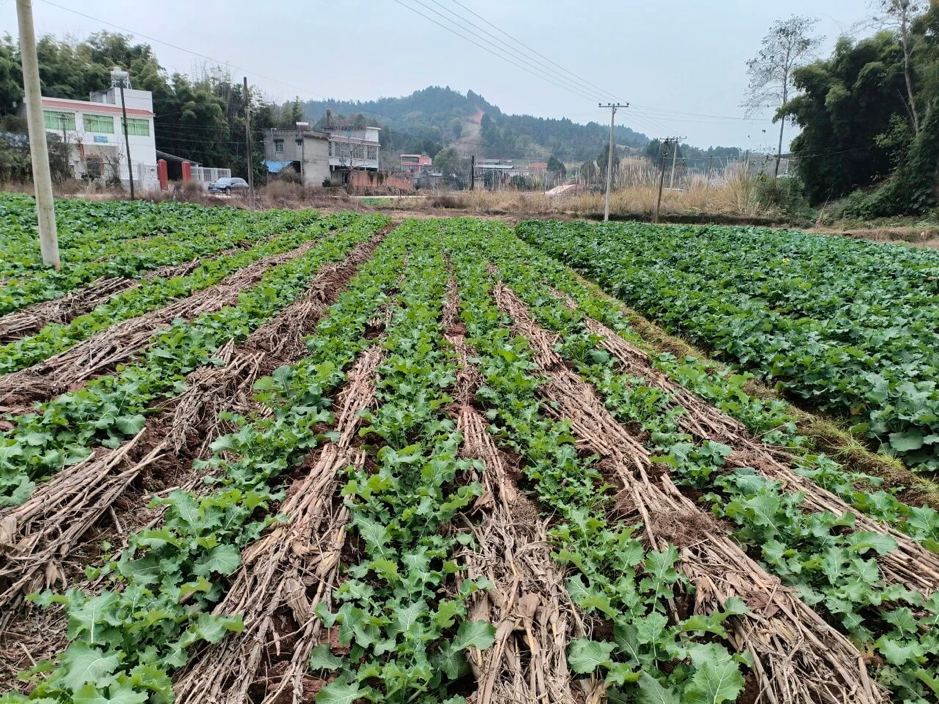
At the same time, due to soil degradation, inadequate technology and other reasons, straw incorporated into fields has also brought farmers problems such as pests and diseases and rising farming costs, leading many farmers to question the viability of straw incorporation.
IV. Who Should Pay the Price of the Green Transition?
There is already too much policy, technology and research on how farmers should heat their homes. What we need more is to return to common sense and to humanity.

Editor: Tianle