
Picking Strawberries with Colombian Undocumented Workers in Rural France
Today, more and more people are seriously considering the value and meaning of rural life, even trying to fold a farm’s rhythms of work and living into their long-term plans. In an era riddled with risk and unease, Foodthink hopes to support young people who care about food and agriculture—particularly those who want to pursue ecological agriculture—helping them find their own path and replant themselves in healthy soil.
Building on the experience of the previous four cohorts, Foodthink launched recruitment for its 2026 Ecological Agriculture Internship Programme in mid-December. The post was barely live before we were flooded with applications. This call closes tomorrow (7 January). If you’re interested in the growing techniques, planning, and operations of ecological agriculture—or in the more concrete realities of farm life—scan the code to sign up!
I. Arriving at the Farm
The process isn’t complicated, but it takes genuine mutual willingness on both sides: length of stay, temperament and practical skills, work intensity, visa issues, even ideological leanings all factor into this two-way selection. Some farms are unreachable by public transport, some require camping outdoors, and others couldn’t be matched because their hosting windows simply didn’t align. Then, by a stroke of luck, I got in touch with a well-rated work-exchange farmstead in western France.
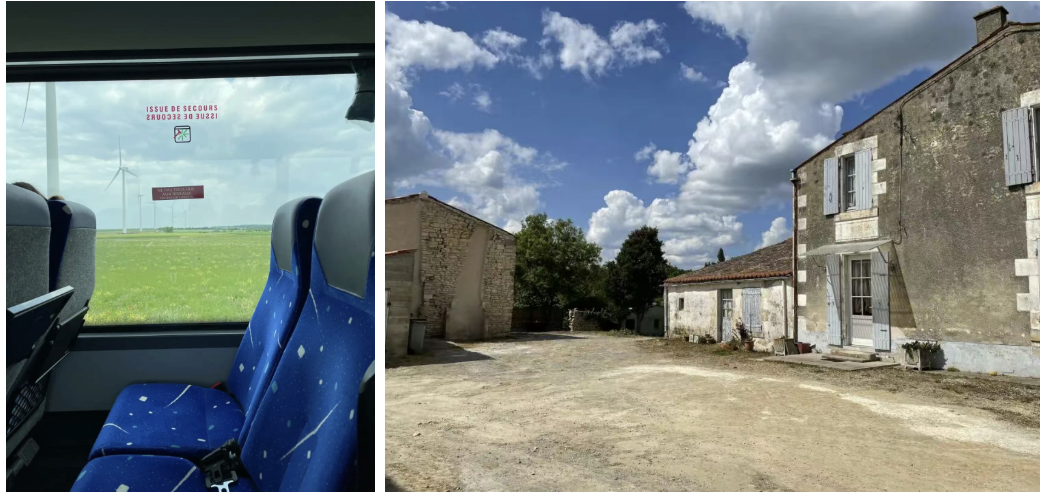
La Rochelle faces the Atlantic. It is a quintessential French port city, still bearing the remnants of its medieval fortifications. One day in May I flew in from London, caught a few minutes of eight o’clock sea breeze, and waited for the rural bus to leave. Half an hour later, the bus dropped me alone at a stop on a country road. As far as the eye could see: flat fields of wheat and maize, and a few scattered white wind turbines on the horizon. It’s not exactly a scenic postcard. Add the long journey, and I was already exhausted before I’d done a single task. I was just steeling myself to turn back when a clattering van pulled up and a man getting up there in years, in a frayed sleeveless top and sporty sunglasses, strode towards me. And so began my month of unpaid farm work in France.
Ale is in his sixties, Argentine, and has lived in France for half a lifetime. He’s full of energy, decisive in word and deed—clearly the one who always leads the charge, and worthy of his name, Alexandre. His entrance music ought to be a Spanish bullfighter’s march.
His wife Annette is a French Jew. She wears red-rimmed glasses, her mouth corners always turned down, answering ninety per cent of conversations with the French favourite “ah, bah…” followed by a shake of the head. After spending time with her, you discover that Annette is a fake cynic, seemingly doing her best to perform the ease a French person is supposed to have, while inside she’s a rambunctious child.
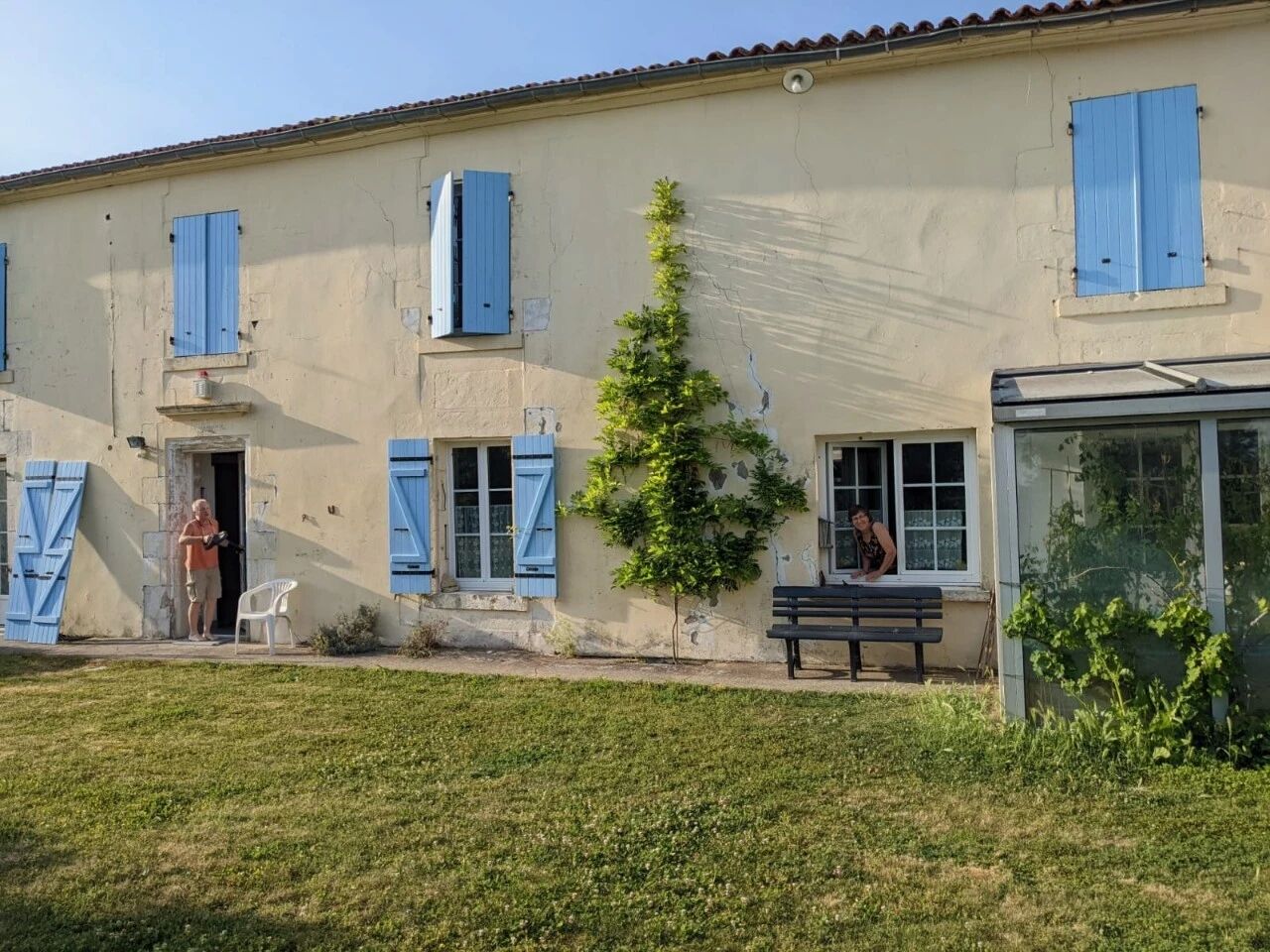
Besides flour, milk, building materials, and rennet (an enzyme from a cow’s stomach, used to make cheese), the couple has virtually no other expenses. The farm, at around five acres, doesn’t need paid workers either, because the day-to-day work is done largely by work-exchange volunteers like me. Volunteers come and go; the stone estate stands firm. Young people from all over the world who are interested in agriculture join the two of them to look after the animals, do the farm work, and renovate the house inside and out.
Whether it’s ecological agriculture, animal husbandry, cooking, winemaking, building houses, making furniture, or fixing up a kayak, the volunteers who travel all this distance don’t just put in the work—they always pick up something along the way. After all, the reason everyone chooses to come from across the world to volunteer on a farm is to broaden their life experience, to open a blind box and unlock a few skill points that an urban cog would never have had the chance to learn.
II. My Farm Buddies
I push open the dorm door. Three other people are inside. Joanna is twenty-three, not tall, sitting on the bed doing her Duolingo French. Danny is Jo’s younger brother. By the time they met Ale, this Colombian brother and sister’s European tourist visas had already expired, yet they had no plans to go home. They’d been picking up undocumented day jobs in a small Spanish town. Ale told them they could come to France and stay at his place as a stopover; he’d send the invitation letters they needed for a volunteer visa.
I used to think the people doing work-exchange volunteering were either well-off young people looking for a taste of rural life, or “nomads” who spend money when they have it and sleep on the sofa when they don’t. What I hadn’t expected was finding undocumented workers who’d come from Latin America to Europe. Many European industries depend heavily on imported labour. European agriculture, for instance, has an enormous demand for seasonal workers willing to do hard physical labour: one in four agricultural workers is a mobile foreign temporary worker—and that’s only the data on contract workers. Meanwhile, between 2016 and 2023, over two million workers in Europe had no legal status.
After a few months of daily-paid work in Spain, Jo and Danny realised what they really needed was legal residency. A small farmstead like Ale’s doesn’t make demanding labour requirements of them. There are no wages, but it doesn’t put them in a position where they could be deported at any moment. So the two of them came here to do unpaid odd jobs in exchange for room and board, waiting for the right moment to get a proper work visa.
Then there’s a boy with pomade in his hair, Miguel. Miguel isn’t an undocumented worker, and he doesn’t know Danny or Jo; they just happen to all be from Colombia. He grew up at an international school, loves chips and sushi, is indifferent to work, and clearly wouldn’t stay another day if he could help it.
Of the three, Miguel’s English is the best, so he talks to me the most. Jo and I can only communicate through simple English, Google Translate, and body language. Danny doesn’t speak a word of English. He calls me “hen” (the Spanish pronunciation of Jen), and yet we have a rapport like cellmates.
III. Work and Life on the Farm
In front of the house there’s a water channel and two vegetable plots. Occasionally a mother swan will float by with her cygnets. I’ve heard they used to keep pigs too; by the time I arrived they’d already turned into sausages. There’s also a Border Collie called Lila and four free-roaming kittens.
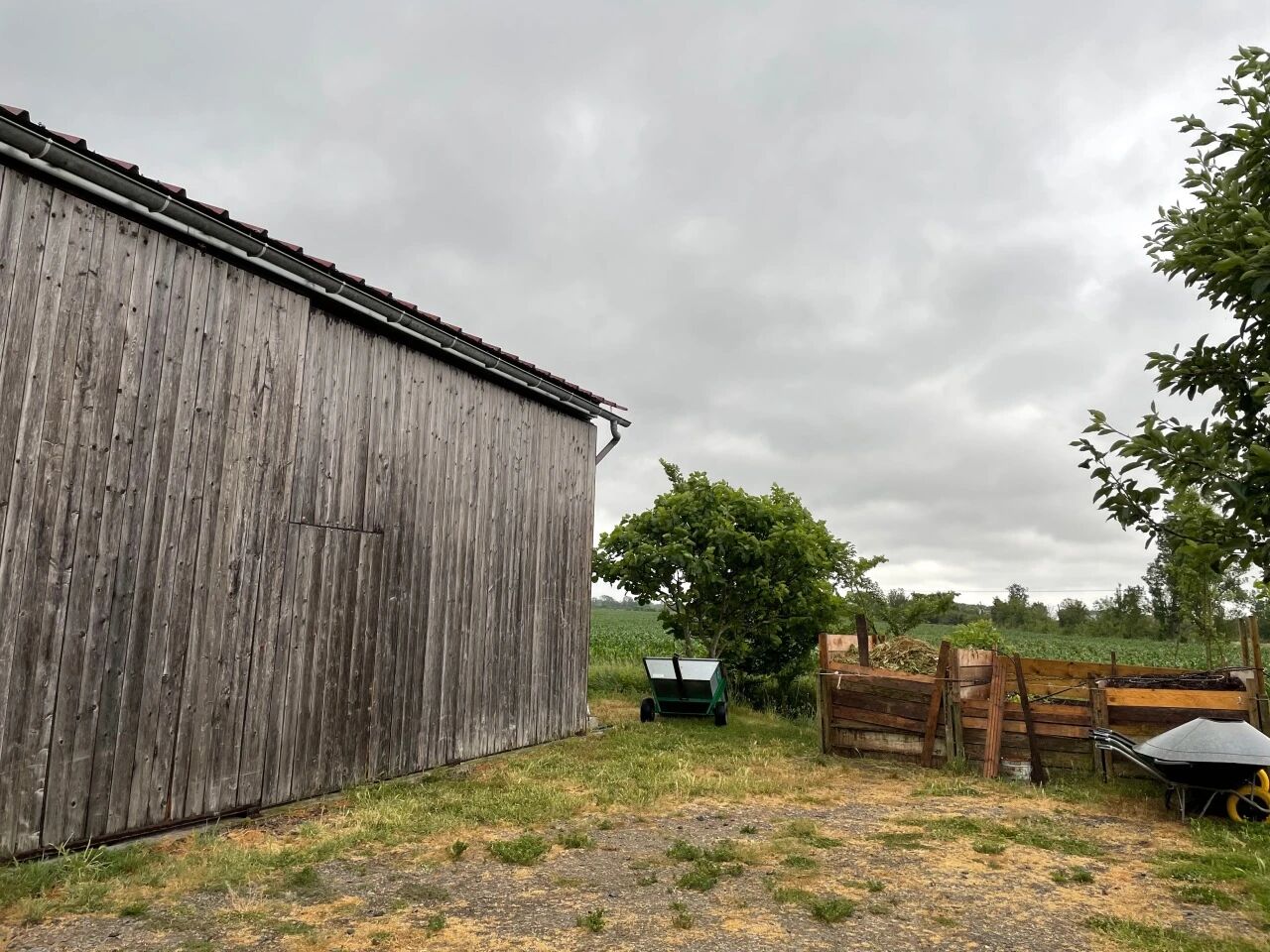
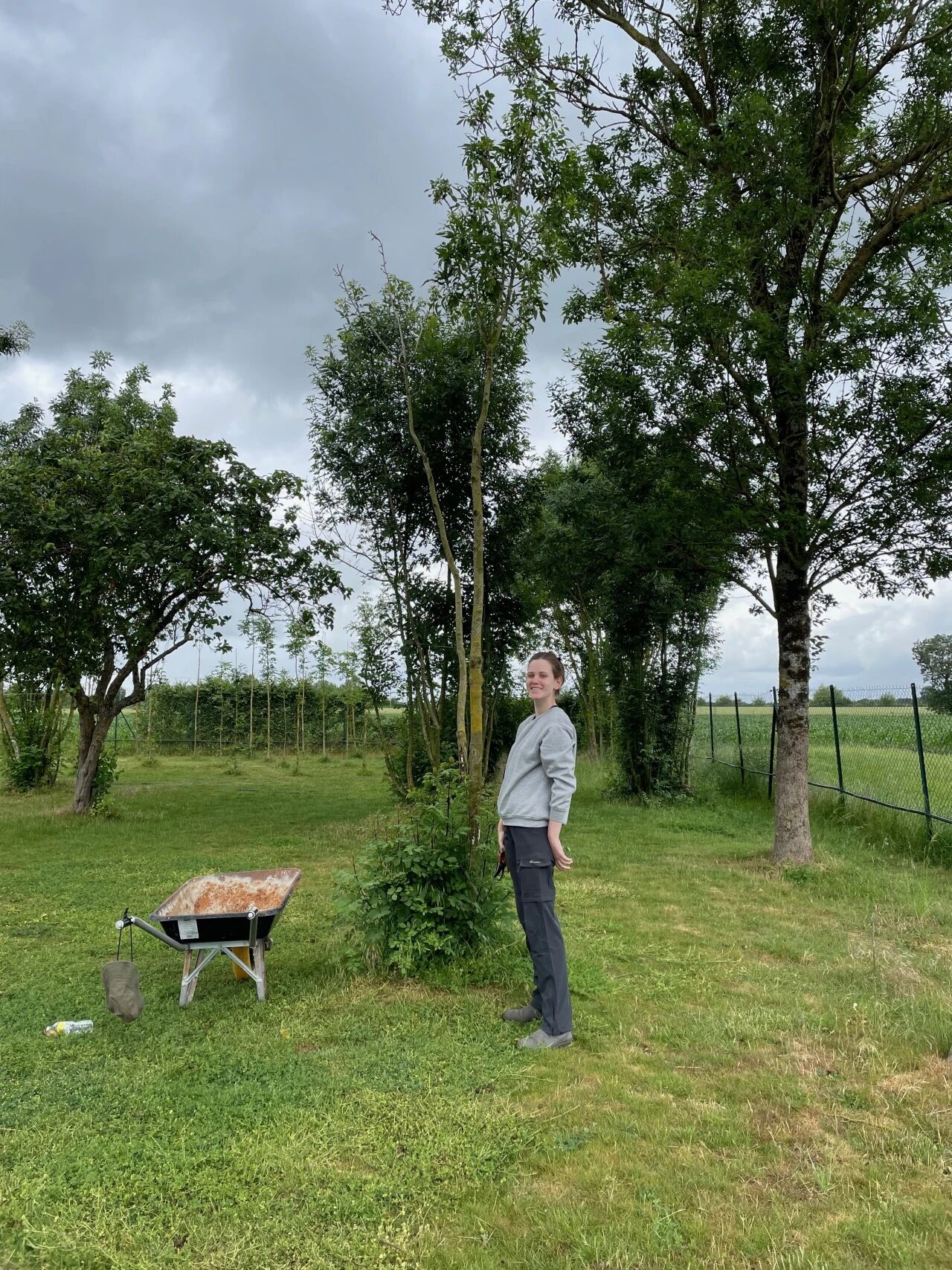
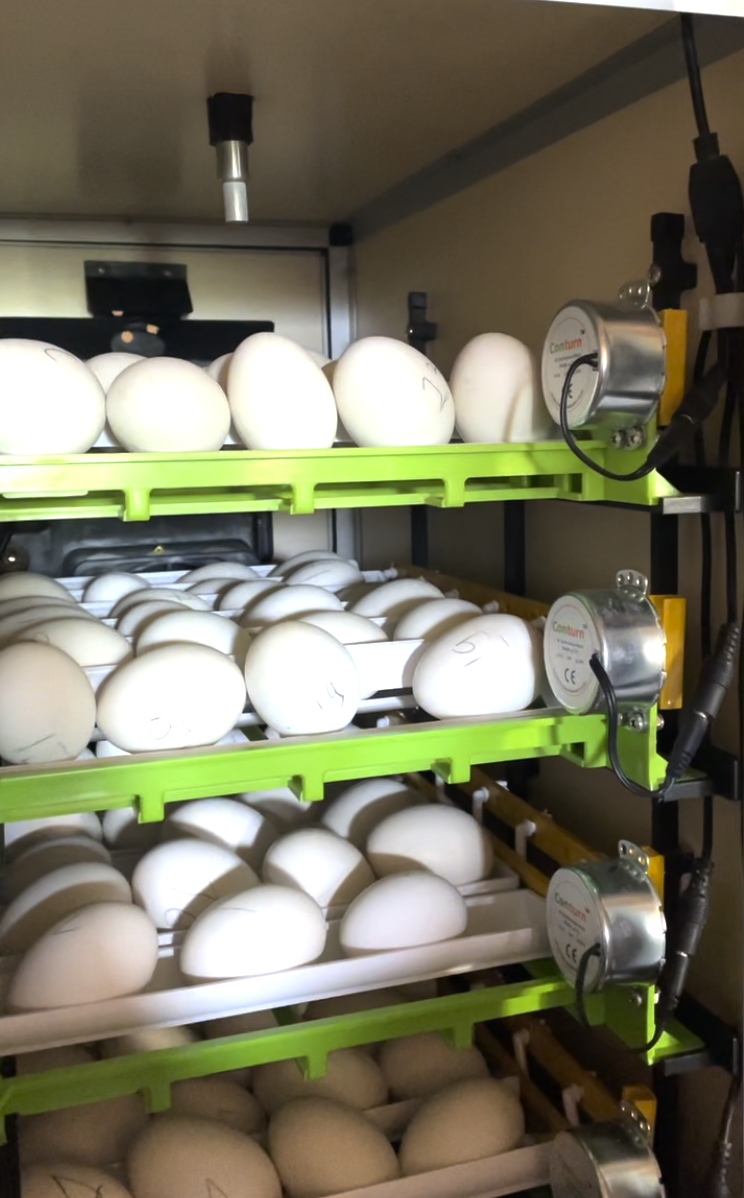
In the morning, Miguel goes to collect the chicken and duck eggs, Danny fires up the mower and trims the lawn, Joanna does the cleaning, and I weed the front of the house. Odd jobs like pruning and tying branches, sanding boards, and fixing the water pipe—whoever’s free picks them up.
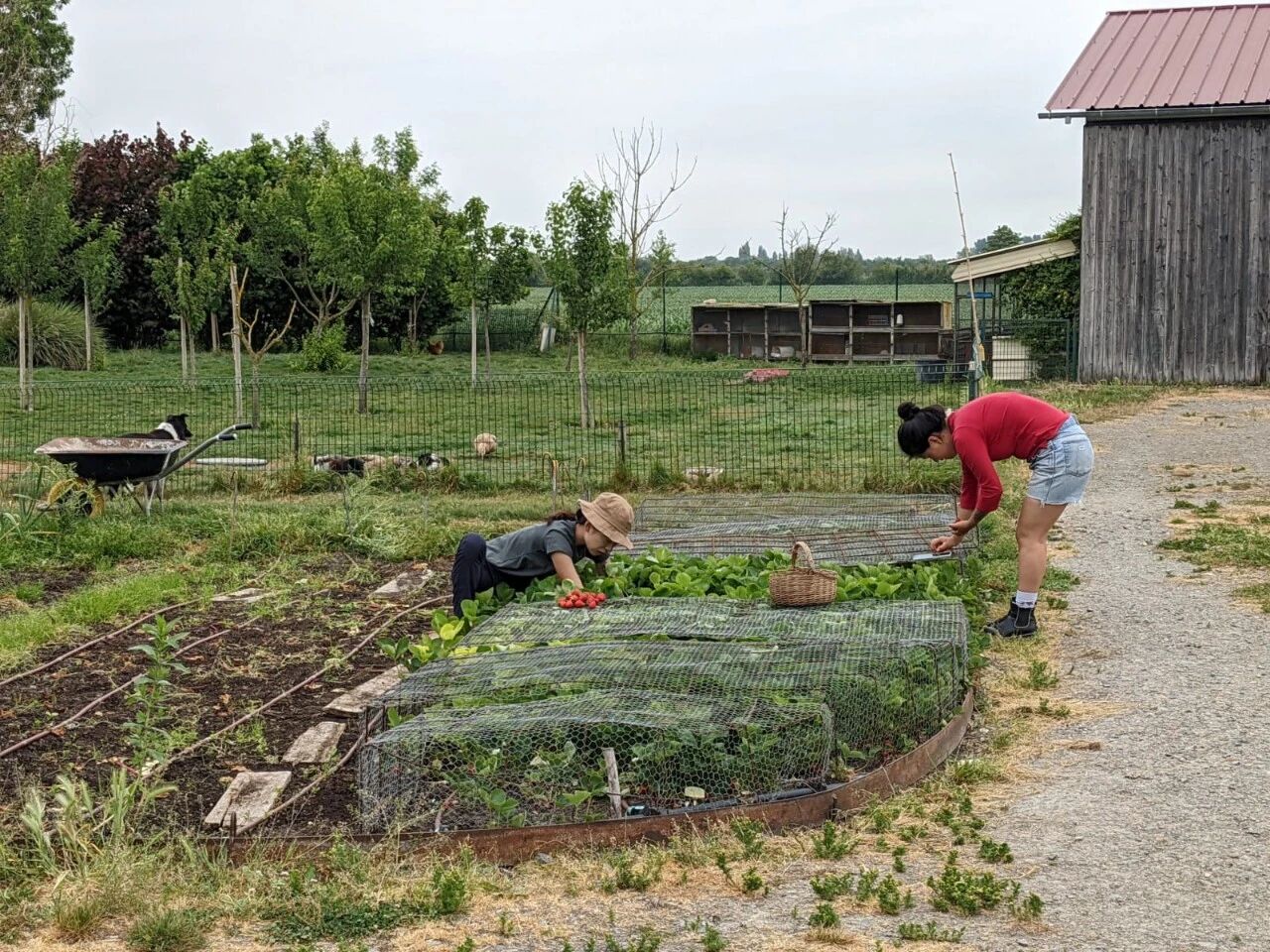
In spring, the front plot has only strawberries and beetroot; most of the other crops are still seedlings in the conservatory. Picking strawberries means crouching in the rows and rummaging. When you finally spot a big, ripe one, chances are it’s already been claimed by snails and worms. Watching the small basket you’ve gathered over hours get mashed up into ice cream is a source of quiet grief. Harvesting beetroot is far easier—it’s like pulling up radishes. The moment you tug it out of the ground, you find yourself placing a mental bet on its size: sometimes the plant with the lushest foliage turns out to have just a tiny root, while the plainest-looking sprig might be hiding a huge beet. The cucumbers and watermelon radish, still too young to show their true shape, lean and wobble in the seedbed. Right before I left, I finally got to eat my first half-ripe tomato.
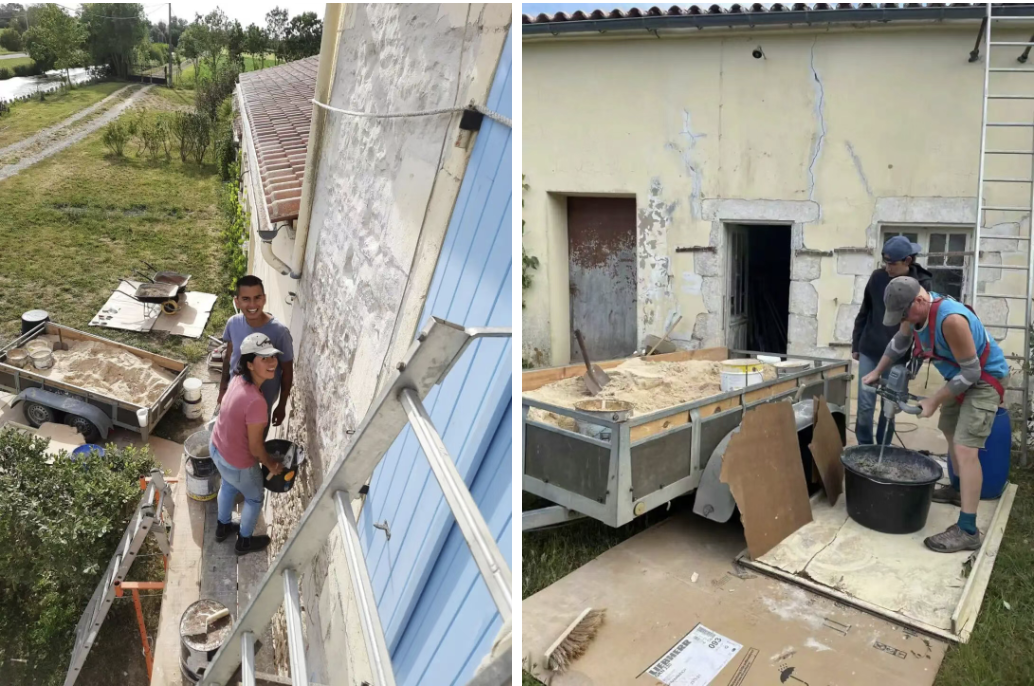
What I remember most vividly is the last few days, spent on the exterior wall renovation. It meant smashing off the outer layer of the wall and replastering it with fresh lime. Right arm raised, full swing, hammering the wall to shatter the old lime shell. Because the wall had been renovated in stages, hitting the lime layer was manageable—a few strikes and it peeled away—but hitting cement was another matter. No matter how hard I swung, the plaster didn’t so much as flinch. Glancing at the others still labouring around me, I just kept going. Seven o’clock in the evening, the sun dropping in the west. I sat on the scaffolding and thought: this must be the ultimate version of unpaid work.
IV. A Farmhouse French Meal with a Jewish Touch
Breakfast is Annette’s bread with jam and butter. By 8:20 we’ve eaten and are out working. The 10:30 tea break brings two Medellín cakes and an espresso. Lunch is usually the big one: pork hock stewed with kidney beans and rice, polenta with sausages, duck confit with bread—in Beijing, this would be a three-figure-per-head European feast. After lunch we collapse for an hour, then at two it’s another coffee, a small cake, and back on the tools, right on time.
Dinner is always beetroot leaf soup, bread, and homemade cheese. May is peak beetroot season. Miguel speaks fluent American English; his favourite film is the Rocky action series starring Sylvester Stallone. While the soup’s on the stove in the evening, he always complains about not being able to get a burger. Nobody pays him any mind with his Hollywood fantasies.
Annette clips the leaves, drops them into a pot of boiling water, adds salt, then blitzes it all in the electric blender. Six of us gathered around a big pot of deep green soup, often too wiped out to find words—just the sound of spoons clinking against ceramic bowls. We also had globe artichokes for a few days. They look like Jurassic plant buds. You snip them off with garden shears, steam them, then peel them petal by petal. The base of each petal is tender enough to dip in whipped mayonnaise. The further in you go, the more delicate it gets—the artichoke heart is the delicious final bite. Eventually the artichokes were picked clean, and we were back to beetroot leaf soup.
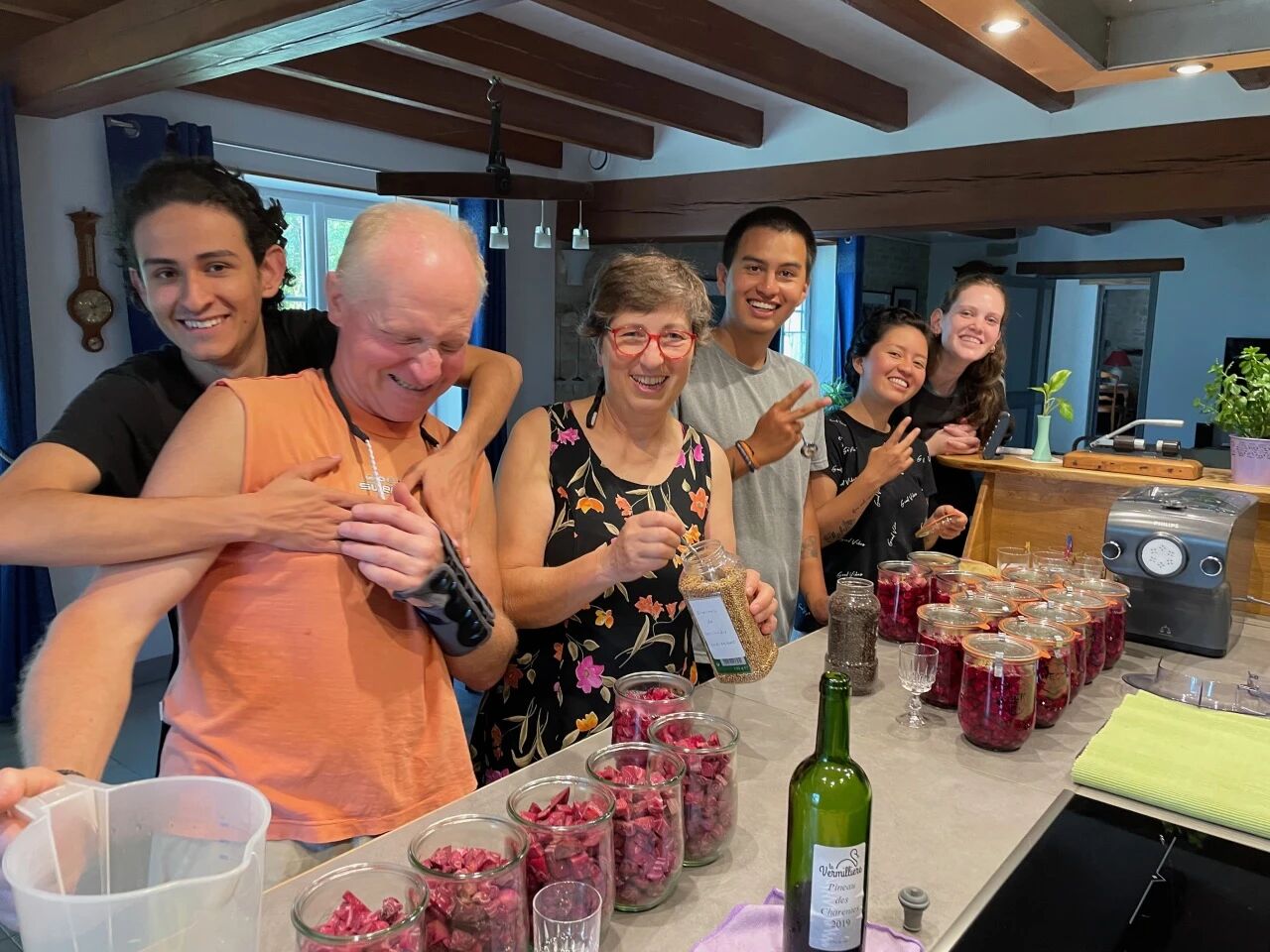
Where did all the beetroot that could have made borscht go? Into jars. The five of us processed a mountain of beetroot together: peeling, boiling, sterilising the jars, filling them, then mixing watered-down white vinegar with bay leaves, peppercorns, and salt, and pouring it over the beetroot to seal the lot. And that’s not the end—those jars go into a huge steamer the size of a water tank, set on the gas hob, and get steamed and fully sterilised. Unlike sauerkraut crocks, these jars won’t ferment and turn sour. When you crack one open in winter, it still tastes of beetroot.
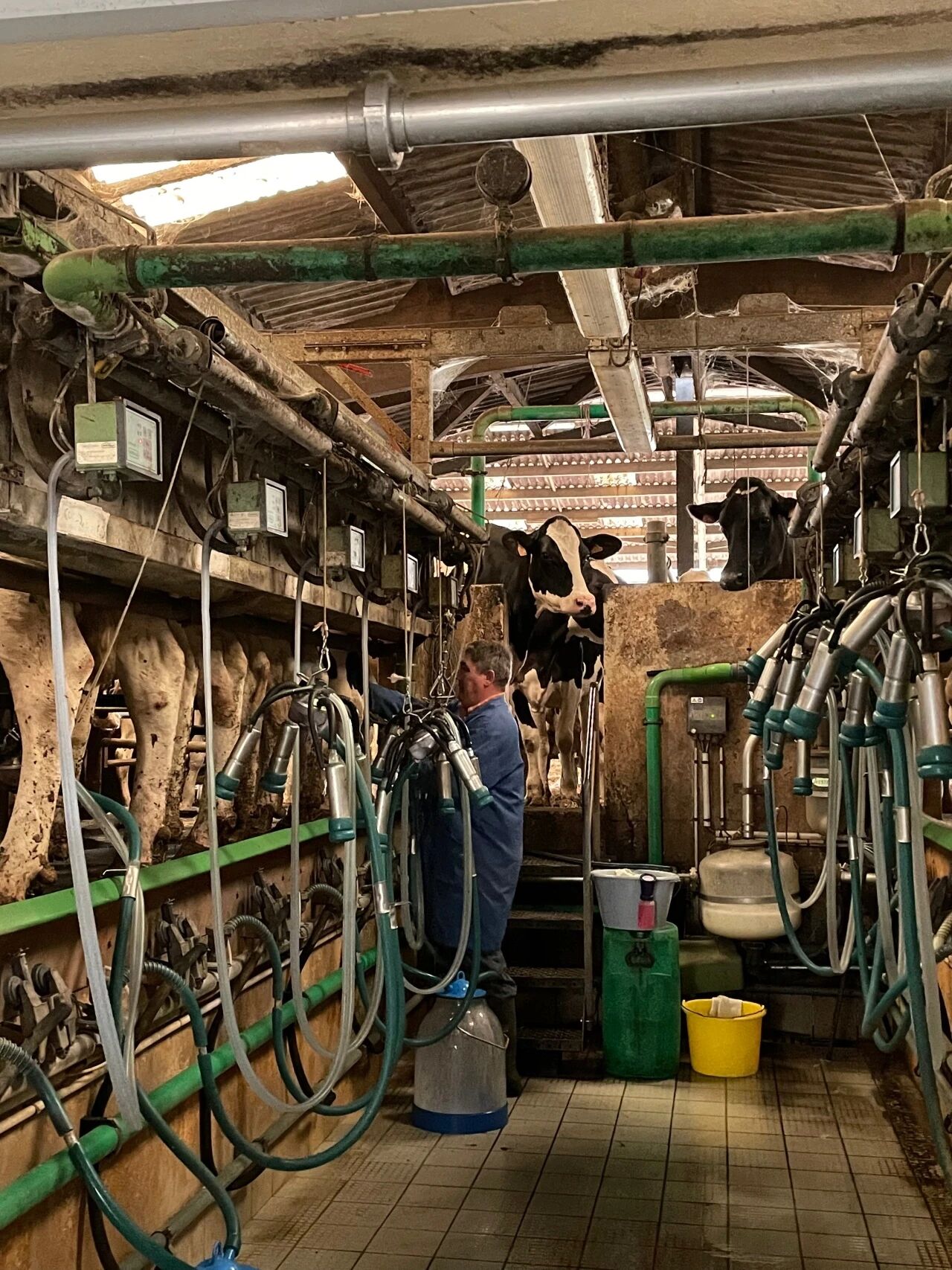
One day the cheese ran out. Annette took me to the dairy farm nearby and we brought back ten kilos of raw milk. Add a few drops of the enzyme found only in a ruminant’s stomach, stir, and by the next day, once the casein has coagulated, you drain off the whey. After that, it’s up to time’s magic. The longer it ferments, the richer the cheese becomes.
Homemade cheese calls for the house-brewed Pineau des Charentes, a sweet aperitif wine popular in western France. When Ale’s in a good mood, he’ll crack one open for no reason at all. But come what may, every Friday evening that bottle is guaranteed to appear in the kitchen.
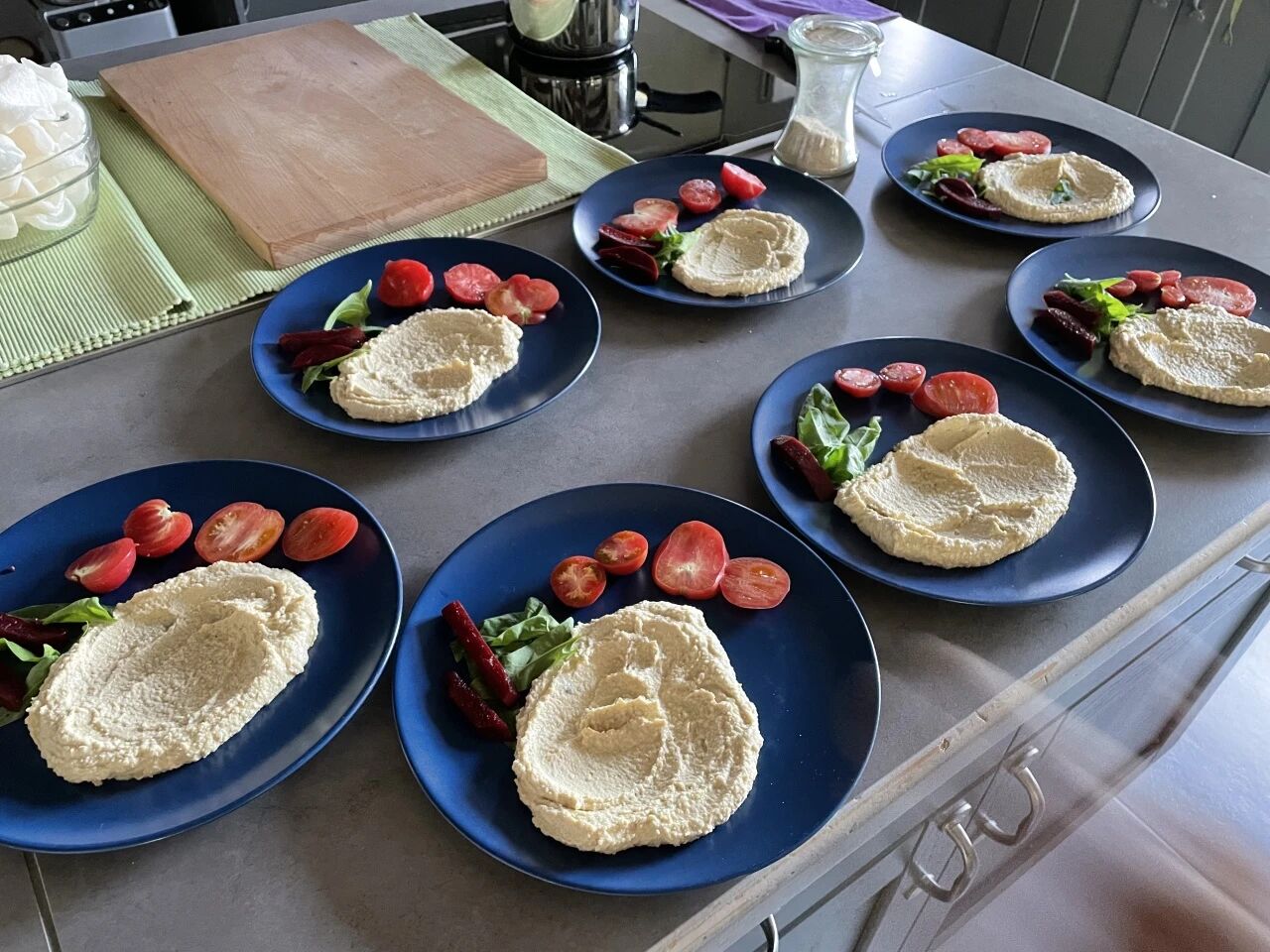
Every Friday evening is the Jewish Shabbat. Apart from buttery, sugary breads like croissants, the everyday French loaf around here is usually just flour, water, salt, and yeast. But every Friday, Annette makes challah: a braided bread enriched with eggs and milk, spread with hummus, served alongside a jar of homemade confit chicken gizzards. Before we eat we light nine candles, everyone forms a circle, holds hands, and prays. When we toast, we say to each other “L’chaim” (לְחַיִּים, Hebrew)—it means “to your health.”
Weekends are free time, but fun is hard to come by. Miguel and I made a trip into town. With no transport of our own, we had to walk over an hour to the nearest bus stop, setting off just after six in the morning, and because the country road has no streetlights, we had to be home before dark. It reminded me of the grueling school walks the old generation used to describe in books—except I only ever made it to La Rochelle once.
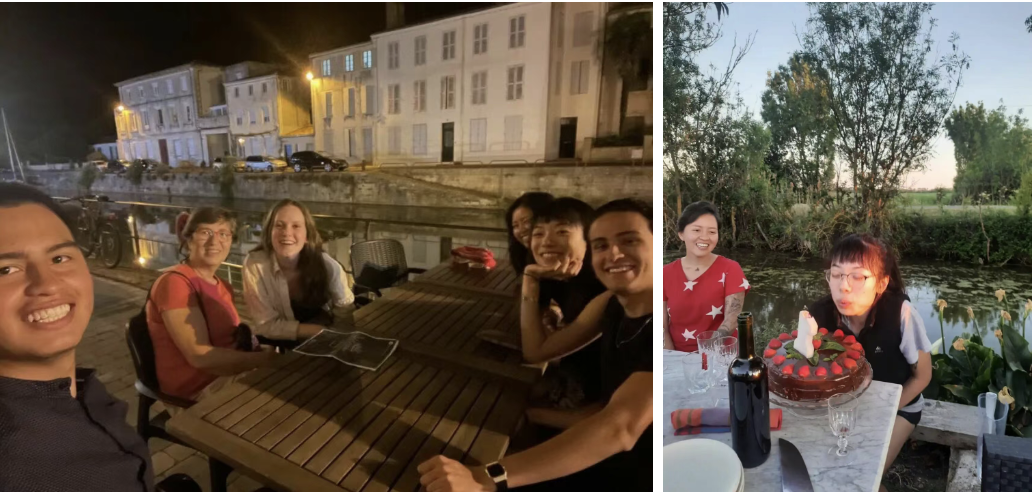
Occasionally, Ale and Annette would treat everyone to a beer in the nearby town of under a thousand souls. A van dropped off a middle-aged couple, three Latin Americans, one East Asian, and a blonde, blue-eyed Israeli girl. The uncles, hovering near alcohol poisoning, were huddled in the pub playing Jenga. They all dropped their wooden blocks to clink glasses with us, the lot of foreigners.
V. A Decommodified Rural Society
Looking back on that month, my people-pleasing nature perhaps earned me a degree of “looking after”: I was more proactive with tasks and more willing to keep the hosts company in conversation, so I was never assigned the particularly gruelling work. By contrast, young Miguel had a bit of a showman’s streak, always trying to show how different he was from the other two Colombians. This little performance was quickly seen through, and Ale and Annette would occasionally let their impatience show—not out of malice, more like the kind of brush-off you give a younger kid you’ve tolerated long enough.
Sustaining this kind of emotional labour within a household to which you owe no blood or bond—for many people, it’s hard to call that a romantic rural experience.
But the antithesis of volunteer life isn’t a simple yearning for the material abundance of a commodity society. One week, the farm owners had to travel far away and entrusted the house and the farm entirely to Jo. For that stretch, we lived a strange, quiet life: little conversation, all three of us following Jo’s lead. Besides an extra hour of afternoon sleep and allowing ourselves a personal treat of fried duck egg for dinner, our daily work was no different from when the owners were present—yet it felt far more at ease. Farm work and rural life could actually be this easy—no constantly second-guessing boundaries, no needing to check in with the hosts at every turn.
It was precisely this contrast that made the value of urban publicness clearer to me. In theory, a well-structured institutional society protects individuals through law and urban community. While birth and luck consign many to being “stuck somewhere,” honestly, most people still keep a last-resort way out: work for a wage and exchange it for a basic life.
Out in the countryside, it’s different. You can’t just buy food on a whim (unless you drive forty-five minutes to Walmart), so eating becomes a real, concrete problem. Volunteers have no land and own no food; maintaining a good relationship with the “landlords” inevitably becomes, in the subconscious, a basic survival strategy. When everything goes smoothly, you can manage; the moment you fall ill, the problem surfaces immediately: no familiar labour-rights protections, and even rest becomes a source of quiet unease.
Of course, Ale and Annette never left us short of food, and never shortchanged me. This is exactly what highlights the problem: micro-communities like family farms and volunteer work-exchange are almost entirely sustained by individual goodwill, yet lack any necessary oversight or rights-protection mechanisms. Perhaps that’s precisely why so many well-intentioned “eco-communities” ultimately fizzle out.
So be it. For me, this kind of life, once past its best-before date, at least still leaves open the possibility of walking away at any time. After my volunteer stint ended, I wandered the markets alone in Toulouse, rediscovering a desire to shop I’d long since lost. Back in the familiar consumer world, no one expected me to be up at dawn with the tools. A dozen euros could buy me a whole day of lazy sleep, and I could eat croissants for all three meals.
But without that month of non-wage labour, I probably wouldn’t have come to understand the value of modern society so viscerally. The flip side of the “alienation” we talk about so often isn’t perhaps a return to traditional village community bonds, but rather whether you possess the space and the right to move freely in and out of the institutional order.
That said, no one can help longing for poetry and distance, for the many imaginings rural life stirs up. But unless you actually step in and experience it for real, it’s hard to know whether that faraway place tastes like honey or arsenic.
All images in this article are provided by the author.
Editor: Tianle