
2026: Set your thinking free, summon staple food in every form | Grandma Kouzi
Looking back on 2025, the year opened with loss: my mum passed away. Back in Eren Valley, I was greeted by all kinds of harvests. From spring I began harvesting rapeseed, forty to fifty jin, which gave me more than a year’s worth of oil. This year I harvested over a hundred pumpkins, over a hundred jin of all kinds of beans, over a hundred jin of all kinds of rice, over a hundred jin of peanuts, and over a hundred jin of maize, achieving self-sufficiency in all food except salt…
Today, let’s talk about the grain question everyone cares about most: the staple food we can’t do without every day.
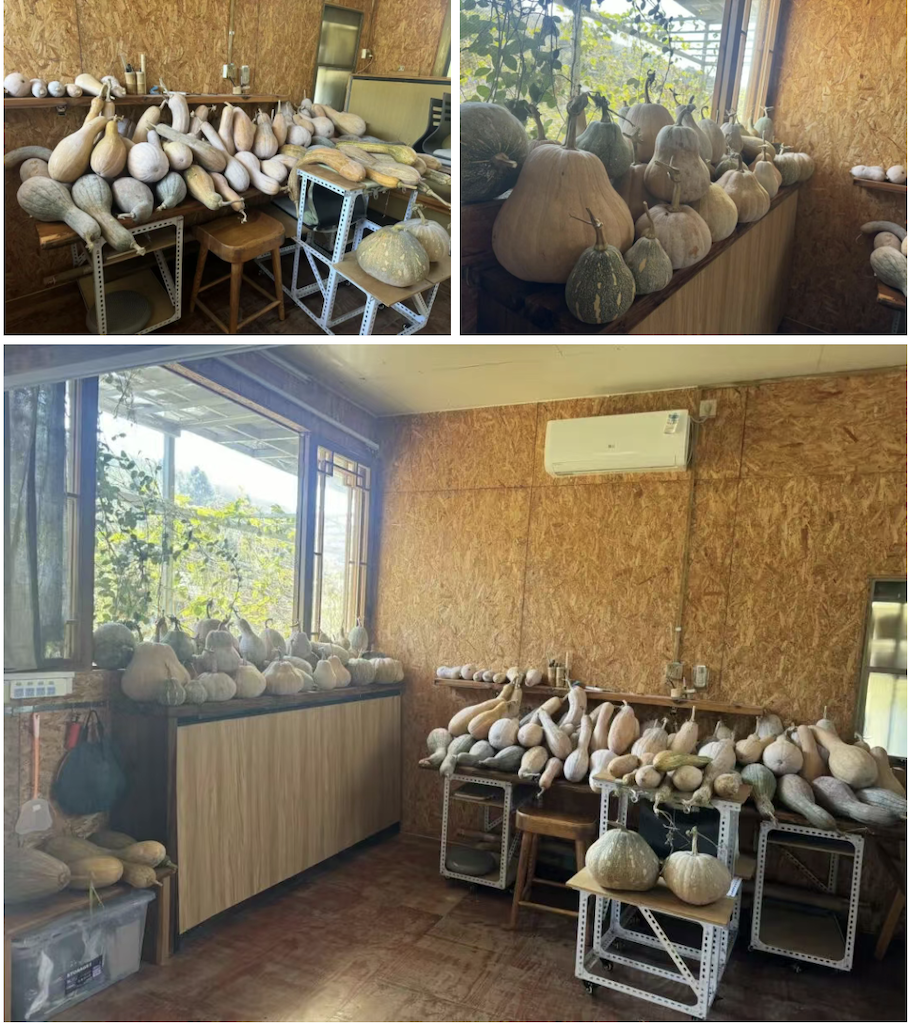
I. Pumpkin as a Staple Food
As a foodie, I eat in the present and take life as it comes. A while ago maize came out in abundance, and I was gnawing on maize every day. Now the turn has come to pumpkin, and the situation is serious—it has become a sweet burden: too much to eat through.
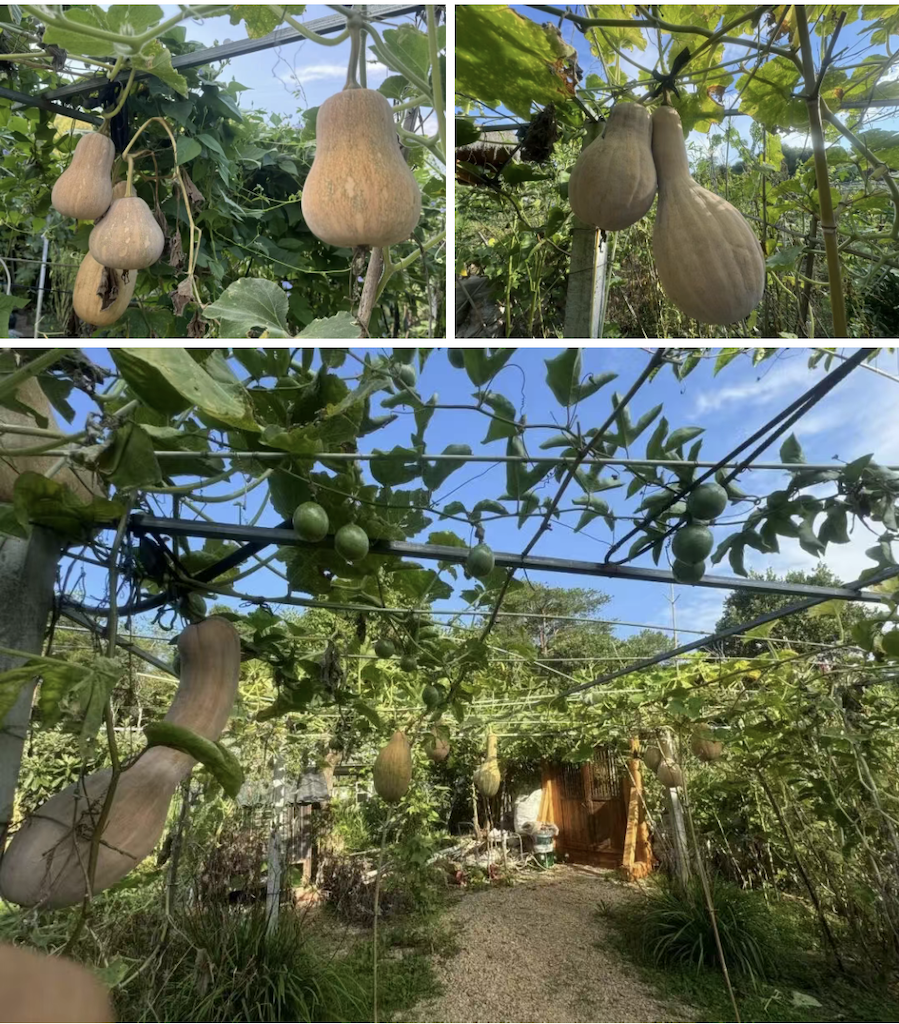
Pumpkins that have gone old and fully ripe on the vine are no problem. Old pumpkins that have been nipped by frost keep extremely well; they can be eaten right through 2026. Hanging above the path one must pass to go in and out of the small courtyard, they are the view I keep bumping my head on. The problem is insects. Once a fruit fly has bitten them, it is “pumpkin suicide”: too many half-old, half-not pumpkins leap off the vine to their death. Once the eggs hatch, they start to spoil from the inside out, so they must go into the belly before they go bad.
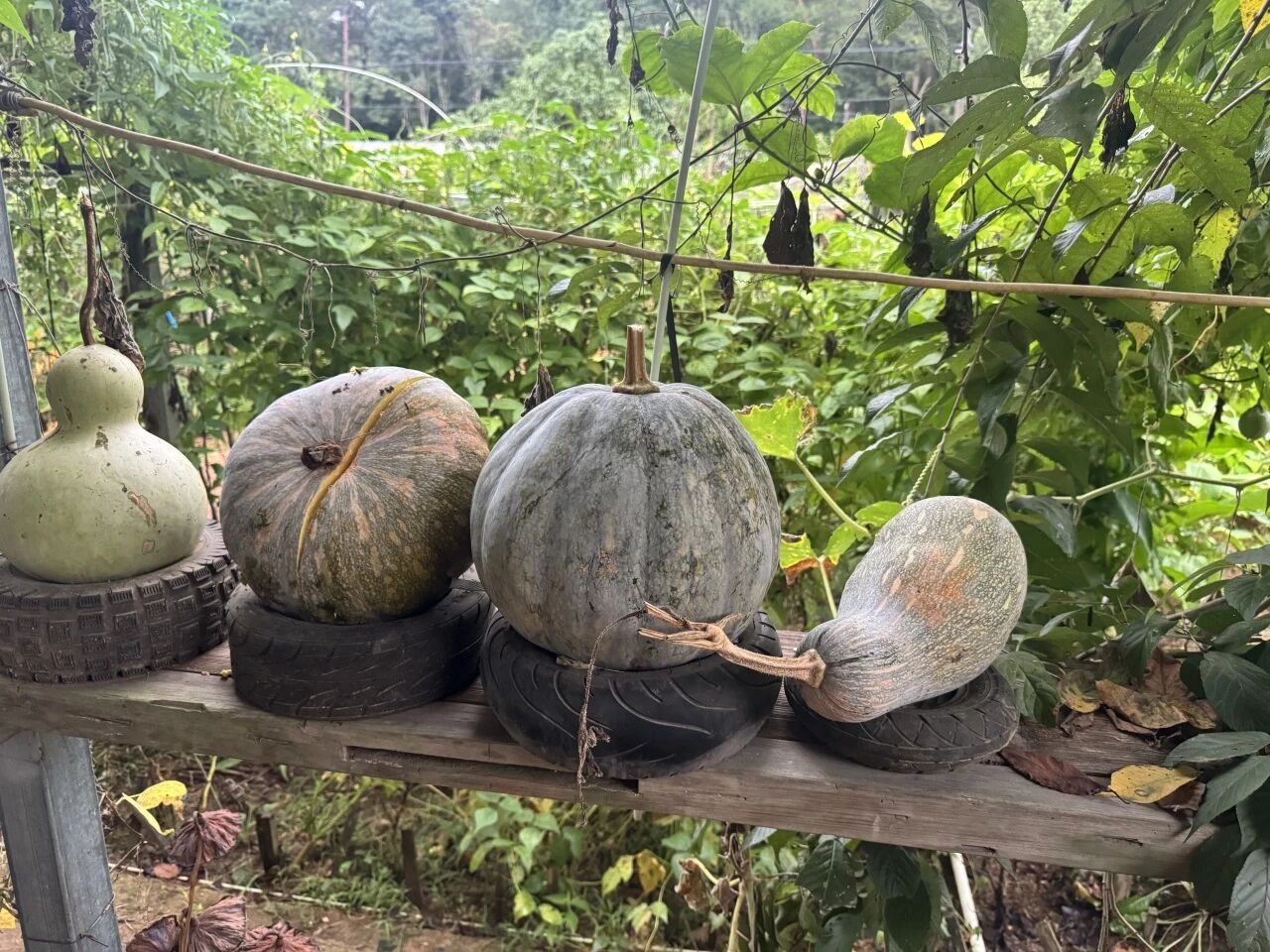
Previously, I mainly ate pumpkin as porridge, steamed, or as pumpkin soya milk; consumption was limited, and I was choosy about the pumpkins. A pumpkin has to be old enough to be sweet, and it also depends on variety; if it is watery, it does not taste good. Fujian, being rainy and damp, is like the saying that a tangerine tree transplanted south of the Huai River becomes a bitter orange; many northern varieties that are originally floury and soft turned out watery when I grew them. Sweetness and floury softness cannot be had together, leaving a liang dilemma between liking it and it not tasting good.
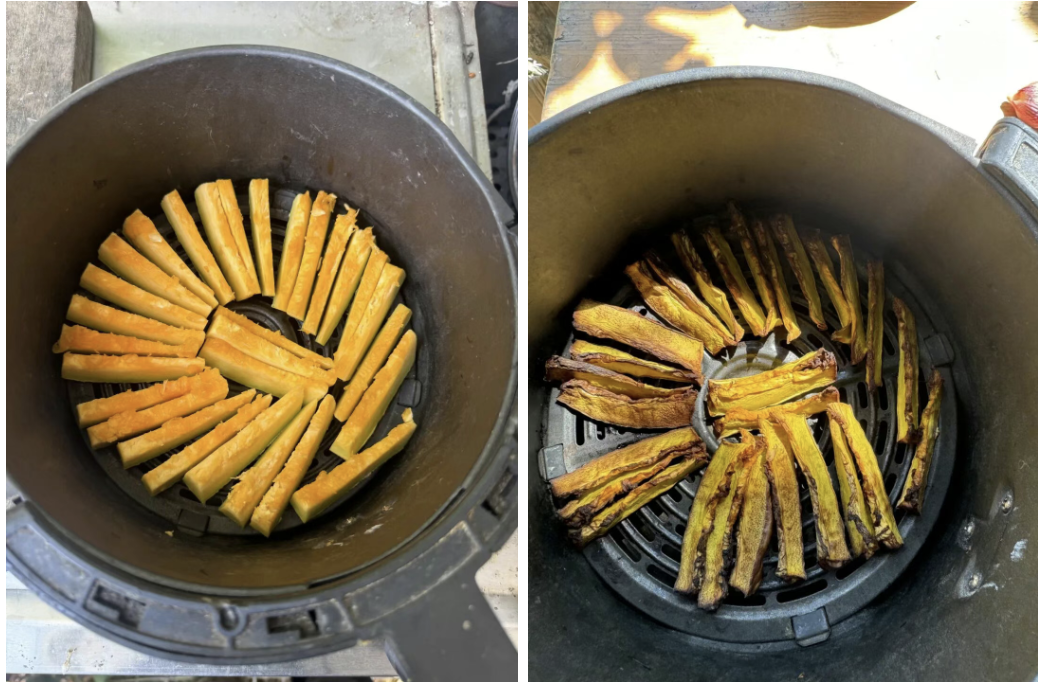
Recently I invented a new way of eating it: cut pumpkin into thick slices (if under 5 mm they easily turn to mush; if over 10 mm they do not cook through), put them in the air fryer at 180 degrees for 30 minutes, turning them over halfway through. This method is not choosy about variety and does not fear watery tenderness; roasting drives off water and raises sweetness, and the roasted pumpkin skin is springy and chewy, and the flesh soft and floury, with the flavour taking off on the spot.
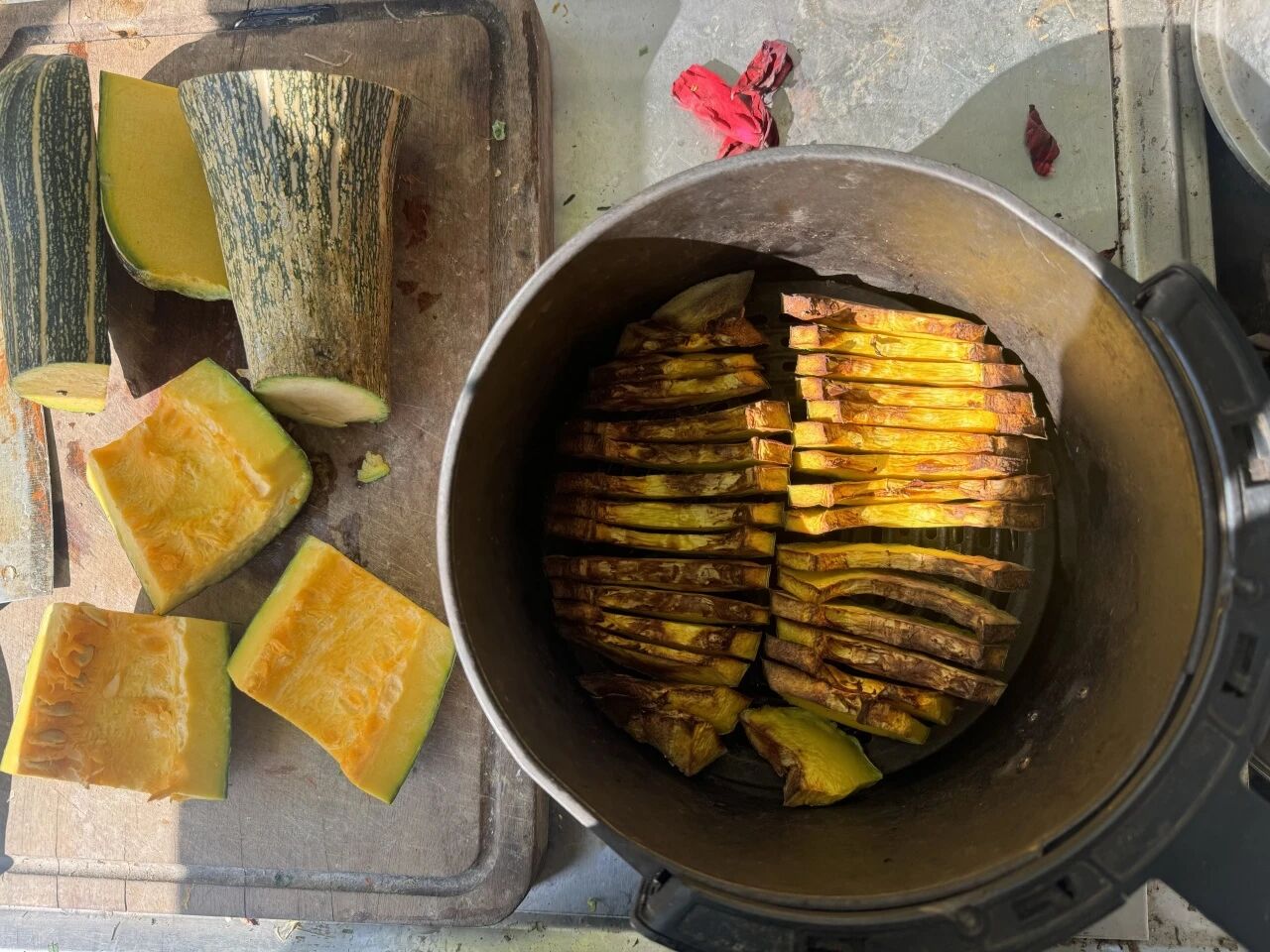
Pumpkin has also been promoted to staple food. My lunch today: an ovenful of roasted pumpkin, liang salted duck eggs, and a pot of flower-and-vegetable soup. The flowers were hibiscus, roselle and okra flower; the vegetables were sponge gourd, bottle gourd and tender mulberry leaves. I tossed in a few pre-soaked peanuts and some cooked, frozen golden beans. More than a dozen ingredients, colourful, fulfilling the requirements of the Mediterranean diet. The soup base is a rich turmeric soup, a classic Eren Valley pre-prepared soup mix, main ingredient turmeric, then in descending amount daylily flower, cherry tomatoes, spring onion, ginger and garlic, salt, mujiangzi, black pepper, simmered on low heat for over liang hours to reduce the juices, portioned and frozen, take whatever you want to eat, and in five minutes you have a long-simmered fine soup.
I have already talked a heap about pumpkin, but only because it is the recent staple food. What, pumpkin is staple food too?
What should staple food look like? Why can’t pumpkin be staple food?
II. Staple Food That Keeps Pace with the Times
We are accustomed to treating carbohydrate-rich cereal crops as staple foods; rice and steamed buns mainly meet the need for energy. In the foraging and hunting era, humans had to trade enormous physical exertion for a chance to survive, and populations that could obtain high-calorie staple foods were more likely to win out in natural selection. Throughout the long process of evolution, human labour has been indispensable; the more staple food the better, and the finer the better. Only when it was truly insufficient did coarser mixed grains become a fallback, and when staple food was lacking, one had a “sickly, haggard look”.
I was born in the 1960s and have known hunger. In primary school, half of my grain ration book quota was coarse grains, and eating refined grains at every meal was a luxury. Back then, when people met, “You have put on weight” was a compliment; Lu Xun’s novels have similar episodes. We all know that nowadays the compliment has become “You have lost weight”.
In times of scarcity, energy needs came first; in times of plenty, nutritional needs matter more. In an era that prizes thinness, refined carbohydrates plus refined fats have already become a “sugar-and-oil bomb” threatening modern health. The shift is from energy first to nutrition first, adding more protein, trace elements and dietary fibre. By this standard, meat, eggs and milk are all top performers. In the fitness world, eating seven or eight eggs a day is nothing unusual; it has already become a staple food. The diet of the long-lived Italian woman Emma Morano remained virtually unchanged for nearly a century: three eggs for breakfast, fried eggs at lunch, chicken for dinner. She lived to 117, and her diet was called the “chicken diet” or the “egg diet”; eggs and chicken were, obviously, her staple food.
Maize, sweet potatoes, potatoes and eggs can be staple foods, and pumpkin can be too. Pumpkin is a high-quality carbohydrate, providing most of my daily energy needs; its protein content is higher than rice and wheat flour, and it is rich in potassium, calcium, magnesium and so on. It is absolutely a qualified staple food and a food treasure.
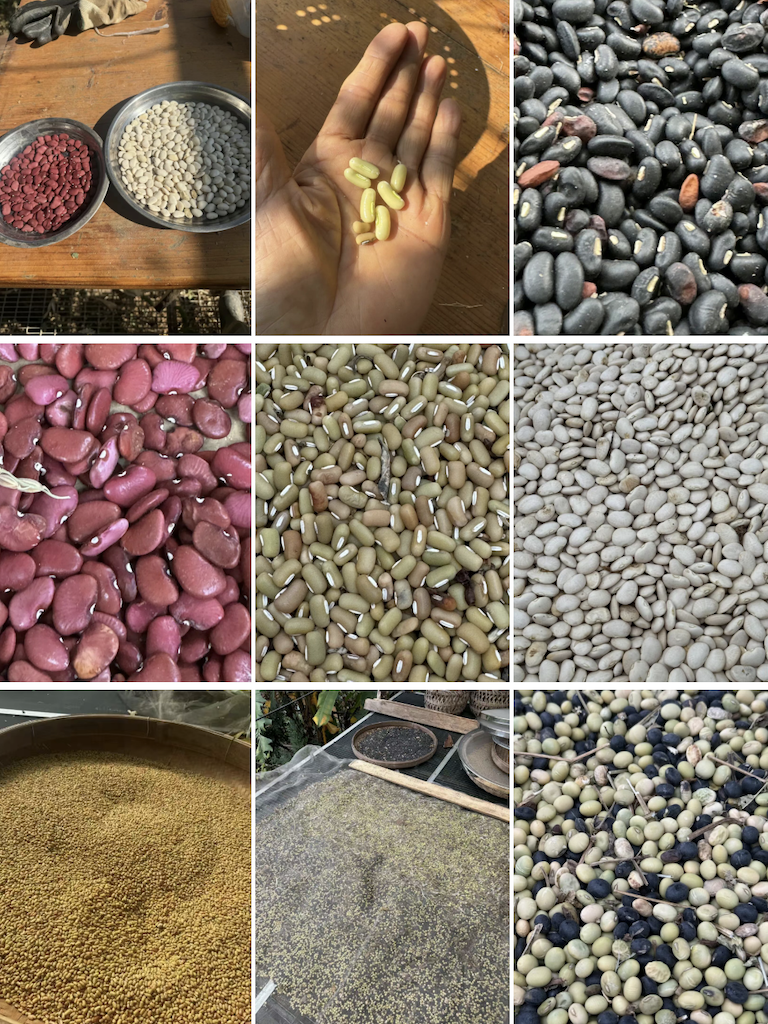
There is no fixed rule for staple food in Eren Valley; usually we eat whatever is at hand, eat local and eat seasonal, with the mouth following the harvest. In pumpkin season I roast pumpkin every day; in maize season I boil maize. I estimate that my list of staple foods will also grow to include mixed beans and tempeh. The 2025 bean harvest was good; in total I grew more than a dozen leguminous crops. Setting aside the French beans, long beans, broad beans, snow peas and winged beans eaten fresh, the ones that can be stored include soybeans, green soybeans, black soybeans (yellow-centred and green-centred), edamame, white kidney beans, purple kidney beans, golden beans and so on. Not counting those picked and eaten as soon as harvested for peace of mind, I dried some in the sun and weighed them the other day; altogether over a hundred jin. In the past few years, after much trial and error, I finally learned to make homemade tempeh, but there were not enough beans: at most, the soybean and black soybean harvest was thirty jin a year, less than a liang a day on average, so even making soya milk required using them sparingly. Now I have three liang of beans a day, and I can finally enjoy tempeh freedom, eating it freely and using it as a “staple food”. I needn’t go on about the benefits of tempeh; if I say too much I’ll be accused of humblebragging and picked on.
III. How Staple Food Gets onto the Table
To American children of that era, spinach meant the cans of spinach on the supermarket shelf, and the same was true of other vegetables. We are actually not much different; many children do not know the relationship between steamed buns and wheat.
Against the backdrop of industrial production and global sales, staple food, on the basis of increasingly refined raw materials, has become increasingly finished and commodified. Fifty or sixty years ago, in my small hometown city, every household bought flour, mixed the dough itself and steamed its own buns. Today, finished buns are bought by nearly everyone, mostly from street stalls and steaming bun shops, and only a smaller part from supermarket chillers and online shopping.
“Salt, Sugar, Fat: How the Food Giants Manipulate Us”> writes that the average American intake of these three components is liang times the recommended amount; now Chinese people are no less. These health-endangering excess intakes do not come from seasoning bottles on the dining table; they mainly come from processed foods with annual revenue of a trillion US dollars, all kinds of out-of-the-bag ready-to-eat finished goods. Chips, sweets, cakes, milk tea, sweet drinks in ever-new varieties… more additives bring more profit, also more deliciousness, and more health problems.
US food ads around the Second World War carried all kinds of “women’s liberation” narratives: with just a pair of scissors, a steamer or a microwave, one can easily prepare a lavish feast for the whole family. The twentieth century also brought a modern standard kitchen setup, with almost identical fridges stocked with almost identical finished or semi-finished goods. Modernisation unified the kitchen; industry took over the dining table.
Industrial production and global sales are a trend, irreversible. But now, with production extremely abundant, clever modern people can certainly find a way to live with this era and make good use of the fruits of its progress.
Thanks to the complete industrial chain of a manufacturing great power, home rice mills, oil presses and flour mills are good value and easy to buy online. With these aids, the wheat, paddy, peanuts and rapeseed harvested in Eren Valley are all kept wholegrain; process only as much as is eaten. My shelf life is not liang years nor liang months; it may be less than liang weeks. With zero additives, I do not fear it going bad.
Reading this far, surely someone will say I am humble-bragging. But I have gone to the trouble of writing all this not to show off and deliberately court a beating, but to say: you can do it too.
IV. The Forms of Staple Food
Clever modern people can liberate their thinking and summon staple food in every conceivable form.
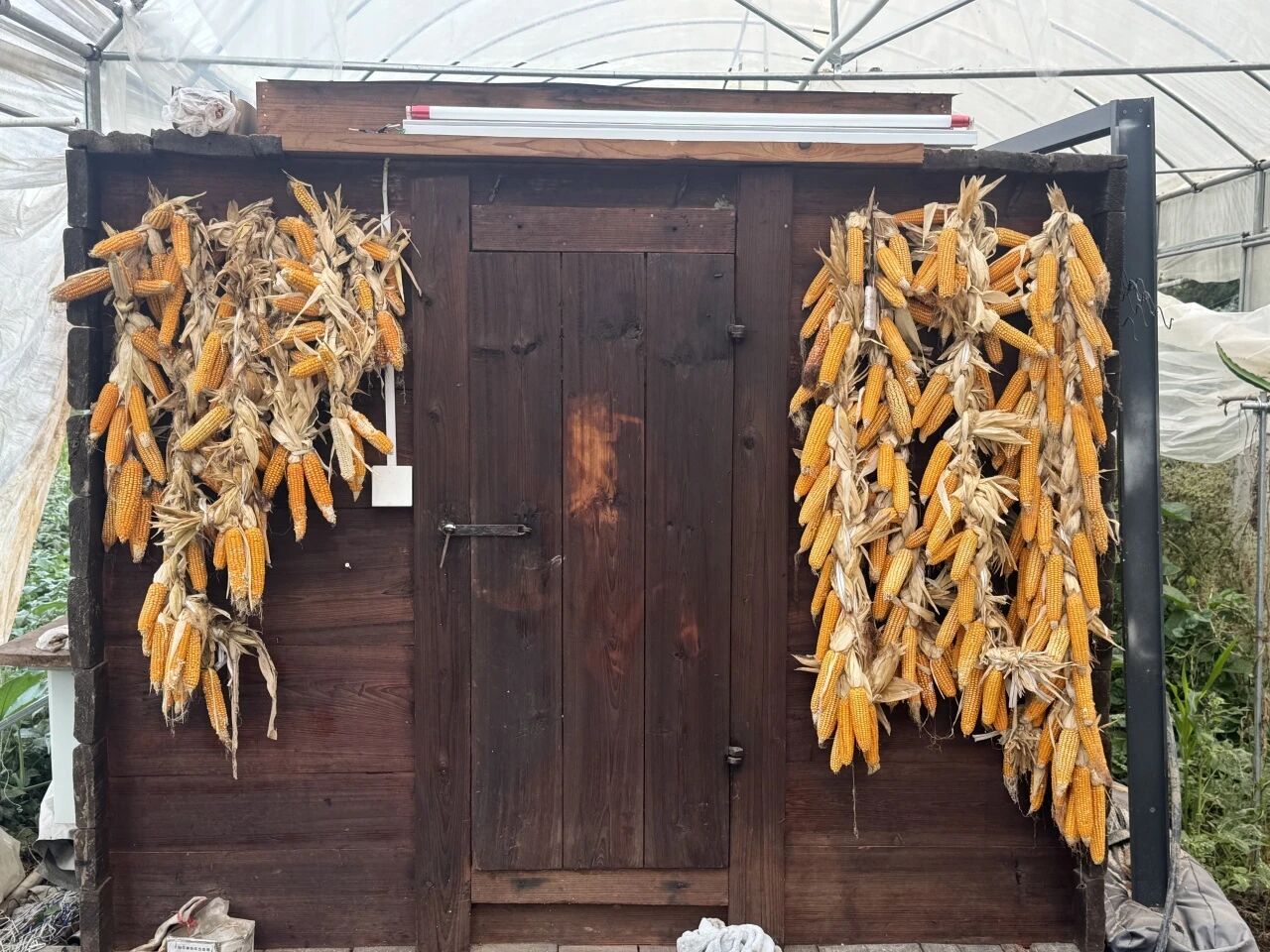
Now online shopping is highly developed, with good value for money. You can buy all kinds of finished goods, and also all kinds of food in its original form. I have always thought that having no additives is more important than being organic, for example, whole pumpkins and wholegrain soybeans and maize. I always keep fully ripe old pumpkins for slow eating, and dry and store the maize I cannot eat up. Every day, when I make pumpkin soya milk, I break off some maize kernels; the nutrition is better balanced and easier to absorb, and it also adds flavour and body.
We know that pumpkin skin has a higher nutrient density than the flesh, but when it is too old, it has undergone lignification and cannot be eaten. I am especially grateful for the high-speed blender, with a speed of more than thirty thousand revolutions per minute. Now I can just chuck everything into the high-speed blender and be done with it, including the pumpkin pith and seeds, and it easily becomes smooth, fine pumpkin soya milk.
In the agrarian era, this would have meant steaming it first, then grinding and straining it, busy for half a day; the texture would not be as fine as now, and the skin and seeds of old pumpkin would all be filtered out. But with a high-speed blender, it is a minor effort.
Take the air-fryer roast pumpkin mentioned at the start of this piece, for example; it is also a perk exclusive to modern people. I have built clay ovens in both Yilan and Eren Valley (the one in Yilan is a traditional European black oven, and the one in Eren Valley is a white clay oven with a rocket stove). Clay-oven roasting is admittedly not bad, but lighting a fire and bringing it up to temperature is extremely troublesome; to eat a bite of roast pumpkin one has to busy oneself half a day. Switching to an air-fryer oven is also a minor effort, of course you have to do the lifting liang times, and turn it over in the middle.
Everyone knows brown rice is nutritious, but its poor texture has put off too many people. I once tried sprouted brown rice; its texture completely beat refined rice; it was just a bit troublesome to make. Now there is a rice cooker that can make “sprouted brown rice”, available online, ranging from Japanese models costing a few thousand yuan to domestic ones costing a few hundred yuan. I have not tried any: first, I already eat little rice; second, a foodie does not mind the trouble for the sake of eating, and enjoys it.
When the era has advanced to the point of convenient online shopping and a full range of small appliances on your side, you can connect the land and the dining table, and completely avoid the pitfalls of industrial production and global sales.
Finally, I answer a frequently asked question: if you do not want a pile of kitchen appliances, can you just buy semi-finished goods and be done with a quick brew?
Yes, but there is a prerequisite: you must make sure the ingredient list is clean. Many of today’s quick-mix semi-finished goods have additives. For example, soya milk powder often has sugar and dextrin added, even trans fat. In rich, ready-to-eat oatmeal, the oatmeal is only a puppet; the star is maltodextrin formed by sugarising maize starch, together with non-dairy creamer that is off the charts in trans fat and artificial flavouring. It is all science and heavy-handed trickery, and the quick-mix ready-to-eat foods are such a deep pit that I keep my distance from them all.
In 2026, how will you begin your staple food revolution?

All images in the article were taken by the author
Editor: Xiaodan