Globalisation or Localisation? A Dialogue Between Documentary and Food Systems Scholars
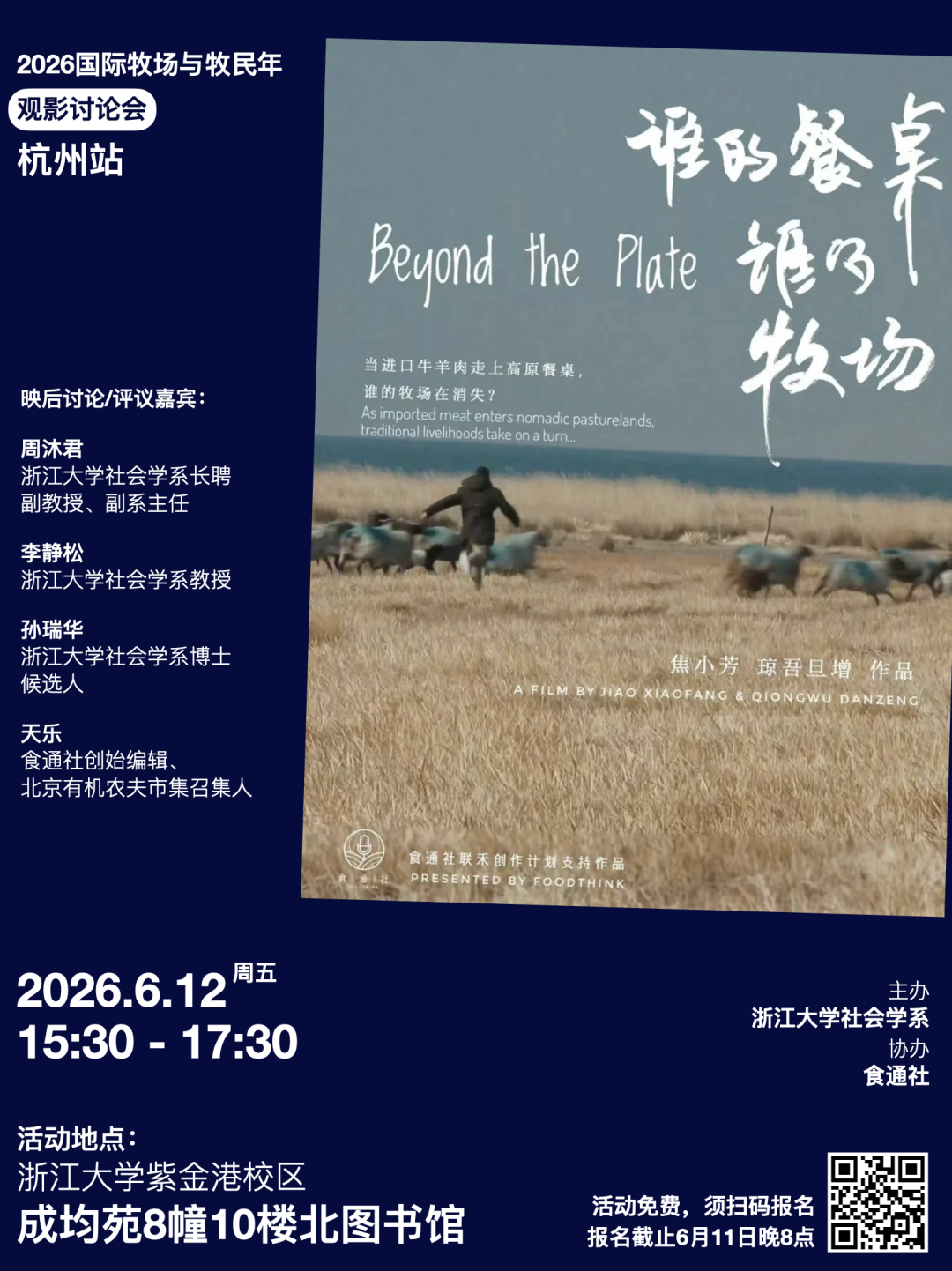
The award-winning documentary “Whose Table, Whose Pasture” will be screened this Friday (12 June 2026) by the Department of Sociology at Zhejiang University.
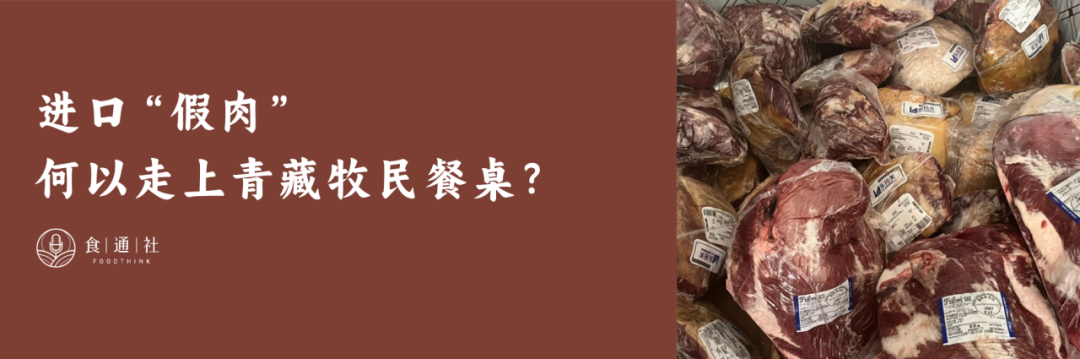
The documentary’s director follows the trail of imported beef and mutton, and of local yaks and Tibetan sheep, setting out from Xining’s wholesale and retail markets, then heading to street markets, finishing farms and abattoirs in Gongshe County, and then following cattle traders to Qinghai Lake. Making a circuit around the lake, the director interviews herders from different ethnic groups in the surrounding pastoral areas, trying to understand how the continued fall in local cattle and sheep prices and the influx of imported frozen meat have affected herders’ livelihoods and ways of life.
When herders on the Qinghai–Tibet Plateau also feel the impact of agricultural produce from faraway Brazil, Uruguay, Australia and New Zealand, how should we understand the food on our table?
Can geographical indications protect local species, industries and the interests of farmers and herders?
What are farmers and abattoirs outside the pasture experiencing?
Why do agriculture and food systems need a sustainable transition, and how can it be achieved?
What possibilities for action are open to consumers and civil society organisations?
After this screening, experts from the Department of Sociology at Zhejiang University who research food systems will discuss these questions with everyone.
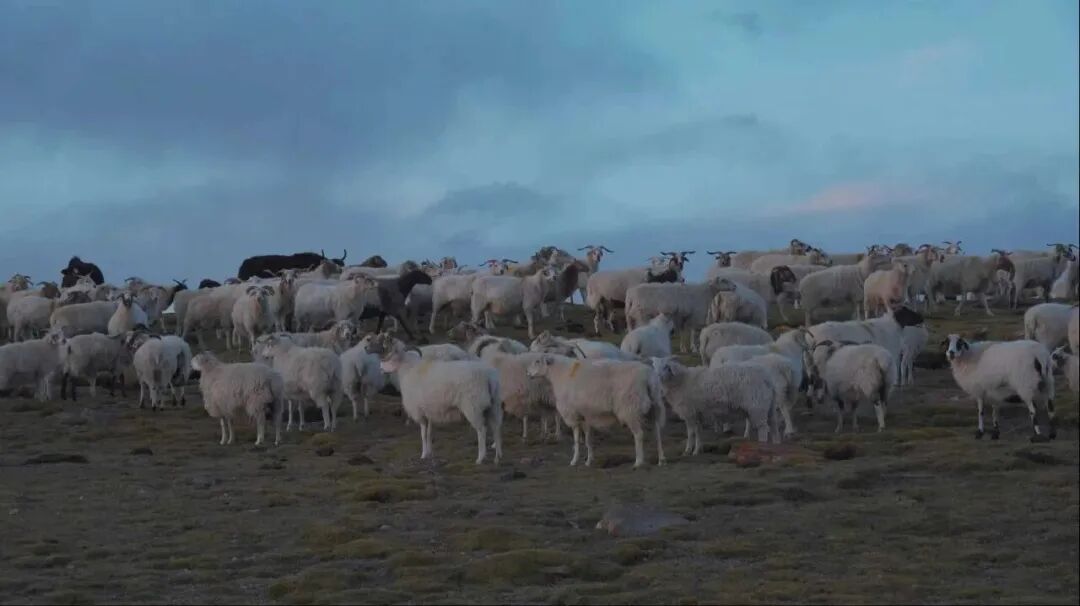
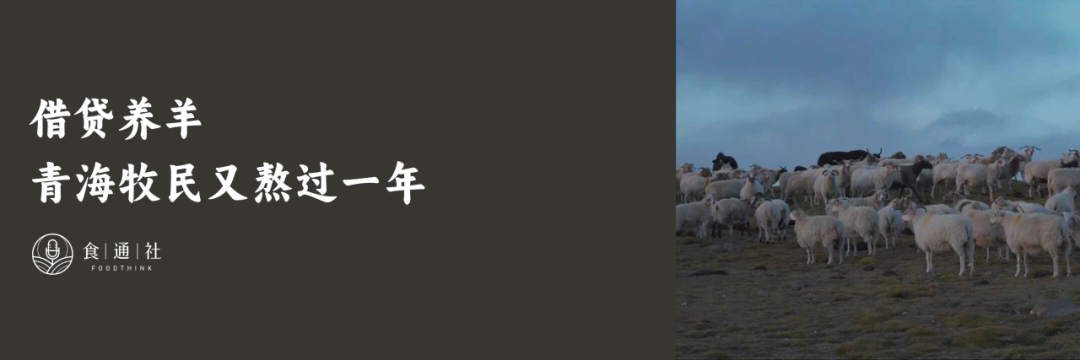
◉ The flock of sheep at the home of Niang E Jia, one of the protagonists of “Whose Table, Whose Pasture”. Photo: Jiao Xiaofang
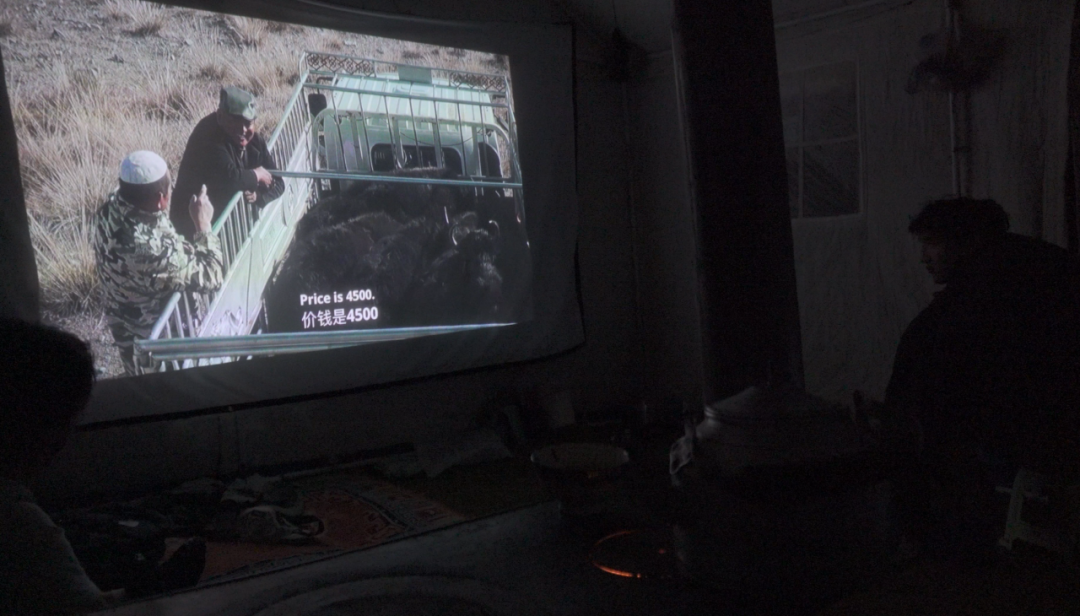
◉ Return visits are an important part of community video. Jiao Xiaofang returned to the filming location in 2025 to show the documentary “Whose Table, Whose Pasture” to the shepherd. Photo: Jiao Xiaofang
This Friday from 15:30 to 17:30 (12 June), Foodthink will screen “Whose Table, Whose Pasture” at Zhejiang University, Zijingang West, Chengjun Yuan, Building 8, 10th Floor, North Library Reading Room, and invite friends from Hangzhou to attend the screening.
-Co-panelists–
Li Jingsong: Professor, Department of Sociology, Zhejiang University
Zhou Mujun: Tenured Associate Professor, Department of Sociology, Zhejiang University
Sun Ruihua: PhD candidate, Department of Sociology, Zhejiang University
Chang Tianle: Founding Editor, Foodthink (producer of the documentary)
– Synopsis –
“Whose Table, Whose Pasture” is a documentary based on field investigation. With support from Foodthink’s Lianhe Creative Programme, the director went deep into the pastoral areas around Qinghai Lake, recording the impact of the influx of imported frozen beef and mutton into local markets.
Through visits to Xining’s frozen wholesale markets and cold-chain warehouses, and filming local herder households, butcher shops and finishing farms, the film gives a realistic portrayal of the impact of imported meat, with its low-price advantage, on local beef and mutton. This has directly led to a sharp fall in the purchase prices of herders’ cattle and sheep, lower income and difficulty repaying loans, while local meat traders are left with thin margins and find it difficult to do business.
The camera goes deep into the imported beef and mutton market around Qinghai Lake, probing a grim reality: in the global meat supply chain, who benefits from low prices, and who bears the cost?
– Director Profile –
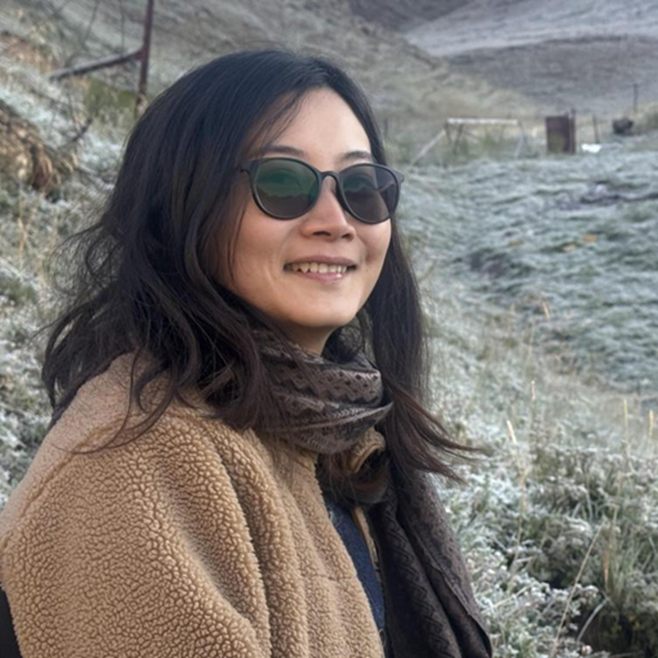
Jiao Xiaofang | documentary filmmaker and researcher in visual anthropology, who has long focused on local knowledge, ecological ethics and women’s experiences in western China and the coastal areas of Southeast Asia. The work combines ethnographic observation with poetic expression, focusing on the relationship between people and nature and the emotional landscapes of everyday life. The documentary “Whose Table, Whose Pasture” (2025) was selected for the 5th World Nomadic Film Festival and the 6th China Ethnographic Documentary Film Festival.
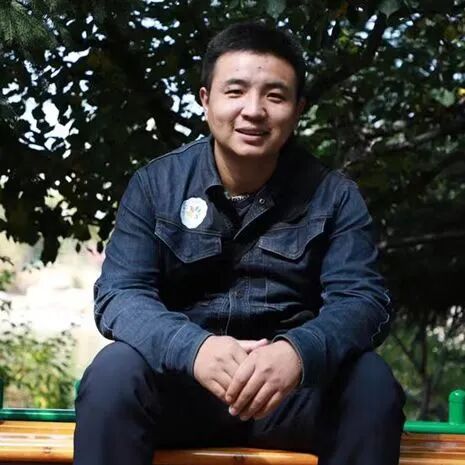
Qiong Wu · Danzeng | A Tibetan documentary maker and community activist, who has long been committed to ecological protection and film and video education in the Qinghai–Tibet Plateau region. He served as Coordinator for the Yunnan “Xiangcun Zhi Yan” Tibetan Area Programme and Central Region Representative for the Alashan SEE Three-River Source Project, and is now Head of the “Human–Bear Conflict Project” at the Qinghai Province Xuejing Ecology Awareness, Education and Research Centre. For ten years, he has advanced video training for herders and community ecological projects in Yushu, Aba and elsewhere, supporting herders in using video to record their own environment and culture. His work spans film, ecology and public education, and is dedicated to building understanding and coexistence between people and nature.
– How to Attend –
[Time]
Friday 12 June 2026, 15:30–17:30
[Location]
- Zhejiang University, Zijingang West, Chengjun Yuan, Building 8, 10th Floor, North Library Reading Room
[How to Sign Up]
The event is free. Scan the QR code on the poster to sign up.
Attendees not from Zhejiang University need to provide their full name and ID number when signing up, so that we can assist with registering a campus access appointment.
<em>Sign-up closes at 8 pm on 11 June</em>
A quick plug📢
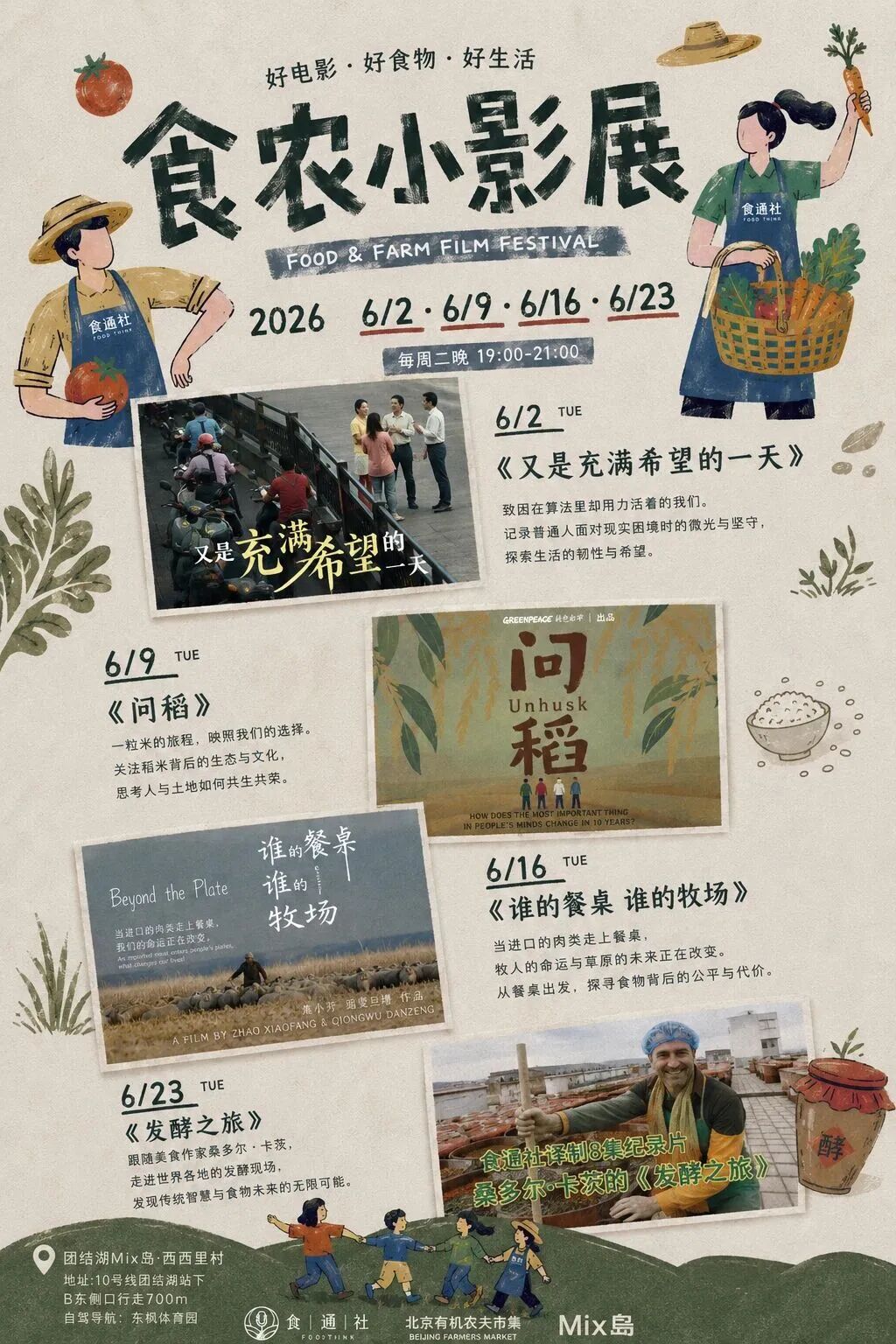
Tonight at 7:30 pm, Foodthink’s Food and Farming Mini Film Festival will screen “Questioning Rice”, directed by Wang Jue, at Mix Island · Sicily Village. The director will also be there for a post-screening discussion.
“Questioning Rice” centres on the question of who produces our rice. Through the life stories of five rice farmers, the film documents changes in production methods, ways of life and cultural traditions in rural south-western China over the past decade. Following its chronological and geographical clues, we can rethink the relationship between food, the environment and rural life, and how it affects everyone’s everyday life.
For more information about the Food and Farming Mini Film Festival, see 🔽
▼
Click the image to read the related article