Eat Bamboo Shoots Before You Grow Old

If bamboo is the spiritual totem of Chinese people, then bamboo shoots are the soul of China’s foodies. Strangely enough, bamboo forests cover 30.1 million hectares worldwide, spanning Europe, Asia, Africa and beyond, yet China alone accounts for seventy per cent of global consumption of fresh bamboo shoots. From the south-east to the south-west, although cooking methods and ways of eating vary, people in different parts of China are devoted to the fresh, delicate flavour of bamboo shoots. What kind of natural flavour is it, so deeply rooted in the land and in local life?
Bamboo Shoots and Meat in Jiangnan
When it comes to eating bamboo shoots, the most famous figure is undoubtedly Su Dongpo. Master Dongpo, who in life upheld the principle of “wherever he was demoted, that was where he ate”, was an early ambassador for “China on the Tip of the Tongue”. When he first arrived in Huangzhou he wrote: “The Yangtze bends around the city; I know its fish are fine. Fine bamboo spreads over the hills; I feel the fragrance of the shoots.” I suspect few literati would dare admit that seeing bamboo makes them think of the shoots on their plates.
That famous line, “One may go without meat, but one must not live without bamboo”, took on a further depth of meaning. Master Dongpo was not setting up a contrast between bamboo and meat; he was reminding us to keep our minds open.
As a culinary genius once in a generation, if Master Dongpo could be patient enough to slowly simmer a large piece of fat meat over a “flame does not rise” low heat—”Let it cook itself, do not urge it; when the heat has reached its fullness, it will be beautiful”—and so create the top of the Chinese culinary repertoire, Dongpo pork, then he could not have failed to see that shoots and meat, cooked together, could elevate one another: the meat’s oily smoothness and the shoots’ high-minded purity.
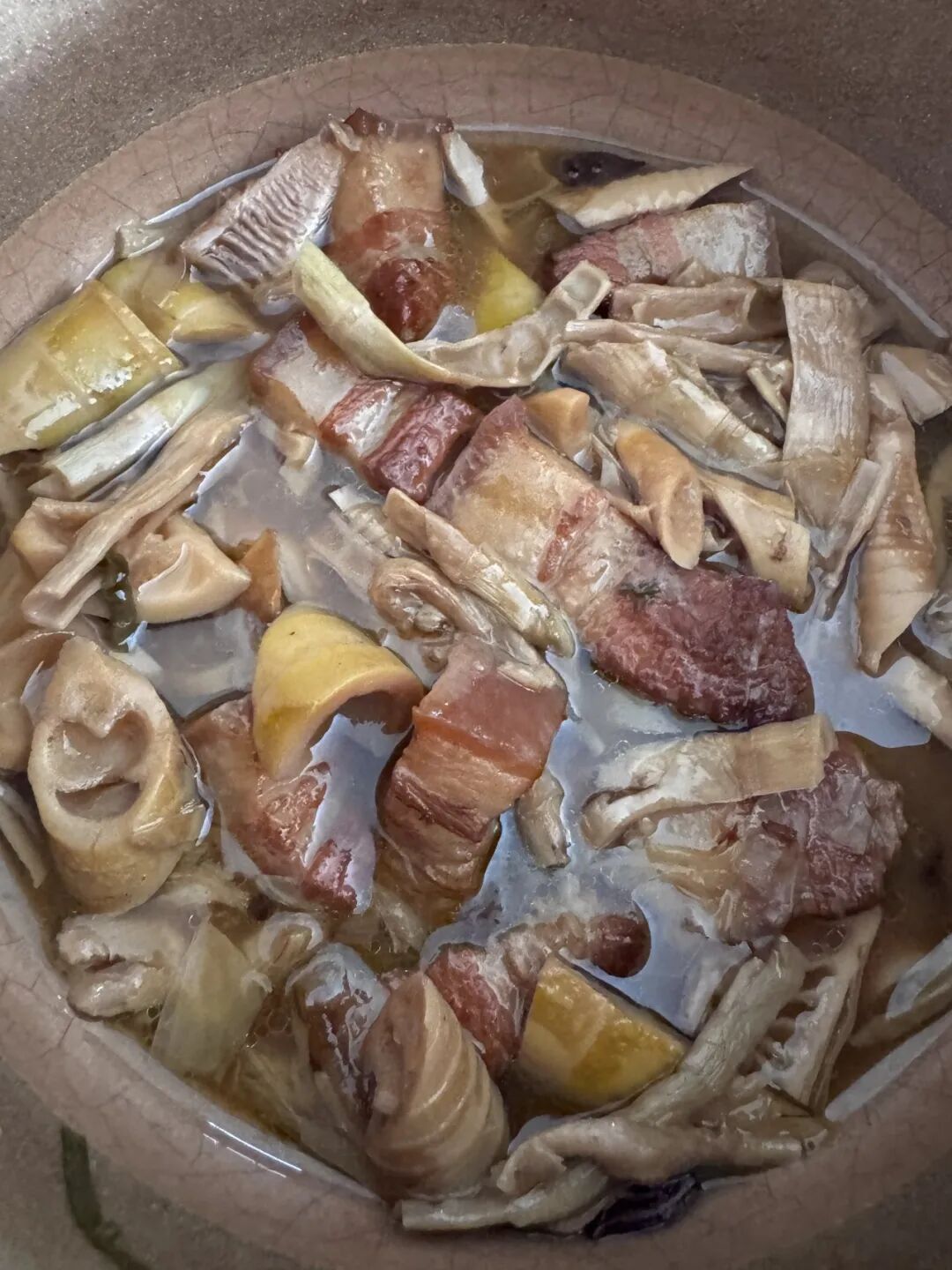
◉ Braised pork belly with bamboo shoots.
Thus the line took on a fresh gloss: if by chance there is no meat at the table, stir-fried slices of bamboo shoots will do. Master Dongpo’s planting of bamboo by the small pavilion was, in fact, a clever stroke that killed two birds with one stone. A Sichuanese who had drifted through life, Master Dongpo chose to grow old in Jiangnan—perhaps because the bamboo shoots here were simply the best to eat.
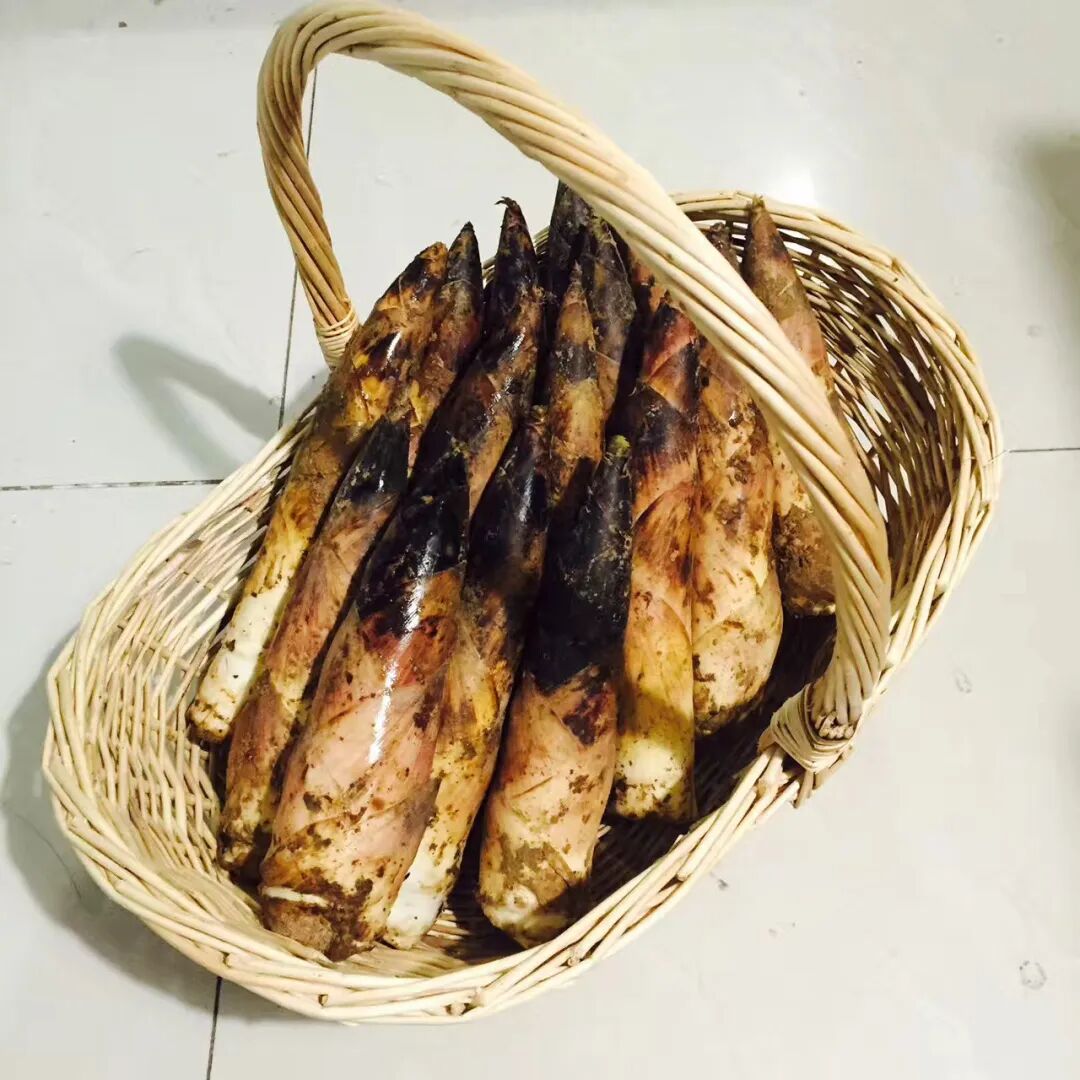
◉ Hangzhou thunder shoots sent by my friend Yifan.
People who have lived in Jiangnan probably find it hard to forget the bamboo shoots there. For example, my mother-in-law’s hometown is Wuxi. Even though she came north with her parents at a very young age, her favourite dishes to make at the table are still oil-braised bamboo shoots, yandu xian, and mock chicken.
Speaking of yandu xian, I have a Hunan person’s misunderstanding about Jiangnan tastes.
Once, while scrolling, I saw a Shanghai woman, Sister Tianle, seeking help in her Moments, asking whether anyone at home had salted pork. I immediately messaged her to say I had a piece of cured pork at home, also quite salty. She told me cured pork and salted pork were completely different, and that to make yandu xian one must use salted pork. I did not understand then. In a Hunan person’s eyes, are cured pork and bamboo shoots not the natural pair?
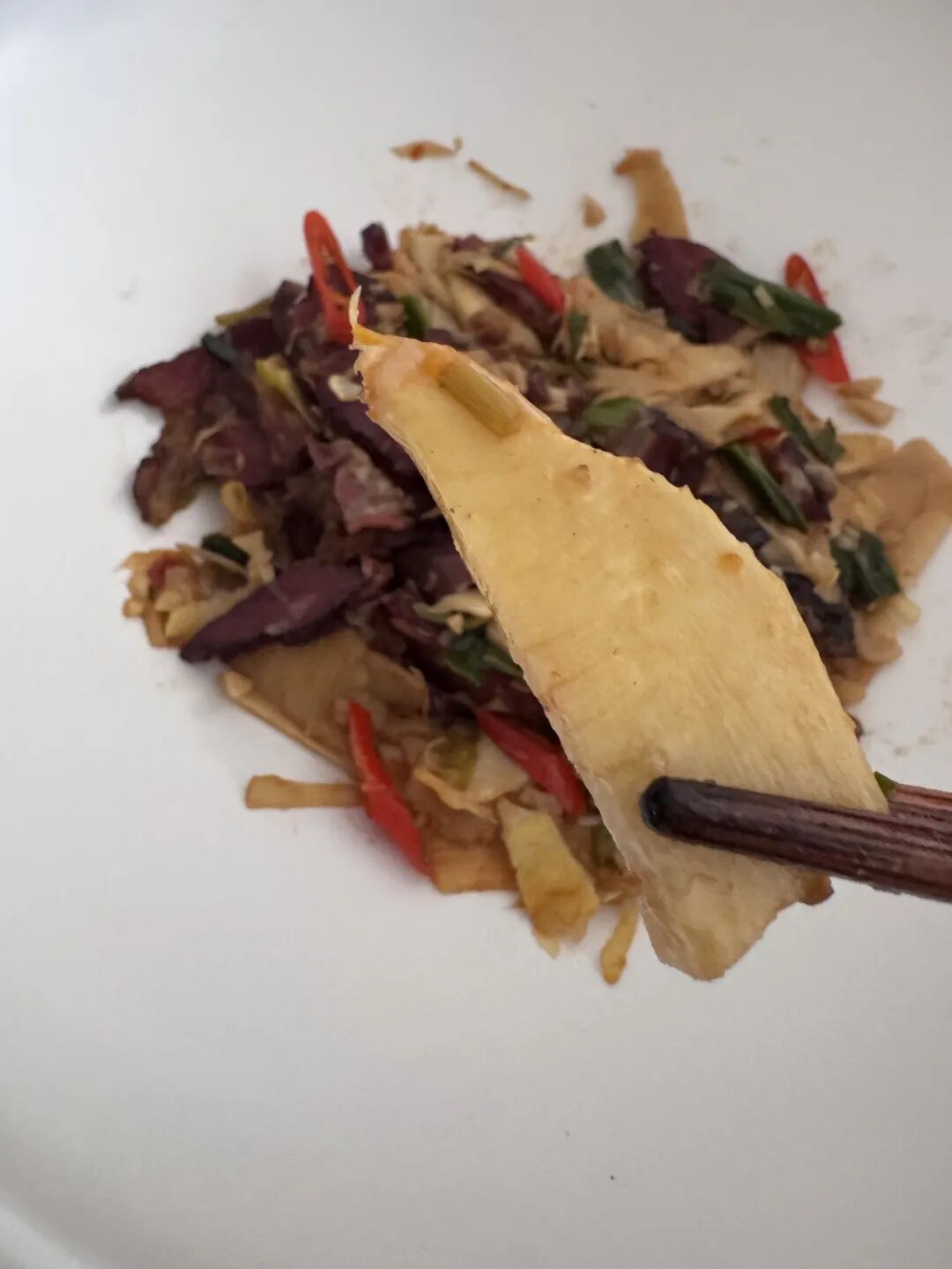
◉ My stir-fried winter bamboo shoots with cured pork.
Until one Spring Festival my mother-in-law made a trip back to Wuxi, brought back salted pork, and made yandu xian for us once, I understood Sister Tianle’s insistence back then.
Unlike cured pork, which requires at least one to two months of smoking, salted pork can be made and eaten right away. Rub pork belly with Sichuan pepper salt, hang it on the windowsill to dry, and in about a week it is ready to eat. Freeze it, and when spring bamboo shoots come to market, take it out, wash it, cut it into pieces, and cook it with the shoots. Cured pork does not like long cooking, whereas salted pork becomes more fragrant the longer it is boiled. When my mother-in-law makes yandu xian, she also adds salted duck leg and celery; even the tofu skin knots are knots she ties herself, from thin tofu sheets as thin as cicada wings that she carries back from the Wuxi market.
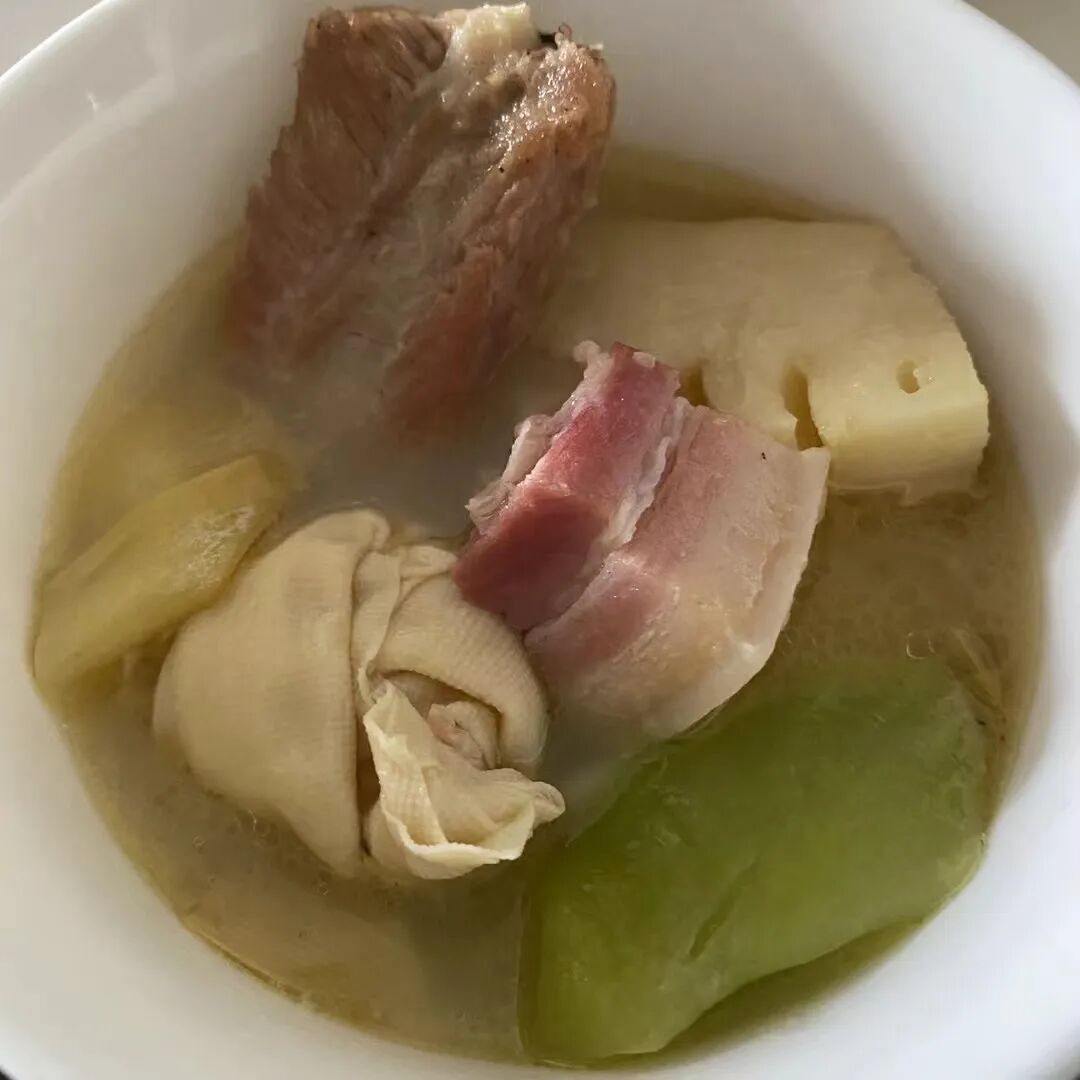
◉ My mother-in-law’s yandu xian, with celery added.
These top-class fresh ingredients are simmered in a claypot for a full two to three hours, until the salted pork turns pale pink and the shoots, soaked full of broth, make the meat mere accompaniment. Just be careful not to eat too fast and burn your tongue.
Dried Bamboo Shoots from Anji
My mother-in-law loves bamboo shoots but never eats much, because bamboo shoots are rich in insoluble dietary fibre, and for people with a weak digestive system, eating them can easily trigger old ailments. What is to be done? Jiangnan lovers of bamboo shoots have their own solution.
I once ate a bamboo shoot dish at Qingtao Restaurant by Hupao Spring in Hangzhou, reputed to be gentle on the stomach; it was simply called hairy bamboo shoots in a claypot. Fresh hairy bamboo shoots from Anji are simmered in a claypot with aged salted pork and pickled mustard greens for 5–6 hours, until that thick layer of fat is melted into the broth, gently moistening every fibre of the shoots. The dish actually has the light, fluffy texture of tender meat. I thought: “This shoot must have been hit by a soul-stealing spell; it has become shoot in body and meat in soul.”
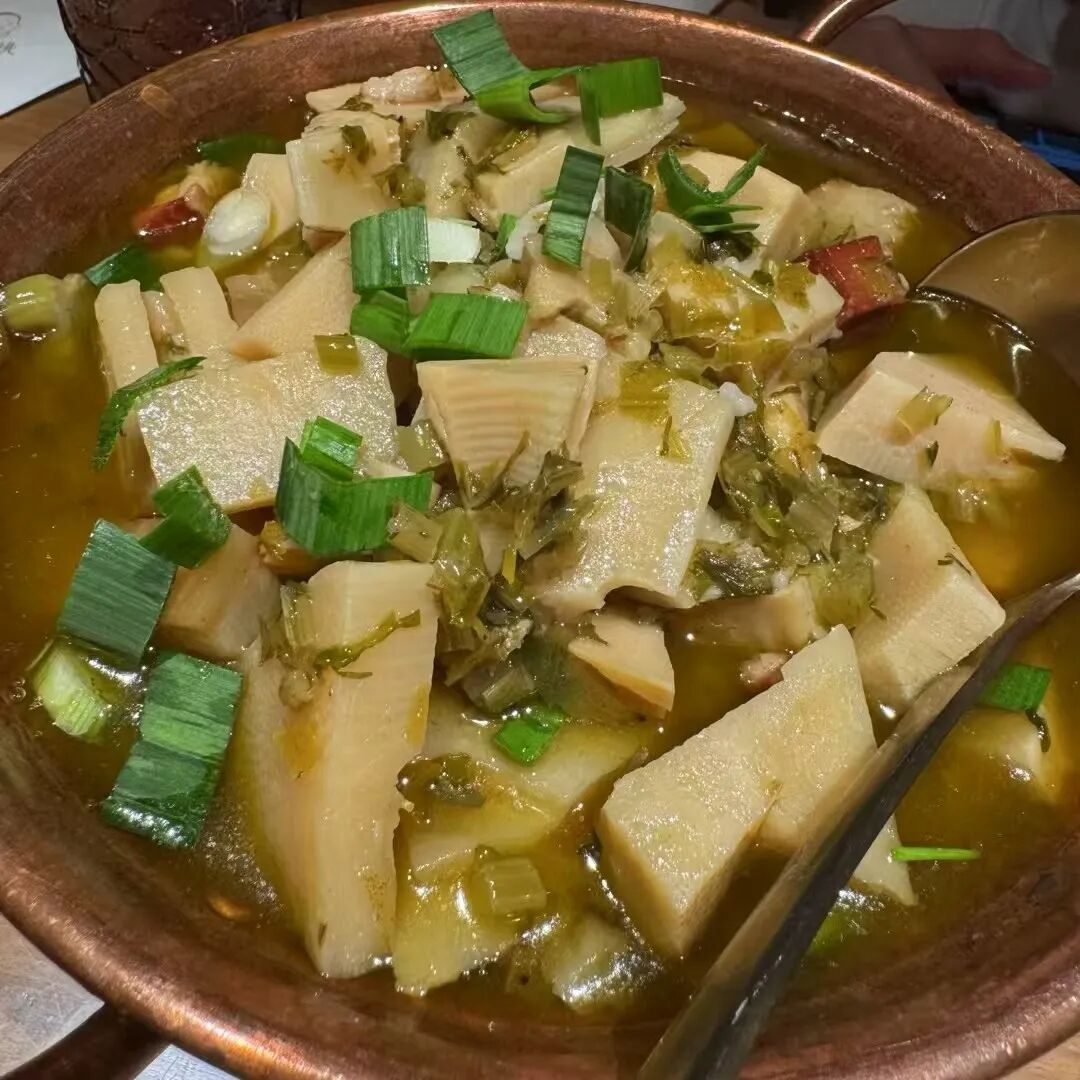
◉ Hairy Bamboo Shoots in Claypot from Qingtao Restaurant.
Anji County lies in northern Zhejiang Province, where bamboo shoots are, like Zhuji’s xiangfei nuts and Lin’an’s hickory nuts, signature foods of the Jiangsu-Zhejiang region.
Fresh bamboo shoots do not keep well; even in the refrigerator they continue to grow and turn tough, so making dried bamboo shoots is a necessary choice. Ordinary dried bamboo shoots inevitably lose some flavour, but the taste of Anji dried bamboo shoots is one of the few to surpass fresh bamboo shoots.
The dried bamboo shoots were sent to me by Xiao Yezi, who once worked at the Beijing Organic Farmers’ Market. She is a rocker: by day she helps farm friends set up stalls at the market, and by night she moves between underground rock venues. Her writing has the same tension as her life.
After returning from Beijing to her hometown of Anji, Zhejiang, seven years ago, around the cusp of spring and summer, the table never went without bamboo shoots. Various wild small shoots in the mountains spring up vigorously: xiao shui sun, whose sheaths are tinged green, with the most tender texture; xiao shi sun, whose sheaths are marked with black spots, tender yet resilient; hong zhu sun, with purplish-red outer sheaths, firm and long-lasting in the pot.
In May 2019, she sent me a packet of wild bigan dried bamboo shoots; it was the first time I had eaten dried bamboo shoots like this.
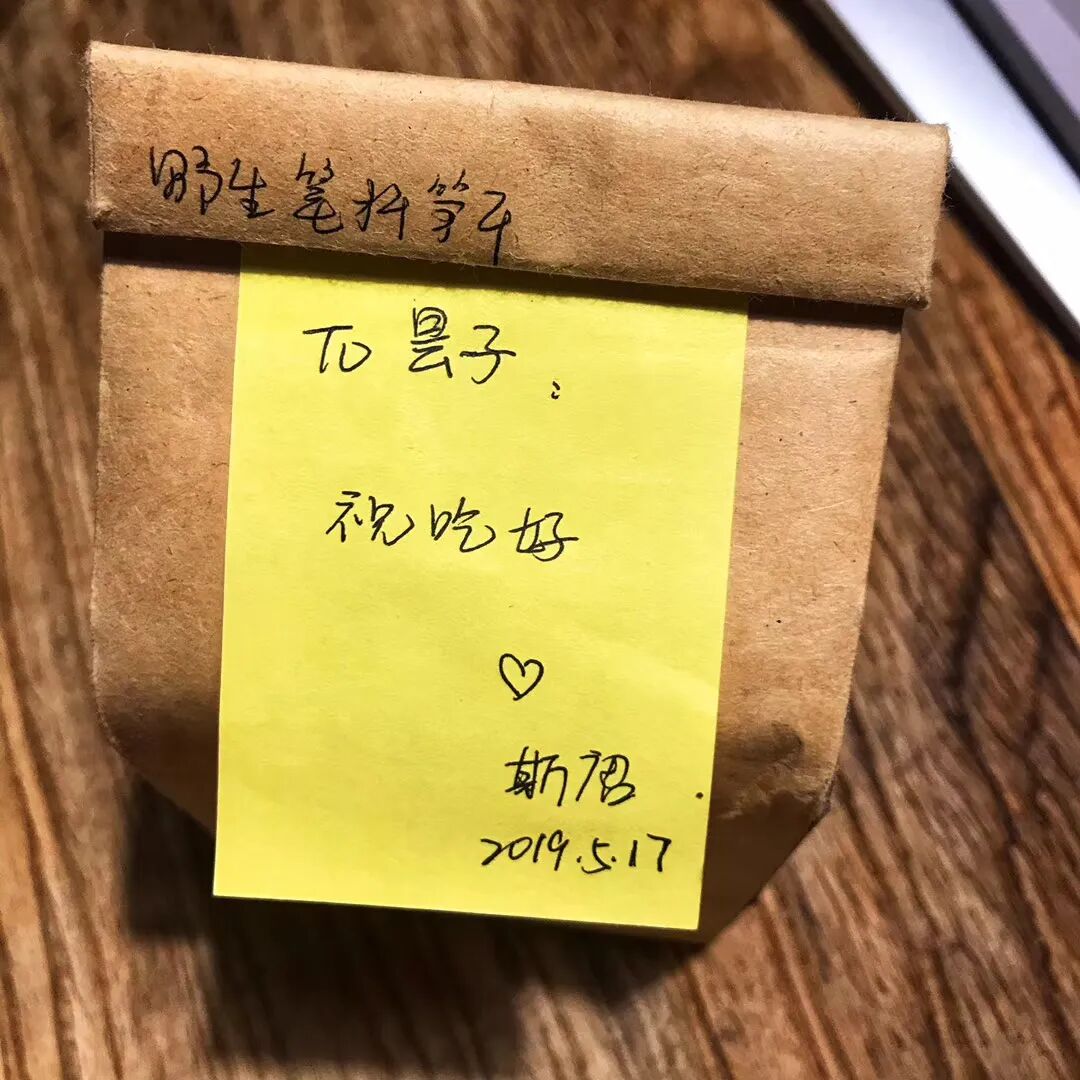
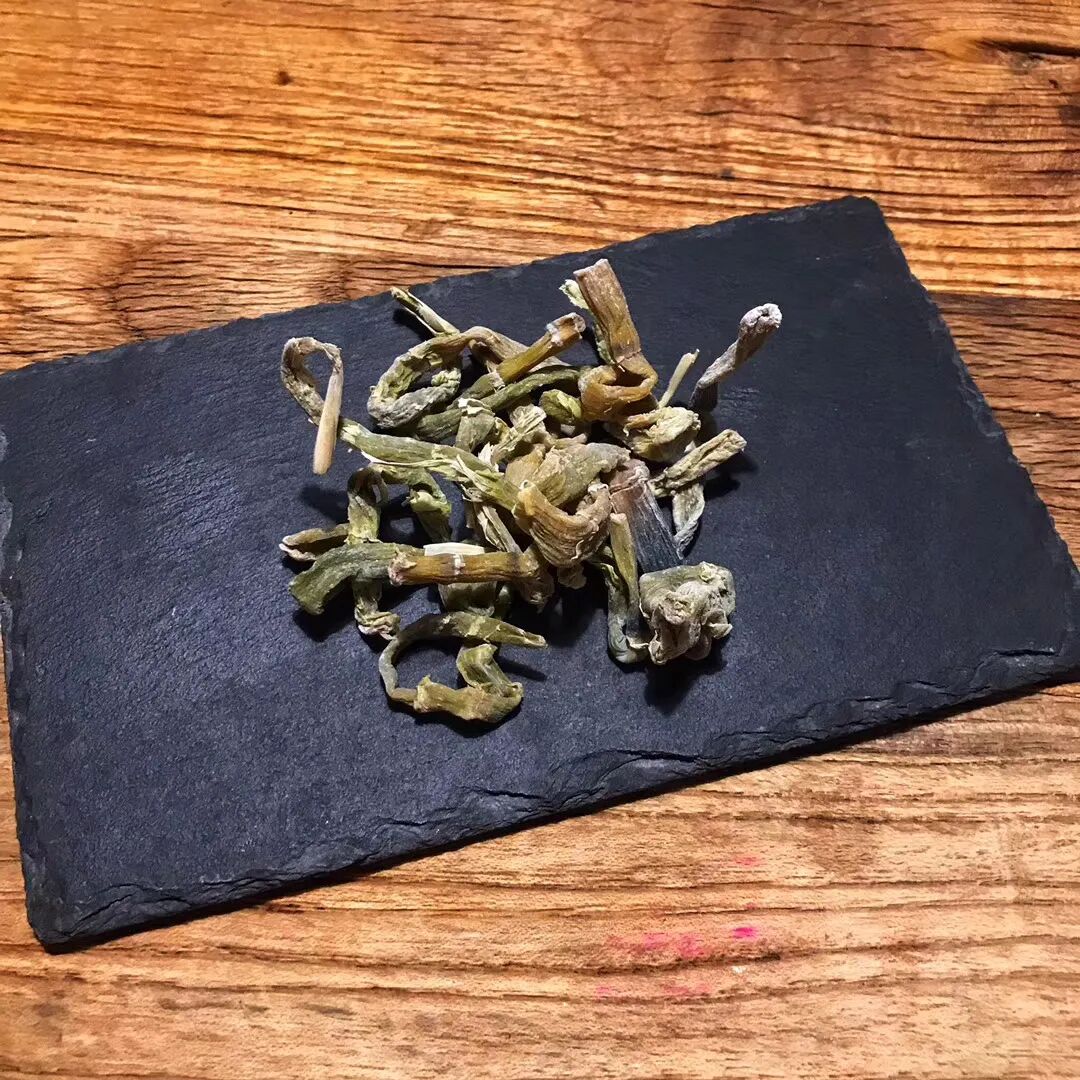
◉ Bigan dried bamboo shoots sent by Xiao Yezi; the right-hand image shows the dried bamboo shoots before soaking.
That dried bamboo shoot is made from a whole small shoot: peeled and boiled, salted and rolled, then rubbed to squeeze out the moisture, just as tea leaves are rolled and fixed. Air-dried, rolled again, air-dried again, until salt brine seeps to the surface and it curls into a tiny ball. Soak it in cold water for 2 hours, then finely chop it or tear it into strips; it can be stir-fried or stewed. But the best, in my mind, is still to cook it with braised pork belly.
Pork belly with seven parts fat and three parts lean is cut into pieces and stir-fried with slices of ginger until slightly golden-brown. Remove the meat pieces, leaving the base oil in the pan; add garlic, shallots or spring onion whites, and when the aroma is strongest, remove them with tongs.
The next step is the key to the colour of braised pork belly—stir-frying sugar to a dark colour, which in the North is called caramelising sugar. Heat the oil over low heat, add rock sugar, crush it and melt it into a syrup, keep stir-frying until the syrup turns amber, then immediately add the meat to coat it in a golden sheen.
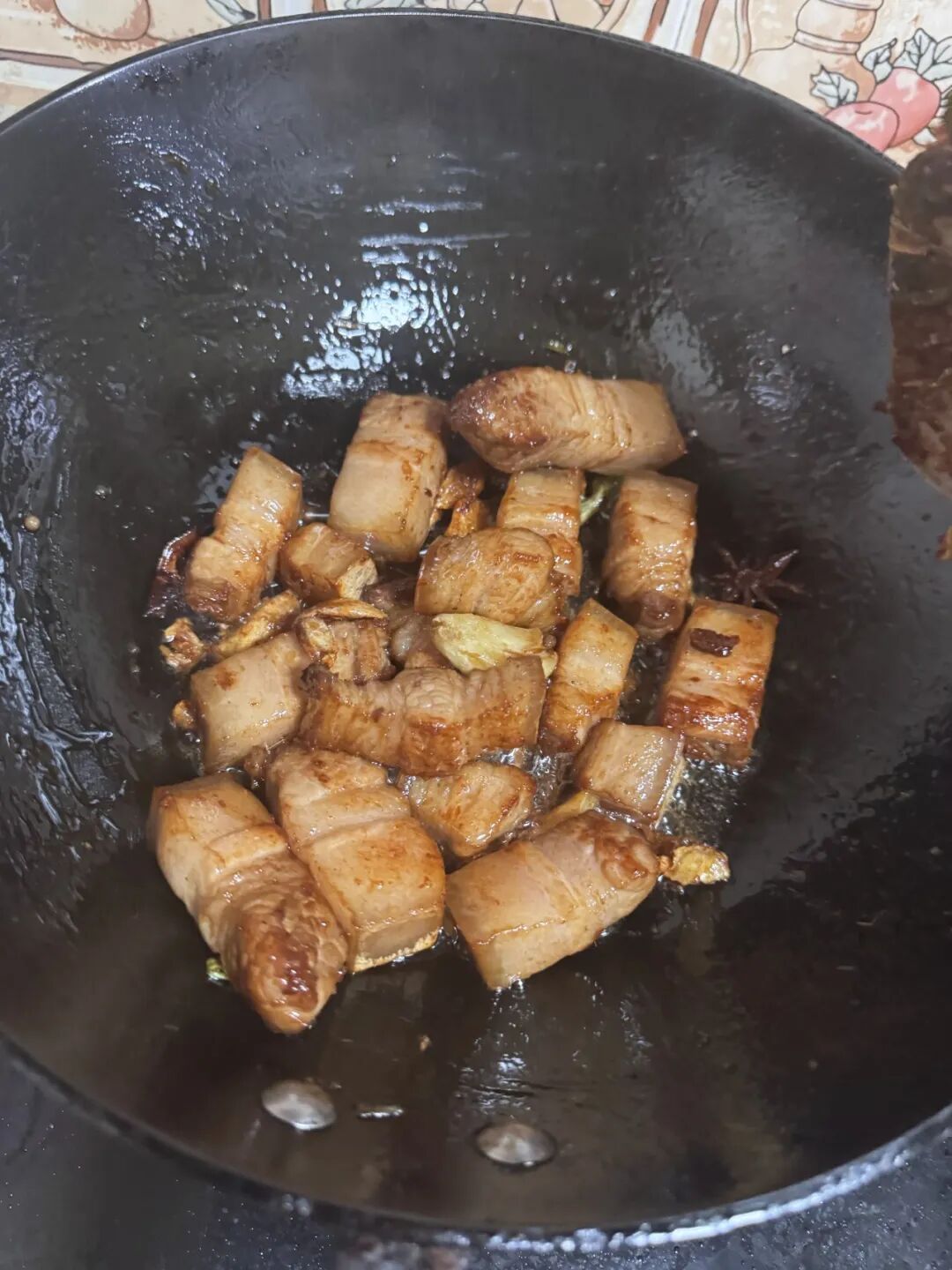
◉ Stir-frying sugar to a dark colour.
The dried bamboo shoots are also added at this point. Rice wine and soy sauce are poured along the side of the pan to bring out a strong aroma; water is added and brought to a vigorous boil, the foam is skimmed off, and it is transferred to a claypot to simmer. Heeding Master Dongpo’s teaching, do not lift the lid unless it has cooked for a good three or four hours. In such braised pork belly with dried bamboo shoots, the pork belly is soft and tender without being greasy, while the dried bamboo shoots absorb all the meaty aroma of the broth, ending up glossy, oily and springy.
Digging for Bamboo Shoots in My Hometown Bamboo Grove
As a return gift, I also sent Xiao Yezi some of Dad’s tao hua sun gan, dried bamboo shoots. I say this without fear of being laughed at: for a long time, I thought bamboo shoots only grew in Hunan.
My hometown is set in a sea of bamboo. Every year around Spring Festival, children follow the adults carrying hoes into the mountains to dig for winter bamboo shoots. The shoots are hidden underground; inexperienced people find it hard to dig them up, and coming home empty-handed is common.
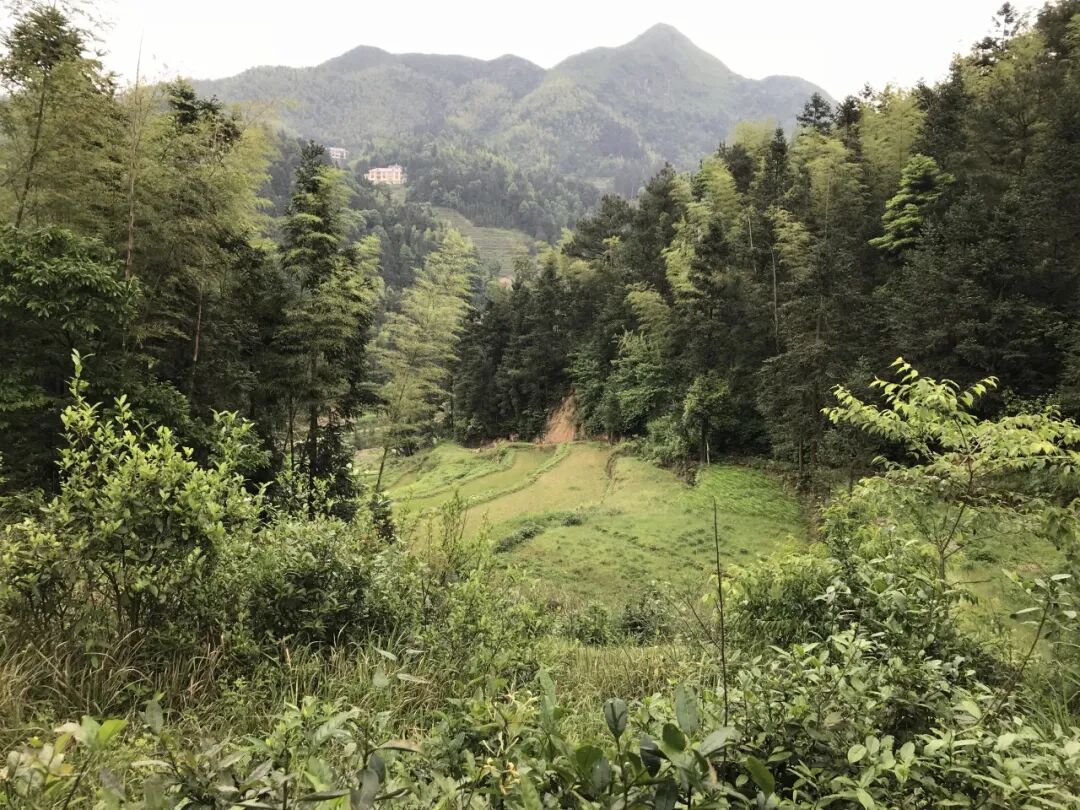
◉ The sea of bamboo in my hometown.
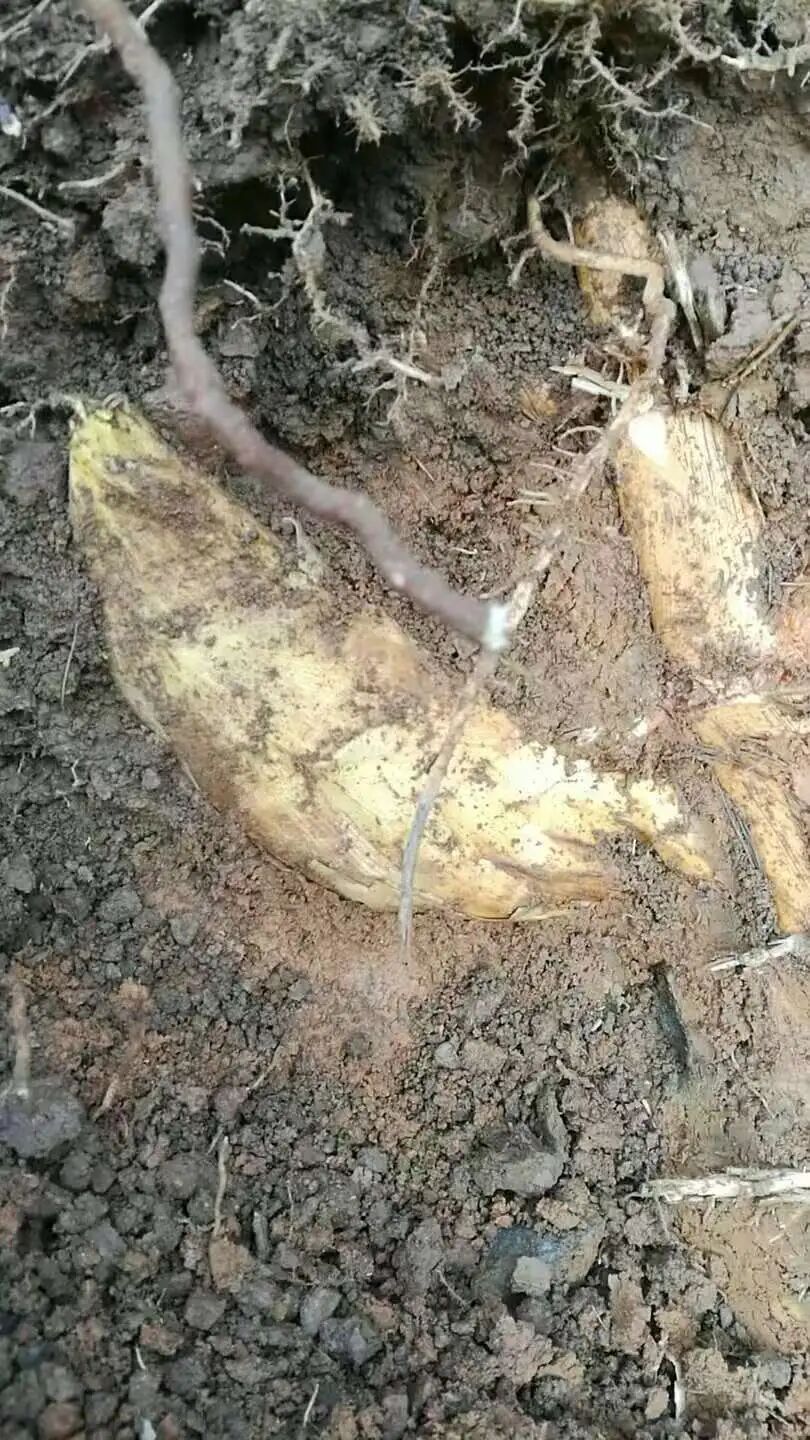
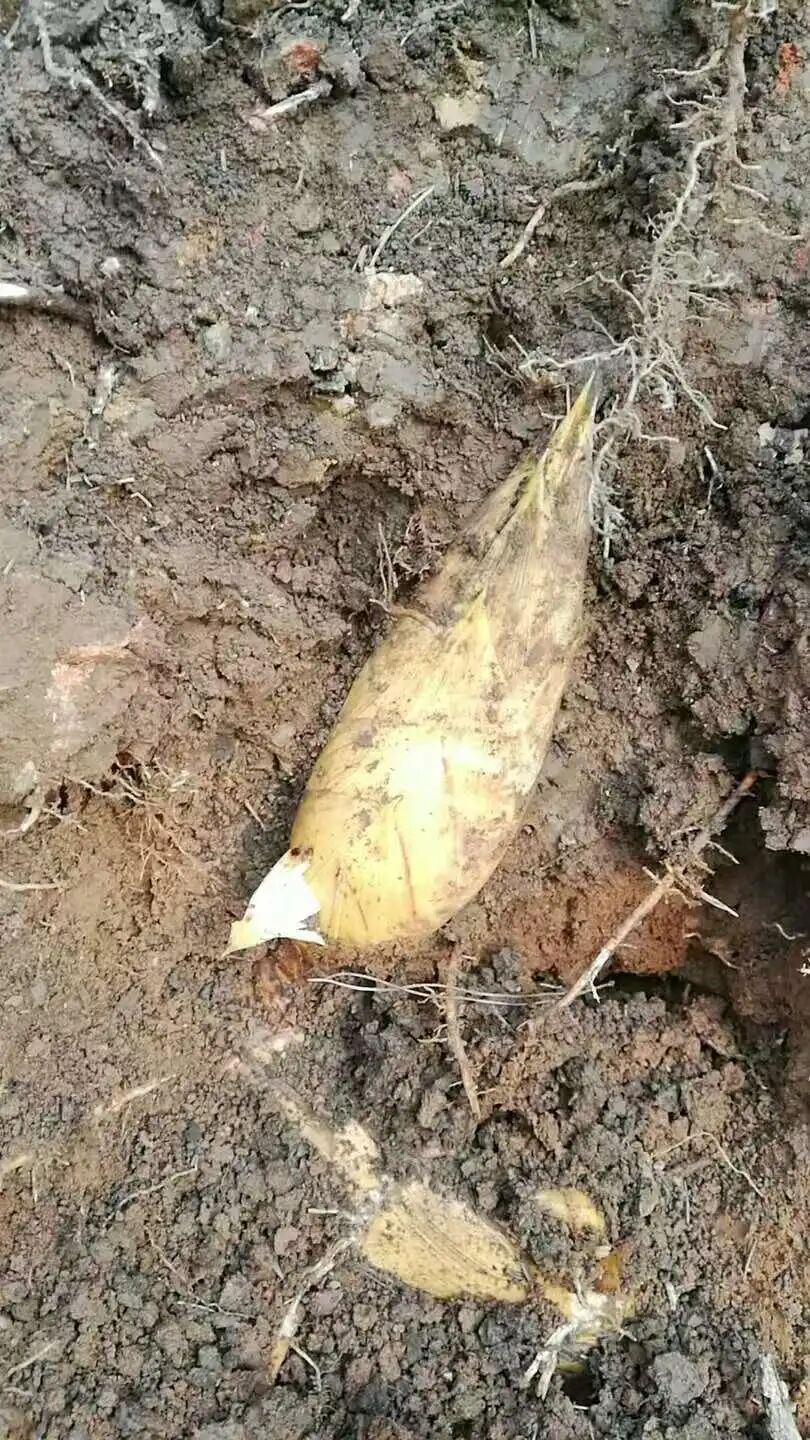
◉ Digging for winter bamboo shoots: carefully unearth the whole shoot before cutting it off. Photo: Luo Shunhua
My third aunt’s husband can tell, by the colour of the bamboo leaves and the girth of the canes, which patch of the bamboo grove produces the most shoots. Then he observes the curve of the bulge on the soil surface, judges the direction in which the bamboo rhizome is growing, and digs down along it, always coming back with a harvest.
Winter bamboo shoots are small, their flesh so tender it is a rarity; in the hands of someone who cannot cook them, they are an enormous waste. Fortunately, my aunt’s husband not only knows how to dig shoots but is also highly skilled at cooking them, able to simmer a pot of five-spice lamb with the skin on. The winter bamboo shoots are peeled, the tender bamboo shoot skin left on, and sliced. Lard is heated in the pot, garlic leaves and chopped chillies are added, and they are stir-fried until fragrant, then simmered together with the sliced lamb. The shoot slices are sweet and fresh, the lamb fragrant and tender; it is a dish people fight over at the table, and the shoots are always gone before the meat.
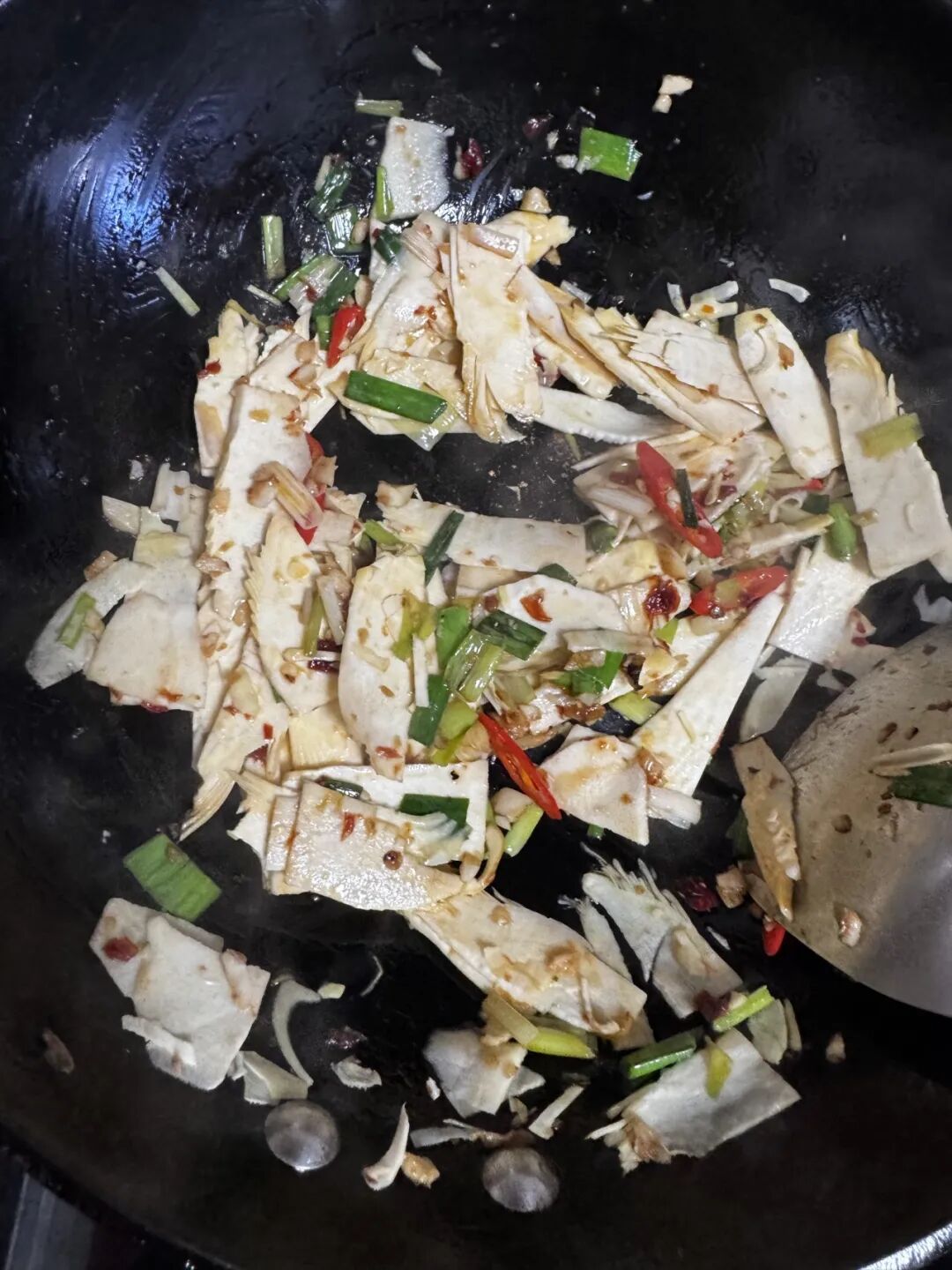
◉ Stir-fried slices of winter bamboo shoots.
Spring bamboo shoots that break the ground around Jingzhe, when the peach blossoms first open, are also known as “tao hua sun” (peach-blossom shoots) and are suitable for making dried bamboo shoots.
At this stage, although the shoots have broken through the ground, most of them are still buried underground. A sharp-eyed person can, with one swing of the hoe, pry up a big plump shoot. Basket after basket is carried down the mountain. The aunties deftly peel the sheaths, cut the shoots in half, boil a large pot of water, and tip them all in with a gurgle until a thick layer of white foam rises. Then the shoot flesh, now half-softened, is fished out and put in bamboo winnows for shade-drying, or hung over the stove fire to smoke.
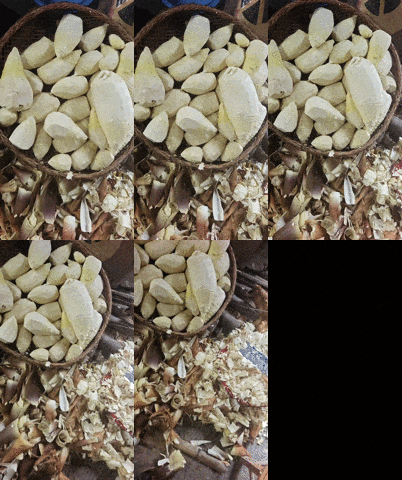
◉ Peeling shoots for dried bamboo shoots.
If dried bamboo shoots take on damp and soften, they easily mould. They must be steamed and sun-dried again, several times over, until the dried bamboo shoots shrink to one-seventh or even one-tenth of their original volume, hard and dark brown, like ancient fossils; only then is the work complete.
The air in the south is humid, so dried bamboo shoots easily take on damp and mould. Once fully dried, they weigh little and cannot fetch a good price. Dried bamboo shoots from outside are bound to have some trick in them; smoked things are not easy to spoil. That is why the dried bamboo shoots we eat at home are all made by Dad.
In 2016, while selecting products for Wu You Zhen Wei, I wanted the team to try the dried bamboo shoots from home. I mentioned it casually to Dad, and as a result he made ten catties or so of tao hua sun gan and sent them to me. Fortunately, dried bamboo shoots keep well, but I still ate them off and on for several years; even when moving house, I had to take them with me.
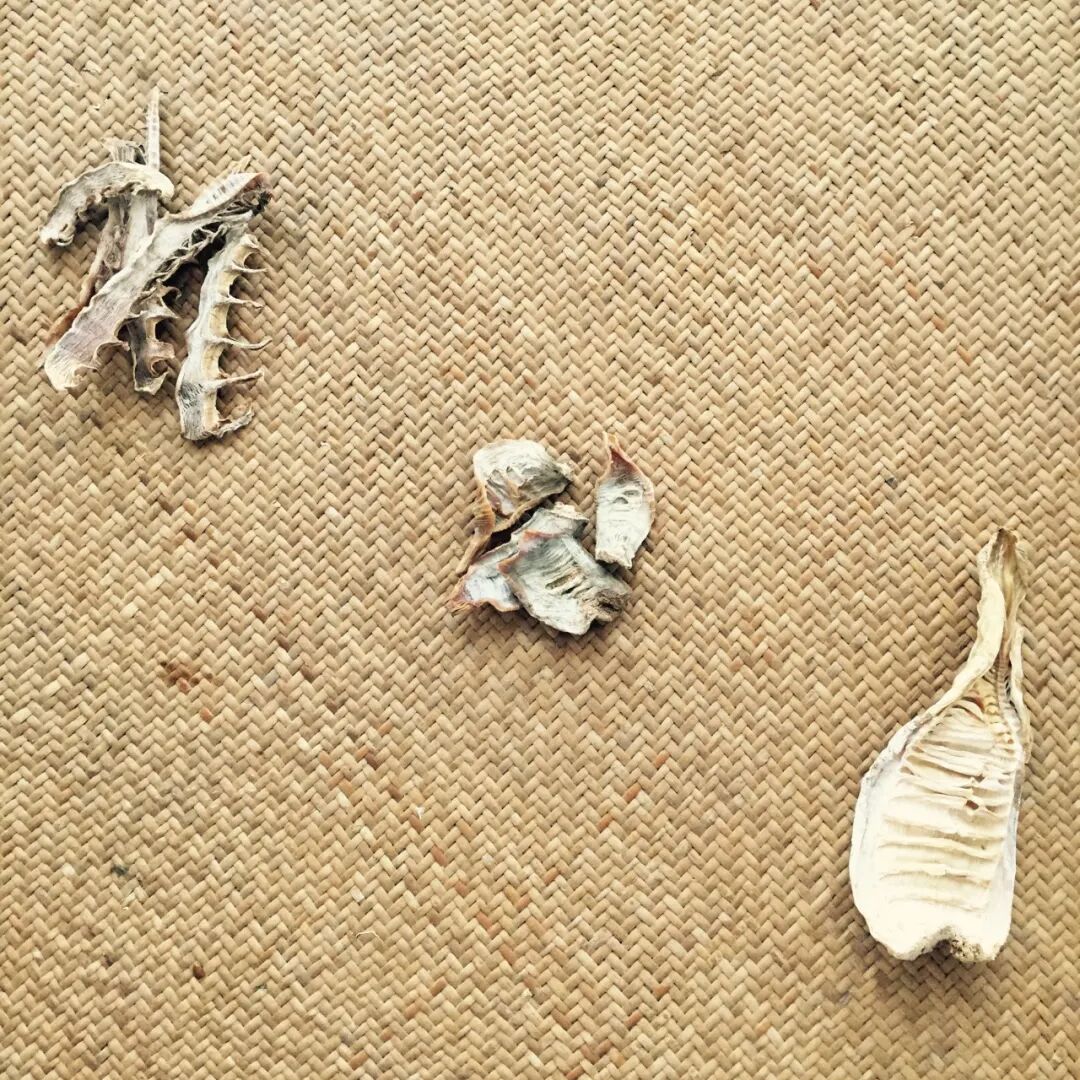
◉ The small one in the middle is Dad’s tao hua sun gan, dried bamboo shoots.
This kind of dried bamboo shoots needs to be fully rehydrated. Following Dad’s method, I soak them in rice-washing water for 1–2 days, changing the water every day. Then I pour the shoots and the water into a pot and boil for 15 minutes; once the dried bamboo shoots are soft and springy, I remove them; they can be sliced and stir-fried or used in soup.
Eat Bamboo Shoots Before You Grow Old
I have also eaten a kind of fire-dried bamboo shoot cake from my hometown. The shoots are boiled, chopped, mixed with chillies and salt, then pressed firmly into cakes, dried over the stove, and steamed through before eating. They look ugly, but they go exceptionally well with rice. An elderly relative of my grandparents’ generation used to make them; I have eaten them only once or liang times, and I have never seen them in the local vegetable market. I fear they are now a thing of the past.
The loss of traditional flavours always makes the nostalgic sigh, and yet it seems inevitable, as one food documentary puts it: heritage is luck, disappearance is fate.
Anji sun dou is no exception. When I first ate the Anji sun dou that Xiao Yezi sent me, I was astonished by this indescribable taste. The shoots had completely become another food.
Tender shoots are boiled in salted water until soft, cut into segments, and cooked together with peanuts, dried tangerine peel, spices, rock sugar and salt until the liquid reduces and the flavours soak in. They are then dried in a ventilated place. The shoots and peanuts become more fragrant the more you chew; the dried tangerine peel whets the appetite, and the taste is sweet with a hint of salt—a small snack children will grab by the handful into their pockets.
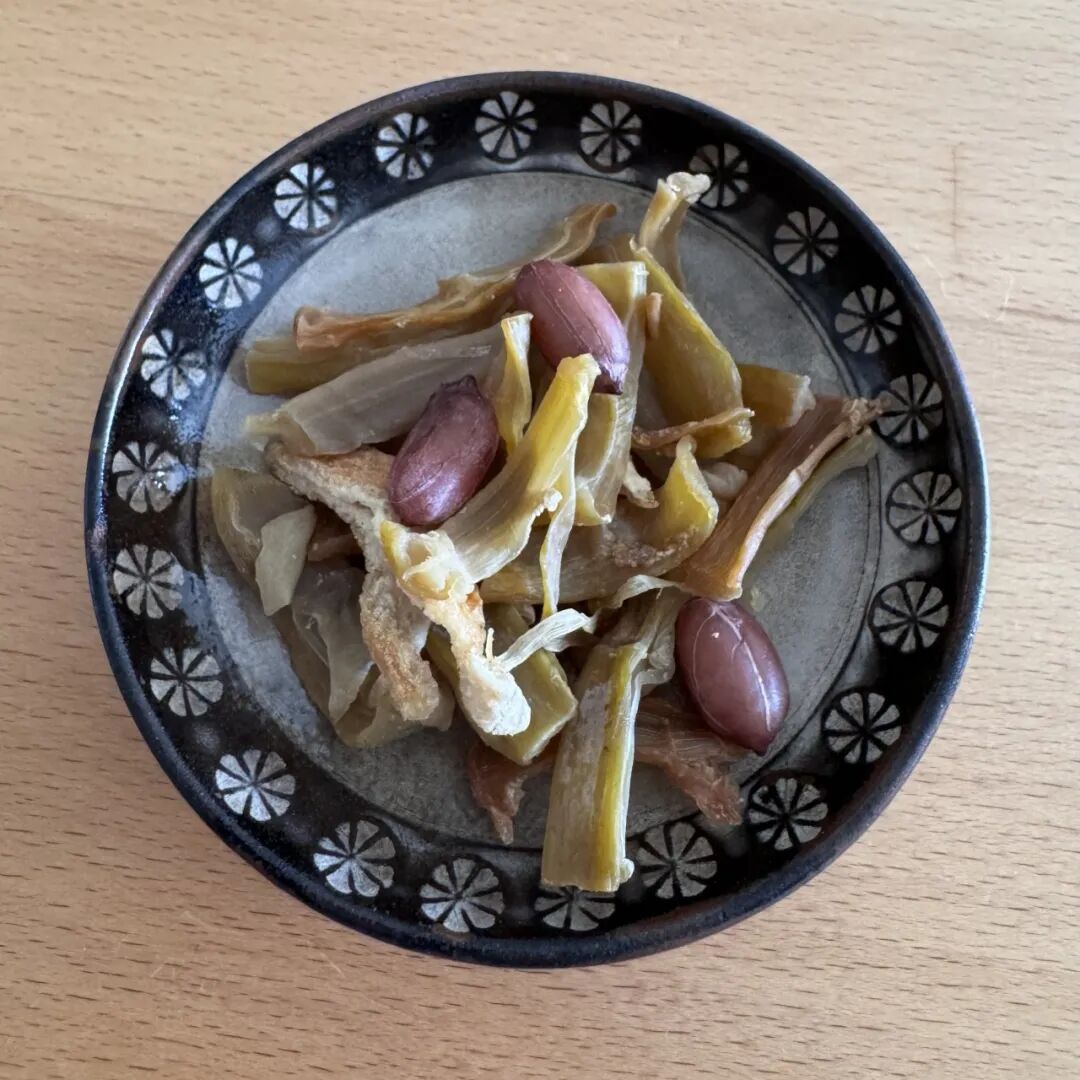
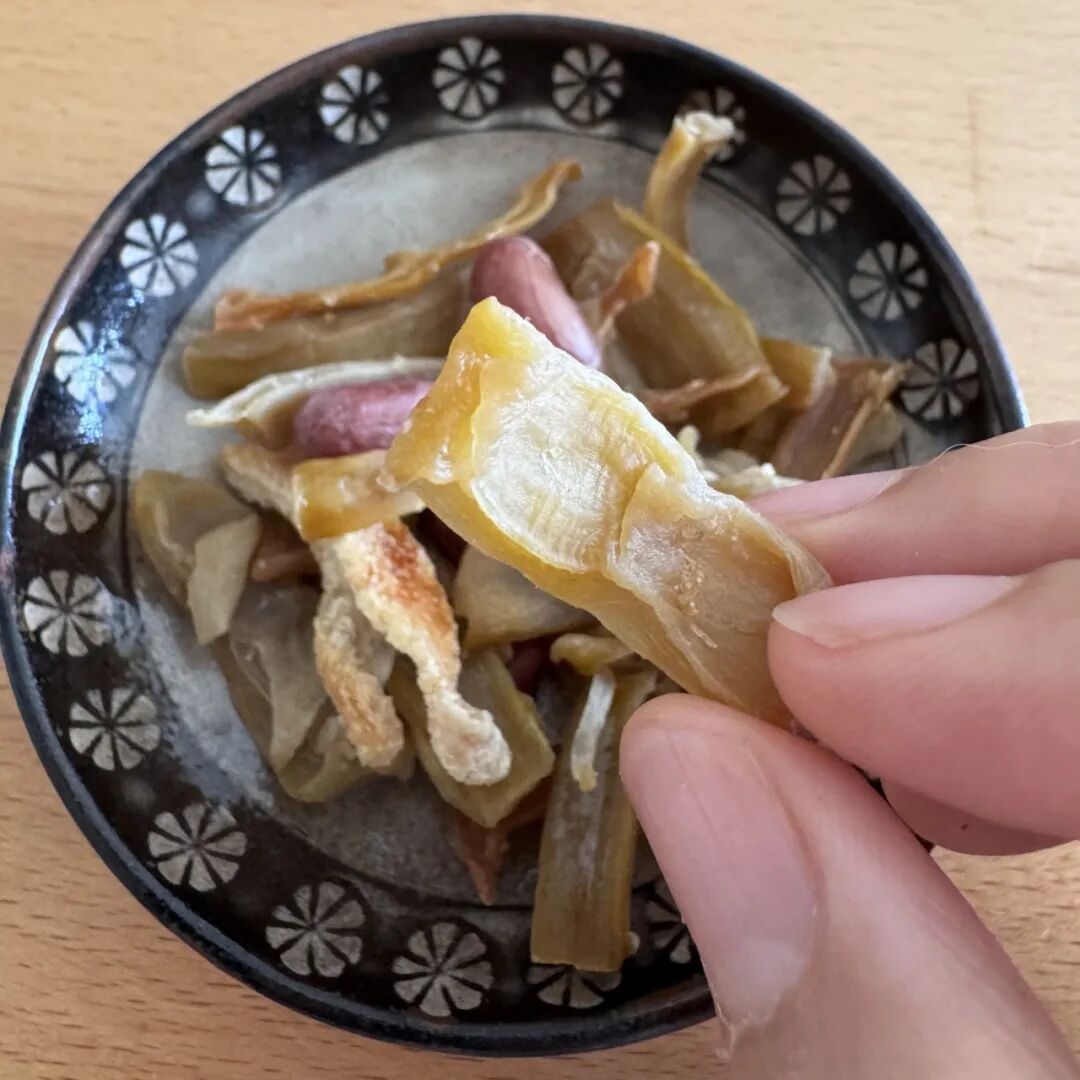
◉ Anji sun dou.
It sounds simple, but it is troublesome to make. Xiao Yezi said that only one elderly lady in the village makes it well. There used to be liang flavours, but because the elderly lady is now nearly eighty and cannot judge the texture so well, she only makes the sweet one.
Most people have probably long since lost interest in rural snacks. But for some, the steadfast pursuit of hometown flavours continues—Xiao Yezi, for example, and my Dad.
After receiving the dried bamboo shoots my Dad had made, Xiao Yezi wrote this on Moments:
“Young people must never look down on local specialties, thinking that what is air-dried or pickled in the countryside is a product with no quality guarantees, or that rural produce is not worthy of the table. It is precisely these local products that allow our cultural customs to be passed down from generation to generation, and the flavours of rural fields to be presented at the table in the most appropriate way.
“When we are chasing international food cultures and all kinds of nutritional theories, we can also look back at how these traditional foods in China are made, and at the flavours of those natural foods hidden in mountains and rivers, plains, market towns and villages, passed down among the people for a hundred years.”
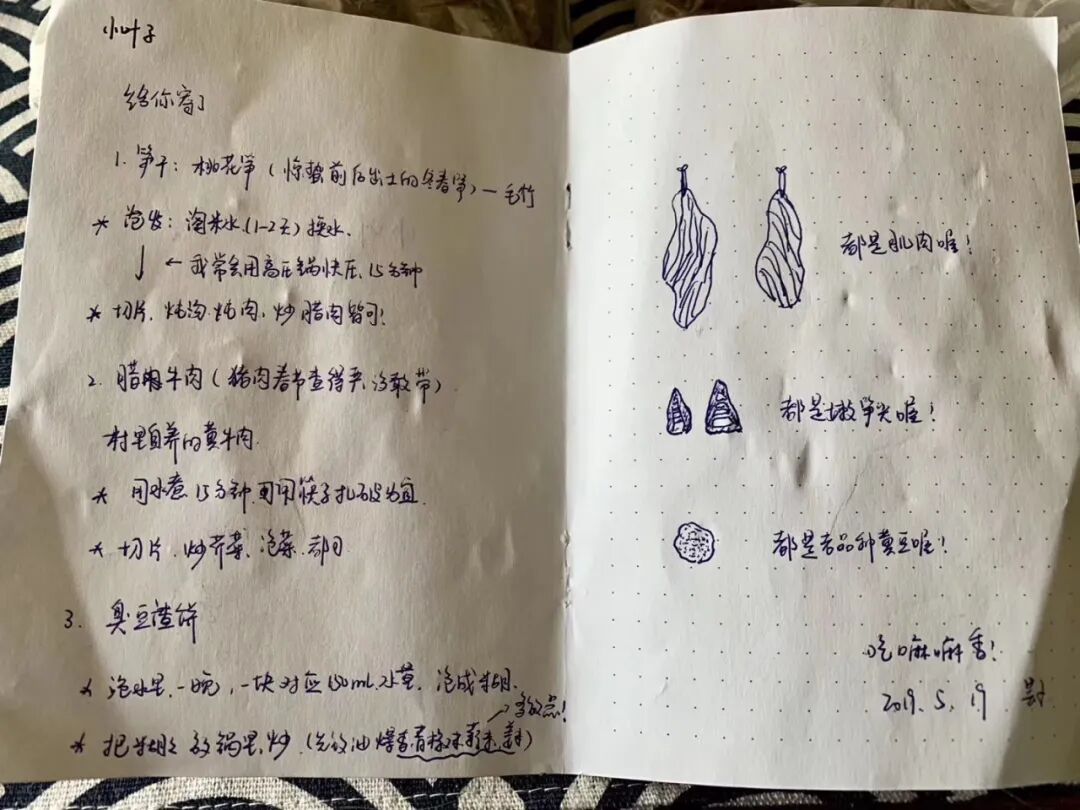
◉ I included a short note on how to prepare them among the local produce I sent to Xiao Yezi.
From last October until now, Dad has been in Beijing for medical treatment due to a health issue; almost every day he wants to go home, saying the food here doesn’t taste good. In February this year, an older female cousin from home sent a box of cured meats and winter bamboo shoots.
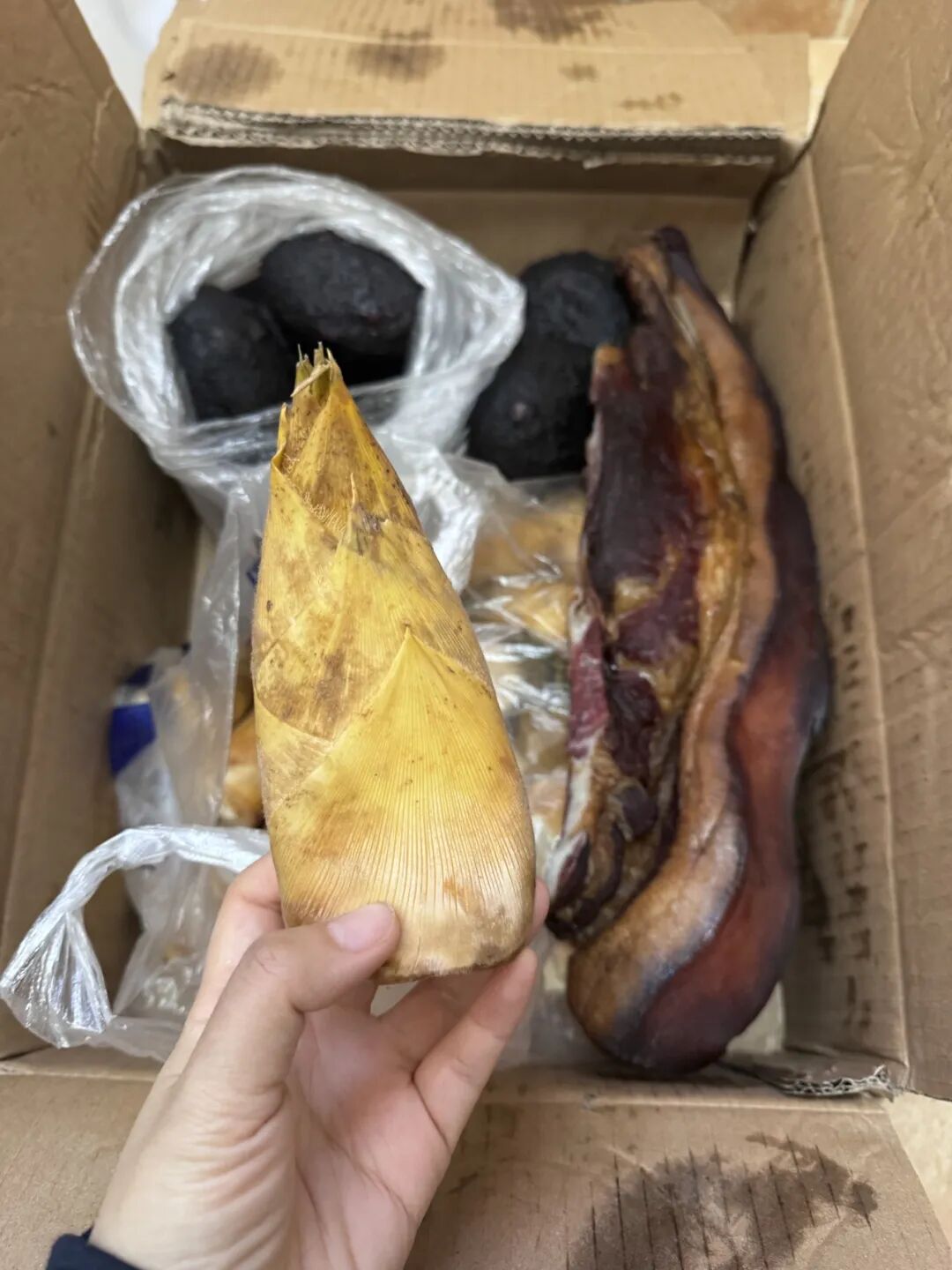
When my Dad sees the shoots, it is as if he has seen an old friend; with a smile, he puts them into a bag one by one, hefting them as he goes. One day, I noticed a row of brown objects on the radiator in the room, and when I looked closer, they were dried bamboo shoots!
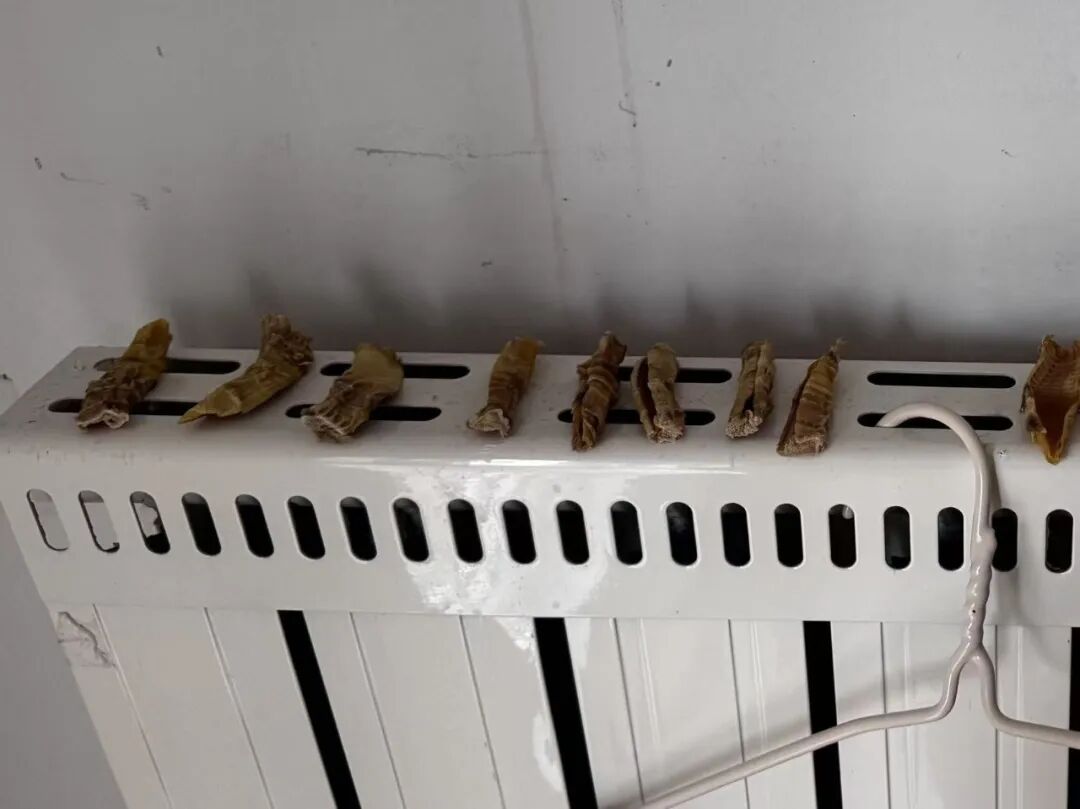
I was standing there, dumbfounded, when my Dad came over, pinched them, and, thinking they were dry through, put them away in a bag. The big bag of winter bamboo shoots he had before yielded only this small bag of dried bamboo shoots. My Dad hefted it and said, “A bit more than two liang, made from two catties of shoots, enough for two meals.”
I knew Dad was missing home again. He was not thinking of the building in the county town, but of the old wooden house surrounded by bamboo groves, where his grandparents and his younger self used to live.
From a shoot on the ground to 20-metre-tall bamboo takes only 60 days. From one bamboo to a hillside of green forest takes only six years. My Dad, now sixty-four, recalls that the happiest time of his life was at nine, herding cattle, walking up to a high place on the mountain and gazing at the distant bamboo grove: “So open; the wind blows, the bamboo sways, and even the shape of the mountain changes.”
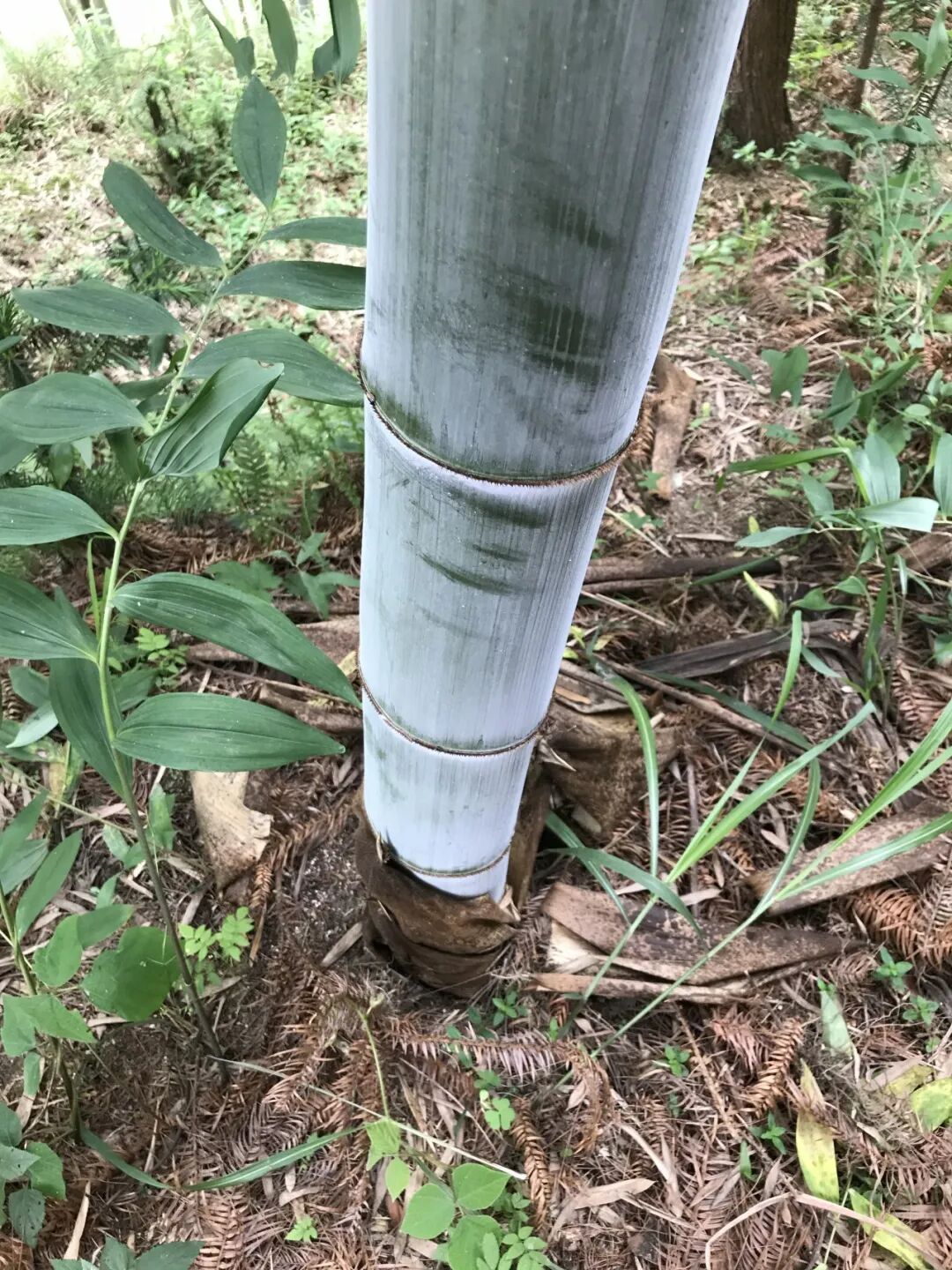
◉ New bamboo, still bearing its bamboo shoot skin, is already as thick as the rim of a bowl.
Every year there are new bamboo shoots. In this world there are those who want nothing but a mouthful of fresh, crisp flavour and joy in everything, and there are those who turn new bamboo shoots into dried bamboo shoots and keep them to savour slowly. But, whichever you are, eat bamboo shoots before you grow old.
– This is the 811th original article from Foodthink –

Foodthink
Author
Tanzi Chi Le Wo
I am a playful soul who works in the mundane world, looks up at the stars, and believes that all things have their own simple power. I also write a bit on the official account “Tanzi Chi Le Wo”.
Unless otherwise stated, all photos were taken by the author.
Editor: Yuyang
Layout: Xiaoshu
Scan the code to send a tip and support original food knowledge
▼
Click the image to read related articles.