
How to Do Farm Work with Less Effort? Advice and Tools from Ergonomics
In 2015, by a twist of fate, I arrived at an intentional community in southern Germany and encountered organic farming for the first time. After that, I worked at three organic farms, first as a volunteer and then as an agricultural trainee with Demeter im Norden. Counting it all up, I spent three years working on farms in Germany.
After I came back home, curious about how organic farms in China went about their work, I went to a farm not far from where I live and spent a month there. I found that while the tasks were broadly the same, the way farm work was actually done differed quite a lot from what I had learned in Germany.
Some of the young people working on the farm had never farmed before. They often arrived brimming with enthusiasm, but after a short while their lower backs ached and they pronounced farming far too gruelling. The truth was that this was mostly because they lacked experience, their working posture was poor, and the tools weren’t suited to the task — so farm work ended up being both exhausting and hard on the body.
Interestingly, working on the very same farm, the aunties who had been doing farm work for half their lives had none of the young people’s complaints. Watching more closely, I realised it wasn’t that they were in better physical condition; it was that they knew how to work so their bodies felt more at ease, and how to get things done faster and with less effort.
In truth, physical labour takes not just your hands but your mind too. After coming home, I went back and reread my ergonomics material more carefully, and found that a great deal of the hardship in farm work was entirely avoidable. Building the right way of thinking about physical work can mean getting twice as much done with half the effort — less strain, more efficiency.
I. I. Why Do Farmers Get Injured on the Job?
When I was on a vocational training course for farmers in Germany, our instructor gave an example to explain why studying ergonomics matters: if you stand in front of a low basin and hunch over to brush your teeth, even three minutes a day can damage your lower back. So you should find a way to adjust your posture — for instance, take a horse stance while brushing, lowering your centre of gravity so you don’t need to bend over at all.
I had studied ergonomics at university, but I’d always felt it was something only design professionals needed. In fact, the purpose of ergonomics is to find the optimal fit between the human body and working conditions. Designers merely provide sensible equipment; workers, too, should learn to proactively improve the conditions around them to suit each specific situation, so that they can get the job done in less time and with less effort, while also keeping their bodies safe from injury.
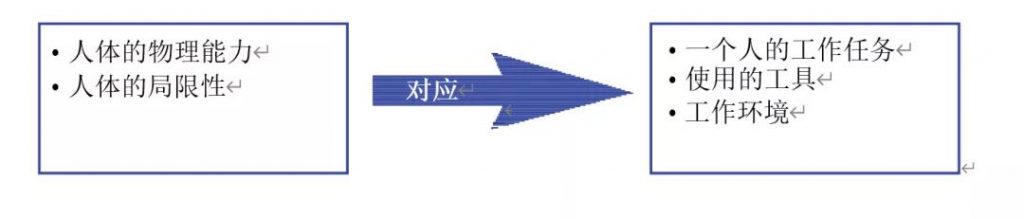
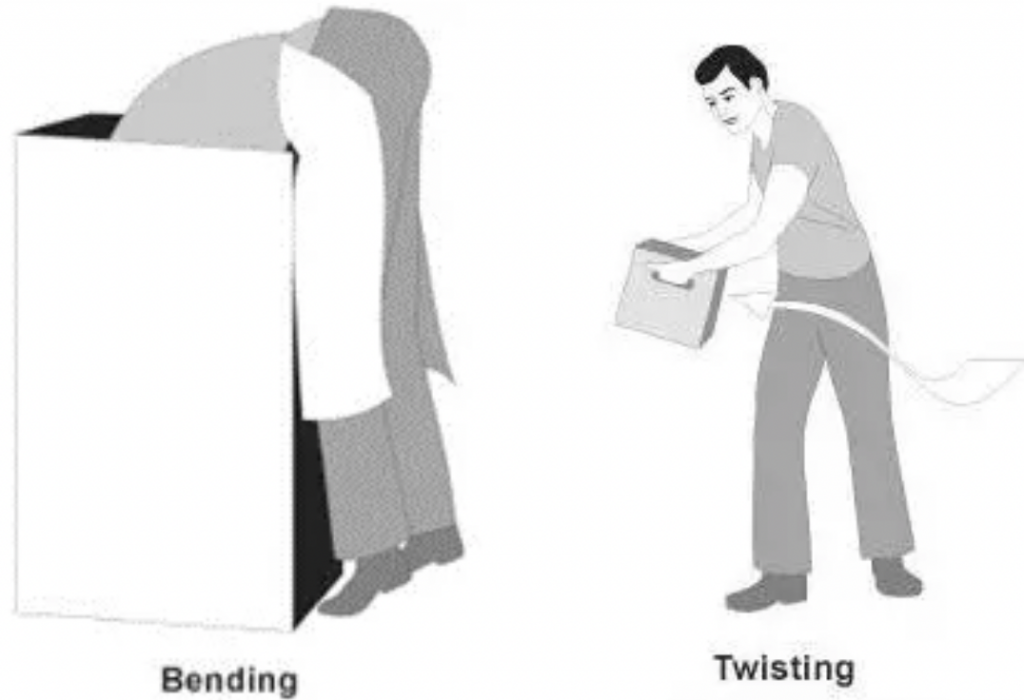
Dedicated ergonomic research for agricultural workers has been conducted abroad for a long time. The US Department of Health and Human Services, for instance, published a booklet titled Simple Solutions: Ergonomics for Farmworkers. The booklet notes that the prolonged use of forceful gripping, kneeling, lifting, squatting, bending, and twisting movements at work can lead to sprains, strains, and back pain[1].
[1] In medical terminology, this is known as Work-Related Musculoskeletal Disorders (WMSD).
Moreover, even seemingly harmless, simple movements — reaching out to grasp an object, pressing a tool — can cause injury over time if the posture is wrong. That is why our instructor gave us the toothbrushing example.
So how can you work efficiently without getting injured? I think there are at least two things worth learning: mind how you work, and learn to choose and use the right tools.
II. Mind How You Work
The aunties on the farm are able to work with less effort because they have accumulated decades of experience. Though they have never studied ergonomics, they have learned how to work. Through my years on the farm, I have gathered a few insights of my own.
1. Try to keep yourself in a comfortable posture.
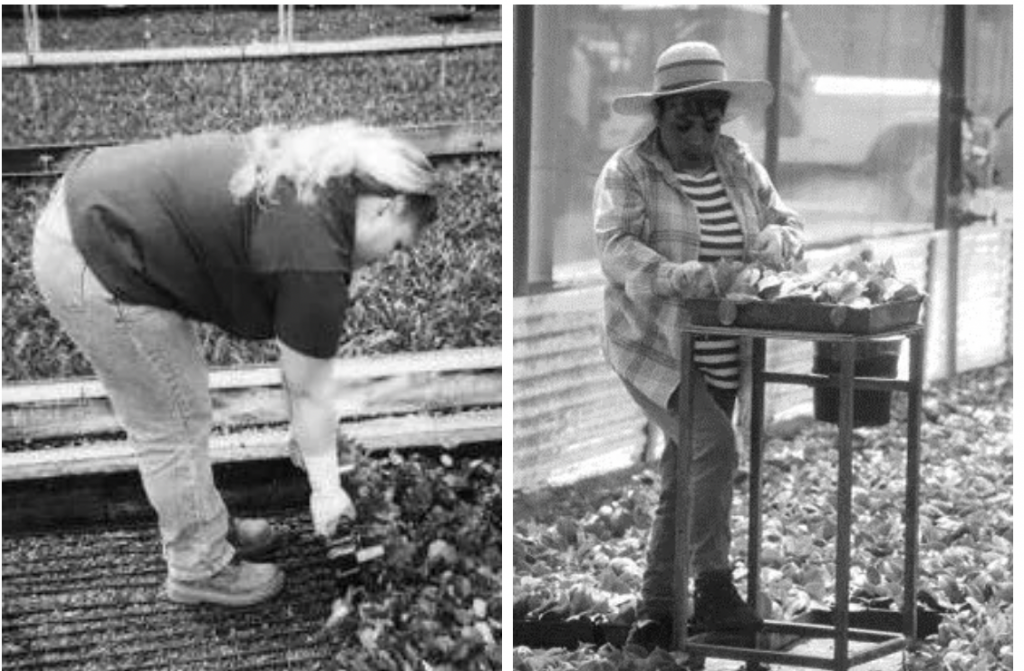
If your posture feels uncomfortable, try to adjust it. Unless it is absolutely unavoidable, do not keep your body in an uncomfortable position for too long. Whether you are sitting or standing, the height of your work surface should suit you. Try to avoid working while bent over.
For example, when weeding, try to use a hoe while standing to avoid bending over, as this places less strain on your lower back. If the weeds are particularly stubborn and a hoe will not shift them, I will kneel down and pull them out by hand, or hold a small hand hoe to weed. You should also take care of yourself when kneeling. If prolonged kneeling leads to knee pain, you can put a piece of cardboard under your knees or use knee pads designed for physical work.
Sometimes you also need to create the right conditions for yourself. When I used to pick kale on the farm, we would first stack two plastic crates on the ground to use as a work surface, then place a picking crate on top to hold the kale. This way, we avoided bending over while packing the harvest.
2. When carrying out repetitive tasks, try to alternate them with less repetitive ones.
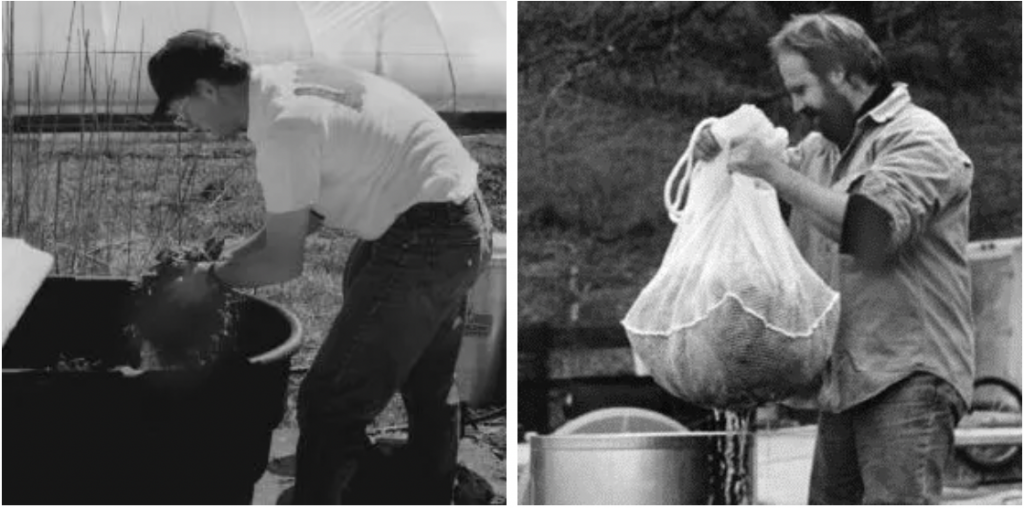
When planning your work, try to vary the types of tasks — sit for a while, stand for a while, walk for a while. If repetitive work is unavoidable, you should stop every so often to rest and do some light stretching, giving your body enough time to recover. For example, weeding often requires repeating the same movements for hours on end. In that case, you can stop every half an hour to gather up the weeds you have pulled and carry them to the compost area, which lets you keep making progress while also getting some movement and a rest.
3. Make use of external power.
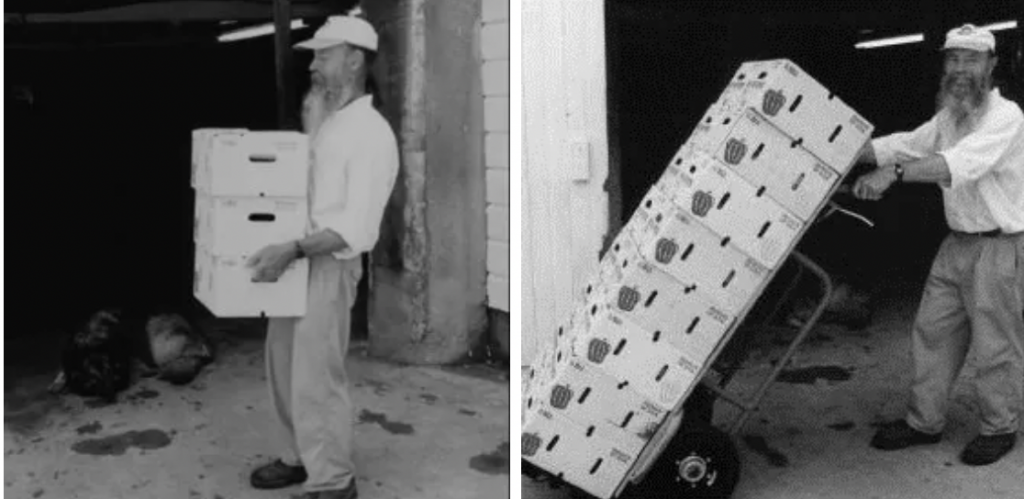
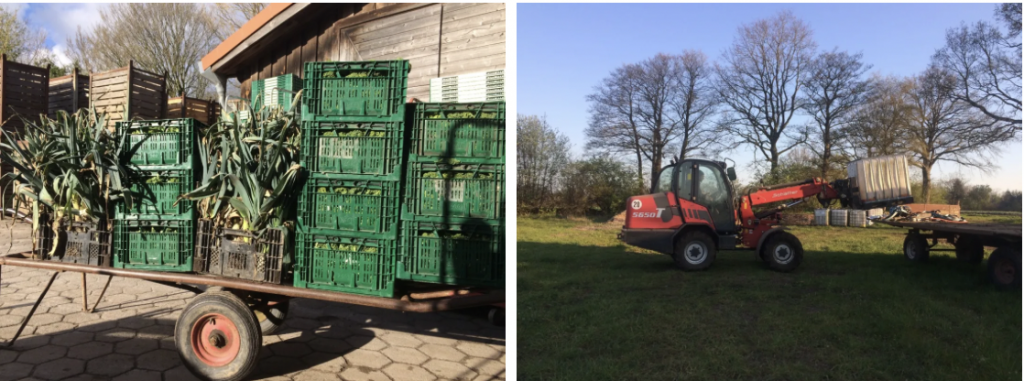
In our ergonomics class, our teacher taught us the simplest principle: if something is too heavy — say, over 25 kg or 30 kg — even if you can just about manage to move it on your own, you should find someone to help you lift it. Besides human strength, you can also make use of tools. Where conditions allow, you can use a hand trolley or mechanical transport. For example, the wheelbarrows, two-wheeled flatbed trolleys, and forklifts commonly used on the farm, or even tractors and utility vehicles, can all save you a great deal of effort in the day-to-day work.
4. Find a Method That Suits You.
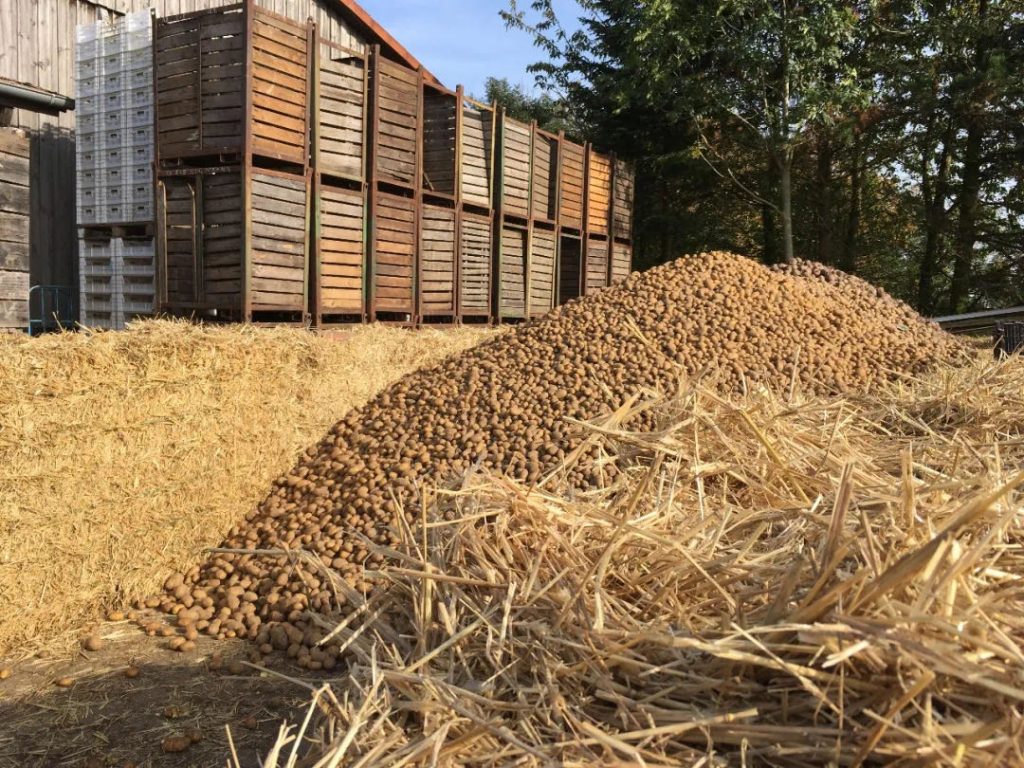
When working on the farm, one of the tasks is loading potatoes into a large steaming barrel, to be steamed and then fed to the pigs. The method my colleague taught me was to use a big shovel to scoop the potatoes up from the ground and drop them into the barrel, which stands over a metre high. But that movement was particularly strenuous for me. So I first load the potatoes into a plastic crate, then lift the crate and tip them into the barrel. The approach may look clumsy, but it suits my strength the best.
III. The Right Tools: The Farm’s Full Arsenal
In addition to how you work, choosing the right tools is equally important. An unsuitable shovel can, in the end, mean working twice as hard and suffering bodily injury.
People differ in height, strength, and work habits, so I recommend that everyone find the tools that suit them. Before starting a new task, I think about what kind of tool would work, or I simply try every tool available to see which one suits me.
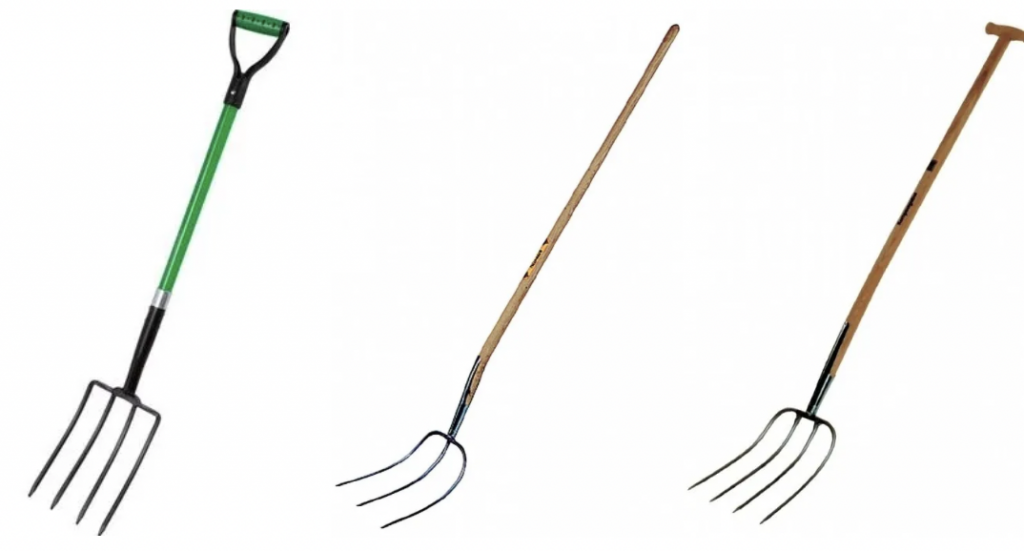
For example, the forks I used on the farm in Germany come in a few types, each differing slightly in structure according to its purpose. The straighter forks are generally used for gardening — say, digging up root vegetables or small trees. Those with a slight curve come in two varieties: the three-tined one is a hay fork, used for handling clean materials such as fodder for cattle and sheep; the four-tined one is a muck fork, used for mucking out the cowshed and spreading straw.
On the farm back home, I noticed that the hoe is by far the most widely used tool in farming. Its role in the field is much like that of a cleaver in the kitchen — it can do anything. A single hoe can handle every job: preparing the ground, digging trenches, weeding, digging up vegetables. I had never used a hoe on the farm in Germany, so the first time I picked one up back home, I found it very unfamiliar and it always felt like it was hurting my lower back. When you strike the hoe hard into the ground, the jolt to your back is unavoidable. Among all the farm work I have done in Germany, I can hardly think of a movement that resembles this, unless it is driving a wooden stake into the ground or hammering in an iron nail. So I found myself wondering whether other tools could substitute for the hoe and reduce the strain on the body?
Thinking back on the farm tools I used in Germany, there are a few that can cover some of the functions of a hoe. Take this big fork for ploughing and loosening soil, for example. On the farm, it is generally used to prepare the raised beds before planting crops. Loosening the soil with it takes less effort than with a hoe, it is less destructive to the land than a machine, and it rarely harms the earthworms in the soil. The fork is very wide; you can stand on it, use your full body weight to stomp it into the ground, then push down on the handles, and the soil naturally pries up. No bending over is needed for this sequence of movements — most of the force comes from the legs and the whole torso.
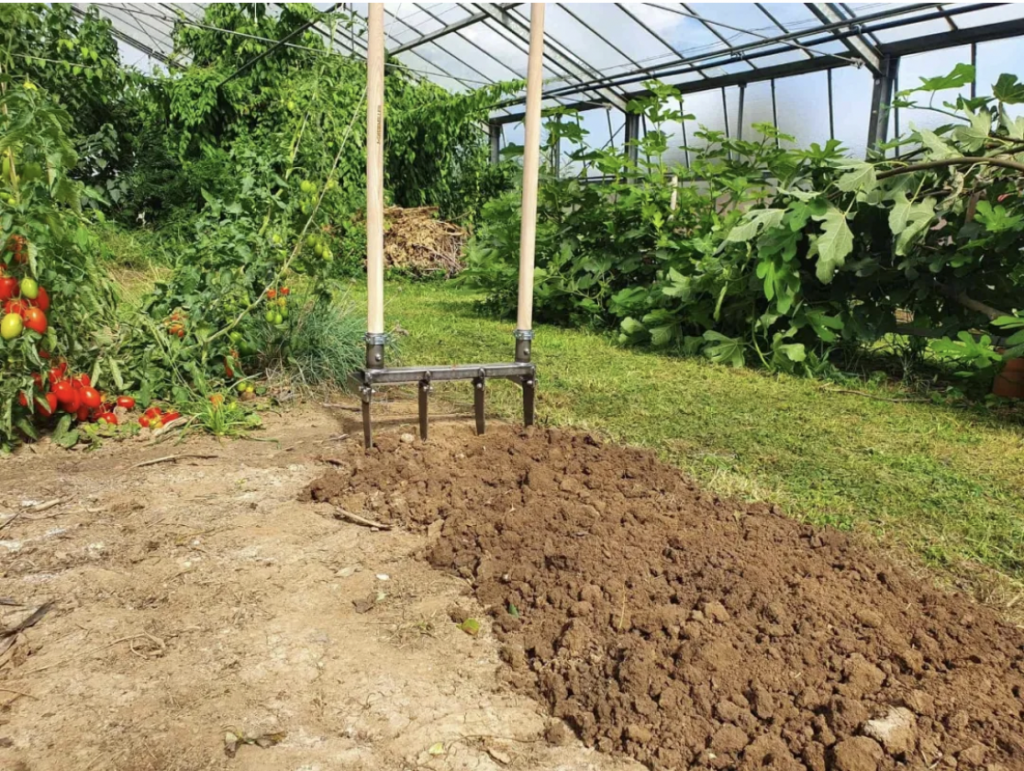
Beyond loosening soil, the fork actually has many other uses. Take digging up carrots that ripen in summer, for example. Carrots are quite tender, and if the ground is dry, pulling them out by hand will easily snap them. But if you use the big fork to loosen the soil first — there is no need to pry it up — and then pull, it takes less effort and the carrots come out whole. The same principle applies to harvesting all kinds of root vegetables. Or, once seedlings have been raised in the field, you can use the fork to loosen the soil a little before transplanting, and lift the seedlings out with barely any effort.
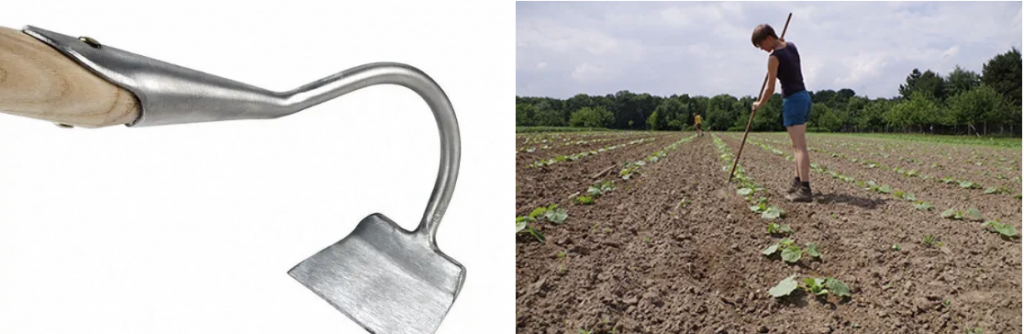
Then there is the small hoe for weeding. Weeding is done quite often on the farm, and there are almost no thick, established root systems, so this tool is more than enough. My mentor once took the time to show me how to weed with a small hoe. You should keep your back and lower back essentially straight, and stand at a diagonal in front of the raised bed, so that every strip you pass over gets weeded. The blade should slice through the weeds almost parallel to the ground. A skilled user can take the weeds away entirely while leaving the top layer of soil exactly where it was.
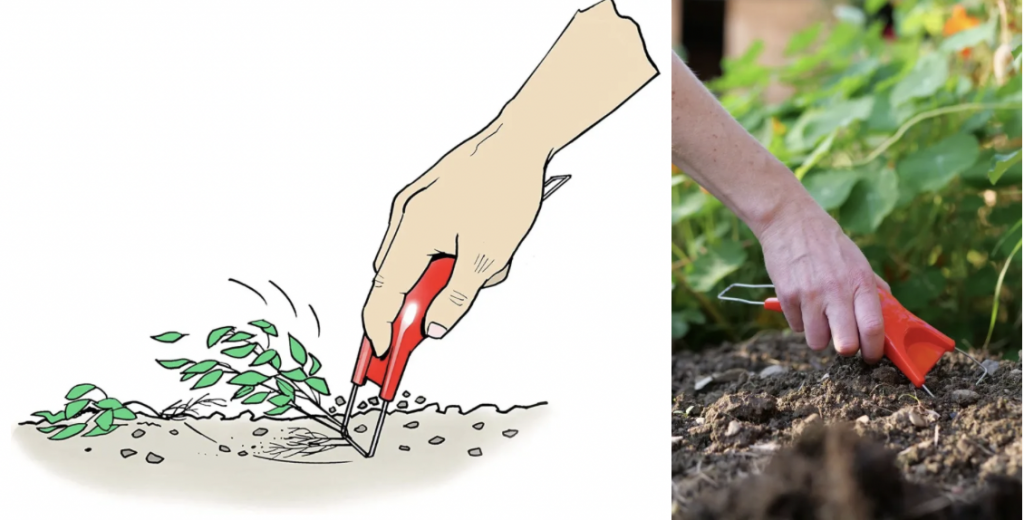
Weeding can also be done with a small, palm-sized tool that fits in a pocket, which is very handy. The tool may be small, but I actually find it more convenient for pulling up larger weeds. When my neck is aching, I lie flat on the ground and weed with it, so there is less pressure on my neck.
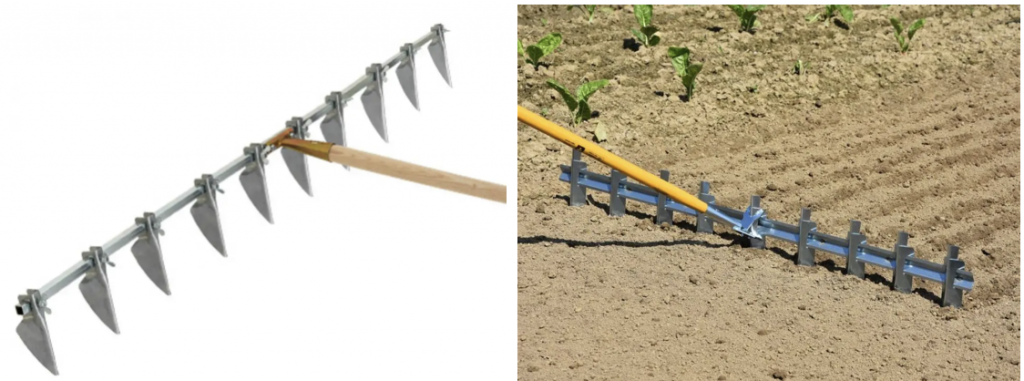
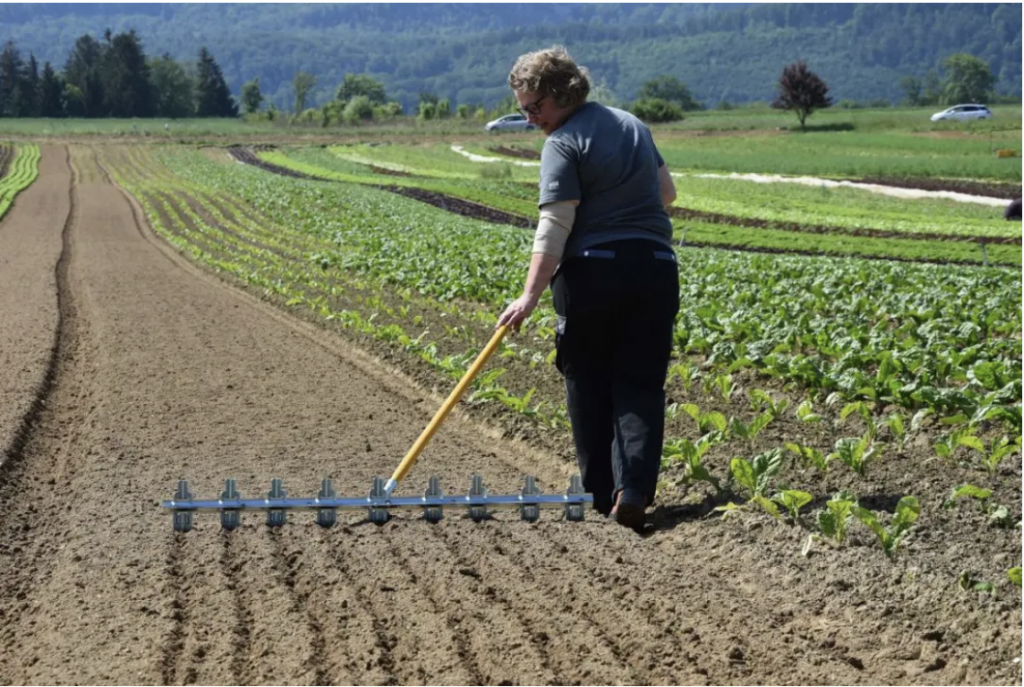
In Germany, there is also a tool called a row marker. Once the raised beds are prepared, people use it to mark out the planting positions. No vegetable farm is complete without one — I even suspect that Germans would not know how to grow vegetables without it.
The tines on a row marker can be shifted left or right to match different row spacings, and added or removed as needed. The wooden handle can rotate from side to side, because in practice you generally stand at the side of the raised bed and pull diagonally forward; it is the angled handle that ensures the planting line you draw comes out straight. First, a row marker marks out the transplanting positions; second, it eliminates the need to dig separate planting holes; and third, you can work standing up. Altogether, this greatly speeds up the transplanting process.
IV. The Farmer’s Joy
Farming is a profession that demands professional skills and also carries its own unique joys, and the two are closely intertwined. Studying weather and soil, understanding plants and animals, learning how to work alongside nature, and accepting its gifts — all of this is a kind of joy in itself.
For me, as long as my body can bear it, physical labour — even work that looks tedious and repetitive — is a source of pleasure. And that pleasure has a skill that goes with it: learning how to work both efficiently and comfortably. Choosing the right tools, adapting flexible methods, and testing them in real work — for me, all of this is part of the joy of physical labour too.
The tools and methods described in this article are only a starting point. I hope that farmers, working from their own circumstances, will keep experimenting and finding fresh ways to build on what came before. I also hope that more young people aspiring to a life in farming will not be deterred by the demanding physical work, and can truly enjoy the joy of being a farmer.

Author: Tianyuan
Once attended a Demeter farming vocational training programme in Germany. Loves the peace of the countryside and working on the farm, and hopes to continue practising organic farming.
Foodthink says
Foodthink’s previous articles have also featured many skilled people who modify farm tools, such as Da Hei from Green Me Farm and Brother Liu from Xiao Liushu Farm. Everyone has their own unique way of doing farm work. What methods do you have to make work less strenuous and more efficient? Feel free to leave a comment below.
The black-and-white images in this article are from Simple Solutions: Ergonomics For Farmworkers
https://www.cdc.gov/niosh/docs/2001-111/pdfs/2001-111.pdf
All other images and videos are sourced from the internet unless otherwise noted.
Editor: Wang Hao