
Three Lockdowns Couldn’t Close It: What Makes the London Farmers’ Market So Special?
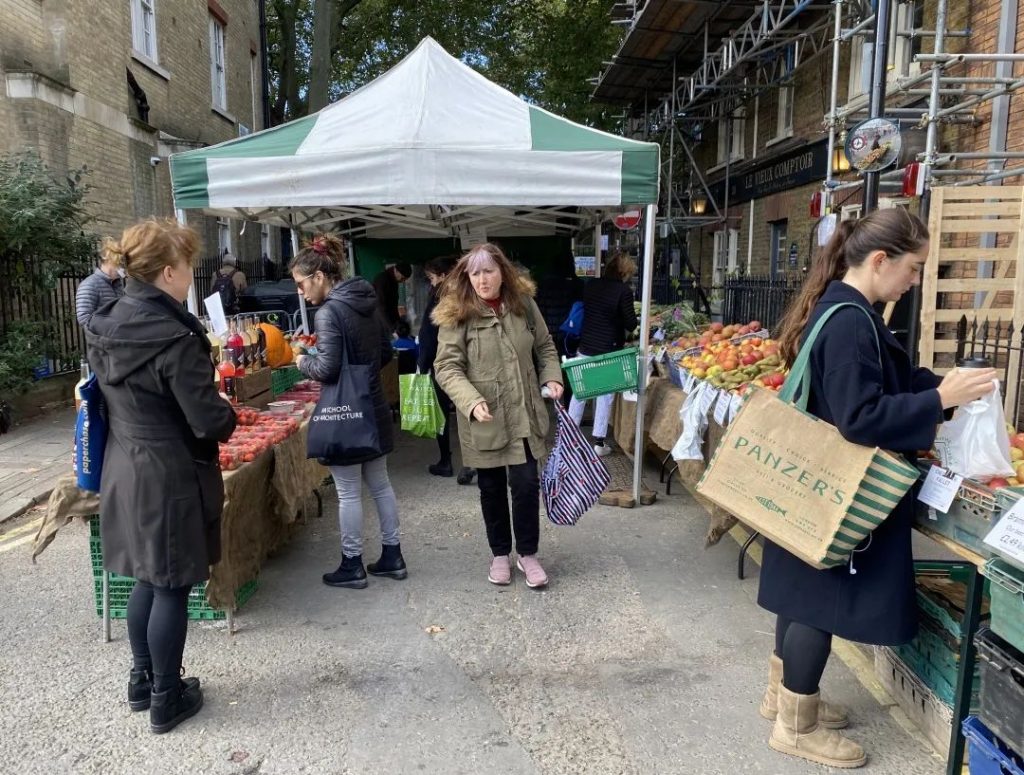
Under the shadow of the coronavirus, London went through three lockdowns. Yet even at the height of the pandemic, the London Farmers’ Market never lost its crowds and remained open to the public.
To be precise, every week, more than 200 farmers and local producers are at nearly 20 markets across London, providing residents with fresh ingredients and food, and becoming a warm haven in the midst of the pandemic.
I. I. A Farmers’ Market That Refuses to Close
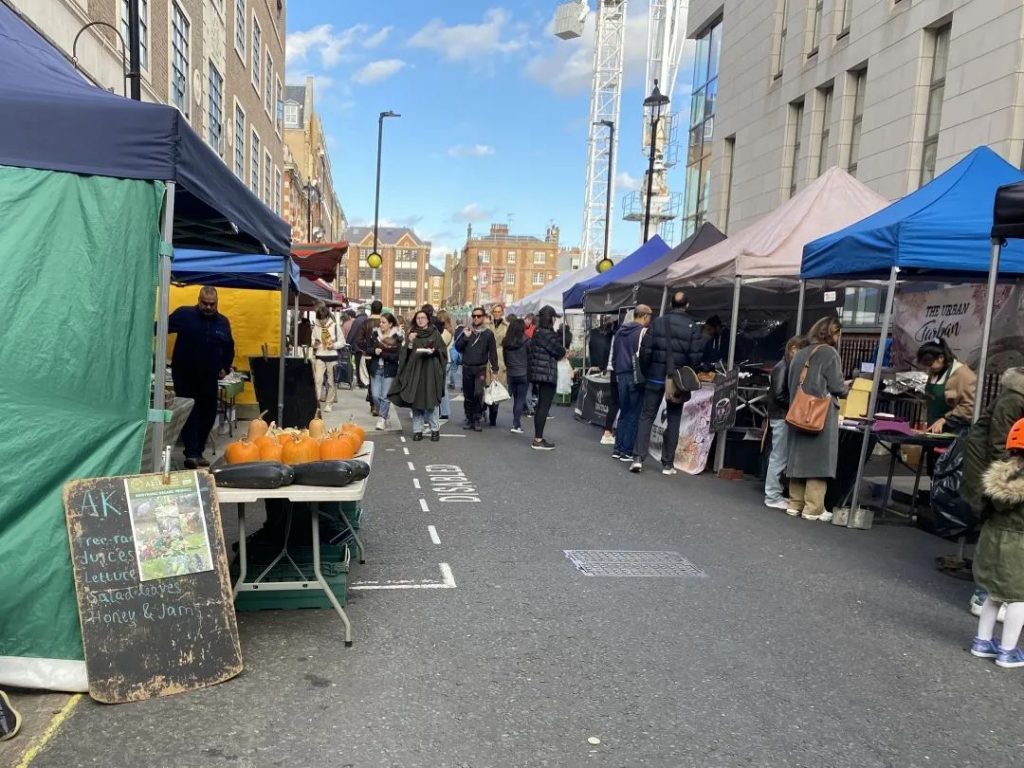
On a Sunday morning in late October, I visited the Marylebone Farmers’ Market near Baker Street, the road made famous by Sherlock Holmes. Every Sunday from ten in the morning to two in the afternoon, farmers from around London and local producers “take over” the pavements on both sides of Aybrook Street, leaving the road itself for shoppers to walk along – no motor vehicles are permitted during market hours.
Most stallholders raise a colourful canopy above their stall. Aside from the larger fruit and vegetable stalls, the rest are set up with just one or two tables, laden with cheese, mushrooms, meat, seafood, cakes, bread and other produce – basically all an ordinary household could need.
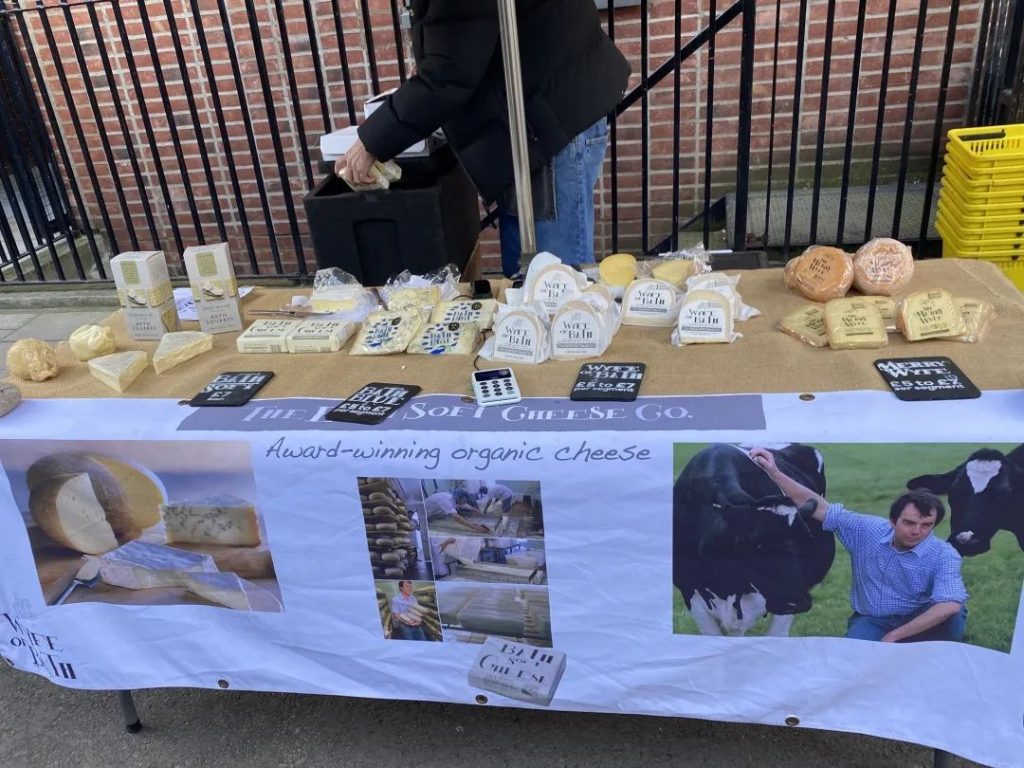
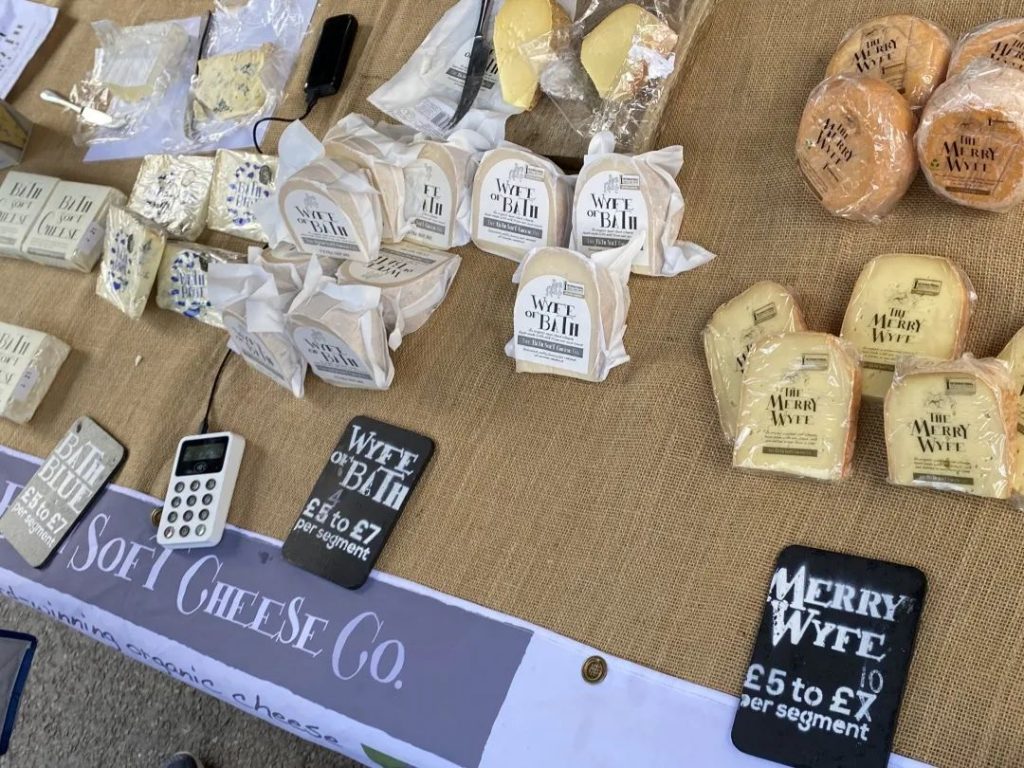
● Organic cheese from Bath.
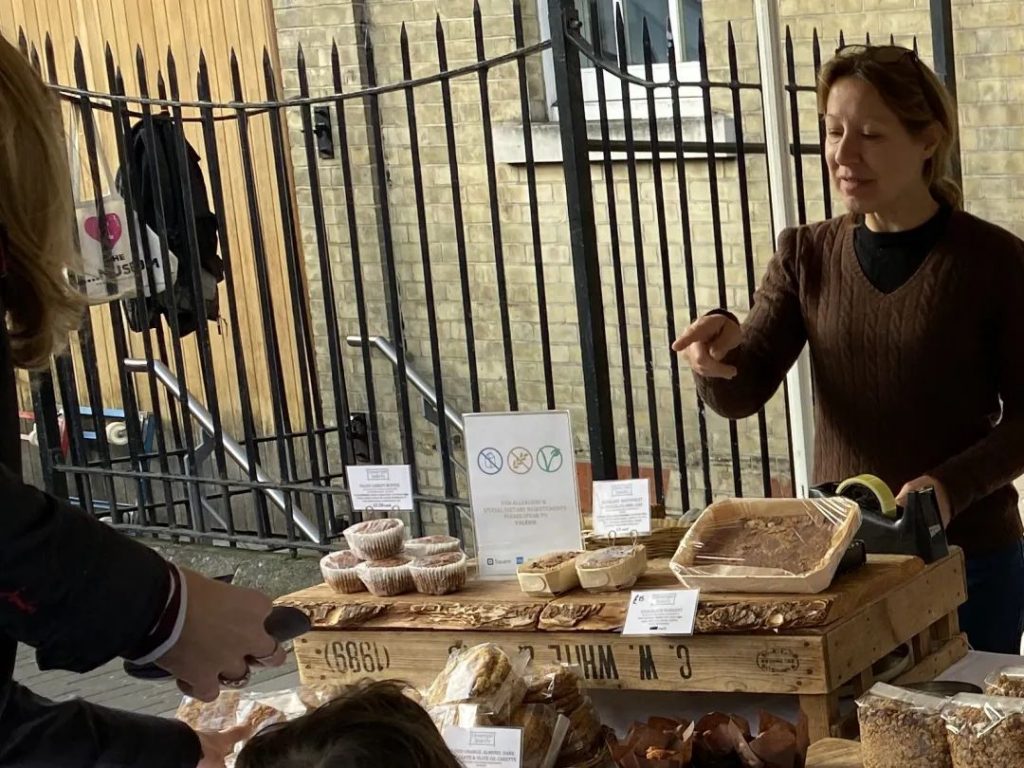
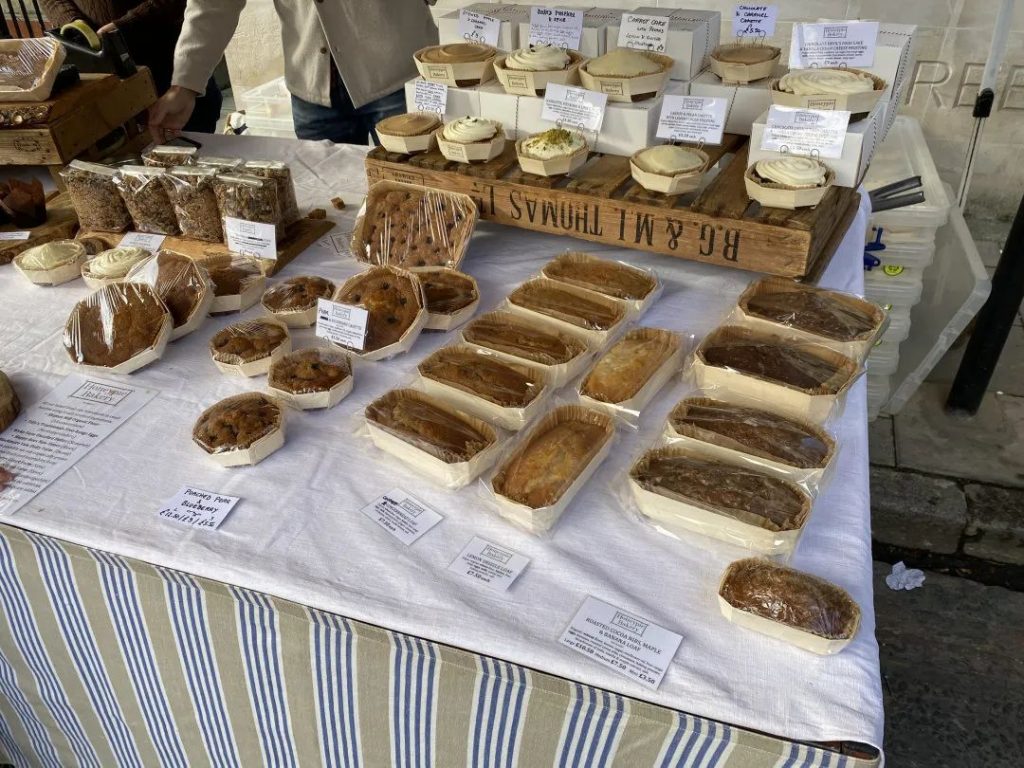
The Honeypie baking stall sits near the entrance to the Marylebone Farmers’ Market. The stallholder, Valerie, is French. She came to London at eighteen and has been selling at this market for eight years now. Her table is laden with the cakes, muffins and bread she bakes by hand.
Whether as a producer or a consumer, she loves the Farmers’ Market model: it is only here that she can connect directly with her customers, and they can see for themselves the people who make, grow or catch their food. Many of her customers are “regulars” who come every week.
In May 2020, London entered its first lockdown. Apart from supermarkets, most premises were unable to trade, and people were only permitted to go out to buy food. The government, however, classified outdoor, regularly scheduled Farmers’ Markets as an essential food business, allowing most London Farmers’ Markets to continue trading. Of the nearly 20 market sites citywide, only four were closed because they were located on hospital or university campuses.
The Marylebone Farmers’ Market where Valerie sells was unaffected, and she felt fortunate. “It’s a good thing for us too, I suppose,” she added with an apologetic smile. Valerie estimated that across the three lockdowns, the market’s customer numbers had increased by roughly 30%. For Londoners, the Farmers’ Market did more than provide food: it also unintentionally took on a social function, giving people a reason to get out of their homes and come into contact with others.
II. The Pandemic’s Impact on Farming and Small Workshops
Although the Farmers’ Market stayed open, Valerie’s business was still affected by the pandemic.
Her baking workshop is in her own home, where she mainly bakes cakes, bread and biscuits. In addition to selling at the market, her products had also been sold in a hotel. But during the lockdown the hotel closed, new management took over, and she was no longer invited to sell there.
The pandemic also affected her supply of ingredients. While the local farmers who supplied her saw little disruption to their production, the number of residents buying flour to bake at home surged during the pandemic, leaving flour mills temporarily unable to meet demand. Fortunately, as a small baking workshop, she was given priority allocation by the supplier, and the problem was resolved.
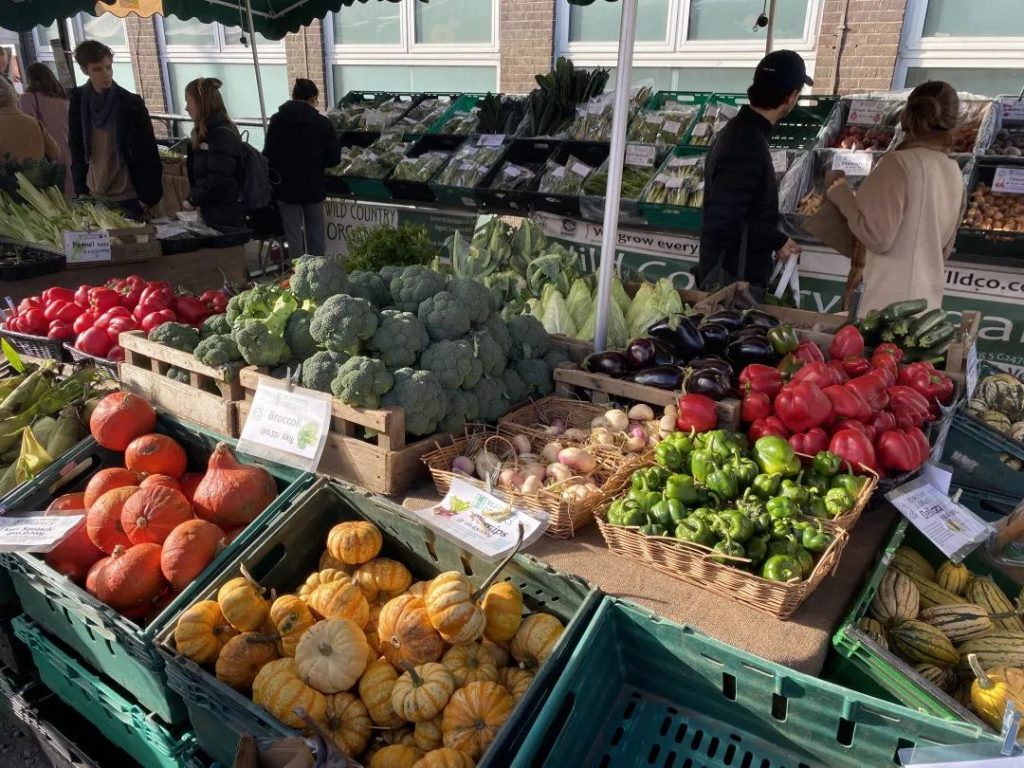
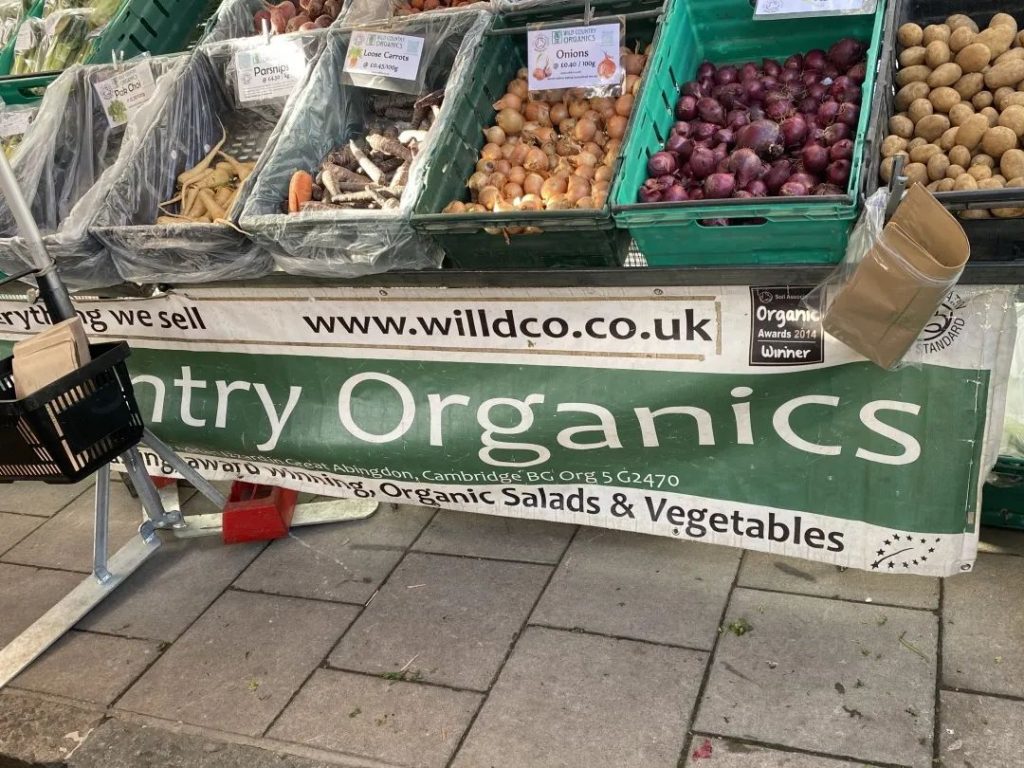
Beyond small workshops, some farmers were also affected by the pandemic, including Wild Country Organics, which sells organic vegetables at the market. Machek is a tall, heavily bearded middle-aged man wearing a dark green apron printed with the shop’s logo. He has been in charge of the farm’s sales at this market for six years. He told me that although the market continued throughout the pandemic and the farm’s sales were largely unaffected, about half the farm’s workers came from Eastern Europe and other European countries, and because of the pandemic they could not travel freely between home and London, so they chose to leave, leaving the farm short-staffed.
III. With Everything Under Lockdown, Why Does the Government Still Allow Markets?
Although the government permitted markets to remain open during the lockdown, they were virtually the only place where people could gather outdoors. Many did not quite understand the farmers and customers who still came, and the market-goers even became targets of attacks on social media.
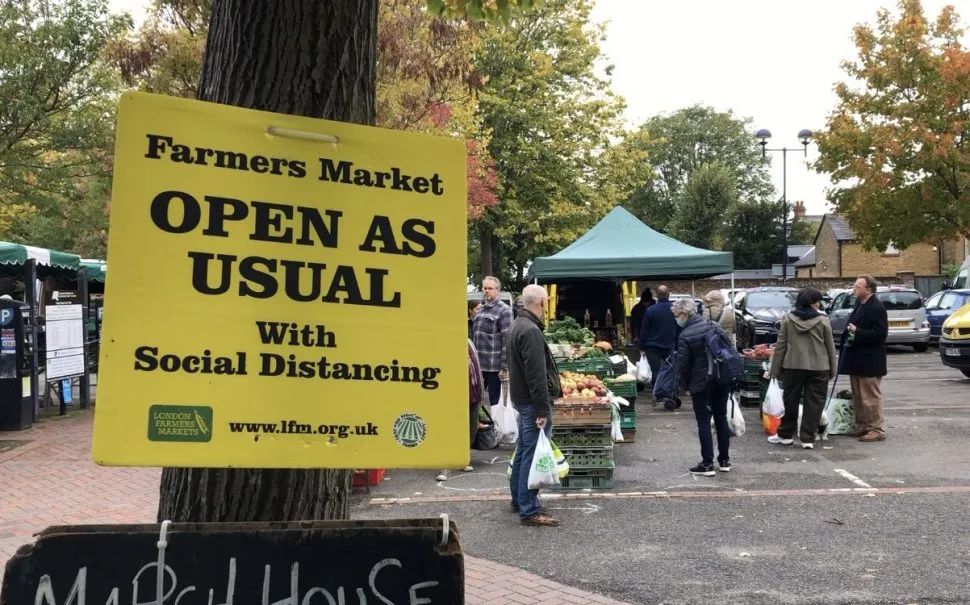
So, on 1 May 2020, the London Farmers’ Market published a post on its website, explaining why the markets were still operating during the pandemic and setting out the reasons for keeping them open:
● The government has authorised outdoor food markets to operate during the crisis.

● Since everyone needs to eat, closing Farmers' Markets would only force customers to spend more time in supermarkets and other shops.

● Buying food outdoors is safer than buying it indoors. The novel coronavirus is transmitted through respiratory droplets from the mouth and nose, and infection is more likely to occur in enclosed spaces.
In addition, the markets also received guidance from the government on pandemic prevention. They adopted new safety protocols, set up barriers, and recruited staff to maintain social distancing within the market. Pandemic regulations also required that only one person per household could visit the market at a time. To limit the number of people inside, customers had to queue on the street outside and enter one by one, wearing masks. The market operated on a one-way system, with standing points marked on the ground; once customers had finished their purchases, they had to move forward immediately.
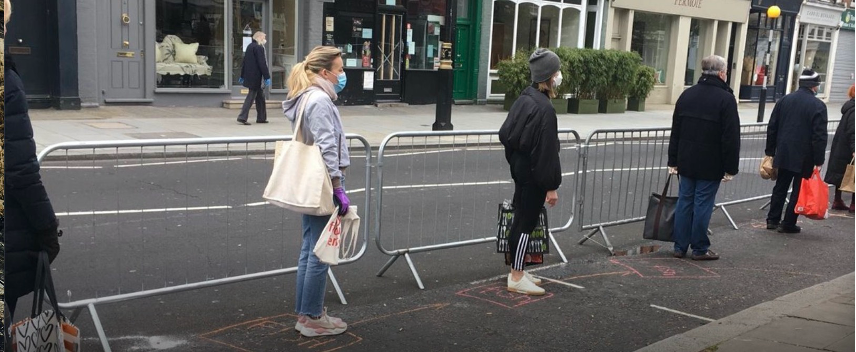
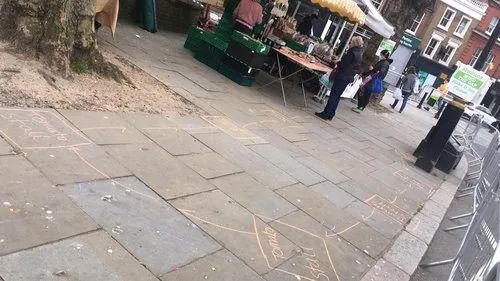
“We have invited the police and local authorities to come and check at any time to confirm that our pandemic prevention measures are being properly carried out. Some have already visited, and they are quite satisfied with what they have seen.”
The London Farmers’ Market wrote on their Facebook page: “Farmers’ Markets are as important as supermarkets, grocers, pharmacies and other basic public services.”
IV. What Is a Farmers’ Market?
The Farmers’ Market differs from conventional farmers’ markets and supermarkets in one key respect: every stallholder is a producer, selling only their own produce and processed goods.
Compared with the renowned, long-established Borough Market in London, the London Farmers’ Market, founded in 1999, is very young. At first, founder and food writer Nina Planck simply wanted to bring good food to the community. But she later discovered that the Farmers’ Market gave customers the chance to meet producers – farmers, fishermen, beekeepers and others – face to face, to hear their stories, and to form new connections.
Farmers and workshops wishing to join the London Farmers’ Market must first submit an application to the organisers, who are responsible for reviewing whether a set proportion of the food on sale comes from farmers within 100 miles of London.
Baking stallholder Valerie falls into the second type of producer – she is not a farmer herself, but she sources raw ingredients from local London farmers, bakes at home, and then brings her finished pastries to the Farmers’ Market to sell.
Under the rules, the raw materials Valerie uses to make her pastries must include a set proportion of farm produce from within 100 miles of London. In other words, she must buy her flour, fruit, vegetables, cheese, milk and so on only from farmers who meet the above criteria.
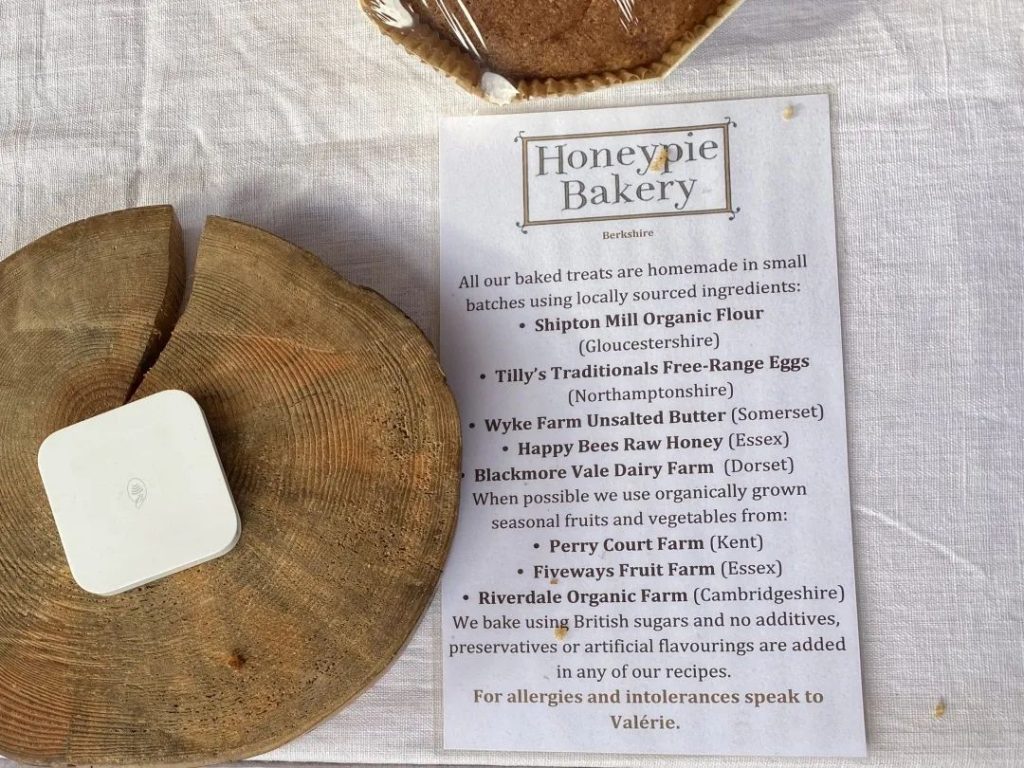
The reason for such detailed regulations is that the London Farmers’ Market has specific objectives:
● Increase farmers' income and provide urban communities with high-quality local and seasonal food;

● Encourage sustainable food production methods, and support traditional animal breeds and traditional fruit and vegetable varieties;

● Encourage Londoners of all ages to take an interest in food production and agricultural issues, and to learn more about where the food they buy comes from.
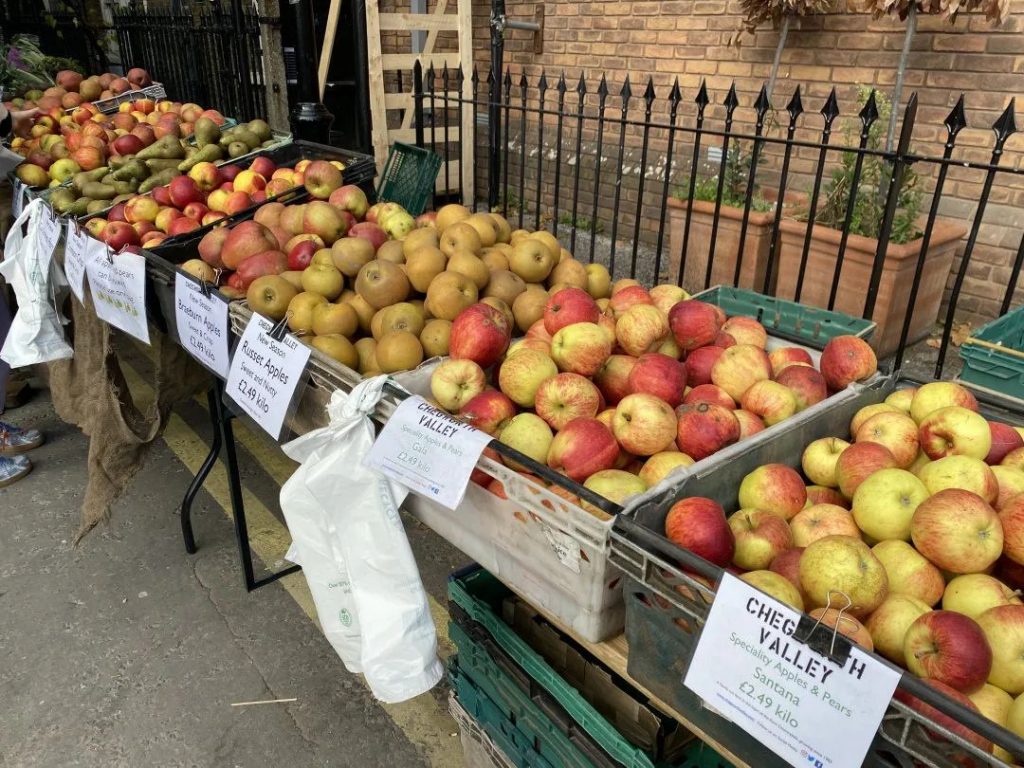
In addition, the market also provides farmers with guidance on what to sell and how to sell their local produce, and helps them improve their food hygiene standards.
At the market, consumers come into direct contact with the farmers, fishermen, growers and bakers who produce their food. The weekly Farmers’ Markets also turn idle parking lots, school playgrounds and town squares into vibrant communities, where people can meet neighbours and swap recipes while they shop for food.
V. V. How the Pandemic Has Highlighted the Value of Farmers’ Markets
The pandemic has also significantly increased demand for Farmers’ Markets. The UK’s Sustainable Food Trust published an article on its website titled “We Still Need Alternatives to Supermarkets – Perhaps More Than Ever”.
The author points out that, owing to the pandemic lockdowns, two-fifths of Britons are now visiting local independent shops and direct suppliers more frequently than before. Small independent butchers have benefited greatly from the shift in consumer buying habits. For example, since the pandemic began, the proportion of consumers buying beef from independent butchers has risen.
In addition, the pandemic has caused a surge in demand for organic food. In the year to November 2020, as more people have been eating at home, organic food sales rose by 12.9 per cent, compared with an 8.9 per cent increase for non-organic products.
Meanwhile, from March last year to the present, the London Farmers’ Market has opened new market sites at several locations across the city, enabling more Londoners to safely buy fresh produce from local growers right on their doorstep.
“But I think people should still be more careful! Who knows how the pandemic will develop this winter?” Valerie the baker remarked with a sigh.
With the cold winter approaching, will another surge in cases come, as she fears? Will London implement a fourth lockdown? The pandemic continues to spread, and people’s lives go on amid uncertainty. But at the very least, the Farmers’ Market gives people a space to step outside, chat with neighbours, talk face to face with producers, and pick out fresh, quality ingredients. This may also help ease the loneliness and anxiety many have felt during the pandemic and, amid all the uncertainties, offer a small measure of reassurance.
▼References
https://www.facebook.com/LondonFarmersMarkets/
https://www.justgiving.com/crowdfunding/rms-market-appeal

Author: Feng Huiru
MSc in Social Anthropology, London School of Economics; natural history enthusiast.
Unless otherwise stated, all photographs are by the author.
Editor: Tianle