If You Can’t Quit High Sugar and Oil, Just Make Healthy Snacks by Hand | Grandma Kouzi

On my way to the town market, I came across two snack stalls within three paces.
One was kept by a local elderly woman. She had a fixed spot in the market, sitting on a small stool and tending a pot of hot oil, frying and selling deng zhan gao as they came. When she saw me lifting my phone to take a photo, she asked how many I wanted to buy; I quickly put my phone away and retreated in a fluster.
Beside the deng zhan gao stall was a roving peddler. This middle-aged man, who went from market to market, pushed a specially modified sales cart, selling ready-made “jin bao yin”. Jin bao yin is a glutinous rice cake fried to a golden brown, filled with sesame, white sugar and glutinous rice. To avoid another awkward sales pitch, I merely took a photo from a distance.
Leaving the market, the snack shop that occupied the most prominent spot at the corner was called “Tang Chao” (Sugar Nest). You didn’t even need to go inside, let alone scrutinise the ingredients list; the name alone told you the sugar content inside.
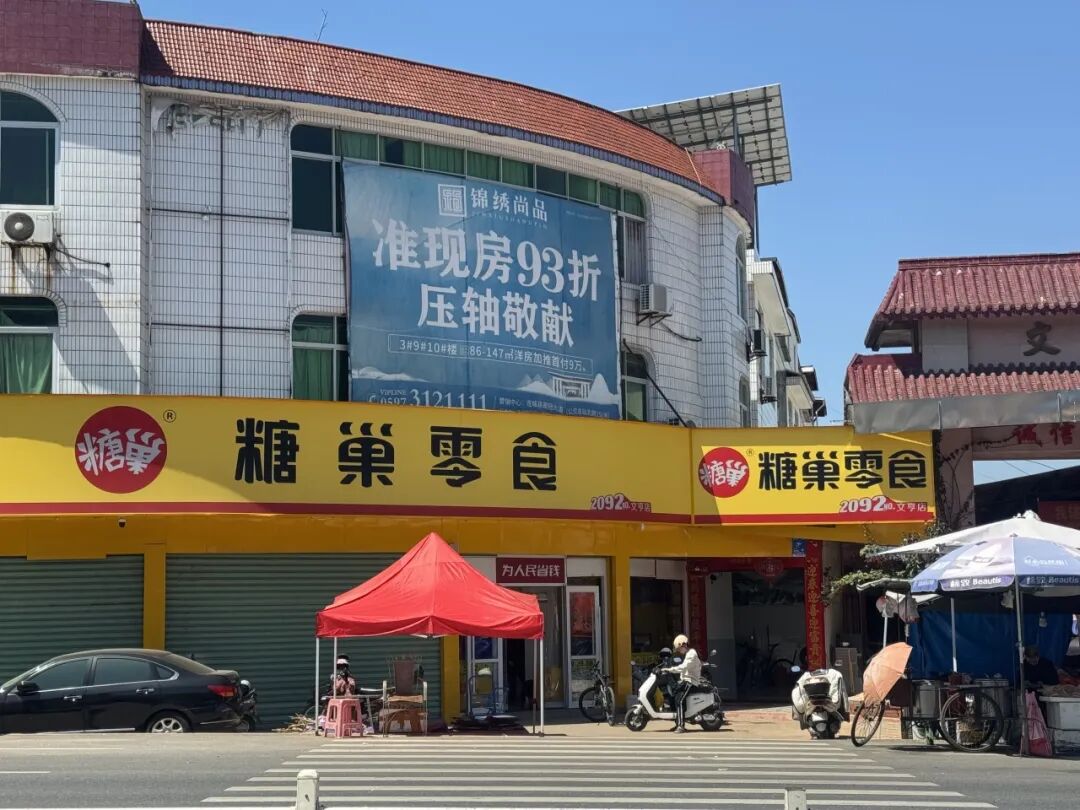
◉ The snack shop in town.
Today’s snacks are either high in sugar or high in oil, and some are both; for modern people with the “three highs”, they are all deadly.
What on earth has happened to our snacks?
The Han Chinese Harvest Festival
The two local snacks I had just tried hard to avoid are both traditional delicacies with a rich heritage.
There are two explanations for the name of deng zhan gao: one says the finished cake resembles an ancient soybean-oil lamp, while the other says the small iron pan used to fry it resembles a lamp from the oil-lamp era.
A younger local friend from Fujian tells me that, when he was a child, the once-a-year deng zhan gao was a longing that children treasured in memory all year round. In the past, everyday food was plain and watery, without a trace of oil; only when rapeseed oil was pressed in spring did they fry deng zhan gao once. They soaked three parts rice with one part soybeans the night before. The next day, they first ground them on a stone mill into a fine rice paste, then seasoned it with salt, chopped spring onion or green garlic. They heated the oil over a fire and first put the small iron pan in. Once it had been heated sufficiently, they lifted it, poured in the rice and soybean paste, and submerged it in the oil. Children stood by, eyes agog, waiting for it to heat, puff up, turn into deng zhan gao, and float up to the surface. Freshly fried deng zhan gao was fragrant, crisp and flaky, and steaming hot.
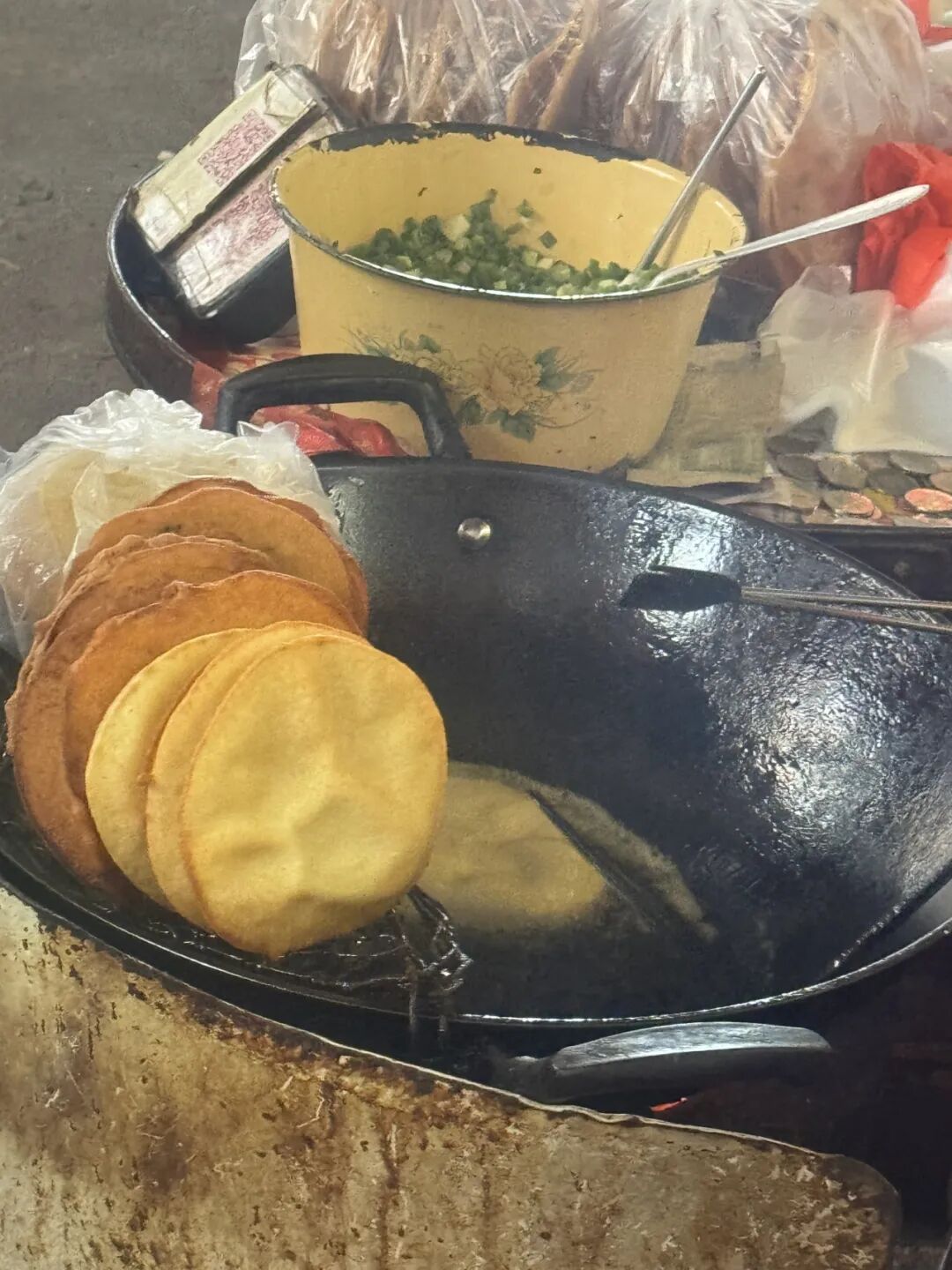
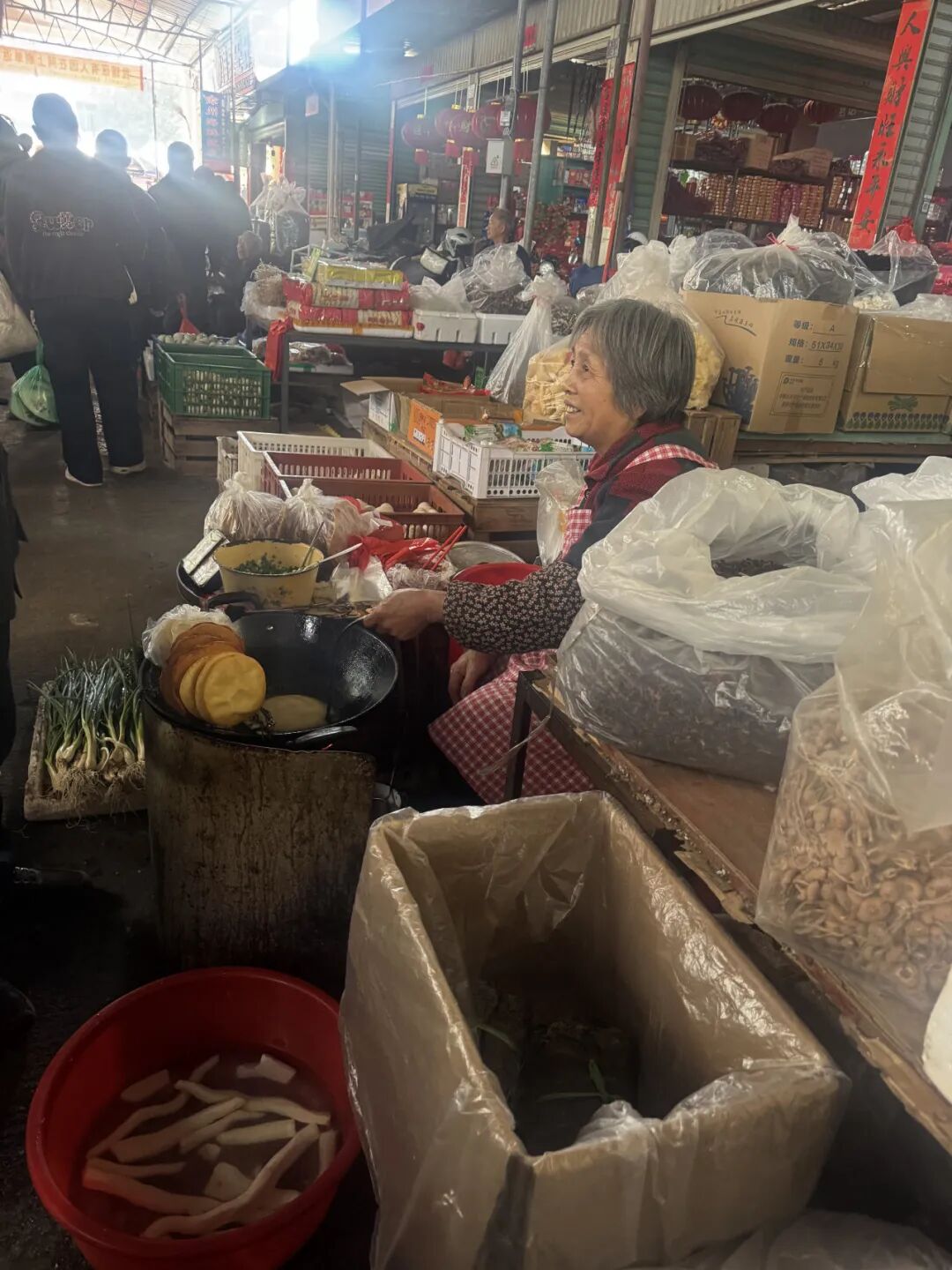
◉ Deng zhan gao and the elderly woman tending the stall, frying and selling them on the spot.
jin bao yin was listed on the local intangible cultural heritage list in 2018. The main ingredient in both the “gold” and the “silver” is glutinous rice. The “gold” is made from glutinous rice flour mixed with wheat starch or cassava flour, kneaded smooth and flattened, then fried until it puffs up into a golden ball and floats to the surface. The “silver” is made in a manner similar to ciba: first steam the glutinous rice, then pound it and add sugar; or mix glutinous rice flour with water and sugar, stir well, and steam until cooked. If glutinous rice flour is used, it must be of an exceptionally fine grade—the so-called water-milled flour.
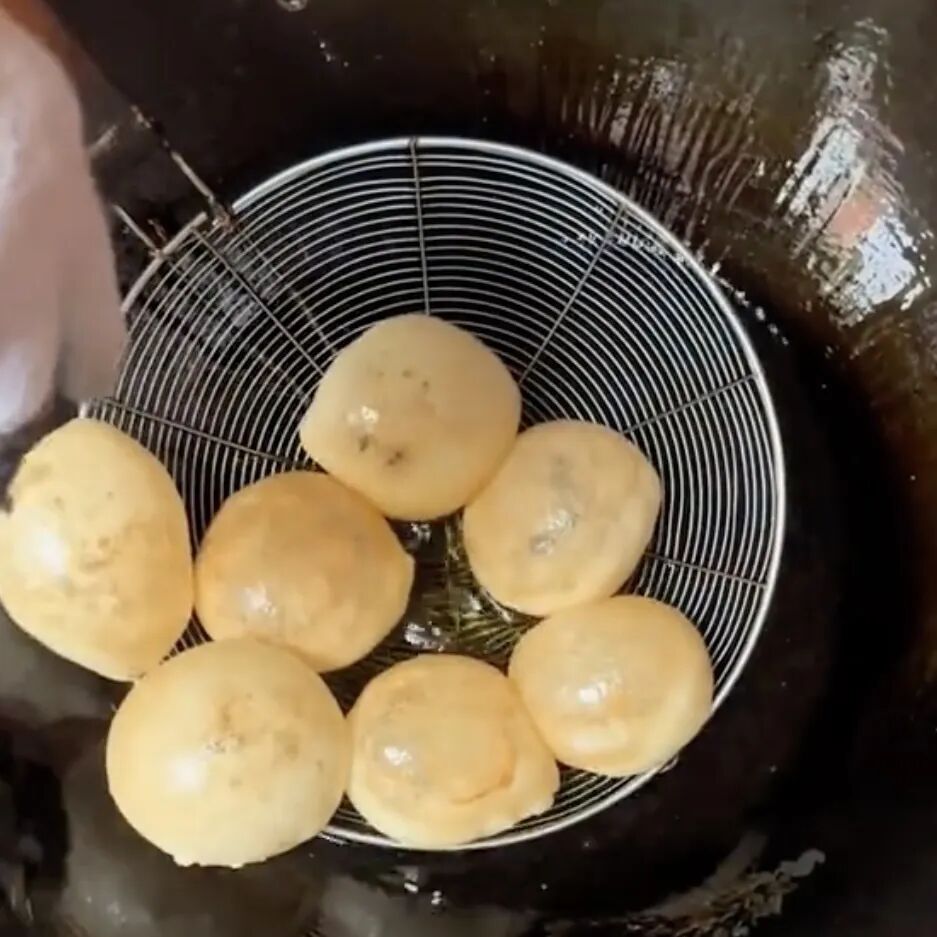
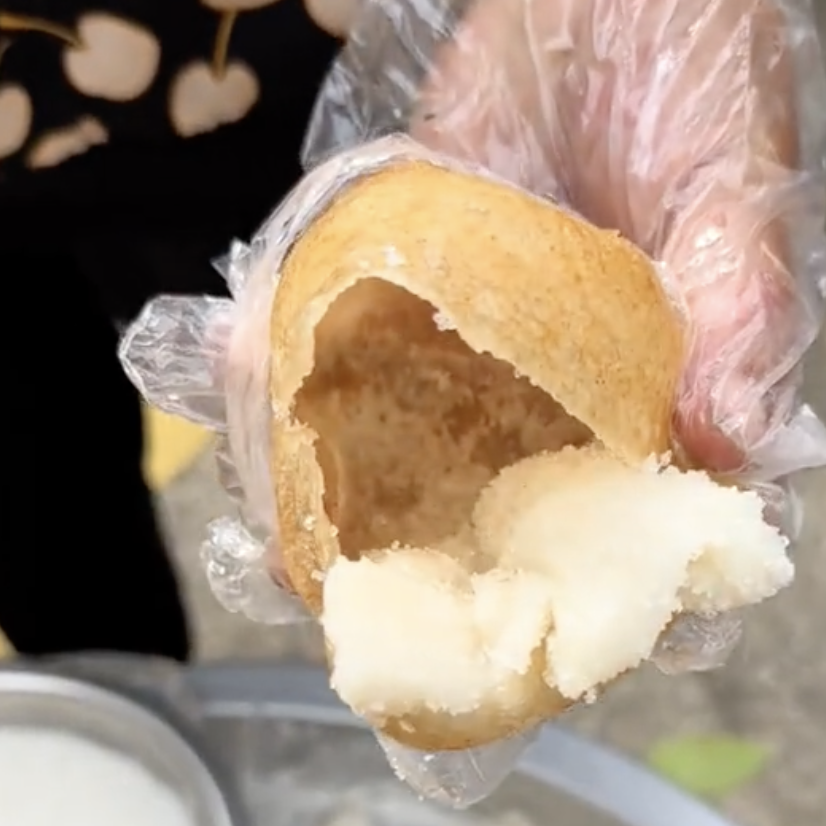
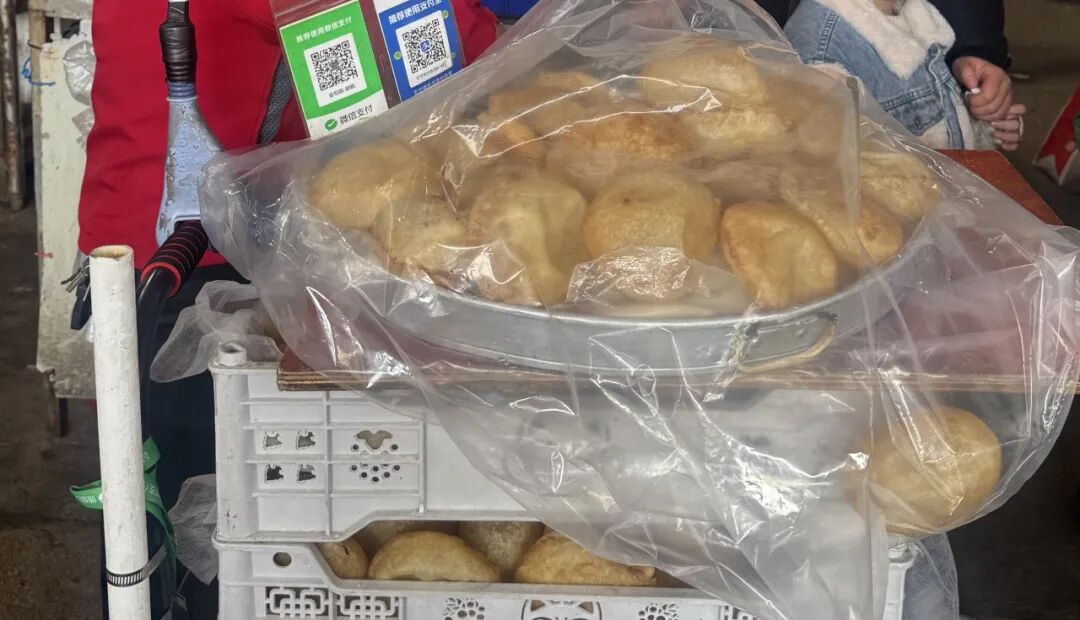
◉ The freshly fried “gold” and the “silver” sandwiched inside. Caption: Douyin user @黄掌柜吃吃吃, Grandma Kouzi
Most households could make deng zhan gao, but jin bao yin took longer, was more tiring, and was rarer. It is not hard to imagine what a lovely memory deng zhan gao and jin bao yin were for children decades ago.
I had similar fond memories from my childhood. The difference was that the delicacy in Fujian was rice, while in Shandong it was wheat.
Before I started school, I lived with my mother, a teacher, at a rural middle school. Children in the village had hardly any snacks at all. The most wonderful of my food memories was that, after the wheat harvest each year, my maternal grandmother would toast the new wheat in an iron pot, then grind it into flour on a millstone, sieve it, mix in a little brown sugar, and knead it into a ball with cooled boiled water. I treasured it so much that I would hold the egg-sized brown dough in my palms, biting off only a tiny piece each time and slowly sucking at it in my mouth for what felt like half a day before swallowing.
Whenever the wheat began to ripen, I would look forward to that mouthful. From the moment my maternal grandmother began picking over the wheat, washing and rinsing it, and roasting it, I stayed by her side, not moving an inch. The roasted wheat grains had to be ground for a long time; the finer they were ground, the more delicious the sifted toasted flour was. I could not stand my cravings and kept urging her to hurry. My maternal grandmother, with her bound feet, pushed the millstone round and round, reassuring me to be patient. That was the only snack I had before I moved to the city at seven. Those spring days, sweet and lovely yet long and hard to bear, were the most wonderful memories of my childhood.
Later, when filming a documentary, I experienced some festivals of ethnic minorities. The Han Chinese rarely have ceremonies with singing and dancing, but that ball of sweet toasted flour, fragrant with wheat, was my Harvest Festival.
I think that, for the elderly woman selling deng zhan gao at the market, deng zhan gao is much the same.
From a Symbol of Abundance to a Health Killer
I was born into hunger and grew up in hunger. Although the three-year Great Famine had passed, our family was large: our parents brought up the five of us, and, in addition to the grandparents, they also had to look after my father’s aunts and uncles in the countryside. Of this large family, only four had urban household registration and a grain supply, so day-to-day life depended on “high-priced grain”. I remember that for many years, at every meal we first drank a large bowl of hybrid sorghum porridge before eating, so that we could eat fewer steamed buns. Hybrid sorghum was a very unpalatable coarse grain; it could not be steamed into steamed buns or made into pancakes, and only families with no grain coupons and no money would eat it.
In the years of hunger, many things were put to use as both food and medicine. When I was a child, we would give a child with diarrhoea a “drink of toasted flour”. First, we toasted the flour in an iron pot over a low heat until it was cooked, first a faint yellow, then a little deeper to a yellow-brown, almost scorched but not quite. We then mixed it with boiling water into a paste. Drinking it could stop diarrhoea. If it was indigestion, we would roll out a flour cake thin as a cicada wing, then toast it in a flat pan over a low heat until it was extremely dry and crisp and its surface was lightly scorched; this was called “jiao bing”.
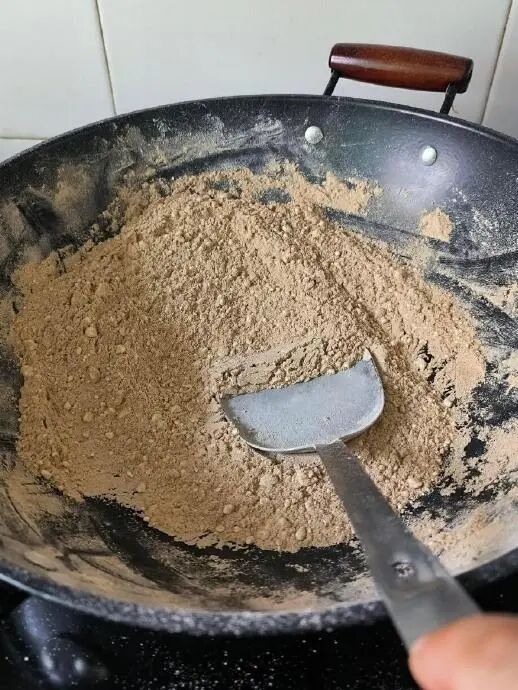
◉ Even now, there are people who still make toasted flour in an iron pot to soothe the stomach. Image source: Sina
Using scorched flour to stop diarrhoea is close in principle to “montmorillonite powder.” Another remedy close to jiao bing in resolving food stagnation and aiding digestion was to soak scorched, dried steamed buns in water. When I became a farmer in the south, I found that what plays a similar role there is rice. Rice tea made from scorched brown rice is also used to regulate the spleen and stomach.
In the agricultural era, rice and wheat were both the staple grains that sustained basic survival and sources of precious, rare enjoyment—they were rare treats. Making snacks by hand first of all meant living within your means; it was never done carelessly. You first had to set aside the grain the whole family needed to eat. When the harvest was relatively plentiful, eating a little more refined, high-calorie food meant it would be converted into fat in the body and stored, becoming a life-saving reserve in the hungry gap. That was a human instinct handed down through the ages. Humans have evolved to the present through long ages of regularly having nothing to eat, or never enough to eat, and the genes of those who survived carry an ingrained love of higher-energy foods.
By the late 1970s, my family no longer had to drink sorghum flour porridge. At that time, my uncle brought the “ba bao tang chang” from Tianjin. The main ingredient was also toasted flour—oil-roasted flour—and it had added ingredients: sesame and walnut kernels, green and red shreds, osmanthus sugar, raisins, and sugar—very, very sweet. By today’s standards, such a drink would undoubtedly be a sugar-and-oil bomb bad for health.
Even if my maternal grandmother had added enough sugar to make her homemade toasted flour sweet enough, it was a completely different matter from Eight Treasure Tea Soup. It was the difference between “food of the agricultural era” and “foodstuffs of the commercial era.” That bowl of exquisitely delicious Eight Treasure Tea Soup was the result of nationwide, industrialised food production, distribution and sales. The raisins were from Xinjiang, the sesame and walnuts from the north-west, the osmanthus sugar from Jiangnan, the green and red shreds from North China, the sugar from the south, and the flour from the north.
That was still in the era of the planned economy. Today, supermarket shelves are filled with all manner of constantly reinvented, high-sugar, high-fat snacks. In an era when widespread hunger was the norm, once these delicious, high-calorie treasures entered the body, they were immediately converted into energy to make up for the body’s deficit; only when there was a surplus was there a chance of it being converted into fat. Nowadays it is different. The fat stored in modern people’s bodies cannot be driven away no matter what. Once rare and hard-to-find delicacies have thus become health killers for modern people.
Can Snacks Still Be Eaten?
So, snacks—can they still be eaten? Yes.
The pleasure that delicious food brings is something humans cannot—and need not—resist. I am writing this article while snacking: dried pumpkin is high in sugar, and roasted peanuts are high in fat.
In Eren Valley, whether it is a main meal or a snack, everything comes from asking the land for food: eat what is available, and grow what you want to eat. But one cannot carry the land on one’s back everywhere. While my parents were alive, whenever I went back to our home village to look after them, I had to fall back on buying, buying, buying—including buying snacks.
The problem is not buying; not knowing how to buy is. Healthy snacks do exist, but they require a discerning eye to pick the treasures out of the thick encirclement of all manner of additives.
Here are the points to keep in mind when I buy snacks:
1. My first choice is raw, unflavoured nuts. I reject all roasted ready-to-eat options, which are very likely to contain sweeteners or free sugars. I do not buy them online either; instead, I go to a larger store and only choose bulk items where tasting is allowed. If I can go to a farmers’ market, that is even better: everything can be tasted before buying.
Nuts are rich in oil and, as a rule, go rancid and change flavour after about a year. Expired or near-expiry nuts are given added flavourings and ingredients, made into cream, five-spice, mala and so on, using strong flavours to mask the rancid smell. Buy peanuts, walnuts, apricot kernels, peach kernels, almonds, pumpkin seeds and sunflower seeds only raw; once bought, they can be roasted in an air fryer or oven. The settings I usually choose are 130°C for one hour. If I am patient, I can set it five degrees lower and let it take two hours. Nuts baked for a long time at low temperature become sufficiently crisp and slightly sweet; if the temperature is too high and they scorch, they are no longer sweet.
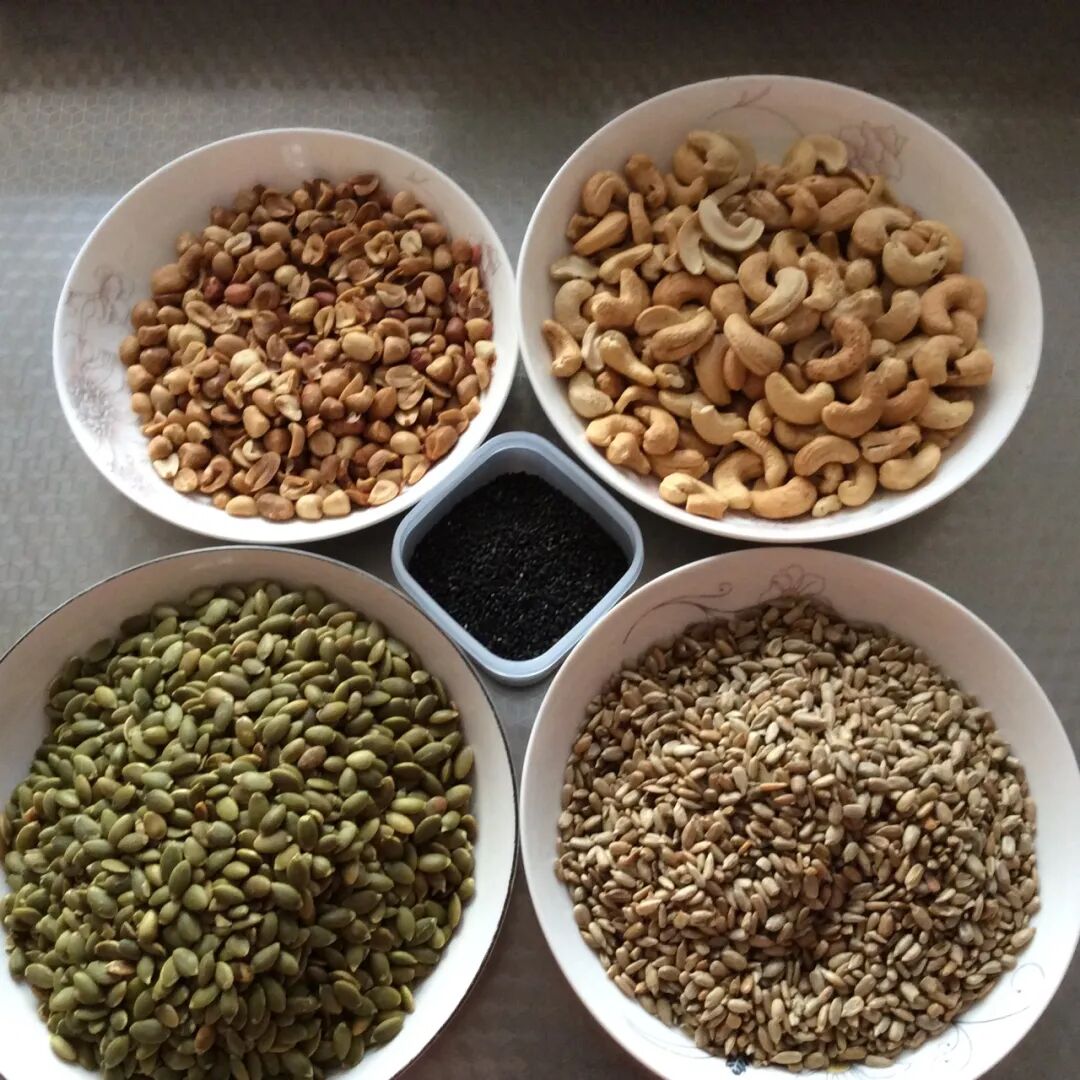
◉ Assorted nuts.
2. For sweet snacks, jujubes are the mainstay. Choose jujubes with firm flesh: dog-head jujube or grey jujube. You can also choose dried fruit: raisins or dried blueberries. Many dried fruits in supermarkets are processed products that contain sugar, so check the ingredients list carefully and choose pure dried fruit. The Beijing Organic Farmers’ Market catalogue lists many sweet snacks with no added sugar. Dried figs, dried sweet potatoes, dried pineapple and dried apples are all good.
Eating red dates with walnuts or peanuts is my most beloved snack pairing; the more I chew, the more aromatic it becomes. Although red dates are sweet enough, peanuts oily enough, and both high in calories, 100 kcal eaten this way and 100 kcal from a glass of cola produce very different results. The dietary fibre in red dates and peanuts increases satiety, makes blood sugar rise slowly, and delays the absorption of sugars and fats. The fibre that has given its all is also converted into vitamins in the large intestine, and the remaining part, before leaving the bowel, also sweeps away accumulated stool.
Handmade Healthy Snacks
Back in Eren Valley, the variety of snacks is far greater. Making these kinds of snacks by hand involves a lot of fuss, but it is not difficult. Once you have made them once, you can improvise freely and let your imagination run wild.
The simplest starter is a sugar-free sweet drink—roselle and stevia. The difficulty of preparing it is close to zero.
Roselle, also known as roselle, has a thousand merits but one drawback—it is very sour. So many people add sugar and honey when steeping roselle. Roselle with sugar neatly cancels out its original benefits.
My method makes the roselle drink sweet and pleasant to drink, without the harm of sugar. Usually I use four or five roselle flowers for one cup, with four stevia leaves. Steeping roselle in water that is too hot makes it astringent, so steep it slowly in room-temperature water. Not only is there no astringency, but the gorgeous colour of the roselle and the sweetness of the stevia also slowly emerge. If you happen to have roses, you can add a few petals. The roselle drink is gorgeous; served in a stemmed glass, it is a perfect match for New Year and festival tables. It is suitable not only for children as a substitute for sweet drinks, but also for adults as a substitute for red wine. Besides stevia, monk’s fruit and mu jiang ye ke are also sweet substitutes.
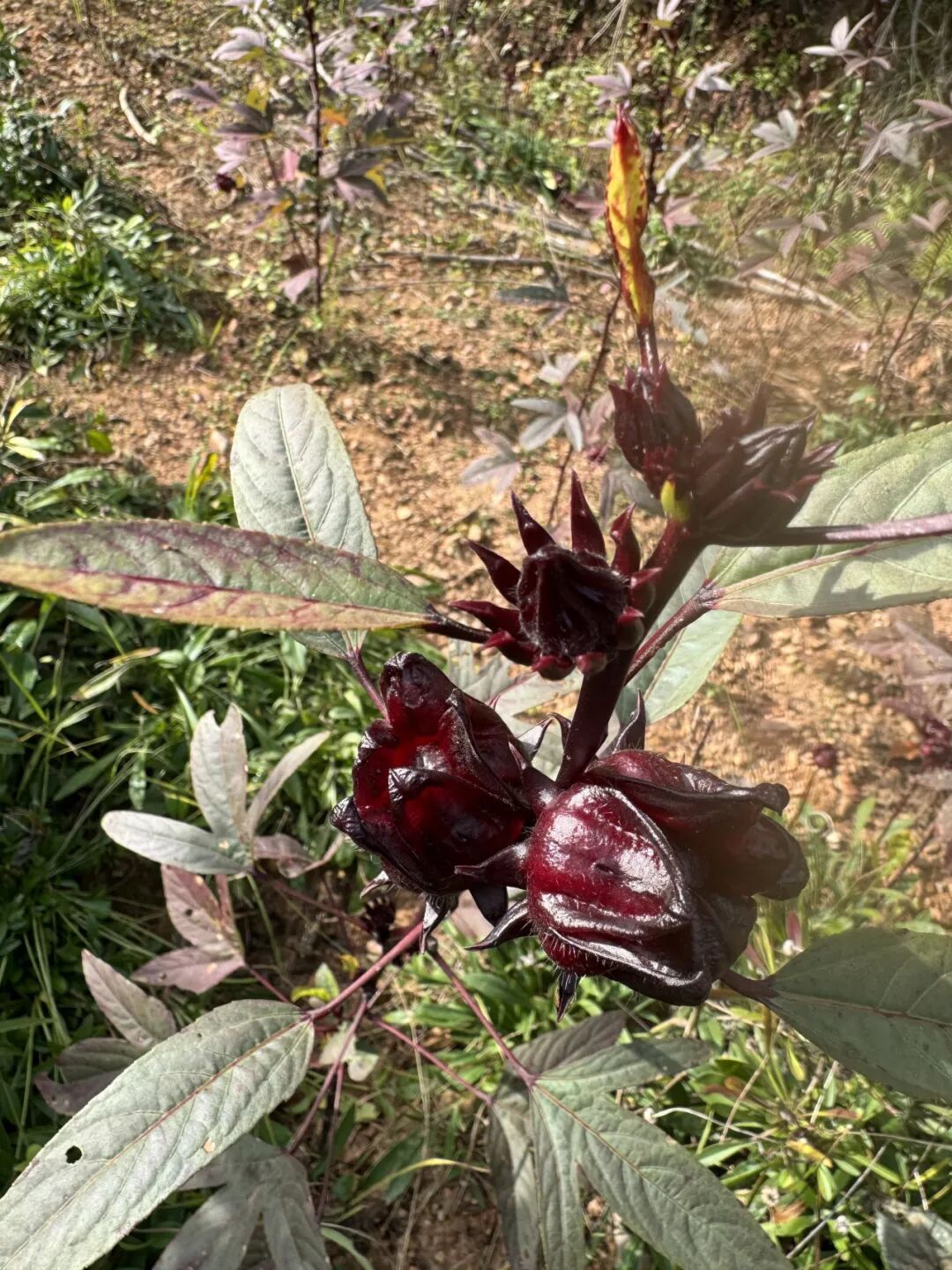
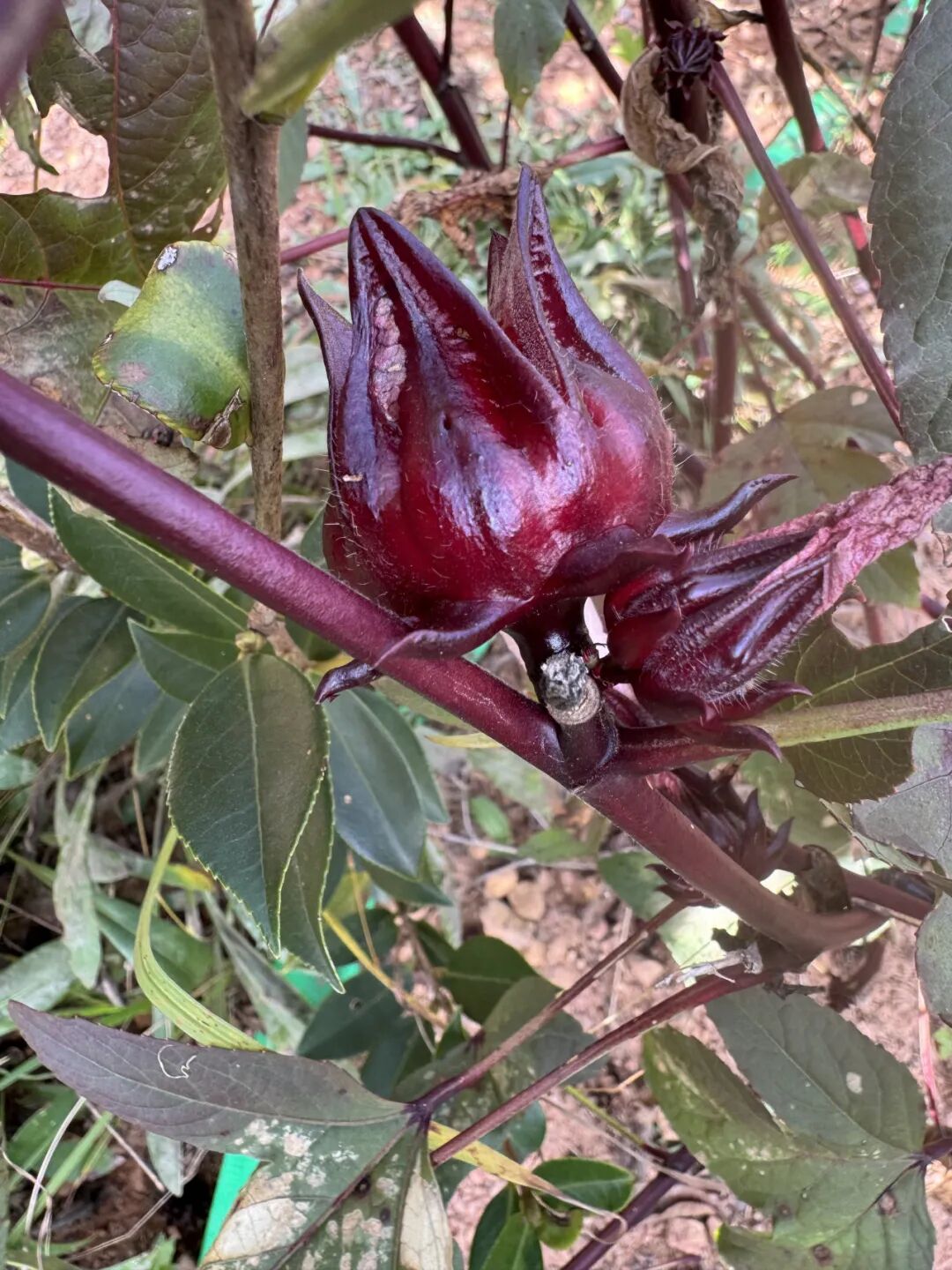
◉ Roselle flowers blooming on the branch.
Eren Valley also makes homemade yoghurt. Yoghurt is a good thing, but “yoghurt” and “yoghurt drinks” with added sugar or sweeteners are not: they are as harmful to the liver as sweet drinks. It is not absolutely impossible to buy genuine sugar-free yoghurt, but I have always doubted my luck, so I chose not to take the risk. I make it myself, and luckily came across a simple method for homemade yoghurt.
My culture is an unexpected gift. Four years ago, when a friend’s family came to visit, they left behind a meal box containing kefir grains. Before that, I had tried buying unsterilised yoghurt to use as a culture and adding milk to continue making yoghurt, but after a few batches its activity usually declined. I also tried buying dry lactic acid bacteria in sachets, or yoghurt culture; it was much the same. It was not until I got my friend’s meal box that I found a culture that has stayed alive and is still in use to this day. It has even travelled with me on planes and trains: first I spread the yoghurt on a clean handkerchief, and after landing, soaking it in water and washing it once is enough to get the culture. Wherever I go, I make it.
Normally in Eren Valley, I have a dedicated glass jar for making yoghurt. I do not use liquid milk; I use imported full-cream milk powder mixed with water, made a little thick. I scoop out as much as I eat, leave the culture at the bottom, then add freshly mixed milk powder again—an endless cycle.
There are many ways to eat yoghurt. Very thick yoghurt has a hint of soft, tender cheese and is slightly sour. If you cannot stand sourness, do not force yourself; you can add sweetness. Banana is the best fruit companion for yoghurt. You can also make homemade dried fruit and nut yoghurt: first wash the raisins or dried blueberries and soak them for a while. After about half an hour, they have absorbed water and swelled up, and the texture is better. Add a few pumpkin seeds, chopped almonds, and sunflower seeds, and the yoghurt is instantly elevated.
If you have children, use homemade yoghurt to make fruit smoothies. Put the homemade yoghurt and fruit into a high-speed blender for 30–60 seconds. If it is too thick, add water; on hot days, add ice. You can also continue adding ingredients to the smoothie, as with the nut yoghurt above. You can also make homemade ice cream: wash the fruit, cut it into chunks and freeze it; then blend it with yoghurt in a high-speed blender until smooth. Any leftovers can be put back in the freezer.
As for Eren Valley’s exclusive homemade sweet snacks, the perennial champion is dried pumpkin.
Pumpkin contains a relatively high amount of fructose. When made into dried pumpkin, its texture improves and its sweetness increases, making it even more suitable as a snack; the sweetness on the tongue is comparable to that of sweets. I have tried several ways of making dried pumpkin; here is the best-tasting one, which is also the most fussy. (For other ways of making dried pumpkin, see this article: No shivering required: the right way to winter like a cat in the South | Grandma Kouzi)
Choose a slightly sweet, mature pumpkin; I recommend avoiding the higher-starch Beibei pumpkin and chestnut pumpkin. Peel it, cut it into rings, and hang it in an airy, well-lit place to sun-dry for about ten days. After that, you can put it in a steamer; once the water is boiling and the steam is up, steam it for 20 minutes, or microwave it for 25 minutes. Stoves vary slightly, so keep the heat such that the pumpkin is just cooked. If it is cooked until mushy, it will not hold its shape; finally, dry it out. After three rounds of steaming and drying, the finished dried pumpkin is translucent, soft and chewy, and its sweetness increases. Note that fully dehydrated dried pumpkin is very hard; if you want a soft, chewy texture, do not dry it too much, or steam it before eating until it is medium-firm.
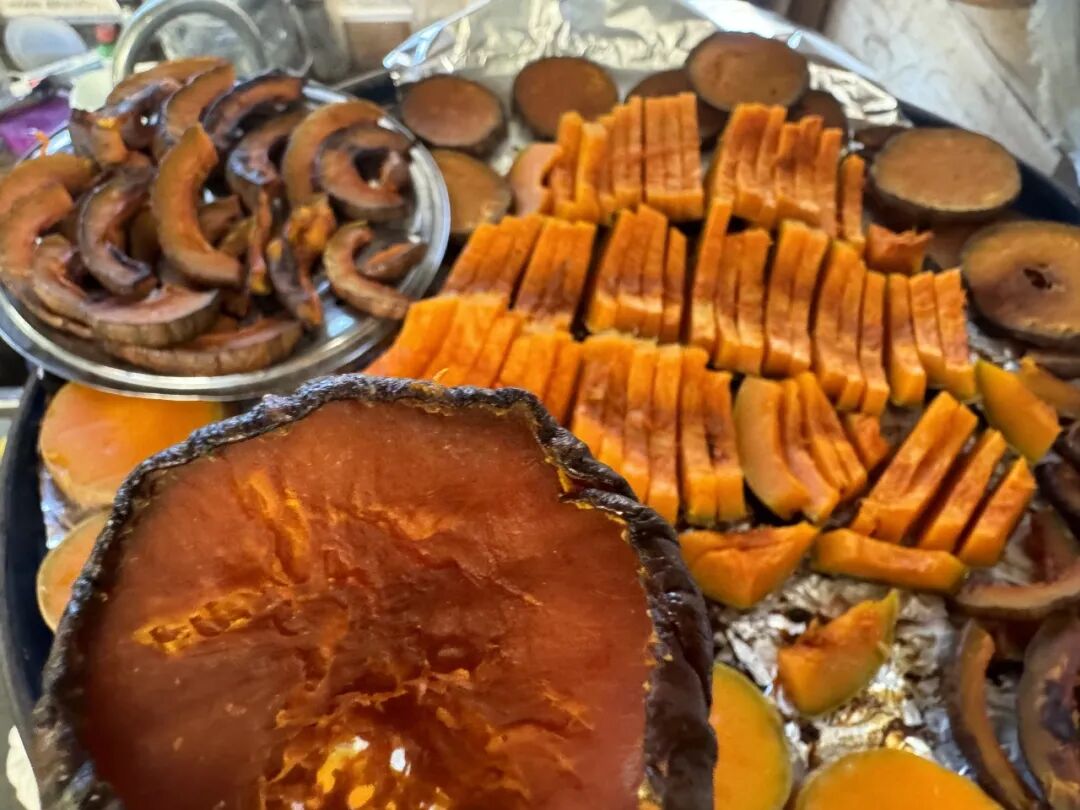
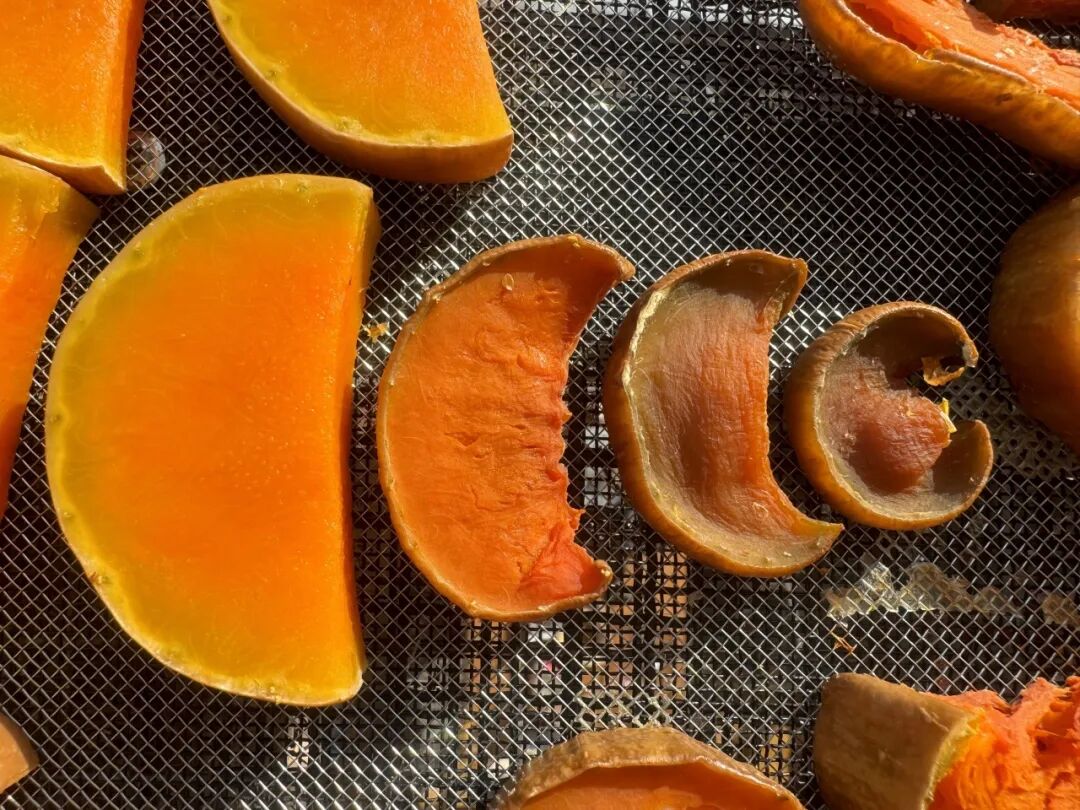
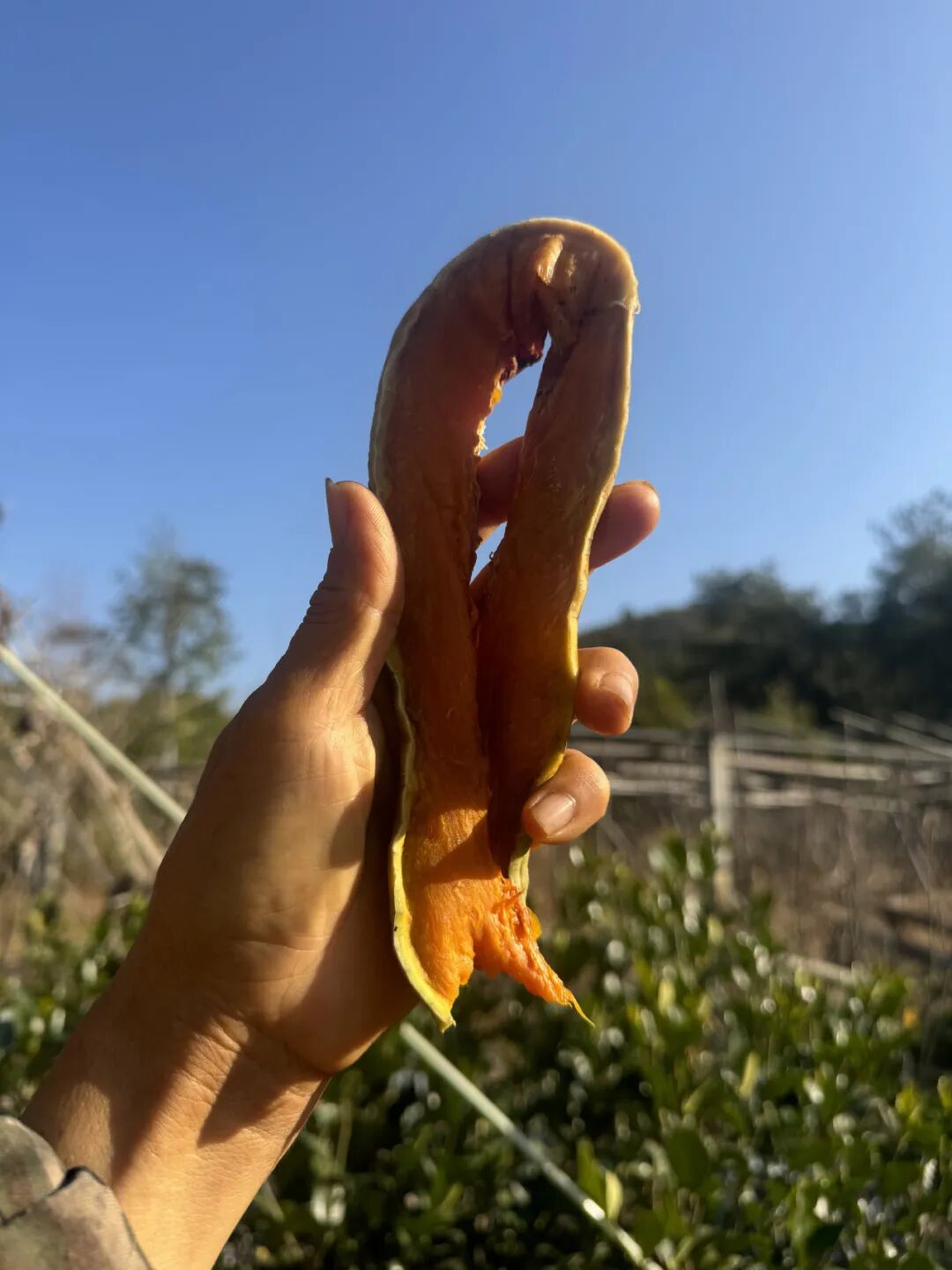
◉ In the process of making dried pumpkin, after several rounds of steaming and drying, you end up with a finished product so delicious it makes you want to cry.
I have always firmly resisted store-bought sweets, but the children at home like them, so my solution is to make them myself.
Malt syrup and raw peanuts, walnuts, cashews, sunflower seeds, and sesame, in a ratio of 1.5:1:1:1:1:1. The homemade nut sweets made this way are about one-sixth as sweet as typical store-bought sweets.
First, spend an hour roasting the nuts until cooked. Then measure out the proportions; you can try pairing them two at a time, or mix them all together in one batch, or add some chopped red dates. Finally, melt the malt syrup, add the prepared nuts, stir until evenly coated, pour onto a greased board, press flat, let cool until set, and slice. The homemade nut sweets are then all done.
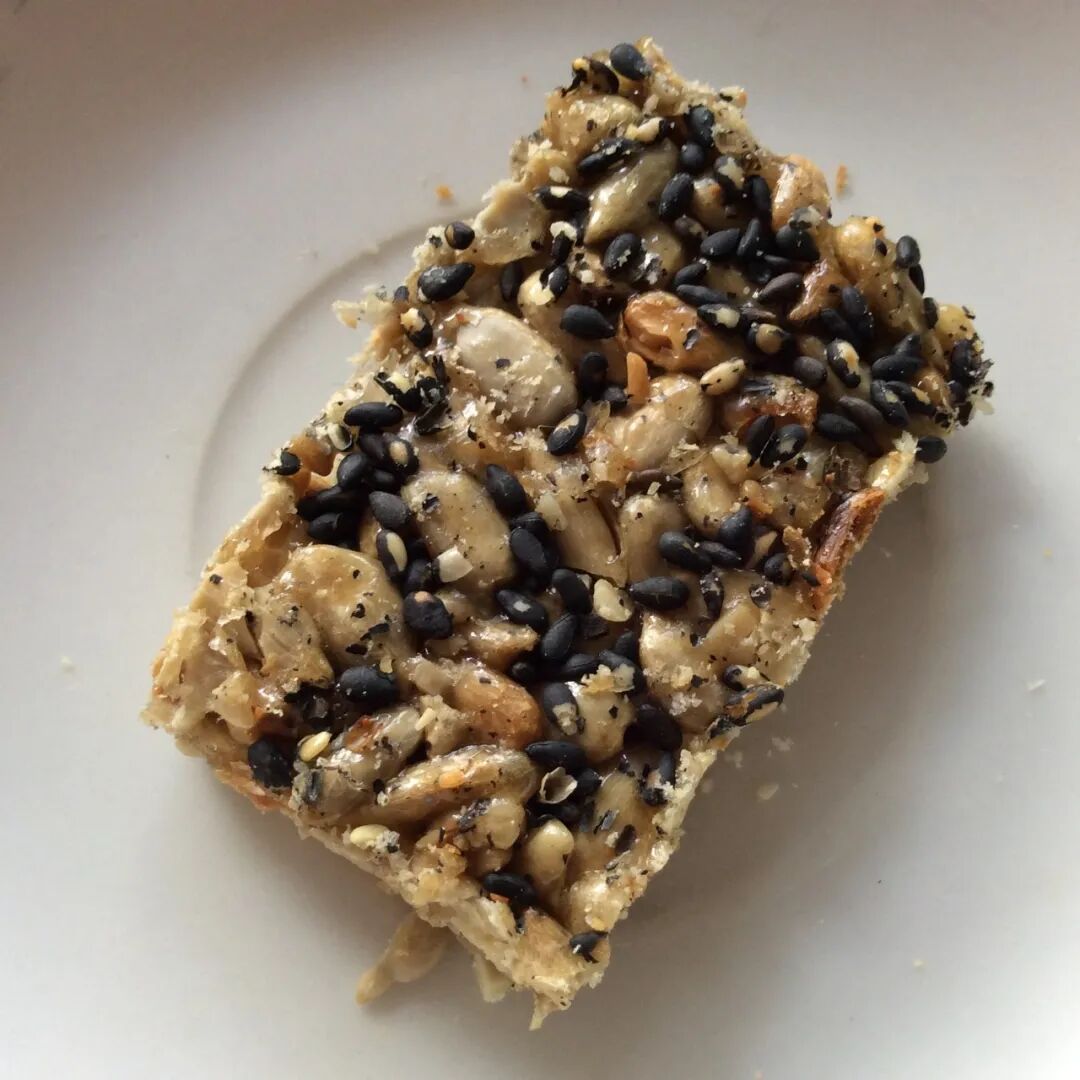
◉ The homemade sweets are all done.
If you want to help a high-energy child burn off some energy, you can begin by making malt syrup—starting with soaking wheat to make raw malt, then soaking and steaming the glutinous rice, crushing the malt and shaking it into the glutinous rice, straining the water and letting it settle, simmering the syrup, and finally using it to make nut sweets. This can keep the child busy for four or five days in a row.
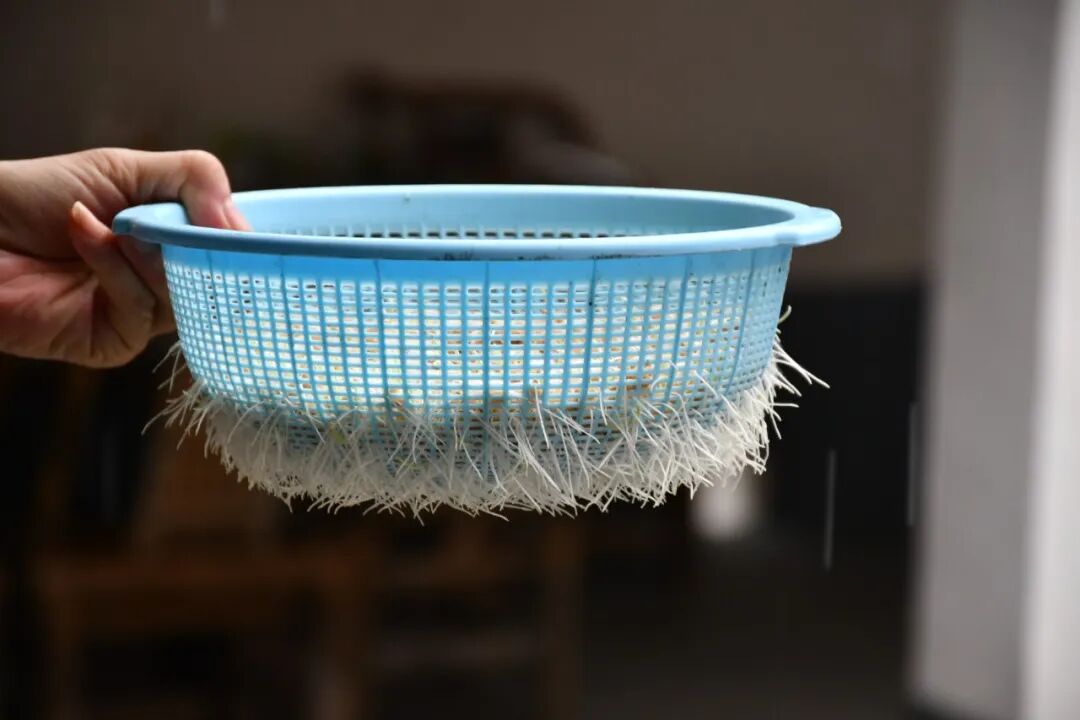
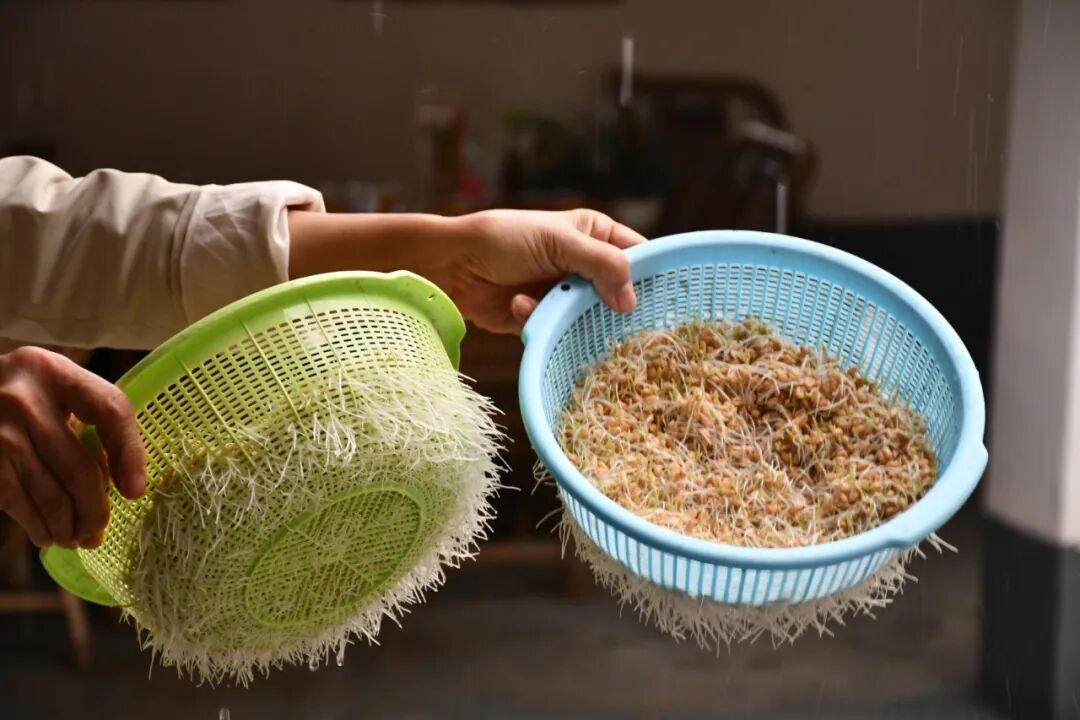
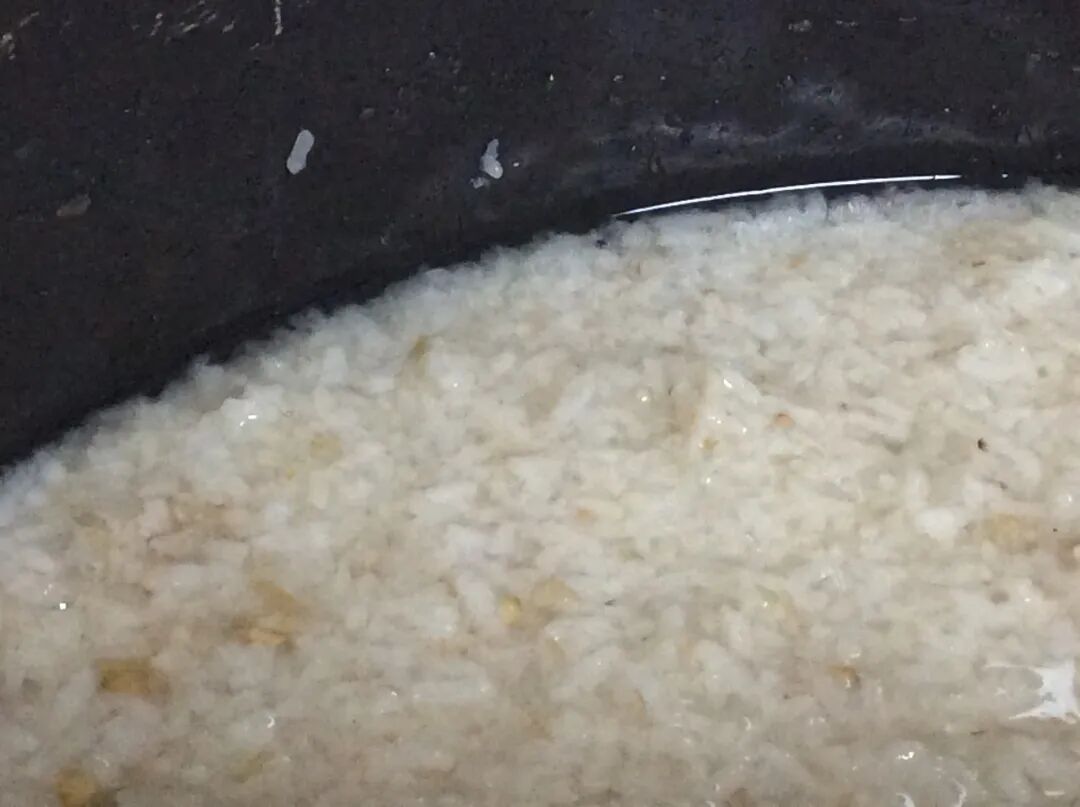
◉ The first step in homemade malt syrup is raw malt; next, mix the crushed malt with steamed glutinous rice to ferment.
Homemade savoury snacks include jerky. Pork or beef both work. Choose lean meat. If you like hand-torn jerky, cut with the grain; if you want it a little easier to bite, cut across the grain into slices about 4 mm thick. Choose a seasoning without added monosodium glutamate or chicken bouillon—brand doesn’t matter. I use Wang Shouyi’s dumpling seasoning from the supermarket; I have checked the ingredients list carefully, and it contains only natural plant spices. If you are not afraid of the fuss, you can also grind it yourself. Mix the seasoning, salt, and cooking wine well, and put it in the fridge to marinate overnight. Lay the meat slices in a single layer in an air fryer or oven for one hour at 120°C, and the meat slices turn into jerky.
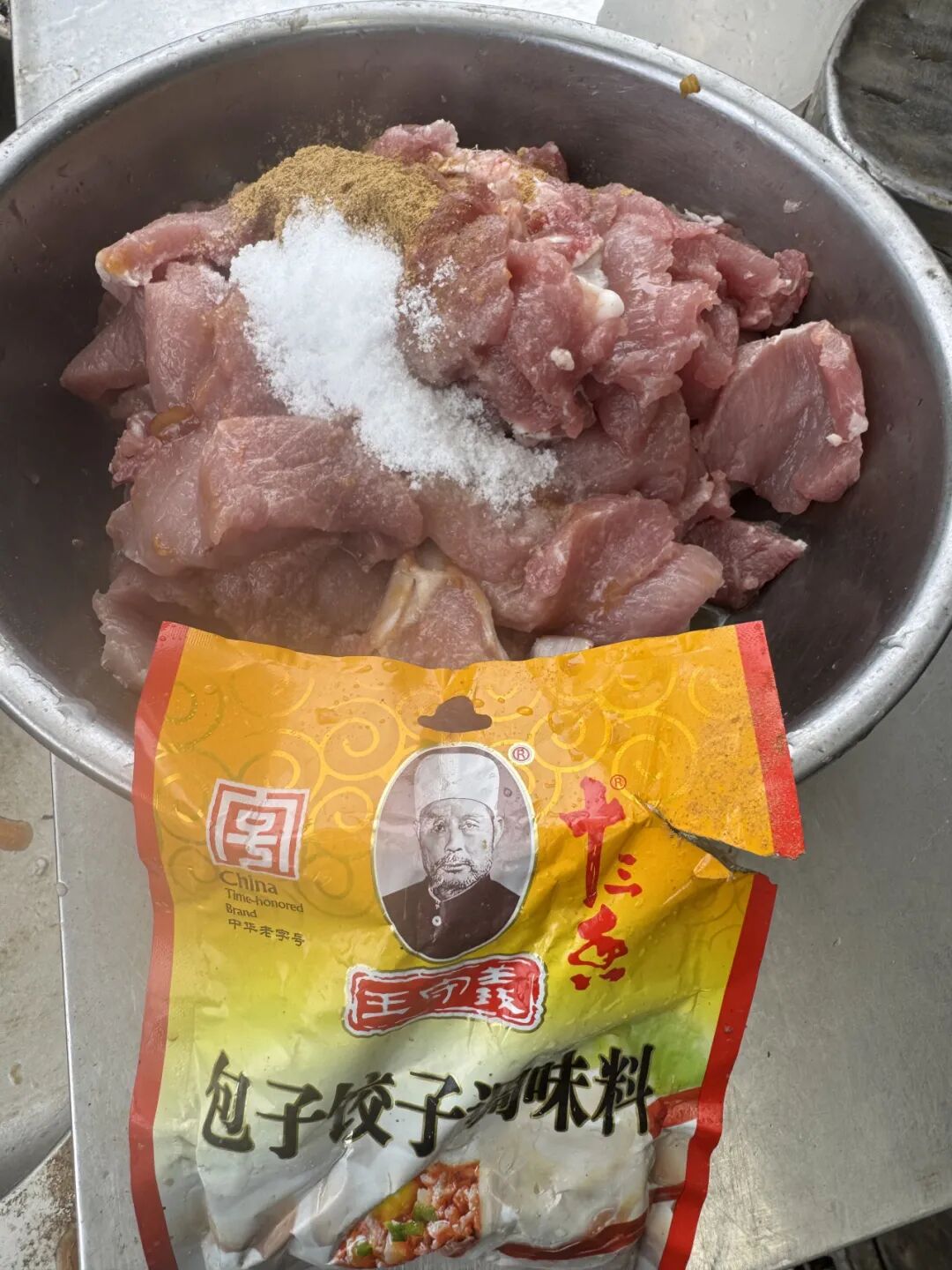
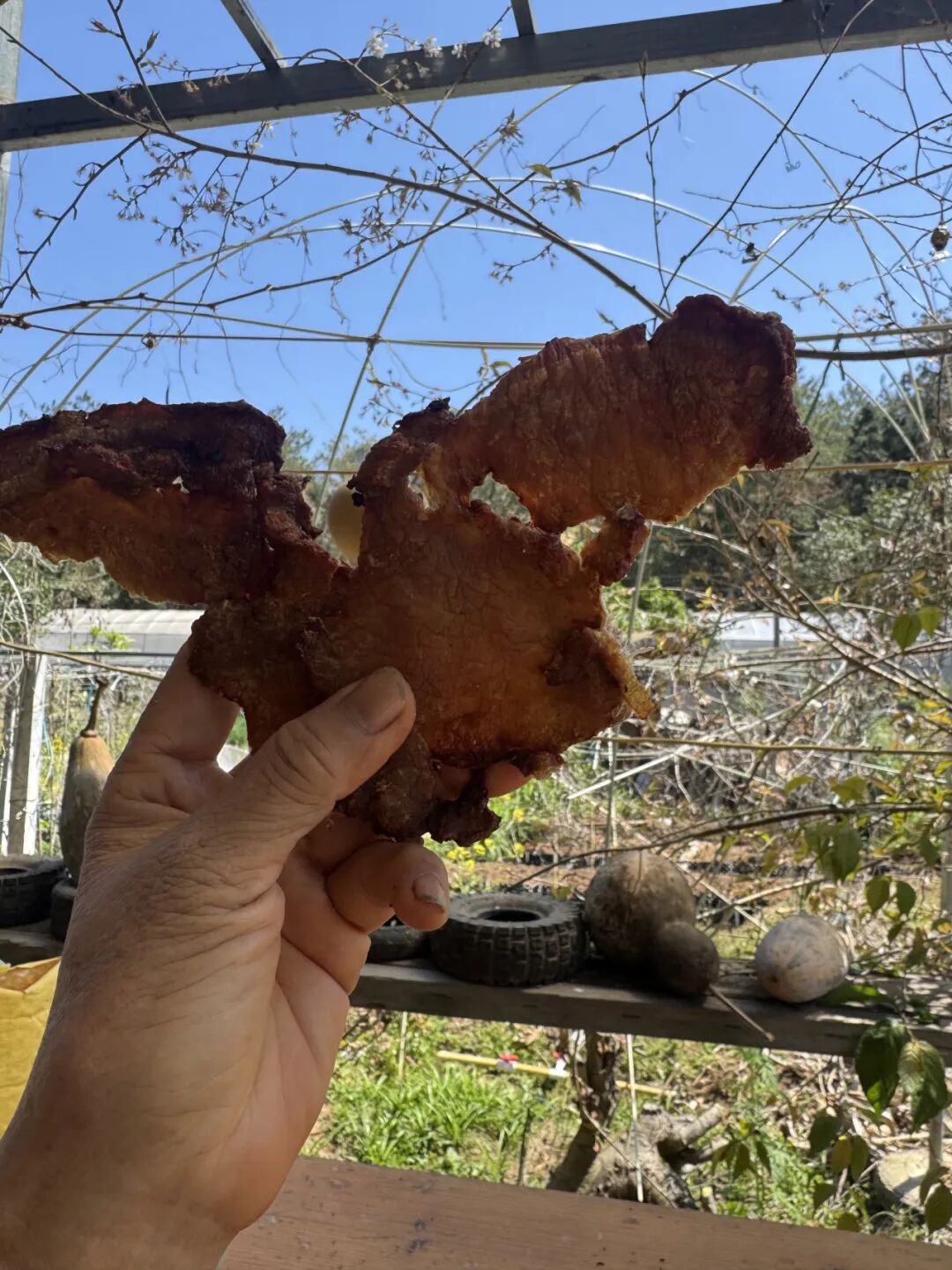
◉ From marinating meat to jerky.
If you want better texture and a more complex flavour, you can add a glaze and continue baking. Use a little sugar or honey, and add water to make a starch paste, turn the jerky over, brush on a thin layer, and bake at 170°C for 5 minutes. The colour will deepen a little; the sugar makes the jerky more complex on the palate, and the Maillard reaction between the sugar and starch under high-heat roasting makes the jerky even tastier. Generally, to glaze 500 g of meat, use about 2 g of sugar and 5 g of starch.
In the end, we have not suddenly lost our self-discipline, nor have we suddenly developed cravings. The pleasure of sugar and fats has already been written into our genes by evolution. The problem is that the industrialised production and globalised sales of modern foods have filled tasty snacks with health-harming free sugars and refined seed oils, so that, without realising it, we consume far more sugar and oil than our bodies can tolerate.
So I prefer to bring snacks back to the kitchen and to the land, and, with my own hands, achieve both deliciousness and health.
– This is Foodthink’s 805th original article –

Foodthink
Author
Kouzi
A determined farmer and village brewer. A full-time foodie, part-time farmer, and amateur writer.
Editor: Xiaodan
Layout: Minglin
▼
Click the image to read the related article.