A Grocery Shop in the Wet Market: 31 Years Across Three Generations of Women

I am a girl who grew up wandering around the wet market. In everyday life I am just a cubicle-bound office worker, but as soon as Chinese New Year arrives, I reinvent myself as the “second-in-command” of the grocery shop in the wet market.
What is a wet market? For ordinary people who live by the natural rhythm of “three meals a day”, a wet market is merely a place to buy groceries, part of unremarkable daily life. With the rise of supermarkets and, later, e-commerce platforms, views about wet markets have become more varied. At first, some said supermarkets were cleaner and tidier, with clearly marked prices and no “ripping people off”. Later the times changed again, and people began to feel that wet markets have a warmth and bustle of everyday life, with consumers in big cities even moulding them into must-visit check-in spots.
Unlike these stark, either-or views, the wet market in my mind is more alive and more complex.
Office Workers Miss the Wet Market
It was only after I left my hometown that my affection for wet markets gradually deepened.
I grew up in Wuzhou, Guangxi. It is the eastern gateway of Guangxi, where the cultures of Guangxi and Guangdong blend, and it was once the Liangguang Governor-General’s office in the Ming dynasty. In this small city, we can eat laoyou fen, Guilin rice noodles and luosifen, and also white cut chicken, soy sauce chicken, rice noodle rolls and Cantonese dim sum, among other things. I’m sure many people have heard of guilinggao; it is a speciality of Wuzhou!
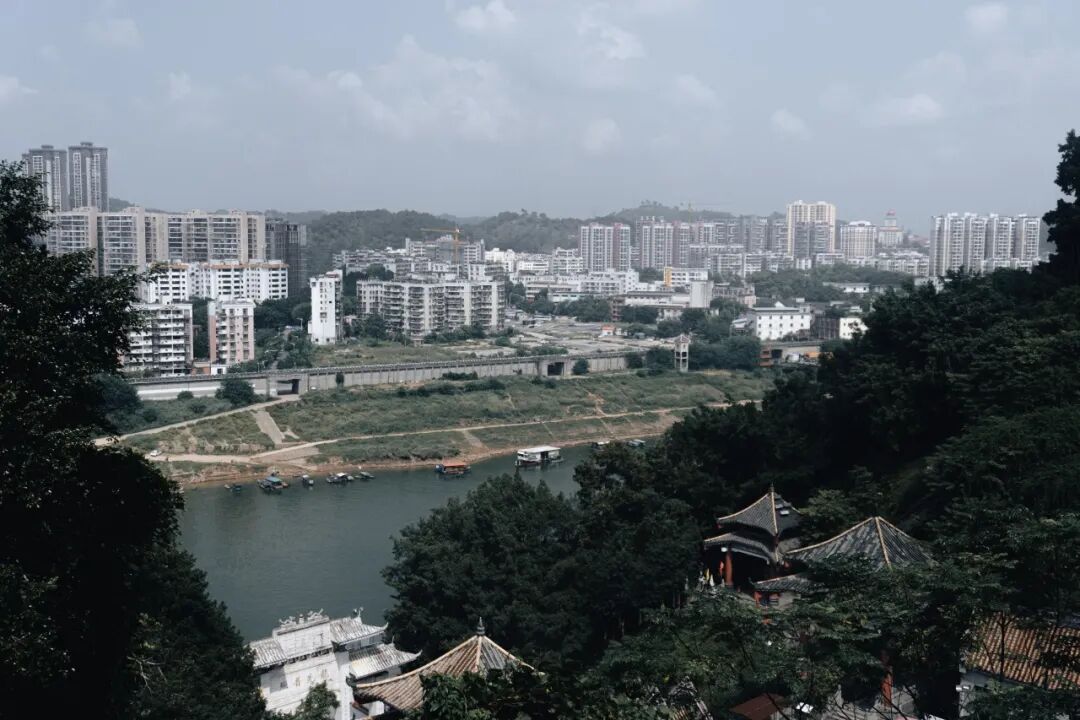
◉ Wuzhou in a bird’s-eye view from the Dragon Mother Temple. Photography: Juzi
I love my hometown, but as a small city, there were no jobs there that matched my major, so after I graduated from university in 2022, I chose Wuxi, 1,600 kilometres from home, to start life in a big city with my partner.
As an ordinary office worker who gets off work at six or even later, my free time in the evening is precious. The nearest wet market to our residential area is several metro stops away, and, utterly exhausted, we simply have no energy to browse the wet market at a leisurely pace.
This kind of urban layout is very different from that back home.
Wuzhou has a compact urban structure; the old town is relatively small in area, and the residential population is concentrated. To make life convenient for residents, every street or community has well-established wet markets, so a wet market is never far away.
Wuzhou is also deeply influenced by Cantonese culinary culture, and people are extremely particular about the “freshness” and “on-the-spot slaughter” of ingredients. Many farmers ride motor tricycles every day to bring fresh crops to the city for sale, so many wet markets are needed to provide space for selling.
Wet markets in Wuzhou’s old town are very lively in the early morning. Although most of the young people here have gone to Guangdong to make a living, the elderly who remain are still used to getting up early to buy fresh ingredients at nearby wet markets.
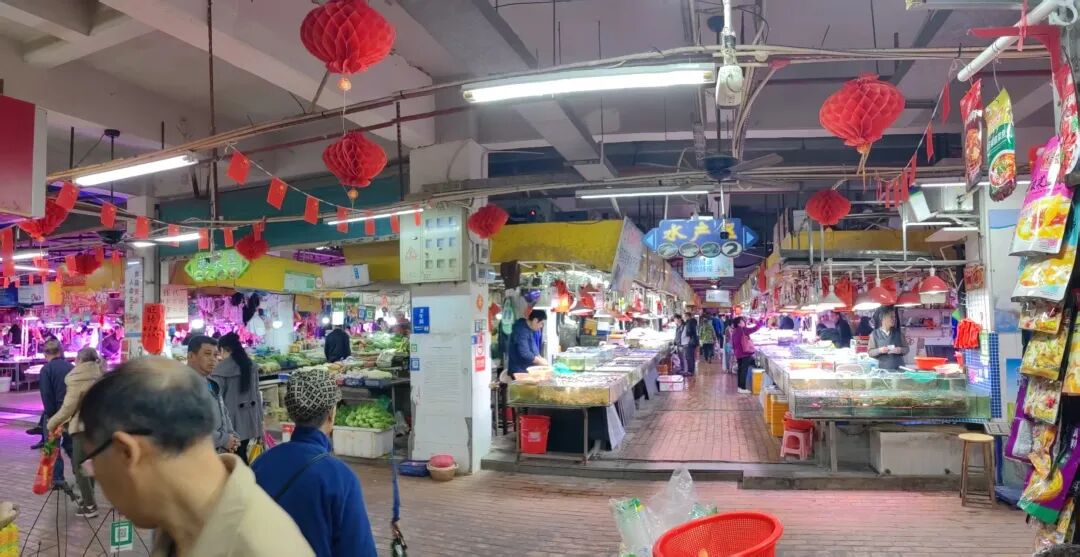
◉ Wuzhou’s wet markets are very lively every early morning. Photography: Juzi Mama
Therefore, in this small city, the emergence of large supermarkets or e-commerce platforms did not overwhelm wet markets; they remain the main grocery shopping channel in this small city.
But, far away in Wuxi, to have dinner sooner, I could only quickly place grocery orders in advance on e-commerce platforms such as Dingdong Maicai or Xiaoxiang Supermarket during my workday. It was at that moment, when I realized that I could not simply go downstairs and buy chicken and duck freshly slaughtered that day, region-specific seasonings, fresh sweet potato leaves, or Guangdong choy sum, that my longing for the vivid, lively wet markets back home, with their abundance of ingredients, grew even stronger.
A Three-Generation Grocery Shop
The wet market I miss is called Yijing Market. It is full of the warmth and bustle of everyday life: fruit, fresh vegetables, fresh meat, seafood, cooked foods, dried goods, daily staples… you name it. My mother sells groceries in this market; she runs a grocery shop.
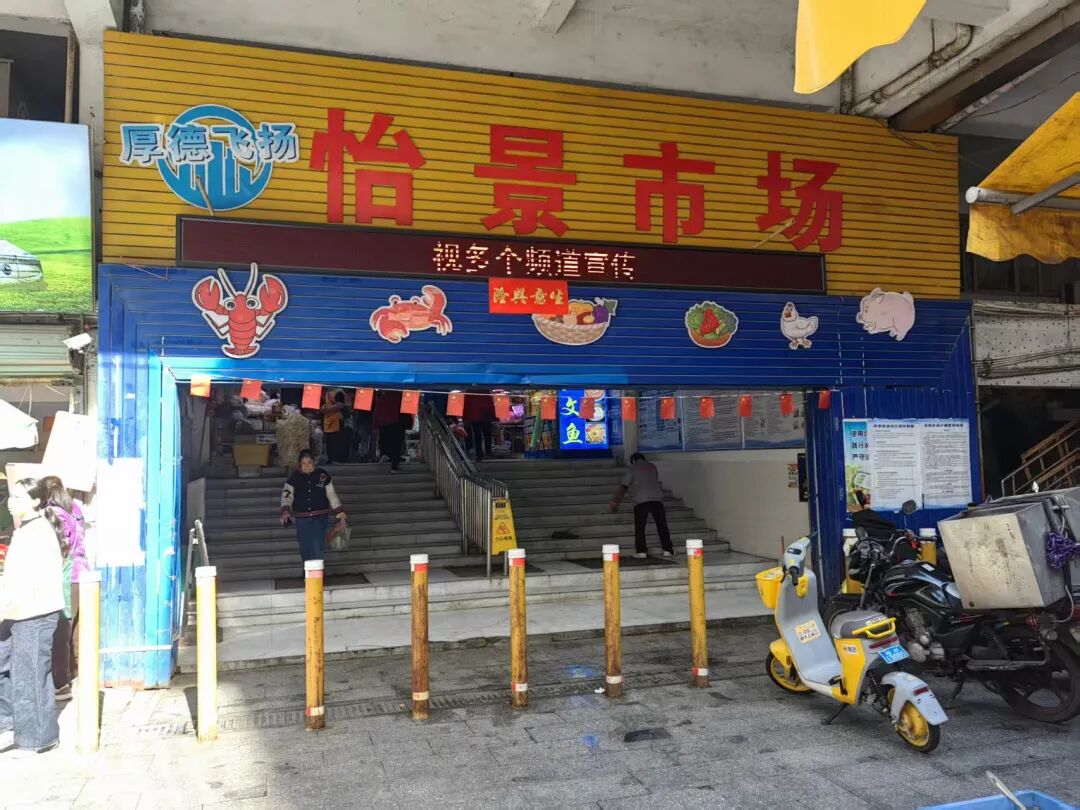
◉ Yijing Market shopfront. Photography: Juzi Mama
Since I was little, I have been helping my mother look after the shop in the market. The shop sells a wide and varied range of goods: besides oil, salt, sauce and vinegar, it also sells all kinds of ingredients sold loose. There are several brands in each category and everything one could want is there; I could not count them all in a day. That is why the little shop is so busy; people usually buy their vegetables first, then come back, carrying big and small bags, to buy other cooking ingredients.
The stallholders at the wet market also often drop in at our shop. Some go home at midday for a nap, while others cook right at their stalls; if they run short of a seasoning, they come to our shop to buy it. By midday, the wet market is always filled with the scent of cooking.
Now that I have grown up, I go home every Chinese New Year to help look after the shop. In everyday life I am just a cubicle-bound office worker, but when I go home for Chinese New Year, I reinvent myself as the “second-in-command” of the grocery shop in the wet market.
Food is a major part of life, and seasoning is a key part of making a good meal. Customers have different preferences for ingredients and seasonings, so people who come to buy groceries do not just buy and leave; they also ask you all sorts of questions: “What type of flour do I need for what type of dim sum?” or “What dishes can I make with yellow soybean paste?” – things of that sort.
“Are your century eggs any good? Have you tried them?”
I answered, bracing myself, “Our century eggs are definitely delicious!”
The old woman began to push back: “Tch, of course you’d say your own are good – have you actually tried them, or not?”
“I… my mum’s tried them…” I was really at a loss for words, and in the end my mother came to my rescue.
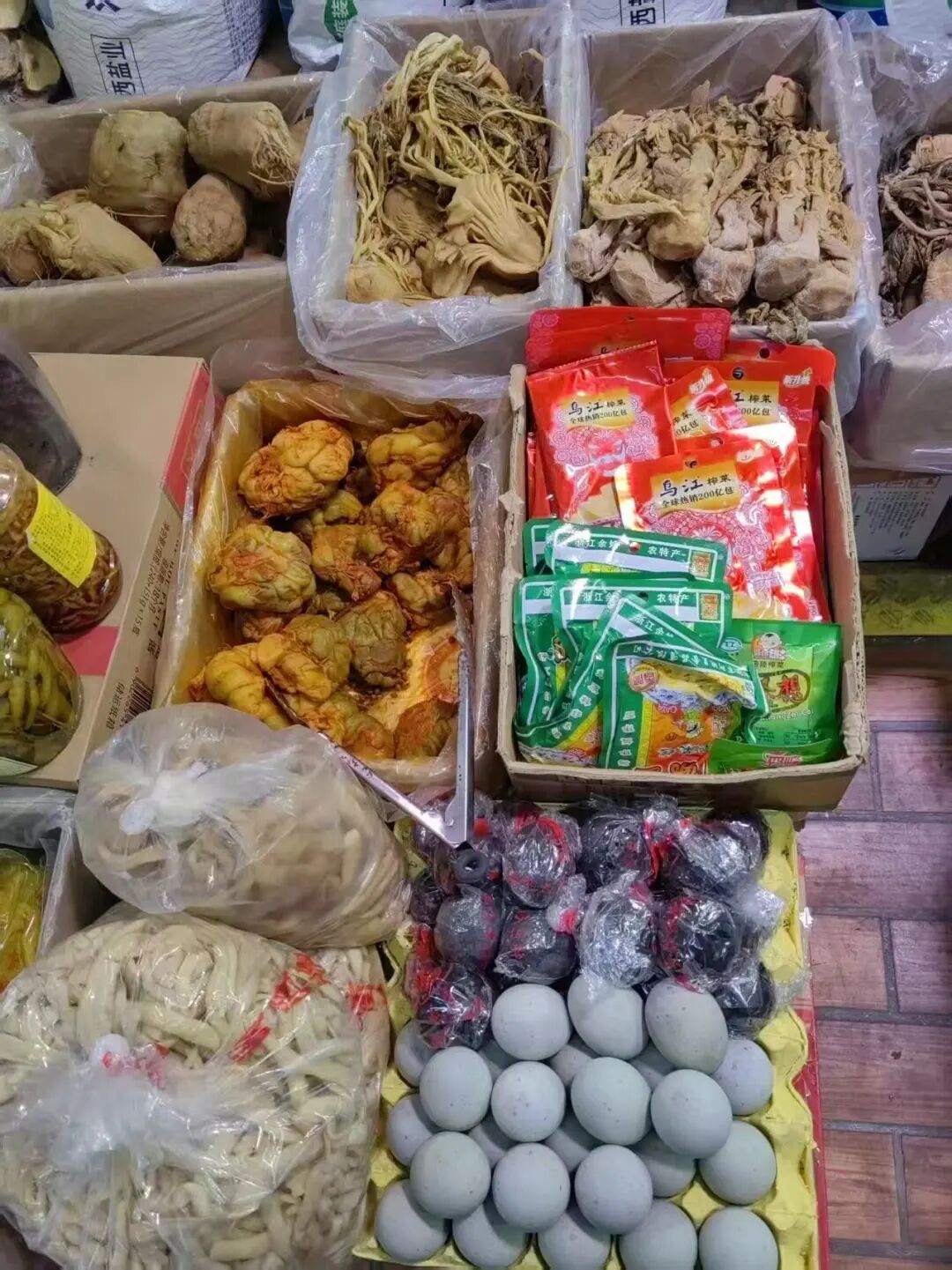
◉ The century eggs, pickled mustard stems and dried radish we sell. Photography: Juzi Mama
My mother is very capable. She can answer every question with ease and calmly explain to customers the strengths and weaknesses of different brands of seasoning.
Don’t let how calm and capable my mother is now fool you; in this shop, she was once just a helper. The grocery shop was originally started by my grandmother in 1995; it opened for business at the same time as the wet market. In the past, customers always regarded my grandmother as the owner of the shop and went to her for whatever they needed. At that time, many things in the shop were sold loose, including soy sauce. There were not yet so many brands of soy sauce, and soy sauce was also sold loose over the counter; customers would bring in all kinds of empty drink bottles to buy soy sauce.
Later, as the seasoning market evolved, people no longer needed to buy soy sauce sold loose. The wet market also underwent several upgrades and shop relocations. Our shop was scaled down, and its area was barely a third of the original. My grandmother had also reached retirement age, so my mother shouldered the heavy responsibility of running this small grocery shop.
Labour, from Dawn to Dusk
If a city were a living organism, the wet market would be, without doubt, the first organ to wake each day. When customers enter a wet market, all they see are stallholders standing behind an abundance of ingredients, without realising that they have already been hard at work in the small hours. This busy spell can last 12 hours or even longer before the day’s labour ends.
When my grandmother used to run the shop, she would open the grocery shop for business every day at six or seven, unsealing the retail packs of mixed grains and flours one by one, placing many items in prominent spots, and restocking anything that had sold out. She said that even though it opened so early, there would still be people at the door, waiting to buy seasonings, who got there before she did. After my mother took over the shop, the opening time was pushed back by an hour.
From eight to eleven in the morning is usually the busiest time at the wet market, and most of the customers are middle-aged or older. A patch of open ground is specifically set aside in the wet market for mobile stallholders. They only set up their stalls in the morning, and the vegetables they sell are very cheap; snow peas can be sold for one yuan a catty.
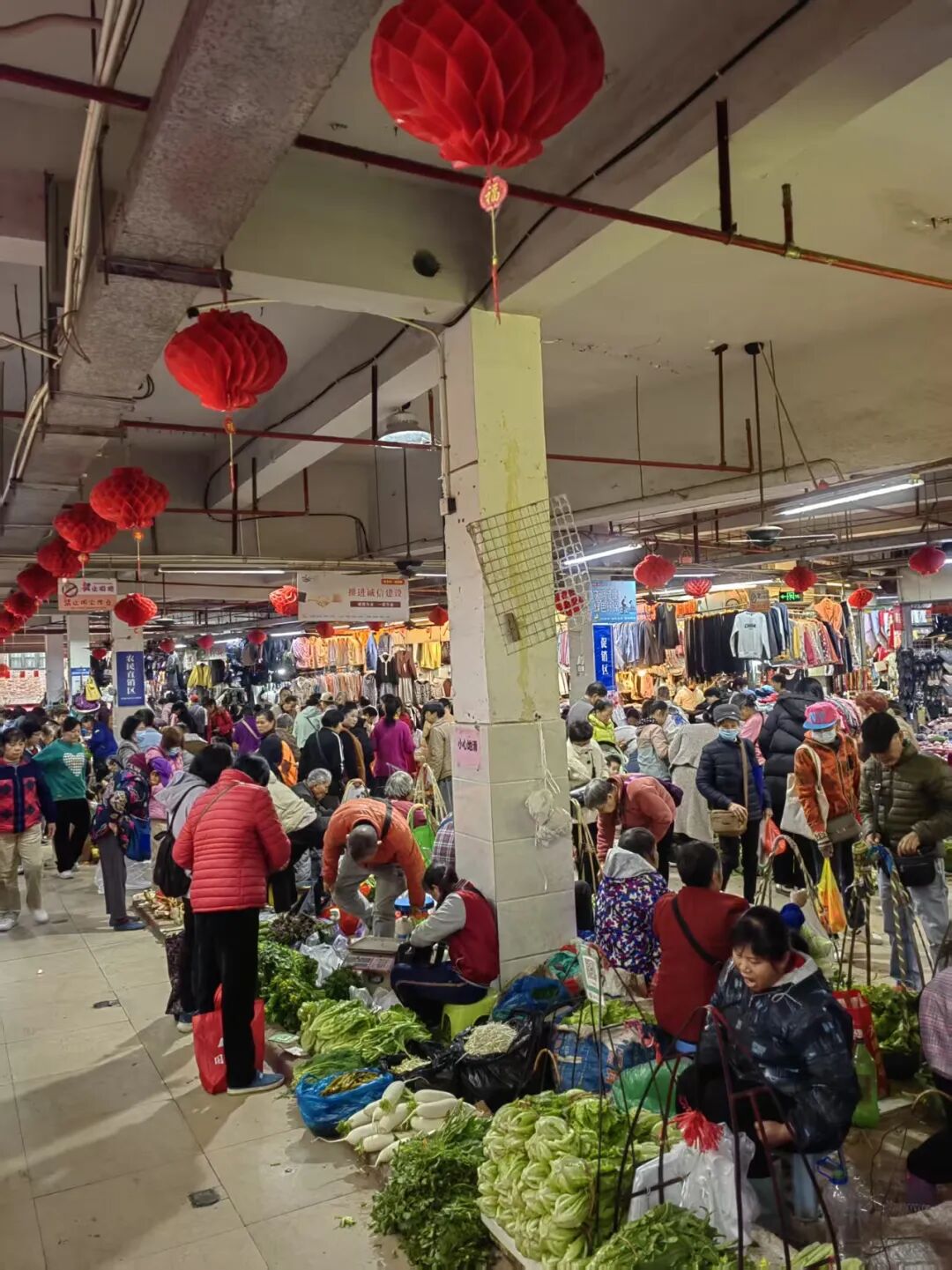
◉ The area inside the wet market specifically designated for mobile stallholders. Photography: Juzi Mama
After twelve at midday is the quietest time in the wet market, as everyone has gone home to cook and have a midday nap. Some stallholders are no exception; the cooked-food shops take a break until four in the afternoon before opening for business. Although there are not many customers at midday, we still cannot rest, because it is time for stocktaking.
Because there is no longer any space in the shop to store stock, we do not have a fixed time for restocking. Whether it is oil, salt, sauce and vinegar, or a big 50-catty bag of flour, whenever an item runs short, we contact the sales representative for that brand and ask them to arrange delivery. The city is very small, so deliveries are usually very fast. Sales representatives also often come to check over the market, see what competing products the shop is selling, or promote their new products.
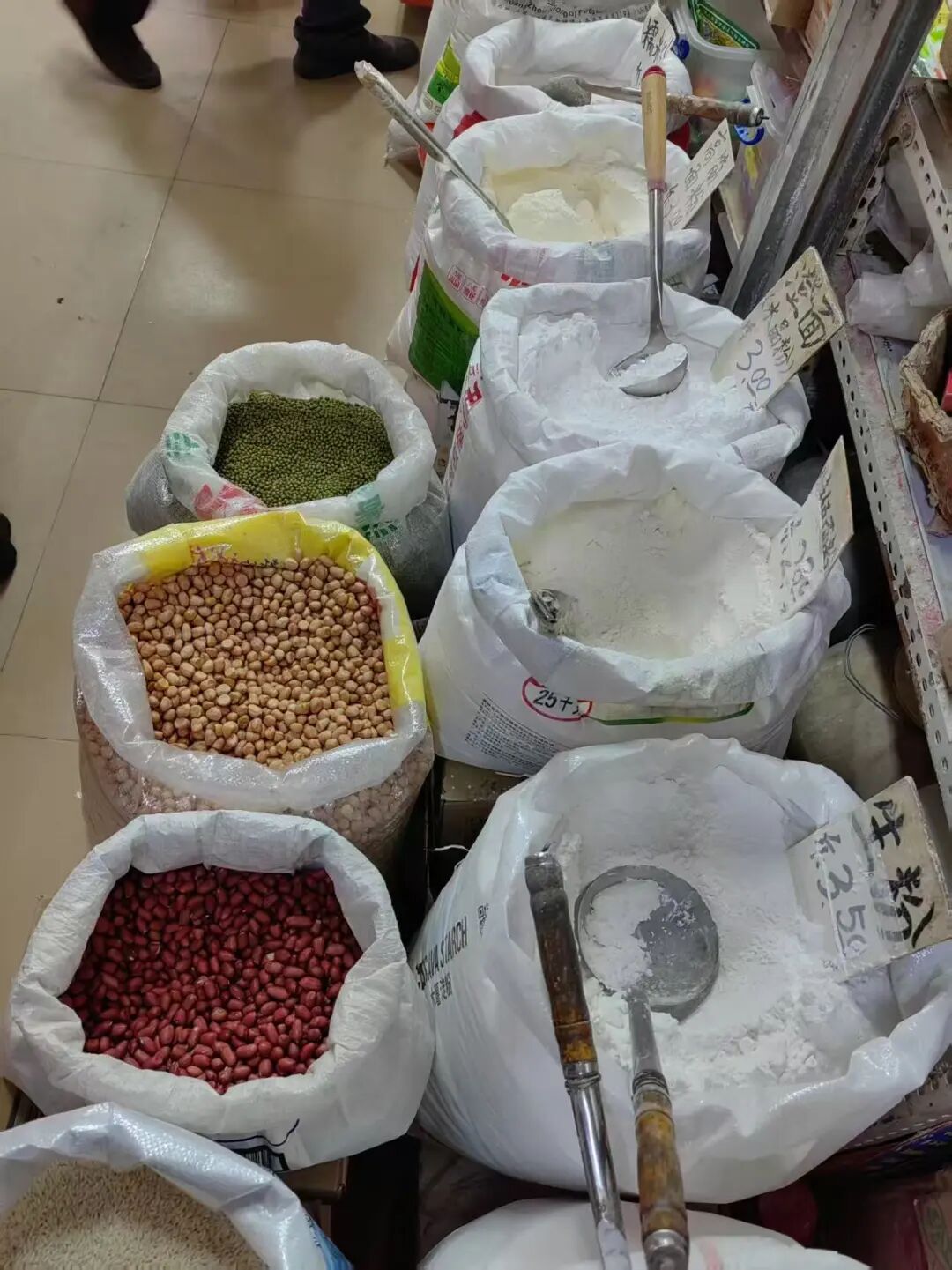
◉ The various flours and beans sold in the grocery shop. Photography: Juzi Mama
After four in the afternoon, there is another peak in customer traffic, which lasts until six. Only then do we have time to slowly start tidying up and preparing to clear down. Even as we are clearing down, customers keep coming in to buy things. There is always a customer who, just as we are about to close, hurries in to buy some essential seasonings, and my mother is always patient enough to take the goods out again that she has already packed away for them. Once the mealtime rush has passed, usually after seven or eight in the evening each day, we can finally clear down and go home.
Don’t think that once we’re home we can rest; in our grocery shop, you could say that almost everything can be portioned and sold in the smallest units. Tonight we’re portioning white sesame seeds, tomorrow evening tom yum spices, and the evening after custard powder. So, after a busy 12 hours, once we’re home in the evening we still need to keep preparing stock. We are usually busy until past ten before we can truly rest, and then, when we get up at seven thirty the next morning, another hectic day begins.
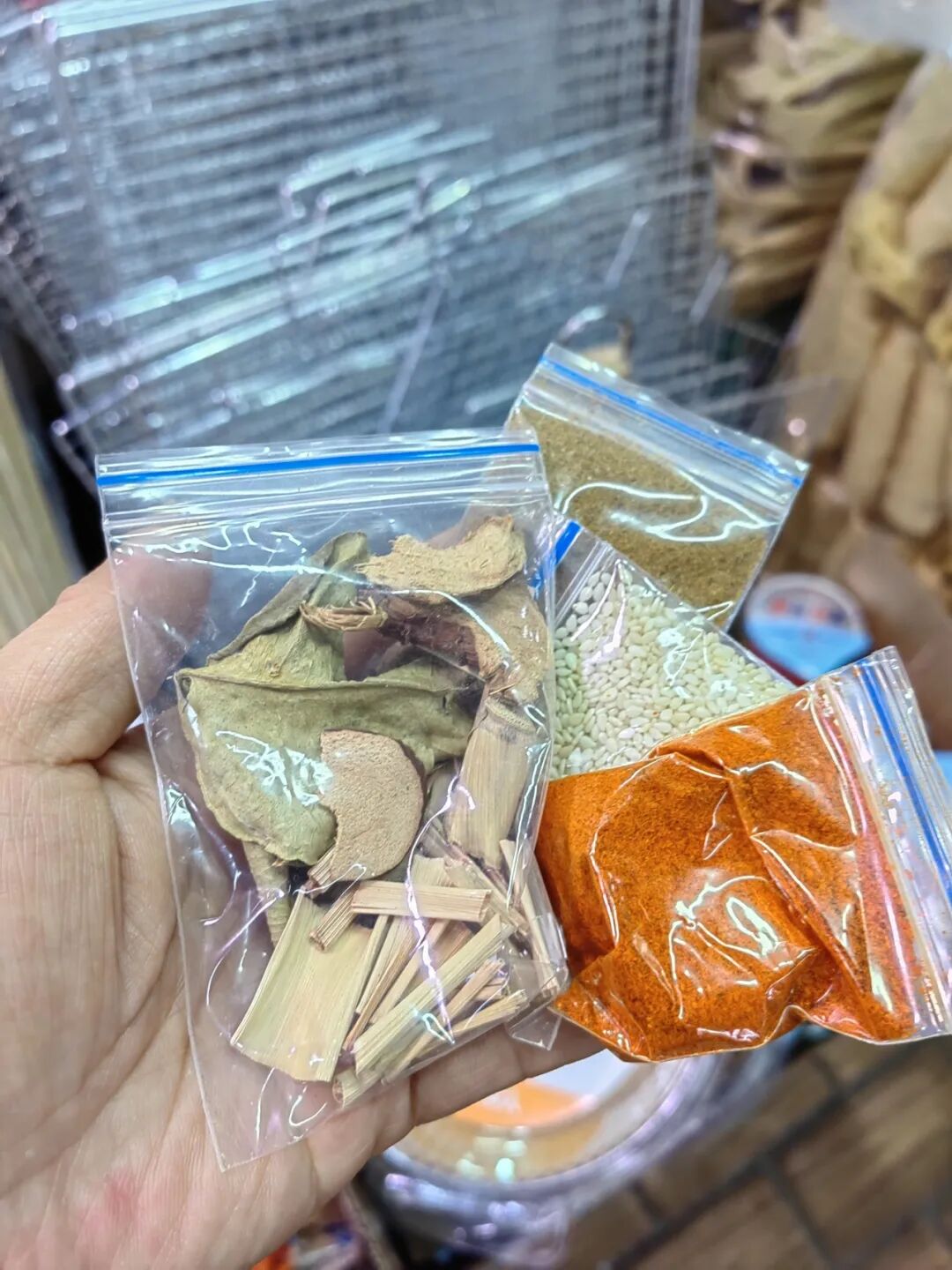
◉ The spices portioned every evening: tom yum spices, cumin powder, white sesame seeds and chilli powder. Photography: Juzi
Suggested for You: More Than an Algorithm
Many customers are loyal to our small grocery shop, not just because we stock a wide range of products, but also because of my mum’s genuine hospitality. During the short spell last Chinese New Year when I helped look after the shop, I came across several regular customers who brought friends in to buy things; they would only be sure it was their usual little shop once they saw my mum there.
Many online grocery platforms have a “Suggested for You” feature that uses what you have bought to guess what dishes you might be making and what other ingredients you still need to buy. In fact, my mum had long since mastered this approach, and she does it with a warmer, more personal touch.
She can remember what her regular customers usually come to buy; before they have even spoken, she has already handed the goods over to them.
“You’re buying this brand of soy sauce again, right?”
“Yes, yes! I just like using this one when I cook. You remember things so well.”
Ask any customer—who wouldn’t love the feeling of being remembered? That feeling of being remembered and kept in mind is something no algorithmic “Suggested for You” can offer.
She also knows a great many recipes for cakes and dim sum. If you buy peeled mung beans, she knows you are making large meat zongzi, and then tells you that the shop also sells five-spice powder, water grass and glutinous rice. If you buy glutinous rice flour to make tangyuan, she tells you the shop also sells sesame seeds, red bean paste and lotus seed paste, and, in passing, that adding a little rice flour will make it chewier.
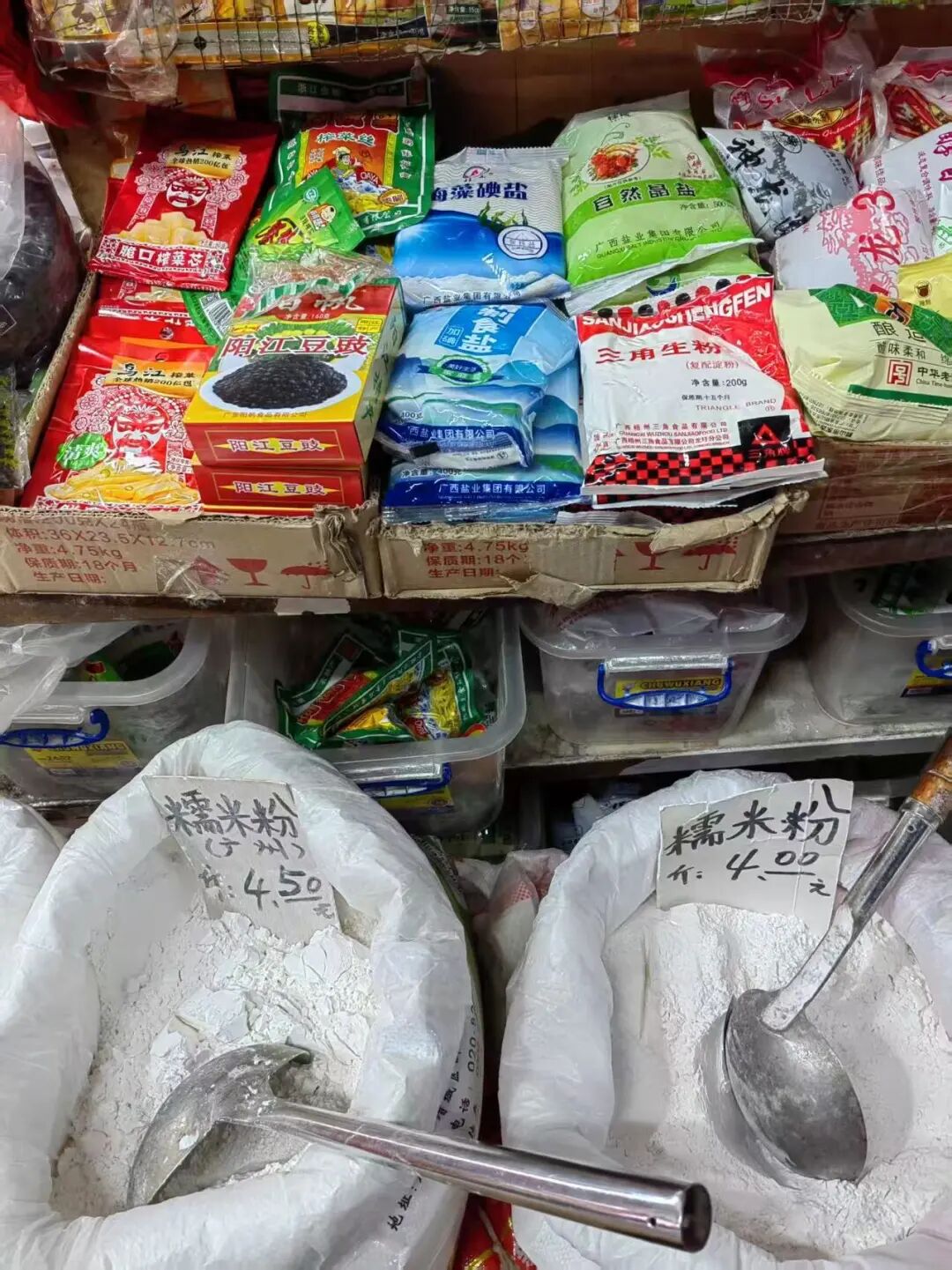
◉ The glutinous rice flour in the grocery shop. Photography: Juzi Mama
Many customers head straight for our shop the moment they come to the wet market. “Shopkeeper, I’m making a beef brisket casserole tonight, for three catties’ worth. Can you pack some spices for me? I’ll come and collect them later!” One customer just drops a few words like that and then goes off to buy vegetables.
These sincere exchanges may not match many people’s negative impressions of wet markets, such as short-weighting by the catty and false pricing. I don’t know about wet markets elsewhere, but in my experience, wet market business is all about repeat customers rather than one-off sales, and no one would do the sort of thing that chills a customer’s heart.
Holding Fast
In the Wet Market and the Grocery Shop
In fact, for a long time after my secondary school studies became demanding, I rarely stayed in the shop. It was not until I went to university and had long holidays that I helped out again. By then, I had not crossed paths with the stallholders in the wet market for a long time, but I could still recognise those familiar old faces: the three sisters who sold fish, the married couple who sold beef, the woman who sold cooked food, and so on.
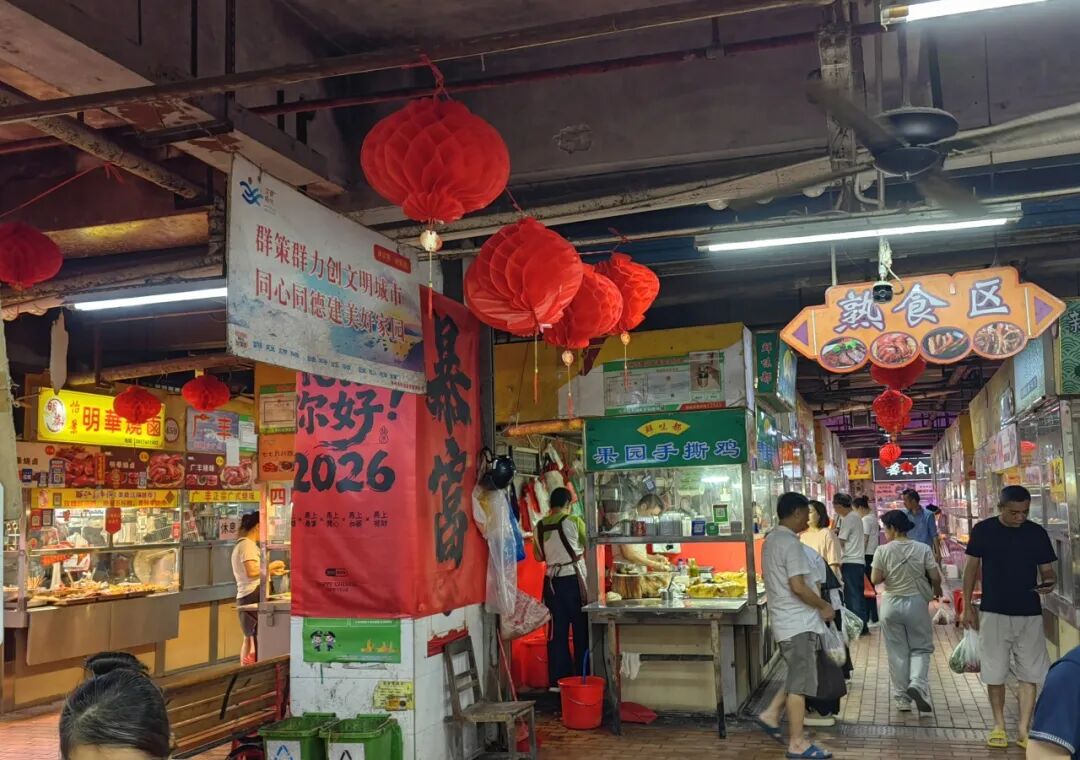
◉ The cooked-food area in Yijing Market. Photography: Juzi Mama
It was just that they had already failed to recognise me; only when I was helping out in the shop did they notice, “Oh, why has a newcomer turned up at this shop?” “Is this your daughter?” Conversations like that had been repeated many times, after which they would remark to one another how everyone had been holding fast in the wet market for so many years.
Counting from when my grandmother set up the business until now, when I occasionally help out in the shop, this grocery shop, which has run through our family’s lives for three generations, has already been going for 31 years. So what will its fate be? We have not talked it over in great depth. As for the future, although I plan to go back to live in the Liangguang region, I am unlikely to return to my hometown to take over the grocery shop. By the time my mother grows old, this grocery shop may have come to the end of its mission.
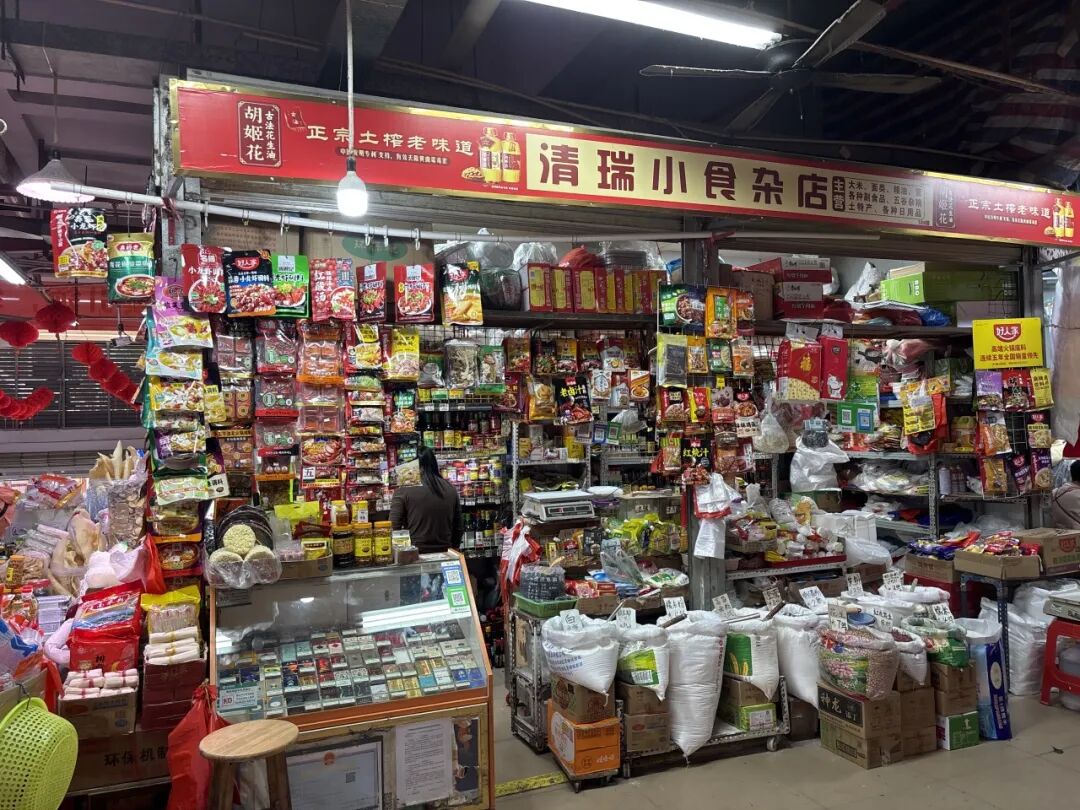
◉ The shop front of the grocery shop. Photography: Juzi Mama
In fact, business in Wuzhou’s wet markets has declined significantly overall. A residential area next to one of the wet markets has been converted into a tourist attraction, and so many residents have moved away that the wet market has steadily shrunk. The seafood area was demolished and has remained empty since, while some “independent stallholders” have moved to other bustling markets. As a result, the selection of food items inside has also dwindled, and nearby residents would rather drive to wet markets farther away but more comprehensive to buy their groceries.

◉ Street scene in the old town of Wuzhou. Photography: Juzi
Fortunately, Yijing Market, being in a busy city centre, is still very lively. Every Chinese New Year, I still have the chance to enjoy being back home looking after the shop, recording and savouring the atmosphere of sincere, personal interaction among people in the wet market. Just as when I was a child, with wide eyes, I watch the crowds of all kinds of people coming and going, and feel that sense of security from being wrapped up in the wet market’s vibrant, bustling energy.
– This is Foodthink’s 797th original article –
Foodthink
By
Juzi
Normally a cubicle-bound office worker, when I am back home for Chinese New Year I transform overnight into the “second-in-command” of the grocery shop in the wet market.
All images in this article are provided by the author.
Editor: Yuyang
Layout: Xiaoshu
▼
Click the image to read the related article.