
The Truth Behind “Not Enough Waste to Burn”
Foodthink Speaks
This article is compiled from that podcast episode.

This Episode’s Guests
 Mao Da
PhD in Environmental History, Chairperson of the Shenzhen Zero Waste Environmental Protection Public Welfare Development Centre and initiator of the “Nontoxic Pioneer” campaign. For over twenty years, he has been involved in solid waste and environmental health projects at multiple environmental organisations. Currently, his work focuses on the sound management of chemicals, greening e-commerce, plastic waste pollution control, and the practical promotion of zero waste principles.
 Sun Jinghua
Nature name “Lianpeng”, Director of the Waste Reduction project at Friends of Nature and Editor-in-Chief of the popular science book The Magic Book of Waste. For many years, she has been deeply engaged in public education and popular science work in areas such as waste reduction and sorting, and zero waste in schools.
 Yuyang
Foodthink editor, recently thinking about the toxic relationship between plastic and humans.
This Episode’s Host
 Chang Tianle
Founding Editor of Foodthink and Convener of the Beijing Organic Farmers’ Market.
I. What’s All the Excitement About “Not Enough Waste to Burn”?
Yuyang: The blogger seems to go by the name “Keji Da Sima“. I actually visited his homepage and noticed that he basically tackles technology through an Industrialist lens. Apart from this “not enough waste to burn” video and another one about “AI lasers replacing pesticides”, most of his content gets very little attention. What struck me about this video is how it made the general public, who have long been frustrated with waste management, suddenly so enthusiastic about incineration. Perhaps that is because incineration represents a brute-force solution — whatever you throw in, it all gets burned, and there is a kind of catharsis in that.

Soon after, a lot of people started messaging me on WeChat: “Have you seen this video? Is it really true?” Quite a few of them had actually attended our teacher training programme on waste and life. I said to them: I taught you all for two or three days for nothing — have you already forgotten the basics? Think about the waste hierarchy we talked about: incineration ranks second from the bottom. It is only slightly better than landfilling or dumping.
II. Is There Really Not Enough Waste to Burn?
Tianle: Just by observing the lifestyles of yourself or the people around you — all those disposable cups from milk tea shops, the various plastic packaging from takeaways and courier deliveries — you can feel that the amount of waste people generate keeps growing. So why has China built so many waste incineration plants?

III. Can Incinerators Control Dioxin Emissions?
Lianpeng: A friend asked me whether modern incinerators can now fully control dioxin emissions and whether they are subject to real-time monitoring. I said that dioxin emissions from incinerators are tested at least once a year. Can that really be called real-time monitoring?
Mao Da: In practice, to obtain a comprehensive and accurate picture of dioxin emissions from incineration, periodic or semi-continuous sampling and monitoring is required. But statutory emission monitoring is conducted only once a year. Add voluntary monitoring and you get perhaps three or four tests a year at most. Now many operators are reluctant to carry out monitoring because of the cost, or they do the monitoring, find problems, and then choose to stop altogether. But if you look at the scientific literature, you will find that in some cases dioxin accumulation in soils around certain incinerators is rising compared to control sites, and dioxin concentrations in the air in some areas are elevated.
Lianpeng: In 2020, Friends of Nature took legal action against an incinerator called Daji in Jiangsu for exceeding permissible emission levels, and we won the case. If we could address every non-compliant incinerator through legal action, things might be a little better. China’s incineration technology has certainly improved on the safety front compared with a decade or so ago, but the real problem now is that there are simply too many incinerators.

IV. Why Is Incineration Not a Panacea?

Tianle: And some waste simply is not suited to incineration — glass, for instance, or kitchen waste.
Mao Da: Exactly. Incineration converts carbon-containing materials directly into greenhouse gas emissions. Everyone knows that extreme weather is becoming increasingly frequent. Kitchen waste is the very last thing that should be burned, because most of what we eat is based on carbohydrates — burn it and it turns straight into greenhouse gases. Plastic and wood are also carbon-rich; incinerating either releases more greenhouse gases. Imagine if we skipped all the sorting and recycling we talked about — buying, using, and throwing away without a thought, with everything ending up at an incinerator or landfill. We simply cannot afford the consequences.

Tianle: Yes — I’ve noticed that the collectors in my residential compound won’t take glass bottles, either.
Mao Da: And yet incinerators cannot burn glass bottles, either. Incineration is not a panacea — with each different material, we have to consider whether incineration is actually suitable. With something like glass, we should think about how to boost reuse and extend its life — that is, sending bottles back to the factory for refilling. If you look at the outside of a glass bottle and spot scuff marks, it has definitely been reused.
Tianle: Glass is widely considered a far safer food packaging material than plastic, so it is a real shame that it has such a big flaw.
Lianpeng: In truth, it is because glass is so cheap that manufacturers would rather use new bottles than recover old ones — the cost of processing collected bottles can be very high.
V. V. Health Risks of Plastic Food Packaging

Mao Da: Polylactic acid is a relatively biodegradable material, but it may still need additives to give it certain functions — including ones that resist degradation or pose endocrine disruption and carcinogenic risks. Additives from food packaging contaminate the food itself. Researchers in North America have often run studies of this kind: participants order Western fast food every day for weeks, relying on single-use plastic packaging, and find that they ingest far more plastic-related additives than they would on a normal diet.
Compared with microplastics, the health risks of chemical additives are more clearly established in science — some well-known hazardous substances are being added. For example, phthalate plasticizers, whose most obvious effect is endocrine disruption, essentially acting as synthetic oestrogen. When children ingest this kind of plastic additive, it can cause early puberty in girls and abnormal development of the reproductive organs in boys. We know a doctor at a maternity and child health hospital in Hangzhou who found that the rising incidence of hypospadias in boys in recent years may be related to this. Then there is bisphenol A, which everyone is familiar with now — also an endocrine disruptor that can affect women’s reproductive health.
Tianle: I think trying to break free from plastic packaging is like quitting smoking or drinking — everyone understands the logic, but the distance from awareness to action is enormously long. What makes it harder still is that the health impact of these plastics is gradual and imperceptible.
Mao Da: Exactly. Parents today know to choose bisphenol A-free plastic bottles for their babies, but there are still things we don’t know about. For instance, the No. 3 PVC commonly found in Mooncake trays and egg cartons relies most heavily on additives. People may not realise either that during the industrial production of ready meals, the plastic pipes used in processing can also contain harmful substances.
If you enjoy baking, be aware that the cheap Mooncake trays bought online may be made from PVC. And cling film today is still a mix of PVC and non-PVC options. The government has stipulated that plastic packaging in contact with meat, oil, or fat must not be made from PVC, but how on earth is an ordinary person supposed to tell in daily life? It is far too difficult.
VI. New Plastic Pollution from Food Delivery Packaging
Then there is the issue of single-use cutlery. Every time I order a takeaway I tick “no cutlery needed”, but the shop sends it anyway. It’s probably because shops are too busy during the lunchtime rush to check the notes — even glancing at one note would slow down their packing — or they worry about a bad review if they leave out the cutlery, so they just standardise the process.

Lianpeng: Nowadays food delivery typically comes in composite bags. Because the government restricts merchants from providing non-biodegradable plastic bags, the carrier bags once so common have effectively been banned — merchants who still offer them face fines. So what do they use instead? Either non-woven fabric or biodegradable options. But biodegradable bags are soft and flimsy — they tear easily or buckle, spilling the food. It was then that composite bags emerged to fill the gap: rigid enough to hold their shape and good-looking, but from a waste management perspective they are far worse than ordinary plastic bags. Scrap collectors won’t even accept them, because the composite layers contain plastic, non-woven fabric, and sometimes even aluminium foil, making them extremely difficult to separate and recycle. Non-woven fabric bags, on the other hand, are made of a uniform material and are relatively easier to process.
Tianle: So today, food delivery not only fuels an excess of conventional plastic but also generates a great deal of new packaging waste that is difficult to handle.
Mao Da: Exactly — a different kind of “new contaminant”. Since they are so hard to recycle, there is nowhere for them to go but the incinerator.
Lianpeng: I grew up in the hutongs of Beijing — one of the post-70s generation. Back then we had a term for taking out the trash: “dǎotǔ”, literally “tossing the dirt”, which tells you that most of the waste at the time was ash, soot, and furnace slag. When I was a child, things like glass bottles and empty toothpaste tubes were all recyclable. Nowadays the variety of waste is becoming ever more “diverse”, with more and more non-recyclable packaging, and even these low-value recyclables are no longer being collected.
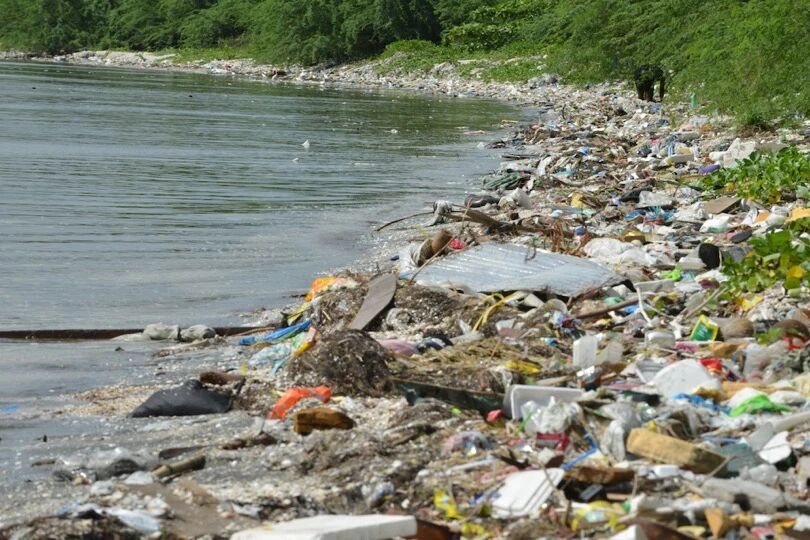
VII. Bidding Farewell to Crude and Simplistic Waste Incineration
Tianle: That makes me feel it is terribly unfair. Here at the Beijing Organic Farmers’ Market, a small venture that barely turns a profit, we are willing to invest time and labour in reducing plastics and promoting reuse, yet large corporations refuse to do the same.

Tianle: We never hand out new bags, and we encourage customers to bring their own — we collect them and then pass them on to other customers for free. What’s more, some of Beijing Organic’s egg farmers use paper trays and rice husks for packaging, which are very easy to recycle. Of course, some farmers still wrap eggs in polystyrene foam and then place them in cardboard boxes. Even so, whenever customers return the packaging to our stall, we save it up and post it back to the farmers for reuse. It really comes down to whether a vendor has the will to commit a little extra cost — packing is a labour cost, and posting back is a delivery cost.

Tianle: By comparison, major chain supermarkets like Hema and JD could easily set up a recycling station to collect the many unnecessary boxes generated by shopping trips. If those boxes are clean, the supermarket could return them to the manufacturer for reuse, and at high volumes there would be genuine economies of scale. As for fresh-food e-commerce platforms like Hema and Xiaoxiang today, they all basically have their own delivery teams. They could simply hand the order to the customer and take the bags back at the same time. I remember SF Express has a cold-chain service where the driver collects the insulated cold-chain boxes on the return trip — that approach works well.
Lianpeng: Exactly. You could even consider a deposit of one yuan per box: the customer opens the box on the spot, or brings it back a few days later, or even lets the delivery rider collect it on a subsequent run — in every case the deposit gets refunded. Friends of Nature published an article on 30 March specifically exploring some “wild ideas” for reducing packaging on fresh-food platforms. For instance, agreeing a delivery slot in advance so the customer is guaranteed to be home, which means the rider can hand the goods directly to them without needing a bag at all.
Some of Hema’s less sensible policies also need changing: their rule states that any online order must come in a bag, even for in-store pickup, and they charge a 1-yuan packaging fee. You can apply for a refund, but many people don’t even know this rule exists. The way some vouchers are designed is also problematic — certain coupons can only be used online, essentially forcing consumers to order through the app. And then there’s the sheer number of boxes Hema uses — the name is almost too apt, it’s full of “boxes”. You can’t opt out of buying them, you can’t return them once you’ve bought them, and even if you open them on the spot and hand them back, they end up in the bin in the end.

VIII. Building a Personal Connection with Waste
Mao Da: Our message is zero waste, summed up in nine characters: buy well, buy less, use longer. Of course, waste is always going to be generated, and recycling can solve a great deal of the problem. Leaders of organisations or institutions can take the lead by trying a few things — setting up a small system that gets everyone involved. I know a company that provides municipal sanitation services; they’ve built a little vegetable garden on the roof of their office building to run a small composting loop. Organisations like Friends of Nature and many of our peers can offer technical support, so you don’t have to figure everything out from scratch. We also welcome your support for our environmental organisations: support Foodthink, Friends of Nature, and Shenzhen Zero Waste. Become a monthly donor, and we’ll help make things happen.
And ultimately, we need to build a connection between ourselves and our waste. Our most basic pain point has always been: “I don’t want rubbish piled up outside my front door.” But now waste gets cleared away so quickly that we overlook the value of sanitation workers. We need to recognise that waste is not someone else’s problem — it is intimately tied to each of us.
Yuyang: I agree with Teacher Mao Da that we need to build a connection between waste and daily life, but building that connection still faces real difficulties. Take “ordering takeaway”, for example — we’ve interviewed people whose takeaway orders aren’t impulsive decisions; they’re woven into the rhythm of their work and life. Many people have to work overtime after hours, are exhausted, and have no time to cook, so they simply tap through an order on the metro on the way home. If that rhythm of life doesn’t change, it’s very hard for behaviour to change.
The other thing I’ve been thinking about is reuse. Right now, reuse feels like a rather avant-garde lifestyle — for example, turning scraps of old cloth into a backpack is a form of reuse, and there are even collage artists in the art world who do this kind of thing. But when I was a child, my grandmother mended my clothes exactly this way. For traditional ways of life, this kind of reuse was simply life itself. So I think, if we can truly weave the idea of circular reuse into everyday life and make it an instinctive habit, then real changes in behaviour may come far more easily.

Compiled by: Li Ye
Edited by: Yuyang