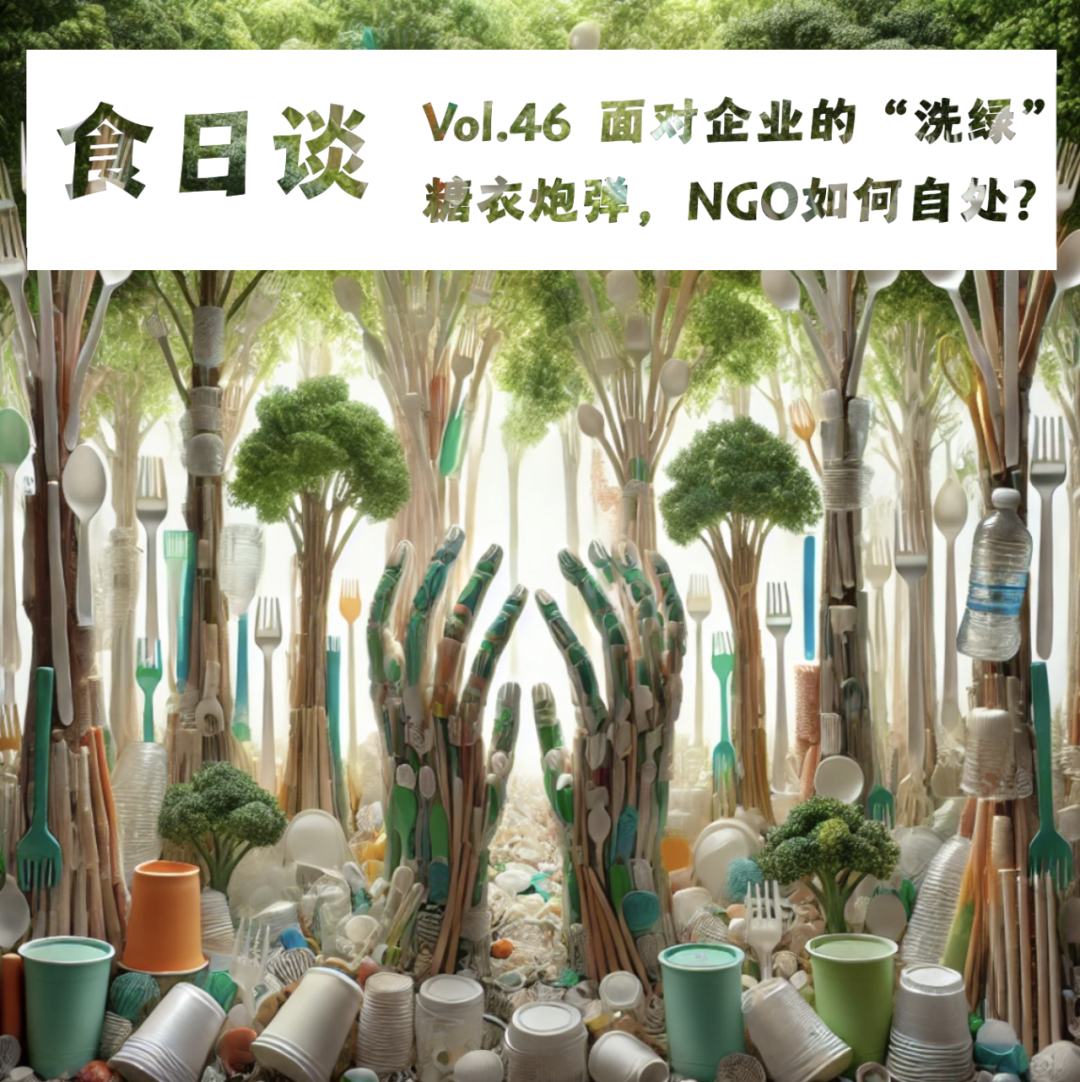
Are Public-Interest Organisations Becoming Greenwashing Tools for Polluting Companies?

Foodthink Says

“Mankind’s unsustainable patterns of production and consumption are pushing the planet towards destruction” — this is the opening line in the United Nations’ introduction to Zero Waste Day, observed annually on 30 March. For urban residents in China, the single-use plastic waste generated in everyday life is largely linked to food consumption, and food delivery in particular. In fact, the food delivery industry has single-handedly created a vast “waste track”. Behind its rapid year-on-year growth lies a mountain of single-use plastic waste, making it a major driver of environmental pollution and harm to consumer health. Who will hold companies to account for reducing pollution and protecting consumer health? Beyond government, civil society organisations representing the public interest can play a vital role — through research and advocacy, exposing corporate pollution, pressing companies to cut back on harmful practices, and holding them responsible for remediation. Yet Foodthink has noticed that among the environmental organisations funded by food delivery giant Meituan, there are those dedicated specifically to reducing plastic waste. These organisations once voiced numerous criticisms of the food delivery industry, even publishing data-driven studies that named specific companies. Over the past two years, however, these voices have grown ever quieter.

We cannot help but ask: when the companies generating pollution begin funding environmental organisations, what does this mean for those organisations? And what does it mean for the environmental issues we care about?

In Episode 46 of the “Food Talk” podcast, we invited two seasoned public-interest environmentalists — Sun Shan and Ma Tianjie — to explore these questions. Using this as a point of departure, we go further to examine the complex relationships between companies that generate environmental and social problems, the public-interest organisations striving to address them, and how both interact with government, media, and the public. This article is a written adaptation of that podcast episode.

● Click the image to listen to this episode of the podcast.

Guest of This Episode

Sun Shan

Ecological practitioner and one of the founders of the Shan Shui Conservation Center. She began farming in 2015, immersing herself in the land, agriculture, food, ecology, and a self-sufficient Homesteading lifestyle. She now lives in Canada, where she runs the Chi Garden Ecological Farm and Fermentation Kitchen. In 2024 and 2022, she attended the 16th and 15th Conferences of the Parties to the Convention on Biological Diversity, held in Colombia and Montreal respectively.
 

Guest of This Episode

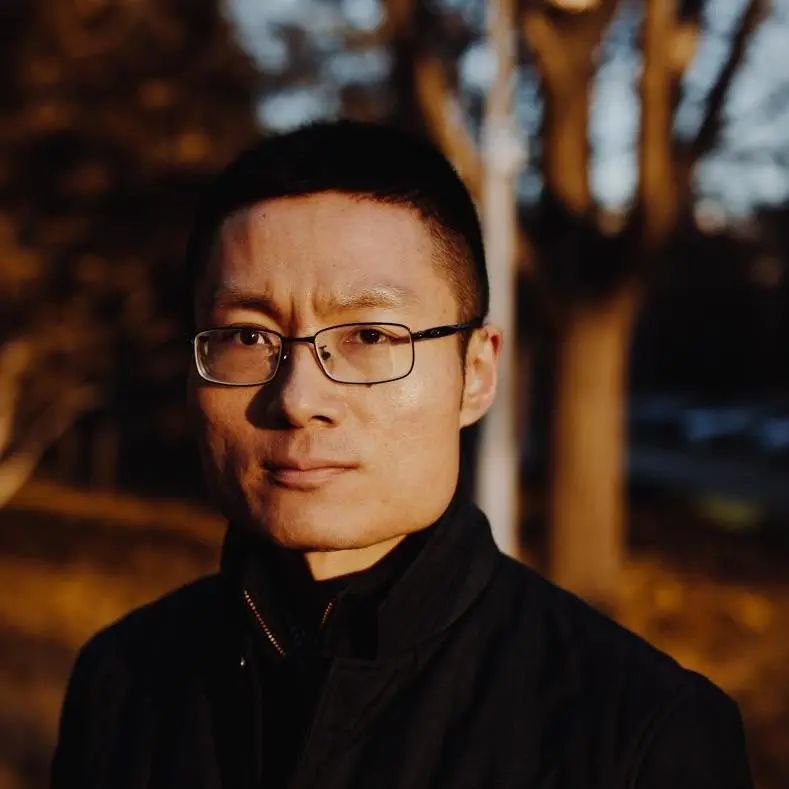
Ma Tianjie

A freelance writer specialising in environmental issues. He has worked in environmental advocacy since 2004 and previously served as head of an international environmental organisation. He has long focused on environmental governance in China and writes analyses and commentary for numerous publications. His new book, In Search of Green China, was published this past February.



Host of This Episode

Tian Le

Founding editor of Foodthink and convener of the Beijing Organic Farmers Market. Unable to stomach single-use waste and the exploitation of delivery workers, he no longer orders food delivery — yet still feels guilt and frustration over the many environmental and social problems generated by everyday consumption.


I. Polluting Companies: Why Do They Fund Environmental Organisations?
Tian Le: I’d like to start by asking both of our guests: when companies like Meituan begin to venture into public-interest grant-making, does that affect the independence and working logic of environmental organisations that advocate for waste reduction and campaign against single-use plastics? Ma Tianjie:  I think the Meituan case really shows that the relationship between companies, environmental organisations, and environmental issues has become far more complex. It’s hard to say outright whether this shift is a good or a bad thing. When we entered this field more than twenty years ago, the relationship between environmental organisations and polluting companies was straightforward: environmental organisations and the media would call out a polluting company, the company would be pressured into making some changes or issuing a commitment, and that would be that. Today, having been shaped by various social movements, companies have evolved in how they handle such challenges. Rather than simply reacting to each crisis as it arises, they think one step ahead—establishing their own foundations or funding existing ones, and getting directly involved in an environmental initiative. Companies have reinvented themselves as part of the so-called solution. In this situation, environmental organisations may need to maintain a critical eye and carefully assess whether the solutions championed by companies genuinely serve the cause at hand.

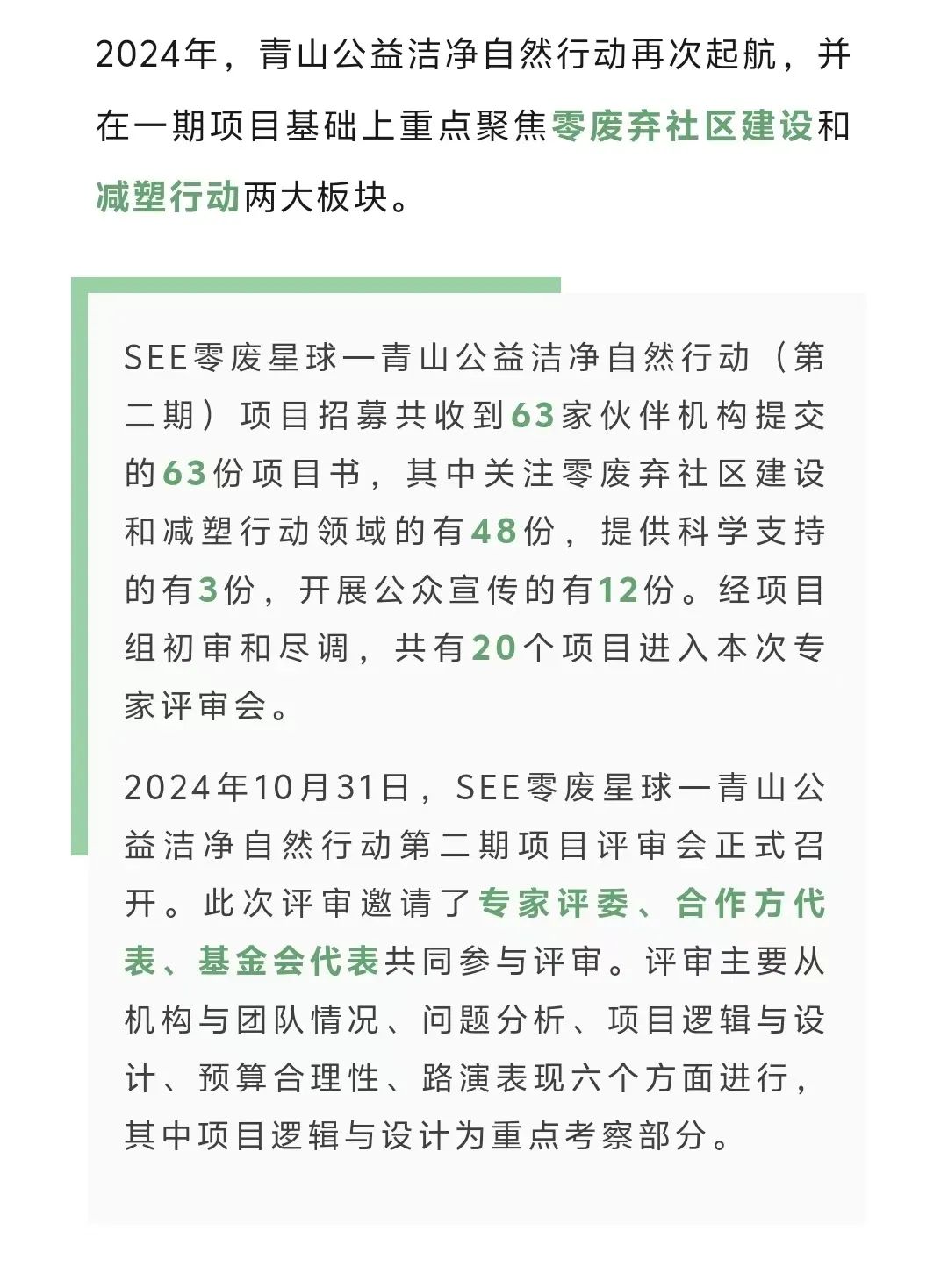
●Click the image to go directly to the first-round public notice for the SEE Zero-Waste Planet – Green Mountain Public-Benefit Clean Nature Campaign, funded by Meituan.
●The second round of this Meituan-funded project lists “zero-waste community building” and the “plastic reduction campaign” as priority areas—the intent is quite transparent. Click to view the full funding details.
Sun Shan:  This trend is visible internationally too. Take the UN Biodiversity Summit: biodiversity used to be a rather marginal topic. In 2022, only 700 companies participated; by 2024, that number had reached 3,000—including many from the food and agriculture sector—making it the most heavily attended summit by the private sector in its history. In recent years, private-sector involvement in ESG (Environmental, Social, and Governance) has grown ever deeper. Companies are not only actively learning and organising forums but also seeking to define their own ecological impact, set industry standards, and operate with considerable sophistication. Many NGO researchers have also joined the corporate social-responsibility departments of companies, helping them address these issues more professionally. Tian Le:  I think these companies are actually adopting a principle that environmental organisations would use themselves: the precautionary principle. Companies may not even be fully aware of the problems they create; they simply figure that rather than being criticised by the public, the media, and environmental organisations, they might as well package themselves as a problem-solver and set the agenda themselves. We must be cautious about this shift in the relationship between companies and environmental organisations. What worries us is that when polluting companies fund the very environmental organisations that are supposed to hold them accountable, this money may weaken those organisations’ capacity for criticism and oversight, and diminish their ability to work more effectively on a given issue.

II. The APP Deforestation Controversy and How Civil-Society Environmental Organisations Have Changed
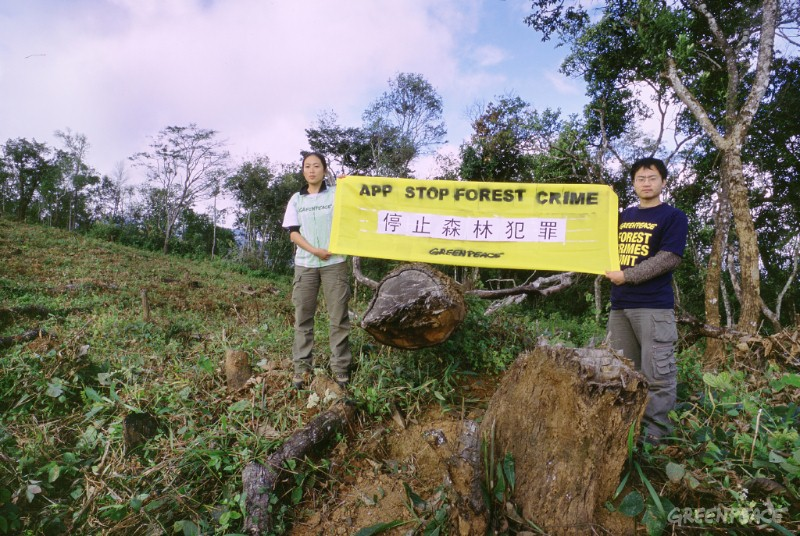
Tian Le: In fact, a similar incident happened more than twenty years ago. A multinational called Asia Pulp & Paper (APP) was exposed by environmental organisations for deforestation in Yunnan. The company also tried to “greenwash” itself by funding environmental organisations, but it was met with widespread boycott. It became a landmark case in China of grassroots environmental groups taking on a multinational. Tianjie, could you tell us a little about what happened at the time and how the environmental organisations responded? Ma Tianjie:  Yes, this was a scandal around 2004. It began when APP planted pulpwood plantations in Yunnan. Greenpeace conducted a field investigation and discovered that the plantations had been established after primary forest had been clear-cut. Greenpeace published a report exposing APP’s deforestation, and a subsequent investigation by the State Forestry Administration also confirmed the illegal clearing. Many environmental organisations that learned of the scandal banded together in a boycott of APP. Even the Zhejiang Province Hotel Industry Association, a civil-society organisation, called on all its members to boycott APP’s products. APP’s response was to sue the association for defamation, but under public pressure it decided to drop the case the day before the hearing. Civil-society organisations then continued to investigate APP’s illegal activities in Yunnan and Hainan, engaging in a protracted tug-of-war with the company for years and relentlessly pressuring it. In the end, APP made an international commitment not to destroy natural forests.

●In 2004, environmental organisations unfurled banners at a deforestation site, protesting Asia Pulp & Paper (APP)’s illegal logging in Yunnan and its planting of fast-growing eucalyptus plantations. Image source: Greenpeace

Tian Le:  There was a little episode in the middle of all this. While environmental organisations were criticising APP’s deforestation, the company suddenly donated a sum of money to a large, national-level environmental organisation in China to sponsor its annual conference.

Ma Tianjie:  Yes, it was a public-relations tactic: if you say I’m not environmentally responsible, I’ll donate to environmental organisations, join environmental initiatives, and build a greener image. But that donation caused a huge internal controversy within the organisation, and many members felt strongly that the money should not be accepted.

Tian Le:  Ms Liao Xiaoyi, the founder of Global Village—then one of the most important homegrown environmental organisations in China—was a board member of that alliance at the time. She wrote an open letter announcing that she could no longer serve on the board, because she could not endorse the acceptance of that funding. As we can see, twenty years ago our environmental organisations were able to stand together and take collective action against polluting companies. Faced with attempts to buy them off, people held firm on principle; at the very least, someone spoke out, and they received considerable support and praise from their peers. But in the past two years, it seems as though peers have stopped paying attention to such matters—no one even seems to be discussing how we should approach funding from polluting companies. What do you think accounts for this change?
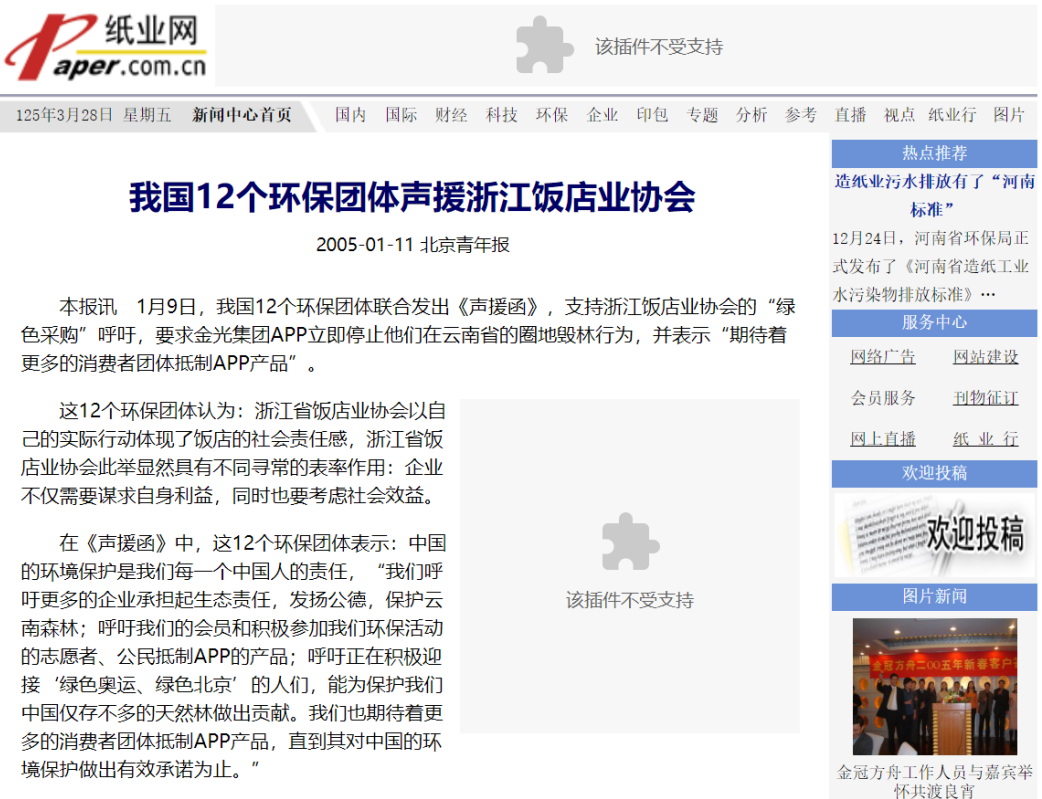
●In November 2004, the Zhejiang Province Hotel Industry Association urged all hotels across the province to boycott Asia Pulp & Paper (APP) paper products and associated products. APP filed a lawsuit against the association for defamation. The association subsequently received a joint statement of solidarity from twelve environmental organisations. Image source: Paper Industry Network

III. The Dilemmas Facing Public-Interest Organisations

Sun Shan: In the APP incident that Tianjie just mentioned, there was one further reason the civil-society boycott proved relatively effective. APP is a multinational corporation, and comprehensive international records of its deforestation activities across various countries were already in place; our domestic environmental organisations were able to build on that groundwork in opposing the company’s polluting practices. But coming back to the Meituan example, neither China’s civil-society organisations nor its regulatory bodies are currently equipped to analyse, regulate, or scrutinise the full footprint of a company’s operations—for instance, there is no database that tracks where companies fall short across social, environmental, and labour-rights dimensions. Back in 2004, China’s grassroots environmental organisations were on the rise, with some pioneering figures and some commendable public campaigns. But twenty years on, the growth of environmental organisations and the rise in public environmental awareness are severely out of step with the sheer scale of China’s economic growth, and civil society itself has remained underdeveloped. While civil-society organisations have built some capacity, it simply cannot keep pace with our economic growth, mounting pollution, and the scale of other social problems. Public-interest organisations lack not just the most critical funding but also the soil from which civil society needs to grow, leaving us without the capacity to tackle increasingly complex and opaque social issues. Meituan itself is implicated in numerous labour and pollution issues, yet we are not having anything like a sufficient conversation about them. People even feel the need to rationalise accepting its funding. To me, that is somewhat disheartening.

●The labour, food-safety, and environmental issues associated with food-delivery platforms have already attracted wide public attention; even filmmakers have turned their cameras to these topics. Yet to this day, Meituan’s algorithm systems, operational mechanisms, and the social consequences they generate remain a “black box” to the public, not yet fully understood. Image source: the feature film Another Day Full of Hope

Tian Le: Yes. Even though the economy has grown rapidly, the funding and support reaching organisations that truly do environmental work have not grown proportionally.

Ma Tianjie: Right, and I would like to add one more point: in these matters, it is not just companies and civil-society organisations involved. There should also be a regulatory body in the middle, yet this regulator is the “elephant in the room”—it has essentially vanished from the conversation. What role is the regulatory system playing? I think that question needs to be discussed too. One current trend is that companies are wielding ever greater influence over rule-making within the regulatory system, particularly at international negotiation forums, where industry associations and business coalitions are extremely active. They have a keen instinct for shifts in the rules: as soon as they sense the playing field may be changing, they intervene early to ensure the rules tilt in favour of their own business model. They engage with great sophistication under the banner of “evidence-based decision-making”, pushing back against the “precautionary principle”—in other words, if the evidence is not sufficient, don’t rush to ban; spend a few more years studying it first.

Tian Le: The same pattern is visible in domestic policy-making. When government formulates regulatory policy, it is not entirely independent: corporate influence over government has grown, while the voice of environmental organisations and other bodies representing the public interest has weakened. In the food and agriculture sector, for instance, companies are directly involved in drafting many food-safety standards. They can push government to amend the rules so that policies tilt in their favour. But on the side of consumers and smallholder farmers, there is simply no force able to match corporate influence head-on. Standards championed by large companies tend to shut smallholder farmers out, and organisations on the side of smallholder farmers face enormous barriers to engaging in policy-making—no funding, and the research and advocacy process is extremely time-consuming. So what we see is companies with ever stronger public-relations and agenda-setting capabilities, including using media to steer public opinion and packaging views that suit them as “science” or “common sense”, so that the public absorbs them almost imperceptibly. Meanwhile, grassroots environmental and public-interest forces are increasingly marginalised, often reduced to mopping up after the rules have been set and the policies have already taken effect. The overall balance of power has become lopsided, with the rules of the game tilting, little by little, further in favour of large corporations.
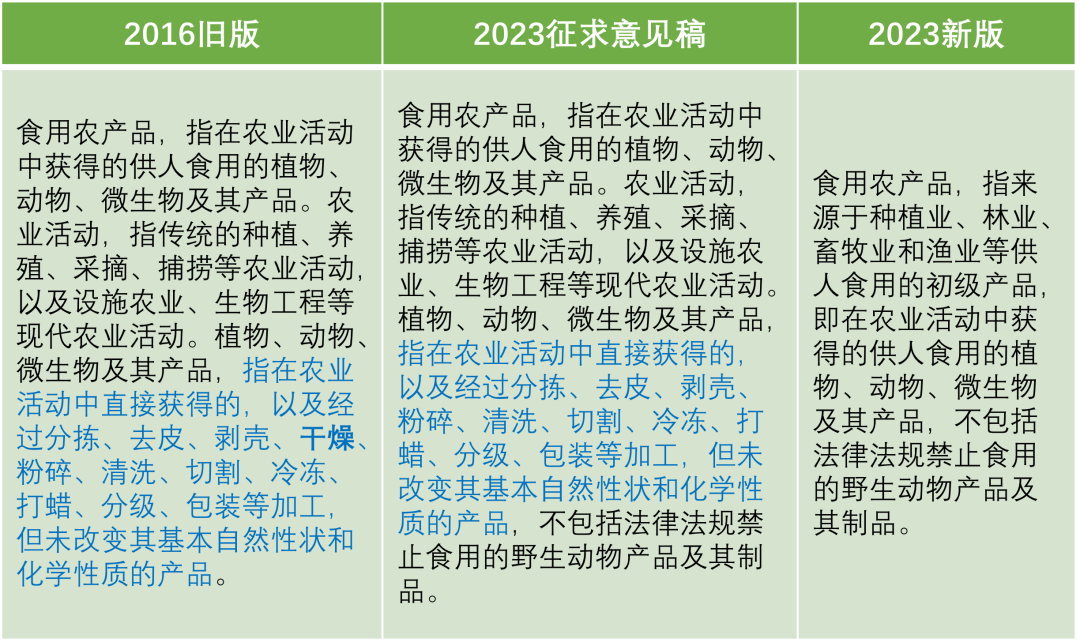
●For example, in 2023 the State Administration for Market Regulation published a draft for public comment of the Measures for the Supervision and Administration of Quality and Safety of Edible Agricultural Products in Market Sales. In the definition of edible agricultural products, however, the category of “dried” products was removed—meaning that dried goods produced by farmers themselves could not be sold directly unless they obtained a food production licence, which is complex and costly. In response, Foodthink joined forces with farmers, sellers, cooperatives, scholars, public-interest organisations, and consumers to jointly submit a proposal for amendments to the administration. In the final regulation, the State Administration for Market Regulation adopted our recommendations. Click the image to learn more about this process.

IV. How Public-Interest Organisations “Dance with Wolves”
Ma Tianjie: As we were saying just now, over twenty years the entire ecosystem of the sector has changed enormously, particularly the way companies present themselves. Meituan’s actions, for example, do not produce one specific pollution problem; rather, through its algorithms and operating logic, they generate systemic environmental impacts, which makes it far harder to pin down corporate responsibility. And companies are working hard to recast themselves as part of the solution, partnering with environmental organisations to steer the agenda on environmental issues. When environmental organisations “dance with wolves,” they need to watch carefully who is setting the tempo and who holds the reins. First, grassroots environmental organisations should critically evaluate corporate initiatives and then set clear boundaries and rules for their own engagement with companies. Some international organisations with years of experience taking on corporations have such boundaries built in: for instance, you may appear at the same venue as a company, you may participate in the same platform or initiative, but you cannot take its money. Environmental organisations should also think about, as they take part in an initiative, what direction they can steer a company towards, and what more fundamental, systemic influence they can exert over it.

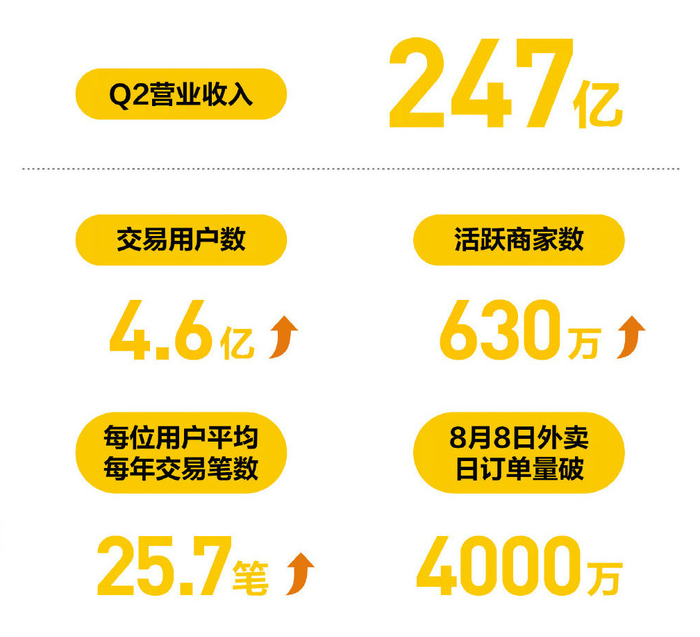
●Meituan is in the habit of using figures to highlight the social value it creates in generating employment for delivery riders, supporting small and medium-sized merchants, and serving consumers, yet it sidesteps any mention of the negative environmental and social impacts it produces. Image source: Meituan Q2 2020 Earnings Report

Tian Le: I have a concern that if things continue on this trajectory, polluting companies and certain environmental organisations could enter into a form of collusion. As environmental organisations, our founding purpose is to see pollution problems resolved completely—ideally, we would be out of a job. But the reality is that some companies generate pollution, pocket enormous profits, then throw a token fraction of that money at environmental organisations to carry out superficial green actions—picking up litter, running recycling schemes. In this way, companies sustain a good image, and environmental organisations keep running on that money. But the problem is that if environmental organisations are busy picking up bottles, they have no time to ask where those bottles came from in the first place, or why there is ever more waste. The result is a strange, vicious cycle—pollution is never truly resolved, companies carry on as usual, and environmental organisations end up serving as a tool for corporate greenwashing.

Sun Shan: Yes, this is genuinely alarming. It is even more visible at international negotiation venues. Outside the conference halls, all manner of companies and industry associations set up booths and host events—it looks like a carnival, with corporate green messaging everywhere. But how much of this “green” is greenwashing, or outright false green? Many public-interest organisations at such events are publicly endorsing companies, helping them greenwash. The truly “deep green” organisations—smaller groups that support indigenous land struggles and issues of environmental justice—have virtually no voice at events like these.

Surviving as a civil-society organisation is genuinely hard, but no matter how the external environment changes, we still need to look back from time to time and ask ourselves: what values do we truly stand for? Who are we standing with? Right now, standing on the side of victims, smallholder farmers, people who have lost their land, and indigenous communities is indeed harder, because the vulnerable supporting the vulnerable is never easy. But if public-interest organisations do not stand with the vulnerable, who else should they stand with? I believe the fundamental position of a public-interest organisation is to stand with the vulnerable, with Mother Earth, and with the planet’s interests. But today, that line has become blurred. Companies are talking about biodiversity, offering solutions—is that a good thing or a bad one? Public-interest organisations need to discern: what is real and what is fake, which actions are mere window-dressing and which genuinely tackle root causes? Yet there is far too little discussion of this discernment within the sector. It should become the issue we debate most openly and candidly.

Tian Le: You just mentioned greenwashing and false green, and the truth is that there are now an enormous number of false solutions. We often say you cannot expect to solve a problem using the very logic that created it. Foodthink has a dedicated tag for this category of solutions—”false solutions.” For example, Meituan promotes the fact that its platform offers a “no cutlery needed” option and boasts about how much waste this saves each year. But in reality, Meituan’s business volume is growing year on year, and the absolute quantity of waste generated is skyrocketing alongside it. Compared with that increase, the cutlery saved is negligible. And in everyday practice, even when users select that option, sellers often still include cutlery—afraid of receiving a bad review, or simply not having the time to note the detail. That is a false solution. So how should consumers and the public learn to tell the difference?
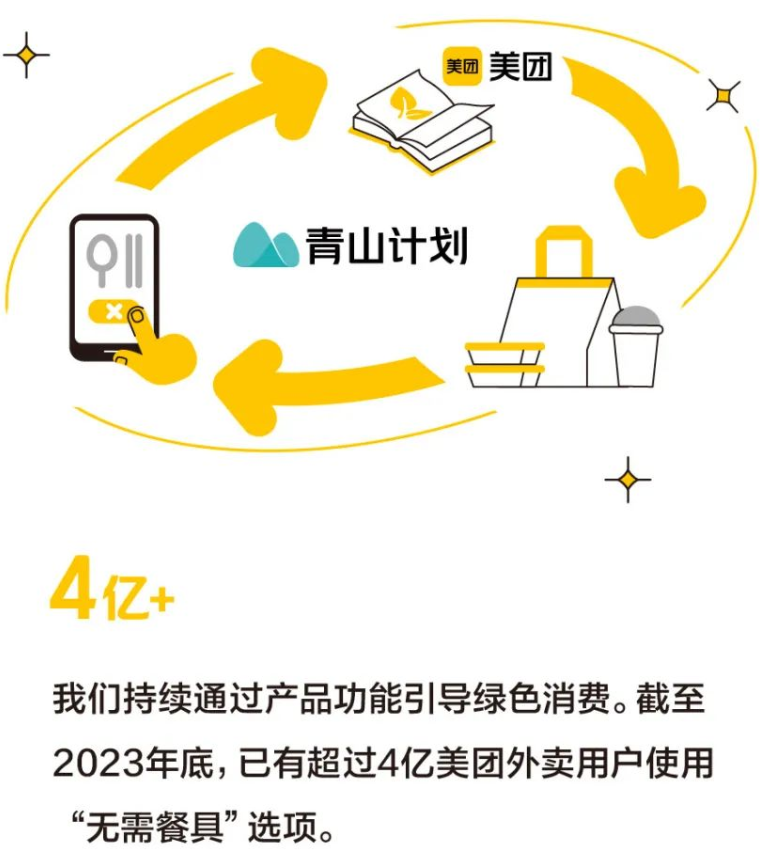
●In its 2023 Corporate Social Responsibility Report, Meituan claimed that “more than 400 million food-delivery users have chosen the ‘no cutlery needed’ option”, yet in practice many consumers report still receiving cutlery after selecting it. Image source: Meituan 2023 Corporate Social Responsibility Report.
Ma Tianjie: If you expect consumers to sort this out on their own, that is virtually impossible. Even professionals sometimes struggle to untangle what is genuine and what is not, what the differences are, and how much of it matters—let alone ordinary people. That is why the intermediary roles of media, public-interest organisations, and information platforms have become so crucial. Companies like ByteDance already play a central role in the flow of information. Under the dominion of AI and algorithms, information spreads faster and wider than ever, while also becoming easier to manipulate. These companies’ algorithms determine what the public sees and which information shapes their thinking. Discerning truth from falsehood and providing genuine information in such an environment is extraordinarily difficult. Tian Le: In moments like these, I feel that professionals in the environmental field and in journalism need to be all the more clear about what their mission is. News itself is a public-interest product. We carry the responsibility of safeguarding the public interest, and that means upholding our professionalism, independence, and integrity—ensuring that the information we convey is accurate and complete.

Sun Shan: It really is difficult. I know that some journalists cannot publish their full stories in mainstream outlets, so they start their own podcasts or write on independent platforms, getting as much of what they know out there as they can. You may not be an influencer, your audience may be small, but if you hold true information, you should speak up as loudly as you can.

Tian Le: But the reality is that a great deal of what passes for media coverage these days has essentially become a public-relations product. We have recently observed that perhaps more than 70% of “in-depth reports” about agriculture and food are in fact purchased content—companies paying media to tell their stories, steering the narrative towards the good things they have done, crafting a positive public image while steering clear of their real problems. The firewall between the editorial desk and the advertising department has been breached. Serious journalists are being tasked with producing advertorials, and even asked to make advertorials read like news stories. Of course, some outlets still hold the line. Renwu, for instance, published an investigative piece laying bare the plight of delivery workers trapped within algorithmic systems, in all its grim detail, profoundly shaping how the public and policymakers perceive this issue. Not long ago, Southern Weekend ran an investigation into carbon credits, exposing how absurd the business of “selling air” really is and how much fraud is rife in the carbon trading market. But journalism like that has become ever harder to find.

In the first half of this podcast episode, our two guests and the host explored the many challenges public-interest organisations face when companies step into environmental and social issues. But how can we imagine, advocate for, and practise a better society? Keep an eye on Foodthink’s next post next week—our three speakers will share plenty of successful examples from home and abroad. Stay tuned.
Concept: Tian Le Podcast production: Xiaoputao

Transcription: Maomao

Editing: Yuyang, Tian Le