
Apples, Matsutake and Yak: How Do They Benefit the Environment, Farmers and Consumers Alike? | Food Talk Vol. 48
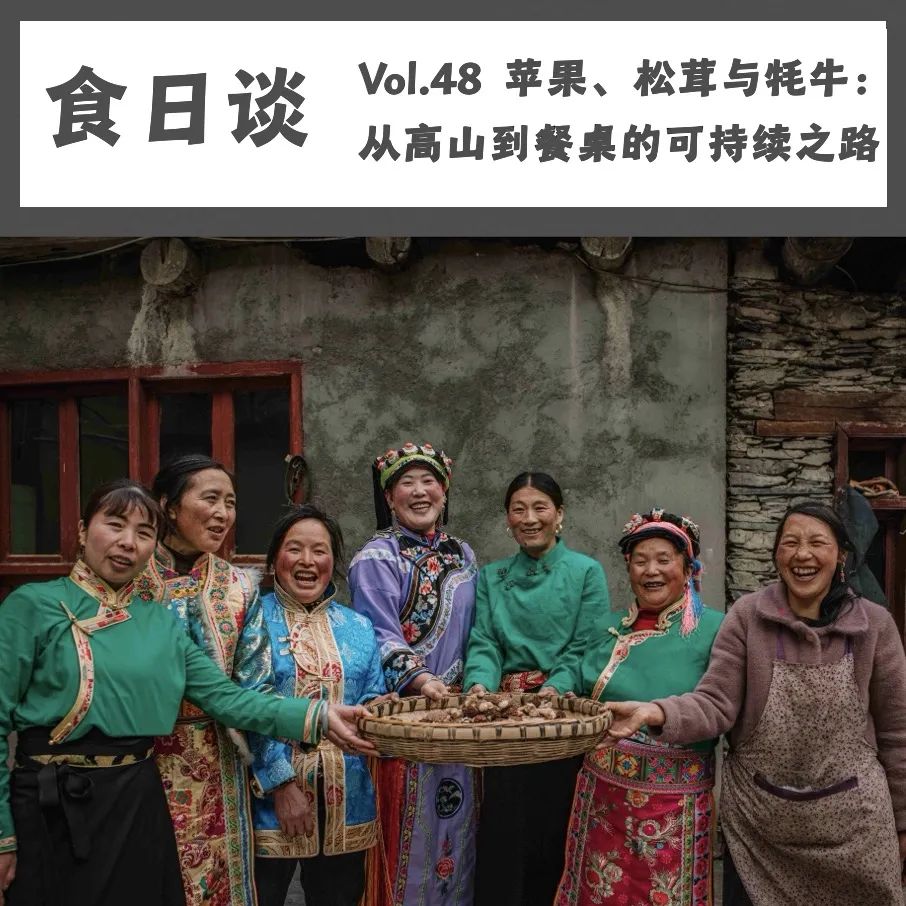
This episode features social enterprise “Muyunpo” as guests on “Food Talk” to hear how they work alongside villagers to explore fairer, more sustainable ways of producing — protecting nature while getting the village’s finest produce to markets far afield, so that farmers earn more.
Xiaojin County in Aba Prefecture, Sichuan, sits in the Jiarong Tibetan region. Even driving from Chengdu takes five or six hours. The great range in altitude and varied terrain endow this area with abundant, high-quality agricultural products. Over a decade ago, the non-profit “Chengdu Shuguang Community Development Capacity Building Centre” came here and, like many organisations, after years of running poverty alleviation and development projects, “Shuguang” embarked on a path of helping mountain farmers sell their produce. But in the end, they found a rather different route.
To run the agricultural produce sales, “Muyunpo” was established in 2017. As a social enterprise, it was not created to make a profit but to serve the community’s interests. By organising villagers to forage, grow and graze together, the village has come alive, and the surplus from sales is returned to the villagers’ groups at year-end, so that public funds flow back into the community. Unlike the traditional “farmer–trader” relationship, where each side looks out for its own bottom line and farmers are at the mercy of the market, Muyunpo values trust and cooperation. The villagers’ groups make their own decisions and set their own standards, while the social enterprise provides support from behind the scenes.
The result of years of effort is a range of higher-quality, healthier and more environmentally sustainable products: sustainably foraged matsutake and morels, organically grown apples and sweet cherries, Sichuan pepper and Sichuan pepper oil, heirloom grain varieties, free-range yak meat… In this episode, Yunhui and Xixi from Muyunpo will share with us the vivid stories behind each of these products.
- How hard is it to earn more from matsutake and morels by cutting out the middlemen?
- How does a group of mothers from the Tibetan region manage to forage while protecting the wild?
- What do villagers need to do to keep yak in the traditional free-range grazing way?
- How can a community build trust in the producer–buyer relationship and maintain production standards?
- When the sales surplus flows back to the community, how do villagers put it to use?

This Episode’s Guests

This Episode’s Host

Timestamps
07:00 Matsutake has so many grades, and it is actually a trade secret? How did Muyunpo workers go from “newbies” to market insiders?
15:51 Delicious morels can get stripped clean, too. How do you overcome the “tragedy of the commons” and persuade villagers not to exhaust the resource?
28:37 Sustainable morel foraging — why has it given the village mothers more of a voice?
31:58 Free-range grazing vs. pen-feeding for fattening: changes in yak husbandry are eroding traditions in Xiaojin’s Tibetan area
38:39 Sichuan pepper, apples, mixed grains… Other agricultural products that Muyunpo trades in
41:08 In an age of distrust, why are ordinary people willing to follow Muyunpo in changing how they grow their crops?
42:46 How precious are heirloom apples? Villagers pick from their own orchards for children far away from home
48:18 If you would like to support sustainable agriculture, what can you do?


Click the images to read related articles


Scan the QR code below
on Xiaoyuzhou | Ximalaya | Lizhi | Apple Podcasts
to subscribe to the “Food Talk” podcast

Feel free to leave comments in the comment sections of any podcast platform — we reply from time to time. Scan the QR code below to add Food Think’s secondary WeChat account, with the note 食日谈 (“Food Talk”), to join the podcast listeners’ group chat.

Unless otherwise noted
All images provided by Muyunpo
Music: Ba Nong
Production: Xiaojing
Editor: Wang Hao
Contact email: [email protected]