
Picking Strawberries with Colombian Illegal Workers in Rural France

Today, many people are beginning to seriously consider the value and meaning of rural life, and even try to include farm work and farm life in their future life plans. In this age of risk and uncertainty, Foodthink also hopes to support young people who care about food and agriculture, especially those who want to work in organic farming, to find their own path and re-root themselves in healthy soil.
Building on the experience of the previous four editions, Foodthink launched recruitment for the 2026 Organic Farming Internship Programme in mid-December. As soon as the post was published, it received an enthusiastic response. This recruitment closes tomorrow (7 January). If you are interested in the planting techniques, planning and management of organic farming, or more specifically in farm life, hurry and scan the code to sign up!
1. Arriving at the Farm
The process is not complicated, but it requires mutual willingness: length of stay, personality and practical skills, work intensity, visa issues, and even ideological spectrum are all factors in this two-way selection. Some farms cannot be reached by public transport, some require outdoor camping, and some did not match because their available dates did not overlap. Later, by chance, I made contact with a well-rated work-exchange farm in western France.
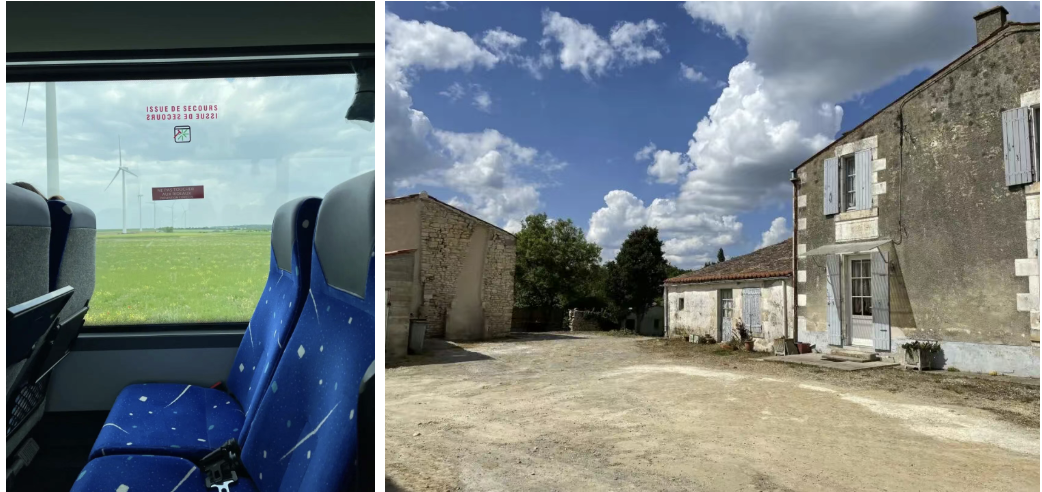
La Rochelle faces the Atlantic. It is a typical French port city, and it still retains medieval fortifications. On a day in May, I flew in from London, stood for a while in the eight o’clock sea breeze, and waited for the rural coach to depart. More than half an hour later, the coach dropped me alone at a bus stop on a country lane. As far as I could see, there were flat fields of wheat and maize, and scattered white wind turbines in the distance. The view was by no means pleasing, and after the long journey I was already exhausted before I had even started work. Just as I was thinking of turning back, a rattling minivan came over, and an oldish man wearing a frayed sleeveless shirt and sports sunglasses walked towards me. That was the start of my month-long, unpaid farmwork experience in France.
Ale is in his sixties, an Argentine who has lived in France for half his life. He is full of energy, speaks and acts decisively; you can tell he is always at the front, and he lives up to his name, Alexander. His entrance music should be a Spanish bullfighter’s tune.
His wife, Annette, is a French Jewish woman. She wears red glasses, the corners of her mouth always turn down, and she responds to ninety percent of conversations with the French favourite “ah, bah…” and then shakes her head. After spending time with her, you discover that Annette is a faux cynic, as if doing her best to perform the easygoingness a French person should have, while inside she is actually a mad child.
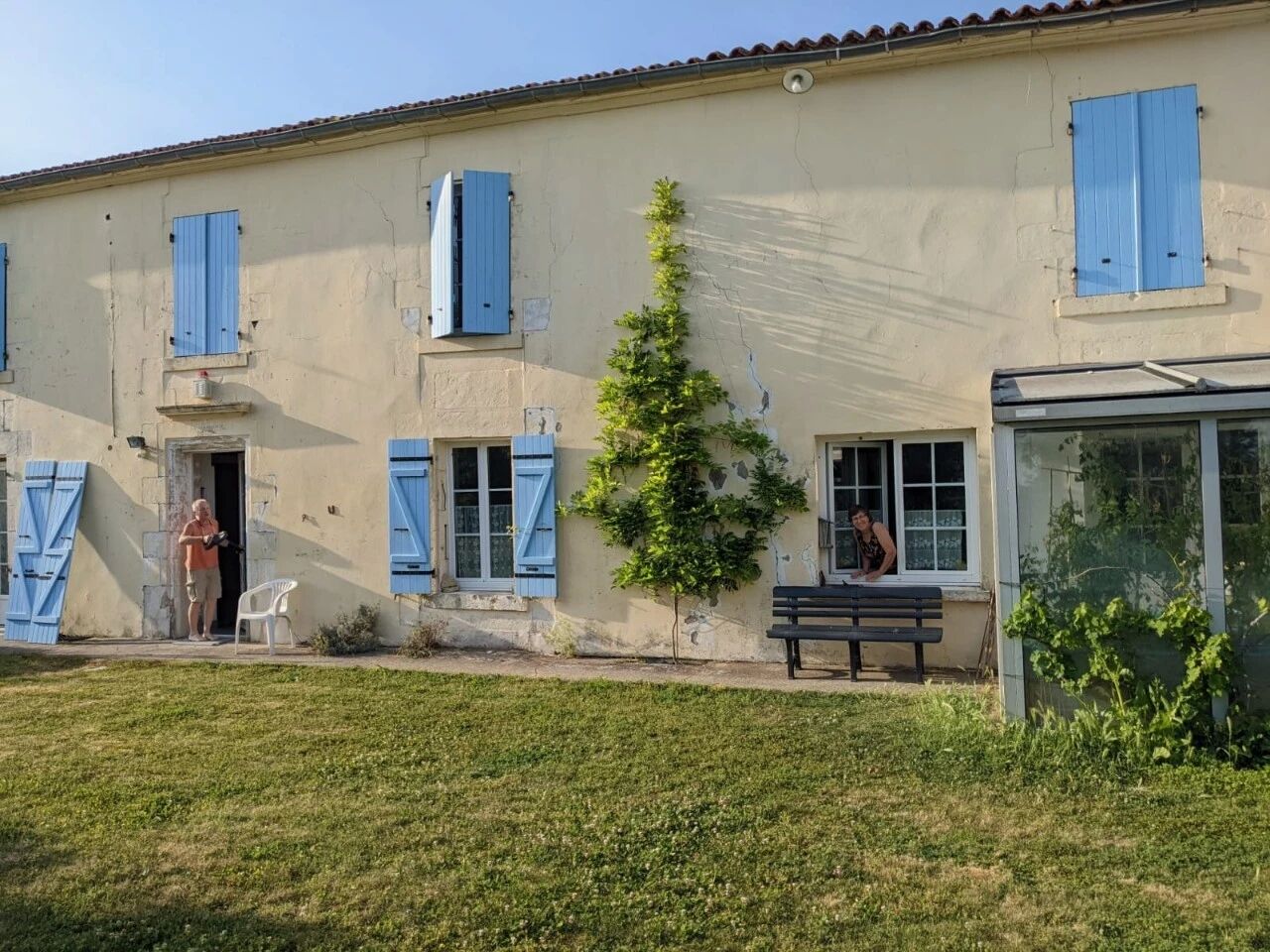
Apart from flour, milk, building materials and rennet (an enzyme from a cow’s stomach, used to make cheese), the couple has little else to spend. The 30-mu farm also has no workers who need to be paid, because the daily work is mostly done by work-exchange volunteers like me. Volunteers come and go, but the manor is made of stone. Young people interested in agriculture from all over the world come and, together with the couple, look after animals, do farm work, and renovate the house inside and out.
Whether in organic farming, animal husbandry, cooking, winemaking, building houses, making furniture, or repairing canoes, the volunteers who have travelled far not only put in labour but always learn something along the way. After all, everyone chooses to travel thousands of miles to do volunteer work on the farm in order to broaden their life experiences, adding, like opening blind boxes, a few skill points that city cogs would otherwise never have the chance to master.
2. My Farm Buddies
I pushed open the dormitory door; three other people were inside. Joanna, 23, was not tall and was sitting on the bed doing her daily Duolingo French check-in. Danny was Joanna’s brother. When they had met Ale, the Colombian siblings’ European tourist visas had already expired, but they had no intention of returning home, and they were working illegally in a small Spanish town. Ale told them they could come to France and stay at his home in the meantime, and that he would send them the invitation letter needed for a volunteer visa.
I had assumed that the main participants in work exchange were either well-off young people wanting to experience life, or “nomads” who spend money when they have it and sleep on sofas when they don’t. What I had not expected was that there were also illegal workers from Latin America in Europe. Many European industries rely heavily on imported labour; for example, European agriculture has a huge demand for seasonal workers who can do hard work, and one in four agricultural workers is a mobile temporary foreign worker—and this only counts contracted workers. Meanwhile, between 2016 and 2023, more than two million workers in Europe lacked legal status.
After several months of daily-wage jobs in Spain, Joanna and Danny realised that what they needed most was legal residency status. A small farm like Ale’s did not make high demands on their labour; although there was no wage, it also did not put them in a position where they could be deported back home at any time. So the two of them came here to do unpaid odd jobs in exchange for board and lodging, waiting for the opportunity to obtain a formal work visa.
Then there was Miguel, a boy with his hair gelled. Miguel was not an illegal worker; he did not know Danny or Joanna either; they had only all happened to come from Colombia. He had grown up in international schools, liked chips and sushi, was indifferent to work, and clearly did not want to stay here another day.
Among the three, Miguel’s English was better, and he spoke to me more. My communication with Joanna was limited to simple English, Google Translate and body language. Danny did not know a single word of English; he called me “hen” (the Spanish pronunciation of Jen), and yet we had a rapport like that of cellmates.
III. Work and Life on the Farm
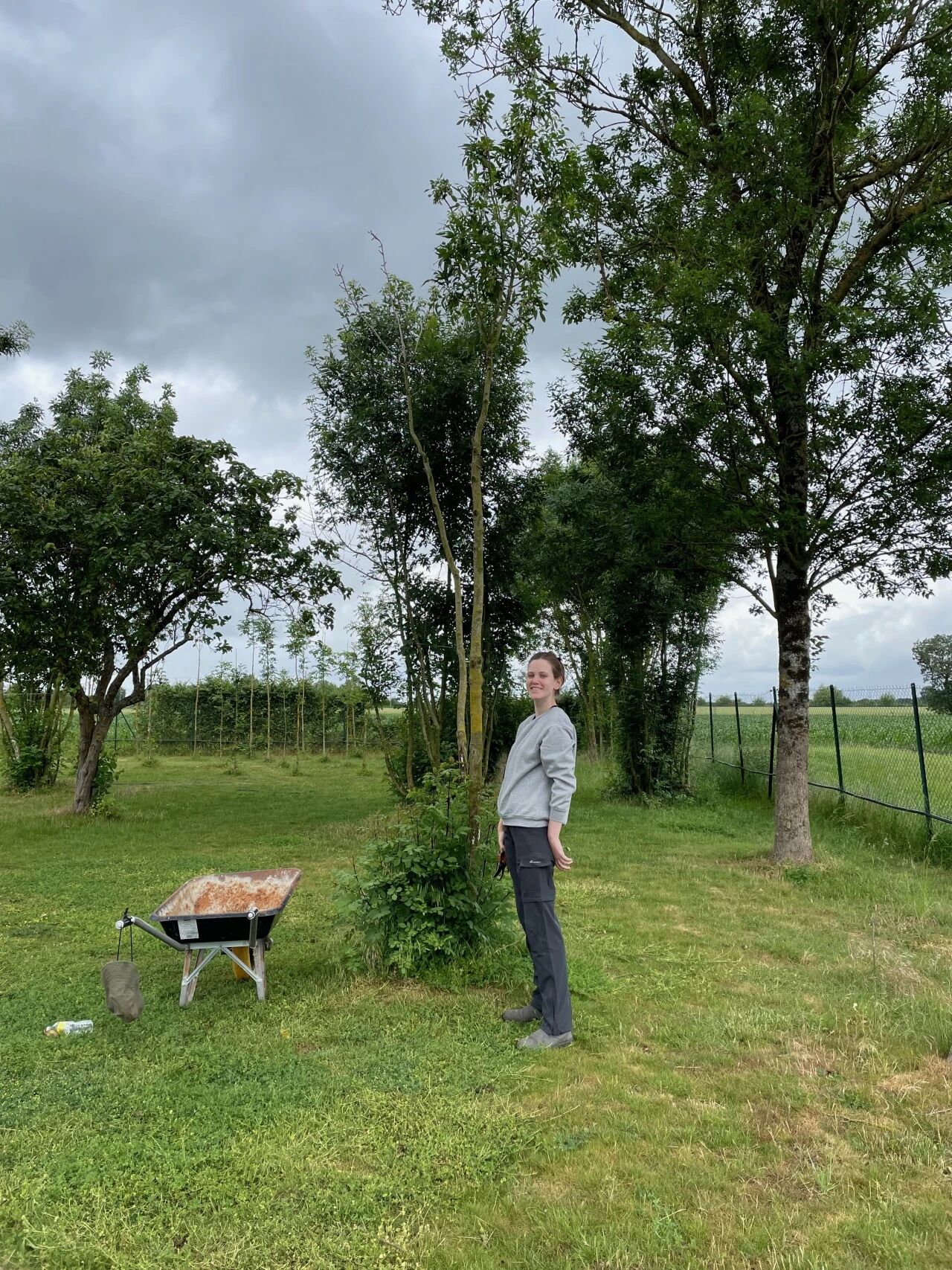
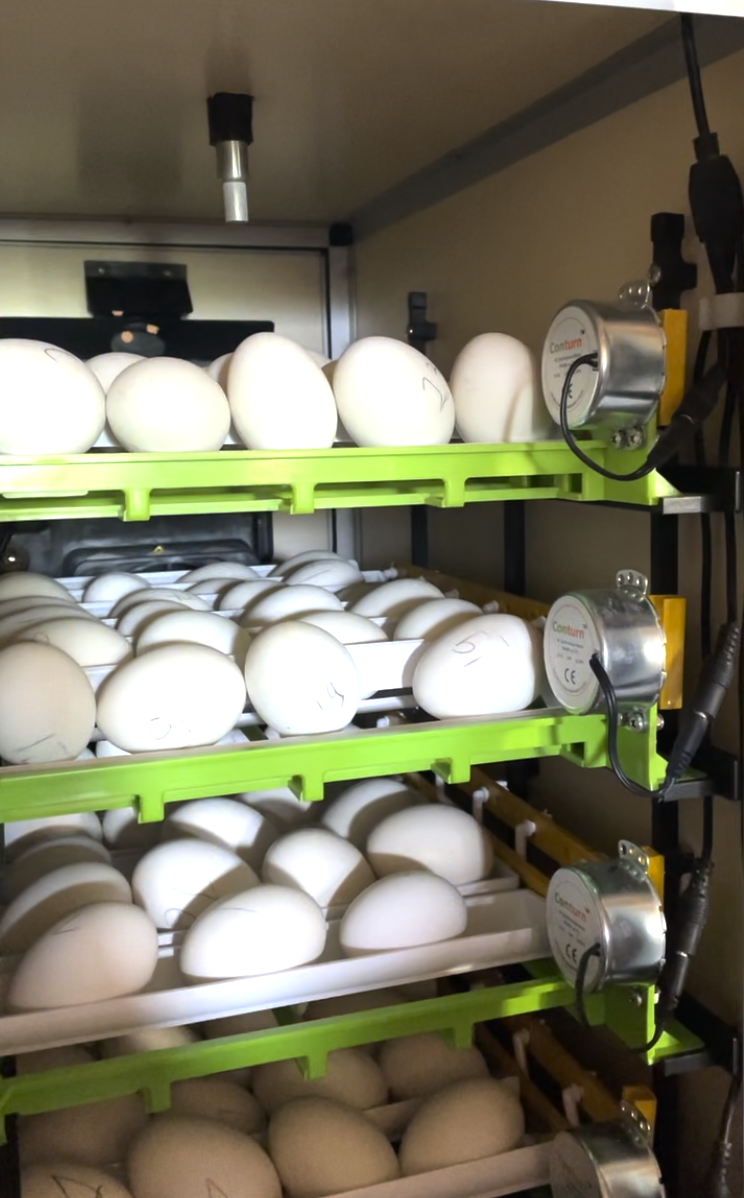
In front of the house there was an irrigation channel and two vegetable plots. Occasionally, a mother swan would appear in the channel, swimming past with her cygnets. I was told that they had once kept pigs, but by the time I got there, they had already turned into sausages. In addition, there was a Border Collie called Lila and four free-roaming kittens.
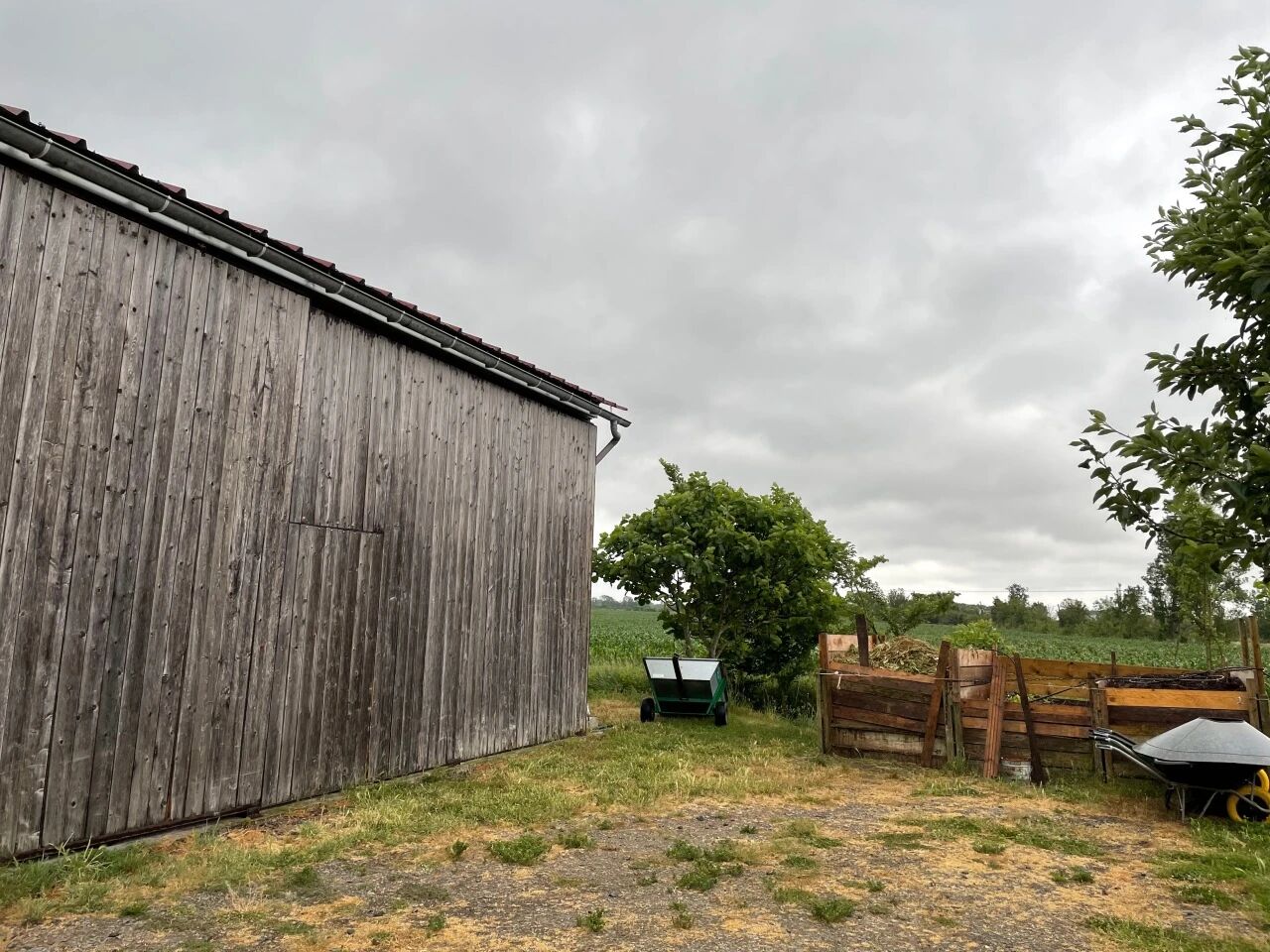
In the mornings, Miguel went to collect eggs, Danny ran the mower and trimmed the lawn, Joanna did the cleaning, and I pulled weeds in front of the house. Odd jobs such as pruning and tying branches, sanding boards, and repairing water pipes were done by whoever had time.
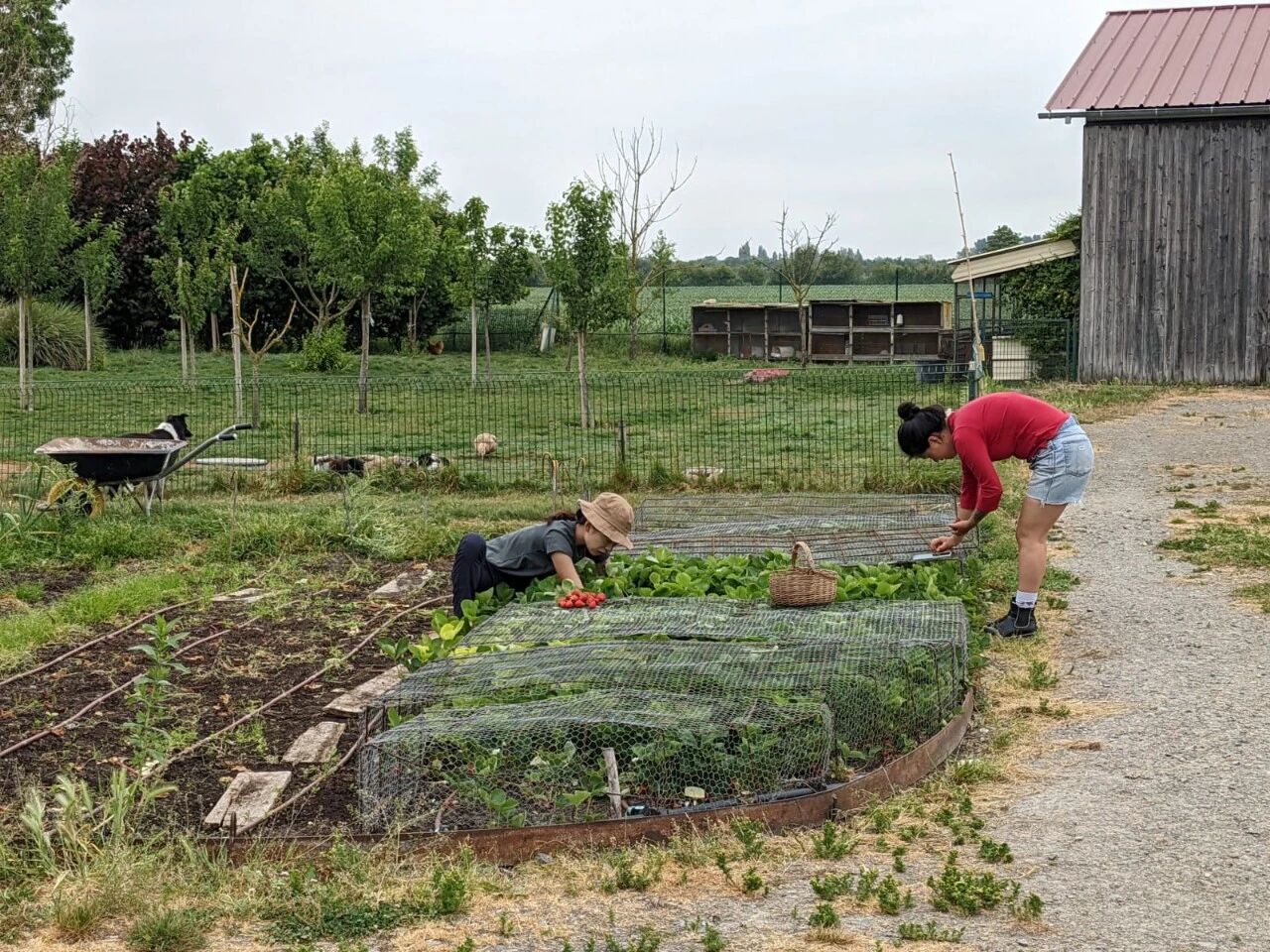
In spring, the fields in front of the house had only strawberries and beetroot, and most of the crops were still in the seedbeds in the seed-raising sunroom. Picking strawberries required crouching in the field and rooting around. When you had finally found a large, overripe fruit, it was most likely already claimed by snails and maggots. Watching the small basket of strawberries I had spent hours gathering being crushed into ice cream, I could not help lamenting the waste. Harvesting beetroot was much easier; like pulling radishes, the moment you pulled one out, you would make a mental bet on its size. Sometimes the plant with the lushest leaves produced only a tiny one, while beneath the most unassuming sprout there might be a huge one hidden. Unformed cucumbers and watermelon radishes were still sprawling about in the seedbeds. Just before I left, I finally ate my first half-ripe tomato.
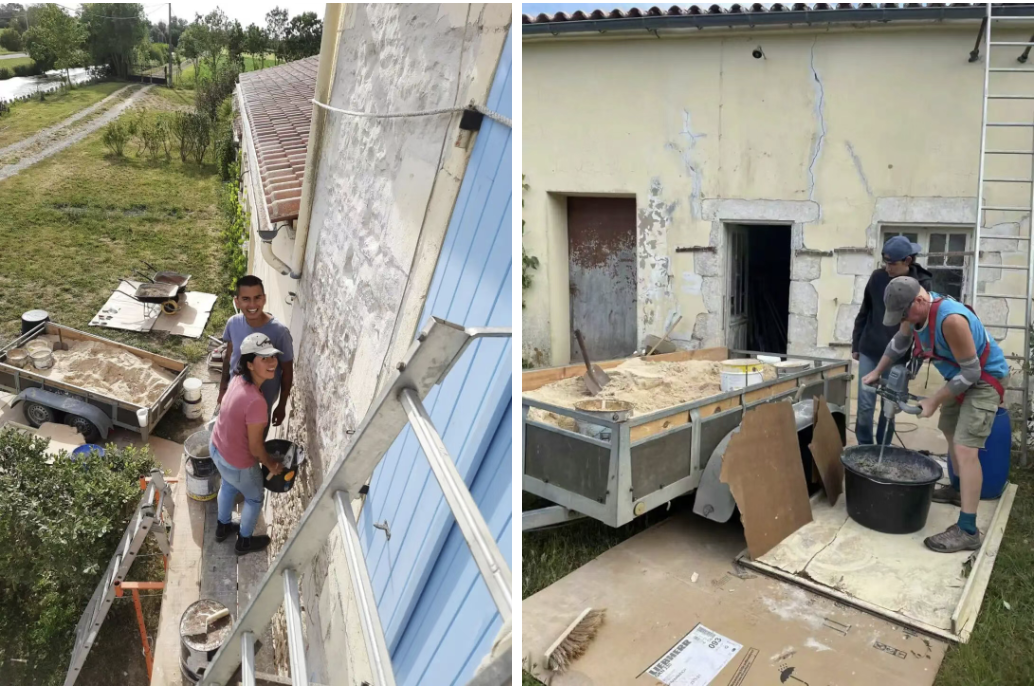
What impressed me most was the work renovating the exterior walls in the last few days before I left. This meant smashing off the outer layer of the walls and then replastering them with lime. I would swing my right arm and hammer the wall with all my might, breaking the existing lime shell. Because the wall had been renovated over several rounds, hitting a lime layer was manageable; a few blows and it would come off. But hitting cement was not so easy. No matter how hard I hit, the surface did not move at all. Looking at my companions still working around me, I could only carry on. At seven in the evening, as the sun went down, I crouched on the scaffolding and thought this was the ultimate version of unpaid labour.
4. A Farmhouse French Meal with a Jewish Touch
Breakfast was Annette’s homemade bread with jam and butter. At 8:20, after eating, we went to work. The 10:30 tea break was two Medelin cakes and an espresso. Lunch was usually more substantial: pork knuckle stewed with beans, served with rice, maize polenta with sausage, duck confit with bread. Even in Beijing, this would have counted as a Continental European banquet costing three digits per person. After lunch, we lay around in a food coma for an hour; at two o’clock, another coffee, a small cake, and back to work on time.
Dinner was always beetroot-leaf soup, bread and homemade cheese. May was exactly the beetroot harvest season. Miguel spoke fluent American English, and his favourite film was the Rocky action series starring Stallone. When he was cooking soup in the evening, he always complained about not having a hamburger. But nobody paid any attention to his Hollywood fantasy.
Annette cut off the leaves, threw them into a pot of boiling water, added salt, and then blended them in an electric blender. The six of us would sit around a large pot of dark green soup, often too tired to speak, hearing only the sound of soup spoons clinking against porcelain bowls. We also ate artichokes for a few days. Artichokes look like the buds of Jurassic plants; after being picked with secateurs and steamed, you peel them petal by petal. The base of each petal is tender enough to dip into whipped mayonnaise. The further in you peel, the more tender it becomes, and the artichoke heart is the final, delicious bite. Later the artichokes were stripped clean, so we could only carry on eating beetroot-leaf soup.
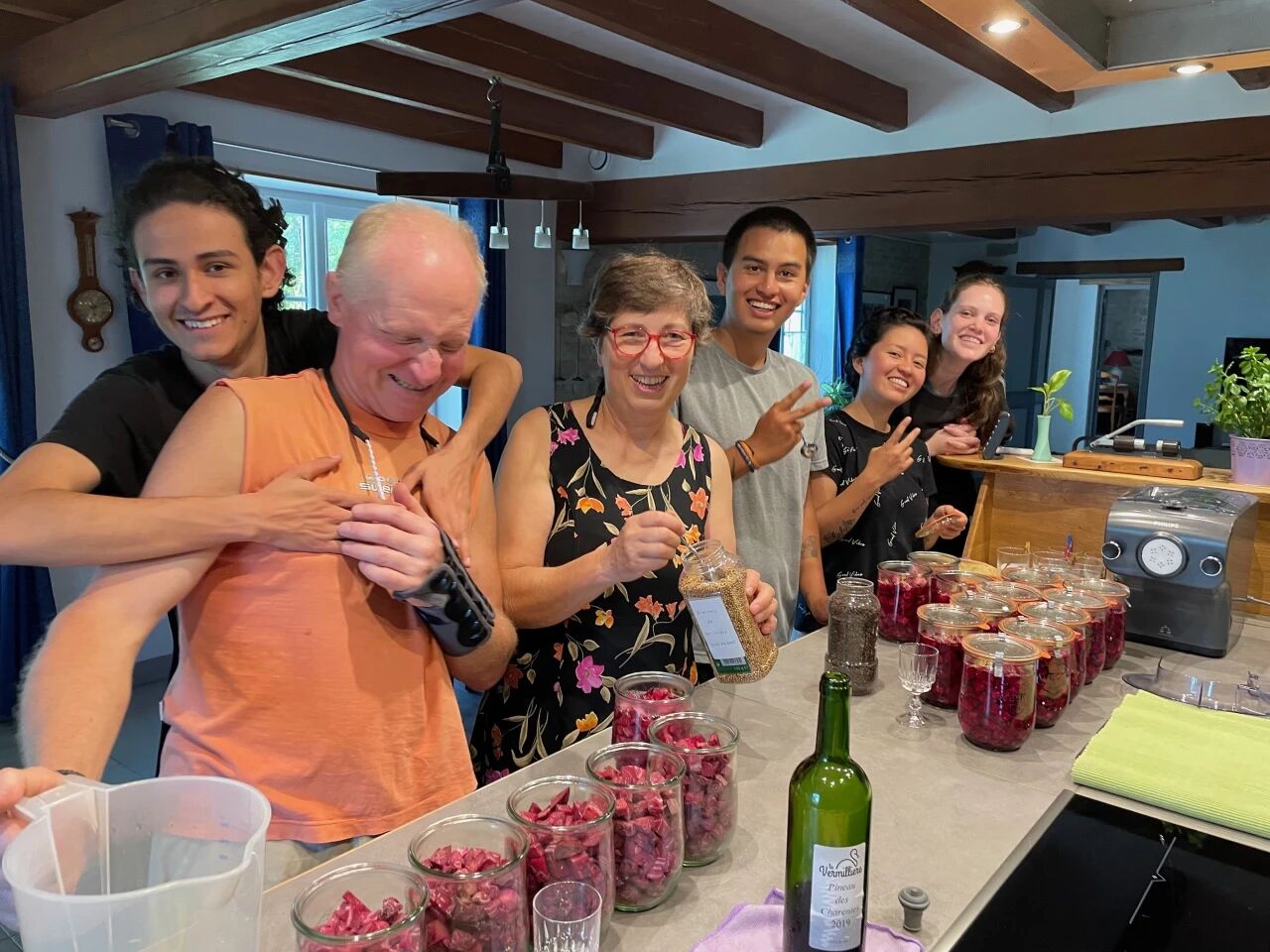
Where did the beetroot that could have gone into borscht go? It had been turned into jars. The five of us tackled a mountain of beetroot together: peeling, boiling, sterilising the jars, and then, after packing them, mixing watered white vinegar with bay leaves, peppercorns and salt, and pouring the mixture over the beetroot jars to seal them. That was not all; we then put these jars into a huge steamer, like a water storage tank, over a gas hob, and gave them a sauna until they were thoroughly sterilised. Unlike a pickling crock, jars made this way do not turn sour through fermentation; when opened in winter, they still taste of beetroot.
One day the cheese ran out. Annette took me to a nearby dairy farm, and we brought back twenty jin of raw milk. We added a few drops of the enzyme unique to a ruminant’s stomach to the milk bucket, stirred it, and waited until the casein coagulated the next day, then drained off the whey. After that, it was up to the magic of time. The longer the fermentation, the richer the cheese’s flavour.
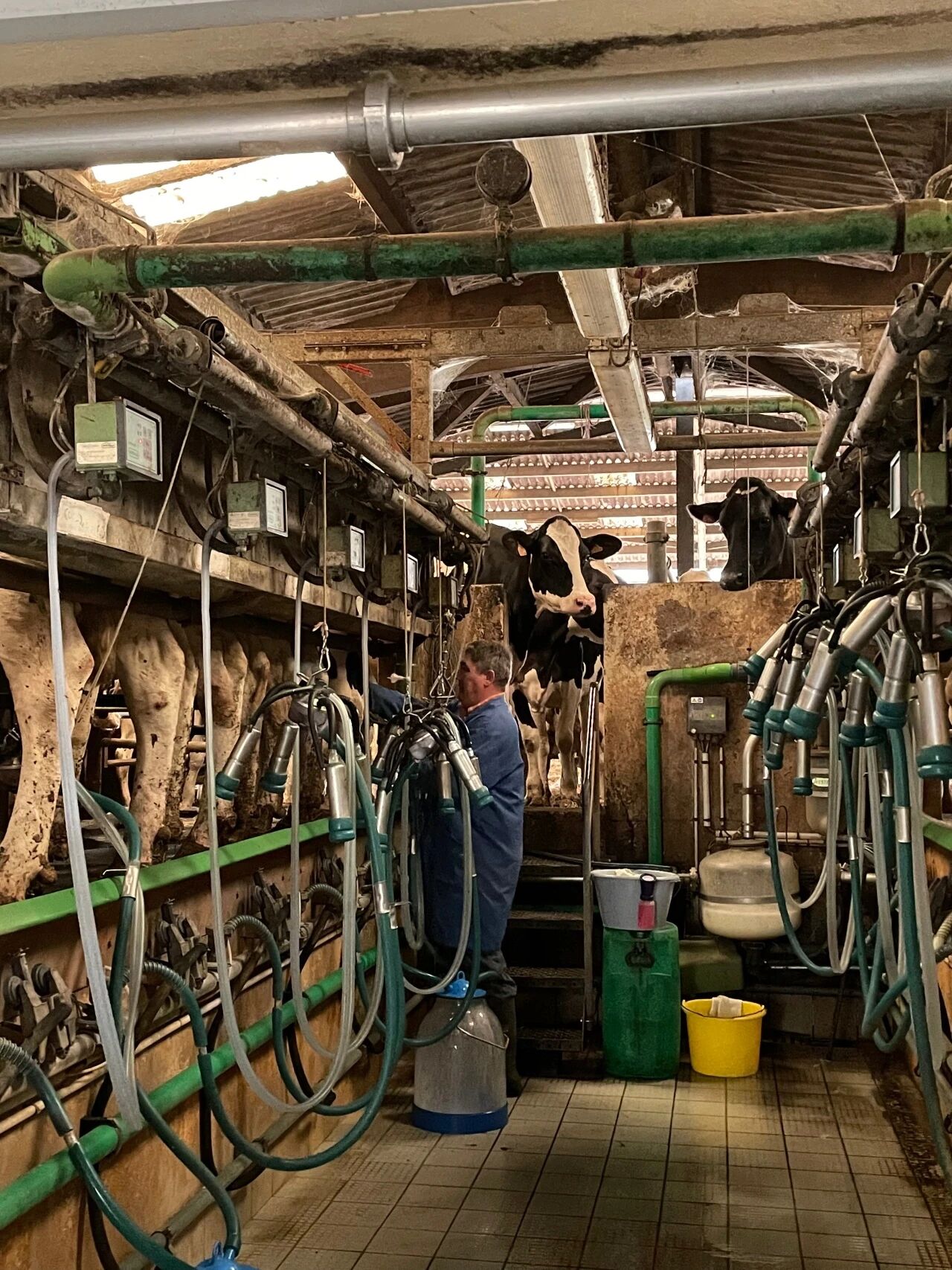
The homemade cheese should be paired with their homemade Pineau des Charantes, a sweet aperitif wine popular in western France. When Ale was in a good mood, he would open a bottle for any reason or none. But in any case, every Friday evening this bottle of fine wine would appear in the kitchen.
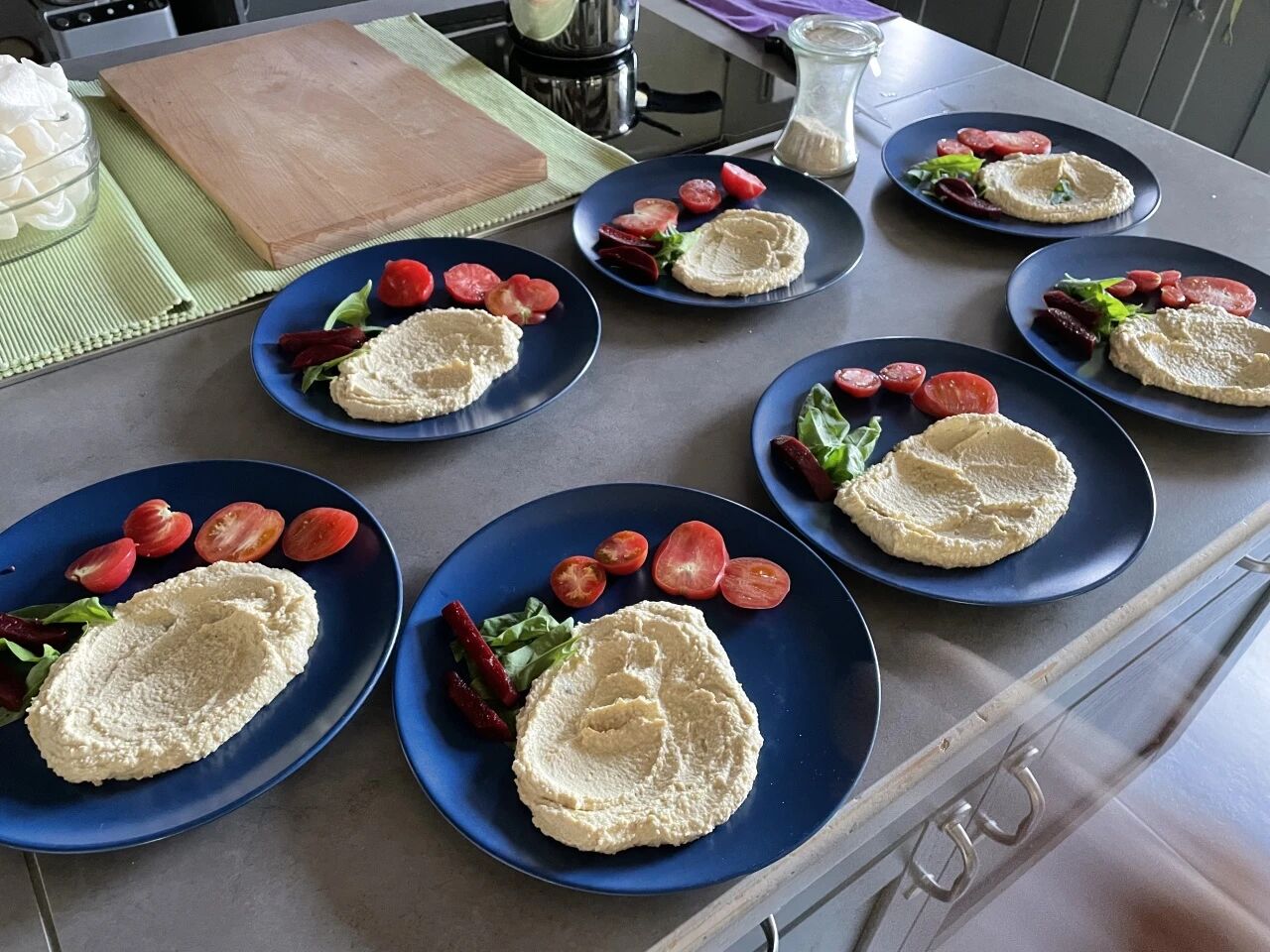
Every Friday evening was the Jewish Sabbath. Apart from rich, buttery and sugary breads such as croissant-Danish pastries, the staple bread eaten by the French here generally had only flour, water, salt and yeast in its recipe. And every Friday, Annette would make challah: a plaited loaf made with eggs and milk, spread with hummus, and accompanied by homemade canned chicken gizzards preserved in oil. Before we ate, we lit nine candles, stood in a circle holding hands, and prayed. When toasting, we said “L’chaim” (לְחַיִּים, Hebrew) to one another, meaning “to your health”.
Weekends left time free for me to arrange as I pleased, but “fun” was not easy to find. Miguel and I went into town once. With no transport, it took over an hour to walk to the nearest bus stop, and we had to set off just after six in the morning. Because the country roads had no streetlights, we also had to rush home before dark. I thought of the arduous school journeys older generations made, as read in books, but I had only gone to La Rochelle once.
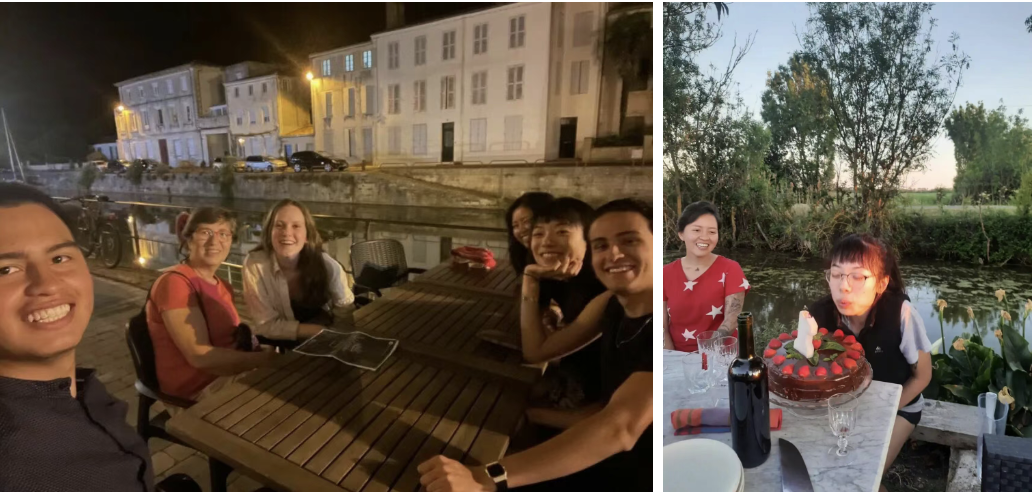
Occasionally, Ale and Annette invited everyone to drink beer in a nearby town of fewer than a thousand people. The minivan unloaded an older married couple, three Latin Americans, an East Asian, and a blonde, blue-eyed Israeli girl. The middle-aged men, close to alcohol poisoning, were gathered in the pub playing Jenga; they all put down the blocks in their hands to toast us foreigners.
5. The Decommodified Rural Society
Looking back on that month afterwards, my people-pleasing personality perhaps earned me a degree of “consideration”: I was more proactive about work and more willing to chat with the hosts, so I was not assigned particularly difficult tasks. By contrast, young Miguel had something of an image to maintain and always tried to show that he was different from the other two Colombians. This was soon seen through by everyone, and Ale and Annette sometimes could not help showing impatience—not quite malice, more a kind of cool indifference towards a junior.
Continuing this kind of emotional labour in a family one had no blood or friendship ties to is hard for many people to call a romantic rural experience.
However, the opposite of volunteer life is not a simple longing for a commodity society of great material abundance. One week, the farm owner had to travel far away and left the house and farm entirely in Joanna’s charge. During that time, we lived a fantastical and peaceful life: there was little talk, and all three of us followed Joanna’s arrangements. Apart from sleeping an hour longer than usual for our midday naps and allowing ourselves to make a side dish of stir-fried duck eggs in the evening, the daily labour was no different from when the owners were there, yet life was much more at ease. Working and living in the countryside could turn out to be so easy—without constantly guessing boundaries or needing to seek the hosts’ approval at every turn.
It was this contrast that made me more clearly aware of the value of urban public life. In theory, a well-ordered institutional society protects individuals through law and urban communities. Although birth and luck have left many as victims of being “stuck somewhere”, honestly, most people still have a “last resort” way out: work for money in exchange for a basic livelihood.
In the countryside, things were not so. Food could not be bought at will (unless one drove forty-five minutes to Walmart), and eating became a very real problem. Volunteers neither owned land nor possessed food; maintaining a good relationship with the “landlord” inevitably became, at a subconscious level, a basic survival strategy. While all was going well, it was possible to hold on, but the moment one felt unwell, the problems immediately emerged: without the familiar protections of labour rights, even resting became slightly unsettling.
Of course, Ale and Annette never left anyone hungry, and they never treated me badly. This is exactly what highlights the problem: micro-eco-communities such as family farms and volunteer work exchanges depend almost entirely on personal goodwill to function, yet lack the necessary oversight and rights-protection mechanisms. Perhaps precisely for this reason, many “eco-communities” with good intentions ultimately come to nothing.
Oh well. For me, after this life had passed its “best-before date”, it at least still retained the possibility of leaving at any time. After ending my volunteer stay, I browsed the markets alone in Toulouse and picked up the desire to shop I had long since lost. Back in the familiar consumer world, no one expected me to get up early in the morning and work; with a dozen or so euros I could buy a full day of sleeping in, and I could have croissants for all three meals.
But without that month of unwaged labour, I perhaps could not so personally understand the value of modern society. The other side of “alienation”, which we often talk about, is perhaps not a return to traditional village communal relations, but whether one has the space and right to move in and out of institutional society at will.
All the same, people cannot help yearning for poetry and far-off places, and they develop many fantasies about rural life. But unless you get involved in person and experience it for real, it is hard to know whether such a far-off place tastes of honey or arsenic.
All images in this article are provided by the author
Editor: Tianle