
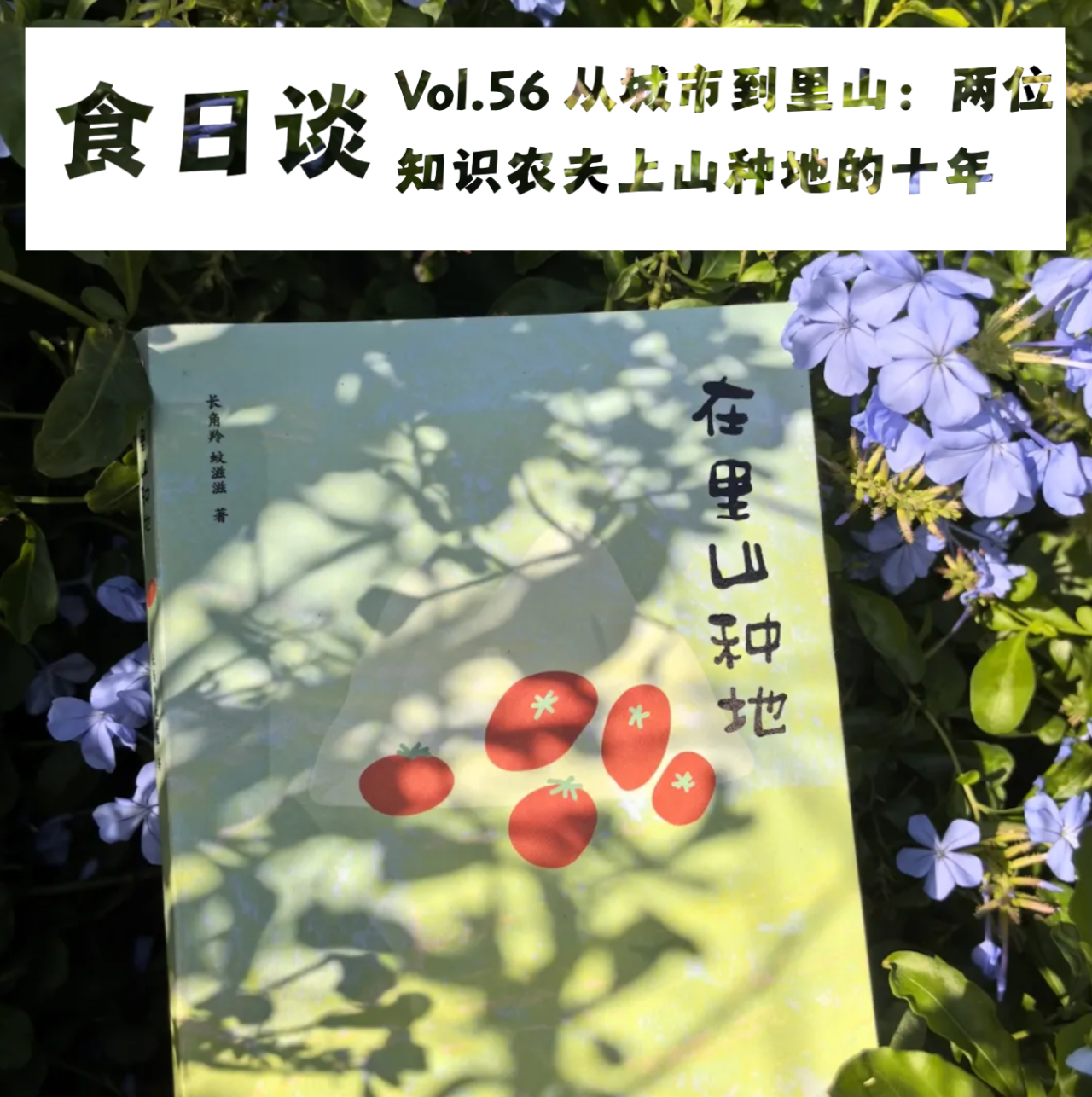
From City to Satoyama: A Decade of Farming in the Hills by Two Knowledgeable Farmers
Have you ever fancied escaping the city, going back to the countryside, and returning to a pastoral life? Have you ever held romantic ideas about being entirely self-sufficient? Real life on the land is far more complex and difficult than we imagine — and far more moving.
Wenzizi and Changjiaoling are two graduates of the Norwegian University of Life Sciences, both born in the 1980s. Starting as complete farming novices, they spent ten years creating a “satoyama” in the shallow hills on the outskirts of Beijing — Gaia Worth Garden.
Unlike remote, unvisited deep mountains, a “satoyama” refers to “the boundary between human settlements (里) and the mountain forest (山)”, a transitional zone where people and nature coexist. On this 30-mu (roughly two hectares) plot, they grow vegetables, keep chickens, and run nature-education programmes. They also write books, paint, and make malt sugar. They converse with the land, live alongside climate change, learn from the village’s seasoned farmers, and share their space with insects, birds, grasses and trees.
Three years ago they wrote up their farming life in a book titled In the Dirt, Not Crude: A Knowledgeable Farmer’s Satoyama Life, well received by many fellow vegetable-gardeners. This year they have published a new book, Farming in the Satoyama, sharing every step they have taken and every pitfall they have stumbled into without holding anything back, and weaving in their deep reflections on nature, ecology, and the way of life.
Click to learn about their first book, In the Dirt, Not Crude

The conversation begins with this “all-from-the-hill curry rice”, moves on to what a “satoyama” actually is, how people and nature share a piece of land, and how farmers keep adjusting amid the wild swings of climate change. Hailstones destroy the apricots, autumn vegetables are washed away by the rain, French beans stop setting pods, while the rice — benefiting from a lengthened rainy season — is unusually bountiful. Amid all this uncertainty, they maintain a remarkable composure: don’t curse the sky or the earth, just get on with sowing the seeds. Like all living things in nature, as long as growth can continue, life goes on endlessly. They talk about it lightly, but every detail carries a decade of experience with the land.
They also talk about writing, education, and their philosophy of living with the land, and how growing even a little for yourself can transform the relationship between people and their food, and with nature. They go deeper into the spiritual nourishment that comes from living alongside the land: how farming dissolves the anxieties of city life, and why “in the field, no sorrow lasts past the night.”
In short, welcome to this episode — let’s step together into this satoyama of lemongrass, magpie nests, and ever-renewing hope.


This Episode’s Guests
 Wenzizi ♀ Changjiaoling ♂
Two urban youth born in the 1980s, with master’s degrees from the Norwegian University of Life Sciences, working in ecological conservation and environmental education. In 2014 they co-founded Gaia Worth Garden in the far suburbs, 70 kilometres from Beijing, and began a self-sufficient satoyama life. The life they aspire to: a balance between wilderness, farmland, and human habitation, letting the breath of people and nature unfold quietly upon the land.
This Episode’s Host
 Tianle
Founding editor at Foodthink and convener of the Beijing Organic Farmers’ Market.
Timeline
04:37 What is a “satoyama”? Not a place name, but a mixed landscape where people and nature coexist — with fields, forests, homes, and wilderness alike.
05:48 What’s growing on the satoyama? A herb garden, leafy-vegetable plots, fruit trees, chickens, sheep, and all manner of “plant neighbours.”
07:13 How do you make a “self-sufficient” Nepali-style chicken curry?
11:06 Why did two environmental-education graduates decide to get their hands in the soil? Because before you “love to lecture,” you need real experience. Before advocating for the environment, practise sustainable living yourself first.
14:19 The wisdom of seasoned farmers: reading the wind from a magpie’s nest, knowing that sesame pods that split open “must be harvested immediately,” and “tips you can pick up on the spot.”
18:05 Trellising climbing beans to shade the celery, perilla flowers drawing in pollinating insects… how do crops help one another and coexist?
23:17 How does climate change throw planting plans into disarray? Hail smashing the apricots, a lengthened rainy season, variety swaps, delayed autumn crops — truly “living at the mercy of the weather.”
27:26 When a hailstorm destroyed every ripe apricot, what was the first lesson they learned?
29:36 The land philosophy of endless renewal: when a hailstorm wipes out an entire season’s harvest, why is the farmers’ very first thought to reseed rather than to complain?
36:58 Are all insects pests? How does the “people–insects–vegetables triangle” reveal the mutual support woven through an ecosystem?
38:31 Why write books? Who are they for? The motivation and writing process behind both books, and why agricultural technique is not the main focus.
45:00 Farming is more than production — it is also emotional healing: “In the field, no sorrow lasts past the night.” What is the greatest harvest of ten years of tilling the land? Perhaps not the yield, but the capacity to live alongside the soil, the climate, and all living things.
56:44 Q&A: How do beginners get started? Which vegetables to choose? How to observe? Which crops are the hardy ones? It turns out even a small balcony garden can be a system of its own
Douban: Farming in the Satoyama https://book.douban.com/subject/37467530/
The book that inspired Wenzizi’s homemade malt sugar: Braiding Lemongrass: Ancient Wisdom from Native American Civilizations and the Inspiration of Plants https://book.douban.com/subject/36091143/
Related reading ▼
What “Skills” Do You Need for the Mountain Life You Dream Of? | In the Dirt, Not Crude Reading Club
Vegetable Prices Keep Rising — Are Farmers Better Off? | Food Talk Vol. 43
Scan the QR code below
on Xiaoyuzhou | Ximalaya | Lizhi | Apple Podcasts
to subscribe to the Food Talk podcast

Feel free to leave comments on any podcast platform — we reply from time to time. Scan the QR code below to add Foodthink’s secondary WeChat account. In the notes field, enter 食日谈 (Food Talk) to join the podcast listeners’ group.

Unless otherwise noted, all images are provided by this episode’s guests
Podcast music: Bainong
Production: Xiaojing
Editing: Yuyang
Contact: [email protected]