What Kind of Farmers Don’t Fear Falling Rice Prices?

Foodthink Says
Across the world, large-scale, mechanised farming systems have allowed high-yielding monocrop varieties to displace many crop varieties that once lived in the fields. Smallholder farming culture seems to have become agricultural heritage, destined to be overtaken by the times. Is that really the case? Last September, when Thai rice prices hit rock bottom, Foodthink travelled to northeastern Thailand with partners from Towards Organic Asia and saw another possibility for a commercialised smallholder economy.
Falling Rice Prices, Lost Varieties
Before telling this story, let’s begin with some background. Thailand is the world’s second-largest rice exporter, but selling rice is becoming increasingly difficult: a sharp rise in US tariffs has affected sales of Thailand’s premium jasmine rice, and India’s resumption of rice exports has intensified international competition. In early 2025, Thailand’s average paddy rice price fell by around 30% year on year, to just over 2,000 Chinese yuan per tonne.
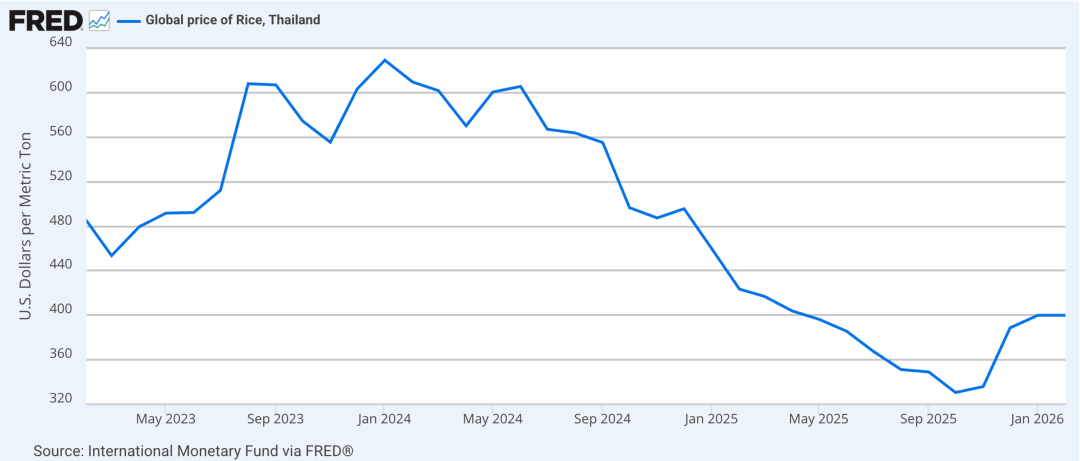
◉ Thai rice prices fell from nearly US$640 per tonne in early 2024 to US$320 per tonne in September 2025. Image source: IMF
Alongside overproduction and intensified competition in the industry, many local rice varieties have also disappeared. The northeastern region of Thailand is a major grain-producing area, originally dominated by farmer-saved seed and local varieties. These varieties were adapted to local ecological conditions and did not require much newly introduced technology or agricultural inputs, but they had lower yields and a lower degree of commercialisation. Since the late 20th century, as part of the Thai government’s drive for agricultural modernisation and market integration, high-yielding varieties developed by international and government agencies have spread rapidly through extension stations and subsidy schemes, especially improved varieties suited to local ecological conditions, and have gradually replaced traditional farmer-saved seed. In 2000, 43% of farming households were still growing local traditional farmer-saved seed, and by 2009 this figure had fallen to 11%.
Smallholders are at the lower end of the value chain, and the rice varieties they grow are determined by international market demand and policy subsidies. The Thai export market pushes farmers toward two options: either to grow high-value soft glutinous aromatic rice with pure seed certification for export to the United States, or to grow hybrid, high-yielding ordinary long-grain rice for export to the Middle East. When competition in the export rice market is fierce, farmers cannot immediately switch to other varieties. For example, although Thai jasmine rice has high added value, it is highly dependent on rainfall and light saline-sodic soil in northeastern Thailand, and is a photoperiod-sensitive low-yielding late-maturing variety, with relatively large yield fluctuations. Most farmers are not in a position to grow it, and can barely sustain their livelihoods by continually raising the yield of their own variety. This means that, as more labour and agricultural inputs are required, marginal returns diminish.
Is this a vicious cycle? A village in Thailand dispelled our pessimistic impression.
Farmers Can Also Practise Participatory Plant Breeding
At the end of September 2025, we travelled to Khok Sa-at village in northeastern Thailand (hereafter K village) with partners in Southeast Asia who care about the environment and communities, and saw a group of farmers who do not grow export varieties and do not farm at scale, yet still do well.
In K village, villagers replace chemical fertilisers and pesticides with farmyard manure, keep propagating and breeding their own old rice landraces, and sow and harvest entirely by hand—compared with the production logic of large-scale, capital-intensive modern industrial agriculture, K village looks like a model of a pre-modern agricultural society. We found that, far from being left behind by the commercial world, they face no pressure to survive. Not caught up in the mainstream market’s “rat race,” yet still making a profit, what methods did they actually use?
K village lies more than 70 km west of the Mekong River. It is a traditional farming village, known in the surrounding area for conserving local old rice landraces. Aew, a young villager, became an environmental journalist after finishing school and travelled widely. More than a decade ago, after hearing that Thailand had more than 5,000 rice varieties, Aew began collecting old seeds from farmers in northeastern Thailand. In the first year, Aew collected only five rice varieties; the following year this had grown to over ten, and over time Aew collected more than 250 rice varieties from provinces throughout the northeast.
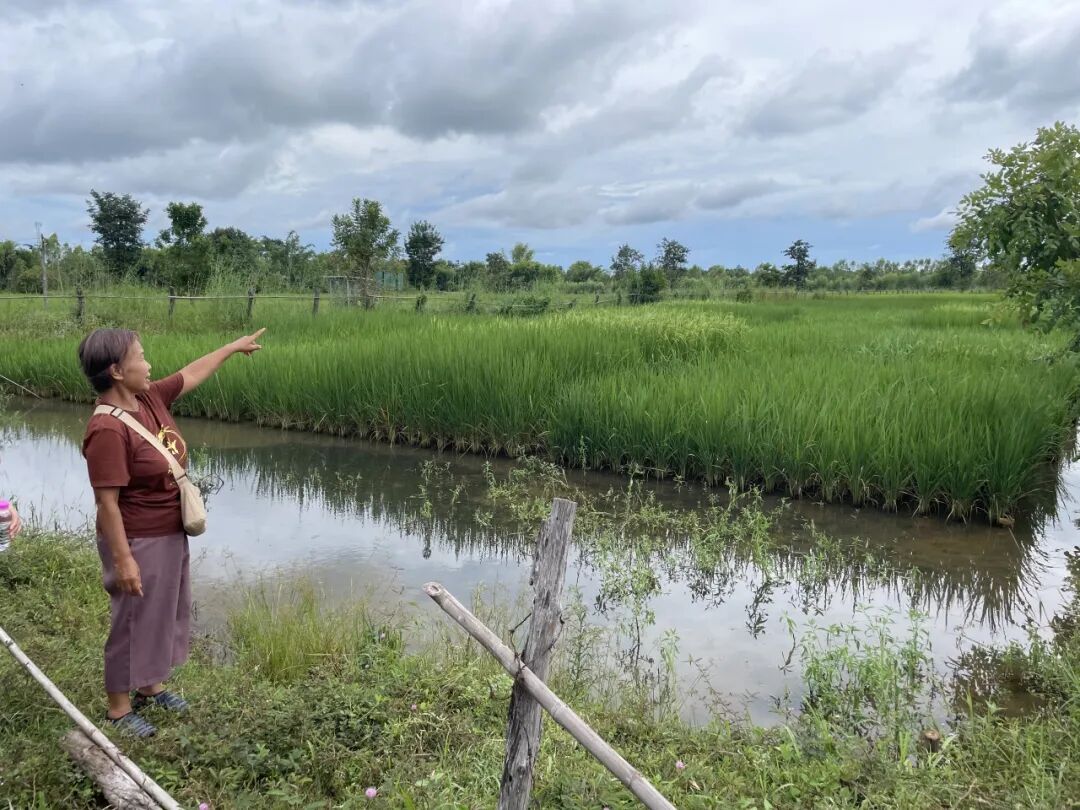
◉A plant breeding group member’s own rice paddy. She is running a breeding trial for K village’s principal rice variety.
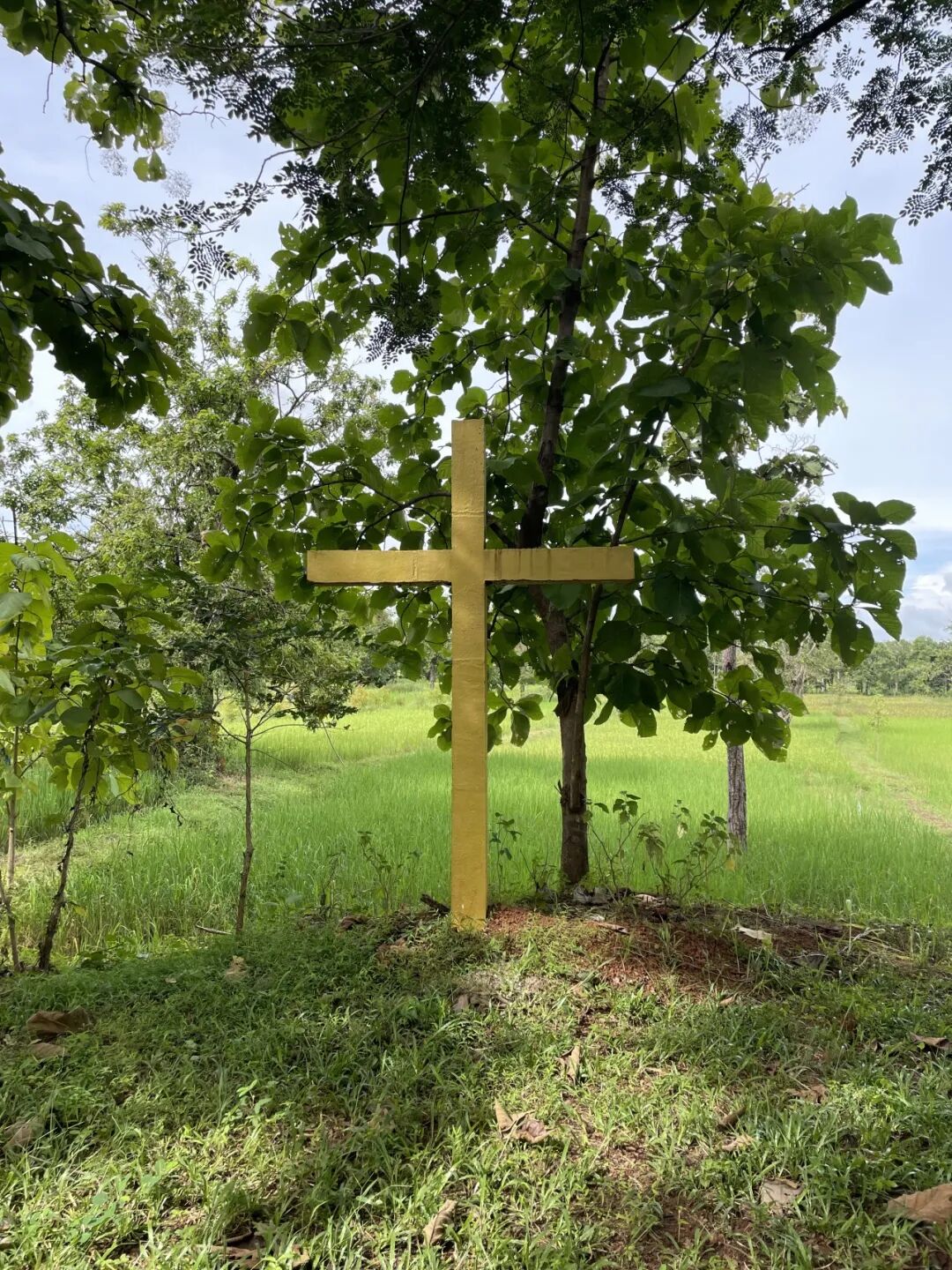
◉ A cross on the earthen slope of the seed production trial field. Most villagers are Christians.
When farmers conserve old rice landraces, it is not simply a matter of collecting seeds. Aew also mobilised farmers in the village to start saving their own seed and breeding their own varieties. Members of the rice group observe which rice varieties have good tillering. A single seed can produce 10–20 plants (even as many as 60). They check the tillering characteristics of each panicle—for example, whether the grains are dense, whether the spacing is even, and whether the panicle type is well formed—to select high-yielding varieties. There is now a communal paddy field in the village, owned by the local church, and the villagers have turned it into a trial field growing more than 200 local rice varieties. The whole field is jointly and voluntarily tended by 15 members of the plant breeding group. The members exchange techniques with one another at the farmer field school, and through repeated trials they transplant the rice varieties they prefer and find suitable into their own paddies. Over the past seven years, members of the plant breeding group have also been developing, with the help of local research institutions, a principal rice variety for K village, which is expected to come to market in three years’ time.
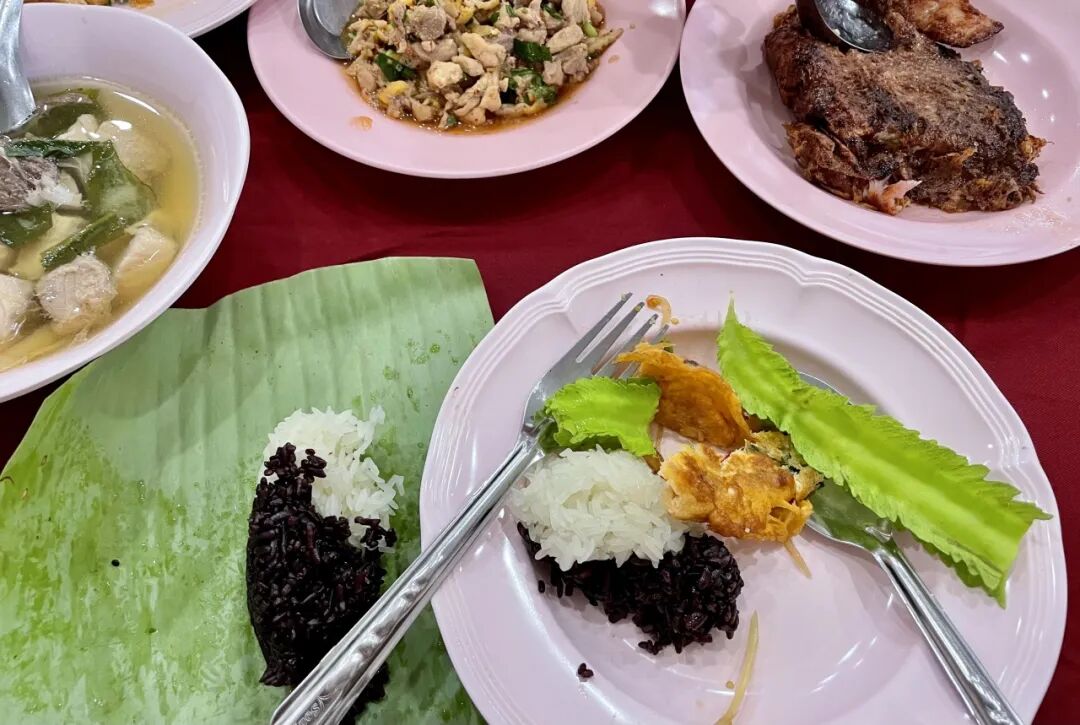
◉ At midday, the women members prepared small black rice and red rice wrapped in banana leaves for us.
We were fortunate enough to try small black rice and red rice in a single meal. Both are well-known local old rice varieties. The black rice grains are short, and after cooking they still largely keep their shape. They are chewy and so fragrant that they can be eaten plain. Red rice, once cooked, is relatively soft and fluffy and easier to digest, and it can take the edge off a green papaya salad so spicy that it makes your soul leave your body. Compared with rice grown under irrigated cultivation, rainfed rice has lower yields, but its flavour is in fact richer.
Can Old Seeds Still Bring a Bountiful Harvest?
But can a seemingly pastoral life, based solely on growing old rice landraces, actually make money?
Besides not needing to buy seed from outside each year, K village has two further advantages: land and labour.
First, land: in Thailand, more than 40% of farmers do not own their own land and have to farm by renting it. These farmers grow three rice crops a year, but in the end they often still fail to make ends meet; inputs such as seed, pesticide, chemical fertiliser and machinery leave them heavily in debt.
K village’s advantage is that its land is owned by the farmers, and that it has well-developed water-management facilities that have been passed down through generations. Local farmers are familiar with the local natural environment and can select varieties suited to the local climate. Right beside the paddies of the whole village is a dipterocarp forest. Its well-developed root system retains water, reducing soil erosion and regulating runoff. The land in K village is dryland, and only one rice crop can be grown each year during the wet period from May to October, when rainfall is abundant. In the low-lying areas, the village grows varieties with many panicles, a long maturation period, and high water requirements; on the hills, it grows upland rice varieties with a shorter maturation period but relatively fewer panicles. I have also heard of similar practices in Yunnan’s mountainous areas. Paddy rice is watered by rainfall, pond water, or water stored in reservoirs, without the need to divert water, dig wells, or dig canals. After the rice harvest, the climate becomes relatively dry, and farmers then practise crop rotation, growing pumpkins or other crops with relatively low water requirements, rather than forcing a double-cropped rice crop.
Next, labour. When Thai rice farmers began growing uniform, export-oriented rice varieties, the busy season required labour that was far more concentrated and intense, and tasks such as rice transplanting, pesticide spraying and harvesting were gradually carried out by professional agricultural machinery service teams. Farm work gradually changed from household labour that simply had to be done into a market service that could be purchased.
However, K village still relies on traditional farming methods, which, unlike modern monoculture, do not require high-density seasonal labour. They do not need to hire labour from outside; during the busy season, group members exchange labour with one another. At the same time, the rice group does not buy pesticide or chemical fertiliser from outside; it uses plastic scarecrows to scare off sparrows and its own cattle manure as fertiliser.
Without making yield the priority, farmers do not feel pressure to repay debts or pay rent, and practising diversified cropping becomes much easier. They need not worry about land rent or buy agricultural inputs, so the cost of producing rice can be very low. When production input costs are low, it is much less difficult for people to grow old rice landraces using ecological methods.
The Role of the Credit Union
However, low production costs alone do not necessarily mean that the project will be profitable. After having tried something new, why do farmers still choose to grow low-yielding old rice varieties with narrow sales channels when they are faced with the most stable option on the international market, “Thai jasmine rice”?
This raises the question of whether there is enough money. Unlike ordinary rural enterprises, the Hom Dok Hung Rice Cooperative (hereafter the cooperative) was established with the support of K village’s credit union (hereafter the credit union). More than 40 years ago, when the credit union was first established, it had only 17 members. Today, it has nearly 3,000 members from 21 nearby villages, with total assets of more than 117 million baht, equivalent to more than 23 million Chinese yuan.
It is worth explaining the relationship between agricultural cooperatives and credit unions. Both are organisations in which members jointly provide capital, share income, and take part in decision-making. The business of an agricultural cooperative revolves around farming, the sale and processing of agricultural produce. A credit union mainly provides financial services, such as savings, loans, and payment and settlement services. In K village, the cooperative and the credit union are nominally independent in their operations, but there is a great deal of movement of funds and personnel between them.
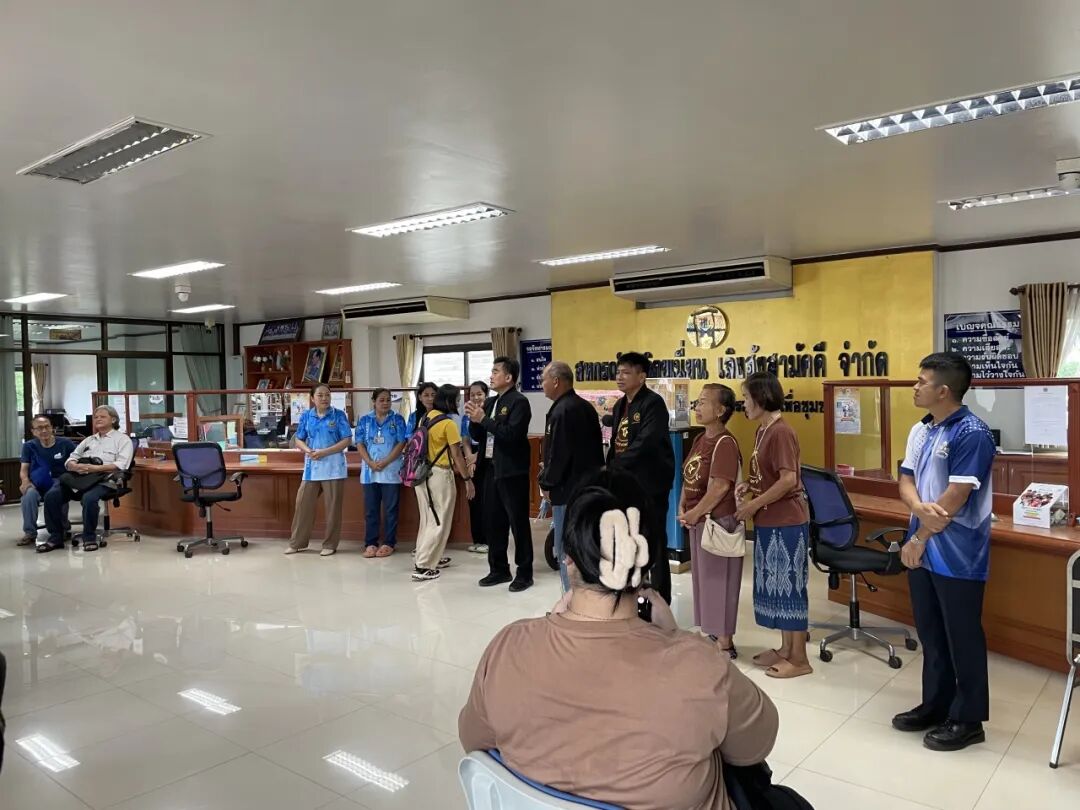
◉ The credit union in K village. The staff are all cooperative members who work on a voluntary basis, and no one is paid a wage.
Thailand’s first agricultural cooperative was established in 1916 to help rice farmers who were deeply in debt during the early phase of agricultural commercialisation. There are now nearly 2,000 cooperatives across Thailand, most engaged in agricultural production. Although there are many cooperatives, credit unions account for only 9% of them. Most farmers have to go to the Bank for Agriculture and Agricultural Cooperatives to meet their borrowing needs.
Credit unions are different from ordinary banks: profit maximisation and shareholder returns are not their primary objectives. In other words, a credit union’s earnings are not put into high-risk investments; instead, they are turned into reserve funds or risk provisions, or paid out as dividends to members at the end of the year. While offering loan interest rates more favourable than those of commercial banks, the deposit interest rate at K village’s credit union is 3.75% (ordinary commercial banks offer 0.75%). The credit union chairman even wants to raise the deposit interest rate, but the government does not agree. On top of this, the credit union also has a dedicated welfare fund, used to provide condolence payments to members who have lost a family member and interest-free loans to families in difficulty.
The rice cooperative’s profits are deposited back into the credit union. The movement of members’ assets is highly transparent and under control, forming an ecosystem in which funds circulate.
However, a credit union like this cannot be established anywhere; it also goes hand in hand with local culture. Urban residents have long entrusted their personal safety and the management of their property to the government, financial institutions, and insurance groups; in K village, community leaders still carry considerable authority. For older, more conservative farmers in K village, borrowing and wealth management are unfamiliar concepts, and the credit union’s growth to its present scale is inseparable from the pastor who encouraged everyone to take part.
Eighty percent of the villagers here are Christians (the remaining 20% are Buddhists, but everyone gets on well and works and lives together). According to the cooperative chairman, Christians are frugal and hard-working, and the education of the next generation and village unity are factors in the cooperative’s success. In terms of lifestyle, they are somewhat similar to Mennonite communities in the United States: both are creating a small sanctuary of their own, set apart from the mainstream world.
The Village’s 7-11
The phrase “for the collective’s benefit” is no joke here. Every penny has to be kept in the community to the greatest extent possible, and this has to be put into practice in many different ways. The village has no restaurants, no commercial entertainment venues—let alone a wet market—only a small shop of the supply and marketing cooperative, open for more than 50 years.
The chairman proudly told us that people nicknamed the small shop the village’s “7-11”, precisely because the villagers resist the encroachment of chain businesses. This was the same feeling I had in rural areas of the western United States. Locals believe that chain stores, with their enormous scale and powerful ability to push prices down, not only squeeze out existing businesses but also send the hard-earned money from selling farm produce to distant corporate headquarters.
The Village’s 7-11 operates on a membership system, and its share quotas are allocated on a fair basis, making it equivalent to a consumer cooperative. Each household can purchase equal shares on a per-person basis, and profits are returned to members at the end of the year according to the size of their shares. The little shop sells daily necessities, buying and selling at market prices, and returns the profits to the community, forming an internal-circulation economy. The villagers are both shareholders and customers.
By the time we arrived it was the end of the month. Although the shelves did not offer a dazzling variety, the basic necessities were reasonably well covered. Prices for daily goods were basically the same as in Bangkok’s convenience stores. The shop stocked soap (apparently buying it was still cheaper than their own rice bran soap), laundry detergent, hair dye, cola, ice cream, and so on.
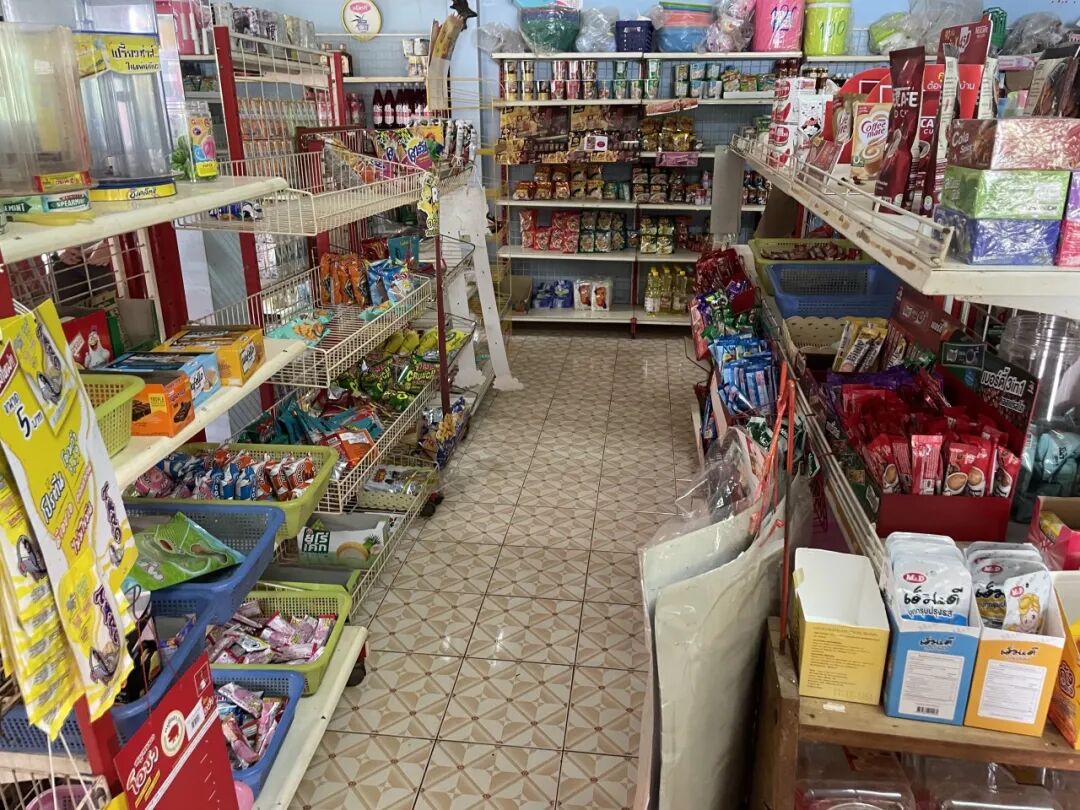
◉ Interestingly, the Village’s 7-11 still sells ordinary commercial soap. Perhaps in K village, where goods are scarce, a bar of soap with no clear origin is more attractive than rice bran soap?
After Dispatching E-commerce Parcels
Back to the Cabin to Cook Rice over a Wood Fire
Farmers do not merely work in the fields; they are also responsible for the entire chain from seed selection to sales.
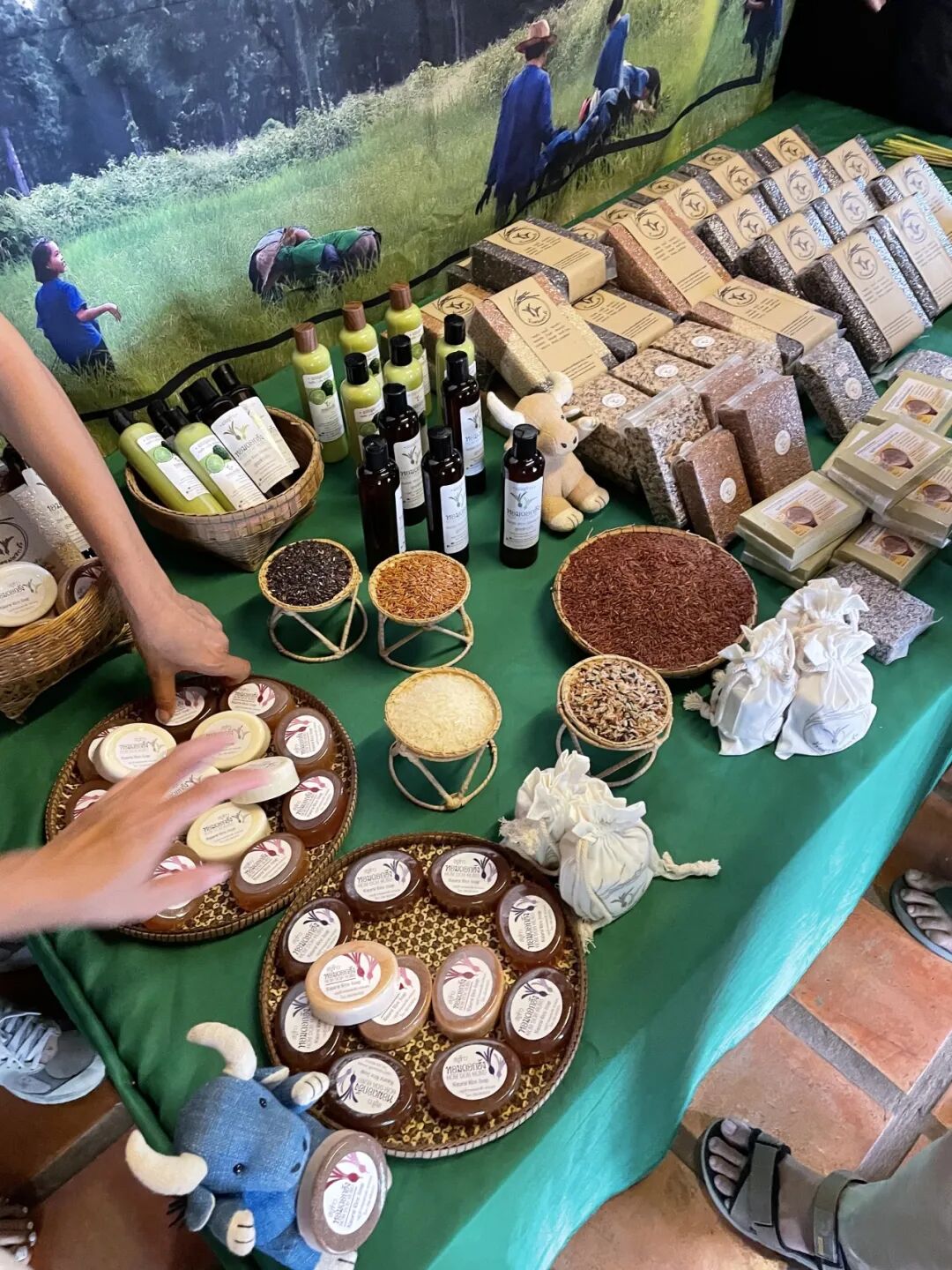
◉ The farmers showed us their products. To some consumers, the attractive packaging and the village’s ecological ethos are especially appealing.
The organic rice is packed into neat small portions, emphasising the taste and texture of the different rices and their health benefits. At the same time, the broken rice, rice germ and rice bran separated during processing can be used as raw materials for making shampoo soap, saving the cost of shampoo bottles and avoiding the production of unnecessary plastic waste. The villagers have realised that simple processing can add extra value to the by-products of rice production.
A single grain of rice being turned, at its place of origin, into products such as rice wine and soap does not sound remarkable, but because there is no need to sell to first- or second-tier middlemen, and the products are sent directly to urban consumers through e-commerce logistics, the share of the profit that reaches the farmers is naturally higher.
Consumers who value health, the environment and social justice strongly support the business model of the K village cooperative; its organic rice can be sold at twice the price of similar products on the market. A Thai celebrity even took the initiative to publicise it.
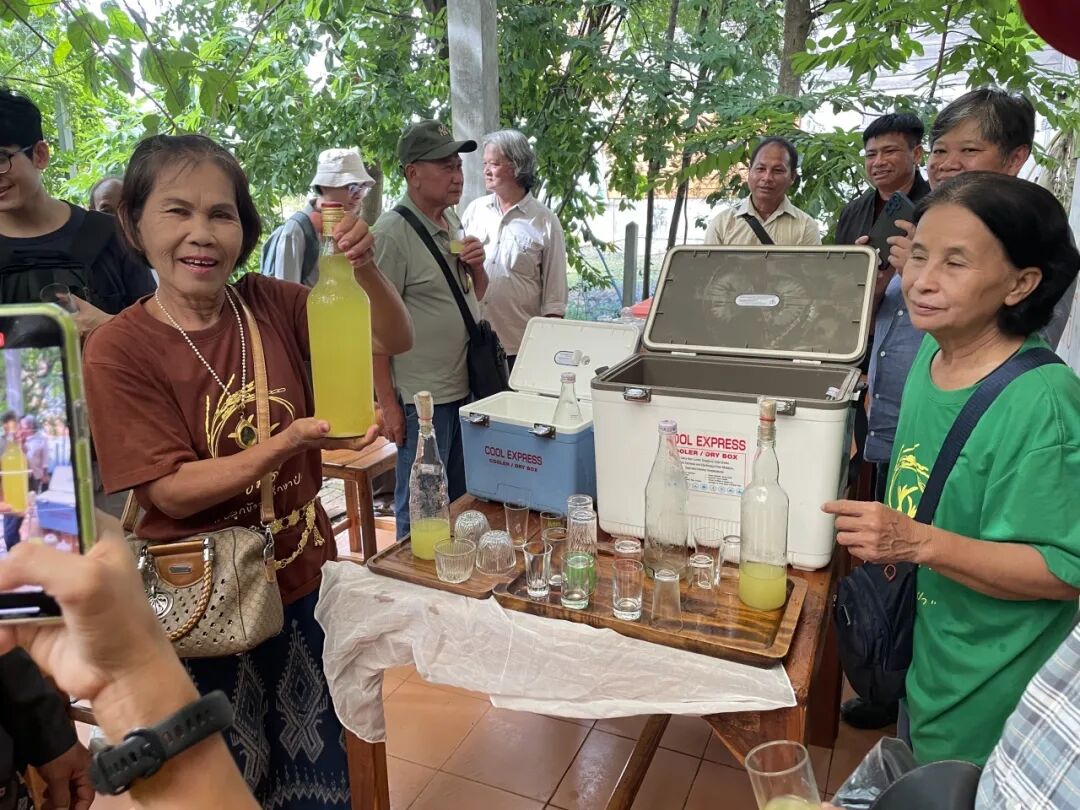
◉ Because there is no production licence, the rice wine cannot be sold externally and is only for internal consumption. However, with the enthusiastic recommendation of friends from all over Southeast Asia and a dozen or so local villagers, we quickly got through several bottles of sweet rice wine.
The collective economy finds full expression in the K village rice cooperative, without relying on sales volume or policy support. To sum up, the reasons lie in several factors.
First, the rice cooperative was incubated by the local credit union, and its initial capital came from villagers’ deposits. Social ties are embedded directly in the financial system; the two sides have a very solid foundation of trust, and loans are directed directly to members. Second, the rice group, as the revenue-earning body, distributes dividends according to the credit union’s shares, enabling profits to grow and circulate within the community. Third, the cooperative’s rice bypasses conventional procurement channels and reaches premium markets directly. Achieving all this requires the combined contribution of the ecological environment, well-developed financial institutions, and social cohesion.
However, not all Thai rice farmers are like the farmers in K village, growing old rice varieties that fetch good prices. In Thailand, high-yielding rice and low-lying jasmine rice paddies, favoured by the international market, still dominate the market. Meanwhile, international organisations, governments and foundations are investing tens of millions of dollars in the research, development and promotion of “climate-friendly” rice. More rural areas are deeply in debt, without internal financial systems. Most rice farmers are still waiting for policy support from Bangkok, striving to gain bargaining power, and hoping that rice prices will rise.
But in K village, growing rice means more to farmers than a contest over yield and purchase prices; it is also about dignity, achievement and the power to choose. Before we left, we rushed to visit a household in the woods. They lived in several simple wooden structures that could barely be called houses, with pots, pans and bowls arranged on bamboo racks outside, and they cooked rice over an open fire every day. The eldest sister lifted the wooden lid of a large jar under the tree; I switched on my torch, peered in, and saw it packed with loaches. Chickens darted about under the tree, crabs crawled in plastic basins, and two idle yellow cattle stood under the cattle shed. Tens of millions in net assets have not let the villagers leave the world they know. Our notion of a “prosperous life” is still too narrow.
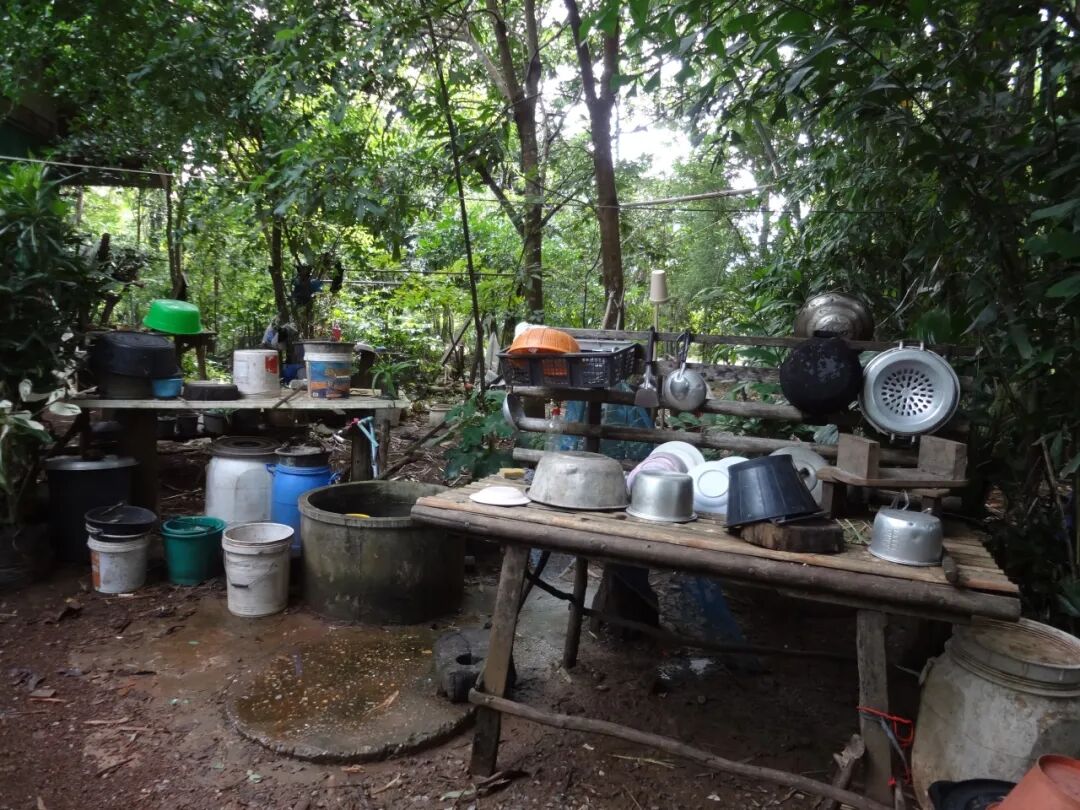
◉ The kitchen outside the farmer’s wooden house.
– This is Foodthink’s 807th original article –
Foodthink
By
Jieni
Foodthink project officer, graduate student in the Department of Human Geography at the University of Toronto. Focuses on the environment and food systems.
Unless otherwise stated, all photographs in this article were taken by the author.
Editor: Auntie Xiong
Layout: Minglin
▼
Click on the image to read related articles.