
Small Dairy Farms vs. Large Dairy Farms: Who to Support, and How?
Foodthink Says
This article further makes the case for developing smallholder family dairy farms from social, economic and environmental perspectives, and, in response to the reasons why small dairy farmers are excluded in China, sets out specific measures for supporting them. The main material comes from a 2023 field survey conducted in a major dairy cow farming county in Shandong by Feng Xiaoqun, a teacher at China Agricultural University, and their team.
1. Small Dairy Farms vs. Large Dairy Farms: Who Should Be Supported?
Supporting farmers to move into meat, eggs and milk production is therefore an important way to increase farmers’ incomes. But capital entering dairy farming excludes small dairy farmers and cuts off this route to higher incomes. This is the story that has unfolded in China over the past 20 years.
From small dairy farmers to large dairy farmers to large-scale corporate dairy farms, labour intensity has gradually declined, the amount of farm labour absorbed has decreased, and it has become increasingly unfavourable for increasing farmers’ incomes.
A smallholder family dairy farm run by a couple without hired labour generally keeps fewer than 30 head. A couple plus one hired worker, if very diligent, can keep about 60 head. With four family labourers from two generations, supplemented by occasional hired workers, a farm can keep about 150 head.
Hired-labour farms with some capital, run by richer farmers, commonly have 200–1,000 head. The farmers themselves take part in the work, but the farms are mainly based on hired labour, who are local villagers; generally one worker corresponds to about 30 cows. Farms of over 1,000 head count as large dairy farms; they are basically run by enterprises and rely on hired labour, mainly university graduates; generally one worker corresponds to 40–50 cows.
In the era when small farmers were the main producers of raw milk in China, dairy farming significantly improved farmers’ lives, allowing them to stay in their hometowns and live and work in peace, rather than leaving for work elsewhere. The following are recollections from small dairy farmers in the surveyed area:
“I bought a car in 2004; I was the first person in the village to have one.”
“Raising cows took me from having nothing to having a car and a Western-style house.”
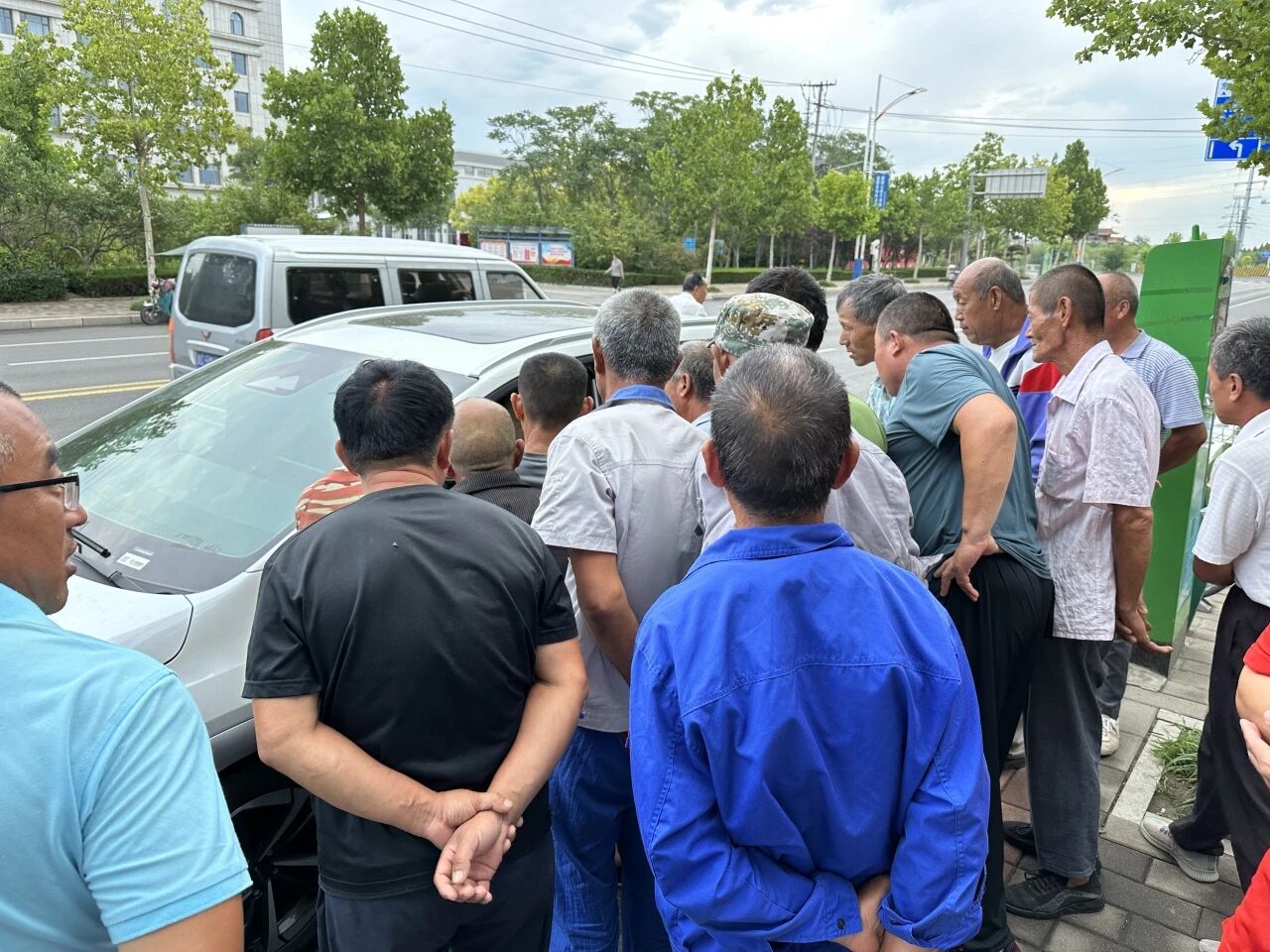
In the surveyed area, after small dairy farmers were excluded from dairy farming, most turned to living on casual work. Figure 1 shows a casual labour market in the surveyed area early in the morning, with white-haired men looking for day work, mainly day labour on construction sites.
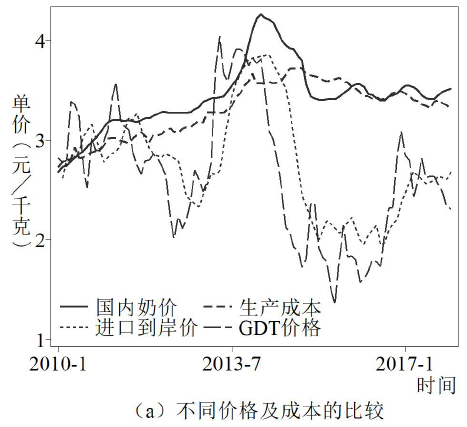
In addition, China’s tariffs on imported dairy products are relatively low by international standards, and the landed raw milk price equivalent of imported dairy products has long been lower than China’s domestic raw milk price (Figure 2). Moreover, since the melamine incident, consumers in China have lacked trust in domestic milk, especially infant formula. These factors have intensified the impact of imported milk on domestic milk.
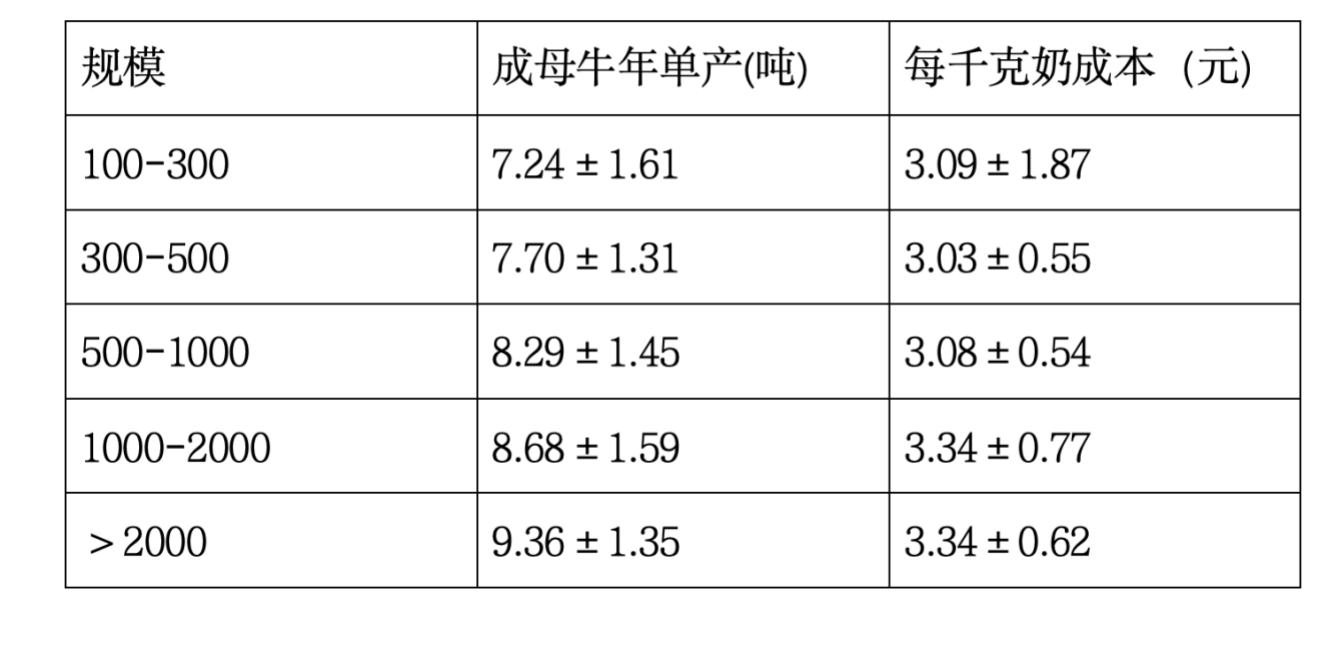
In this context, as shown in Table 1, small dairy farmers, because their production costs are lower than those of large dairy farms, help China withstand the impact of imported milk.
There are many reasons why small farmers have lower production costs.
First, labour costs are lower. Small dairy farmers use family labour rather than hired labour.
Second, feed costs are lower. Some of the feed used by small dairy farmers comes from straw and maize produced on their own land, while large dairy farms buy almost all of theirs from the market. Small farmers prefer local, cheap feed; this is a low-cost, low-output model (Table 1). Large dairy farms, by contrast, seek high output and use high-value feed, including imported feed.
Third, management costs are lower. Small dairy farmers use more extensive management, while large dairy farms use more intensive management, at higher cost. For example, small dairy farmers generally do not divide cows into many pen groups and use only 3–4 types of compound feed. Large dairy farms divide the herd into at least 10 pen groups according to the cow’s stage in its life cycle and its lactation characteristics, and professional feed formulators then customise feed formulations according to the herd in each pen.
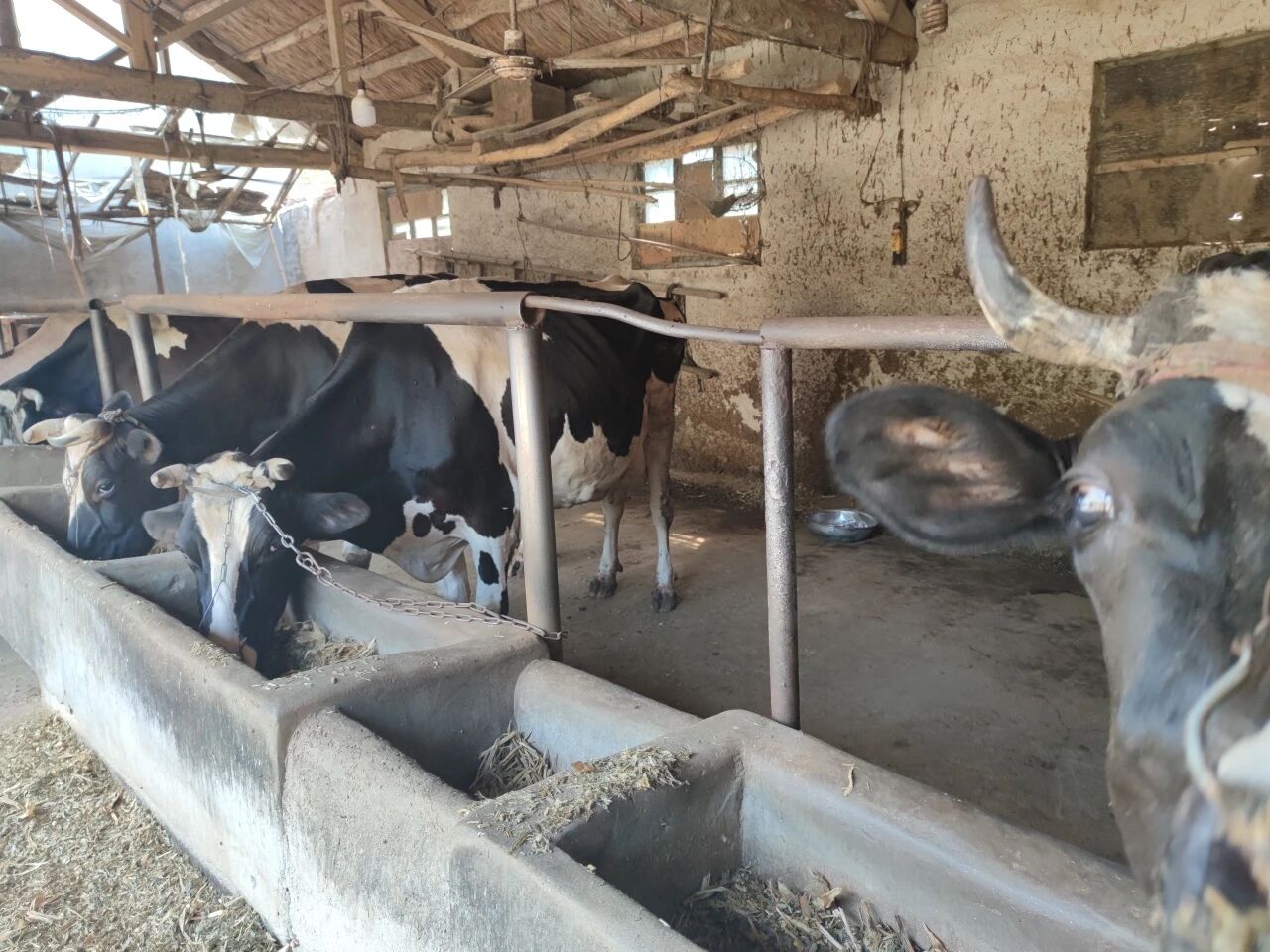
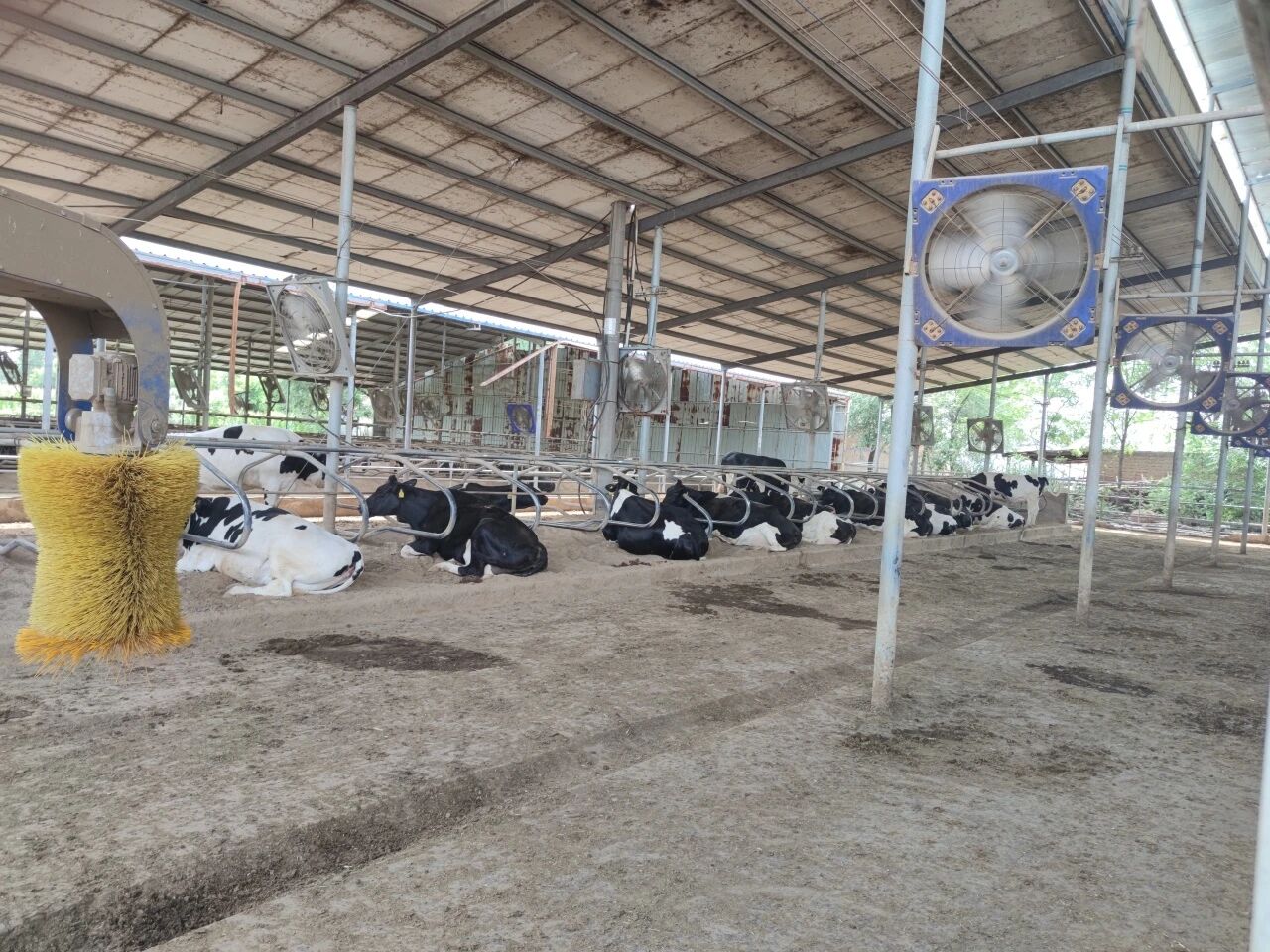
Fourth, infrastructure and equipment costs are lower. Small dairy farmers’ cowsheds are either in front of or behind their houses, or in their own village, so land costs are zero or very low. As Figures 3 and 4 show, the cowsheds of small dairy farmers are of a lower construction standard, while those of large dairy farmers and large dairy farms are of a higher standard. In addition, large dairy farms prefer to replace labour with machinery, and the larger the farm, the more so.
Their methods of handling dung and urine also differ. In the surveyed area, small dairy farmers usually return manure to the fields, or sell it through manure dealers to local vegetable growers who use it on their fields.
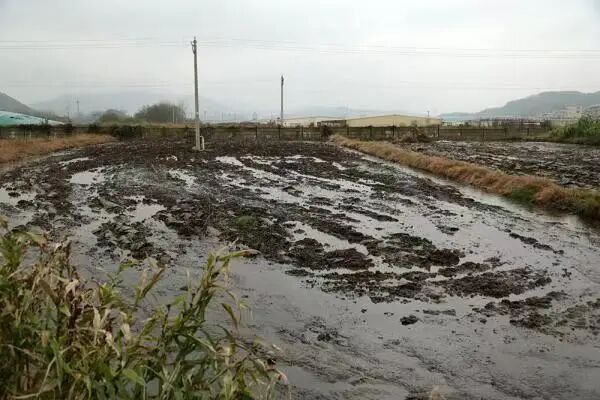
Large dairy farms in the surveyed area claim to use equipment to carry out solid-liquid separation of the slurry. The dry manure then enters fermentation tanks, and after treatment is used as cow cubicle bedding; the liquid slurry goes into oxidation ponds, and after fermentation is used for irrigation. Usually, large dairy farms lease land, claiming to grow feed. In reality, this land is often used to dump farm waste liquid.
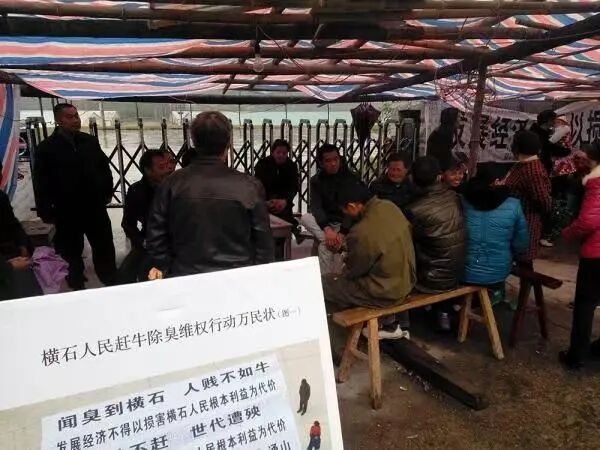
Large dairy farms once triggered environmental protests. In 2014, in Fanzhong Village, Tongshan County, Hubei Province, villagers surrounded a 10, 000-head dairy farm belonging to Modern Dairy Company for two weeks, ultimately forcing the farm to relocate. The farm had long been dumping large amounts of biogas slurry and cattle manure in the surrounding area, so that “it is smelly all year round, especially in summer, so smelly that one cannot even find a place to cool off.”
Small dairy farmers use dairy cows in a steady, long-term manner, while large dairy farms treat them in a way akin to killing the goose that lays the golden eggs. In the surveyed area, small dairy farmers usually milk cows twice a day, and a dairy cow is culled after 5–6 calvings. Large dairy farms milk cows 3–4 times a day to increase milk yield, and each cow is culled after 2–3 calvings. This is a production method that increases output through intensified nutrition and uses cows only during their period of peak milk production. Every cow’s life is arduous and short.
Making cows more comfortable increases milk yield. On large dairy farms, heat-stress prevention and cooling for the herd are better, with soft cow cubicles and imported cow brushes… These are things small dairy farmers do not have. But they cannot offset the hardship and brevity of these cows’ lives.
1. Bias in Policy
Because milk is produced daily and is perishable, and because small dairy farmers operate at small scale, they have a natural disadvantage relative to dairy companies. This disadvantage is reinforced by the following factors.
First, government industry policy on the farming side has long favoured large dairy farms, marginalising small dairy farmers. Between the 1980s and 2008, the Chinese government had supported the development of small dairy farmers. After the 2008 melamine incident, the government associated small dairy farmers with backwardness and unsafe production, and large dairy farms with modernity and safety, and directed public funding heavily towards large dairy farms.
Second, government industry policy on the processing side has long favoured large dairy companies, reinforcing the imbalance of power between small dairy farmers and dairy companies. After the melamine incident, the government shut down a large number of small and medium-sized dairy companies, raised capacity requirements for new dairy companies, and encouraged mergers and reorganisations among dairy companies.
Third, government policy on imported dairy products harms the interests of domestic dairy farming operators, especially small dairy farmers. Large dairy farms, because of their closer ties with dairy companies, have more secure sales channels. By comparison, small dairy farmers are hit harder by imported dairy products.
2. Short-sightedness of Dairy Companies
One senior industry insider points out that over the past few decades, the path taken by China’s leading dairy companies has been to eliminate the smaller firms around them, rather than grow the whole industry pie; to hold multiple stakeholders’ interests hostage to benefit themselves, rather than promote long-term industry development; and to take the top end of the market, rather than cultivate the lower-tier market. It is often overlooked that only by cultivating the lower-tier market is there a continuous supply of consumers for the mid- and high-end markets.
In 2021, the per capita annual consumption of dairy products among urban residents in China was 18.2 kg, while among rural residents it was 9.3 kg. Behind this stark difference is the abandonment by dairy companies of the everyday rural market for dairy products. In rural areas, dairy products are commonly given as gifts when visiting relatives and friends during festivals, rather than consumed as everyday food.
This short-sighted path of industry development has reduced the potential scale of dairy product consumption. At the same time, dairy companies’ pursuit of high-end markets has driven them to build their own farms. Both have deepened the exclusion of small dairy farmers.
The exclusion of dairy farmers occurs mainly when milk prices fall. Falling milk prices mean that market supply is ample, reinforcing dairy companies’ bargaining power relative to the farming side. Dairy companies take the opportunity to refuse dairy farmers’ milk, or to push dairy farmers to carry out upgrades and renovations; if they do not upgrade, their milk will not be bought. Since 2000, the first sharp fall in milk prices came after the 2008 melamine incident, leading to the exit of a large number of small dairy farmers. The second sharp fall was between 2014 and 2015, leading to a second wave of large-scale exit by small dairy farmers. The third sharp fall has continued from 2022 to the present, leading to a third wave in which small dairy farmers merged with large dairy farmers and exited.
3. How Can Small Dairy Farms Be Supported?
First, abandon policies that favour large dairy farms and support the development of small dairy farms. Since 2017, the central government has begun to reflect on past policies that favoured large dairy farms and has given family dairy farms more support. In reality, however, there are more and more large dairy farms, and they generally receive huge government subsidies. This reflects a divergence between the directional adjustment of national policy and its actual implementation.
In response, the state needs to introduce more detailed and more forceful policies to support the development of small dairy farms. For example: ① fundamentally change the allocation of government dairy industry funds, giving priority to supporting small dairy farms; ② comprehensively assess the costs of large dairy farms and levy compensation fees for the environmental and social impacts they cause, thereby constraining large dairy farms by their true operating costs and prompting them to adjust their direction of development; ③ encourage dairy companies to purchase the raw milk produced by small dairy farmers, for example by linking the proportion of small dairy farmers’ milk in their raw milk to relevant tax and fee reduction policies.
Second, abandon policies that favour large dairy companies, watch for and curb the trend towards concentration in dairy processing, and take multiple measures to support local small and medium-sized dairy companies. An excessive pursuit of large-scale enterprises will lead large enterprises to ① use their advantaged position to focus on short-term, self-interested goals, rather than long-term, industry-wide interests; ② abuse their power in the industrial chain, harming the interests of other actors in the chain; ③ hijack government action, damaging government credibility and being detrimental to food safety regulation; and ④ lengthen the distance between production and consumption, generating inefficiencies. Therefore, the government should support small and medium-sized dairy companies and foster a pattern in which dairy companies of different scales flourish together.
Third, take multiple measures to build the bargaining power of small dairy farmers relative to dairy companies. ① Small dairy farmers are small and scattered; unity is strength. dairy farming settlements are usually led by milking parlour owners, but they have played some role in resisting dairy companies’ price cuts and delays in paying for milk, and have also had positive significance in technology transfer and monitoring the safety of the raw milk supply. It is advisable to promote dairy farming settlements as an organisational form for the development of small dairy farmers, while also encouraging dairy farming settlements to develop into genuine, small dairy farmer-led co-operatives.
② Cultivate small dairy farmer-led social organisations. Currently, dairy associations at all levels nationwide are largely dominated by dairy companies and large dairy farms, leaving small dairy farmers no channel to make their voices heard. Beyond dairy farming settlements, small dairy farmers’ own social organisations should be developed, to promote self-governance within the small dairy farmer group, to stand united externally, and to speak for small dairy farmers.
③ Regulate the purchasing behaviour of dairy companies and curb their arbitrary actions of increasing dairy farmers’ costs, cutting prices, and refusing to buy. Set a negative list for dairy companies’ conduct, for example prohibiting the tying of raw milk purchases to the sale of feed, consumables, and facilities and equipment. Set a list of reasons for price cuts and refusals to buy, restricting dairy companies from cutting prices or refusing to buy for reasons outside the list. Dairy farmers have limited capacity to test raw milk quality, which has allowed dairy companies to distort raw milk quality and cut prices or refuse to buy at will. To address this, national testing institutions should be designated as third parties to provide public-interest raw milk quality testing services.
Fourth, strongly support dairy farmers’ own processing. The significance of dairy farmers’ own processing lies in using a rational distribution of benefits to stimulate the enthusiasm of the farming side, thereby improving raw milk quality and farmers’ incomes.
At present, the main difficulties in dairy farmers’ processing are national dairy industrial policy restrictions on the capacity of new processing plants and on the distances between processing plants. These restrictions prevent many dairy farmers from obtaining a dairy processing licence; their products cannot be sold in supermarkets and schools, and they can only obtain a food and beverage business licence, selling dairy products externally through their own milk bars. Sales through milk bars are limited and cannot effectively alleviate dairy farmers’ dependence on dairy companies.
To this end, these restrictions should be relaxed. However, relaxing these restrictions does not mean that dairy farmers can successfully run processing. For example, how would they negotiate with supermarkets? And how would they compete with existing dairy companies? Existing dairy companies are already deeply involved in the chilled fresh milk sector in which dairy farmers’ processing usually operates.
At present, the main entities in dairy farmers’ processing are large dairy farmers with at least several hundred head, and individual small dairy farmers on the urban periphery. To survive in a competitive environment, dairy farmers need to unite. Dairy farmers unite to form production co-operatives; small co-operatives merge into co-operative unions; and the unions set up dairy processing companies to participate in market competition. This has been the path to prosperity for dairy farmers in some countries such as New Zealand and Denmark, and is worth China’s reference.
Fifth, mobilise consumer power and activate a bottom-up food safety regulatory system. China’s current food regulatory system emphasises the scale-up of production entities and top-down supervision. This has created many problems.
If the shift is to develop small and medium-sized raw milk production and processing entities, a matching food safety regulatory system must be established. Given that these entities are small and dispersed, greater focus should be placed on developing a bottom-up food safety regulatory system. Dairy product consumers are by nature food regulators. Future food safety regulation should mobilise consumer groups and follow the mass line.
Sixth, use the current dairy industry crisis to reshape the direction of the dairy industry and strengthen relief policies for dairy farmers during sharp falls in milk prices. Raw milk prices in China have been falling for four years. This crisis has, in concentrated form, exposed the drawbacks of the past dairy development path and is a good opportunity for reflection. Relevant authorities should use this crisis to rebuild consensus and guide China’s dairy industry development onto a healthier path.
Seventh, in the long term, rethink the tariff policy on imported dairy products. The generally low level of China’s current agricultural product import tariffs is a concession made to join the WTO. In substance, it is generosity at farmers’ expense, promoting the interests of industry and commerce. Without agriculture there is no stability; without industry and commerce there is no wealth. Such policies have driven the hollowing out of rural areas, while also promoting the development of China’s export processing industry and bringing off-farm employment to over 100 million farmers.
The prerequisite for such a policy adjustment is a restructuring of China’s internal and external circulation patterns. If China cannot change the important position of external circulation in economic development, the room for such a policy adjustment is limited. If China ultimately forms a new development pattern with domestic circulation as the mainstay and with domestic and international dual circulation mutually promoting each other, then there will be room for this policy to be relaxed.
4. Summary
The key to developing family dairy farms lies in changing the disadvantaged position of small dairy farmers relative to dairy companies. To this end, the government should abandon policies that favour large dairy farms and large dairy companies, and support the development of family dairy farms and small and medium-sized dairy companies; take multiple measures to build the bargaining power of small dairy farmers relative to dairy companies; strongly support dairy farmers’ own processing; mobilise consumer power to activate a bottom-up food safety regulatory system; use the current dairy industry crisis to reshape the direction of the dairy industry; and, in the long term, rethink the tariff policy on imported dairy products.
Author’s Note
For readers interested in how small dairy farmers in China are excluded and how large dairy farms rose, please refer to: Xiaojun Feng. 2025. Cost competition or power struggle? The exclusion of dairy farmers from raw milk production in China. The Journal of Peasant Studies. https://doi.org/10.1080/03066150.2025.2539842
[2] China’s Dairy Industry to Make Full Efforts to Advance Towards High Quality. 2018. https://www.gov.cn/zhengce/2018-05/26/content_5293782.htm
[3] Image source: Liu Changquan, Han Lei, Zhang Yuanhong. (2018). International Comparison of China’s Dairy Industry Competitiveness and Development Approaches. China Rural Economy, 7, 132-146.
[4] World Dairy Industry Development Report. 2021. China Agricultural University Press. Page 8.
[5] Investigation into the Modern Dairy Company Crisis: The 10,000-Head Dairy Farm Model Suffers a Heavy Blow in the “Post-Melamine” Era. 2014. https://www.thepaper.cn/newsDetail_forward_1282965
[6] Investigation into the Modern Dairy Company Crisis: The 10,000-Head Dairy Farm Model Suffers a Heavy Blow in the “Post-Melamine” Era. 2014. https://www.thepaper.cn/newsDetail_forward_1282965
[7] Some Thoughts on China’s Milk Supply Development Strategy! 2024. https://mp.weixin.qq.com/s/zZoMFp3Av1-FTU2Nz8bVaA
[8] National Data. 2025. https://data.stats.gov.cn/easyquery.htm?cn=C01
[9] World Dairy Industry Development Report. 2021. China Agricultural University Press.
[10] People from All Walks Gather at the Great Hall of the People to Discuss the Major Plans for the Second Round of Development of China’s Dairy Industry. 2008. China Dairy Cow.

Editor: Xiaodan