
An Lingrong’s Hometown New Year’s Eve Dinner—Yearning from the Start of Winter to New Year’s Eve
I. Drying White, Hanging Gold; Wine Fragrance and Curling Smoke
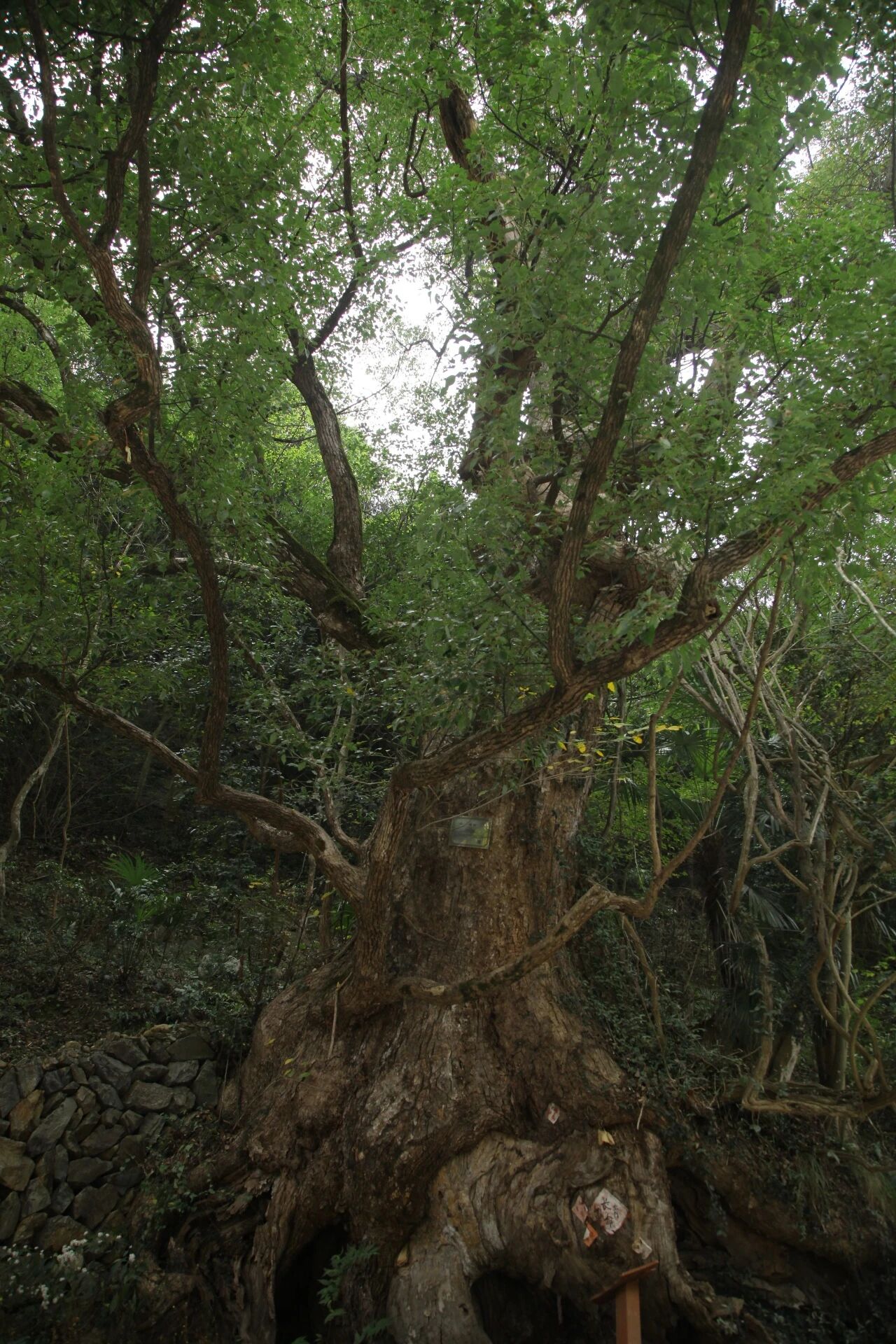
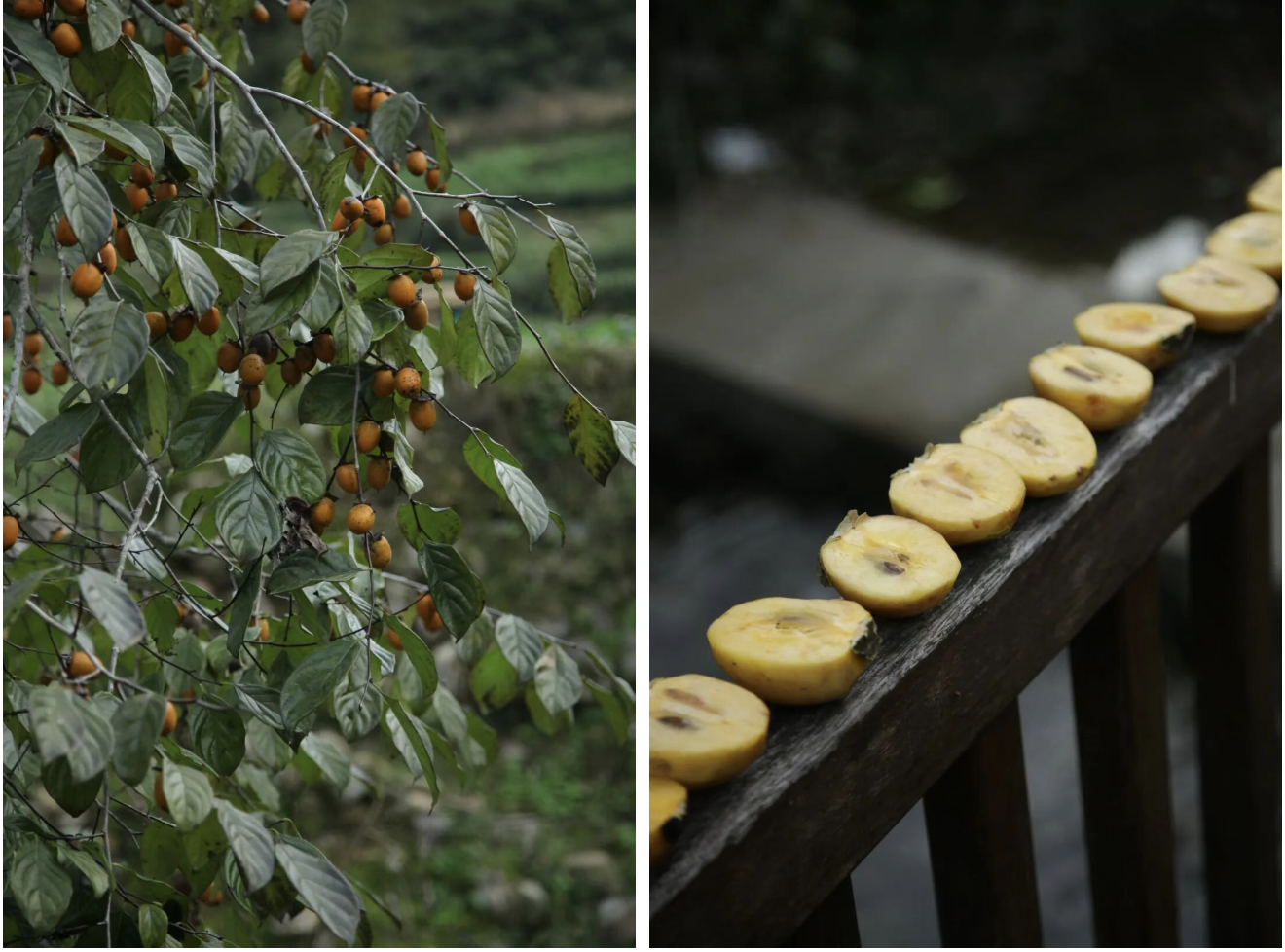
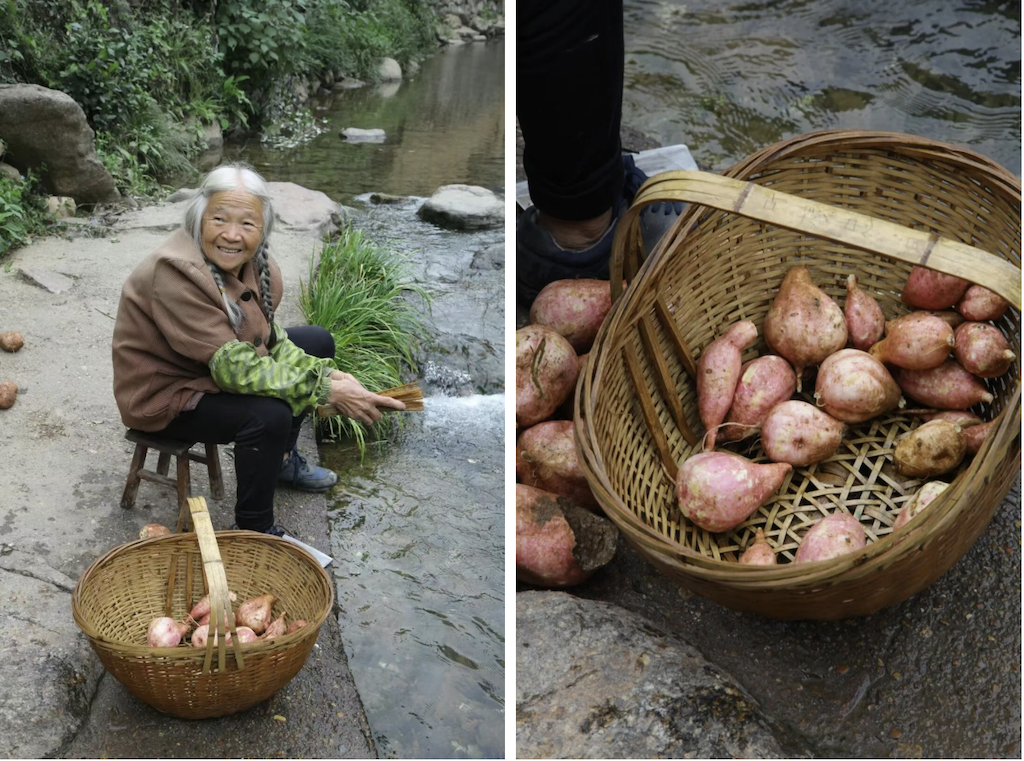
Homes by stream and mountain rely on stream and mountain. Sweet potatoes freshly dug from hillside fields, large and small, still carry the fresh mud of the earth. Carried in a great bamboo basket down to the stream, they are scrubbed clean, their skins and blemishes pared away; each one is powdery and endearing. They are then cut into chunks, blended with water into a juice, and caught in a wooden barrel to rest for half a day or overnight, until the starch has settled to the bottom. The cloudy water is poured off, revealing snow-white blocks of starch, spread evenly upon bamboo strips to dry—snow set out in the sun that will not melt, downy white as a cold moon. And there are persimmons of burnished gold, half cultivated, half wild, along field edges and village gates, knocked down with bamboo poles, scalded in boiling water, peeled, strung on thread, and hung to dry beneath the eaves—strings of little suns.
Then there is the making and distilling of wine, the smoking of cured meats, the steaming and pounding of glutinous rice cakes… This tableau of drying white, hanging gold, curling wine smoke, and the steady thud of hammers is, before the New Year, nearly every village and every household.

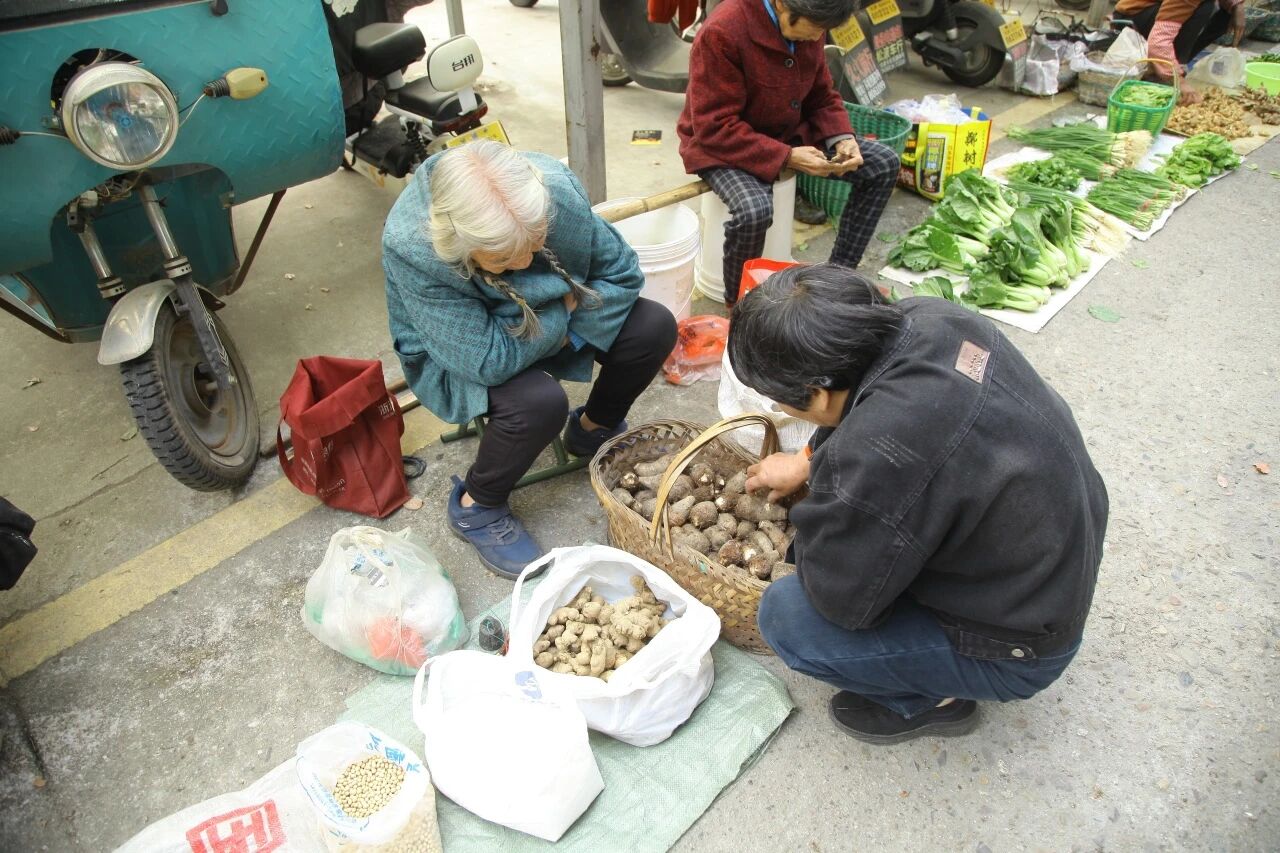
In Songyang’s county seat, a market is held every five days, falling on the first and sixth of each cycle. Braid Granny from Songzhuang Village, Sandu Township, must go down to town to “go to market”. Her old husband carries sacks and bamboo baskets with eager care all the way to the village edge. The early bus rocks and sways, passing many villages, picking up many people—some carrying empty baskets, some shouldering heavy sacks; at the market there is buying and selling alike. By Braid Granny’s feet sits a woven plastic sack, half-full of sweet potato starch she has dried and prepared; in her bamboo basket are freshly dug taros.
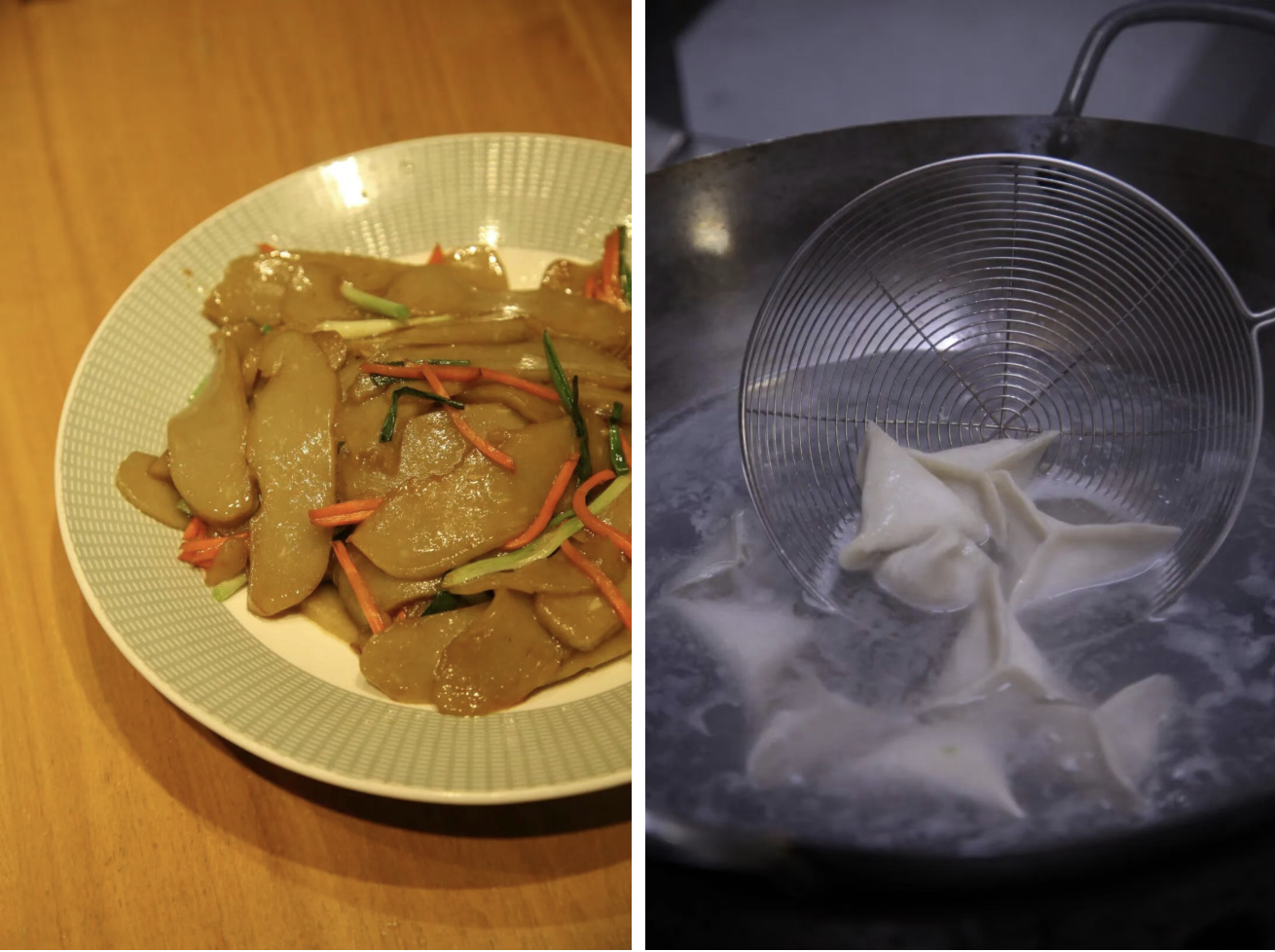
Sweet potato starch and taros together are the ingredients of Songyang’s shanfen yuan—the town’s seasonal autumn-and-winter flavour and, on New Year’s Eve, the essential bite of “reunion”. Steamed taros are pounded to a paste, mixed with sweet potato starch at roughly two to one, moistened with stock, and stirred into a thick batter (some households add diced prawns, minced meat, or bamboo shoot pieces). The mixture is kneaded into a mass, then steamed in a basket until it becomes translucent and gelatinous—at this point it can already be eaten directly, smooth and springy, with a clean savour. Or it may be sliced into slabs, stir-fried with vegetables or braised with meat, pan-fried, deep-fried, dropped into soup, swished through a hot pot, or roasted; the ways are many. If the starch mixture is used as a wrapper with filling inside, one gets triangular shanfen dumplings or half-moon shanfen pastries.
II. “Snowflakes Flutter, Grandma Fries the Cakes”
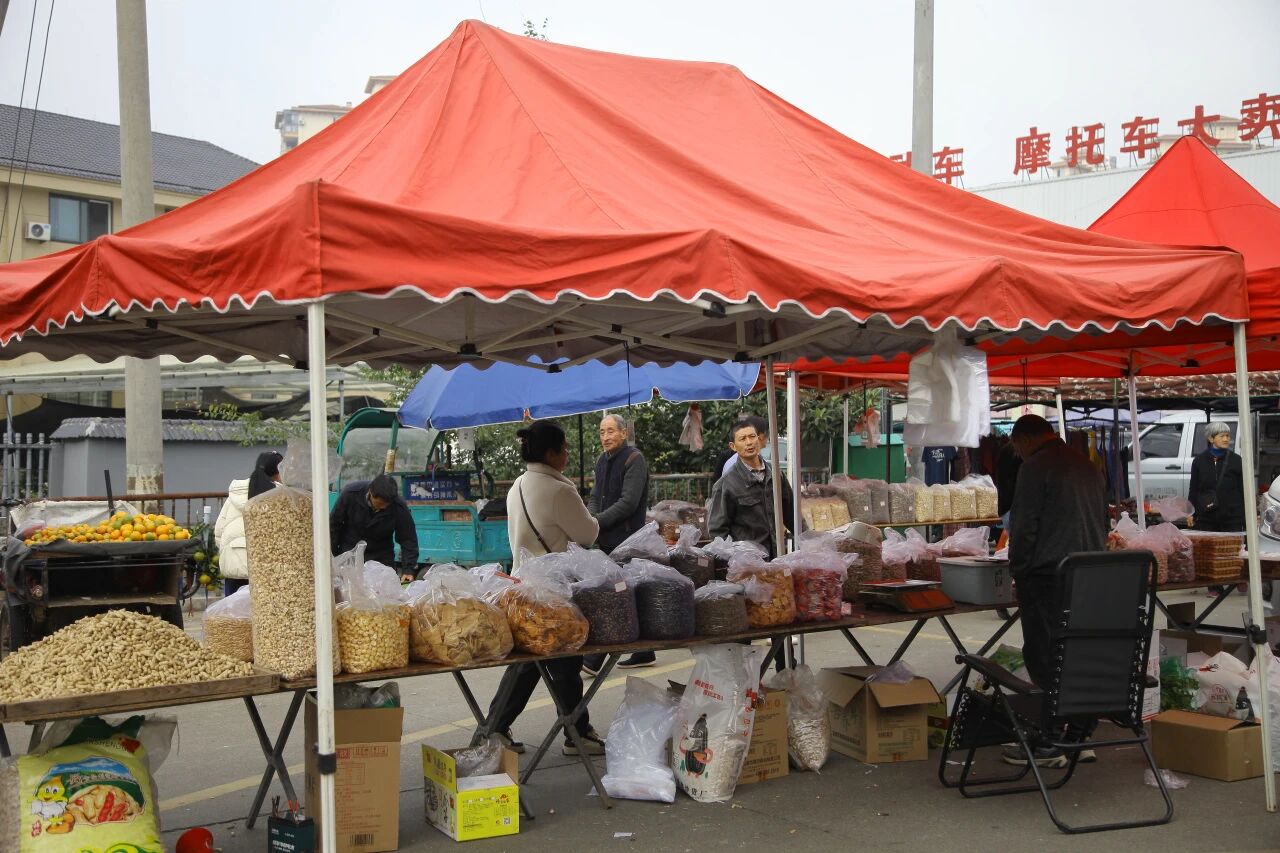
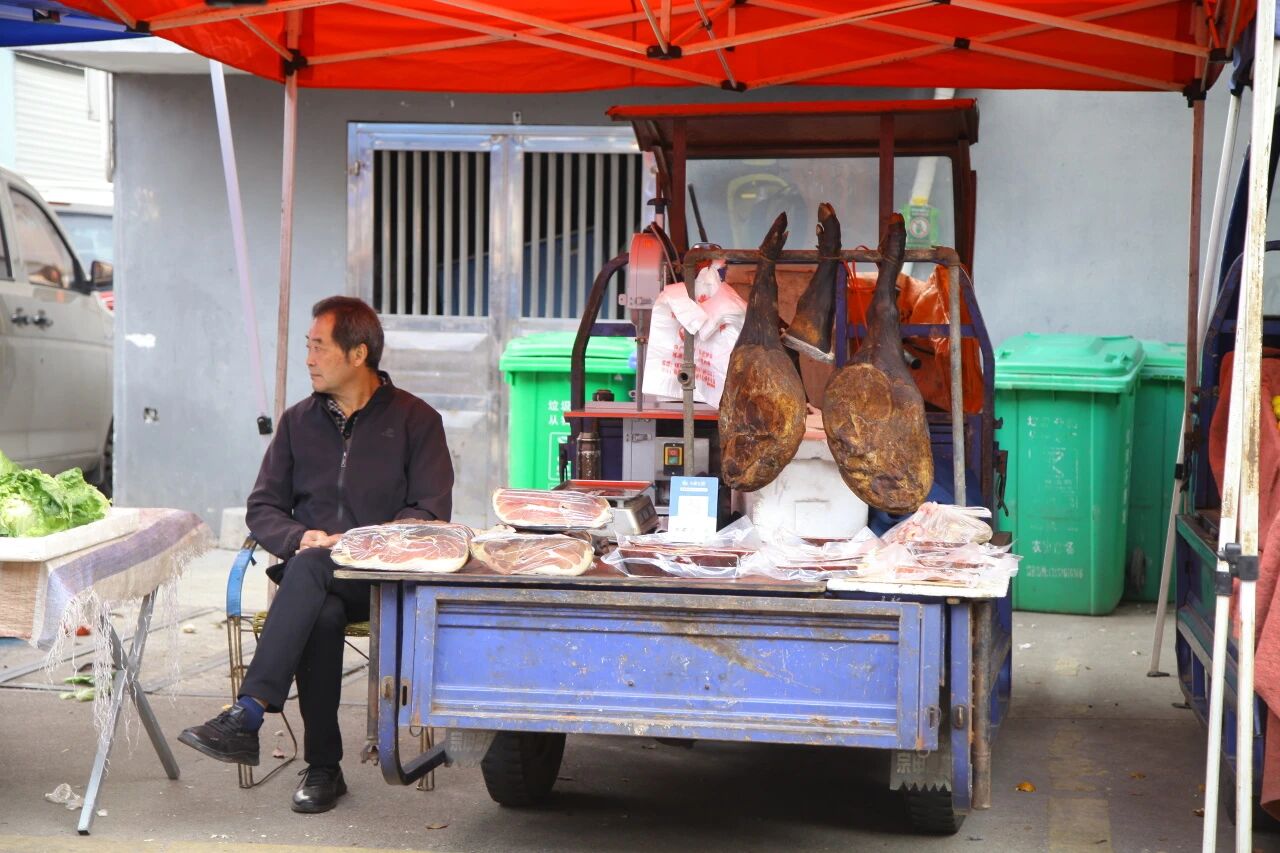
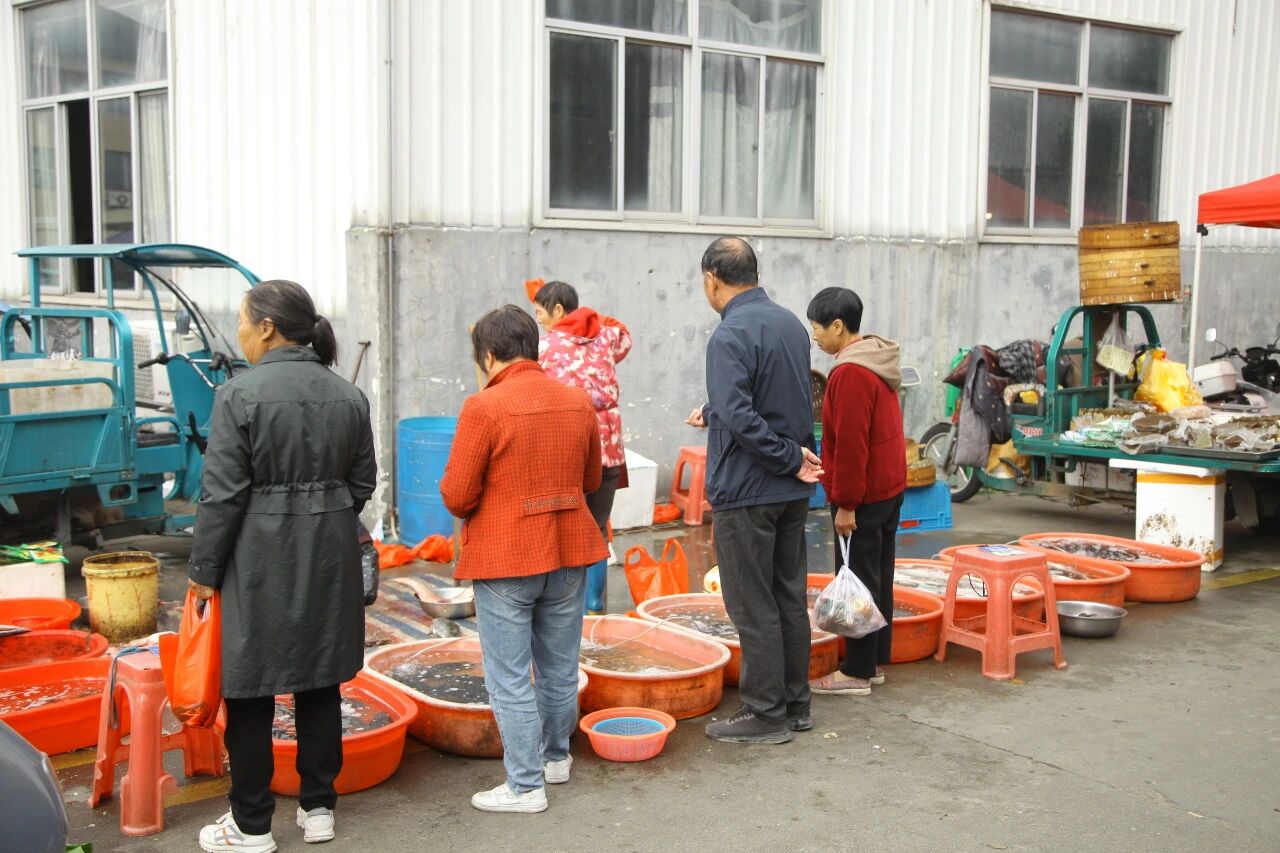
Past the twenty-fourth of the twelfth lunar month, there is a market almost every day. The flavour and feel of the New Year is already arrayed across the stalls: dried and fresh from sea and land, cakes and pastries, roasted nuts and seeds, yeast, lees, and fermented rice wine, cured hams and salted pork, aromatic herbs and medicinal roots… whatever one needs, it is here. Pressing through the crowd, one runs silently through the New Year’s Eve menu in one’s mind, filling any gaps, preparing in advance for the visits and exchanges of the first lunar month.
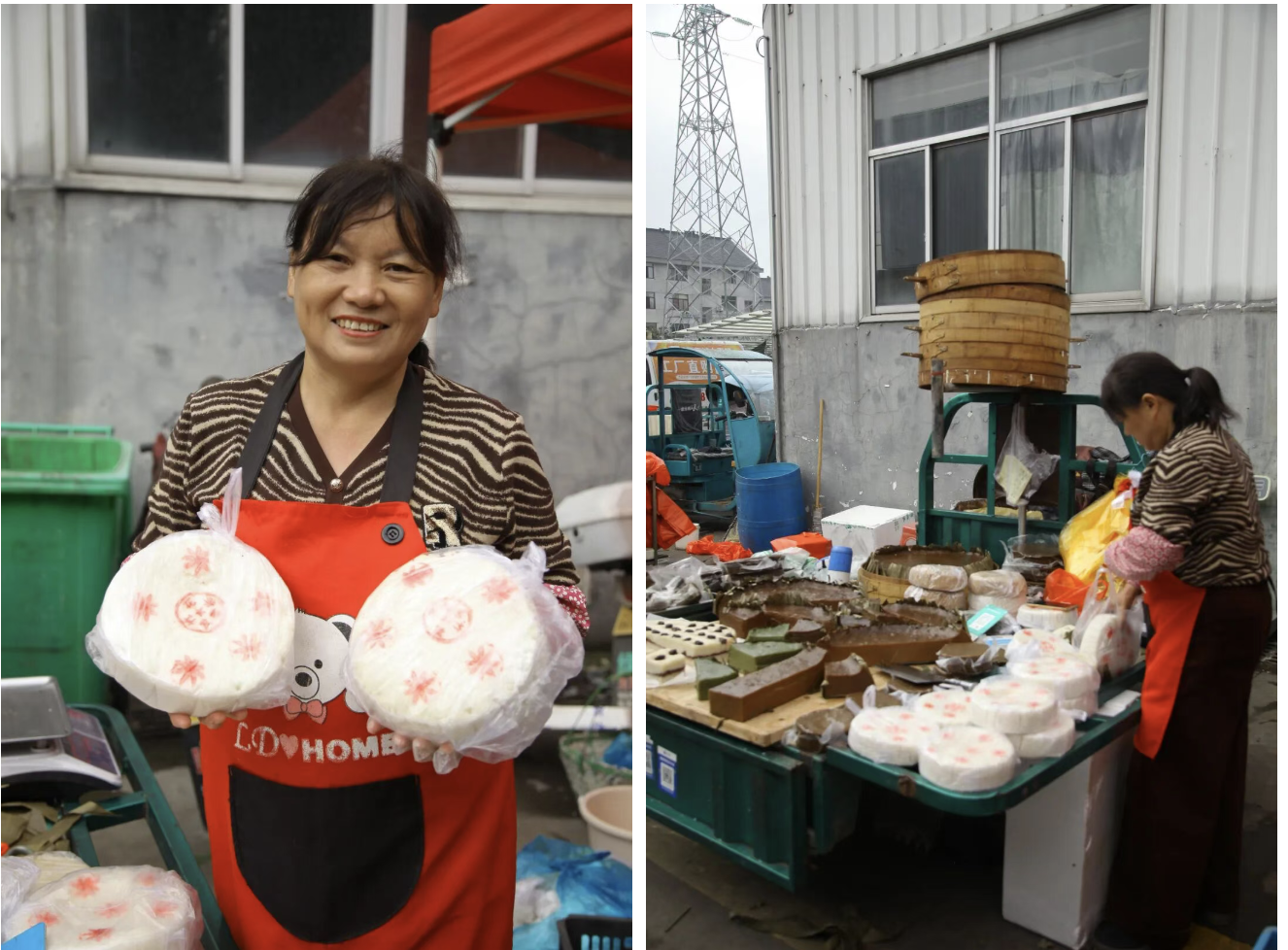
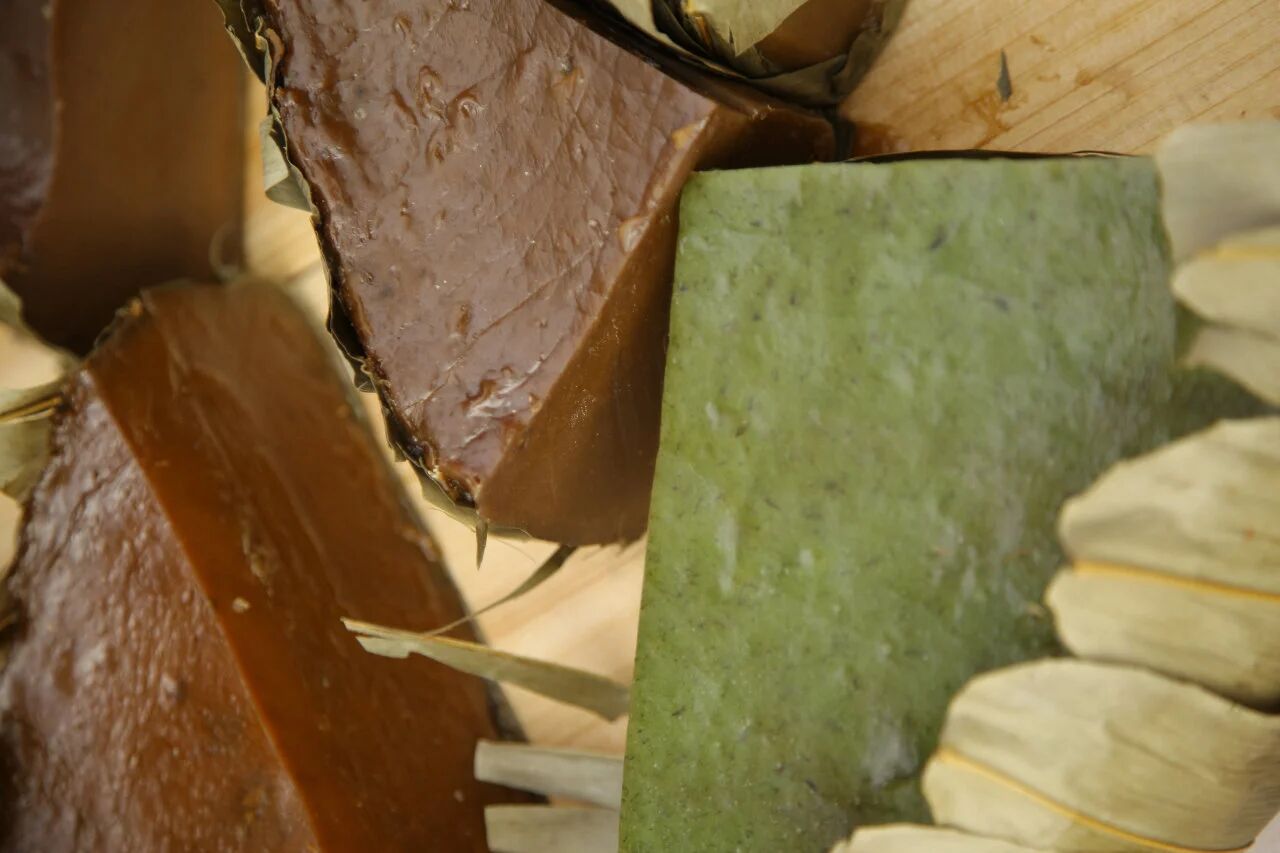
“Snowflakes flutter, Grandma fries the cakes; snowflakes fall thick, Grandma fries the sugar.” So the Songyang nursery rhyme goes. With each layer, the “cake” rises higher—how could one welcome the New Year without eating cake? Sister Zhuhua’s vendor cart was already ringed with people. She wore a great red apron, cradling white, glistening steamed rice cakes, her face bright with festive joy. Bamboo steamer baskets were lined with broad bamboo leaves at the bottom, packed closely into a round disc; the prepared rice batter was poured in and set over slow heat, steam billowing. Add the green juice of cudweed (Gnaphalium affine) to the batter for a “green cake”; add syrup made from locally produced brown sugar for a “red cake”, also called “sugar cake”.
Sister Zhuhua, from Xiping Town, had been making cakes for nearly thirty years, patiently turning a craft into a livelihood. Her son, after graduating from university, returned home to take up his mother’s trade; he established a cooperative, expanded the workshop, and now supplied most of Songyang’s restaurants and street shops. When the twelfth lunar month arrived, demand for sugar cakes peaked—Songyang families needed them for both ancestral offerings and receiving guests—and for a time the workshop had several dozen people working overtime. Yet Sister Zhuhua still loved to go out and call her wares at the market, unhurried on the street corner as in days of old.
III. People Warm the Wine, Wine Warms the People
In olden times, country custom demanded a carefully chosen day for brewing. Now the season is all that matters—no fixed date—more fluid and free. And yet, in town and village alike, earthen stoves and great iron pots grow ever fewer; home-brewing conditions are limited. So there gradually appeared the mobile distilling van, loaded with equipment, winding through streets and villages to offer service at the door. Its first function is steaming rice: glutinous rice steamed through, left to cool, then mixed with yeast starter and set to ferment into wine. The second is distilling: the finished rice wine is further distilled into baijiu. The ratio of rice, yeast, and water differs from house to house, and so does the flavour. Rice-planting in spring, yeast-making in summer, brewing in autumn and winter—four seasons in a cup.
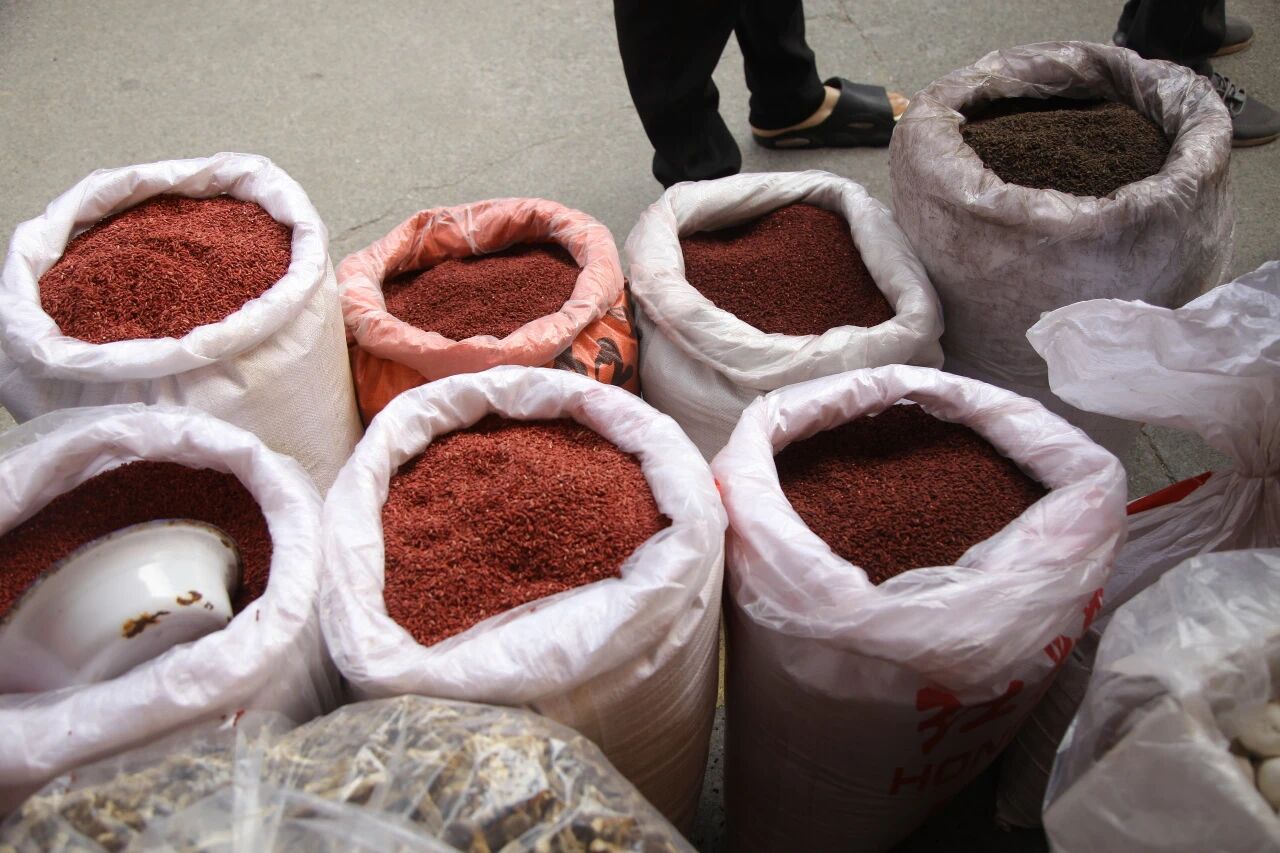
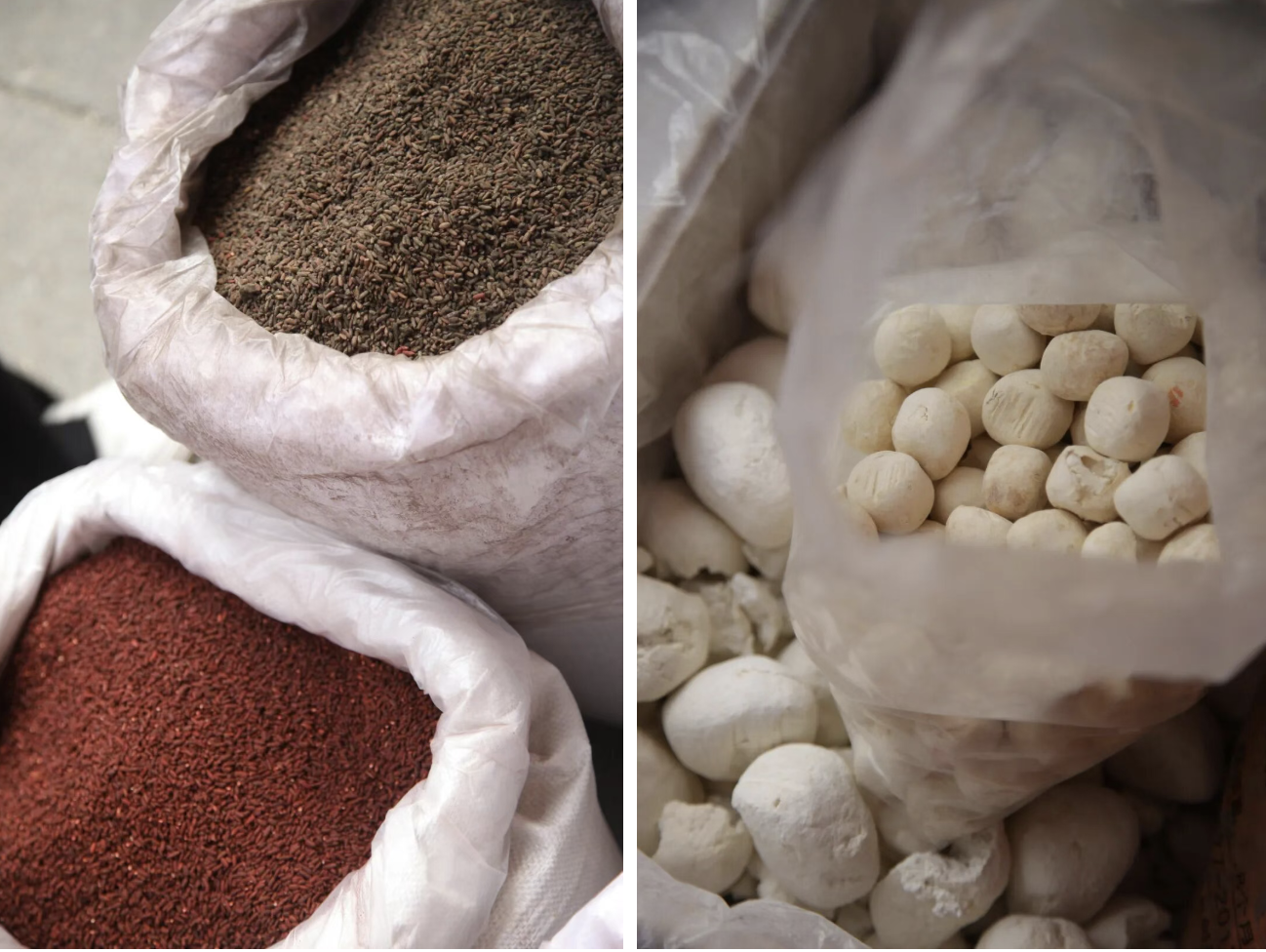
The distilling van had passed through Maoyuan Village; the new wine in Xu Yeyin’s household was already in the vat—this year a full hundred jin of glutinous rice had been steamed. White glutinous rice mingled with red yeast, fluffy and light, barely floating at the vat’s rim. Lean in and press your ear close, and you can hear the soft pop and fizz of fermentation—the microbes playing and tumbling, bursting with life. For the first few days it needs diligent tending: every day the risen rice and red yeast must be pushed down with a spatula and pressed back into the vat’s depths, so they may meld. If the temperature runs high, the wine turns sour; as the weather grows colder, the vat must be guarded from frost. People add blankets; the wine adds blankets too. The tending is truly as if for one’s own kin.
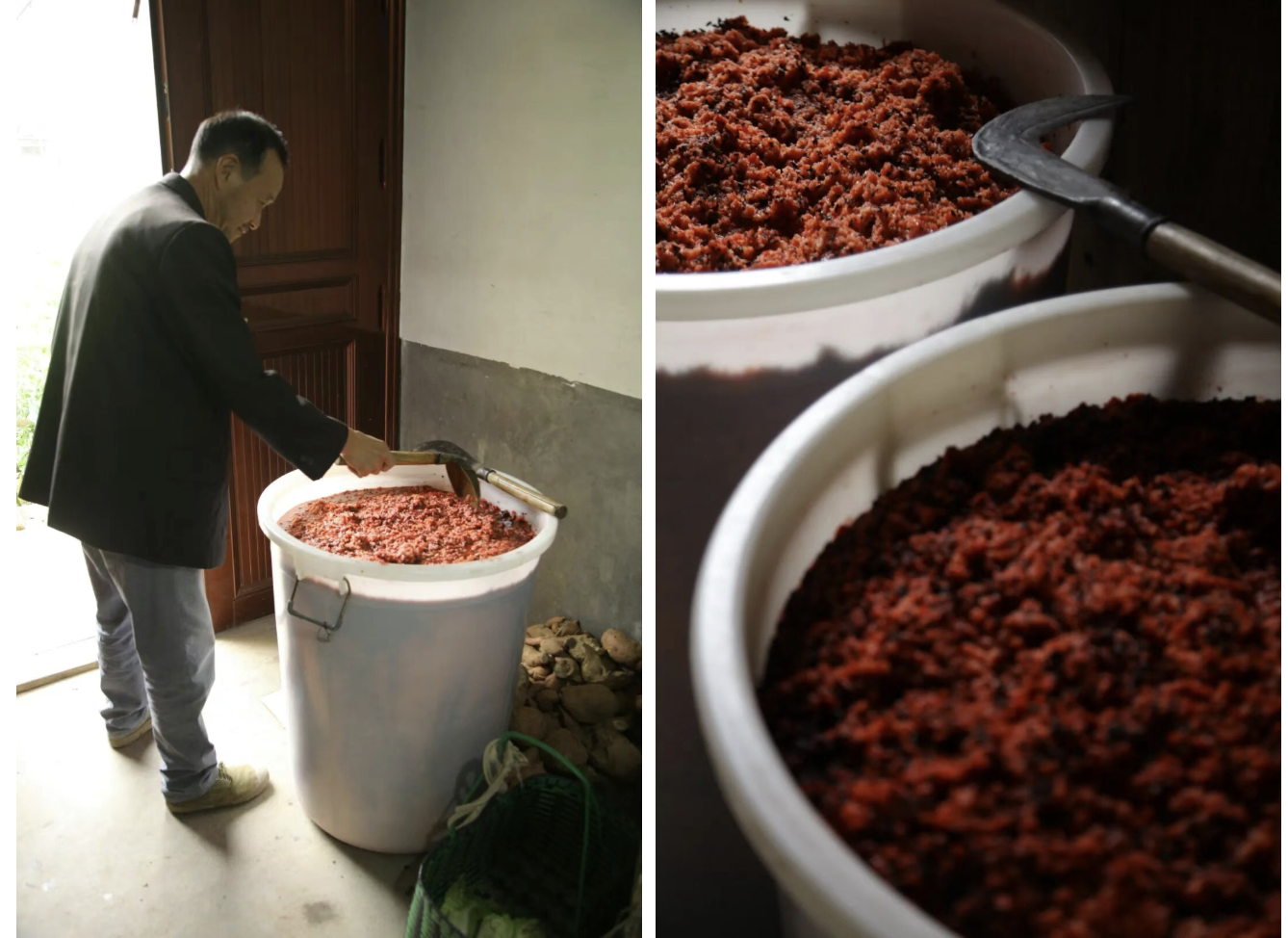
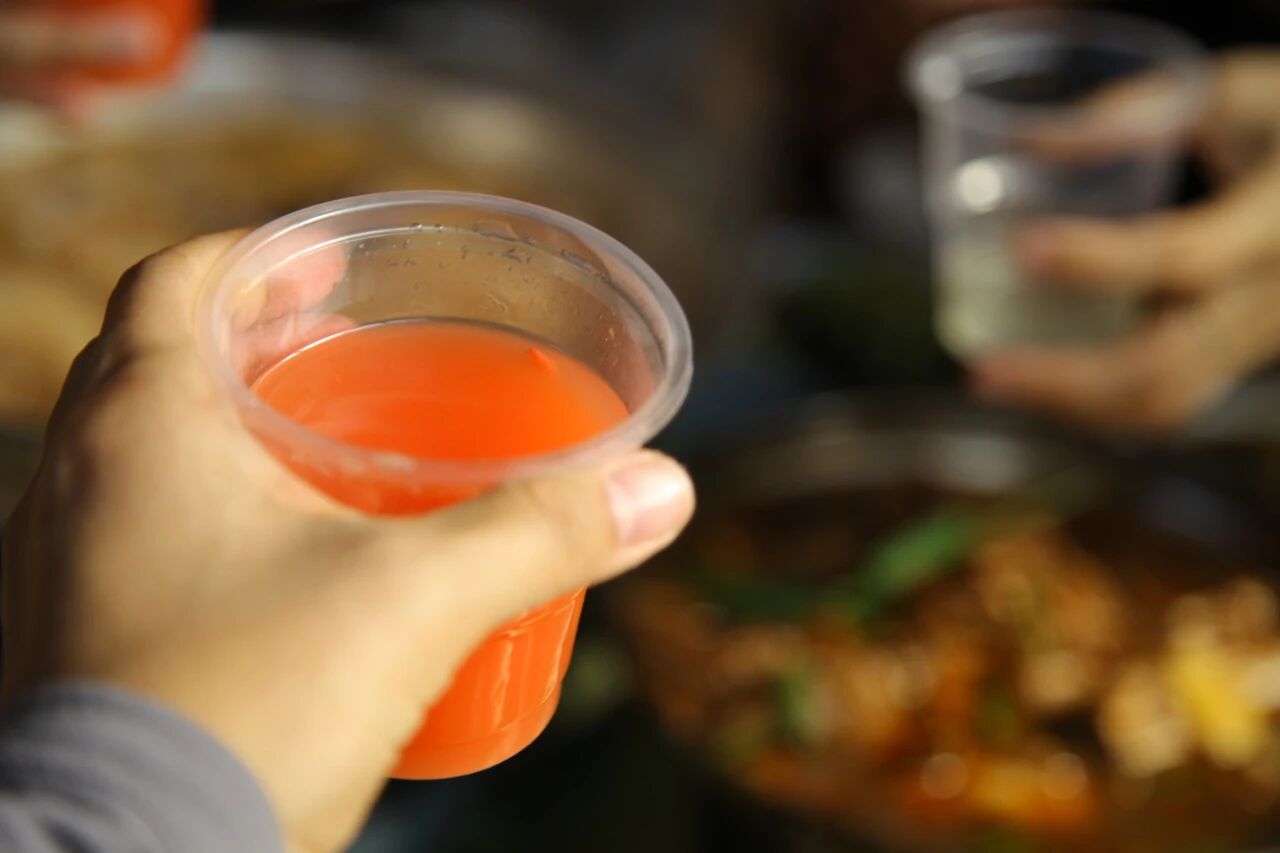
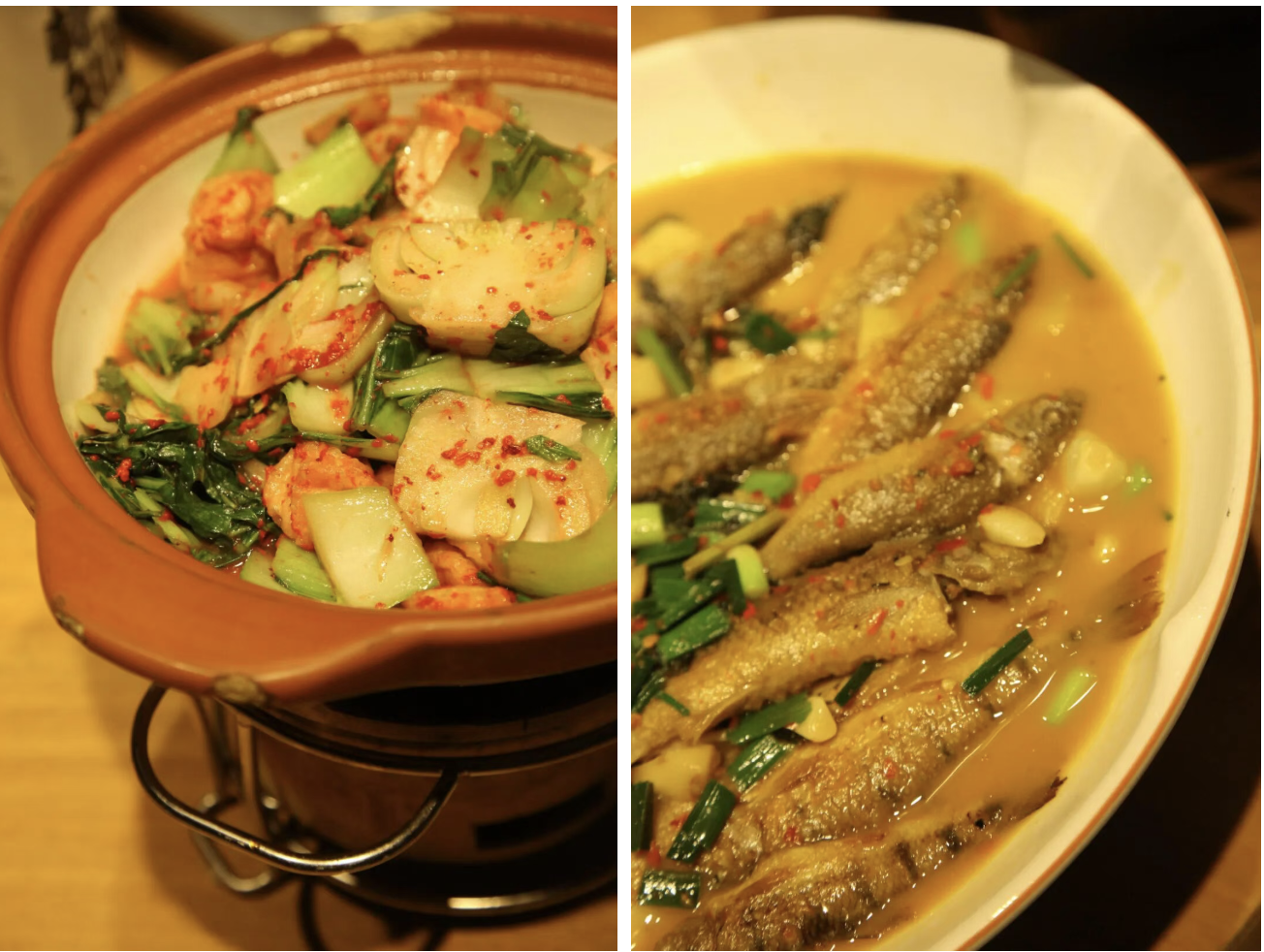
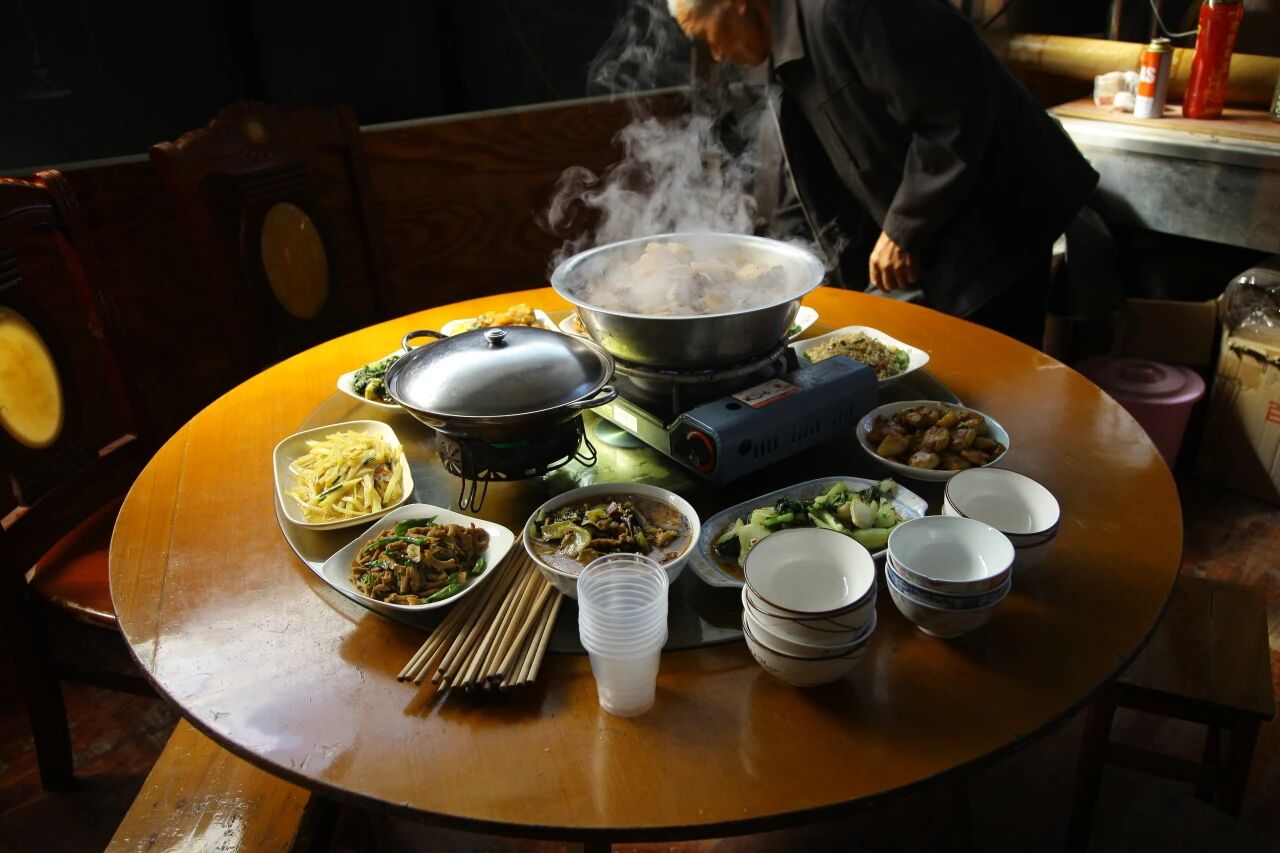
When the New Year’s Eve table is set, warm up a few liang of the fresh brew, lovely in colour, and let it warm body and gathering alike, regardless of age. People warm the wine, and the wine warms people in return. And the red wine lees strained out after drawing off the wine—these are a fine helper for lifting off off-notes and adding depth of flavour. The people of Songyang use them ingeniously, cycling them back onto the table. On Xu Yeyin’s New Year’s Eve dinner there is always a plate of wine-lees braised large intestine or wine-lees braised hairtail.
IV. “How Can We Still Eat ‘Bitterness’ at New Year?”
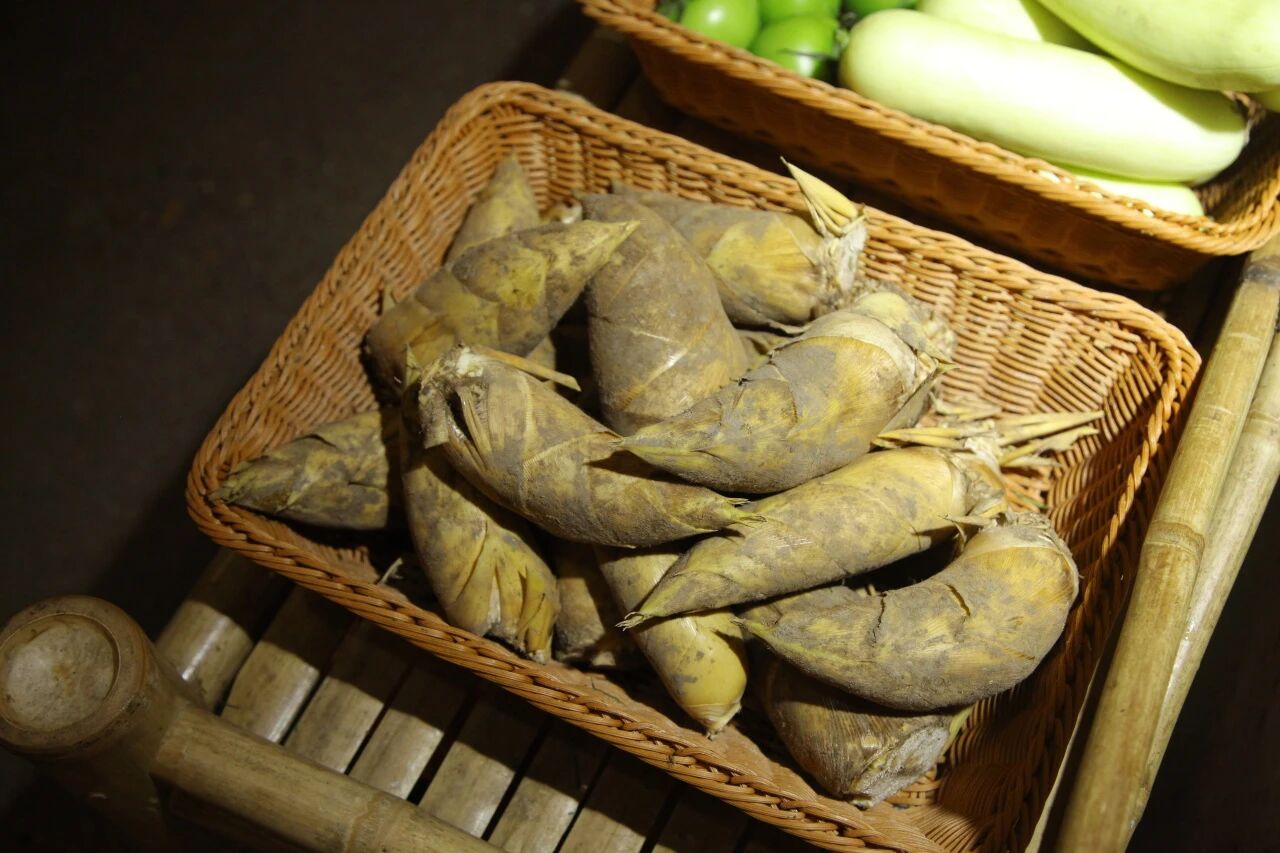
Xu Yeyin makes liquor infused with the roots of wild fruit trees. In spring and summer, bitter greens growing beneath the forest canopy are especially tender and fresh—there is never a surfeit of them. Some are always set aside: blanched and frozen, or dried for keeping, so the household may help itself whenever a craving strikes. But when the New Year comes, even with stores still left, no matter how tempting, they will not touch them. Xu Yeyin says: “How can we still eat ‘bitterness’ at New Year?” By the same logic, Songyang folk love meigan cai—dried pickled mustard greens—but these, too, are shunned at the New Year’s Eve table. Yet there is one bounty of the mountain woods that appears only in winter, and at the New Year’s Eve dinner it is absolutely indispensable, pairing with every ingredient under the sun. Winter bamboo shoots, of course. The first bite of winter bamboo shoots each year announces from the very tip of the tongue that winter has truly arrived.
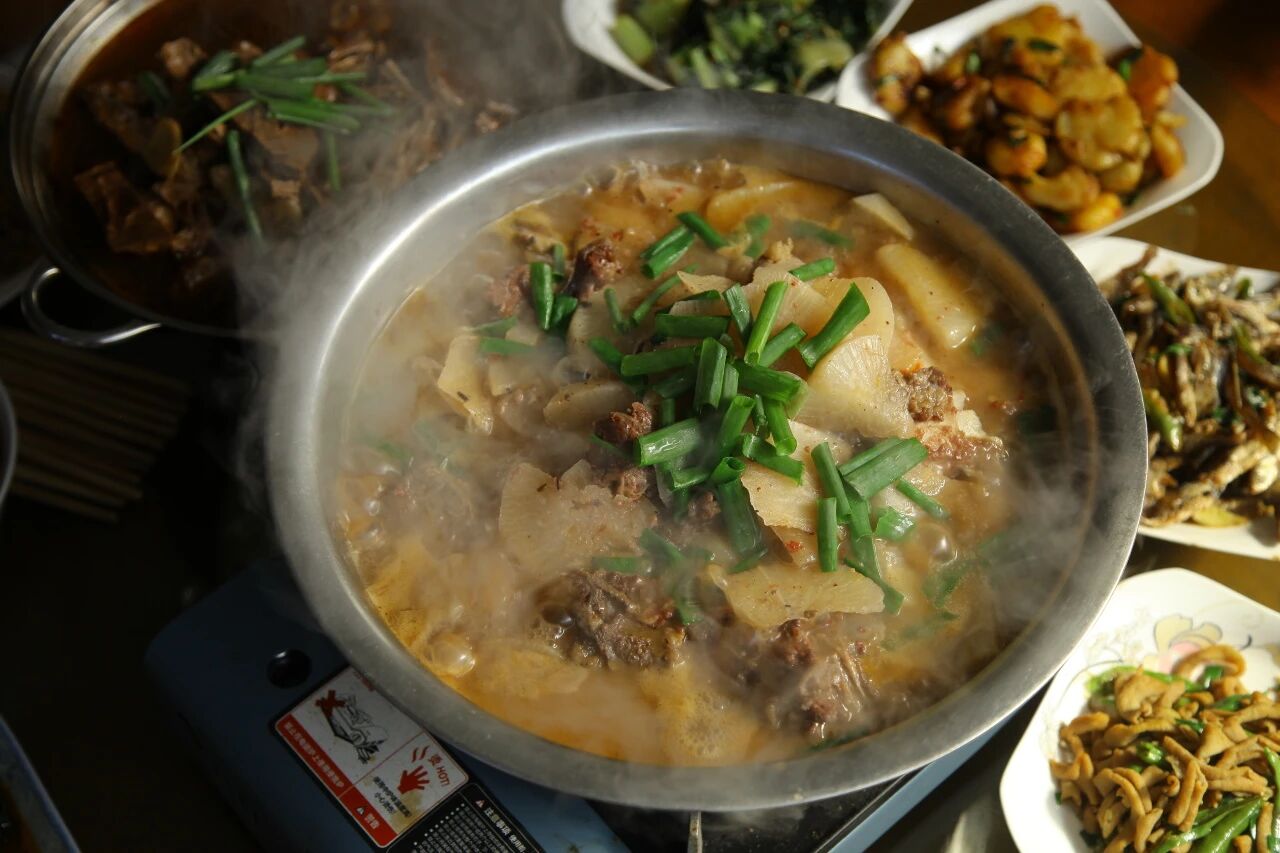
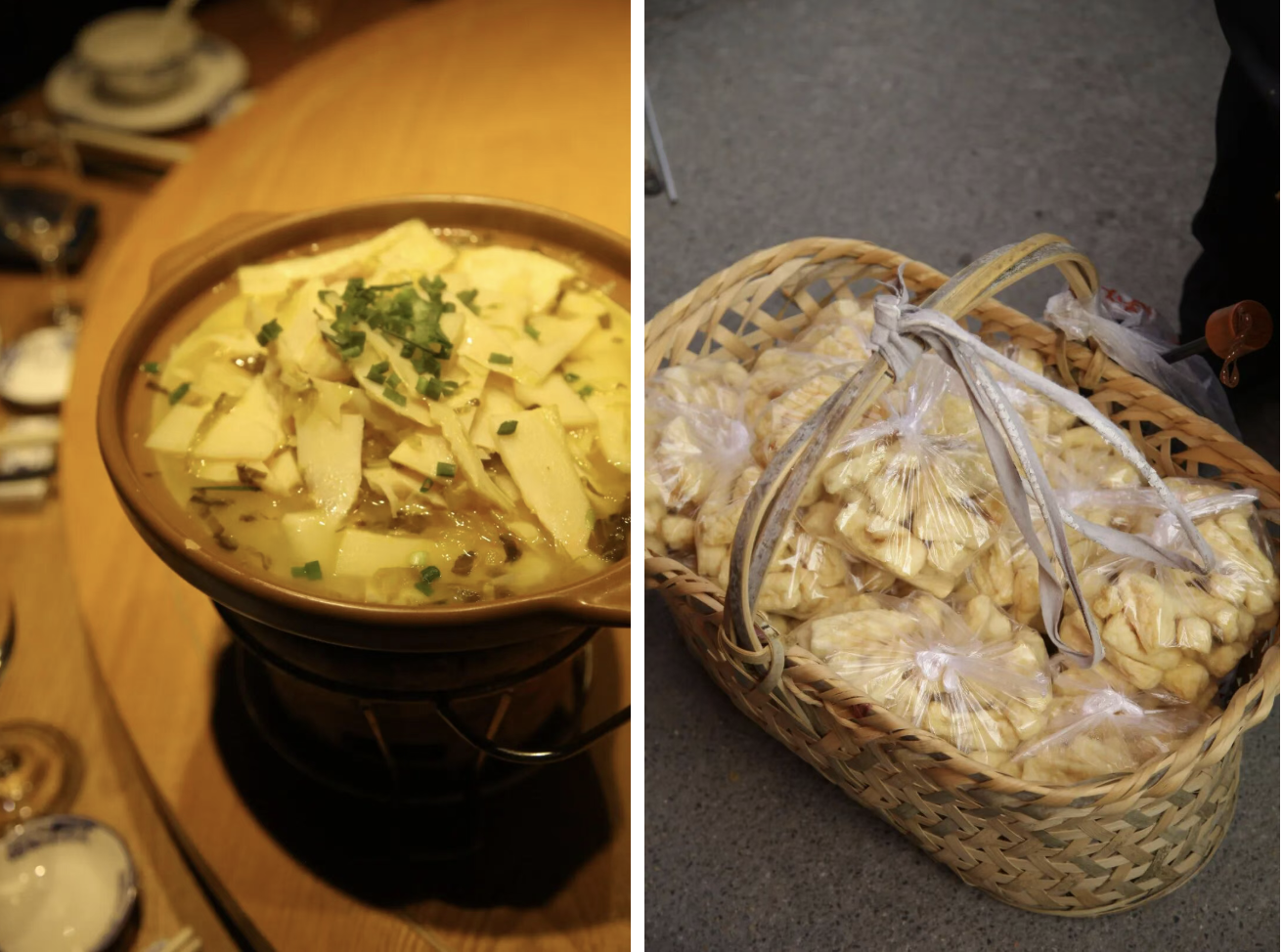
At the New Year’s Eve table, one sees winter bamboo shoots prepared in all manner of ways. Shredded or sliced, they can be stir-fried simply with pickled vegetables; shanfen balls and millet rice cakes are sliced and flash-fried with bamboo shoots, while diced shoots tucked into filling become shanfen dumplings. Babaocai—eight-treasure pickled vegetables—is a must in every household, for the auspiciousness of “treasures from all eight directions”, and to bring a tangy, crisp, refreshing note to the feast heaped with rich fish and meat. It is typically stir-fried or tossed as a salad, combining shreds of white and red radish, pickled vegetables, mingfu shreds, kelp, cabbage… all manner of shreds; and of course, among the treasures, one must be “shredded winter bamboo shoots”. A pot set over a charcoal brazier: fresh, plump winter bamboo shoots cut into chunks and simmered with salted pork, the broth turning milky white; then a handful of Shicang’s deep-fried puffed tofu dropped in to warm through—savoury, sweet, salty, fragrant—truly settling warm and content in the belly. When fresh shoots aren’t enough to last, they are dried or salted into sun gan and sun xian, to stretch the season until the new shoots emerge.
V. Pleasing to the Tongue, Pleasing to the Heart
Shopkeeper Cai draws up the menu, preserving Songyang flavours and Hakka customs while making small adjustments to suit the palates of visitors. For instance, the ham must be local Songyang ham—its traditional smoke-cured character sets it apart from hams in other parts of the province at a glance. As for drinks, the house special is Shicang Hakka’s baijiu, a rice wine made from round, white yeast-starter cakes that differs quite naturally from the broader Songyang tradition of rice wine brewed with red yeast rice. Guests who travel far to spend the New Year in Songyang should of course taste something of the local food culture, but their own preferences must be honoured too—there is no clinging to one tradition on so festive an occasion. The meal should be pleasing to the tongue and pleasing to the heart.
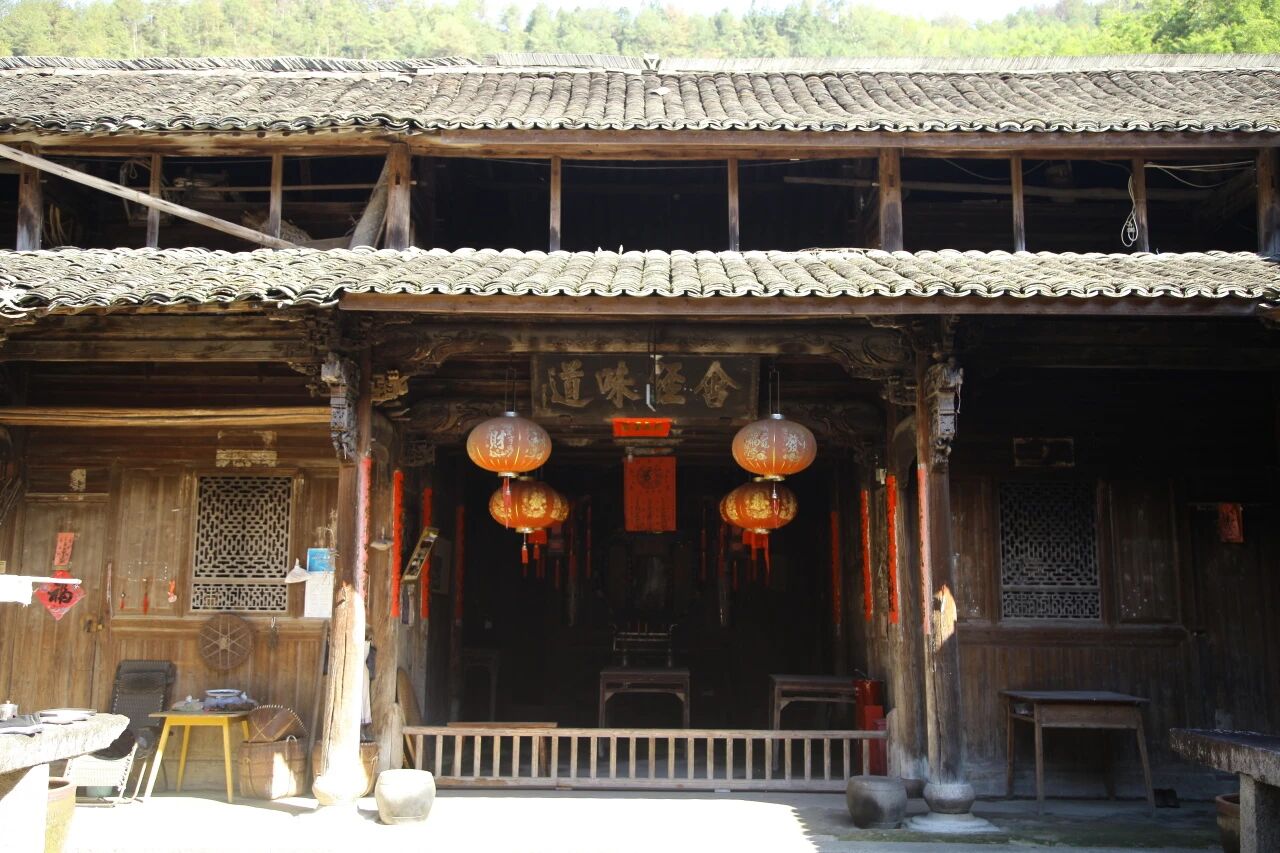
Shicang is a cluster of ancient Hakka settlements, nestled in the “Shicang Valley” (the Shicang Stream valley) some twenty-five kilometres south of Songyang. Besides its baijiu, Shicang fried tofu—also known as Hakka puffed tofu—enjoys a fine reputation that reaches well beyond Songyang County’s borders.
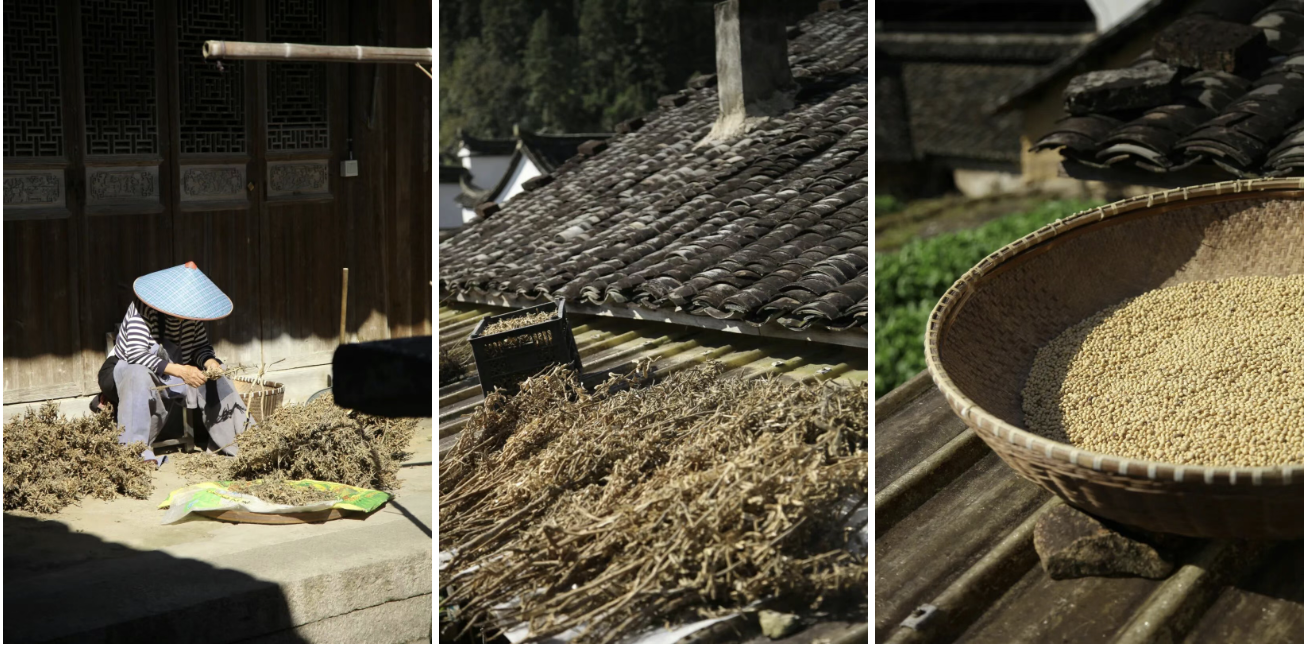
Good tofu in Shicang comes down to its ingredients and craft: heritage soybeans saved and replanted locally from generation to generation, the clear, cold spring water of the Shicang Valley, and master tofu-makers who are patient and dependable—washing the beans, soaking them, grinding the paste, boiling it, straining, coagulating with brine, setting, cutting, deep-frying… no step in the sequence spared. A piece of fried tofu straight from the wok, dipped in a pinch of fine salt—crisp without, silken within, the bean fragrance pouring out in every direction. Fried tofu can be stir-fried with greens or braised with meat; dropped into any pot of soup first, it drinks its fill of broth before the other ingredients, simmering until tough outside and tender within—one bite, and you taste the soup’s freshness all the more keenly. Even at ancestral offerings and deity worship during the New Year, it may grace the altar table.
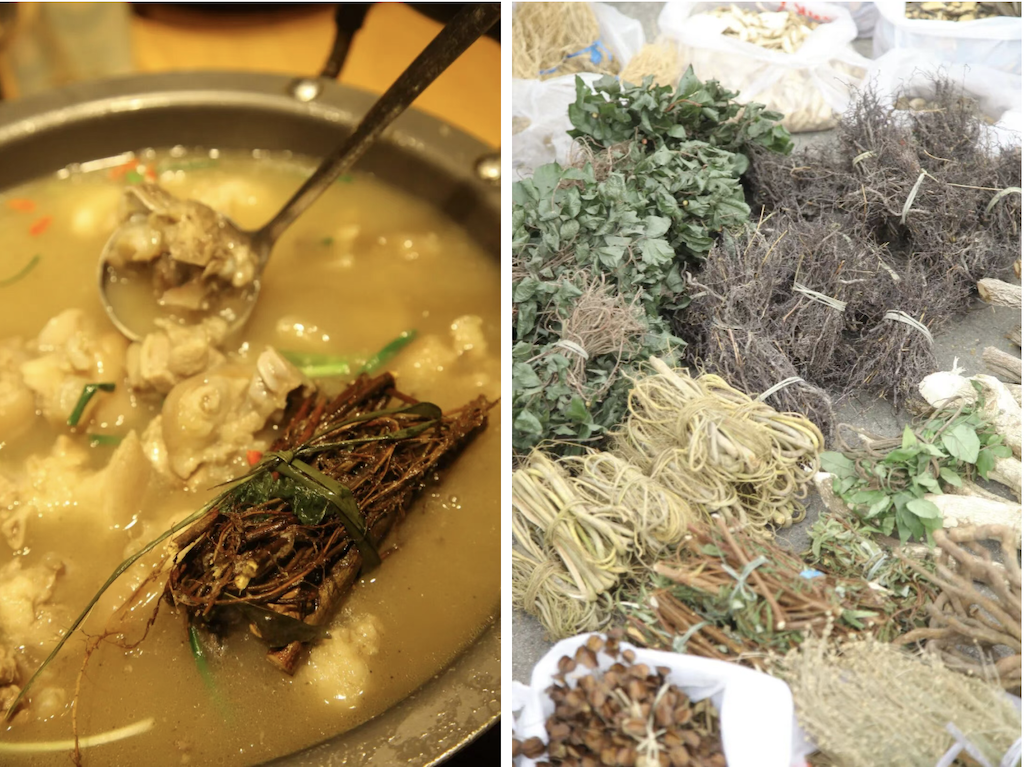
On the altar table, tofu is the plain and humble item, while nothing draws the eye with greater solemnity than a whole pig’s head. In harder times, meat was rare on ordinary days; a pig was slaughtered only for the New Year, and the slaughter itself was part of the New Year. Later, as life gradually improved and trade grew convenient, fewer households kept pigs; most now buy or order them at the market. Grandpa Li, born in 1947, still remembers when every household had a pig. By the twelfth lunar month, the village nearly slaughtered one every day; mornings began with the sound of pigs, and the children found it thrilling—the excitement of knowing meat was coming. On the day of slaughter, the fresh, still-warm offal is scalded in a great pot of clear water, steam billowing, neighbours gathering together—a reward for the year’s toil. The hind legs make ham for smoking; pork belly and spare ribs are fine material for air-dried cured meat; the skin is rendered into gelatin; the large intestine is braised with wine lees; and the trotters are stewed with xieli tea…
VI. Auntie Song and Grandpa Li
When New Year’s Eve arrived, the projector was set aside and the carrying-poles taken up once more—for the village shrine and the ancestral hall. Pork, with chicken, duck, or fish, together formed the “three sacrifices”; rice cakes, dried goods, tofu, and wine joined them, arranged as offerings on the altar. The year had passed, life had improved; these were presented to the ancestors and the Shegong—the village’s earth deity—a gratitude for the year gone by and a blessing for the year to come. And when the rites were done, the offerings came down from the altar and went up onto the dinner table: cold-dressed pig’s head, salt-and-wine chicken, poached duck… Songyang’s New Year’s Eve dinner is one where the living share drink and food with their ancestors and the spirits; past and present coexist, heaven and earth and humankind endure.
Auntie Song and Grandpa Li cook together, whether on an ordinary day or for New Year’s Eve. Auntie Song washes the vegetables; Grandpa Li chops them. When Auntie Song stir-fries, Grandpa Li pours the oil into the hot wok beforehand. They pick up their chopsticks together; they clear the table together. And Songzhuang Village’s New Year’s Eve dinner—why, it is eaten at breakfast! A genuine oddity. Grandpa Li explains: the founding ancestor of Songzhuang was a hired farmhand, and on New Year’s Eve he had to eat his dinner early and then return to work at the landlord’s house; thus it became custom. The advantage of eating early is that sons and daughters-in-law can come early for the reunion, and once done eating, they can head down the mountain to eat another meal at their parents-in-law’s—a way that serves both sides perfectly.
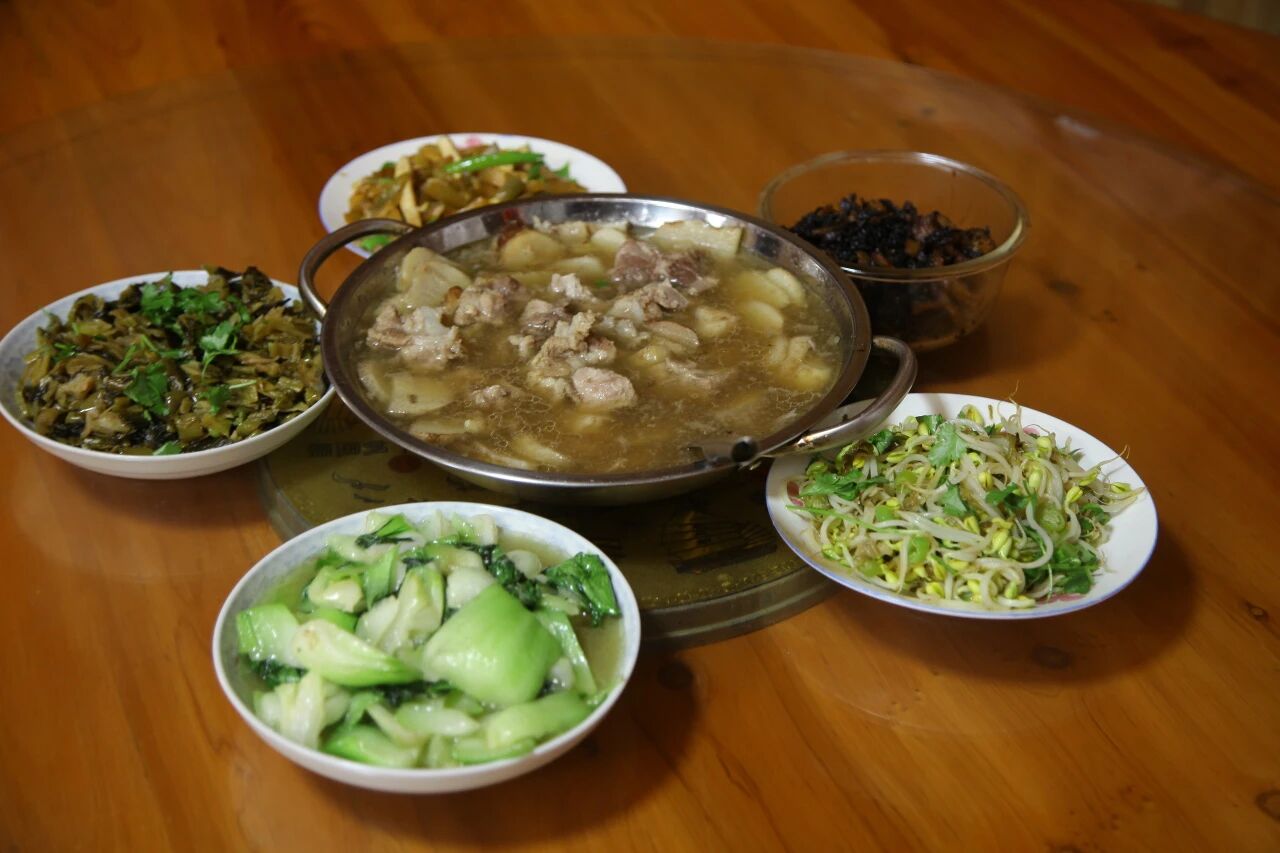
Grandpa and Auntie, having washed up the dishes, shut the door and sit up to see in the new year, while the stream before their house murmurs on. They have watched the Spring Festival Gala together for many years, never once finding it dull. Young spouses grow old clinging close; the years are steady, the heart is simple and calm, and the days stretch long.
Just past midnight, the new year has come—open the door and the bang of celebration greets you! Fireworks and firecrackers shake sky and earth; welcoming the great New Year demands such thunder and grandeur—the joy of ordinary folk must be shared with heaven, earth, and all creation. Up at dawn, the air of a new year: on the first day of the New Year, in some parts of Songyang they “eat geng”—taking the leftover rice cakes and sugar cakes from the New Year’s Eve table, simmering them in broth into a pot of warm, glutinous goodness. Perhaps this is the “fortune-root” of the old year, and a quiet reminder to cherish food. Cherish food, and you cherish time too; a year has truly passed. But there is no time for melancholy—the first month is full of liveliness yet.
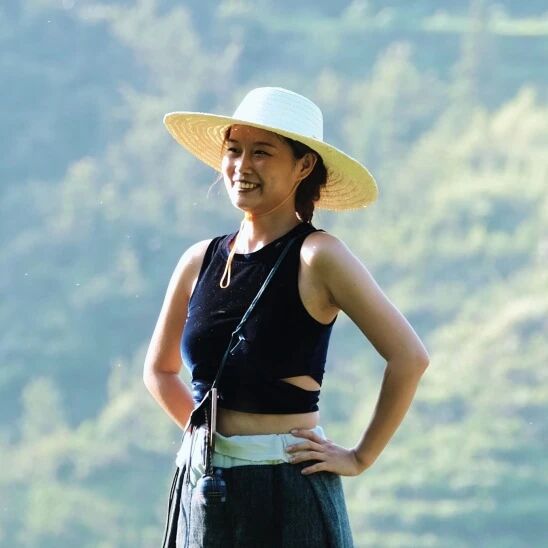
The time spent in the field was brief, the pen shallow, the effort modest—this is an outsider in Songyang, looking at the new and the familiar. If there are gaps or errors, Songyang friends are welcome to point them out and fill them in.
All images in this article were taken by the author
Edited by: Yuyang