
Unfolding the Folded Table: This Year’s Keywords
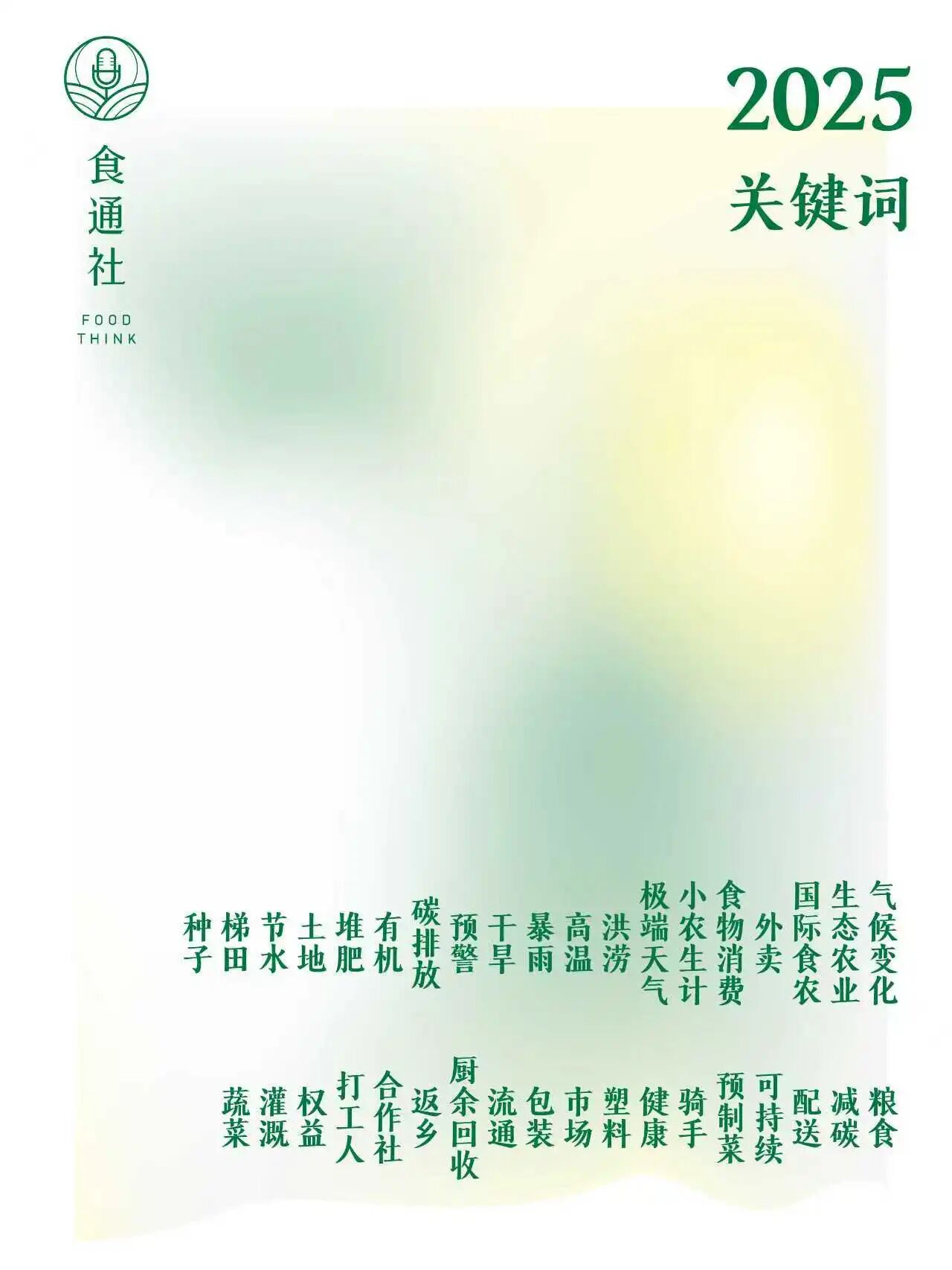
Over the past year, Foodthink, ever attentive to the food and agriculture system, has kept its focus on “climate change,” “delivery platforms,” “imported meat” and “smallholder farmer stories.” We documented how farmers continually adapt to extreme weather, pressed the question of how technology and capital reshape the food system, and examined the toll global trade takes on local smallholder farmers.
Beyond our everyday priorities—publishing articles, hosting events and running the Ecological Agriculture Internship Programme—we took on a few things we rarely do: we hosted the “Mobile Table” food and agriculture media workshop, published the report Research on Action Pathways for Rural Social Organisations Responding to Climate Change, and organised fellow farmers to join the Ecological Agriculture Local Systems Co-learning Camp.
This year, our colleagues were out in villages, markets and kitchens across the country, chatted with delivery riders on the street, and travelled to Southeast Asia and Europe to see what smallholder farmers elsewhere are facing.
What follows is a record of Foodthink’s writing and field observations over the past year. Why not take this chance to look back with us on the food and agriculture stories that defined 2025, and hold on to our memories of food, land and the people who work them.
In the new year, we also invite our readers to turn their attention to the food underfoot, nearby and on the table, to keep listening to what the land has to say, and to consider where our food choices will take the future.
– Signals of Disorder –
In terms of the disasters striking agriculture, climate “disorder” has become the norm. Farmers can no longer rely on the weather patterns of the past to make sound judgments and plan their farming accordingly. Whether it is the drought in Shaanxi, the unrelenting rain over North China, or the successive super typhoons battering the south, it seems no one was prepared.
The Great Shaanxi Drought: Fruit That Cannot Be Saved, Wheat That Cannot Be Watered
Seventy-Two Hours of Torrential Rain: Washed-Away Rice Paddies, Interrupted Lives
Four in the Morning: A Miyun Farm Swallowed by Floodwater
Harvest Imminent as Farmers in Western Guangdong Face the World’s Wind King
Is there nothing agriculture can do beyond suffering disaster? Farmers are often the first to feel the effects of climate change, and therefore the first to act. They are far from helpless. On the contrary, in this era of frequent extreme weather, these people are already responding:
The Weather Keeps Drying Out – How Can We Still Grow Rice?
When High Temperatures Become the Norm, These Farmers Choose a Different Life (Part One)
When High Temperatures Become the Norm, These Farmers Choose a Different Life (Part Two)
The North Turning South: Farming Friends Busily Digging Ditches
Coffee Prices Soar – Why Are Yunnan’s Coffee Farmers Still Worried?
When agriculture faces a crisis of climate and ecology, our food faces the challenge of “invasion” –The American Fall Armyworm, microplastics, fossil fuels, hidden additives. Is today’s food still healthy?
When the Fall Armyworm (Spodoptera frugiperda) Lands in China’s Cornfields
Microplastics Invade the Brain – How Can We Shake Off Plastic Anxiety?
Can Humanity Escape Its Toxic Relationship with Plastic?
How Much Fossil Fuel Have You “Eaten”?
Not Quite Rice, Not Quite Noodles: Is Today’s Staple Food Still Healthy?
The Secret in the Supermarket Oil Bottle: Are Refined Vegetable Oils Really Good for You?
When food is polluted and reshaped, the very concept of “health” begins to waver. Who exactly is defining “nutrition”? Who is shaping the public’s understanding of healthy eating? In the midst of conflicting opinions, we need to return to the body, to common sense, and rethink what “health” truly means.
Have Dietitians Become Food Giants’ Lackeys? What Registered Dietitians Think
Between Monetising Traffic and Professional Ethics: Should Dietitians Take on Advertising?
Is Losing Weight the Same as Dieting? Have a Look at This Genuine Weight-Loss Guide
– The Price of Efficiency –
When food is coded into an order that must arrive within thirty minutes, “eating a meal” ceases to be merely the diner’s experience – it becomes the worker’s cost, too. One-tap delivery is fast, but the real distance between people and their food only grows. Multiple steps from soil to table have been folded away. When people can no longer see how food is brought, step by step, to the table, who is choosing what you eat? How much control do you still have over “eating”?
Who Got a Good Meal from Pinhaofan?
A Business War in the Downpour: A Bitter Summer for Delivery Riders
Rather Than Gawping at the JD–Meituan War, Working People Should Watch These Two Films
A Specialist Lawyer Explains the Differences in JD’s and Meituan’s Social Insurance Schemes
Delivering Takeaways on Foot in Australia: Can You Make a Living?
Wage Workers on the McDonald’s Assembly Line
Fresh-Food E-Commerce Pickers, Sprinting to the Algorithm
Meituan’s acquisition of Dingdong Maicai made big news, but hardly anyone cared: yet another wet market had disappeared.
Platforms are locked in fierce competition, yet the physical spaces are dying. When fresh-food e-commerce, community group-buying, and platform subsidies take over the city, it is not just one group’s way of working that changes – the way urban consumers buy their groceries is changing, too. As wet markets perish, the cost is that consumers find it harder and harder to understand food, and harder still to understand its price.
But we often forget: a wet market was never simply a place to buy vegetables. It was also the connecting point between city and countryside, between food and agriculture. When it vanishes, food becomes abstract.
Who Drove the Wet Markets Out?
Will Fresh-Food E-Commerce Do Away with Wet Markets?
The Lychee Harvest Is In – So Why Are Online Prices Still High?
On the Subject of Wet Markets, We Have a Few Words to Say
Efficiency has changed how people buy vegetables at the urban end, and has reached into the fields to change “growing vegetables” itself. Technology is rapidly taking over farmland, yet technology is not neutral. It can boost efficiency, but it can also deepen people’s dependence on it and amplify the risks of its use. When pesticide spraying and data tracking are run by drone pilots and machines, can farmers truly “farm scientifically”?
When Drones Become the New Farm Tool: Who Defines “Scientific Farming”?
Technology, Pesticides, and Drone Pilots: The Other Side of the “Technological Revolution”
Efficiency seems to make food more within reach, but the emotions, time, and relationships beyond food itself are all drifting away from the act of “eating.” Eating is not merely consuming. If boosting efficiency lets us eat faster and better, why do some people find it harder and harder to have a proper meal?
A Story of Meals from a “Not Entirely” Failed Wage Worker
Ma Lan, in Shenzhen, Has No One to Eat With
A Question That Has Bugged Working People for a Long Time
The Moment They Decided to Quit Takeaway | 315: Eat Something Good
Electronic Zhacai: Young People’s “Cure for Loneliness”?
– Smallholder Farmers in the Squeeze –
Guaranteeing the Watermelon’s Sweetness, Guaranteeing the Grower’s Bitterness
Raising Sheep on Borrowed Money: Qinghai Herders Outlast Another Year
Through the Lens: Change and Choice in Herders’ Lives
Smallholder Farms vs. Large-Scale Ranches: Whose Milk Is Safer, More Nutritious?
Smallholder Farms vs. Large-Scale Ranches: Who Deserves Support? How?
To Farm the Land, He Opened a Noodle Factory
After the Women Walked Away, They Found an Organic Farm | Reviewing the Film Nei Sha
The plight of smallholder farmers is shaped not only by domestic policy and markets but also by broader international trends. Farmers around the world face the same dilemma. As the globe converges toward large agricultural capital, smallholders are squeezed by price and environmental pressures, and the space in which they can survive keeps shrinking. How do smallholder farmers in different countries struggle within the same narrowing gap?
When Farmers Become the Sacrifices of Low Tariffs
When the Ban on Burning Crop Residue Becomes the Last Straw for Smallholder Farmers
Japanese Rice Prices Double, But Farmers No Longer Want to Grow It
Trump Freezes Agricultural Spending: Will American Farmers Go Bankrupt?
The oversight and supply chains of large food corporations and agricultural capital appear airtight, yet the system’s extreme concentration also breeds fragility – pull one thread and the whole body trembles. Can we truly entrust food safety, food regulation, and stable supply entirely to them?
–The Far and the Near –
How Did Imported “Fake Meat” Find Its Way onto the Tables of Qinghai–Tibet Herders?
Too Expensive or Too Cheap? A Review of “Fake Meat” Driving Out Real Meat
Brazilian Deforestation Is Their Business – What Does It Have to Do with Us?
This Foodie Paradise Has Gobbled Up Half of Brazil’s Beef Offal Exports
As imported foods flood in, local heirloom varieties and their flavours are disappearing. Heirloom varieties are not merely a kind of food – they are the bond that holds together terroir, culture, and family memory – Baituwa, Hongzuino, Baimidou – and if no one keeps growing them, they will vanish from the world.
Growing Vanishing Glutinous Rice on the Sichuan Hills
A Chayote Seedling’s Breakthrough: Climate, Seeds, and the Crop Rush in County Towns
Why Has the Sweetness of Childhood Disappeared?
If No One Keeps Growing Them, They Will Vanish from the World Forever
Foraging for Wild Greens in the Netherlands: Getting Closer to Plants, and Closer Still
Whether it is fish from afar or meat from nearby, we have “lived alongside” the food we eat most often for years, and yet we still cannot see its true face. Can our understanding of food go beyond the level of consumption and reach deeper into places of origin, so we can grasp how changes there ripple out to our tables?
Two and a Half Years as an Agriculture Reporter, and I Still Cannot “See” Food
When an Anthropology Master’s Student Goes to Sell Meat at a Slaughterhouse
To understand food better, one actually needs to start with local ingredients. Because local food often grows beneath your feet, hides in the hills and forests, and ferments in the kitchen. What they tell is a different kind of “locality” – rootedness, handcraft, self-sufficiency, and going with the grain of nature.
Crowning with “Tihu” – A Fermented Delicacy from the Tibetan Plateau
How Yunnan Wild Tomatoes Become E’reng Valley Tomato Sauce | Kouzi, the Sauce Maker
With Agriculture This Advanced, Why Do People Still Eat Wild Greens?
Notes from the Culture Pavilion: Fermenting in Berlin
Another layer of meaning that food carries through taste is shared memory; taste, in turn, forms the emotional bond we have with home, family, and the past.
– Returning Home and Working the Land –
What did last year’s ecological agriculture interns take away from their time at different farms? After their placements ended, some went home to work in ecological agriculture – from “graduation” to “on the job,” what differences and challenges lie between the two?
Leaving the City, I Planted New Seeds for Life on a Farm
On an Ecological Farm, How Many Skills Does a Post-2000s Novice Need to Learn?
Bending to the Fields: Why Did I Come to Love “Repetitive Labour”?
In the Countryside, Learning to Be a Living Seed
When a 996 (9 am–9 pm, six days a week) Worker Meets an Ecological Farm’s Work Ethic
What Happened to Those Two Young Teachers Who Quit Without a Safety Net to Farm at Home?
Weeds Are a Farm’s Nemesis, but Are Weeds and Farmers Truly at Odds? How Do Ecological Farms Treat Weeds?
On an Ecological Farm, People Are Like Weeds: The More They Grow, the Better
Beyond returning home to farm, these people are also reconnecting with the land in other ways:
Growing Bananas in a Brazilian “Forest”
Farming in Beijing: Are We Just Stuffed and Bored?
Towns and villages once inextricably linked to agriculture – can they still thrive in today’s era? What kinds of changes are unfolding across so many “Old Lands, New Villages”?
When Two-Thirds of the GDP Evaporates, Does This County Town Still Have a Future?
When Environmentalism Becomes a Display: The Green Illusion of an Eco-Village
Searching for the Soul of the Valley: A Journey Back to 2011
– Grandma Kouzi –
One Person’s Food Universe
When we hear “farming,” most people picture growing crops within a market economy to earn an income. But some have chosen a different way of life. In Fujian, Grandma Kouzi has carved out her own “food universe” – E’reng Valley. After years of cultivation, 2025 brought a bumper harvest. She has now become largely self-sufficient in all food except salt. In an era when life grows ever more homogenised, a way of living so closely bound to the land feels all the more precious.
Hand-Digging a Channel, and the Gardenias It Brings | Grandma Kouzi
A Perennial Food Forest: The Garden of My Dreams | Grandma Kouzi
Immersed in the Fields: From Anxious Guilt to Settled Peace | Grandma Kouzi
– Food Talk –
In 2025, Foodthink’s podcast “Food Talk” released 14 episodes. Over the past year, we have asked how, under the dominance of the mainstream food system, we can claim the right to “eat properly,” while also reflecting on the conflicts and risks inherent in that system itself.
Without a doubt, pre-made meals have been the longest-running and most influential topic in this year’s public food debates. Foodthink has been following the development of pre-made meals for some time – as early as January last year, before the public spat between Luo Yonghao and Jia Guolong erupted, we had already produced a podcast episode on the subject. Our guest Doudou even foresightfully provided a healthier, safer pre-made meal recipe for time-poor overworked workers. Is the future really the age of pre-made meals? Food Talk will continue to follow this topic.
The backlash against pre-made meals shows at least that, deep down, Chinese people still hold out for healthy, home-cooked meals with that unmistakable wok hei. But what happens when, one day, “pre-made” becomes synonymous with “cheap” and “convenient” – will that hope be crushed? In reality, whether it is food delivery, fresh-food e-commerce, or plastic packaging, it all serves a cheap and convenient urban lifestyle. Yet people know very little about the costs behind it or the risks the whole society bears as a result. At the same time, the companies closely tied to our cheap, convenient food system are using all manner of PR and greenwashing to keep us from seeing the truth. From peanuts, corn, and rice to bread, milk, and beer – how do these foods end up on our tables? Who is deciding what we eat? How can we find better social support networks so that what lands on our plates is food we can trust? There is so much more to talk about when it comes to food.
As food consumers, if we pay more attention to the farmers and the land that directly produce our food – to their livelihoods and ecological concerns – then we are already on the path to eating properly. Over the past year, we have followed many people working the land tirelessly, from the Greater Khingan Range in Heilongjiang to Chuxiong in Yunnan, from Pinggu in Beijing and Baoding in Hebei to Heshun in Shanxi. Their identities differ, the foods they grow and forage differ, and their circumstances differ, but all of them share a wish to protect the ecosystem and eat well. In 2025, Food Talk launched a new series, “100 People Who Feed Us.” In 2026, we hope to use the workers themselves as a lens for more nuanced, in-depth discussions of the food system that feeds us.
Scan the QR code below
on Xiaoyuzhou | Ximalaya | Lizhi | Apple Podcasts
Subscribe to the Food Talk podcast

– Public Events –
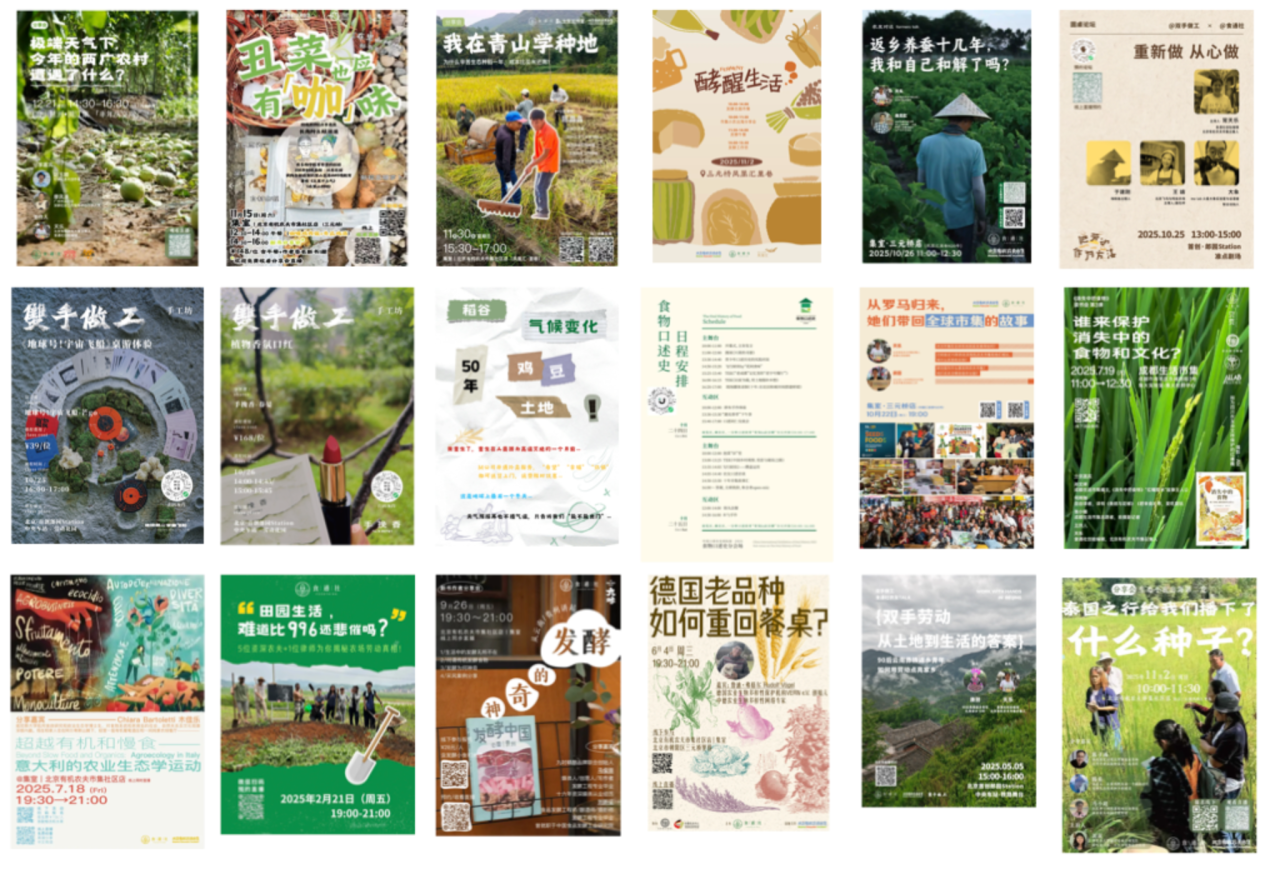
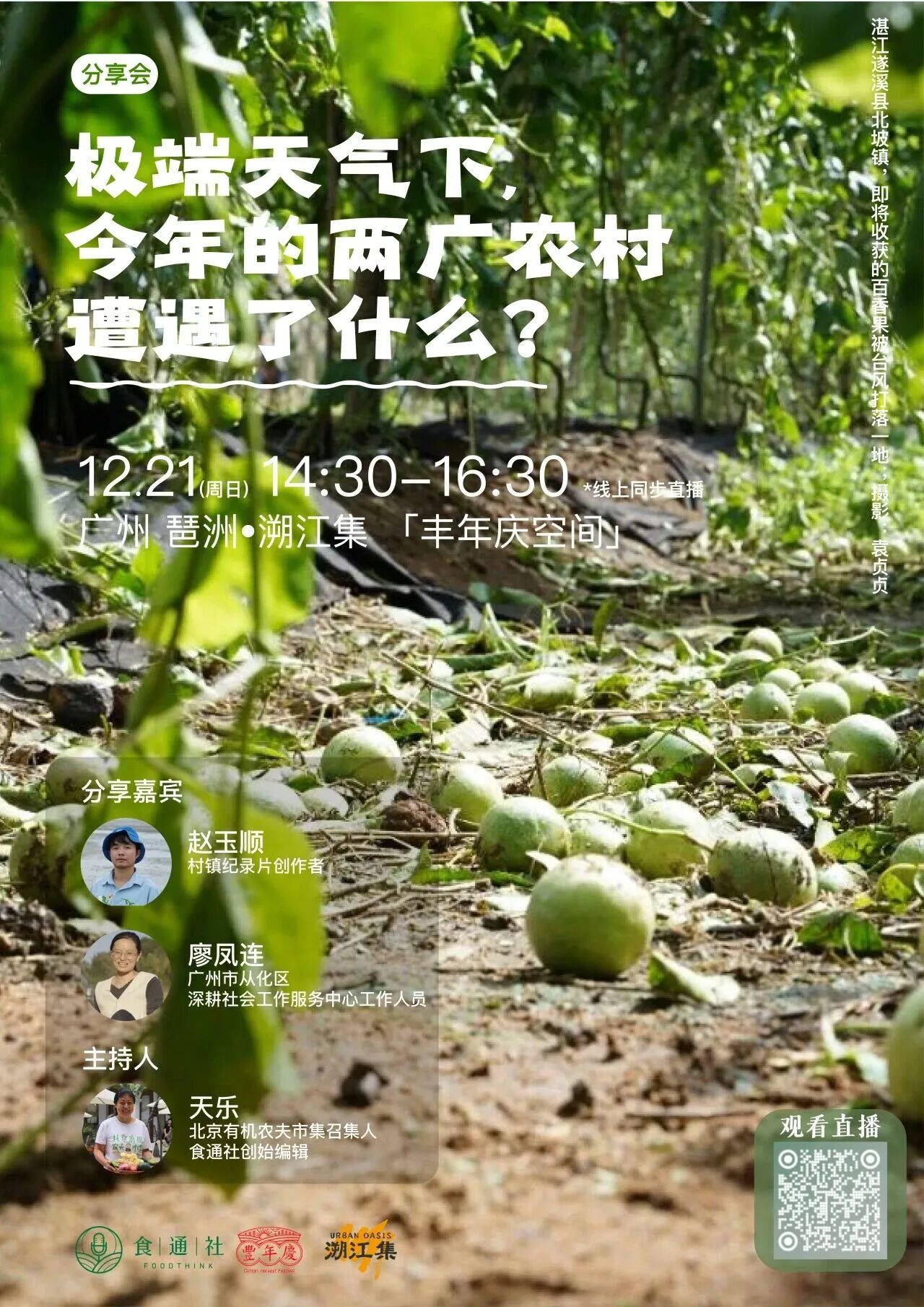
This year, “Extreme weather” and “climate change” became the keywords. From the shattering and reweaving of towns and villages after the July floods in Hunan, to the climate shocks that hit Guangdong and Guangxi at year’s end, we brought together meteorologists, agricultural researchers, and frontline witnesses and documentarians in dialogue, trying to understand how climate change is redrawing China’s agricultural landscape, and how those caught up in it are responding.
In 2025, we amplified individual voices – from a returned silkworm rearer’s long journey toward making peace with herself, to the joys and worries of Altay herders navigating market forces and grazing lands, to the “going abroad” trail of post-90s ecological smallholder farmers who set out from China to Thailand, then to Rome. The series of creative sharing sessions on Fake Meat Driving Out Real Meat wove together the voices of grassland herders with academic perspectives, pressing into the complex questions behind industrial meat substitutes.
In 2025, we turned the pages of Vanishing Foods alongside our readers, using cases from China and abroad to open up discussion on the protection of biological food varieties and the survival of local cultures. At the book launch for Fermenting China: Yunnan & Guizhou, we traced the arc from the fermentation traditions of Yunnan and Guizhou to the preservation of local culture. To complement this theme, we ran interactive calls – “Not Available Today” and “Eat Something Good” – … Through interaction and reading, we asked ourselves: as flavours disappear, what else will we lose, and what can we still create?
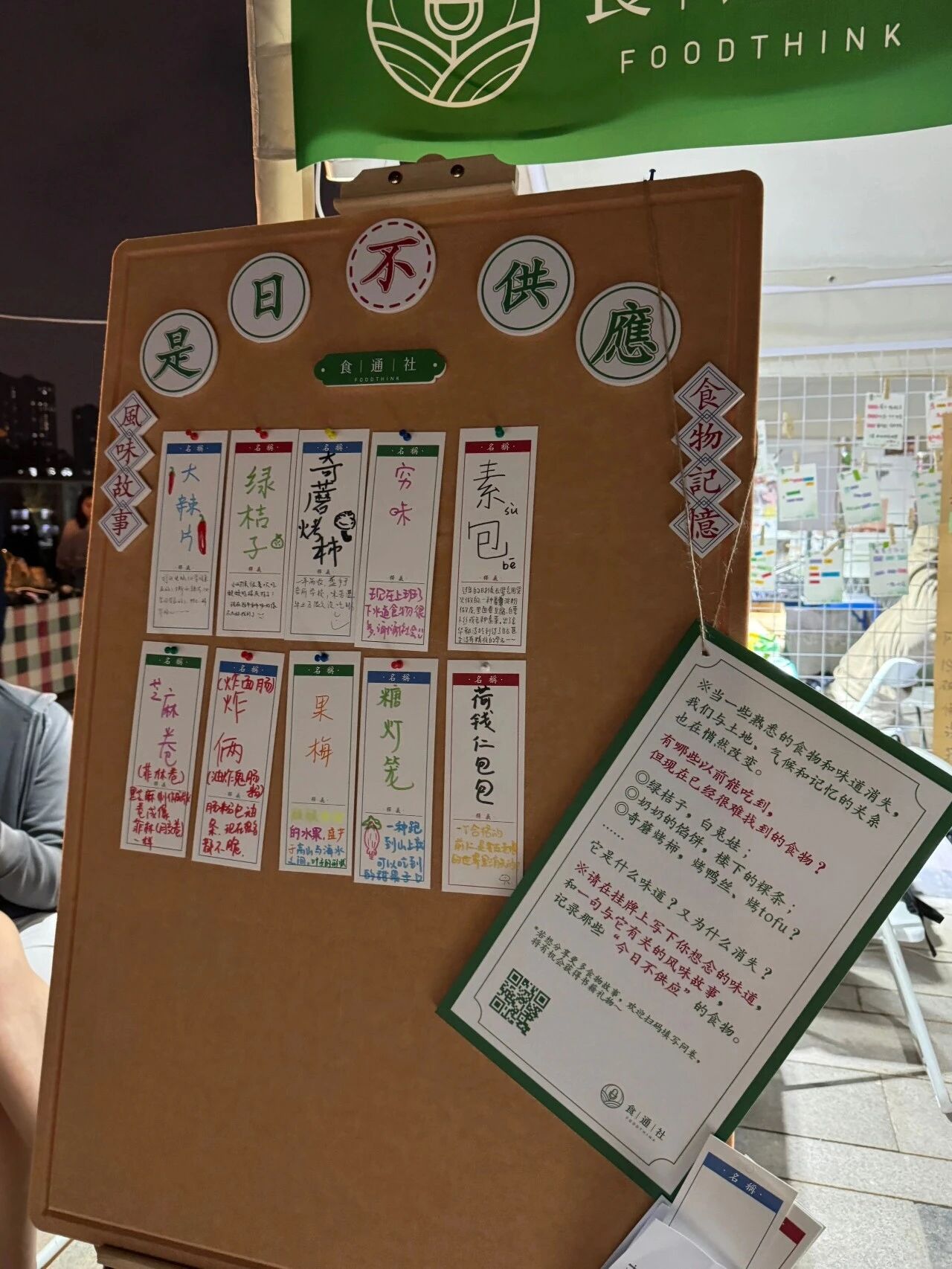
Offline, at the “Hands at Work” market in Beijing and the urban-rural Harvest Festival in Guangdong, Foodthink partnered with the Beijing Organic Farmers’ Market to set up smallholder farmer tables, handcraft workshops, and other activities. We invited Planet Earth! Spaceship to bring an interactive board game, and also brought a “Back to the Future” climate-change novel-continuation game and a ‘Poems Between Meals’ collage-poetry game, sparking reflection on the present and imagination of a sustainable future.
2025’s Last Letter: Foodthink Harvest Festival ‘Creative Chaos’ Grand Awards
– Lianhe Creative Programme –
Over the past year, supported works have been published one after another, drawing sustained public attention and getting more people to discuss the issues behind pastoral regions, farmers, and the food system. This programme has also made us realise that, when it comes to food and agriculture, there are still many unseen questions waiting to be answered. And so, at the end of 2025, Foodthink’s Lianhe Creative Programme sets sail once more, continuing to support creators and researchers in asking questions of food and agriculture.

– The Flowing Table –
Food-Agriculture Media Workshop
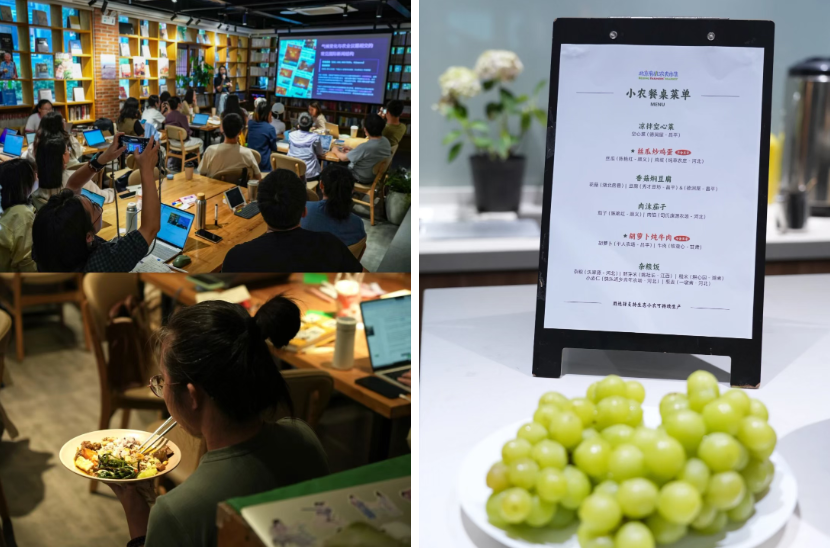
This workshop brought together a diverse group of participants: beyond traditional news media, there were media editors from knowledge platforms, as well as independent creators who have spent years embedded at the front line, using film and video to document how smallholder farmers adapt to and are affected by climate disasters.
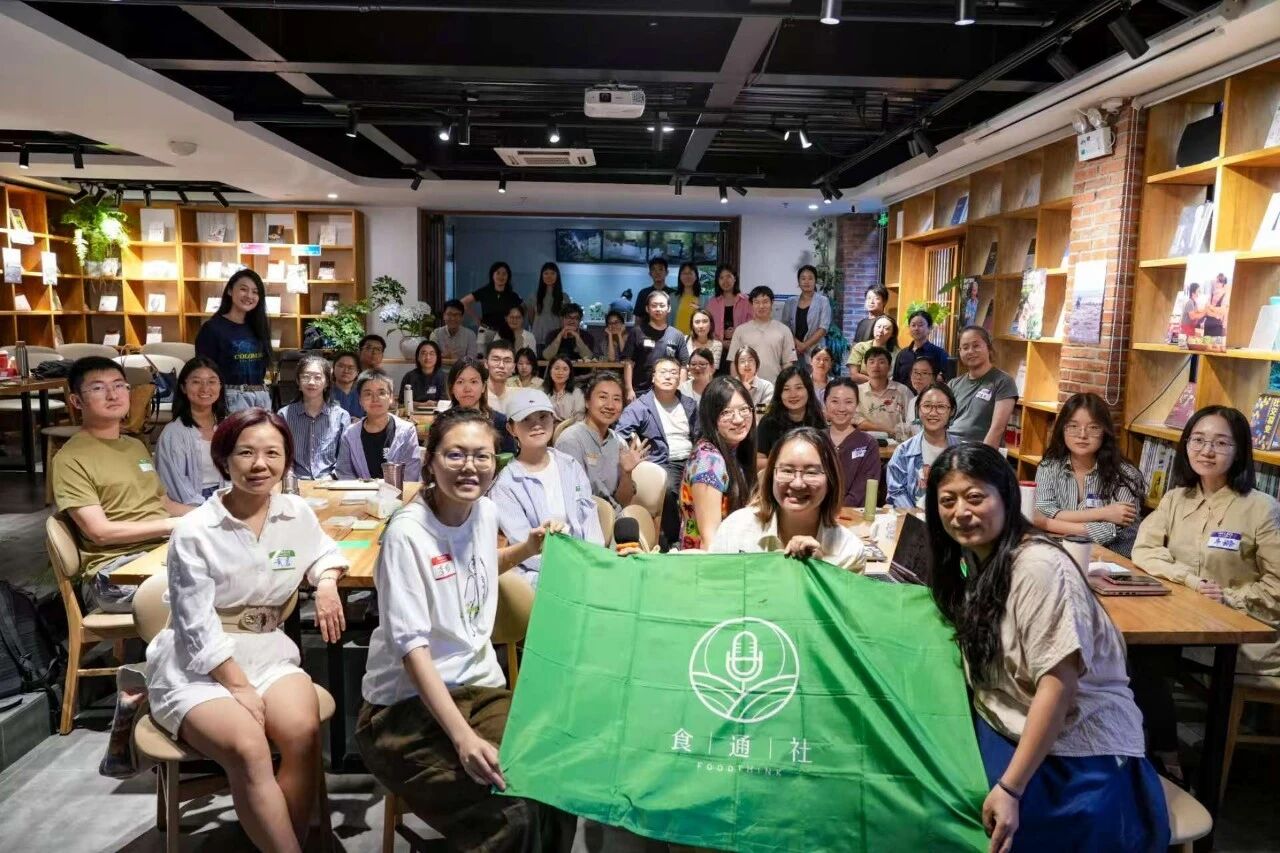
In addition, Foodthink’s sister organisation, the Beijing Organic Farmers’ Market, provided participants with an “ecological smallholder” lunch. While we were discussing how agriculture should respond to extreme weather, how to support sustainable agriculture, and how to rebuild trust between consumers and producers, Foodthink was also supporting smallholder farmers through the most everyday, most direct action of all.
– Facing Climate Change: Rural Social Organisations in Action –
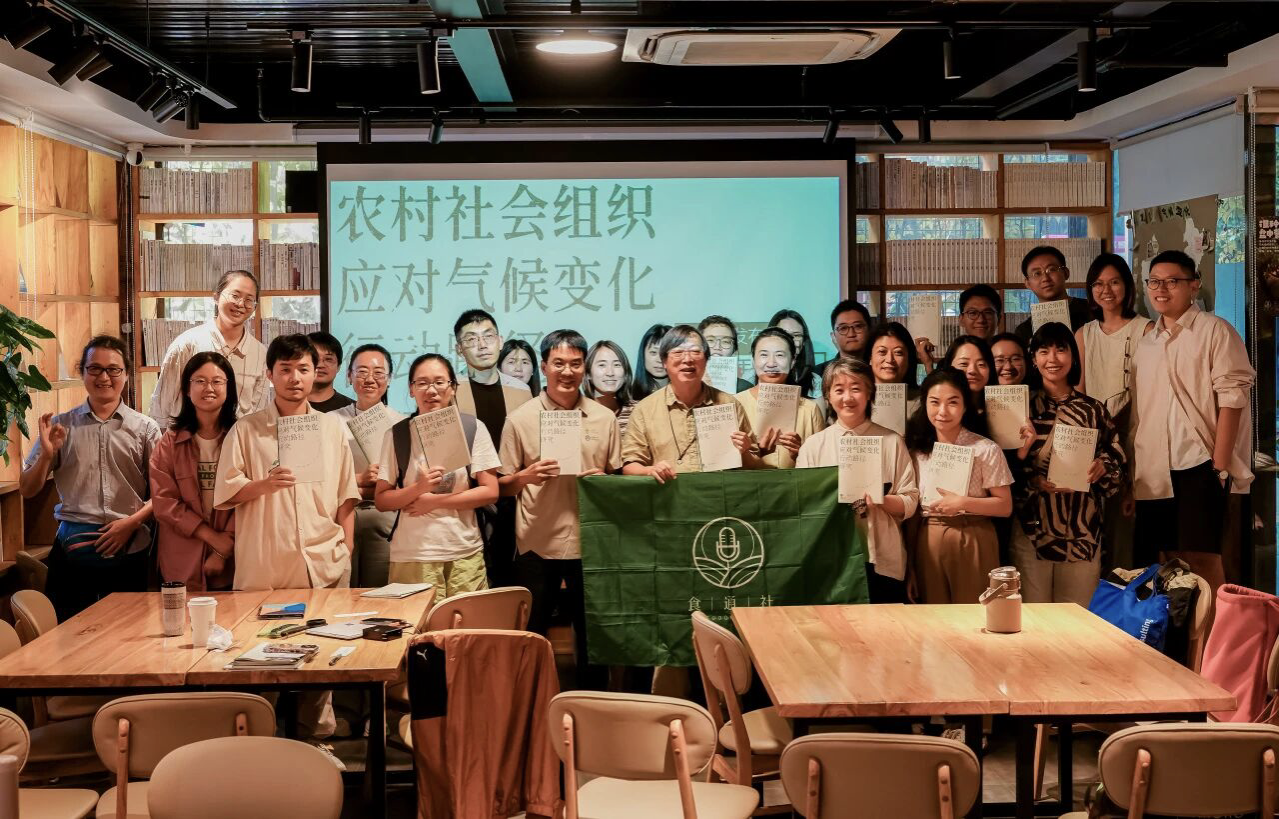
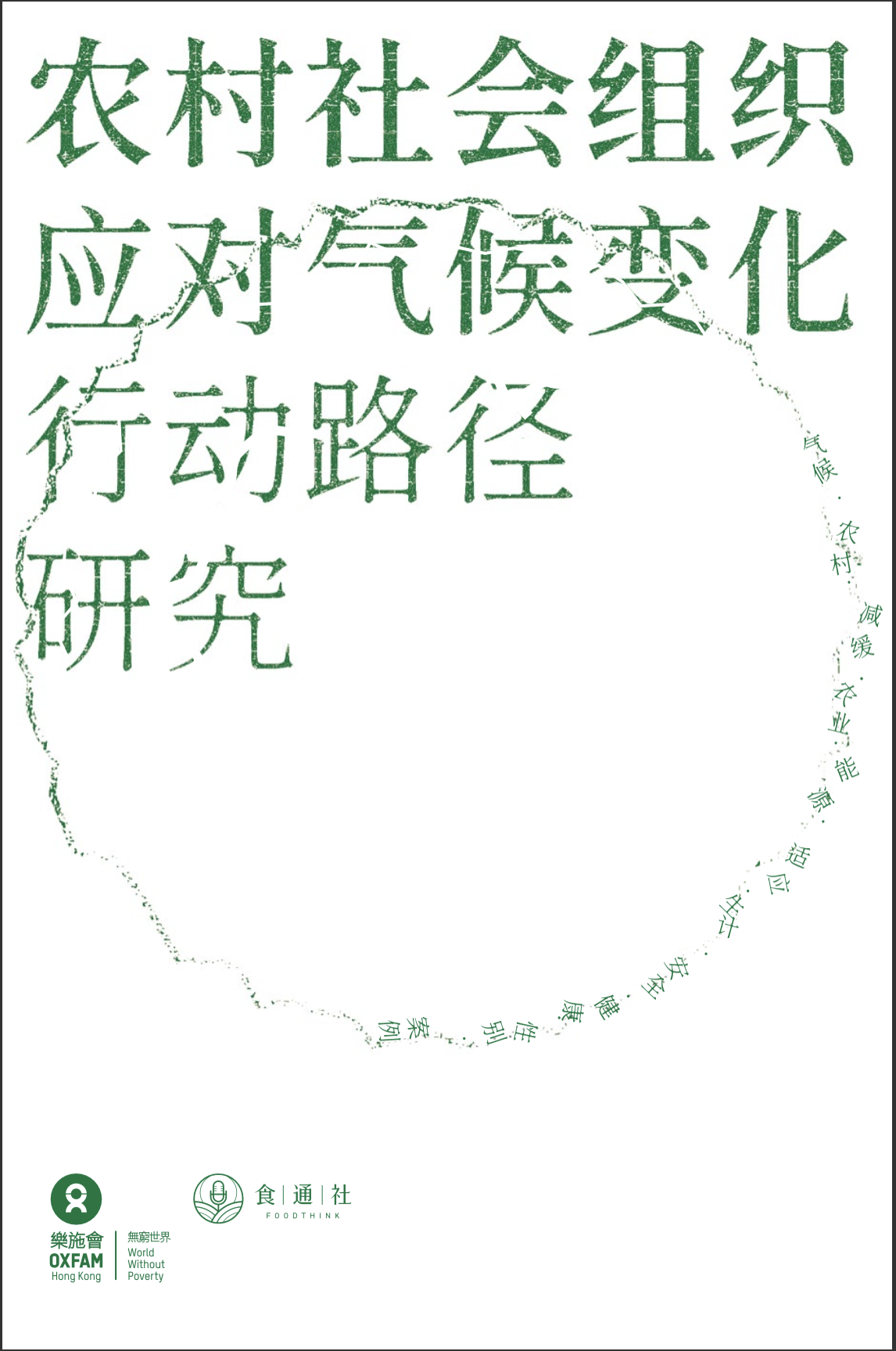
The wisdom of those who came before, and the pitfalls they fell into, we have distilled into this report – Research on Action Pathways for Rural Social Organisations in Responding to Climate Change.
With Oxfam (Hong Kong)’s Beijing office, Foodthink conducted extensive interviews and survey research over the past year, and held workshops in Nanning and Xianyang respectively, exploring in depth with fellow farmers, village cadres, social organisations, and scholars the questions raised above. The report’s core finding is this: not only is the climate changing – the countryside itself is changing, and only by understanding the transformation of rural life can we discern the underlying logic of climate work. At the report launch, Foodthink emphasised that a genuine path to climate resilience can only be found on the basis of a deep understanding of rural life’s internal dynamics, and called on colleagues in the public-interest sector: “Don’t turn mitigation into a numbers game, and don’t turn adaptation into a game of words.”
“Thank climate change for getting everyone to pay attention to rural areas”
Is Climate Change in Rural Areas Really Just a “Natural Disaster”?
– Co-Building and Co-Learning Camp for Local Ecological Agriculture Systems –
Where, then, to find such techniques? In December 2025, Foodthink hosted the second Co-Building and Co-Learning Camp for Local Ecological Agriculture Systems at Huiling Farm in Guangzhou, drawing over 30 participants from across the country who are committed to a career in ecological agriculture. The camp goes beyond exploring the underlying logic of ecological growing methods: it also brings together traditional smallholder farmers, new-generation farmers, consumer co-buying groups, and NGOs to discuss how, in a market for ecological and organic produce where “a hundred flowers are gradually dazzling the eye,” smallholder farmers can build on their own strengths, advance steadily, and find a viable path for sustaining their livelihoods. In that sense, the camp is merely the starting gun of a long marathon. This year, Foodthink will also organise a third camp – farmers who are interested are welcome to star Foodthink’s WeChat public account so as not to miss the latest training updates.
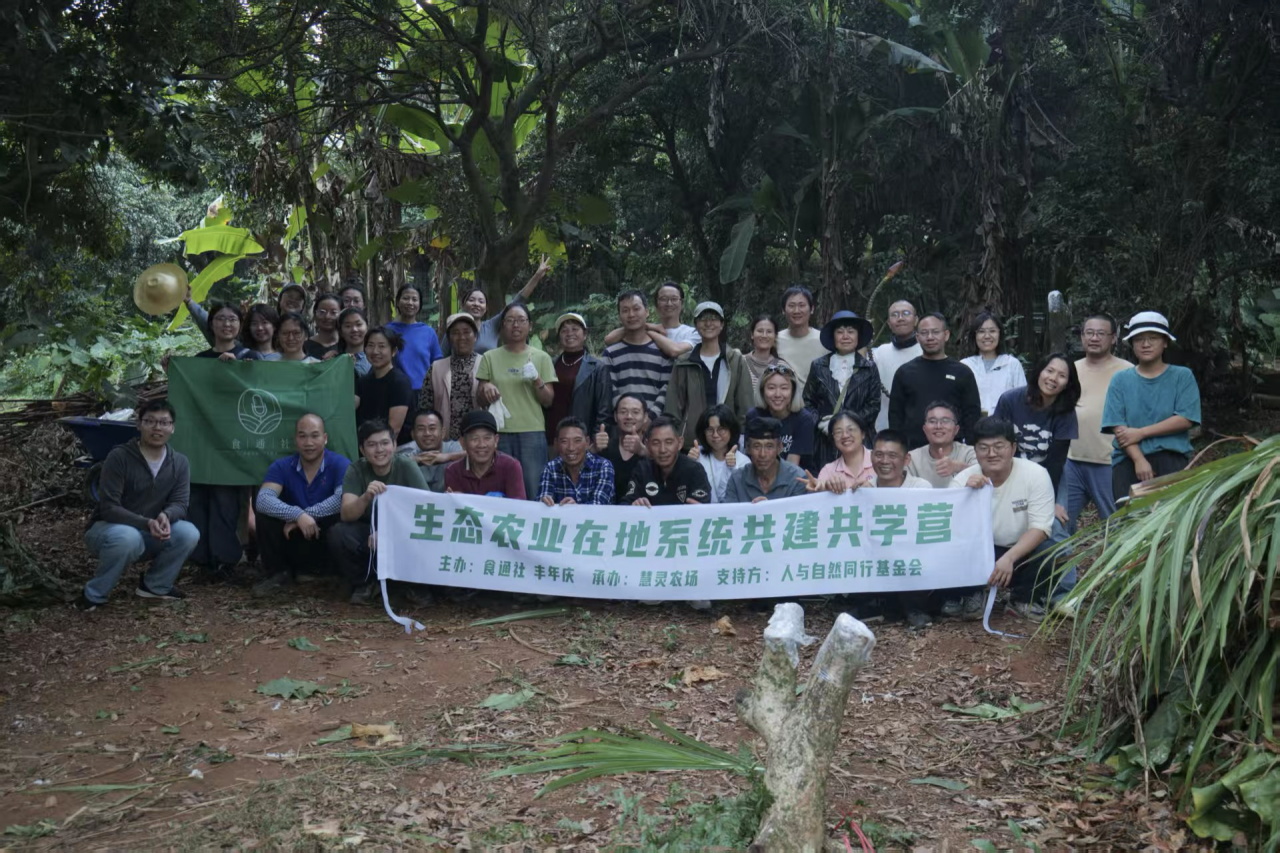
Learn Practical Ecological Agriculture Techniques in Three Days | Training Call
– And More –
One Last Thing
All of us at Foodthink wish you all, in the Year of the Horse,
On 🐎, eat! On 🐎, eat well!
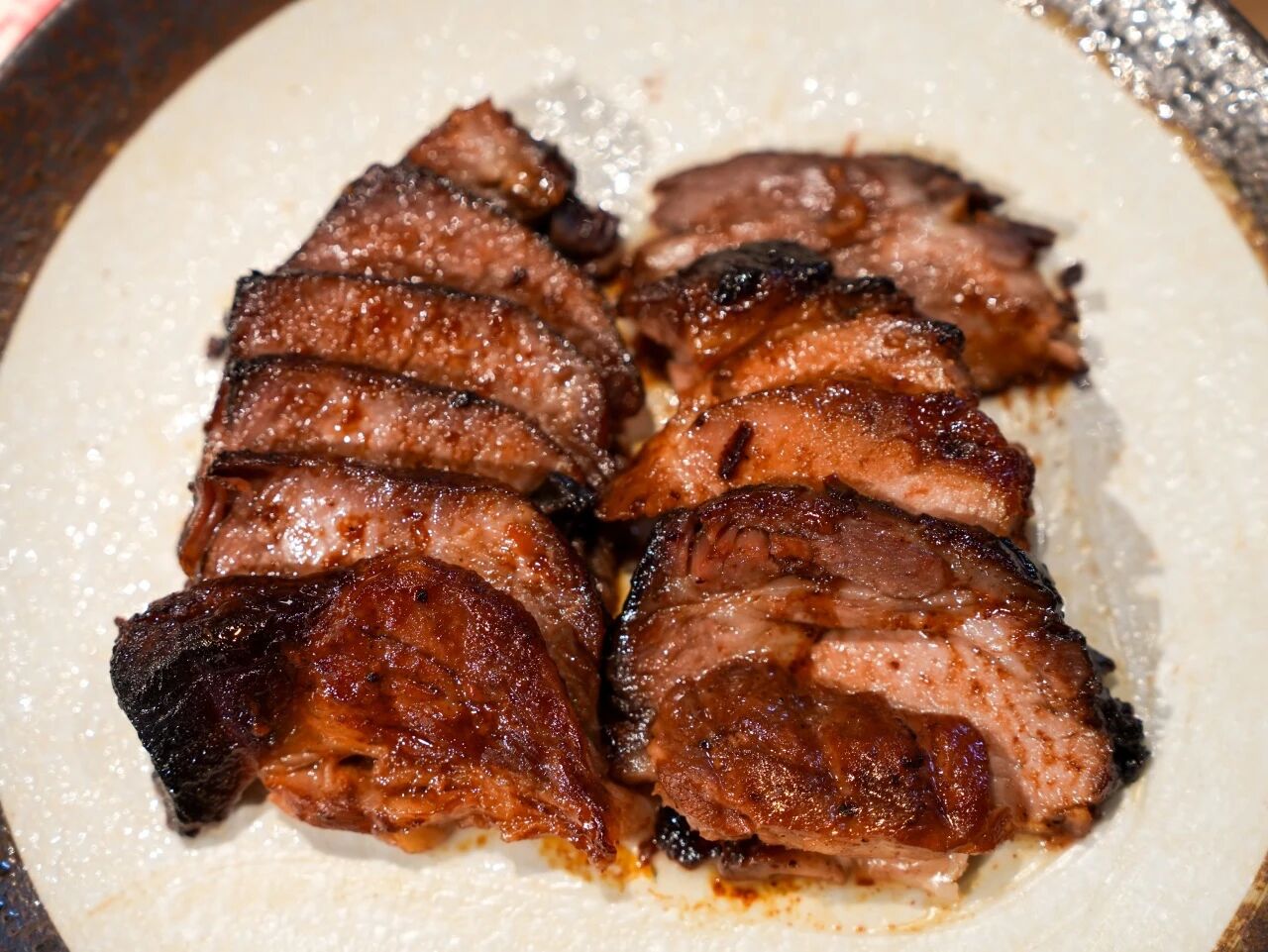
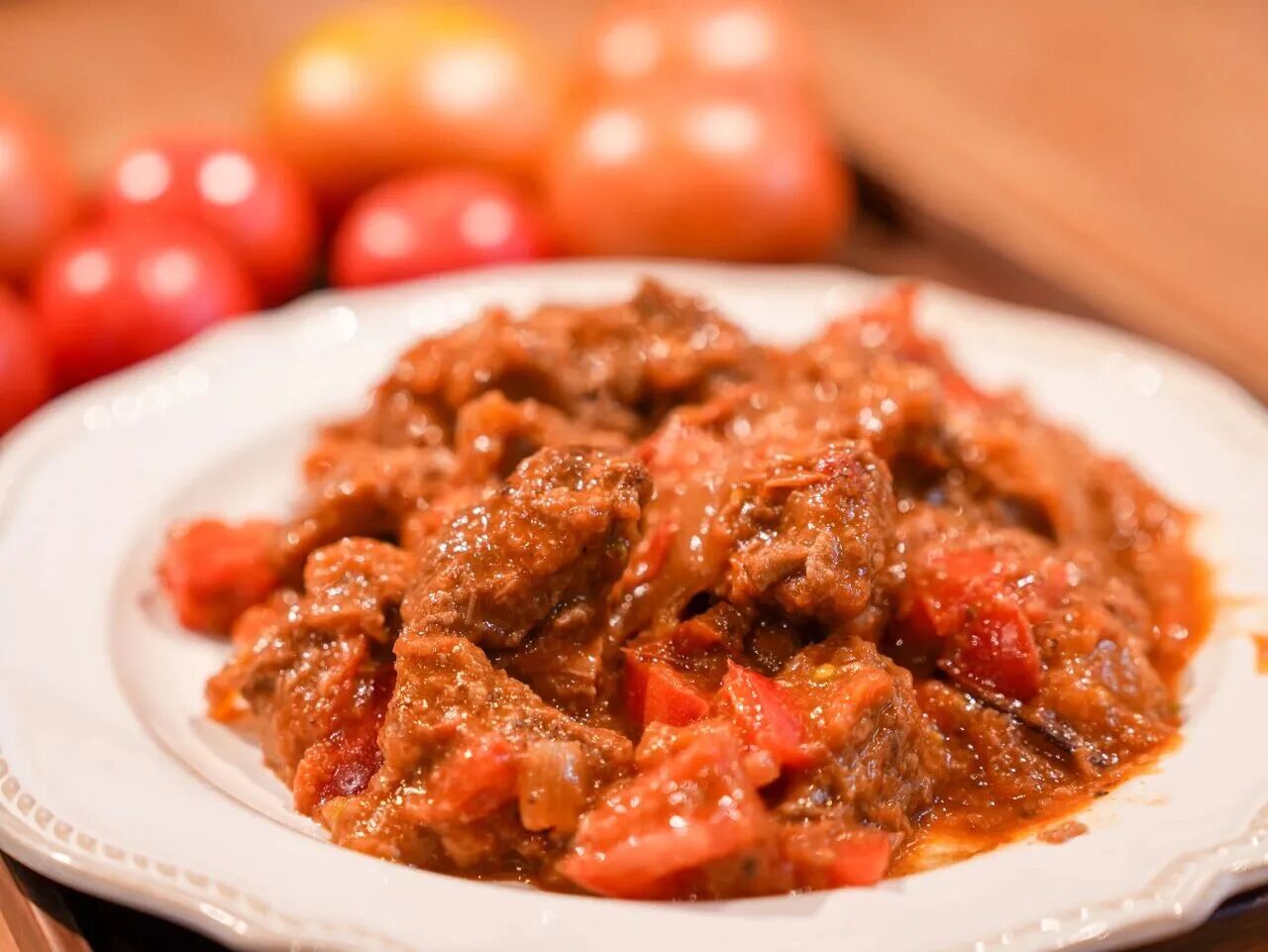
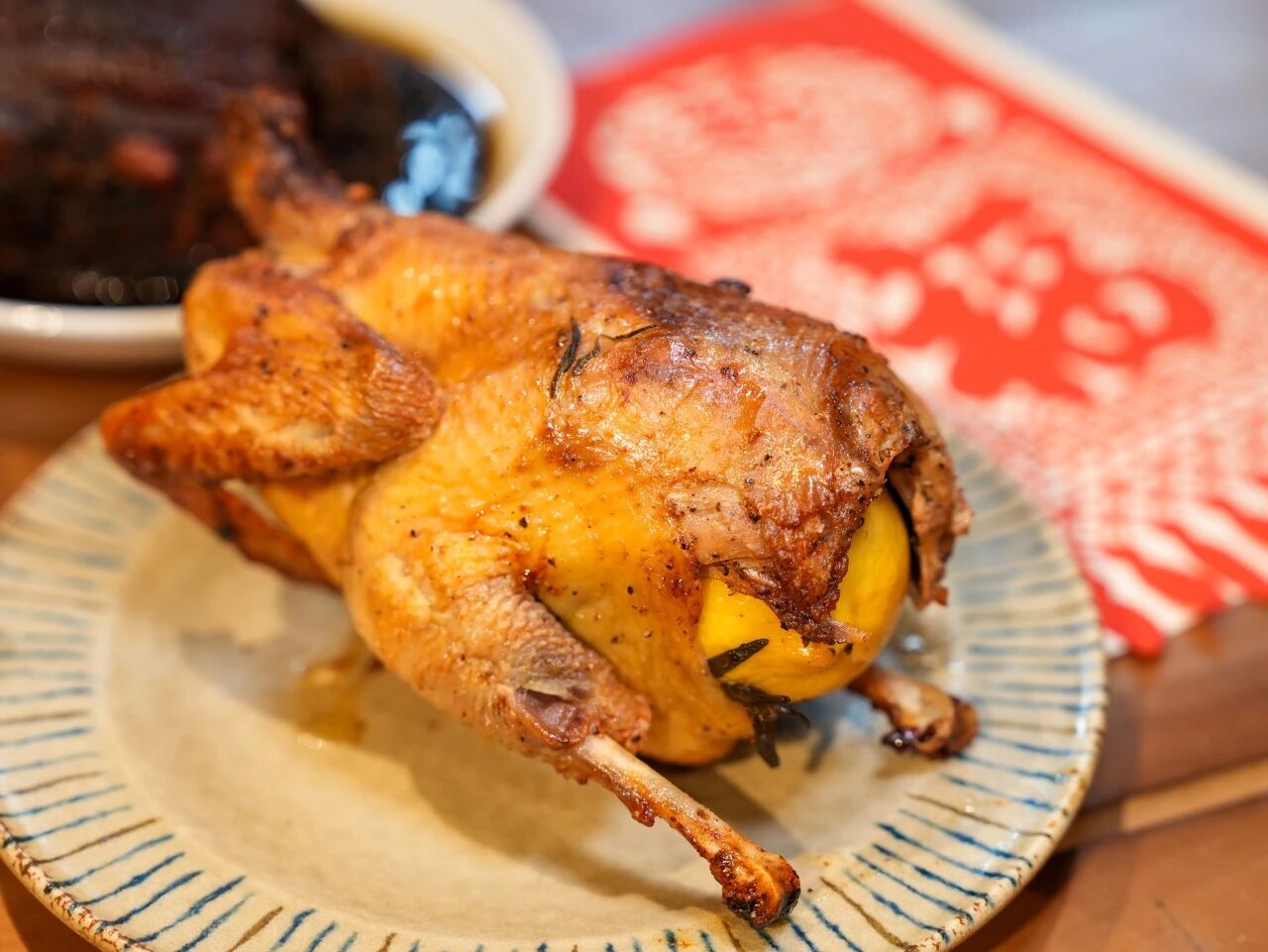
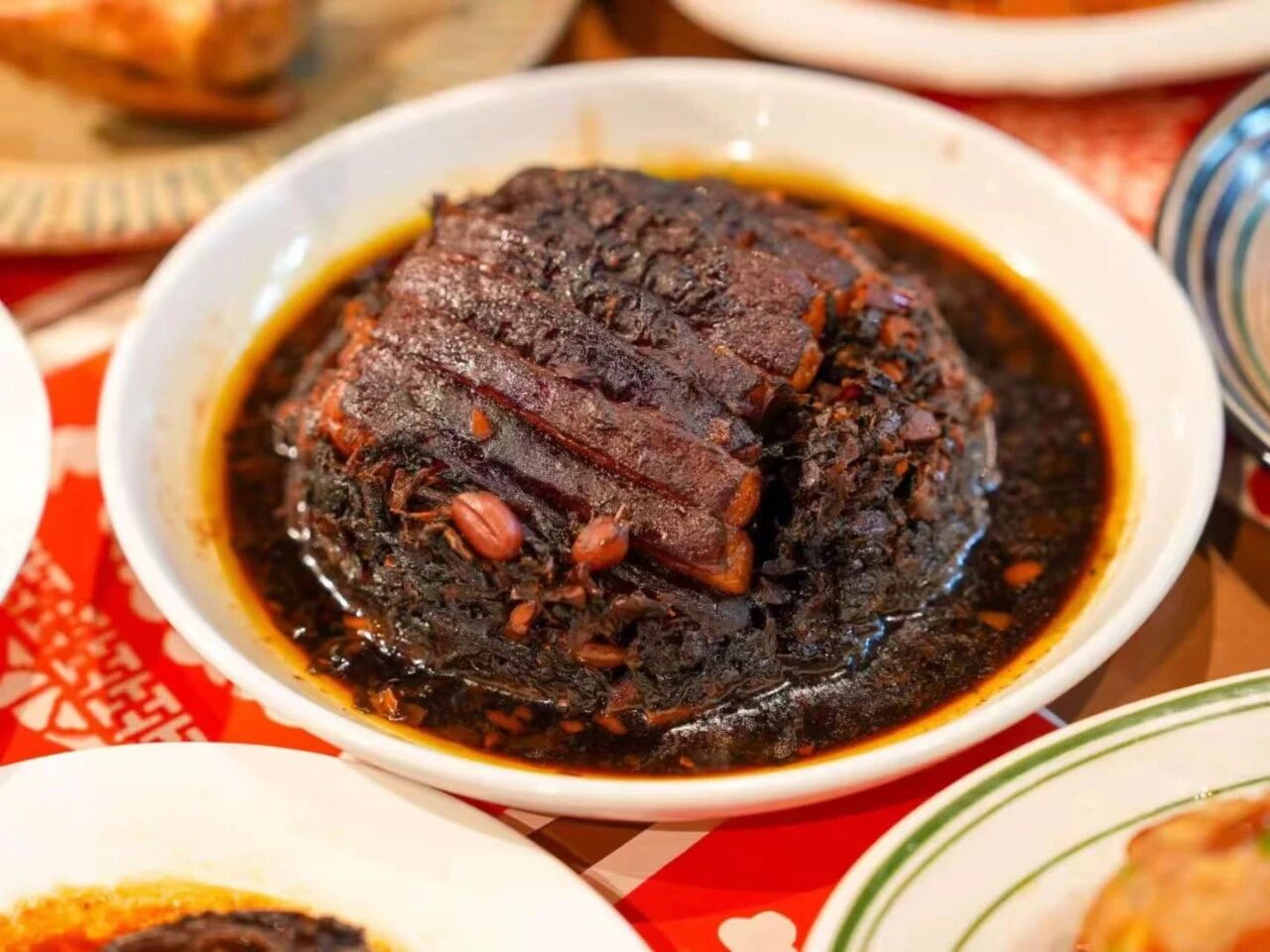
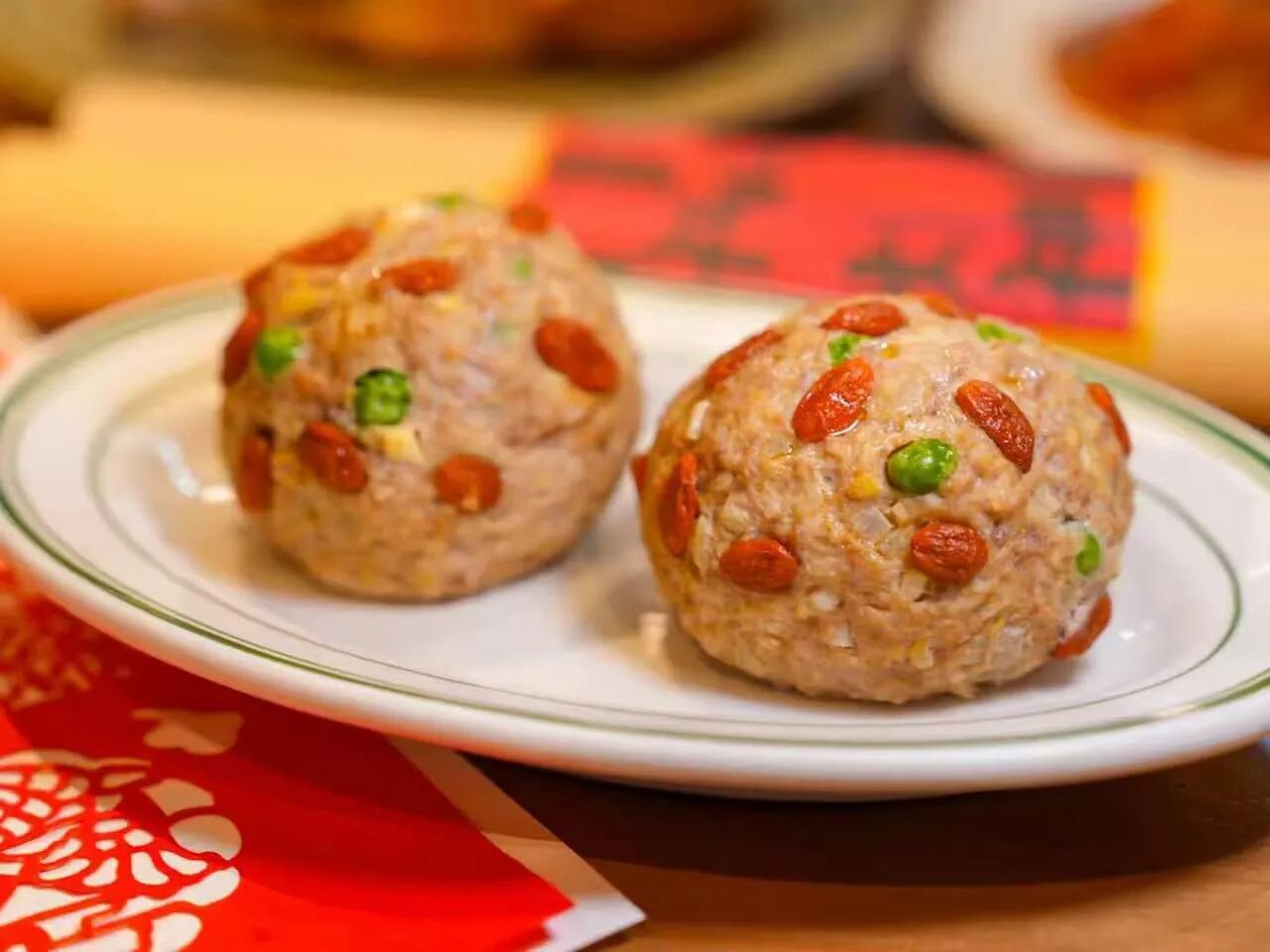
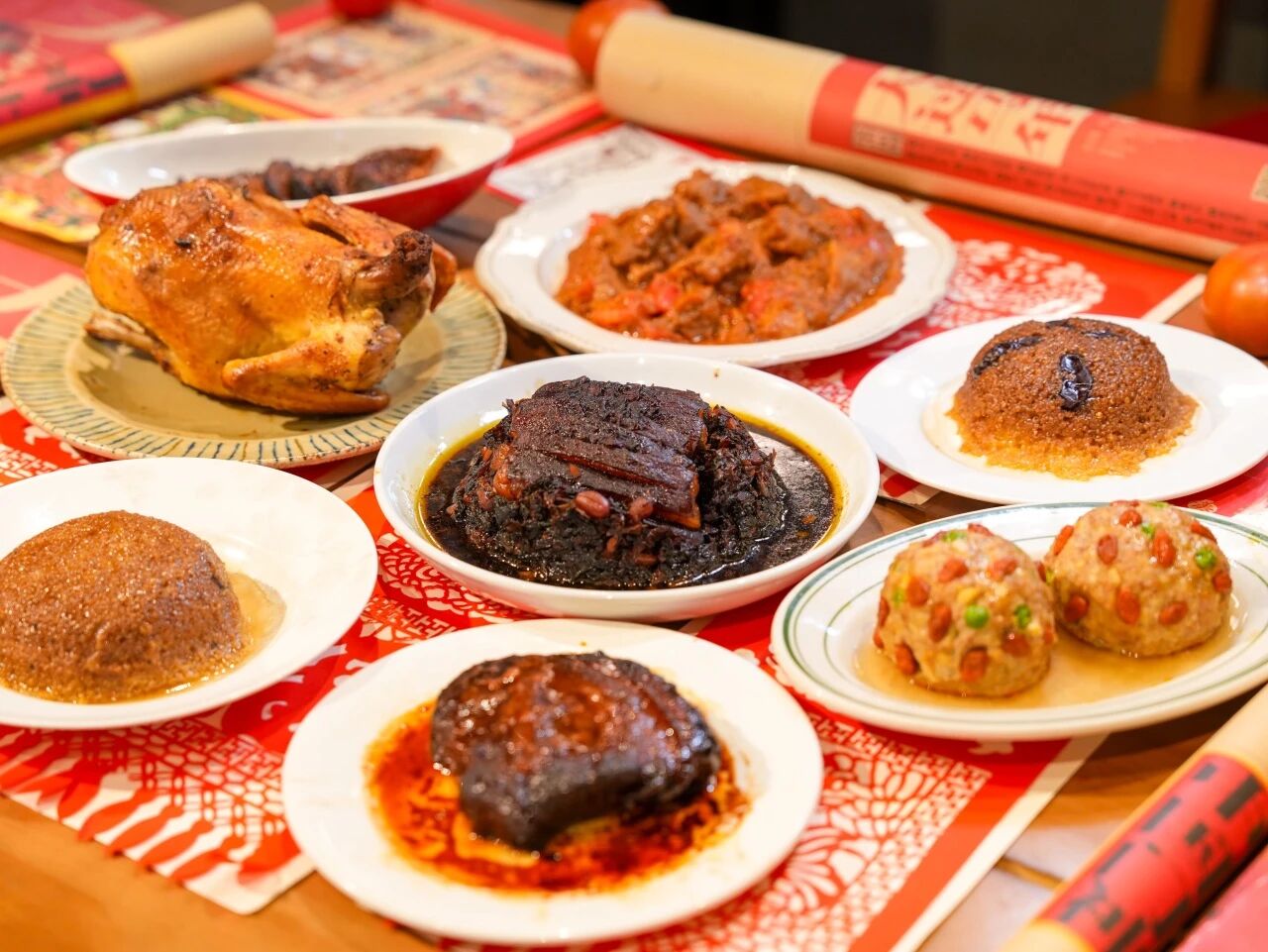
●On 7 February, Foodthink fully took over of the Jishi offline space at the Beijing Organic Farmers’ Market (for just one day) – see what delicious New Year’s Eve dishes we got to enjoy. You can still pre-order now, so get your hands on some healthy, tasty ecological New Year’s Eve dishes!
Coordinated by: Li Ye, Kerry
Edited by: Tianle