
Only in the Corners Delivery Cannot Reach Can You Eat Properly
Foodthink’s Note
The Chinese table is propped up by the countryside, yet the countryside’s own table rarely receives any attention. We hope this piece offers some inspiration to those venturing into the countryside for the Qingming holiday, and we welcome everyone to share their experiences and observations of the rural table.
1. Food in the Village
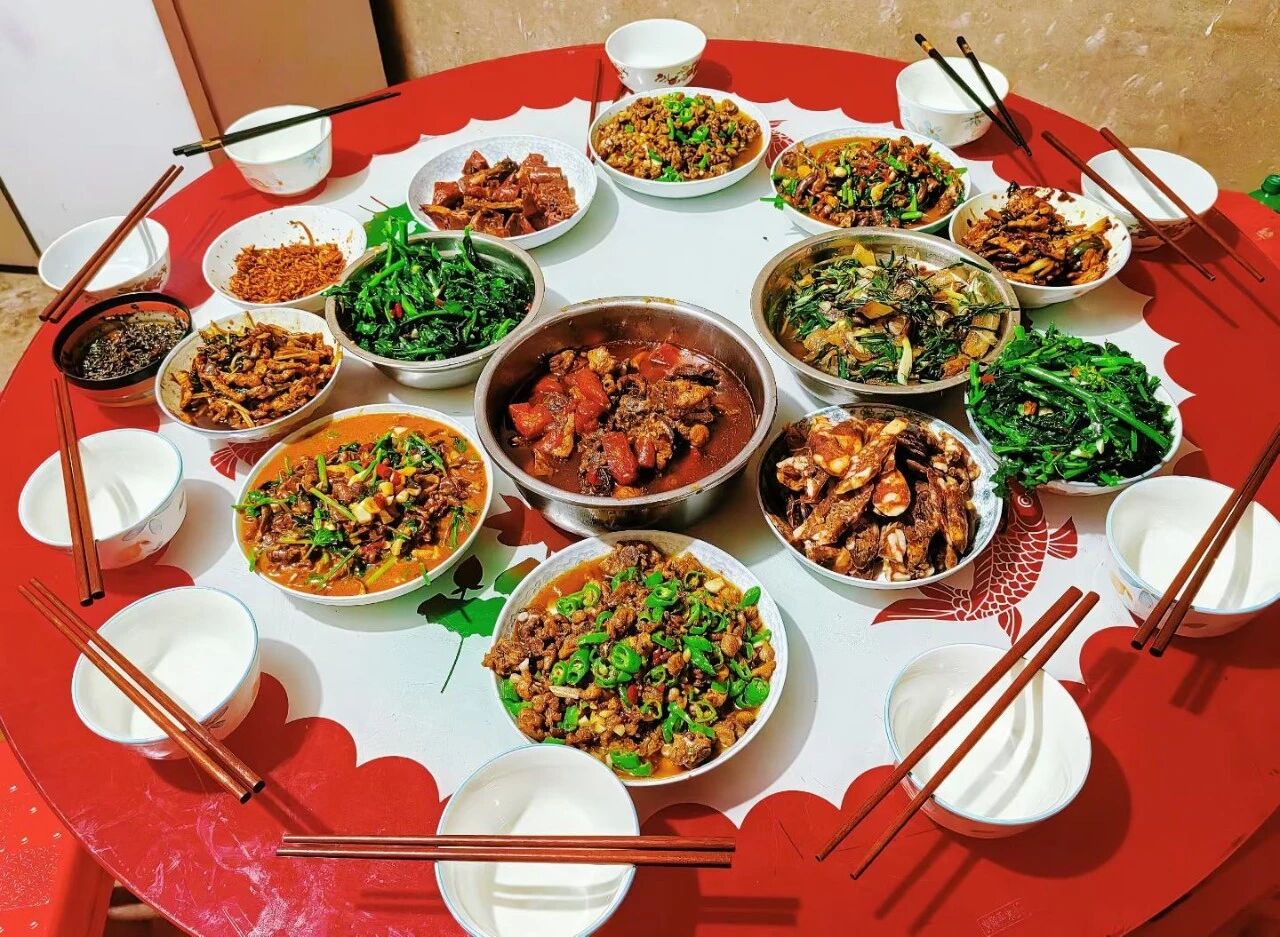
On 8 February, we set off from Wenzhou — by plane, then racing to catch the high-speed train — travelling the entire day until we finally made it back to the family home in the Sichuan village at nine in the evening. My father-in-law brought out a huge bowl of pig’s ears and pig’s-head meat, and a bowl of “chilli sauce”. My daughter Shu’er and I were so ravenous that we ate with our hands.
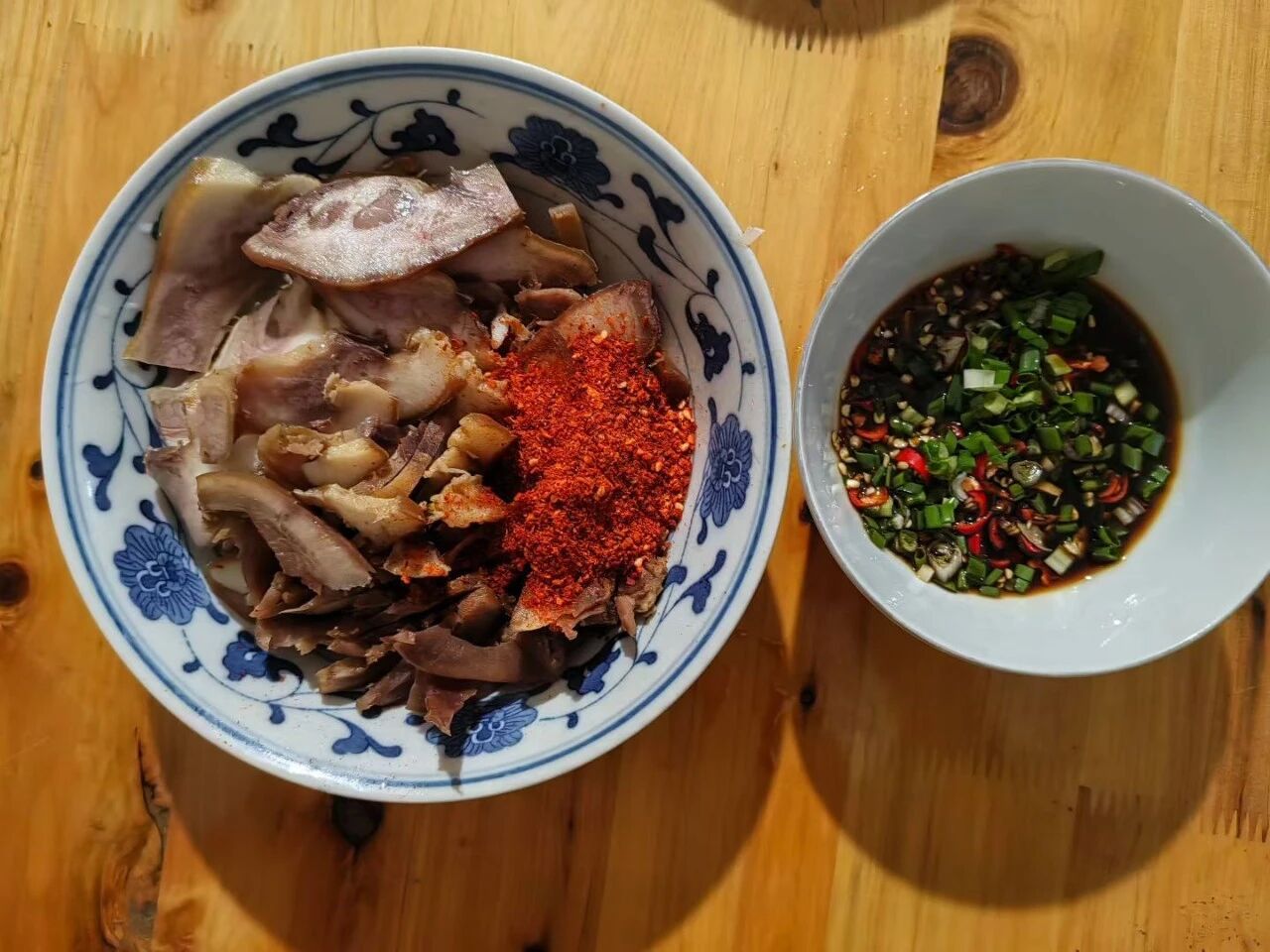
This is probably one of the last few places left in China not yet invaded by fast-food delivery and instant snacks. The location is so remote that home delivery simply cannot reach it. Ride-hailing apps and grocery-delivery platforms show the location as Wannianfen, yet no driver or courier will accept the order. Fortunately, apart from the children, no one craves cola and fried chicken, so the family’s meals go perfectly well without them.
I was also briefly freed from my caffeine dependence. A severe coffee addict, in Wenzhou I kept myself going day after day on a 7.9-yuan convenience-store latte — poor-quality stuff made with milk on the verge of its sell-by date and coffee beans that had gone a little rancid. During the New Year holiday, a single cup of freshly ground coffee meant a forty-minute walk along mountain paths, catching the bus that ran only once an hour, and another hour’s ride to the Wanda Plaza in Weiyuan County. The round trip took at least three and a half hours. Miss the return bus, and a taxi would cost no less than 80 yuan.
Beyond coffee, sourcing other ingredients in the countryside is surprisingly not easy either. My in-laws’ village had been losing population for five years. Everyone left was elderly; the young barely farmed at all. The elders ate mostly the vegetables and mandarin oranges they grew themselves. For other fruit or pork, they had to go to the township market. The villagers kept chickens and ducks too, but only slaughtered them to serve guests on festivals. Even the eggs they ate came from their own hens, though they only ate unfertilised eggs. If an egg was fertilised, the elders could not bear to eat it themselves and would take it to the poultry farm to sell.
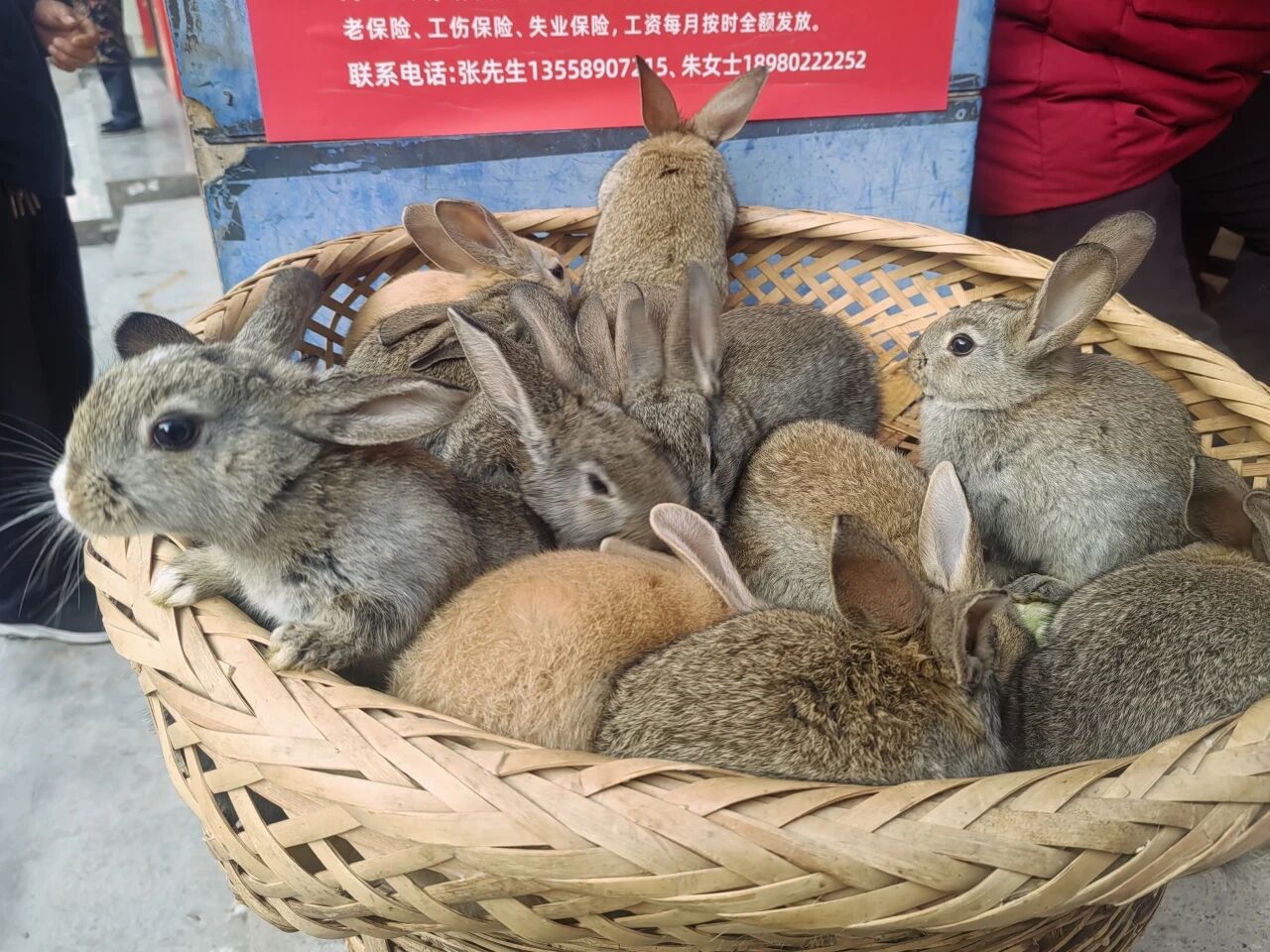
Over the eighteen days we spent in the village, we went to the township market often but missed it several times because we overslept. The elders would set off for the market at six in the morning, before dawn. By ten o’clock, the market was over. The stalls at the ground-level market offered live chickens, ducks, and rabbits — a sight rare at a city wet market — and you could even watch a pig being slaughtered on the spot. Every elder at the market carried a bamboo basket on their back. The grandmothers wore knitted burgundy woollen caps and bright-red floral padded jackets; the grandfathers wore Lei Feng caps — old-fashioned ear-flap winter hats — and military overcoats or navy-blue Zhongshan suits. The scene looked like a set from a Jia Zhangke film.
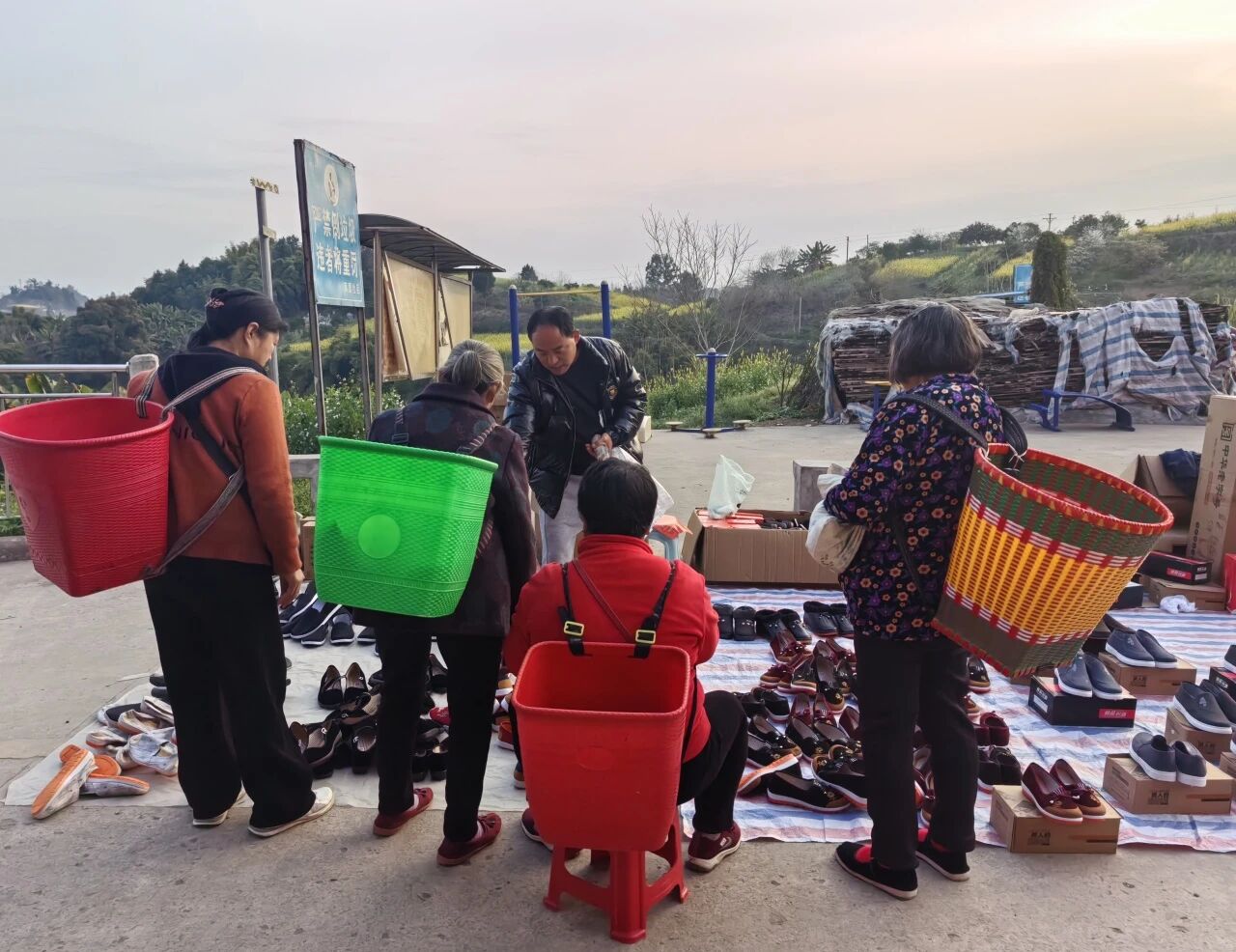
Some ingredients could only be found at the town’s wet market. The most memorable meal of the whole fortnight was when three families gathered together for hot pot. Everyone piled into cars and drove for an hour over the hills to the busiest market in Rong County’s old town to gather hot pot ingredients. The lamb broth, lamb offal, beef tripe, aortic arch, beef omasum, thinly sliced rolled lamb, and thinly sliced rolled beef that the hot pot demanded were simply not available in the township.
My second brother-in-law hauled out his “treasure of the house” — a charcoal-fired copper hot pot. Watching my niece poke lumps of coal into the stove’s mouth with iron tongs, memories came flooding back of the 1980s and ’90s, heating coal at home and swishing lamb slices through the pot. The broth was spicy beef tallow, enriched with a full jin (500 g) of lamb broth. For the first time, I ate myself full on genuine hot pot fare — lamb stomach, lamb intestines, beef omasum, and aortic arch. My eldest brother-in-law also brought over two bowls of chicken blood saved from the New Year’s slaughter. Left to sit, it had set into a purple-red jelly.
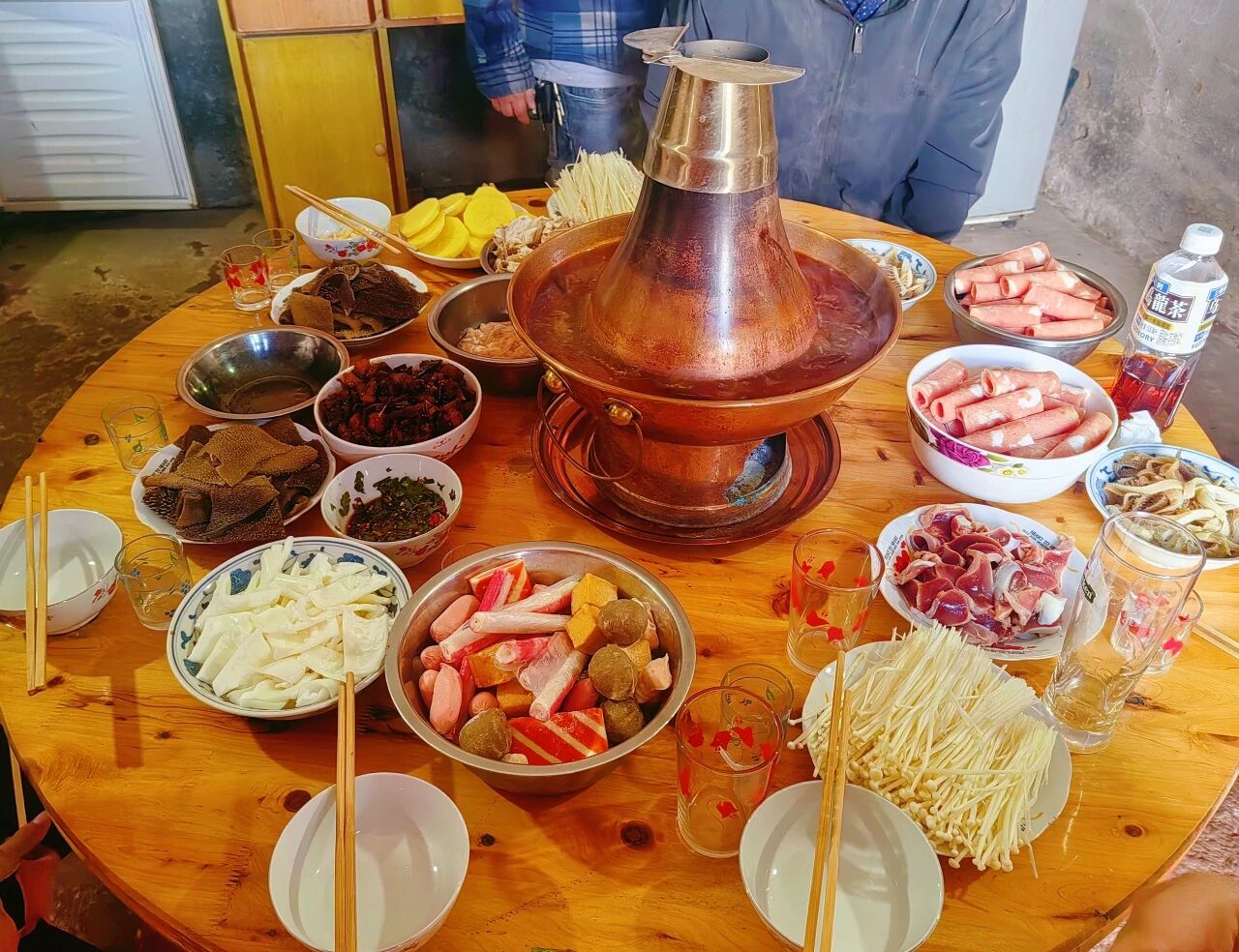
In Sichuan, you generally do not cook vegetables in hot pot, because the leaves soak up too much oil. Even if you do have them, they come last. Only when the hot pot feast was winding down did everyone start cooking cabbage, celtuce leaves, Swiss chard, pea shoots, and other greens. These vegetables were either grown by my father-in-law or picked from a neighbour’s field. In the village, it is perfectly fine for neighbours to pop into each other’s fields and pick a few vegetables.
Beyond the hot pot, Fifth Aunt also stir-fried rabbit stomach — a plate of celery and spiral chilli stir-fried with rabbit stomach. I polished off nearly half the plate, so delicious I could not stop my chopsticks. The dish takes real effort. First, the rabbit stomach is scrubbed clean with salt, vinegar, and rapeseed oil to remove any offal smell, sliced into strips or small pieces, then blanched. Dried chillies, young ginger, green peppers, bird’s eye chilli, pickled chilli, Sichuan peppercorns, and garlic are all prepped and cut into small pieces. The rabbit stomach is stir-fried over high heat in rapeseed oil, then the prepared seasonings and any vegetables you like are tossed in. Season with salt and cooking wine as you go. To mask any gaminess, you must be generous with the pickled chilli.
“Having you here, Aunt Bao and Uncle Bao — that’s what we say for auntie and uncle in Sichuan dialect — is a real blessing. Your visit means I get to treat myself to a feast and eat properly for once, hehe,” my niece whispered to me between turns of tripe in the pot.
2. A Great Fish Begins with the Catch
Five years ago, natural gas pipes reached every household in the village, but my father-in-law still insists on cooking over the wood-fired stove. First, the rice is rinsed clean and drained, then boiled until six or seven-tenths done — five or six-tenths if you like it firm. A steamer basket is set in a wooden bucket, lined with muslin cloth, and the parboiled grains are tipped in. A chopstick is jabbed in many places to keep the rice fluffy and breathable. The wood-fired stove is lit, a large iron wok is filled with water and brought to the boil, the bucket goes inside the wok, the lid is placed on top, and once steam rises, the rice steams for another fifteen minutes. The result is more fragrant and tender than anything a rice cooker could produce. Even without premium Wuchang rice, the grains fill the kitchen with the smell of perfectly cooked rice.
The men’s spicy native crucian carp was equally exceptional. A batch of twenty or thirty fish: scales scraped clean, bellies slit open, guts scooped out, but the swim bladders and roe kept. Every fish gets a pass through the deep fryer. Meanwhile, a pot of chilli water laced with Pixian doubanjiang is brought to the boil, seasoned with prepped ginger, garlic, dried chillies, aromatic spices, and star anise. The fried fish are returned to the pot and simmered for a few minutes. Just before serving, a handful of freshly pulled, chopped coriander and spring onions are scattered over, then everything is tipped into a serving bowl. But to sit down and enjoy that spicy native crucian carp, five hours must pass from rod to table. Behind the easy pleasure of silky fish flesh lies an abundance of patient labour.
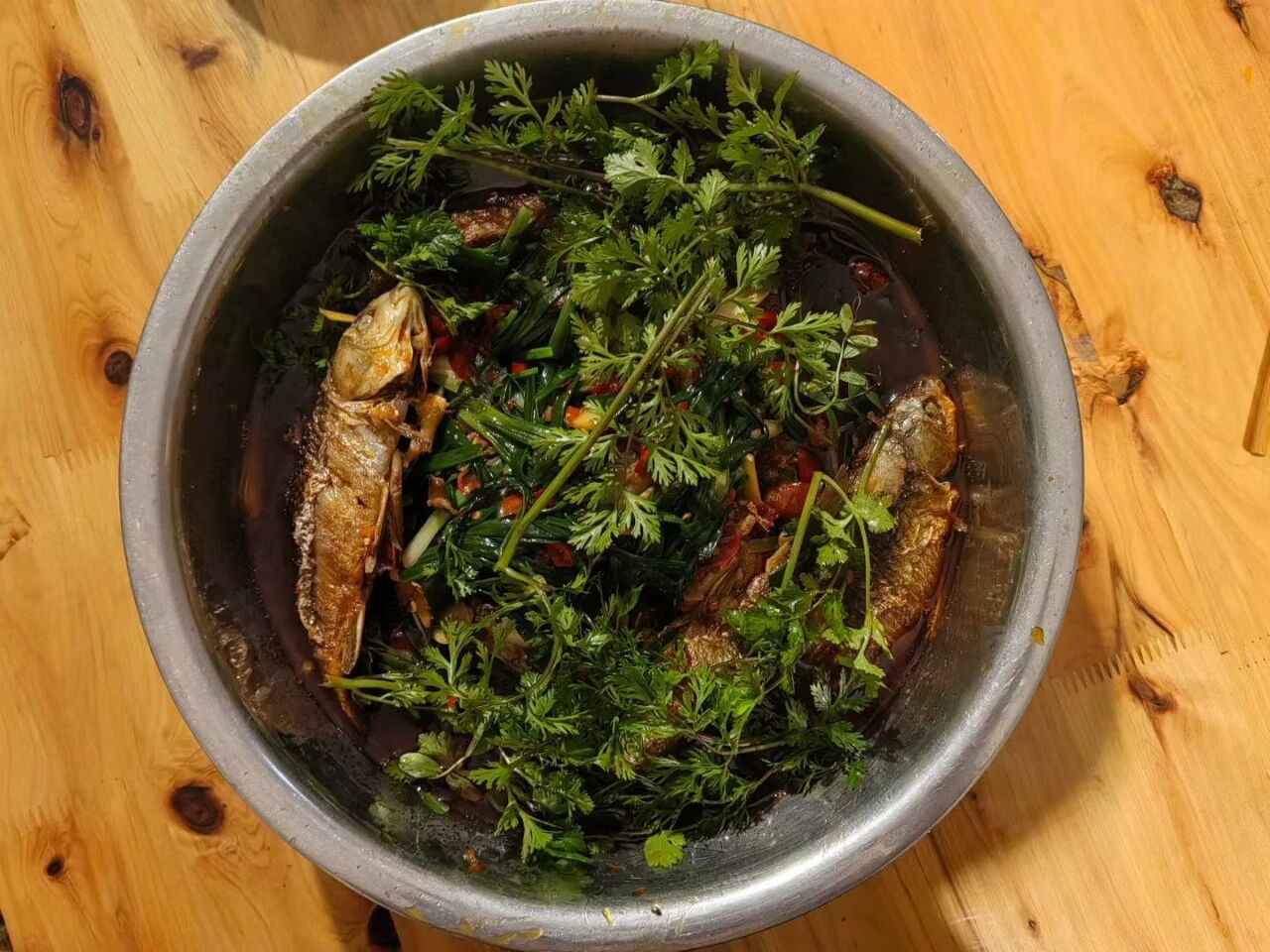
In fact, it is hard to find fish in the small towns of rural Sichuan. Only during Chinese New Year can you buy crucian carp at the township market. Even ordinary crucian carp goes for over ten yuan a jin — nearly half again the price of the Wenzhou wet market. To enjoy everyday river fare like fish, prawns, and shellfish, you must go to the county town; for river crab or mud crab, you are practically limited to the restaurants. Eating fish has become a deeply ritualistic part of New Year.
During the holiday, all the relatives love to come and fish in the pond. My husband, his elder brother, and his younger cousin form the unbreakable triumvirate of New Year fishing. The three men often spend three or four hours pulling out forty or fifty fish. Honestly, I could not see the joy of it; all I wanted was to drain the pond and net the lot in one go — so much simpler. But the men sit patiently on the bund by the pond and keep on fishing until dark. They dig a few earthworms out of the soil for bait, cast their floats out into the distance, and watch them intently. The moment a float bobs up and down, signalling a bite, the rod is in at once.
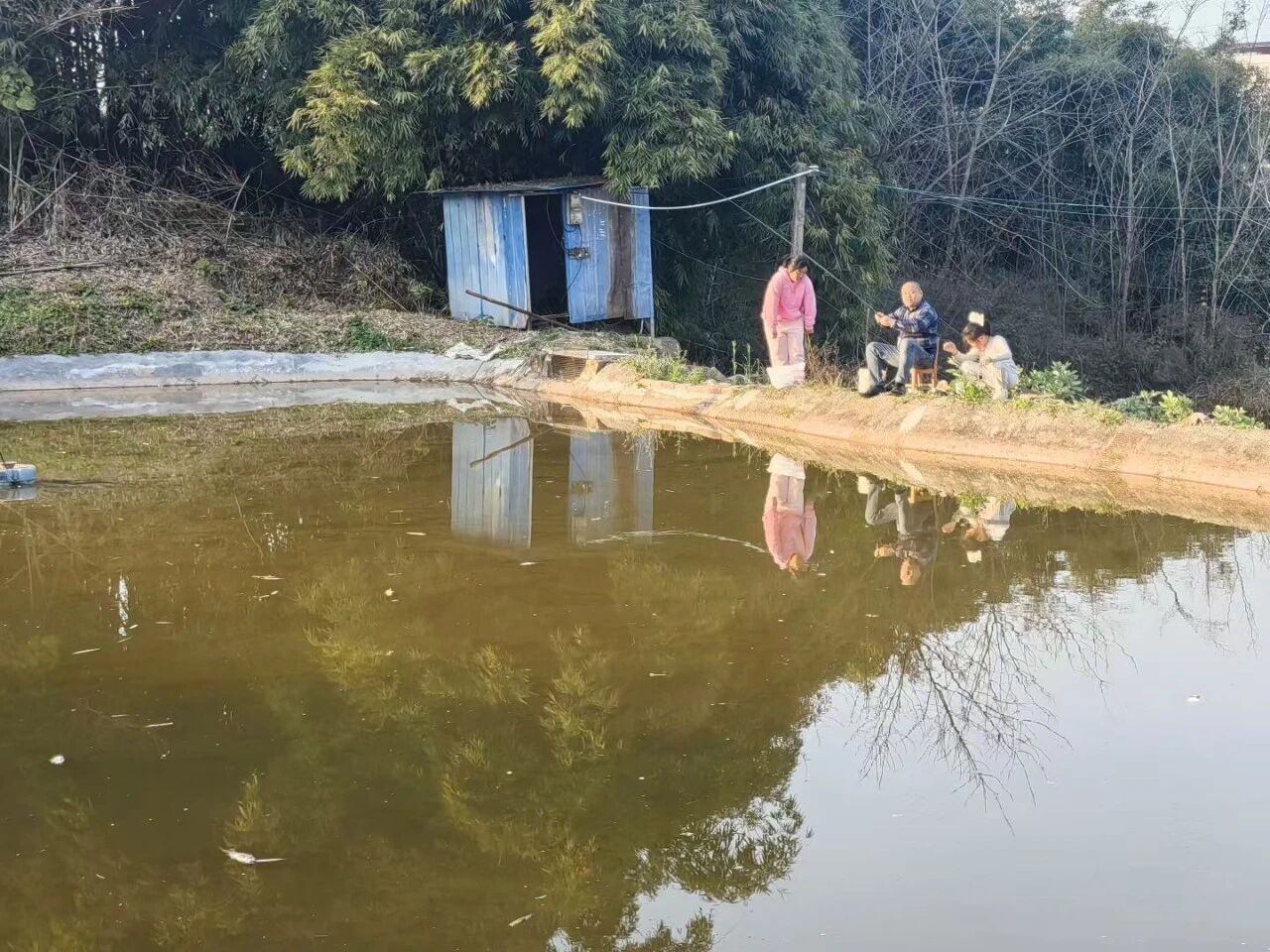
Ever since Fifth Uncle started fish farming, villagers from two or three neighbouring villages come to his pond for their everyday fish. They ask in advance when he plans to harvest, agree on a time, and turn up together to buy. The fish are fed not commercial feed but grain mixed with sweet potato, corn, and other coarse grains, so the flesh is better in texture, and the price is lower than on the township market: fish there typically go for 12 to 15 yuan a jin, while Fifth Uncle sells at 10 yuan.
Late last year, both Fifth Uncle and Fifth Aunt went to work as kitchen helpers at a restaurant in the county town, and the pond was left untended for nearly a month. This year is a mild winter with a wide day-to-night temperature swing, and on top of that Fifth Uncle had bought a batch of cheap, injured fry with scratched bodies — so by February a good number of fish had died.
When we first came back to the village, small dead fish floated belly-up across the pond. Unlike the dark crucian carp at Wenzhou fish stalls, the native Sichuan crucian carp is silvery-white. My husband scooped out every dead fish, switched on the oxygen pump, and ran a water pump to drain from the lowest point of the pond and refresh the water. Over the following days he caught a few small crucian carp, one by one.
Now over sixty, Fifth Uncle has no plans to go out to work again. This year he intends to stay home — tending the fields, growing vegetables, raising fish, and keeping pigs.
In truth, it was not until ten o’clock on the night before Chinese New Year’s Eve that Fifth Uncle and his wife finally got back to the village. On New Year’s Day he played cards all day, and bright and early on the second morning he was pushing his ji gongche — a single-wheeled handcart — from house to house, collecting precast concrete slabs salvaged from house renovations to refurbish the fish pond. He mixed cement in the yard, cut the slabs to size, bonded them with mortar, and laid them around the inner edges of the pond to prevent water loss from crayfish and ricefield eels burrowing at the bottom. Given years of disrepair, the full refurbishment is expected to take half a year. Over the New Year holiday he laid roughly 50 metres of slabs — one-fiftieth of the job.
So by next New Year, Fifth Uncle will be able to wade in wearing waterproof waders and knee-high rubber boots, haul out a few lively silver carp and grass carp, and stride ashore clutching them to his chest. And we wanderers who came home will get to enjoy water-boiled fish, sizzling fish, and other more elaborate fish dishes.
3. Pea Shoots More Tender Than the City’s
My sister-in-law is devoted to them. Under her expert guidance, we stripped nearly half a mu of pea field bare. “Ate so well, even my poo was green!” By late February the shoots were growing tougher and the plants began setting thin, flat pods.
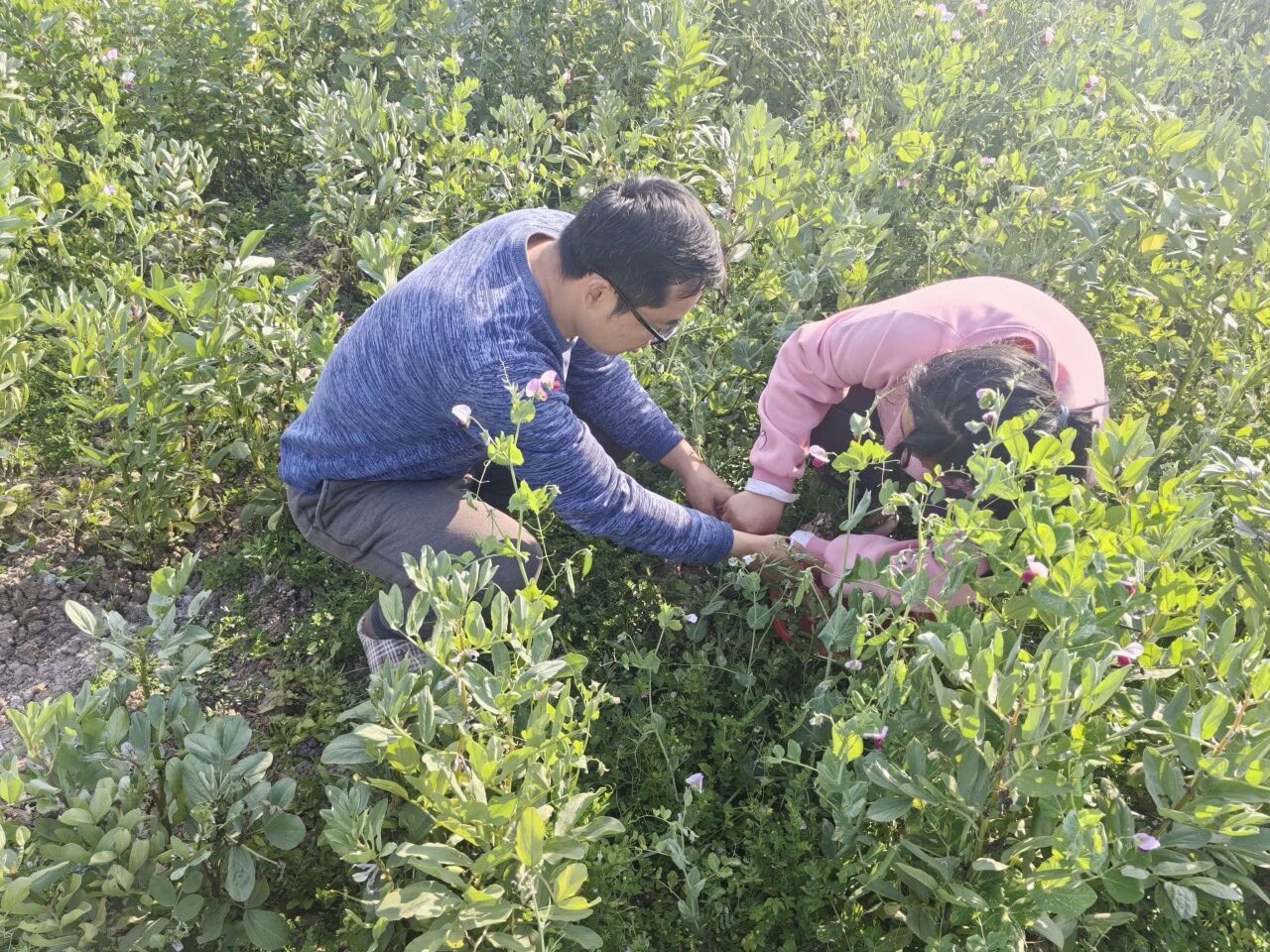
In recent years pea shoots have become a hot commodity online — a high-end vegetable on the table. On Dingdong Grocery, pea shoots hold a steady price of around 10 yuan for 200 g year-round, and the ones you get tend to be tough — unless you have strong teeth, you can barely chew them. Normally, pea shoots at the county-town market sell for four or five yuan a jin, rising to ten during the New Year. This holiday, thanks to the village’s pea fields, we achieved “pea shoot freedom”.
I checked the Weiyuan County government website. A news report reads: “Wutong Village plants over 600 mu of peas, with an output value of 3,000–4,000 yuan per mu. Pea shoot farming offers high returns and a short growth cycle, yet the harvest season stretches from October through the following February, yielding eight to ten crops a year. More than 200 households in the village grow peas. Currently, pea shoots harvested in Wutong Village are sold to Beijing, Shanghai, Chongqing, and other cities at 9 yuan per kilogram.”
In this village, with fewer than 3,000 permanent residents and less than 2 mu of arable land per household, villagers are rushing to plant peas. Many young people, seeing the high profitability of pea shoots, have returned home to contract seven or eight mu and become large-scale growers.
The New Year’s feast has three main courses, each centred on pork: Shao Bai (Sichuan-style steamed pork belly), meatball soup, and crispy fried pork soup. But none is complete without pea shoots.
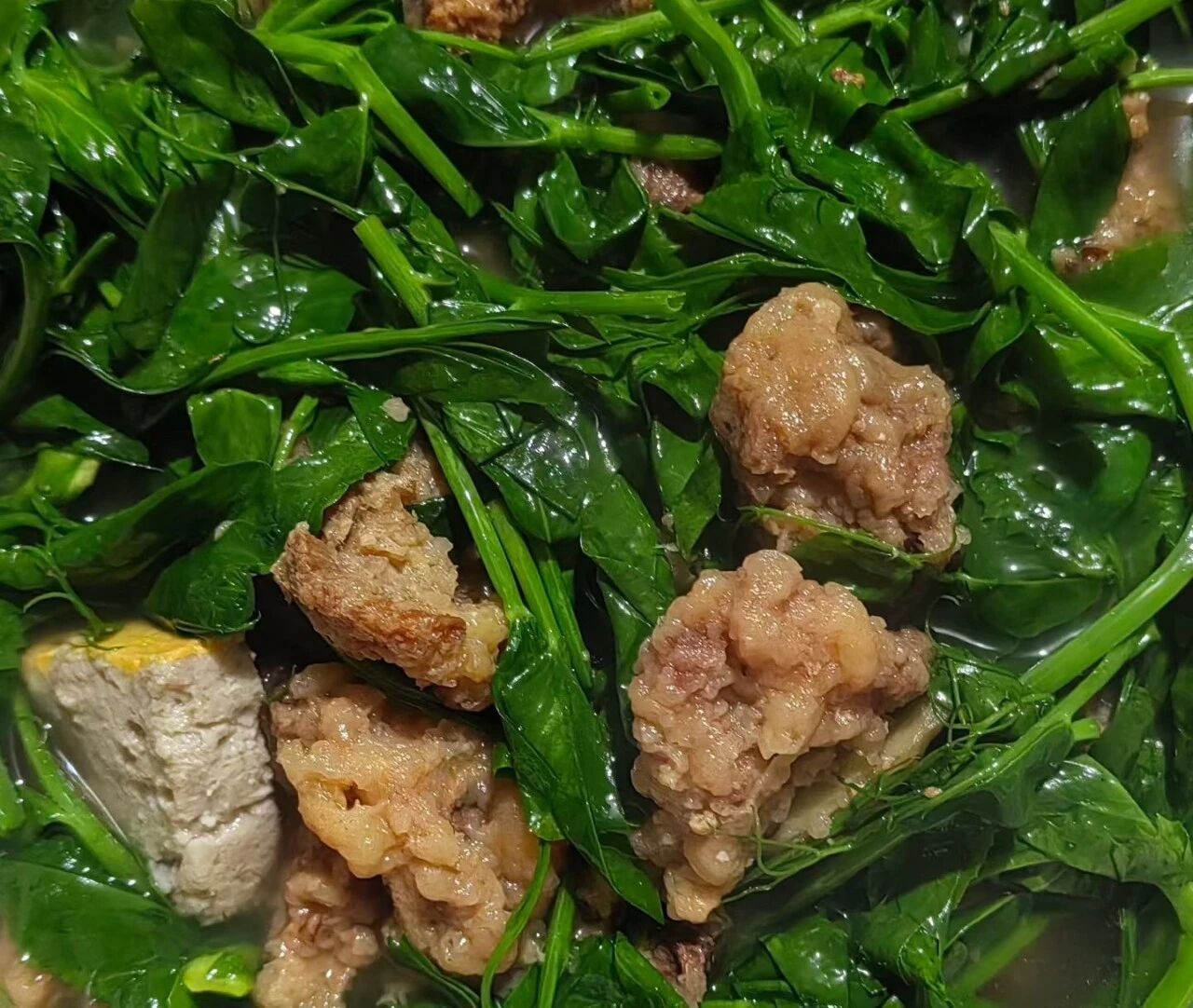
The pork belly for Shao Bai: skin on, fatty cut only. Split down the middle, stuffed with a filling of red bean and black sesame, the skin brushed with dark soy sauce, then placed on top of a layer of sticky rice and steamed. Pick up a slice of féi gānr (Sichuan dialect for fatty pork), and it glides down, slippery-smooth, sweet but never cloying. The meatball soup is light and silky. Use pork that is three-tenths fat to seven-tenths lean, add spring onion, ginger, salt, pepper, and light soy sauce, mince to a paste, stirring constantly until every grain of texture is gone, then fold in sweet potato starch and egg white until smooth. Drop spoonfuls of the mixture into boiling water to form the meatballs, then add cabbage and pea shoots; the leaves need just thirty seconds in the broth before the pot comes off the heat. But in the countryside, the “meatballs” are actually square — the seasoned mince is frozen into a block and sliced, which makes it far easier to cook. Crispy fried pork soup calls for pork ribs or belly. Marinate the meat or ribs in salt, grated ginger, cooking wine, sugar, and crushed Sichuan peppercorns. Mix sweet potato starch and egg into a batter (remember: never add water), coat the meat evenly in the batter, and deep-fry in rapeseed oil until golden. Then boil the fried pork to make the soup, simmering until the meat is fall-apart tender, and finish by blanching cabbage and pea shoots — the same final step as in the meatball soup.
IV. Eating Meat in the Countryside
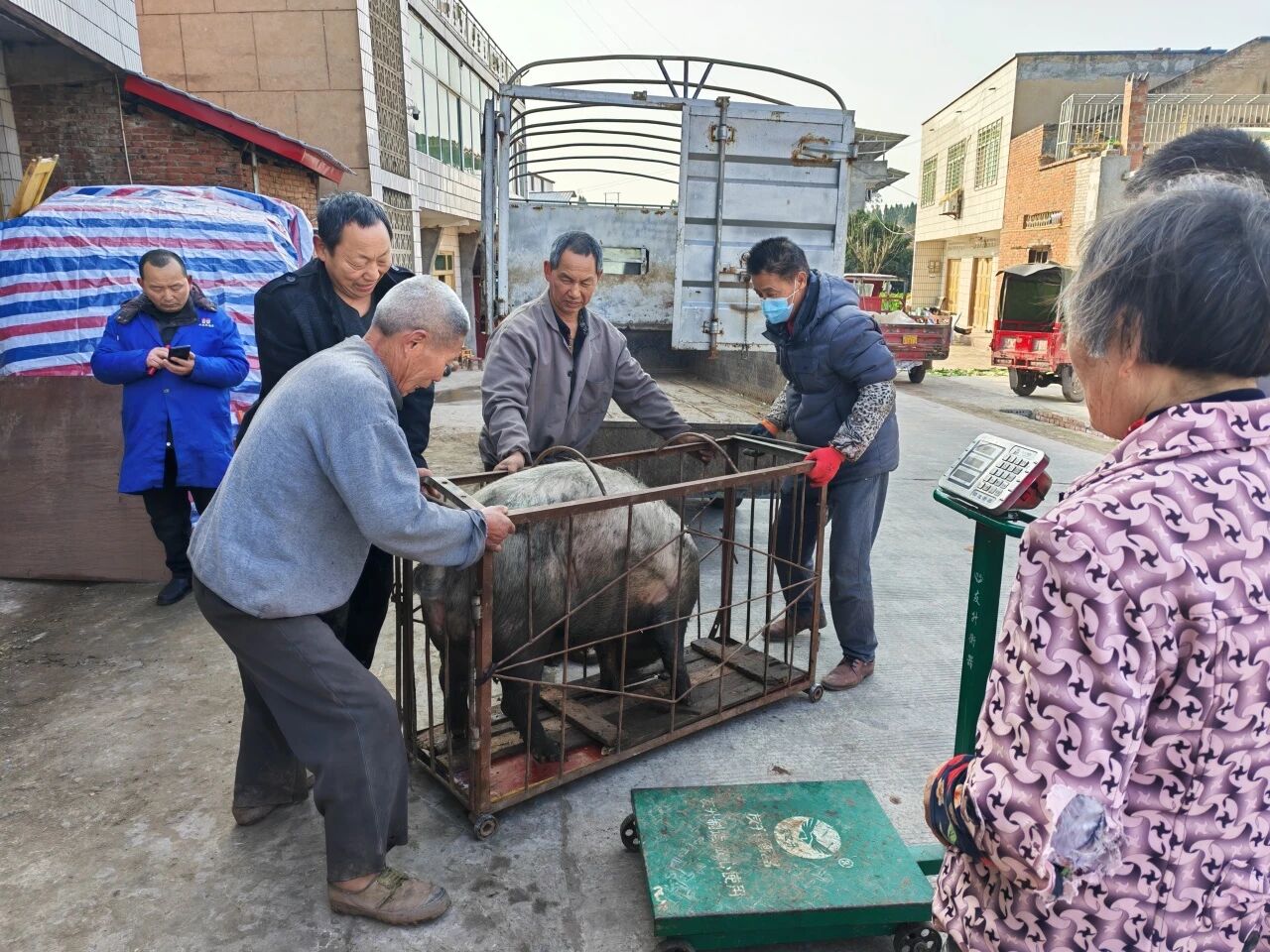
Pork is what the locals actually reach for when cooking everyday meals. Prices vary by cut: the fattiest, lowest-grade fat at just 8 yuan a jin, pork belly at 15 yuan, ribs at 22 yuan, and marrow bones at 30 yuan. Cold-tossed pig’s ears and pig’s-head meat come in at 25 yuan a jin. Not many families in our village raise pigs, though. If a family hosts a New Year feast, they call in a pig butcher to come to the house and do the slaughter. Other villagers wait until the pig reaches roughly 300 jin — around 150 kg — then load it onto a tractor and drive it to a nearby pig farm. Of course, the pork eaten in the countryside is still bought, but the belly pork here, after a plain boil, is springy yet tender — far better than the rock-hard belly pork you get on a budget supermarket sale in town.
In rural Sichuan, the elders keep to an old rhythm — rise with the sun, rest when it sets — and time is a blurry concept here. Shu’er and I drift through the days, wandering aimlessly along the field paths. The day we hiked up the slope to Yao Uncle’s house — my father-in-law’s youngest brother — we spotted several men carrying a pig, putting it on a scale, then guiding it into the bed of a small lorry, ready to deliver it to the township butcher.
I did the sums: from 8 February to 3 March — twenty days in the countryside — the three of us, plus a steady stream of relatives, went through one-tenth of a pig (pig’s ears, pig’s-head meat, pig’s snout, belly pork), dozens of white crucian carp, hit the township morning market eighteen times, and watched the rapeseed flowers for nineteen days. The trip back to the village cured Shu’er’s fear of dogs. She spent the whole day crouched by the hen coop, waiting for a sleek black hen to lay, then reaching in for a fresh egg still smeared with droppings, while hoping her cousin from the county town would come back to grandpa’s old house in the village and take her out to play.
It is a mild winter this year; by mid-February you can hear swallows twittering and chirping in the yard. There is a saying in the village that a swallow nesting under your eaves is a good omen. On the day we left for Wenzhou, we slipped out of the yard as quietly as we could, afraid of disturbing them. The rapeseed flowers swayed in the breeze, and the hills and valleys glowed golden. Till next year, tastes of the Sichuan earth.

All images in this article courtesy of the author
Editor: Xiaodan