Foodthink previously published an article, “Have Nutritionists Become the Stooges of Food Giants? What Registered Dietitians Think”, which exposed how North American food companies sponsor influencer nutritionists and industry organisations, using plausible-sounding but flawed science communication to shape public perceptions of food. A similar problem exists at home: health supplement and food advertisements are everywhere, and nutritionists find themselves weighing commercial partnerships from every angle. How do nutritionists view commercial collaboration? What role should professionals play in a media landscape that is, at best, a mixed bag? Read on for author Zheng Luyue’s responses, drawn from interviews with nutritionists across the spectrum.As the host of the podcast Bājiǔ Bùlí Shí (a pun on the idiom meaning “nine out of ten are correct,” with “food” substituted for “ten”), my business inbox regularly receives product-placement invitations for health supplements, predominantly from local “niche” brands. I have even had frozen food products reach out seeking an endorsement. While being “appreciated” in this way carries a faint, if complicated, sense of satisfaction, for me taking on health supplement promotions would compromise the independence of my nutrition education content. The time it takes to add someone on WeChat and vet whether a product is actually safe and reliable is simply too high. So I choose to guard my reputation and decline politely. I even joke with a friend: I am literally telling my listeners to skip the trendy supplements on the show, and brands still think I can push their product?●A commercial collaboration invitation sent to me by a certain nutrition supplement brand.
Although I have not taken on any health supplement promotion deals to date, in a free media market, sellers always find partners willing to compromise. Many top-tier nutritionists in the industry have chosen to actively collaborate with commercial brands.
Should nutritionists accept commercial promotions or not? Where is the line between commercial endorsement and science communication? Are nutritionists who stand by their principles actually just a minority in the industry? With this question in mind, I ran a small survey among my nutritionist friends.
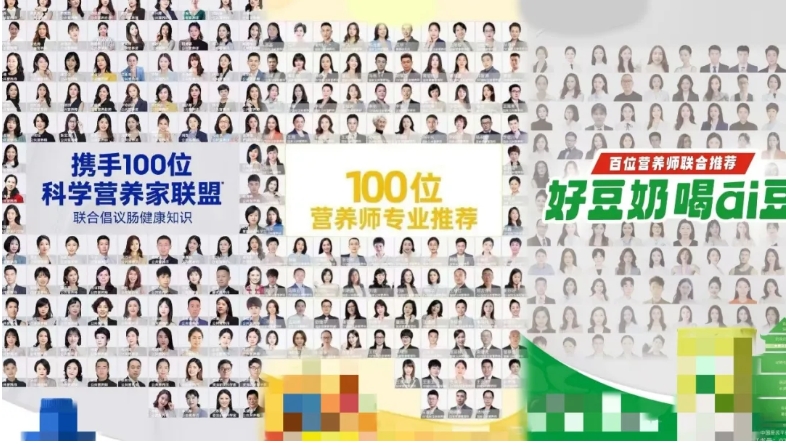
●Almost every nutritional or health supplement recruits large numbers of doctors and nutritionists to endorse and promote it. “Endorsed by hundreds of nutritionists” has even become stock promotional language for some food companies. Image sourced from the internet.
I. Who Regulates Illicit Commercial Conduct?
Before setting out the views of individual nutritionists, it is first worth clarifying: who is responsible for overseeing the commercial conduct of nutritionists? In the United States, nutritionists are regulated by the US Federal Trade Commission (FTC) and the Academy of Nutrition and Dietetics (AND). The former, a federal government agency, is tasked with monitoring commercial practices, cracking down on false advertising and misleading marketing, and protecting consumer rights; the latter is a national professional body representing practitioners, functioning much like the Chinese Medical Doctor Association in its role in professional certification, continuing education, and the formulation of industry standards for nutritionists.
Domestic policy has consistently opposed qualified physicians endorsing products. From the 2022 directive for a “strict crackdown on medical personnel exploiting their positions for livestream product sales” to the 2024 call to “strengthen oversight of medical-related online livestream commerce, content, and dissemination order,” fourteen government departments including the National Health Commission (NHC) have been keeping a close watch on pseudo-scientific content in the health and medical sector.
While platforms help curb illegal traffic diversion and similar conduct, self-media creators have also learned to self-censor, proactively avoiding prohibited terms under the Advertising Law – words such as “most,” “optimal,” “cure,” and “safe,” for example. China’s Advertising Law explicitly states:
Advertisements for medical services, drugs, medical devices, and health supplements must not contain “assertions or guarantees of efficacy or safety” or “use of advertising endorsers to make recommendations or provide testimonials”; radio and television stations, newspaper and audio-visual publishing units, and internet information service providers must not use health knowledge or wellness education as a vehicle to disguise advertisements for medical services, drugs, medical devices, or health supplements.Despite tightening legal and industry oversight, the monetisation of health knowledge still operates in a grey area. Current regulations do not clearly distinguish between “commercial promotion” and “advertising,” allowing health supplements to slip past regulation in livestream rooms, marketing in the name of “science communication.” At the same time, the industry widely holds that “physicians must not use their profession, position, or hospital name, or hospital platforms, to sell products” is a firm bottom line. However, this red line assumes practitioners are still within the hospital system. When health-education creators step outside institutional constraints, the ethical boundary becomes blurred. For example, if a doctor “shows their face” in a livestream room but does not evaluate the product, does that constitute an endorsement? If a dermatologist promotes health supplements, is that a professional overreach? None of these questions has a clear answer yet.
By comparison, the physician community has had a more thorough discussion of conflicts of interest, and its norms are more mature. China’s registered dietitian system, which only began in 2017, still lacks ethical guidance specific to commercial partnerships and endorsement conduct, making it all too easy for a nutritionist’s decision to take on ads to slide into a purely financial calculation. The industry does not discuss conflicts of interest, and with no binding constraints in place, keeping “pseudo-science” in check can only depend on individual conscience.
More troubling still, the title “nutritionist” itself has not yet established a clear public understanding. From “Registered Dietitian” and “Nutrition Technician” to “Public Nutritionist” and “Nutrition Guidance Counsellor,” the titles are numerous and the professional thresholds vary widely. Some internationally certified nutritionists have even been exposed as holding fabricated credentials.
●The wide array of “nutritionist” professional certificate titles found online. Although “Registered Dietitian” carries the highest credibility in China, the general public cannot tell who is genuinely qualified.Admittedly, the US Registered Dietitian credential I hold places greater emphasis on the applicant’s theoretical and practical experience (requiring a master’s degree as a minimum, more than 1,000 hours of supervised practicum, and continuing education credits), and it lists “disclosure of all potential conflicts of interest” in its code of ethics. Even so, instances of commercial endorsement that breach regulations still exist within this group. This serves as a reminder: without hard legal constraints, even the best regulatory framework can devolve into empty words; and when money is on the table, professional boundaries are often more fragile than one might imagine.
II. The Affirmative Case: What’s Wrong with Nutritionists Taking on Ads?
Should nutritionists engage in commercial partnerships? Opinions within the nutritionist community are sharply divided. Whether from an individual nutritionist’s perspective or that of the industry at large, accepting commercial collaboration has its upside. On one hand, commercial partnerships can help address nutritionists’ livelihood concerns; on the other, they raise public awareness of the nutritionist profession through self-media platforms, enhancing the profession’s perceived value.
For instance, a Registered Dietitian working in a hospital was candid:
“If we were still in school, I would have found such behaviour (taking on ads and publishing statements that deliberately steer consumers) utterly reprehensible. But now that I’m in the workforce, being a nutritionist is a profession with very little return for the training and effort. Under the pressure of making a living, I do not endorse this kind of behaviour, but I completely understand it. Only by giving the profession more recognition and respect, and by raising salary levels, can we expect those of us with formal training to stay true to our principles.”Another Registered Dietitian, who had previously reviewed sponsored content for a company, offered a different take:“I genuinely think this (commercial sponsorship) is a good thing, because it is a two-way choice. Not every nutritionist is willing to do this, and not everyone has the ability to do it well… They (nutritionists involved in commercial partnerships) will go through the (promotional) script with us (the content team). If they feel a particular line is something they cannot say, they will remove it. … Personally, I think it’s really great, because I can’t earn that kind of money [laugh]. It’s not that I think the (commercial partnership) talking points require going against one’s conscience… I’m very sensitive; I couldn’t be an influencer… So I am quite envious, or rather, I really admire the people who can just ‘rattle it off,’ and who say things that are ‘dangerous yet alluring yet still within (the line).’ On the other hand, I think that companies, especially partnerships with major brands, can also bring some visibility to the nutritionist profession.”At the same time, I have noticed that nutritionists active on self-media platforms tend to have a more positive attitude toward commercial partnerships. In our discussions, they also emphasised the public benefit of commercial collaboration, such as helping consumers make product choices.
III. The Opposing Case: Under Commercial Logic, Professionalism Tends to Lose Its Core
Whether one supports or opposes this is often less a matter of attitude than of the environment one operates in. Nutritionists who do not rely on traffic monetisation tend to hold firm to their professional ethics.A Registered Dietitian, drawing on their experience as a self-media creator, reflected on how difficult it is to strike a balance between traffic, sponsorship, and professionalism:“When I first started building my follower base, I made a rule for myself: I don’t want to take on any dietary supplement ads, or any ads that don’t align with my nutritional philosophy. I’ve had some really enjoyable collaborations, but more often than not the (invitations) are for products that hover on the boundary between healthy and unhealthy—probiotics, say, or so-called health drinks. The whole commercial partnership process involves a lot of back-and-forth haggling. The talking points some brands want to push are precisely the ones that make you uneasy and that you’d rather steer clear of. Once I started (full-time) work, my free time shrank, and I began to reflect: do these (commercial promotion) deals bring me more joy, or do they simply (add) frustration and drain? Now I do more food-related content that doesn’t require me to lend a specific nutritional endorsement. …Even if there are products, even if there are claims, even if you can find so-called research to back them up—if I personally don’t buy into any of it, and I feel I’m being (forced) to give a (nutritionist endorsement), I find it quite painful.”Overall, in a heavily commercialised market environment, nutritionists who choose the self-media path face more acute pressures of survival and professional ethics. Much like doctors who opt for livestream commerce, many nutritionists are not unaware of the value of holding to one’s principles. Rather, their career development is constrained, economic pressure is real, and for practitioners from non-first-tier cities with limited employment options, resolving income through commercial partnerships is an extraordinarily tempting option.●A trending topic about nutritionists on self-media platforms—”How Can Nutritionists Monetise Through Self-Media?” Image sourced from the internet.It is precisely by exploiting the weak points of this professional ecosystem—unclear industry norms, declining public trust, and imbalanced income structures—that capital continues to expand its influence.
IV. Inside the Filter Bubble: Who Do We Believe?
Regardless of how individual nutritionists navigate these choices, there is no doubt that pseudo-science content produced for commercial promotion is rampant online today. A Registered Dietitian friend, after reading “Companies Buy Off Nutritionists,” reflected:
“Algorithm-driven information feeds frequently trap people in a filter bubble, where the content one encounters is both narrow and heavily biased. If that content is then repeatedly reinforced by so-called ‘experts,’ consumers’ room for choice is not merely compressed—it can be manipulated outright.”I often feel a similar helplessness in my own life. My family members can simply ask me directly—I am, after all, a genuine Registered Dietitian—yet they are frequently drawn in by “wellness videos” and “influencer doctor recommendations.” Sometimes, no matter how many times I explain, I find it hard to fully counteract the influence of that pseudo-science content. Another American Registered Dietitian active on self-media platforms, Piao Jingxuan, put it more directly:
“As a nutritionist, much of my work is essentially ‘debunking.’ Many patients come to me with headlines they’ve seen online and ask if it’s true. It’s often just clickbait titles taken out of context to grab attention.”In the comments section of an article about doctors doing livestream sales, I once came across a sharp remark:“Legitimate doctors can’t do livestreams and should be taken offline, yet these street hustlers get to wear a doctor’s coat and swindle people. Why let fake doctors flood the livestream rooms?”Though the tone is fiery, it captures public frustration at the “commercialisation of doctors’ professional image” under the ban on “physicians selling products.” Dr Jiang Qianzhi, an American Registered Dietitian, made a similar comment:
“Setting aside Registered Dietitians, there are plenty of so-called nutrition professionals, or influencers and celebrities with no scientific background, who are already cashing in on this with their fame and influence. I would much prefer to see Registered Dietitians doing this work—at least most nutritionists base their product selection and recommendations on science and professional ethics.”These words resonated deeply with me. When I heard a cultural podcast I follow do a spoken endorsement for a health supplement brand I had once declined to partner with, my feelings were a complicated mix. In that moment, it was as if someone were scoffing at my principles: “You won’t take it, but someone else will.” Perhaps for many self-media creators who are not trained nutritionists, taking on supplement ads doesn’t carry the same psychological weight. They may not have the same ability I do to review literature, interpret data, and assess the quality of evidence. And it is precisely because I have received academic and clinical training, and because I subscribe to the professional ethical code of nutritionists, that I simply cannot bring myself to “muddle through.” On the scales between traffic and professional bottom lines, I choose to tip the weight toward public-interest podcast content that upholds those bottom lines, rather than toward the short-term returns of traffic monetisation.
I am well aware that one nutritionist’s refusal cannot stem the flood of commercial endorsements. Commercialisation is not an original sin. In fact, I do enjoy using my professional expertise to speak up for books or products that are genuinely valuable. I simply wish that when we talk about “endorsements,” we also talk more about information transparency and discuss conflicts of interest. If behind every recommendation a nutritionist makes there were professional principles, perhaps the pool of science communication wouldn’t be so murky that one can’t tell true from false.
For genuinely public-interest, responsible content to reach more people, we also need positive incentives—mechanisms that motivate professionals to produce high-quality content, rather than leaving them to be torn repeatedly between conscience and livelihood. Only by creating a virtuous cycle, where those who uphold professionalism and ethics are not the ones who “lose out,” can public-interest content stand out in a commercial environment. As one professional who has long been involved in public policy advocacy put it:
“In this environment, the voices of professionals, professional bodies, and public-interest organisations that actively resist the pull of corporate interests are all the more precious.”
V. Consumers: How to Build Your Own Judgement?
For consumers, then, how should one distinguish genuine science communication from commercial endorsement? In an age of information overload, nutrition knowledge is not in short supply; what is lacking is a set of tools and habits to help us make judgements. Building this capacity for judgement is the most effective vaccine an individual has against pseudo-science. First, consciously cultivate your own “informational immunity” and learn to recognise certain sales-pitch tactics. When encountering topics around nutrition, wellness, or medicine, stay alert and don’t be easily swayed by phrases like “miraculous efficacy,” “instant results,” or “ancestral secret remedies,” and you will avoid most pseudo-science content.
Another common form of mislead: presenting “correlation” as “causation.” For instance, “people who eat this food live longer”—but maybe they just happen to exercise regularly, keep steady routines, and eat well to begin with. A being associated with B does not mean A causes B. This kind of logical sleight of hand is the easiest way to get people to pay up without thinking.
Second, it is advisable to follow content creators whose professional credentials are clear and whose information sources are transparent. Those with genuine qualifications—Registered Dietitians, licensed physicians—tend to be more trustworthy than “health influencers.” You can also follow official accounts run by public institutions, hospitals, or professional associations.
“The product is backed by data”—but what data? Which study? Who was studied? And how does that conclusion apply to the bottle of supplement you’re about to buy? “Recommended by Harvard,” “internationally certified,” “anti-inflammatory superfood”… these sound impressive, but buzzwords cannot substitute for scientific evidence. A genuinely reliable recommendation explains the mechanism, cites its sources, rather than stacking keywords to manufacture an air of expertise.
Third, be attentive to potential conflicts of interest. When content mentions specific products, ask yourself: “Does this person have a commercial relationship with the brand?” Even if it isn’t stated outright, an excessively promotional tone is worth being wary of. You can also ask directly in the comments: Is this a commercial promotion? Is there a financial arrangement with the brand?
Finally, it may be worth returning to the simplest view of health in everyday life: a balanced diet, a regular daily rhythm, and moderate exercise. These old-hat recommendations are, in fact, the nutritional guidance most likely to stand the test of time.
Foodthink AuthorZheng LuyueUS Registered Dietitian, doctoral candidate in Nutritional Sciences at the University of New Hampshire, USA. In recent years, under a sociology supervisor, she has been exploring the livelihood issues of small-scale farmers in New England, USA. Dislikes eating alone. Updates two podcasts on a flexible schedule (@Bājiǔ Bùlí Shí, @Yuèshí Tán).