This year is on track to become the hottest year on record. Yet at the recently concluded COP29, nations remain locked in heated disputes over funding, repeatedly bringing negotiations to a stalemate. The climate finance gap for agriculture is particularly vast.
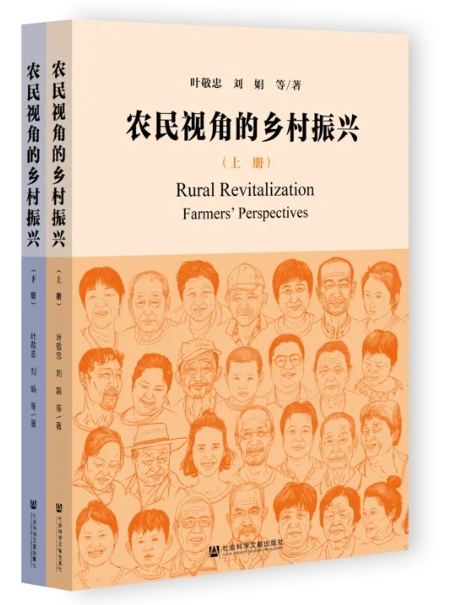
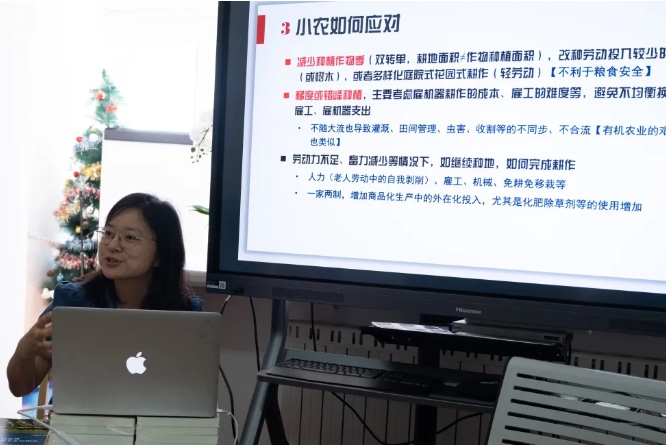
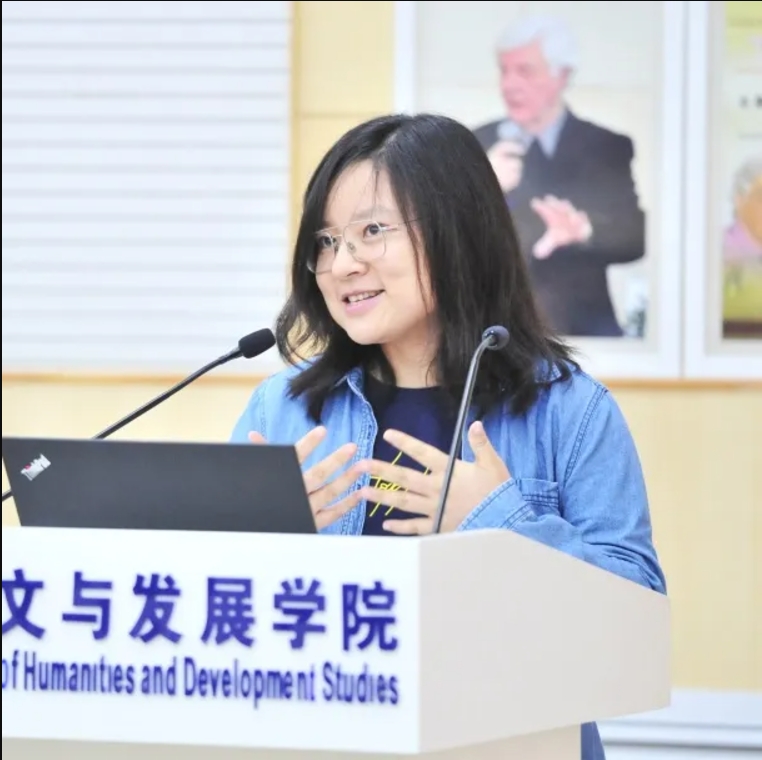
When we talk about agriculture’s response to climate change, what are we really talking about? Liu Juan, associate professor at the College of Humanities and Development Studies at China Agricultural University, has long conducted field research in rural communities across the country, analysing farmers’ livelihoods and issues of environmental justice through the lenses of environmental sociology and political ecology. She is also one of the co-authors of the 2023 book “Rural Revitalisation from Farmers’ Perspectives“. In recent years, she has turned her attention to the intersection of climate change and rural development, seeking to explore what measures farmers and rural communities need in the face of climate change, how to break free from the mindset of tackling climate change in isolation, and how to fundamentally strengthen the climate resilience of rural areas.
Below is her conversation with Foodthink.
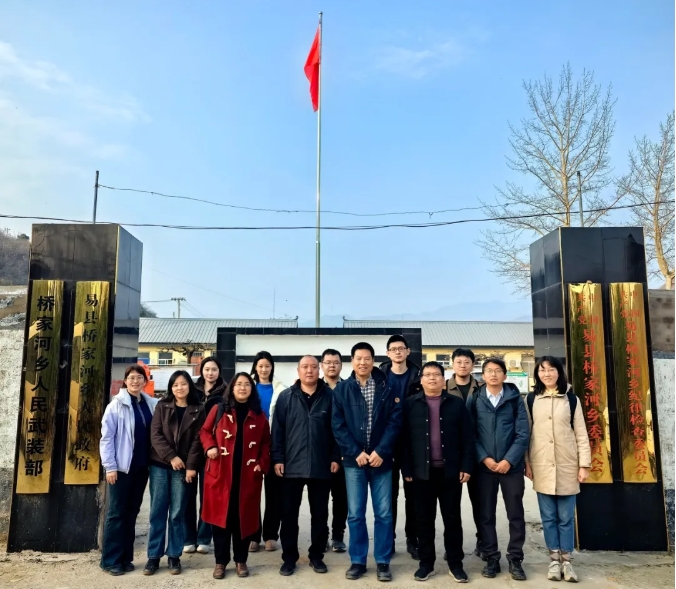
● November 2024: Liu Juan (second from left) takes part in a comprehensive field survey in Yi County, Hebei, conducted by the “Agrarian Change and Development” research team led by Professor Ye Jingzhong (sixth from right). Image credit: College of Humanities and Development Studies, China Agricultural University (official WeChat account).
I. Growing Rice on Cracked Earth
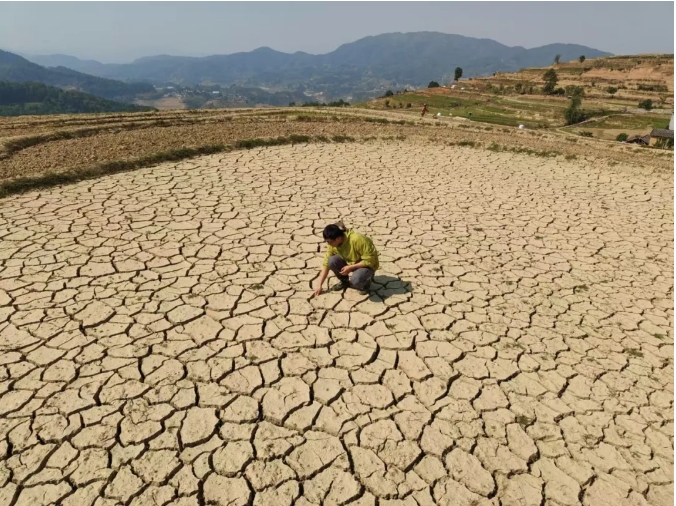
Foodthink: You have always conducted fieldwork in rural communities. Are there any stories about climate change that have left a lasting impression on you?Liu Juan: This summer we began a case-study project examining farmers’ awareness of and adaptability to climate change, and I focused on several sites in Hebei and Chongqing. When we visited Chongqing it was scorching — nearly 40 degrees Celsius in the open sun — and the city then suffered the prolonged, baking heat and drought that everyone is familiar with. In fact, Chongqing’s drought back in 2022 was already very severe, and so was the dry spell across the entire Yangtze River Basin at that time. Land transfer in Chongqing is extremely widespread — over 90 per cent of farmland has been transferred out. A tiny number of households still cultivate very small plots. These are parcels that are not really suited to transfer, so they have been left to them. After the drought cracked the soil, the land could no longer hold water. Since the devastating drought of 2022, these smallholder farmers have essentially stopped growing rice.
Foodthink: So who is growing the rice, then?Liu Juan: The village cooperative. They have a quota of staple crop cultivation they must fulfil. During our fieldwork this year we learned that in the spring of 2023, the cooperative would take advantage of every little shower to run machinery through the cracked soil, churning it up so that it could form a stable, crack-free structure capable of retaining water. But a single pass of the tiller cannot mend those cracks, so they had to constantly watch the skies and go back for another pass the moment rain or water arrived. Otherwise, even if it rained later or they irrigated, the soil still could not hold water. For areas dominated by mountains and hills, the cost of all this machinery is very high, and the returns from the crops may not cover those costs. So what we call response or adaptation is, in practice, anything but easy.
● April 2024: A severe drought in Yunnan has left the rice terraces of Mojiang deeply cracked. Image credit: Yunnan Sili Centre.
II. Social Mechanisms to Address the Diverse Impacts of Climate Change
Foodthink: That sounds rather alarming. Judging by your research elsewhere in the country, is this situation widespread?Liu Juan: Climate change moves in different directions, and its impacts take different forms depending on the location. In our research we selected three case studies in one county in Hebei, observing and understanding how different types of crop systems and agricultural producers differ in their climate response actions. The related report is expected to be published in April next year.
This county is very close to Beijing. One of the case-study sites is a village we visited a few years ago during a different research project. It is a very typical traditional farming community — much of the labour force has moved away, the permanent residents are mostly elderly, and it has gone through the Targeted poverty alleviation programme. After that earlier fieldwork, we have sent a postgraduate student to live in the village every year. They help the village with various tasks while also conducting their own research, and all of them have completed excellent dissertations.
During the “7·31” floods last year, one of these students was in the village and experienced the entire process — from early warning and emergency hazard removal to evacuation, resettlement, and post-disaster reconstruction. The government followed up with many top-down arrangements, for example, requiring the village to designate specific locations for emergency evacuation and to mark them clearly. But that was clearly aimed only at flood risk; there is not yet a perspective that accounts for uncertainty and the diverse risks posed by climate change. When we recently visited the village, we found that the Bureau of Agriculture and Rural Affairs and the Water Resources Bureau had each issued booklets on disaster prevention and mitigation. The covers were different colours, but the contents were essentially the same.
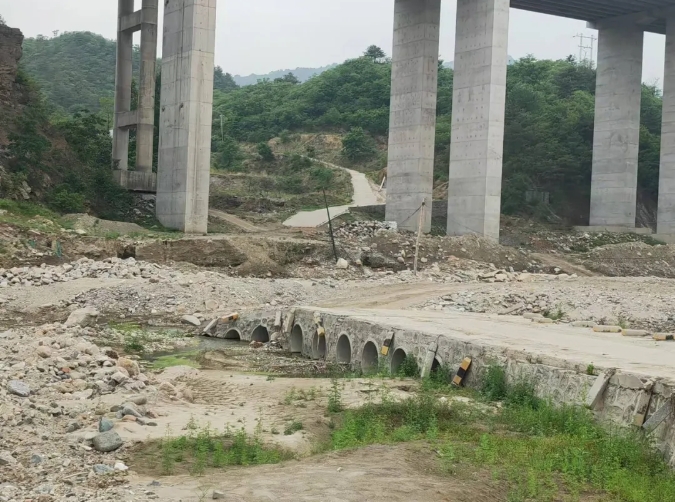
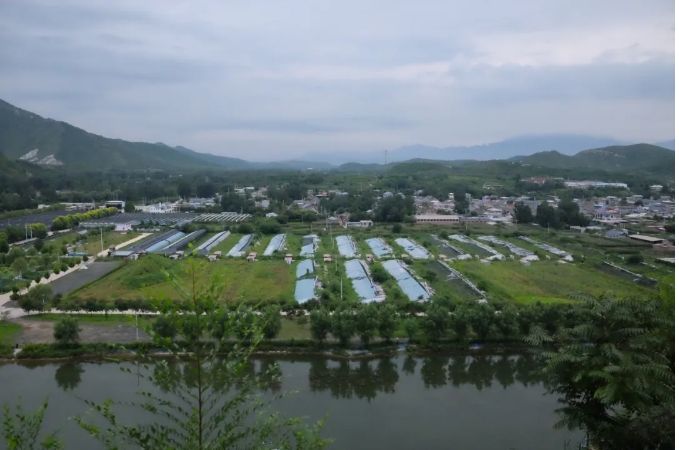
● After the flooding, a river bridge was severely damaged.Foodthink: Beyond government, can other social forces take part in responding to climate change?Liu Juan: Yes. That is actually one of the reasons I focus on social organisations — not any specific institution, but rather the question of how we should build social mechanisms for responding to climate change. At the societal level, how exactly should we respond to climate change? Beyond plans for dealing with flash floods or preventing a dam breach, we may need a far more comprehensive approach — a whole set of social mechanisms — because the impacts of climate change are not limited to one kind.
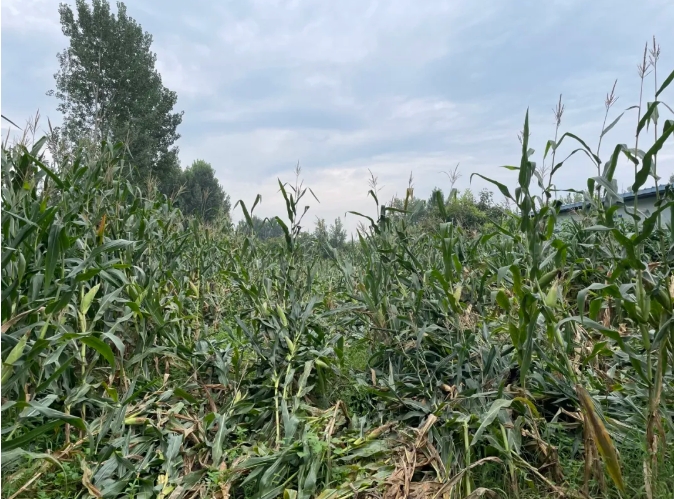
For instance, the flooding after the “7·31” heavy rains affected this village mainly through damage to roads and bridges, because the crops are mostly grown on hillsides — at worst a small plot gave way, so losses were not too severe. That is unlike the plains, where standing water simply drowns everything in the field. It was actually in early August this year that the village was hit by a windstorm. The maize had not fully matured, and more than half of it had been knocked down. Much of the maize was rotting in the field — it was hard even to walk through it — and the losses were considerable. Agricultural insurance had been available over the past two years, but farmers felt it was useless, found it difficult to claim compensation, and so this year almost no one signed up.
● Maize knocked flat after the windstorm.Meanwhile, at another township we learned that they grow waxy maize for export to South Korea. They harvest relatively early, so they were completely unaffected. Of course, that may also have something to do with geography — the wind was not as strong there, and even the unharvested crops were not hit by comparable wind damage. Interestingly, this township’s agricultural insurance enrolment rate was actually much higher than in the previous two years. Every community has its own micro-environment, and that shapes how it adapts to climate change.
What can social organisations do to help rural communities respond to climate change? Foodthink is conducting a nationwide survey of NGOs. Click here to complete the Research on the Pathways of Climate Change Action by Rural Social Organisations in China survey and help advance rural climate action.
Foodthink: It is not only communities that vary so much by location; at the individual level, a farmer’s production methods and livelihood strategy also determine their respective climate resilience.Liu Juan: Yes. But I feel that, taken as a whole — whether at the level of individual households or the village — rural communities’ capacity to respond to climate change on their own is extremely weak.
We have another postgraduate student who spent half a year living in a village studying transport and infrastructure. The “7·31” rains last year destroyed many roads and bridges in that village. But the village has very little collective economy, so repair work on those roads and bridges relied mainly on post-disaster reconstruction projects from the Water Resources Bureau and similar bodies.
We also interviewed a farm owner who runs an ecological park. The 2021 floods damaged several greenhouses in the park where strawberries and other fruits were grown. Funds were raised in 2022 to rebuild them, and then in the summer of 2023 an even worse flood came, so the farm owner no longer dares to repair them. His words were: “What if there’s another flood and it all washes away again? (Unless) God could tell me which days will bring rain and which won’t — or at least when it will rain.” The rare snow disaster in the winter of 2023 also crushed some of the park’s structures, and they have still not been repaired. So scaling up and investing in capital-intensive infrastructure are not necessarily the ideal way to hedge against climate risk.
● Damage is clearly visible in the upper-right corner of the image, yet the farm owner does not dare repair the greenhouse infrastructure.Foodthink: So do smallholder farmers who make no such large capital outlay suffer less damage?Liu Juan: That is not a hard-and-fast rule either. At the household level, we feel farmers have no particularly good options — everyone weighs inputs against outputs. Take the village in traditional farming that I mentioned earlier. They have some newly levelled plots on the hillsides, and water pipes and storage tanks were installed alongside them, but the farmers almost never use them, even during the spring drought when timely sowing is impossible. If a single household opens a sluice gate, they have no idea when the water will reach their plot, and the charges for water and electricity are too high. So it is better to plant a little later — at worst they simply harvest a little less.
For experienced smallholder farmers, “a harvest at the sky’s mercy” is not a passive attitude; it is a strategy of “input minimisation”. Sometimes they glance at the weather forecast and do what little they can. But when disaster actually strikes, they may do nothing at all, because the costs are too high and the results uncertain.
Some farmers carry out crop substitution. This village has a history of that kind of change — shifting from growing wheat on irrigated farmland to more drought-tolerant maize, groundnuts, and sweet potatoes. On the whole, though, the drivers behind that shift are not just climate change; rural labour outflow may also be at work.
Much of the planting-pattern adjustment we see today inevitably involves the influence of climate change, but it is not necessarily the direct or primary factor. In the research that underpins the book “Rural Revitalisation from Farmers’ Perspectives”, we found that farmers identified labour shortages as the single greatest constraint on agricultural production, with natural disasters coming second.
● Drawing on fieldwork in ten villages across five provinces, the “Agrarian Change and Development” research team at the College of Humanities and Development Studies, China Agricultural University, where Liu Juan works, published “Rural Revitalisation from Farmers’ Perspectives” (in two volumes) in 2023.
III. Labour Shortages and the Economics of Farming
Foodthink: In the context of rural hollowing-out, if household income depends mainly on young people working in the city, then elderly residents simply do a little less when they can. Compared with grand-sounding climate adaptation measures, cutting back on inputs matters more to them.Liu Juan: The elderly can sow seeds at a fairly relaxed pace, harvest some groundnuts or sweet potatoes in autumn, or grow a few fruits and nuts for drying — unhurried, no need to race to harvest and replant. All of that amounts to an adaptation to the current labour structure.
Foodthink: You mentioned at the start that in Chongqing, after land was transferred out, smallholder farmers stopped growing rice because of the drought. So what are they growing now?Liu Juan: The smallholder farmers who still cultivate their own land are elderly and simply have no capacity to use machinery to churn up cracked soil or make multiple passes to form a stable water-retention system suitable for rice cultivation. They very likely just switched to drought-tolerant crops such as maize instead.
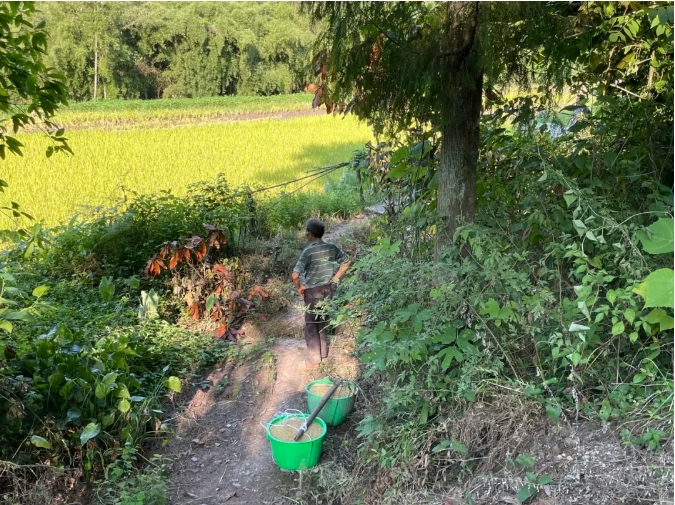
● Chongqing farmers bringing in the autumn harvest under the blazing sun.Foodthink: So the cost of mechanised operations at the cooperative is so high — who ultimately bears it?Liu Juan: Running a cooperative or a federation of cooperatives is in fact enormously pressurised. Land transfer involves rent payments and the like. Some villages, fortunately, did not adopt the transfer model but instead use a land-entrustment arrangement — the idea being simply that someone looks after the land. As long as it is cultivated, it will not be left to lie fallow. Farmers with this mindset do not press too hard about rent, so the cooperative’s pressure is comparatively smaller. Otherwise, when extreme weather strikes, the cooperative would suffer losses beyond imagination. In earlier fieldwork in Guangxi, Yunnan and other regions we learned that in some areas cash crops — bananas, dragon fruit and the like — are grown largely through monoculture, which takes a certain toll on the land. Therefore, whoever takes on a contract has to pay land rent. But at the time, fruit-growing profits were still fairly high; even with typhoons and the like, over several years there was still a reasonable margin. For grain crops, however, there is no such profit margin.
Foodthink: Indeed, when discussing the impact of climate change on farmers, many dimensions have to be considered — not just the scale of cultivation but also the crops, the degree of corresponding policy support, and farmers’ own livelihood strategies. So in academia, how is this viewed in relation to the very real and deeply entrenched bottlenecks in rural development?
Liu Juan: Looking at the domestic academic landscape, research that combines climate change with rural development and transition remains relatively uncommon. Approaches focused purely on agriculture have perhaps become a little more frequent in recent years. Yet the countryside is undergoing dramatic transformation. In the course I teach, “Introduction to Rural Revitalisation”, there is an entire chapter devoted to today’s Chinese countryside — the 2020s — because I sometimes find that what students write about rural China still seems to belong to the last century —“From the Soil”— the countryside as depicted in that book. Perhaps such framing and analysis have become habitual. But today’s rural areas have, in reality, already been transformed beyond recognition.
IV. Not Only the Climate Has Changed — So Has the Countryside
Foodthink: If you had to capture the transformed countryside of today in just a few keywords, what would they be?Liu Juan: Agriculture, rural areas, and farmers can serve as three different threads through the question of agrarian transition.
For example, looking at the countryside from the human perspective, two trends stand out: ageing and the overall outflow of population. In terms of macro statistics, we once spoke of 900 million rural residents; now the permanent rural population stands at under 500 million. That is a seismic shift. Yet much research does not appear to have absorbed a transition of this magnitude — we have not yet adequately examined what is actually happening within the process.
From the perspective of who farms, the questions are: who is tilling the fields now? Who still wants to? Who can? Farmers’ sense of identity has also shifted considerably. What has not changed is this: the same people are farming — only they are older. But who are the people now willing to engage with rural areas? Targeted poverty alleviation was, in effect, a social project that mobilised a great deal of external capacity into the countryside and involved large-scale intervention and transformation of rural areas.
Foodthink: A great deal of money has also gone into physical infrastructure. Improvements to rural public facilities are plain for all to see, but we have also come across projects that deliver very little value or are outright waste. During our fieldwork in Shanxi, we witnessed an absurdity: previously, a pit latrine could be emptied and the waste used for composting; after the toilet was “upgraded”, the waste had to be pumped out and processed centrally. In some cases it was a sheer vanity project: a flush toilet simply placed over a pit latrine, with no water supply or drainage connected. Farmers could not get used to it.Liu Juan: I share that feeling. When it comes to rural development interventions, I myself have grown increasingly cautious. I have been involved in project evaluations and case-study research covering all manner of industrial projects as well as many rural construction schemes. But most of the time we find that development interventions tend to be driven by a well-meaning “wish to improve things”.
In the last decade or so, especially, many projects have been built at great expense, only to find it very hard to put them into use — let alone use them fully and deliver real benefit to residents. Some have simply been abandoned outright. The more one learns, the more easily one falls into a sense of futility and meaninglessness. For example, a remote township in a mountainous area might build a centralised wastewater treatment facility, but in the mountains, how do you collect the wastewater from scattered, individual households? Treating it also requires technical expertise, staff, and funding. So once built, the facility faces operational challenges; in some places these projects cannot even be handed over after completion — townships are unwilling to take them on.
V. Bridging Disciplinary Divides, Tackling Climate Change Together
Foodthink: You mentioned just now that research combining climate change with rural transition is remarkably scarce. Why is that?Liu Juan: One possible reason is disciplinary division. In the natural sciences and economics, many scholars study climate change, but there is little attention to what actually happens at the micro level or to social factors. Students and faculty in the social sciences seem reluctant to engage with climate or environmental issues — perhaps because they feel they lack the understanding or cannot grasp these domains.
The professional communities in China that have paid some attention to this are limited, working mainly in environmental sociology and political ecology. Those in environmental sociology who look at climate change still tend towards analysis rooted in sociology or political science proper, with environmental and climatic factors treated more as background. Political ecology is more concerned with the interaction between social structures, power relations, and environmental issues, and it remains a small, emerging field in China. A search on CNKI will turn up some literature reviews of political ecology, largely by Marxist scholars, and by anthropologists and geographers surveying international political ecology literature, but overall there is still very little empirical research in this area published in Chinese.
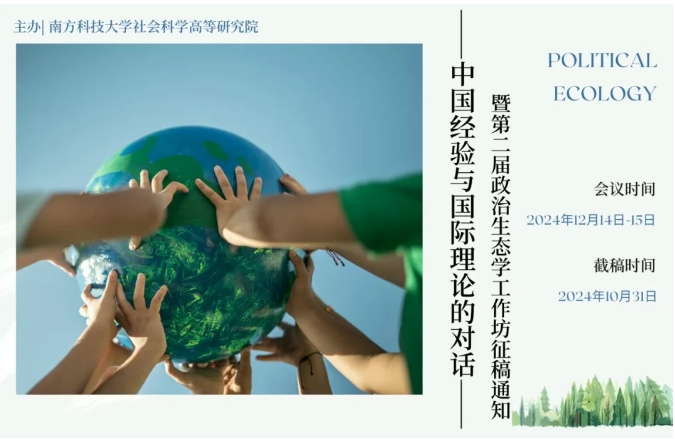
Since last year, a political ecology workshop I have been part of has brought together a group of young researchers from various disciplinary backgrounds, with the hope of forming a new research community. Climate change and agrarian transition are among the most important topics discussed. We also hope to achieve a small breakthrough in the next three to five years — including translating, introducing, and mapping the various schools of political ecology, and distilling a political-ecological analytical framework applicable to China’s agriculture and rural sector.
● The Second Political Ecology Workshop, co-organised by Liu Juan, will soon be held.Foodthink: There is a vast body of research on the impact of climate change on agriculture, but very little on how it affects smallholder farmers’ livelihoods. What is more, even where some surveys exist, they tend to confirm what is already known, lacking recommendations that could actually guide practice.Liu Juan: The macro-level, quantifiable issues are actually fairly clear. What may be needed now is more micro-level narrative — conveying the complexity of the problems and identifying where the key issues lie. So fundamental research itself is very important.
I have found that international organisations and rural social organisations do not place much emphasis on the research phase before an intervention. They tend to focus on short-term measures and concrete activities that are visible and can be quantitatively evaluated. If someone has already done good foundational research, one can build directly on that work, and there is nothing wrong with that. But with a new intervention project, understanding the basic nature of the problem through research and identifying its key factors is essential — it helps avoid “treating the head for a headache and the foot for foot pain”, as well as perfunctory training, workshops, and interventions.
Foodthink: So how should social organisations and researchers engage with each other?Liu Juan: I believe rigorous research is absolutely essential. There is a real need to bridge academic research and practical action, and NGOs also need to strengthen their collaboration with research institutions to ensure the nature of the problem is clearly understood before any intervention takes place.
For instance, sometimes the root of the problem lies at the institutional level. In that case we may need to first push for solutions at that level through policy consultation and dialogue, so the key action is not necessarily direct intervention at the individual level. Individual-level interventions might resolve a small, specific issue, but their overall impact is likely to be very limited.
When advocacy for action is involved, the first step may be to surface the problem — raising public awareness through the media or other channels so that a broader impact can be achieved. In reality, there are certainly some institutions or projects that begin acting and intervening before they have properly grasped the nature of the problem, or even the pathway to understanding it. That all too easily creates a new “problem”.
Foodthink: Could you give an example where policy issues need to be resolved first?Liu Juan: For example, when it comes to agriculture and climate change, and boosting smallholder farmers’ adaptive capacity, our research shows that strengthening the resilience of individual households or very small units has limited value. The focus may need to shift to a community or social-ecological system, which entails higher-level coordination and collaboration alongside many more granular, specific tasks.
Take agricultural insurance as another example: In a context where grain production is costly, returns are low, and willingness to grow grain is generally weak, should the risk costs of growing major grain crops fall on the farmers themselves? Or what should the accountability mechanism be for safeguarding food security? If we want farmers to remain willing to farm — and actually continue doing so — surely there needs to be policy safeguards so that they can face the year with confidence, whether it is blessed with fair rain and mild weather or beset by frequent extreme weather?
Then there is the question of labour. In many places today it is the elderly who farm; even when young people are at home, it is often the old who shoulder the real agricultural work, and they are the only ones who truly care about farming. If one idealistically hopes to train them in more ecological methods of growing and rearing, some of those measures often mean more labour input, making their burden heavier and the practice harder to sustain. So it is not that they do not know they should cut back on chemical fertilisers, pesticides and herbicides — it is a question of “can they”. From the perspective of intervention, what may be needed more are ecological methods of growing and rearing that reduce labour input and lighten the load on those who work.
● In August 2023, at a sustainable food and farming media workshop hosted by Foodthink, Liu Juan presented her research to more than 30 journalists and media professionals.
VI. What to Do and What Not to Do
Foodthink: It sounds as though the smallholder farmers still tilling the fields are already shouldering a burden they should not have to carry. What outside forces should do is help lighten their load — not bolt on more armour for so-called climate adaptation.Liu Juan: A few years ago, during fieldwork in Shaanxi, we came across a similar case. Local industries — poverty alleviation programmes included — had absorbed a large number of women into jobs close to home. Women could earn a certain income locally, which from the standpoint of economic independence for women is a very good thing. Yet their own sense was more often one of exhaustion. They might work ten hours during the day and earn a little extra, while the men still had to leave home for work. So the farm work and the housework still waited for them, and they had to work out how to carve out the time. For many women the upshot was sheer exhaustion — it hardly resembled the “good life” they had hoped for.
There are also measures that encourage the elderly to raise pigs so they can qualify for industrial incentive and subsidy payments and the like. The organisations driving those programmes at the time may genuinely have given little thought to factors such as labour input, capability, and climate and market risks.
Foodthink: In some areas, government and non-governmental organisations have promoted integrated projects combining cattle rearing, biogas, and composting. The thinking was to not only raise farmers’ incomes but also deliver benefits in terms of both climate mitigation and adaptation. But when meat prices fell, these projects naturally went under. It is also a reminder to us: unless smallholder farmers are placed within the regional — or even global — economic and political landscape and their position there properly analysed, such projects may amount to little more than short-sighted measures that lose sight of the fundamentals.Liu Juan: Yes. Starting from the perspective of environmental and social justice may allow us to get a more precise grip on the problem. The impacts of climate change and the costs of adaptation are distributed extremely unevenly across different groups and regions.
Tackling climate change requires not only the continued efforts of natural scientists but also interdisciplinary perspectives such as political ecology, if we are to examine climate justice at the societal level. On the whole, relatively vulnerable groups are bearing the direct and indirect impacts of climate change unfairly, yet their capacity to act is severely constrained. Within what they can actually control, the mitigation and adaptation actions available to them are very limited.
Some scholars and social organisations are working to draw out grassroots strength and wisdom, but we must also avoid romanticising local knowledge and grassroots ingenuity while turning a blind eye to the specific characteristics of climate change and the inequalities embedded in social structures.
Foodthink: Yes, we have found the same. The relationship between climate change and agriculture or farmers is so complex, yet many actions can only address one dimension. As you mentioned earlier, it is like “treating the head for a headache and the foot for foot pain”. In the end it may even trigger new problems.Liu Juan: In fact, we have not yet adequately untangled the multiple, complex relationships between climate change and agriculture, rural areas, and farmers — or, more broadly, agrarian transition. As a result, many interventions tend to be confused, or even mutually contradictory. For instance, mitigation, adaptation, and straightforward disaster prevention and mitigation may point towards different issues, different actors, and different logics of attribution, which creates numerous dilemmas and conflicts at the practical level.
Foodthink: This may also have to do with Chinese society’s overall lack of awareness of climate change.
Liu Juan: Indeed, the absence of environmental and climate education is another problem. In a discussion last year, for instance, we touched on the gap in climate-change awareness between urban and rural areas. We have become so accustomed to stable, orderly work and living environments, to the convenience, comfort, and cleanliness of everyday life, that we rarely pause to think about the material and social conditions underpinning it all — or the suffering and sacrifice happening close by or elsewhere. We certainly do not see environmental and climate issues as having such intricate, far-reaching connections to each and every one of us. Under such circumstances, it is genuinely hard to build a societal consensus on action.
Interviewee:
Liu Juan
Associate Professor and doctoral supervisor at the College of Humanities and Development Studies, China Agricultural University. Her research mainly focuses on political ecology, environment and society research, and Agrarian Change and Development. She currently also serves as Associate Editor and Co-Editor of Special Issues for the SSCI-indexed journal World Development.
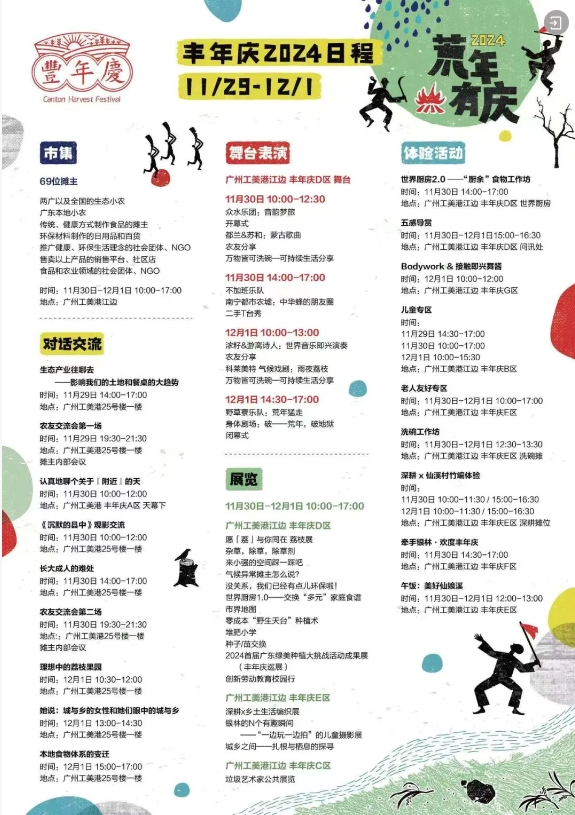
▼ The Harvest Festival, opening this Friday in Guangzhou, is one of the few public events in China that brings together farmers, consumers, scholars, social organisations, and the media to explore food and agriculture together. Climate change has been a subject of discussion at nearly every edition in recent years. Click the image for the full event details.
Unless otherwise noted, all images are provided by the interviewee.