
14 Years After Returning Home, I Finally Started Farming
I. Nearly Leaving
Father asked hesitantly whether we should lease out our fields too.
He was probably a little sorry for getting in the way of the large farmers.
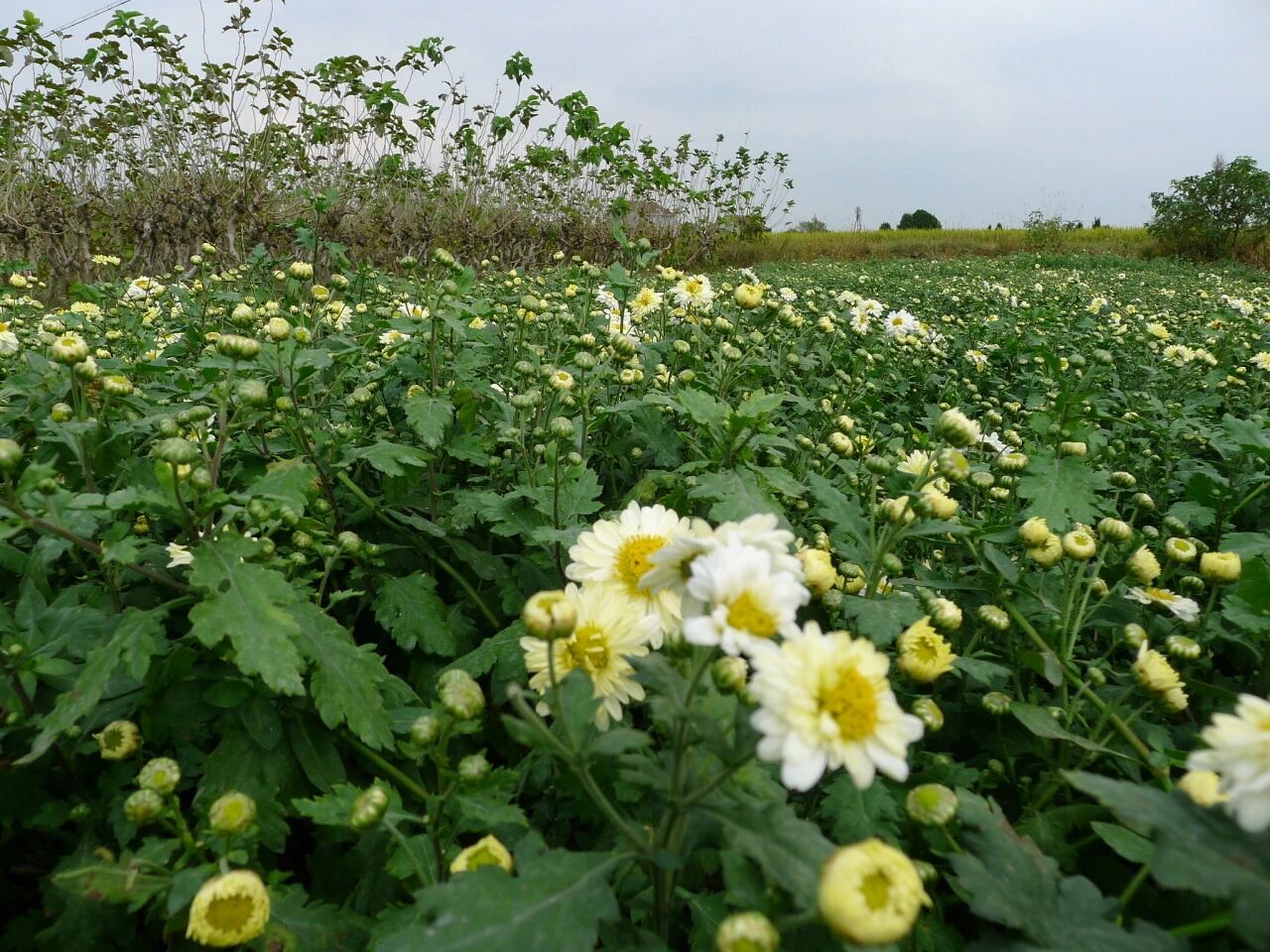
Since 2011, when we left Beijing and returned home, we have stayed in our own village. Over that time, we have experienced several changes.
At first, the motivation was very simple: just to go back to our own village and run a small organic farm. In my mind’s eye, the farm would be around our own house, lush green and full of life. I knew then that organic farming was unlikely to make money (though it was said to be able to support a family), but living in such an environment would be compensation enough (which is also why I admire Tang Liang). However, defeat was a predictable outcome for a 25-year-old second-generation farmer with almost no agricultural or social experience and not a penny to his name — even in his own village, he could not rent any land.
II. Looking for a Village
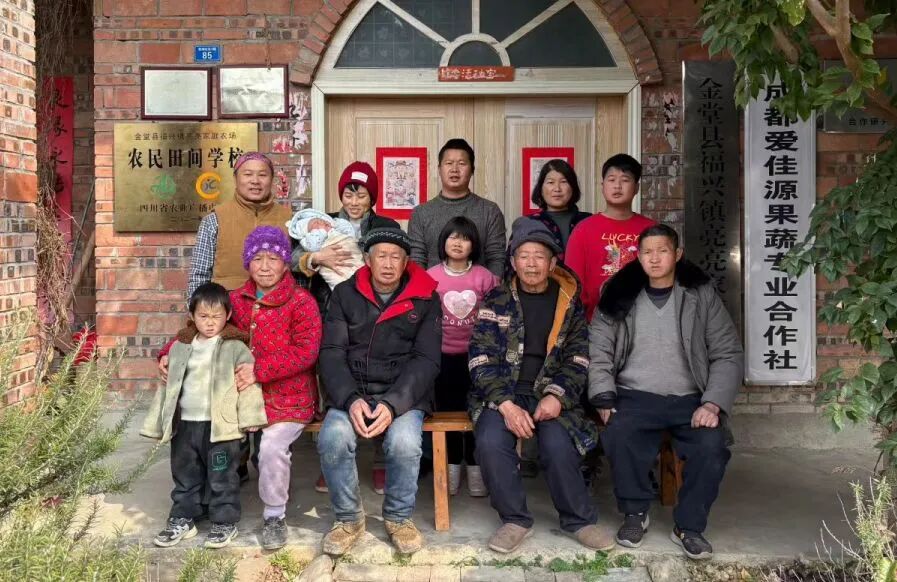
During that time, as a “veteran” among returning young people, I had seen too many failed organic farm startups. Besides, we never really regarded returning home as a business venture, nor did we want to grow big, so we never rented land; we only ever used our own little plot (literally one mu and a fraction).
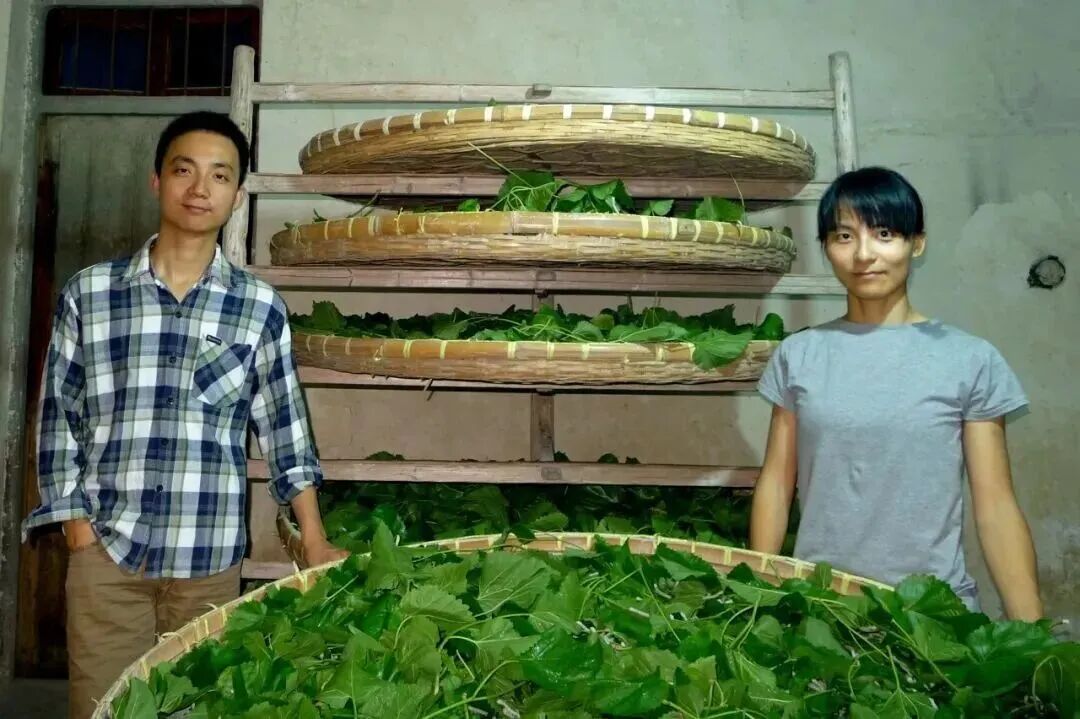
When people introduced “Mei He Yu Farm”, I felt awkward because the area was so small, and it was also something of a misnomer. The year before last, we simply changed the suffix of our company name from “Family Farm” to “Sericulture Culture”.
We really started looking for another village. We focused on the north-west direction of the county town, because that would be closer to where we lived and make it easier to take the children to and from school. I was thinking: leave our own village, but not leave the sericulture area. Find a place with a similar culture, so we could continue our work.
To be honest, over all these years, in our own village, with our parents and relatives, the wear and tear of an acquaintance society was truly emotionally draining. Physical separation would be better; out of sight, out of mind.
Our calligraphy teacher recommended a village in Wuzhen, saying there was a house for rent and a large mulberry forest right next to it, which would be very suitable for us. We were one step too late; by the time we went, it had already been rented as a warehouse.
There was another village that had long been planned for “townspeople” to start businesses in, and most of the original villagers had already moved out. The company operating the village had been running for several years, but was also in a state of semi-stagnation.
We also went to see the village where a friend runs a teahouse. Most villagers seemed preoccupied, waiting for the main road to the west to be widened so they could receive the long-awaited, enormous demolition compensation.
My wife Yu Hui found a house online, some distance from the main road. In front of the house was a patch of woodland. On closer inspection, underneath were rows of listless mulberry trees. It turned out that after the landlord had stopped keeping silkworms, the land had been planted with seedlings. The landlord said that if we wanted to keep silkworms, we could use all her silkworm trays. However, at the time construction workers were still renting the house and living inside, so we would have to wait until the end of the year.
At the thought of having to clean, decorate and organise this three-storey house (and the mulberry forest) again, and the enormous effort it would take, Yu Hui ultimately politely declined the landlord’s offer.
From time to time afterwards, we also went to the “townspeople entrepreneurship village” a few more times to see if there was a suitable house.
A struggling guesthouse was being offered for transfer, and Yu Hui got in touch to arrange a viewing. I said, “Are you really going to open a guesthouse?” She said, “No, a guesthouse doesn’t need to be renovated; it can be used directly as a studio for making silk quilts.”
We then asked the operating company whether it still had land. There was one plot, with an annual rent of 3,000 per mu. Why was it so expensive? That land could be used for amusement facilities and experiences. I was not doing amusement rides, just ordinary farming. Then there was nothing left; the ordinary land had all been leased by the company to grow tobacco.
I don’t remember whether this was the last time we looked for a village. In any case, the urge to leave kept spreading.
III. A Familiar Stranger
The problem was that I did not have much experience growing rice, let alone organic cultivation.
Rice really was a familiar stranger.
I remember in Year 3 of primary school, my mother dragged me into the paddy field to transplant seedlings, and “furiously” dropped a line: “You are a farmer, and you cannot even farm; who will support you in the future!” But my mother herself did not expect that later, what supported our whole family was not farming, but my mother and father going to work in a factory. With years of further education afterwards, I never again had the chance to become proficient in rice transplanting.
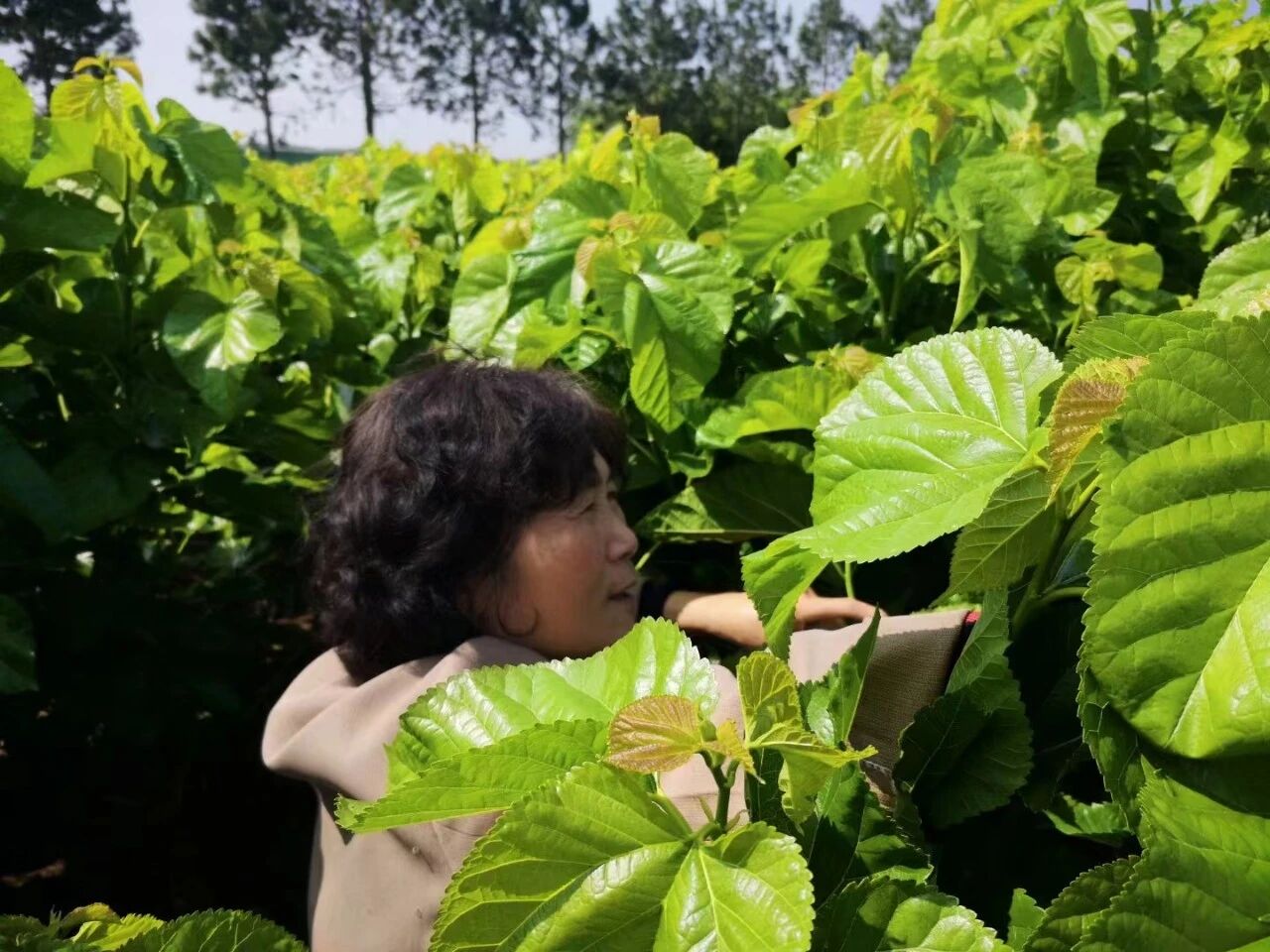
The last time I farmed before leaving home was the summer holiday after the national college entrance examination ended. While I was transplanting rice seedlings in the dusk, my form teacher kept calling me to ask about my exam results.
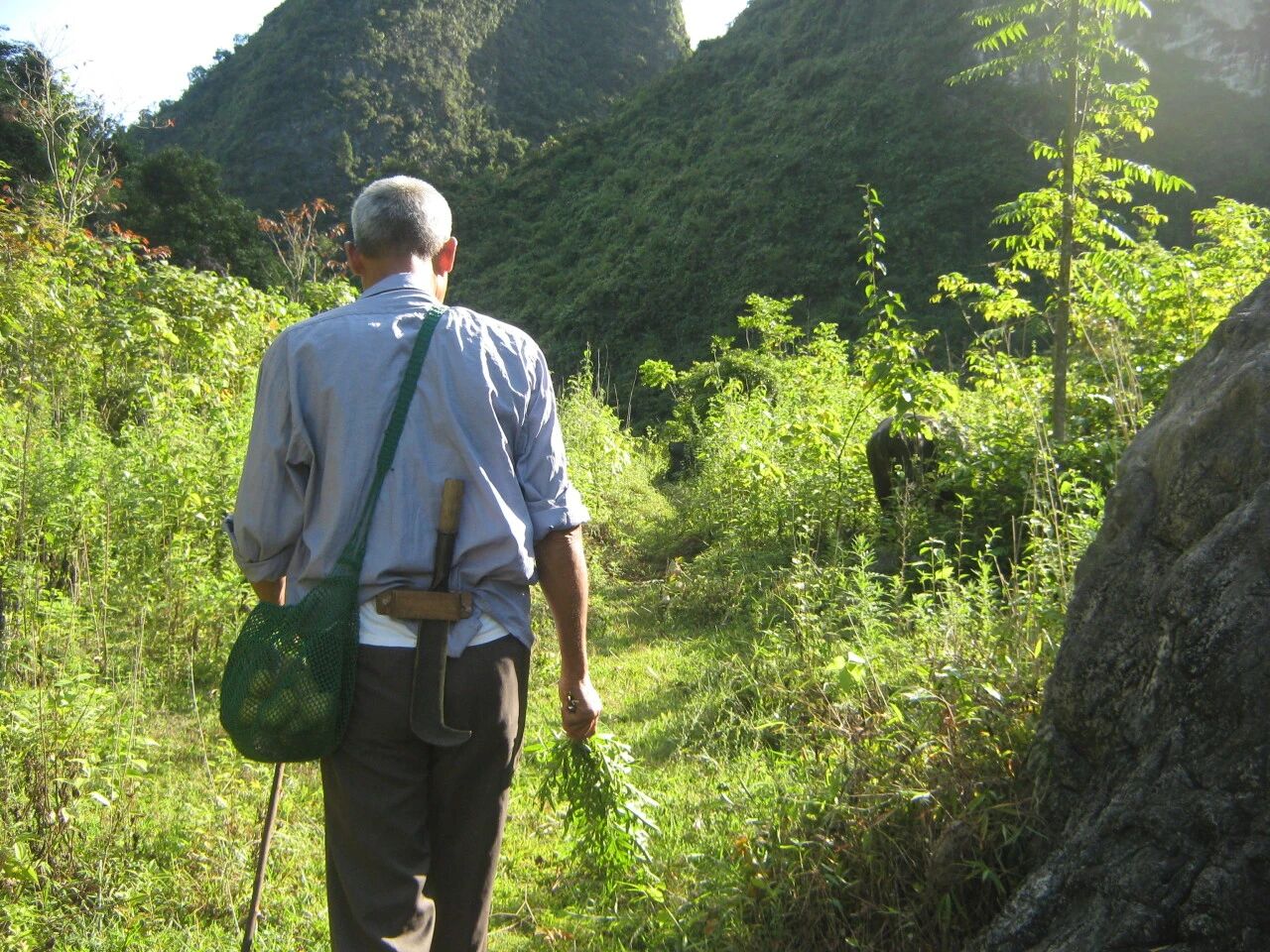
After that rice transplanting, I first went to Jilin for university, then to Beijing to work, and never went into a paddy field again. After resigning in 2011, I did rural public-interest work in Longzhou, Guangxi, and actually took part in a rice-duck farming project with the villagers: going into the fields to observe apple snails, giving the villagers ducklings, and occasionally checking whether anyone was secretly using pesticides. Apart from that, I actually worked in the paddy fields.
IV. The World of Agricultural Inputs
Compared with a decade or so ago, the market now has a very large number of commercial organic fertilisers. Granular organic fertiliser applied by drones can improve efficiency considerably over traditional methods.
There is a local organic fertiliser company that mainly promotes a kind of “organic slow-release fertiliser“, and its introduction mentions “using agricultural waste such as straw to extract natural high-molecular organic compounds such as lignin, cellulose, alginic acid and chitin for modification and activation”. But on learning more, I found that its organic matter content was only 15% (the standard requires more than 30%), and when I looked at the implemented standard it referred to, GB 15063-2020, it was actually a compound fertiliser!
Even qualified organic fertilisers come in many types. By form, they are available as powder, granules, or bulk bags; by implemented standard, there are general organic fertiliser (NY/T 525-2021) and bio-organic fertiliser (NY 884-2012); prices can differ tenfold — the cheap ones are 400–500 yuan per tonne, the expensive ones 4,000–5,000 yuan per tonne. The one constant is that there is no way to know where its materials actually come from; even what the materials are is vaguely stated.
If one wants to obtain government subsidies, one must purchase from organic fertiliser companies on the government subsidy list.
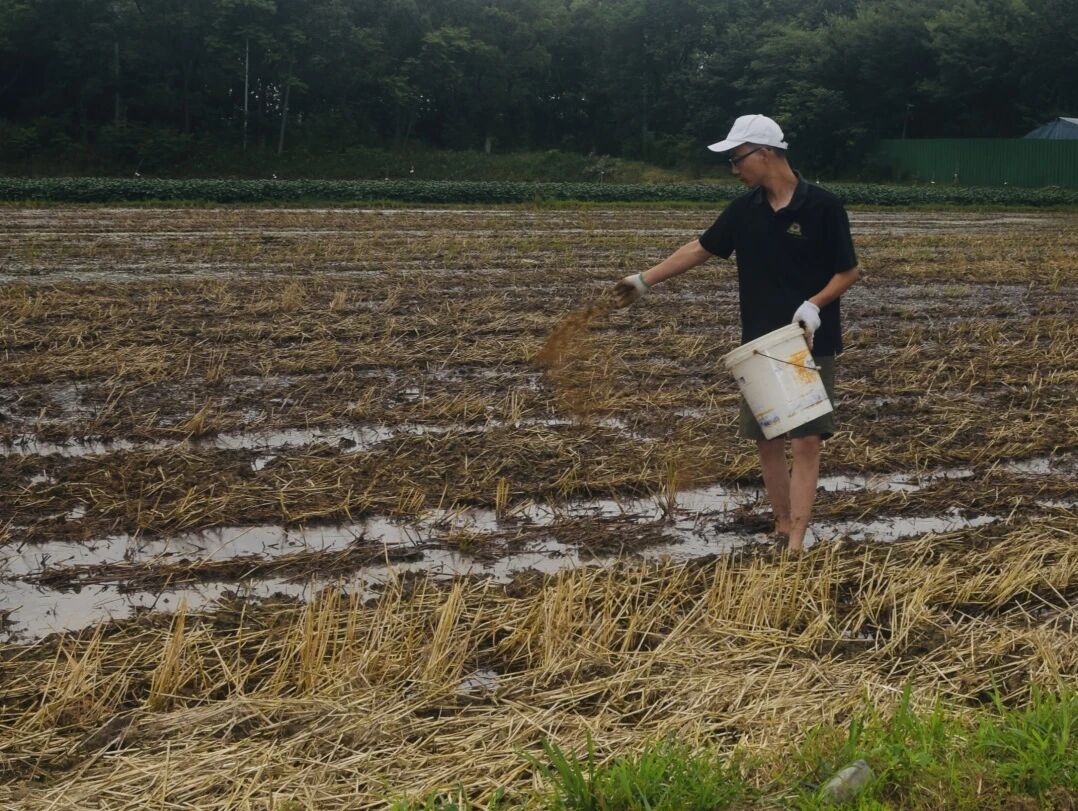
After a long comparison, in the end we still chose the “ancient” rapeseed cake. The raw materials are clearly identifiable, and it is local, which saves long-distance transport. Of course, that means it is difficult to spread mechanically, and also means no subsidy can be obtained.
The most laughable and embarrassing was the seedling trays. We entrusted an organic farm in Suzhou to help raise seedlings, and it was only on the day before rice transplanting that we discovered the seedling trays used in Suzhou were 9-inch, while our local ones were 7-inch. Because the sizes differed, the rice transplanter could not be used!
V. Weed and Pest Control Plan
The large grain-growing farming household on my fields had planted wheat in the previous crop; the harvest was usually around 20 May. So with rice transplanting in mid-to-late June, there was only one month, and not enough time left for weeds to grow.
As if it deliberately knew that I was going to farm, this time the wheat harvest was delayed by a week compared with previous years! After the wheat was harvested, I hurriedly contacted a tractor operator I knew to do rotary tillage, but he was busy harvesting wheat and ploughing land for a 2,000 mu large farming household. It turned out that all the tractor operators in the whole town were harvesting wheat and ploughing land for large farming households!
By the time I had finished making all manner of phone calls and the fields had been ploughed, it was already 31 May, the Dragon Boat Festival!
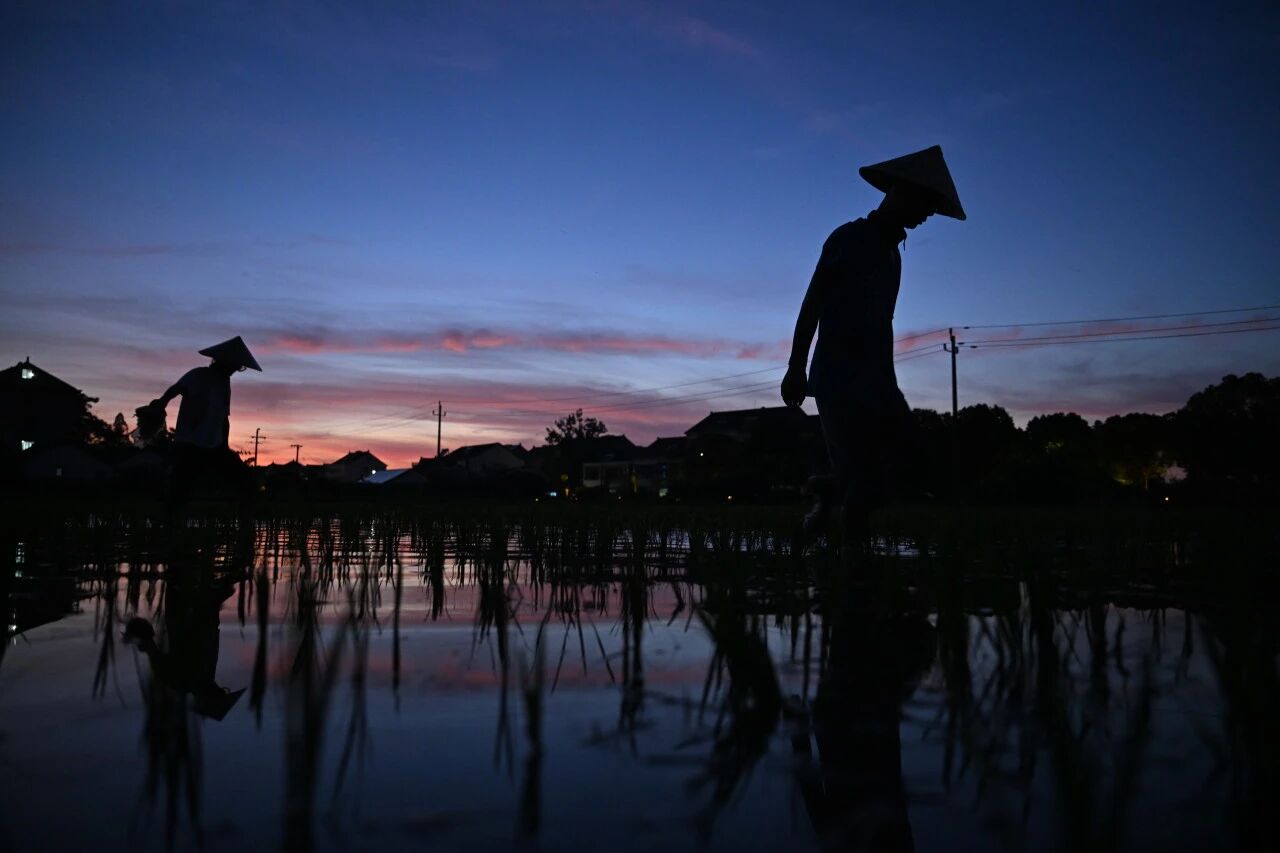
VI. Hoeing the Paddy Fields
Traditional Chinese farming places great emphasis on levelling the fields. According to my father, it had to be “like a mirror”. Only a paddy field that has been levelled properly can be managed through irrigation to control weeds, giving the rice a head start.
But large-scale conventional rice planting, relying on heavy use of herbicide, no longer emphasises levelling operations. Tractor operators mostly value efficiency, and the levelling technique and quality leave a lot to be desired.
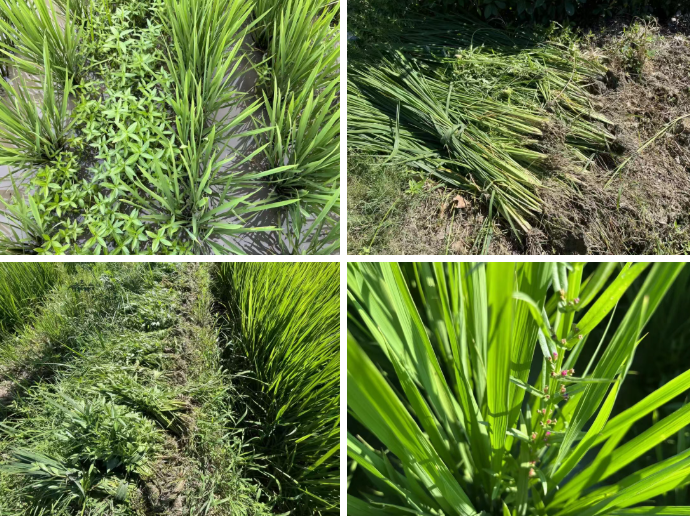
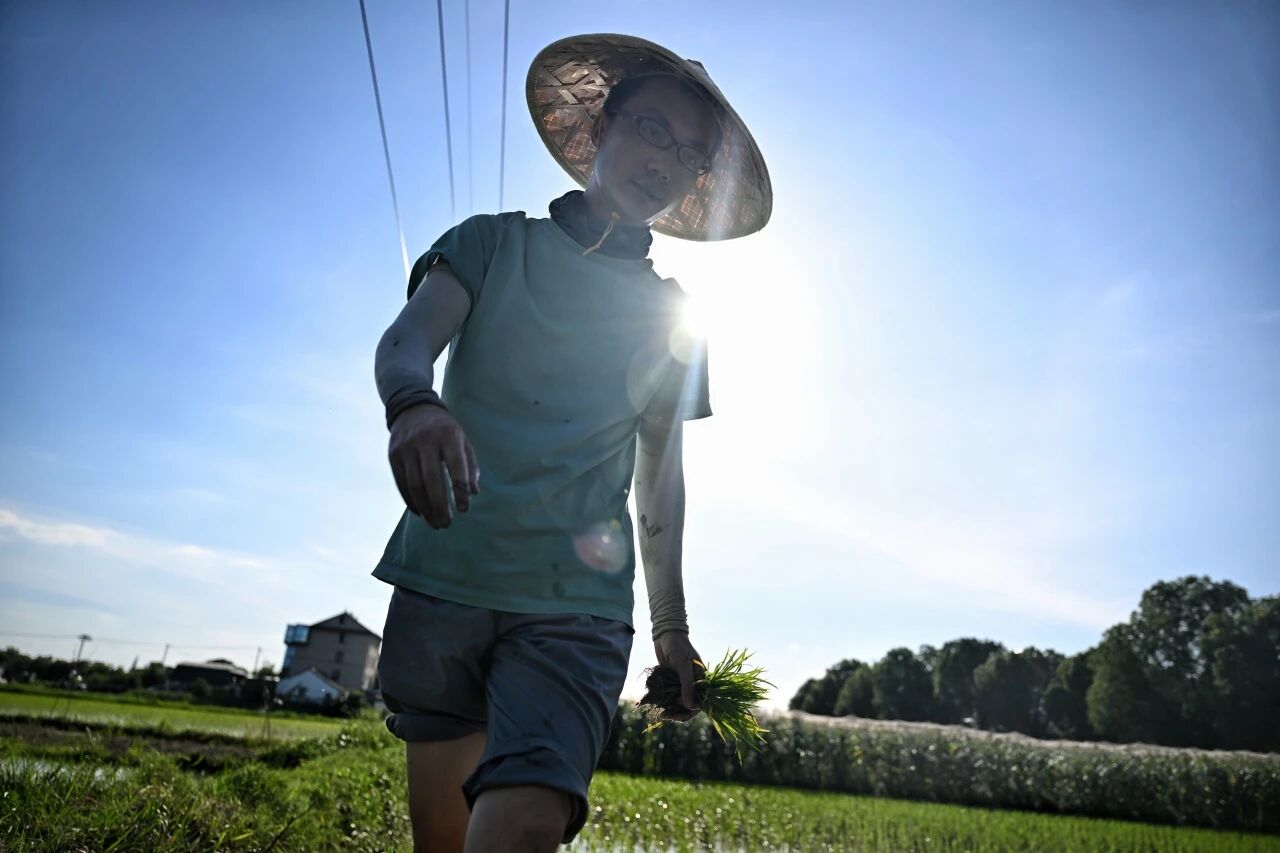
The result of this decline in skill is that we bent over and hoed the fields four rounds in total, with some plots hoed five times. The “hoeing” in “ploughing and hoeing” means weeding and treading the weeds into the field.
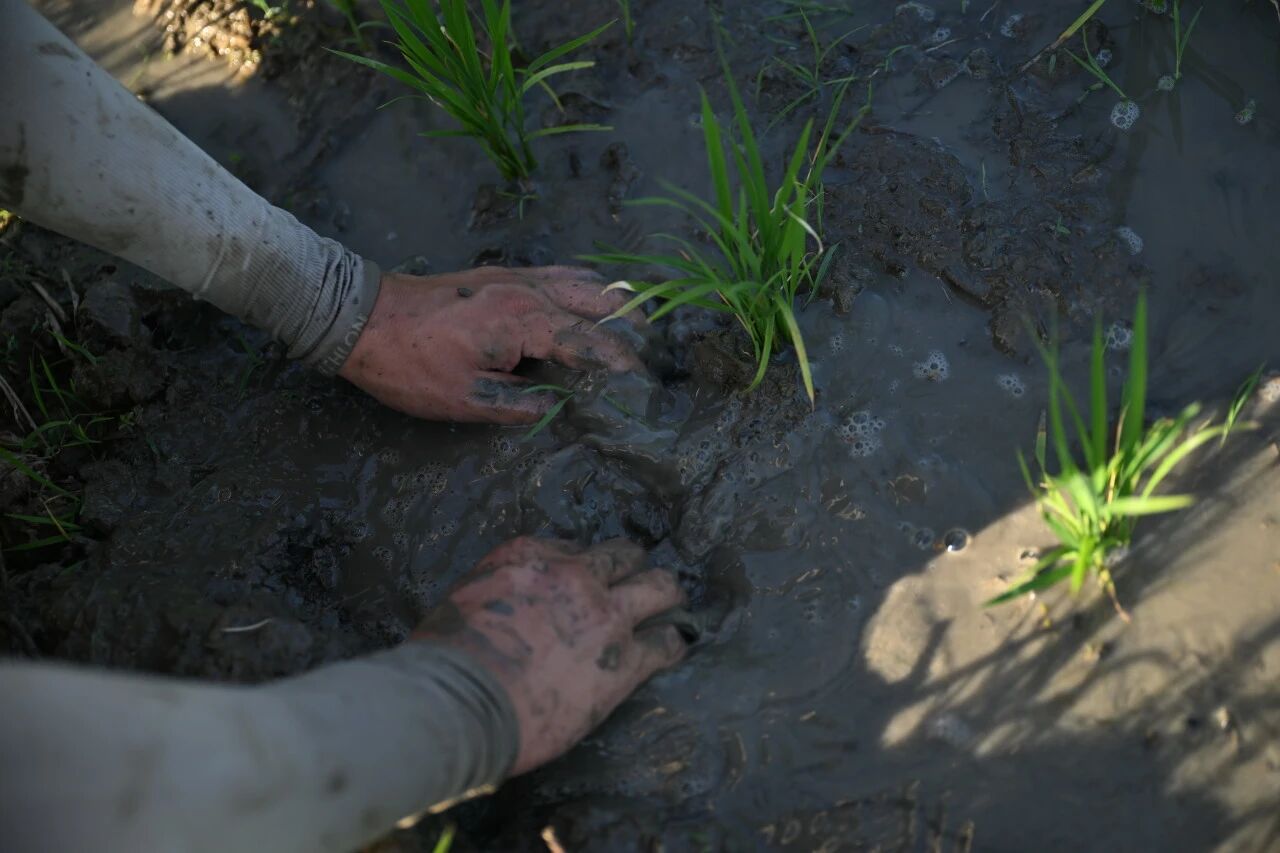
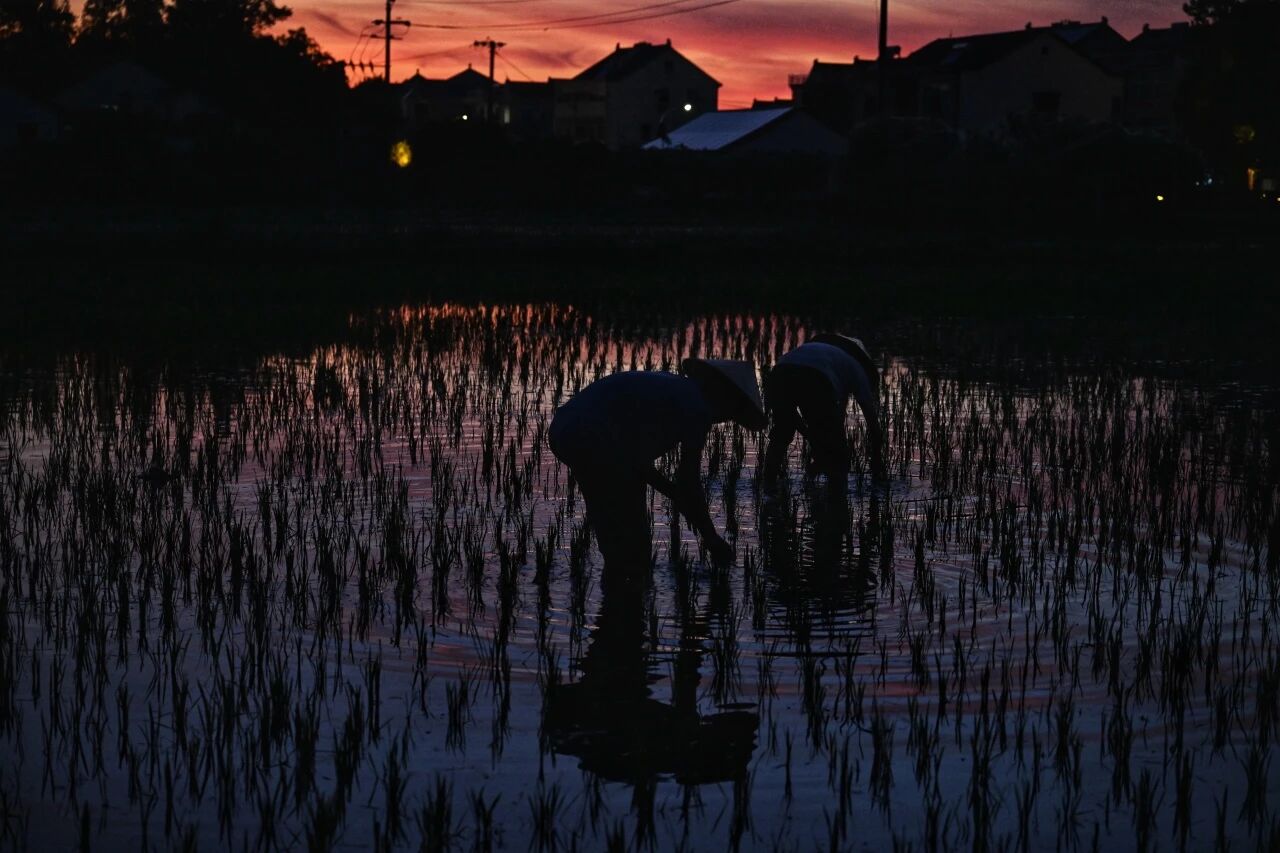
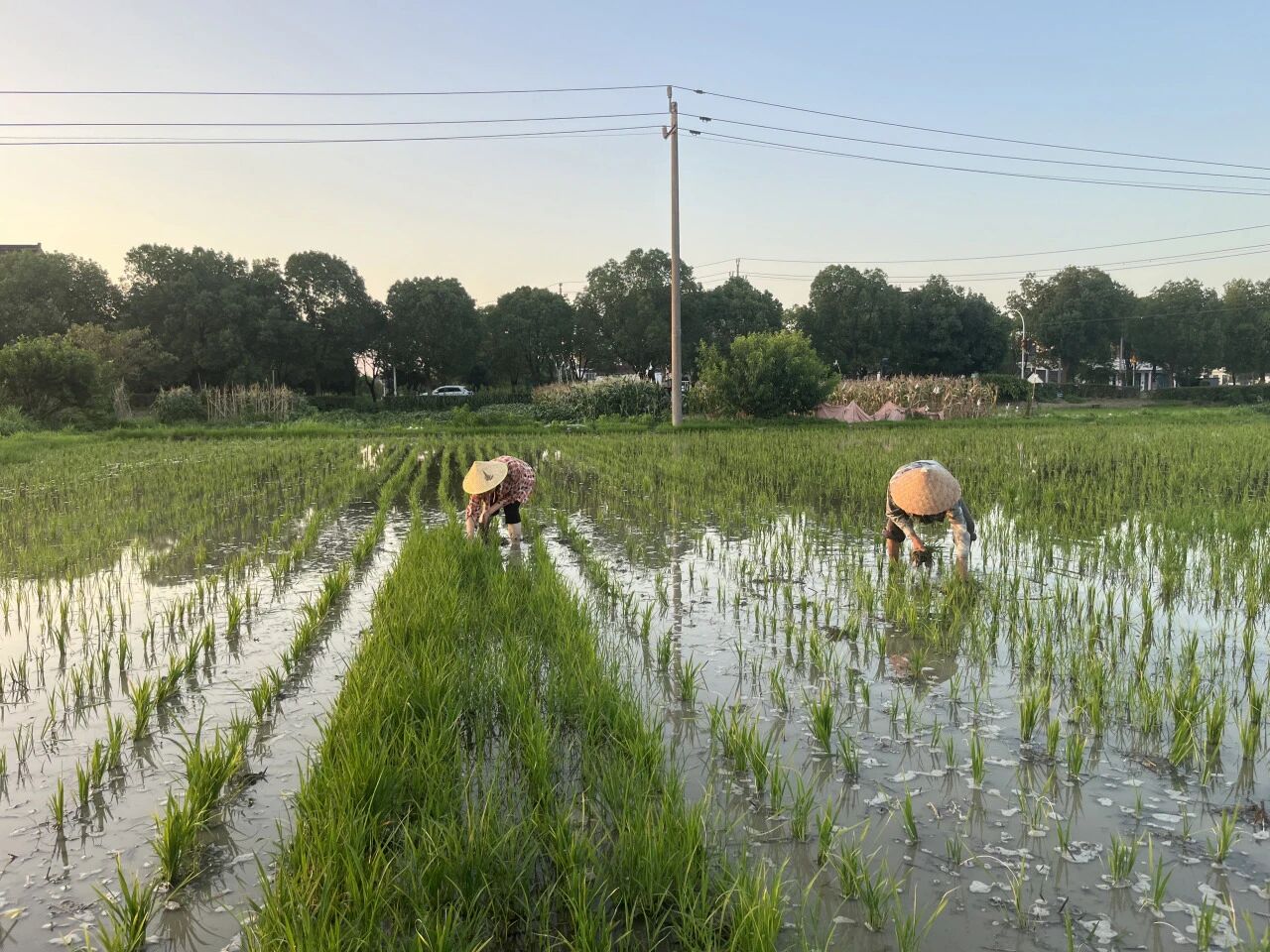
As a farmer seeking a harvest, I do not want to, and cannot, say something glib like “coexisting with weeds”.
During most of the time bent over on the 38-degree heat days, I really hated weeds. Then, at one point—probably the day I was weeding in despair—I suddenly thought to look up the names of those weeds. That truly changed my attitude towards weeds.
Every weed has a name: Daolishihe, Dingxiangpiao, Erjishuixiancai, Yuanyejiejiecao, Sanlengcao, Yashecao. All of these weeds are also used in traditional Chinese medicine. For example, Dingxiangpiao can clear heat and toxins, promote urination and unblock the urinary tract, resolve blood stasis and stop bleeding, and can be used to treat dysentery, infectious hepatitis, nephritic oedema, cystitis, boils, carbuncles, sores, as well as snake or insect bites.
I plan to learn more about these paddy field weeds in the future.
VII. Pests and Silkworms as One
What could be done?
First, we used blue and yellow physical sticky traps, but the results were only average.
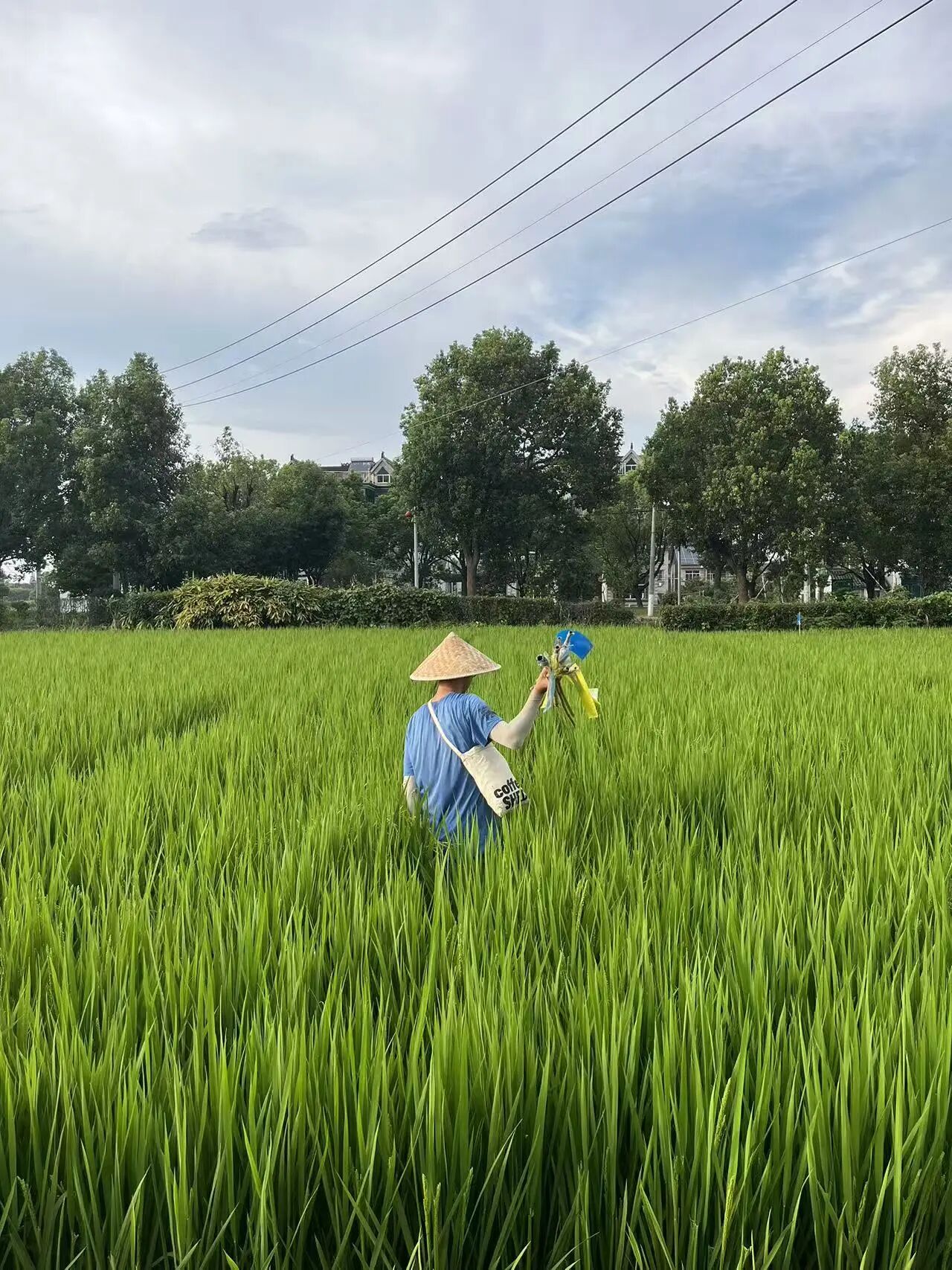
I saw that an organic farming friend had in the end used microbial agents, which are permitted in organic agriculture. I thought I would keep some on hand in case they became necessary (spiders in the first year probably would not have been enough).
But while I was reading the details, I was startled to find that the microbial agents were specifically for killing lepidopterans — and silkworms are lepidopterans!
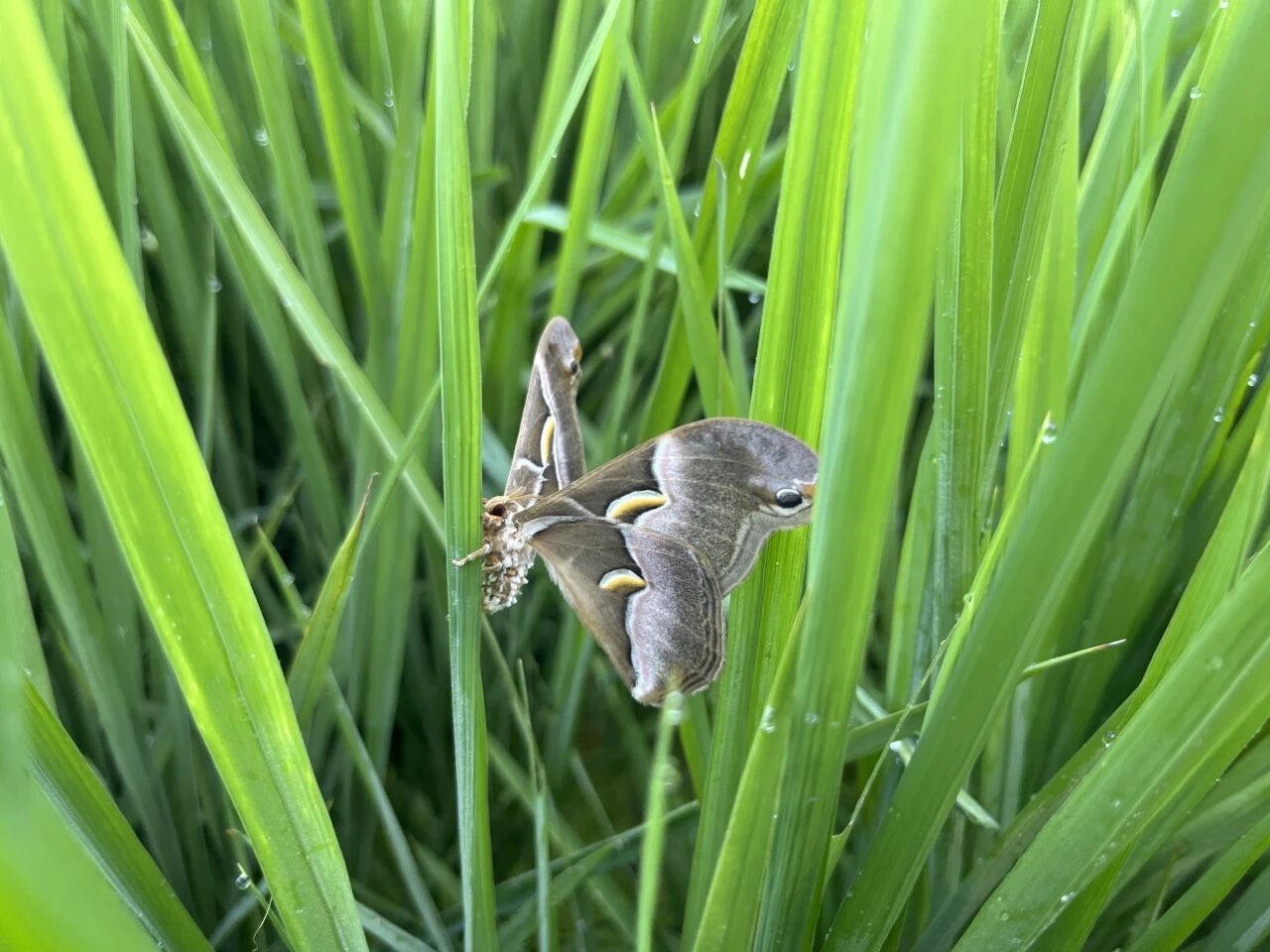
That makes sense, actually. I had even deliberately kept two insects — a rice leaf folder and a rice stem borer — just to observe their life habits. In the end they pupated, and after emerging from their shells they became moths, their eyes vivid and lifelike. Paddy field moths and silkworm moths — are they not rather similar creatures?
So we decided not to use even the microbial agents — a “naked run”.
After this “naked run”, the paddy field still grew well, and the harvest finally arrived at the start of winter.
The foundation of success, I think, can be summed up as “three field practices, six characters”: field inspection, field drying, and hoeing.
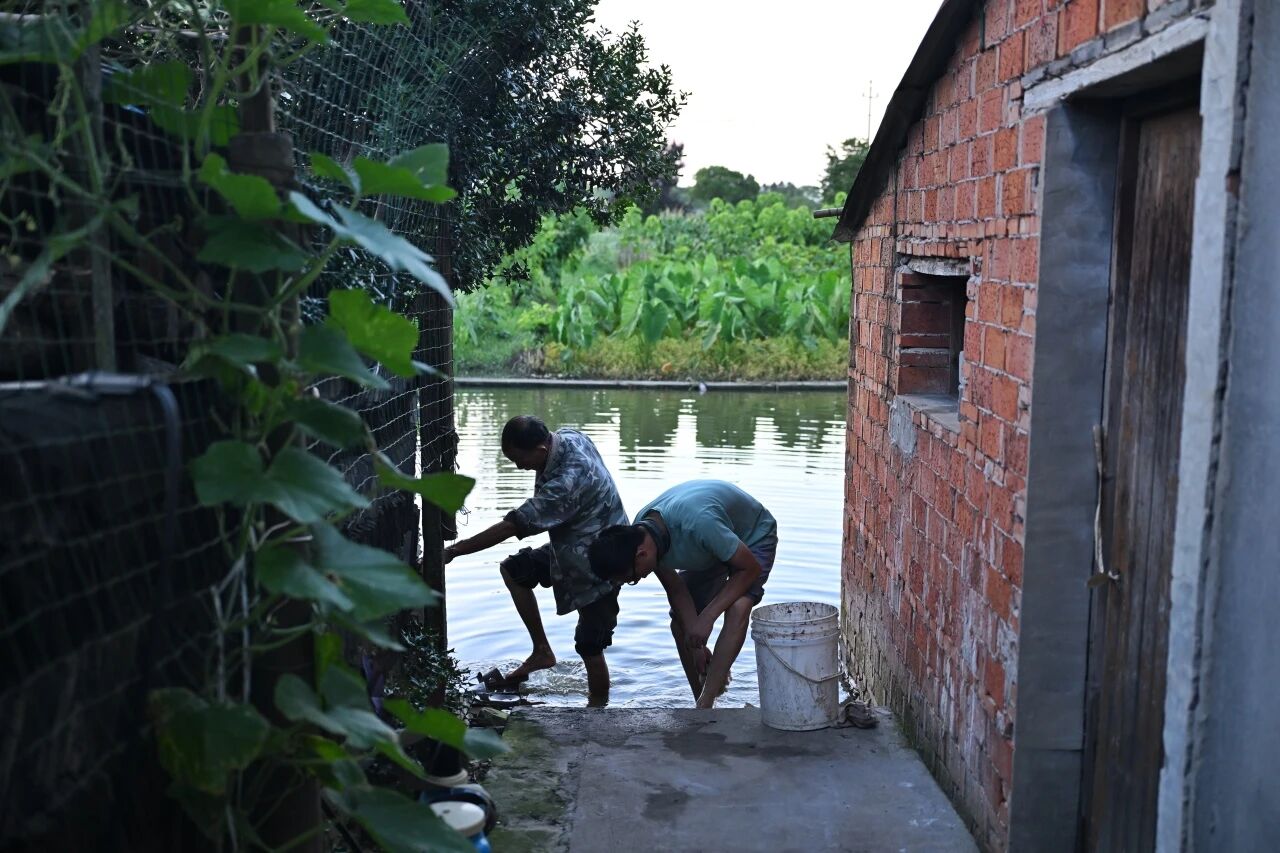
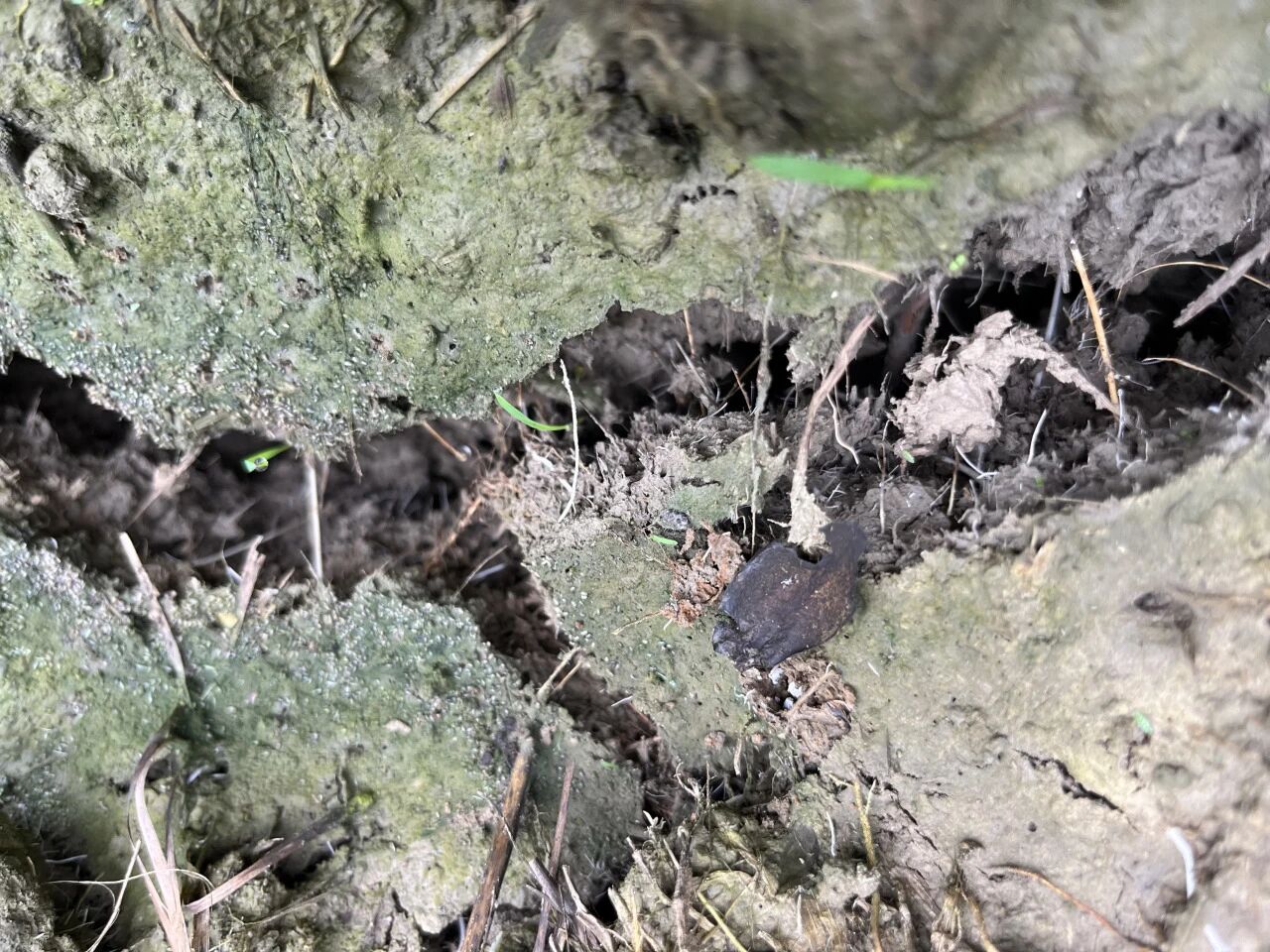
Field inspection means making sure that every morning, before sunrise, I go round the paddy field once. The main thing is to check the water in the paddy field. Loaches, crayfish and eels in the paddy field dig holes at night, and once they have opened the paddy bund, all the paddy water leaks away; as soon as the sun comes up, weed seeds in the paddy field will germinate. Field inspection means finding and patching leaks in time, and then letting the water in again.
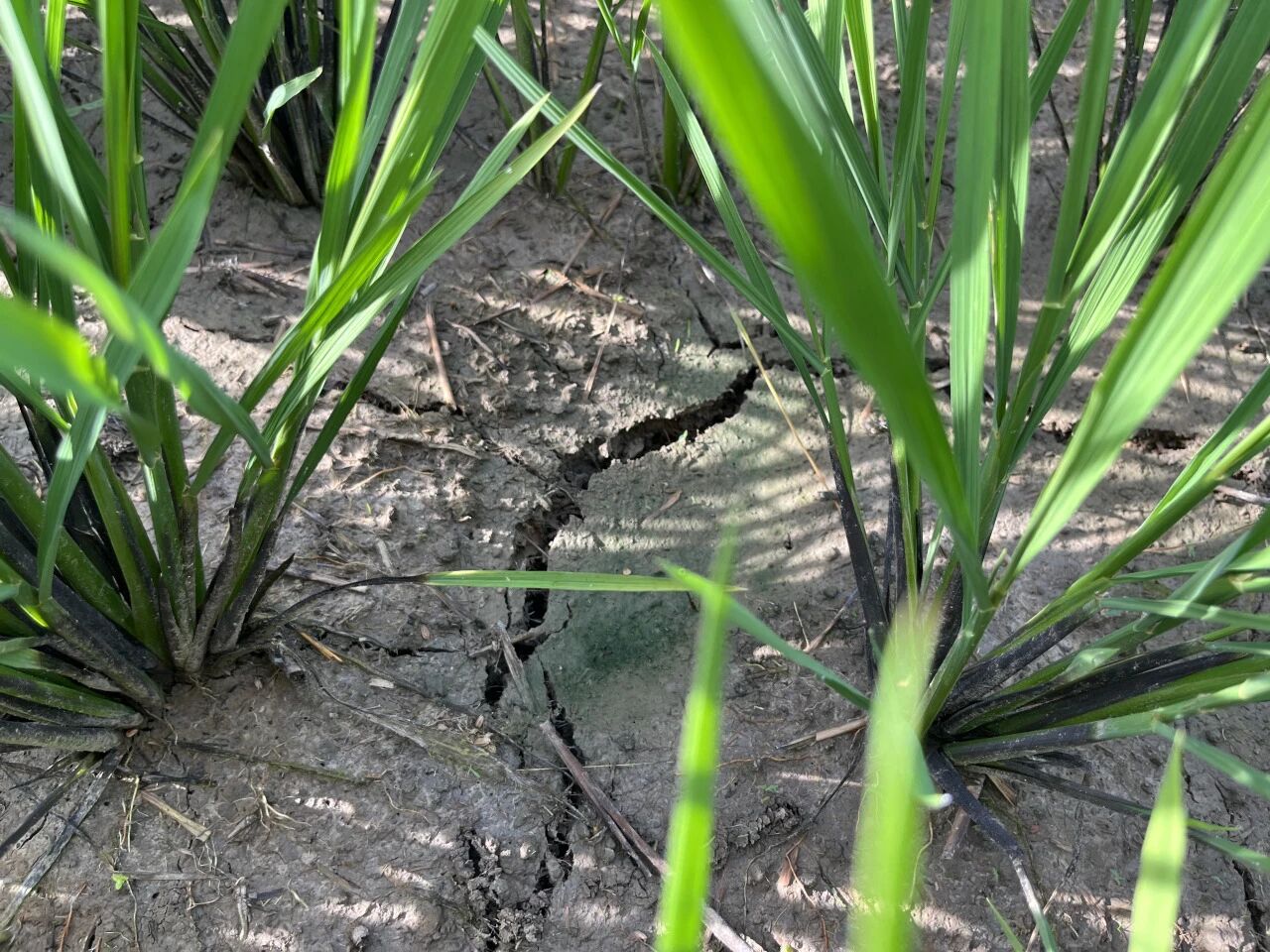
The field drying took place in early August, before the rice began jointing. Unlike field inspection, where water is added, field drying means draining the paddy field completely and letting it bake in the sun until cracks appear. This encourages the rice roots to keep growing downwards, makes the plants less prone to lodging, and keeps the plants healthier.
The difference between hoeing and weeding is that weeding only removes the weeds, whereas hoeing also treads the removed weeds into the mud, so the weeds actually become fertiliser for the rice — two benefits at once.
VIII. The Homecoming Dream Realised
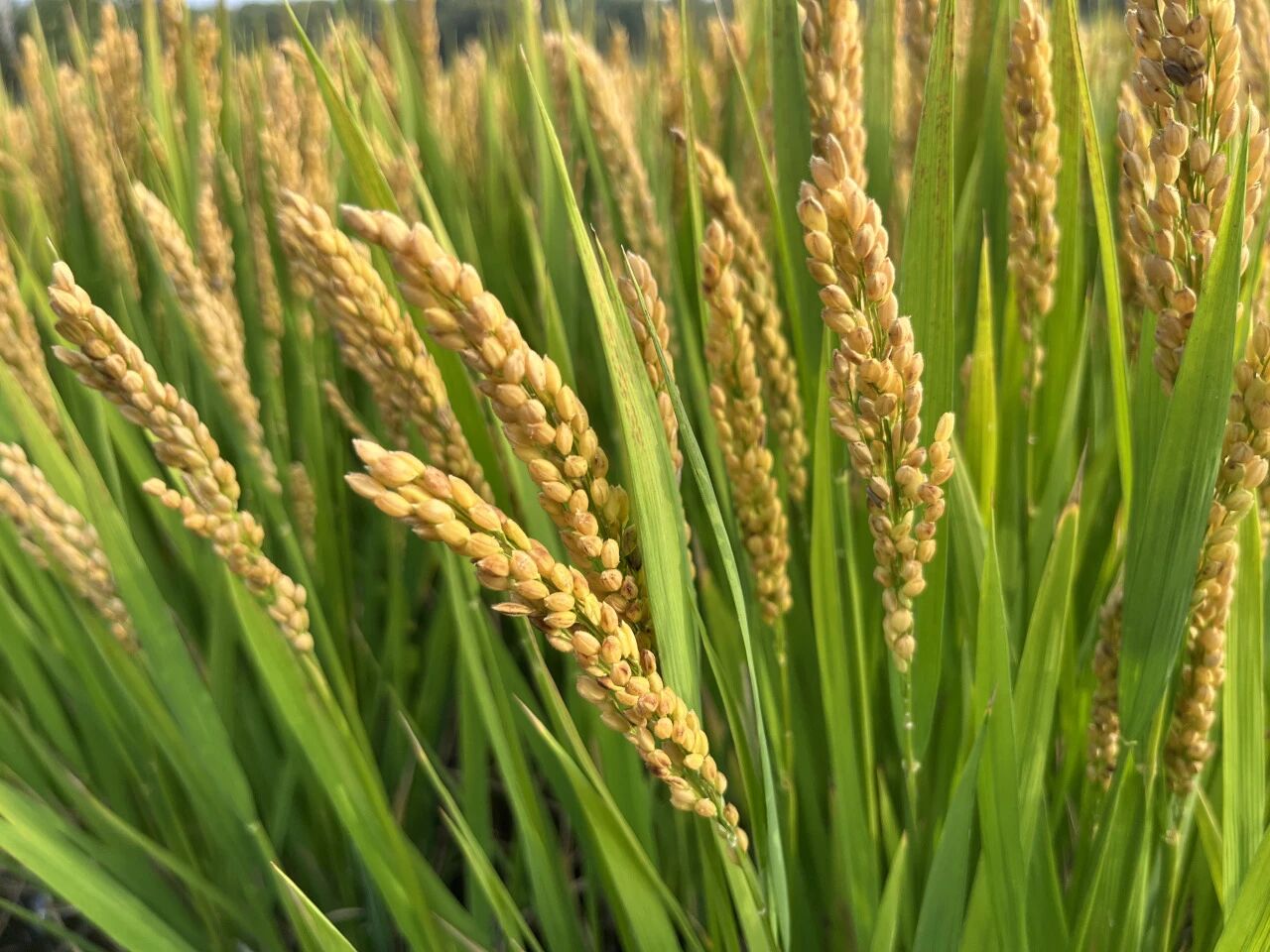
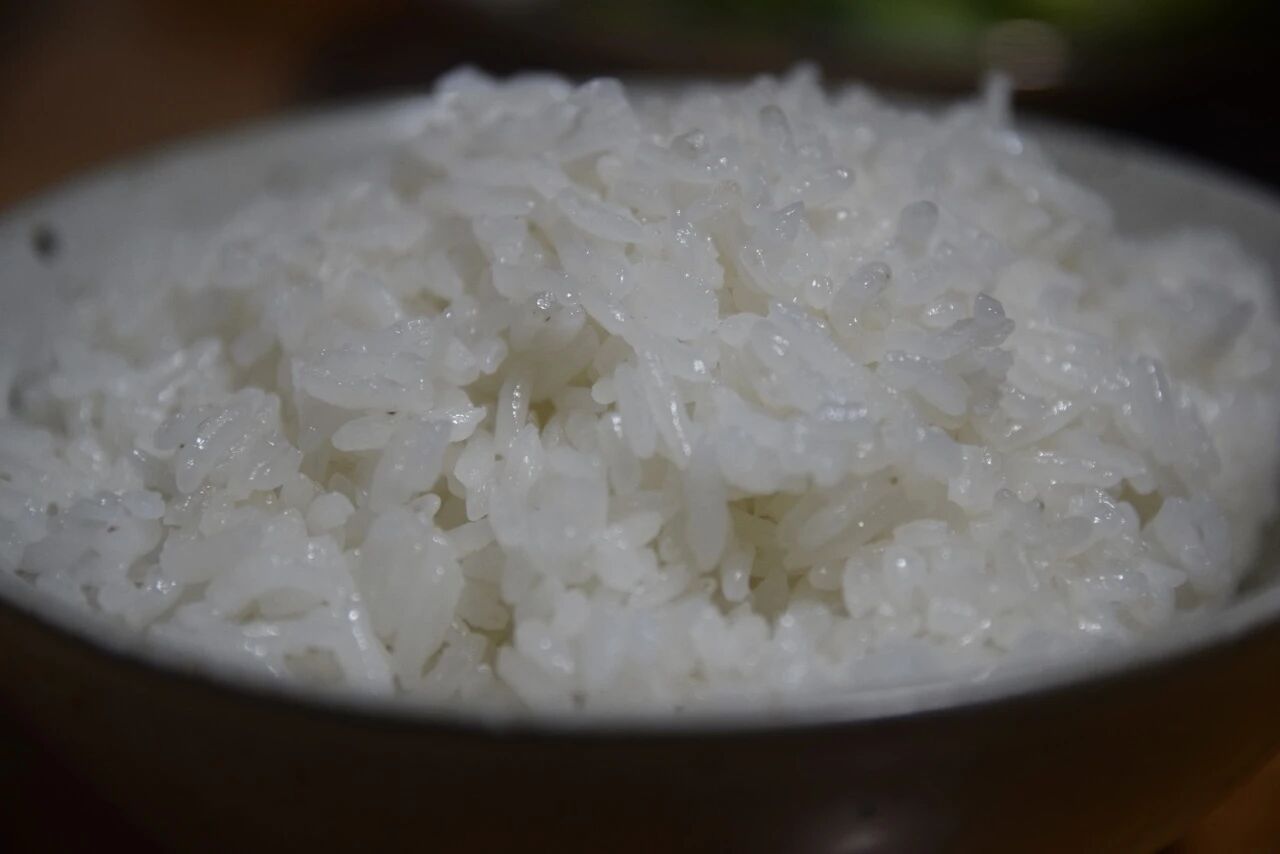
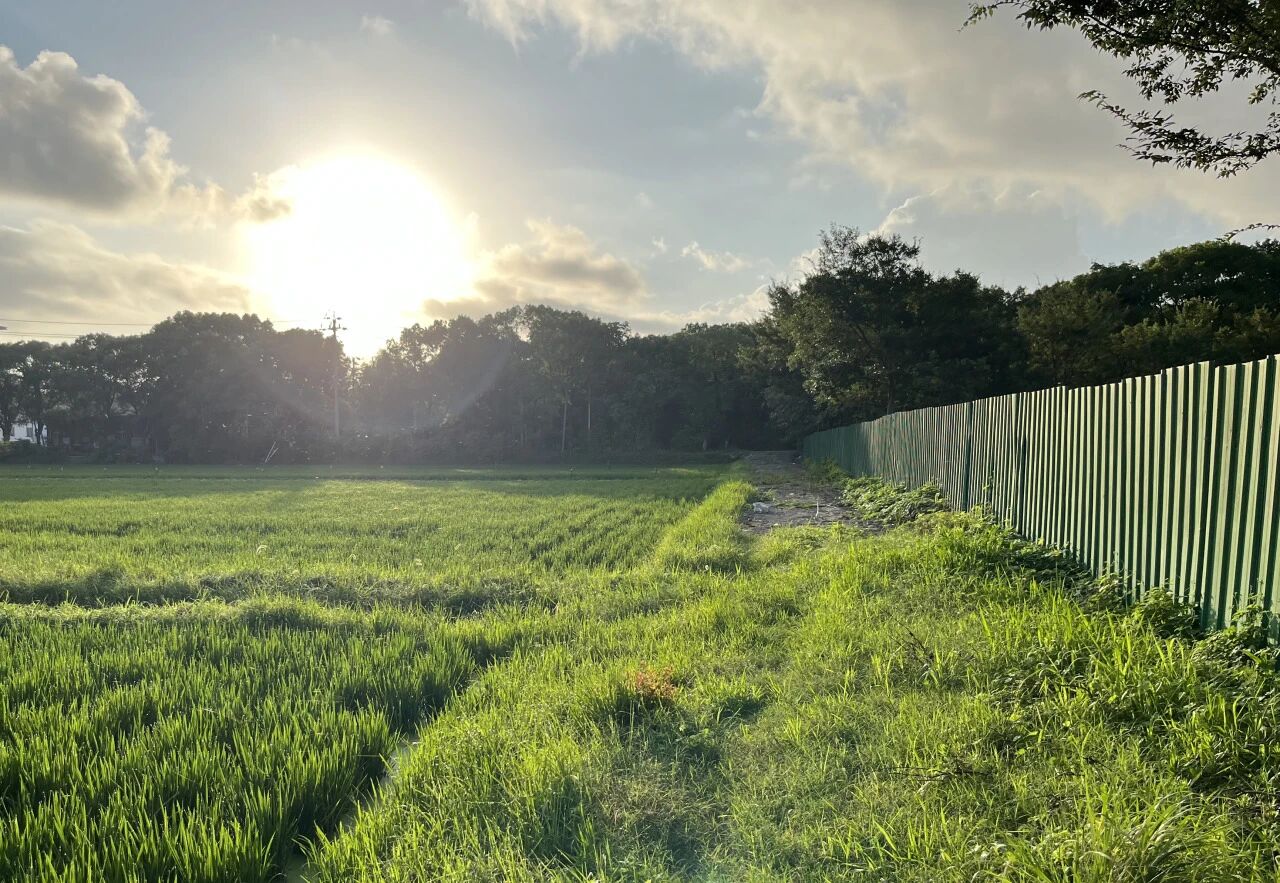
Fourteen years after returning home, I had once been on the verge of leaving. In the end, not only did I not leave, but I also, “without precedent”, rented other people’s land for the first time. Adding the original 1 mu we already had, I “without precedent” came to have a 15 mu organic paddy field farm, and this farm was right outside the window of our own house!
Was this not the simple, vague and beautiful wish of returning home that we had fourteen years ago?
Thank you, silkworms!
First draft on 9 February 2026, the 22nd day of the twelfth lunar month, Yi Si Year of the Snake
Revised on 23 February 2026, the 7th day of the first lunar month, Bing Wu Year of the Horse
All images, unless otherwise stated, are provided by the author
Editor: Tian Le