Young Farmer on the Outskirts of Beijing First Stumped by Plastic

In the spring of 2024, as a city office worker who had never done any farm work, I started farming, on and off, on the outskirts of Beijing, tentatively setting out on my agricultural journey. When people around me heard about it, their reactions fell broadly into two kinds: one found it romantic, saying it was pastoral healing for city people; the other found it hard, asking what on earth was the point of enduring the sun and rain. I had imagined both possibilities and felt ready for both.
But once I was actually in the field, the first thing I came up against was neither the disillusionment of pastoral romance nor the hardship of labour, but the very concrete problem of how to deal with plastic.
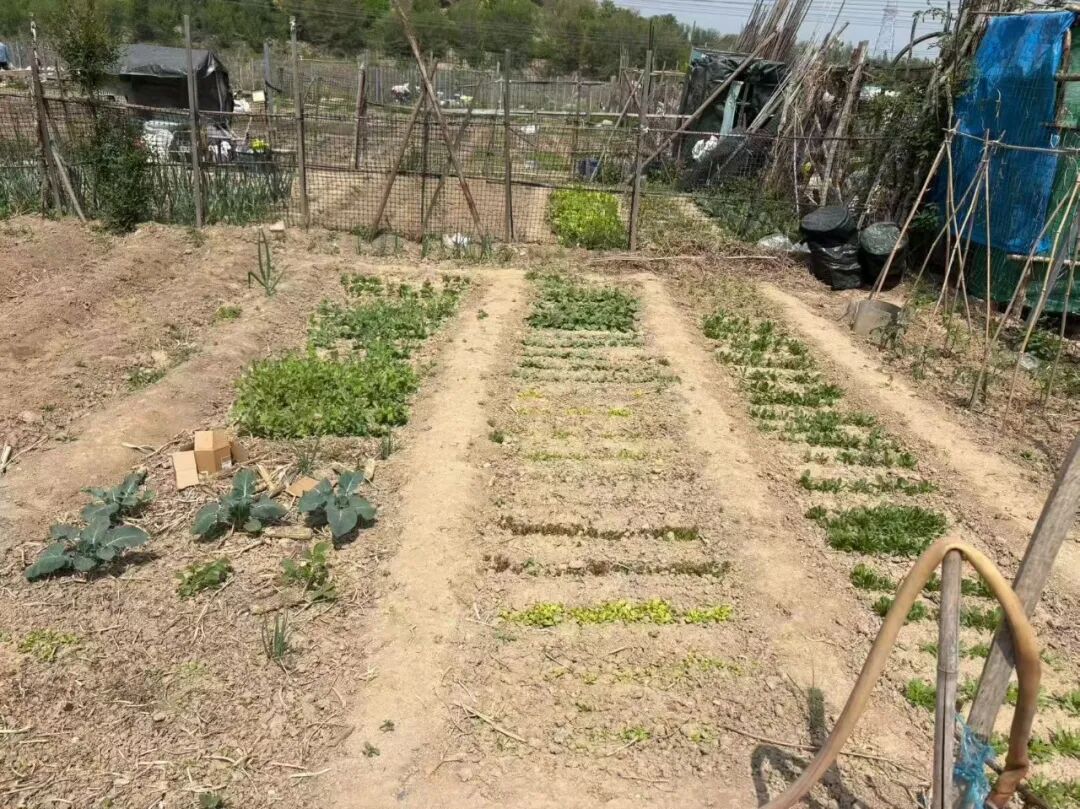
◉ The plot I rented this spring.
Farming Runs Into Plastic Waste
2024 was my first year of farming, and I rented a 10-square-metre plot. By the time I took it on, it was already May. In Beijing’s climate, open-air planting usually begins in mid-to-late March, and for those with polytunnels it begins even earlier. The land is never left idle. When the time comes, the farm owner lets plots to farming enthusiasts, and whatever is not let is grown by the farm itself. So by the time I rented my plot, the farm manager had already planted chillies in it.
That saved me some trouble: no need to plough and level the soil, dig furrows and make ridges—just dig out the chillies and clear a space. I also had to work 40 kg of sheep manure into the soil; once that was done, the preparations were complete.
The farm plots are managed by zones. My plot was right at the entrance to Zone C, so everyone coming in and out had to pass by. A young face working away clumsily but with great energy in the field soon attracted the attention of several older men and women. They simply stopped beside the plot to chat with me; when they could not bear to watch any longer, they took the spade and showed me a few moves, and one even gave me a large bag of fresh vegetables on the spot. Fortunately, there was not much work. It was done in an afternoon, and the embarrassment of being watched ended with it.
That year, although my farming experience was zero, sheer drive was enough to get the plot through. By the end of the year, the harvest was “abundant”. Judged by the rent and the price of vegetables, it was naturally a loss, but sow melons and reap melons, sow beans and reap beans; the sense of worth and accomplishment is not something money can measure.
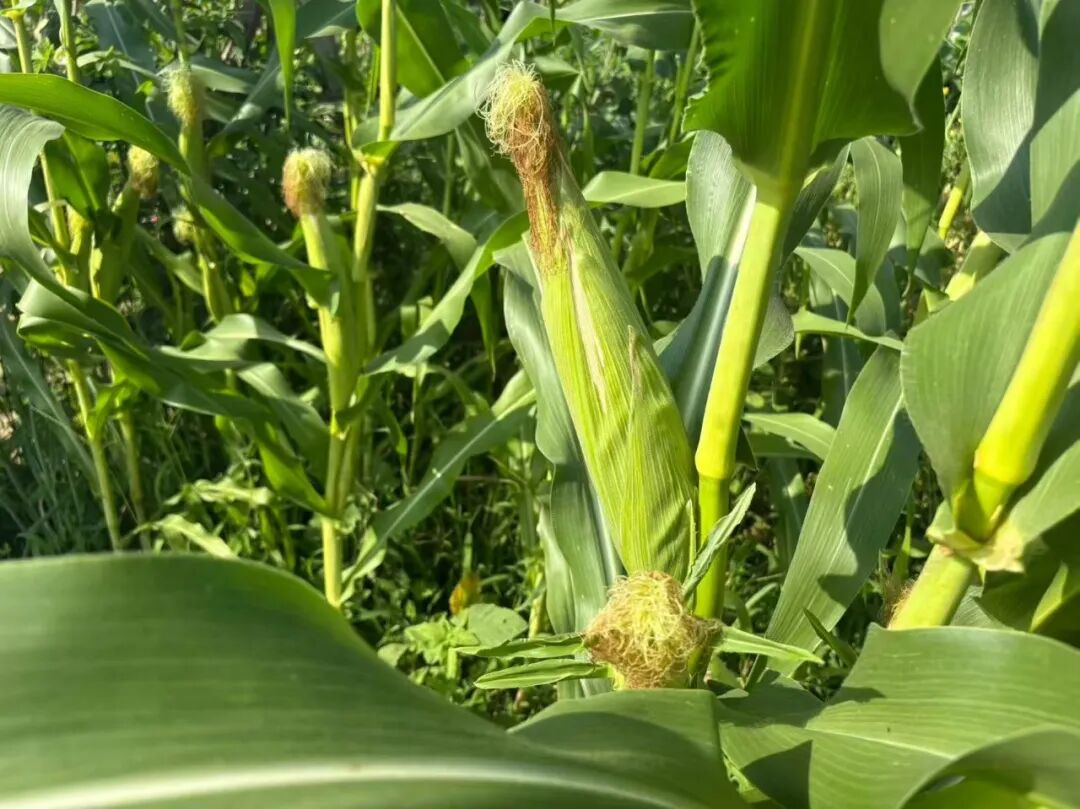
◉ My newly harvested maize.
These are my earliest memories of farming. A year later, I returned to the farm and, full of confidence, rented a larger plot—20 square metres.
Given those few months of meagre farming experience, when I went to choose a plot I made three requests: not facing the road, not next to the gate, and not likely to draw attention. Farming was my time to be on my own and relax; I really did not want to be watched by older men and women again, or have to exchange polite small talk with them just to be courteous.
From 1 January 2026, the right to use another plot temporarily became mine. During the New Year’s holiday, I went to the farm in high spirits and started drawing up a plan for the new year’s cultivation. It was only then that I suddenly realised the three requests I had made before were all secondary.
What really mattered was the condition of the land. Take my plot: it was strewn with plastic waste left behind by the previous owner.
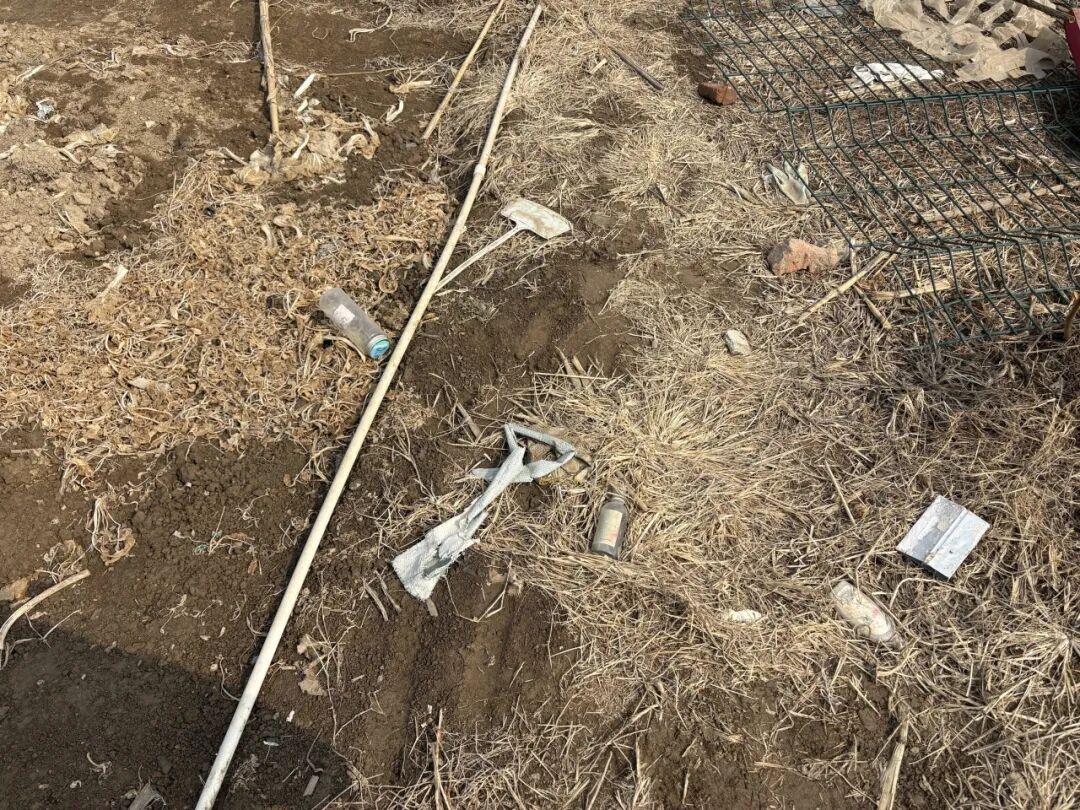
◉ Various pieces of plastic waste scattered across the land.
Plastic truly is the most convenient material humans have ever invented, solving countless problems for people living in modern society. In agriculture, for example, the use of plastic mulch film has extended farmers’ growing seasons, helped control weeds, and reduced the use of herbicide.
But besides agriculture-related waste such as mulch film, plastic twine and fertiliser bags, there were everyday items such as drink bottles, and even the plastic tubing used for hospital IV drips; no one knew why they had ended up in the field.
The plastic on the surface was relatively easy to clear; what was troublesome was the plastic twine half-buried in the soil. The twine had been used to secure the supports for climbing crops, and over repeated turnings of the soil, the other end of the twine had been accidentally buried.
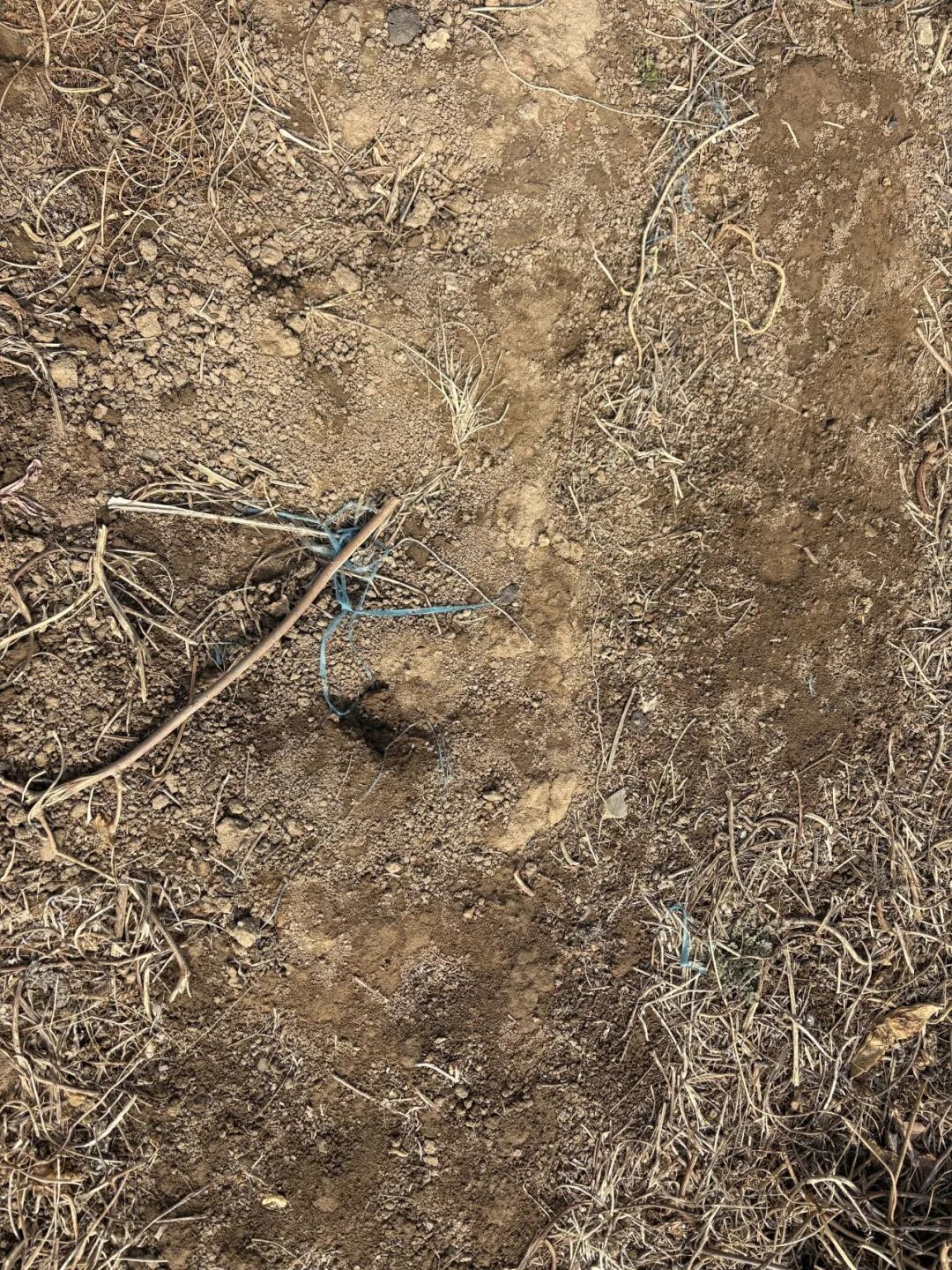
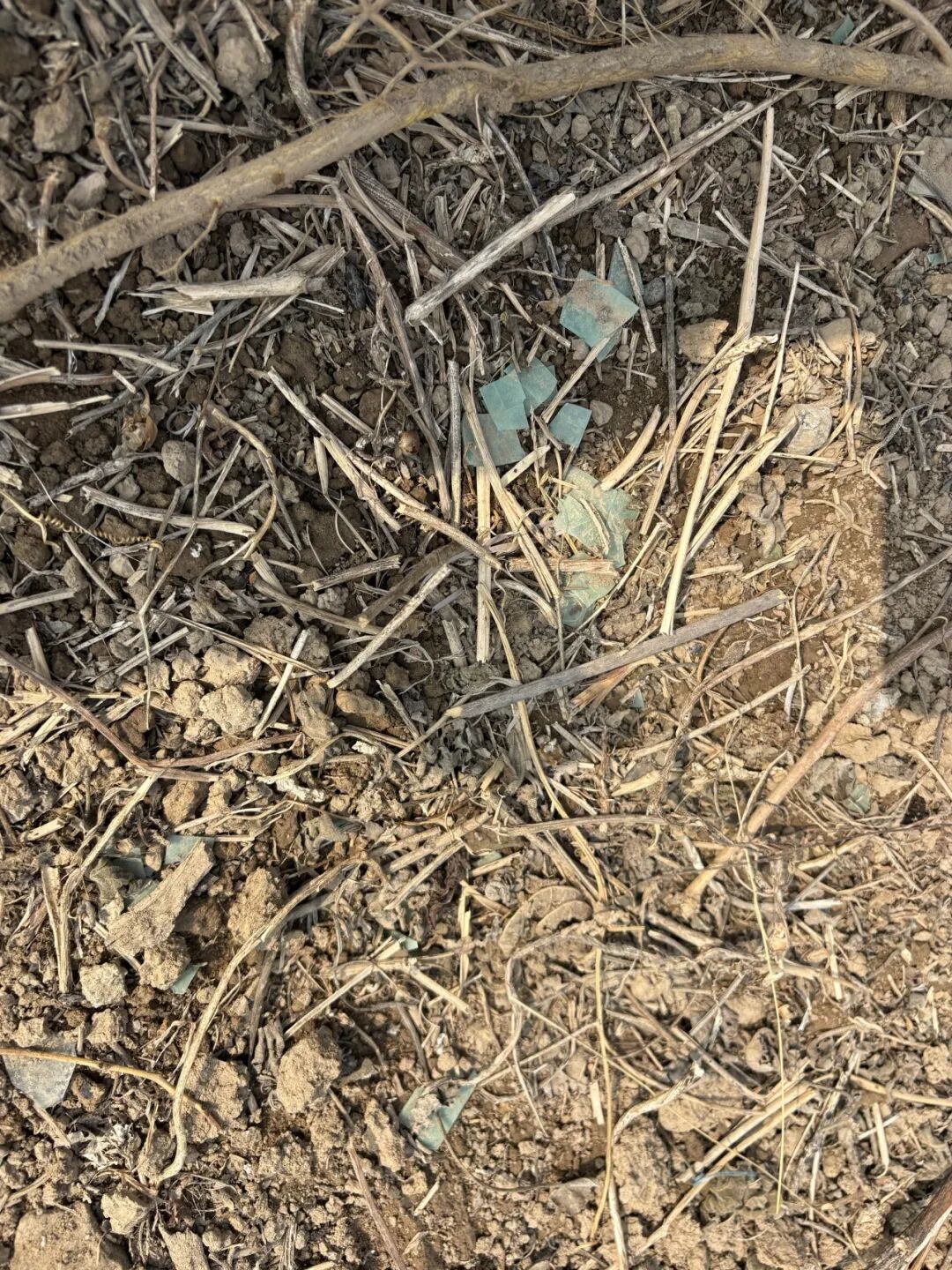
◉ On the left, the plastic twine on the ground was used to secure the supports for climbing beans. This kind of plastic twine had been buried in the soil and tangled around dead branches, making it hard to pull out directly. There were also plastic fragments in the field that could only be picked out by hand.
The first clean-up was still in January. The winter ground had frozen solid, and a few strokes of the spade made only shallow marks; not even the end of the twine was in sight. In the end I gave up and planned to come back and deal with it when temperatures had risen.
At last, in March, spring returned to the land, the soil loosened, and the earth that had not yielded to digging before became soft. Pulling on the end of the twine, I gave it a gentle tug, and the plastic twine that had been buried in the soil came out easily. I first cleared the large pieces of plastic waste visible to the naked eye on the surface, planning to wait until I had more time and then gradually work outwards, also removing the waste along the nearby roadside.
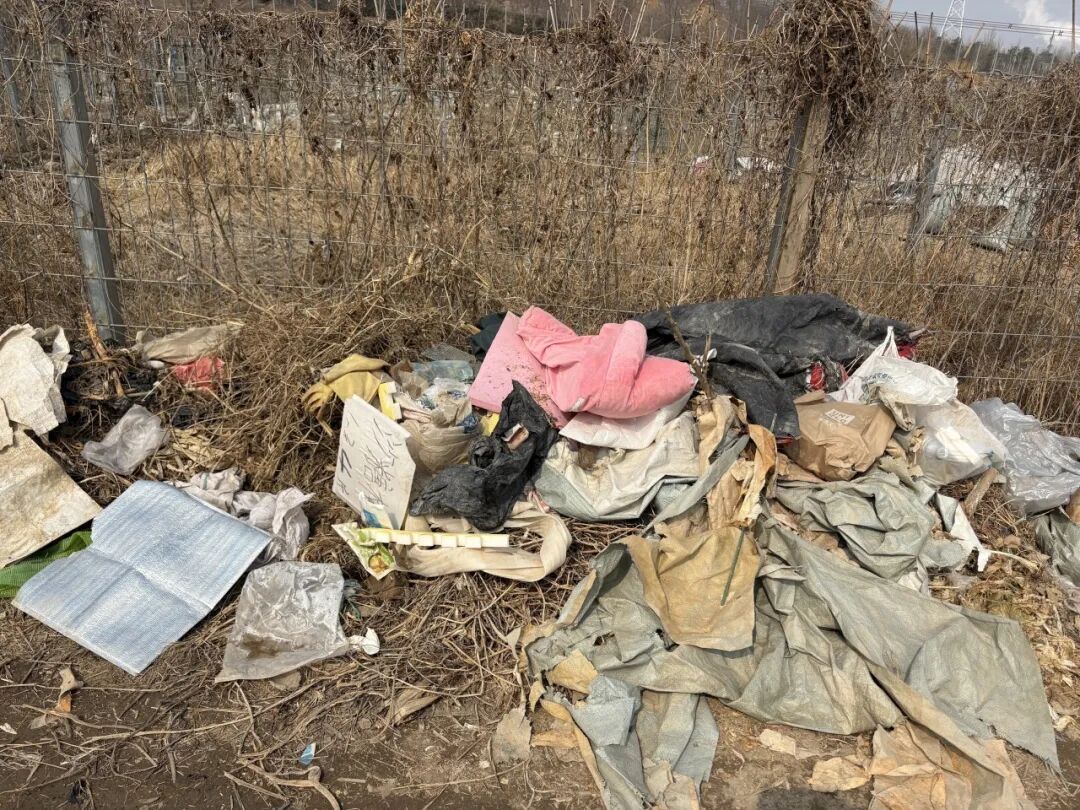
◉ A pile of rubbish in the farm. These places were not designated disposal points, but with more and more people throwing things there, they became piles of rubbish. In June this year, this pile of rubbish was finally cleared.
But this plan was never carried out. Plastic was even harder to get rid of than weeds that “spring up again with the spring wind”. Just clearing my 20 square metres seemed endless. Whenever I thought it was clean, there was always a new “harvest”: fragments left behind after large pieces of plastic had broken up. Mixed into the soil, they had to be picked out carefully with the fingers, requiring a sharp eye and a patient mind. The level of care this work demanded was comparable to needlework.
I Have Developed Plastic Anxiety
I saw a scene in the documentary “Zhong Tu” in which several people stood on either side of a conveyor belt, picking pieces of plastic out of the compost one by one—time-consuming and labour-intensive. But plastic breaks up and settles into the soil, and there is no way to clear it other than by hand. Who would do it, if they did not truly care for the land?
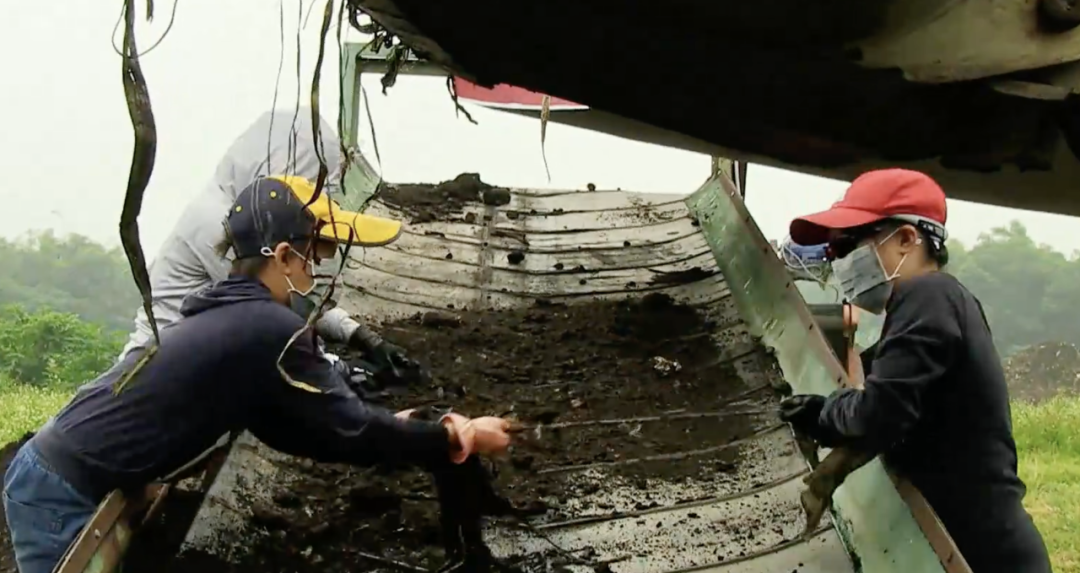
◉ A scene from “Zhong Tu”: a family picks plastic waste out of compost on a conveyor belt. Image source: Screenshot from the documentary
Those people who care for the land are, in fact, also looking after consumers in the city. Research has found that microplastics are “taken in” by crops and, eventually, through the food chain, make their way into the human body. When I saw with my own eyes how stubbornly the plastic fragments we had made clung to the land, I gained a more concrete understanding of it.
But human activity seems unable to stop producing plastic waste, and as a result I have developed plastic anxiety. I later attended a meeting on the plastic problem, hoping to make up all the homework I had missed in one go, only to find myself lost in an enormous maze of knowledge.
After some study, if anything, I became even more anxious. There really are so many precautions and pitfalls!
In short, plastic is a vast family; every type has a complex, tongue-twisting name such as polyethylene or polyethylene terephthalate, which ordinary people simply cannot remember.
If you want to reuse plastic, you also need to understand the specific precautions for each type of plastic. Some clever netizens have come up with some “clever tricks”, such as the Wei Quan Jian Jiao oil bottle, which simply involves screwing the cap from a Jian Jiao drink onto a Wei Quan bottle body to store oil. This is because both the Jian Jiao bottle cap and the Wei Quan bottle body are PP5 (PP5 indicates that the plastic product in question is made from polypropylene, can be reused repeatedly, and is heat-resistant), while the Jian Jiao bottle body, which is not suitable for reuse, is thrown away.
But without this knowledge, plastic reuse can easily create hidden health risks.
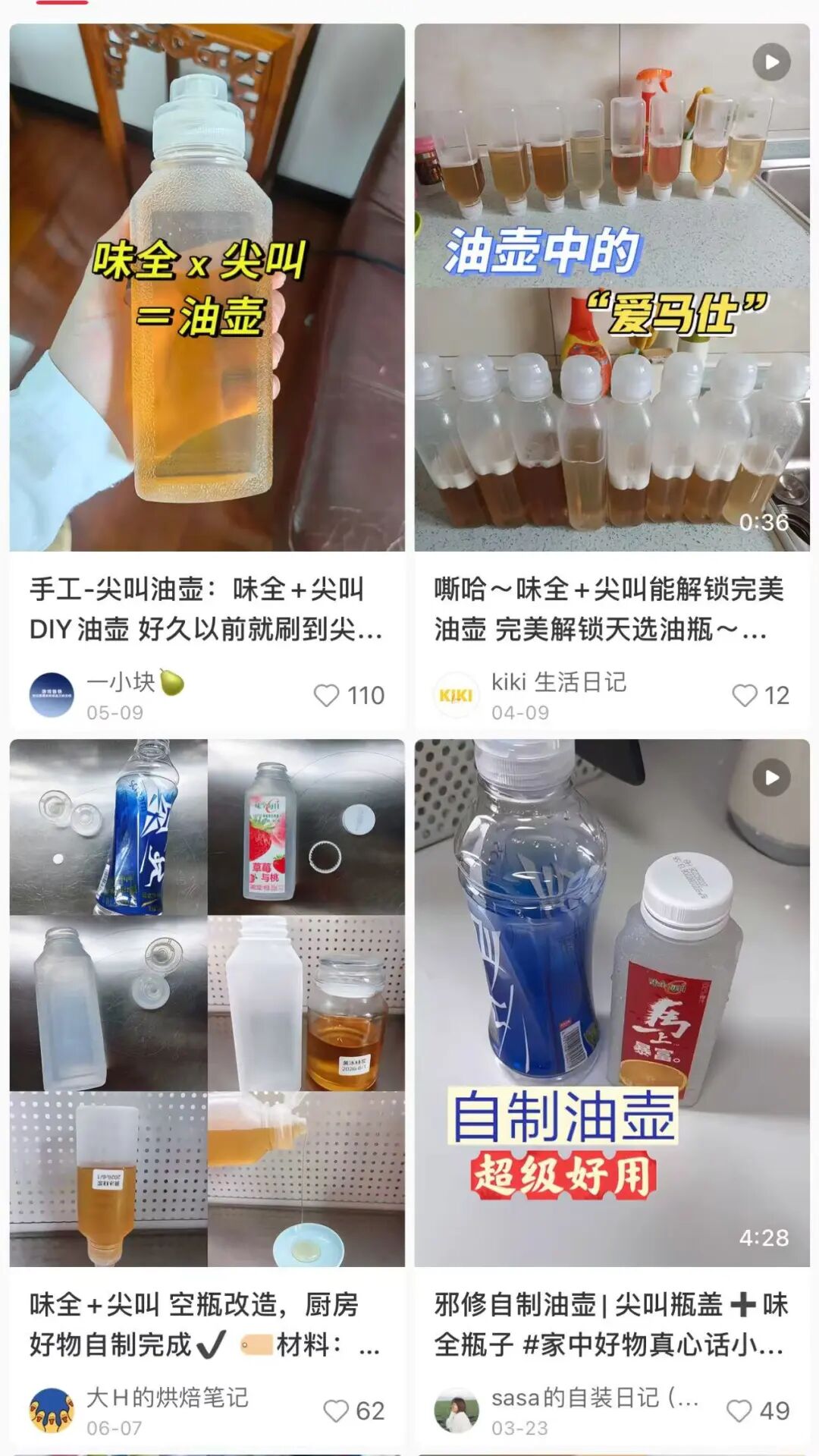
◉ Netizens’ unorthodox DIY oil-bottle hack. Image source: Screenshot from Xiaohongshu
Degradable plastic sounds environmentally friendly, but it has not yet truly delivered. This type of plastic not only requires specialised industrial composting equipment (there is none yet, sorry), but also a dedicated recycling and treatment system (there is none yet, sorry); otherwise, like ordinary plastic waste, it is difficult to degrade.
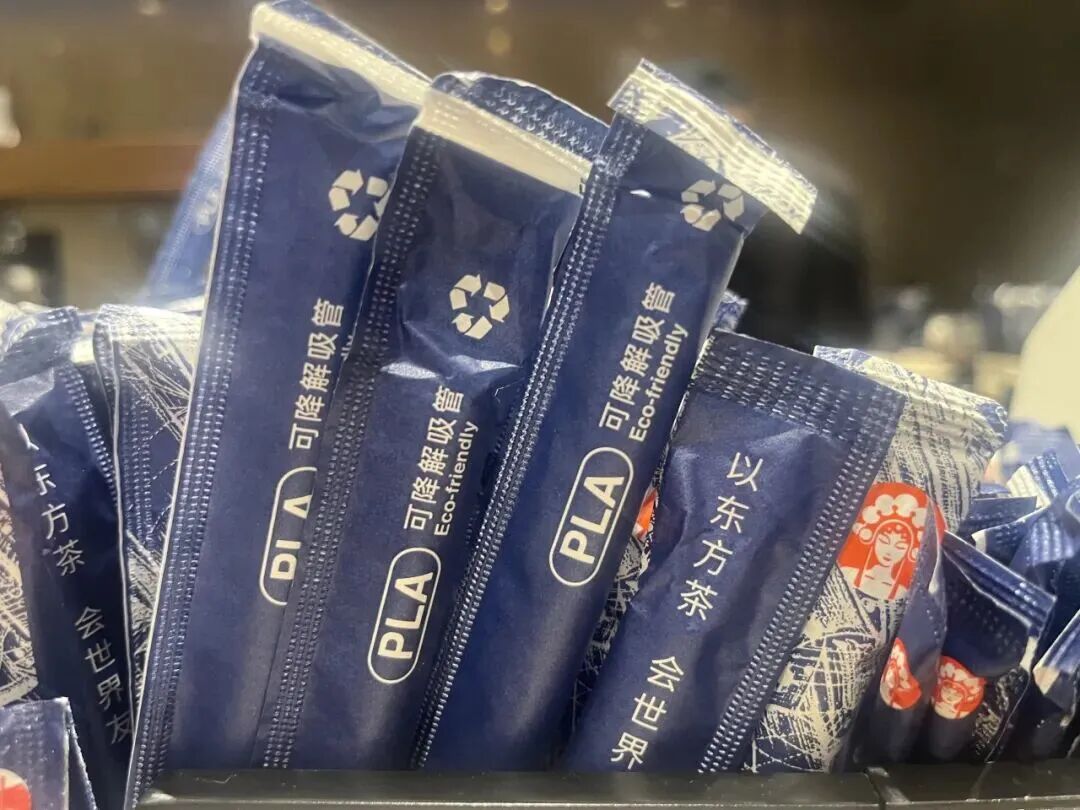
◉ Commonly seen degradable PLA straws in China. Do you know how they are recycled, or whether local conditions are sufficient for degradation? Image source: Foodthink
After learning all of the above, my anxiety had already begun to flare up. After all, there is too much to worry about; the prefrontal cortex is a scarce resource! Modern people want to be healthy, safe, and environmentally friendly, and also want to save money and trouble, without expending extra time or energy. How can all of these be achieved at the same time? Come to think of it, is this not a kind of trolley problem?
I, caught in this internal tug-of-war, still hope to find a systematic solution, rather than being left to bear the anxiety alone.
So I looked it up again. To deal with the plastic problem, the only option is to adopt the 3R principle, namely reduction, reuse, and recycling. Each of the three Rs is quite disheartening.
Recycling and reuse depend on waste sorting. We once carried out a grand waste sorting campaign, and the results are not easy to assess. Looking at my farm alone, it has rubbish bins, as well as rubbish disposal points that have become habitual, and the managers clear them centrally. However, there are always people who litter anywhere and do not sort their rubbish. There are a few rubbish bins on the farm that accept only weeds and dead branches, with a sign on them reading “Please do not dispose of white plastic waste”. Yet plastic waste keeps appearing inside. Things that could have been used for compost end up mixed with plastic.
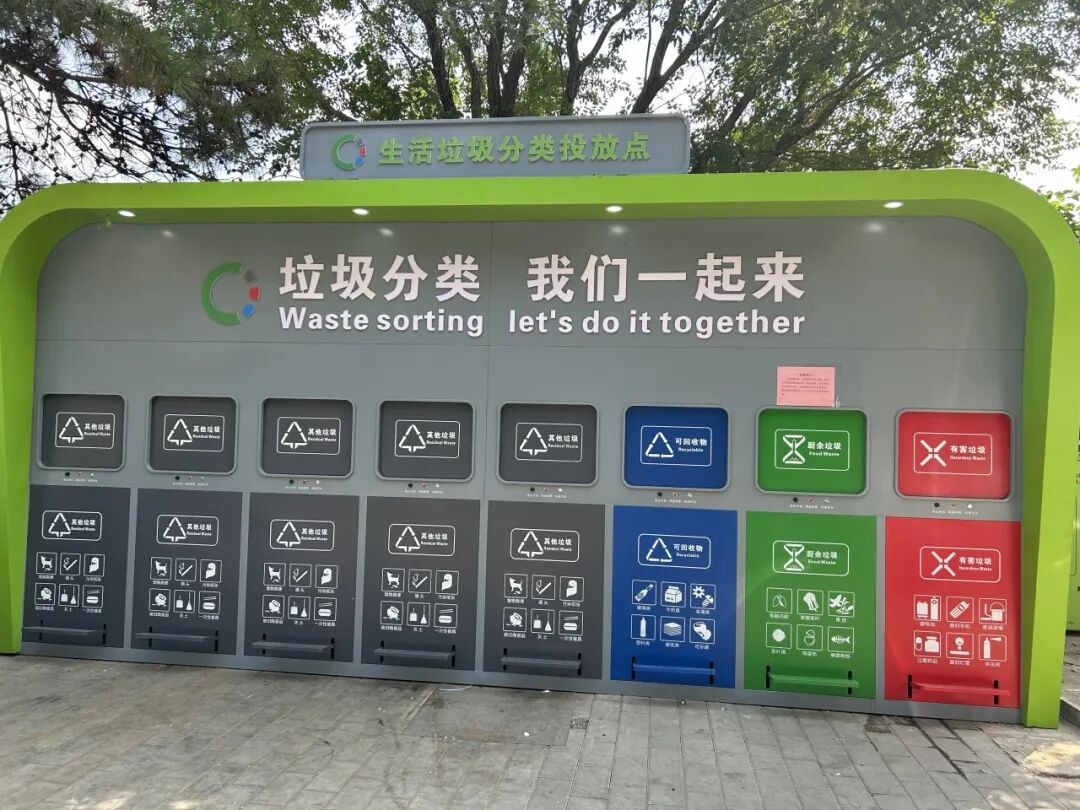
◉ The waste-sorting infrastructure in many residential areas is gradually becoming more complete, but many people have not yet developed the habit of sorting when they actually throw rubbish away. Image source: Foodthink
The effects of plastic reduction are also not obvious. China is the world’s largest plastic-producing country and a major plastic exporter; among the four most common types of plastic products, China’s output accounts for a third. Judging from China’s data alone, plastic production is still climbing. In 2019, China’s output of primary forms of plastic was 95.741 million tonnes, and its output of plastic products was 81.842 million tonnes. By 2025, although China’s output of plastic products had fallen to 79.199 million tonnes, output of primary forms of plastic had grown to 147.928 million tonnes. Although the output of finished products did not rise, plastic pellets as a raw material had increased by more than half.
I also found some worse news. Plastic is no longer the exclusive product of the petrochemical industry; with technological progress and industrial transformation, firms in the coal chemical industry have also entered this field, bringing more plastic products at lower prices. If recycled plastic no longer enjoys a price advantage, firms will reduce their use of recycled plastic.
After going through a full round of learning, I feel I have failed; there is simply no external solution.
Can We Break Free from Our Dependence on Plastic?
Recently, while farming, I had another moment when I was completely undone.
I bought a lightweight spade. When the delivery arrived, I took it straight to the farm with its packaging and a pair of scissors, intending to unpack it on site. The moment the scissors cut the woven sack that the spade came in, it burst into many small pieces. A gust of wind scattered them across the surrounding land.
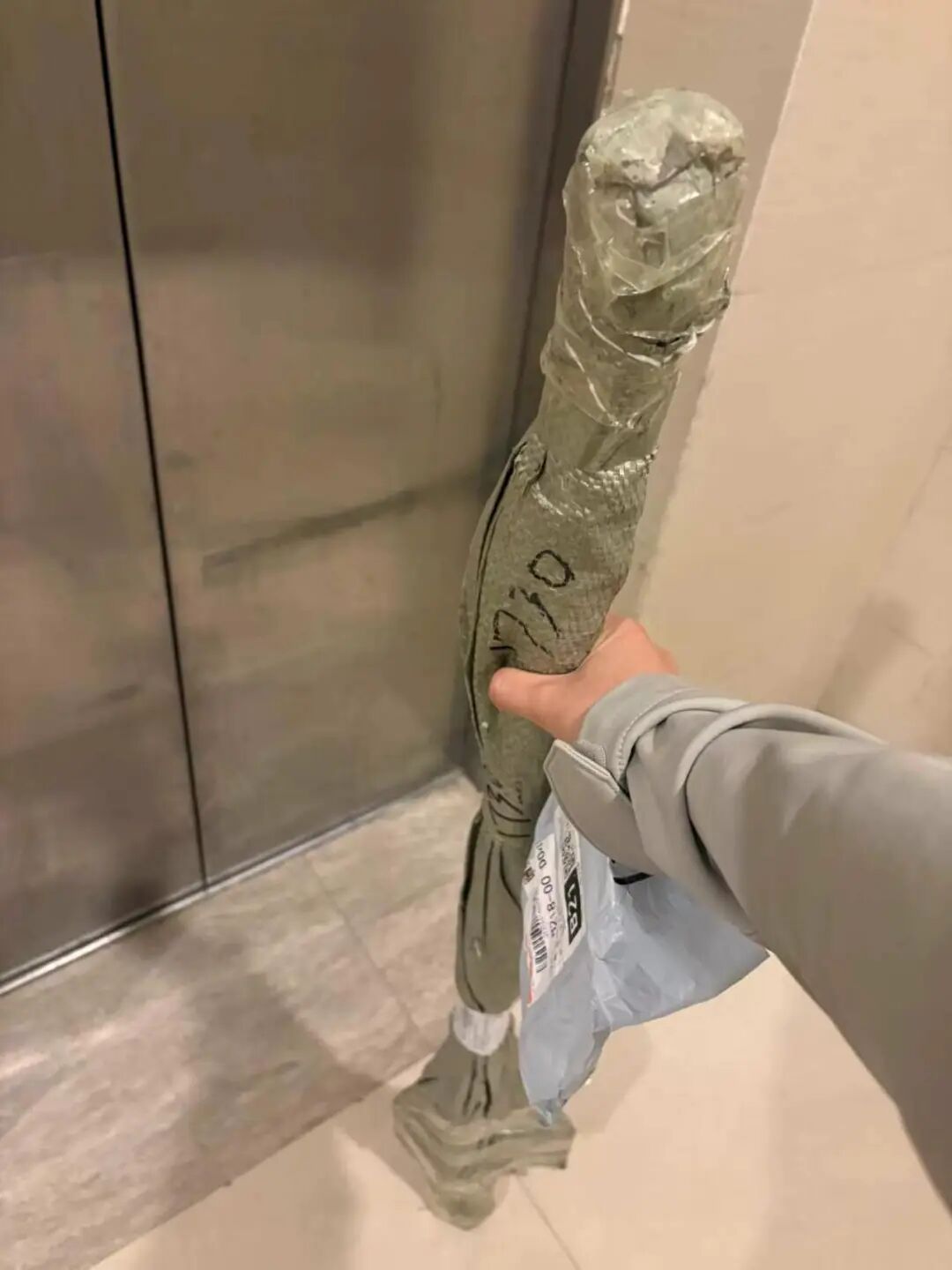
◉ The lightweight spade I bought online. That day I took it straight to the farm still in its packaging. A friendly reminder: never unpack this kind of packaging in the field.
I wanted to pick up all the fragments, but I could only collect a very few. To clean it all up completely would probably have taken hours crouched in the ground, eyes wide open, picking carefully. They could also generate static electricity; once they stick to my hands, they are very hard to put into the rubbish bag, adding another layer of difficulty. I fear that to this day, the plastic pollution I caused has still not been completely cleared.
This has been the moment I have felt most ashamed since I started farming. In the past, when people criticized me for renting land at a high price but not managing to farm it well, I never felt this way. In fact, the spade was not a necessity; the farm always provides tools. It was just that I felt mine were not handy, so I casually bought a new one on an e-commerce platform.
I have been the one in the wrong all along. Since there is no systematic solution, I can only start with myself and focus on reduction at the source.
I remember once seeing a Chinese chessboard outside a family’s house in Tanzania. The pieces facing off on both sides were all made from drink bottle caps. The red ones came from Coca-Cola, the green ones from Sprite. Africa’s industrial base is weak, and many goods are expensive. For them, making a set of Chinese chess from materials within reach was about as economical as it gets.
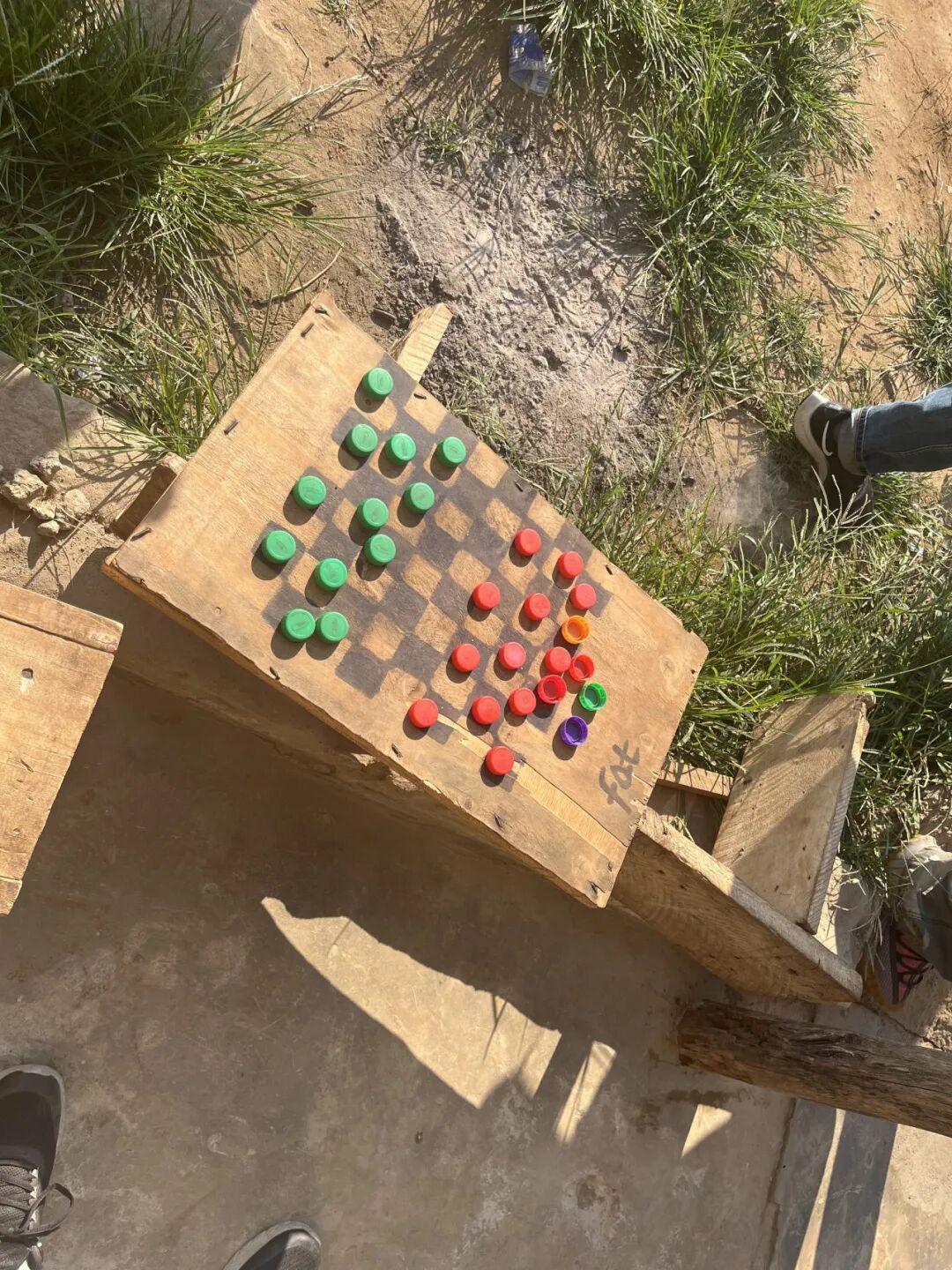
◉ Chinese chess made from drink bottle caps.
In contrast, for us, being the world’s factory laid the foundations for a commodified society. With production capacity caught in cut-throat competition, things are made in far too large quantities and far too cheaply. On e-commerce platforms, a dozen or so yuan is enough to buy a decent set of Chinese chess; if a piece is missing, you simply buy a new set. When it is that cheap, it is unlikely that many people would think about saving.
Convenient consumption has also reshaped my thoughts and behaviour. For example, whenever I run into a problem in daily life, I always think of scrolling through e-commerce platforms to see whether there is an off-the-shelf product as a solution. That spade came about in exactly that way.
Setting aside whether consumption inevitably leads to waste, in today’s era when e-commerce platforms dominate consumption, such casual consumption will inevitably produce large amounts of packaging plastic waste. For instance, the transparent plastic boxes used by e-commerce platforms to pack fruit and vegetables are the type of plastic product I receive most often. It was not until I later went to the recycling centre that I learned they had excluded this kind of plastic box from the recycling system.
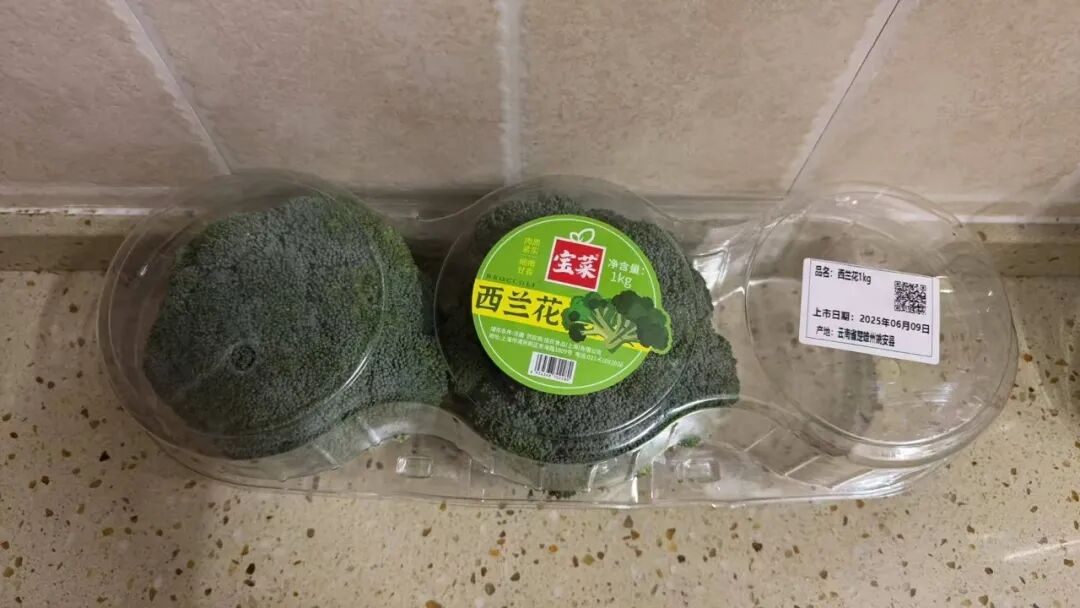
◉ Broccoli from Sam’s Club, each one living in a “plastic single room”. Image source: Wu Xiaowai
What is formidable about consumerism is its active manufacturing of desire, making people pay for things they do not need at all. Some companies even manage to turn plastic toys into global “idols”. If consumerism were ranked, Chinese producers locked in cut-throat competition would certainly push it to the extreme.
In the face of the relentless barrage of advertisements and marketing, consumers inevitably end up defeated by mass-produced desires. The costs that consumerism imposes in terms of waste and plastic pollution must ultimately be borne together by every ordinary person, yet when we consume, we selectively ignore them.
Perhaps, if more people were like me and saw with their own eyes the plastic waste scattered across the land that provides our food, they might think more seriously about breaking free from dependence on plastic.
This year of farming has once again been a year of plentiful harvest, but I know that if I keep farming next year, my struggle with plastic waste on this land has not yet ended.
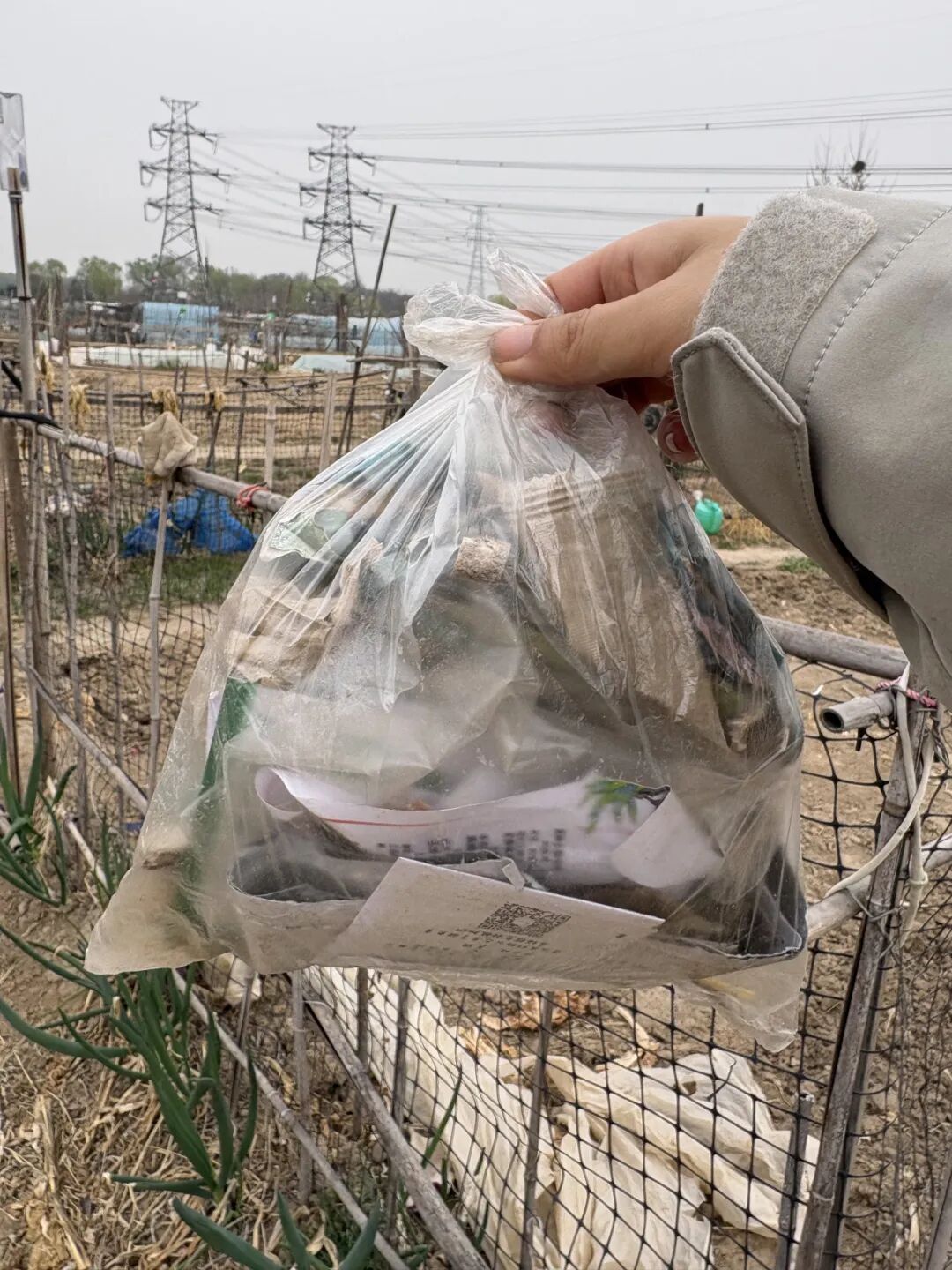
◉ Every time I farm, I prepare a bag to take away the plastic waste I generate.
– This is Foodthink’s 831st original article –
Foodthink
writer
Xie Xiaodan
Former agricultural reporter who dreams of having a small plot of land to farm
Editor: Yu Yang
Layout: Xiao Shu
Scan the code to tip and support original food knowledge
▼

▼
Click the image to read the related article
▼
Click a keyword to explore more article collections
Seeds | Agronomy | Policy | Fermentation | Nutrition | Fruit | Fisheries | Events | Jobs | Takeaway | Wet Markets | Livestock | Food Talk | Sharing Sessions | Book Clubs | Harvest Festival | Smallholder Stories | Climate Change | Rural Development | Cooperative Economics | Urban Farmers | Food Safety | Digital Technology | Biodiversity | Pandemic and Food | False Solutions | Sustainable Farming Internship Programme
Beijing | Hebei | Shanghai | Guangdong | Guangxi | Henan | Sichuan | Jiangxi | Xinjiang | Shaanxi | Hong Kong | Chongqing | Zhejiang | Jiangsu | Guizhou | Taiwan | Inner Mongolia | Philippines | Canada | Russia | Mexico | Italy | United States | United Kingdom | Germany | Netherlands | Thailand | Sweden | Japan