
Facing Corporations’ Sugar-Coated Cannonballs of Greenwashing: How Can NGOs Hold Their Ground? | Food Talk Vol. 46

Recently, the news that delivery platforms have softened their stance and agreed to pay social insurance contributions for delivery workers has sparked heated discussion. How many delivery workers will actually benefit, and whether this will genuinely improve their working conditions, remains to be seen.
In the latest episode of Foodthink’s podcast “Food Talk”, we start from the environmental problem created by food delivery — the enormous volume of single-use plastic waste — and have a serious, in-depth conversation about the challenges and dilemmas faced by environmental organisations in their interactions with businesses.
The reason this episode exists is that we discovered Meituan, the company behind a huge amount of single-use plastic waste from food delivery, has begun funding environmental organisations working on plastic reduction.


We cannot help but worry: will this affect the independence and working logic of environmental organisations that advocate for waste reduction and oppose single-use plastic? We also hope to use the food and agriculture sector as an entry point to explore the complex relationships between businesses that create a range of environmental and social problems, the public interest organisations trying to address them, and the wider web connecting all parties with government, media, and the public.
- Why do polluting companies fund environmental organisations?
- What measures can public interest organisations take to protect the environment and uphold social justice? What role does government play, and how should the public understand these roles?
- Beyond funding NGOs for the purpose of co-optation, what other means do companies use to influence them?
- What other tactics do they employ for public relations and government lobbying?
- As environmental issues grow ever more complex, how should public interest organisations navigate the landscape? How do they manage conflicts of interest when funding relationships, actual or potential, are involved?
- Are there ethical standards for fundraising among public interest organisations? What discussions, case studies, and principles exist both in China and abroad?
- How can public interest organisations and the media help the public understand the complexities of the food and agriculture sector, see through corporate greenwashing campaigns, and make informed choices?

This / Episode’s / Guests
 Sun Shan
An ecological practitioner and one of the founders of the Shanshui Nature Conservation Centre. She began farming in 2015, exploring the experience of land, cultivation, food, ecology, and a self-sufficient (homesteading) way of life. She now lives in Canada, where she runs Chi Garden, an ecological farm and fermenting kitchen. She attended the 16th and 15th Conferences of the Parties to the United Nations Convention on Biological Diversity, held in Colombia and Montreal in 2024 and 2022 respectively.
 Ma Tianjie
A freelance writer in the environmental field. He has been engaged in environmental advocacy since 2004 and has served as a director of an international environmental organisation. He has long focused on China’s environmental governance issues and has written analyses and commentaries for numerous media outlets. His new book, In Search of Green China, will be published shortly.
This / Episode’s / Hosts
 Tian Le
Founding editor of Foodthink and convenor of the Beijing Organic Farmers’ Market.
Timeline
06:29 How do corporations begin intervening in issues to protect their own interests, and how should NGOs respond?
08:18 “False solutions” run rampant
09:07 More than 3,000 companies attended the Global Biodiversity Summit — what does that mean?
13:44 Should environmental organisations have integrity? Why do we see some becoming financially dependent and taking dirty money?
15:13 Has the “Green Choice” on food delivery platforms actually reduced plastic?
17:00 The Jinguang Paper environmental scandal 20 years ago and how grassroots environmental organisations have changed
22:28 Public interest organisations “dance with wolves” — but who sets the tempo?
26:12 The growth of public interest organisations does not match China’s economic and social development
28:53 The elephant in the room
30:01 How public interest organisations and corporations interact on the international stage
32:09 Who represents the public interest?
34:22 Greenwashing has produced 50 shades of green
35:52 Who should public interest organisations stand with?
37:23 AI and algorithms
39:07 The role of the media: the Greenwashing Index in Southern Weekly and the ubiquity of advertorials
41:40 The Nestlé infant formula scandal
45:44 What are the Filipinos suing their government to oppose Golden Rice defending?
48:00 The contest between corporations and NGOs over Fairtrade, organic certification, and NGOs’ mission
57:20 Teaser: Tianjie’s new book In Search of Green China
– Content mentioned in this discussion –
► Should China’s environmental NGOs say no to the Ford Motor Company Environmental Award? https://www.chinadevelopmentbrief.org.cn/news/detail/10216.html
► The Jinguang Paper scandal: the founder of Global Village announces withdrawal from the China Environmental Protection Federation:
https://finance.sina.cn/sa/2007-05-01/detail-ikftssap0931851.d.html
► The Nestlé milk powder scandal: unveiling the dark truth behind infant formula
► What are the Filipinos suing their government to oppose Golden Rice defending?
Scan the QR code below
on Xiaoyuzhou | Ximalaya | Lizhi | Apple Podcasts
to subscribe to the “Food Talk” podcast

Comments are welcome on all podcast platforms — we will reply periodically.
Scan the QR code below to add Shitong Jun’s WeChat account, enter the note “食日谈” (“Food Talk”), and join the podcast listener group chat.

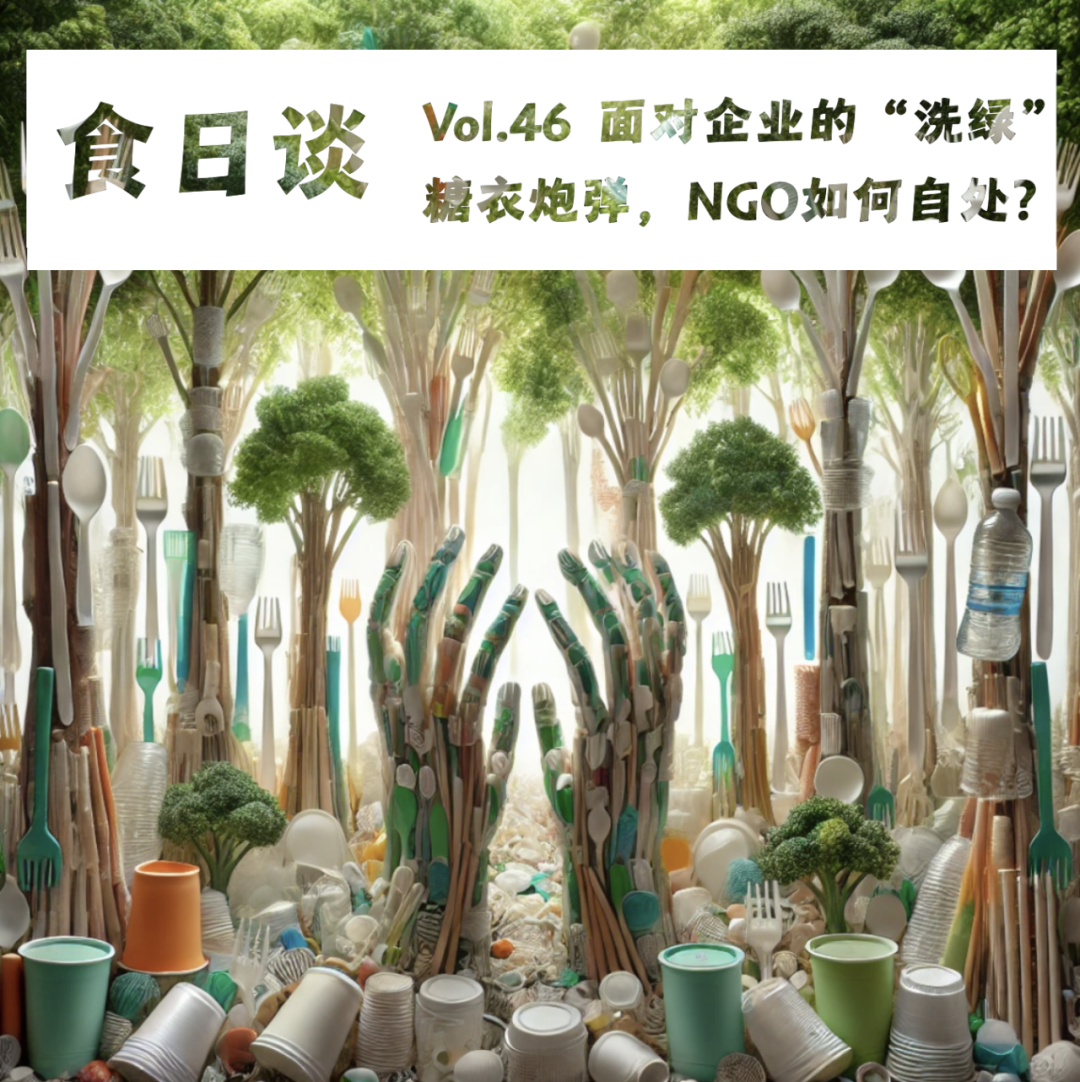
* This episode’s cover was created using AI tools
Music: Ba Nong
Planning: Xiaojing
Production: Xiaoputao
Editing: Tian Le
Contact email: [email protected]