When Imported Meat Arrives in Urumqi, What Do They Say?

Foodthink says
On 23 May, the documentary “Whose Table, Whose Pasture” was screened in Urumqi. After the screening, audience members from local organisations in Xinjiang, universities and various sectors of society, together with animal husbandry experts, shared and discussed the film’s content and the situation in Xinjiang’s pastoral areas.
The film was directed and shot by Jiao Xiaofang and Qiong Wu · Danzeng, with support from the Foodthink Lianhe Creative Programme. The two directors travelled into pastoral areas around Qinghai Lake to conduct fieldwork, recording the impact on pastoralists’ livelihoods and ways of life after cattle and sheep prices continued to fall and large quantities of imported frozen meat entered the market.
This article records the responses and reflections of audiences in Xinjiang after the screening. This year is the United Nations’ “International Year of Rangelands and Pastoralists”, and “Whose Table, Whose Pasture” is also continuing to be screened and discussed across the country. We hope that more audience members will join this dialogue about pastoral areas, pastoralists and food systems, so that more people can see the changes taking place in pastoral areas.
Thank you to the Yonghe Alley Community in Jiefang South Road Subdistrict, Tianshan District, Urumqi, for providing venue support for this event.
Rangeland Animal Husbandry Must Be Sustainable
“Through this documentary, I followed the camera on a journey tracing the origins of beef and mutton from the table to the pastoral area, which gave me a clear understanding of the difference between feed-finished and naturally grass-fed cattle and sheep, and drew my attention to the practical tension between livestock numbers in pastoral areas and grassland carrying capacity, which is difficult to balance.”— Tian Miao, Master’s student in ecological social work, School of Politics and Public Administration, Xinjiang University
“I saw this film once in Beijing. Today is the second time I have seen it, and this time we discussed it with a group of people from my hometown, which is very different from the discussion after the Beijing screening. Everyone shared their thoughts from different angles. I did not expect so many people from my hometown to be paying attention to pastoral areas; it feels as though our organisation’s work in pastoral areas is not being done alone. Today, in pastoral areas, grassland degradation is the result of multiple factors—climate, social and economic—while pastoralists’ traditional experience gives them their own judgments about grassland carrying capacity, and they have a tradition of protecting grassland.”— Xie Hongmei, Xinjiang Shanshui Environmental Protection and Sustainable Development Centre
“Cattle and sheep farming is a combination of grass-fed and grain-fed systems. When assessing the sustainable development of rangeland animal husbandry, we must also consider the impact of grain-fed production.”
In our country, the sheep industry is relatively niche and distinctive, unlike pork and chicken production. The international market is dominated by beef, with relatively little mutton, so mutton is relatively less affected by the international market.
The sustainable development of rangeland animal husbandry is a complex issue, influenced by economic, social, environmental and other factors. In particular, grassland degradation requires decades or even longer to recover from; once the problem has taken hold, the cost of reversing it and restoring the grassland is extremely high.
Because per-capita resources are limited and the costs of various production inputs are rising, the difference in comparative returns relative to grain-fed animal husbandry is clear. It is necessary to reduce the scale of production, reduce the load on grasslands, and allow grasslands time to recover.
Development should focus on distinctive characteristics and rely on local and regional breeds. Cooking involves only water and salt, emphasising the original flavour; this is suitable for smallholders and does not compete with deep processing.
“The emphasis of rangeland animal husbandry is on being small and refined, on product quality, distinctiveness, and cultural value. The cultural value of rangeland animal husbandry is very important; it involves a closeness between people and nature, all of which are absent from modern livestock farming. Education on the sustainable development of animal husbandry is important, and so is the issue of pastoralist organisation.”—Hu Jun, animal husbandry expert, Sustainable Agriculture Project
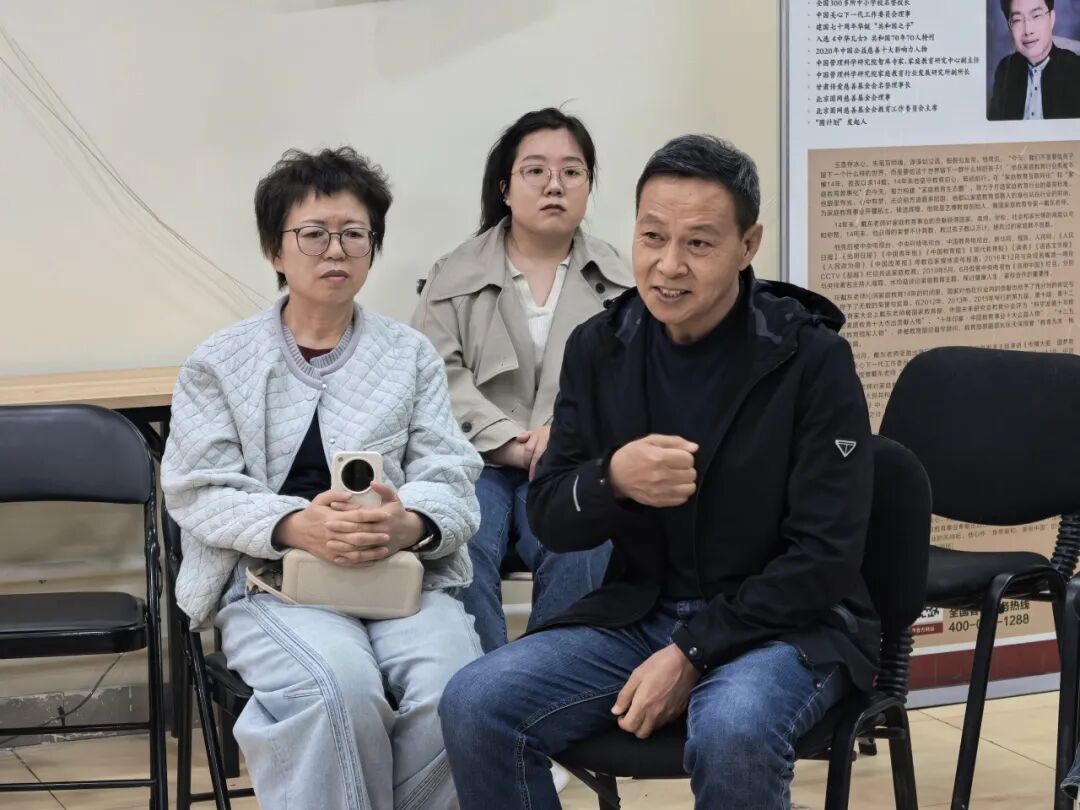
◉ Hu Jun, an animal husbandry expert with the Sustainable Agriculture Project, spoke after the film screening.
“Now, cattle and sheep raised on grassland and those being fattened are sold in the market at the same price; the prices should be different and clearly indicated. There are problems in management, including market management. Every county should have a livestock market so that pastoralists can sell their livestock at a reasonable price.
Now, severe weather has become more common. The light drizzle of the past is increasingly rare; now there is drought, with low air humidity and a tendency to be windy.
“There are more and more livestock in agricultural areas, and contract grazing in the mountains cannot be controlled. We should encourage people to keep fewer animals, so that livestock numbers can be reasonably controlled. In the past I asked pastoralists: the grass-livestock balance subsidy is paid according to grassland area, not head count; the more cattle and sheep a household has, the more subsidy it actually receives. Policy guidance needs to point in the right direction, and policies need to be studied.”— Altai, retired official from the forestry and grassland system
“The low price of imported beef and mutton is driven above all by cost advantages from scale and systematised production. In addition to extremely low bulk freight costs, the main overseas producing regions rely on natural grasslands, mechanised farming, policy subsidies and tariff advantages, so overall production costs are far lower than in China, which is the key to their price advantage.
What we often call grain-fed farming is not just a way to compensate for fodder shortages. It is an efficient form of precision livestock farming that uses cereal feed to improve production efficiency and meat quality, addresses seasonal shortfalls in grassland supply, and adapts to the farming conditions of different regions; it is a modern optimisation approach used worldwide.
The most efficient approach to livestock farming is always to work with local breeds. Livestock and poultry breeds suited to local conditions have a higher feed conversion ratio and greater resilience to risk, minimising farming losses and delivering lower costs and greater efficiency.
Overall, the cost advantage of international livestock farming is fundamentally the combined advantage of resources, technology and production systems. For us, the key takeaway is to choose breeds suited to local conditions, match feeding regimes scientifically, and harness science and technology to achieve efficient and sustainable development in the livestock industry.”— Lin Pengchubin, head of the Chinese-language communications group for the “International Year of Rangelands and Pastoralists”
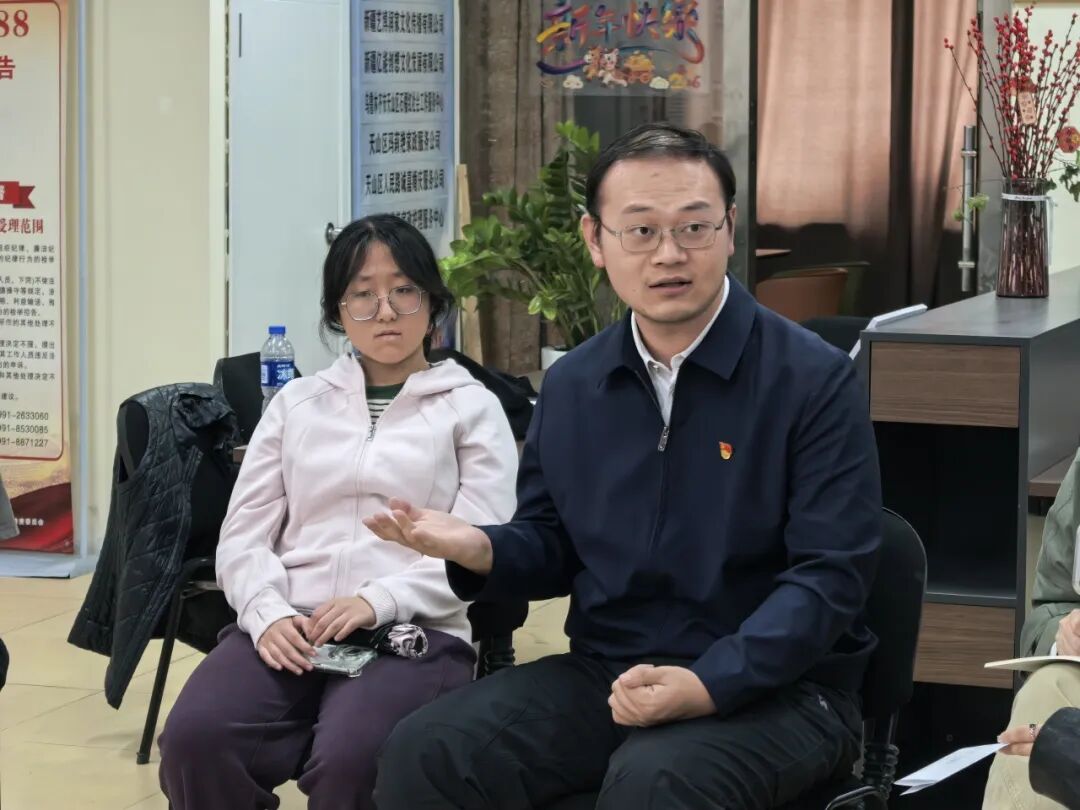
◉ Lin Pengchubin speaks.
Livelihood Prospects for Pastoralists in a Changing Society
“Perhaps because I have only been in the workforce for a few years and am myself an ordinary worker, seeing the pastoralist in the film say that he can only herd sheep and can do no other work made me deeply sad. Workers at the bottom of society are so overworked; they have no right to enter the market, and they have lost their human dignity.”— Audience
“I took an elective course in sociology at school. After watching the film, I had the feeling that pastoralists had been left behind by the times. They do not have the financial means to go to cities for development. In the course of economic development, it feels as though some people are being left behind; urban and rural development is uneven, and there is a tension between economic growth and environmental protection.”— Audience
“I’ve noticed that everyone sees the issue from a different angle. For example, consumers are more concerned about the beef and mutton on the market being hormone-treated, which threatens physical health and safety.
As a master’s student in social work, what I see is a vulnerable group: pastoralists, who have lived on this land for generations and sustained their livelihoods through grazing. Facing a series of problems, including ecological damage and the collapse of the beef and mutton market, their lives have been made worse still, and even basic living conditions are hard to secure. This urgently requires support in all areas for these vulnerable social groups: national policy advocacy and subsidies, greater attention, care and understanding from society, community-level urban-rural cooperation and fair trade, and at the individual level, technical and vocational skills training and awareness-building for vulnerable groups, so that they have more options.”— Rexidaimu, Master’s student in ecological social work, School of Politics and Public Administration, Xinjiang University
“In the film, what struck me most, and was a little heartbreaking, was a middle-aged pastoralist saying that his life had been “a great failure”—going to work in the market, being looked down on because he had not been to school; sticking with grazing, but unable to cover the family’s expenses. He too must be a hardworking family provider, but by the measure of mainstream values he sees himself as a failure. It is clear that mainstream society has a real impact on individuals: beyond its effect on income, it also affects self-confidence and the recognition of self-worth.
At the same time, as tourism develops, for some city people, pastures and grasslands are imagined once again as an ideal place to call home, not necessarily real; for pastoralists, “working away = status, modernisation = status” is likewise not necessarily real. In such an environment, how can young people make clearer choices for themselves? Going back to be a pastoralist, studying and learning, starting a business, finding a job, or doing anything else—any of that is possible.
My hometown is a small county town. A while ago I brought mutton from home and had a barbecue with friends in Urumqi; a friend said, “It feels like a sheep is galloping in my mouth.” This is an interesting description. I have been thinking: in principle, cities have more abundant material supplies, yet, as fellow Xinjiang people, he had never eaten mutton this fresh. Are cities not closer to the “centre” of resources? How, then, do they end up further from good food?
This also brings us back to the film’s title, “Whose Pasture, Whose Table”: the distant pasture supplies the table. In my understanding, the countryside is the pasture, the city is the table, and the distance between them is in fact very long. Supply is at one end, consumption at the other; the process that connects the two ends has been cut off, and many truths disappear. If we cannot see where a piece of meat comes from, who is raising it, and at what cost, we are easily swept away by the economy, by consumerism, by advertising.
“As a community builder, I hope that public discussions in some public spaces can help individuals learn a little more about the area around them, see a little more of the truth, and then make their choices.”—Wang Bingying, Wuigui Yingzao Community Development Centre, Shuimogou District, Urumqi
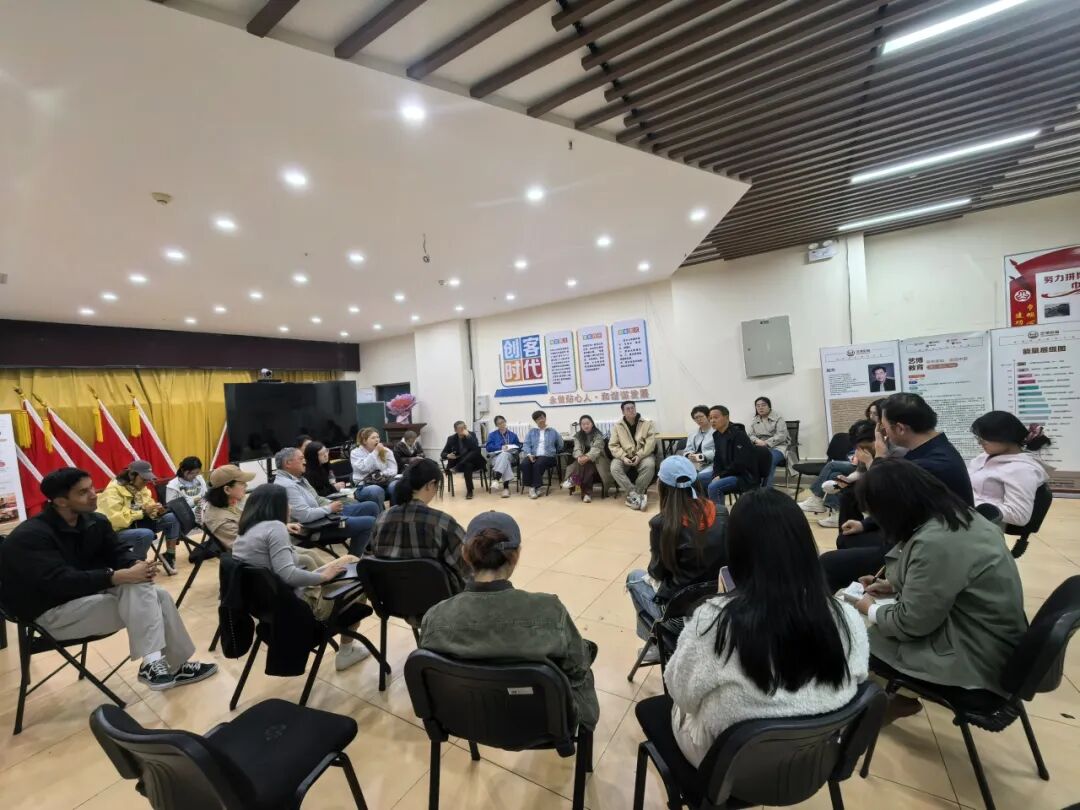
◉ Discussion at the event.
“I had never heard of pastoral areas or beef and mutton before; the topic was quite unfamiliar to me. Only after watching the film today and hearing everyone share their thoughts did I come to understand it. In the past, I simply bought meat and ate it, and may not have paid attention to the reasons behind it. Now I know that behind technological progress there are also questions of people’s livelihood.”— Audience
“What struck me most in the film was what the pastoralists said: there are too many things to buy—buying a house, buying a car, and so on; in the past there were not so many places to spend money.”— Audience
“Everyone should reflect on the ever-growing desires within them.”— Audience
Meat: More Than Just Meat
“This is the first time I have watched this kind of investigative documentary. I followed the director’s perspective, peeling back the layers step by step in search of answers. On the surface, it seems to be about beef and mutton prices, but I also began to think about the price of the beef and mutton we normally eat and what it means for the pastoral areas and related industries behind it. I am curious why overseas beef and mutton is more competitive. I also found part of the answer in the discussion after the film, and I have gradually begun to reflect on our relationship with food.”— He Wang, Wuigui Yingzao Community Development Centre, Shuimogou District, Urumqi
“As consumers, we do not know where meat comes from.”— Audience
“Before, I only thought beef and mutton were part of the table. After watching the film, I realised it is not just a matter of the table.”— Audience
“I am Mongolian from Hefeng, Xinjiang. I have been based in Beijing for many years and have long lived in the city. I have observed that diet has a profound impact on the growth and development of young people.”
When it comes to food, our family has always been especially cautious. We stick to cooking at home, hardly ever eat out, and refuse takeaways. The beef and mutton we eat day to day is also natural local produce regularly brought from Hefeng, our hometown.
Many friends and relatives around me, after trying the beef and mutton from my hometown, fell in love with the texture and quality of the meat and often ask me to help buy some. This gave me the idea: why not share the natural, healthy, high-quality beef and mutton from Xinjiang pastures with more friends in the inland? So I resolved to return to my hometown to start a business, hoping to bring this healthy produce from the grasslands to the tables of thousands of households. Relying on the exceptionally favourable natural conditions of my hometown, I will bring natural, healthy and safe beef and mutton to the inland market, so that more people can enjoy healthy, delicious food from the grasslands.”— Dairui, entrepreneur who returned to Xinjiang
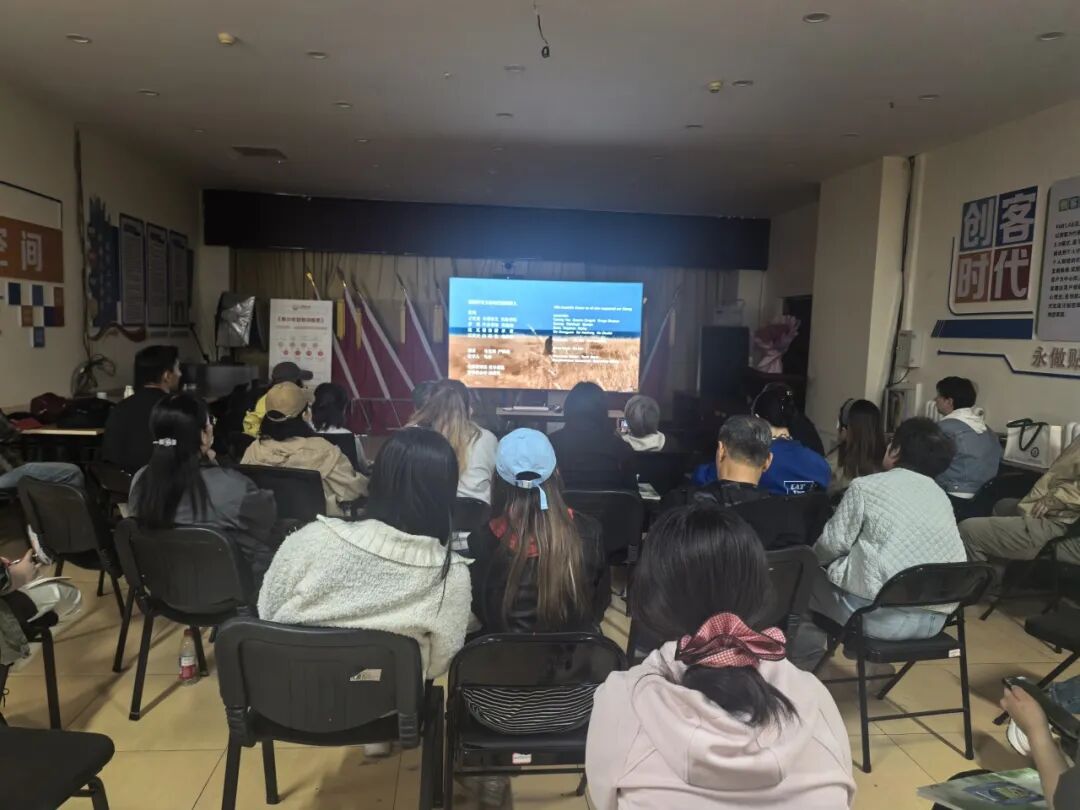
◉ Everyone on site watches “Whose Pastoral Area, Whose Table” together.
“On the mainland, we add so many spices to meat—star anise, cassia, bay leaf, Sichuan pepper—layer after layer, as if, without all that, we could not mask that indefinable gaminess. But eating meat in Xinjiang is different. It is boiled in plain water, sprinkled with a little salt, or even with nothing at all. Take a bite, and it tastes of grassland, tastes of wind, tastes of sunlight.
I had never heard of pastoral areas, nor thought about where cattle and sheep come from. After watching the film and hearing so much from everyone, I realised that behind every piece of meat there stands a pastoralist, a stretch of grassland, and a difficult livelihood. Have pastoralists been left behind by the times? The grasslands are degrading, and modern livestock farming is advancing with force. Yet that closeness between people and nature, that kind of thing you can taste without any spices—modern livestock farming cannot provide.
But meat from outside is pouring in. Overseas frozen meat is shipped container by container to the ports and then flows into supermarkets, restaurants and household refrigerators. The prices are low, the supply is stable, the packaging is neat. Consumers do not think about where this piece of meat comes from, how it was raised, or whether behind it there is a degrading grassland, a worried pastoralist. The market only wants it cheaper and more convenient. As a result, the cattle and sheep in pastoral areas fail to sell, and pastoralists’ livelihoods become more difficult.
As we long for mutton that needs no seasoning, we reach for cheaper frozen meat on the shelves. Desire is swelling, grassland is shrinking, and pastoralists are waiting. Each of us needs to reflect.”— Cheng Guojingmei, first-year undergraduate student in Chinese Language and Literature, School of Liberal Arts, Xinjiang University
Grassland Is More Than a Pastoral Area: It Sustains a Unique Culture and Way of Life
“When I was buying beef in the supermarket, I did not think much of the price of 90 yuan per kilogram. However, after watching the documentary today, learning how low the price is for the mutton pastoralists sell and how complex the trading process is, I was deeply aware of the hardships in pastoralists’ lives, and I could not help feeling sad.”
Another profound impression concerns ecological and environmental protection: cattle and sheep are themselves part of the grassland ecosystem. If pastoralists were to give up grazing because beef and mutton prices are too low, it could have unforeseen consequences for the grassland ecosystem. In my view, pastoralists are not only users of the grasslands, but also guardians of the pasture’s ecology. Returning to the question raised by the documentary—”Whose Table, Whose Pasture?”—my answer is: our table, our pasture.—Xiaomai, SEE Foundation’s Xinjiang Ecological and Environmental Protection Project Management Committee
“While I was on my internship, I spent some time in a pastoral area. The meat I ate at a pastoralist’s home really did taste different from the meat eaten in Urumqi. The meat at a pastoralist’s home had no gaminess; the beef had a milky aroma, and after eating the meat, my fingers still carried a milky fragrance. I really love the beef and mutton boiled at a pastoralist’s home—with no extra seasoning, only two grains of salt, you can taste the food’s truest flavour. This is the first time I have eaten such meat.
“I have heard the elderly in the pastoral areas say that in the past, after eating a meal of meat, drinking a bowl of tea and having some naan, one could work all day without feeling tired. Now, after eating meat and naan, I feel hungry after not much work—I get hungry quickly. Cattle and sheep these days need many injections; I dare not eat the beef and mutton sold outside, and I only eat what comes from my own family. The old people’s words are, in effect, a reminder to us: the times are changing, and the food we eat is changing too. The power of food is not simply a matter of calories.”— Huang Qianqian, Master’s student in ecological social work, School of Politics and Public Administration, Xinjiang University
“We young people, for some reason, naturally think that things from abroad are better—we buy European cosmetics, Japanese and Korean clothes… Things are developing rapidly, and skyscrapers are everywhere. The rise of tourist areas is making nomadic culture disappear even faster. In ten years, in thirty years, will nomadic culture still exist?”— Audience
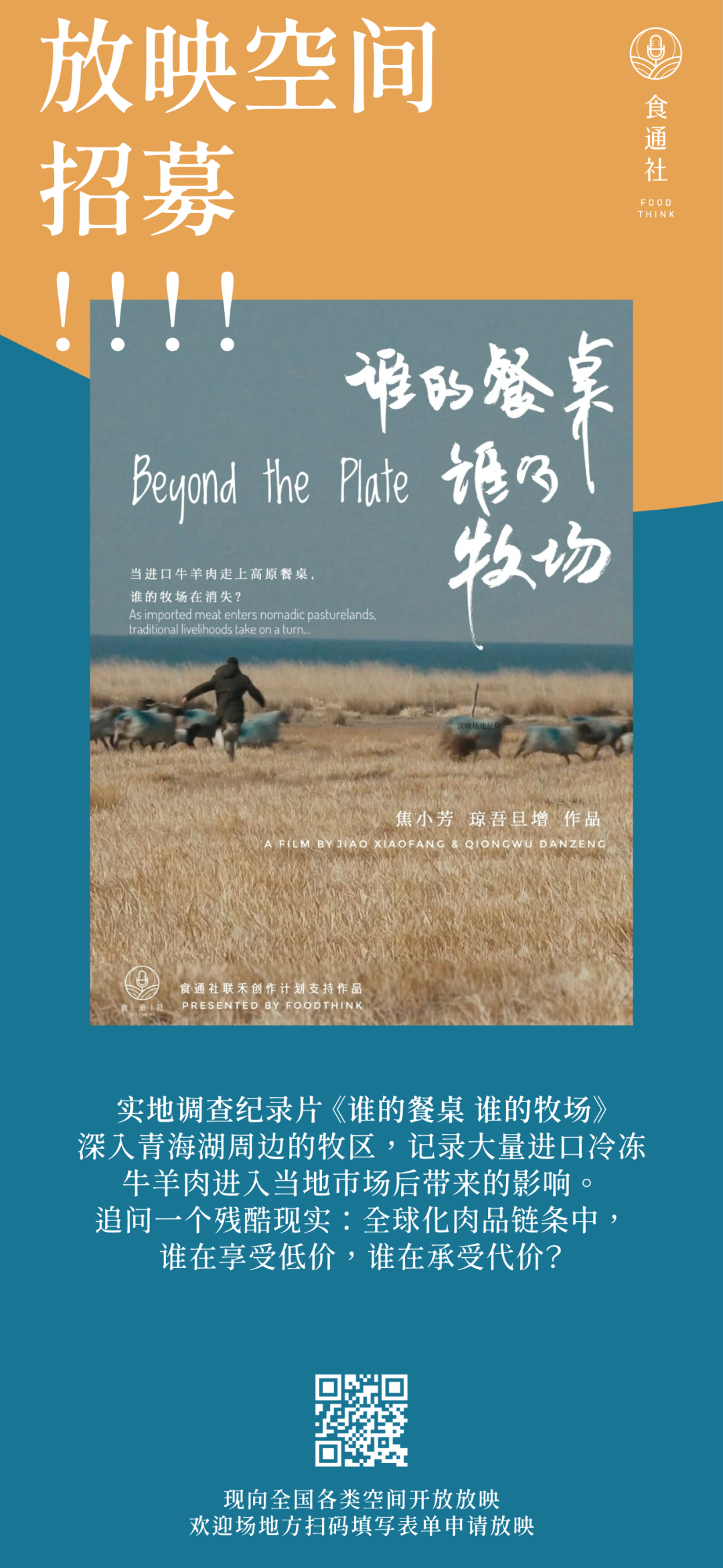
About the Film
“Whose Pasture, Whose Table” is an on-the-ground investigative documentary. The director goes deep into the pastoral areas around Qinghai Lake and documents the effects of the influx of imported frozen beef and mutton into the local market. By visiting frozen meat wholesale markets and cold stores in Xining, and filming local pastoralist families, butcheries and fattening farms, the film gives a truthful account of how imported meat, with its low-price advantage, has hit local beef and mutton. This has directly led to a sharp fall in the price paid for pastoralists’ cattle and sheep, lower incomes, difficulty repaying loans, and has left local meat traders with thin profits and a difficult business. The camera goes deep into the imported beef and mutton market around Qinghai Lake, probing a stark reality: in the globalised meat supply chain, who enjoys the low prices, and who bears the cost?
About the Director
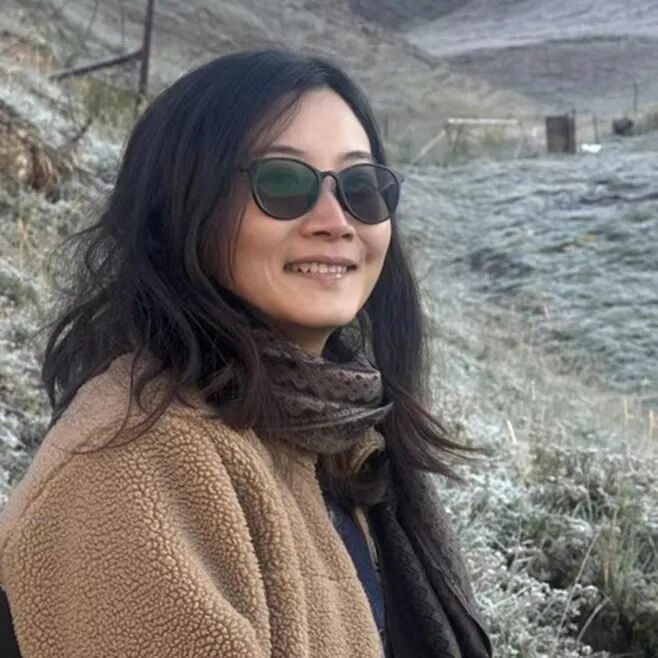
Jiao Xiaofang | Documentary filmmaker and researcher in visual anthropology, with a long-standing focus on local knowledge, ecological ethics and women’s experiences in western China and coastal Southeast Asia. Their work combines ethnographic observation with poetic expression, focusing on the relationship between people and nature and the emotional landscapes of everyday life. The documentary “Whose Pasture, Whose Table” (2025) was selected for the fifth World Nomad Film Festival and the sixth China Ethnographic Documentary Film Festival.
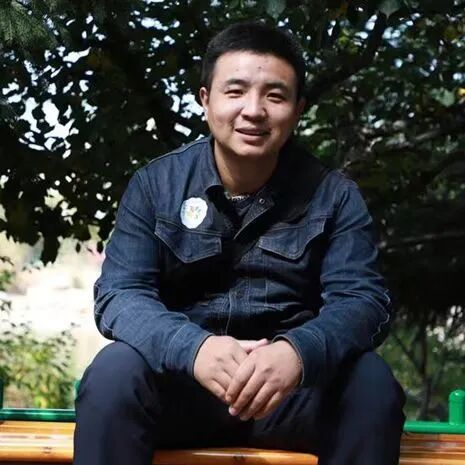
Qiong Wu Danzeng | Tibetan documentary maker and community activist, with a long-standing commitment to ecological protection and film education in the Tibetan Plateau region. He previously served as coordinator of the Xiangcun Zhiyan Tibetan Area Project in Yunnan and as central-region representative of the Alxa SEE Three Rivers Source Project. He is currently head of the Renxiong Chongtu Project at the Qinghai Province Xuejing Ecological Outreach, Education and Research Centre. For the past ten years, he has advanced pastoralist film training and community ecological projects in Yushu, Aba and other areas, supporting pastoralists to use film to record their own environment and culture. His work spans film, ecology and public education, and is devoted to building understanding and coexistence between people and nature.
Pre-Event Planning
Foodthink
Chinese-language Communication Working Group for the International Year of Rangelands and Pastoralists (abbreviated IYRP Chinese Group)
SEE Foundation’s Xinjiang Ecological and Environmental Protection Project Management Committee
Shenzhen One Foundation Public Welfare Foundation
Xinjiang Shanshui Environmental Protection and Sustainable Development Centre
Candle Rescue Team
Venue Support
Yonghe Lane Community, Jiefang South Road Subdistrict, Tianshan District, Urumqi
*Unless otherwise noted, all images are from the Xinjiang Shanshui Environmental Protection and Sustainable Development Centre
*Because on-site records are limited, the names and identity details of some contributors could not be fully recorded. Where names and identities have been confirmed, contributors are named in the text; the rest are uniformly credited as “Audience”.
Compiled
Xinjiang Shanshui Environmental Protection and Sustainable Development Centre
Layout: Xiaoshu
▼
Click the image to read the related article