After More Than 10 Years of Cooking for Others, They Forgot What They Like to Eat

Foodthink says
There are 75.6 million domestic workers worldwide, 76.2% of them women. Only 6% of domestic workers enjoy comprehensive social security. In China, the people who have mastered the secrets of cooking, cleaning and care are called “ayi” (auntie) or “baomu” (domestic helper). In big cities, they shoulder the gender roles of working mothers and attend to young people’s hunger and beds. But how are these women, who have left the countryside and the land, doing, and can they themselves eat well?
Selling the Hands That Cook
They Find It Hard to Eat Properly
Suying, a 66-year-old migrant domestic worker in Beijing, is worried about one thing — she never has time to eat. Even though she really wants to eat properly, she is also well aware of what to eat and how to cook it.
Suying comes from Chifeng in Inner Mongolia. In 2008, she came to Beijing to work as an hourly domestic worker. At the end of last year, she decided to start living on her own, so she moved into a shared rental flat in Wangjing for migrant workers — her room had been converted from a storage room and is only 7 square metres. Apart from a 1.2-metre-wide bed, a storage shelf, a single-door wardrobe packed full of clothes and bedding, and two wooden chairs, there is no room to put anything else.
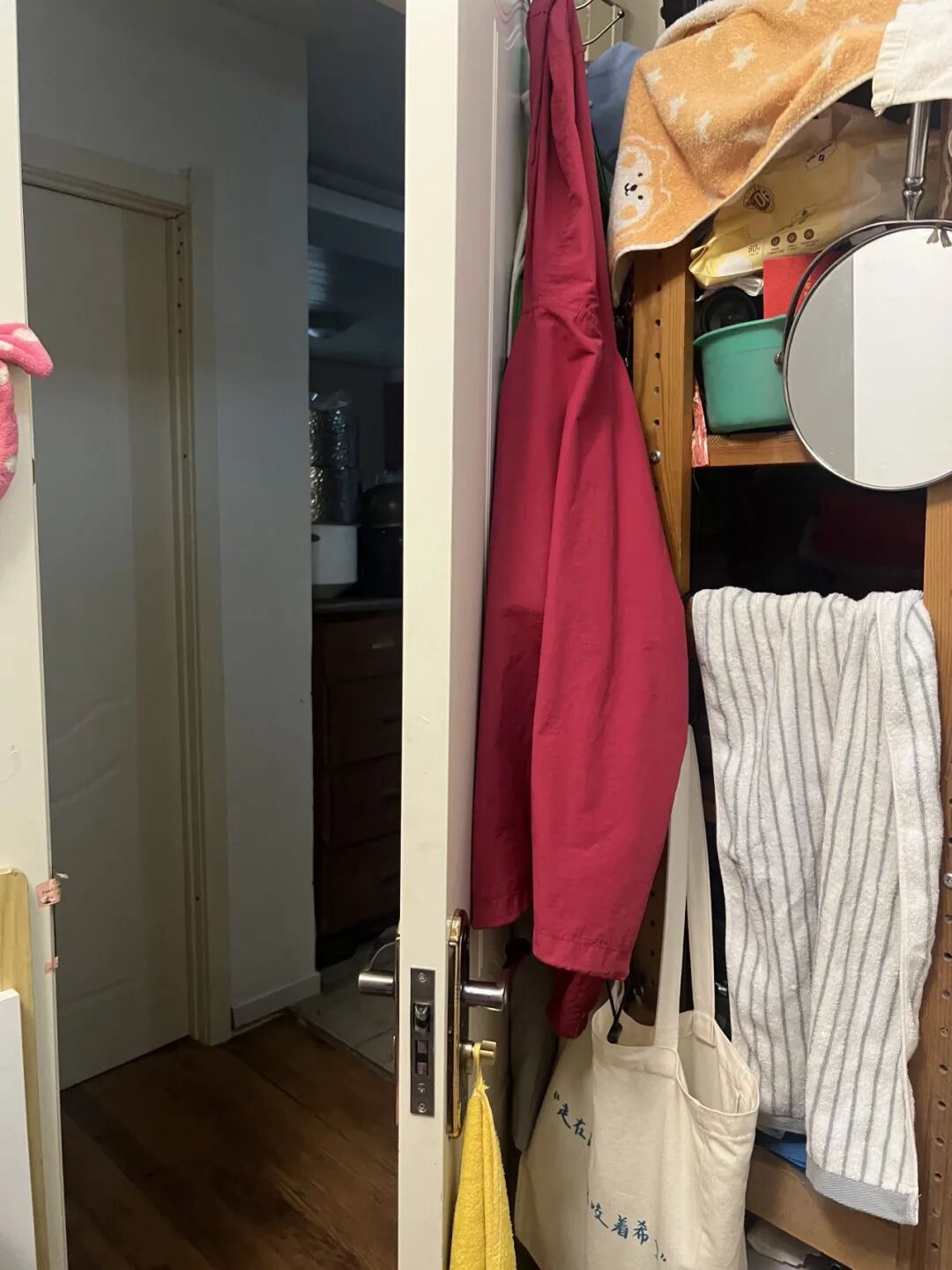
◉ Suying’s room. The camera position is the only place where she can stand; her bed is right behind it.
Entering this ground-floor flat, you find a long, dark corridor lined on both sides with closed doors. There is no living room, but there is a large, eye-catching kitchen, which is why Suying, regardless of her room’s size, was willing to sign for it. Suying loves cooking, especially wheat-based dishes. Even after moving five or six times over more than a decade, she still brings her own electric griddle and large kneading board. On days off, she makes lots of vegetable dough balls, steamed dumplings and steamed buns, freezes them, and takes them out to eat on weekday mornings.
But before she moved in, the four households and six people already had plenty of things. The large open-plan kitchen had no storage space left for Suying. She could only prop the kneading board in the gap in the wall beside the kitchen washing machine, put the pot on top of the fridge, and leave other cookware and seasonings scattered around the corners.
The flat is liveliest only in the morning. Past six, the residents wake up one after another. These self-employed people and junior office workers generally need to be at work by eight in the morning; four households wait for one secondary bathroom, and six pairs of eyes are fixed on the microwave and two-burner hob in the kitchen, and only in this way can they make sure they squeeze onto bus and metro lines on time.
Suying can’t get a turn at the kitchen. The couple in the master bedroom most often cook there; on other occasions, it is a middle-aged woman who lives alone in one room and has to work on her feet all day. She does not want to compete with others or disturb them, and she is always worried that taking up space will upset her housemates.
Only when she has time does she boil some water in her room, make up the milk powder her daughter bought, and have it with biscuits — her daughter has repeatedly stressed that breakfast needs some protein to be nutritious. Now she has taken it to heart.
The bathroom also has to be fought over. After waiting and waiting, there is not enough time left for the journey, so she can only take steamed buns or vegetable dough balls from the freezer, with a packet of pickled vegetables, and eat them on the way to the bus stop. She never eats these in her own room, worried that oily cooked food scraps might fall on the floor and attract cockroaches.
She has to be at the first household by eight to clean; at the second by ten, until one in the afternoon. At least she can have her own lunch at the second employer’s home. She arrives at the third household at half past three and finishes at half past six, eating dinner at the employer’s home as well.
Eating at the employers’ homes seems better, but Suying often eats quickly and takes mainly staple foods. She is still afraid of causing trouble for them: “Sitting at other people’s tables and chairs feels a little off.” She also brings her own bowl and chopsticks.
Huirong, from Jiaozuo in Henan, came to Beijing a year before Suying. Now 58, she lives with her husband in a corridor block in a village on the eastern outskirts of Beijing. The place is small. Every morning at five, her husband, a security guard, has to get up to make the seven o’clock queue to clock in, and she gets up with him. Breakfast is flatbread or steamed buns she made the previous evening, after which she goes out for hourly domestic work. Her employers do not invite her to stay for lunch; once the mealtime has passed, she finds something to eat herself and eats it quickly so as not to be late to the next household.
In the corridor block, a gas hob can only be set up in the corridor, but she insisted on making a “kitchen” for herself, with its own layout and workflow; the seasoning rack has flowers Huirong picked from the field stuck in it (later we will also tell the story of the domestic-worker sisters growing their own crops). Before her child went to boarding high school, this had been an important battleground for her.
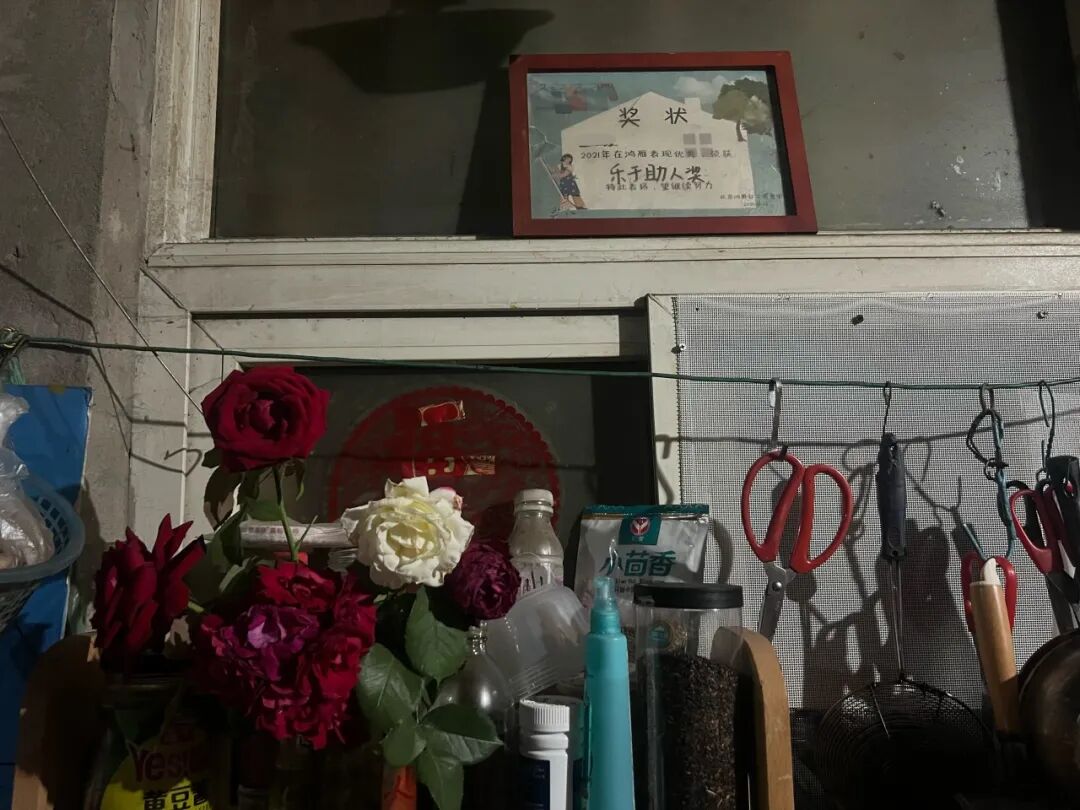
◉ Huirong’s kitchen. On the wall is the award for helping others given to her by Hongyan Home in 2021.
After that, she felt a little more at ease; she only had to prepare dinner for the two of them before her husband came home at seven in the evening. Her husband, whose work is irregular, is now even less regular than she is — breakfast at ten, lunch at three.
At this pace of work, gastric disease has become the norm for many domestic workers. In recent years, Suying has found that she cannot eat much, and foods that are hard to digest also cause bloating. Huirong also experiences bloating in the evening; both she and her husband have bad stomachs.
The Beijing Hongyan Social Work Service Centre distributed questionnaires to 325 domestic workers in Beijing. The survey showed that, in the course of their work, more than 14% of respondents reported that they were chronically overworked doing heavy physical labour and that chronic poor eating had led to malnutrition. In addition, 54.7% of domestic workers suffered from long-term sleep deprivation, and 44.6% reported suffering harm to their health from cleaning products, cooking fumes and so on.
Suying also feels her poor stomach and digestion have been damaged by pesticide residues in leafy vegetables in Beijing — in the past, when she grew vegetables in her hometown of Chifeng, she knew that many leafy vegetables carried varying levels of pesticide residues. Before she came to the two employer households where she now works, she, like Huirong, had no fixed meal times. To save time, she often ate food that had been frozen and then reheated, and often ate on the go. These are key factors that bring on gastric disease.
But What Do I Actually Like to Eat?
Having rented a small room with a large kitchen, Suying still cannot say what she “likes to eat”. She would rather use the kitchen to host friends who are also migrant domestic workers in Beijing.
Even on her one day off each week, Qiuhua does not want to cook for herself. She is from Weinan in Shaanxi, and she loves to laugh and tell stories. Since coming to Beijing at the age of 17, she has worked almost continuously as a live-in domestic worker for the same household, cleaning, watering the plants, doing the laundry and cooking. She is skilled at braised foods, wheat-based dishes and stir-fried dishes, but on her day off she only wants to get up and go for a wander in the park. She carries some water and snacks to make do for lunch, and in the evening, back at her employer’s home, she just boils some frozen dumplings. Qiuhua does not eat out; she finds it not very tasty and expensive. Biscuits and bread are lighter on both her stomach and her wallet.
In fact, female domestic workers are not without their own standards for what is “tasty” and “healthy”; over seven or eight years of working in households, those standards have been slowly worn down by another set of standards—what employers are satisfied with.
Qiuhua has noticed that her employers care a lot about whether food is past its best-before date and whether it comes from a big brand, but not so much about the ingredients list or pesticide residues. Qiuhua is good at braising meat and steaming leavened buns, but her employers prefer the braised foods from chain supermarkets and the steamed buns from Daoxiangcun. Having sat at the same dining table for eight years, she knows which member of the family likes things with a bit more soy sauce and which one prefers to eat more lightly, which has made planning a week’s menu a matter of precise calculation.
But when I ask her what she herself likes to eat, only then does Qiuhua realise that she has become unaccustomed to expressing her preferences. “I eat everything and I’m not fussy. It’s just that sometimes, when I make something different, they don’t like it, and I don’t want to cause them such trouble.”
As the conversation goes deeper, Qiuhua mentions in passing that she actually likes spicy food. It is the customary seasoning in her hometown of Weinan in Shaanxi; when cooking noodles, it is best with a mouthful of chilli oil, and it feels so satisfying to eat. But after working in people’s homes, she has rarely put any spice into her cooking.
She is also particularly mindful of which ingredients are more expensive. Unless her employers warmly invite her, she never touches her chopsticks.
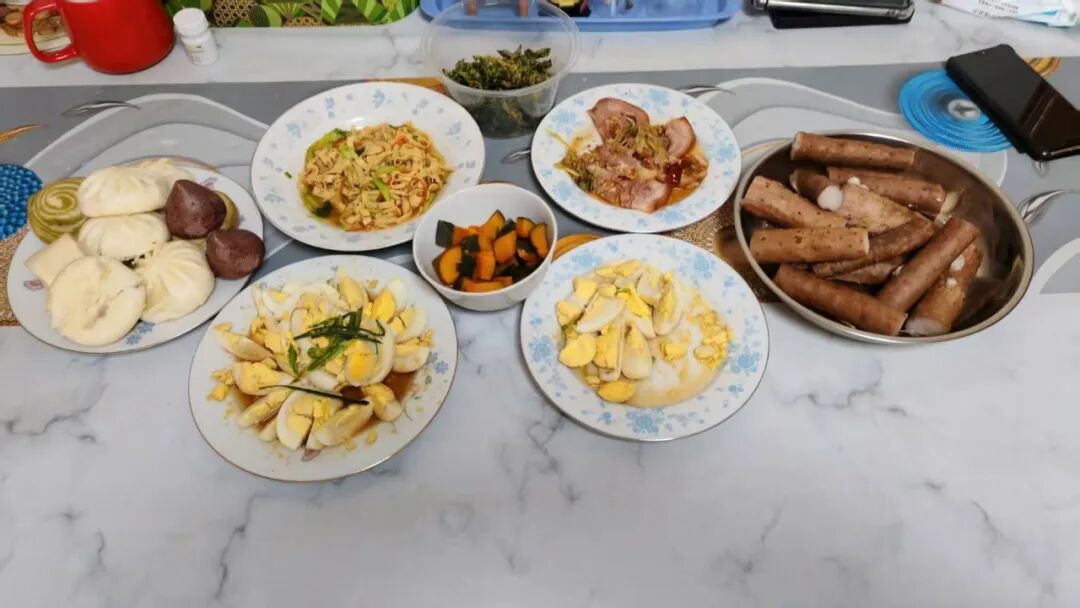
◉ The dish Qiuhua most often makes at her employer’s home.
Suying is also firm about healthy ingredients: they should be natural and light. Around 12 noon, the temperature was already quite warm, so the two of us set off on foot from her home to an underground supermarket a kilometre away to buy vegetables. She found that the vegetables there were relatively fresh and often on discount.
We bought cucumbers with unopened blossoms, free-range eggs and celery. Suying, who has grown her own crops, believes that crops like these have fewer pesticide residues.
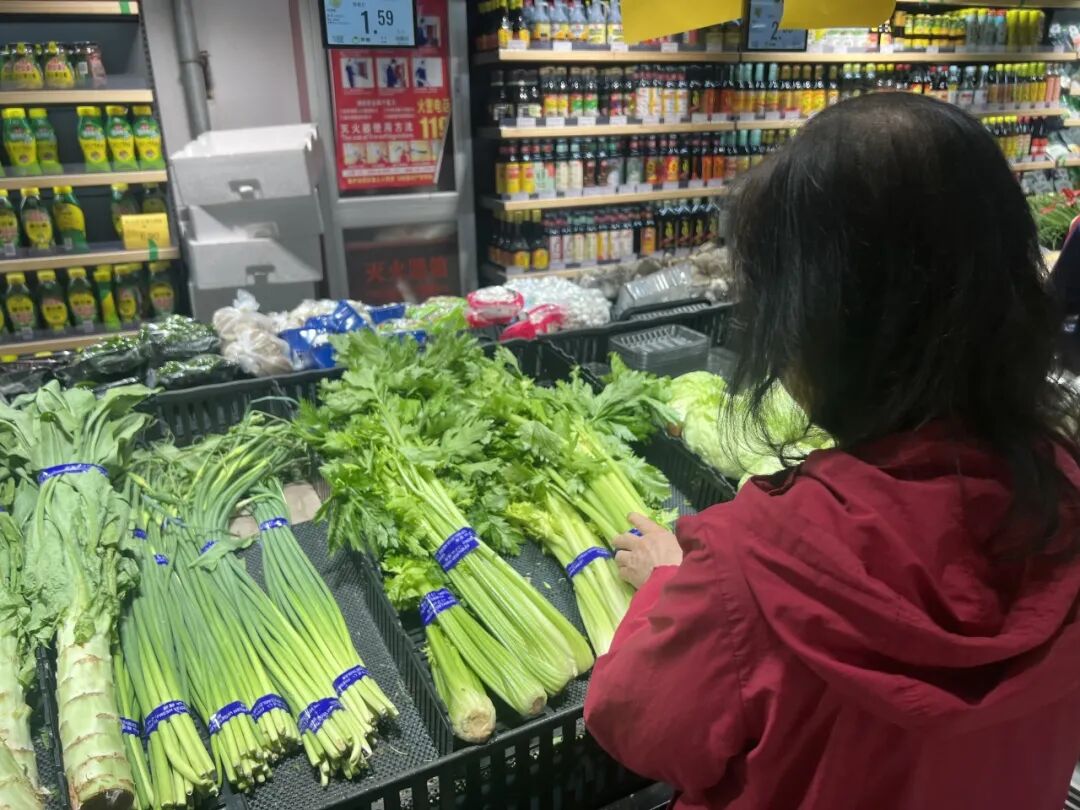
◉ Suying selecting celery in the supermarket. She has to walk nearly 20 minutes, dragging her unsteady legs, but she still chooses this one because the vegetables are relatively fresh and on discount.
The cucumber, celery and free-range eggs came to less than nine yuan. Another standout on the table is the organic yuba — sent by other domestic-worker sisters she met at the public-interest organisation Hongyan Social Work Service Centre.
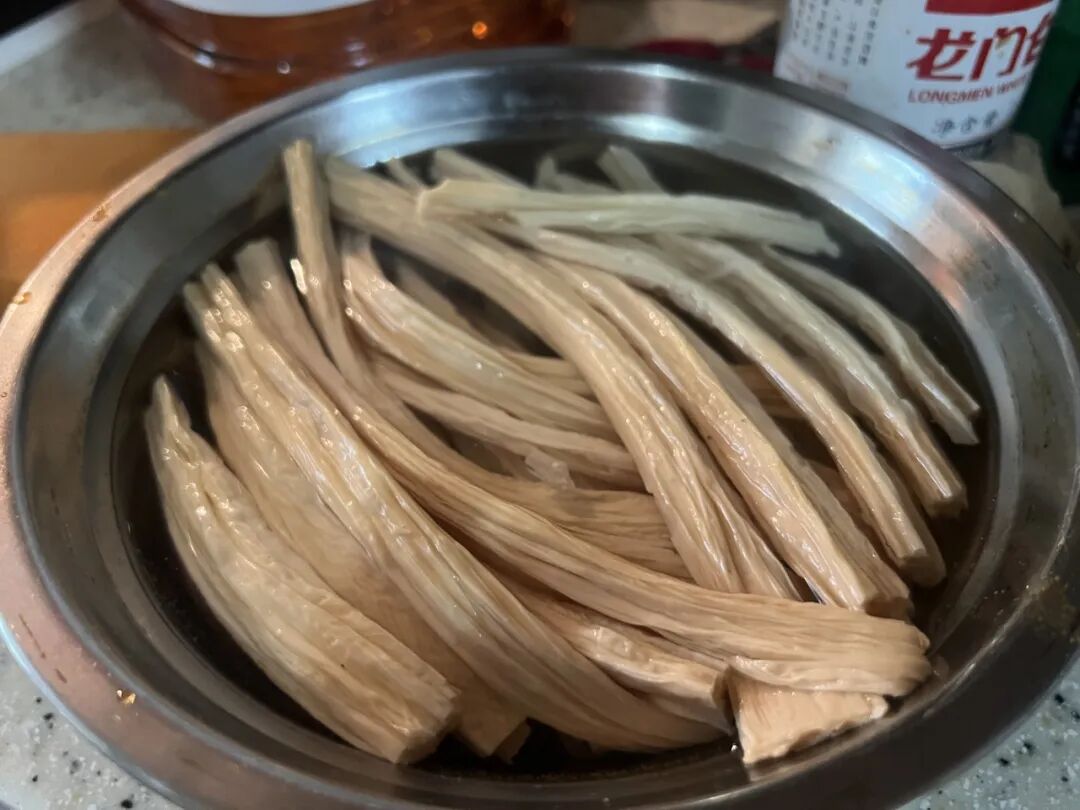
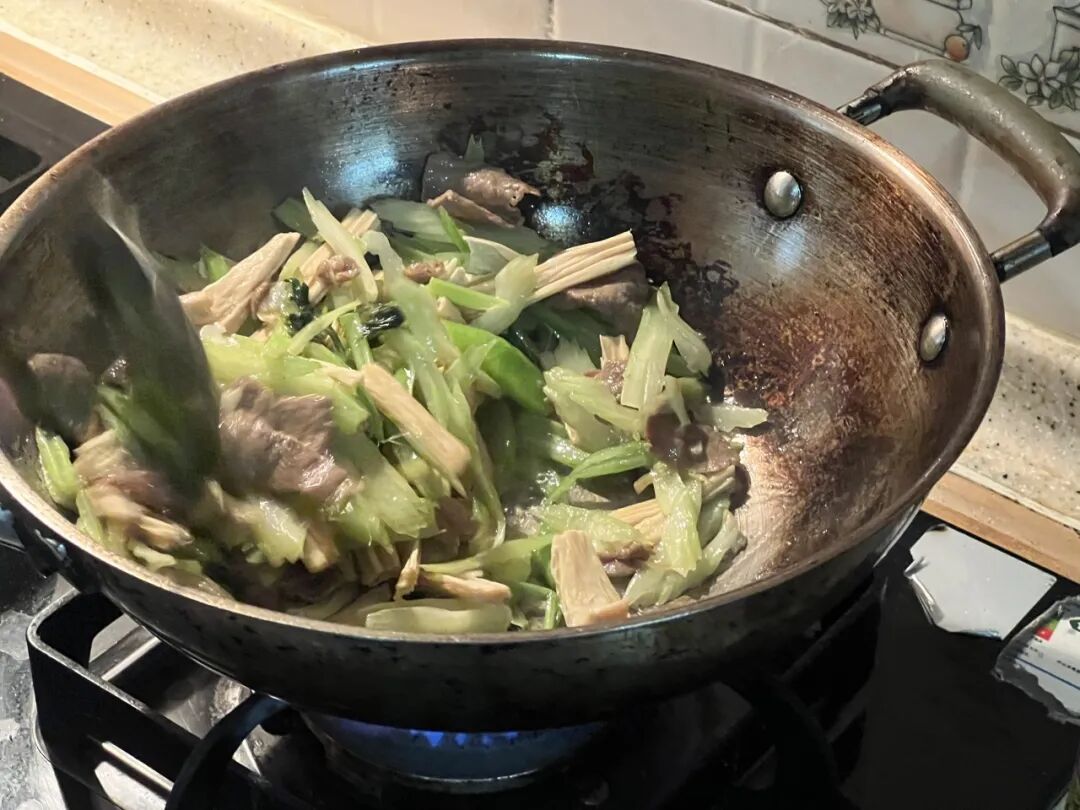
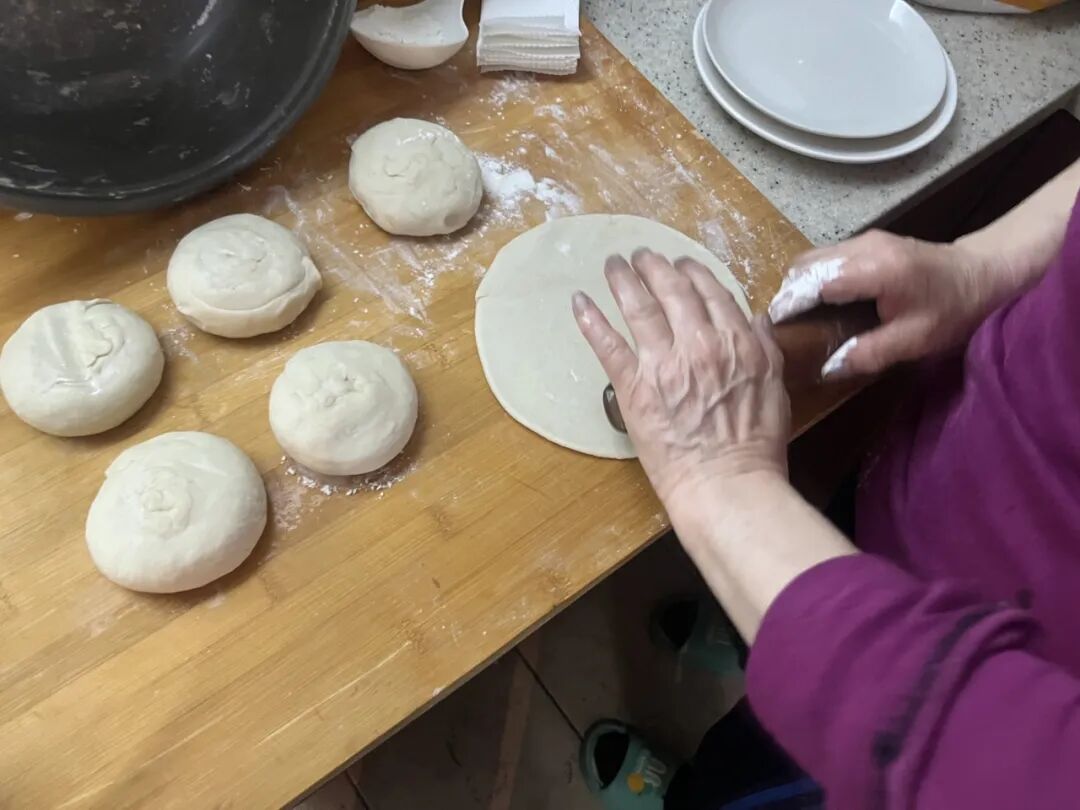
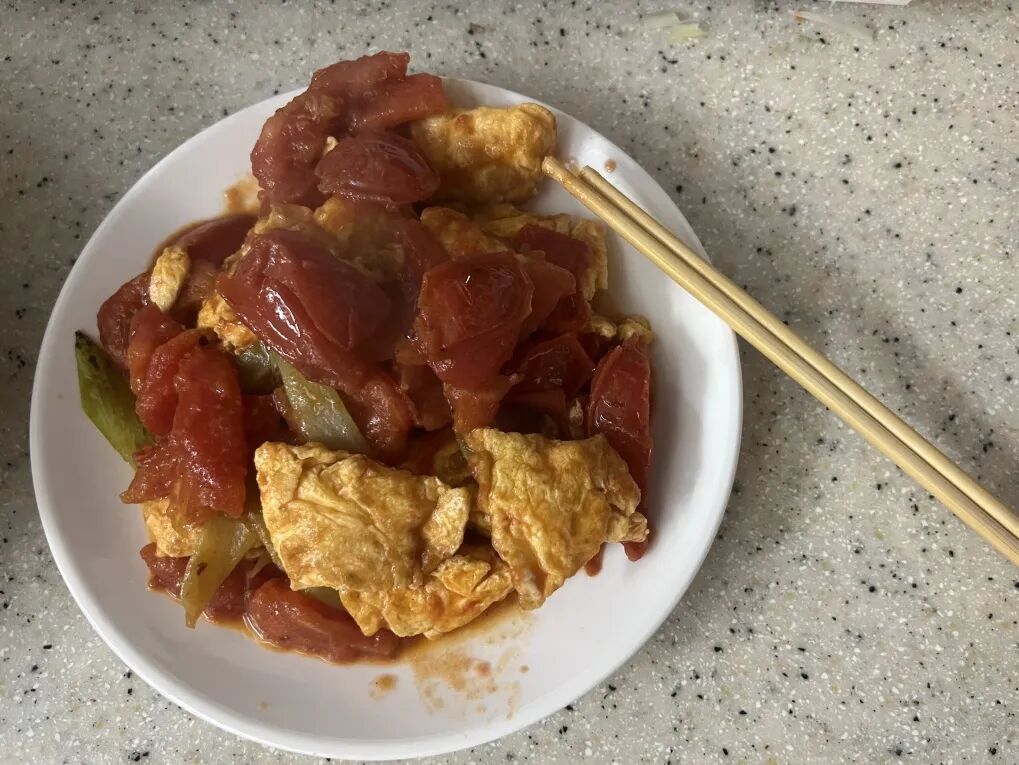
◉ Tomato and egg, quickly stir-fried in hot oil over high heat, and the flatbread Suying made herself from dough she kneaded.
A full table of food has been prepared. But I know it is only because I am here. For Suying, cooking just for herself is a luxury.
On the one day off each week when she can sit down to a meal, Suying just stir-fries a single dish and boils noodles. She is sure to leave some over—freezing it and eating it later is less trouble than cooking two separate meals. The cutting board, once the vegetables have been cut and it has been washed clean, is propped on two stools to serve as her dining table. She quietly and quickly finishes her meal, keeping an eye on whether her flatmates are home, and only when they are not does she scroll through short videos.
Cooking always seems to be about other people, never about oneself. Female domestic workers rarely think about what they themselves need; more importantly, they no longer have the time to think about it.
In 2008, Huirong brought her husband and her child, then in Year 2 of primary school, to Beijing. The stable life of a family of three did not mean that eating was organised more efficiently; instead, it all fell on Huirong: getting up early to cook, leaving hot water in the kettle for her child to make instant noodles (she did not dare let a child who had only just entered Year 2 use the gas hob on their own) — the child no longer wants even to smell instant noodles. In the gaps between her two afternoon hourly domestic-work shifts, she would buy the vegetables, cook dinner for the child, tidy the room, and prepare breakfast for the whole family the next day.
According to 2008 statistics from the National Bureau of Statistics, the time women spent on unpaid care work (27.3 hours a week) was far higher than that for men (10.6 hours a week). This was data for residents of ten provinces and municipalities, including Beijing.
Back in her hometown it had always been like this, and Huirong was used to it. Farming, cooking and cleaning were all done by her. Her husband was responsible for “being good-looking”. “Next life, I’m not looking for a good-looking man!” Huirong said, laughing heartily.
Huirong felt that if she were just eating on her own, making do would be enough. Huirong and I sat in the common corridor of the corridor block where she rented and chatted back and forth for a long time. She kept smiling, her eyes curved, but she still could not say what she actually liked to eat.
A week later, I finally found a new way out of the problem: was there a remembered flavour from your hometown, something you had been thinking about ever since leaving home to work but could hardly ever get to eat again?
That immediately had Suying talking clearly and at length. Her favourite was a food known back home as “millet rice wrapped up”: she washed the Chinese cabbage leaves and soaked them in brine to clean them, then wrapped her stir-fried egg sauce, spring onions, coriander and rice inside the leaves. In the countryside, both the rice and the egg sauce were cooked in a large iron wok over a wood-burning stove; every autumn, everyone in the village liked to eat this, to warm the body. When she first came to Beijing, Sister He missed “millet rice wrapped up” the most, but the gas hob and small iron wok in the rented room made it hard to recreate that steaming taste.
Qiuhua also recalled roasted sweet potatoes from her childhood in rural Weinan — picking apart the warm coal lumps in the kang stove right after cooking, burying a few sweet potatoes, and raking them out when cooking the next meal, so they were ready to eat. That was the flavour of her mother’s cooking in memory. Without any prompting, Huirong mentioned frozen sweet potatoes from her hometown in Jiaozuo: sweet potatoes grown in their own field were steamed, left outside to freeze overnight, and then air-dried during the day; once treated this way and roasted, they were especially sweet and fragrant — and after eating them, one could drink soup made by boiling sweet potato leaves. Sometimes when her gastric disease flared up at night, she wanted to drink some sweet potato leaf soup.
No Longer Chewing Biscuits Alone / At Last a Kitchen Large Enough for Two
“The employer’s home is the employer’s home; there are no sights in shopping malls or parks that belong to us.” The female domestic workers say this. Is there a place where they can freely speak in their home accents and eat the foods they like?
Every Saturday, the small space in a residential building in Wangjing is the liveliest—many domestic workers have their one day off on this day. By morning, quite a few people have already arrived. On the table are piles of red sausage from their hometowns, fresh eggs from the early morning market, and mung bean glass noodles that employers do not like to eat… Here, at last, is a kitchen large enough for two people to stand in, and enough bowls, plates, spoons and chopsticks.
By lunchtime, the women in all of Beijing who are most skilled at cooking began dividing the work in an orderly way. One specialty dish after another was stir-fried, then deftly placed on the table by hands accustomed to work. Everyone chatted and ate, and someone began to sing out loud a song they had written. In the lyrics, they are sisters from every corner of the country. They also danced, massaged each other’s tense muscles, and exchanged second-hand items and ingredients.
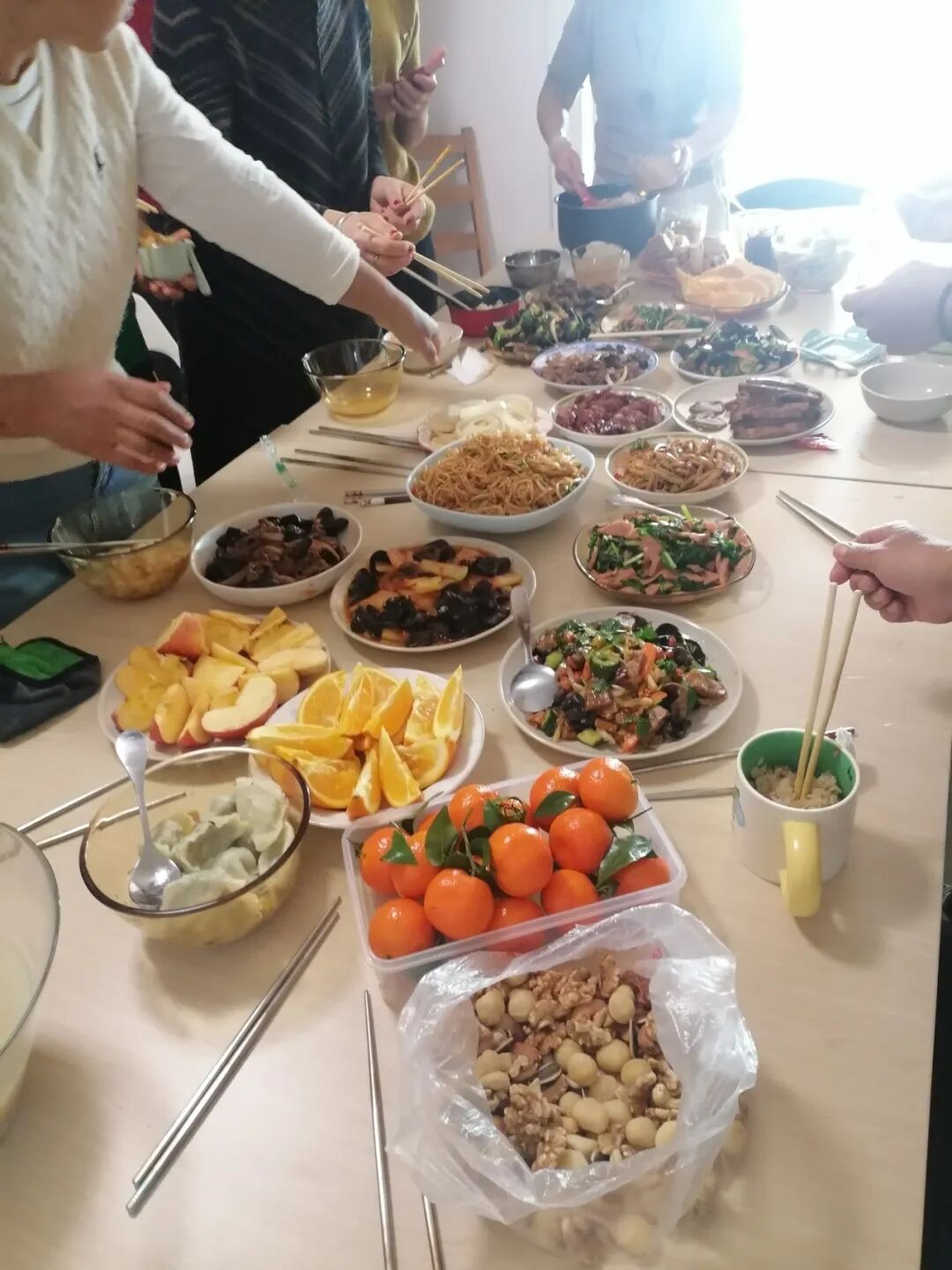
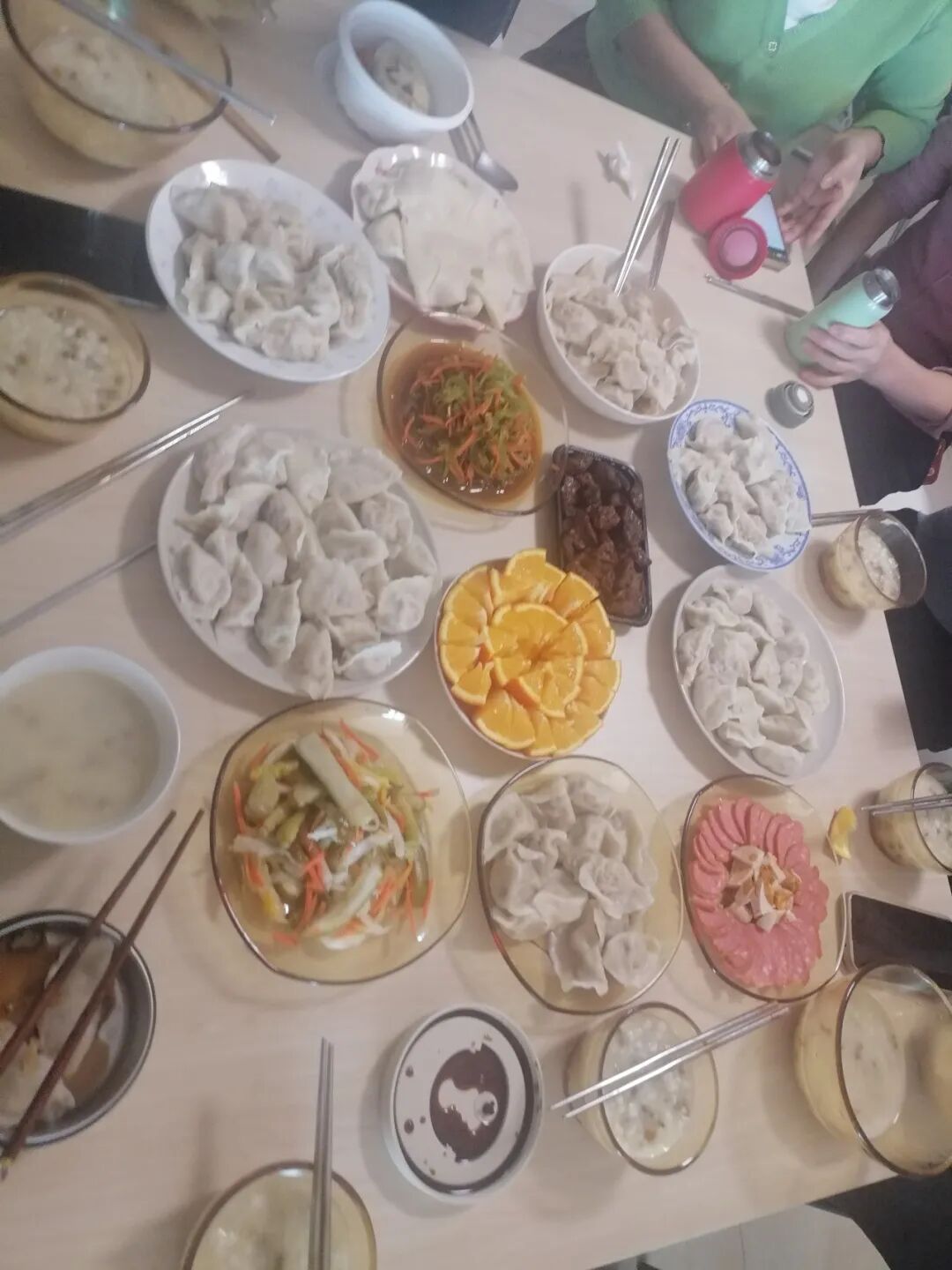
◉ A photo of the New Year’s Day gathering. Photo: Awei
This is where the public-interest organisation Beijing Hongyan Social Work Service Centre is based. On domestic workers’ rare day off each weekend, Hongyan does not charge; there are people from their home regions, activities, and a chance to make friends. In 2023, after learning about Hongyan, Qiuhua no longer spent her time wandering round the park alone and chewing biscuits.
The kitchen has brought together people from every corner of the country, each with a very different personality. Over more than a decade, Hongyan has moved home seven times, and every move has meant having to throw some things away because of limited space—but the pots, pans, bowls and utensils are always spared. Whenever the space has a kitchen, noticeably more sisters turn up for the weekend activities.
Once, a basement room tucked into the mezzanine had no way of cooking. Even so, everyone found ways to eat together: some made flatbread at home and brought it over, others learned to place group food orders, bringing two sisters along so all three could have a meal for just one yuan each. One more big sister from Inner Mongolia carried on her back a lamb leg her son had sent and a small electric steamer—the only kitchen appliance she had in her rented flat—and taught everyone to wrap lamb shumai together.
In spring 2025, to prepare her domestic workers’ stand-up comedy show at Hongyan, Qiuhua also rushed over to Wangjing every weekend—her employer’s home was in Shunyi, a distance spanning all of Beijing. Lunches became properly steaming hot. At festivals and holidays, she would also carry over dried chillies from her hometown, fruit, and brand-new ingredients her employer did not like…
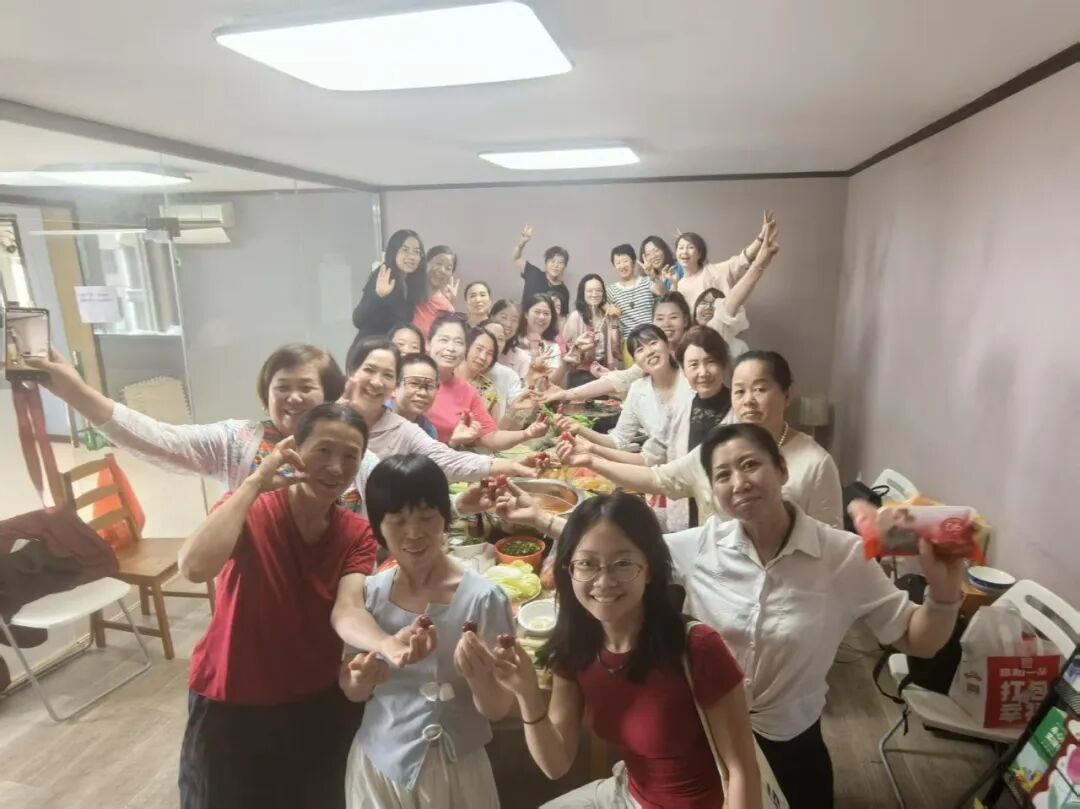
◉ In the first half of 2026, Hongyan moved home again, and the sisters went through four months without an office. When they reopened, Meiruo and intern Qingqiu suggested everyone gather for Guizhou sour-broth hotpot—Hongyan’s book club had just finished reading an autobiography by a Guizhou amateur author.
Meiruo, founder of Hongyan, believes that food carries the qualities of home in the lives of these women who have come to Beijing to work. Food can connect them with their hometowns, and it also gives everyone a chance to talk openly about home. “It is easy not to miss home when you eat food from home. I think there is a kind of healing effect in it.”
Worn-Out Bodies
Holding on to a Plot of Land
But I still wonder: after so long in the city, constantly adjusting and compromising across client homes, commutes and live-in work, do they want to return to their roots? Or can they, through effort, build some order in their lives that gives them peace, even while always on the move?
I have found that another way for female domestic workers to stay connected with their homeland is to grow their own vegetables.
In Suying’s memory, the spring air back home has always carried the smell of pesticide. She once grew a little under two mu of cabbage (Chinese cabbage) and aubergine in her hometown in Chifeng; every spring, to prevent insect damage and make sure the outer leaves enclosed the cabbage heart properly, she always had to carry out pesticide spraying on the cabbages. The smell has stuck in her memory, and even after so many years, she is not willing to eat cabbage.
After going out to work for many years, she learned that her land had been leased by her husband to someone else — including the more than twenty trees on it, although last year she had only received five hundred yuan in land rent — even though she had not originally agreed to the arrangement. She still thinks about her own land today. For more than a decade, waves of legal and policy advocacy and grassroots concern about the land rights of rural women who marry out have come one after another, but to reach every woman’s birth village and the village she marries into, and shake village rules and traditions, takes more time.
Huirong, for her part, started growing vegetables herself in Beijing. After moving to C Village in the eastern suburbs of Beijing, she found that the neighbours were all growing vegetables: a stretch of green space here bordered the neighbouring village and had long been left idle. Some put soil into polystyrene boxes and planted a little, while others went out themselves to clear ground among the ruins.
That continued until 2024, when the two villages fell into dispute over the use and maintenance of the land. The neighbouring village eventually reclaimed it. Huirong had to find another vacant plot in her own village and plant in secret. She became the only person left still growing crops.
Huirong buys vegetable seeds online: if the name and the picture suggest that it is edible, she buys it first and tries it. Most of the experiments have been successful. Peacock amaranth and Beibei pumpkin, for example, do not need pesticide spraying and grow the most and best; the former is stir-fried and the latter is steamed, and both have become regulars on the table. There are also Chinese chives, coriander, mugwort, perilla, spring onions, hollyhock, mint…
She has also been taken in, buying coriander that was said to stop growing once it reached a “perfect length”, and Mediterranean celery with leaves so tender that they could be torn off and eaten straight away. In the end, the coriander grew spindly and went to flower, while the leaves of the so-called Mediterranean celery grew enormous in a very short time, so thick that they could not even be broken off. Although she had long since realised that these things were not edible, Huirong kept growing them anyway, watering them regularly like the other vegetables.
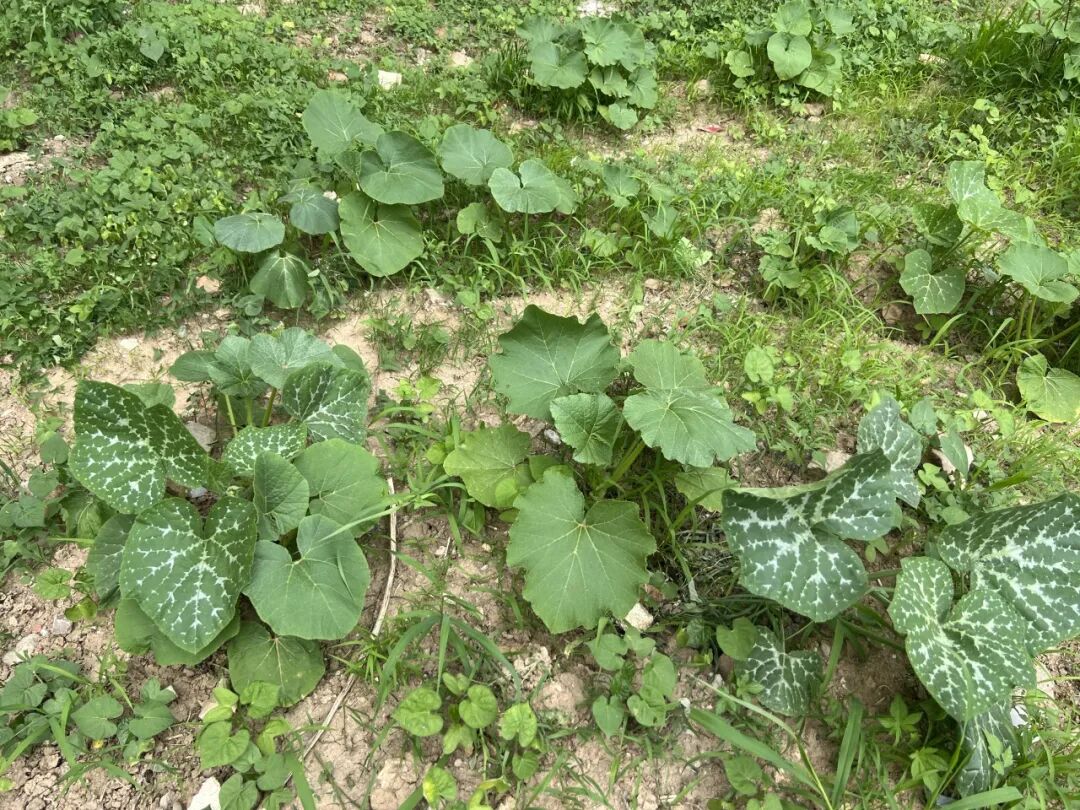
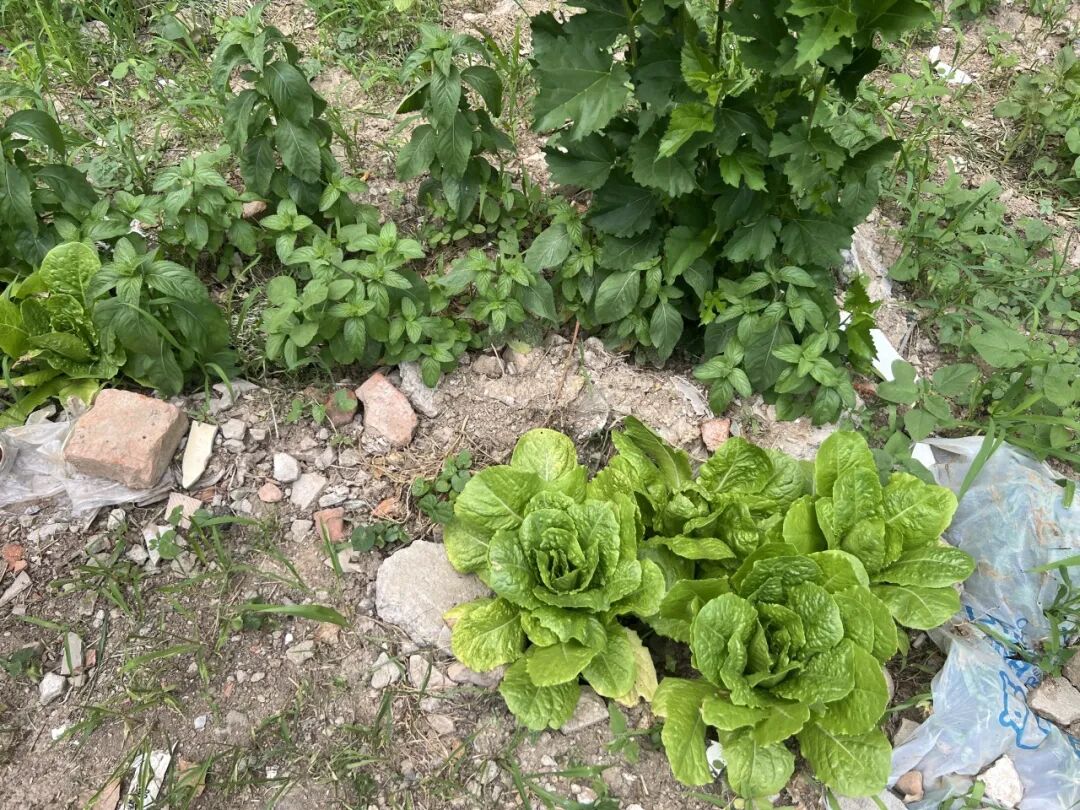
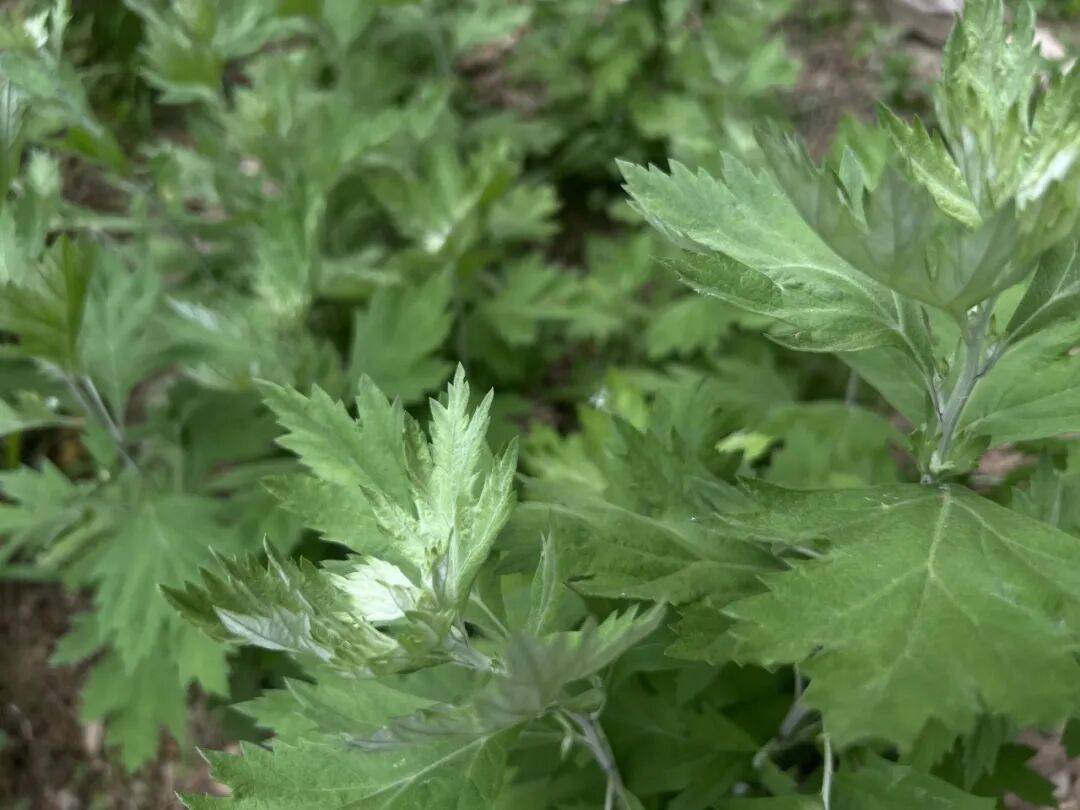
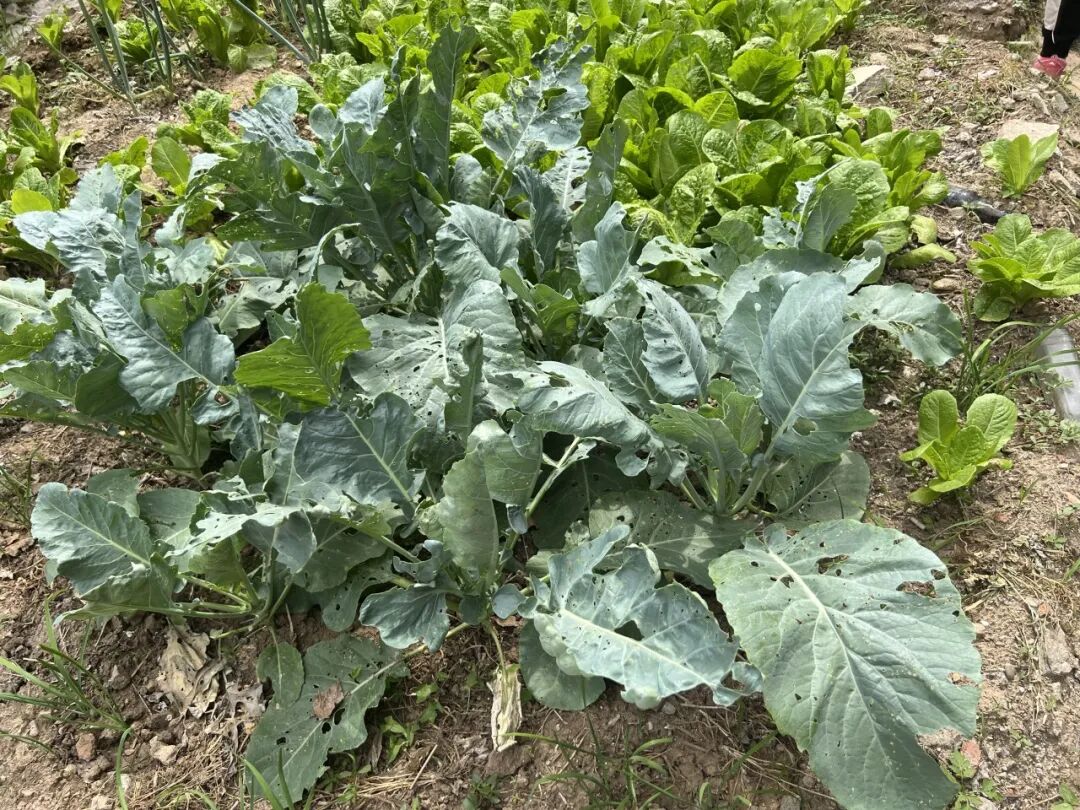
◉ Huirong’s plot; the one at bottom right is the so-called “Mediterranean celery” (does anyone know what this actually is?)
Huirong thinks that sticking with growing vegetables is just farm people “not being able to sit still”. She jokes that compared with farming, being a domestic worker is really quite easy. “On hourly work, I can go to four or five homes in a day. People are very surprised and say, how do you do it, aren’t you tired? I say, that’s nothing yet!”
Her enthusiasm for growing vegetables inspired a neighbour in the same corridor. She shared some seeds with him (unfortunately, some of that unlucky tall coriander got mixed in), and the neighbour also started looking for polystyrene boxes and flower pots to grow vegetables in. Now the coriander in there stands out especially.
Qiuhua, for her part, grows vegetables at her employer’s home. The employer likes Chinese chives, but when bought in large quantities from the supermarket, they are often not fresh before they can be finished. Last summer, the employer bought roots of Chinese chives and seeds for small Chinese cabbage and spring onions, and suggested that she grow them.
This plot is much more miniature than Huirong’s. What is grown is mainly based on the employer’s needs, but Qiuhua is not averse to it. She takes pleasure in it. “Growing it yourself makes eating it convenient and fresh, and it gives you something to do.” Small Chinese cabbage and spring onions are also grown back home, so she knows how to raise them from seed. She has also grown radishes, Chinese cabbage, aubergine, chillies, cucumbers, luffa, pumpkins, wax gourd, and courgettes sent by a neighbour. They all taste different from the ones sold outside.
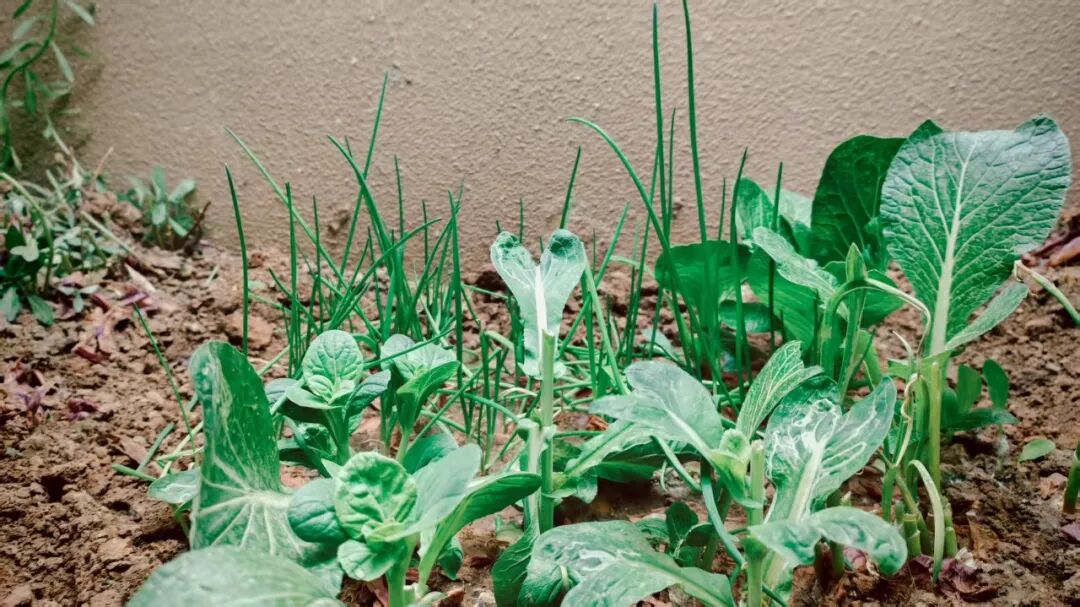
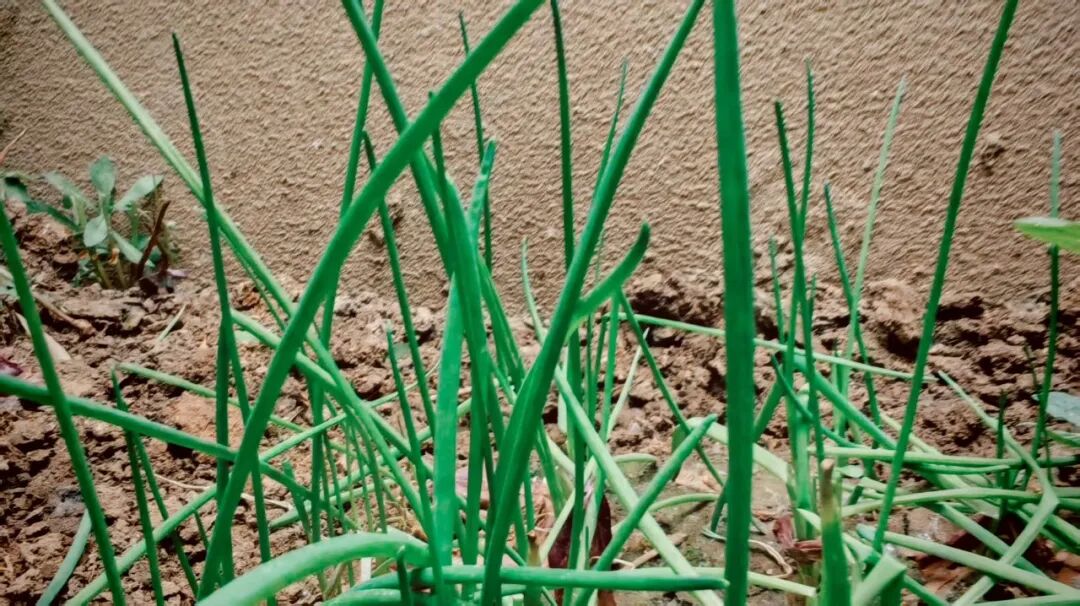
◉ The small Chinese cabbage and spring onions Qiuhua grew.
For Huirong, always out in the wind and rain, the vegetable plot was once a steady thing to look forward to. By then the child had finally started high school, and she had a little free time.
When she first came to Beijing, she also worked in a frozen food factory on the outskirts. The factory was too cold; even wearing a padded jacket, she would feel pain in her joints. Thinking about the harm it was doing to her body, she went back to the city proper and started doing domestic work again.
But in 2025, after a road accident, Huirong was injured. She completely stopped working in client homes.
When crossing the road in the village, a turning car knocked her down, and her leg sustained a neurological injury. Every day she stays in the corridor block, finding things to do. She eats much less, partly because she moves less and her appetite has diminished, and partly because she hopes to save some money. But she still persists in tending that plot, even though carrying water to it and loosening the soil and weeding have become much harder.
When we came back from the plot, Huirong picked some of the Chinese chives she had grown and had already soaked the tofu skin and glass noodles. Using the lard she had made herself, she greased the wok, stir-fried the vegetables, and taught me to make Chinese chive and egg stuffed flatbreads as big as the iron wok. It was a delicious flavour I had never had before.
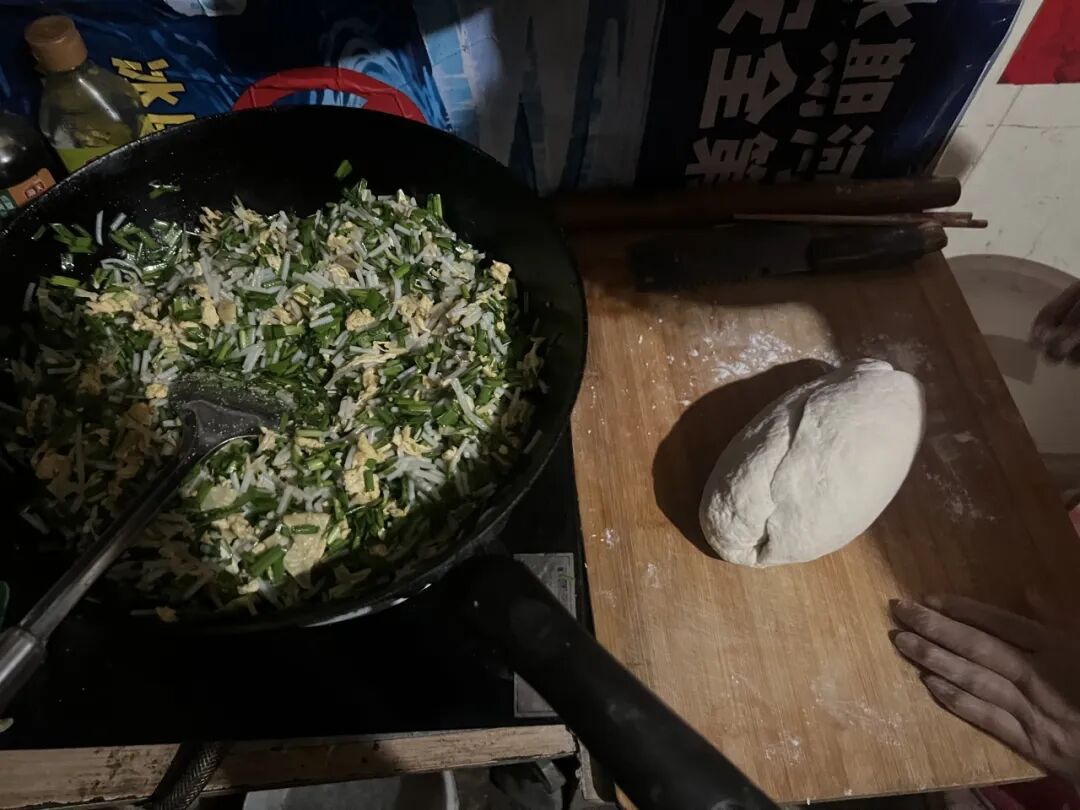
◉ Huirong’s Chinese chive and egg stuffed flatbreads.
At 66, Suying also has problems with her lower back and legs. On the trip to the supermarket, more than a kilometre away, we had to stop several times. Suying’s knee was hurting, and her right foot, prone to oedema, also needed a rest. While mixing dough and making flatbreads, she also had to sit down from time to time. Although in the past friends who knew Suying well had described her as brisk and efficient at work, she now still tries to get everything done as smoothly as possible, and has already hosted several groups of companions in the big kitchen.
In a 2024 paper, Han Wei from the China Research Academy of Labour and Social Security pointed out that among domestic workers, cleaners and live-in workers are exposed to many sources of occupational injury risk and are prone to falls, bumps and knocks. In addition, they face occupational disease risks such as lumbar disc herniation and arthritis, as well as overwork-related injuries. But for various reasons, including cherishing their work opportunities and not knowing the legal provisions, many domestic workers have not reported occupational injuries that have occurred. A study in Brazil further noted: 51% of domestic workers use painkillers, 34% have spinal problems, and 47% report hypertension.
Suying hopes that one day she will be able to move back to the suburbs and have her own small courtyard. Ideally, she would like to open her own noodle shop. The shop does not need to be very large, nor does it need to be in a very busy location, as long as it allows her to make buckwheat noodles, steamed buns and thick wheat-flour soup. She is confident that this is the tastiest and healthiest food. “If only I had someone to help me. I cannot stand on my feet for long.”
Seeing Ourselves Through One Another
During my internship at Hongyan, I saw the organisation working in various ways to help the sisters see and care for their own bodies. One of its work areas is now “physical and mental health”. Through shared learning, the sisters came to see one another’s needs, and in the process of caring for each other, gradually came to understand the importance of self-care.
But this shift is not easy. At first, the concept of “taking care of oneself” seemed not to exist at all. Endurance has often been the way these rural women, working in Beijing far from home, have most readily coped with pain and hunger.
Suying once shared at Hongyan that in 2015 she reached 55 — an age barrier in Beijing’s domestic work market at the time — after 50, work became harder to find, and by 55 one could basically only do hourly work and other casual jobs. Back then, she had to set out from her home in the Beijing suburbs at 4 a.m. every day, queue at the bus stop for the first bus into the city, and sometimes go to five or six homes in a single day. Her habit of eating on the go, and the problems of her feet being prone to oedema and pain, all began around that time.
But I also noticed that among Hongyan’s hourly workers, there is an older sister who takes on five jobs a day, yet still keeps the two hours between 11 a.m. and 1 p.m. for cooking and resting. From the northeast, she has a forthright personality, loves telling stories, and is always willing to help. More sisters have started to be inspired by her, squeezing a little time between jobs to look after themselves.
I have found that the first step in this shift lies in stepping away from the identities of domestic worker and wife, and returning, for a while, to “home” — gathering with sisters who share similar experiences of leaving home, going out to work in client homes, and looking for work, who, though different in personality, share the same exhaustion and pain.
On New Year’s Day 2026, the sisters, who had not seen one another for a long time, finally reunited around the table. Qiuhua came and led everyone in singing “A Carefree Walk Through Life”, her voice bold and resounding. Huirong’s foot was injured and she could not make it. Suying and Huirong are long-time friends, so she filmed many videos and posted them in the Hongyan group chat, tagging @Huirong. “I’m lying in bed watching the livestream!” Huirong replied with a smile.
*Author’s note: Terms such as “baomu” and “ayi” can be regarded as “product names” for domestic services. “Baomu” carries heavier historical connotations, encompassing the understanding of care work in feudal society. Although some academic research and intermediary agencies still use “baomu” to refer to live-in domestic workers who handle laundry, cooking, and childcare, the word has become less commonly used in everyday life. “Ayi”, the term young children use to address nannies, has grown more popular as childcare needs increased from the 1990s onwards and as the platform economy has continued to develop in recent years. The several older sisters interviewed in this piece, though they may refer to themselves as “ayi” when facing clients, prefer to call themselves “domestic workers” when they gather together or introduce themselves.
*This article draws on the 2021 report by the Beijing Hongyan Social Work Service Centre, “Green Domestic Workers: From Family Care to Leading Green Lifestyles — An Exploratory Study Based on Social Work Practice”, authored by Ms Li Wenfen.
*To protect the privacy of the interviewees, Suying, Huirong, and Qiuhua are pseudonyms used in this article.
– This is Foodthink’s 816th original article –
Foodthink
Author
Xiao Chen
A writer, observer and whimsical dancer. I have stayed as innocent and brave as I was at five for twenty years now.
About the “She and the Land” Column
This year is the United Nations’ “International Year of Women Farmers”. Foodthink is launching its “Ta yu Di” content column, focusing on women in agriculture and food systems. We will go into fields, markets, fishing ports, farms, kitchens, laboratories and city streets to see the women who are often overlooked yet always present. They take part in production, research, cooking, distribution and care, and their working experience and wisdom underpin our daily lives. They are both cultivators of the land and important builders of rural areas and food systems. Through interviews, writing and workshops, we hope to tell their stories, understand how women’s participation shapes our food systems, and invite everyone to explore how, for women working in food and agriculture, a fairer, more dignified future can come about.
Unless otherwise noted, all images are provided by the author.
Editor: Pei Dan
Layout: Xiaoshu
▼
Click the image to read related articles.