
The Mooncake Factory Kid Doesn’t Eat Mooncakes

Another Mid-Autumn Festival has come around. Relatives and friends exchange gifts, mostly mooncakes. The gift boxes come elaborate or plain, Cantonese-style or Suzhou-style, fresh pork or all-vegetarian, handmade and organic — this one an established Hong Kong brand, that one a newly viral shop… As for me, I turn them all down, smiling apologetically as I explain to each one in turn: “Our family used to run a mooncake factory. I literally grew up in piles of mooncakes — I can’t stand eating them!” Just as someone is about to press further, I fall silent again. It is not that there are any untold food-processing scandals to expose; a few words simply will not do it justice.

But I cannot withstand the follow-up questions. There is always filling wrapped inside the mooncake skin; it simply cannot be hidden. Every year, one of the friends who brings me mooncakes ends up being the one I pull aside by the hand, and I repay them with a tale from the old factory. This year, let me tell you another one.

I. From “Workshop” to “Factory”

Our family’s food-processing plant went through a “workshop” phase before it could properly be called a “factory.” I was very young then, and all I remember is the sound of large and small mooncake moulds being slammed one after another onto the work surface — crack, crack, crack — like setting off firecrackers. Father was still a young man back then, and the family business was in its infancy; even he had to wear arm guards and tie on an apron to get to work. I have always thought that the way he later played mahjong — when he drew a good tile and slammed that “Fortune” piece down on the table with a thud — was rehearsed years earlier from all that mooncake-stamping. Only, the mahjong actually made money. Then the volume grew, and there was an assembly line; the workshop became a small factory, and we moved from Henan to Hunan. Father brought along a handful of workers from Henan, and each Spring Festival, when they came back to the plant, they would bring a few more fellow townspeople, each head earning a referral fee. So here we were: an Anhui family running a Henan-speaking food-processing plant in Hunan. At home we spoke with an Anhui accent, at the factory everyone spoke with a Henan accent, and in the township primary school — even the teacher’s lesson was in a Changsha accent. I grew up shuttling between these three dialects.

The plant mainly processed egg-yolk pastries, sachima, and mooncakes. June through September was the mooncake production season, and at its peak there were day and night shifts; the production line barely stopped. And this was precisely when I was on summer holiday. I was never diligent with my schoolwork in primary school, and I especially loved darting in and out of the workshop, always getting told off for being a nuisance.

This was the first decade of the new millennium, and the machinery for mooncake production was already quite advanced. There were automatic mixers for the pastry skin, and the filling was ready-made, fruit-flavoured winter melon paste — vivid in colour, cloyingly sweet-smelling. The “mooncake-wrapping” machine had a slot on the left and a slot on the right: one for the pastry sheets, one for the filling. The machine extruded a long strip of skin enclosing the filling, which then passed under a blade and was suddenly sliced into neat, uniform little squares. After that, the moulds pressed over one by one, and the mooncakes came rolling off the conveyor belt.
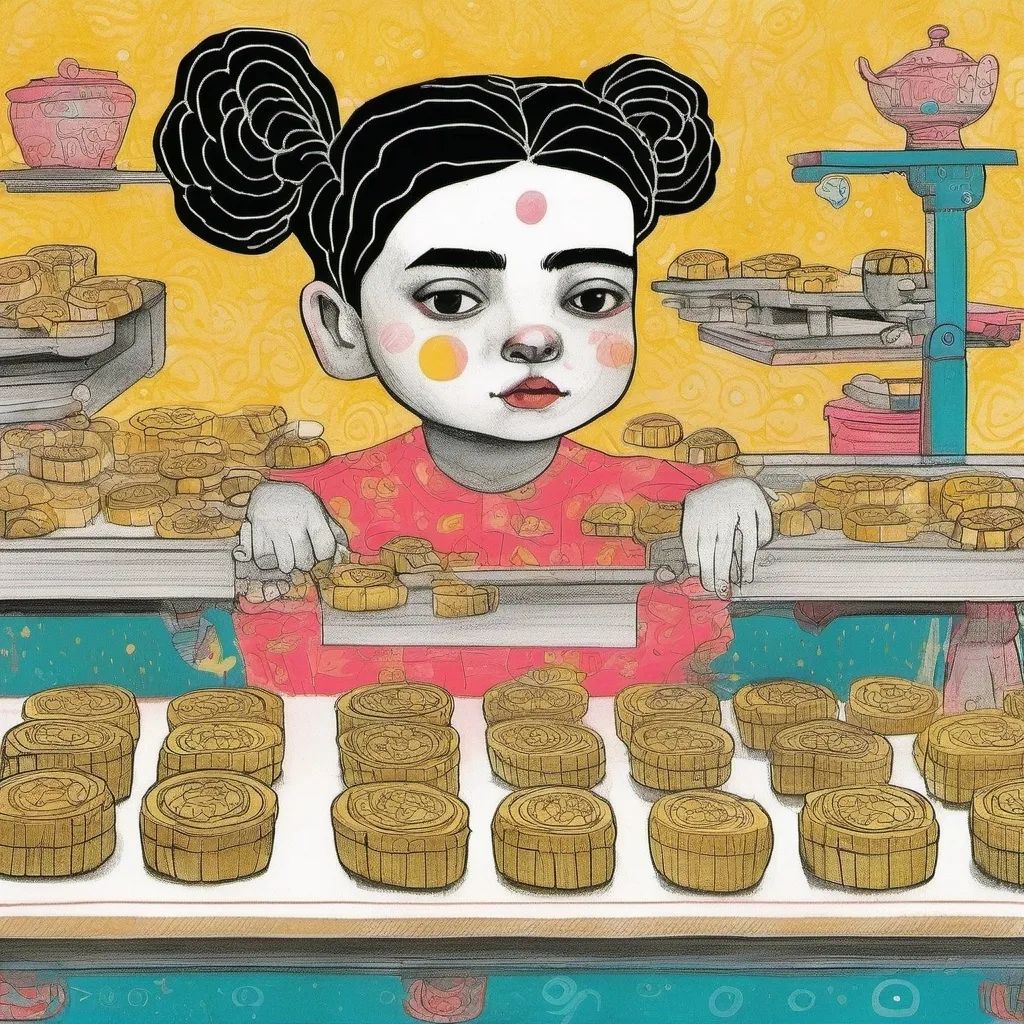
II. The Assembly Line, the Ovens, and Fingers Rubbed Raw into Blisters
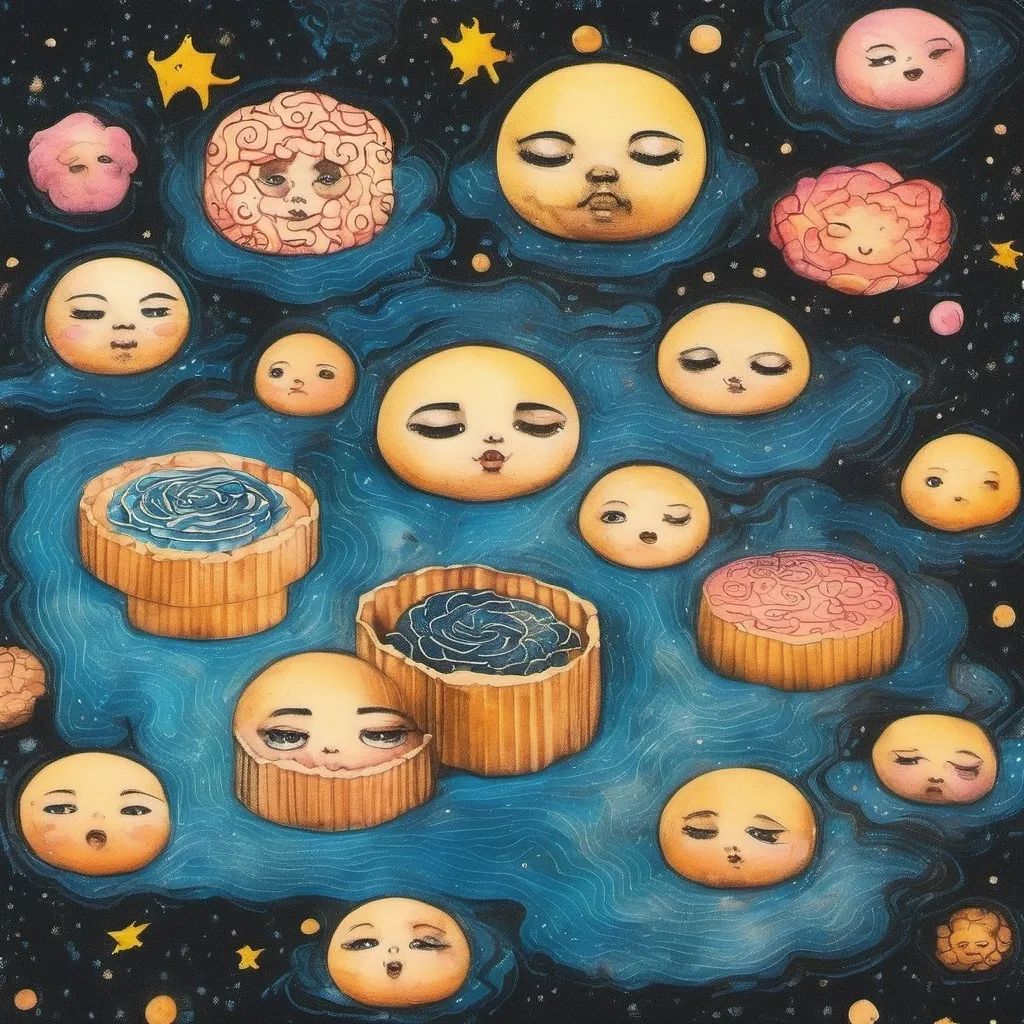
For a while I especially loved lingering beside the assembly line, listening to the hum of the machinery and the rhythmic thud of the moulds, feeling that everything was so orderly and steady. Sometimes I would stare blankly at the conveyor belt and feel a sense of weightlessness, of soaring — as if I myself were a mooncake drifting through the galaxy. It was only later, in physics class, that I learned this was called “relative motion.” In Shen Fu’s Six Records of a Floating Life, the trick was to smoke mosquito coils into shapes of blue clouds and white cranes; I, on the other hand, counted mooncakes as they wandered through the galaxy and the void. In the language of today’s popular psychology, I suppose I was experiencing “flow.” And in my quest to understand the mechanism behind this strange sensation, I ran out to the production line day after day trying to recreate it. Eventually I discovered the crucial variable: let your eyes go soft-focus, then cross them just slightly. I finally kicked this “hobby” just as my crossed eyes were about to lock into place, my interest having already shifted to the mooncake-baking.

The ovens in the factory were upright ovens — they looked like elevators, except for a single heavy pull-door, and inside it was pitch dark. The male worker who looked after the ovens once threatened me that if I kept making mischief he would lock me inside, so even when I was rampaging about everywhere, I made a wide detour around the ovens.

The mooncakes were brushed with egg yolk (this was the key to a good colour), arranged row by row on baking trays, the trays stacked layer after layer on a rack, and the rack pushed in through the oven door. I liked the ones that were slightly scorched — the skin crisp and fragrant — but I never cared for the filling: cloyingly sweet and sticky. So when I ate a mooncake, I ate only the skin. Fortunately, we had a factory at home, which could sustain this little “hobby” of mine for the time being.

Once, in fact, I used a spare mould to make myself a plain, skin-only mooncake — no filling at all — and swapped it with a regular one on the baking tray. Alas, once this skin-only mooncake went on the tray, onto the rack, and around the oven a few times, it was utterly unrecognisable. I watched the mooncakes go into the packaging machine and come out neatly wrapped, and all I felt was that some poor stranger had been shortchanged.
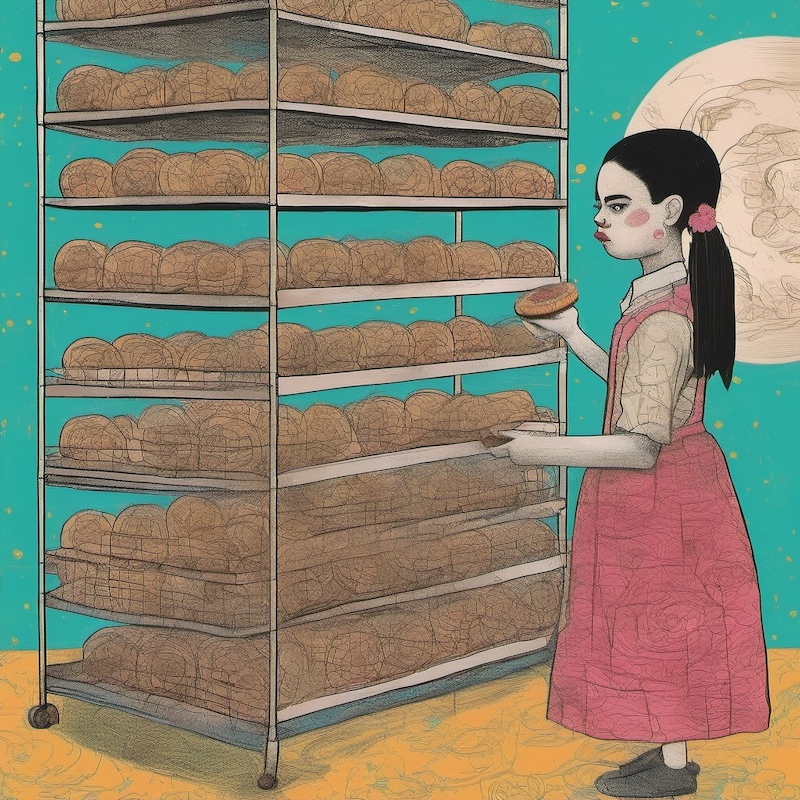
In the assembly-line production of mooncakes, the step with the highest manual content was probably the packaging. Each mooncake had a square plastic inner tray. These trays were stacked tightly, pressed together front to back for transport to save space, and had to be separated by hand. You pinched the tray between thumb and forefinger, and using the friction between your finger and the plastic, peeled the tray free. The secret was that your fingers had to be neither too dry nor too wet — so, just like counting banknotes, you would lick your finger first, rub it a little, and only then get to work. When the weather got any hotter, I stopped going into the workshop altogether. I would stay curled up in my room watching cartoons like any ordinary primary schooler, but my hands never stopped — I was licking my fingers and peeling off mooncake inner trays at the same time. Full of grand ambition, I negotiated a piece-rate price equal to that of the temporary workers in the packaging room, placing myself firmly at the forefront of equal pay for equal work, and for a while I felt I was already counting banknotes. It ended when my thumb and forefinger wore down to blisters, and the gold plastic film of the inner trays worked itself into my fingerprints. That was the end of my stint as a temp. And in those last few days of the summer holiday, I had to finish a completely untouched page of my Happy Summer Holiday workbook with my injured fingers.

III. There Is Filling Inside the Mooncake Skin Too

Another summer holiday came, and the factory had moved to a new industrial park. The rent in the new park was considerably lower. More than an industrial park, it resembled an agricultural park: on the entrance to the village stood a large sign reading something like “Vegetable Production Base,” and the village did indeed have more farmland than factories. Our family was probably among the first batch of factories to move in. To our left was a fabric sofa-cover factory, to our right a spicy-strips factory run by a fellow townsman, across the way a Southern magnolia nursery, and behind us nothing but vegetable plots. Back home, the winter melons grew sprawled on the ground; here they were trained up on trellises, hanging in neat vertical rows, as orderly as the mooncakes on our baking racks.

In the first few days after we moved, two incidents happened — one small, one not so small. The owner of the Southern magnolia grove across the way came knocking, complaining that our factory’s young men and women had been sneaking into his magnolia wood at night. The other was that Father called the first-ever all-staff meeting in the canteen: a new factory, a new atmosphere, so he asked everyone to air their opinions. The young Ah Jun raised his hand and brought up the canteen food, rest days, and the Labour Law. After that, the factory never held another all-staff meeting.

The workshop in the new factory building was larger, with stacks of cartons piled everywhere — a ready-made maze. The child who lived at the winter-melon farm behind us and I, who had just met, spent our days playing hide-and-seek in there. Once, I climbed up on top of the boxes, jumping about, and in the farthest corner of the warehouse, right by the window, I spotted a hollowed-out space, as if a block had been missing from a game of Tetris. I poked my head in to look: down below, not too small and not too large, was tucked a quilt and blanket, with two pillows askew on top. I had discovered a secret, and I decided to keep my mouth shut. As Mid-Autumn approached and the cardboard boxes in that corner grew shorter and shorter, I even felt a quiet anxiety on their behalf. But that year production was extraordinarily busy, orders never ceased, the boxes went low then high, high then low, and the adults had no time to worry about whatever was going on in the corner.

The delivery van made one round-trip every day. In the afternoon it carried out mooncakes still hot from the plastic packaging, unloaded them at the Gaoqiao Wholesale Market, and transferred them onto larger trucks bearing out-of-province licence plates. Then it drove over to the Mawangdui Vegetable Wholesale Market to buy vegetables — always sack after sack of cabbage and potatoes. I used to wonder: the land all around the factory was growing vegetables, so why did we have to go to a wholesale market to buy them?

The closer it got to Mid-Autumn, the more returns there were. The packaging workers not only packed but also unpacked — a bit like finishing my homework and then having to rub it out and rewrite it. The inner trays could be recycled and reused, but the mooncakes that had developed a rancid oil smell, no longer standing in neat rows, regardless of flavour or size, were heaped up in the corner like a small hillock. They were fed into the mixer in small batches, ground up with flour and egg wash, pried open and churned into a motley of fillings, then gradually the colours faded and they became nothing but a plain, unremarkable sheet of pastry. I used to eat only the mooncake skin and never the filling; today I discovered that the skin itself contained filling, and from then on I never ate mooncakes at all.
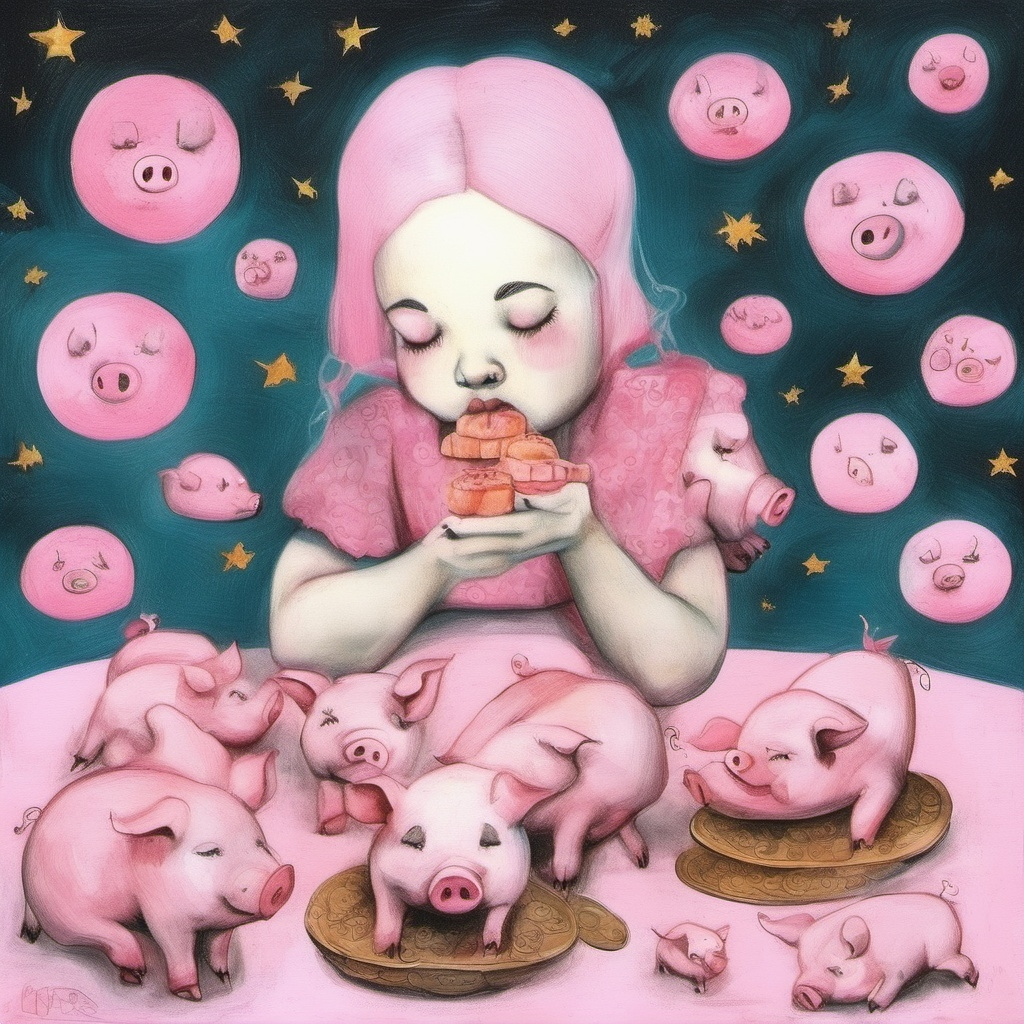
IV. The Village-Crossing Skirmish with the Pig Farm

After Mid-Autumn, the production line finally stopped, and the entire factory grounds fell silent in a way that was unsettling. The returned mooncakes were no longer fit for their old post on the line; they had to be sold cheaply to pig farmers as feed. Partway through, another farmer offered a higher price, and Father, reneging on the arrangement, tore up the deal. The original buyer was not pleased and called people over to stir up trouble. In the end, two pig farms and a mooncake factory had a small-scale melee at the village entrance on a summer night. By then I was back at school. I had a vague sense that things had gone badly — I felt scared, but I did not want to know who had won or lost. And I did not like the new school; I was the only outsider in the class. I must have had a fever, but the adults did not seem to care about me. I hid in the women workers’ dormitory. Xiao Min found me, felt my forehead, gave me a bath, and changed me into clean clothes. That night I slept in her bed. There was no pillow on her bed; I held her arm, buried my face in her shoulder, and mumbled through tears: my “standard Mandarin” had been laughed at, someone had hit me…

Xiao Min stroked my head, stroke by stroke, and told me not to be afraid. Her bed had a warm, cloying fragrance, like mooncakes fresh from the oven — a mixture of butter, fruit, flour, and soap. Gradually, I drifted off to sleep.
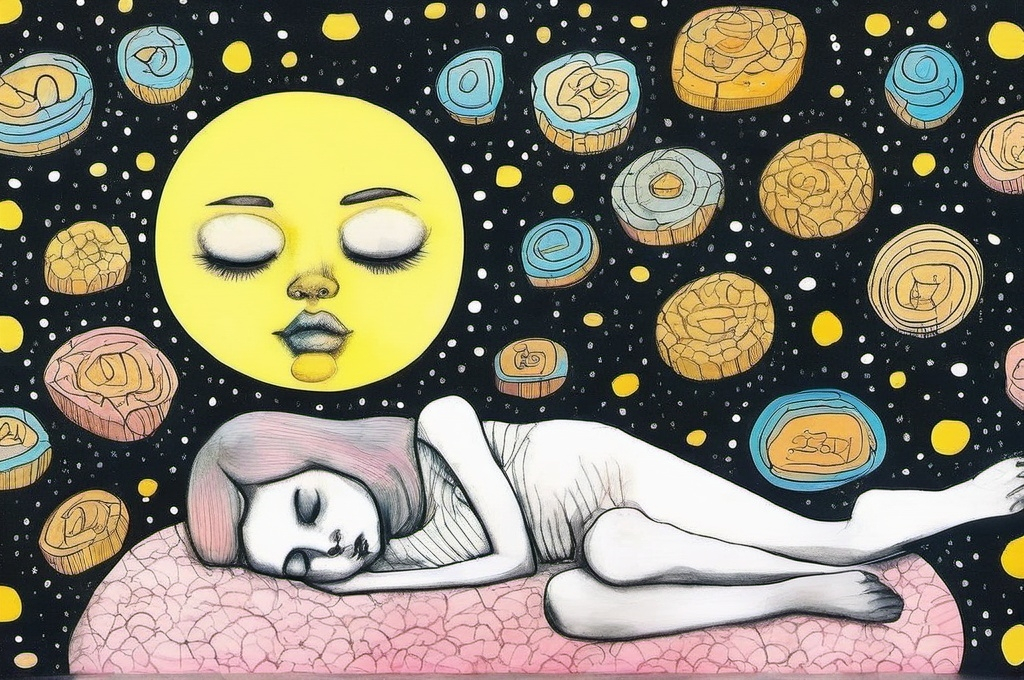
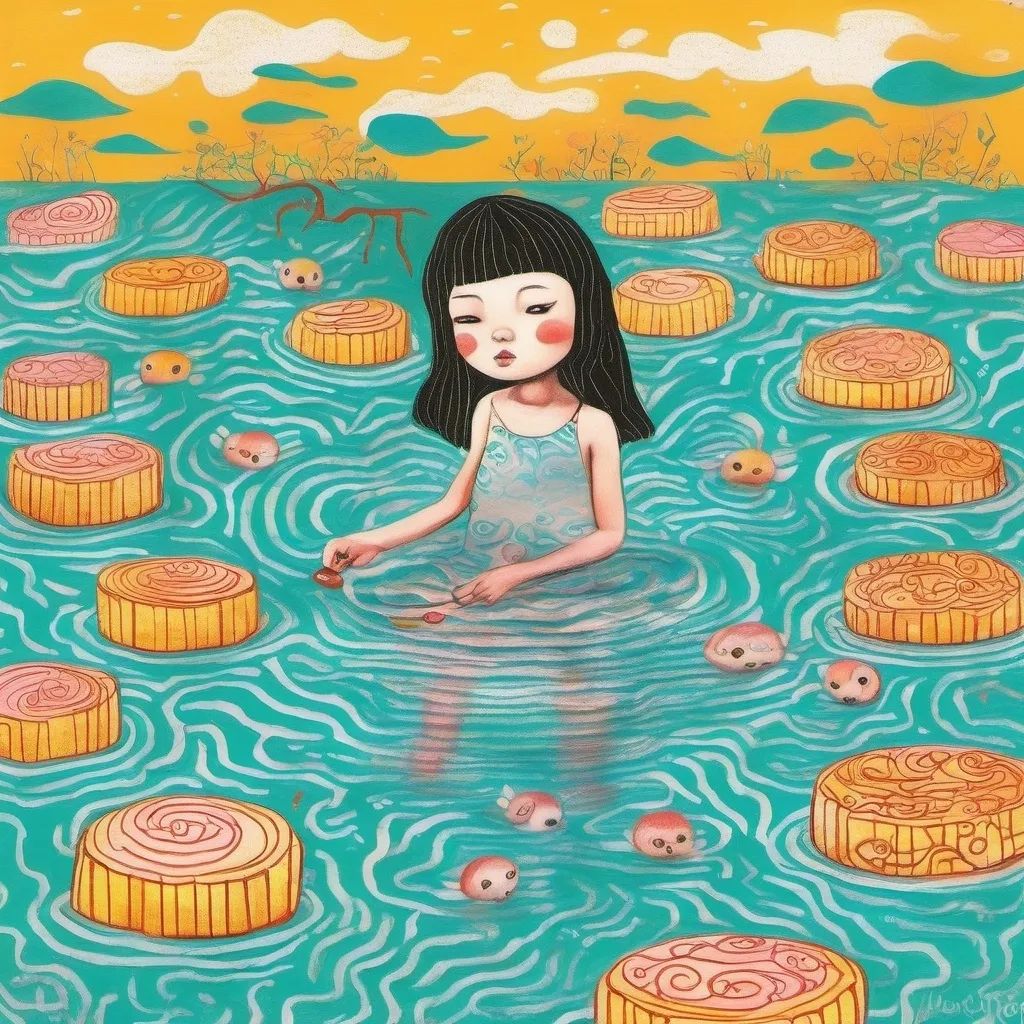
The cardboard boxes in the corner of the warehouse were finally cleared out too. The sun slanted into the corner, and the concrete floor seemed to have not even a speck of dust on it; I almost thought I had been dreaming. Until the girl from the winter-melon farm quietly led me around to the back of the factory building. Beyond that window was a three-sided concrete-lined drainage channel, and in the channel a pile of discarded plastic bits had collected. One day it rained heavily, and the things in the channel washed up into her family’s field. That three-sided concrete-lined, inverted-trapezoid channel, nearly half a metre wide at the bottom, had been part of the farmland infrastructure; following it, you could cross fields and weave through lanes, with almost no end in sight. The administrative village where the park was located was ringed on three sides by the Liuyang River; no matter which side you climbed up to the river bank, no matter which direction you walked, you always ended up heading out of the village. And so I rode my bicycle up onto the river bank, pedalled out of the village, and began secondary school.

Every summer holiday, the mooncake production season still came around. I no longer lost myself in the rhythm of the assembly line or the secrets in the warehouse, nor did I hide in the women workers’ dormitory when I was upset. My Mandarin gradually took on a “plastic” flavour. I started having academic pressure, best friends to gossip with, and more than one secret crush. Only on Teachers’ Day before Mid-Autumn did I think to offer mooncakes to my teachers. Every morning I cycled out the door, and the factory buildings seemed a little further away. But when I cycled back down from the river bank, there were more of them. Factory buildings gradually went up on the farmland; the old green had turned to grey corrugated-cement rooftops. That Southern magnolia nursery in front of our house had long since disappeared, yet I had not the slightest memory of it. And those drainage channels, gradually hemmed in by factory buildings, had shifted from irrigation to outright sewage discharge. The refuse from the old winter-melon fields, set against the state of things now, was truly “little filth revealing great filth.”

V. Leaving the Mooncake Factory

In high school, the factory’s production line was transferred to a relative. Father changed careers entirely and went back to our hometown in Anhui, while I stayed behind in Hunan to study on my own. Occasionally on weekends I would go to the relative’s place. Their factory was in the same old park, only it now belonged to a different village group. It truly was the same place, different people; the only things I recognised were the machines on the production line, and even the workers were mostly locals now. At lunch, while queuing for food in the kitchen, I suddenly heard Henan dialect — it was Ah Jun and Xiao Min. Xiao Min had two portions of food and was sitting face to face with Ah Jun. She looked at me and, just as I used to in my childhood, smiled and said, “You’re back!” But I could no longer bury my face in Xiao Min’s arms the way I had when I was small. The relative told me that Ah Jun and Xiao Min had tied the knot — they were married. The women’s toilet at the relative’s factory had three squatting bowls in a row, with no partitions between them. I chose the one at the far end, sweating from constipation while silently wishing no one else would come in. But of course it was Xiao Min who came in. She squatted in the middle, our legs so close they were about to touch. In my heart I cherished the private bond we had once shared; I so wished I were a “sensible grown-up girl” by now, and yet here we were, in such intimate proximity. Xiao Min swiped open her phone and played a short video — a baby’s laughter, just a few seconds long, looped over and over. Finally, she handed me the phone. It was her child, just over a year old, weaned only at the start of the year, now being looked after by her mother-in-law back home.

A few more years on, I went to university in another province. I heard about the park being demolished from a secondary-school classmate. The relative’s factory had moved to another city. At home now, the son was in charge; when I visited, the production line had been reconfigured — they no longer made mooncakes.

Ah Jun was still there; we just nodded at each other. The relative murmured that Xiao Min had left, “run off” with a man from Xiangxi who worked at the factory.

Our family’s mooncake factory, once real, was gone entirely — even the old factory site no longer existed. My memories had no evidence to back them up, no way to verify them. It seemed that it was precisely through refusing to eat mooncakes that I was reliving and retelling everything about the mooncake factory. Like processing food, I was analysing and processing my memories.

My ingredient list kept stretching endlessly: those moments of weightlessness, the glistening mooncake inner trays, the coloured fruit fillings with the skins gnawed off, the vanished skin-only mooncake, the Southern magnolia grove and the secret in the warehouse corner, Xiao Min’s video on her phone, that hot, baked smell of margarine, artificial fruit flavouring, flour, and eggs… And the expanded factory grounds, the vanished farmland and villages, the silted-up drainage channels, and the Liuyang River running low. And me? I was on the river bank, riding my bicycle, further and further away.
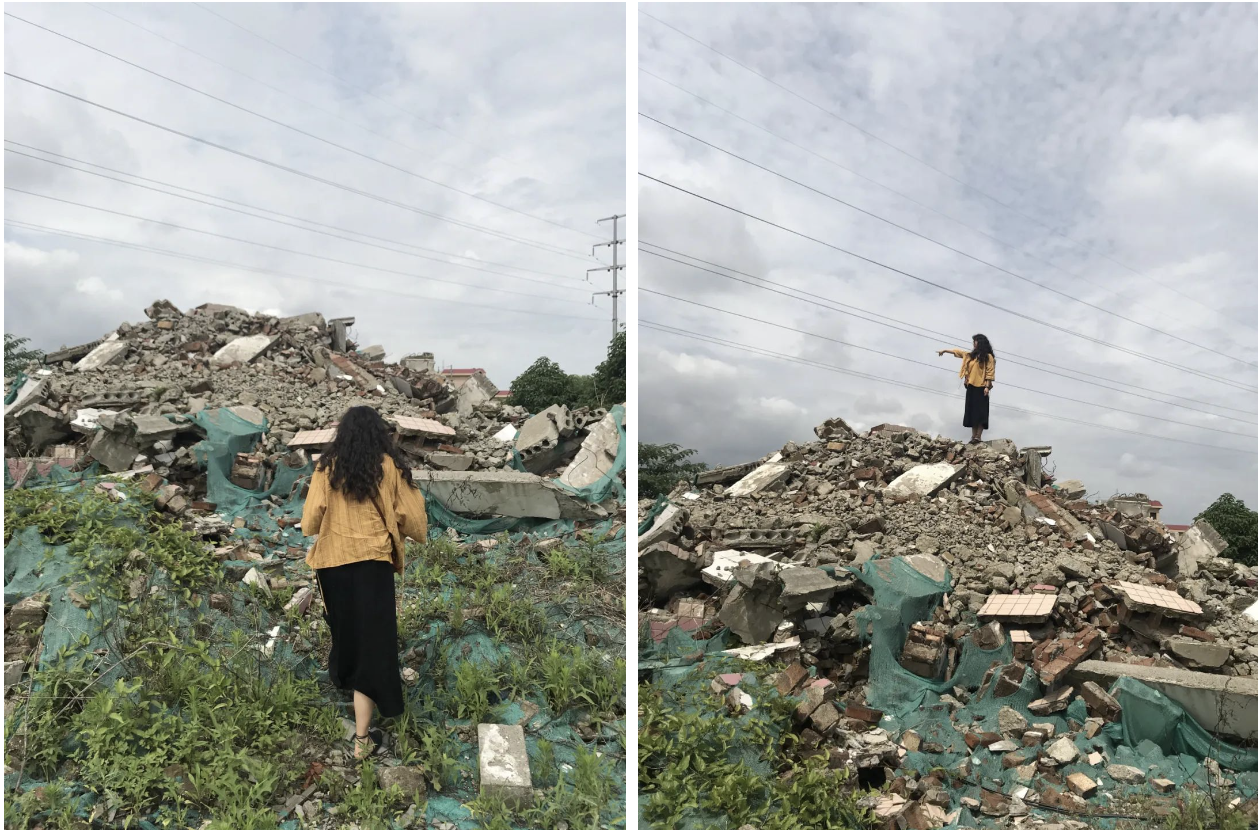
● In 2019, back at the already-demolished park, climbing up to the site of the old mooncake factory. Photographed by: ZT

Foodthink contributor
Zhang Xiaoshu
A small farmer of images, a fisherwoman of words, shallow-ploughing in all directions, half X and half X, currently working and living somewhere else. Focuses on issues such as art in rural contexts, ecofeminism, and sustainable food and agriculture.


Unless otherwise noted, all illustrations in this article were generated by AI

Editor: Yuyang