Handmade Mooncakes: A Taste of Season and Terroir | Grandma Kouzi
I. Everything Is My Own, Except the Iron Wok
Every mooncake I had eaten before, whether flaky-crust, soft-skin, or snow-skin, had a filling, and the filling had to be specifically labelled—red bean, date paste, lotus seed, or five-nut (mooncake filling). But in Chexu Village, the mooncakes had no filling.
“Our mooncakes simply don’t have a filling. They never have.” The eldest sister making them stated this flatly.
She brought out an enormous wooden basin and started mixing the dough. The basin was carved from a single block of wood—round-rimmed, flat-bottomed, oval in shape, wider at the top than the bottom, roughly made, clearly hewn out stroke by stroke.
First the flour, then a pour of golden rapeseed oil, then cracked eggs. As she added each ingredient, the eldest sister told me the wheat and rapeseed were grown by the family, and the eggs came from their own hens. The village was too small to have a mill or an oil press; they had to take their grain to the larger village nearby or down to the town to be milled and pressed.
The last ingredient added was a thick, brown liquid I did not recognise. The eldest sister explained it was malt syrup made with water, using sprouted wheat from their own field and glutinous rice. Malt syrup is a viscous, semi-solid, semi-liquid; before use it had to be warmed over a double boiler in a pot of hot water, with a little extra water added to thin it out before it could work into the dough.
The kneaded dough had almost no elasticity, yet it held together—soft rather than springy. It was first divided into fist-sized pieces, then rolled out into round cakes about fourteen to fifteen centimetres in diameter and five or six millimetres thick, placed on pre-cut squares of red paper.
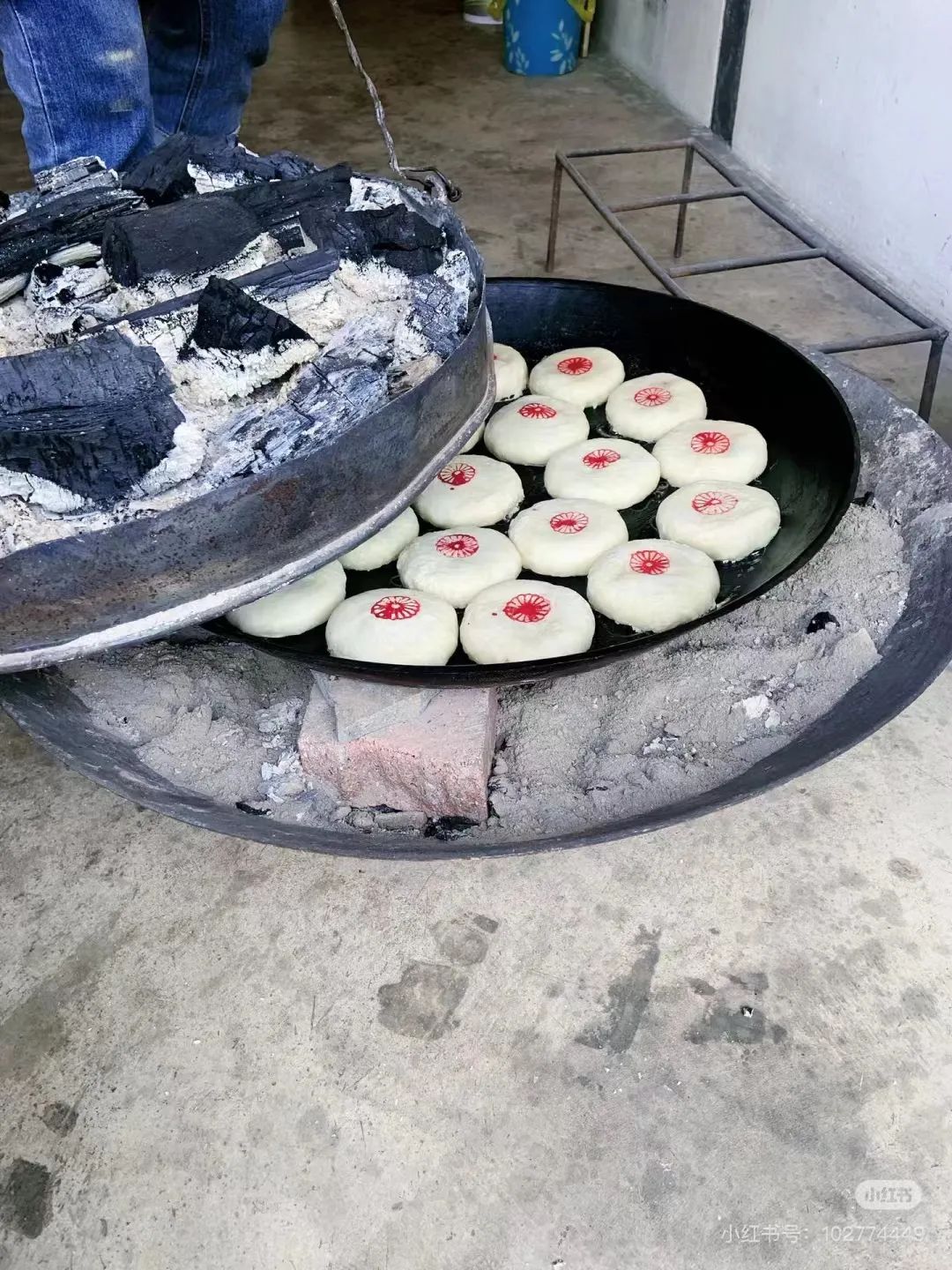
Making the mooncakes required a huge flat-bottomed pan, sixty to seventy centimetres in diameter and roughly five to six centimetres deep. The kitchen in the village was spacious enough, with two sources of heat, divided into fierce and gentle: a large wood-fired stove for cooking rice, stir-frying, and making pig feed, lit only when needed; and an open hearth that burned almost year-round, with a kettle hanging over it and a soup pot simmering beside it, the fire adjusted to whatever was required. For the mooncakes, they used the low, steady heat of the hearth, where a thick layer of embers and hearth ash had accumulated.
Once the fire was set, the mooncakes were placed in the pan on their red paper, resting it on the hearth, and a second clean flat-bottomed pan was set on top. The two pans were almost identical, but the upper one was slightly larger—just enough to seal tightly without pressing down on the cakes inside. A generous heap of pine needles and small wood chips went into the top pan, which was then lit. Once the fire was burning well, a large aluminium lid was placed over the whole—baked below, steamed above, muffling the flame just enough to keep it alive without letting it die out.
II. The Rough Beauty of Mooncakes
“Eat. Everything is my own, except the iron wok.”
I was in the village as a documentary director. At the time, as a food lover, my experience was still shallow, and—like many of my urban contemporaries—I was watching my weight. So when the eldest sister picked up a finished mooncake and offered it to me with a sweeping gesture, I did not take it. Instead, very delicately, I pinched off a tiny sliver with two fingers.
The moment it hit my tongue, I regretted it. Because it was nothing like any mooncake—or indeed any pastry—I had ever eaten before.
This mooncake was not “delicious” in the usual sense. Not fine, not smooth, no clever ever-new filling—every element seemed a point deducted. It reminded me a little of kousu (a crisp, layered pastry), but less greasy, softer and fluffier, not crisp. Yet with the cake on your tongue you could almost taste the character and the flaw of every single ingredient, perhaps because the country mill ground the flour a little less finely, leaving a hint of grit.
That’s it! That is exactly the graininess I remembered. What she used was not snow-white flour but a shade touched with the faintest brown, and the texture did not seem all that fine either. I only know now that this unbleached, unadulterated flour carries its own rough kind of refinement.
Of course, a pale-brown, filling-less mooncake gave me more than just a gustatory shock. A mooncake where everything was my own except the iron wok was the first time that I, who had never touched soil or farmed, truly felt the relationship between a person and the land. And the seasons of food: wheat sown in autumn, harvested in spring, reaped alongside the rapeseed; the wheat field then flooded and transplanted with rice seedlings; rice planted in spring, harvested in autumn. After a year of tending, the autumn harvest is precisely the time to boil malt syrup and bake mooncakes—right on schedule.
III. Fresh Flower Cakes from Eren Valley
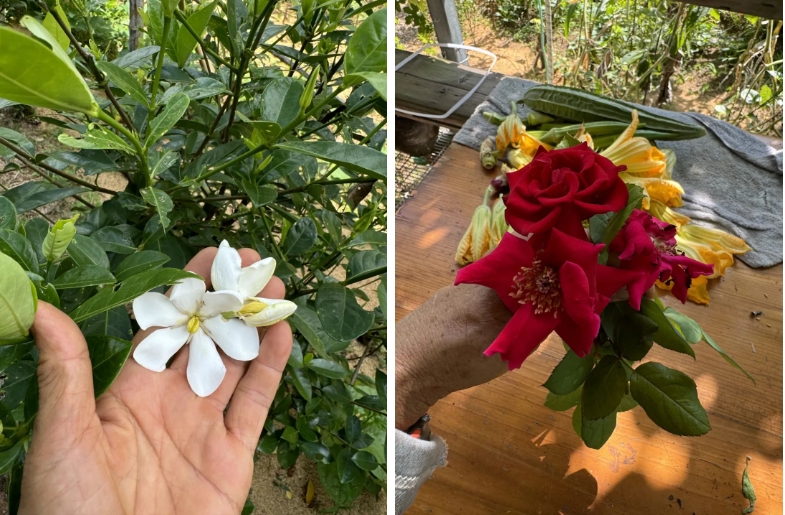
The key to homemade mooncakes is the filling. This year I made two kinds: rose and gardenia. They could also be called fresh flower cakes—but do not confuse them with a certain viral souvenir gift. This cake is not that cake.
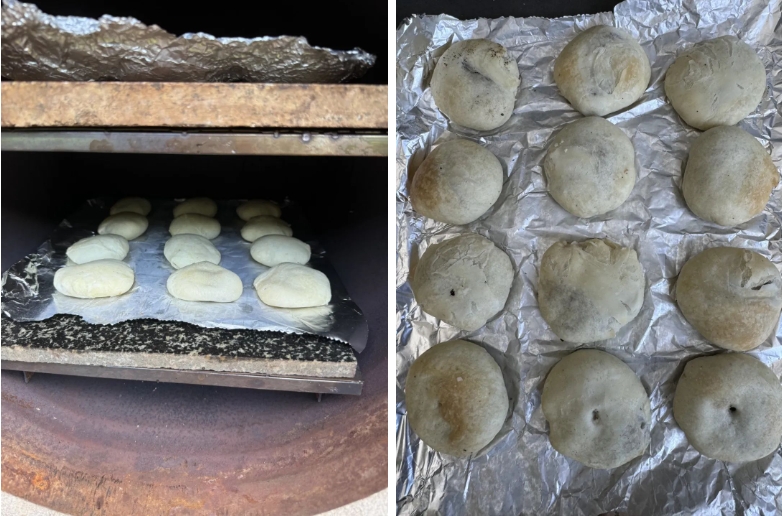
I once took a group of friends to Eren Valley to make them together. They kneaded the dough themselves; though the pastry skin split in most cases and the results were not pretty to look at, the flavour was, as they put it, otherworldly. They all said: all those fresh flower cakes I had eaten before had been a waste of a meal—never knowing whether that lump of filling was real rose or just rose-flavoured essence.
Roses are plagued by pests; if one survives, it has already outlived the odds. Over the years, more than a hundred edible roses have been planted in Eren Valley, mostly Mohong (edible rose cultivar) and Dianhong (edible rose cultivar), yet the numbers kept dwindling. Now only a dozen or so remain, and every rose that survives is precious for its rarity. All the roses in my entire garden, saved up for a year, barely yield enough for a dozen or so fresh flower cakes.
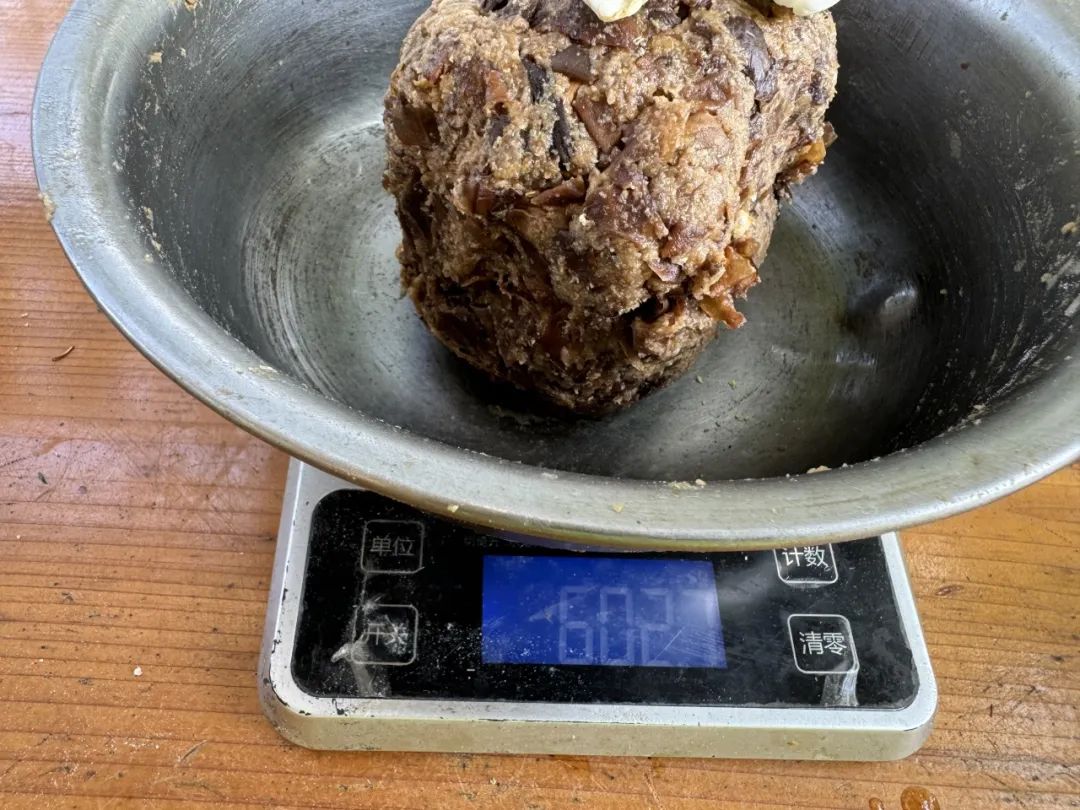
That day there was not much rose jam. The filling was gardenia jam preserved in sugar, with a little pre-toasted wholewheat flour stirred in. The gardenia jam used for just a few dozen fresh flower cakes represented several full bowls of gardenia petals. My friends did the maths as they worked: at my rate of flower consumption, I doubt all the roses in China could sustain a week’s worth of fresh flower cake sales.
Roses are hard to grow, but gardenias are hardy. I have set aside dedicated gardenia plots on the slopes on either side of the stream behind the house: the western slope is planted with large-flowered double-petal, the eastern with small-flowered double-petal. Every tree, every cutting, I started by hand—transplanting, taking cuttings. Tend them slowly over a few years, and the two slopes will be carpeted in gardenia blossoms. This year I have expanded the bees to six hives. When the gardenias come in full force, I can make honeyed gardenia jam.
Yet achieving “everything is my own, except the iron wok” still proves difficult: a two-month spell of unbroken rain wiped out the wheat crop entirely this spring, and the peanut harvest was barely enough to eat—still not enough for pressing oil.
But just like the farmers in Chexu Village—tilling slowly, saving slowly—surely there will come a full-moon day when, with my own flour, my own oil, and my own honeyed flower jam, I will light the firewood I felled with my own hands, use the oven I built with my own hands, and bake a whole oven-load of honey gardenia cakes—for myself, for the land, for the seasons.