Why Can Nobody Beat Uncle Li’s Leeks? | New Book Excerpt
Foodthink Says
After ten years of farming at Gaia Worth Garden in the remote outer suburbs of Beijing, they have discovered: a bundle of spring onions casually bought at the market can take root, flower and set seed in the field, keeping them company through spring, summer, autumn and winter; Uncle Li the vegetable expert’s Chinese leeks have, moreover, been through more than twenty years of selection and breeding, stood up to torrential rain and floods, and become seed truly belonging to this land.
As the vegetables sold by e-commerce and supermarkets grow more and more uniform, how long can this bond last—the hands and eyes of local farmers, a key link in the transmission of seed in a millennia-old agricultural civilisation?
The following is excerpted from the new book “Cultivating the Sato-yama”, chapter “Local Farmers, Local Vegetables”, with thanks to the authors and publisher Guomai for permission. Read the account by the two “knowledge farmers”—
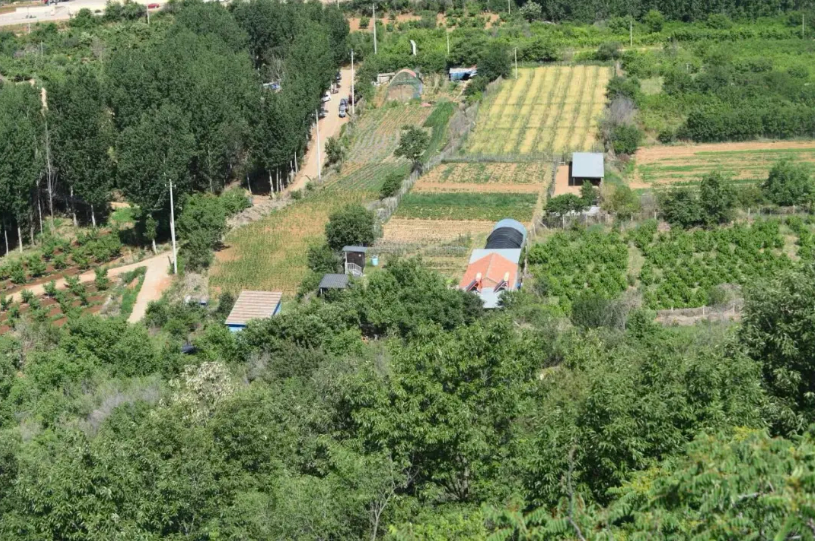
The open-air market is a window into rural life, always holding up a mirror to the shifting times. I remember when, in the past, aunts and uncles would ride their tricycles to set up stalls, with fresh vegetables from their own gardens—just a few of each type spread across the ground, as characterful as the stallholders themselves. Occasionally a small lorry from another district would appear, moving volume through a single in-season item, wholesaling watermelons and Chinese cabbage. In recent years, many vegetable stalls have grown large and well stocked; regional and seasonal character is no longer so pronounced. The produce is big and showy, cut and sliced as uniformly as by knife and axe, like browsing an open-air supermarket. Among the buyers, those of a certain age keep asking: “Any local spinach? Why no more of the old-fashioned Chinese chives?” In their time, seed saving in the fields was only right and proper for farmers. Many old varieties of local vegetables were passed down through the hands of local growers generation after generation. Today, as these people become fewer and agricultural modes change, “self-saved seed” has become inefficient and old-fashioned. Buying “local vegetables” has gradually become a matter of sentiment, simply because local vegetables grown by local people still preserve a bond of trust.
At one market in May, we happened to run into Uncle Li, who had taught us seedling raising. He was busy at his own stall, so much so that he could not stop for a chat; he picked up two bundles of spring onions and stuffed them into my arms: “Take them and eat them; if you cannot eat them all, plant them in the ground.” Before we could thank him, the human wave pushed us out of the chat area. Later, that batch of onions grew well. We pulled them as they grew, eating them through to the end of the year, and a few left were simply left in the ground. The biennial Chinese leeks, true to their timing, produced new shoots before April the following year. We picked some spring onion shoots and stir-fried eggs, then, together with the little bees, quietly kept watch over the large flower ball that seemed to bloom like fireworks, from fullness to dryness. Soon, the fallen seeds sprouted into patches of new onion seedlings, looking like unruly hair beside the old onions. Alas, they were born at the wrong time; most vanished with the rain and heat of July and August. Not many remained, but that was enough to eat.
When we met again, we told Uncle Li a few amusing stories about growing onions. He smiled and said our labour-saving, self-cycling (do-nothing) way of growing was passable if only for eating a little “spring onion”. If you really wanted to grow big, long-white winter-storage leeks, you still had to put in some effort. Every year, Uncle Li’s family starts growing leeks in March: preparing the ground and sowing seed, raking it flat and firm, opening channels and flooding. When the seedlings grow to June, furrows are opened, and they are transplanted in rows. As they grow, he carries out several earthing up operations, piling the leek furrow into a high leek ridge, while top-dressing at the same time. A course of “low planting and high earthing up” is precisely intended to cover the plants with soil to block light, stop chlorophyll synthesis, and coax out a longer white part, which is the flavour of northern Chinese leeks. So this is how the legendary “furrow leek” is grown!
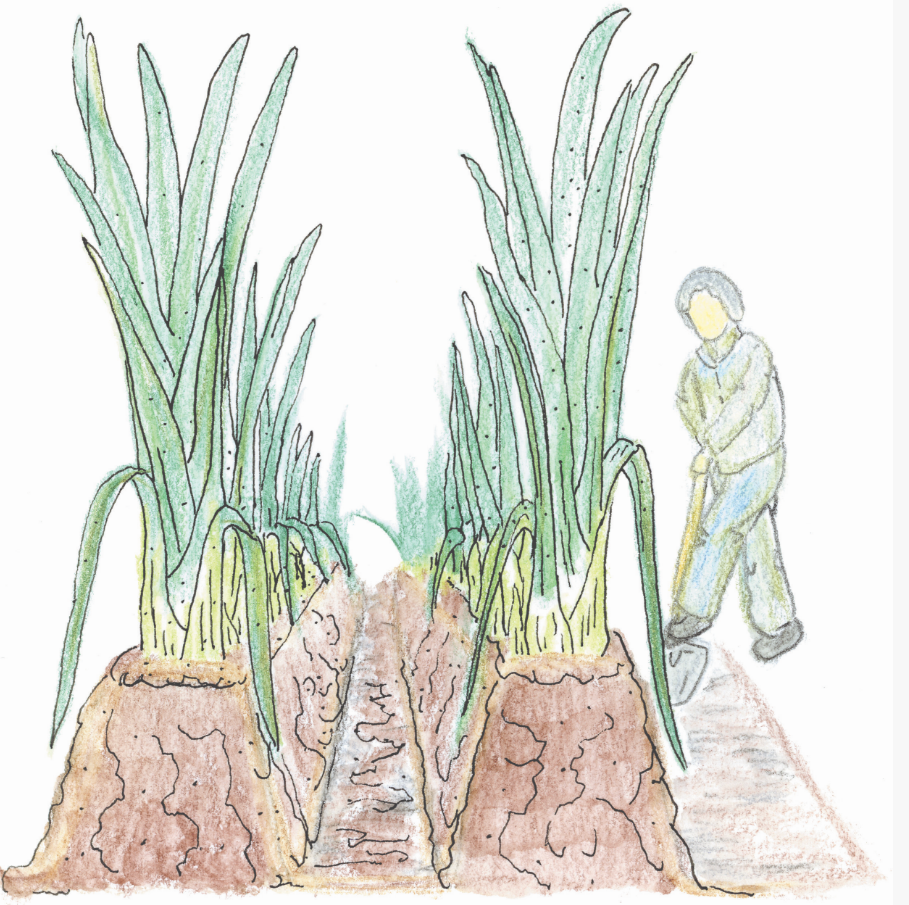
Uncle Li said the leeks in the field would not be harvested until the end of October. After that, sell what should be sold, eat what should be eaten, and still choose some for seed saving. “Do you save seed yourself?” I was full of curiosity.
“Indeed. The ancestor of this batch of leeks was actually bought at our market; it is more than twenty years since.” Uncle Li is a thoughtful person. Every time he goes to market he does not only set up his stall but likes browsing the stalls, and is particularly happy to exchange little gossip with fellow growers about vegetable varieties. That year he met one who specialised in winter-storage leeks, with white parts both thick and long, and took a liking to them at once; his feet could not move. He stopped selling his own vegetables and bluntly told the stallholder: “Get me two bundles for seed saving next year.” The stallholder was also a straightforward person. Seeing Uncle Li was a vegetable expert, and with a bit of the feel of a hero respecting a hero, he climbed into the truck bed and searched through everything, picking the best to make up two bundles and let Uncle Li take them to plant.
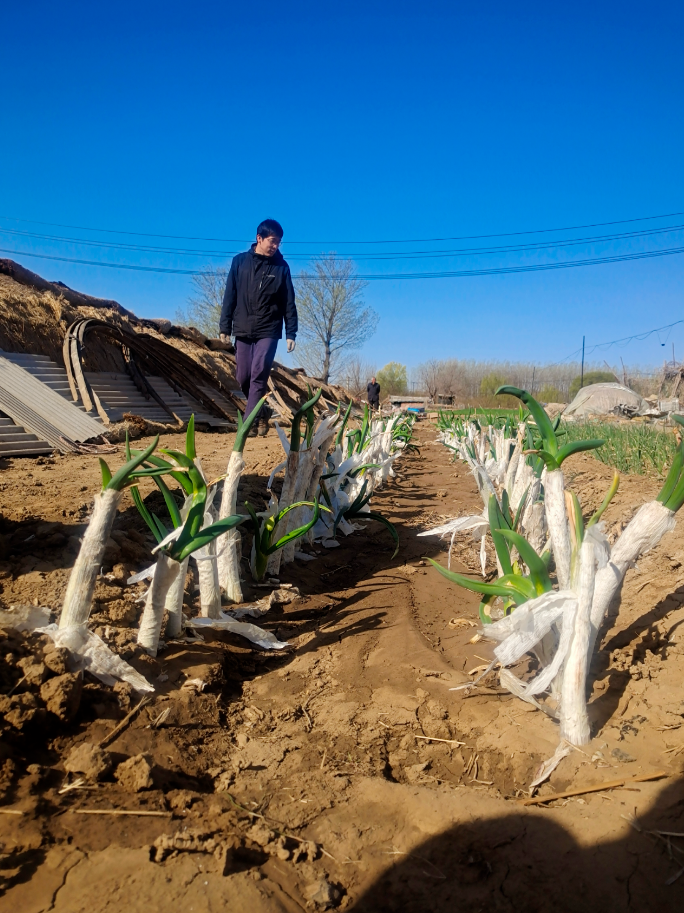
After a year of trial, the effect was good. Uncle Li also found another variety in a neighbouring town, with a thinner leek body but a longer white part, and thinking of making the leeks in his field “thicker and longer”, he planted the two together to allow cross-pollination, and while growing leeks also did some “plant breeding”. Under the same light, heat, water and fertility, the ones that grew taller and stronger were the seed saving candidates Uncle Li had his eye on. Before winter each year he was responsible for selecting healthy, solid seed leeks, tying them into bundles, and stacking them in a corner of the storehouse; when spring came the following year and the frost thawed, they were planted back in the ground. He said that before planting it is best to cut off the upper half of the stems and leaves, so that they flower well later. No wonder last time, following Uncle Li to learn seedling raising, I saw many half-cut onions standing coldly in the ground: they were all seed candidates! As they produced shoots and began bolting, we waited until the flower balls that had opened by the end of May matured, then cut them off and put them in bags. After drying in the shade, the seeds on them came off easily. So, by gathering up the elite troops he had chosen, he is ready to fight again next year, and Master Li’s zeal is even greater.
Apart from quality and yield, powerful vigour is another consideration for Uncle Li’s seed selection. One summer, the rain came down tumbling, one storm after another; each time we sowed radish seed in our field, it was washed away. Uncle Li’s family had it even worse: because the land lay low, several patches of leeks were simply drowned. The old couple had an especially hard year and only salvaged some of their losses by digging up and reseeding Chinese cabbage. Still, in that Chinese leek disaster, what worried them most was the break in the seed supply. I did not expect that, when I mentioned it to Uncle Li, he would see it positively. A few days earlier, he had happened to notice that the Chinese leeks in the field had not actually been wiped out; a few survivors were putting up, one here and one there. He said: “These are treasures. I must look after them properly. Haven’t you seen? I even planted the Chinese cabbage so as to avoid them.” In his view, this extreme weather had instead become a rare and hard-to-find opportunity for seed selection: a Chinese leek that could stand it must surely be outstanding! At year’s end we visited the old couple at home and, looking at those few bundles of leeks surviving the calamity in the corner, I thought that, as a place shapes the people it raises, so it is with seed: generation after generation, having witnessed the local storms and floods, it naturally stays closer to the ground.
…
In February 2026, Chang Jiao Ling & Wen Zizi will lead a winter camp, visiting fishermen (marine ecosystem) and hunters (tropical rainforest ecosystem) in Hainan. For details, see: Worth Cat-Winter Series: Island-Bound! A Proposal for Life from Mountains, Rivers, Villages, and the Sea
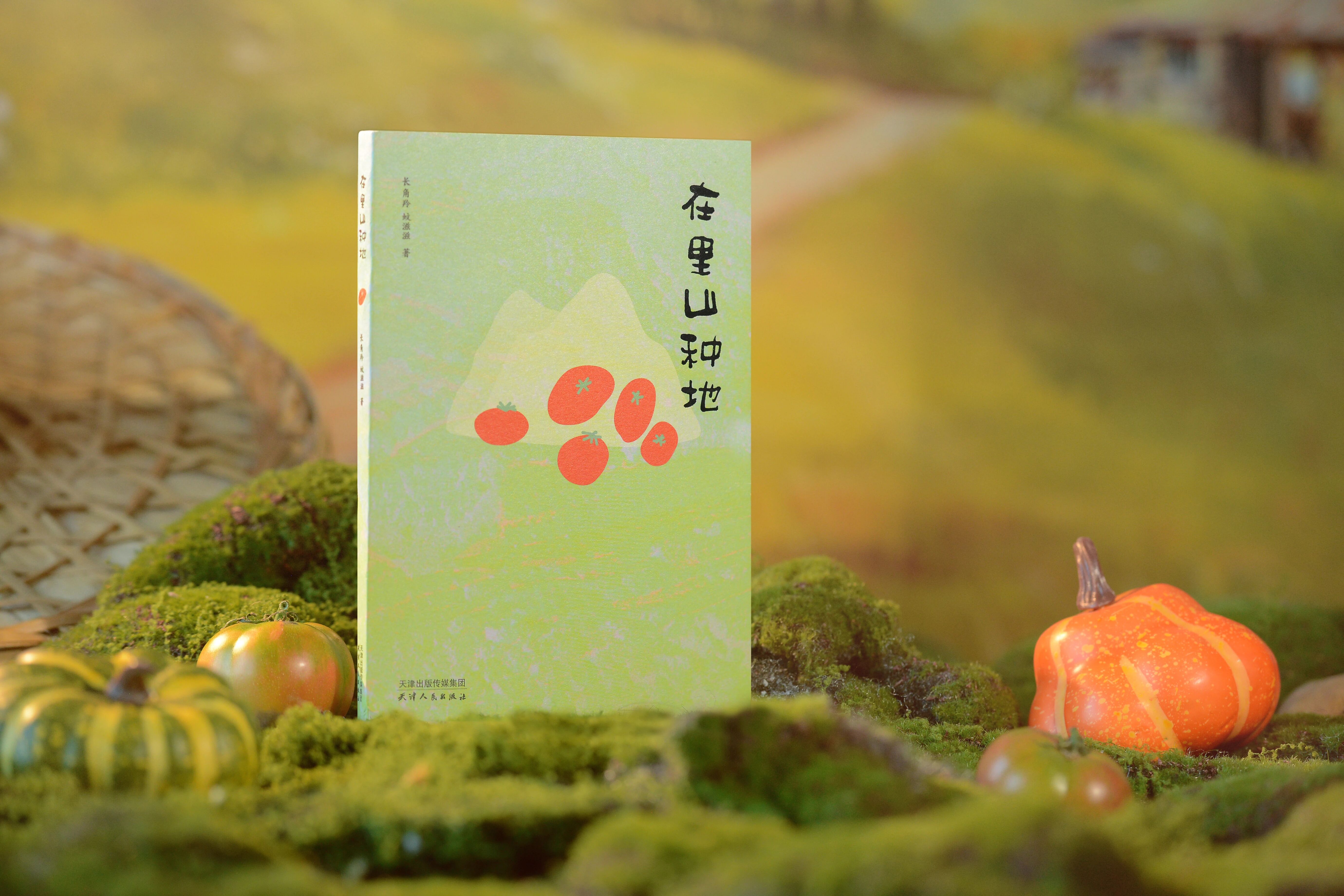
*Click the image above to purchase
The second book by the two “knowledge farmers”. They have written openly about every path they have trodden and every pitfall they have fallen into over ten years of farming, and recorded the small moments of life shared with local farmers, the land, and seed.
About the Authors
Chang Jiao Ling & Wen Zizi | Born in the 1980s, with a background in biology education, the two met in the small Norwegian town of Ås and, after completing their master’s degrees at the Norwegian University of Life Sciences, joined the environmental NGOs Friends of Nature (FON) and Fauna & Flora International (FFI).
In 2014, they co-founded Gaia Worth Garden, beginning a life of self-sufficient sato-yama farming and environmental education practice, hoping to bring nature back to people’s hearts through cultivation.
Click the image below to learn about their first book—”Earthy, Not Rustic: The Sato-yama Life of Knowledge Farmers”: