
He Opened a Noodle Factory to Farm
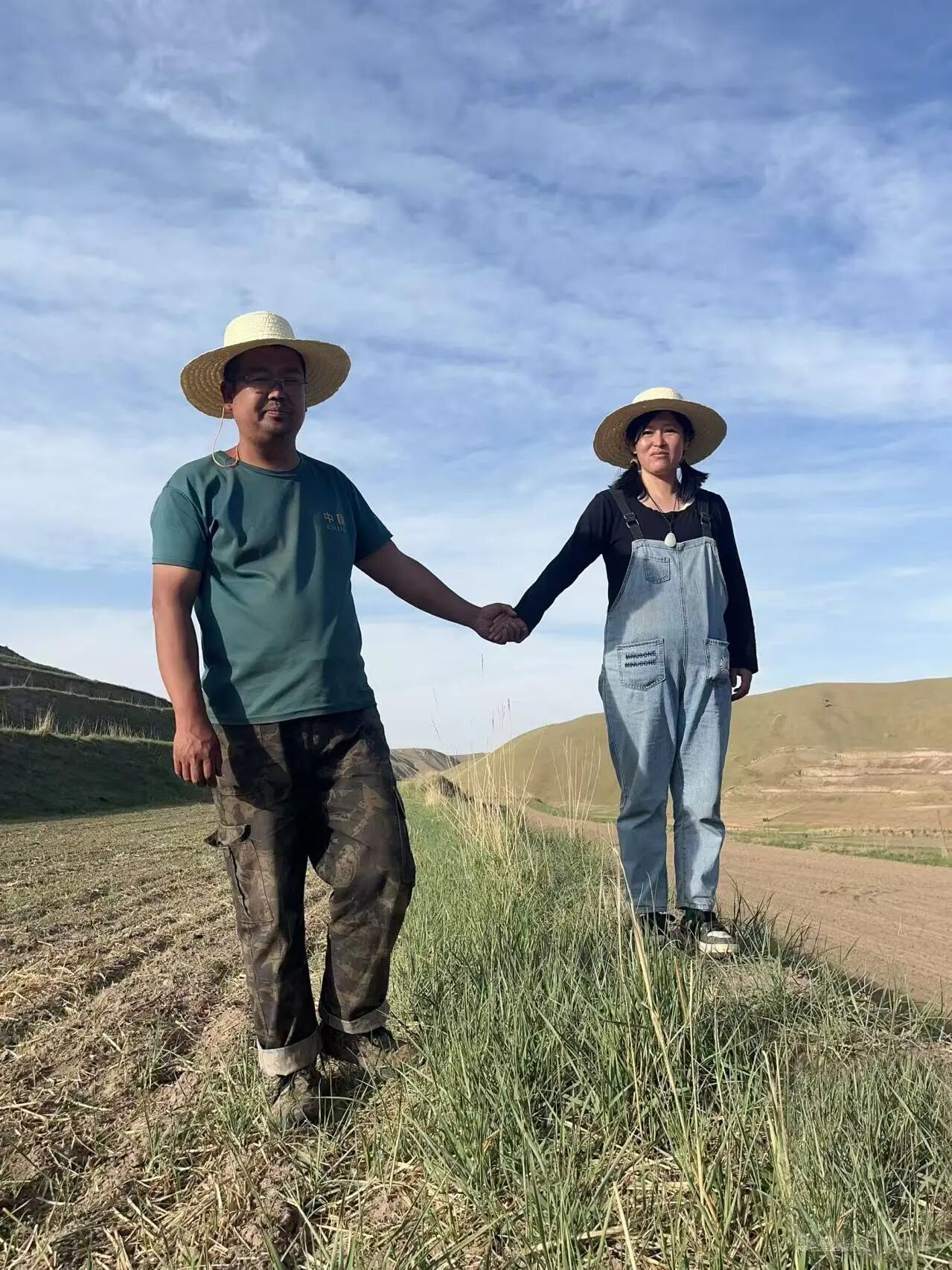
Three months ago, a pair of returning young people farming in Gansu had a baby and named it “Maizi”. Shitou, the mother, said in a Moments post: “I hope that classmate Yin Maizi, born in Shitou’s fields, can grow as tenaciously as our sandland Hongguangtou wheat, walk firmly and powerfully along the path of the human world, love themselves and extend that love to others, be clear-headed and kind, be grateful for life, and experience it fully—so that Shitou, Maizi and Huahua can keep each other’s company in the human world, growing together into a path that is truly theirs.”
Before little “Maizi” was born, their dad Huahua and mum Shitou had been farming for nearly 10 years in their hometown in Gansu, and had founded a noodle product brand, Yanguiqing, centred on the Northwest traditional wheat variety “Hongguangtou”; among young people who had returned to the countryside, they had unusually “established” their own noodle processing plant.
But in truth, what Huahua wanted most was to farm himself, especially to grow chickpeas. When he was a child, he lived on the hills above Wuwei. Then the edges of the fields were covered in chickpeas, which were eaten right after being deep-fried and were especially fragrant.
In the 1990s, the government “contracted residential areas”; the family moved down to a village near the Yellow Irrigation Canal (an irrigation canal drawn from the Yellow River) and no longer grew chickpeas. But the memory stayed with him and became a driving force for returning home to farm.
When he truly returned home, the fragmented tasks—leasing land and selecting sites, supervising planting, setting up a factory, recruiting workers, doing sales, doing livestreaming—left Huahua so busy that he could not carefully manage the chickpea fields.
Flour processing guaranteed profit; farming guaranteed loss. Under the arithmetic problem of real income and expenses, payment terms and risk, how should the original intention of ecological farming be kept? Huahua and Shitou’s answer was difficult: they had to survive first.
I. Sharing the Risk
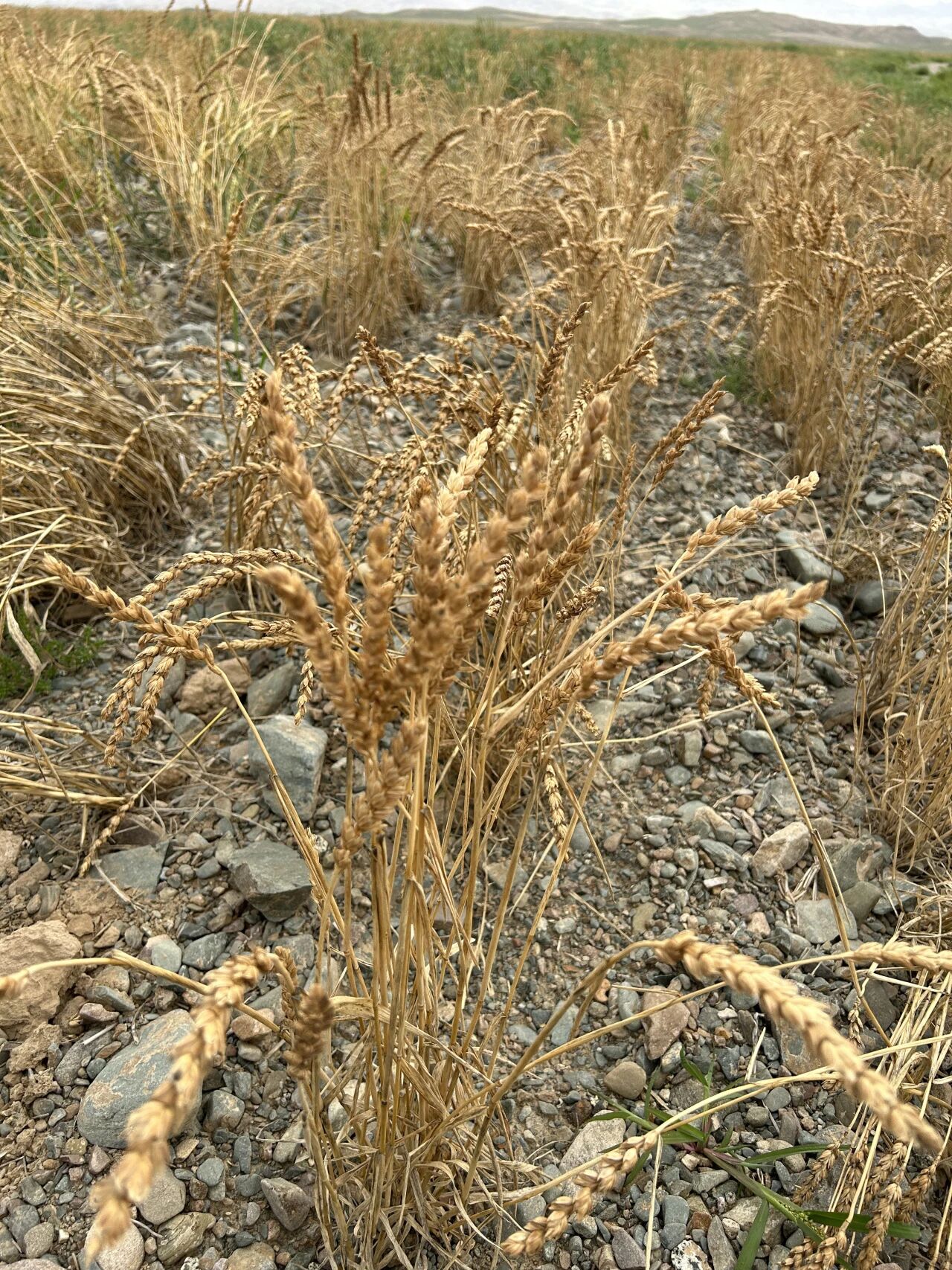
But in 2016, when he returned home, he instead became a middleman—the Yanguiqing cooperative platform he belonged to worked with farmers to buy a distinctive old variety—sandland Hongguangtou wheat. It is a local variety grown in the Hexi Corridor region on dryland covered with Gobi stones; its yield is low, but it has a strong wheat aroma and a chewy texture, and it is especially suitable for making flour and noodles. For young people who had returned to the countryside in their 20s with no savings, the investment in leasing land was greater than that in processing, so being a middleman was in fact a safer way to start a business.
This was not Huahua’s original intention. He had hoped to lease farmers’ land and farm it himself. But for three consecutive years, the yields on the twenty to thirty mu he had found in his own village were all poor. Under a desert climate that relied on the weather and had intense transpiration, the yield of Hongguangtou wheat almost entirely depended on rainfall; the yield per mu was at its lowest under 100 jin and at its highest no more than 400 jin, not even a fraction of that under conventional farming. As a result, farmers gradually moved to a larger scale, and smallholders planting only a few dozen mu are no longer common.
In 2017 and 2018, Huahua went through the departure of a partner and started over alone. In earlier reports, his entrepreneurial journey had been described as repeated failures. Fortunately, in 2018 he met Shitou, a young woman from Shaanxi—a steady, down-to-earth girl who lived up to her name and joked that she had been lured by the aroma of Hongguangtou noodles.
It was also in 2018 that Huahua met a new partner—Uncle Su, a large-scale grain grower in Sitang Township, Jingtai City, 80 km from Gulang County. The area was also suitable for growing Hongguangtou wheat, and the sandland that Uncle Su alone had opened up was close to 1,000 mu. Through his facilitation and management, Huahua had reached an agreement to buy wheat from growers on 2,000 mu of land in Sitang Township.
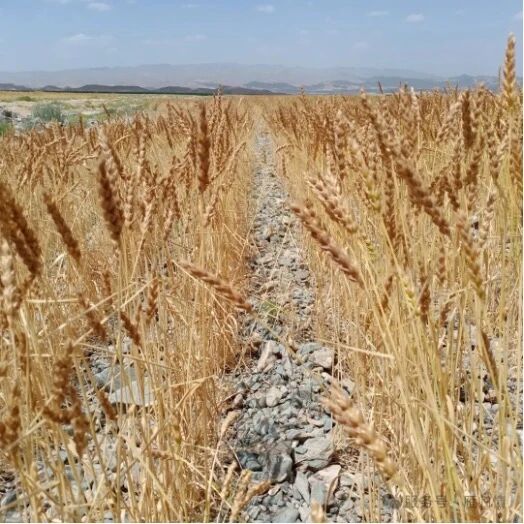
Shitou said that in recent years the economy had been sluggish. Hongguangtou wheat at 2 yuan per jin was twice the price of ordinary wheat, and local sales were not strong, while farmers’ warehouses could not hold the grain built up over several years. This made Huahua’s large-scale buying easier—their buying price was a few tenths of a yuan higher, sometimes reaching 2.6 or 2.7 yuan.
In a sense, Huahua’s ability to work with farming friends and buy wheat that met ecological farming standards was also an arithmetic problem that made economic sense. When drought limited yields, the yield gain from chemical fertiliser was almost negligible. In recent years, the average yield per mu of Hongguangtou in Sitang Township had been only a little over 100 jin. Even if farmers habitually applied 3 to 5 jin of chemical fertiliser to each mu, this uneconomical habit could be changed.
More importantly, on new sandland, herbicide had no real use to begin with—before it was covered with stones, the sandland had been barren flats, exposed to wind and sun, with few weed seeds; for the first ten years it hardly produced weeds.
Huahua acknowledged that cooperative buying spread some of the risk to the farmers: whether there was a total crop failure or the flour did not sell, Yanguiqing did not have to bear the loss. Huahua also paid for the previous batch only when he bought a new batch of wheat, so his funds were relatively ample. But this was still a win-win born of necessity—as someone from outside the village, if Huahua leased land himself, the rent would be higher, and the risk he would bear would be far greater than that of the farmers.
Uncle Su was also better able than Huahua to “supervise” the cooperating farmers—he was the local “king of farm machinery”, and by controlling the means of production he could identify, at the source, which villagers needed to rent equipment to spray pesticide.
But flavour cannot be turned into extra income for the villagers of Sitang Township. With government funding, Sitang Township has also built water reservoirs, intending to install drip irrigation facilities and build high-standard farmland. Once the drought constraint is removed, farmers may rush to grow more profitable conventional sandy-land fruits and melons. Ecology and livelihoods are hard to reconcile, and their cooperation with Huahua may not be long-lasting.
Fortunately, the installation of the village water pipes was put on hold again. Huahua had not yet found new cooperating farmers; he planned to find some land in villages near the noodle factory to run another “experiment”—planting Hongguangtou directly, without laying stones.
II. Moving into Processing
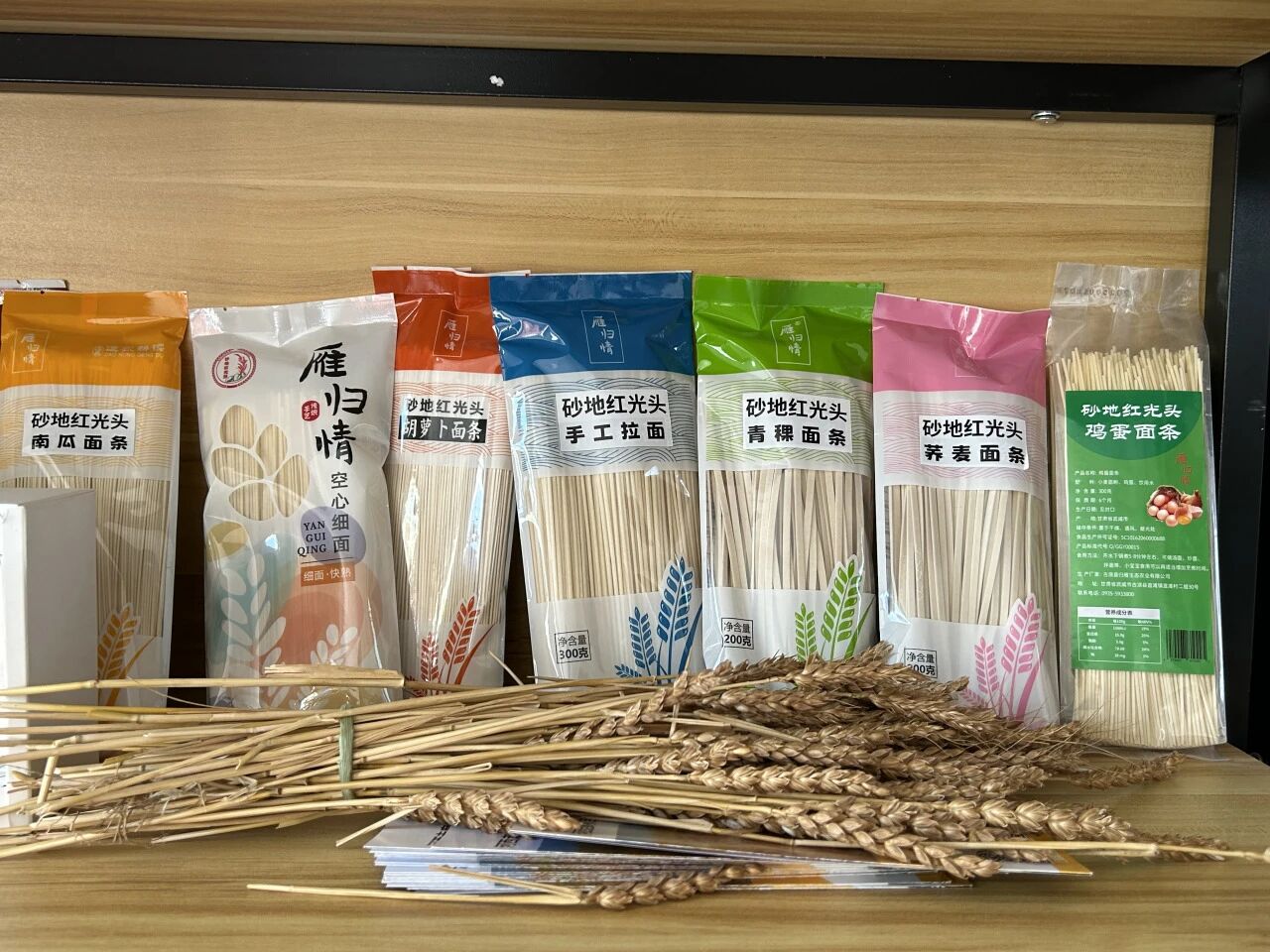
The key to making money from buying wheat is processing it well and selling it.
But at first, noodle processing also lost money. At the contract factory, once the production line started, it would process large quantities of noodles. If they sold slowly, they could only wait in the warehouse to turn “rancid”, and wastage was high.
Flour processing was also a cost. At its highest, it was 800 yuan per tonne; in 2023, it had fallen to 300 yuan per tonne.
In 2023, an opportunity appeared: a village collective noodle factory in Zhitan Town, Wuwei, was poorly managed and put up for rent. This small factory had all the required production licences and spacious premises, so Huahua and Shitou decisively took it over.
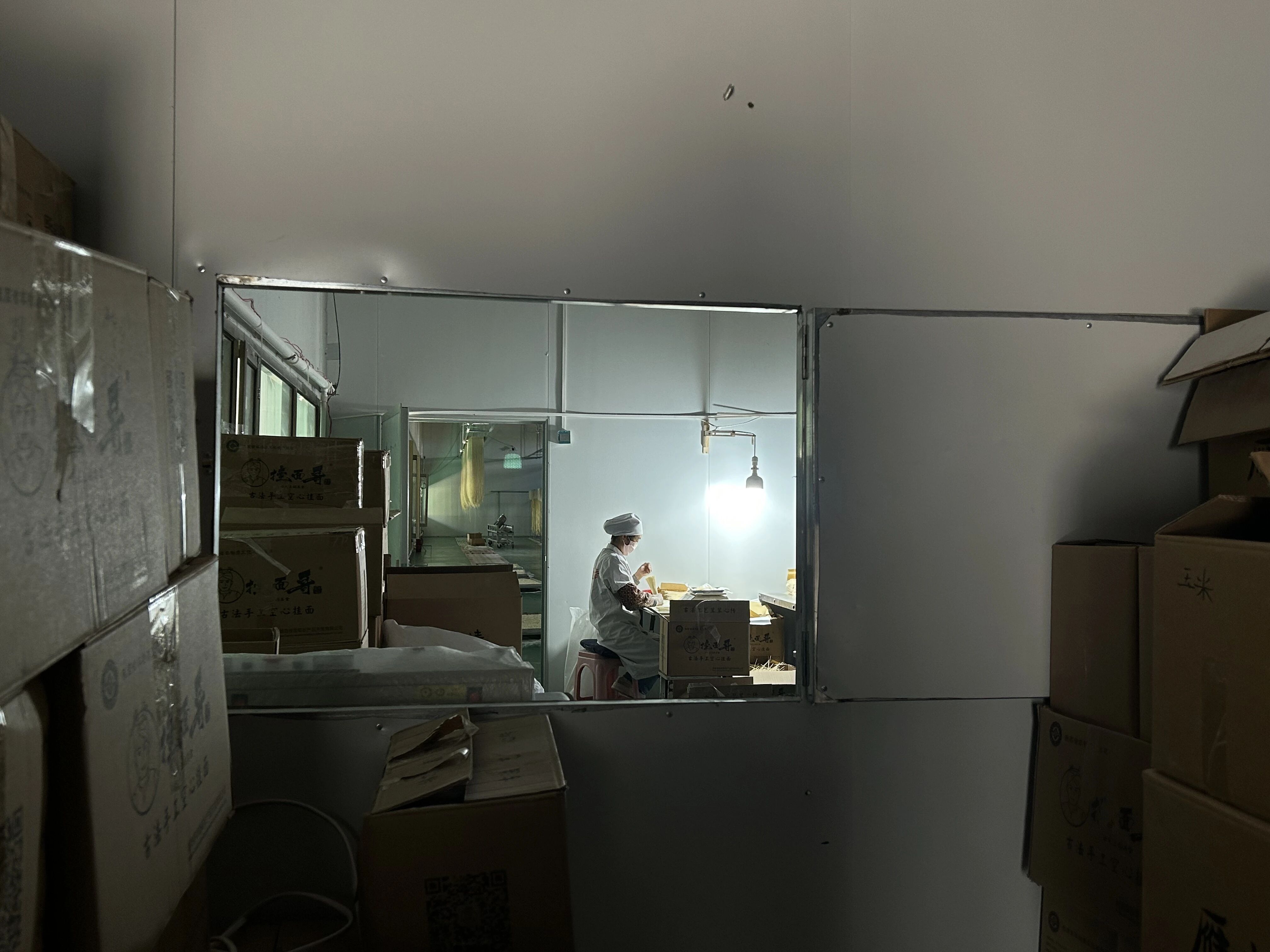
Having a noodle factory that was “theirs” gave Yanguiqing control over production for the first time. Three or four full-time employees were on standby, processing and packing several different flavours of noodles. It was also easier to trial new flavours, and they could help other farming friends with processing and earn a processing fee. They now basically operate every day, processing 300 to 400 jin a day and using 100 tonnes of flour a year.
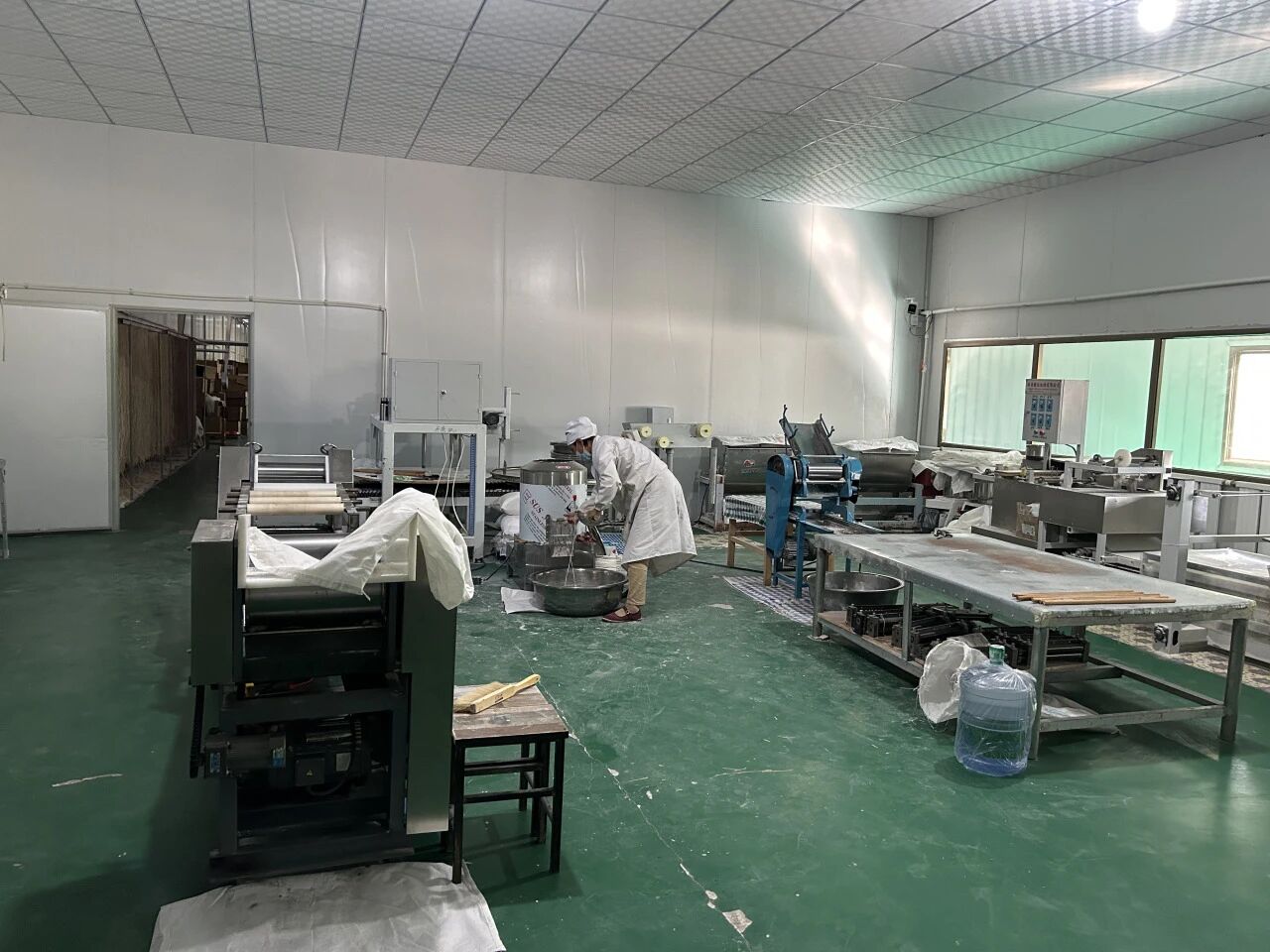
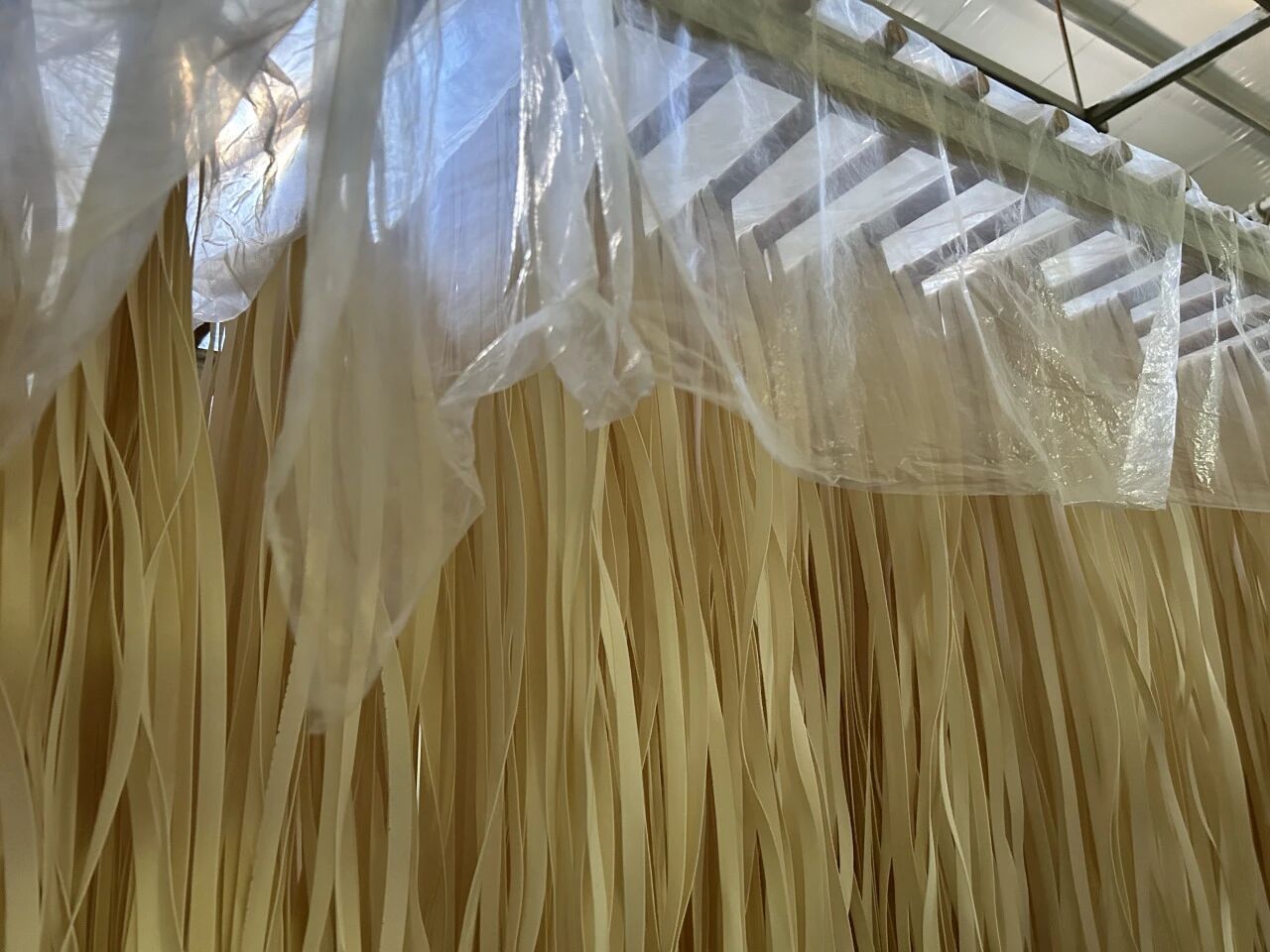
If sales go up, a larger output can be expected—the 4,000 mu of new sandland in Uncle Su’s village can supply over 400 tonnes of flour in total, which is four times their current annual consumption.
But the two of them are too busy to cope. As early as 2024, Yanguiqing wanted to recruit a full-time employee who could take part in factory management; by 2025, it also wanted to hire someone to do livestreaming—livestream selling has also become popular in the ecosystem. In the first half of the year, Shitou livestreamed pulling noodles in the sandland, and it had been quite effective, but in the second half the child was due, orders increased, the little family became busier, and livestreaming was paused again.
III. Rain Soaks Through the Chickpea Dream
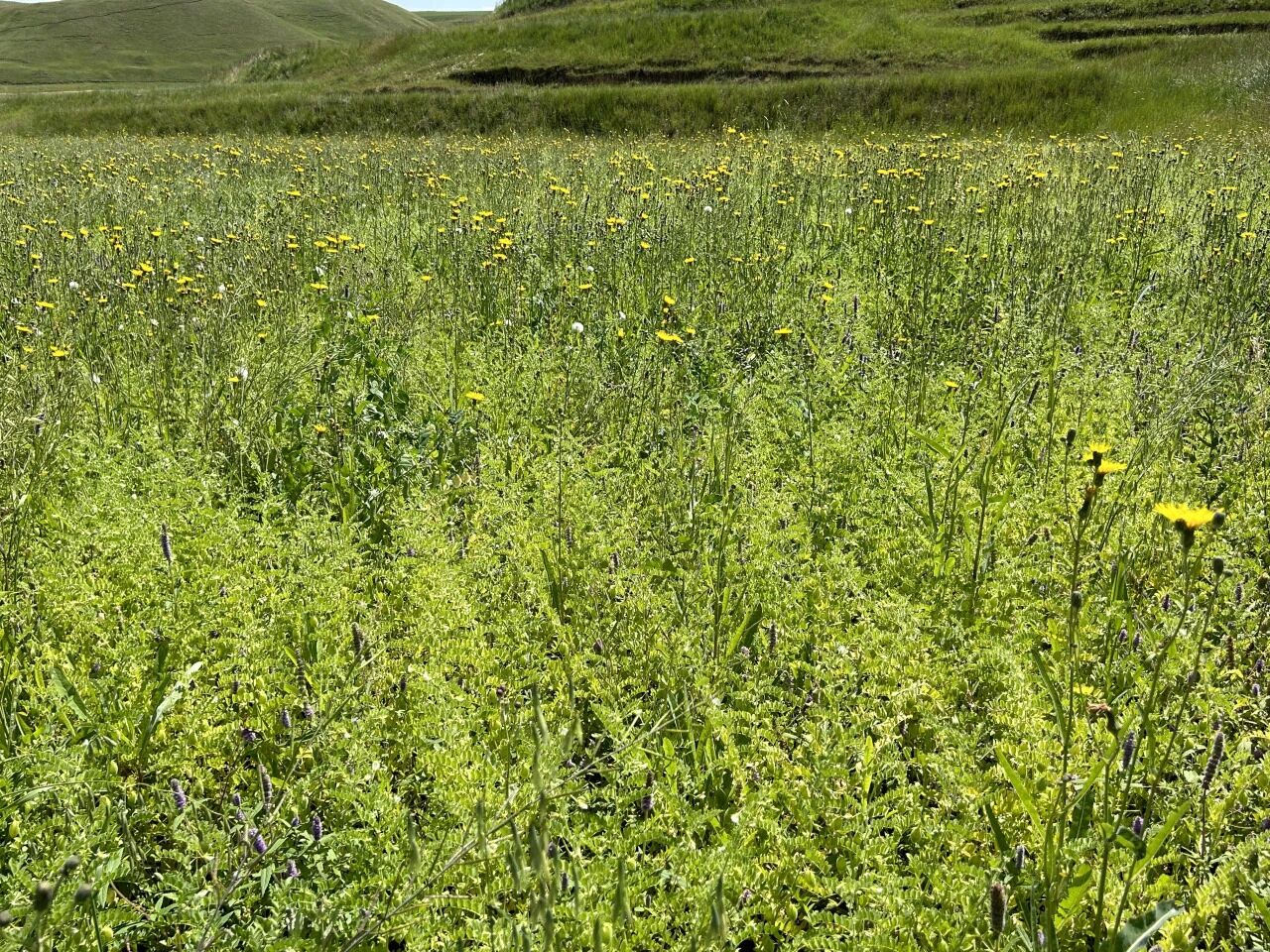
But the dream meets reality—the chickpeas often come up empty. In four years, he has been losing money on this land, and he has been forced to shrink his position to 200 mu in one of the villages.
“So much weed has grown again!”—that was Huahua’s first words as he crossed the fence and walked into the field. It takes an hour and a half to drive over from home, and he simply cannot be everywhere at once, so he does not come often.
In Gansu, where irrigation conditions are poor and farmland is mostly dryland, Huahua had once been very grateful to lease this blessed plot with natural rainfall, at just 100 yuan per mu.
But he did not expect so much rain. The weeds had barely been pulled before they grew back, becoming Huahua’s biggest cost.
In June last year, to clear the weeds on 100 mu, he hired labourers for a whole month, up to 60 in a single day, at 500 yuan per mu—the total came to nearly 50,000 yuan.
This year, he changed his approach to hiring: he uses his new-energy vehicle to pick up day labourers from the village, 120 yuan a person a day, with only four fitting in one car, and he rented a second vehicle—eight people at 160 yuan each, man and car combined. It is peak farming season. Huahua gets up just after five, drives the workers to the fields, takes them back to the village at seven in the evening, and is home after eight.
There is even more rain this year. One round of weeding is no longer enough, but if he were to do another, “even at 50 yuan a jin for the chickpeas, I would still be losing money.”
It was also this year that he first heard the Tibetan farmers here had started using herbicide.
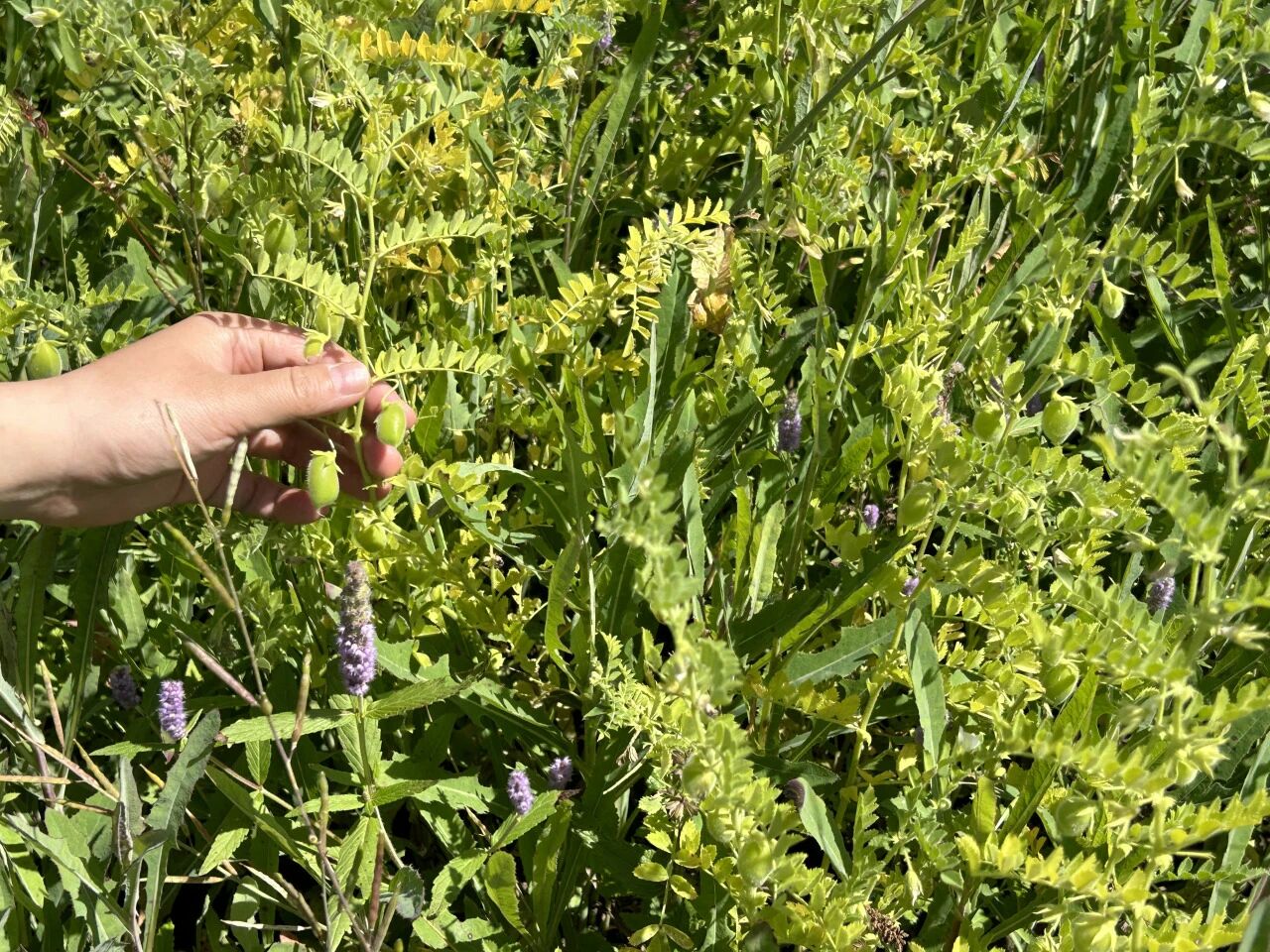
Apart from the abundance of weeds, when rain is too plentiful, this cold-hardy, dry-loving legume will also go through runaway growth—stretching out in height but setting no seeds—the chickpea pods in the field feel hollow when pinched. August is supposed to be the critical period for chickpea growth.
Huahua said that if the weather clears up now, the hollow pods might still fill in a little, but if the rain keeps falling, there is unlikely to be much of a harvest this year—after the National Day holiday, Tianzhu will already be seeing snow, and the growing season will be over soon.
Last August, Tianzhu also rained continuously for a whole month. By September, the rain had still not stopped; the black earth remained muddy and clung to the feet for two or three days, affecting the harvest. The chickpeas developed small black mould spots and did not look presentable. Even though Huahua and Shitou sorted them twice, by machine and by hand, and specially informed buyers on the sales platform, some consumers still requested a refund after receiving the goods.
In August this year, while we were walking through the fields in Tianzhu, the sky darkened again before three in the afternoon. Shortly after we got in the car, raindrops the size of beans lashed the windows.
As long as he does not lose too badly, Huahua still does not want to give up his own plot—beautiful scenery and a good place to settle in old age. He is considering covering the chickpea field with plastic film next year to suppress the vigorously growing weeds. That would mean more labour costs—originally, Huahua and Shitou drove the tractor and seeder themselves, needing only a few dozen yuan per mu for seeds and fuel.
“This is me putting in a huge investment and enjoying life here,” he said.
IV. The Gamble of Farming
Chickpeas carry a high unit price and strong market recognition, and Huahua can also buy local old varieties from relatives and smallholders at the farmers’ market. If no abnormal weather comes up, they are certainly worth going all out on.
He has also increased his linseed planting. Linseed is more resilient to drought and flooding, and yields are more stable—before this year’s harvest, all of Huahua’s linseed had already been bought up by an ecological processor. That said, when the costs of transport, oil pressing, packaging, sales and other stages are considered, the buying price may not be high. People in Gansu and Qinghai both grow linseed, so competition over supply is no small matter. Huahua did not dare to risk increasing output by too much.
One year, at the prompting of the county government, Huahua also grew goji berry. This crop is delicate and labour-intensive, but in the conventional market it can also fetch 10 to 20 yuan per jin, making for considerable returns.
But unexpectedly, the seedlings supplied to the farmers were faulty, and the goji berry crop was wiped out. On 200 mu, Huahua lost several hundred thousand yuan; someone in the neighbouring village even lost more than 2 million—on the other side, they sprayed pesticide once a week, with dozens of people weeding in the fields every day. In the end, a leader of the Forestry and Fruit Bureau was taken away, and the promised government subsidy of 200 yuan per mu was never paid out. Huahua was instead relieved that his own land had been managed less intensively and that he had not put in too much money.
In this sense, farming is not just an arithmetic problem, but also a “betting” problem. Besides natural disasters and farming seasons, changes in buying prices, and flaws in fruit seedlings and seeds seem to be beyond what farmers can withstand.
In another partner village in Tian zhu, Huahua was once required by the government to grow broad beans. Broad beans need processing before they can be sold, and demand in the ecosystem is also small, so Huahua was originally reluctant to grow them. But by chance, the market price of broad beans was high that year, fetching five or six yuan a jin, and Huahua sold them in the conventional market and made over 20,000 yuan—all used to make up for the losses from other crops that year.
In the minds of farming friends in Gansu, price unpredictability is most evident in onions: the investment in each mu of onion land runs to several thousand yuan, and the yield per mu is close to 10,000 jin. When the buying price reaches five or six mao per jin, a single mu can earn one or two thousand yuan.
But there are also times when no one buys them or prices crash: when the buying price falls below two mao, a bumper year becomes a year of bankruptcy. On short-video apps, farmers in Gansu and Henan often share videos of onions rotting in the fields. “But have you not seen how much they make when the market is good?” Huahua also pointed out.
Growing onions is like a gamble for farmers. But in fact, the fate of most crops is the same.
As a result, some farmers believe that, with so many uncontrollable variables, it is better to let Heaven decide their fate than to “gamble” against the market.
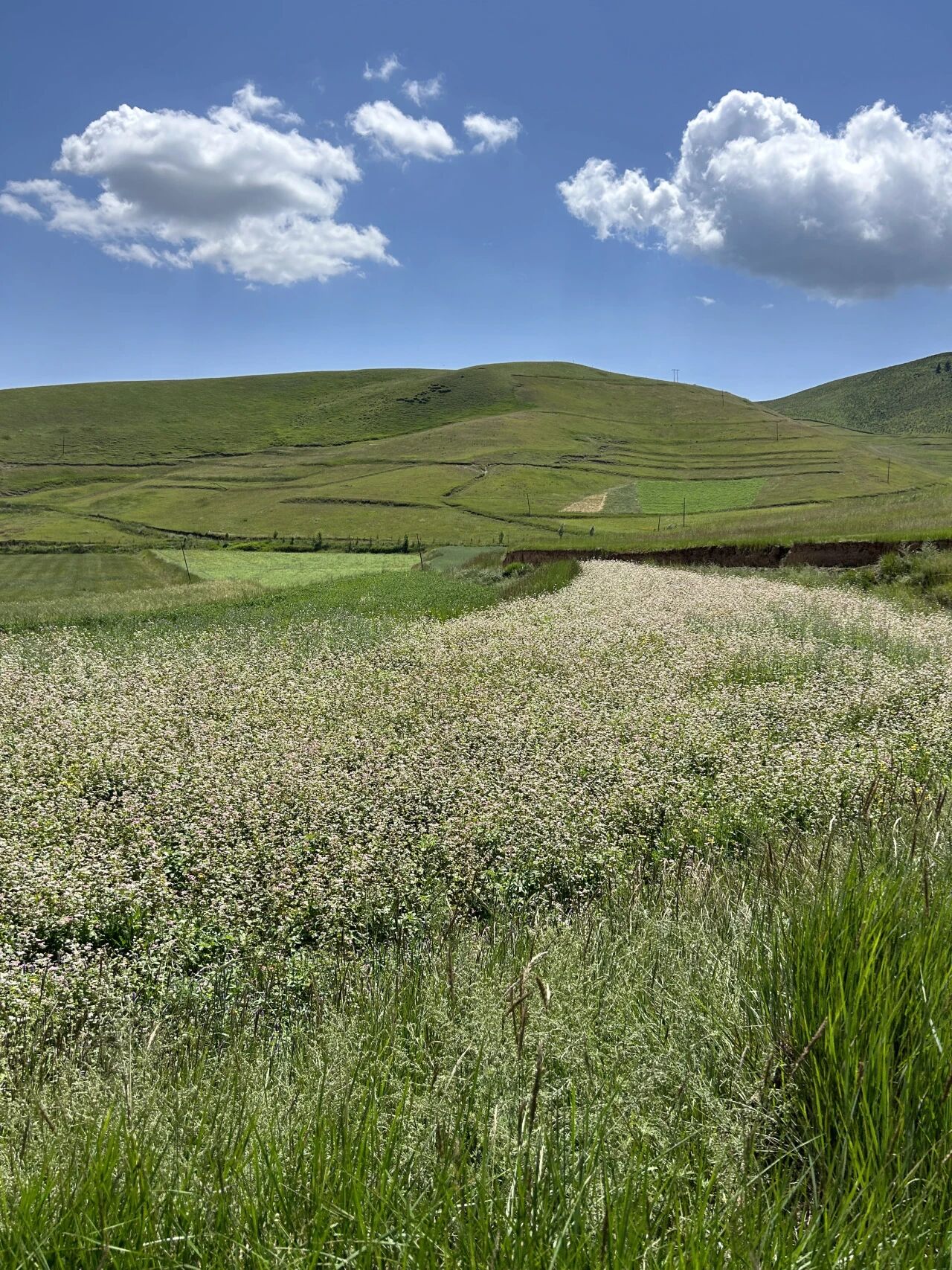
At Huahua’s Tian zhu base, he grows chickpeas and linseed, and also grows potatoes and buckwheat as part of crop rotation. We found that, beneath a thick, luxuriant stand of buckwheat, a layer of potato seedlings was still “hidden”. This was supposed to be a potato field that had been covered with plastic mulch film and carefully sown this year. But the buckwheat that suffered lodging last year shed seeds all over the ground and ended up taking over; now, the wildly growing buckwheat has already outgrown the potatoes sown by hand.
“How about we just harvest the buckwheat?” we asked.
“I think so too,” Huahua answered.
“There’s a ‘new harvest’ again,” he said, unable to tell whether it was bitterness or optimism.
V. The Northwest Big Man’s Story of Settling Down
He described to us the most common wild animal on the Northwest grasslands—the marmot—”It’s the one in the emoji stickers, the one going ah-ah-ah.” He almost mimicked the mouth shape and expression.
There was also a hog badger that had just run into the chicken coop—a wild animal not common locally. “It had a chicken in its mouth, its belly soft and saggy, just like mine. And it strutted right past, showing not a shred of respect for me!”
Family members recall that Huahua was clever, but after he went to a private high school with a poor ethos, he had no heart for studying and went straight to Xinjiang to work. In the end, he was admitted to a second-tier university, then took a leave of absence to join rural construction and community-supported agriculture projects. In 2018, his official account used to repost articles discussing ecological issues in sandland farming; today, he still firmly regards no spraying and no fertiliser as the basic principles of farming.
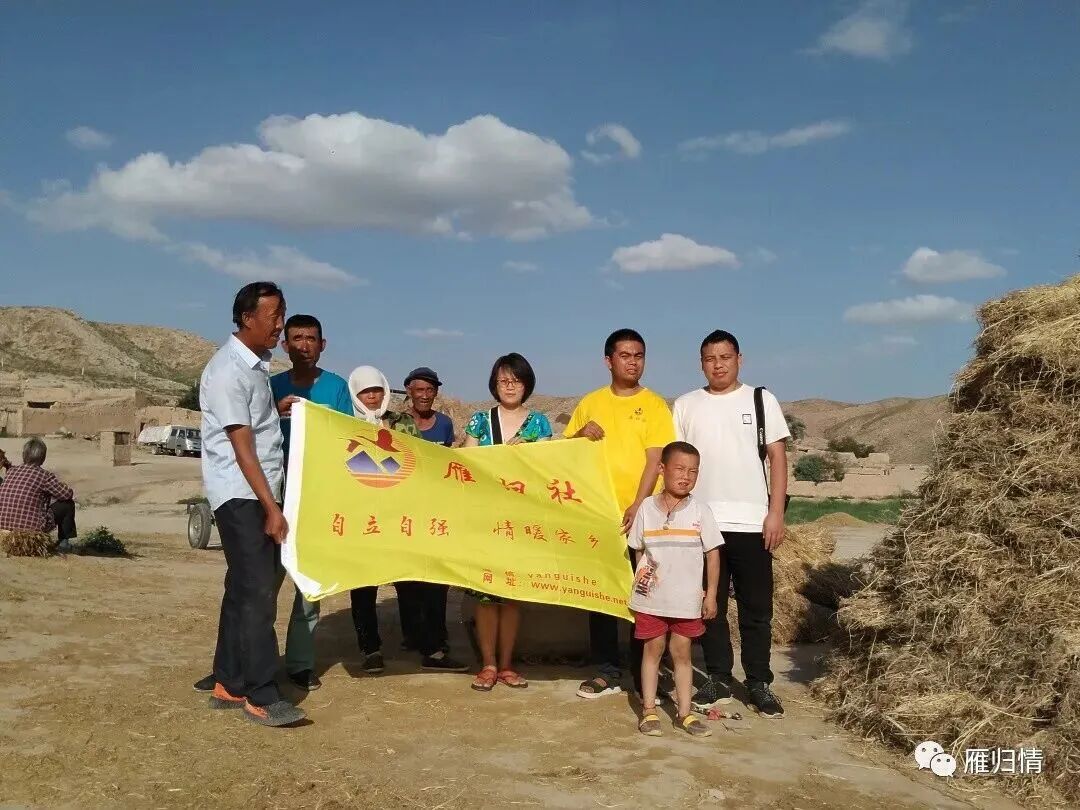
Huahua admitted that in the past he had sometimes acted on impulse, muddling through. When he returned to the village in 2016, he at one point kept five or six dogs and described himself as a “thug leader”: every day he went out, the pack would follow in grand procession, “especially imposing”.
He liked to explore and strike out everywhere. Whenever he turned into a junction he had never taken, he always wanted to walk in, all the way to the end, to see what was there. He knew almost every village and town near home “inside out”.
But as he entered his forties, he did want to “settle” down and prove to his family that his ecological farming was a reliable, promising “proper thing”. He “sent away” the pack of dogs, keeping only two to guard the noodle factory.
Shitou took over the accounts from Huahua; every item of agricultural input and every purchase had to be clearly recorded. Huahua’s “full of soaring ambition” new ideas (during our visit, he was still talking to a local high-end vinegar producer about noodle-vinegar processing) were not necessarily “approved”. Sometimes he also wanted to secretly expand the cultivation of something behind Shitou’s back, but more often he was simply sighing that with a good wife, it was as if he had found peace of mind.
In the early hours of 22 September, Shitou safely gave birth to a son; mother and baby were safe. The family now had more things to spend money on. After the National Day holiday, it was also up to Huahua to go and harvest the chickpeas in Tian zhu himself.

Unless otherwise noted, all images in the article are by the author.
Editor: Tianle