
FDA Mass Layoffs: Who’s Looking After US Food Safety?
In the six months since taking office, Trump has been relentlessly slashing public health and nutrition budgets, and the regulatory agency charged with overseeing food and drug production and safety across the United States – the FDA – has been squarely in the firing line. In a country already beset by recurring food safety crises, how can the public’s health be protected if even the regulators are being drained of resources?
I. Adding Insult to Injury
Kennedy is the biological nephew of the assassinated former US President John F. Kennedy. A lawyer by training, he once dedicated himself to public-service causes, including environmental protection. In recent years, however, he has become best known for being anti-science and anti-vaccine, spreading misinformation and conspiracy theories – though he also commands a devoted following, and has been called the “Trump” of the public-health world. After taking office, Trump nominated Kennedy as Secretary of the Department of Health and Human Services, placing him in direct charge of the FDA, the agency that regulates food and drug safety in the United States. The appointment drew fierce backlash from the American medical and scientific communities: more than 75 Nobel laureates signed a joint letter opposing his confirmation, warning that Kennedy’s tenure would put public health at risk.
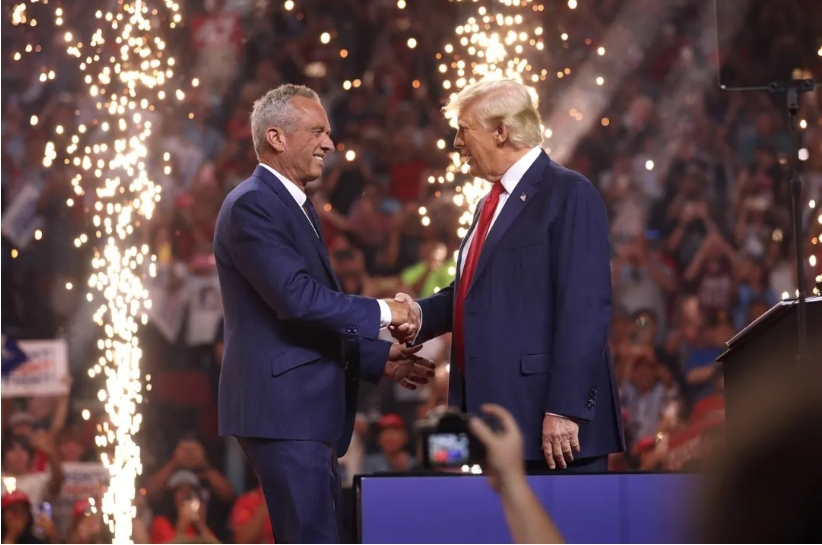
Shortly after taking office, Kennedy unveiled his “Make America Healthy Again” (MAHA) plan – the slogan and campaign Trump adopted for public health and food safety this term.
For several years, Kennedy has been relentlessly targeting pharmaceutical companies, food corporations and agribusiness giants, accusing them of putting profit before the health and wellbeing of the public. These crusades have drawn a strong following among communities concerned about health and food safety. True to his word, once in office he did move to deliver on his promises, laying new requirements on the food industry – for instance, banning certain artificial colours from use as food additives.
But his larger moves came inside the FDA itself: 3,500 staff were laid off and $400 million was slashed from the agency’s budget. As a result of these sweeping budget and headcount cuts, the quality-control programme for random food safety checks at the FDA’s food testing laboratories had to be suspended.
Long before Kennedy rose to become the FDA’s ultimate boss, the agency’s food division had already been on a knife-edge, plagued by repeated failures, thanks to chronic underfunding. What it needed most was experienced specialists and additional funding to bolster its regulatory capacity and safeguard food safety.
In fact, as the agency responsible for food production and safety, the FDA has been dogged by problems for years, drawing criticism from across the United States and around the world. Cutting budgets, halting inspections and eliminating critical posts has only deepened an already dire situation for the FDA and food safety in America.
In recent years, America has been rocked by major food safety incidents time and again: in 2022, contaminated Abbott infant formula killed two babies; in 2024, a large Listeria outbreak linked to ready-to-eat meats from a deli plant in Virginia claimed ten lives and hospitalised dozens more. Between late last year and early this year, a wave of avian influenza swept the country, triggering mass culling of poultry and leaving US supermarkets facing “not a single egg to be found”. Because the FDA oversees poultry health as well as avian influenza drugs and vaccines, the outbreak was widely attributed to insufficient promotion of those vaccines and drugs.
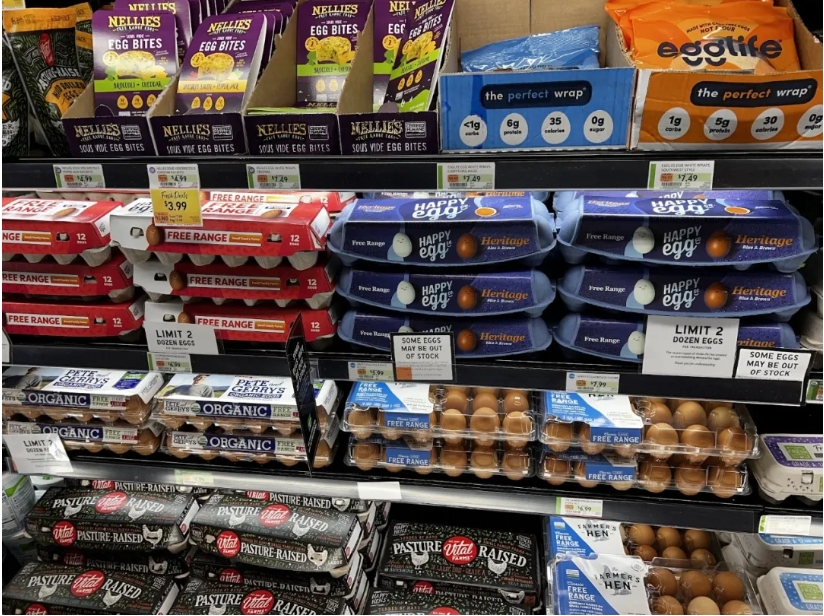
So how did the FDA – founded over a century ago and so influential that even China “copied its homework” (from 2003 to 2018 China adopted the strategy of regulating food and drugs through a single agency, and its Food and Drug Administration even borrowed the same English abbreviation) – end up in such a sorry state?
II. Why Has Food Regulation Been Perpetually Neglected?
To tackle these problems, President Theodore Roosevelt signed the Pure Food and Drug Act into law. The Act prohibited the adulteration of food and drugs with fillers and additives used to conceal damage or spoilage, and entrusted the Bureau of Chemistry within the US Department of Agriculture with inspecting food and medicines. This bureau was formally renamed the Food and Drug Administration (FDA) in 1930. Then, in 1938, the Federal Food, Drug, and Cosmetic Act granted the FDA sweeping legal authority to regulate food and drugs nationwide, including nationwide enforcement powers, a dedicated laboratory network and a judicial framework underpinned by seizure authority.
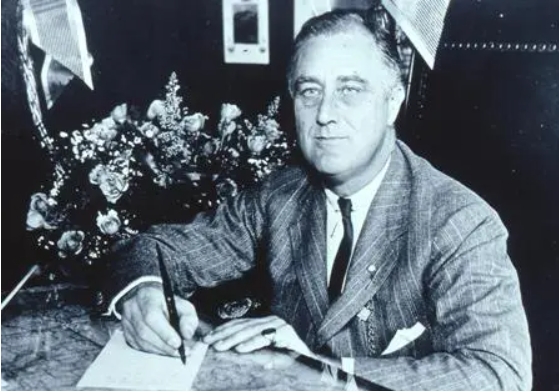
Although the 1938 Act gave the FDA independent authority to oversee food safety, responsibility for food safety regulation in the United States has long been scattered across multiple federal agencies rather than concentrated under a single, unified authority. The United States Department of Agriculture (USDA), for example, is responsible for the mandatory inspection of meat, poultry and liquid egg products, while the US Environmental Protection Agency (EPA) regulates the impact of pesticide residues on food safety. This fragmented, multi-headed system has left food safety governance mired in confusion for decades, with no single line of command.
When food safety incidents do occur, this piecemeal arrangement tends to breed buck-passing, poor information flow and difficulties in coordination – leaving regulatory responses slow and ineffective. It drains enormous administrative resources and leaves consumers at a loss as to where to turn when confronted with a food safety problem, further eroding public trust in the system. Meanwhile, food and agriculture companies exploit the gaps, squeezing production costs to the bone and seeding all manner of hidden risks to food safety.
Today, food regulation is funded primarily through annual appropriations from Congress, and those funds are routinely cut whenever the government tightens its belt. According to the FY 2024 report (October 2023 – September 2024), the total food regulation budget stood at $1.182 billion, with virtually all of it sourced from congressional appropriations. That total amounts to barely half of the FDA’s pharmaceutical regulation budget of $2.338 billion – and only 30.8% of that pharmaceutical figure required congressional appropriation.
This structural funding gap has left the FDA’s food safety system resource-starved and lagging on multiple fronts. In terms of staffing, the number of inspectors and technical reviewers falls far short of what is needed to oversee high-risk facilities nationwide. In terms of expertise, dwindling pay and career appeal have caused a persistent brain drain from critical roles in food science, epidemiological modelling and data tracking. In terms of system efficiency, the development of a traceability system, electronic reporting mechanisms and predictive risk models has been hampered by insufficient funding.
In late 2008, a major Salmonella contamination was discovered in peanut products from one American company, sending over 700 people to hospital and claiming nine lives. The outbreak ignited public fury over the FDA’s failure to regulate food safety and prompted newly elected President Obama to pledge a thorough overhaul of the food safety regulatory framework.
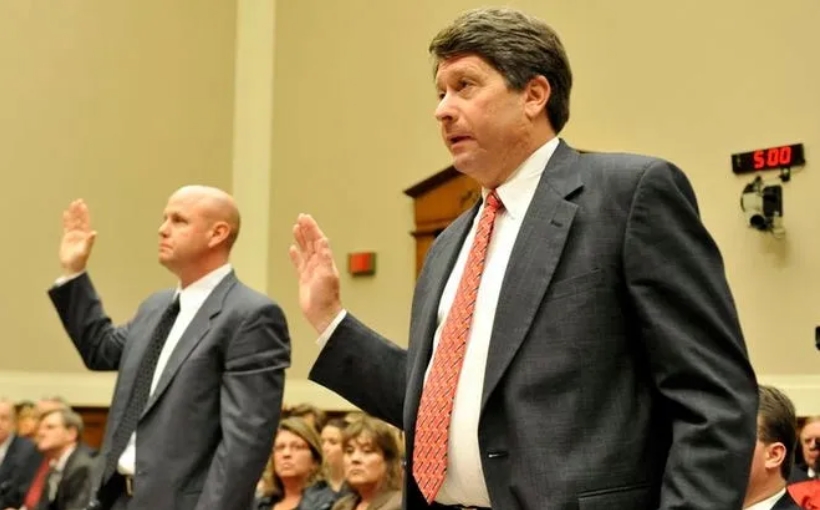
But shortly after Obama signed the Act into law, he was forced to restructure the government budget under pressure from House Republicans, and the planned increase in food regulation funding was shelved and pared back once more.
Times move on, and the pledges made when the Act was first enacted have now become little more than a dead letter.
Under Congress’s original plan, full implementation of the Act required at least $1.4 billion in additional funding for the FDA’s food division between 2011 and 2015. In practice, by 2015 the funding the FDA had actually received was less than half of what Congress had assessed was needed to deliver the Act in full.
Furthermore, the law stipulated that the FDA should conduct annual inspections of domestic food facilities in line with the Food Safety Modernization Act. Yet according to a 2025 report by the Government Accountability Office (GAO), the last such inspection had been conducted in 2018. In 2019, the probability that the FDA missed its mandated deadline for inspecting high-risk food facilities stood at 7%; by 2021, that figure had soared to 49%.
Strapped for funding and short-handed, the FDA’s Office of Regulatory Affairs – the division responsible for inspections – has long been stretched to breaking point. Although the Food Safety Modernization Act calls for the office to be staffed with 2,000 full-time employees, it has fewer than 800 in reality – and those employees are charged with inspecting over 220,000 food establishments registered within the United States.
The staffing shortfall has made food inspection difficult and problem-solving even more agonising. Take the 2022 Abbott formula contamination as an example: the FDA had actually been alerted to a related case as early as September 2021, yet, lacking personnel, it waited a full four months before dispatching inspectors. After identifying problems at Abbott’s production facility, it waited another three full weeks before initiating a nationwide recall. By then, two babies had already died.

III. Make America Healthy Again
Just days after Congress confirmed Kennedy Jr.’s nomination, James Jones, the overall head of the FDA’s food regulation division, announced his resignation in protest against the mass layoffs. In his resignation letter, he warned that the cuts would cripple the agency’s ability to protect public health. In Jones’s view, the Trump administration neither respected professionals nor spared the budget – staying in the role had become meaningless. His departure also signalled that the US government’s food management system was slipping, step by step, into MAHA’s grasp.
MAHA – a movement that fuses a public health campaign with populism – is described on the White House website as a government-wide effort to reverse America’s chronic disease crisis by tackling “corporate control of health and food policy”.
On the surface, the MAHA movement appears to have heightened the American public’s awareness of food safety. But scrutinise the health and food safety budget cuts over the past six months of Trump’s presidency, and it becomes clear that Americans’ health may be on a downward slide. Funding for the Supplemental Nutrition Assistance Program (SNAP) has been drastically slashed; $1 billion has been cut from USDA budgets for sourcing local food for school lunches and food banks; USAID, the primary funder of global nutrition research, has been abolished; and a 40% cut to nutrition research at the National Institutes of Health (NIH) has been proposed.
As MAHA’s de facto executor and the top authority on American public health, Kennedy Jr. spearheaded a survey report on the state of health in the United States, which he called “a breakthrough in tackling America’s public health crisis”. But after the report was published, a journalist at The Guardian discovered that the 73-page document cited studies never published in any academic journal and fabricated numerous non-existent quotations. The revelation caused an uproar on Capitol Hill, further fuelling public scepticism about Kennedy Jr. and MAHA.
Consequently, many Americans who worry about food safety have no confidence whatsoever in Kennedy Jr. – a man who not only lacks experience in public health and food safety management, but also champions vaccine scepticism. In their view, elevating a movement steeped in pseudoscience above professional management could result in an even more fragmented regulatory system.
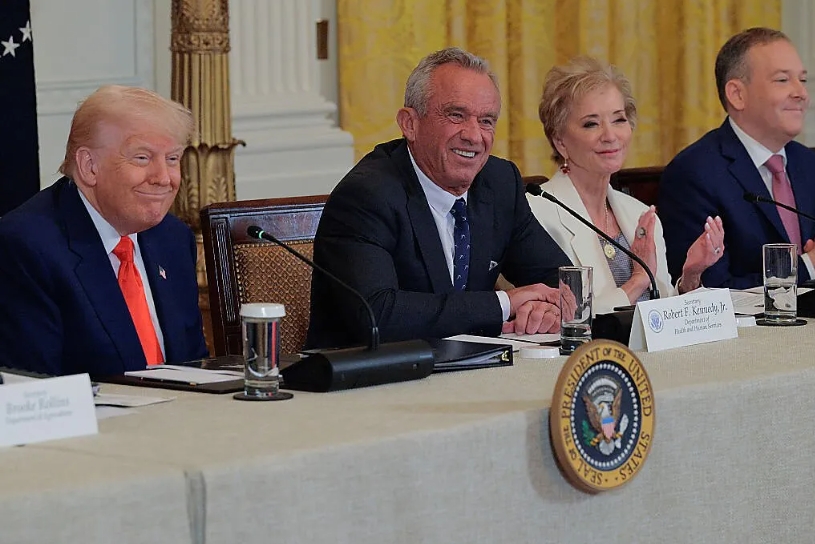
Kennedy Jr.’s policies – such as suspending the quality-control programme for random food safety checks at the FDA’s food testing laboratories – will directly worsen the fragmentation of America’s food safety regulatory system. Against a backdrop of multi-agency oversight and blurred lines of responsibility, undermining the FDA’s core inspection capabilities is tantamount to severing one’s own arm. Regulatory gaps will multiply and food safety risks will climb even higher. A regulatory system bereft of unified coordination, with each agency going its own way, will find itself ill-equipped to cope with complex food supply chains and an ever-diversifying array of food safety challenges.
Meanwhile, the FDA wields considerable influence in global food safety governance; the standards and guidelines it sets are often treated as benchmarks by other nations. However, Kennedy Jr.’s unprofessionalism and anti-science stance could severely compromise the development of US food safety standards, casting a negative shadow over the global food safety governance system.
Public health experts – including the Government Accountability Office (GAO), which provides internal oversight of the US government – have spoken with one voice in their reports: America needs a fully independent agency dedicated to food safety. Such an agency should manage food health and hygiene, exercise complete and unified control over the food system, clearly delineate food safety governance powers and authority, and recruit food safety specialists from the industry to oversee the system.
Regulation is merely the last line of defence for food safety, and the deep-seated ills of America’s food industry cannot be turned around by regulation alone. But cutting the FDA’s budget at this juncture is certainly not the answer to improving food safety. Will the American people be jolted into a full awakening, pursuing healthier and safer food with greater self-reliance?

Editor: Kairui