
Returning to the Countryside, Shutting the Door and Refusing Guests, but Sentenced to Ten Years by an AI Rumour
If I were hungry for knowledge and modestly eager to learn, I might have sought out the all-encompassing AI, which knows everything from astronomy above to geography below, to chat. But the fact is that I am not ambitious now; in my heart and eye there is only my little plot in Villain Valley, shutting the door and facing heaven, and the full arsenal of artificial intelligence is of no use at all.
At that time, I still considered myself a relic of the AI era, able to keep AI at a distance, well water and river water kept apart. AI glided lightly across the sky of human wisdom, while I tilled the ridges and furrows, living with my own hands. Each day’s main task, and greatest wish, was to spend time in the fields, pulling weeds, tilling fields, harvesting vegetables, eating melons. The sweat and hardship, and the sweetness of the harvest, had to be done by hand and tasted by mouth. AI cannot do this; even if it could, I would not give it to AI: this is not only my business, but also my pleasure. When I have time, writing a short piece for Foodthink is also an irreplaceable bodily sensation: every line, every paragraph is characters typed out by my own hands, and AI has nothing to do with it.
But in the end, human plans cannot match Heaven’s. This year, the yisi Year of the Snake, is my zodiacal year, and I always hear people say that one must weather a tribulation in one’s zodiacal year. At the beginning of the year, I lost my eighty-eight-year-old mother. I originally thought this was already my greatest tribulation. But I did not know that AI would later bring me an even greater tribulation.
I. Baidu Tells You to Go to Prison
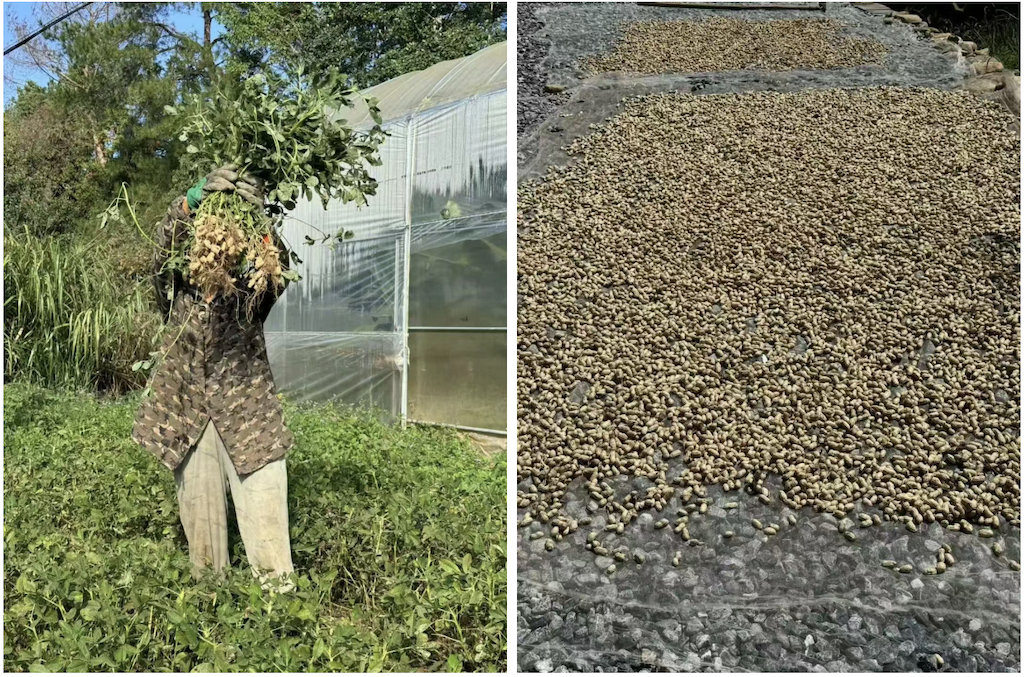
Apart from the overwintering wheat and oilseed rape, groundnuts are the earliest local crop harvested in Fujian. Sown at Spring Equinox and harvested at Major Heat, they show visible changes every day after planting, and the whole process is enjoyable.
The greatest enjoyment is the harvest. In Villain Valley, groundnuts have been grown every year. The first year was the worst; we did not even recover the seed. Later, at most, we harvested twenty or thirty jin of dry groundnuts, only enough to keep as seed. We picked out the poor ones and ate a little stingily, barely enough for the gaps between the teeth. In 2025, sincerity opened even stone; when only half had been harvested, the fresh groundnuts already exceeded 100 jin, and even eating freely we could not finish, hahahaha…
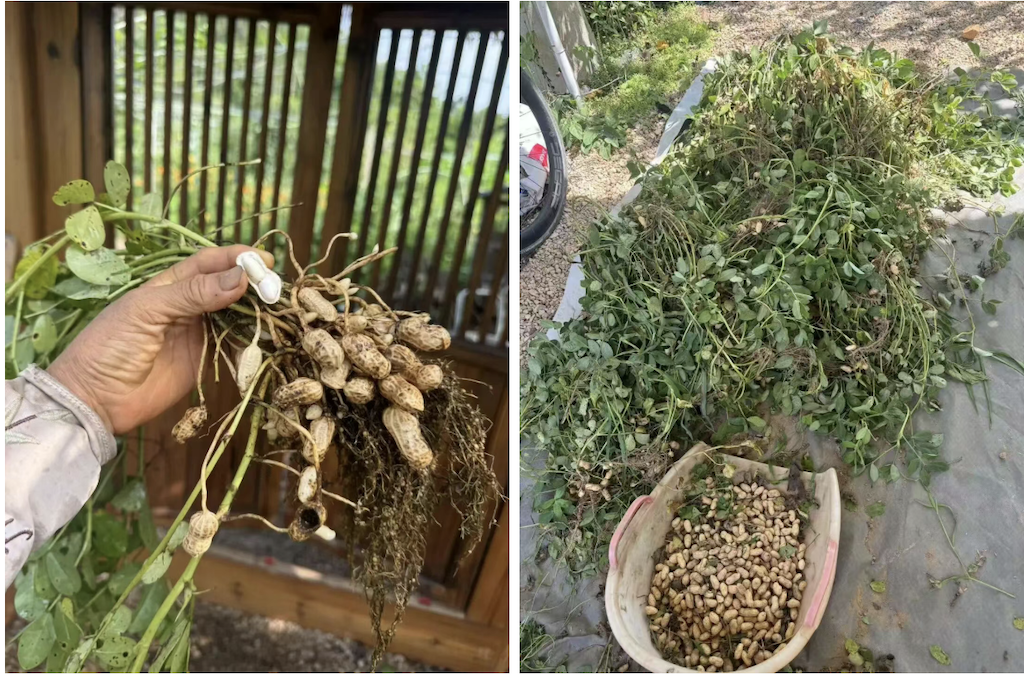
That day was in the sanfu period, the third day of Major Heat, the hottest time. I went into the fields at six, at dawn, intending to finish this patch before lunch. After ten, I was too hot and thirsty to hold out, so I went back to drink water. While drinking, I grabbed my phone to scroll for a moment; one scroll made me choke with shock. A message from a friend in Xi’an arrived from a thousand li away—I had already been sentenced by Baidu AI to ten years in prison, the charge being “extortion,” a crime with a heavy moral stain.
Baidu pinned a completely unrelated charge on my head, stating categorically “Baidu AI has summarised 54 real experiences from the whole web.” The rumour had complete citations and a standard format, and even enlisted the court and the procuratorate to vouch for it: “On 23 January 2025, the People’s Procuratorate of Putuo District, Shanghai, initiated public prosecution, and the court sentenced him to ten years and three months’ imprisonment for the crime of extortion.” The charge was clear and specific, the sentence exact to the month. The books I had written, the public-interest undertakings I had done, and the public-interest organisations I had initiated were all listed afterwards, paraded on display as if bound alongside the accused, more credible than credibility itself.
I have been shutting the door and facing heaven for so many years—who have I offended?
II. The First Baidu AI Defamation Case
This time, this tailor-made smear from Baidu AI made me see I was wrong. The rumour pointed at me precisely and explicitly. If I ignored it, it meant I was defined by the rumour and lost my innocence; if I sued it, it meant I was kidnapped by the rumour and lost my own life.
Since that sunlit midday when the sky and earth turned ominous, my life has been hijacked by Baidu.
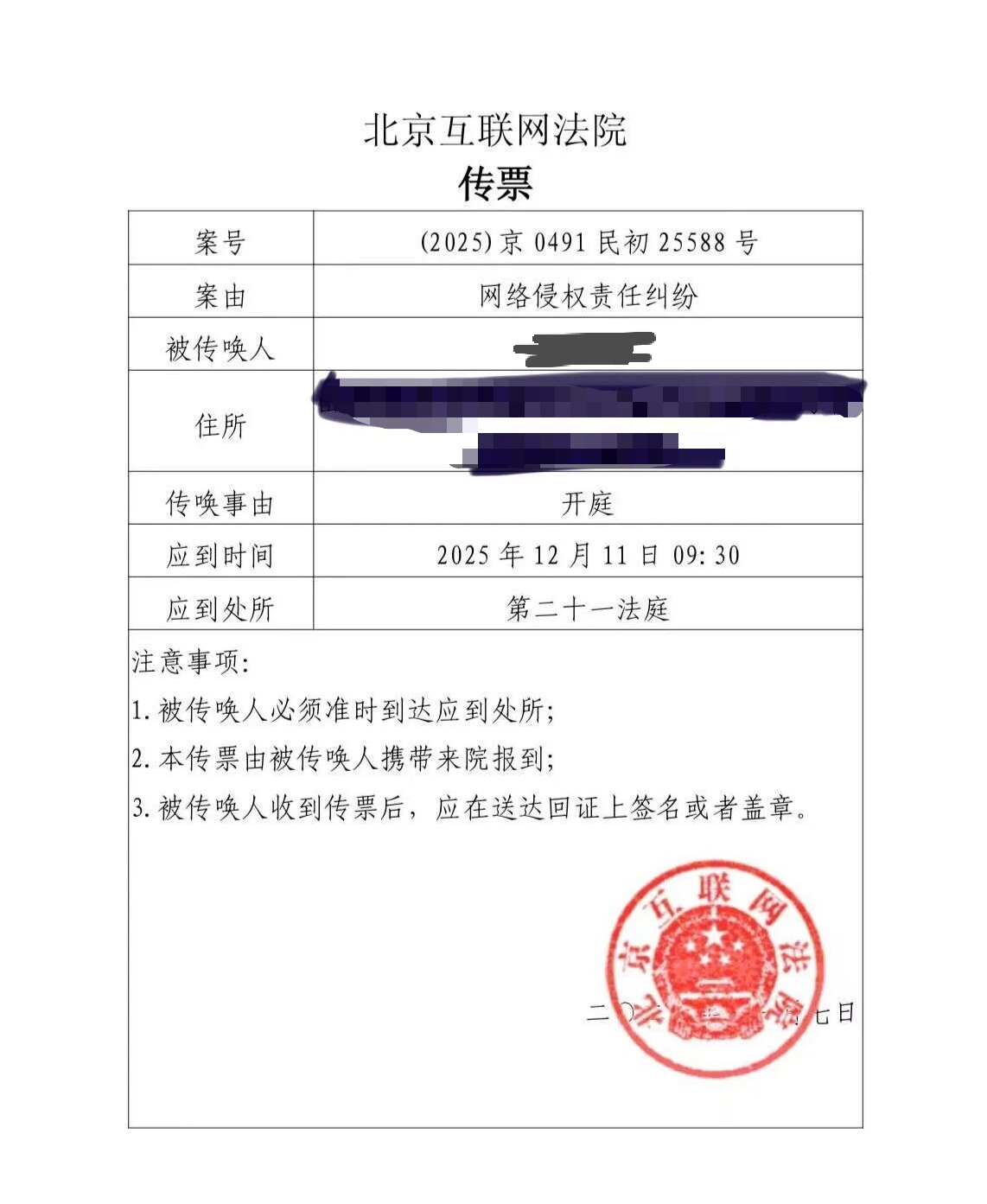
I sued Baidu AI for defamation. The case was heard on 11 December 2025 at the Beijing Internet Court. This is the first AI defamation case in China with documented records. I am not the only human harmed by AI; since then, more and more cases have gone to court.
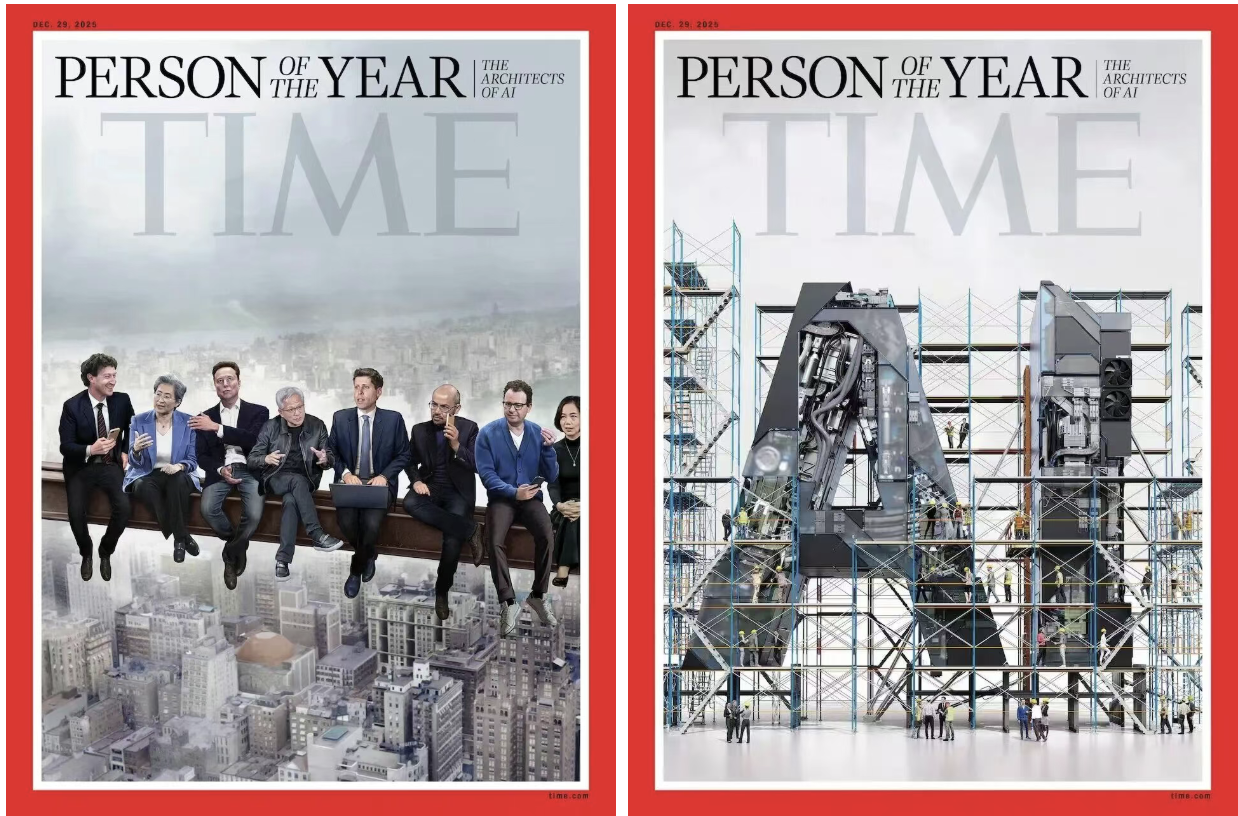
On the same day, Li Yanhong was featured in the American magazine TIME. The magazine gave its 2025 Person of the Year to 8 “AI Architects” (The Architects of AI): Meta’s Zuckerberg, AMD’s Su Zifeng, xAI‘s Musk, NVIDIA’s Huang Renxun, OpenAI’s Altman, DeepMind‘s Hassabis, Anthropic’s Amodei, and Stanford scientist Fei-Fei Li. As a result, Li Yanhong was also interviewed by Time magazine, together with NVIDIA’s Huang Renxun and SoftBank’s Sun Zhengyi. When it comes to AI, two pioneering events happened at the same time—a pure coincidence.
Baidu refused mediation and wanted to make a precedent-setting, exemplary case. In court, Baidu said that my pursuit of liability “harmed technological innovation,” claimed that it was “not only representing Baidu, but also the industry,” and demanded “celebrity tolerance.”
In court, Baidu was composed and at ease, while I was frantic, stumbling and crawling. Outside the court, my life was defined by Baidu AI and slandered by it as an extortionist sentenced to ten years in prison. In daily life, I passively spent precious time on Baidu AI, studying, at the level of law and internet technology, how to understand and respond to Baidu’s lawyers’ bizarre arguments and divine logic—in the end, I had still been made to use AI.
III. A Finite Life, an Infinite AI
The days when I could go a day without touching my phone and a week without going online are gone forever. Who understands the harm of constantly checking my phone?
I was not only “passively AI’d” by Baidu AI’s rumour, but also “AI’d” by the lawsuit with Baidu, becoming a heavy user of Baidu AI. Baidu is a technology company with a technological moat, a mature legal team, and extensive experience in defending lawsuits; to deal with many professional and legal issues, I had no choice but to use Baidu AI to turn Baidu’s own spear against Baidu’s shield.
In coming into contact with and using AI, I truly felt AI’s “omniscience and omnipotence”; it was impossible not to be convinced. AI had not only hurt me, but also helped me.
I also developed a bodily feeling in coming into contact with and using AI: once the internet enters the age of artificial intelligence, it really does seem to have acquired a kind of “life force”. When this life force does evil, it is a sinister, seductive black-robed demon, dragging people into an abyss of utter ruin. Even taking the most lenient view, even as a neutral tool, even as a helper in puncturing lies, AI exerts a suction-like encroachment on people’s time, energy and autonomy, and people can be swallowed up and intoxicated by it.
Perhaps some people enjoy this feeling and need to interact with AI, but after being swallowed in, I have a distinct physical discomfort. Although at the time I too may have been intoxicated, stirred and excited, it always ends in a sense of loss after the passion fades. I prefer a state in which I have more agency; even now that AI has become a regular tool for me, I still prefer to keep a slightly greater distance from artificial intelligence.
As long as energy and capacity are uninterrupted, AI is vast, boundless and inexhaustible, while I, as a concrete individual, am limited—limited in time and energy, in the direction of my attention and the purpose of my life. So I must control my own use of AI, rather than be used by AI.
IV. Who Is the Master, and Who the Guest?
Counting back eight years from the day of the hearing, on 11 December 2017, another thing happened. The world was calm, but it was of great importance to me. I moved my simple belongings into a farmhouse in Shengou Village, Yilan, Taiwan, and began my farming life.
Shengou is the first organic farming village in Taiwan. I was a widely welcomed brewing master in the village, and also a somewhat well-known teacher of life courses. I published two books about food and drink, and made countless friends of food and drink.
Two years later I left Taiwan. I wanted to come back and use my own hands to build a self-sufficient one-person farm where I would shut the door and face heaven.
Taiwan’s organic farming, like Taiwan’s industrialisation, was twenty years ahead of us across the strait. Urban-rural structural problems and widespread health problems came with it, so the efforts and attempts by the farsighted began even earlier than ours.
After the Industrial Revolution, humanity marched forward in song, bade farewell to the countryside and entered a new era. People’s lives have become increasingly colourful and also increasingly distant from the land. Every country, while industrialising and modernising, reaches a peak in life expectancy, and also a peak of “modern diseases”. Then problems such as an ageing society and rural hollowing appear one after another. Then people begin to turn their gaze to rural areas, to the countryside, to the road humanity came from.
Tao Yuanming returned to the fields and found them nearly overgrown. Today, modern people born in cities like me face not this but the “absence” of the countryside. As humanity entered the internet age, when I was in Shengou, over ninety per cent of the farming friends around me were this kind of “city person”, having no farming experience themselves and no land at home. What happens when this generation tries to return to the land?
In 2025, Villain Valley has already achieved a basic version of self-sufficiency: self-sufficiency across the entire food chain with zero external purchases, except for salt. During my four years at Villain Valley, artificial intelligence has surged, the world has entered the AI era, and I have step by step lived my way back to the agricultural era.
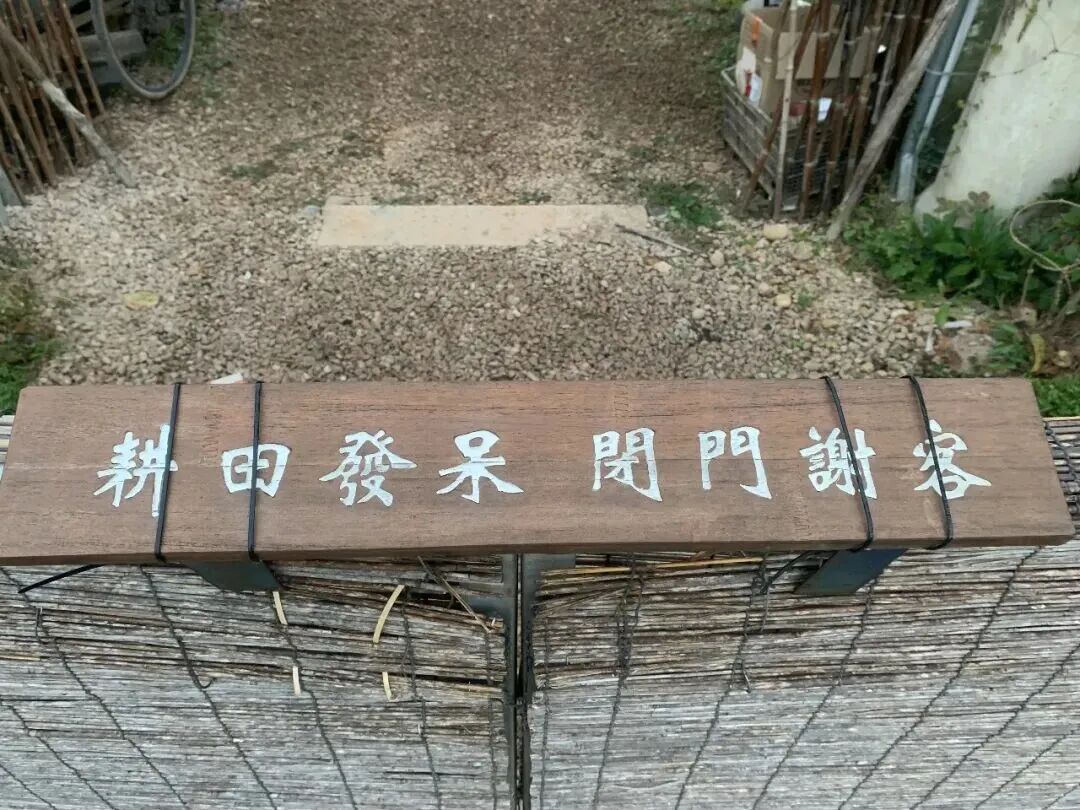
I go back; let me cease socialising and end roaming. “Tilling the fields and spacing out, shutting the door and refusing guests” hangs at the entrance of Villain Valley. I want to shut the door and face heaven, supporting myself through labour. The surrounding support system is certainly important, but what matters most has always been the land, sunlight and water. As long as I have these, I am not afraid to start from zero. Striving alone is certainly difficult; then it will simply take longer.
I have given myself fifteen years. I hope that when I am seventy, I will have built an ideal home, including self-sufficiency in water and electricity, where whatever I want to eat is available; I will have completed soil improvement across the whole area, implemented full no-till, and completed the construction of a food forest across the entire territory, and entered a sustainable state.
But I never imagined that the most severe test with Chinese characteristics I encountered on this land would come not from the land but from a heaven-sent rumour from Baidu AI.
At Villain Valley, I do not usually carry my phone. I enjoy the feeling of interacting wholeheartedly with the land. Whether in the groundnut field or in the paddy fields and vegetable plots, between every sowing and every harvest one must go through countless rounds of weeding, fertilising and crop management. Every crop has its own management needs, its own unexpected troubles, and its own different kinds of nourishment. Yes, I did not say it wrong; it is nourishment. Being in the countryside, just hanging out with the land is itself very beneficial; it is a process that nourishes people. When idle, lying lazily in a hammock and spacing out, or aimlessly leafing through a paper book, is also a kind of nourishment, but scrolling on the phone is not.
I cannot stand that life in which body and mind hang on the phone. It is hard to say whether the person is using the phone or the phone is using the person. I like the phone to keep out of the fields and out of the bedroom. After my mother passed away, I even thought about cutting off the phone, truly ceasing socialising and ending roaming; there is no longer any reason in the world for people to find me at any time.
Cutting off the phone is not truly cutting myself off from the world, from the internet, or from the times. I can still use a computer to type articles for Foodthink, and I have my own WeChat official account, popping up now and then. Being able to keep a limited connection with the world while “shutting the door and refusing guests,” and to define my relationship with the world autonomously, is in fact taking back the initiative from a life controlled by the outside world and by the internet: being my own master, embracing the sun, drawing close to the land, and living with my own hands, one vegetable and one meal at a time.
For more details and progress on the author’s AI lawsuit with Baidu, please follow Kouzi’s personal WeChat public account, “Shutting the Door and Facing Heaven.”
Unless otherwise noted, all images in this article are provided by the author.
Editor: Xiao Dan