
The Tragedy of American Science: Modern Life Trapped in Oil and War

Only by making hope feasible, rather than making despair credible, can we walk the path to peace.
— Raymond Williams
Shortly after the raid on Venezuela, on 28 February 2026, US forces struck a primary school in Iran, killing at least 175 people, most of them children. On 13 July, 136 days into the war, Trump formally announced to the US Congress that a second round of military strikes on Iran would begin.
The “mistaken” missile strike that hit children has drawn widespread attention, but this tragedy is not the first to occur in US military operations. More importantly: how much longer will this war last, and where will the next war break out?
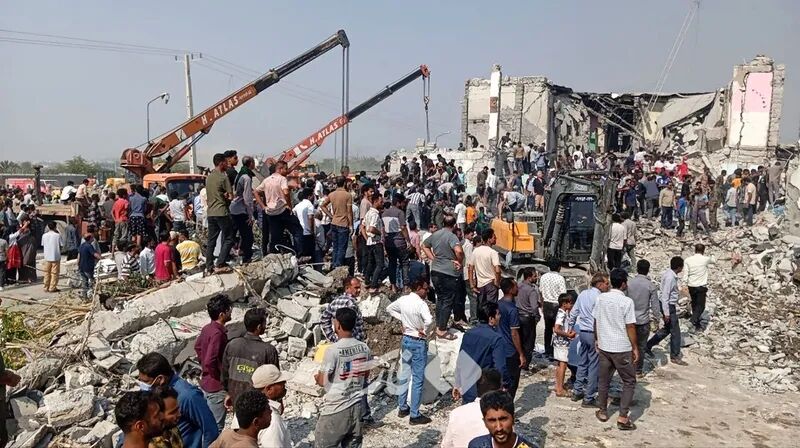
◉ 28 February 2026, Minab, Hormozgan Province, Iran: a girls’ school was attacked during US and Israeli military operations. Image source: IC Photo
People always like to make war a talking point, discussing “geopolitics” and “international relations”, or how oil prices and futures fluctuate in response to war. Yet these “strategists” rarely look directly at the relationship between war and oil-dependent modern life. Once that connection is confronted, war is no longer merely fleeting violence for people; instead, it demands that people reflect on the predatory consumption habits within seemingly peaceful everyday life, and make long-term, practical changes.
I will begin with The Tragedy of American Science: From the Cold War to the Forever War, by Clifford D. Conner, an American historian of science. I will then draw on the views and arguments of further scholars to trace the history of how the United States has gradually become trapped in oil.
Some may believe that modern society naturally depends on oil and that changing oil consumption is an almost impossible task. Yet this history has made me realise that humanity could in fact have used oil through different technological systems. This scientific tragedy, which has seeped into the everyday details of modern life—food, clothing, housing, and transport—is not irreversible. And it is through war, again and again, that we in our peaceful lives come to think more carefully about this issue.
The Two Tragedies of American Science
On 11 March, sources disclosed interim findings from the US military’s investigation into the 28 February airstrike on a primary school in Minab, Iran: US Central Command used outdated data when generating strike coordinates for Tomahawk cruise missiles, erroneously classifying the primary school as a military base. One view holds that US forces had over-relied on AI to automatically identify targets and make strike decisions, at the expense of the rigour of human review.
This is not the first time US missiles have struck children in Iran. In the chapter of The Tragedy of American Science on the development and production of US military weapons, Conner particularly documents and discusses how high-tech modern weapons such as US missiles and drones have caused civilian casualties.
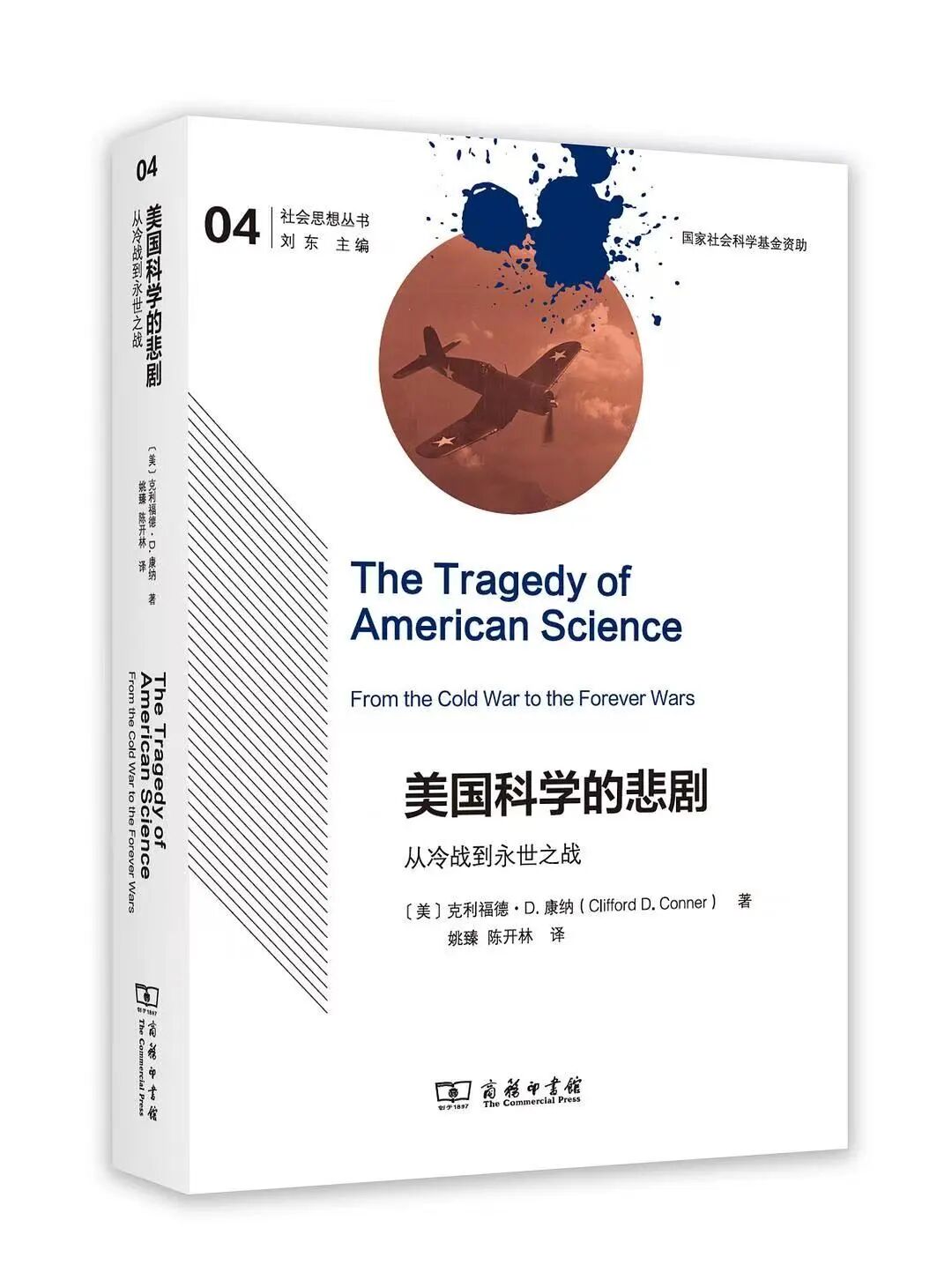
◉ Book cover of The Tragedy of American Science: From the Cold War to the Forever War
Despite repeated failures, the post-Second World War frenzy over weapons automation has only intensified. Even during the Vietnam War, drones were still only a tool for dropping leaflets, but now they have evolved into a powerful instrument of “video game warfare”—all an operator has to do is aim at a humanoid icon on a computer screen, and a drone can take a life. In other words, no matter how profoundly a weapon departs from humanity, there always seems to be an endless supply of funding, talent and knowledge to realise it—Conner notes that from the end of the Vietnam War to 2017, total US government spending on scientific research approached US$3 trillion, while defence-related R&D accounted for more than half of the US government’s total R&D expenditure.
Borrowing Conner’s concept, I believe there is another tragedy of American science, one that takes place not in the realm of war but in the realm of peaceful everyday life: a modern lifestyle that is excessively dependent on oil.
America’s Energy Imperialism
From the 2001 invasion of Afghanistan and the 2003 Iraq War, to the 2014 airstrikes on Syria, and then to the 2026 invasion of Venezuela and the US–Iran war, these regions either possess abundant oil resources—Venezuela, Iran and Iraq, for example, all have crude oil reserves among the world’s top five—or are strategically vital locations for controlling oil resources.
Resource crises will eventually evolve into questions of war and peace: for people living in the 21st century, this is quite evident. A key turning point was 1998, when US crude oil consumption first became primarily dependent on imports, and when concerns about peak oil first emerged. As revealed by French scholar Philippe Saby-Lopez in his book Oil Geopolitics, the first priority after George W. Bush took office in 2001 was not counter-terrorism, but ensuring oil consumption in the United States. Although, after 9/11, US military activity was always ostensibly undertaken for counter-terrorism and to oppose the proliferation of weapons of mass destruction, most of it was motivated by the “energy imperialism” motive of using military means to directly or indirectly control global oil supply.
Although in recent years the United States has boosted domestic crude oil production through the “shale revolution”, what is mainly being extracted is light, low-sulphur “light oil”. The refineries and equipment built early on in the United States were designed to process heavy oil from Latin America and cannot handle light oil, so the country still has to import crude oil from other countries.
To fully explain the relationship between war and energy imperialism would probably require writing another book. The reason I still feel that The Tragedy of American Science overlooks the oil problem is that, in order to emphasise the tragic impact of war on American science, the author adopts an explanation that exaggerates war’s autonomy. This explanatory framework is known as the “permanent war economy”: the idea that the American economic system cannot do without war, and that only continuous large-scale war spending and investment in armaments can drive economic growth.
However, critics have long pointed out that the siphoning of funds and resources by defence companies, and the privileged position they enjoy in terms of profit margins, are at the same time squeezing the room for civilian manufacturing to develop, causing economic contraction. In other words, there is no purely positive correlation between war and economic prosperity.
This explanation of the permanent war economy tends to portray war and the military-industrial complex behind it as a force that operates entirely independently, with no connection to ordinary people’s daily lives, or even to general political issues. But from the perspective of oil, the over-reliance on oil in the lifestyles of wartime and peacetime societies is so obvious. In this regard, there is clearly so much that humanity can still do.
Today, with war and peace so tightly intertwined, rejecting war means rejecting far more than war itself.
America’s Oil Addiction: A History
Although many countries are using new energy technologies to transition their energy systems, between 2014 and 2024 global oil consumption rose from 90 million barrels per day to 100 million barrels per day. In 2024, the United States’ average daily oil consumption reached 19 million barrels, accounting for 18.7% of the world total, while its population accounted for only 4.2% of the world population, which works out to an annual per capita oil consumption of 20.4 barrels. In 1930, average annual oil consumption per American was only 8.4 barrels*. What exactly happened in the meantime?
*Editor’s note: The per capita oil consumption data were calculated by the author using energy consumption statistics from the United States Energy Information Administration over the past 250 years, United States population data, and conversions of thermal energy units.
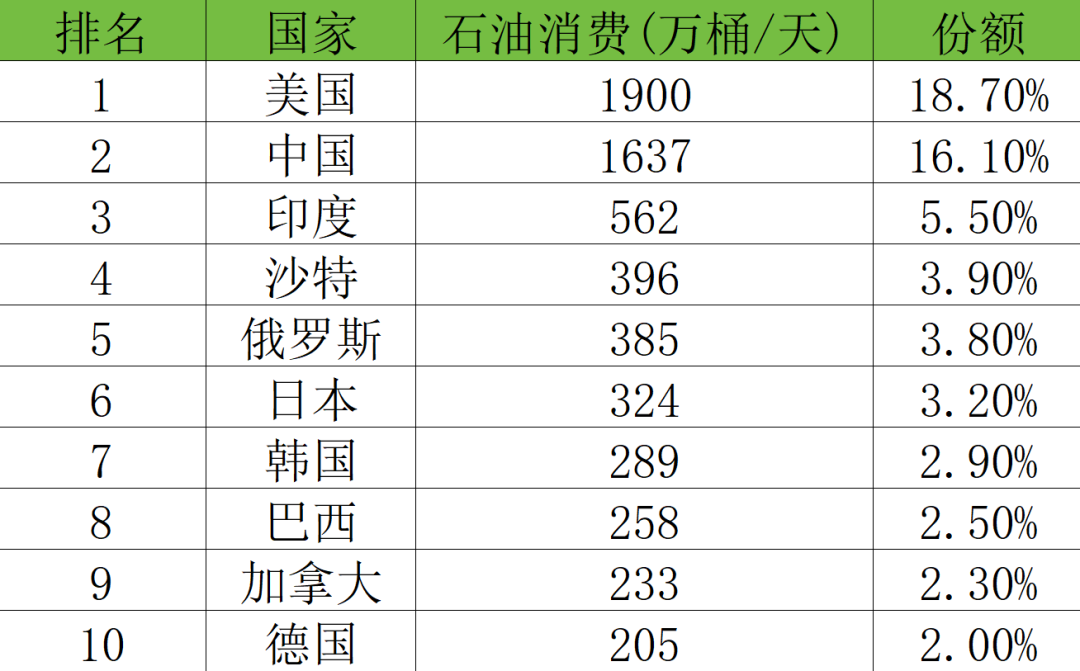
◉ Oil consumption by country in 2024. Data source: Energy Institute, 2025 World Energy Statistics Yearbook
Humans do not consume oil directly; this black liquid does not have any inherent use value. It is the mastery of scientific knowledge in physics, chemistry and other fields that allows humans, through fractional distillation and cracking in refineries, and subsequent specialised processing steps, to obtain petrol, diesel, fertilisers (especially nitrogen fertiliser), plastics and other petroleum-derived products. These products are then used directly or indirectly in the production and processing of other products, generating heat energy to power cars, cruise ships and agricultural tractors, supplying energy to cold-chain systems and the extremely energy-intensive ultra-processed food industry, boosting yields in industrialised agriculture, producing everyday plastic products… thereby creating a modern world built on oil.
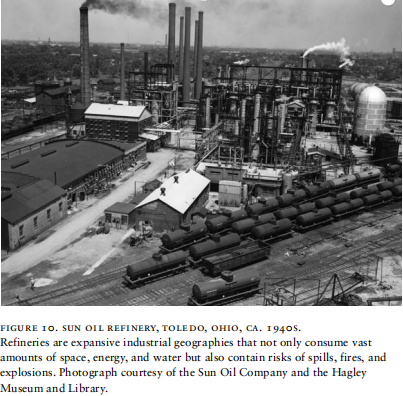
◉ In the 1940s, Sun Oil Refinery in California, United States. The author argues that refineries are sprawling industrial spaces that not only consume large amounts of land, energy and water resources, but also carry risks such as oil spills, fires and explosions. Image source: Lifelines: Oil, Freedom and the Power of Capital
Behind this complex oil commodity chain lie broader transformations in the overall way of life. In his book Lifelines: Oil, Freedom and the Power of Capital, American scholar Matthew T. Huber describes in detail the historical process through which oil became embedded in the American economy and culture: From the 1930s onwards, the United States gradually established a way of alleviating capitalist crises: in the main spheres of social reproduction—food, clothing, housing and transport—it built for ordinary people a lifestyle of mobility, convenience, freedom and privacy.
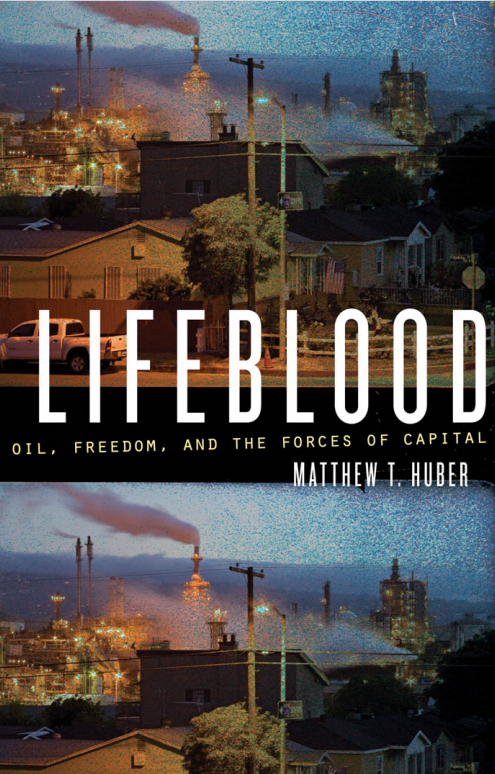
◉ Book cover of Lifelines: Oil, Freedom and the Power of Capital
Huber argues that the American way of life appears highly personalised, but behind this personalisation lies a vast technological system that supports it, with oil as the most important material in its construction. Therefore, rather than simply blaming Americans for their oil addiction, it is more important to understand how they are trapped in the oil system.
Taking petrol, which accounts for 43.21% of total US oil consumption, as an example, can an American easily break free of oil? During the 1970s oil crisis, he mentioned a housewife living in the suburbs of Long Island, United States, who complained about petrol shortages: “There’s no way we can walk to the food store, the bank and the doctor, and forget about any cycling for pleasure! If it’s a 9-kilometre round trip to a nearby supermarket… how am I supposed to feed my family now?” Clearly, the layout of a range of suburban spaces—workplaces, detached houses, highways, supermarkets and private cars—had already predetermined their dependence on petrol.

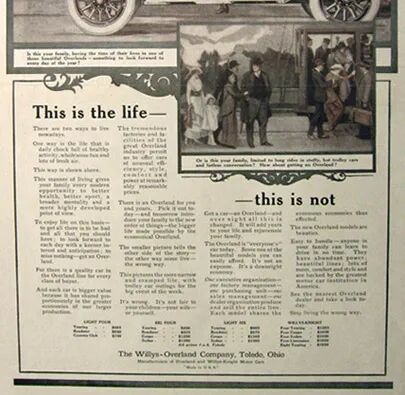
◉ In 1917, a Willys Overland car advertisement, “This is the Life…This is not”. Huber comments that in the age of the car, marketers have continually contrasted crowded and unreliable public transport systems with the private car, highlighting the superiority of the latter. Image source: https://www.atticpaper.com/
Also, from the 1930s onwards, Americans became increasingly dependent on oil-based agriculture—built on diesel tractors, fertilisers and pesticides—to obtain cheap food. In 1900, Americans’ food spending accounted for only 44% of overall consumer spending; by 1960, it had fallen to 27%. Therefore, some have called oil-based agriculture “using land to convert oil into food”; from 1930 to 1970, the use of fertilisers and pesticides in US agriculture increased by a full 1338%.
In fact, every stage of the industrialised food system is highly dependent on fossil fuels: not just agricultural production, but also processing, packaging, transport, storage and cooking. According to the report by the international body, the International Expert Panel on Sustainable Food Systems (IPSE-FOOD), as many as 40% of the world’s petrochemical products now ultimately end up in the food and agricultural system.
The proliferation of various plastic products is also closely linked to the post-war American mobile lifestyle and to disposable consumer culture, as numerous studies have already shown.
What Comes After the Bicycle?
People should have regarded oil as a scarce resource and used it more rationally. But the examples above clearly show that how oil is used is not entirely a matter of morality. It is specific lifestyles and social orders that together determine what kinds of petroleum-related products are encouraged to be produced, how much is produced, and what desires and needs they are used to satisfy.
Huber recalls a letter written to Nixon by a writer during the 1970s oil crisis, which may show why Americans were unable to escape oil consumption:
“Thousands of us have no public transport to get to our workplaces and can only rely on our own cars. I travel 70 miles each day back and forth between workplaces, but no bus can take me there. I must drive, and before long I will be unable to buy petrol or bear the associated costs. It is truly unfair!”
In the end, all that was left for this writer was anxiety about making a living. At the same time, American society was also marked by a dangerous hostility towards Arab countries; a country singer wrote: “If they do not lower oil prices, we will cut off their food supply.”
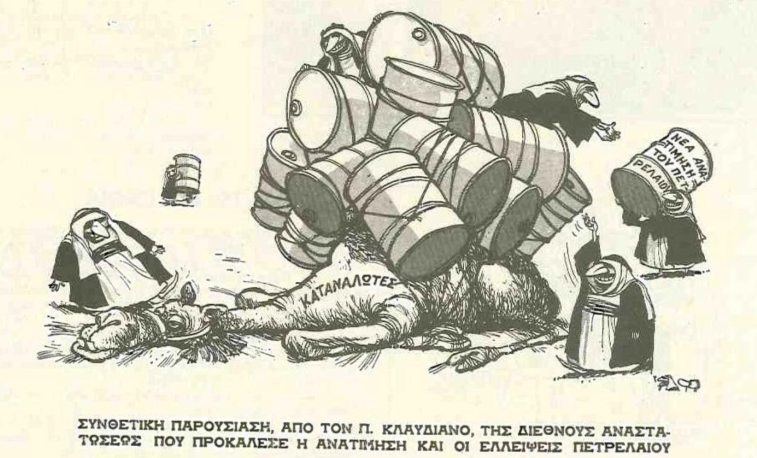
◉ Huber says that one of the shocks of the 1970 oil crisis for Americans came from the audacity of “other” countries to exercise power over their own oil. One result of this feeling was a large number of cartoons attacking Arab oil figures. This image was drawn by Pat Oliphant. Image source: https://athena.cut.ac.cy/
It is highly dangerous for these two sentiments to coexist in one society; an oil-dependent lifestyle is fully capable of forming a dangerous coupling with “energy imperialism”.
In my view, people in modern society have, through science, acquired the power to transform the world, yet in developing specific technological products and designing technological systems, they have willingly or unwittingly embedded considerations of capital and political calculations. Once these technological systems turn round and colonise people’s lives, reshape their desires, and constrain their actions, the wish to pursue a good life can even end up in a reactionary linkage with war. Science is, in turn, used to reinforce war’s destructive power. This is precisely the true tragedy of modern society.
This way of life continues even now to spread to late-developing countries as a model and example. If humanity does not want to fight a war of mutual destruction over resources destined to run dry, the question that truly needs to be asked may be as concrete as that writer’s complaint: why can’t there be more buses? Perhaps other questions could be asked as well: why can’t food supply chains be shortened to prevent excessive energy consumption and plastic packaging? Why can’t farming methods that do not rely on pesticides and fertilisers be encouraged?
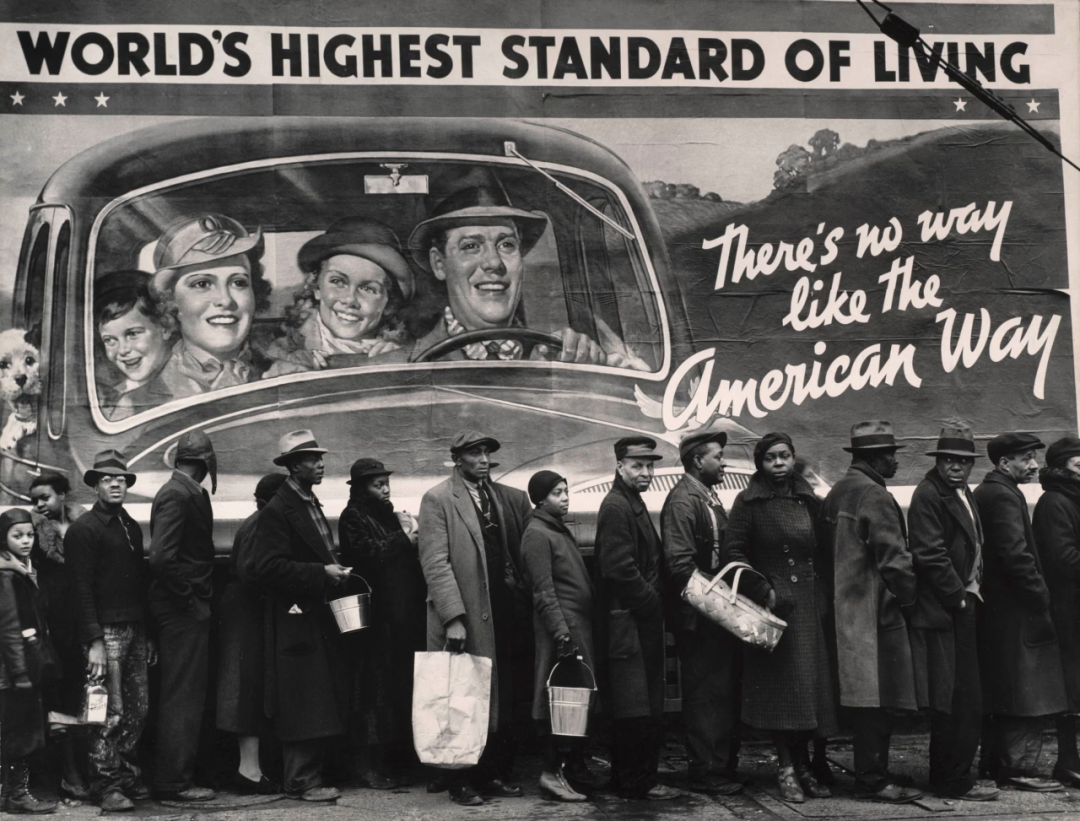
◉ “World’s Highest Standard of Living” (“World’s Highest Standard of Living: There’s no Way like the American Way”) comes from Margaret Bourke-White’s photographic work, Louisville Flodd Victims. Image source: Rare Historical Photos
Similar questions have not gone unasked. As early as the 1970s, the North American political economist Dallas Smythe, after visiting China, wrote an article titled “What Comes After the Bicycle?”, in which he hoped that after the bicycle, China would develop public goods and collective consumption, rather than capitalist individualist consumption represented by the car.
However, as it turns out, achieving this is not easy; it depends on our value judgements about different ways of life: advanced or backward, rich or poor, free or repressed, and so on. But now, among these value judgements, we may also need to add a pair: war or peace, or survival or destruction. In the face of the US–Iran war and the various war crises of the future, we need to recalibrate our value judgements about a good life and to give more sustainable ways of life a positive significance for building peace.
Ultimately, we may well find a more rational way to use oil, this precious non-renewable resource.
References
– This is Foodthink’s 824th original article –

Foodthink
author
Yu Yang
An INTP who studied under D. H. Lawrence
Editor: Pei Dan
Layout: Ming Lin
Scan to leave a tip and support original food knowledge
▼

▼
Click the image to read related articles




▼
Click a keyword to open more article collections
Seeds | Agritech | Policy | Fermentation | Nutrition | Fruit | Fisheries | Events | Jobs | Takeaway | Wet Market | Livestock | Food Talk | Sharing Sessions | Book Club | Harvest Festival | Smallholder Stories | Climate Change | Rural Development | Cooperative Economy | Urban Farmers | Food Safety | Digital Technology | Biodiversity | Pandemic and Food | False Solutions | Ecological Agriculture Internship Programme
Beijing | Hebei | Shanghai | Guangdong | Guangxi | Henan | Sichuan | Jiangxi | Xinjiang | Shaanxi | Hong Kong | Chongqing | Zhejiang | Jiangsu | Guizhou | Taiwan | Inner Mongolia | Philippines | Canada | Russia | Mexico | Italy | United States | United Kingdom | Germany | Netherlands | Thailand | Sweden | Japan