
Fourteen Years Since Coming Home, Finally Started Farming
I. Nearly Left
My father asked, uncertainly, whether we should lease out our fields too.
He was probably a little embarrassed about being in the way of the large-scale farmers.
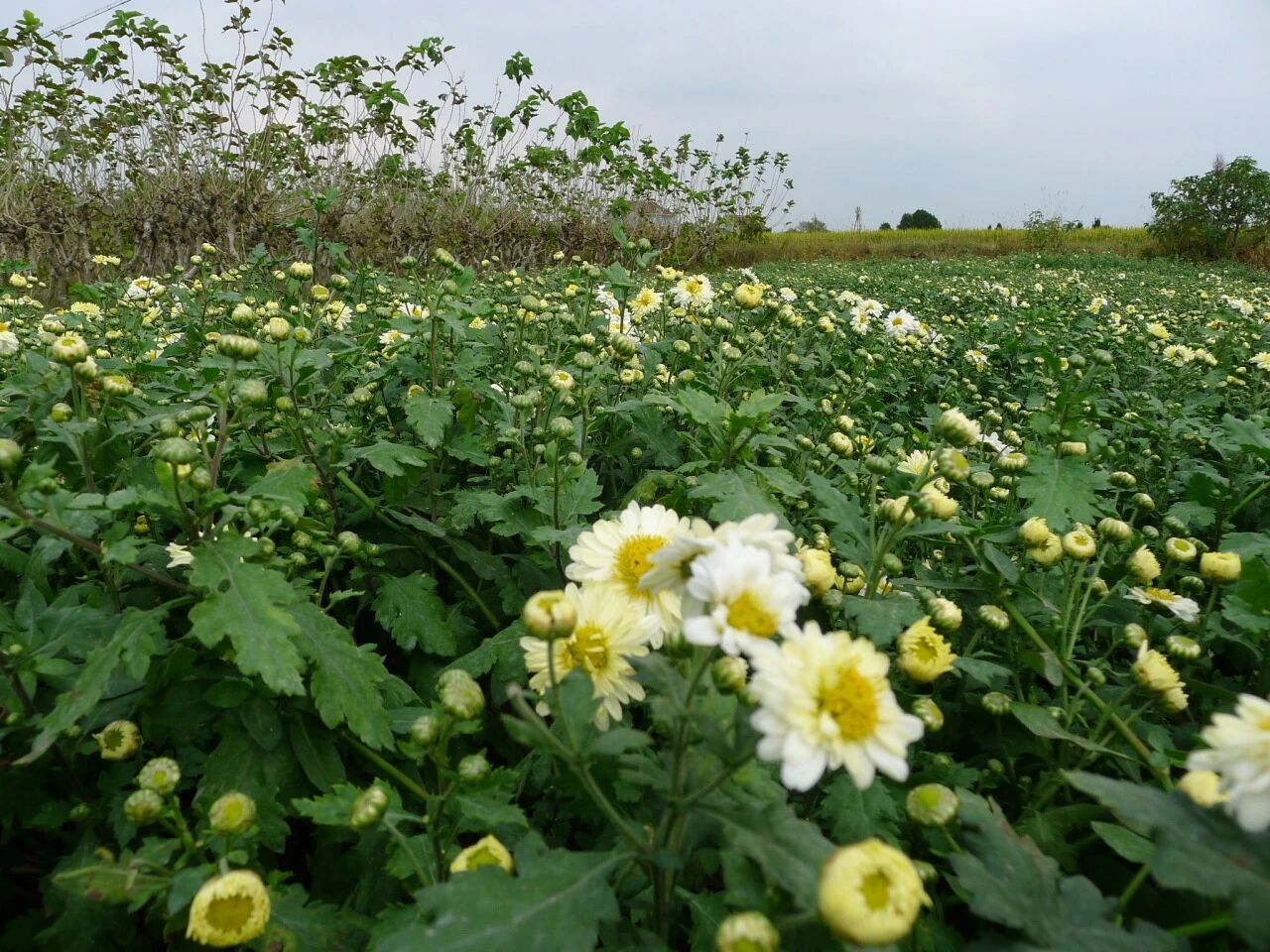
Since leaving Beijing to return home in 2011, we have stayed in our own village the whole time. Along the way, things have shifted a few times.
At the beginning, the motivation was very simple: just go back to our own village and run a small ecological farm. In my mind’s eye, the farm was right around our own home, lush and full of life. I already knew that ecological farming was hard to make money from (but supposedly it could keep a family fed), yet being able to live in such an environment was compensation enough (this is also why I admire Tang Liang). Then again, a 25-year-old second-generation farmer with virtually no agricultural experience, no social experience, and not a penny to his name – a complete wipeout was only to be expected. In our own village, I couldn’t even rent a plot of land.
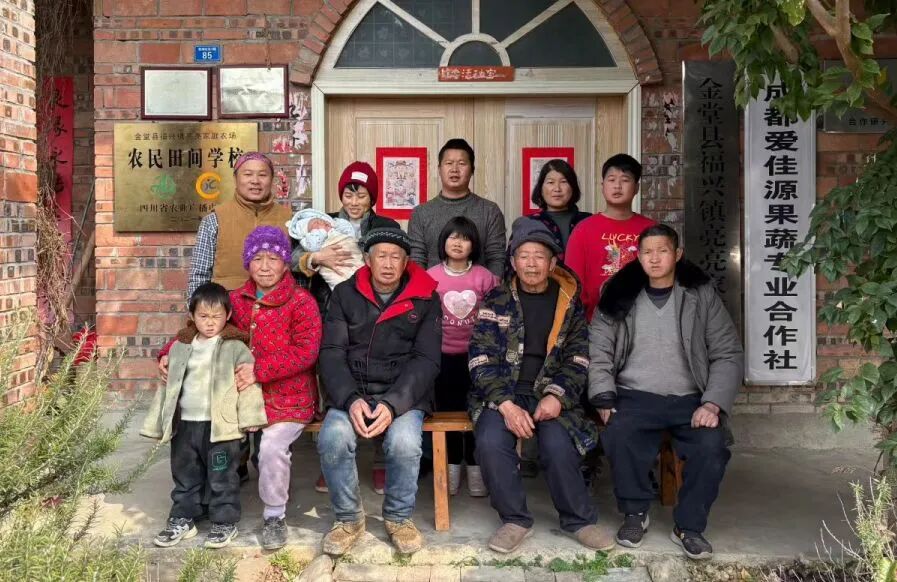
II. Finding a Village
Along the way, as a “veteran” young returnee, I had seen too many cases of failed ecological farm ventures. Besides, we never really saw returning home as a startup, nor did we want to go big, so we never rented any land – just using our own little patch of a mu or so (literally).
When people introduced “Mei and Fish Farm,” the area was so small I felt a bit embarrassed, and it was somewhat of a misnomer. The year before last, we simply changed the company suffix from “Family Farm” to “Silkworm and Mulberry Culture”.
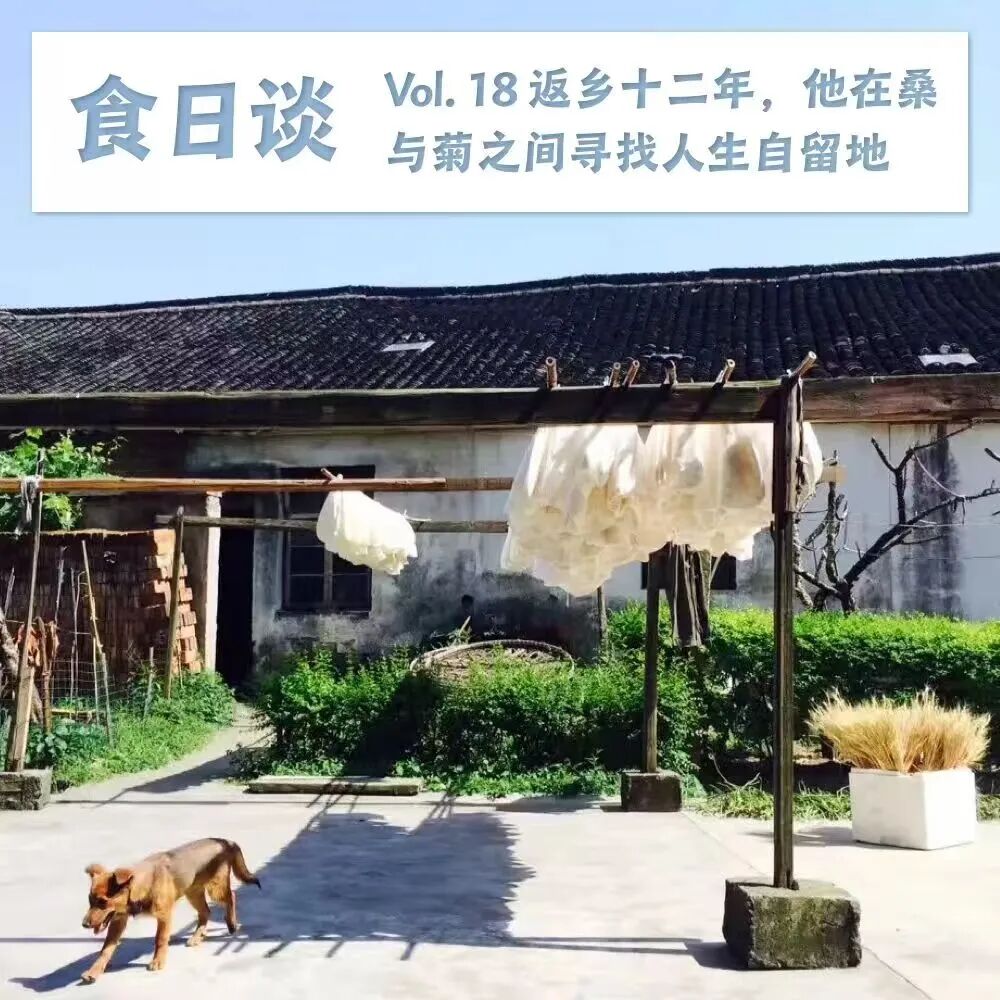
We really started looking at other villages. We focused on the north-west of the county town, because that would be closer to home and more convenient for dropping off and collecting the kids from school. My thinking was: leave our own village, but stay within the silkworm-and-mulberry region. Find a village with the same culture, so we could carry on with what we were doing.
Honestly, all these years in our own village, being around parents and relatives – it is the constant drain of a closed, small-world community, truly exhausting. Better to create some physical distance. Out of sight, out of mind.
Our calligraphy teacher recommended a village near Wuzhen, saying there was a house for rent with a large mulberry grove right next to it – perfect for us. We were a step too late; by the time we went, someone had already rented it as a warehouse.
There was another village that had long been earmarked for “city folk” to start businesses. Most of the original villagers had already been relocated. The company running the village had been operating for a few years but was in a half-stagnant state.
We also visited a village where a friend runs a teahouse. The villagers were mostly absent-minded, waiting for the major road to the west to be widened so they could finally collect their long-awaited, sizeable demolition compensation.
My wife, Yuhui, found a house online, a bit off the main road. There was a grove of trees in front of it. Looking more closely, the trees were a row of withered, listless mulberry trees. It turned out the landlord had planted nursery saplings after she stopped raising silkworms. She said if we wanted to raise silkworms, she would let us use all her silkworm rearing trays. But at the time, some construction workers were still renting a room inside, so we would have to wait until the end of the year.
At the thought of having to clean, renovate, and organise a three-storey house (and the mulberry grove), the enormous drain on energy was too much, and Yuhui ended up politely declining the landlord’s offer.
After that, from time to time, we went back to the “City Folk Entrepreneurship Village” a few more times, just to see if any suitable house had come up.
A struggling guesthouse was up for transfer. Yuhui got in touch to go and look. I said, are you serious about opening a guesthouse? She said no – a guesthouse does not need any renovation fuss; we could just use it as a workspace for making silk quilts.
I asked the management company whether they still had any land. They had a plot – 3,000 yuan per mu per year. Why so expensive? That plot is zoned for amusement facilities and experiences. I am not doing amusement rides, just ordinary farming. Then there was nothing – all the regular farmland had been leased by the company to grow tobacco.
I do not remember if that was the last time we looked at another village. Anyway, the urge to leave just kept growing.
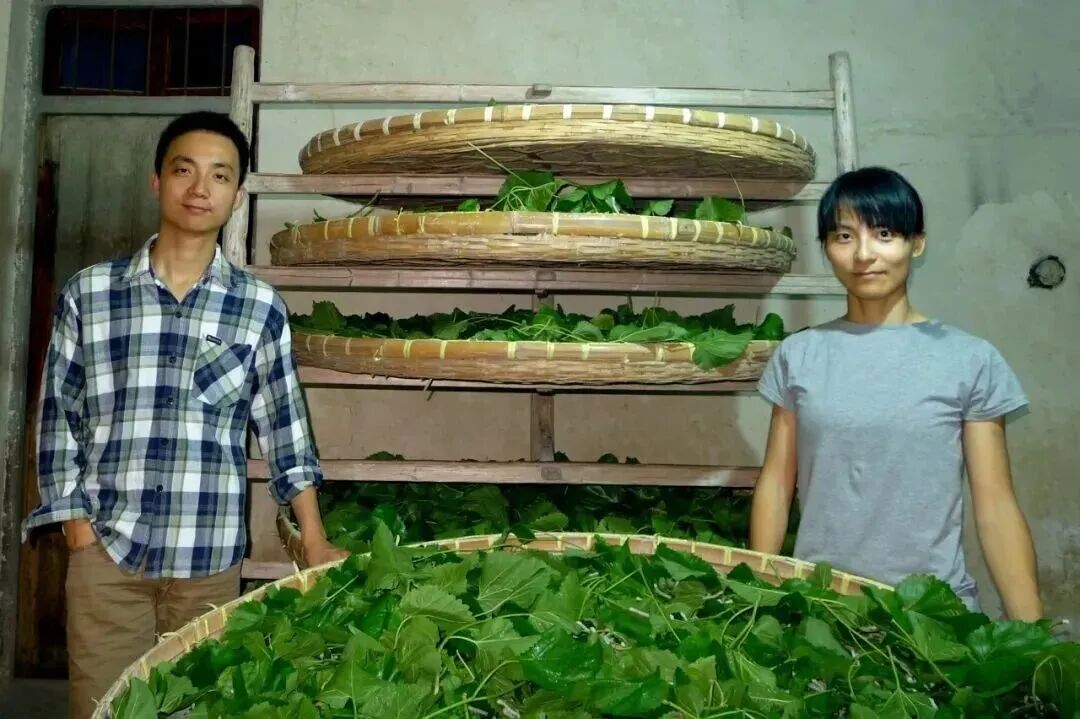
III. A Familiar Stranger
The problem, though, is that I didn’t have much experience growing rice, let alone doing it ecologically.
Rice truly is a familiar stranger.
I remember being in Year 3 of primary school when my mother dragged me out to the field to transplant rice seedlings and, “fiercely” dropped a line: “You’re a farmer – you can’t even farm! Who’s going to look after you when the time comes?” But my mother herself never imagined that it wouldn’t be farming that kept our whole family fed later on – it was the two of them, husband and wife, going to work in a factory. On top of that, with one stage of schooling after another, I simply never got the chance to properly master rice transplanting.
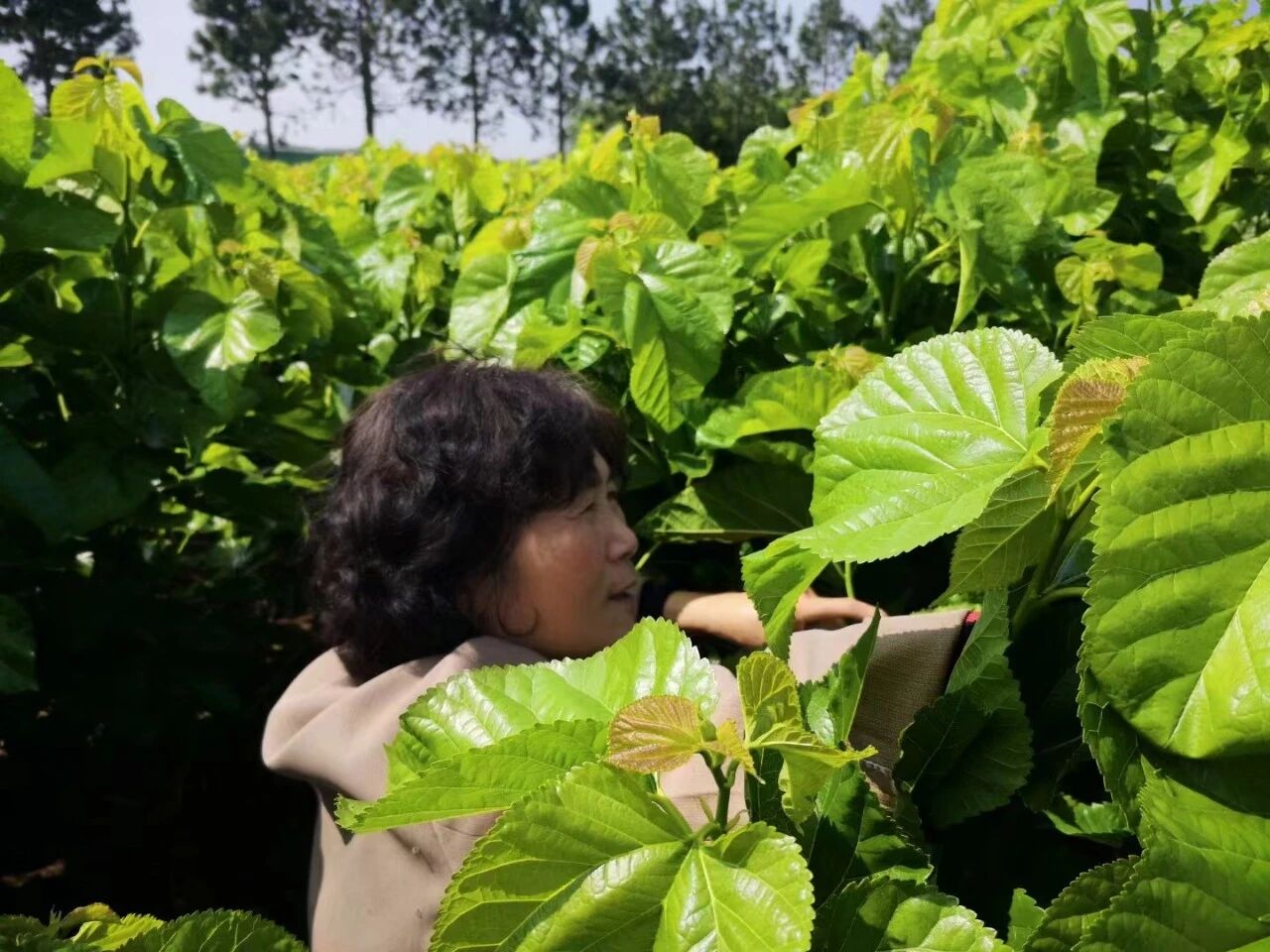
The last time I farmed before leaving the village was the summer after the college entrance exam. Transplanting rice in the fading light, my class teacher was ringing me in all sorts of ways to ask about my results.
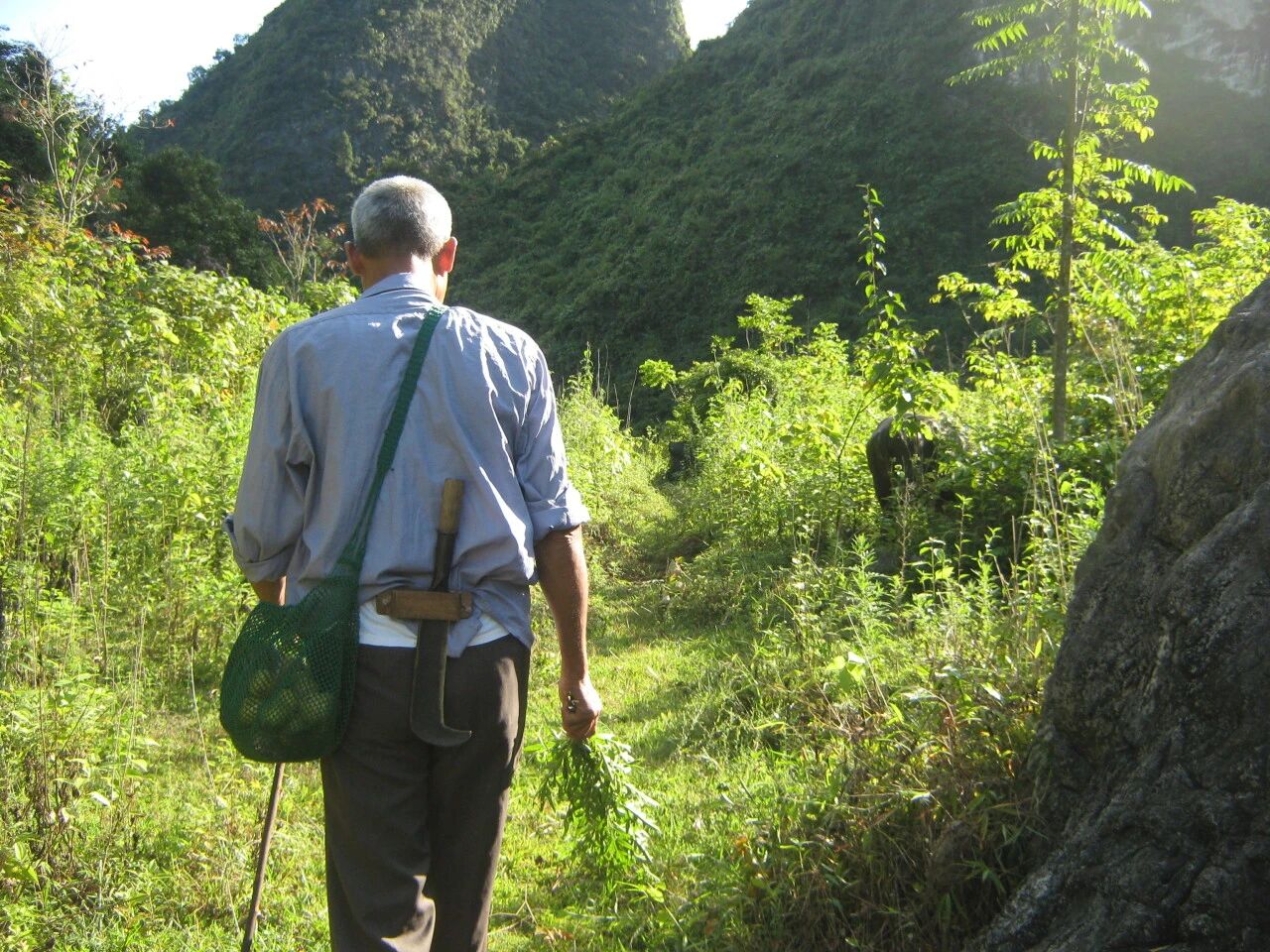
After that transplanting, I first went to university in Jilin, then to Beijing for work, and never set foot in a field again. After resigning in 2011, I did rural public-interest work in Longzhou, Guangxi, where I did work on a rice-paddy duck-farming project with the villagers: going into the fields to observe golden apple snails, handing out ducklings, occasionally checking whether anyone was secretly using chemicals. Other than all that, I really was in the paddy.
IV. The World of Agricultural Inputs
Compared with a decade or so ago, there are now an enormous number of commercial organic fertilisers on the market. Granular organic fertiliser applied by drone offers considerably more efficiency than traditional methods.
A local organic fertiliser manufacturer was pushing a type of “organic slow-release fertiliser“; the description mentioned “using agricultural waste such as straw to extract lignin, cellulose, alginic acid, chitosan and other natural polymeric organics and modify and activate them.” But on further investigation, I found its organic matter content was only 15% (the standard requires more than 30%), and looking at the standard it referenced, GB 15063-2020, it was actually a compound fertiliser!
Even among compliant organic fertilisers, there are quite a few types. By shape: powder, granular, and tonne bags. By the standard they meet: general organic fertiliser (NY/T 525-2021) and biological organic fertiliser (NY 884-2012). Prices can vary by a factor of 10 – the cheap ones at 400–500 yuan per tonne, the expensive ones at 4,000–5,000 yuan per tonne. The one thing all of them share is: you cannot find out where the materials actually come from, and even the list of ingredients is vaguely stated at best.
If you want to claim government subsidies, you must buy from organic fertiliser manufacturers on the government subsidy list.
After much comparison, in the end we still chose the “ancient” rapeseed cake. The raw material is transparent, and it is local, which saves long-distance transport. Of course, that means it is hard to apply mechanically, and no subsidy is available either.
The most frustrating irony was the seedling trays. We commissioned an organic farm in Suzhou to help with seedling raising, and only the day before rice transplanting did we discover that Suzhou uses 9-inch seedling trays while ours locally are 7-inch. Different sizes, and the rice transplanter simply could not use them!
V. Weed and Pest Control Plan
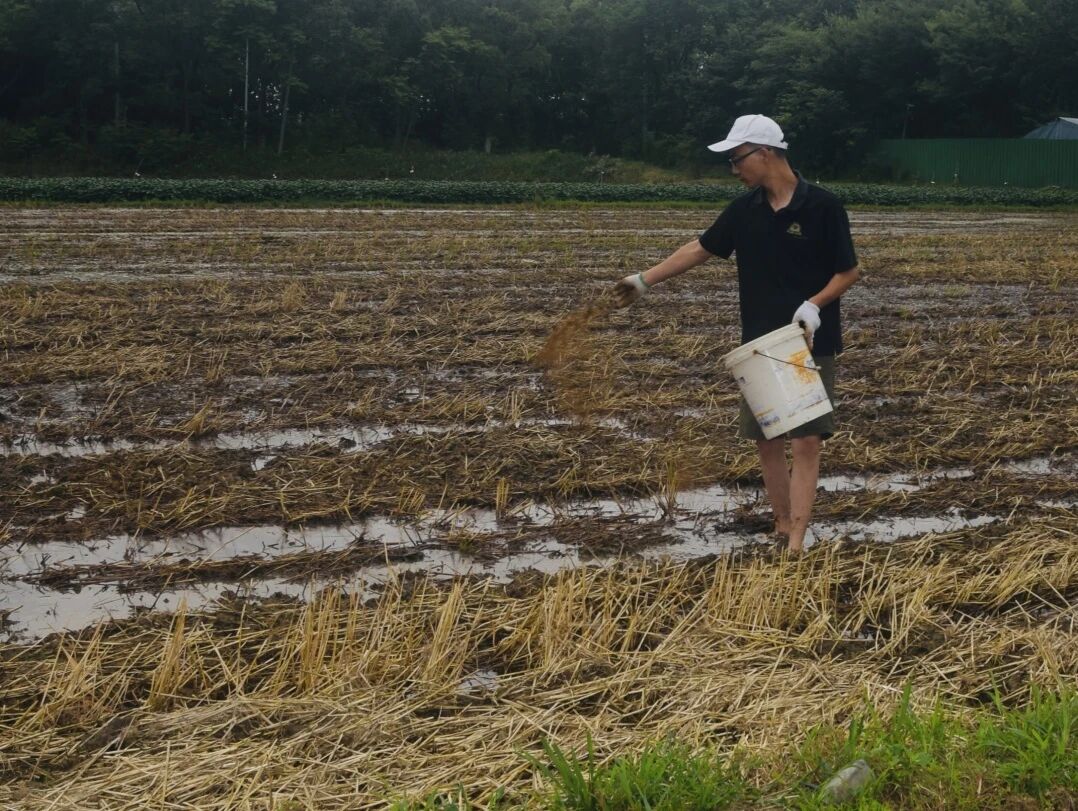
The large-scale grain farmer in my field had wheat as the previous crop, with harvesting usually around 20 May. So with transplanting in mid-to-late June, there was only one month – not enough time for grass to grow.
As if it knew I was going to farm, this year’s wheat harvest was a whole week later than usual! After the wheat was in, I hastily contacted a tractor operator I knew to come and do rotary tillage, but he was busy harvesting wheat and turning over land for a 2,000-mu large-scale farmer. It turned out every tractor operator in the whole town was busy harvesting wheat and turning over land for the large-scale farmers!
By the time I had made all the calls and the field was finally tilled, it was already 31 May – the Dragon Boat Festival!
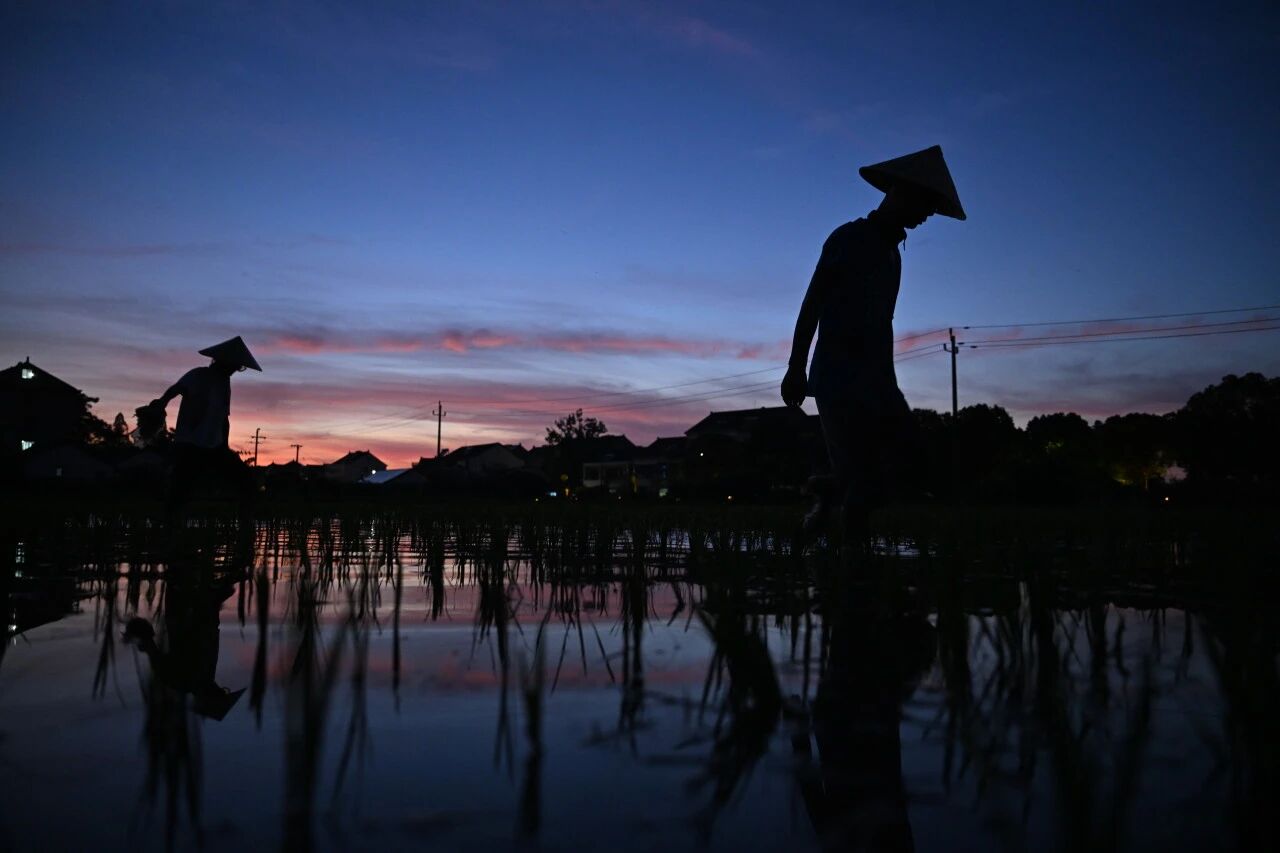
VI. Weeding the Paddy
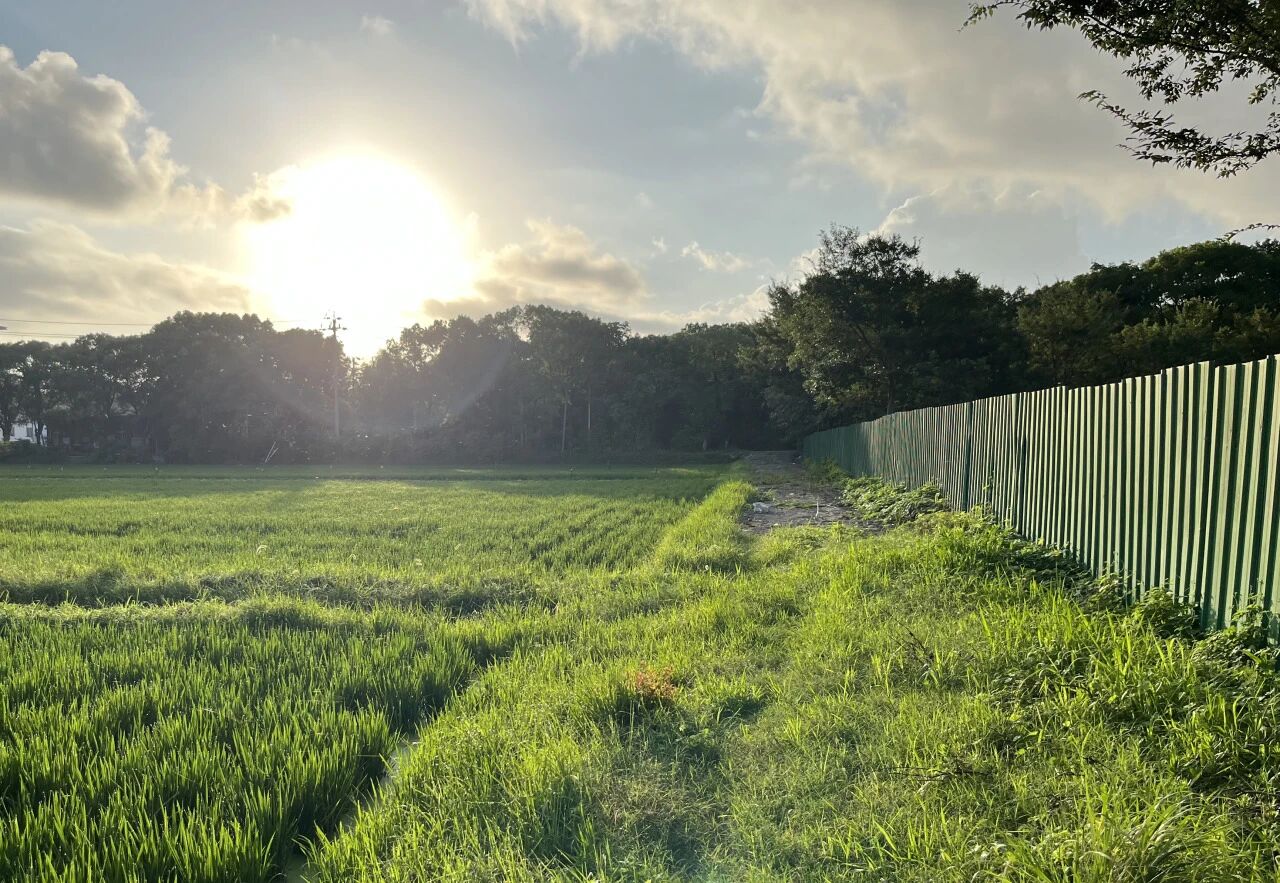
Traditional Chinese farming places great emphasis on levelling the field. By my father’s account, it should be “like a mirror.” Only a perfectly level paddy can control weeds through irrigation, giving the rice a head start from the very beginning.
But large-scale conventional rice farming, underpinned by heavy use of herbicides, no longer places much emphasis on levelling. The tractor operators, too, tend to prioritise efficiency, and the levelling technique and quality leave much to be desired.
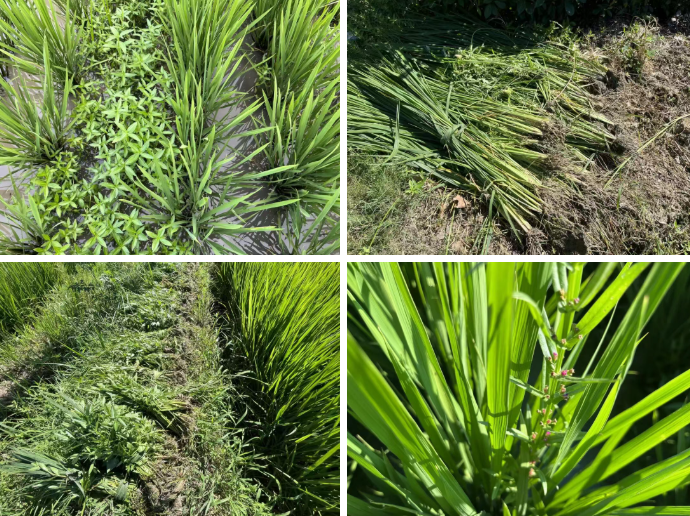
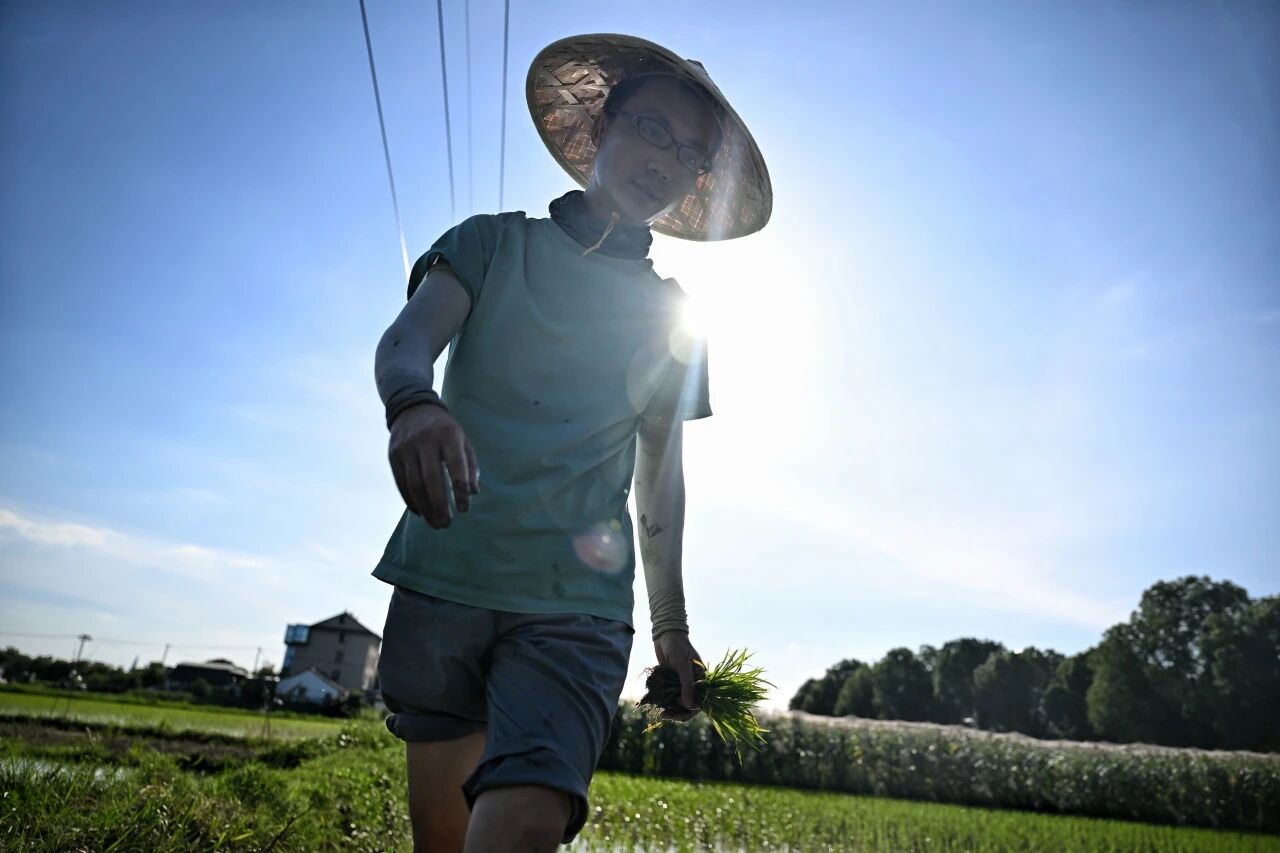
The result of this decline in skill is that we had to bend down and weed the paddy a total of four rounds, with some plots weeded five times. The “yun” in “geng yun” (tilling and weeding) specifically means weeding and treading the grass back into the paddy soil.
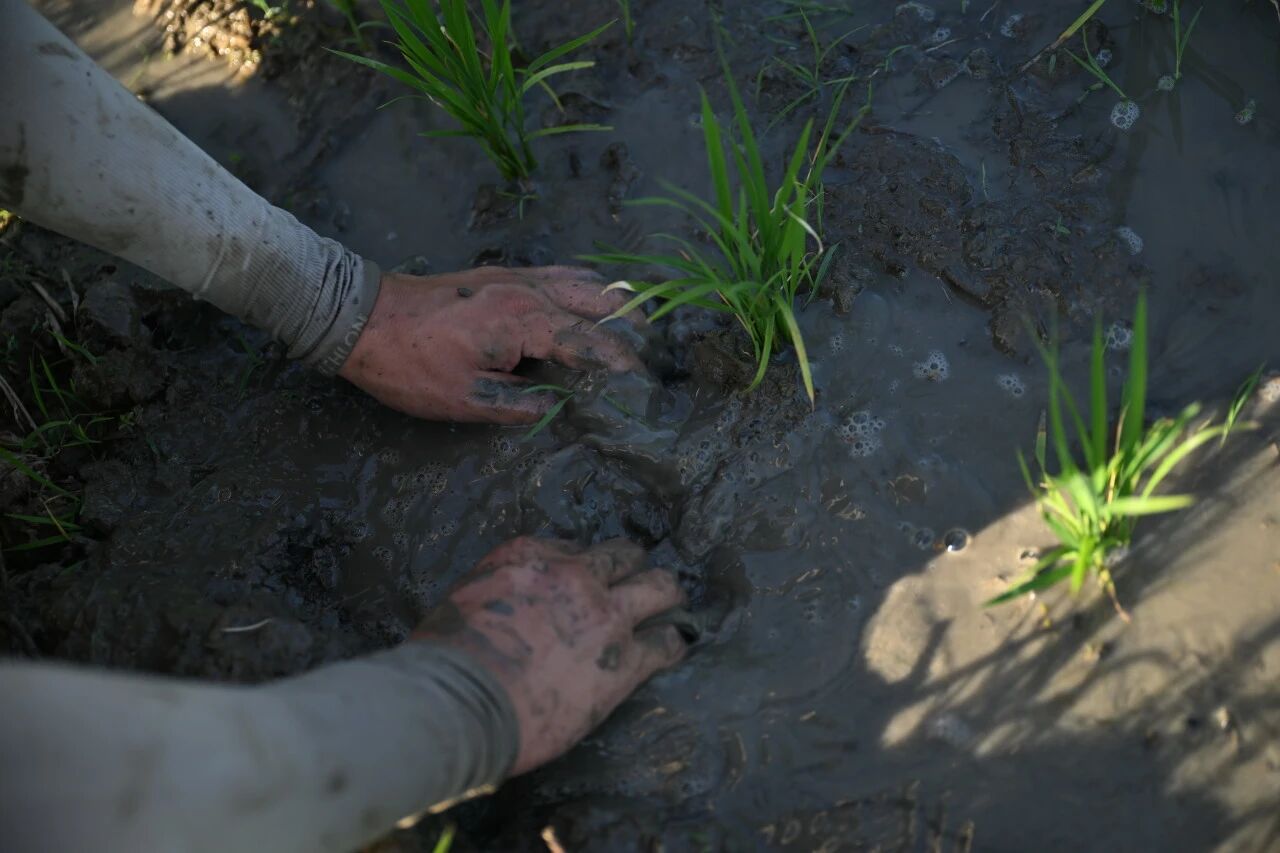
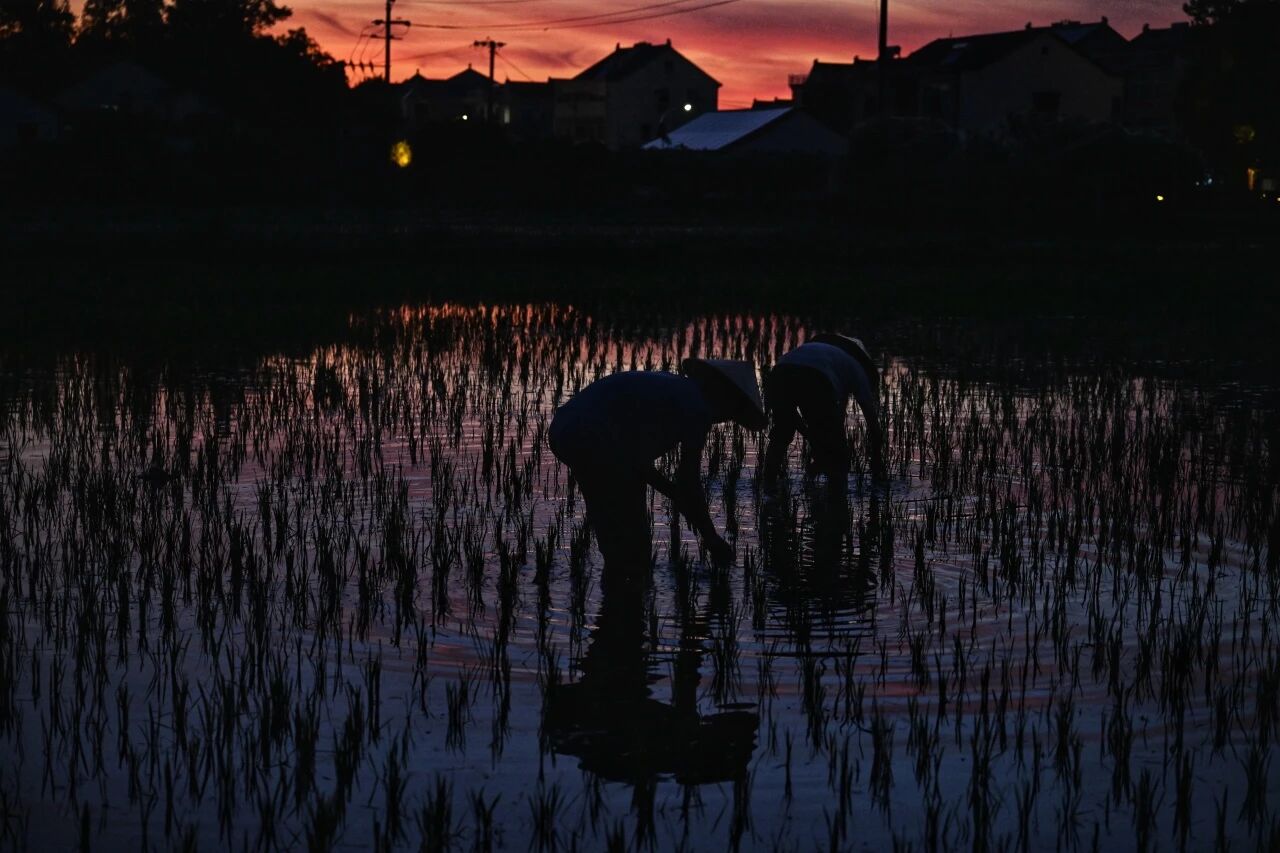
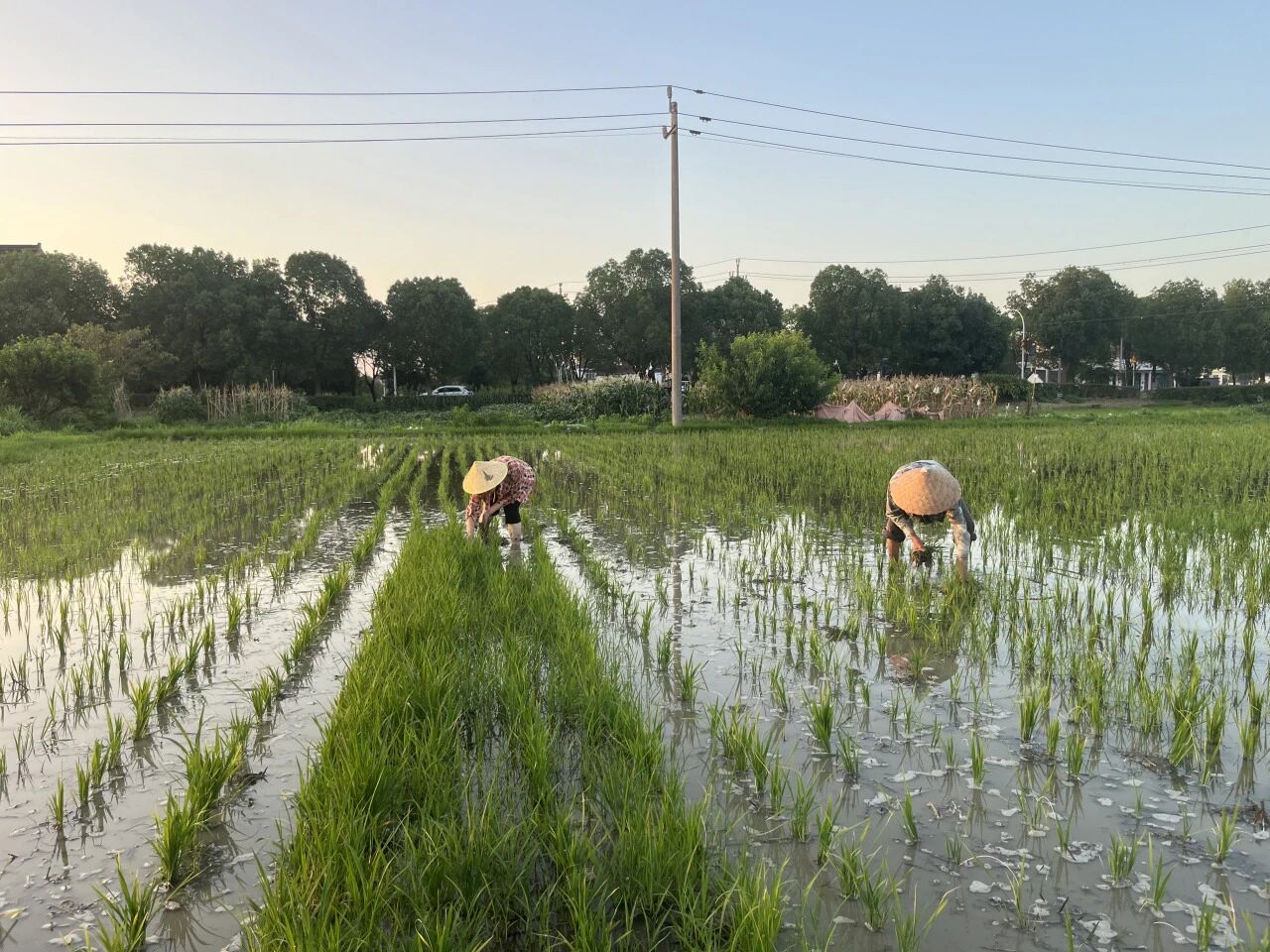
As a farmer who wants a harvest, I don’t want to – and can’t – say something so light and breezy as “coexisting with weeds.”
In the long stretches spent bending and hunching over during most of those 38°C heat days, I really despised the weeds. Then, at a certain moment – probably the day I was weeding out of sheer despair – I suddenly felt the urge to look up the names of those weeds. And so my attitude towards them truly changed.
Every weed has a name: rice leersia, Chinese smartweed, ear-based water amaranth, round-leaved knotweed, three-angled sedge, ditch pennywort. And these weeds are all also traditional Chinese medicinal herbs – for instance, Chinese smartweed is said to clear heat and detoxify, promote urination and unblock the urinary tract, resolve blood stasis and stop bleeding, and can be used to treat dysentery, infectious hepatitis, nephritic oedema, cystitis, carbuncles and boils, and snake or insect bites.
I plan to study and learn more about these paddy weeds in greater detail going forward.
VII. Pests and Silkworms, One and the Same
What was to be done?
We started with blue and yellow physical sticky insect traps, but the results were so-so.
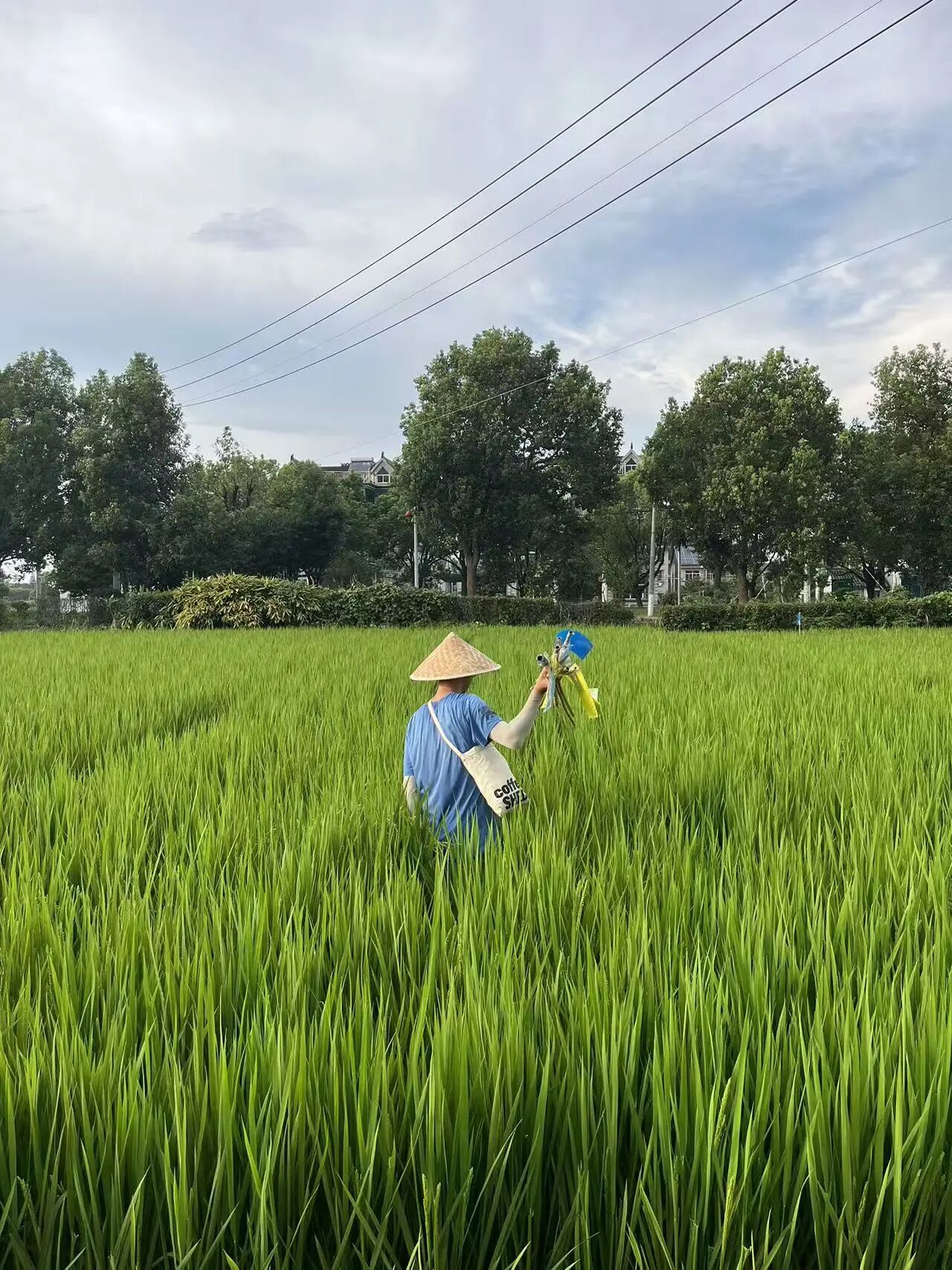
I saw that another ecological farming friend had eventually resorted to a biological microbial agent – something permitted under organic agriculture. I figured I’d stock one up just in case and use it if things really went wrong (the spiders probably wouldn’t be enough in the first year).
Then, while I was reading through the product details, I suddenly noticed that the biological microbial agent was specifically designed to kill Lepidoptera – and silkworms are Lepidoptera!
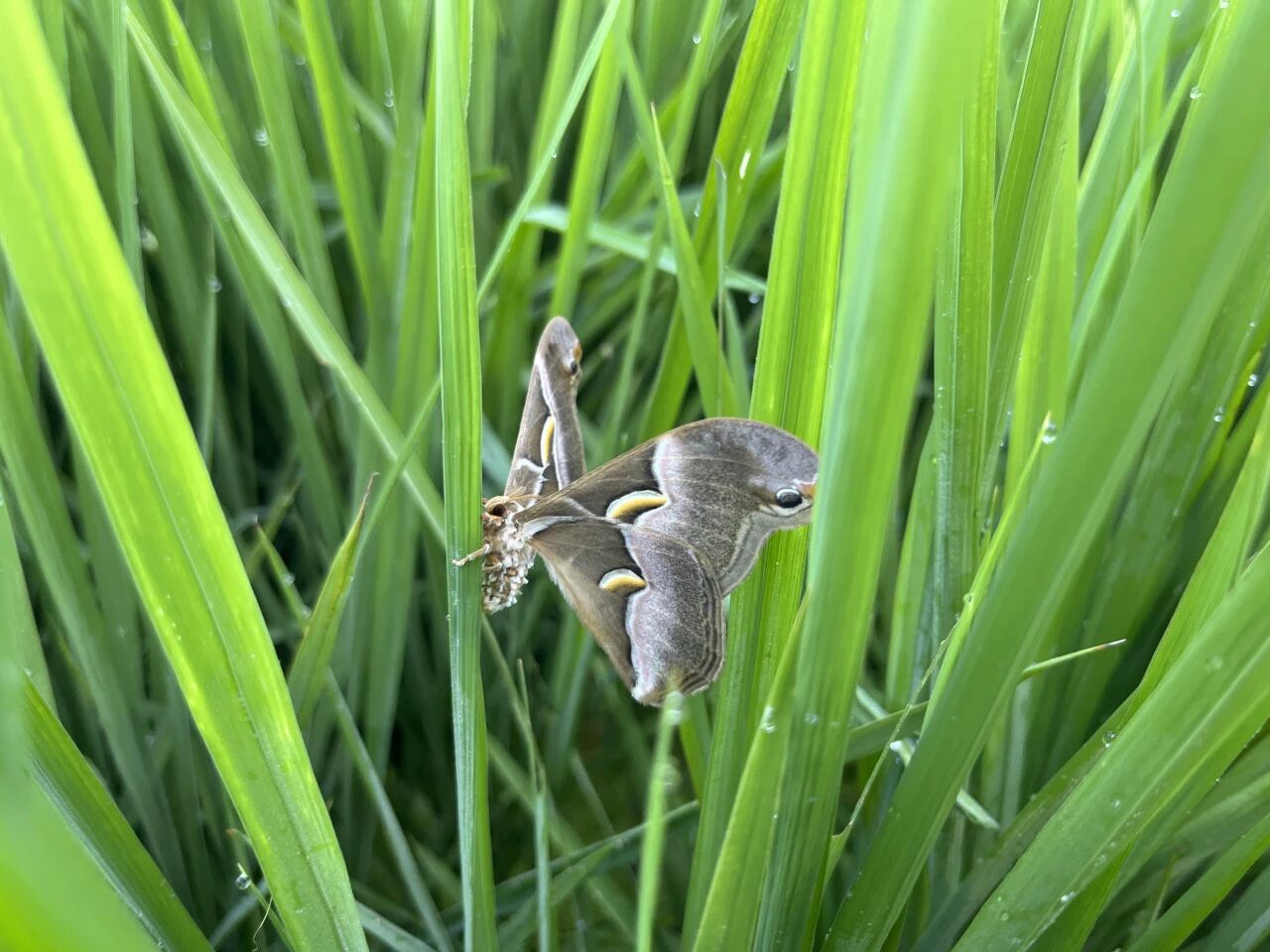
Actually, that made sense. I had even deliberately kept two rice leaf folders and a yellow stem borer, just to observe their life cycles. In the end they pupated, emerged from the casing, and turned into moths – with eyes that looked startlingly alive. Moths and silkworm moths – aren’t they basically the same kind of creature!
And so we decided to forgo even the biological microbial agent – go bare.
After “going bare,” the paddy still grew well, all the way through to a harvest at the Beginning of Winter.
I think the foundation of that success can be summed up in “Three Fields, Six Characters”: field patrol, field drying, and weeding the paddy.
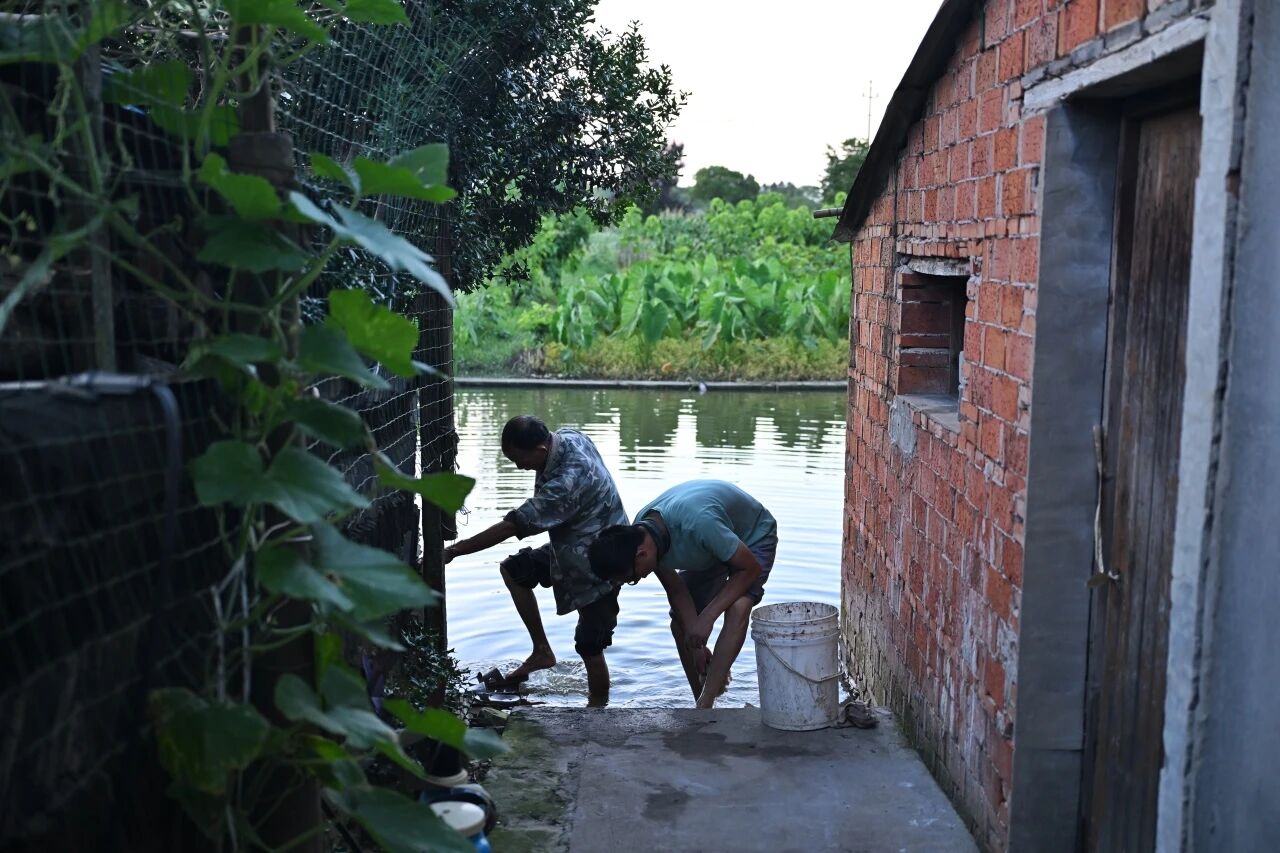
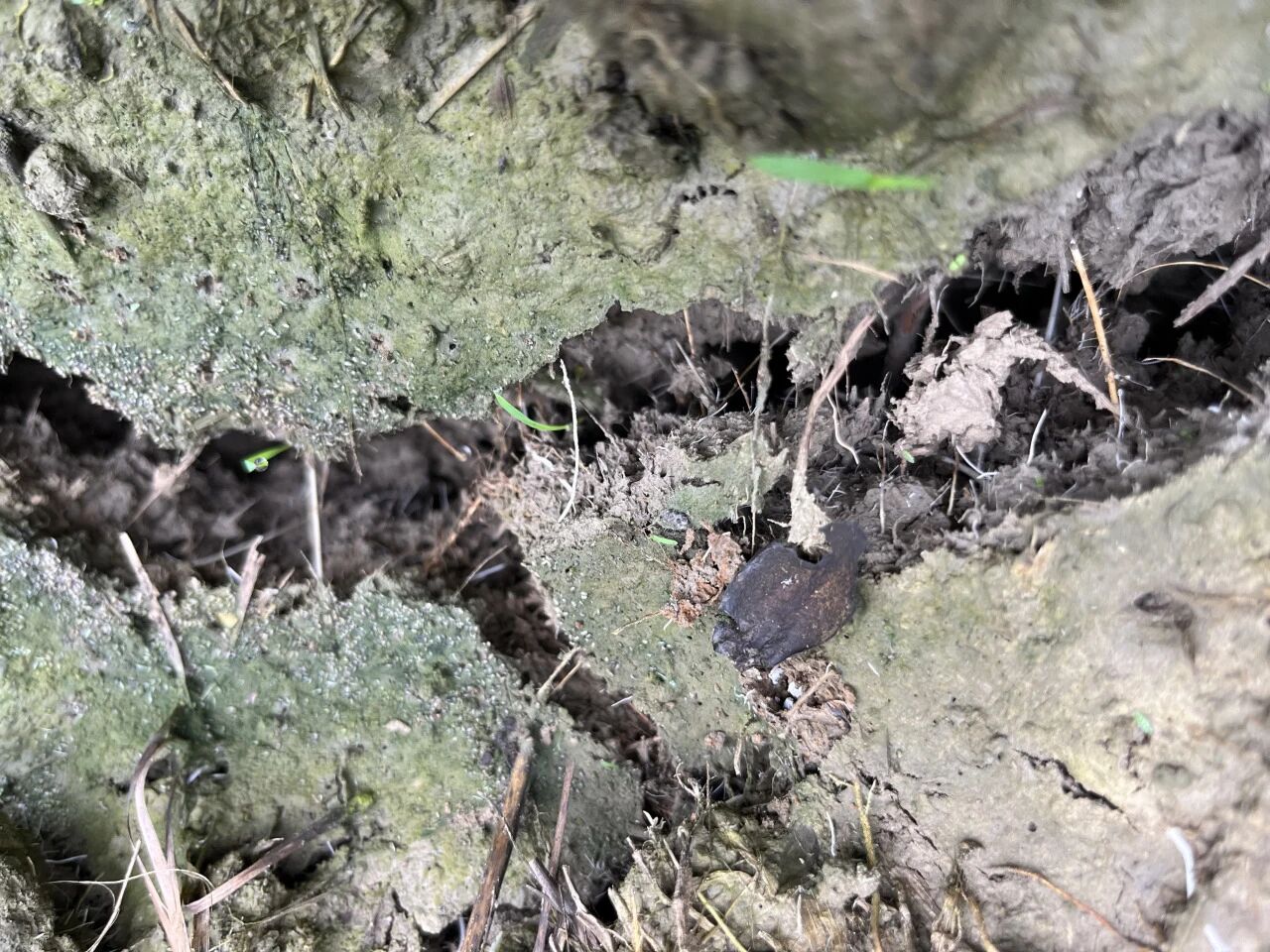
Field patrol means making sure to go through the fields every morning before the sun rises. The main thing is checking the water level. The loaches, crayfish, and eels in the paddy burrow through the bunds at night, and once they punch holes in the ridges, the water leaks out completely. As soon as the sun comes up, the weed seeds in the field will start germinating. Field patrol is about spotting the holes in time, plugging them, and refilling the water.
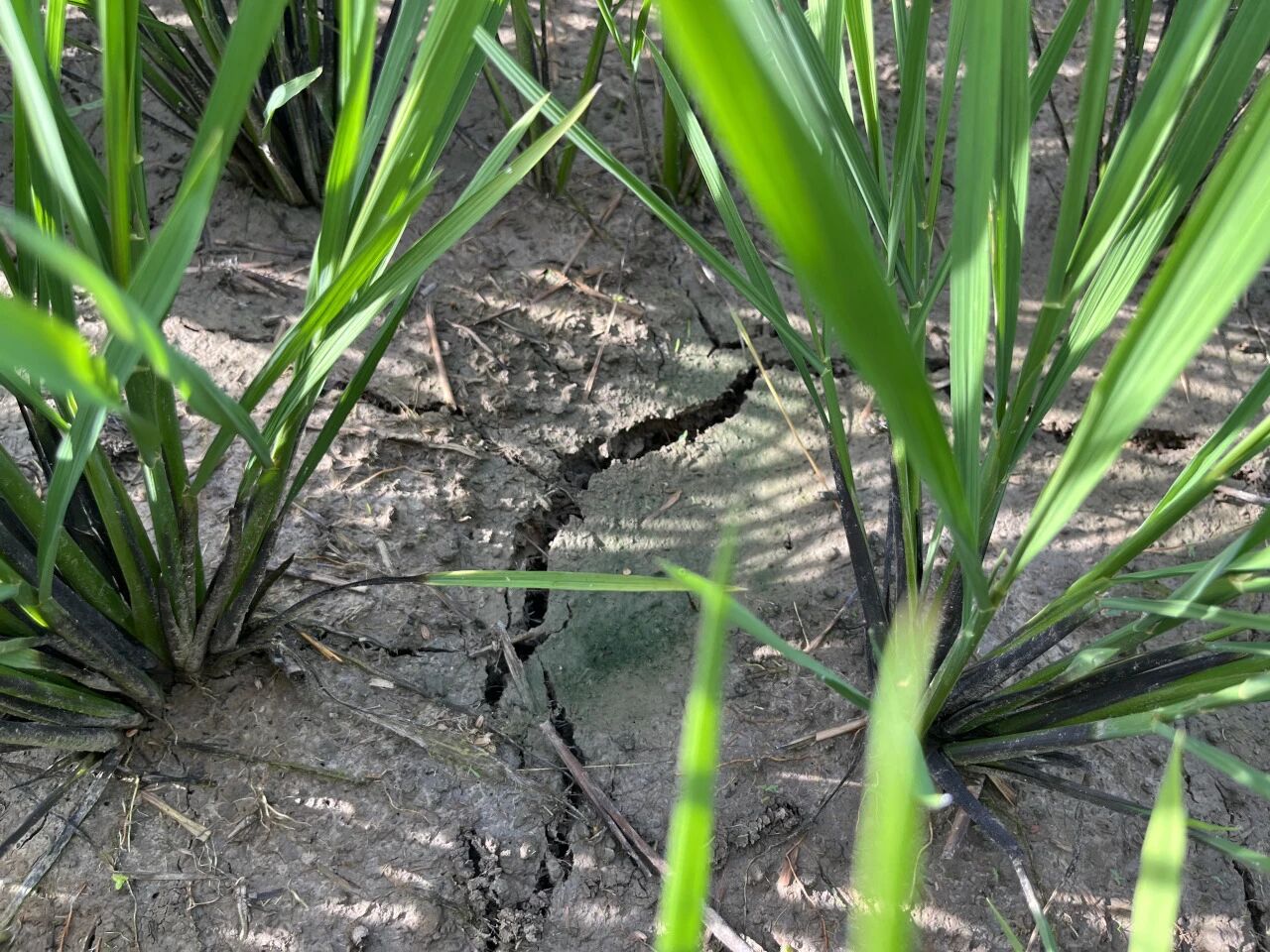
Field drying was done around early August, before the rice started jointing. The opposite of topping up water during patrol, field drying means draining the paddy completely and letting the rice stand in the sun until the soil cracks open. This encourages the rice roots to keep driving deeper, making the plants less prone to lodging and generally healthier.
The difference between weeding the paddy and ordinary weeding is that ordinary weeding just removes the grass, whereas weeding the paddy also means treading the pulled-up grass back into the mud – so the grass actually becomes fertiliser for the rice, a double benefit.
VIII. The Dream of Coming Home, Fulfilled
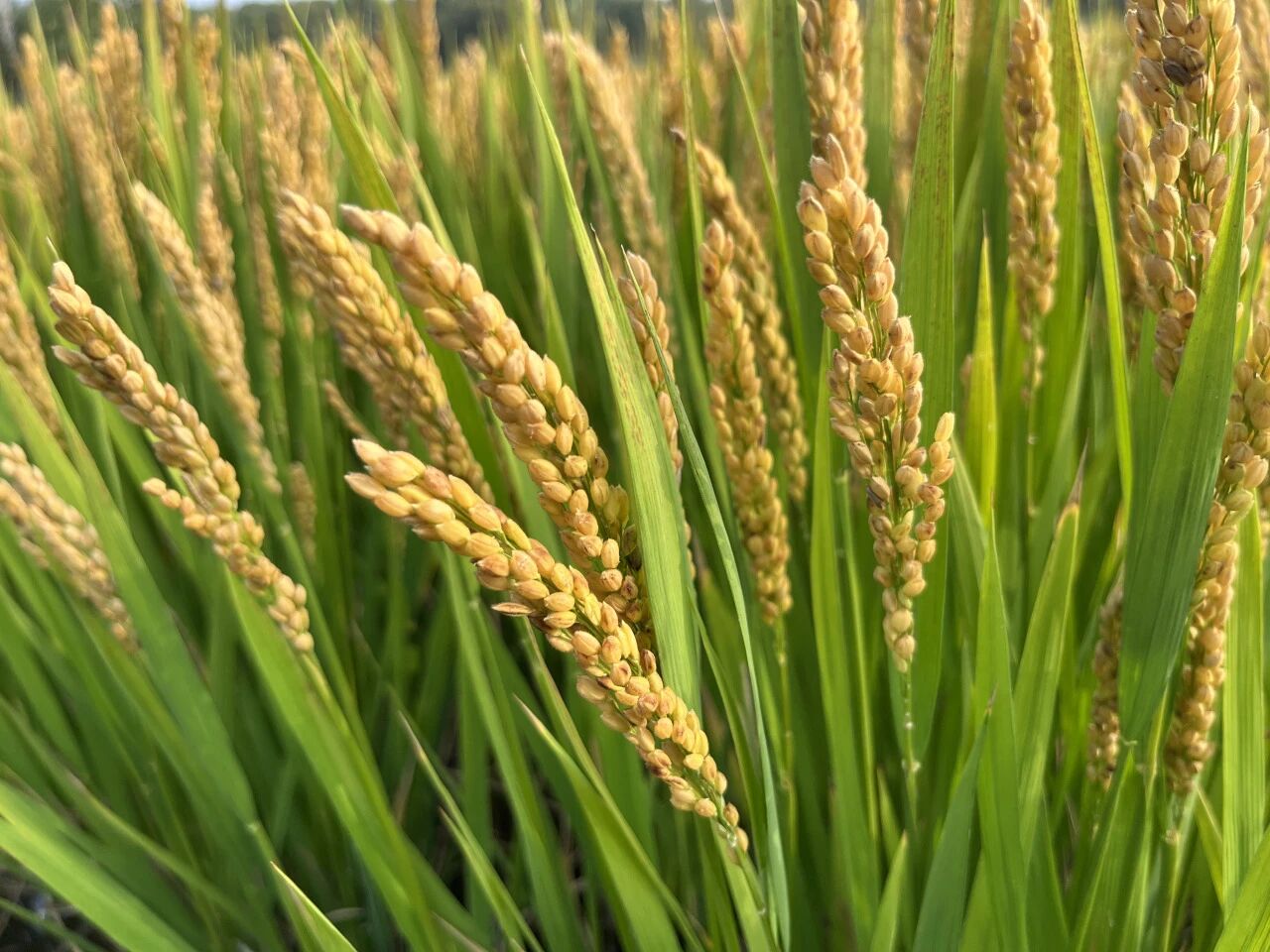
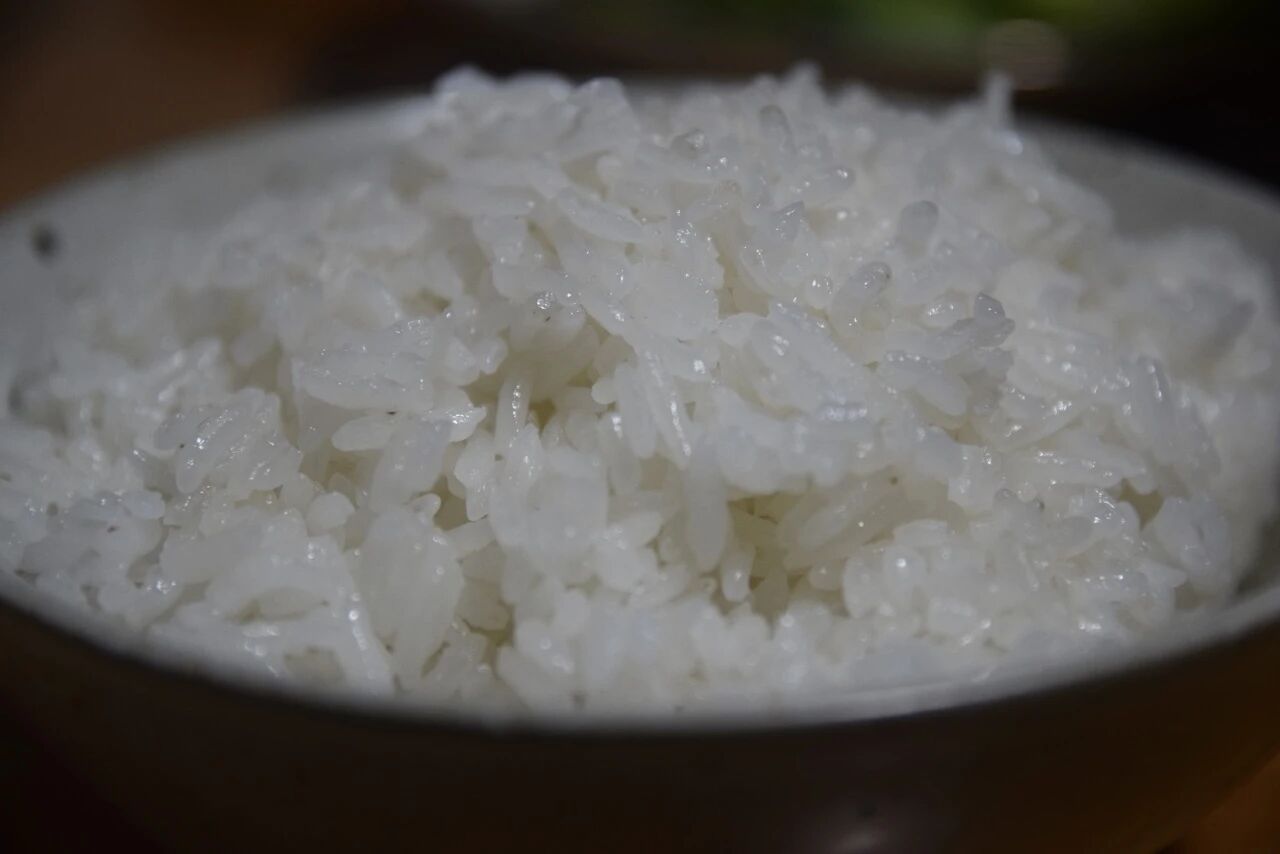
Fourteen years since coming home, and I had been walking the very edge of leaving. In the end, not only did I not leave – I also, for the “first time in history,” rented land that was not ours. Add our original mu of our own, and we had, for the “first time in history,” a 15-mu ecological rice paddy farm – and this farm was right in front of our own house!
Wasn’t this exactly the simple, hazy, beautiful wish we had fourteen years ago, to come home?
Thank you, silkworms!
First draft: 9 February 2026, 22nd day of the 12th month, Yi Si Year of the Snake
Revised: 23 February 2026, 7th day of the 1st month, Bing Wu Year of the Horse
All images, unless otherwise noted, are provided by the author
Editor: Tian Le