
A Yao Farmer and His 45 Rice Varieties (Video at the End)
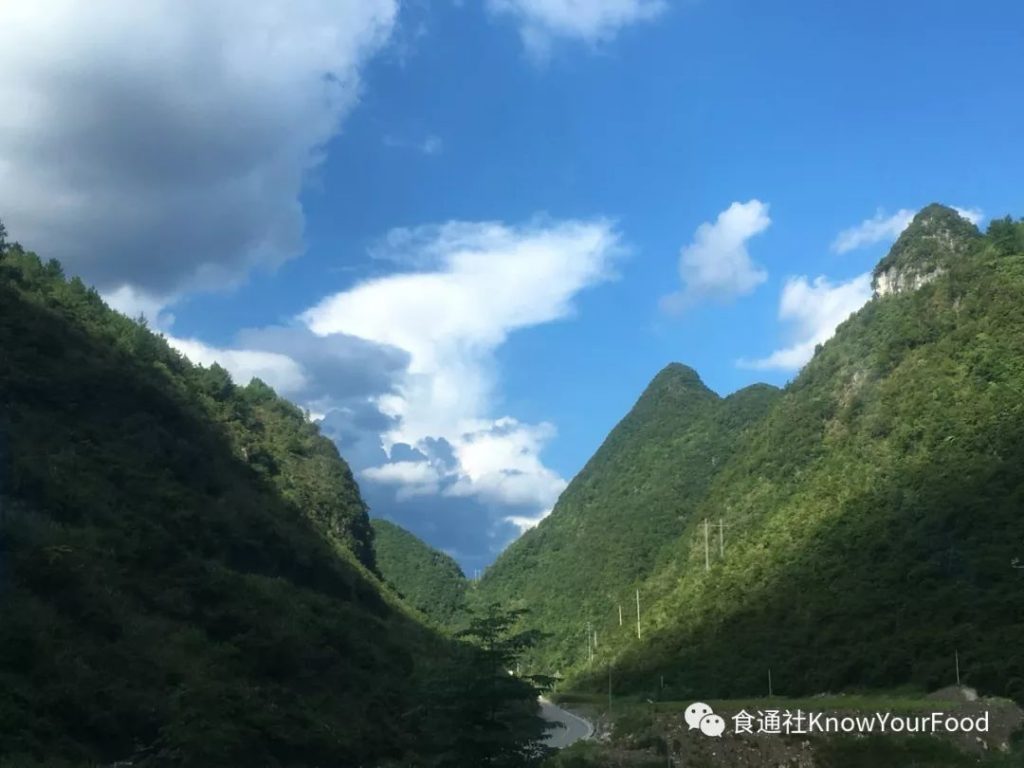
By the time I reached Nandan County in the northwest of Guangxi, it was a sweltering midsummer afternoon. I hitchhiked through the flat basins and low hills where Han and Zhuang communities live, heading deep into the high mountains and dense forests to visit Li Youming, a White-Pant Yao farmer.
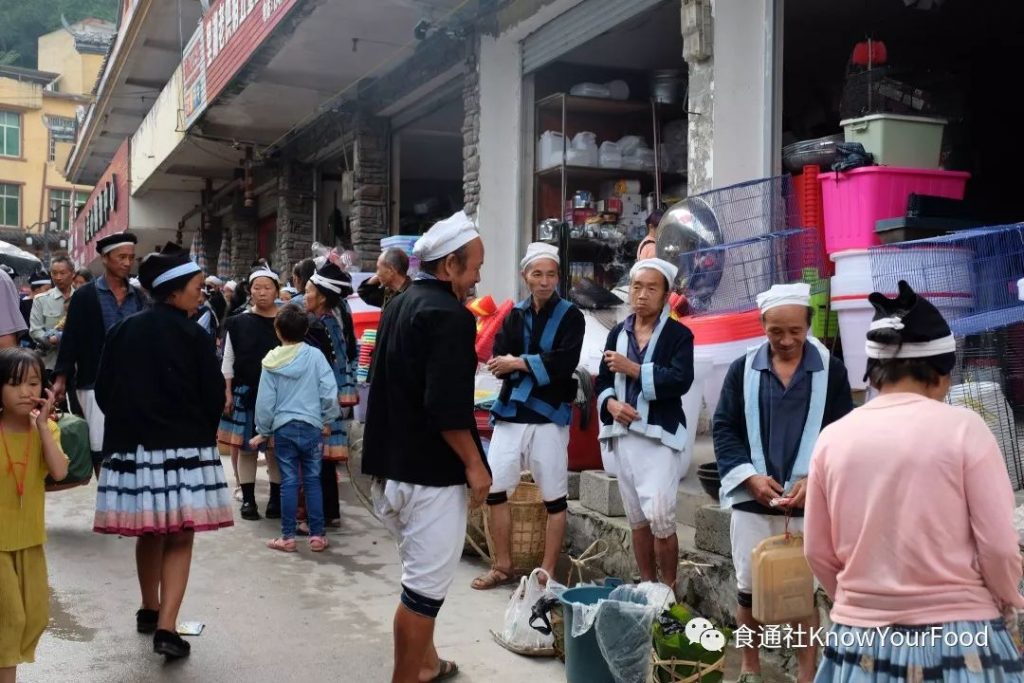
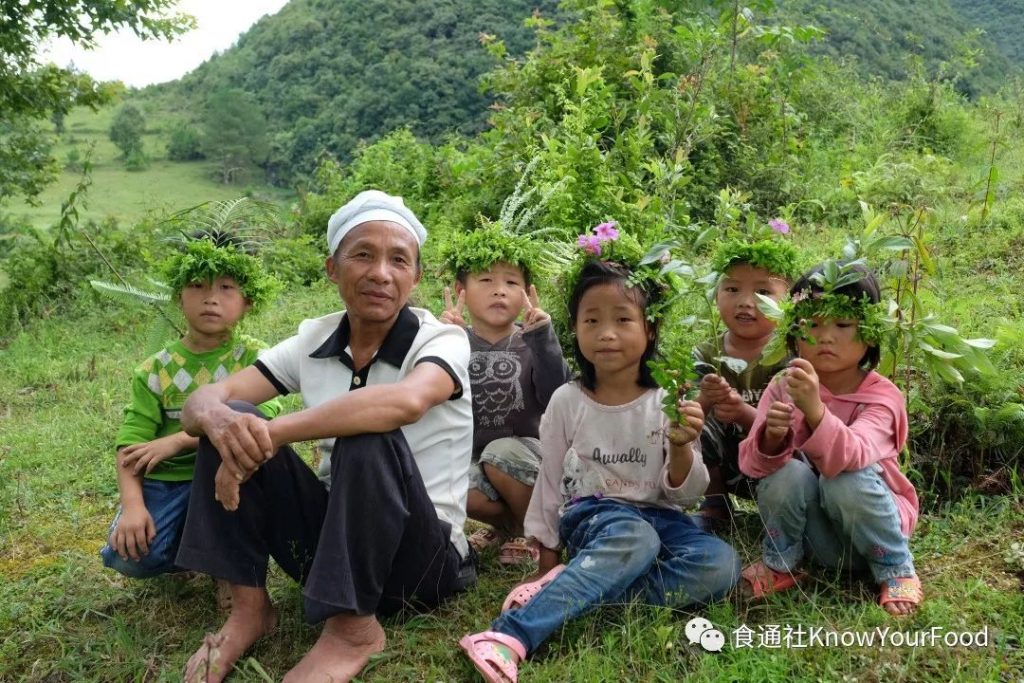
The White-Pant Yao are a sub-group of the Yao people. They call themselves “Nu,” meaning “person” in the Yao language. The men of the group wear white knee-length shorts year-round, keep their hair long, and wrap their heads in white headcloths, which is how they earned the name “White-Pant Yao” from outsiders. They are mainly settled in the karst mountains and dense forests where Nandan County in Guangxi meets Libo County in Guizhou. Traditionally they practised itinerant farming and hunting, but in more recent times have shifted to semi-agricultural and semi-pastoral livelihoods. Because they have had little contact with other ethnic groups in everyday life and retain many unusual ethnic customs, stories about them always carry a certain air of mystery.
I. This Is Just How It Is in Our Mountains
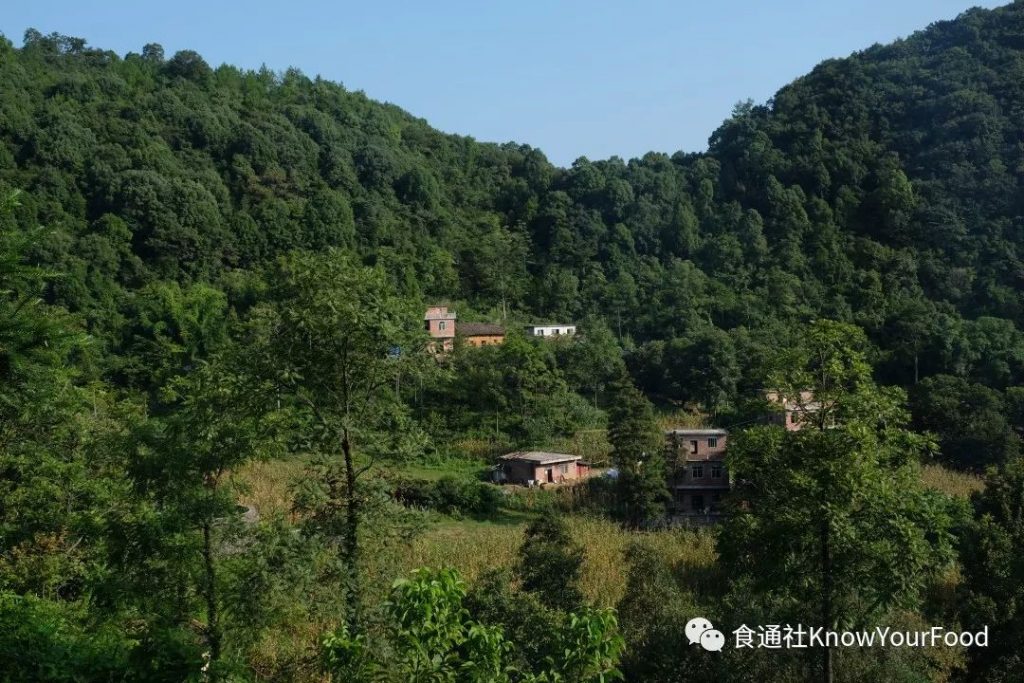
Uncle Youming’s home is in a hamlet that phone navigation simply cannot find. After passing the bustling village, pushing any further means relying on whatever villager happens to be riding a motorcycle along the road to give you directions. I lost track of how long I was threading through the forest, until it felt as though my hand might almost reach the great banks of cloud glowing in the setting sun — and then, on either side of the windscreen, several ancient trees stood tall and imposing, like old village gates. I drove on past a mountain pass and entered a valley hemmed in on all sides by green hills, where houses were scattered among the maize fields and mixed woodland. I knew — this was Uncle Youming’s village.
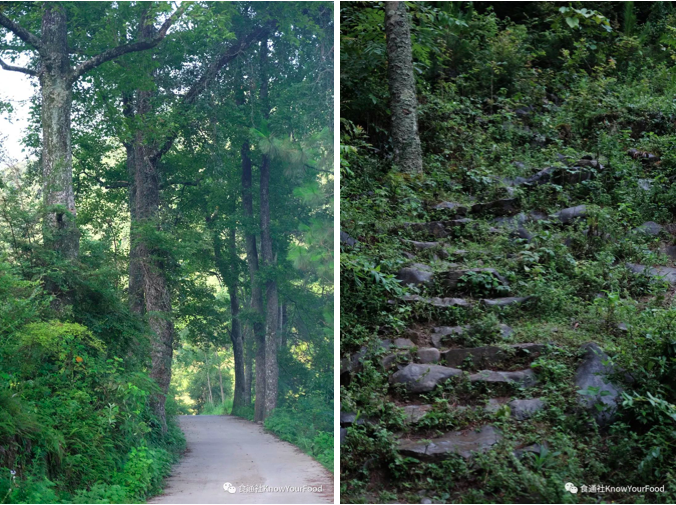
The car stopped halfway up the hillside, and the rest of the way was all on foot — as if the mountain were already giving someone like me, who is always used to driving out and about, a rather humbling start. From a good distance off, I could make out Uncle Youming’s white headcloth flickering in and out of view down the slope, among the dense grass and scrub and the thick scatter of rocks. His skin was dark and gleaming, his build lean and wiry, and he moved with such agility that before I could blink, he was right in front of me. After a brief exchange of greetings, he hoisted my large suitcase onto his shoulder, turned to signal me to follow, and said with a touch of apology: “This is just how it is in our mountains.” It was a remarkably succinct preview of things to come.
Uncle Youming’s home hangs half on the flank of another mountain. By the time we’d found our footing, the long day was drawing to a close — the hour the sky had decided to go dark. We brought out two small chairs, propped them against the front door of the main hall, and fell into easy conversation. Looking up, the distant mountains were dark and solemn, the near trees a deep emerald. He spoke good Mandarin and could read a great many Chinese characters — something very rare among the older people from mountain ethnic groups I had met.
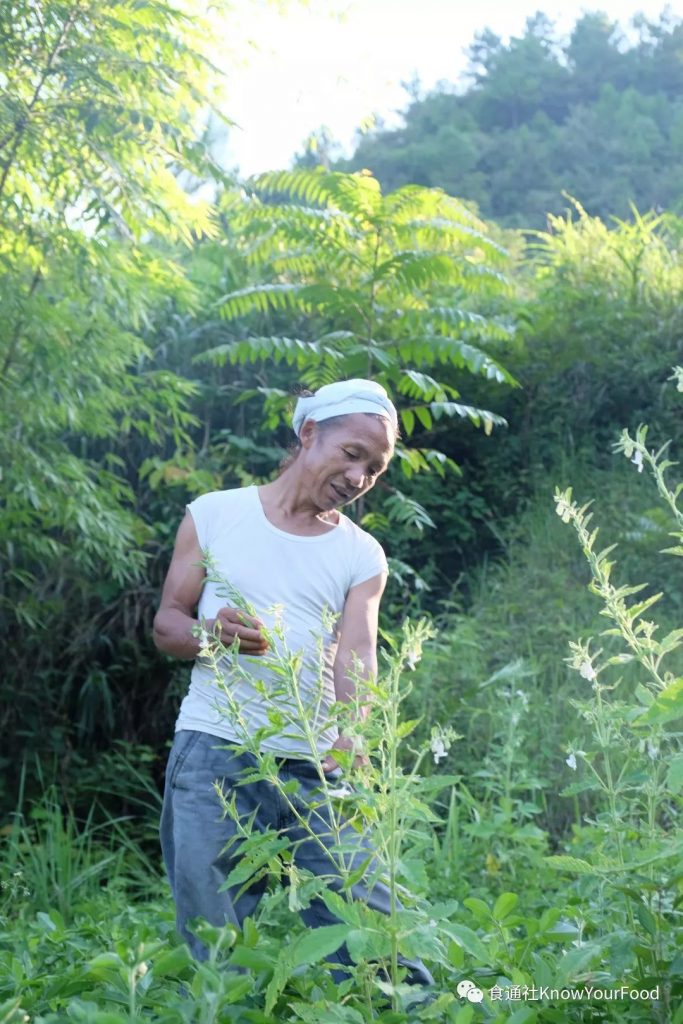
The man before me was clearly no ordinary Yao farmer. Over a decade ago, when the public had not yet broadly begun to worry about food safety or agricultural pollution, he had already started to reflect on the crisis of modern agriculture. His commitment to protecting old seeds and restoring traditional cultivation was resolute and unwavering, and he was widely respected in China’s ecological agriculture community. I, too, had come drawn by his reputation.
When he was young, Uncle Youming farmed in the mountains like the rest of his community, occasionally doing a little trade in traditional crafts around the county town. In his thirties, he was the first to join the wave of migrant work, leaving the village and heading out beyond the mountains. Those two years showed him the outside world and gave him a new understanding of his homeland and traditions. The inquisitive, prying gazes of city folk made him miss the carefree freedom of the countryside and the solidarity of his people all the more, and he came to see that life’s happiness lies not in earning money but in affection and loyalty. In 2006 he returned to the mountains, relying on the land, growing his own rice and vegetables, and living with his family.
II. Rice on the Balcony
I was staying on the second floor of Uncle Youming’s house. The next morning, while the mist in the valley had not yet cleared, I saw him coming up carrying water — I was rather dumbfounded — to water the rice!
Didn’t rice all get grown in paddies? It was the first time I had seen anyone growing it in buckets on a balcony. It was the height of summer, and light breezes kept sweeping through the mountains. Dozens of buckets vied with one another, each brimming over with green waves. They had no intention of being coquettish, yet they had me glancing this way and that, my heart in a flutter.
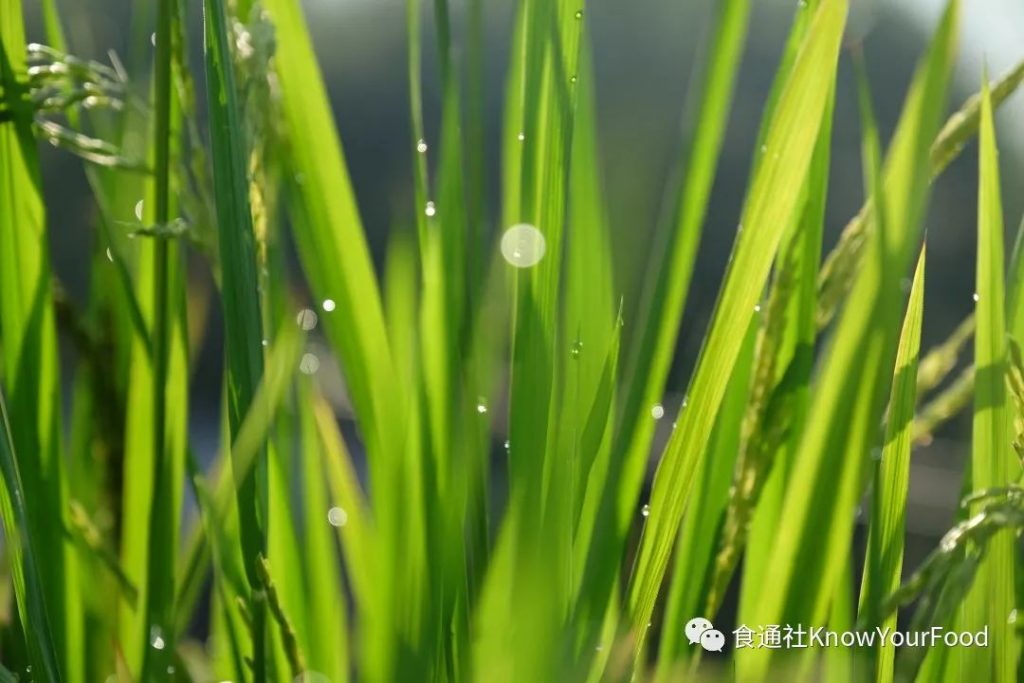
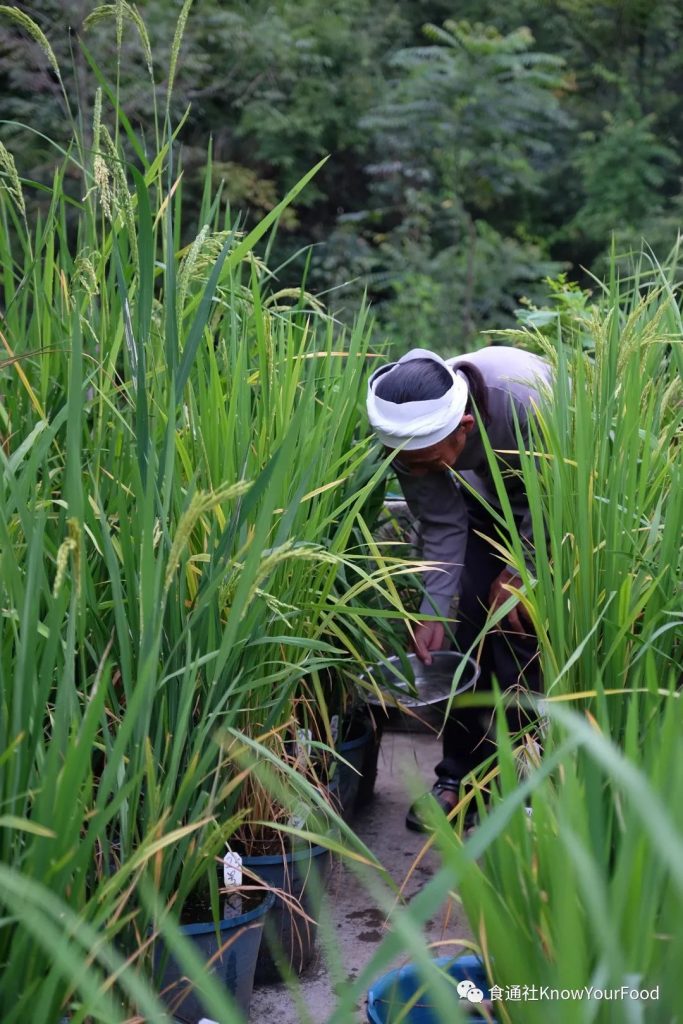
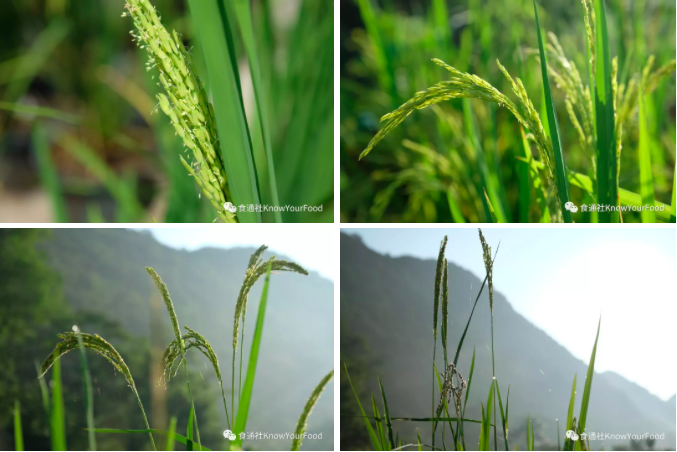
Some had already put out their panicles, tiny white flowers jostling to bloom; others were still clad entirely in green. Some bore very tall panicles, others had short, dainty leaves, and some even had red leaves, their awns stretching long… Only with Uncle Youming’s prompting did it dawn on me that they were all different heirloom varieties. On asking more closely, there were no fewer than forty-five. Looking again, sure enough, the panicles and leaves in each bucket were subtly different, and I couldn’t help but marvel.
“They’re just like my children,” Uncle Youming said with a smile. “I have to come and check on them every morning and evening. Sometimes I go out for a few days and don’t see them, and my heart just feels hollow.” There he was, weaving ceaselessly between the waves of green rice — now counting the shoots and noting when the panicles emerged, jotting it all down in his notebook; then pulling out a magnifying glass to examine the white stamens of the rice flowers and any pests tucked inside the curled leaves. His face was intent, and though serious, a tenderness showed through.
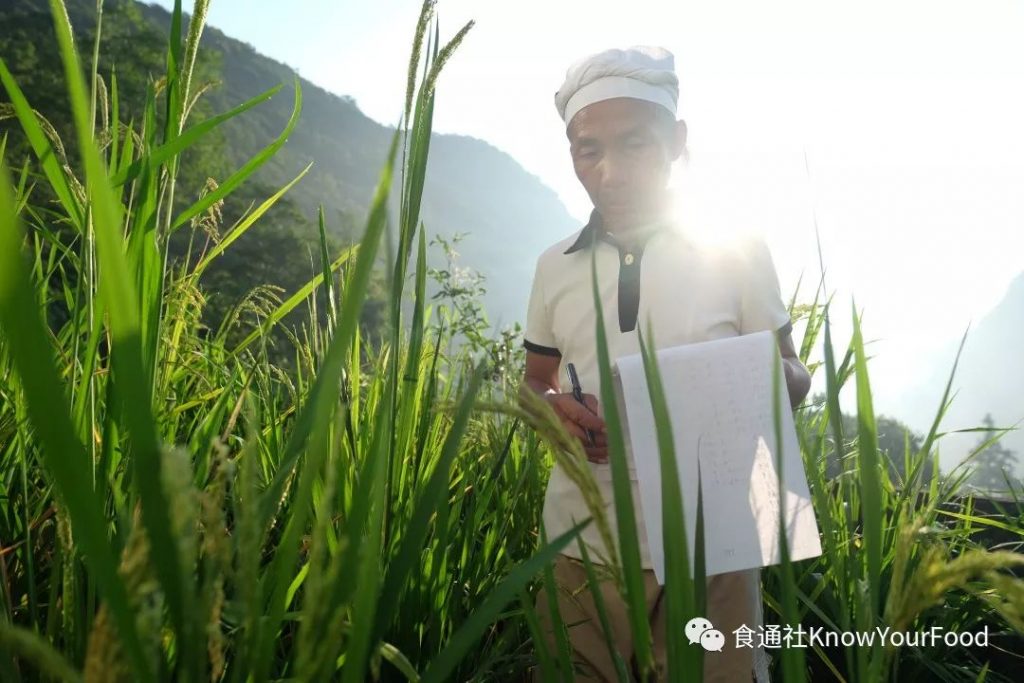
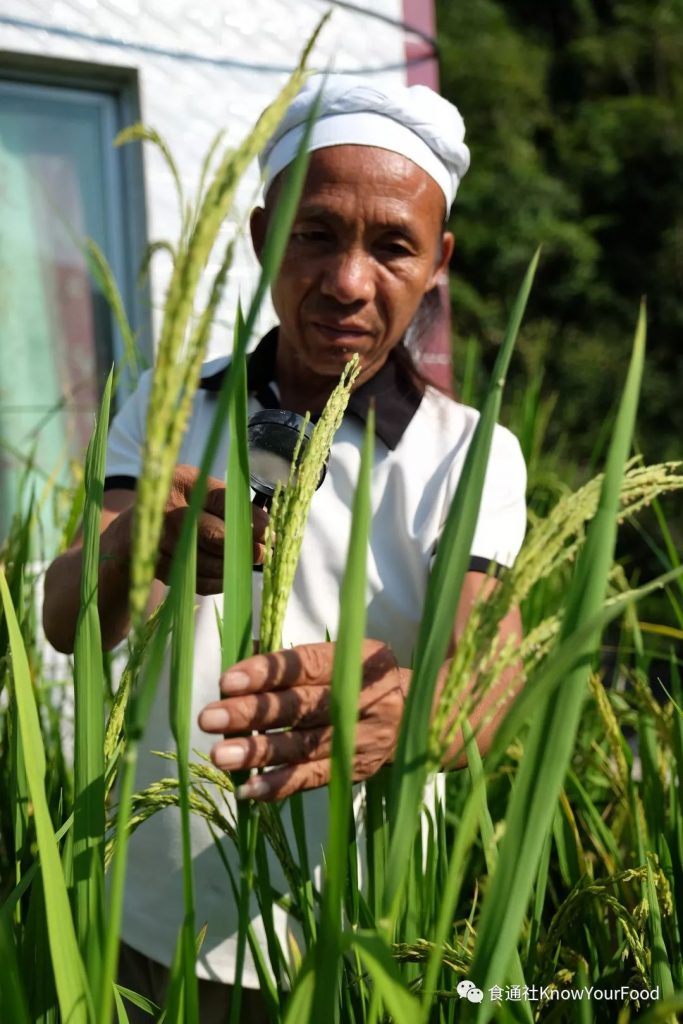
Only once every “child” had been attended to did he finally settle down and explain at length: “Every time I go out to exchange ideas with others, the very first question — always born of curiosity — is how one person can manage to grow thirty or forty varieties a year. Well, the secret is right here.”
I was curious, too. A typical farming household grows just one or two varieties. This year I had been experimenting with eleven heirloom rice varieties alongside a friend, and I often found myself at my wits’ end.
The key was that Uncle Youming had “three versions” of rice paddies: the balcony buckets, the trial field, and the main field. Each version served a different purpose. On the balcony were the old seeds he had gathered from all over the country, one plant of each, observed over three years to see how well they adapted to the local climate. Among those that adapted well, he would select twelve to move into the trial field and see how they fared in the paddy. If they held up there too, with good flavour and yield to boot, they were ready for the main field, where they could be planted on a large scale. The seven-mu main field up in the mountains carried just five varieties a year and was the family’s principal grain source for the whole year — it allowed for no carelessness whatsoever.
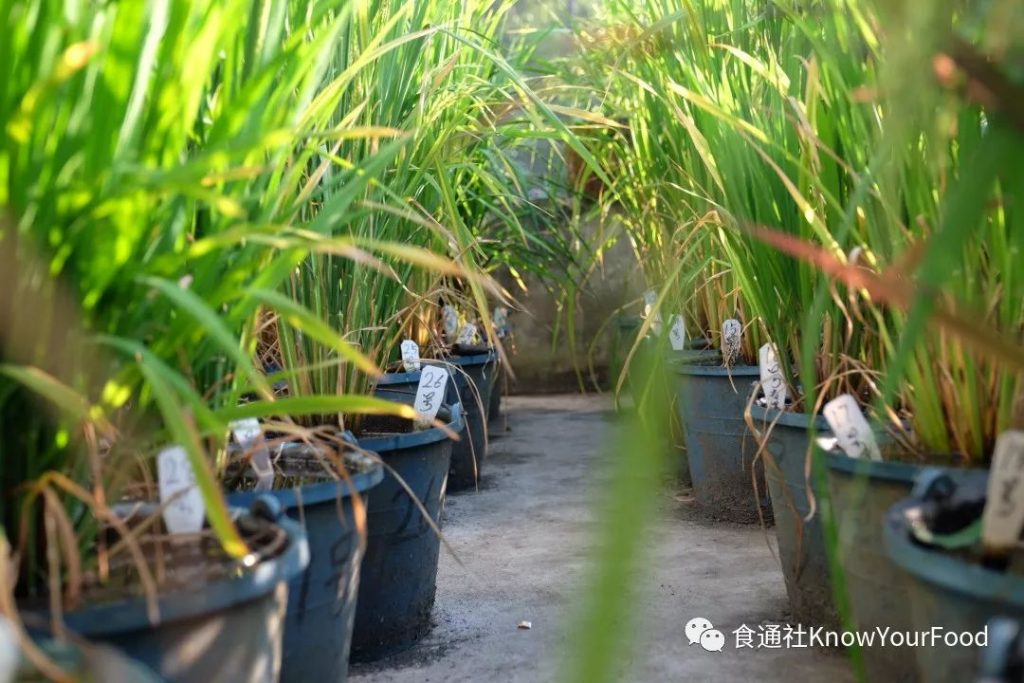
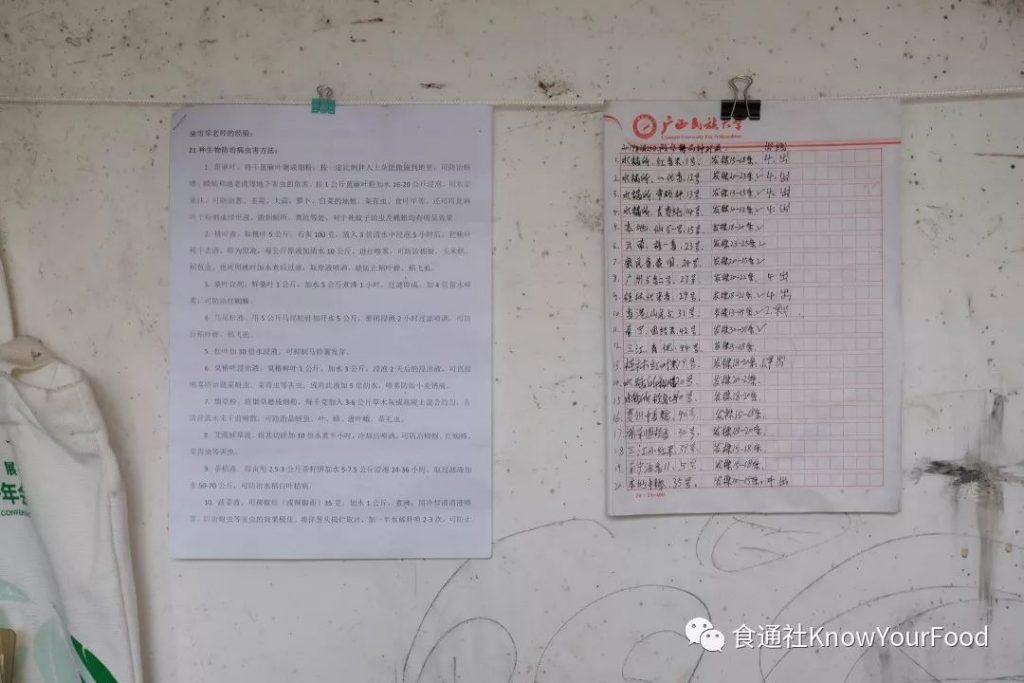
Year after year, screening the varieties this way and purifying and restoring their vigour through seed selection means the rice output is secured, and variety trials can be carried on without much extra effort or cost — truly a mark of wisdom. It is something Uncle Youming worked out himself, after visiting and studying in various places and then adapting what he had learned to local conditions.
The elders say that rice seed carried over from the previous year will not germinate, but he has never put that to the test. Every year, the seeds he has collected are planted straight into the soil — undoubtedly a living rice gene bank — opening up more possibilities for the diversity of rice cultivation in the White-Pant Yao region.
III. Diversity Among the Heirloom Varieties
“Guangzhou Qianli Hong,” “Guizhou Zhongxiang Nuo,” “Nanning Tuanjie Mi,” “Hunan Yuangui Xiang”… Each seed carries the imprint of its homeland, coming here to take root. Just saying their names, my eyes grow warm before I even realise it.
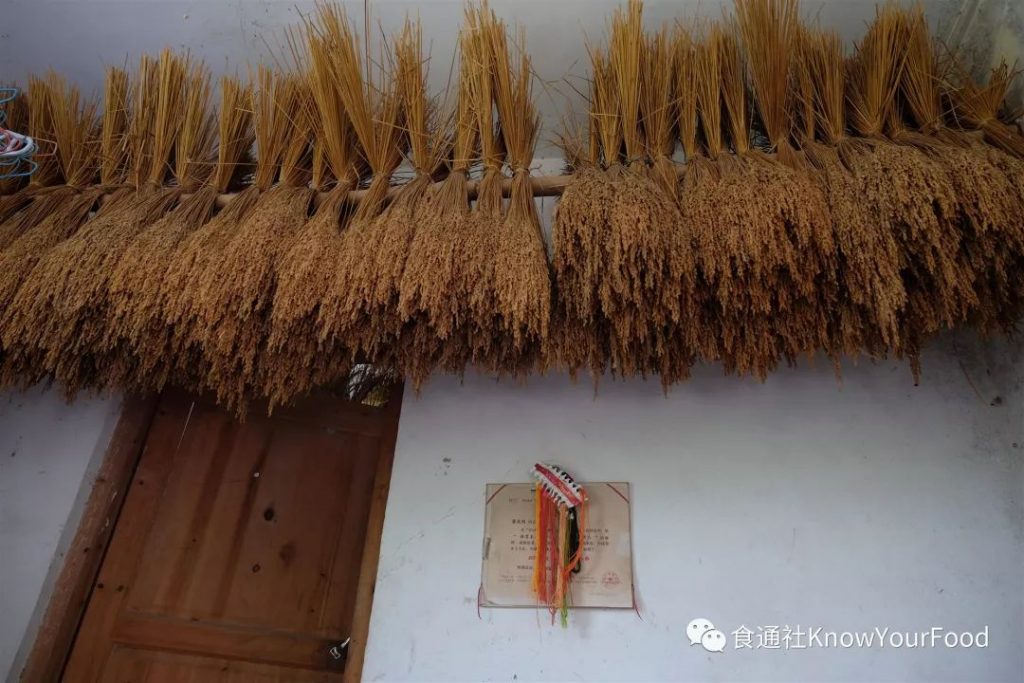
When “Bendi Xianzhan No. 1” came up, Uncle Youming was full of praise: “This rice is wonderfully fragrant. You can’t quite call it glutinous rice, and you can’t quite call it japonica rice either — it’s good for making zongzi as well as cooking as a rice dish, and a lot of consumers love it. It’s also quite resistant to pests and diseases, grows well, and doesn’t need much fuss.” Hearing for the first time that a single rice could be both japonica and glutinous, I thought the world was truly wondrous. Without people like Uncle Youming taking good care of these, future generations would never get to taste rice like this.
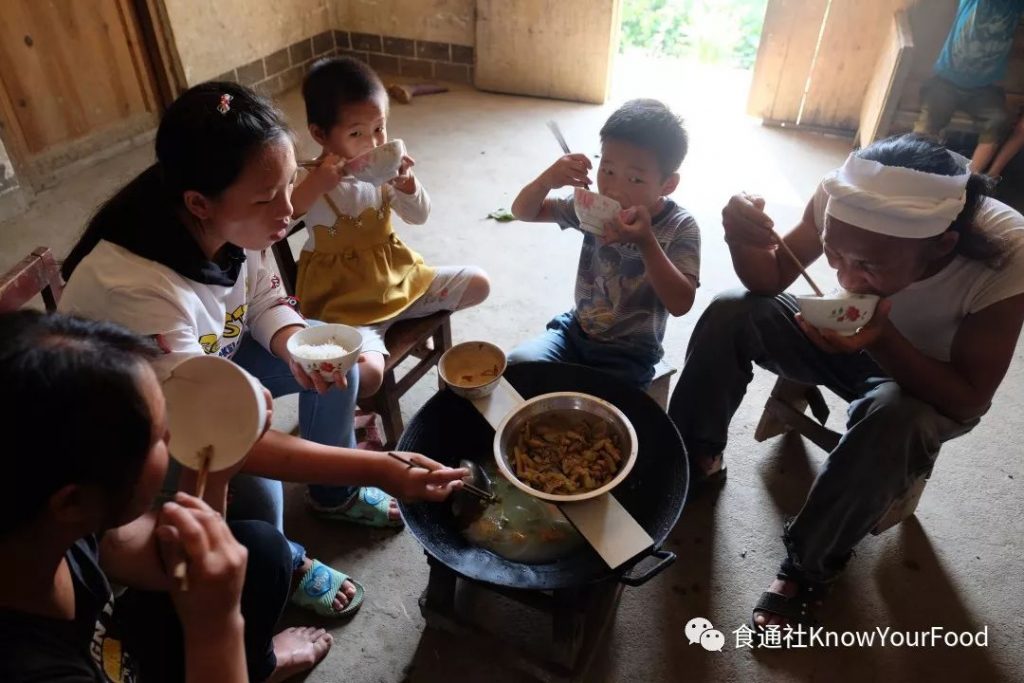
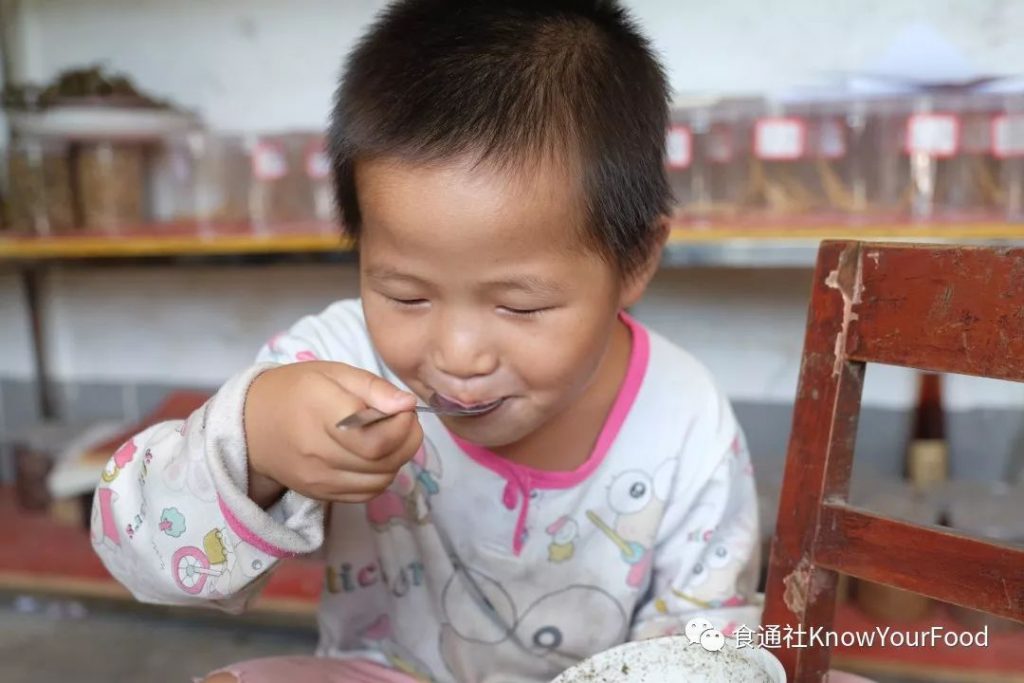
By the time dinner came, I was watching the rice in my bowl with renewed attention. Why this variety? The answer, of all things — rice that goes a long way! To put it in Uncle Youming’s own words: “There are a lot of people at home; you put less of this into the pot, and what you end up with is more.” In a flash I was back at my grandmother’s house in the village, a small child cooking rice — we’d put in very little and there was enough for everyone. Later, eating rice we bought in the city, cooking it the old way was never quite enough, and I had to put in a great deal. Little me was puzzled over this for a very long time.
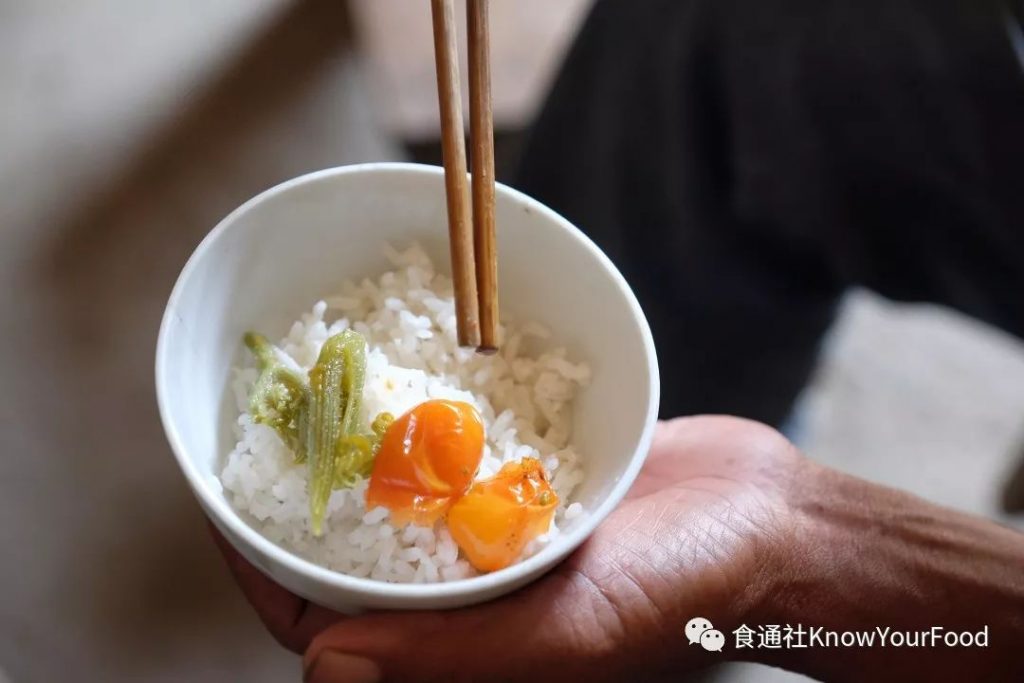
I think that for those holding this bowl of white rice who have never had the chance to work the land with their own hands, old seeds make the dining table richer and more full of flavour. If we pay close attention, we will find that the rice varieties in circulation in the regular market are strikingly uniform. In large-scale commercial cultivation, flavour is not the only consideration — yield, cost and other economic factors weigh more heavily, and our choices are often extremely limited.
But beyond the mainstream, the heirloom varieties hold a wealth of possibilities: some have a high alcohol yield and are well suited to brewing; some have a wonderfully glutinous quality, perfect for pounding into ciba (glutinous rice cakes); some are crisp and hard — not much good cooked as rice, but they make for a refreshing bowl of rice noodles; some stay sticky even once cold, ideal for pressing into rice balls to stave off hunger while working in the mountains; and some are simply the only rice fit for offerings to ancestors and spirits…
IV. Restoring Land Health, Starting with Heirloom Varieties
Besides rice, I also found heirloom varieties of millet, maize, hemp, sesame, peanuts, cotton, cucumbers, chillies, black beans, soybeans, pears, and grapes at Uncle Youming’s home and in his fields — truly everything one could want, and my mouth was watering. Having taken up farming in the mountains last winter, with more than half a year of working the land behind me, I know full well that seeds are a farmer’s greatest treasure.
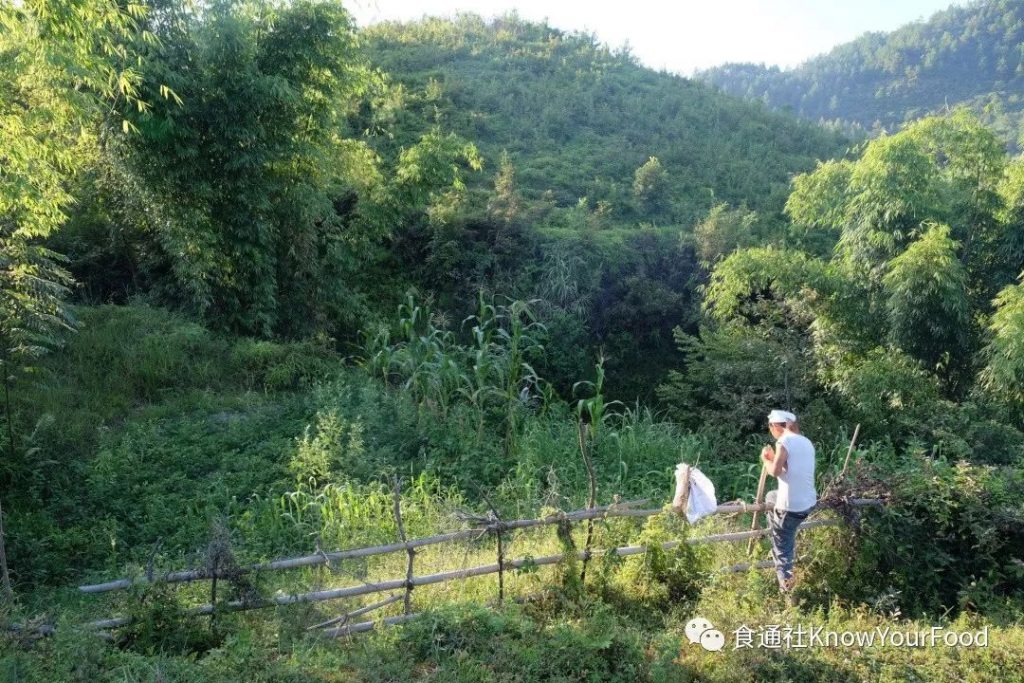
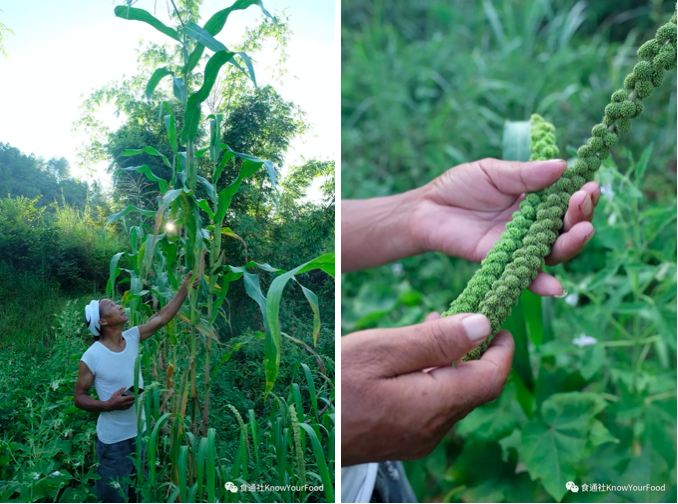
I couldn’t help but ask him, out of curiosity: how had he come to start preserving old seeds and practising agroecological farming?
Uncle Youming recalled that when he first came back from working away and decided to stay home and farm, chemical fertilisers, pesticides and hybrid seeds had already taken hold in the village. Yields were visibly increasing, everyone in the community was pleased, and he planted the same way. But over time, people began to notice that the soil was losing its vitality, compacting more and more, the amount of fertiliser needed was creeping up year on year, and the pest damage was getting worse no matter how much they sprayed. The gains in yield, too, had reached their limit.
In the traditional beliefs of the White-Pant Yao, the village is held to be under the protection of a mountain spirit and a village spirit. The sun, the moon, Lord Thunder, the chickens, the pigs — all things can speak, each with its own stories and rules, often carrying a note of admonition. If someone in the village does wrong, mistreats an animal, or damages nature, both the mountain spirit and the village spirit will punish them. The largest trees on the mountain are left to dry out and fall of their own accord. If one must be cut down, you have to tell it first what it will be used for. After the cutting, you take a blade of grass and push it into the stump, then say to it: I have felled the old one; this stands in its place, so you may send out new growth…
It is fair to say that the Yao of old lived in a spiritual everyday life shared with the spirits. They believed that all things possess a soul, and the relationship between people and nature was more harmonious. Just imagine: your parents, grandparents and great-grandparents rest in this very land, and your children, grandchildren and great-grandchildren will grow up here too.
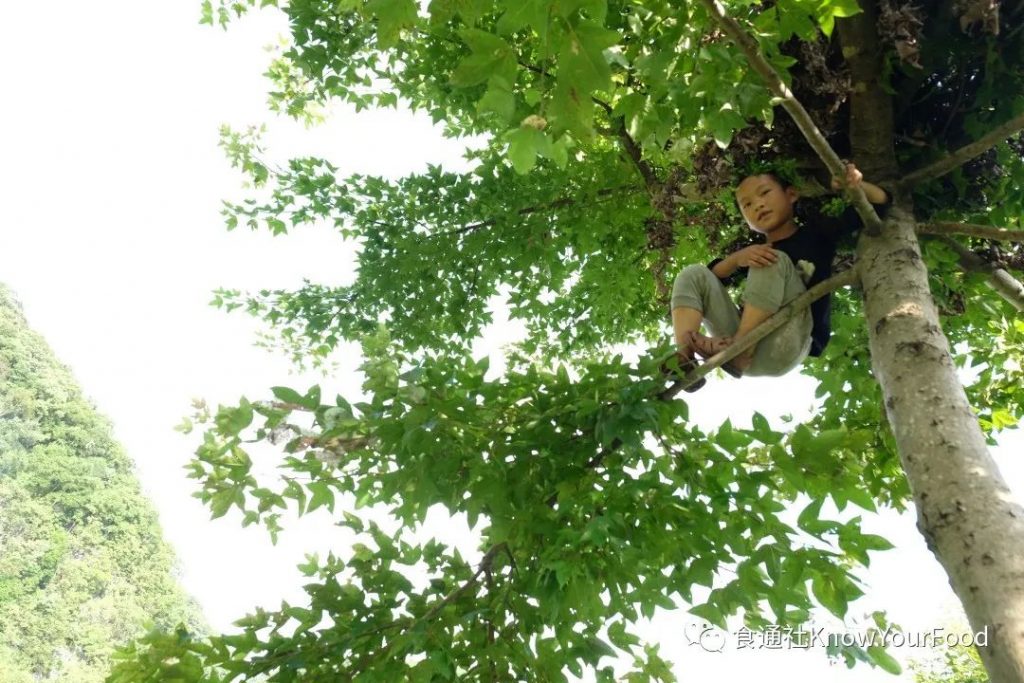
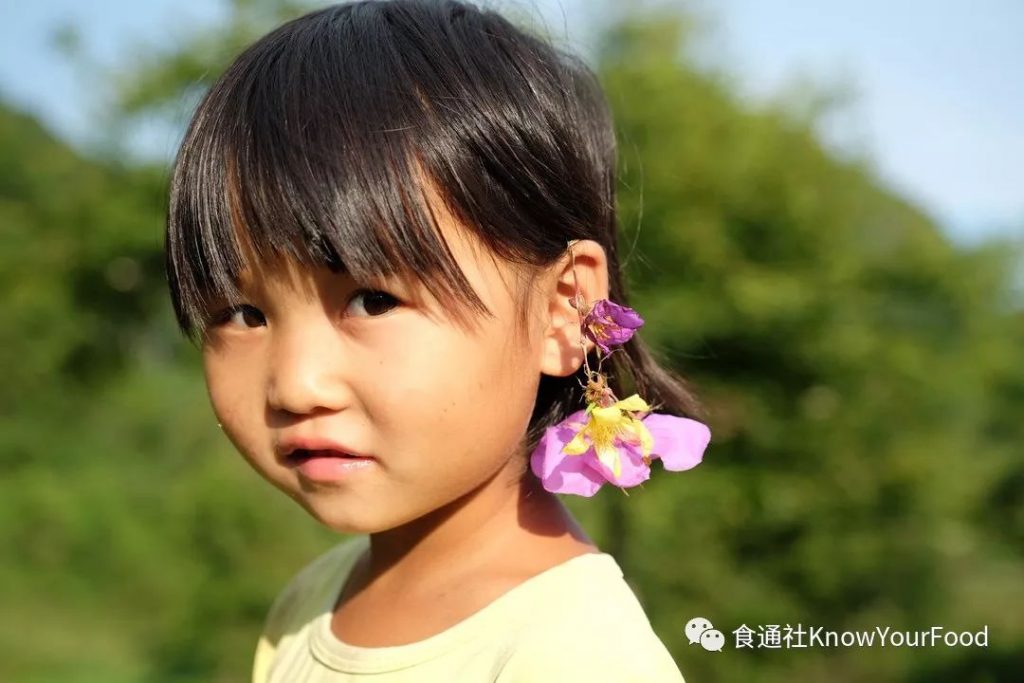
Having grown up in the hills and wild places, Uncle Youming had long since made friends with nature in his heart. Faced with the changes in the village, he couldn’t help feeling sad — how could the land be brought back to health?
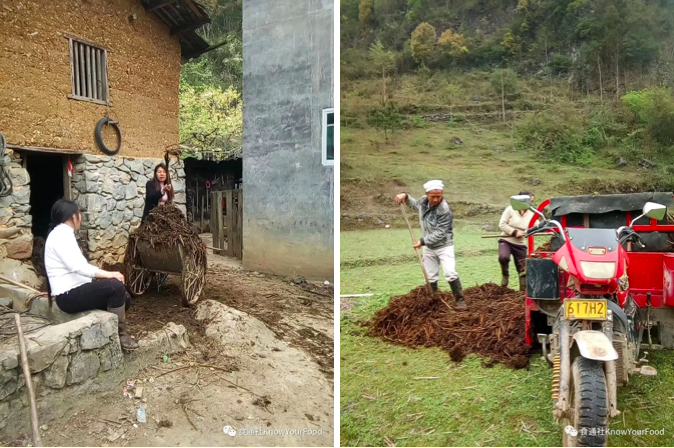
He remembered how, in the old days, every household kept cattle and made compost from the manure, saving seeds each year for the next planting, so there was never any need to buy them. Insects didn’t much fancy the heirloom rice varieties, and disease was rare. But by then, no heirloom variety could be found in the village any more. So whenever Uncle Youming went to the market or attended a wedding or a funeral, he would share his thoughts with relatives and friends, asking around where old seeds might still be found.
V. Agroecological Farming, Bridging Past and Future
This apparently foolish attempt to turn the clock back soon made the rounds in the surrounding villages. Word also reached a non-profit called Community Partners, who happened to be running a sustainable rural community living programme in the NanDan White-Pant Yao area, supporting villagers in exploring agroecological farming — so they came up into the mountains to seek out Uncle Youming.
“I didn’t even know what agroecological farming was back then — it was the first time I’d heard of it, and I had no idea how to go about it,” Uncle Youming says, still finding it a bit amusing to recall. But he quickly saw that the aim of agroecological farming is harmony between people and nature, which aligned perfectly with his own thinking.
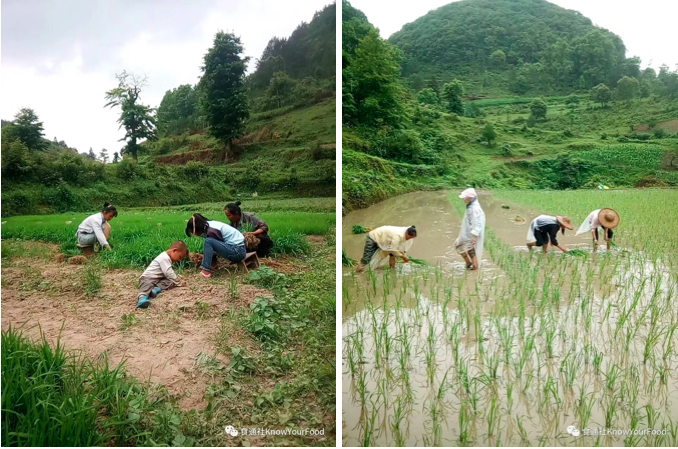
With the help of Community Partners, Uncle Youming attended a series of agroecological farming training courses and was given a batch of old rice seeds from Yunnan. He started experimenting on a plot, cutting back on chemical fertiliser, switching to farmyard manure, and using natural methods to control pests and diseases. Unfortunately, the first year was a failure — those seeds simply couldn’t adapt to the local climate, and there was virtually nothing to harvest. This only made the villagers find him even stranger; some went so far as to call him a madman. But the following year, he collected a new batch of old seeds and planted them again.
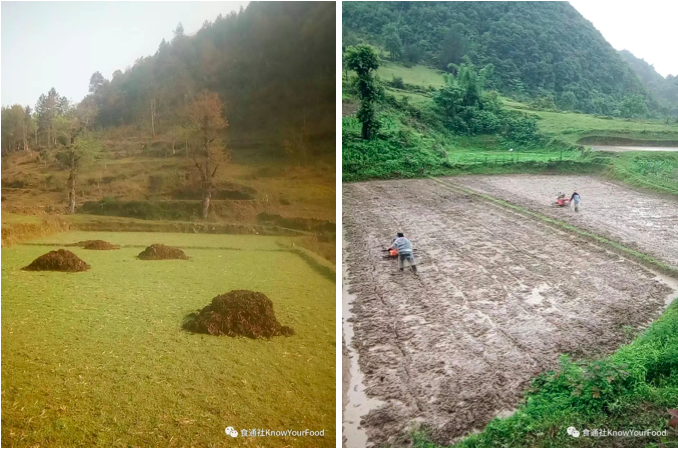
“Why must we use old seeds?” I felt tense just listening.
“Now, whether it’s fruit and vegetables or grains and cereals, there are mainly three kinds of seed: hybrids, heirloom varieties, and genetically modified seeds. The only ones you can actually save and set aside for the next planting are our heirloom varieties. Hybrid seeds are all under control — you can’t save them; you have to buy new ones every year. You might make it through your own lifetime, but what about the generation after you? If one day you can’t buy them, who do you turn to?”
I was a little taken aback — how could you not be able to buy them? Our generation came into the world in plenty, so accustomed to being able to purchase anything with money that we assume humans are already in control of a great deal. “Is it because you’ve lived through a more traditional society, where so many things were beyond human control, that you feel this sense of crisis?”
“I believe that in every era there is a cycle of change — the same way our farming has a cycle every year. That is the sense of crisis,” Uncle Youming said.
The elder members of the community still remember the story, passed down through generations, of “the flood that destroyed the world and the rebirth of humankind.” Past plagues and diseases, too, brought them deep and lasting anxiety. More recently, the very oldest people in the village will still tell of how their forebears, having no seeds of their own, went to work for landlords, borrowed a little grain to feed their children, and when the time came to repay, if they could not, their land was taken and they had no choice but to labour just to eat.
Uncle Youming worries that many young people in the community no longer farm, yet not everyone can find a good place for themselves in the city. When they eventually come back, all they can rely on is pesticides and chemical fertiliser. “Those are things the village never had before — you can only buy them. It’s like keeping cattle: someone puts a ring through their nose and leads them wherever they please, and all you can do is follow obediently.”
“So you grow heirloom varieties because you don’t want to be led around by the nose — you just want to grow whatever you choose?”
“Yes! …When the young people grow up, whether they use them or not (the heirloom varieties and agroecology) doesn’t really matter — at least let them know that this is how the ancestors got through. If, in the future, they come up with new scientific methods to make changes, that’s their own ability. If they don’t, then at least we’ve laid a foundation for them.”
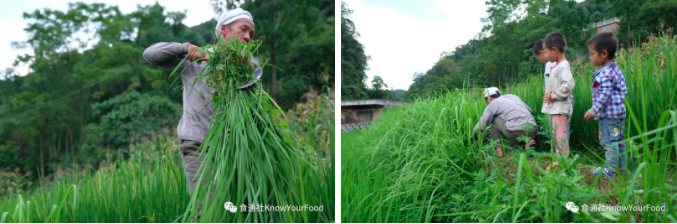
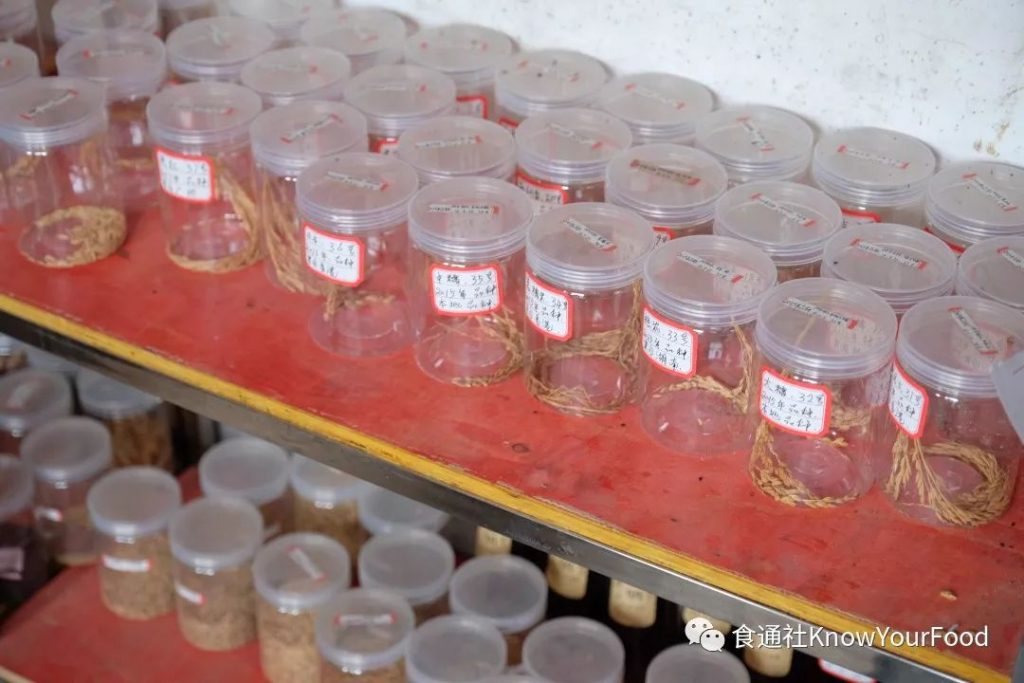
Over the past decade or more, Uncle Youming has been gathering seeds bit by bit from here and there. Local heirloom rice varieties alone number more than 20; together with those obtained from elsewhere, there are 45 in all. What is truly precious is that these seeds do not simply lie quietly in the family seed bank — every one of them has been sown in the actual soil.
Between “tradition” and “modernity,” the unprecedented changes on this land have all unfolded within the past few decades. I feel as though two interwoven worlds hover above Uncle Youming’s head: he inherits the legacy his ancestors left behind, adds his own thoughts, reflections, and deeds, and passes it on to a new generation — consciously striving to build a bridge between past and future. It moved me deeply. How plain and faint that light is, and yet, in this age that lives for the moment, it illuminates every corner of my heart.
VI. A Dialogue Between People and Nature
I think that if people who live in the city could have a stretch of time in their lives up in the mountains, experiencing for themselves what it is to create everything life requires with their own hands, they might come to a thoughtful reckoning with all the dependencies in their present lives — and the crises quietly buried within them.
Since I started farming last year, I have come to know a great many real farmers, yet standing before Uncle Youming — always so warm and approachable in his words and manner — I still feel a twinge of inadequacy. Especially when I go to him with questions about the finer details, I get the sense that he is a mirror far too honest, holding up my carelessness, my greed, all eye and no hand, my urge to cut corners, my love of comfort…
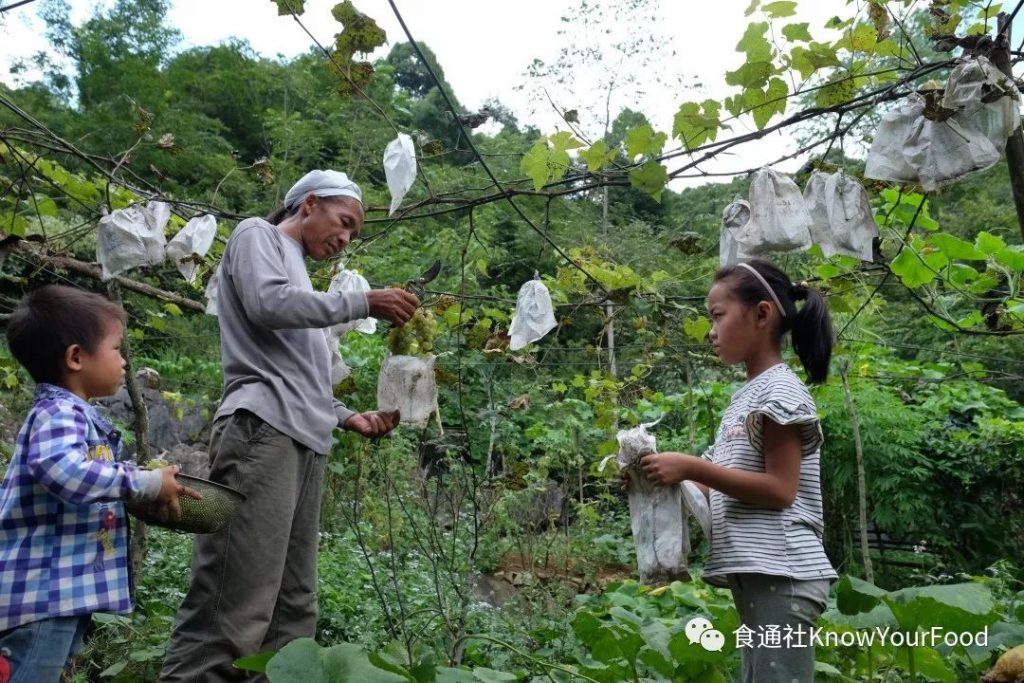
Besides being a gifted rice farmer, Uncle Youming has also turned the bare hill behind his house into the most bountiful orchard in the village. When we visited, the grapes were just coming into season. Every afternoon, the moment we saw him heading out with his shears, the children from the neighbouring houses and I would start cheering in our hearts, looking forward to the day’s most satisfying treat. Behind all this was his early effort to learn fruit-growing: he would take his book out under the trees, cross-referencing what he read with what he saw, looking up every unfamiliar character in the dictionary one by one — it took him a full two years before he could do it with real ease.
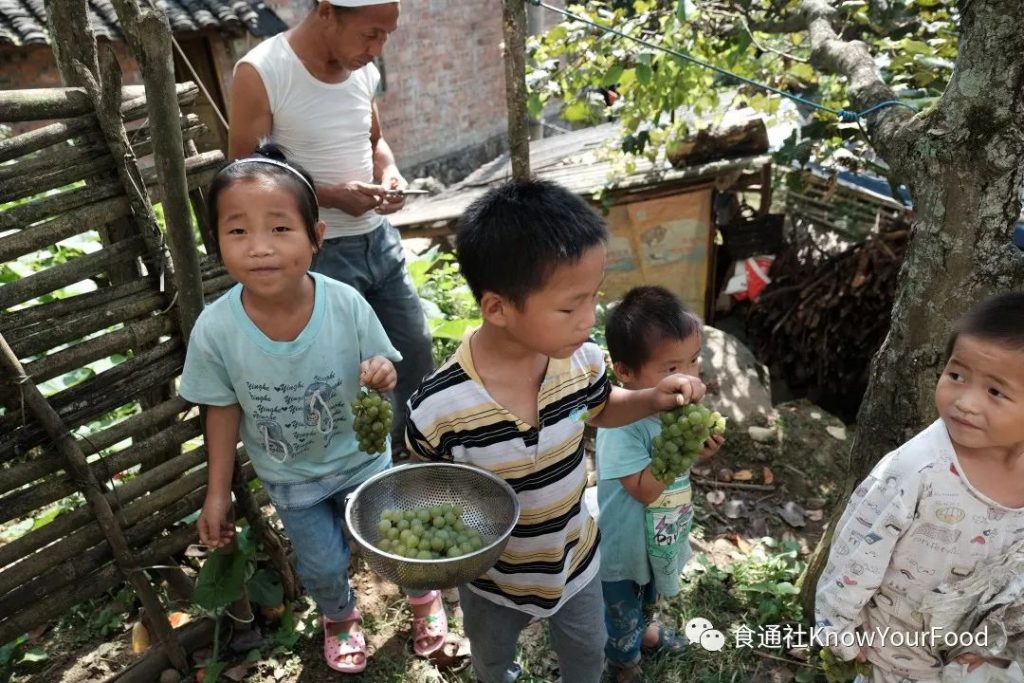
He also makes healthy snacks himself: five-grain powder, pear-skin candy, pear ferment… They tempt me and his grandchildren so much that we often sneak past our fill. I’ve heard that when the wild yams are ripe in winter, they make a delicious yam candy from them too — I truly wish I could come every season. Then there are lemon wine, black bean wine, sesame wine, and others, all fermented with a Yao medicinal wine starter. Even I, who am no drinker, can’t resist a small glass or two each day.
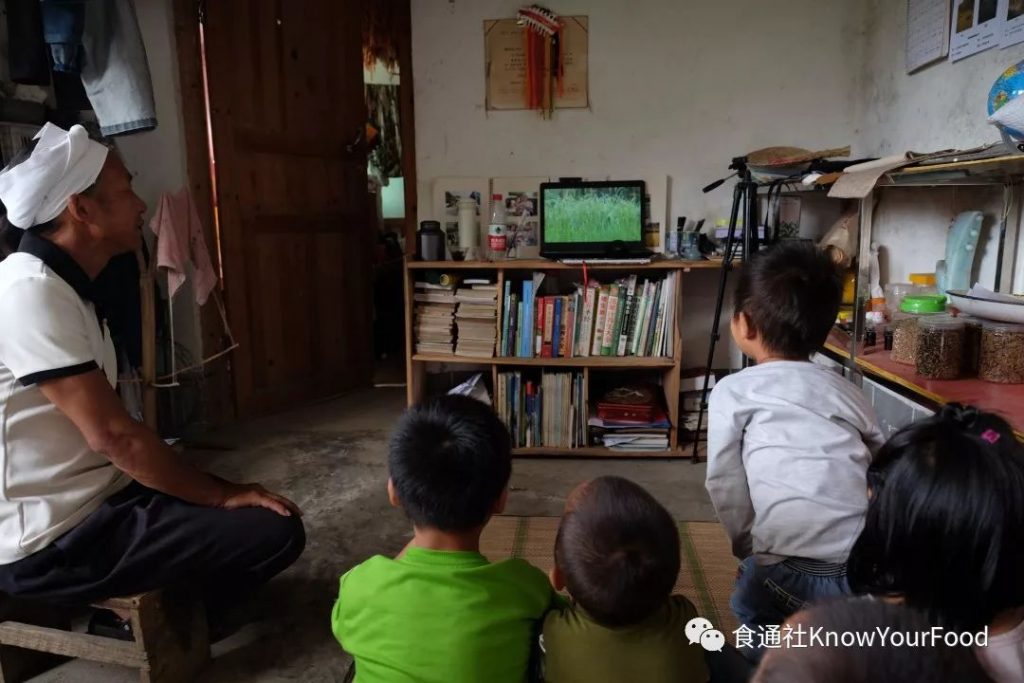
What surprised me most was that, after attending only a few farmer filmmaking workshops, he picked up a handheld video camera on his own and filmed his experience of exploring agroecological farming, producing several short documentaries — both engaging and moving — which have been screened at multiple ethnic documentary film festivals across the country. He has also recently been planning to make some documentation of his own ethnic culture and has already completed a short film about a wedding.
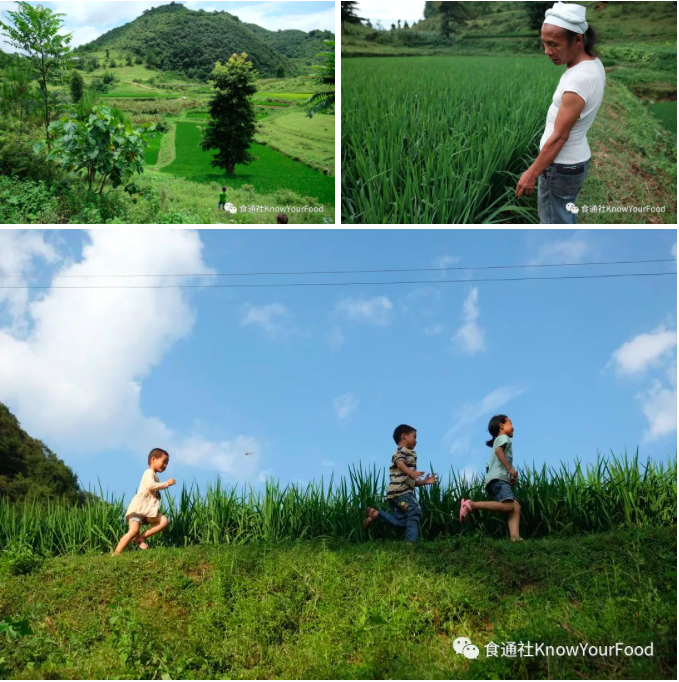
On an evening as the heat wave eases, the white clouds overhead look like clumps of cotton wool. Uncle Youming takes me to see the rice fields up in the mountains, planted using the traditional methods of the older generation. This is karst topography — a landscape of stone mountains, peaks and clusters standing tall, with only narrow hollows and small flat patches wedged between them where rice can be grown. Surface rivers are scarce and the groundwater lies deep, so farming here is entirely a matter of looking up to the sky: you must wait for rain to fall before you can rake the paddy, and only once enough water has pooled can you transplant the seedlings. It sounds almost impossible, unsettling. But Uncle Youming says Heaven never breaks its promise — every year the rain arrives right on time.
He asks me to look at the soil in the field. It is all sandy loam; rain that falls on it seeps through almost at once and vanishes without a trace. The paddies go most of the year without a drop of standing water, and yet the rice still grows well, and the soil stays pleasantly moist, never cracking dry. It turns out that even sandy soil can hold moisture within itself, so it neither dries out too much nor turns waterlogged.
The stones that surround us are the same. At first glance they seem like a harsh, inhospitable presence — making it difficult to walk and inconvenient for working the land. But they too, quietly, store moisture for the plants around them and create a microclimate, which is why the area is often lush and green. “It’s as if they can talk to you,” Uncle Youming says. Experienced old farmers like him can read the stones’ changes and predict shifts in the weather. When the colour darkens and water begins to seep out, they know rain is on its way and it is time to bring in the washing.
Ha — this reminds me of the wonder I felt when I first encountered natural fermentation starters and wild honey. Unlike the inert, mass-produced things of industrial manufacturing, they too are constantly changing, each with its own lively vitality. Come to think of it, everything in the mountains captivates me in the same way — as though, beyond what humans can control, there is another, spiritual world at work.
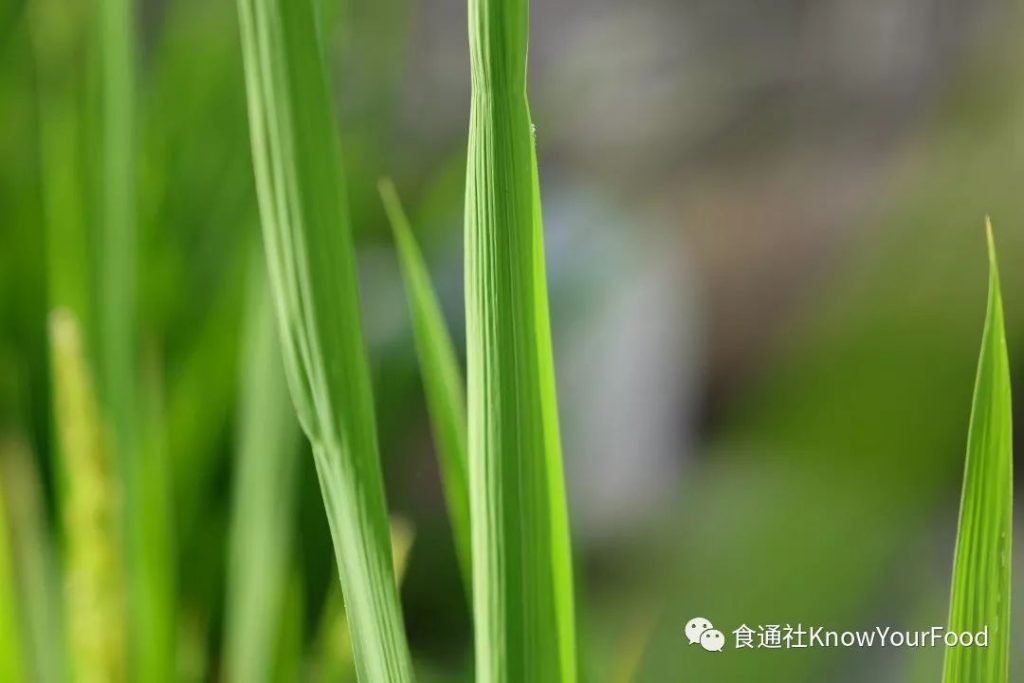
Walking along the paddy bund, I feel as though I can sense that mysterious force of growth beneath the countless flag leaves, radiating outward in concentric rings. I lean in to look closer. They have not started heading yet — just a bright, refreshing green. Uncle Youming points to a spot near the top of one of the rice leaves: “Look carefully here. This joint looks as though it has been tied by someone. It’s already carrying (that is, the rice is pregnant).”
“Oh, I see!” I look in the direction he points — and sure enough, it is just as he says. I have never noticed before. What a subtle bend — it looks as if done by human hands, and yet it is plainly a small marvel of nature. I exclaim: “So this means there is already a panicle forming below?”
“Yes, yes!”
Leaf after leaf, I see more and more of the rice blades the same, as though they are all vying to break the good news to us. I am overjoyed! People and plants can speak, people and all things can commune — a story told in the ancient legends of the Yao people, and yet it seems not to have vanished entirely.
A Word from Foodthink
This spring, we launched the Lianhe Plan’s small grant programmes for food-and-farming action and creative work. Li Youming was the only partner to apply for both: for the action, he wants to build a small museum at home to offer local heritage and nature education to the village children; for the creative grant, he wants to continue using photographs and video to document his daily work conserving heirloom varieties and practising agroecological farming, gathering material for the family museum.
Meanwhile, our author Guo Sang happens to be living in a nearby mountainous area, half-farming, half-X, and so this visit came about. Next time, Guo Sang will share with us the story of Uncle Youming’s work in local heritage and nature education.
Author: Guo Sang
Freelance writer. Lives in the mountainous southwest, practising a half-farming, half-X sustainable life while wandering through ethnic minority villages in search of the light of human nature and ancient wisdom.
Editor: Tianle
Photographs: All by the author unless otherwise noted

A New Way Forward for Seed Conservation: Escaping Corporate Buyout and Rekindling Public Value (Part 1)
A New Way Forward for Seed Conservation: Escaping Corporate Buyout and Rekindling Public Value (Part 2)
Why Gluten Allergy? This American Farmer Found the Answer in 4,000-Year-Old Seeds
This Grassroots Discussion Reveals Where the Challenges of “Keeping Seeds with the People” Lie