
The Struggle of Eight Hundred Mu | American Farmers’ Market Notes
A Word Before We Begin
By: Shang Yi
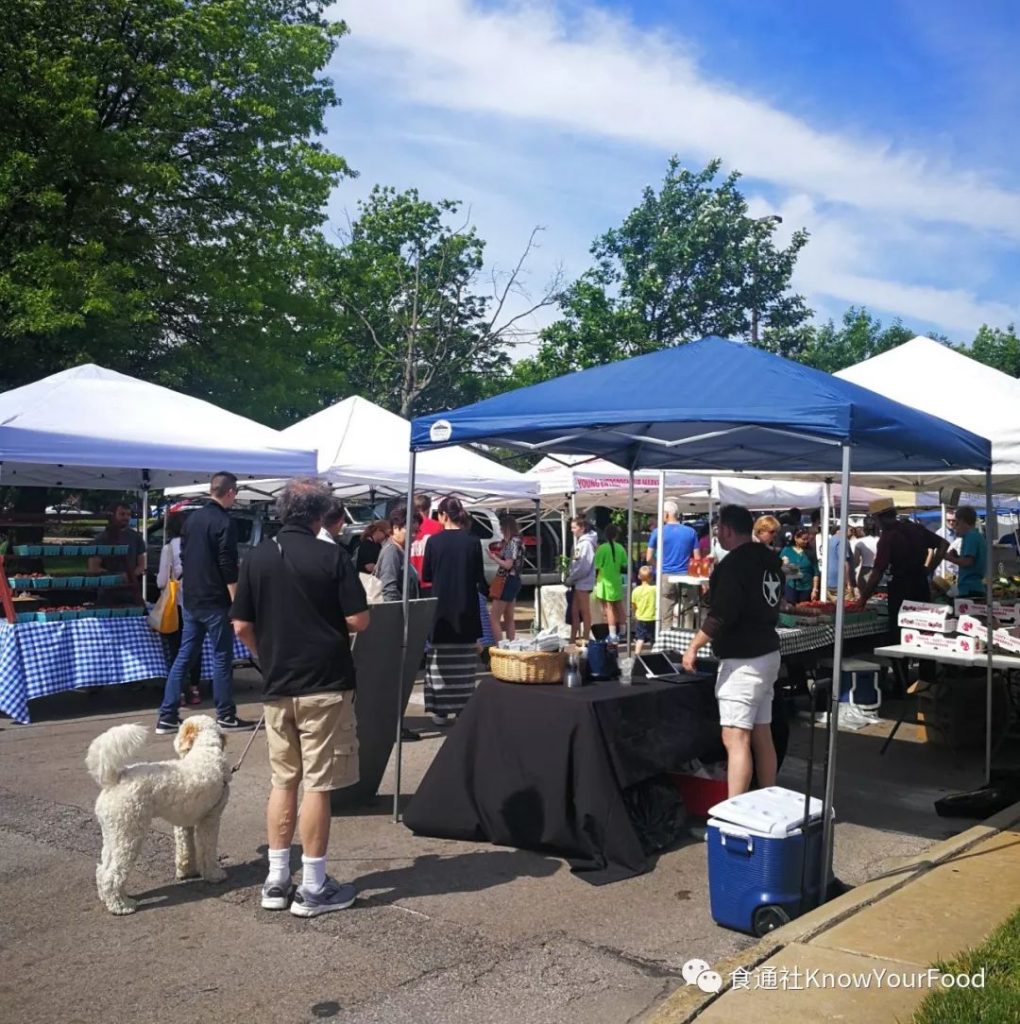
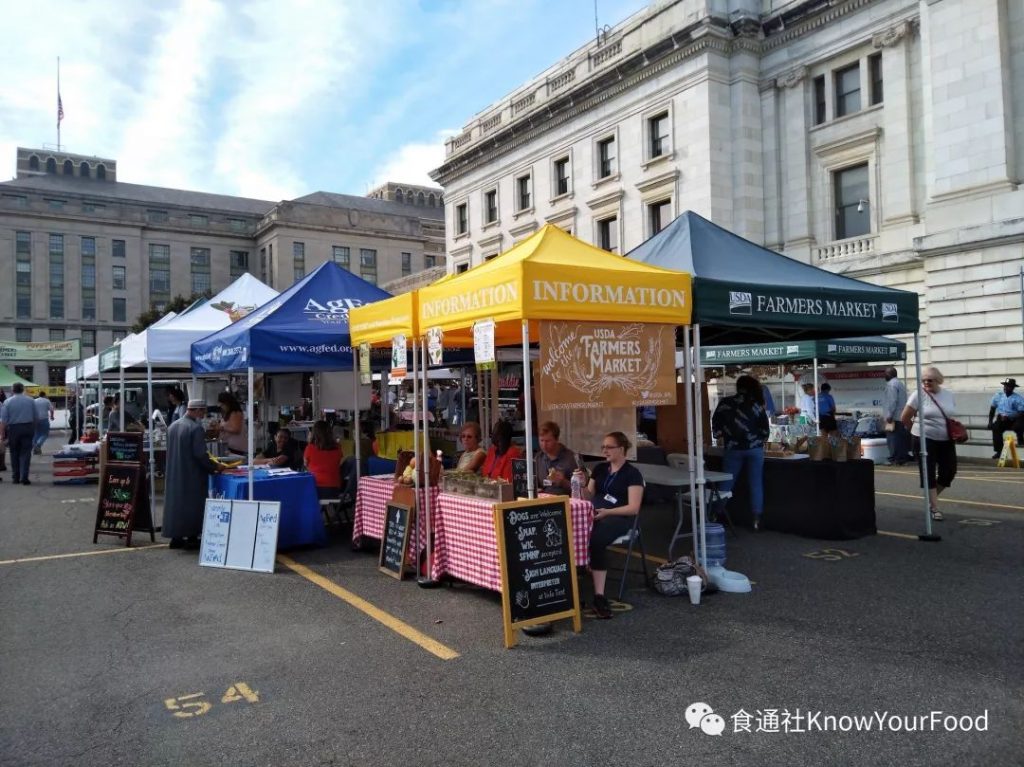
The small city in the American Midwest where we live has a farmers’ market that opens every Saturday morning. We call it the Little Market. In the early years, every time I went back to China and visited a farmers’ market, I felt a sense of inferiority about our own. It was undeniably small by comparison, its selection limited, everything in tidy order, like saplings pruned into neat squares, growing politely. As time went on, we began to treasure this once-a-week market ritual. Small though it is, the market offers a rare opportunity to meet the local farmers.
An older man who sells vegetables at the Little Market once said to me, “When something you’ve grown yourself comes up, just looking at it makes you happy. Think about it – a seed that tiny can grow this large!” Nature works a simple magic, turning light, air and water into sugar, and we so often forget that this is a matter of survival. The farmers keep it in mind for us; they stand closest to the magic. Every conversation with a farmer teaches me something new, and I believe that writing it down is the best way to say thank you. That is how this series of notes came to be.
American Farmers’ Market Notes (I): The Struggle of Eight Hundred Mu
I.
Saturday, 5 January 2013
The market had been closed for Christmas and New Year, so it had been a month since we last went to the Little Market. We arrived just after nine, and there were quite a few people. The man who sells greens told us his daughter is getting married next month. He said it’s a good thing it’s not in summer – summer weddings are ridiculously expensive. He asked if we still birdwatch, and mentioned there’s a bald eagle’s nest in the woods at the edge of his farm. The eagles come back in April, and there are eaglets every year. He told us to come and see in spring. He also said his sister has a pond full of koi that get eaten by great blue herons and bald eagles every year. She always complains to him about it, though the pond is a good spot for birdwatching.
We went to Old To’s stall to buy some meat. He stretched his long arms out from behind the counter and scooped us both up in a hug. Fat Tiger was bragging about his recent fitness crusade again, and Old To seemed to be listening with great interest. He said his surgery was set for 5 February. We were a little worried, but he didn’t seem the least bit troubled – he even reached through his puffy down jacket to feel Fat Tiger’s pecs.
Old To was the first seller at the Little Market to grow friendly with us. That autumn, just before I wrote this diary entry, we visited his farm – which was like a little kingdom – and I couldn’t help feeling a little envious: seven or eight hundred mu of land, with woods and a pond, a natural gas well they could use to generate their own electricity, and a sweet water well to supply their own water. He can build houses, fix cars, go hunting – he could practically shoulder a rifle and declare independence from the rest of the world on the spot.
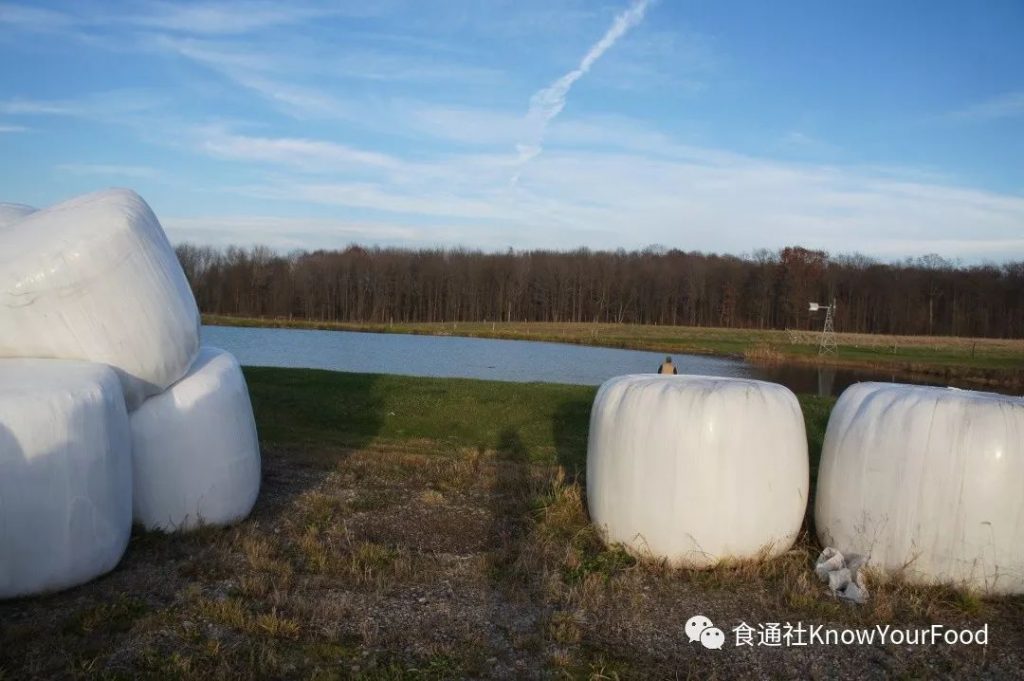
Shortly after our farm visit, Old To turned fifty and was preparing for hip replacement surgery. So it seems that having your own water and natural gas still isn’t quite enough to declare independence from the rest of the world. Our worry was that the farm depended entirely on him. His wife Shirley is a dental nurse with a very demanding job, and there was no one else in the household. His mother is in her eighties; although she drives her pickup to the Little Market every weekend to sell her homemade cakes and jam, she doesn’t live with him and can’t help with farm work. Old To’s farm, besides raising pigs and cattle, mainly sells hay for winter feed. Farm work is lighter in February – last year’s hay was long sold out, and this year’s crop is nowhere near harvest yet – but the pigs and cattle don’t grant sick leave.
Barely two weeks after the surgery, he was back at the market. Standing there, he still looked as big and burly as ever, slowly bending down to pull a cut of meat from the chest freezer, sweat already running down his face. He had a new money-making idea: in spring the market moves outdoors and the crowds will be as big as usual, and he planned to grill burgers, fry eggs, make sandwiches and ice cream right on the spot. By August there was still no sign of it. We asked what was holding things up. He said making a sandwich was no simple matter – you need a handwash sink, a big commercial refrigerator, a stove that works. Now it was hay-selling season, and he still had plenty of farm work to do. His physical condition was clearly still not up to much. We never learn – every time we see him we can’t help asking, “How’s your hip recovering? How does it feel?” He says, with a perfectly blank face, “Feels like a knife has been jammed in me.” So rattled were we that we didn’t dare linger – just grabbed two pieces of meat and bolted.
II.
Saturday, 11 January 2014
We went to the Little Market in the morning. It had been ages since we’d seen anyone, so before buying a thing we went the rounds saying hello. I gave Old To the two postcards we’d bought in Frankfurt – Dürer’s bat and rabbit. He held them in his hands and studied them for a while, then told us that before he renovated the old cattle shed, over a thousand bats had been living in the loft space under the roof. In the evenings they’d pour out of the shed like a tide; that was when summer had no mosquitoes. Later he converted the cattle shed into his own living quarters. The bats had nowhere to go, and the mosquitoes came back.
We asked how the cattle and pigs had fared during the coldest spell. He said the piglets were fine because they had heating. The cattle don’t need heating – with a dozen or so heads in the shed they keep each other warm. It’s just that their drinking water freezes, so he’d hung a hairdryer over the water trough. On the coldest day, his old neighbour Danny’s cattle shed had a problem, and he’d gone over first thing in the morning and spent half a day fixing it. His hip still ached; when driving, he had to use his hand to lever his leg over from the accelerator to the brake.
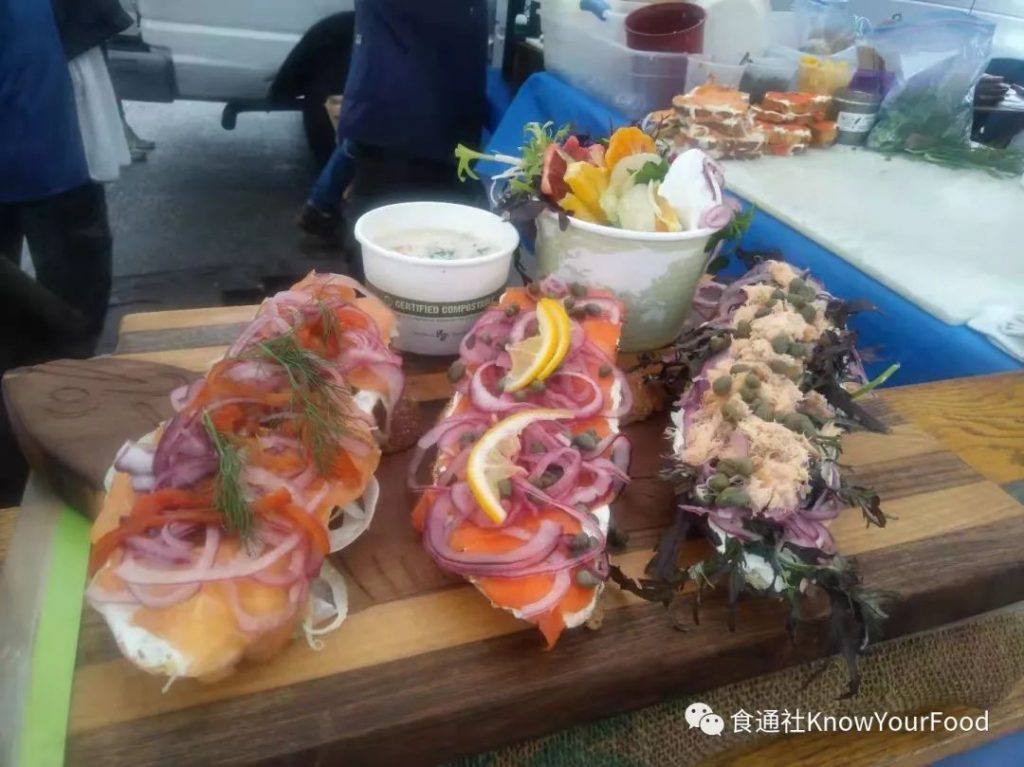
By April, his sandwiches and ice cream had actually launched, though the business was far from the boom he’d imagined. The Little Market grew busier every year, and competition kept intensifying. Old Ko, the other meat seller, also did fast food, and a long queue formed at his stall every time. Old To never had the upper hand: Old Ko’s meat was a whole price tier below his, and not necessarily worse in quality; Xiao Jie charged about the same as he did, but his was fresh meat while Old To only had frozen, and the taste simply wasn’t the same. In the end, what gave Old Ko and Xiao Jie the edge was that they both had wives helping out, and Old Ko also had several teenagers at home – one extra pair of hands makes all the difference. Keeping prices low requires scale; selling fresh meat means making frequent trips to the abattoir (American law prohibits on-farm slaughter of livestock). All of that takes manpower.
They say farmers love to have children, and at least the Little Market sample bears this out. The old apple seller sometimes puts out a big group photo that looks like a summer camp class picture – but it’s really just the whole grandchild generation. A lone wolf tough guy like Old To is rather rare here. Still, we became friends with him early on, and now, with knives in both hips, he’s still out here doing business – we really couldn’t bear to just leave him to it. So every week we go to Xiao Jie’s for the good meat, and we still insist on picking up a piece of “friendship meat” from Old To, and have a chat while we’re at it.
We don’t always see eye to eye, though – our political views are worlds apart. Old To has always voted Republican. He’s a die-hard gun rights man: whoever defends his freedom to buy and use firearms, he votes for. As for us, we detest the sheer proliferation of guns in American society. Well, we share some ground and disagree on others. These are topics we can simply steer clear of.
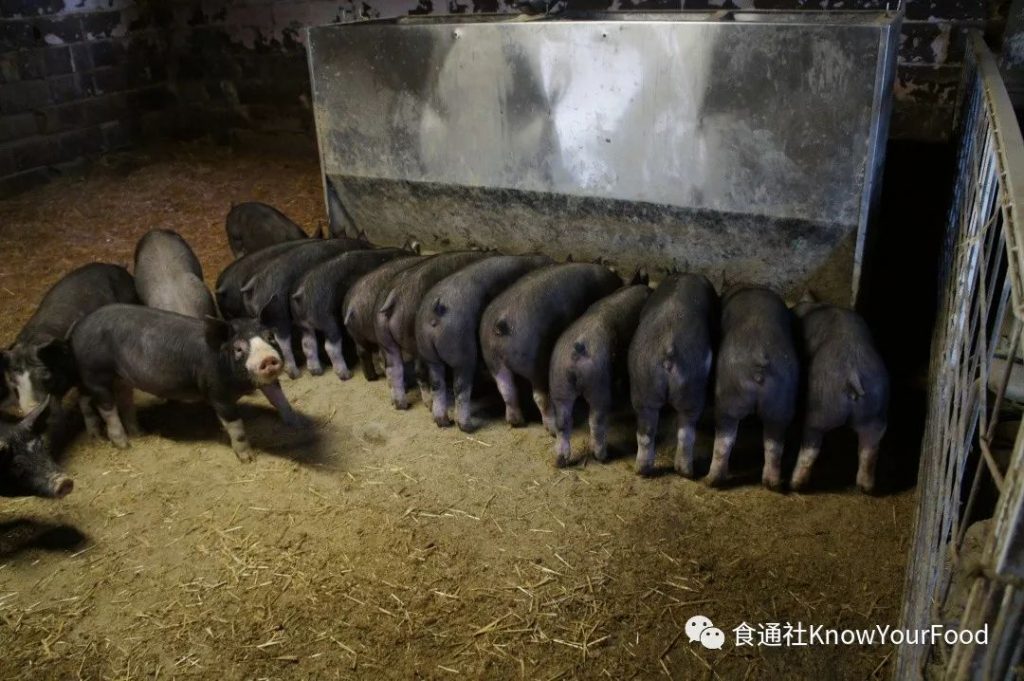
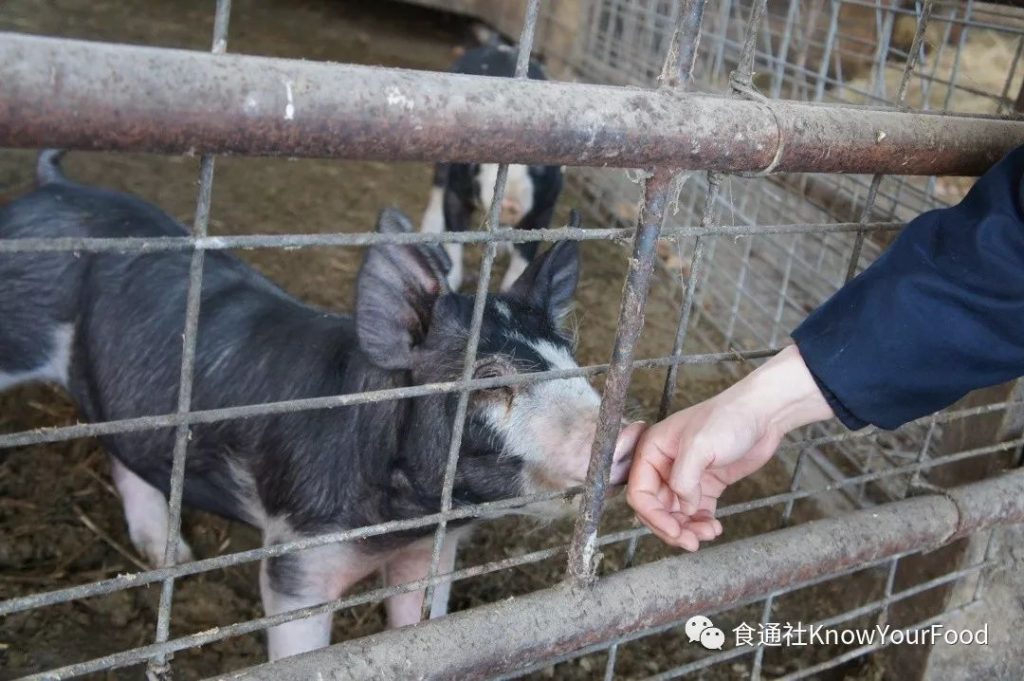
Farmers always go on and on when they talk about what they raise. Old To says that on summer afternoons, when he lets the piglets out into the woods, they find a patch of shade, legs never bending, and just flop over sideways – “thump” – hit the ground and fall asleep. For a while, the whole woods is filled with “thump, thump” from every direction. He also says cattle are a bit slow; sometimes a coyote will eat right into their tail, or bite their hindquarters bloody, and the only thing keeping them safe is that they’re simply too big to knock over. But piglets never let a coyote get the better of them.
The food business couldn’t last even a year. Old To came up with another idea: buy a small piece of construction equipment that had broken down, fix it up himself, and sell it. The economy was starting to pick up, and more houses were being built. He was torn – happy that his machine might get sold at last, but unhappy that the quality of the new ones was so poor. He didn’t want to see so many of them going up.
III.
Early in 2016, something big happened at the Little Market. Old Ko, the meat seller, suddenly stopped turning up. He posted on Facebook that he was being shut out, that with absolutely no other option, he had decided to leave the market. Who would have thought there was this kind of skulduggery right under our noses? We kept quiet for two months, then quietly went to Xiao Jie to find out what was going on. He said he wasn’t clear on the inside story. We tried Old To next. His face had gone ashen. “That fellow doesn’t play by the rules,” he said.
More than half a year later, we got back in touch with Old Ko. One time, we asked his daughter what had actually happened – what had made him feel he absolutely had to leave the market. The young girl explained that in winter the market moves indoors, and all the meat sellers leave their chest freezers at the site to avoid the back-and-forth of moving them. One time, his freezer had been unplugged by someone – no one knew who. When he came back a week later, the entire load of meat inside had gone off.
When we went back to the Little Market, we started giving Old To’s stall a wide berth. That year’s American election had us a little on edge, and seeing him so personally vote the political figures we don’t like into office made it hard not to feel a certain resentment. Sometimes we couldn’t dodge him, and we’d just exchange a few pleasantries. His machine still hadn’t found a buyer, so he’d gone back to his old trade – pruning the trees in and around houses in the neighbourhood. That’s what he’d done in his youth, until a fall from a tree left him injured, and he took over his parents’ farm to get into farming. We must admit, there’s something admirable about this restless drive to keep reinventing himself. He’s like Wang Lifa in Teahouse – always figuring out the next improvement.
But why the endless fiddling? Sometimes I think about it and simply can’t make sense of it – why does Old To’s wife still have to go out and work? Eight hundred mu of land – surely that’s enough to keep a household afloat? It was not until I looked up some figures that I came, rather aghast, to a conclusion: no, it isn’t.
Nearly 90% of American farms are small family farms. The so-called “small” averages more than 1,100 mu in area, so Old To’s spread is on the smaller side even by that standard. Since the 1990s, the average income of America’s farming population has been slightly above the national per capita income, and the pattern has held to this day. Small farms, among them, earn a little less. It looks like a quiet, contented life – except that 80% of their income comes from outside the farm. A considerable portion of that 80% comes from government subsidies: growing certain crops (maize, for instance) or adopting specific soil conservation measures both qualify for payment. But the main source of income is off-farm side work.
In 2017, 40% of American farms were part-time farms, meaning that their principal operators and labour force held full-time jobs outside of farm work. We have also met farmers juggling multiple roles: one who works as a plumber in addition to keeping bees, another who runs an agricultural machinery company while raising chickens.
On the one hand, the high degree of mechanisation in farming has freed up vast amounts of farmers’ time for work off the farm. On the other hand, production costs are high while food prices are low, forcing them to take on side jobs and rely on subsidies just to reach a middle income. When it comes to sustainable development in agriculture, I used to think only of environmental issues – soil, water, and the like – but surely farmers’ income is an essential part of the picture? If farming income is not enough to sustain a farmer’s livelihood, can that development truly be called sustainable?
A brief foray into the American agricultural economy reveals a landscape riddled with riddles, every thread knotted tight. At the beginning of the twentieth century, the farming population made up a third of the nation’s total. A century later, it had shrunk to under two per cent – and yet it not only feeds a country with a mind-boggling rate of food waste, it exports vast quantities to boot. The technological revolution unleashed a tidal wave of productivity, but whether efficiency has actually gone up or down depends entirely on your method of calculation; different approaches yield diametrically opposite conclusions. Measure by labour input, and efficiency has, of course, been rocketing upward. But measure by energy input – accounting for the energy spent manufacturing machinery and fertiliser, the energy consumed by the machines themselves, the energy for storage, for transport… – and output per unit in agriculture has in fact been falling steadily since the early 1900s.
Neither set of figures alone tells the whole story. Swapping human labour for energy is an unstoppable trend as old as agriculture itself. From the Middle Ages onwards, European farmers increasingly replaced oxen with horses for ploughing. Horses need high-nutrition fodder, burn through more energy, so keeping them costs more – but a horse works three to four times as efficiently as an ox and saves a great deal of manual labour. The horse-keeping farmers of that era were the very embodiment of cutting-edge productivity. If they could see the combine harvesters out there today, working like Transformers, they would surely stand dumbfounded. Yet the modern farmer’s ledger is actually the same formula they would recognise: higher efficiency, yes, but higher costs to match. Push the fashion too far, and profits are more likely to fall than rise. The horse-keeping grandfather’s world is gone for good, and the iron-horse-keeping grandson’s path is not necessarily any more viable. Is there a third road?
To untangle the knot tying down farmers’ income, you probably need to look at who has actually benefited from the agricultural technological revolution over the past century. The answer is plain: farmers themselves have not reaped much of the reward; the winners are elsewhere. In this latest storm of energy replacing labour, the largest group of beneficiaries is the urban consumer. For modern Americans raised on cheap food, grain might as well grow in the supermarket, and milk and honey flow from its shelves. Such ignorance and indifference about what one puts on one’s plate is probably something the grandparents’ generation could not have imagined.
The farmers’ markets that have sprung up over the past twenty years seem, in my own observation, to offer a new possibility for both producers and consumers. We, who once could not tell one grain from another, are beginning to understand our food – and at the Little Market, examples are emerging of whole families making farming their full-time or primary occupation while still sustaining a middle-class life.
Weather has been exceptionally bad these past two years, with record-breaking rainfall. In normal years, hay harvesting and drying begins by the end of May; this year it dragged on until July. A month’s extra growth cuts the nutritional value of the forage significantly, and prices have nosedived accordingly. A few days ago we bumped into Old To again. He said this year’s hay was at least gathered in – last year it all rotted in the field and simply could not be harvested. Armed to the teeth, in the end you are still at the mercy of the weather. His machine has finally found a buyer, and there is still work to be had cutting and pruning trees – it just involves climbing them. He has put on fifteen kilos since his younger days, and a single tree climb leaves him aching for a long while. We have not been to him for our friendship meat in quite some time now, but we hope his farm can hold on. And we are grateful to him for guiding us – for making us start to know our pigs and cattle, to care about grain and vegetables.
Selected Data Sources
| [1] Gardner, B.L. (2002). American Agriculture in the Twentieth Century. Harvard University Press. |
| [2] U.S. Department of Agriculture. (2018). “America’s Diverse Family Farms.” Economic Information Bulletin Number 203. |
| [3] Lerza, C. (1975). “Emptying the Cornucopia.” In C. Lerza and M. Jacobian, eds., Food for People, Not for Profit. New York: Ballantine Books. |
| [4] van Bath, B.H.S. (1963). The Agrarian History of Western Europe: A.D. 500-1850. Edward Arnold LTD. |
Author: Shang Yi
A long-time regular at farmers’ markets, teaching at a university in the American Midwest.
Editor: Tian Le
Photos: All by the author unless otherwise noted

From Laughing Stock to Eye of the Storm: A Small Machine Shakes Up California’s Tomato Industry
Why Gluten Allergies? This American Farmer Found the Answer in Seeds from 4,000 Years Ago
Why Do Farmers Resist New Technology? The NGO Livelihood Intervention Debate, Part Two
A Belgian Farmer Shares: With Just 75 Sheep, You Can Still Run a Thriving Farm!