
Rural Revitalisation: How Can Green and Development Go Hand in Hand?
Author: Jin Shuqin
PhD in Economics. Deputy Director of the Sustainable Development Research Office, Research Center for Rural Economy, Ministry of Agriculture and Rural Affairs. Has long focused on the sustainable development of agriculture and its environmental impact.
● This article is compiled from the author’s presentation at the 2019 Farm Friends Conference, jointly hosted by Foodthink and the Beijing Organic Farmers’ Market. The talk was titled “Green Development and Sustainable Agriculture.”
Those living in Beijing have probably noticed that in recent years the number of smoggy days has declined, the sky is turning bluer, and the water is growing clearer. These are undoubtedly all positive developments. At the same time, however, people have also seen—especially recently—that, from the perspective of agricultural production, things are happening that directly affect many smallholder farmers: for instance, some small-scale livestock farms have been forced to shut down under policy mandates. This makes us recognise that “protection” and “development” will inevitably come into tension at certain stages and within certain boundaries. Personally, I would rather view these phenomena as the possible costs of the road to sustainability, and as inevitable detours along the way.
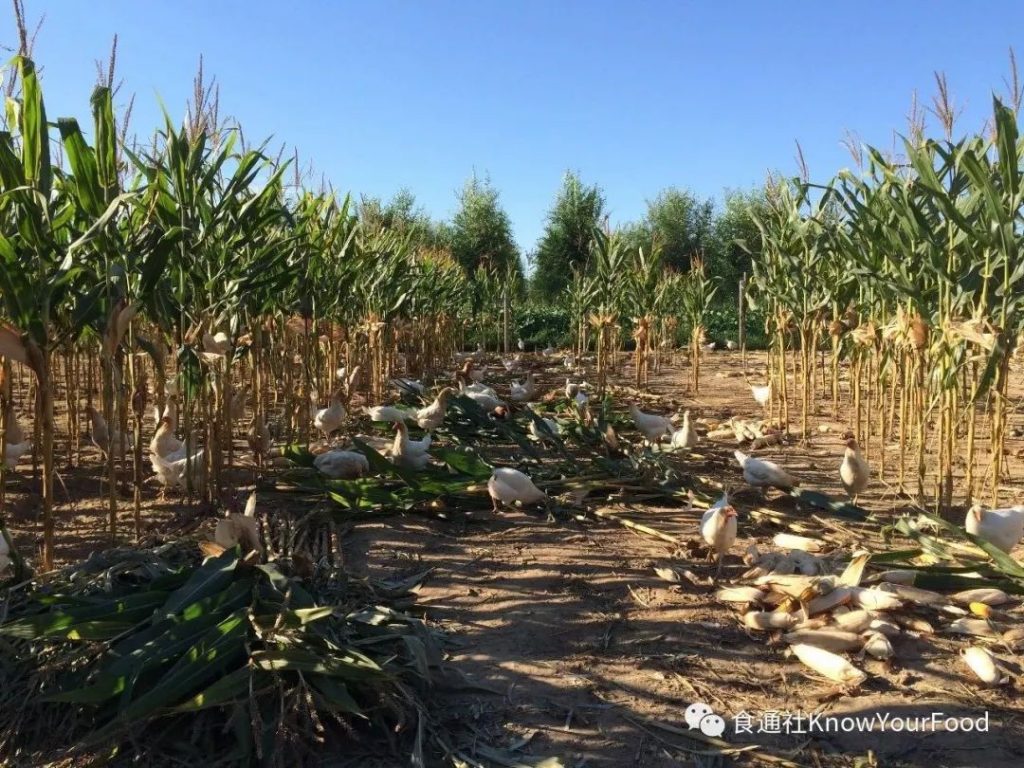
The topic I want to share with you today is Green Development and Sustainable Agriculture. In my view, “green” and “development” stand in a unified relationship — there is no opposition between them. It is simply that, in the process of understanding, we pass through different stages, giving rise to different implementing actors and different stakeholders. For one group of actors, it (protection) is beneficial; for another group of stakeholders, it may not be.
What Is “Green Agricultural Development”?
In 2017, the General Office of the Central Committee of the Communist Party of China and the General Office of the State Council issued the Opinions on Innovating Institutional and Mechanism Arrangements to Advance Green Agricultural Development — this can be regarded as the official announcement of green agricultural development (whereas previously we had only been speaking of environmental protection and ecological protection in general terms). At the same time, we have also been talking about rural revitalisation. So what is the relationship between green agricultural development and rural revitalisation? In the central government’s document on implementing the rural revitalisation strategy, there is a passage that makes this perfectly clear:
“Uphold the harmonious coexistence of humankind and nature. Firmly establish and practise the concept that lucid waters and lush mountains are invaluable assets. Implement the policy of giving priority to conservation and protection, with natural recovery as the principal approach. Coordinate the systematic governance of mountains, rivers, forests, farmland, lakes, and grasslands, strictly enforce the ecological protection red line, and use green development to lead rural revitalisation.” — Opinions on Implementing the Rural Revitalisation Strategy
It can be said that “green” is itself a concept of development. It is both a goal of rural revitalisation — rural revitalisation encompasses ecological revitalisation; and a guide for action — that is, the manner in which we are to achieve thriving industries, civilised rural customs, and so on. These policy documents confirm that these objectives must be pursued through green means, not through crude and blunt approaches. We can understand green agricultural development from five perspectives:
- We used to say that green and development were two contradictory concepts, but from today’s perspective, we recognise that green is itself development. When the two come into tension, green should be used to optimise development.
- Green agricultural development is not simply a question of agricultural industry. It is a question of the people’s will, and a political question — the people’s will is the greatest of all politics.
- At its most fundamental, green development means ensuring that everyone has sufficient, safe, and high-quality agricultural products, as well as good environments for production and living. It must be advanced systematically across all elements — mountains, rivers, forests, farmland, and lakes — without protecting one thing at the expense of another.
- From a government or macro-level perspective, green development demands sustained, long-term effort. Over our more than 40 years of reform and opening up, we have achieved great results and developed at a very rapid pace, but the intensity of environmental pollution emissions has been equally high. Problems accumulated over so many years cannot possibly be solved in a day or two.
- Green agricultural development must ultimately return to its source: providing high-quality agricultural products. Agriculture in the past also provided agricultural products, but the emphasis then was on quantity. Going forward, beyond being sufficient in quantity, products must also be high-quality and healthy, with greater emphasis on green, organic, and pollution-free products. So no matter how well the green slogan is proclaimed, if agricultural products are not enough to eat or are not safe, that is grounds for a one-vote veto.
Initial Progress in Tackling Non-Point Source Pollution
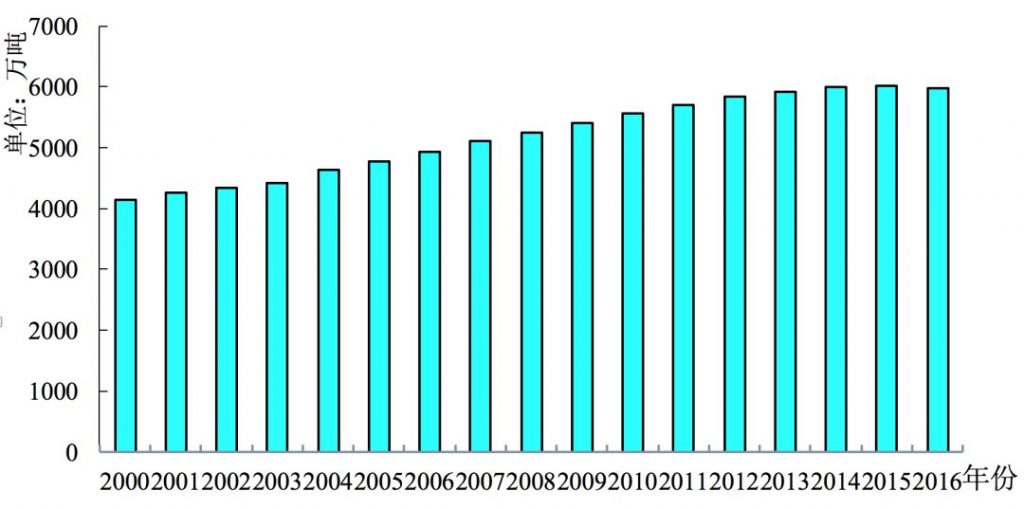
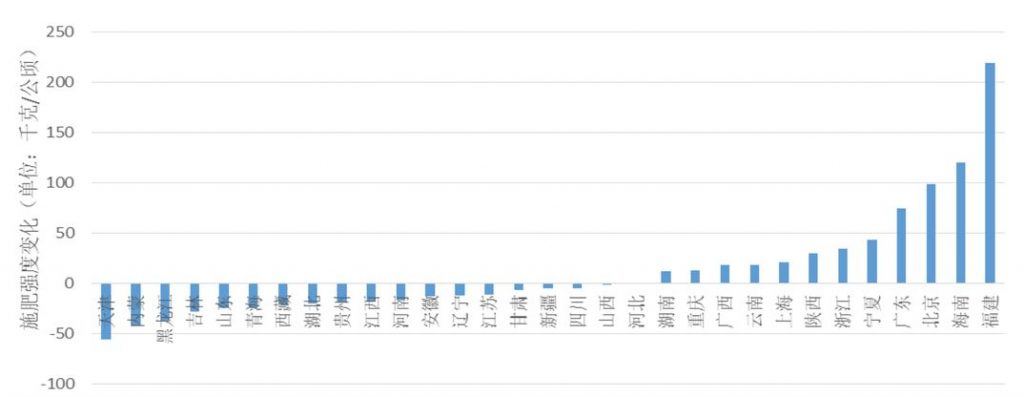
Looking back at the major progress we have made in green agricultural development, the first point is that initial results are emerging in tackling non-point source pollution. In 2016, the use of chemical fertilizers and pesticides recorded its first-ever decline, and the utilization rates of waste from livestock and poultry, manure, crop residue, and agricultural plastic film have also been gradually improving. From an individual’s perspective, some areas may have been affected, and farmers may feel they are raising fewer pigs or cultivating less land; but from a broader perspective, everyone is enjoying the fruits of green development, and it is fair to say that initial results are being seen in governance.
Second, our country has established a number of comprehensive model areas for green agricultural development, including sustainable development experimental demonstration zones and many regional models rolled out across entire counties. Alongside this, a body of institutional outcomes has been achieved — laws, regulations, state-level and central government documents, as well as departmental documents. This is what we mean by institutional outcomes.
Why was the concept of green development not raised until 2017? The reason it had not been mentioned before was a fear that there would not be enough grain to eat. After these years of green development, grain output in 2017 reached 12 trillion jin, the second-highest level in history, yet sowing area actually declined somewhat — a sign that production capacity is relatively stable. Development and protection can indeed be pursued together.
Farming Bans, Burning Bans, and Pollution Displacement: Governance Cannot Rely Solely on “Blocking”
Despite the various achievements, problems persist, and there is still room for improvement. Take chemical fertilizers, for example: usage in some areas remains relatively high. Pesticides are no different. Although the use of pesticides began to decline in 2015, the statistical data is based on the volume of formulated products — that is, commercial product quantity. We would argue that pesticide formulation volume does not carry much significance for environmental health. But pesticides involve the concept of concentration. For instance, the impact on environmental health from one million tonnes of pesticide formulation at 20% concentration is far greater than that from two million tonnes of formulation at 5%.
Another example is livestock and poultry manure management, where there is currently excessive regulation but insufficient incentives, and we must be particularly vigilant about new environmental risks. The policy background for no-farming zones in livestock farming is the Regulations on Pollution Prevention and Control in Large-Scale Livestock and Poultry Farming, promulgated in 2014, followed by the “Water Ten” (the Action Plan for Water Pollution Prevention and Control), which required no-farming zones to be demarcated by the end of 2017. No-farming zones come in different categories — drinking water source protection zones, nature reserves, scenic areas, urban residential areas, and cultural, educational, and scientific research zones, among others. Large-scale farming is prohibited in these areas. However, the document does not provide a unified definition of “large-scale farming”; instead, it leaves the threshold to be determined by local governments. Some localities have set a relatively wide criterion — for instance, 500 head slaughtered counts as large-scale, while below 500 head farming is permissible provided no environmental impact is caused. Others define large-scale farming as anything above 50 head. Overall, the number of closures has indeed been substantial, and there has been some impact on output.
Another significant shift has been in the overall structure of the livestock industry. In the past, the centre of gravity for farming was mainly in the southern regions. With national policy adjustments and the demarcation of no-farming zones, production in many southern areas, such as Zhejiang and Jiangsu, has declined considerably. The underlying cause can be understood through the Environmental Kuznets Curve: once the level of economic development reaches a certain point and passes a critical threshold, emissions gradually decline.
Technological progress is one contributing factor, but another very important cause is pollution displacement. In particular, pollution displacement between countries — once a country becomes sufficiently developed, some manufacturing moves abroad. Pig farming within China follows a similar pattern. Although the same laws and regulations apply across all regions, enforcement intensity varies in practice. Inevitably, pollution displacement occurs between different regions. Economically developed areas tend to set stricter thresholds for what counts as large-scale; less developed areas may draw the line more loosely. Production enterprises will naturally gravitate towards places with looser environmental standards and weaker policy enforcement, because those are the places where emissions are permitted.
So we say that in implementing farming ban policies, we must be vigilant about new environmental pollution risks. The first is the risk arising from livestock farming shifting northward. In the south, a field may grow two crops a year, and in some places even three, meaning that one mu of land can absorb two to three times as much pig manure as in the north. In the north, by contrast, there may only be one crop per season, and combined with climatic factors, the land’s capacity to absorb manure and wastewater on the same mu of ground is very likely lower than in the south. Furthermore, the south has more visible surface water, while the north has more hidden groundwater, carrying a greater concealed risk. The General Secretary has said that lucid waters and lush mountains are invaluable assets, but he has also said that ice and snow are likewise invaluable assets. We cannot protect the lucid waters and lush mountains of the south while abandoning the ice and snow of the northeast.
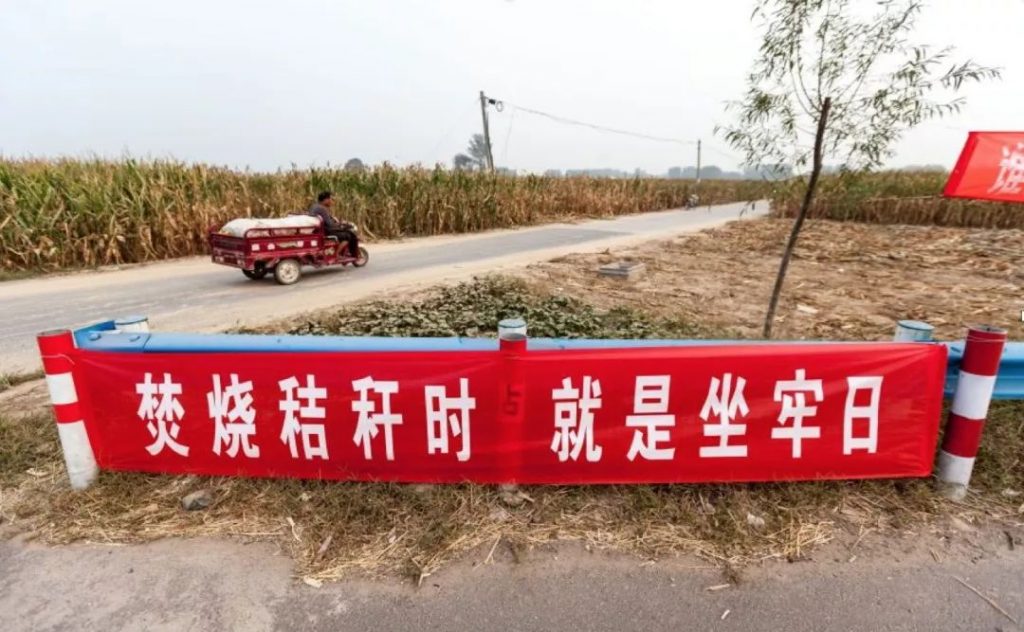
Another risk is straw burning. Banning burning outright without first resolving the resource-based utilisation and downstream management problems of straw cannot solve the issue at its root. Many rural areas now have targeted no-burning slogans with very strong language — things like “When you burn straw, it’s prison day” and “Whoever’s field catches fire gets detained” … Back in my childhood, by that standard, I would have no idea how many times I’d have been detained.
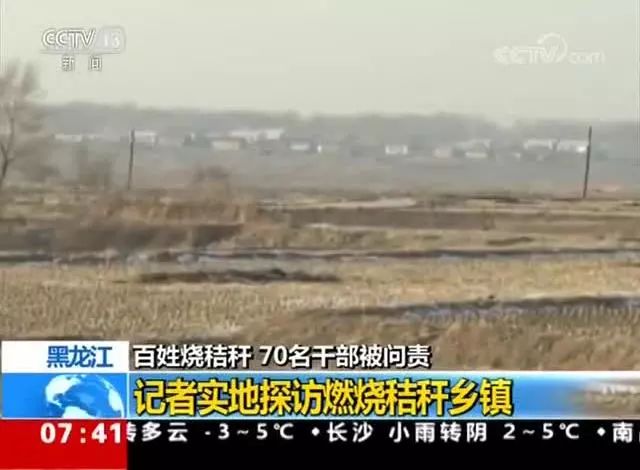
Early this year, the case of Wuchang City in Heilongjiang Province, where burning crop residue caused pollution, may be familiar to many. In that incident, not only were the villagers involved detained, but the municipal government was also called in by the provincial government for a formal accountability meeting. So what was the background? I did some looking into it, and it turns out that a no-burning period had initially been set, running until roughly 10 January. During that period, no one had burned in violation of the ban. But then, all of a sudden, a new policy came through, extending the no-burning period by another half a month. That was when people ran out of patience, because the ground was about to freeze, and spring sowing was next. They had to burn it or clear it away, or else they simply wouldn’t be able to plant the following season.
I brought up this example to really make the point that environmental protection also needs to be grounded. Imagine you’re on a plane: thirty minutes before landing, the announcement tells you the lavatories are closing, and everyone will naturally hold it. But after you’ve landed, another announcement comes that there’s no gate slot and you’ll have to wait two more hours — well, some people simply can’t hold it any longer. That’s easy to understand, isn’t it? Now think about crop residue burning. I personally think that in the past, when environmental capacity was relatively large, people generally didn’t give this much thought. Now that burning is banned, people will still comply — the issue is that policies keep flip-flopping: one day you’re told it’s fine, the next day it’s not. What do you do when that disrupts your sowing plans? Some people reach their breaking point, go out and burn, and end up being detained. So what I want to say is that sometimes our policies “block” a little too much and “channel” a little too little.
Rural Environmental Protection Requires a Thorough Understanding of the Rural Revitalisation Strategy
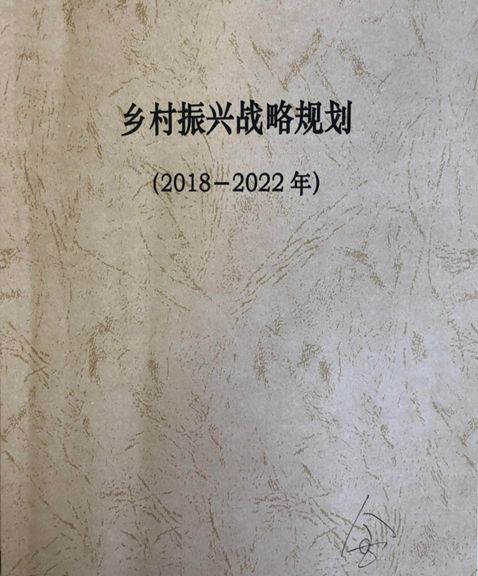
Everyone involved in agriculture — whether growing crops, raising livestock, selling produce, or processing products, including researchers in the field — must take the time to seriously understand the overarching framework for agricultural work at this stage: rural revitalisation. It is closely linked to our environmental protection, or rather sustainable ecological agriculture. It is neither opposed to nor merely parallel with these efforts; it is the overarching framework that coordinates all work in the agricultural sector. The Plan for Rural Revitalisation (2018–2022), at nearly 40,000 characters, sets the fundamental guiding principles for rural and agricultural work in the years ahead. It is a major strategy enshrined in the Party Constitution, and I would urge everyone involved in agriculture to read it in full and with care.
Overall Requirements
Thriving industries, livable ecology, civilised rural customs
Effective governance, prosperous living
Overall Guiding Principle
Priority Development of Agriculture and Rural Areas
Central Tasks
Revitalisation of industry, talent, culture, ecology, and organisation
The overall requirements of this plan cover five aspects in 20 characters. “Thriving industries” comes first. Among the five central tasks, industry also ranks at the top. So how should we understand the relationship between agricultural and rural environmental protection and rural revitalisation? I once thought it might be a parallel relationship, but after repeatedly studying the master plan, I believe it is not. Overall, the scope of rural revitalisation is broader than that of agricultural and rural environmental protection; agricultural and rural environmental protection must serve rural revitalisation, but it is far from dispensable — it is itself an inherent requirement of rural revitalisation.
Recent changes in the functions of certain administrative departments also reflect this relationship. Previously, the supervisory and guiding functions for reducing chemical fertiliser and pesticide use, and for agricultural non-point source pollution — particularly the oversight of agricultural non-point source pollution — were mainly handled by the Ministry of Agriculture. They have now been clearly transferred to the Ministry of Ecology and Environment. Following the reform, the Office of the Central Rural Work Leading Group is housed within the Ministry of Agriculture and Rural Affairs. This round of reform has strengthened the existing functions of all departments involved:
- Ministry of Ecology and Environment: Integrating the previously dispersed responsibilities for ecological and environmental protection, exercising unified authority over the supervision and administrative enforcement of all categories of pollution emissions in ecological and urban-rural contexts, strengthening environmental pollution governance, safeguarding national ecological security, and building a Beautiful China.
- Ministry of Agriculture and Rural Affairs: Strengthening the Party’s centralized and unified leadership over “Three Rural” work, upholding the priority development of agriculture and rural areas, coordinating the implementation of the rural revitalisation strategy, promoting the comprehensive upgrading of agriculture, the comprehensive progress of rural areas, and the comprehensive development of farmers, and accelerating the modernisation of agriculture and rural areas.
- For agricultural non-point source pollution, the overall governance structure has shifted from “agriculture implements, agriculture supervises” to “agriculture implements, environmental protection supervises.”
- Rural living environment: the Ministry of Agriculture and Rural Affairs takes the lead (the first hard battle of rural revitalisation).
Before 2050, the most fundamental criterion for judging whether a piece of agricultural work is on the right track is whether it serves rural revitalisation — and that means measuring it against the five overall tasks outlined earlier. These 20 characters are not meant to single out one aspect; they call for all five to be advanced in tandem, so as to avoid selective implementation.
The examples I mentioned earlier, including the crude practice of substituting prohibition for governance in some areas, are all at odds with the requirements of rural revitalisation. In some places the slogan is literally “Not a single pig left, not a single chicken remaining.” How much pollution can one chicken possibly cause? In other places, to tackle non-point source pollution, farmers are banned outright from growing garlic — everything that sprouts is pulled up by the root. I come from a rural family; I am the descendant of farmers myself. I once wrote an article criticising this kind of crude approach. It is entirely inconsistent with the spirit of rural revitalisation. Set against the 20 characters mentioned earlier, these forced demolitions and forced uprooting leave farmers with no industry and no income — where, then, is “thriving industries”? And how could they possibly achieve “prosperous living”? Demanding that farmers immediately attain “civilised rural customs” is neither realistic nor efficient. There is no basis for talking about rural civility or effective governance. A stretch of land may be environmentally protected, yet become so desolate that no one sets foot on it — that is not right either. Agriculture is inherently alive; it is part of the ecosystem. We cannot let agriculture disappear and the people leave, leaving behind a pool of stagnant dead water. That is not the true meaning of “lucid waters and lush mountains are invaluable assets,” let alone “livable ecology.”
So environmental protection must absolutely not swing to extremes. In the past we pursued development without protection; now we cannot simply protect without developing. This work must still be carried out within the broader framework of rural revitalisation. The root cause of these problems lies in an insufficient understanding of rural revitalisation, and the immediate cause is that the relevant assessment mechanisms have yet to be put in place. But those mechanisms will not be absent for long — the pertinent laws and regulations will be formulated and promulgated in due course. From now on, no one should be pulling up ordinary people’s garlic on a whim.
How Can We Advance Sustainable Agriculture Within the Broader Framework of Rural Revitalisation?
All this having been said, how should we actually go about practising sustainable ecological agriculture within the broader framework of rural revitalisation? I think that, first of all, from a management perspective, there are now many red lines in place — basic farmland boundaries and various red-line nature reserves — and they frequently overlap. A given stretch of land may fall within both an ecological red line and a basic farmland zone. Which designation takes priority at present? In fact, it is not yet entirely clear, because environmental protection is itself a fundamental state policy, and food security is likewise a national strategic goal.
Still taking farming ban zones as an example — does a farming ban zone really mean that absolutely no livestock can be kept there? I think it depends on the circumstances. Articles 32 and 37 of the new Pesticide Management Regulations explicitly prohibit the use of pesticides in water source protection areas. That is something that demands particular attention. But even this provision, I feel, warrants further reflection: are low-toxicity pesticides, or even some biological pesticides, also required to be banned outright? If a protected area covers a wide expanse of farmland, would going entirely pesticide-free across all of it be realistic? As I mentioned earlier, agriculture is in itself a living ecosystem with ecological functions. Today, much of our spatial management draws a sharp line between agriculture and ecology, which is inappropriate. What should be encouraged is environmentally friendly — indeed, even environment-improving — agricultural practice, rather than a blanket ban.
Then there is the question of integrated crop-livestock farming and the assessment of resource and environmental carrying capacity. In the past, cultivated land area was used as the basis for carrying-capacity calculations — an approach that needs to be revisited. Over what spatial scale is integrated crop-livestock farming appropriate? We need more rigorous methods of assessment. Abroad, the Netherlands, for example, also advocates integrated crop-livestock farming. I looked into it: our largest township is larger in area than the Netherlands as a whole. So we cannot simply replicate foreign experience. But if we focus more on the smallholder level and implement integrated crop-livestock farming over relatively small areas, the results are the best.
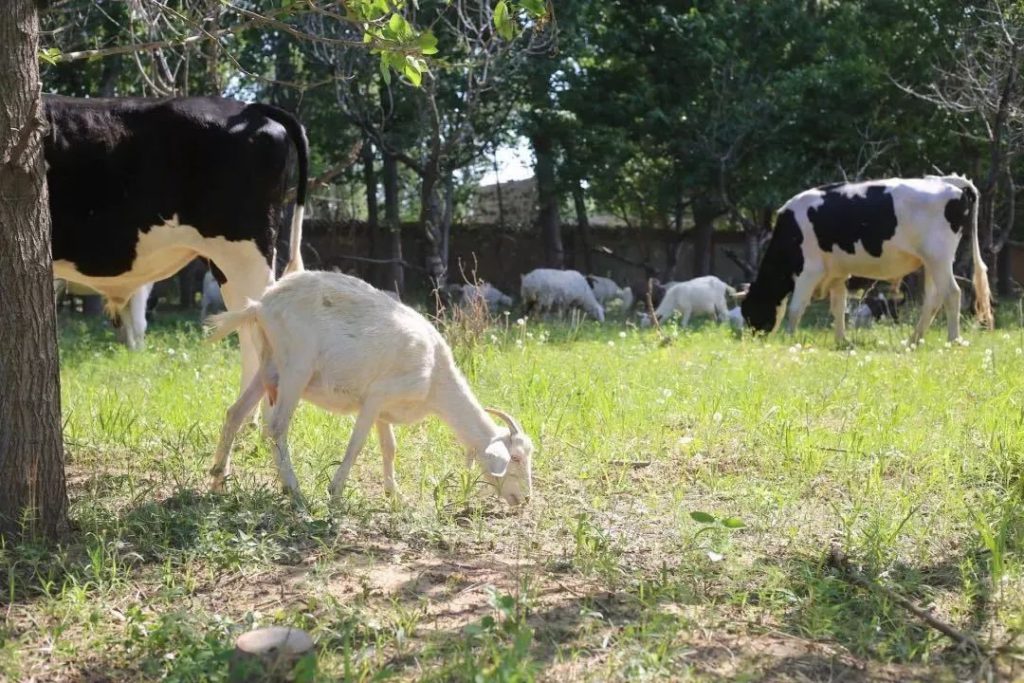
When we talk about resource carrying capacity, we cannot consider land alone; water must be taken into account as well. In some places there is plenty of land, but if there is no water, or if the water body has been polluted, green development in agriculture simply cannot be achieved. So we need to take a more comprehensive view of environmental factors — both the visible and the invisible must be considered. These days you frequently see “hard-battle campaigns” launched against various problems, and they can deliver effective results in the short term. The reduction in pesticide and fertiliser use, for instance, is a product of such a campaign. But once the hard battle is over, the environment has not visibly improved — and of course there are multiple reasons for that. To begin with, agriculture itself is not the primary cause of declining environmental quality. Although agricultural emissions may appear, on the surface, to be even higher than industrial emissions, the way agriculture affects the environment is fundamentally different from the concentrated discharge characteristic of industry. So yes, agriculture ought to bring its emissions down, but other sectors must also proceed in coordination. This is not merely a “hard-battle campaign”; it is also a “protracted war.”
Policy Must Be Implemented, Assessment Must Be Independent, Data Must Be Solid
The effective implementation of relevant policies is a key safeguard for green development in agriculture. In the past, some good policies were never put into practice, so there is no need to pile on yet more repetitive work — we should avoid an overabundance of documents and bureaucratic formalism. Take farming bans, for example: a great many relevant policies and documents have been issued recently. But earlier policies — such as grid-connected power generation and subsidies for organic fertiliser — were also sound ones. Why not implement those first? That, too, is something we have been calling for all along.
Another safeguard is establishing a third-party assessment mechanism. Right now, much of the work involves agencies saying of themselves that they have done a good job, but it carries far more weight when others confirm it. In the implementation of certain policies — such as the reduction of chemical fertiliser and pesticide use — an independent third party with fewer conflicting interests should be brought in to assess performance. Only then does a positive evaluation truly mean something.
The last point concerns data. The pesticide usage data in active-ingredient equivalent, and data on the generation and use of crop residue and livestock and poultry manure, for instance, are not accurate — yet our quantitative targets are extremely precise. This opens the door to meeting numerical targets on paper alone. Much of this involves specialist knowledge, so I will not go into detail. The bottom line is that the data need to be solidified and improved.
The final safeguard is increased investment. Where should it go? Implementing the policies I mentioned earlier requires funding. Creating new policies — such as agricultural film recovery and crop residue for land exchange — also requires investment. Then there is the current issue of south-to-north pig farming: the farms have all relocated to the north, and if environmental protection facilities cannot keep pace, everyone will suffer the effects of pollution. So from this angle, the state must establish a corresponding ecological compensation mechanism.
Editor: Chunhui
Photos: all provided by the author unless otherwise noted
Jin Shuqin also compiled, during her talk, a selection of remarks by General Secretary Xi Jinping on green development and sustainable agriculture, which we reproduce here:
We cannot treat strengthening ecological civilisation, strengthening ecological and environmental protection, and promoting a green, low-carbon lifestyle as purely economic issues. There is a great deal of politics involved. — 25 April 2013, meeting of the Standing Committee of the Political Bureau of the 18th Central Committee.
We need both lucid waters and lush mountains and gold and silver mountains. We would rather have lucid waters and lush mountains than gold and silver mountains — indeed, lucid waters and lush mountains are invaluable assets. — 7 September 2013, speech at Nazarbayev University, Kazakhstan.
Mountains, rivers, forests, farmland, and lakes form a single life community. The lifeblood of people lies in the farmland, the lifeblood of the farmland lies in water, the lifeblood of water lies in mountains, the lifeblood of mountains lies in soil, and the lifeblood of soil lies in trees. — 15 November 2013, explanation of the Decision of the CPC Central Committee on Several Major Issues Concerning Comprehensively Deepening Reform.
In ecological and environmental protection, we must always look at the big picture, the long-term picture, the overall picture, and the comprehensive picture — we cannot sacrifice the greater for the lesser, favour one thing at the expense of another, spend tomorrow’s money today, or chase quick, short-term gains. Ecological and environmental protection is a long-term task that demands sustained, unwavering effort. — January 2015, inspection tour of Yunnan.
The environment is people’s livelihood; green mountains are beauty; a blue sky is happiness. — March 2015, participating in the deliberations of the Jiangxi delegation.
The Yangtze River Economic Belt, as a river-basin economy, involves waterways, roads, ports, banks, industry, cities, and multiple dimensions including flora and fauna, wetlands, and the environment. It is a whole, and must be comprehensively understood and coordinated in planning. — 7 January 2016, symposium on advancing the development of the Yangtze River Economic Belt.
The will of the people is the greatest politics. — 12 January 2016, 6th Plenary Session of the 18th Central Commission for Discipline Inspection of the Communist Party of China.
Ecology is a resource; ecology is productive capacity. — 23 May 2016, inspection tour of Yinchun City, Heilongjiang.
We must accelerate the treatment and resource utilisation of livestock and poultry farming waste. This affects the production and living environment of more than 600 million rural residents, bears on the rural energy revolution, and is decisive for whether we can continually improve soil fertility and effectively manage agricultural non-point source pollution. It is a great good that benefits the country, the people, and the long term. — December 2016, 14th meeting of the Leading Group on Financial and Economic Affairs.
We must deeply advance agricultural supply-side structural reform, focusing on the quality of agricultural supply, emphasising sustainable development, and strengthening the supply of green, organic, and pollution-free agricultural products. — 9 March 2017, participating in the deliberations of the Sichuan delegation at the 5th Session of the 12th National People’s Congress.

Our First Time Reaping Wheat in the Field: What Did We Harvest? | Labour Walk Recap
A Little Farmer’s Cherry-Picking Tale | Foodthink × Tianfuyuan “Labour Walk” Report
Tianfuyuan: From City Executive to Country Woman — Farming Is Now Her Life
The Future of Farmers’ Co-operatives: Leaving No One Behind
Understanding Organic Agriculture the Right Way: Environmental Benefits and Inspirational Value
We Had a Meeting with More Than 100 Vegetable-Growing Relatives