
We Banked 20,000 Yuan in One Day of Selling Vegetables, and Tearfully Ate 2,000 Yuan’s Worth…
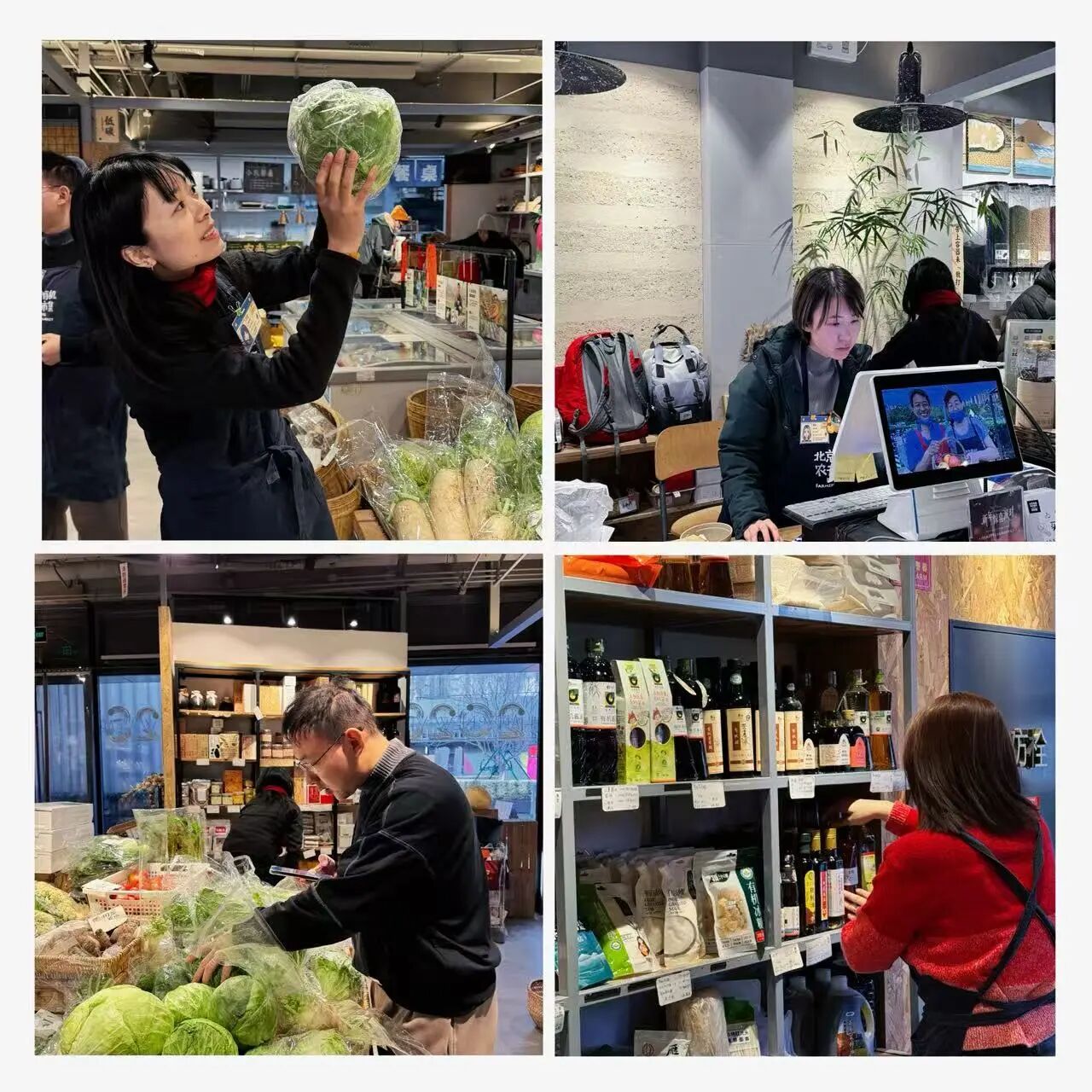
On 7 February 2026, after a two-year hiatus, the Jishi takeover returned and was successfully upgraded to the Foodthink annual meeting. Over these 12 hours, we used selling vegetables as a way to go deeper into the food system. Eight Foodthink members transformed from consumers into shop assistants, got a real-life taste of a vegetable shop simulator, and took on a single-day sales target of 20,260 yuan.
On the day of the annual meeting, we also prepared many fitting activities: the editorial team’s year-end report, a dialogue on the sales side of ecological agricultural products, Foodthink’s first live shopping event, and a lamb soup screening. Thank you all for your in-person support and online viewing; if you missed the buzz, please see the event roundup and livestream replay👇



In order to make our successful “debut” on 7 February, we received 48 hours of professional training over the past few months. The takeover has now drawn to a close. Has the sales challenge been met? What problems did the members encounter? And what observations and reflections did they have? At the tail end of the Year of the Snake, come savour the vegetable-selling insights of these eight first-time and experienced trainees!
I. Sold 20,000 Yuan, Ate 2,000 Yuan’s Worth
I always brag about my ** years of professional vegetable selling (this year it will be 16 years!), but since I put my energy into Foodthink in 2017, the time I have actually spent selling on the front line has also dropped, whether at markets or in community shops. Only during the pandemic years did I still sell vegetables a few times a week, because we had to do group buying and let Jishi friends buy their vegetables “contactless” (what an archaic word!). So my vegetable-selling skills have become far more than a little rusty; every year I rely on the “Jishi takeover” with Foodthink to get back into practice.

I always brag about my ** years of professional vegetable selling (this year it will be 16 years!), but since I put my energy into Foodthink in 2017, the time I have actually spent selling on the front line has also dropped, whether at markets or in community shops. Only during the pandemic years did I still sell vegetables a few times a week, because we had to do group buying and let Jishi friends buy their vegetables “contactless” (what an archaic word!). So my vegetable-selling skills have become far more than a little rusty; every year I rely on the “Jishi takeover” with Foodthink to get back into practice.
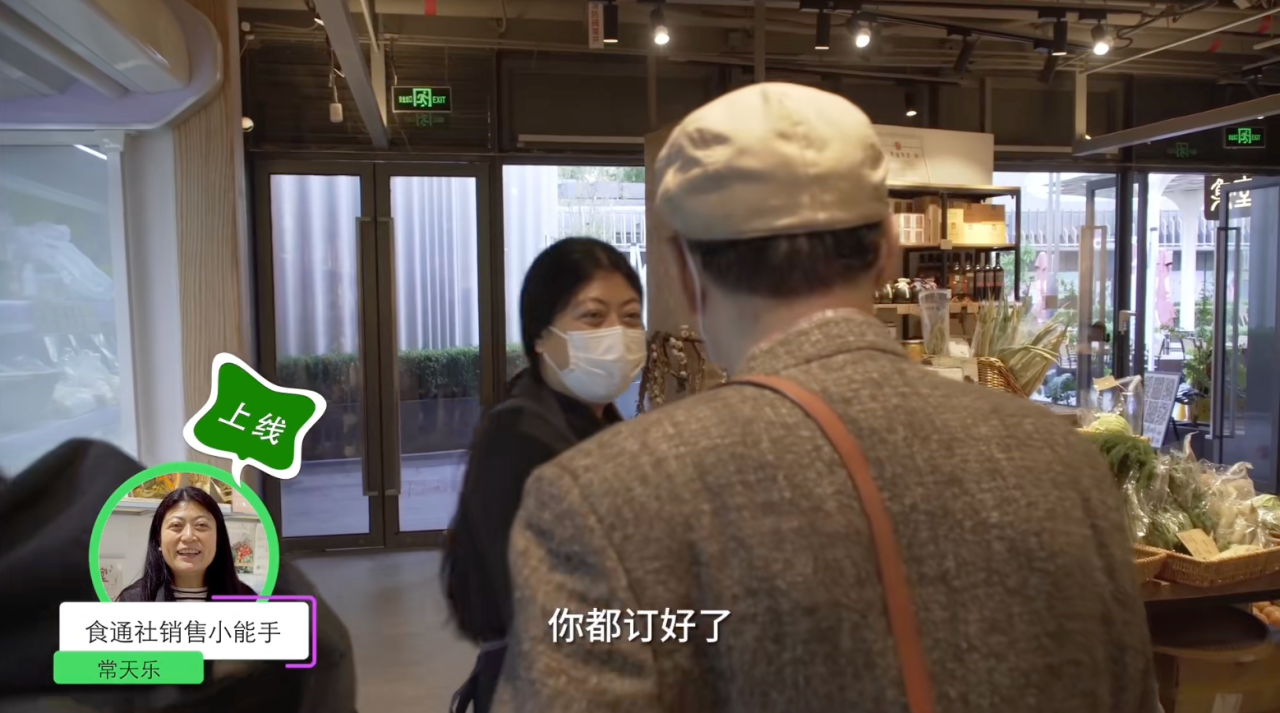
In 2025, a group of new colleagues joined Foodthink. In fact, none of us had a very deep food and farming background; some did not even know what seasonal vegetables were when cooking or shopping. The only colleague who had worked as an agricultural journalist for a few years also said that they did not understand food. So in the three months before the “Jishi takeover”, each colleague began a 48-hour, dispersed “apprenticeship” at Jishi. I also hope that, through this experience, everyone can become familiar with food, meet more farm friends, serve consumers, and understand how an “alternative” vegetable shop works. More importantly, we can find topics for commissioned writing and research in it, rather than just sitting in the office, racking our brains and typing.
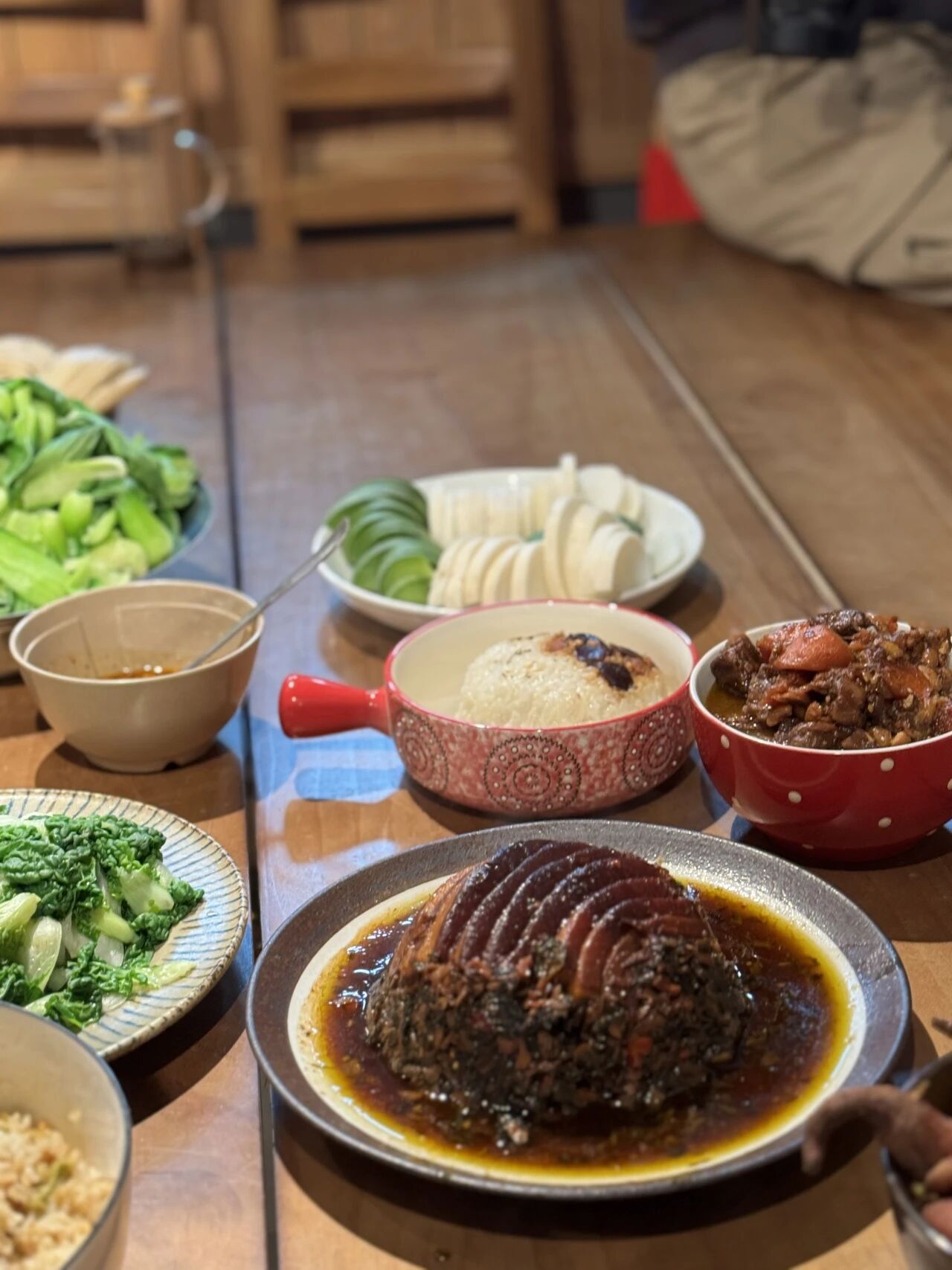
When the day of the “Jishi takeover” actually arrived, I was delighted to find that our band of amateur vegetable-selling trainee colleagues were actually quite proficient in the work. Although hiccups kept coming, we resolved them all without anything going seriously wrong, and even cooked two big meals. Not only did we keep ourselves fed, but we also hosted the friends who came to visit and take part in the activities. The best part was that, before the shop closed, we discovered that we had not only broken the sales record set in all previous “Jishi takeovers” but also surpassed the small turnover target we had set ourselves: Well, it’s 2026, so we sold over 20,260 yuan’s worth! But a careful review showed that just the food alone cost nearly 2,000 yuan. Who could blame us for eating so well!
II. Service Work Is Really Hard!

I never imagined that, on the day of the “Jishi takeover”, the first difficulty I ran into was, of all things, stock intake.
Stock intake is the process of recording the day’s newly arrived vegetables and other goods on the receiving slip, after which the colleague in charge of the till enters them into the system. I had assumed that, with my previous 48-hour work experience, I was already quite familiar with this process.
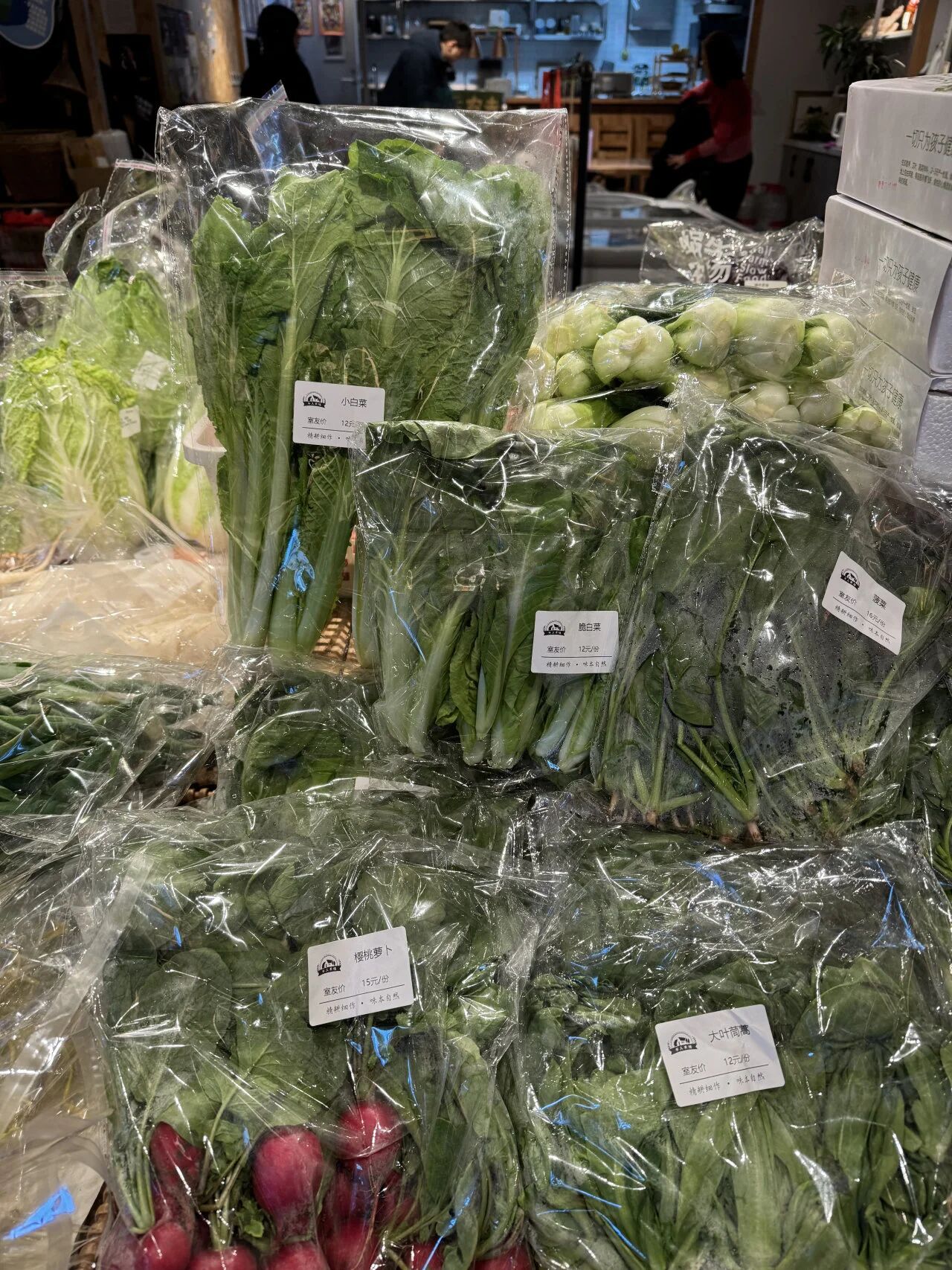
As it turned out, when I arrived at the shop on 7 February, the vegetables from Xiaoliushu were already waiting there. Northerners always have a bit of an in-built disadvantage when it comes to leafy greens… Looking at the vegetables in the bags, I was a little stunned: was this spinach, or mizuna? Fortunately, I managed to catch Jishi’s official manager, Sister Qi. In just two seconds, Sister Qi identified all the vegetables for me, and the problem was solved with ease.
When I used to work there, customers would always ask us questions like which farm a vegetable was from, what its taste and texture were, and how to cook it. As the person at Foodthink with the least everyday common sense, I couldn’t field questions like that and had to rely on the old hands for help. Fortunately, on the day of the event, there were also old hands appearing at random, and with colleagues helping one another out, we could just about cope.
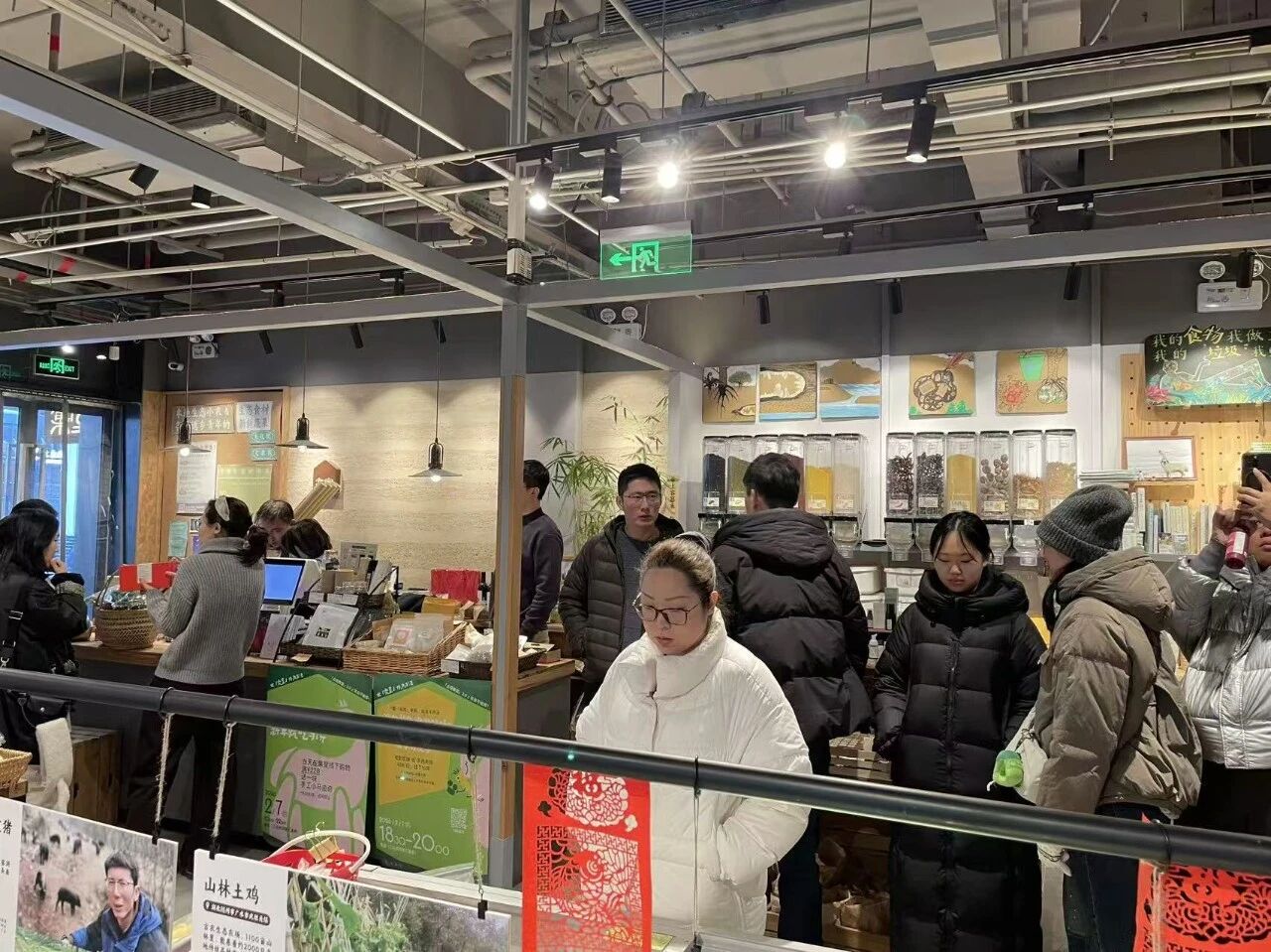
My earlier 48-hour “work” stint at Jishi had always been a different kind of “rest” for me. That day, for a full six hours, I could leave my phone and WeChat alone and focus solely on customer service, sorting, and arranging the stock; it was easy to slip into a flow state. But on this day, with the New Year approaching and four events held back to back, there were people coming and going: customers buying vegetables and New Year’s goods, and readers attending the events; I had almost never seen so many people in the shop. And each of us had to manage sorting and packing online orders while also serving in-store customers… I really wished I had a dozen arms.
Finally, when a customer asked me not to put his things on the floor, I could hardly keep myself from rolling my eyes… Let me apologise to this most esteemed customer. I had always thought I was a people-pleaser, but after this day I need to revise that self-perception. Service work is really hard!
III. First Live Shopping Experience

This is my second Jishi takeover. Compared with my flustered scramble of selling and sorting produce the first time, this time… I was still pretty nervous—because I was going to do my first-ever live shopping broadcast. Although “live shopping” sounds intimidating, in reality I probably didn’t sell much😂. If you followed my recommendations and bought something, please raise your hand🙋🏻♀️~
I spent the whole time enthusiastically recommending the flower mushrooms from Fang County in Hubei, Bule’s cheese, and the one I really like, Jishi’s sustainability corner—there are bulk dry goods, reusable plastic packaging brought in by customers, and a small bookshelf set up by Foodthink. People who usually come to the shop to buy vegetables rarely make their way over there, but this really is my treasure zone.
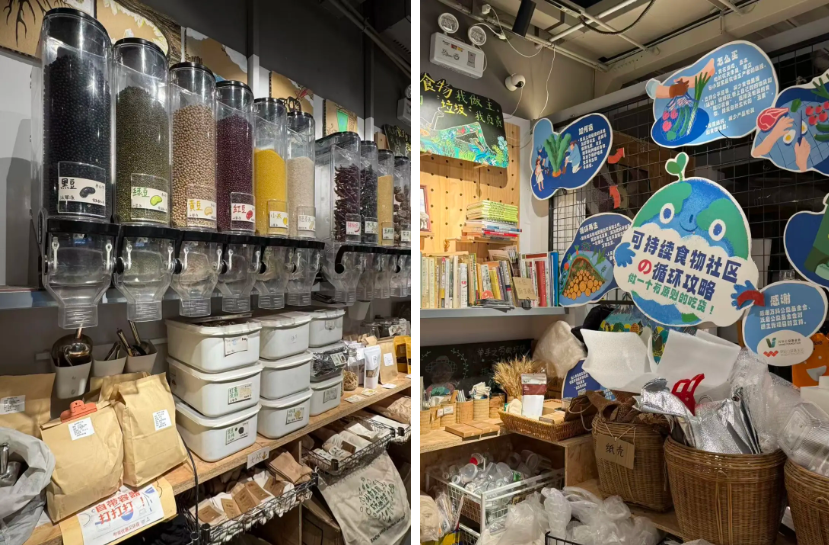
After watching livestreams for so many years, I finally hosted my own live shopping session. The on-site feedback was pretty good, and I suddenly felt a bit more confident; maybe in the future I’ll be able to do more live shopping. Let’s hurry and do another takeover!
IV. A Day of Intense Prefrontal Cortex Training

This was the day I saw the most people at Jishi. During the previous 48 hours, the most common state of work was: receive an instruction in the WeChat chat box—> take a basket and start sorting—> rely on experience to understand how the customers on the other end of the connection define “big and small”, “more and less”, “a bit starchy” and “a bit juicy”—> pack, box, seal and ship via ShanSong express. This produced a kind of exhilaration in single-threaded work, in being alienated into a machine and a worker ant.
I was just enjoying it when bystanders began spectating my mental state: “Excuse me, is this a ghost vegetable shop?” Even more curious onlookers pushed the door open, then shook their heads and came out: “There’s no one in there—what are these shop assistants busy with?”
7 February was no ordinary day. I was buried in writing copy and livestreaming, and when I looked up it was a “tsunami”! Perhaps not even a Hawaiian beach at this moment would be much different. Real, flesh-and-blood customers were present in person, filling every crack of this vegetable shop and lighting up every corner. It felt like being back to the childhood scene of preparing New Year’s goods, with only the rice to plunge my hands into missing. This year’s festive flavour isn’t strong enough to thaw Liu Dehua and China Doll, but here at least 30% can be thawed.
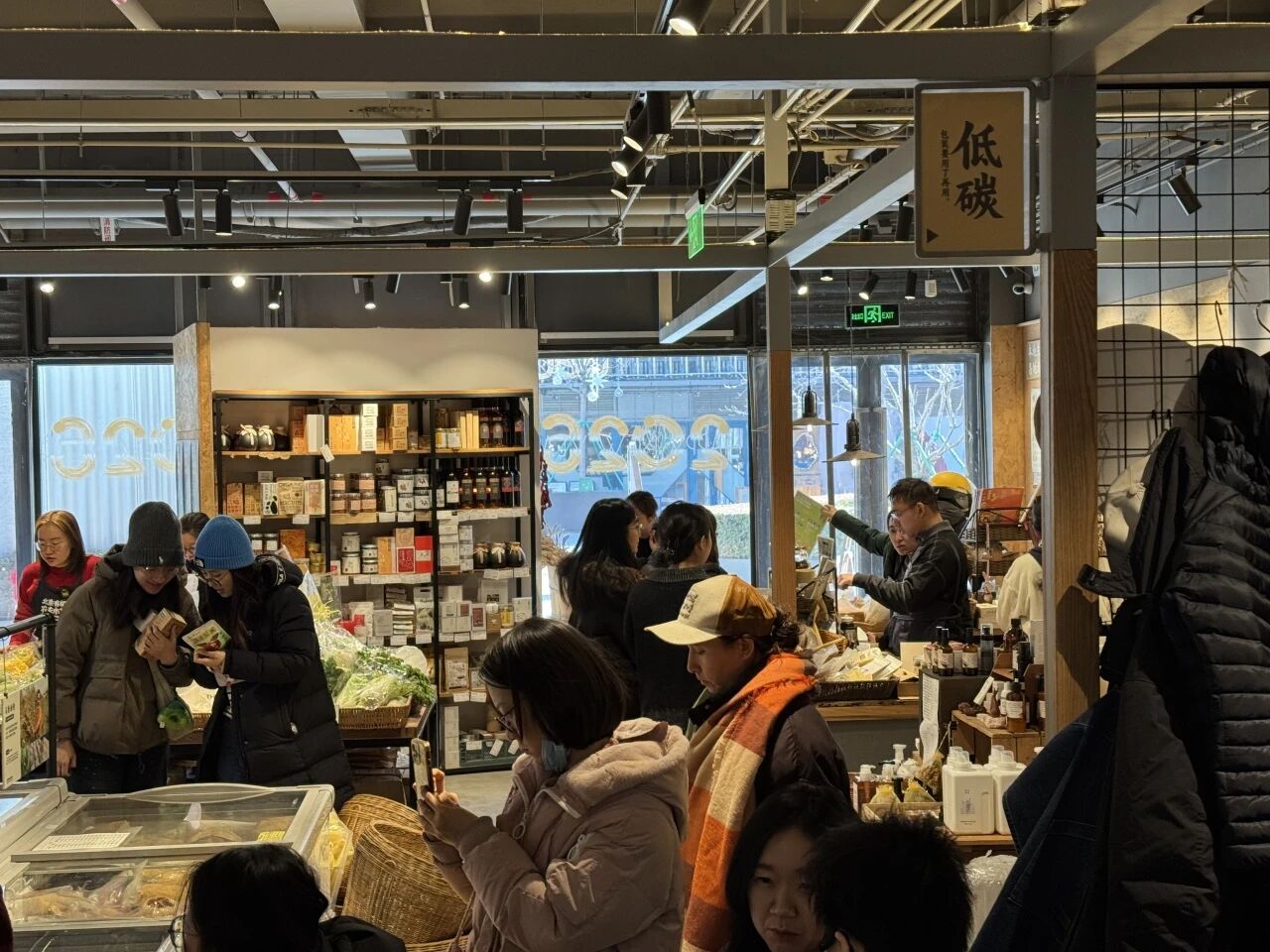
It was also a day of intense prefrontal cortex training. Today was the event team’s day: 12 hours, 4 events… I could only tell myself that if I closed my eyes and opened them, the day would be over. It is truly a blessing to meet, in person, farm owners and like-minded people who stick to sustainable ways of eating, This, too, must be the point of Foodthink’s public events: along the way, you always meet comrades who are both colleagues in the trade and companions on the road.
The feeling from my first live shopping experience was—some money is best left for others to earn (not really
A ragtag troupe makes frequent mistakes, including but not limited to: constant lag, occasional silence, the little yellow cart failing to load… But the “hosts” are very dedicated and excellent. Next time I’ll definitely take livestreaming techniques seriously and keep the network connection stable (if there is a next time
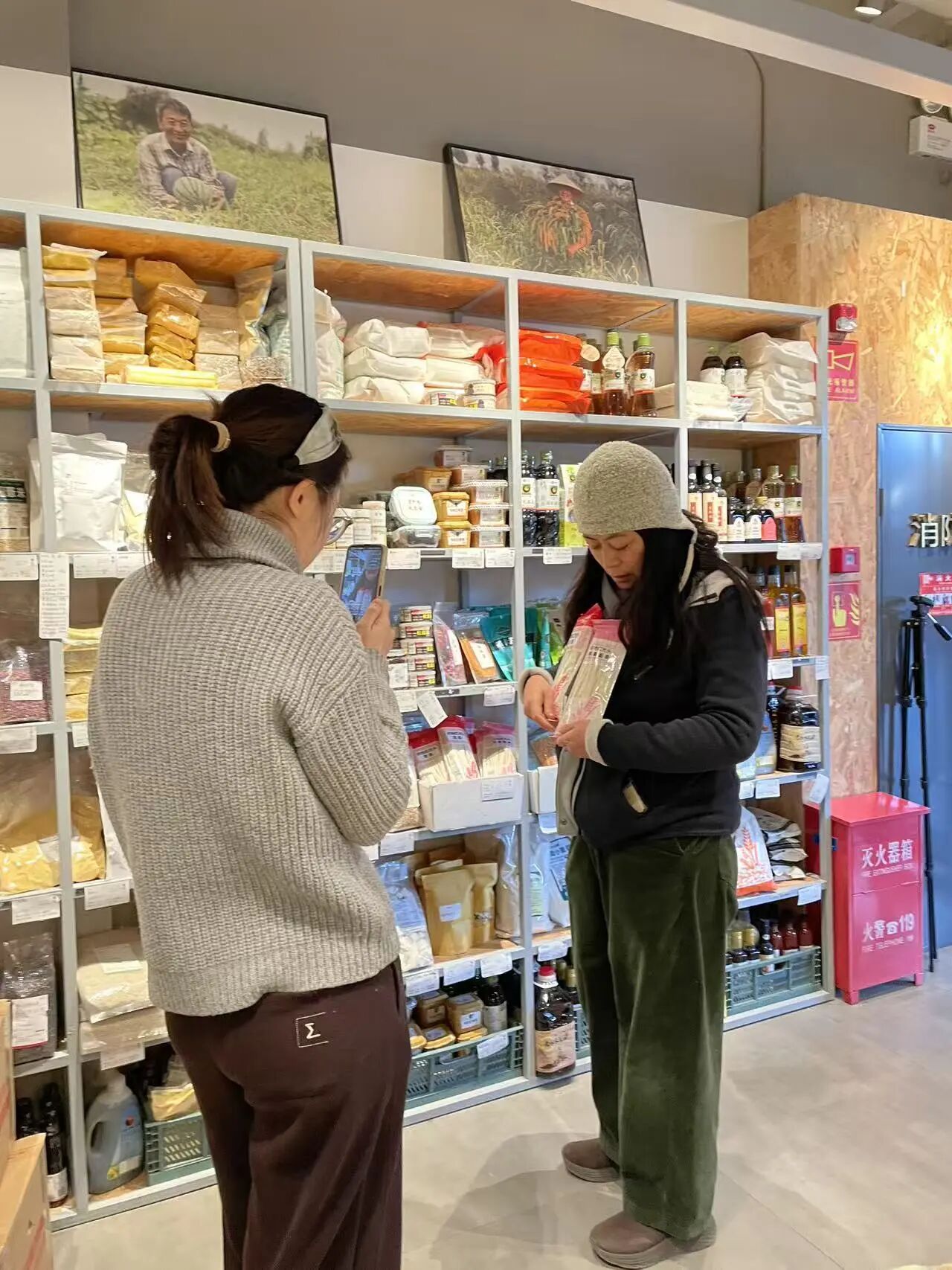
V. So Busy I Nearly Had Only Leftover Soup

The previous evening, we were seriously told: tomorrow will be exhausting. Wear layers, bring power banks, and prepare yourselves mentally. That day there were four events, with new and returning customers coming and going. Although it was tiring, seeing that everyone else had it harder than I did, I had even less to complain about.
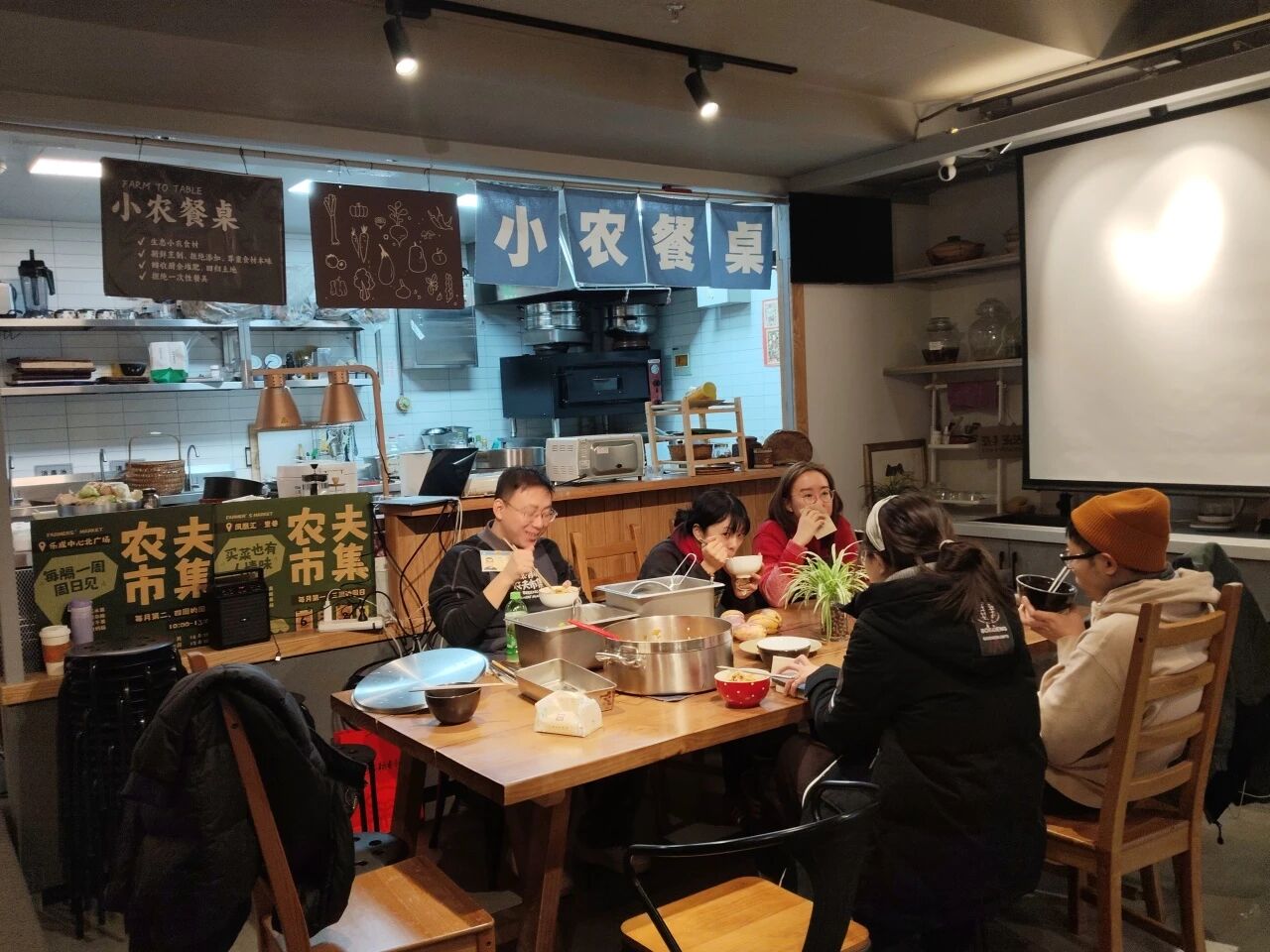
In the evening, we prepared lamb soup rice noodles for the ten friends who had signed up for the film screening. The lamb was exceptionally plump, which meant that washing the bowls was extra arduous. At Foodthink’s office, it is usually the last colleague to arrive who is responsible for the day’s washing-up. The editor Yuyang, who had been late that day, volunteered: “I’ll do it; it can only be me.” But after everyone had finished eating, the soup had gone cold, patches of white fat had floated to the surface, and in some bowls a clump of rice noodles remained. If Yuyang were left to deal with all of this alone, it might well have been called workplace bullying.
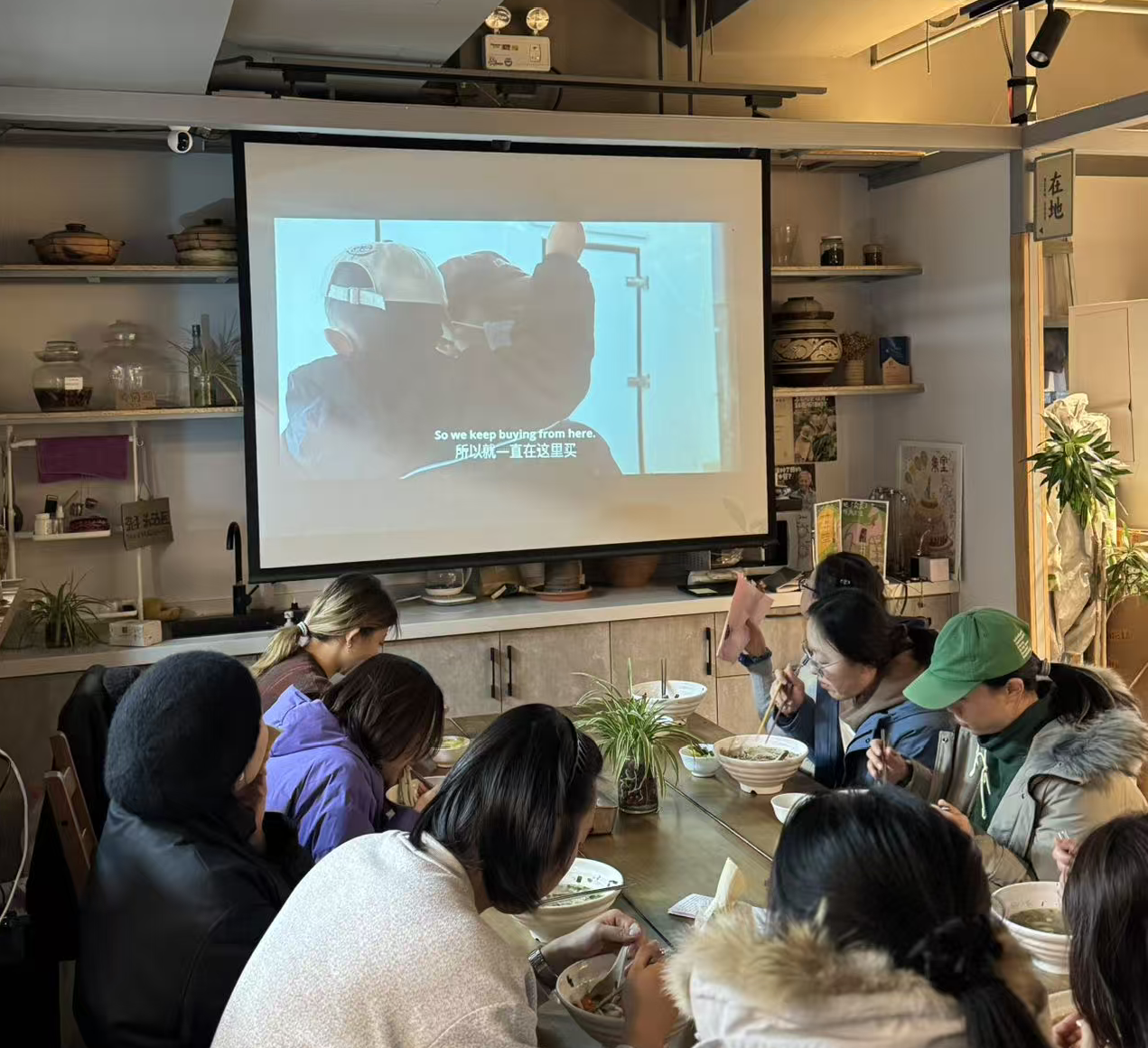
The professional-grade equipment in Jishi’s kitchen (3+1 sink) and Foodthink’s knack for improvising (dog head) allowed these hunched-over, desk-bound labourers, unaccustomed to hard work, to successfully turn what should have been one person’s burden into a team-building event for everyone. For details, see the account of the next colleague, ZX. In short, when something comes up, help each other out; forget mutton fat—even engine oil would be no problem.
Of course, to avoid telling a “human-centred” story, we must also give grand thanks to camellia seed powder, an unclogged drain, and an inexhaustible supply of hot water. At 68 a bowl, labour included, the lamb soup rice noodles and the film really weren’t expensive at all—eating was a bargain!
But in reality, because supply was limited, Foodthink members didn’t get to drink the lamb soup. Everyone looked at one another, and we even considered combining the remaining few bowls of soup, heating it up and drinking it, so that we wouldn’t have to work so hard washing bowls and could still taste the delicious soup… In the end, we couldn’t bring ourselves to take that step. This tomato-and-egg enthusiast seized the opportunity to volunteer and recommend my favourite to everyone. I took a box of eggs, six tomatoes, a pack of leftover bean sprouts and the rice noodles that hadn’t finished cooking in the evening, plus a large bowl of shredded tofu with cabbage, and quickly put together a plain, no-frills work meal. With stainless steel cutlery, I could feel what it must be like for the older woman who cooks for the hard-working construction workers on the site.
VI. A Spring Festival Dinner Washing-Up Guide

The lamb soup with rice noodles was so fragrant 😋
Until I saw the washing-up sink full of pot after pot, bowl after bowl, ladle after ladle, basin after basin, all coated in mutton fat 🥶
The grass-fed free-range sheep from Harigaobi Grassland in Inner Mongolia had enjoyed a pampered life, plump and robust, with mutton fat white as jade and a rich aroma that filled the nose. The stewed soup shimmers with delicate oil ripples, its pure flavour leaving a lingering fragrance.
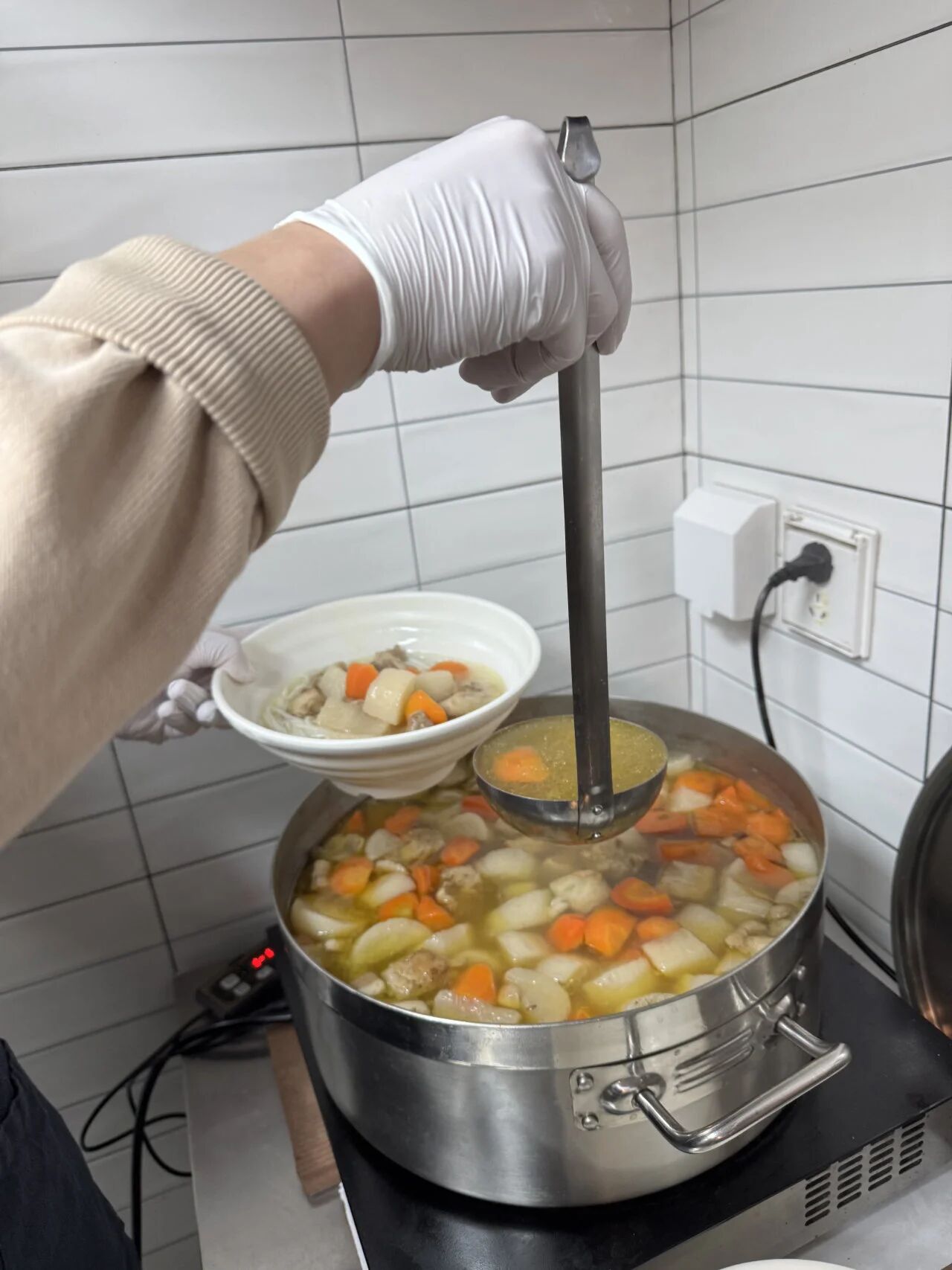
When it’s hot in the bowl, it’s soup; once it cools, it’s a calamity. Once the people had gone and the soup had cooled, the congealed mutton fat, along with the vegetable peels, bits of seasoning and broken rice noodles, had coated every bowl, plate, pot, chopstick and spoon that had been involved—impossible to wipe off, impossible to wash clean.
As they say, eating lamb and drinking soup feels great for a moment, but washing up and clearing up is ***. There must have been tableware and cookware for more than twenty people! Facing this towering mountain of washing-up, even former members of Foodthink’s battle-hardened, twice-weekly dishwashing division (now disbanded) could only gaze at the “lamb” and sigh.
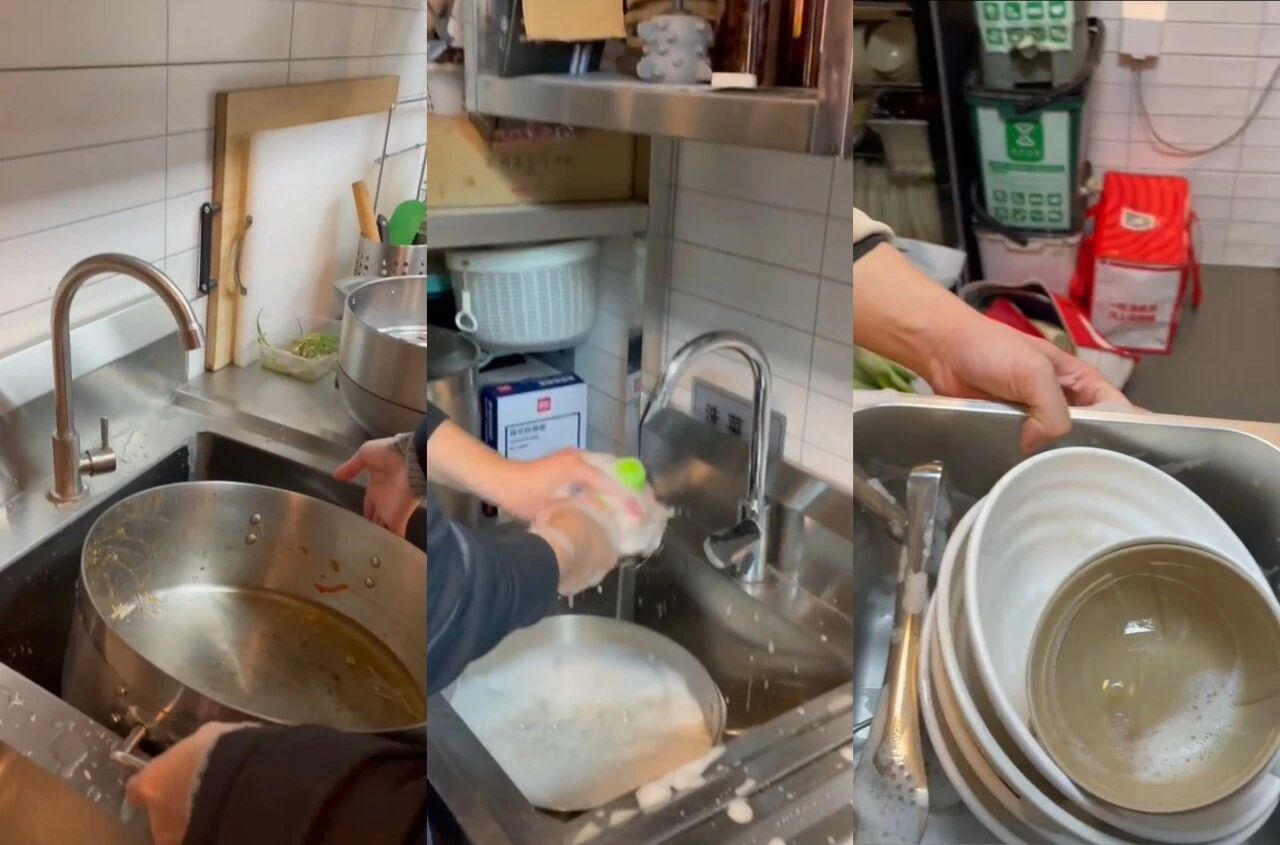
A colleague volunteered to try washing one bowl, but both the washing-up cloth and their hand were defeated. If the washing-up wasn’t finished, the shop couldn’t close, and if the shop couldn’t close, we couldn’t go home. Looking at the row of sinks in the back kitchen, everyone had a flash of inspiration and decided to rely on the power of numbers and use an assembly-line method to tackle the challenge.
Steps:
1. Collect the dirty bowls, rinse off large food scraps such as vegetable leaves and rice noodles—one station;
2. For anything soiled with mutton fat, scrape away most of it with a paper towel—one station;
3. Wash vigorously with a mixture of hot water, camellia seed powder and washing-up liquid—one station;
4. Rinse clean with plain water and check that it passes inspection—one station;
5. Drain dry, put away and arrange—one station;
In total, five stations and five people.
Notes:
– Start with the least soiled items;
– Fill a large pot or sink with hot water, then add camellia seed powder (to cut grease) + washing-up liquid (to remove odour); using both together works best;
– If an item is found not clean enough, send it directly back to the previous step to be redone;
– Do not wear gloves during the inspection step; check by hand for any grease;
– After washing, use the hot solution from Step 3 to wash the sink and flush the drain;
– Once finished, have hand cream ready
Conclusion:
Unity is strength! Sorted in just over half an hour, all clean, white and gleaming ✌️
VII. You Can Feel Climate Change Even When Selling Vegetables

After 60 hours working at Jishi, I gained a deeper sense of the many dimensions a food system can have within a community.
From a climate change standpoint, the cold chain and chillers are among the major sources of (fossil fuel) energy consumption in the food system. But to run an ecological organic food shop, starting from what consumers need—to guarantee there’s always stock available for immediate sale—our meat has to be portioned, sealed and frozen. Storing dairy, too, depends on freezing and refrigeration. Temporality seems to have always been an inescapable part of supply chain philosophy—and time itself is a source of carbon emissions.
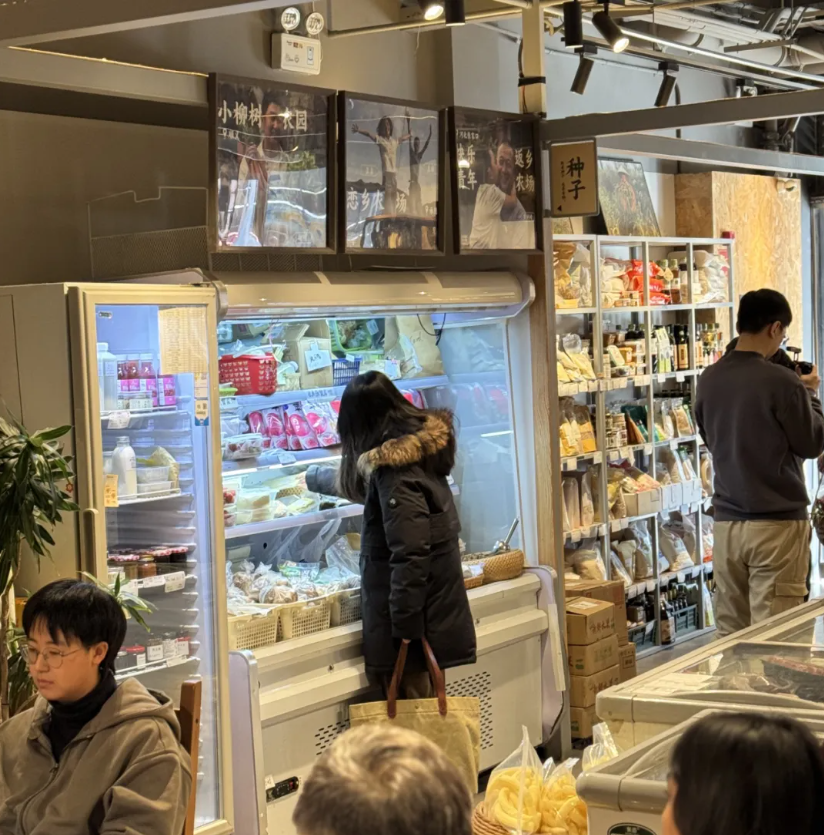
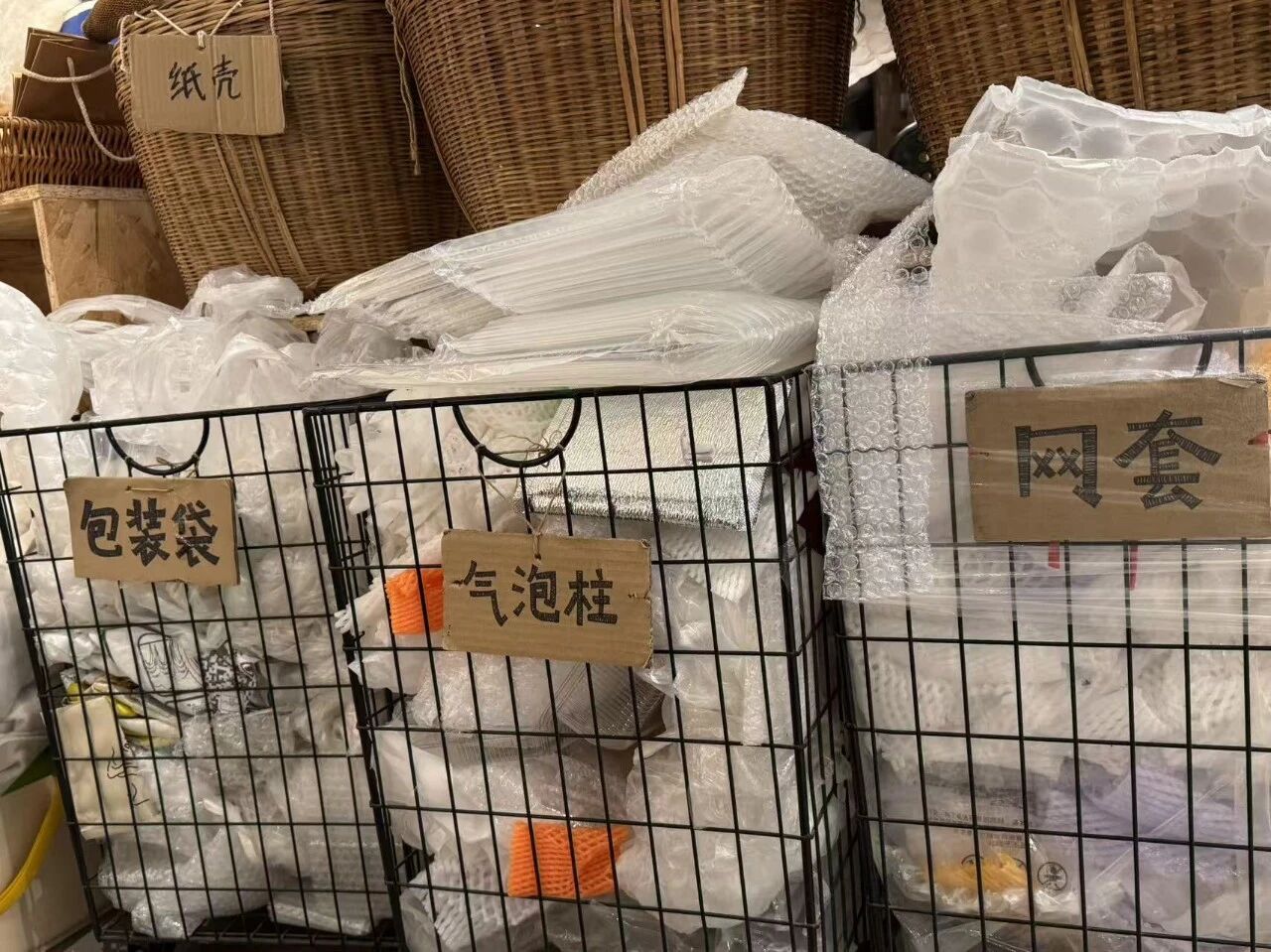
We have to use plastic. Even this is from the perspective of time and consumers. In Beijing, if vegetables aren’t portioned into plastic bags during transport and while waiting to be sold, they dry out, turn yellow and lose their moisture. Could we switch to greaseproof paper or newspaper?—Many, even during ShanSong deliveries, insist that the food must be sealed and that the courier’s hands must not touch the “customer” in the bag—could they really accept such “uncleanliness” and discomfort? Compared to ordinary supermarkets and e-commerce, we already use relatively little plastic—not only is there no overpackaging, but even the various bags we use are recycled from the e-commerce and takeout packaging customers bring in.
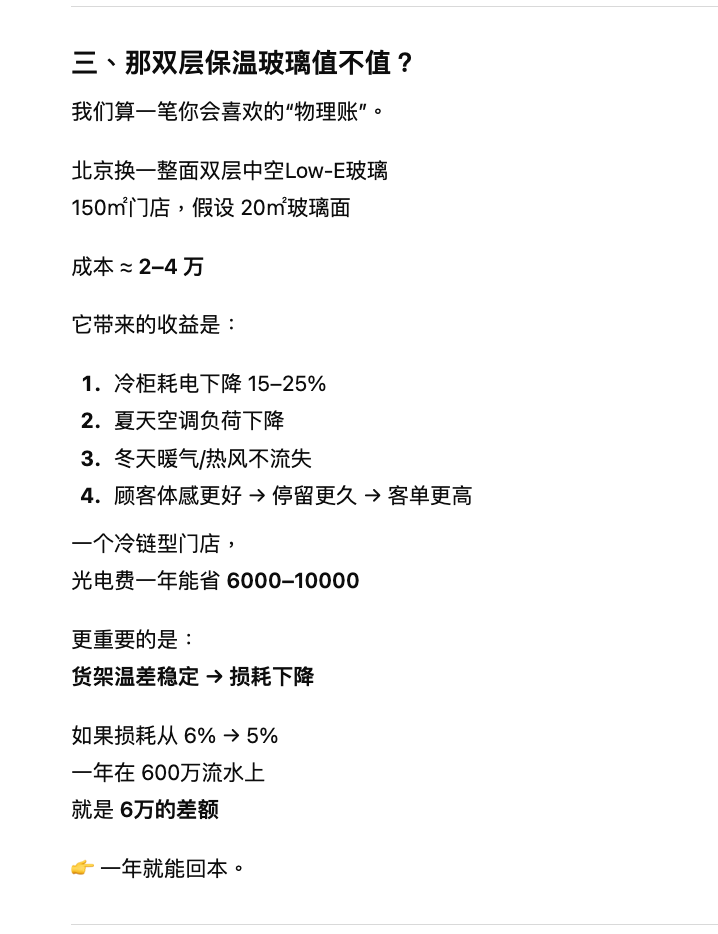
I’ve also observed other lose-lose dynamics between efficiency and the environment under the logic of capital-driven rent.: Over more than a decade, Jishi has remained at Sanyuanqiao, yet it has still been forced to do a “Mencius’s mother—three relocations,” and the current shop contract is renewed on a rolling one-year basis. This instability means that an ecological organic shop, with a cash flow as tight and margins as slim as ours, has neither the capacity nor the inclination to replace the shop’s windows with better-insulated double-glazed windows (having done some fit-out work myself, I have a rough sense of window prices in Beijing).
So during my 60 hours at Jishi, especially on gusty nights, my colleagues would often be bundled up in puffer jackets, with several electric heaters running at once behind the checkout counter and in front of the kitchen. Even so, with my less-than-stellar health, I ended up ill twice; and in summer, I sometimes get so warm I scurry over to the café next door to catch my breath, all the while wondering: Is the chiller keeping up? Will the produce loss get worse?—All of this means more energy consumption and carbon emissions!
Of course, economically, electricity doesn’t cost as much as double-glazed, thermally broken aluminium windows, but that doesn’t necessarily mean the same holds true ecologically. If the property management could provide this hardware for tenants, or allow us to sign a multi-year contract at a stable rent, or even, when a tenant is forced to leave, negotiate with the landlord and the incoming tenant so that the upgraded hardware can be retained, rather than a blanket “restore to original condition”—could these questions have a different answer?
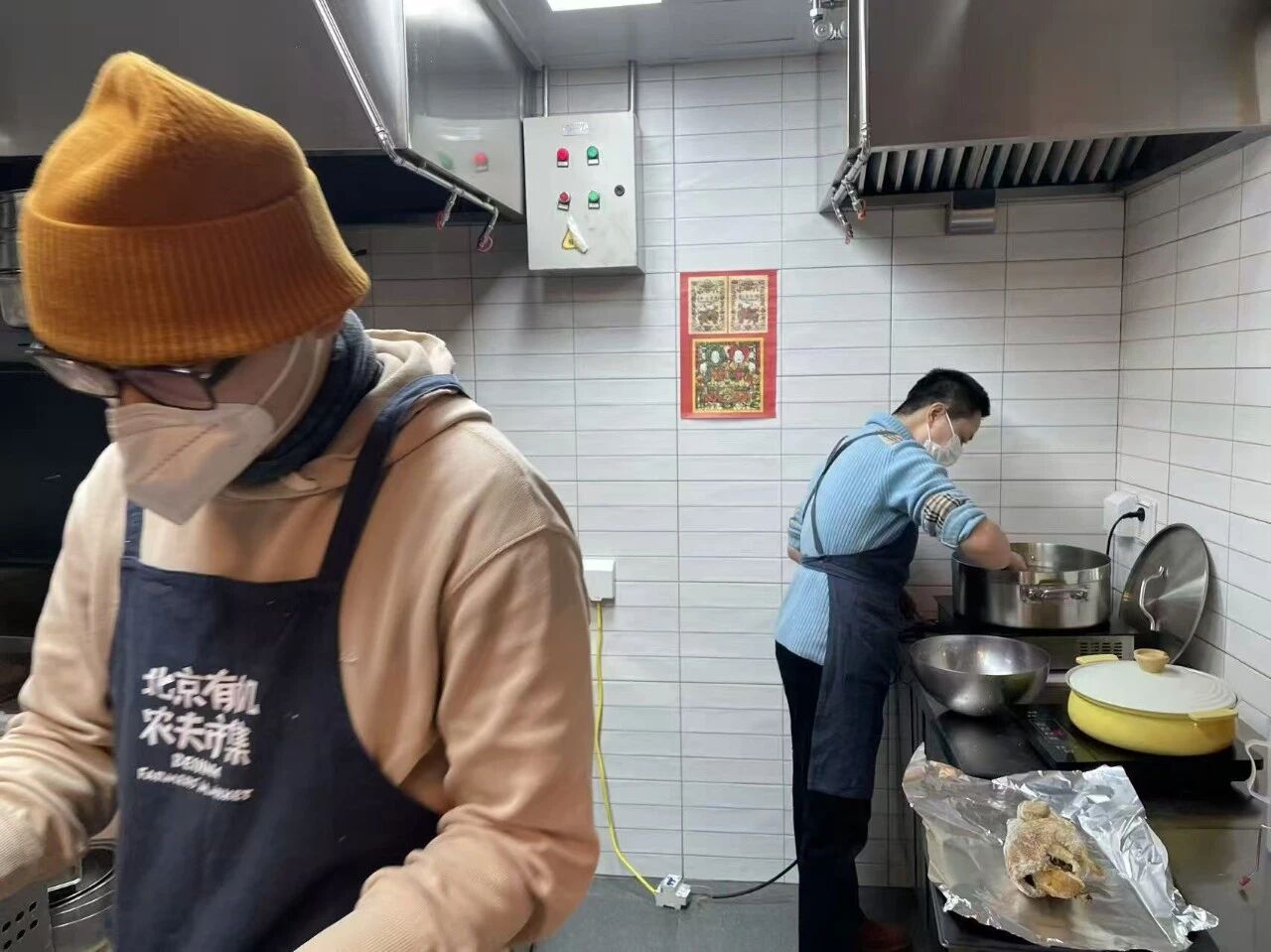
Jishi once had an open kitchen, but it has been on hold ever since, unable to find a suitable chef willing to work with ecological ingredients. There are always customers wandering in, looking around: Do you sell food here? Oh, you cook yourselves, how lovely (can I have some)?
After 60 hours of working, my biggest takeaway is: Cooking is genuine, no-nonsense labour that must be recognised and seen. It is by no means merely an idealised, beautiful, homely warmth filled with the meaning of reunion and an atmosphere of inclusivity. It is the exhausting work of bending over to prep pastry, the stir-frying that means breathing in PM2.5, and—on top of the day-to-day stock-checking, shelving, restocking and packing—the bowls and vegetables that need washing and chopping, scaled by the number of people at home times N.
I once experienced the open little dining table at Tianshe, an ecological agriculture community shop in Chengdu, but they used single-use tableware, which also made ShanSong deliveries more convenient. If Jishi were to restart its little dining table and hire a chef, it would probably be hard to also bring in a part-time dishwasher—one more burden that comes with holding firm to one’s principles—and I wonder whether this extra workload is perhaps another reason why finding a good chef is so difficult.
VIII. NPCs Linked by Labour
We are serious about selling vegetables! The Jishi takeover is over. Whether we measure it by turnover or by the genuine feel of working together internally, I think we’ve delivered a near-perfect scorecard. At least there was no glaring blunder, such as sending something to the wrong address, haha! (Who gets the old joke!)
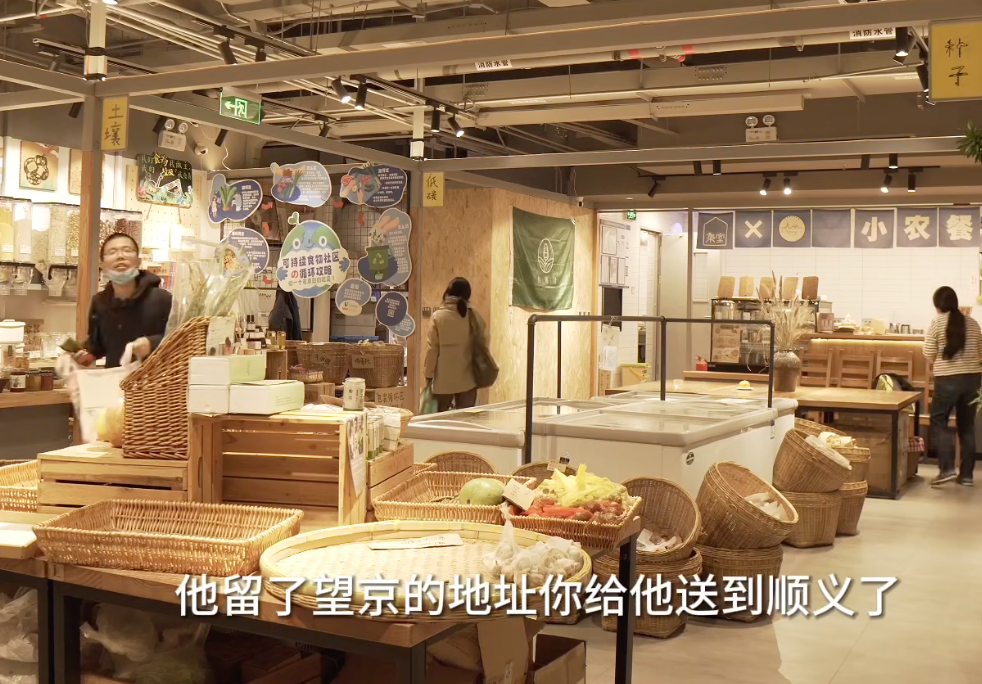
We are not professional vegetable sellers, nor do we make a living from it, but we still shoulder a strong sense of responsibility. Even if it looks to onlookers more like performance art or a game, I can feel that every one of my colleagues is simple and sincere. So sincere that, even if it is just a game, we remain true to the roles assigned to us, carrying out stock-checking, shelving, restocking, customer service, picking and after-sales service with care and dedication. Even when trouble arose or unpleasant emotions surfaced, we stayed settled in our roles, working through and digesting them earnestly, never once breaking character.
Of course, we all had to return eventually to our regular jobs and lives, but in the twelve hours of nonstop work, we forged a connection and a resonance—a resonance not for outsiders to fathom. In this public sphere of the vegetable shop, customers came and went in a steady stream all day, the place buzzing with life, and people formed connections with one another. But one kind of connection lay very quietly in each of our hurried steps and loud calls, embedded in the bodily rhythm of every one of us. Perhaps one day in the future, when I think back on this day, this resonance will still be the feeling I instinctively miss most: labour is the best medium for connecting people to each other.
Editor: Tian Le