
The Braised Goose in the Qiaopi: 100,000 Yuan a Bird

Braised Goose at 100,000 Yuan a Bird
This is a qiaopi dated 12 July 1946, sent from Seremban, Malaysia, to Huamei Township in Chao’an, Guangdong, more than 4,000 kilometres away. It is now preserved at the Qinghui Building of the Caidang Qiaopi Museum in Chao’an County, Chaozhou City.
The sender of the qiaopi was Shen Dongyan, and the recipient was his mother. Like the vast majority of actual qiaopi, this qiaopi deals with concrete everyday matters: it asks how the harvest of the early rice at home turned out, how much paddy rent a certain elder brother had received, and it mentions family members’ schooling, involving transferring schools and settling tuition and boarding fees; it says that after a while, once “ships pass smoothly and arrive safely,” he will send back some “clothes to wear and use.” Finally, he mentions one thing:
“Counting on my fingers, Ancestor Yong’s birthday is soon at hand. I, your son, think that these past few years we probably have not had the means to buy a goose for reverent worship. I hope we can buy one this year. I do not know how much each one costs now. For the present, I first send 100,000 yuan of national currency to meet household expenses; the rest I will send in greater amounts by later letters for further needs. I respectfully close and await your good health.”
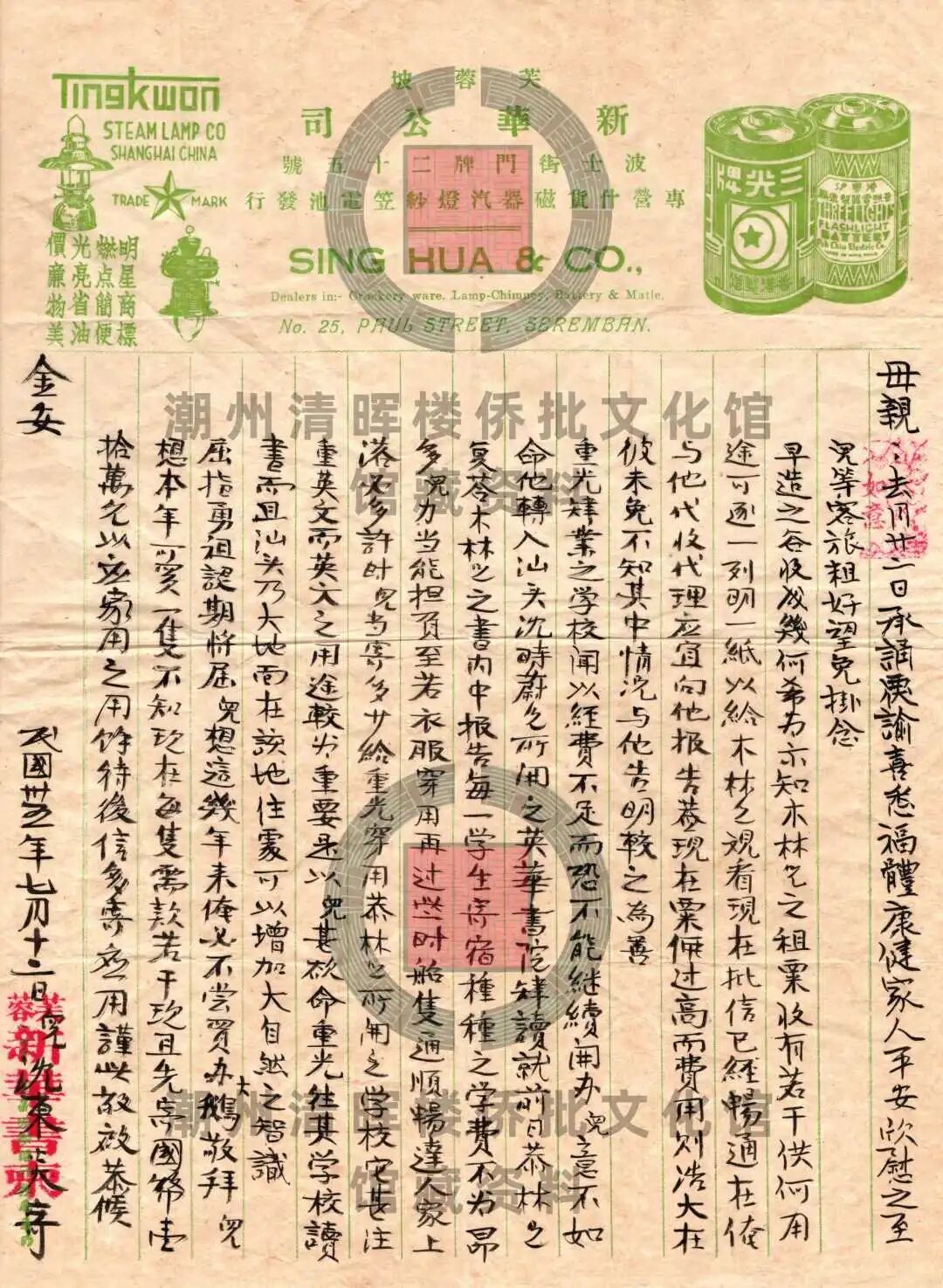
◉ All over Guangdong there are overseas-Chinese or qiaopi museums, which preserve many of the qiaopi sent back by Shen Dongyan, Nanzhi, Musheng, and others. Image source: Qinghui Building, Caidang Qiaopi Museum
One does not need to be fluent in classical Chinese; on the basis of key words alone, every Teochew person should be able to understand it. It says that the birthday of a certain ancestor of the clan is approaching, that in recent years the family may not have had the means to buy braised goose for worship, and that he does not know whether the money enclosed with the letter is enough to buy one.
In Teochew, for Spring Festival worship of the gods and regular ancestor veneration, using braised goose as an offering carries the highest status. This qiaopi shows that this firmly rooted folk tradition had already taken deep root in the 1940s. At the time, Shen Dongyan, far away in Malaysia, was deeply concerned about it; the sum of 100,000 yuan of national currency he enclosed when sending the qiaopi to his mother was probably his estimate of the price of one braised goose at the time.
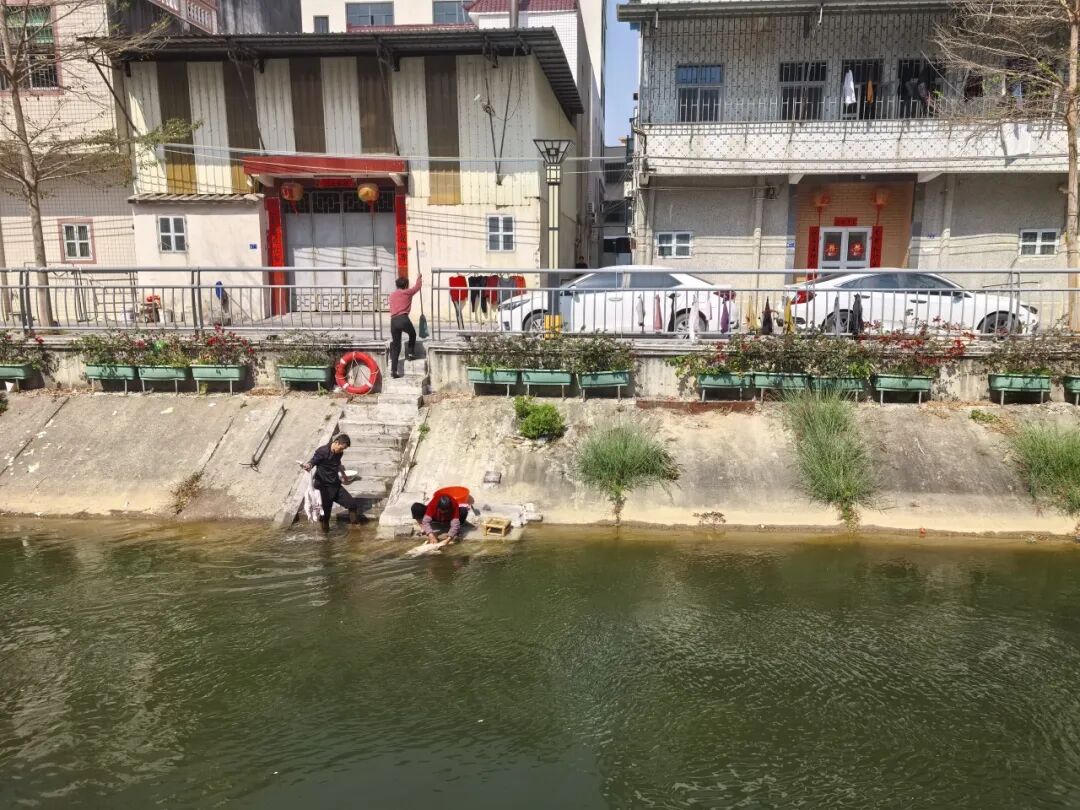
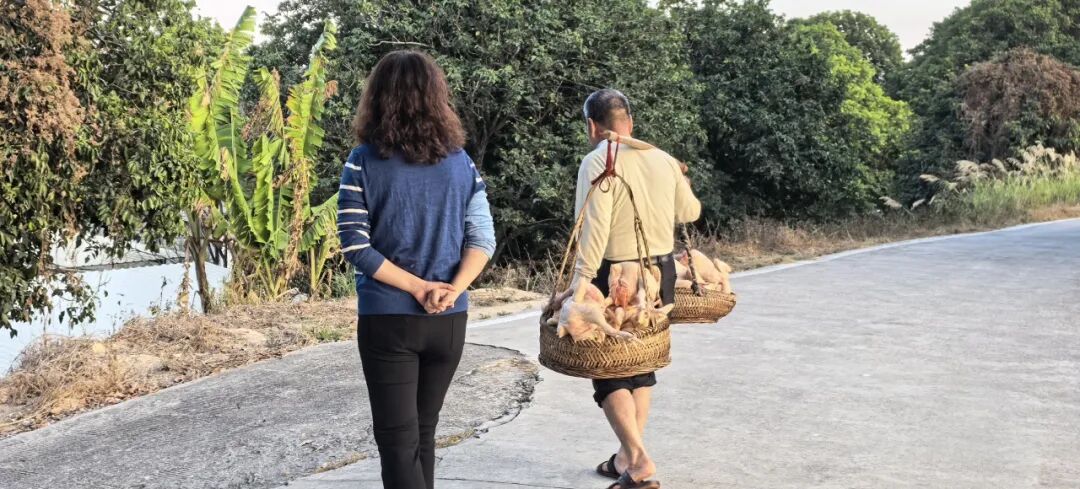
◉ In the Teochew region during the Spring Festival, it is common to see people by the waterside washing geese, as well as other three offerings and five offerings used for worship and festivals.
That year fell in the most severe bout of runaway inflation in modern Chinese history. In early 1946, 100,000 yuan could still buy two head of cattle; by the end of 1946, the purchasing power of 100,000 yuan had shrunk rapidly. By early 1947, that sum could buy only one chicken. This qiaopi is from July 1946, when 100,000 yuan had roughly the purchasing power of one braised goose. At this point, I cannot help feeling sorry for Shen Dongyan: with inflation in the national currency, if that 100,000 yuan had been delayed a little longer on the way, no one could know how far its value would have fallen by the time it reached China, and it would be hard to say whether it could still buy braised goose.
If that 100,000 yuan had not been delayed on the way, then in that year its purchasing power could also have bought dozens of jin of oil or sliced sugar, or one or two hundred jin of rice, or a length of ordinary shirt fabric. It is clear, then, that braised goose was indeed not a luxury that ordinary families could casually buy for ancestor worship at the time. For Teochew people who went down to Nanyang, the highest mark of earning money and raising the family’s standard of living was to be able to place braised goose on the offering table.
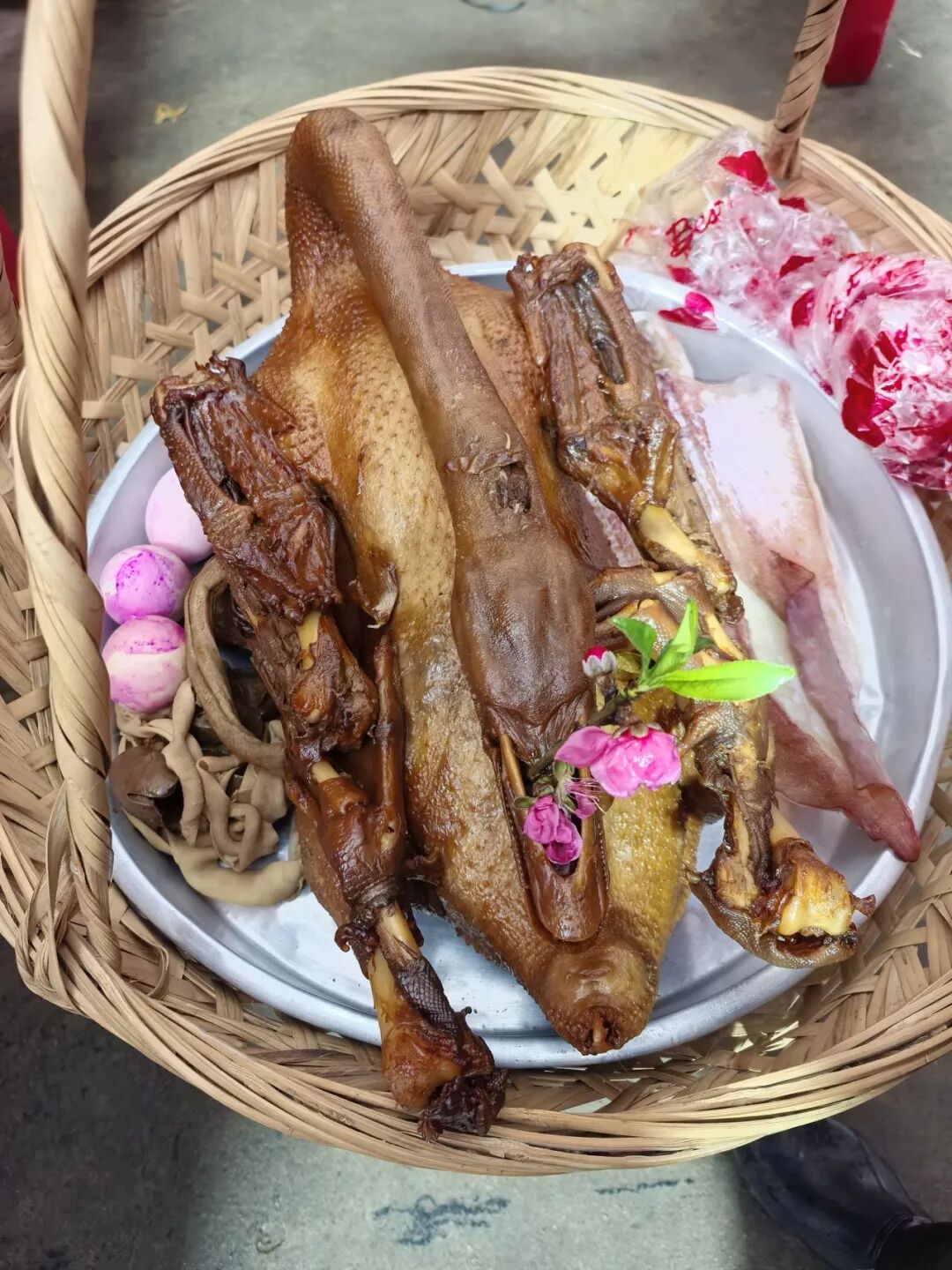
◉ Meticulous Teochew people would also decorate the braised goose used as an offering by inserting peach blossoms.
Food Nostalgia After Going Down to Nanyang
So, as overseas Chinese who went down to Nanyang, could Shen Dongyan and the others eat their home-style braised goose in Nanyang? On this point, Director Xu of the Qinghui Building at the Qiaopi Museum is quite certain. He says that the Chinese population in Nanyang is very large, so there must be people who make braised goose; it is just not the authentic lion-head goose breed, and its taste is also affected by the local cuisine. Director Xu also remembers that in the 1980s and 1990s, when members of his clan who had gone overseas returned to Teochew to visit relatives, they would specially bring braised goose back to Southeast Asia. This, too, shows that the taste of home and the taste of braised goose in Nanyang still differ.
In the era when Shen Dongyan was writing qiaopi, did anyone bring braised goose from home down to Nanyang? The writer Qin Mu, from Chenghai, Guangdong, wrote an article called “The Goose”. It says: “In former days, if a traveller in the countryside wanted to take a big goose out with him, he would often tie its legs with a rope, hang it from the handle of a large oilcloth umbrella, then place it on his shoulder, and so walk on quite leisurely. The big goose, for its part, was quite composed and did not struggle all the way; it only now and then turned its neck, looking this way and that, as if it had long been accustomed to such a mode of travelling.” The scene is indeed full of charm. It is not known whether, among the people who went down to Nanyang during the Republican era, there might have been a braised goose that, in this way, was taken aboard a red-head ship from the land of Teochew and carried to Nanyang.
In a recent episode of the podcast “Yijian Fangjian”, titled “Grandmother and Qiaopi in the Hidden River of History”, Li Jielin, a female writer from Teochew, mentioned that she had once come across a qiaopi like this: in 1936, a couple in Raoping sent three baskets of lychees to their son in Siam (now Thailand). I consulted Director Xu of the Qinghui Building about this information, and he thinks that at the time lychees could arrive in a week, not fresh but not rotten, whereas a braised goose would certainly spoil in two or three days on the road.
No Braised Goose, No Grandeur
Let us return to the braised goose in Shen Dongyan’s family. Among all Teochew foods, braised goose is perhaps the dish with the strongest symbolic weight. When it is on the table, the meal is grand, abundant, and rich in ritual; people also use it to express the highest respect for ancestors and deities. A customary saying in the Teochew region is “No braised goose, no grandeur.” “Grandeur” here means abundant and grand.
Everyone knows that in the Teochew region, at festivals and special days, people worship the deities; the offerings include the three offerings and the five offerings, and the three offerings are further divided into small three offerings and large three offerings. However many offerings there are, there must, will, and inevitably be a braised goose. This is seen at its grandest during the village deity processions at the “altar in front of the deities” (also called the “temporary shrine”). Every household comes bearing offerings to the temporary shrine. The offering “blind boxes” may differ from one to another, but each is sure to contain a braised goose. If you walk among the altars in the Teochew countryside during the first lunar month, you can see countless braised geese displayed on the offering tables, forming a silent array of geese.
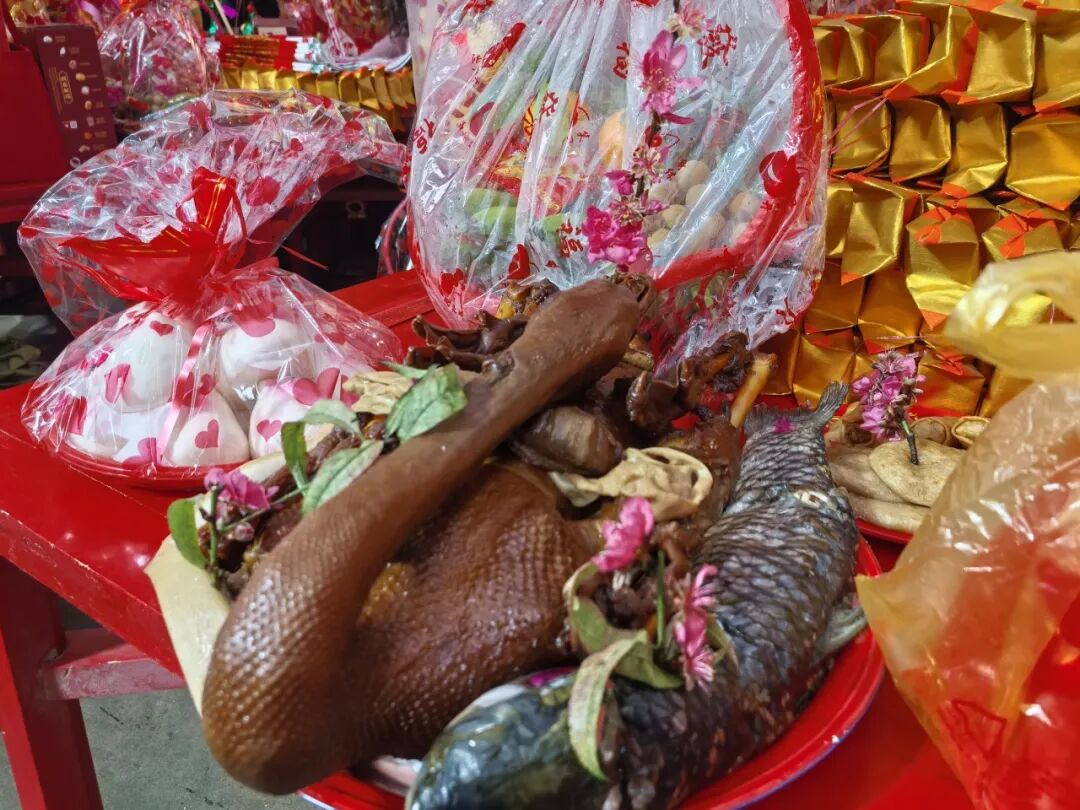
◉ Braised goose holds centre stage in the three offerings.
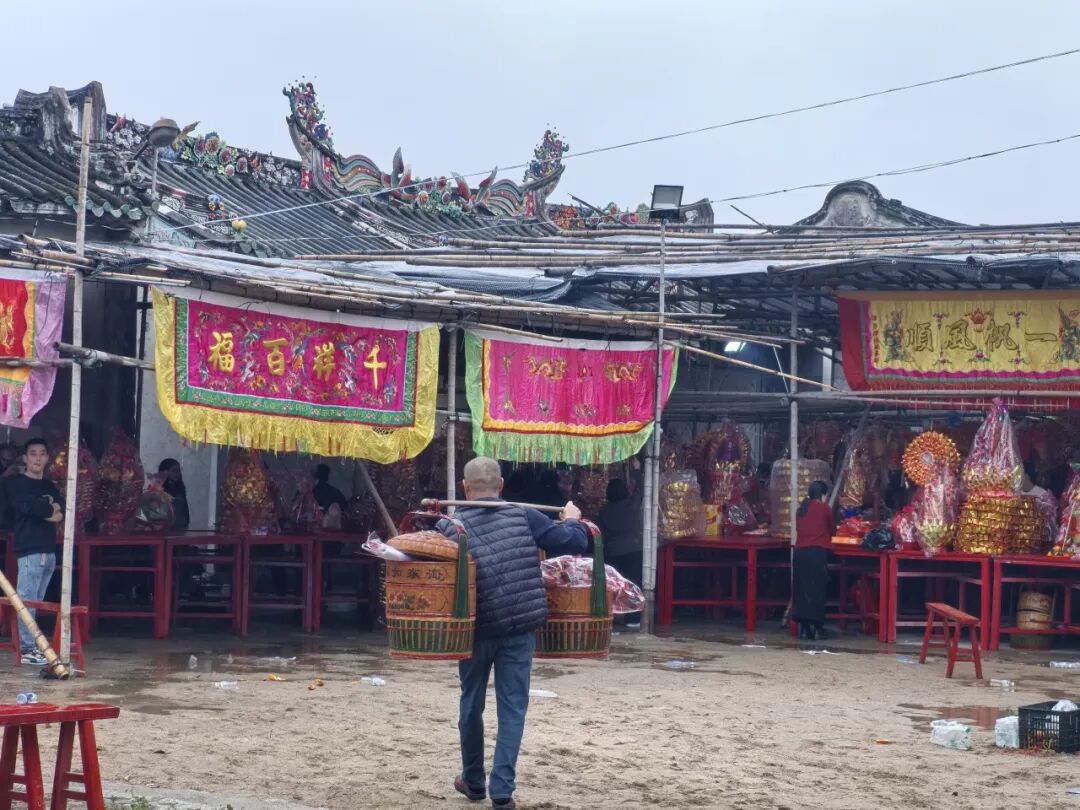
◉ Ordinary Teochew people carrying braised goose to worship the deities.
Taking Xikou Village, Linxi Town, Chaozhou City, the “hometown of braised goose”, as an example, four braised geese are needed for worshipping the deities during the Spring Festival period: one on the 24th of the twelfth lunar month, when the deities are sent up to heaven; one on New Year’s Eve; one on the sixteenth, for the sugarcane alley procession; and one on the twenty-third, for the lord’s birthday. Looking across the whole year, another is needed for the Birthday of Mazu (the 23rd of the third lunar month), and another for worshipping the ancestral hall at the Mid-Autumn Festival in the eighth month. Sometimes another is needed for the Winter Solstice. For other occasions too—ancestor veneration, chuhua yuan coming-of-age ceremonies, weddings and funerals—one is required. There are more than one can count on one’s ten fingers.
Nearly a century later, braised goose has also become an everyday food for contemporary Teochew people. Braised goose shops are to be found in every street and alley; if guests arrive unannounced at home, one immediately goes to the alley entrance to “chop up” two plates of braised goose and bring them back to enrich the table. This is common practice. However, in Teochew homes several decades ago, apart from ancestor veneration and worshipping the deities, it was impossible to eat such a grand dish as braised goose on ordinary occasions; even ordinary families would substitute duck for goose.
If that year Shen Dongyan’s mother, as he had hoped, used the money remitted by qiaopi to place the braised goose on the offering table, the family still had to wait until the deities and ancestors had eaten before they could eat. Fortunately, braised goose eaten cold still fills the mouth with sweet richness; it does not need to be reheated or returned to the stove, so it can be shared between humans and deities.
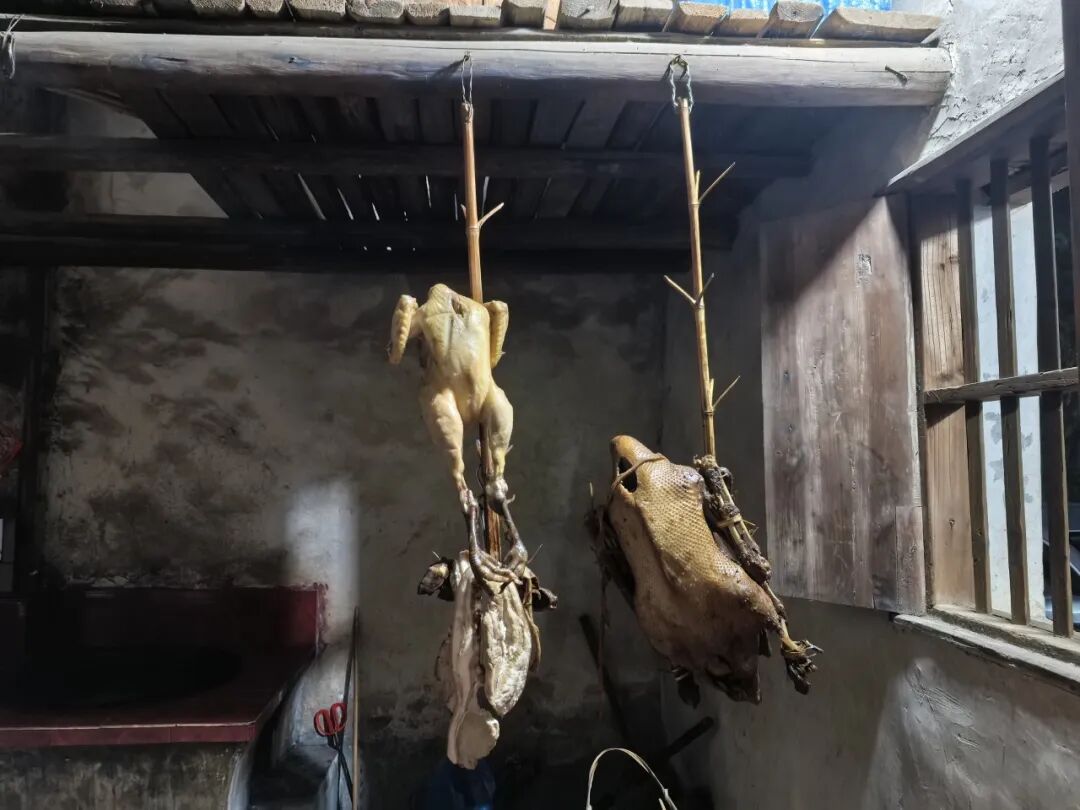
◉ The braised goose left after worshipping the deities is hung up in midair, and the family eats it for many days.
Today’s Braised Goose
At present in Chaozhou city, braised goose shops can be found in every street and alley; sometimes a single short street has two or three. Prices and flavours vary from shop to shop, and they also change at different times of the year. Different cuts are also priced differently. At current market levels, ordinary braised goose in Guangdong goes roughly like this: the neck with the head on is 45 yuan per jin; the kidneys are the most expensive at 80 yuan per jin; the middle section has the thickest meat and can reach 50 yuan per jin; the hind leg is 42 yuan per jin; the feet and wings are 60 yuan per jin; each goose intestine is 20 yuan; but the part from the shoulder to the base of the wing, which has many bones and little meat, is very cheap, and the shopkeepers call it “half selling, half giving away”.
The “ordinary” braised geese described above are mostly made from lion-head geese that are about 140 days old, and lion-head geese of this day age are reasonably priced. But if raised for three to five years or more, there are very expensive old goose heads, priced as high as a thousand yuan per head.
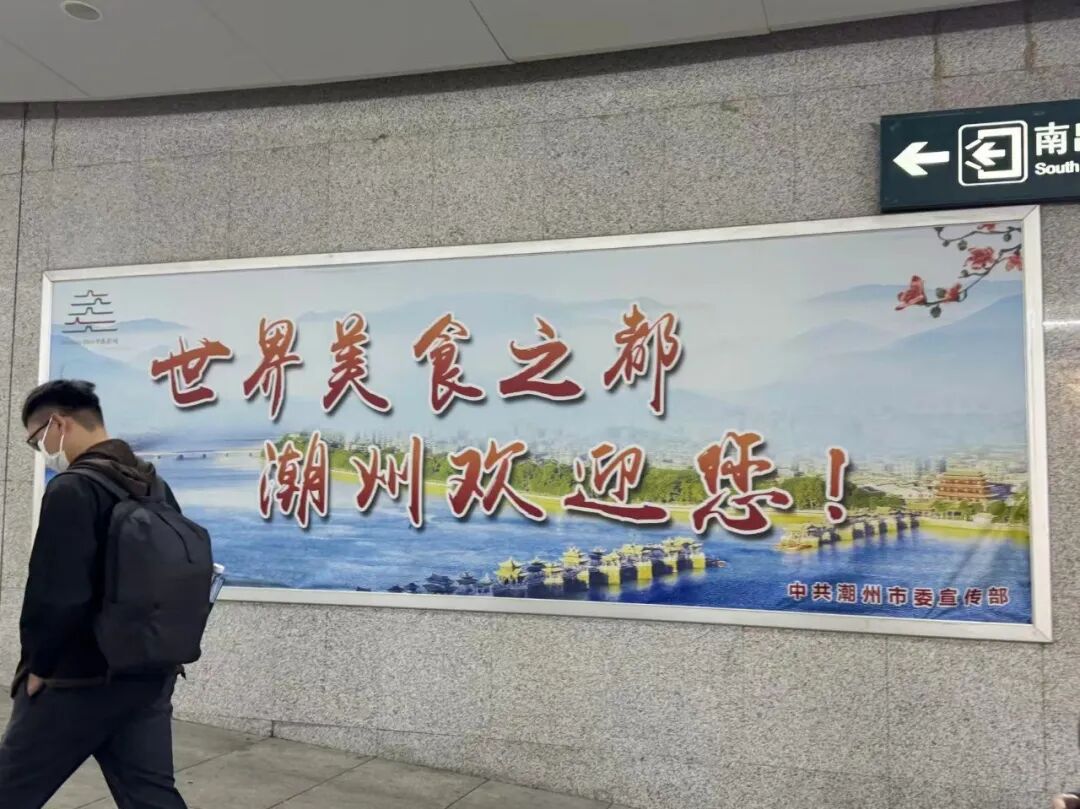
◉ As soon as you come out of the Teochew high-speed rail station, you can see the Publicity Department’s promotional display: hospitable and proud, yet a little provocative. Photography: Wang Youzao
As for flavour, the Teochew region, as the World Cuisine Capital (a phrase at the Teochew high-speed rail station, see image above), naturally pursues even greater refinement for such an important food as braised goose, and the taste differs from one township and one village to another. For example, lion-head goose farming in the Chenghai area is highly developed, and braised goose there is also famous; there is even a braising-broth hot pot, and the flavour of braised goose in that area is on the salty side. Meanwhile, the braised goose in Xikou, Linxi, the “hometown of braised goose”, is on the sweet side, possibly because of the historically developed sugar cane cultivation and sugar industry in the area.
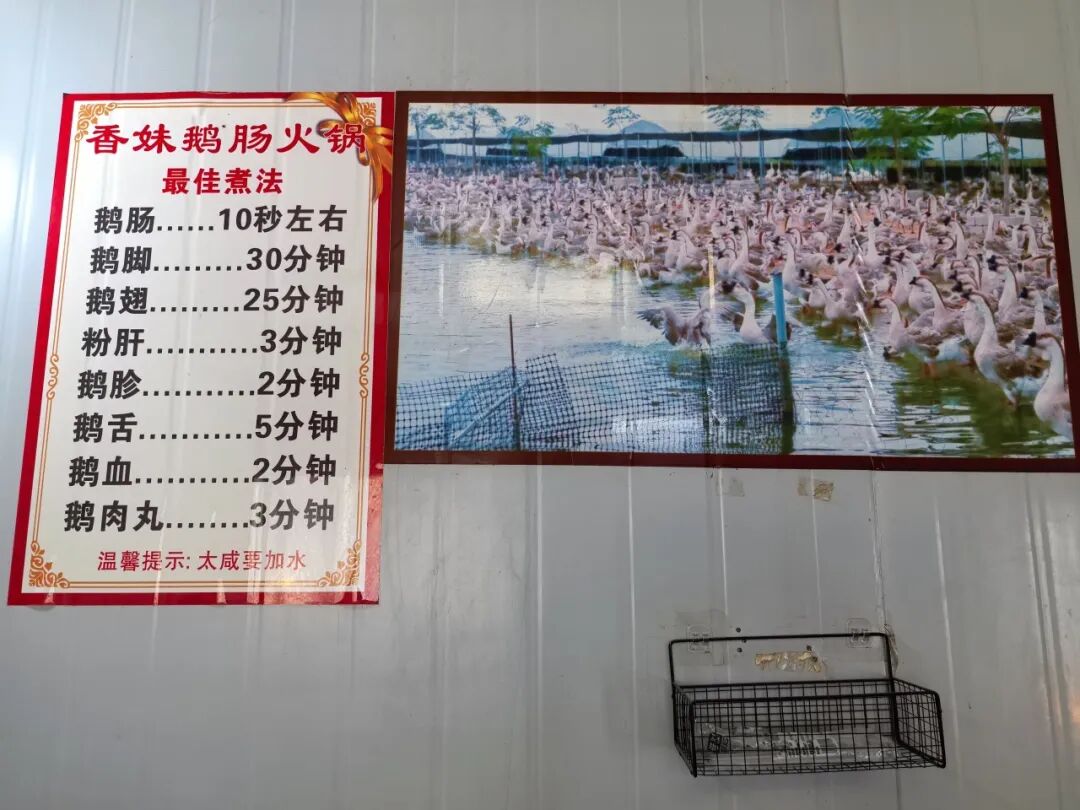
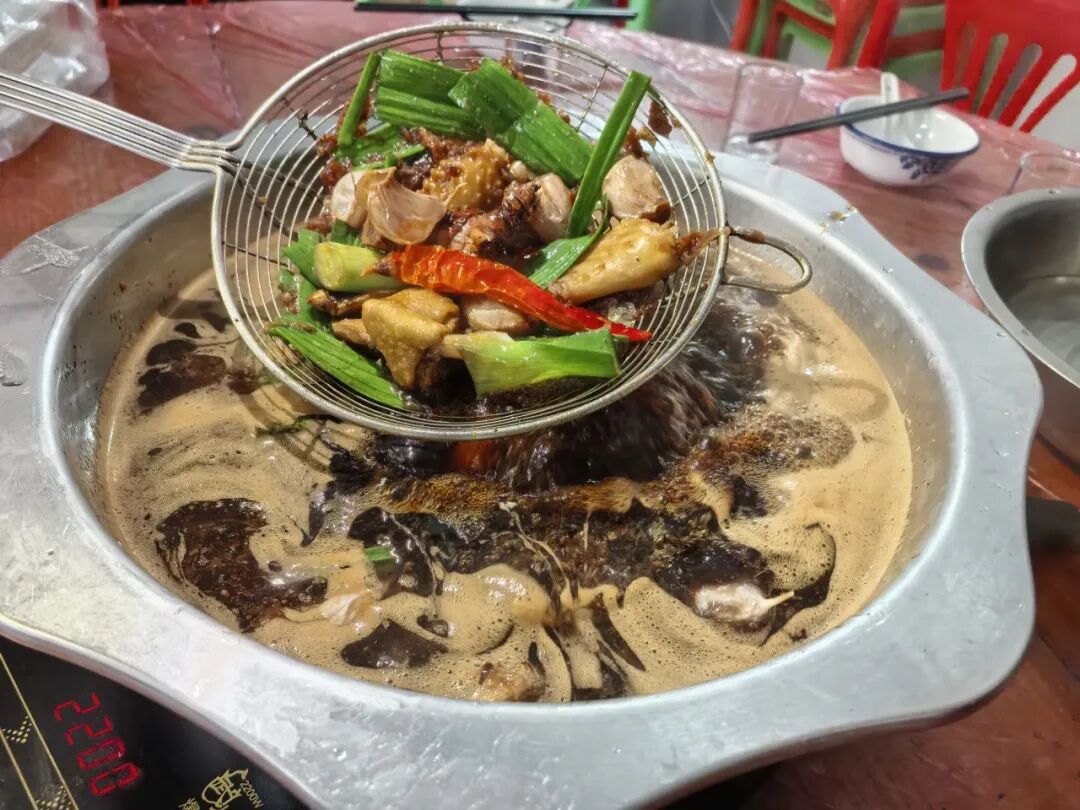
◉ Chenghai’s braising-broth hot pot.
In Xikou, I got to know Brother Liu, who is skilled at making braised goose. He makes it like this: first he stir-fries sugar in a pan until it melts, coats the whole goose with this layer of sugar colour, and then braises it; a goose made this way looks very good, its caramel colour glistening. But most braised goose is simply boiled in a braising liquor prepared directly, with dark soy sauce used for colour; the finished product is comparatively dull, no longer caramel-coloured but yellow-brown.
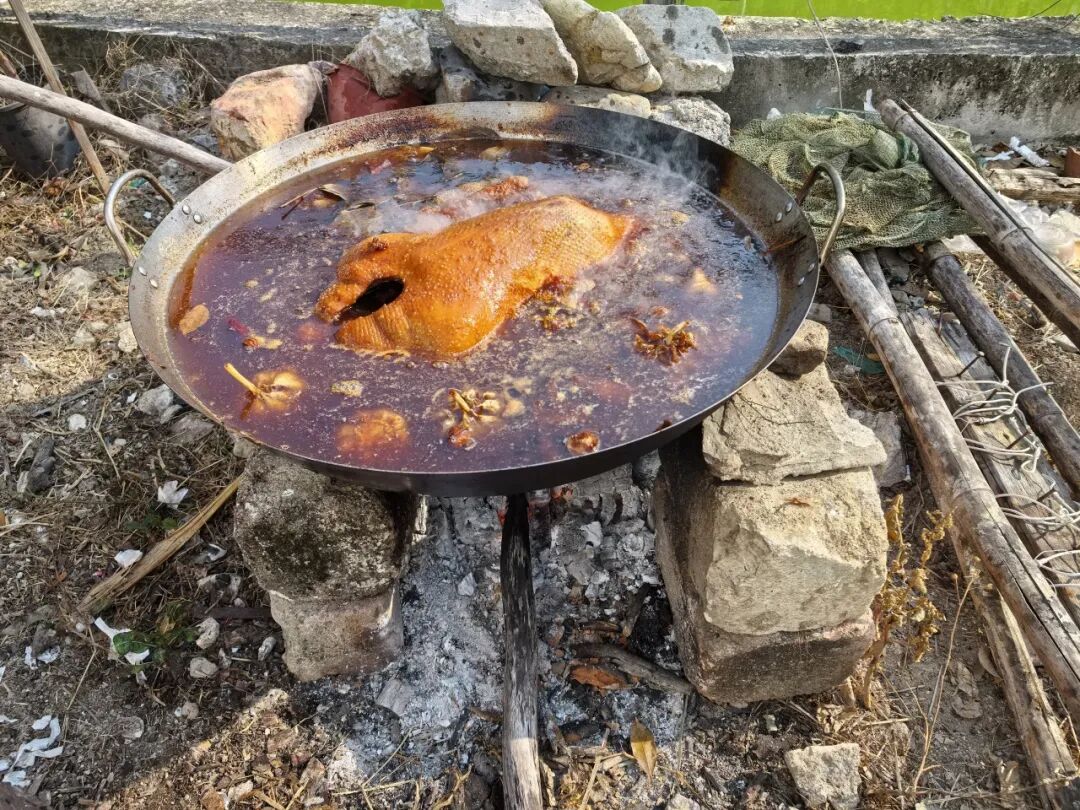
◉ Many households in the Teochew countryside still observe the tradition of building their own stoves to prepare braised goose.
As mentioned earlier, for Spring Festival ancestor veneration, every Teochew household must have a braised goose. After the veneration, the whole goose is either hung under the eaves or somehow packed into the refrigerator. Then, in the following days, every meal includes a dish of braised goose; exactly how long it lasts depends on the number of people in the household.
Although it is delicious, eating it day after day in the first lunar month inevitably leads to some aesthetic fatigue, and many people during the Spring Festival come to see this goose, once regarded as the ultimate delicacy, as a burden. So people have started to devise all kinds of ways to “clear the stock” of braised goose.
Because the lion-head goose is too large to fit whole directly into the refrigerator, the meticulous Teochew people portion the goose into separate bags: the bones and meat are picked apart, the bones in one bag and the meat in several bags, and the neck, wings, and offal are packed separately. Then at each meal one takes out a bag to eat: first the neck and wings, then the goose bones with plain porridge for breakfast, and finally the picked-out goose meat. Later, the goose meat can also be stir-fried with dried radish or ginger to make a new dish, reducing the “leftover feeling” to some extent.
In any case, the Teochew people’s respect for good food and their culinary wisdom have not changed from 1946 to the present.
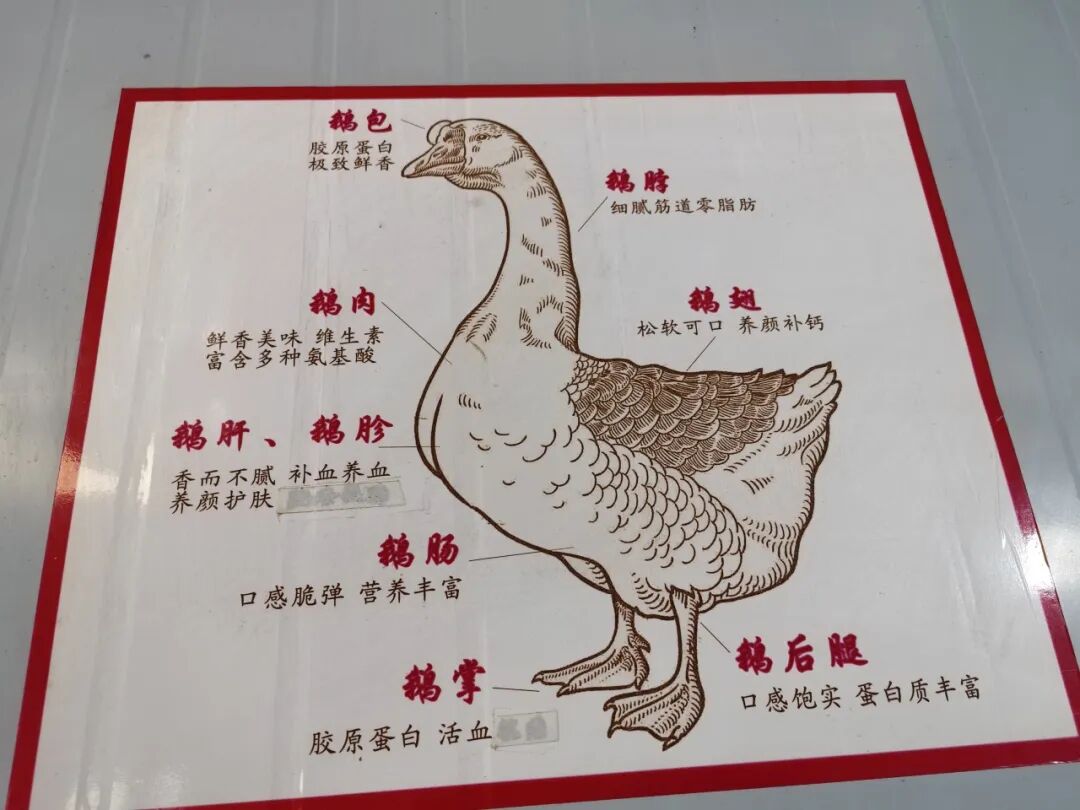
◉ Different parts of a braised goose fetch different prices.
– This is Foodthink’s 809th original article –
Foodthink
Author
Chen Sicheng
Writer, currently based in Guangzhou, with a focus on the environment, ecology and food systems. The non-fiction work “Shu Shang Nan Fang”, themed around the local products and customs of Lingnan’s three regions, will be published this month by Huacheng Publishing House.
About the Lianhe Creative Programme
To understand the current state of food and agriculture, and to support more people in exploring the complexities behind food and agriculture issues, Foodthink, together with several public-interest and media partners, jointly launched the Lianhe Creative Programme in 2024 and 2025 to support media creators and researchers in conducting research in the food and agriculture field and to fund their public-facing content creation.
Following several rounds of interviews with the judging panel, the Lianhe Creative Programme supported 18 creative projects in 2024 and supported 20 creative projects in 2025. At present, some of the supported works have been completed and publicly released:
Cleaner A-Mei Wants to Eat Properly | The Working People’s Table
In Malaysia, Chinese Traders Want Only Grade A Durians
“Fake Meat” Drives Out Real Meat: Herders, Dining Tables, the Amazon
Watermelons: Sweetness Guaranteed; Growing Them: Bitterness Guaranteed
Ma Lan in Shenzhen Has No Meal Buddy
Why Has the Sweetness of Childhood Disappeared?
Technology, Pesticides and Drone Pilots: The Other Side of the “Technological Revolution”
Why Guizhou Can’t Do Without Sour Soup, and Sour Soup Can’t Do Without Guizhou?
Who Drove Away the Wet Markets?
Will Fresh Food E-Commerce Make Wet Markets Disappear?
When Drones Become New Farm Tools: Who Is Defining “Scientific Farming”?
Unless otherwise stated, all photographs are by the author.
Editor: Tianle