
Is Trump’s New USDA Advisor Really This “Lunatic Farmer”?
“The American system considers itself a very successful culture, because we have more people in prison than farmers. Feeling smug about such statistics is truly contemptible.”
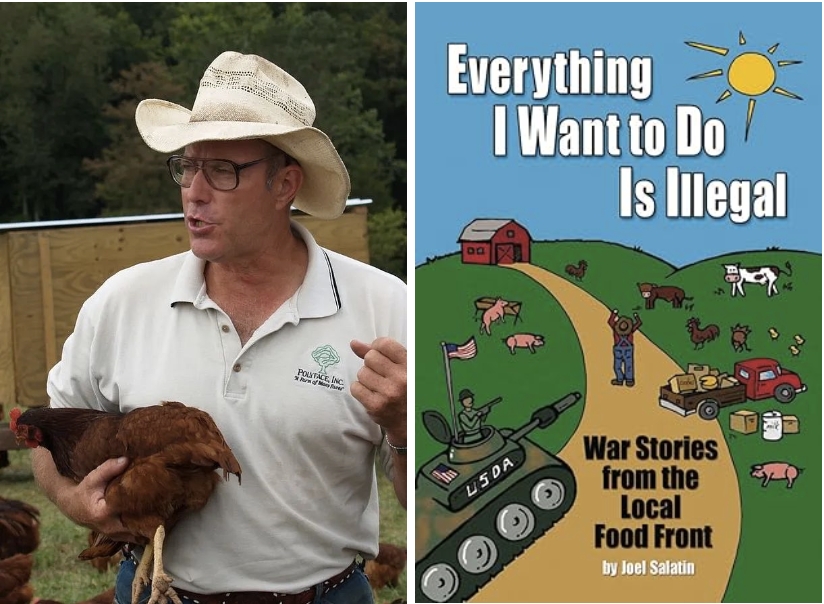
Five years have passed, and I still remember the shock of first reading Joel Salatin’s Everything I Want to Do Is Illegal. Readers familiar with the American food movement, who have read Michael Pollan’s The Omnivore’s Dilemma or seen the documentary Food Inc., will no doubt be familiar with this American farmer who slaughters chickens while mocking the agricultural regulatory system on camera. Recently, he was appointed by the Trump administration as an advisor to the United States Department of Agriculture.
I, too, once held that “moving away from agriculture” should be the direction of development for most human societies. That was until 2019, when a health crisis and a miraculous journey of self-healing made me realise: agriculture is not only the foundation of health, but also a place where the mind can find rest.
One
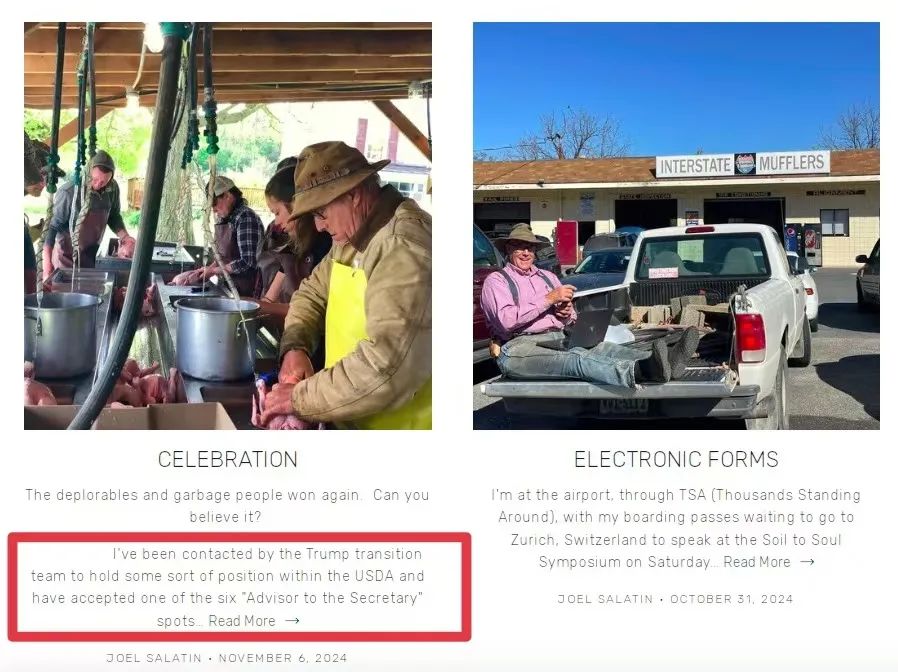
That day, in his speech, Salatin fiercely condemned the various suppressions and restrictions the USDA imposes on small farmers, and urged small farmers to actively participate in the legislative process. After the speech, I went to talk to him. I introduced my background and education, and told him that his agricultural practice and writing had had a profound influence on me. He said: “You studied English at undergraduate level, and so did I.”
A flash of insight struck me, and I said: “And then there’s Mr Wendell Berry – he’s in our English lit club, too.”
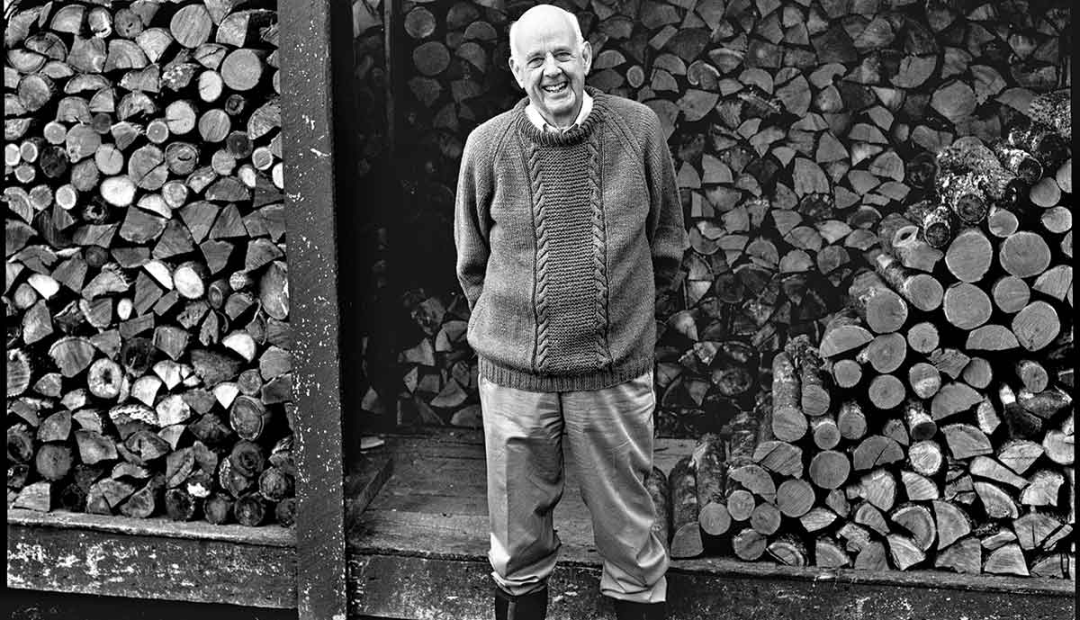
Anyone familiar with the American organic small-farmer movement will not be unfamiliar with Berry’s name and body of work. Berry is an award-winning, far-reaching poet, novelist, and cultural critic. He graduated from Stanford University’s creative writing programme, taught writing for a few years at New York University, and then returned to his home in Kentucky to become a full-time farmer.
For me, the endpoint of literature is agriculture. Literature is a concern for the human condition, and the “alienation” caused by complete human detachment from agricultural production is the most pressing plight worthy of attention in modern and contemporary life.
Two
If a farm owner wants to open the farm to student groups for ticketed visits and earn some extra income, then legally the farm becomes a “theme park,” requiring a theme park licence, a pile of applications, and a raft of additional infrastructure.
American technocrats have turned agricultural practice into an industrialised operation in which every step requires a permit and oversight, and in which each step is severely disconnected from the next. A small farmer who wants to farm in the traditional way and build a local food and cultural system around agricultural products is subjected to the judgment of agricultural bureaucrats at every turn.
Salatin points out that such agricultural bureaucrats typically “live in suburban housing estates, eat microwaved food, watch Hollywood reality television, and hope farms are as far from their homes as possible.” Apart from enforcing legal provisions and regulations, they know nothing about agriculture – especially organic agriculture.
Three
When I arrived at Nancy’s farm, the butcher Ishmael was already making preparations. He had a large pot of water boiling for plucking the chickens, set up a table among the trees at the edge of the pasture for slaughtering and cutting, and tied a rope around the trunk of an oak tree.
Ishmael decided to start with my rabbits and teach me the process along the way. He reached into the cardboard box the rabbits were in, picked out one, and gently lifted it by its two hind legs.
“Let it hang upside down like this for a moment, and all the blood will rush to the rabbit’s head. It’ll become dazed and stop struggling,” Ishmael told me.
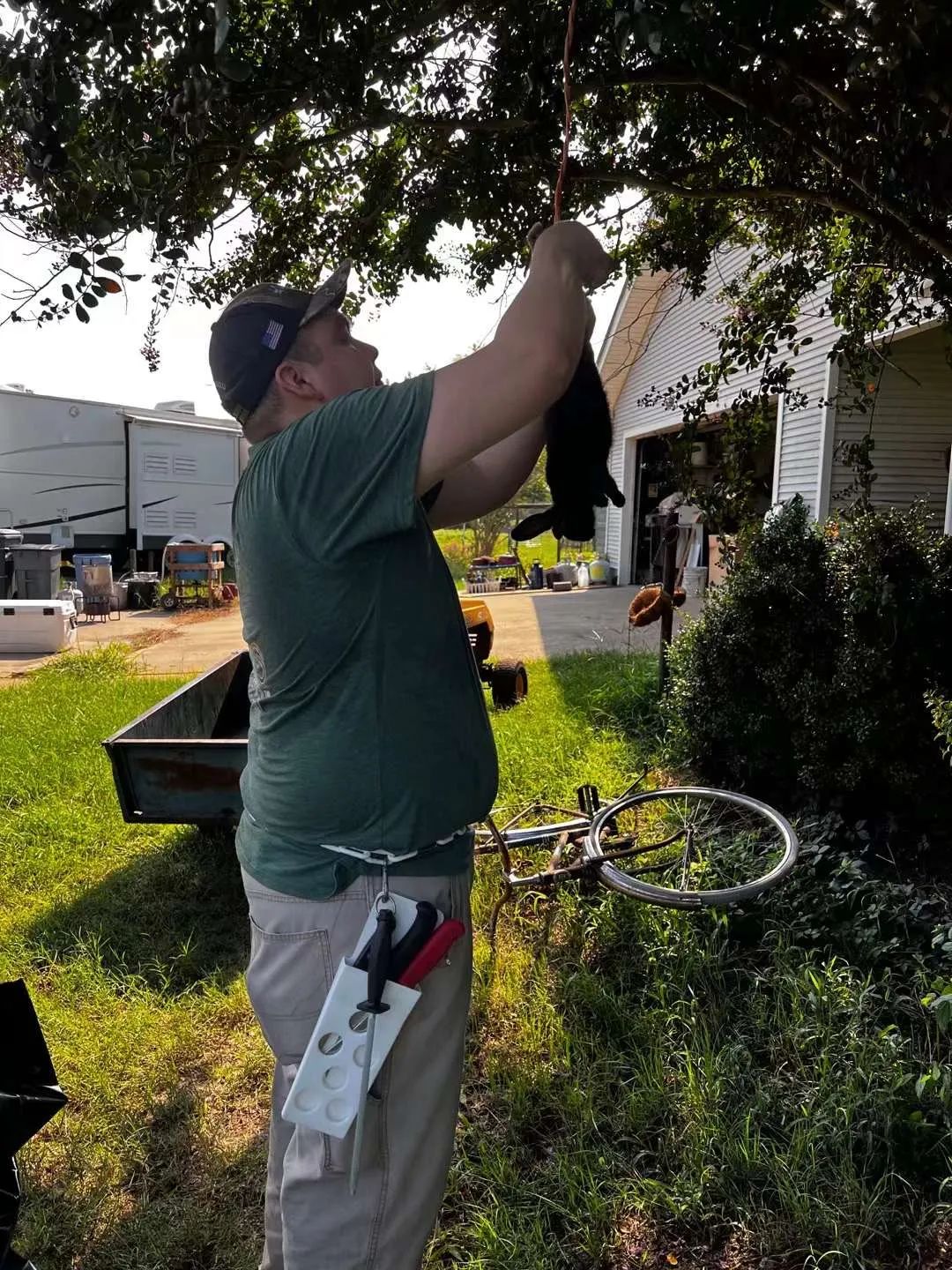
“It barely felt any pain,” Ishmael told me. “The key is that this strike must be forceful and precise.”
Ishmael’s technique with the chickens was equally swift and precise – bleeding, plucking, gutting, removing the organs, and cutting all done in one fluid sequence. He rinsed the dressed chickens and placed them in a large tub of ice water, then put the organs and blood in a separate bag. Nancy would take all of this to the compost pile, where, in less than six months, it would break down into rich organic matter to be used as base fertiliser for growing vegetables and fruit.
In large slaughterhouses, all of this would be discarded as industrial waste and sent to landfill. Animal by-products that cannot be properly broken down into organic matter thus fall out of the organic cycle of life, becoming an environmental burden of harmful gas emissions.
It was an early summer afternoon. Texas was already growing hot, though the shade of a few large trees was pleasantly cool. The lowing of Nancy’s cattle and sheep drifted by from time to time. As I gathered up the organs and hides Ishmael had set aside for me to take home, I watched him skillfully work through the chickens, humming songs to himself.
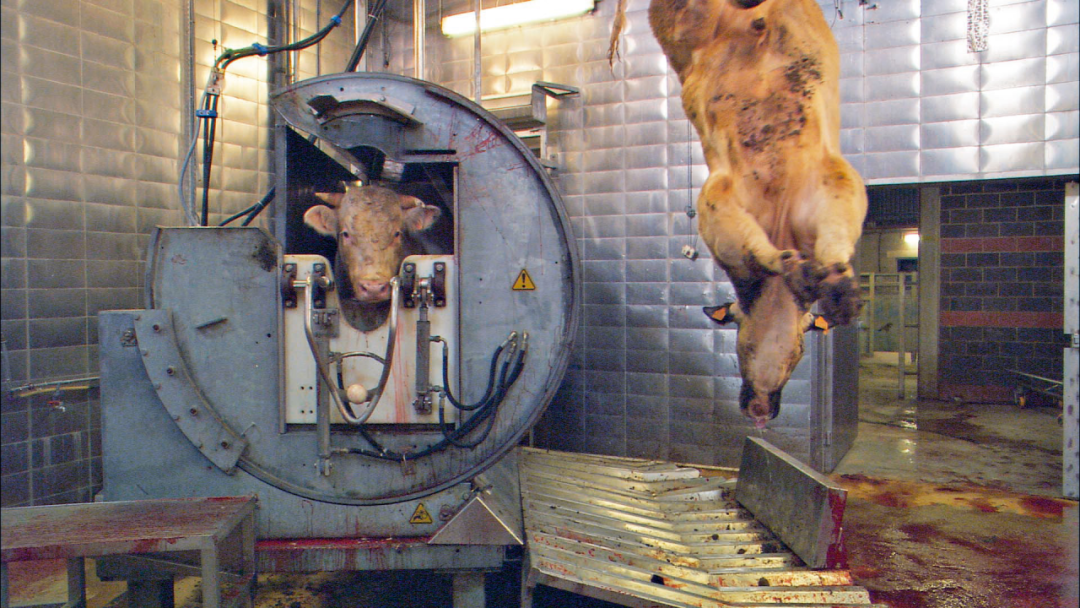
It suddenly struck me that, compared with the natural, harmonious scene before my eyes, those supposedly “legal” slaughterhouses were truly absurd: the stinging smell of disinfectant, butchers in full protective gear and masks, livestock and animals arriving after long-distance transport under enormous psychological stress, the ruthless, tense assembly-line work, meagre wages…
Four
I did a rough calculation: Ishmael spent six hours working on the farm that day and would earn around $400 (roughly ¥2,898). By contrast, 2024 statistics show that the hourly wage for workers in large American slaughterhouses is just $18.97; six hours’ pay comes to roughly ¥825 – less than a third of what Ishmael earned.
However, the United States Department of Agriculture stipulates that livestock not slaughtered at a licensed slaughterhouse cannot be sold to the public. As a result, a butcher like Ishmael, who uses simple tools and comes to the farm, can usually only work part-time, catering to the household needs of small and medium farms in the area, and finds it difficult to make a full-time living from his slaughter skills.
A slaughterhouse certified by the United States Department of Agriculture requires an investment of anywhere from several hundred thousand to several million dollars. That is beyond the means of a sole trader like Ishmael.
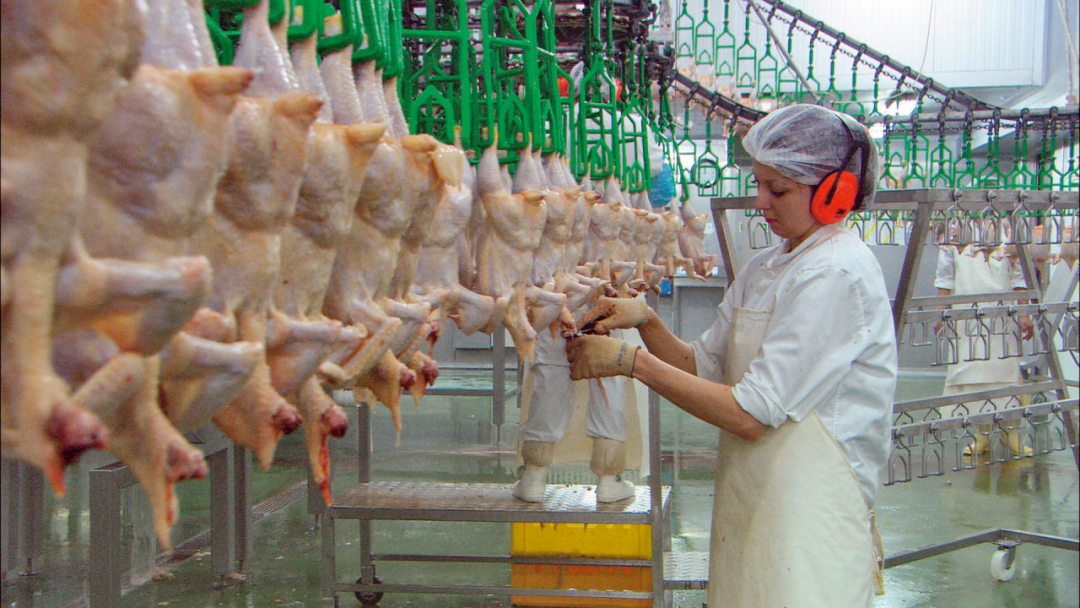
In the book, he gives the example of a small slaughterhouse in Minnesota. Under the regulations, at every stage of meat processing, the slaughterhouse must measure and record the meat’s temperature once an hour. One day, an employee missed a single reading, and a USDA inspector ordered the entire batch of meat thrown away – even though the temperature records for the hours before and after showed no contamination or spoilage. That single oversight cost the slaughterhouse $4,000 in one go, and small slaughterhouses find it hard to survive one enforcement action and fine after another.
Later, a lawyer representing the interests of large food conglomerates and the industry told Salatin that large slaughterhouses face the same harassment from USDA officials, and that oversights violating USDA regulations happen just as often on the assembly lines of large slaughterhouses – they are no more “sanitary” than small ones. The difference is that large slaughterhouses are well funded and can hire lawyers to negotiate and fight back.
This is the modernisation dilemma we all face: in a modern world where slaughterhouses can only be owned and operated by international capital, the ancient profession of butcher has disappeared, replaced by workers on slaughterhouse assembly lines.
In a slaughterhouse, slaughtering has become a mechanical operation filled with the paperwork needed to satisfy bureaucratic inspections. The butchering trade, in which a worker could find individual dignity and meaning in the labour, no longer exists – there are only slaughterhouse workers on the assembly line, earning the minimum wage.
Five
The small communities where farmers, craftspeople, butchers, cooks, and millers each performed their role and served one another have crumbled. In a world where every industry has been factory-ised and chained into franchises, we are all assembly-line workers to varying degrees. The factoryisation of the world over the past few centuries has given me a deep understanding of the absurd modernity depicted by Kafka.
In recent years, I have recommended Salatin’s Everything I Want to Do Is Illegal to every new friend I make. It is a comprehensive, merciless critique of the existing American agricultural system by a farmer who has been practising organic agriculture for over half a century – and a warning to all civilisations.
In Mr Berry’s poem “Declaration: The Liberation Front of the Indignant Farmer,” there is this line: “Praise ignorance, for what humans have not yet encountered has not yet been damaged.”
Salatin’s book makes the same point: what has not yet been regulated has not yet been destroyed.
Editor: Zean