
The “No-Burning” Season Returns: Where Is the Way Forward for Smallholder Straw Incorporation?
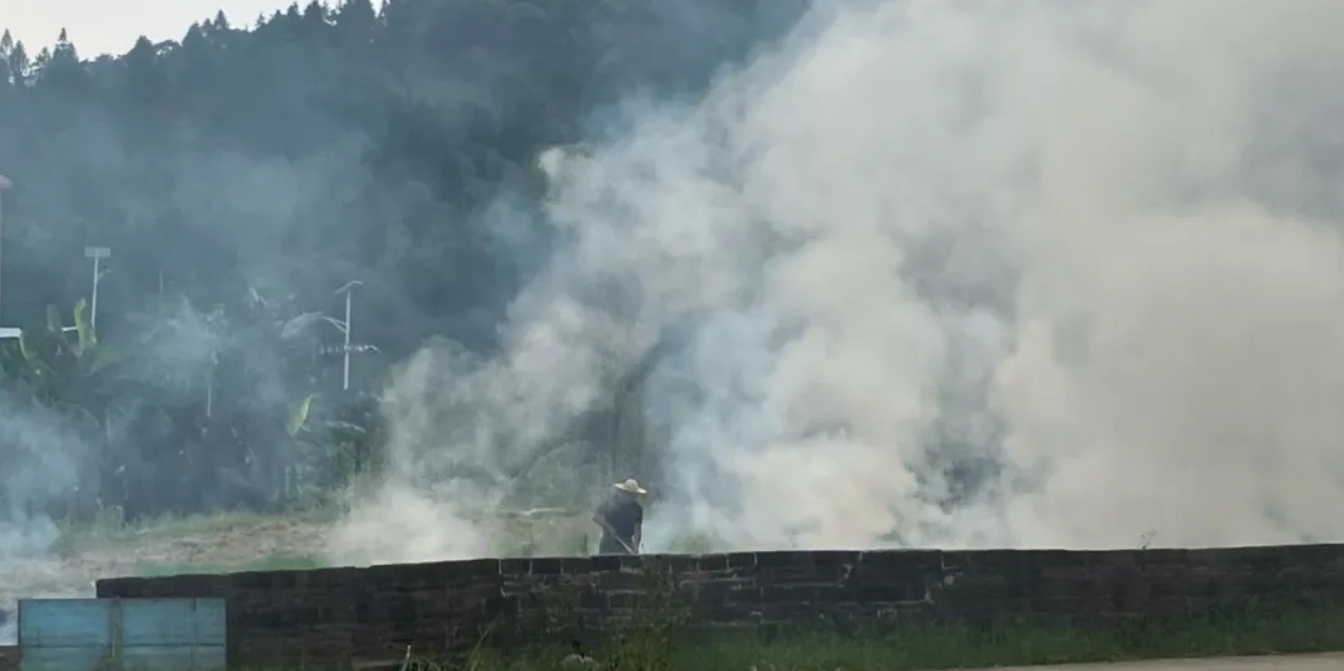
Harvest season has arrived once again, and the question of whether straw “should be burned or not” is back in the headlines. In October, uncontrolled open-air straw burning spread across much of Hunan, worsening air quality in several areas. Eight county governments were collectively summoned for formal talks by the provincial Department of Ecology and Environment.
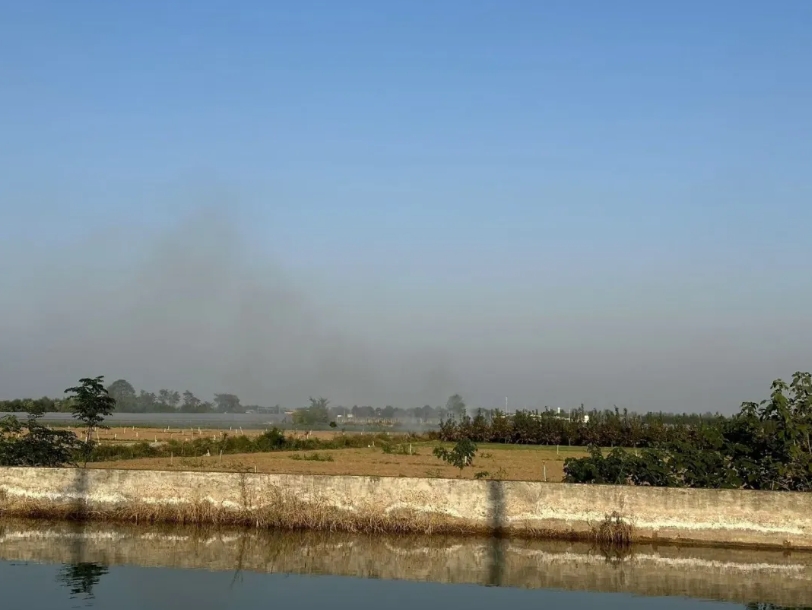
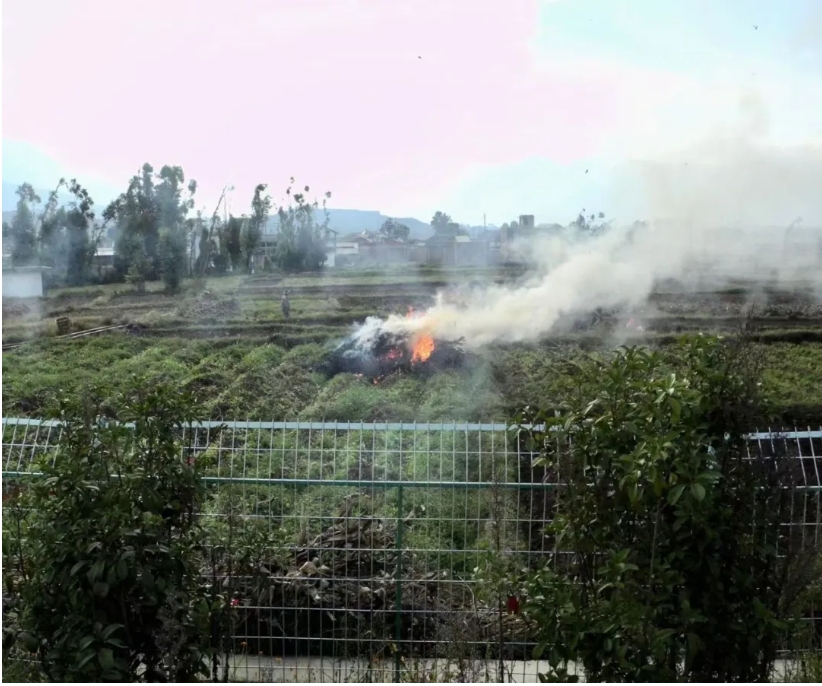
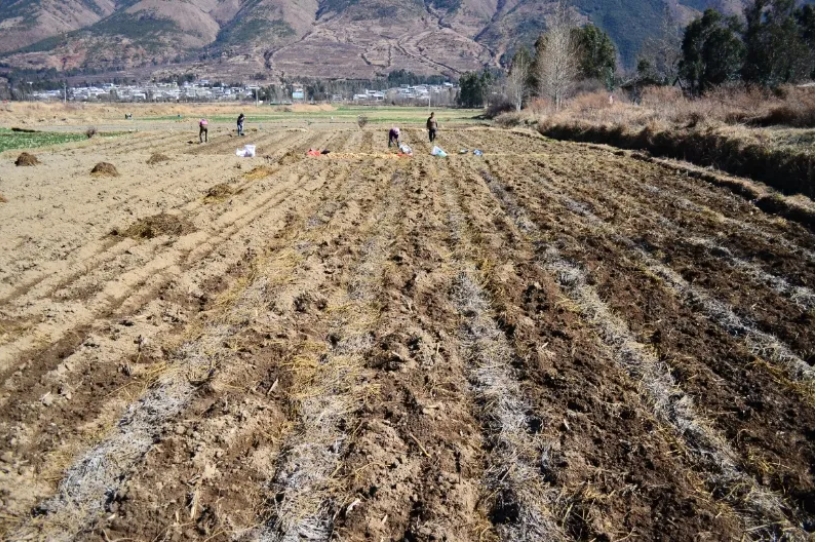
When we read this news, we were visiting farms in Xianyang, Shaanxi. It was late October. Standing beside the Zhengguo Canal, we could see flat, open land stretching to the horizon. The dark-brown soil surface was scattered with freshly chopped maize stubble from straw incorporation. In some fields, neat rows of tender green winter wheat seedlings had already emerged. The autumn air was crisp, and the setting sun slanted low. Suddenly, a choking smell hit us. A billow of black smoke was rising hundreds of metres away.
“The town leaders are about to have their pay docked again,” a local farmer next to us said. If another hotspot is spotted, grassroots officials could even face suspension. He explained that this is precisely straw-burning season, so the town has tightened enforcement — endless meetings all day, red armbands issued to every large-scale grower to patrol alongside them. Yet it is still impossible to guard against it all. That evening we slept in the village, and the acrid, smoky smell crept in through the gaps in the window. No doubt the local officials had another sleepless night.
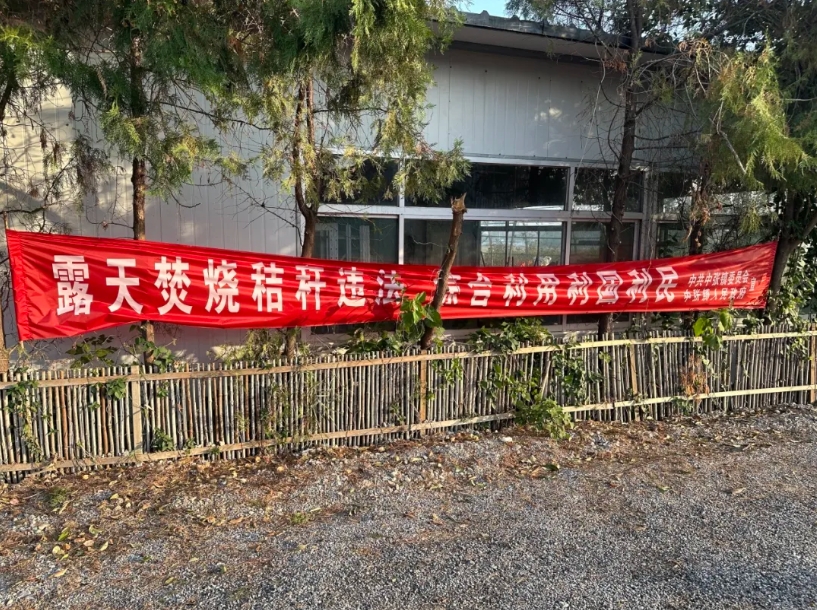
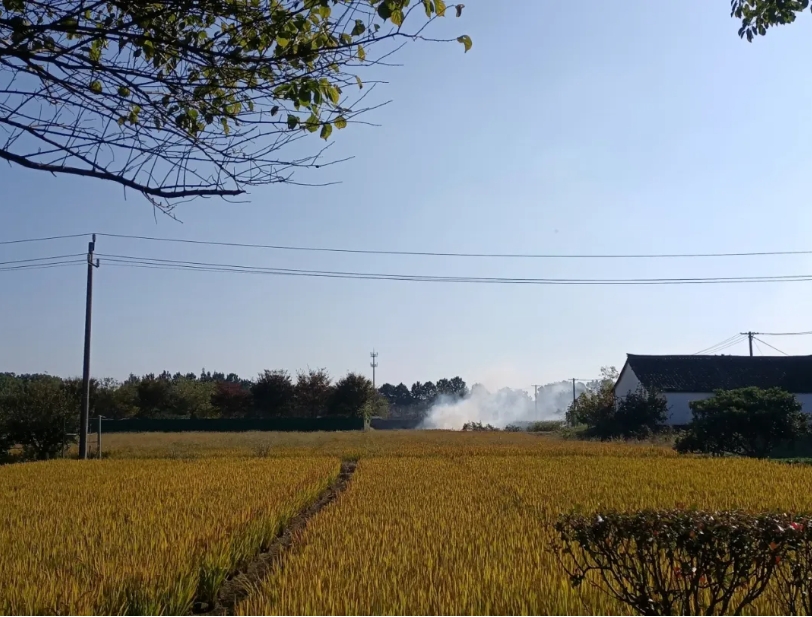
Smallholders’ difficulty in returning straw to the field is a nationwide problem, and it sits at the heart of the challenges posed by the current ban on open burning. Even under the pressure of a national “no-burning” policy and round-the-clock satellite surveillance, illegal straw burning remains widespread across the country.
I. Why Smallholders Struggle with Straw Incorporation
Moreover, to speed up straw decomposition and control pests and diseases, additional agrochemicals such as straw composting agents, along with extra labour input, are needed — driving up production costs for smallholders. The author concluded that the straw-burning ban is accelerating smallholders’ exit from farming.
A 2022 report in Farmers’ Daily noted: “It is mainly smallholders who are unwilling to return straw to the field, especially in cold regions and areas with tight cropping schedules.” An industry insider engaged in agricultural technical services in the Northeast told us that state farms manage straw incorporation reasonably well — partly because they are under pressure to comply with policy and partly because they have the necessary machinery. Much of the opposition to straw incorporation voiced online, he said, comes from small-scale growers. The local problem, in his view, is that ordinary farmers lack the machinery needed to make incorporation work.
“There is another issue: harvesting in the Northeast is late for smallholders, and once they finish, the ground freezes — there is simply no way to incorporate straw. State farms harvest earlier, which depends on the crop varieties they grow. Some areas prefer varieties with longer maturation periods, so harvesting cannot happen too early. Late harvests mean the next round of field operations cannot be carried out on time. Straw-degrading microbial inoculants are of no use in the Northeast either, because the ground freezes immediately after tilling,” he said.
When drafting straw-incorporation policies, local governments have focused mainly on achieving incorporation through machinery. Most funding priorities lean towards “subsidising equipment” and “prioritising large farms while overlooking small ones”.
On the one hand, some local governments channel funds through demonstration projects awarded as prizes; those projects typically involve large-scale farms operating on land consolidated through transfer, and have little to do with smallholders.
On the other hand, in terms of subsidies, straw-incorporation funds are mostly directed towards ancillary equipment, machinery, and the operators who carry out the work. In 2023, for example, Heilongjiang — one of China’s largest grain-producing provinces — restricted its straw-incorporation subsidies to “mechanised farming households, cooperatives and other agricultural service providers that have installed straw-incorporation monitors and are actively carrying out the work”. At present, only a handful of regions, such as Jiangsu Province, stipulate that subsidies be paid directly to farmers based on the actual area of incorporation.
However, given that some smallholders face genuine difficulties in accessing machinery, those who neither use machines nor purchase machinery services are effectively excluded from government incorporation subsidies. Unprocessed straw becomes waste, and that is why some smallholders continue to burn it despite the “no-burning” ban.
II. They Treat Straw as Treasure
Yuan Yong has been promoting straw mulching for return-to-field in Jianyang, Sichuan, for more than twenty years. When teaching farmers about returning straw to the field, he often invokes the old saying “fallen leaves return to their roots.” Why is forest soil so fertile? Because year after year, leaves fall and become food for microorganisms, earthworms and other soil creatures. These organisms consume and decompose the leaf litter, adding organic matter and nutrients to the soil and leaving it loose and porous. Through this analogy, Yuan Yong explains how vital straw is to farmland — much as fallen leaves are to a forest. Returning straw to the field is the key to building quality soil.
In 1994, Yuan Yong graduated from a forestry college and returned to his hometown to become a township agricultural technician. His daily work was teaching farmers how to use chemical fertilisers, pesticides and herbicides. Gradually, a troubling paradox caught his attention: the more pesticides were applied, the worse pests and diseases became; the more chemical fertilisers were used, the more barren and compacted the soil grew.
After fifteen years in the profession, Yuan Yong took part in an organic rice-growing project. It showed him that by changing cultivation practices — replacing chemical fertilisers and pesticides with poultry manure and biogas slurry respectively — he could break that vicious cycle. The revelation struck him: the secret lay in soil health. From then on, Yuan Yong immersed himself in ecological farming, working alongside farmers to continually refine their methods. The cornerstone technique is “no-till soil management combined with straw mulching.”
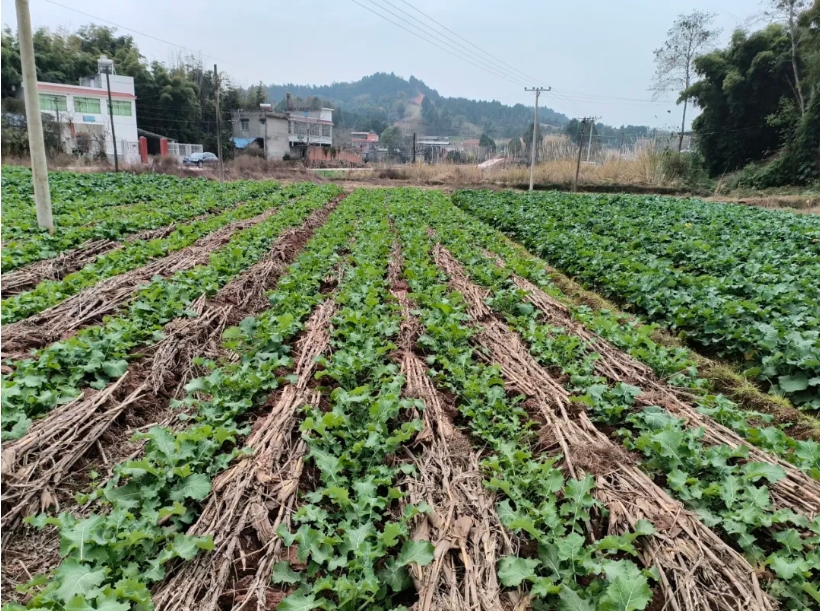
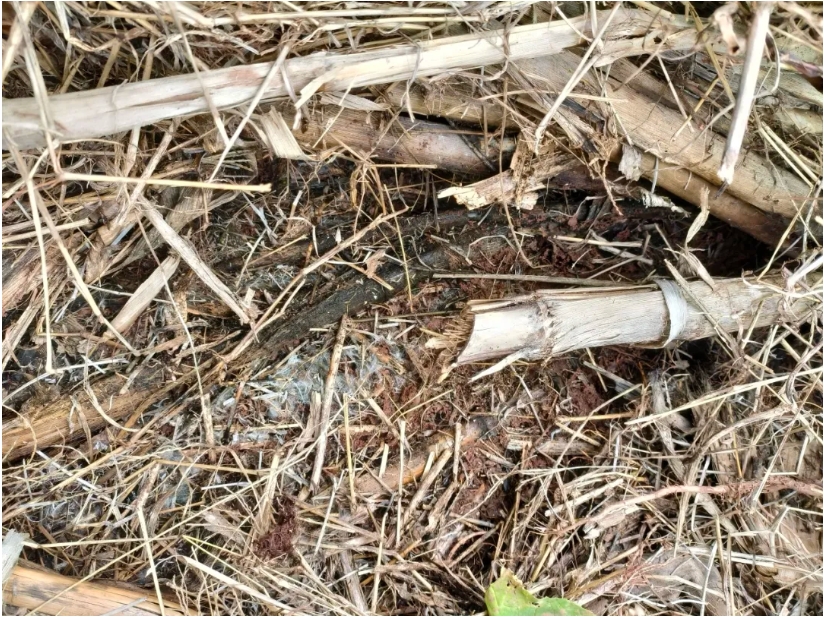
Take the rice–oilseed rape rotation common in Jianyang. After sowing oilseed rape, farmers lay a layer of rice straw between the rows. The straw acts like a quilt, insulating and retaining moisture in the soil while suppressing weed growth. Over the following six months it slowly decomposes, turning dark and crumbling to fine particles underfoot, with no hindrance at all to the next season’s rice planting. Once the oilseed rape is harvested, rapeseed husks and other fine residues are spread directly over the paddy field. The cycle repeats, season after season.
After three years of mulching, the soil becomes loose and fertile — you can scoop up a generous handful with your bare hands and see the soil aggregate structure and earthworms. The good smell of healthy earth returns. Yields from these fields are no less than those from conventional farming with chemical inputs. In some cases, rice yields under straw mulching even exceed those of locally grown hybrid rice treated with chemical fertilisers.
In years with abnormal weather, straw-mulched fields show a particular advantage: the soil beneath the mulch stays moist, and drought is the greatest risk factor facing local agriculture. “Seasonal drought has been a problem here for many years now, and it is becoming more frequent, lasting longer and causing greater damage,” Yuan Yong says. When drought strikes, other fields suffer reduced yields, but straw-mulched fields hold up far better.
Yuan Yong stresses that the key to this mulching system is no-till: straw should ideally be laid in situ, unshredded (except for denser crops such as rice and wheat) and unturned. Turning the soil actually carries drawbacks. Yuan Yong explains that once straw is buried, it does not decompose sufficiently in the short term and can impede root growth; where the straw layer is thick, there is even a risk of scorching the roots. Turning also disturbs soil microorganisms, yet the whole purpose of straw mulching is to provide food for microorganisms, earthworms and other soil creatures, creating favourable living conditions and sustaining a healthy soil ecosystem. Though it may seem counterintuitive, through meticulous management a no-till system can still deliver excellent yields. Mulching also suppresses weeds, reducing both the amount of labour and the herbicide required — and with it, the harm herbicides do to the soil. “Then all you need to do is sit back and play mahjong,” Yuan Yong joked.
III. Good Soil Makes Straw Easy to Decompose
In practice, however, slow straw decomposition and pest and disease pressure remain two major obstacles standing in the way of incorporation.
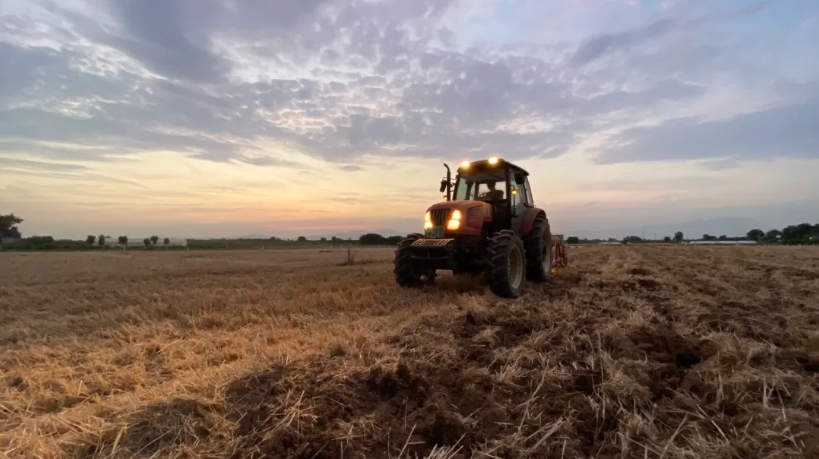
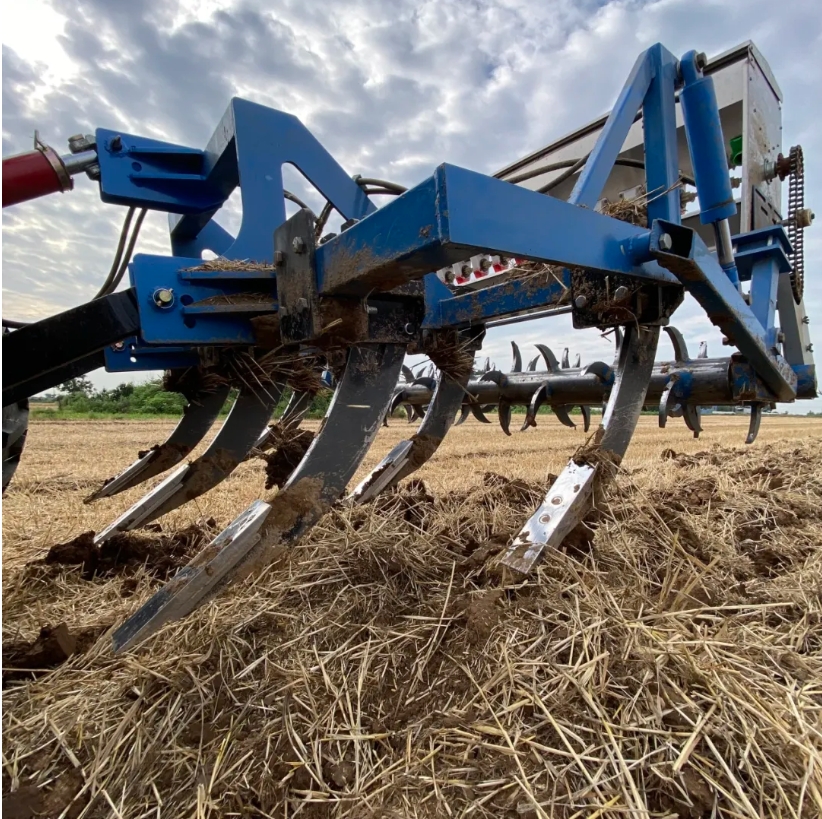
Lüwo Farm has been operating in the heart of the Guanzhong Plain in Shaanxi for ten years as an eco-farm that shuns chemical pesticides and fertilisers. Dàhēi, the farm’s owner, places great store on soil health and regards straw as a key tool for nurturing the land. He practises plough incorporation: at wheat harvest, machinery chops the straw and buries it under a deep plough pass, and within about six weeks in summer it has fully decomposed. At the same time, he has noticed that in nearby fields, straw incorporated years ago still lies unaltered, with no sign of breakdown.
Why should there be such a stark difference in a similar environment? Dàhēi believes the key lies in soil vitality.
Dàhēi told me that the number and activity of soil microorganisms are critical to straw decomposition. Aerobic microbial communities need the right balance of air and moisture, which in turn depends on a well-developed soil aggregate structure. When soil is over-reliant on chemical fertilisers, its aggregate structure breaks down, the soil becomes hard and compacted, and microorganisms lose the conditions they need to thrive. Pesticide application further disrupts the microbial balance, leaving straw unable to decompose effectively. Straw left undecomposed by microorganisms is a host for pathogen-carrying insect eggs, inviting pests and disease; in poorly ventilated, anaerobic conditions, the straw may even begin to deteriorate with mould. Even if microbial inoculants are added to speed up decomposition, these externally introduced organisms are unlikely to function in a degraded soil environment, and any benefit in the current season is difficult to sustain.
Healthy soil, by contrast, shows a clearly defined aggregate structure — soft, loose, and well-aerated, teeming with a rich community of microorganisms. Straw in such conditions is often broken down within a short period, further enriching nutrients and structure, setting in motion a virtuous cycle of soil improvement.
There is another reason farmers resist straw incorporation: they worry that returning straw to the field will trigger a pest outbreak.
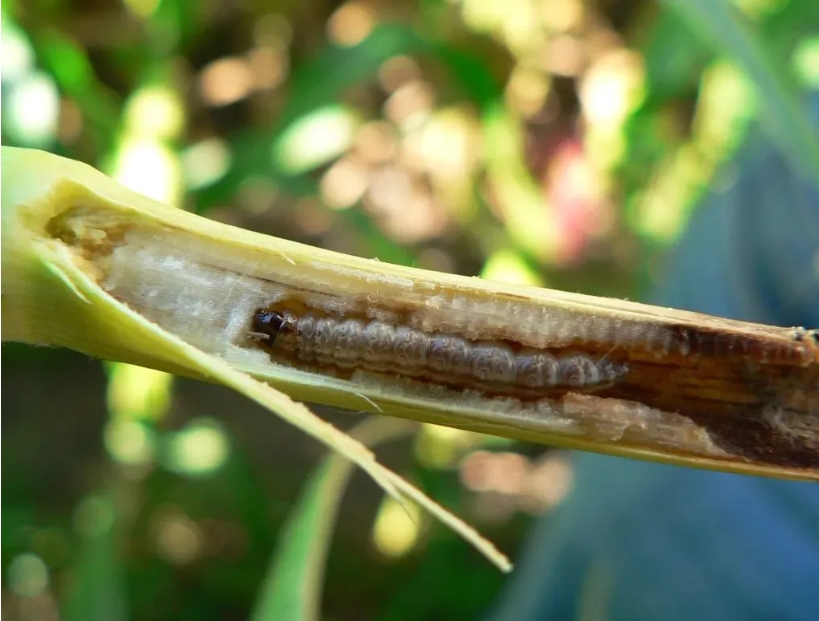
Whether incorporation inevitably leads to more pests is still debated in academic circles. Take the question of whether incorporating maize straw exacerbates pests and diseases. Research by Li Tianjiao and colleagues at the National Agricultural Technology Extension and Service Centre found that no-till straw mulching increased damage to spring maize by the maize borer in Heilongjiang. Yet other studies, conducted in dryland maize areas of Shanxi, showed that while straw mulching allowed the maize borer to survive the winter, it also slowed early maize growth, making conditions less favourable for overwintering adults to lay eggs. The net result was a reduction in egg-laying density, with pest damage rates on no-till mulched fields falling below those on conventionally tilled fields.
Like Dàhēi, Yuan Yong insists on the elimination of pesticides and chemical fertilisers. In his view, chemical inputs harm soil microorganisms, leading to a decline in soil vitality and buffering capacity, and an imbalance in the soil ecosystem. When teaching farmers, he always stresses the same point: the heart of farming is soil health — and, more precisely, the health of the living community within the soil.
This brings us to the paradox at the heart of soil improvement: decomposing straw requires healthy soil, yet those compacted, barren soils that most need straw incorporation to recover are precisely the ones lacking the capacity to break straw down. Restoring such soils demands more time for soil building, and persuading smallholders who depend on farming for their livelihood to enter that process is no simple matter.
IV. Tailoring to Local Conditions and Individual Circumstances
For the smallholders Yuan Yong works with, or farms like Dàhēi’s, which adopt ecological growing throughout, straw delivers multiple benefits simultaneously: improving soil, providing nutrients, suppressing weeds, conserving moisture and buffering against drought … Conventional smallholders, meanwhile, solve those same problems by purchasing external inputs, so they see straw simply as a nuisance that costs time and money to deal with.
To encourage smallholders to incorporate straw, you must start with its full range of benefits and work out the economics in a way farmers can relate to.
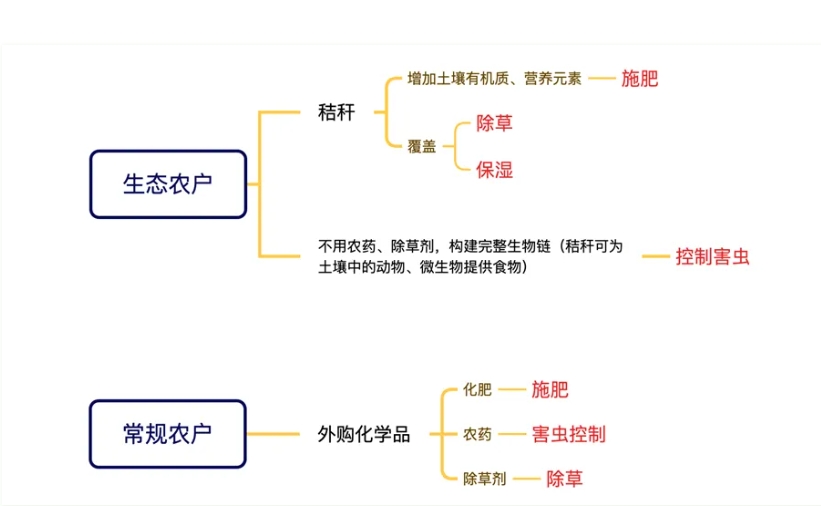
The Yunnan Sili Ecological Alternative Technology Centre (shortened to “Sili Centre”) is an environmental organisation dedicated to researching and promoting eco-friendly agricultural methods. It has been working to advance comprehensive straw utilisation across Yunnan Province since 2014. Like Yuan Yong, Sili believes that with the right technical solutions, restoring soil ecology can help smallholders cut their spending on purchased inputs and achieve lower costs with better returns.
Dr Li Chunliang, Sili Centre’s project director, has visited various climate zones, terrain types and cropping areas in Yunnan over more than a decade of promoting straw incorporation to farmers. He sums up the mindset of conventional growers like this: straw genuinely improves the soil, but the benefits are slow and long-lasting, and most farmers say the work is too laborious and the results take too long. “If you’re asking me to put my own labour into it, I need to think it over,” they tell him — farmers place more weight on what is direct and immediately visible.
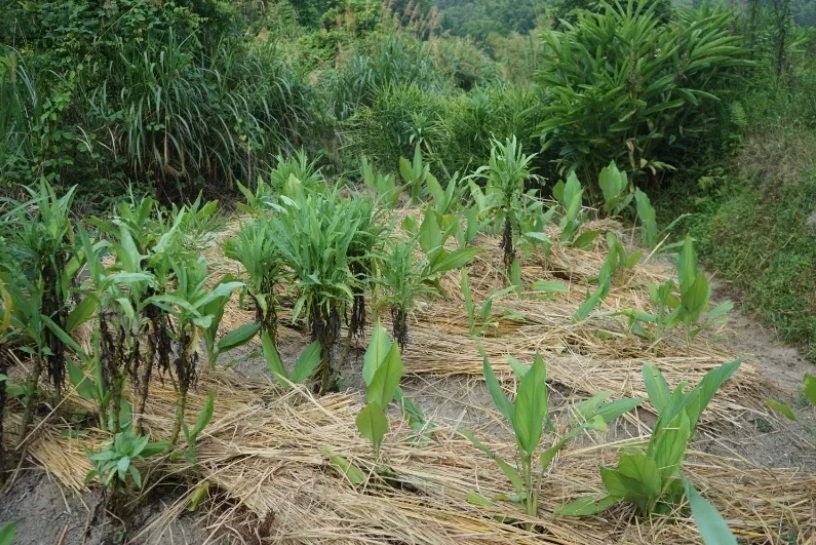
In Yuan Yong’s view, the ideal scenario for this technique is a household with five or six mu of land — roughly one mu per person — with the younger generation working away from home and the elderly staying to farm, primarily for their own table. They also keep a few pigs, and any surplus produce is sold within the village.
The Jianyang Municipal Bureau of Agriculture and Rural Affairs invites Yuan Yong to give lectures every year. He has noticed that in recent years more and more smallholders are adopting this method; it has already taken root in at least four villages. Beyond that, more towns and farming households, having seen the benefits, have spontaneously begun laying rice and maize straw back over their fields as mulch. Some village collectives are working hard to find markets for their eco-friendly produce.
This no-till straw mulching technique sounds idyllic, but it comes with constraints: incorporation still relies entirely on manual labour, and right now labour costs in rural areas are high. It suits only smallholders with around ten mu per household — large farms simply cannot afford it. Against the backdrop of widespread rural labour outmigration, this model may need further refinement to adapt to changing social conditions. Yuan Yong believes that straw incorporation is an inevitable trend for protecting soil and achieving sustainable agriculture; the key lies in adopting different methods according to local conditions, individual circumstances and crop type.
“Most crops grown by smallholders can have their straw laid directly as mulch in the field. For densely planted crops with limited row spacing, straw needs to be shredded before it is incorporated as mulch. For crops where labour is scarce or mulching is impractical, straw can be fed to livestock with the manure then returned to the field, or composted first before incorporation,” he says.
However, as animal husbandry becomes more centralised and scaled up, small-scale rearers are exiting, and the mixed farming scenes once common in rural China are fading. Once farmers stop keeping livestock, their motivation to make use of straw drops even further.
Large-scale land transfer is also dampening farmers’ willingness to incorporate straw in many areas. The agricultural technician from the Northeast quoted earlier describes smallholders’ mindset there thus: since it is uncertain who will be farming their land next year, and straw incorporation only shows results over the long term, smallholders are reluctant to invest.
In a 2022 report, the Science, Technology and Education Department of the Ministry of Agriculture and Rural Affairs noted that straw incorporation still faces problems of “unclear baseline data, uncertain technical outcomes, and inadequate long-term mechanisms.” Straw incorporation looks simple enough — just letting fallen leaves return to their roots. But putting policy into practice requires not only adapting to local conditions but also tailoring to individual circumstances. The key question is whether smallholders can be provided with supportive livelihood contexts suited to straw incorporation, rather than forcing incorporation that merely pushes smallholders off the land.
Fortunately, environment and livelihood are not always an either/or proposition. The efforts of Yuan Yong and Sili give us hope. Solving the specific technical challenges of straw incorporation and giving farmers a stronger incentive to adopt it will require more front-line workers like them to keep forging a path forward.
2 Farmers’ Daily Focus: Where Does Straw End Up When It Can No Longer Be Burned On Site?
https://www.thepaper.cn/newsDetail_forward_20740693
3 Li Tianjiao, Zhuo Fuyan, Chen Ranran, et al. Research Progress on the Impact of Straw Incorporation on Maize Pests, Diseases and Weeds. China Plant Protection Guide, 2022, 42(1): 7. DOI: 10.3969/j.issn.1672-6820.2022.01.006.
4 Institute of Earth Environment and Colleagues Reveal How Straw Incorporation Helps Boost Grain Yields and Increase Soil Carbon Storage
https://www.cas.cn/syky/202402/t20240220_5005755.shtml
5 Notice on Further Clarifying the 2023 Subsidy Policy for Comprehensive Straw Utilisation in Heilongjiang Province
https://www.hlj.gov.cn/hlj/c107856/202402/c00_31708701.shtml


Edited by Wang Hao