
Learn from the Rainforest, Be a Happy Ecological Smallholder in Xishuangbanna
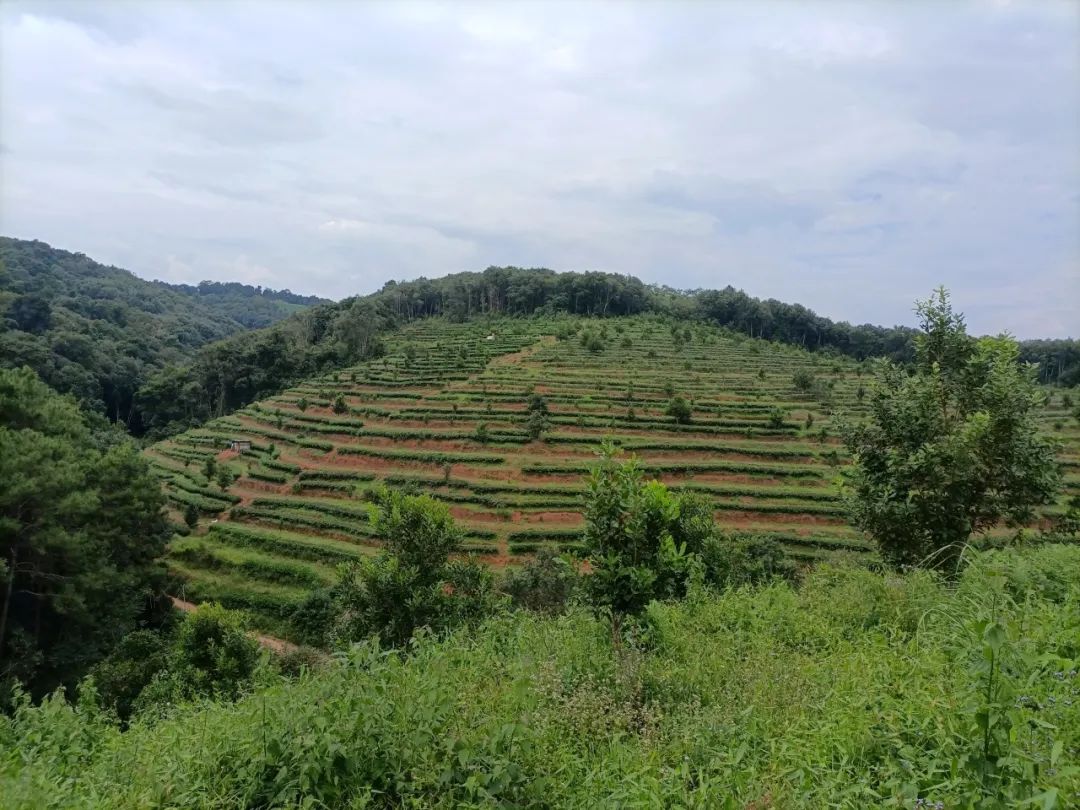
The Xishuangbanna National Nature Reserve lies on the only route north to Dadugang. In the spring of 2020, a herd of 16 Asian elephants walked north from this very spot all the way to Kunming before turning back to the rainforest, making headlines across the country. The wild elephants’ wandering is believed to be linked to the expansion of human activity over recent decades, and the rubber plantations and tea gardens that flash past the car window are a microcosm of their shrinking habitat.
It is easy to clear a forest but hard to regrow one. What has been transformed is not just the landscape and ecology, but the very relationship between people and the land. Agricultural land carved out of rainforest decades ago—restoring it on any meaningful scale is easier said than done. Beyond monoculture rubber and tea, is a more sustainable way possible?
Amid the rolling tea gardens and rubber plantations, the four-hectare hillside plot Xiao Qin has leased is thick with wild grasses, alive with bees and butterflies, and shared with pineapple and macadamia trees—a seemingly anachronistic patch of green that also offers a glimmer of hope.
I. Coming Home
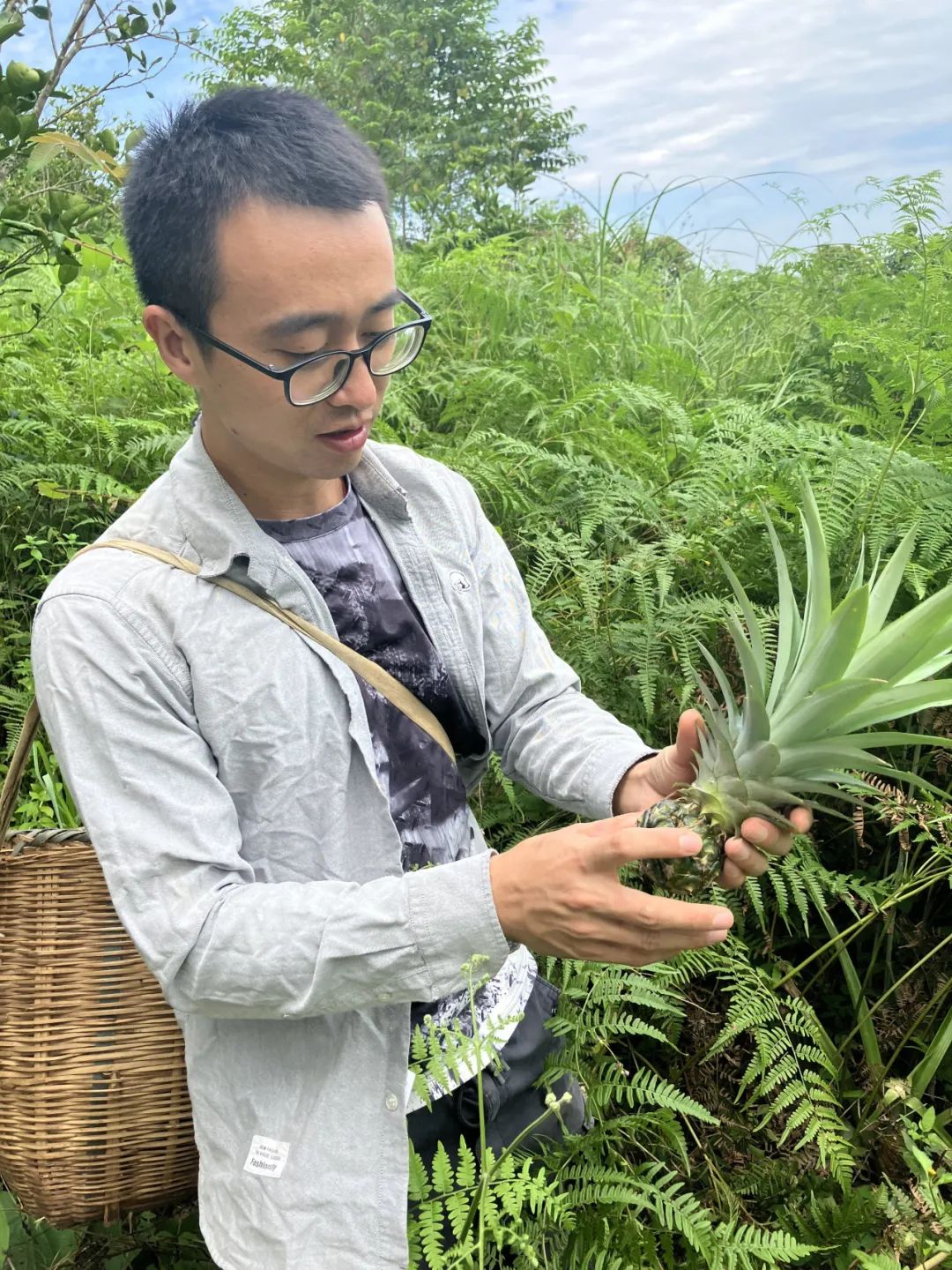
Born in 1993, Xiao Qin is ethnically Han but a native of Xishuangbanna through and through. Now just past thirty, he has been back home for four years and has made his mark in the ecological farming community with a handful of hectares of pineapples, passion fruit, and macadamia nuts. How he got into it, it’s almost accidental.
After graduating from university in 2015, Xiao Qin spent two years at a petrochemical company in Xishuangbanna, mainly selling gas stoves in rural areas. The pay was good and his bosses were keen to promote him, but deep down he always harboured an entrepreneurial dream. “I used to watch CCTV-7’s Road to Wealth all the time back then—it really got my blood pumping!” His interest in agriculture also took root around that period.
Fortunately, the get-rich stories on television had not gone to his head. During those two years in rural Xishuangbanna, Xiao Qin came to see that conventional agricultural products simply could not fetch a good price, and farmers had no choice but to compete on scale and yield. To squeeze as much produce as possible out of limited land meant resorting to pesticides. “Growing bananas requires at least four rounds of herbicide—it’s just too dirty.”
Eventually, even going to the market to buy groceries became a source of anxiety. So he started searching online for information about ecological farming, and in 2018 he finally quit his job to join Share Harvest Ecological Farm in Shunyi, Beijing.
Perhaps because he was young and fearless, at just over twenty Xiao Qin didn’t think ecological growing techniques were all that hard—finding a reliable market was the real challenge. At Share Harvest he handled online customer service and occasionally joined delivery runs, which gave him a chance to interact with consumers and build experience. After two full years, Xiao Qin returned to Xishuangbanna as planned, becoming a “returnee.”
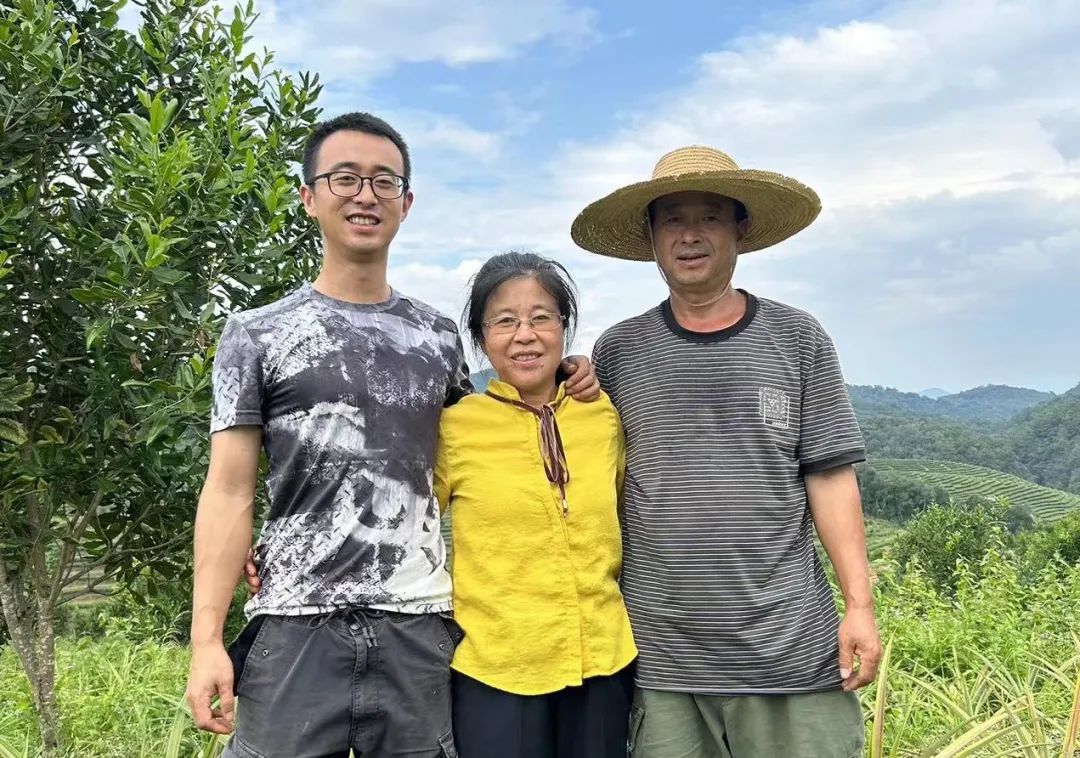
Although the “returnee” label is hard to avoid in introductions, Xiao Qin has always felt he “doesn’t quite count as a returnee.” During those two years, even though he was physically in Beijing, his goal was always to come back—his heart never really left home. He kept telling himself he would return to Xishuangbanna with new experience and resources. So quitting to go home was not so much swimming against the tide as things simply falling into place.
Farming is hard and exhausting work. Working the land, harvesting and processing, packing and shipping, after-sales support—none of it is easy. Whenever his parents, worried sick, questioned his decision to come home, Xiao Qin would half-jokingly reply, “This decision is actually something you two created.” He is grateful for his parents’ investment in his education—going out to university, broadening his horizons—of course his thinking would change, and choosing an unconventional path, what’s wrong with that?
A shared concern for good food became another point of common ground between Xiao Qin and his parents. Ever since getting involved in ecological farming, the Xiao family has been eating ecological rice. The feast they prepared for this visit had a story behind every dish: the peanuts, edamame, and loofah grew in his mother’s own garden; the mushrooms and bee pupae were seasonal mountain fare; there was also free-range pork from a neighbour and ecological fruit from farming friends across the region—enough to make anyone envious.
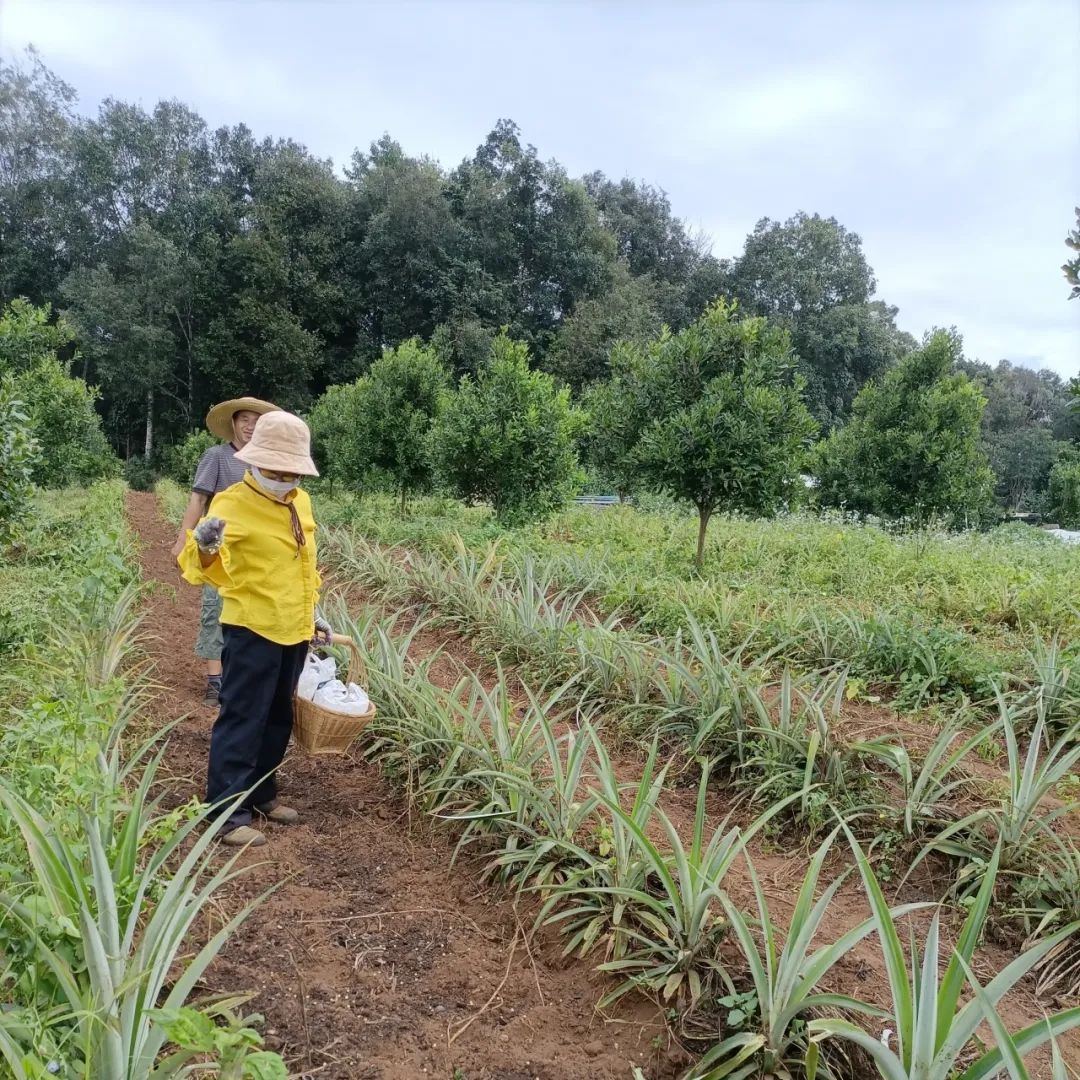
Earlier this year, Xiao Qin’s parents retired and could not wait to carve out a small vegetable garden among the pineapples. They had already been eating fresh peanuts, and the sesame and sweet potatoes would be ready soon. Our visit happened to coincide with them planting soybeans. His parents, one ahead of the other, applying fertiliser and pressing seeds into the soil, clearly enjoying every moment of it.
II. Near-Wild Management
He smiled. “I once heard a teacher in Taiwan say: pineapples are afraid of ghosts. Plant them close together and they huddle up and stop being scared.”
“Afraid of ghosts” is, of course, a joke. In fact, as far back as the 1970s, agronomists in the Taiwan region had demonstrated through field trials that close planting could significantly boost pineapple yields while also suppressing weeds and conserving soil and water. The single-row close-planting technique spread from there. The most widely grown variety in Xiao Qin’s field, Smooth Cayenne, was originally introduced from Taiwan as well.
Using the same single-row close-planting method, Xiao Qin’s ecological pineapples are smaller in size, and his yield is a third to half less than conventional. The difference from conventional pineapple farming: Xiao Qin does not force flowering, uses no chemical fertilisers or pesticides, does not irrigate, and relies solely on sheep manure and macadamia green-shuck compost as base fertiliser. Apart from weeding five or six times a year, his pineapple management is close to near-wild.
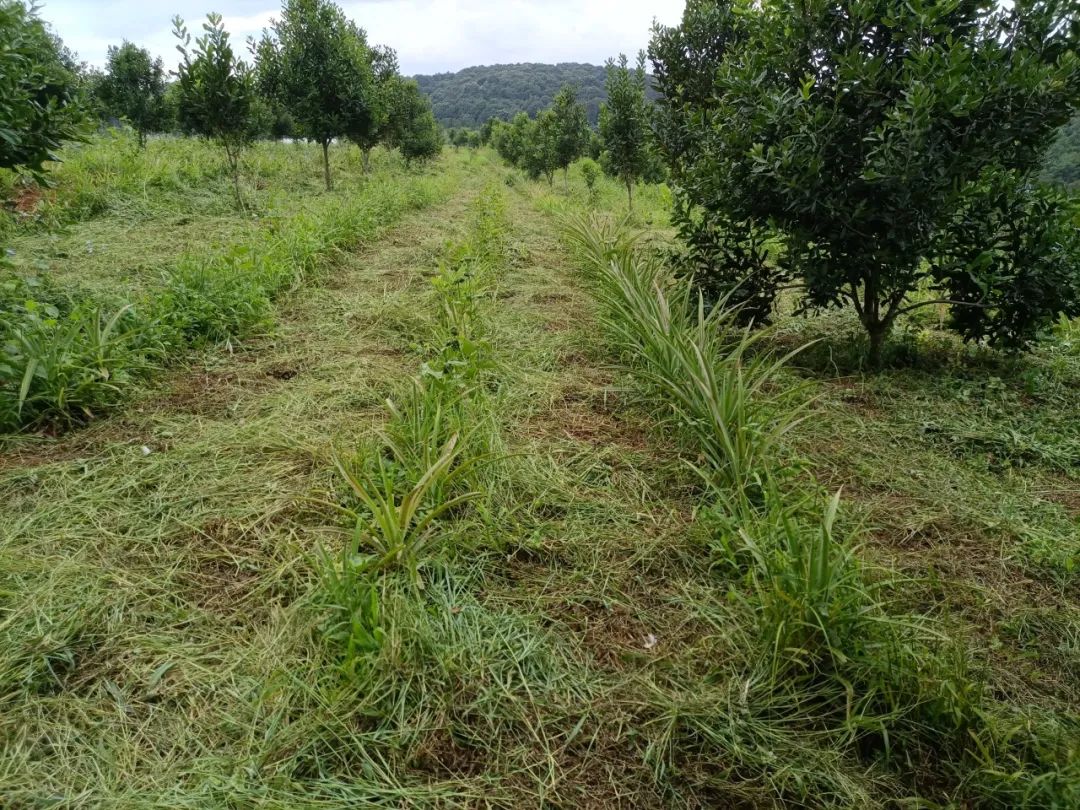
In late-September Xishuangbanna the air is mild, and the freshly cut grass laid between the rows gives off a sweet, earthy fragrance. Xiao Qin says his principle for field management is “weed but don’t pull the roots.” The grasses do take up some of the pineapple’s nutrients, but their root systems also help the pineapples retain moisture—they work together in a kind of mutualism. Cutting the grass and laying it down as mulch keeps things warm and moist, improves the local microclimate, and can ease the effects of drought to some degree.
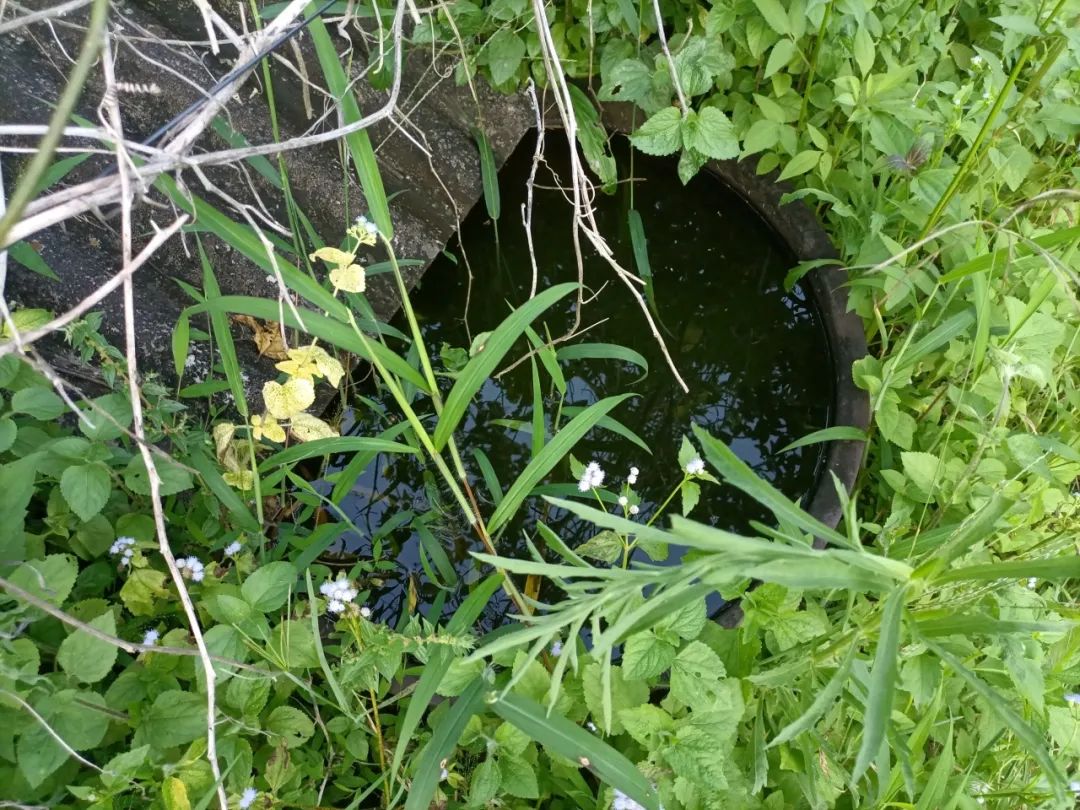
“It’s been dry for the past two years—this year, from February to April, there was almost no rain.” Faced with climate change, Xiao Qin has developed a real sense of urgency. He dug a few small ponds in the field, but when the drought really bites, they are a drop in the ocean. He had also considered damming the drainage ditch at the bottom of the slope to store water and pumping it up for irrigation, but he has not yet reached an agreement with the farmers downhill. For now, he is at the mercy of the weather.
The silver lining for fruit: drought is not all bad. Too much rain inhibits sugar accumulation, and the flavour suffers—”it’s like how a person can become waterlogged,” Xiao Qin says. Looking back, this year’s pineapples really did have a rich, full flavour. They came from his third aunt’s plot, a neglected hillside he took over the moment he returned in 2020.
If the four hectares at Dadugang are Xiao Qin’s “Pineapple 2.0,” that hillside was his experimental 1.0—more grass than pineapple. Back then, to save on seedlings, the pineapples were planted sparsely and irregularly, which meant cutting grass by sickle, a labour-intensive chore. The slope was nowhere near 45 degrees but still tipped at over 30; an ordinary person would tire just standing there for a few minutes, let alone working under the blazing sun all day.
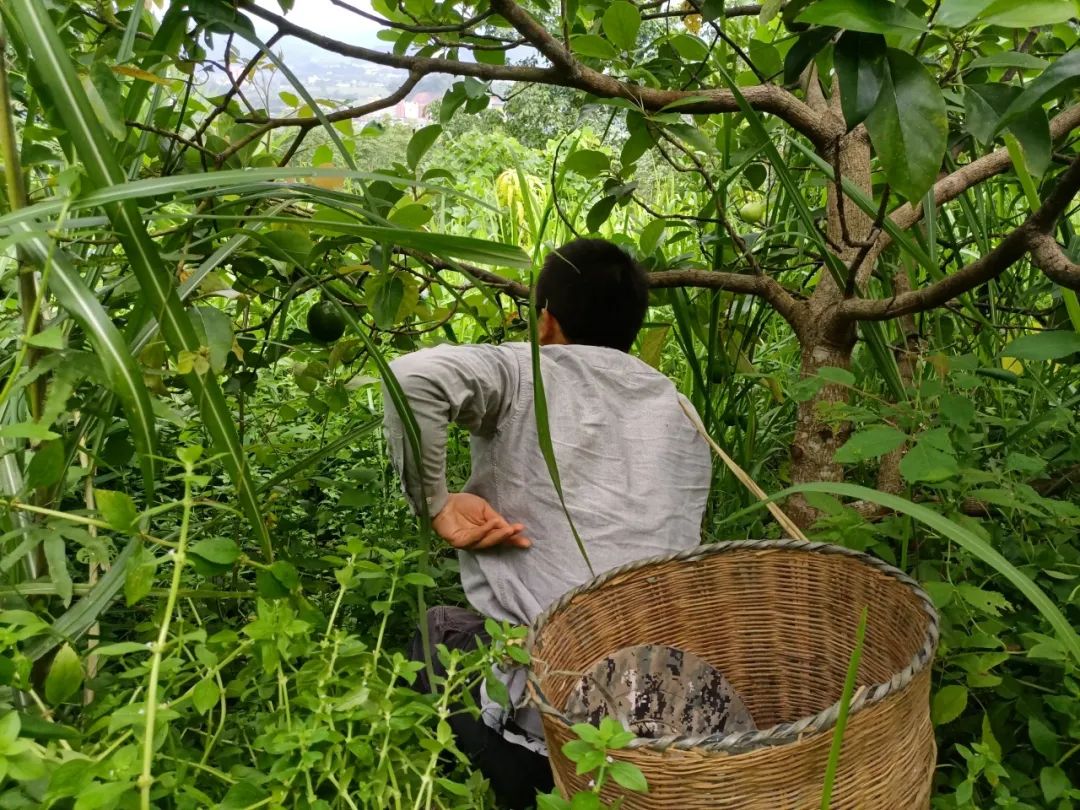
One of the Jino friends, Saoqie, had a plot even more extreme than “Pineapple 1.0″—sitting in a valley bottom on a slope of roughly fifty to sixty degrees. You would have to ride a motorbike to the roadside, then climb down. Without some decent outdoor hiking ability, you simply could not get to that field. When we asked Saoqie why he grew passion fruit here, he smiled, and his answer was a little off-point: “I used to grow winter melons.” We all inhaled sharply and decided not to push further.
Xiao Qin admits that with the plots so scattered, he cannot personally oversee everything—half his time and energy goes to travel, let alone improving techniques and quality control. So in his third year of farming, he leased the four hectares near home to centralise operations, keeping just one passion fruit plot, intercropped with macadamia trees.
III. Charting a Path
Conventional produce is pushed to grow bigger and ripen faster with chemical fertilisers and pesticides; sometimes it is shipped out before it is fully ripe, kept fresh with preservatives. As for flavour, that is dealt with later using additives during processing. Ecological produce, by contrast, grows without any chemical inputs and is typically harvested and shipped only once the fruit or vegetable is fully ripe, giving it a richer flavour. This poses a new set of challenges for ecological farmers.
The same logic applies to processed goods. Making dried noodles from heirloom wheat flour—can they actually drape from a hanger without added salt? How do you make biscuits that are low in sugar and oil, with no additives, yet still have a good texture without crumbling? Without the heavy-handed intervention of food technology, can ecological products deliver both authentic flavour and a presentable appearance?
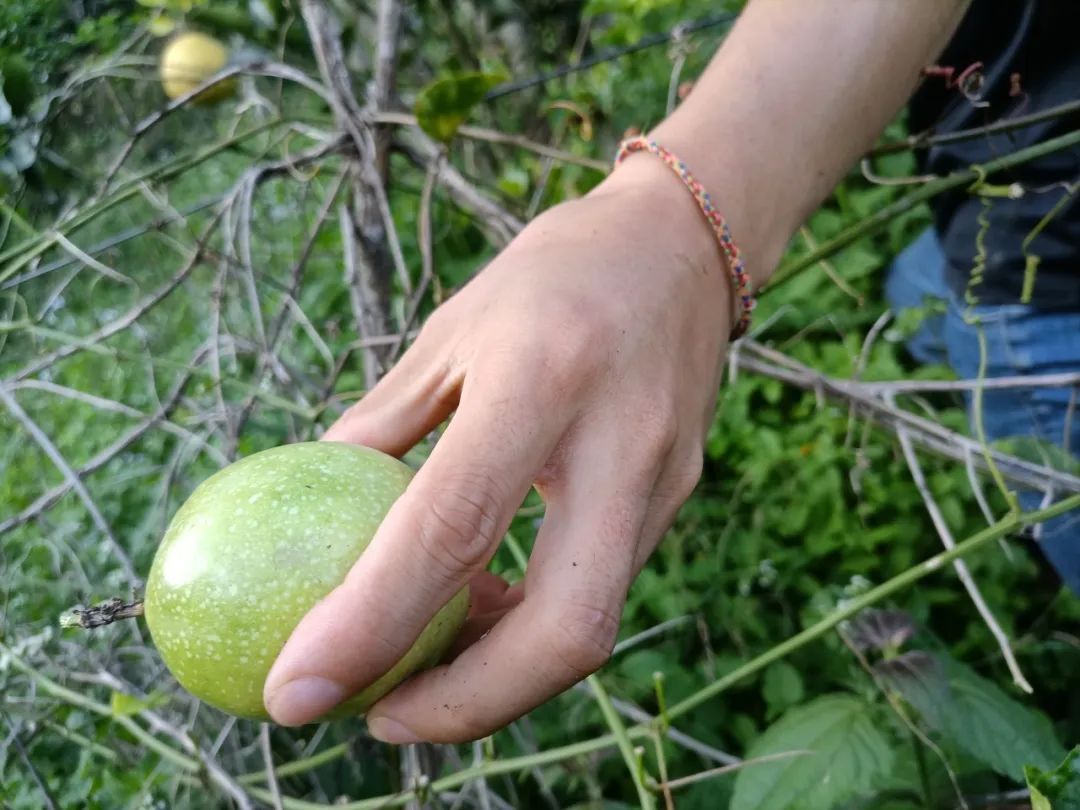
The passion fruit, though, has been a long-standing headache. Conventional passion fruit is treated with preservatives before shipping. Xiao Qin’s goes straight from farm to consumer, and by the time it arrives by post, the flavour is intact but the skin is inevitably wrinkled and shrivelled. Consumers who do not understand see the poor appearance and leave a bad review, sometimes even accusing the producer of passing off inferior goods.
Mentioning this, Xiao Qin looks a bit embarrassed, and is also grateful for the understanding and patience of the various partner platforms in the ecological farming community, who help him find consumers who appreciate the value of ecological food, handle customer complaints on his behalf, and let him focus on production. With the backing of these “knowledgeable and professional” platforms and consumers, Xiao Qin feels even more driven to refine his techniques and tighten quality control.
The gradually maturing macadamia nut processing operation was also something Xiao Qin figured out through trial and error. Macadamia nuts are native to Australia and have been grown in China for many years. Farmers in Xishuangbanna simply call them “nuts” and typically sell the raw kernels straight to middlemen or factories.
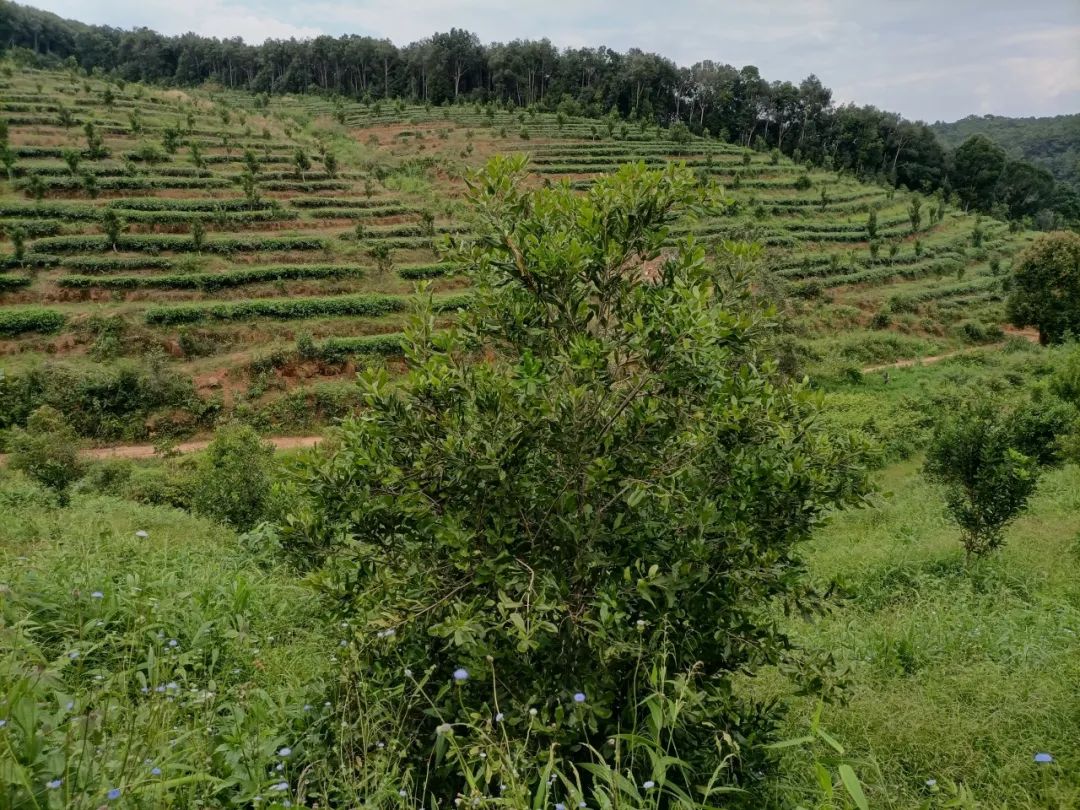
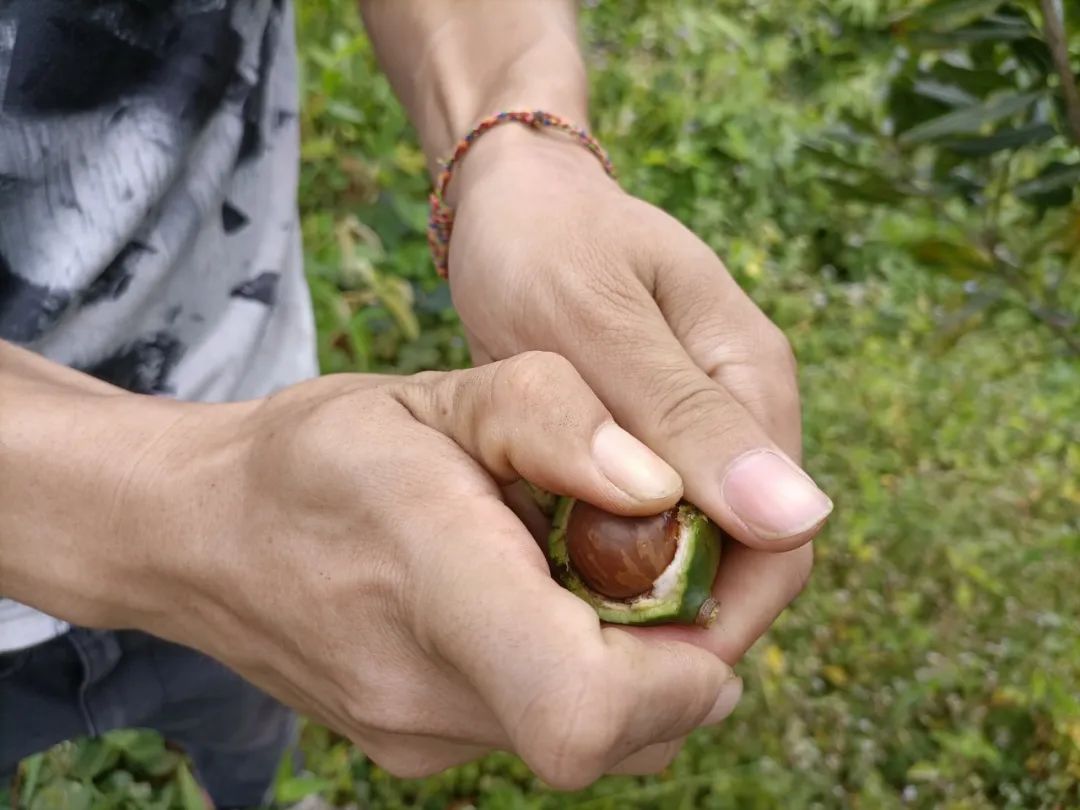
Xiao Qin discovered that a new “specialty” back home could fill a gap in the ecological market. At first he sold fresh kernels, but northern consumers were not familiar with them. Xu Liang, the person at the Beijing Organic Farmers’ Market who liaises with farming partners, suggested Xiao Qin try roasting them himself and selling them as dried nuts. One try turned into a best-seller.
The first year, with no experience, he used the machine a fruit shop in town used for roasting chestnuts—far too slow. After roasting, the whole family had to sit down and crack open the macadamia nuts by hand, another labour-intensive step.
Over the past two years, he has gradually acquired a macadamia green-shuck peeler, a colour sorter and a shell cracker. With the colour sorter to separate nuts by size, roasting becomes more even and easier for the operator to gauge the heat.
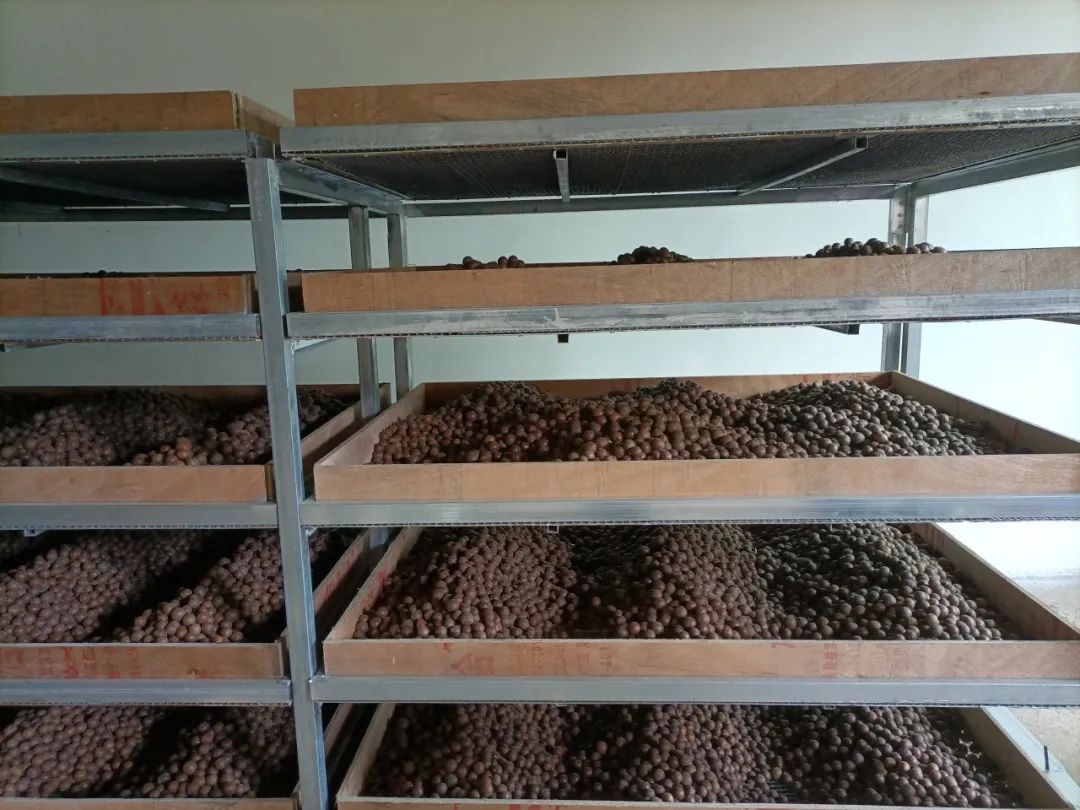
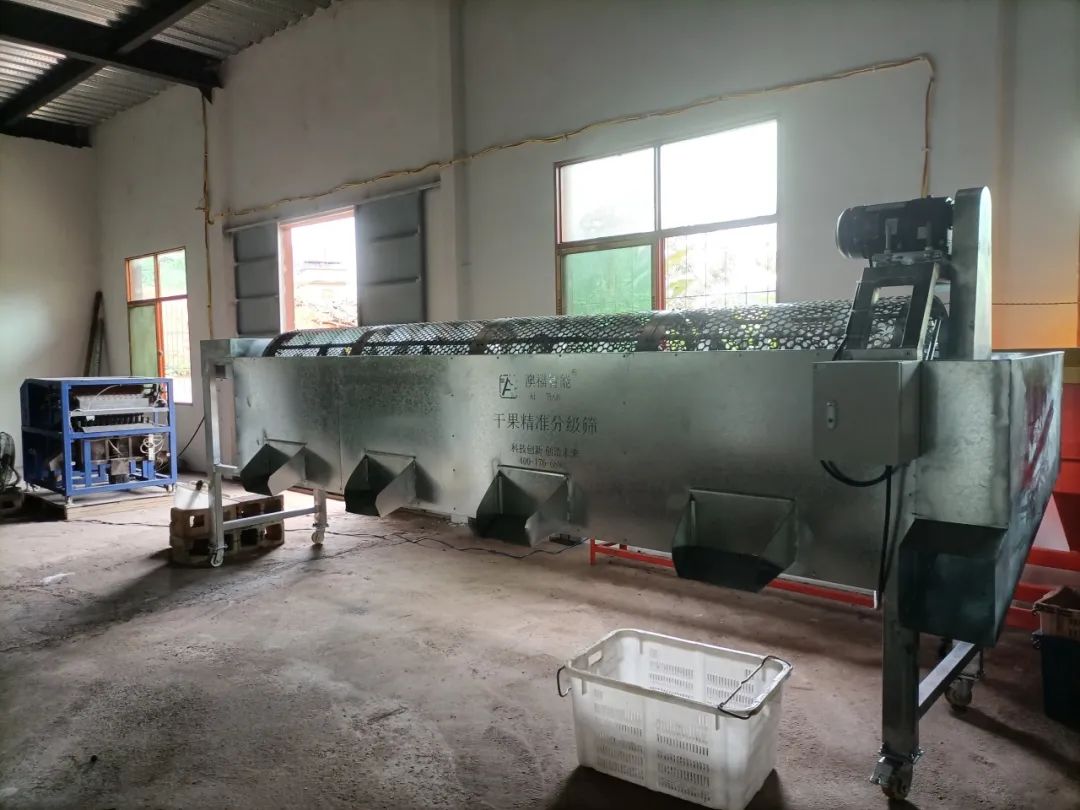
“Macadamia nuts roasted in their shells naturally develop that milky aroma! You don’t need any extra flavouring or additives at all.” Xiao Qin said with evident pride. He scoffed at the ingredient list on a certain snack brand’s macadamia products. Before the 1,000-plus macadamia trees reach full bearing, the dry-roasting workflow and quality control have at least found a workable path.
IV. Rediscovering Place
The exhibition Citizens’ Participation in Biodiversity Conservation at the Xishuangbanna Tropical Botanical Garden, Chinese Academy of Sciences, struck him deeply, and field visits to Jinuo Mountain with the Farmer Seed Network gave him a more direct feel for his Jinuo neighbours’ traditional ecological culture. So it turns out that coming home is not just about bringing new resources and experience back to one’s hometown—it is also a process of rediscovering local knowledge.
If more young people like Xiao Qin come home, carrying ecological principles, exploring new producer–consumer models, tending the land and community with care, and becoming dignified producers alongside their fellow villagers—surely the countryside of the future will look different?

▼
Good news!
Young returnee Xiao Qin is coming to Beijing on 7 October to hold a sharing session!
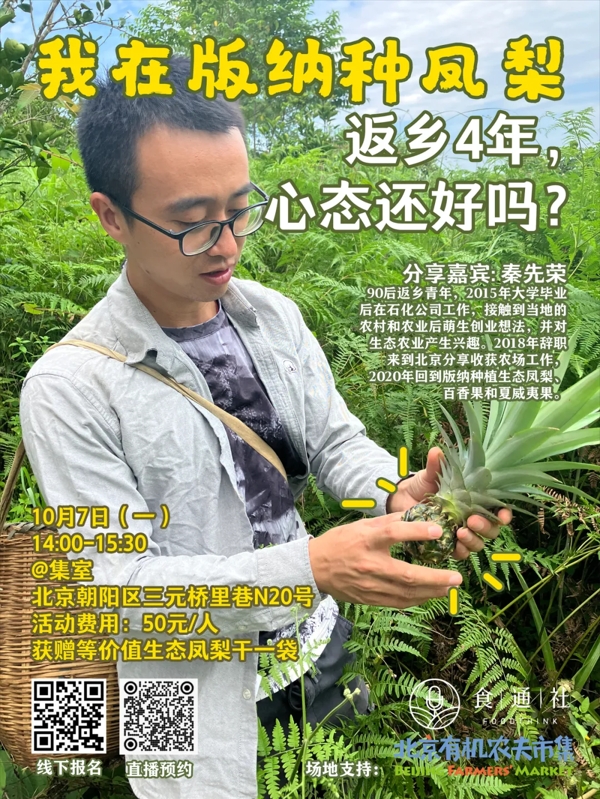
– How to Join –
Format
In person (Beijing) + live stream
Date
Monday, 7 October 2024
14:00-15:30
Venue
Beijing Organic Farmers’ Market Community Shop | Jishi (Lixiang)
In-person attendance
Limited to 15 people
Please complete the registration form
Once registered, add “Foodthink”
Pay the ¥50 per person event fee
Receive a bag of ecological dried pineapple of equivalent value
Tea and water will be provided on site—please bring your own cup
Online attendance
Book via the WeChat Channels account Foodthink
and join the Foodthink discussion group
Scan the QR code below to add Foodthink on WeChat
Please include the remark “Sharing Session” to join the event discussion group
Already in the Foodthink community? No need to add again.
▼

Unless otherwise noted, all images are courtesy of the interviewee.
Editor: Tianle
Coordination: Ze’en
Poster: Yiruan