
The finest Yunnan cuisine is no match for a Banna rainforest picnic
In September 2024, my friends and I also travelled to a tropical rainforest in Xishuangbanna. There, the embrace of nature did indeed help me feel revitalised. But what truly lingered in my memory was something far more precious.
I. A Rainforest Secret Realm?
Despite the twisting turns, the smooth surface allowed us to maintain a high speed. I sat there, swaying from side to side with my eyes squeezed shut, until a narrow miss with an oncoming vehicle jolted me awake. Outside, the horizon was now a sea of overlapping peaks. Checking my map, I realised we had arrived at Jino Mountain in Jinghong.
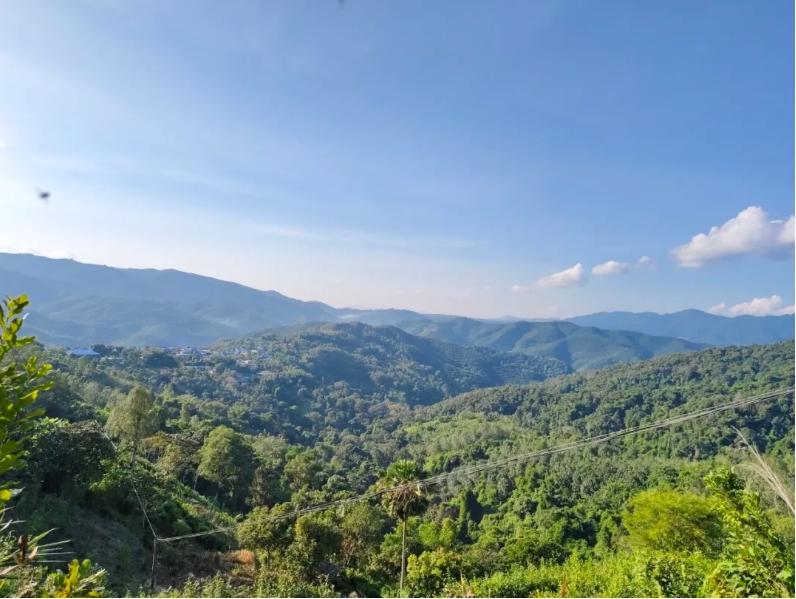
In ancient times, Jino Mountain was known as ‘Youle Mountain’. The name ‘Jino’ comes from the Jino people; as the last distinct minority group to be officially recognised in 1979, they have lived and thrived in these mountains for generations.
After countless bends in the road, we finally reached our destination: Mozhuo Village in Jino Township. Two Jino friends had been waiting for us, having already prepared the rubber boots and mosquito coils we would need for the trek.
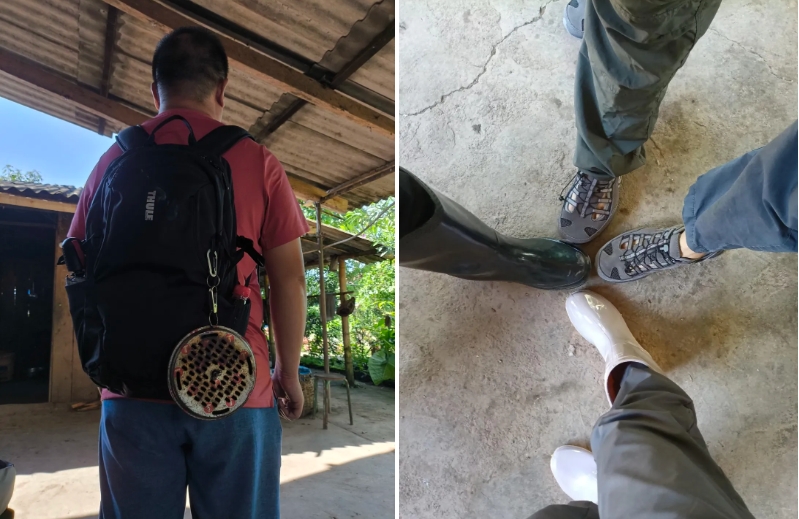
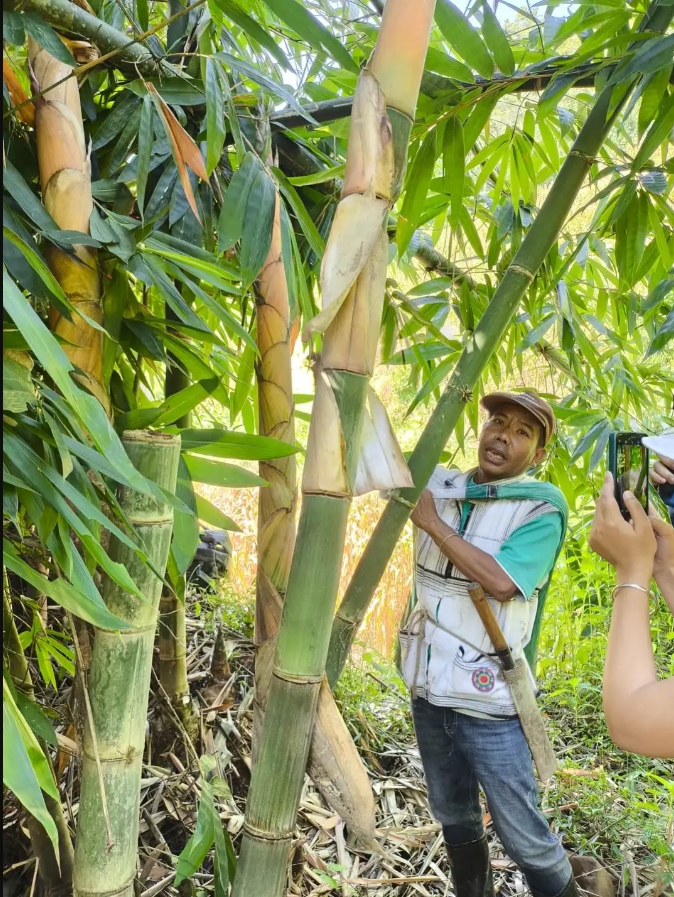
One of our guides, Saoqie, had dark skin, wore a baseball cap, and sported a white waistcoat made from traditional Jino ‘machete cloth’. With an iron knife tucked into his belt, he gave us a stern briefing on trekking precautions, looking for all the world like a soldier with a sidearm delivering a pre-battle mobilisation.
His intensity was infectious, and my heart began to race. When I heard we might encounter green pit vipers, I immediately braced myself, psychologically preparing for that imagined moment of stepping into a ‘rainforest secret realm’.
As it turned out, there were no moments of tension worth commemorating or gasping over. Around 11 am, under a scorching sun, we followed Saoqie into the rainforest, chatting and laughing all the way.
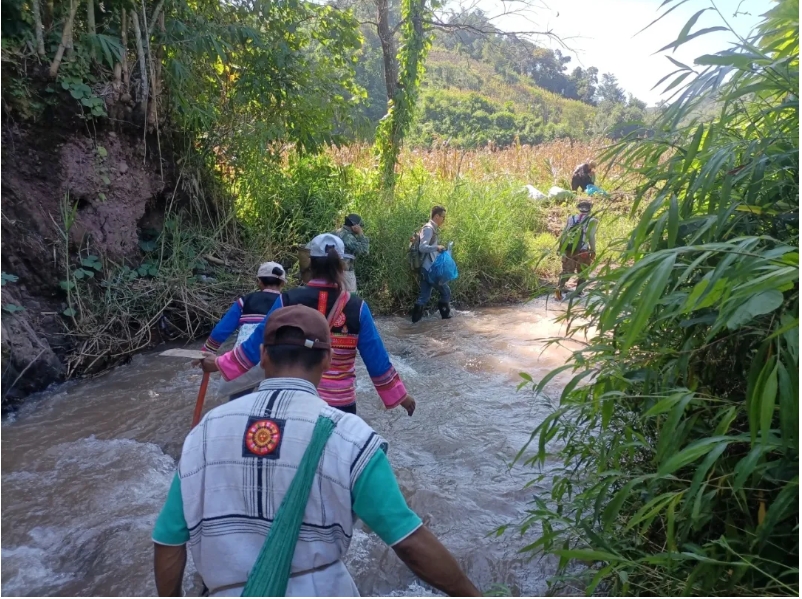
Before entering the rainforest, we passed through a vast rubber plantation, followed by farmland where Saoqie and other Jino villagers grew corn, rice, tomatoes, and pumpkins.
I have long felt an unchanging kinship with corn and cornfields. Whenever I return to my rural hometown in the Northeast, I always turn down a fork in the road lined on both sides by corn. Every time I reach that spot, I feel a rush of emotion and my breathing quickens; I know that beyond those fields, my family is waiting for me.
Consequently, as we crossed the cornfields of Jino Mountain, my heart gradually settled, filling with a sense of warmth. In that feeling, the boundary between the farmland and the rainforest ahead seemed to dissolve.
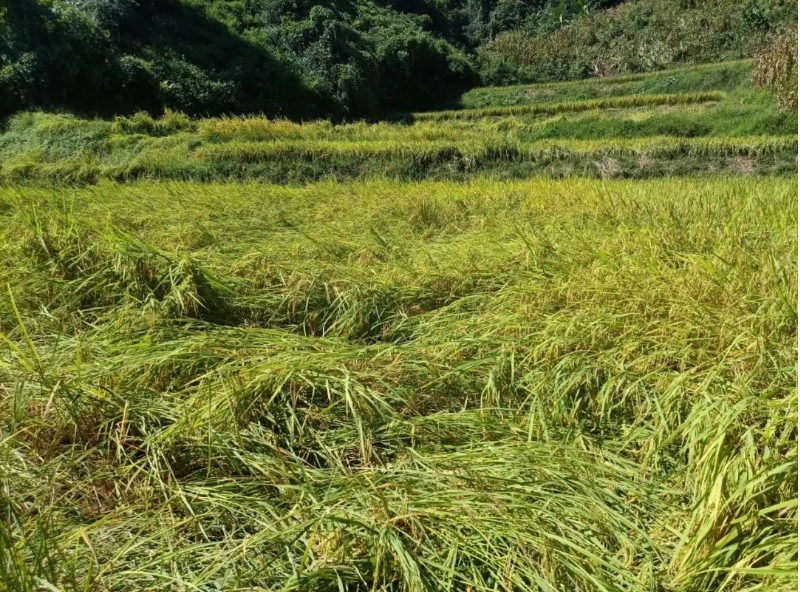
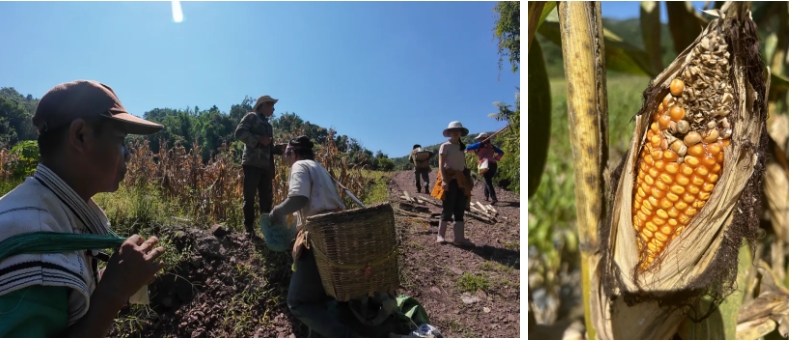
We staggered through streams and tremulously crossed log bridges, advancing slowly. Coming to a fork in the path, Saoqie pointed and said, “This route was developed by a travel agency; we aren’t taking it.”
Around 2021, ecotourism began to flourish on Jino Mountain. Currently, 24 trekking companies have been introduced across 10 villages, developing 22 different rainforest routes. The original paths were spontaneously explored by villagers participating in a ‘Tropical Rainforest Restoration Project’. Later, the government facilitated partnerships between the villagers and local Xishuangbanna travel agencies to help them attract customers, turning these paths into ‘rainforest crossing’ adventure treks. Many young people have since returned to their villages to work as guides.
We avoided that particular fork because it had been commercialised by a travel agency for the leisure of urban consumers. If Saoqie, acting as a guide, took tourists through there, the company would take a cut of the base price.
Our mutual friend, Xiao Qin, said with dissatisfaction, “It makes no sense. The land clearly belongs to them. Sometimes I think Saoqie and the others are just too soft-hearted.”
It was at that moment that my romanticised vision of the rainforest was dismantled.
The rainforest is not some hidden sanctuary. The Jinuo people have lived on this land for countless generations, interacting with the natural environment in a sustainable way—coexisting and thriving together. As society and the environment evolve, so too do the Jinuo people and the rainforests they call home, bringing both new hopes and new anxieties.
II.“Everything can be wrapped and roasted!”
Indeed, Sao Qie looked a good ten years younger than his actual age. The imposing aura he had projected in my mind before we set off had vanished completely, replaced by an image of someone witty, warm, and sunny.
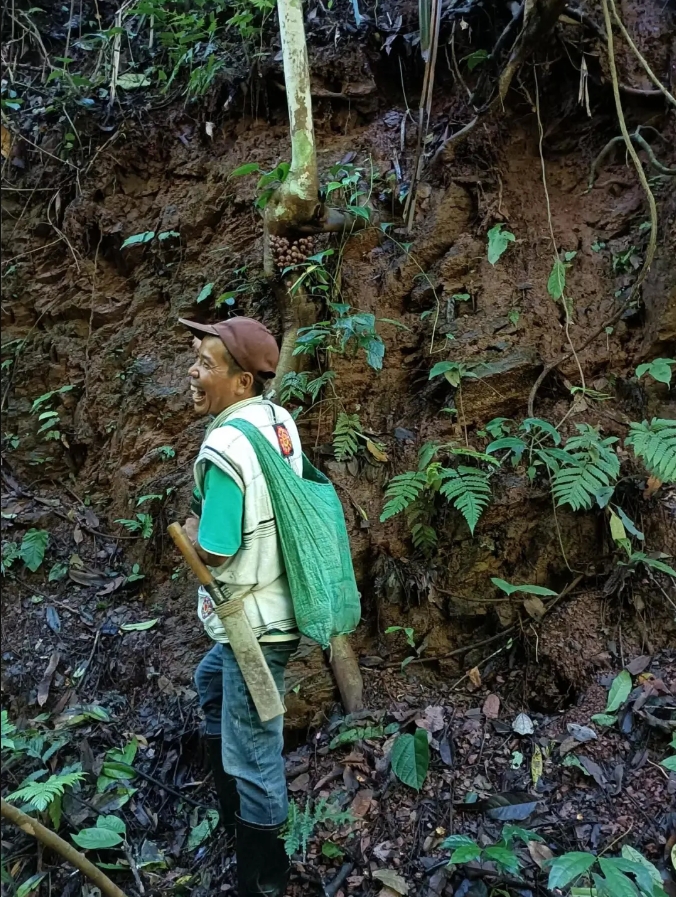
I pinched an ant and quickly popped it into my mouth, making sure to bite it dead before it could bite my tongue. A sour, salty flavour spread across my palate, giving me a more visceral sense of the intimate connection between the Jinuo way of life and this ecological homeland.
Throughout the long history prior to the 1950s, the Jinuo people developed an agricultural system based primarily on “slash-and-burn”. Villagers divide the land of their settlement into 13 plots for swidden agriculture: they fell trees during the dry season and burn the brush before the rains arrive, then sow seeds directly into the soil covered in ash. Each plot of forest is cultivated for only one year and then left fallow; the following year, they move to the next plot. This rotational cycle lasts 13 years.
Rotational farming ensures that the felled and burnt forest can recover in time, while firebreaks prevent large-scale wildfires. Using plant ash as fertiliser avoids the need for chemical alternatives. Through this process, the Jinuo people have established a symbiotic relationship with the mountain forests.
For Sao Qie, respecting and protecting nature is not just a philosophy, but a part of his lived experience and daily life. The Jinuo believe in animism—or as Sao Qie puts it, “the mountains have mountain gods, the waters have water gods, and the trees have tree gods”.
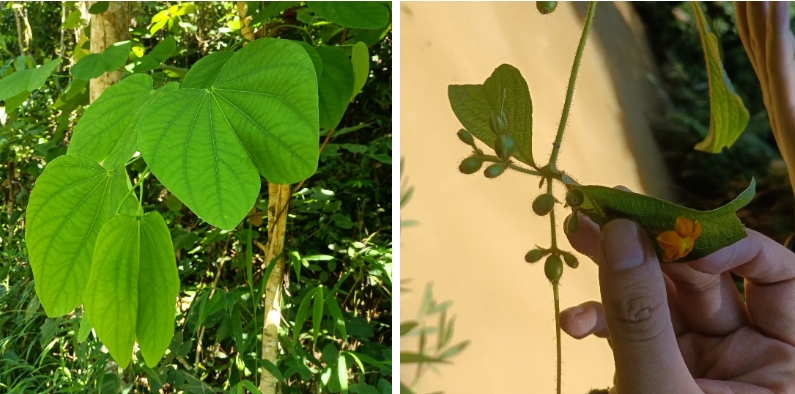
Along the way, Sao Qie introduced us to various plants with the familiarity of a connoisseur: Begonias for cooling the blood and stopping bleeding; *Tinospora sinensis* for dispersing wind and draining dampness; Figs and *Gynura bicolor* for moistening the lungs and relieving coughs; Amomum villosum for treating stomach ailments; and the well-known *Isatis root*, among others.
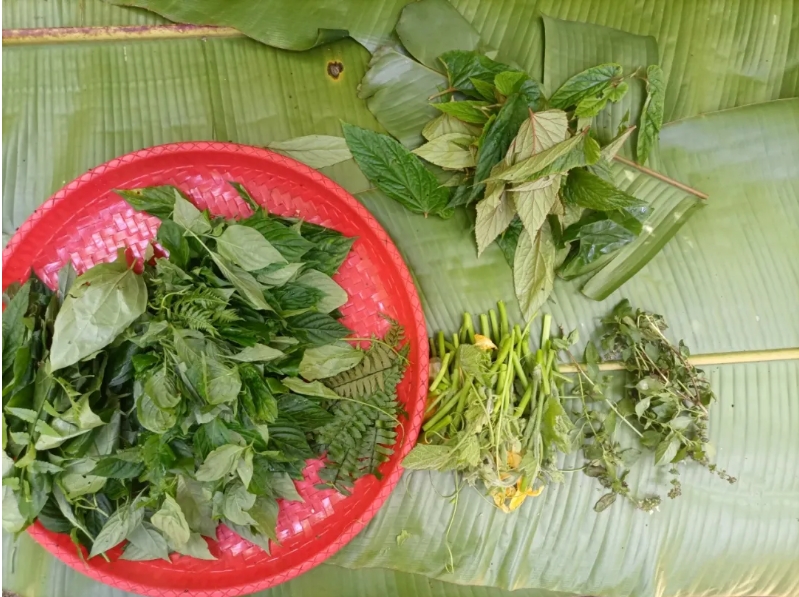
At noon, we finally reached a hut in the rainforest (which the Jinuo call a “Senbulu”). Sao Qie’s family had already arrived and begun lighting the fire to cook. By now, I was drenched in sweat, practically steaming in the sunlight. Eager to prove that I wasn’t entirely useless and clueless about the land, I immediately threw myself into preparing the ingredients for the picnic.
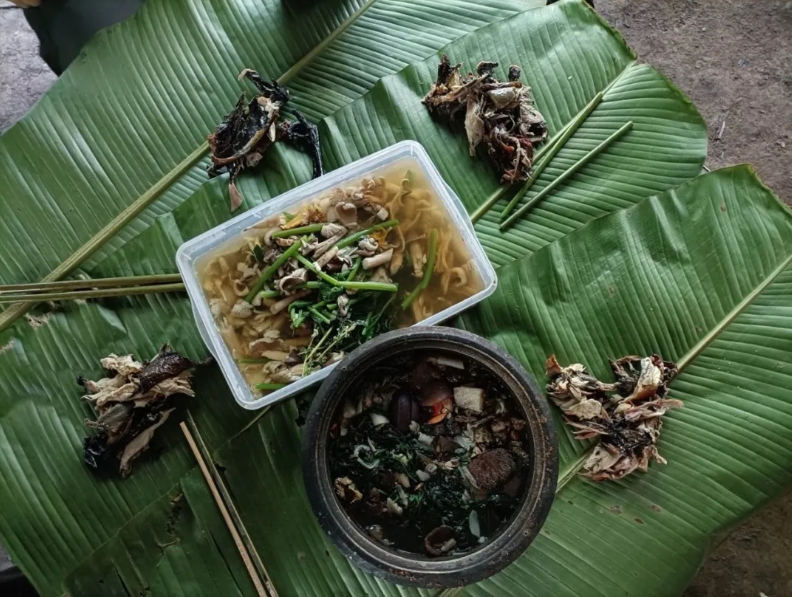
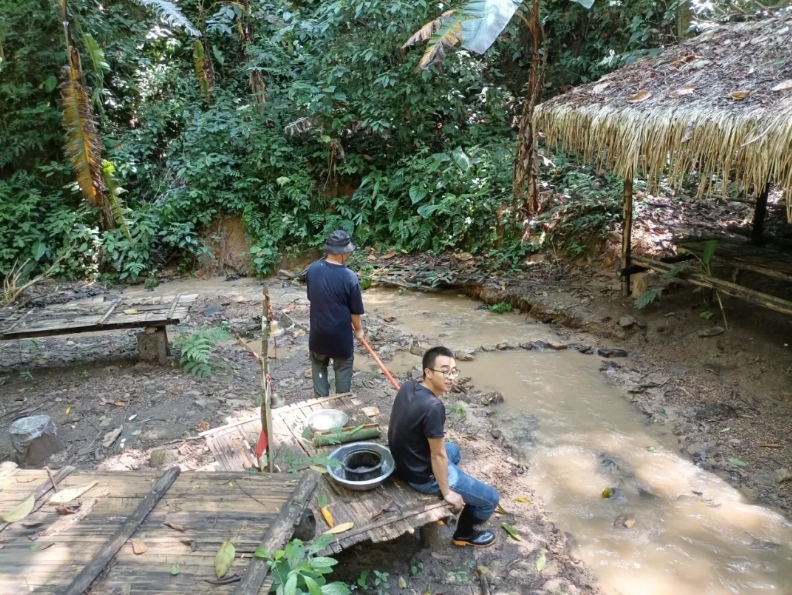
For the Jinuo, hunting and gathering were once vital sources of food. Sao Qie’s mantra is: in the rainforest, everything can be wrapped and roasted! “Wrap-and-roast” involves using freshly picked banana leaves to wrap food before placing it over the fire—dishes include wrapped pork, wrapped aubergine, and wrapped small fish. For this picnic, besides the wild greens gathered along the way, we had to catch the rest ourselves from the stream.
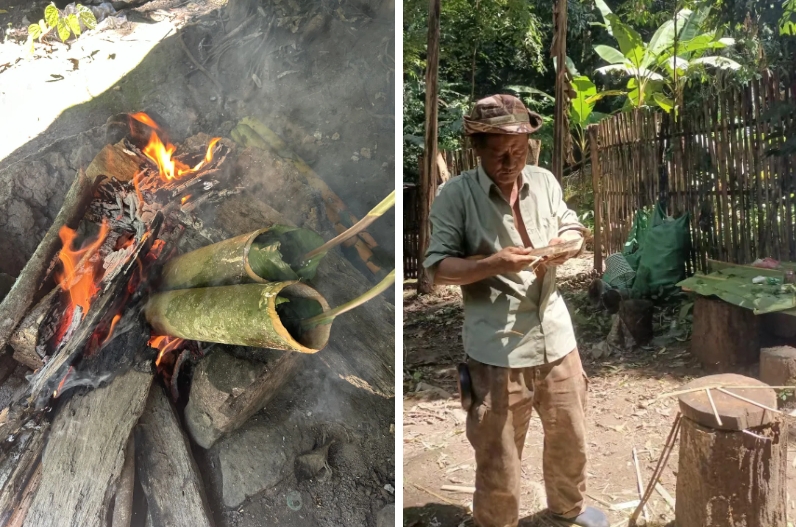
Led by Sao Qie, we braced ourselves and set to work.
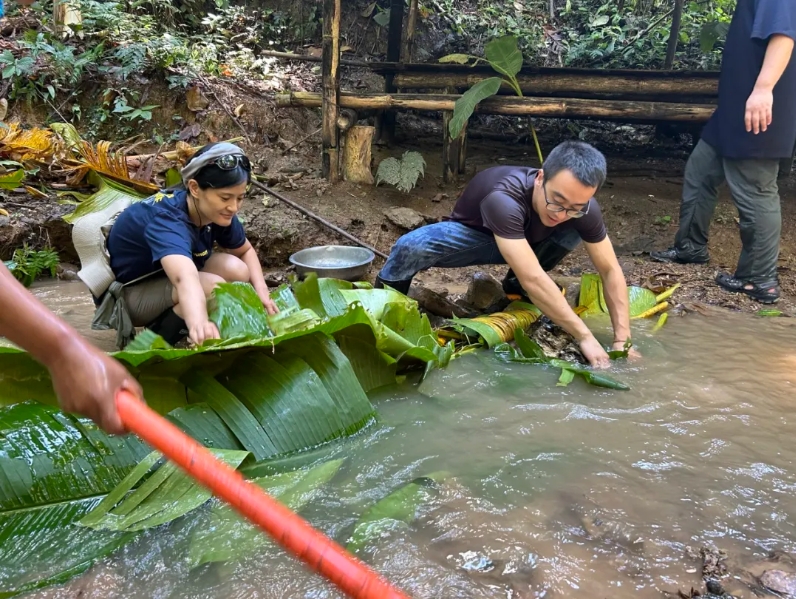
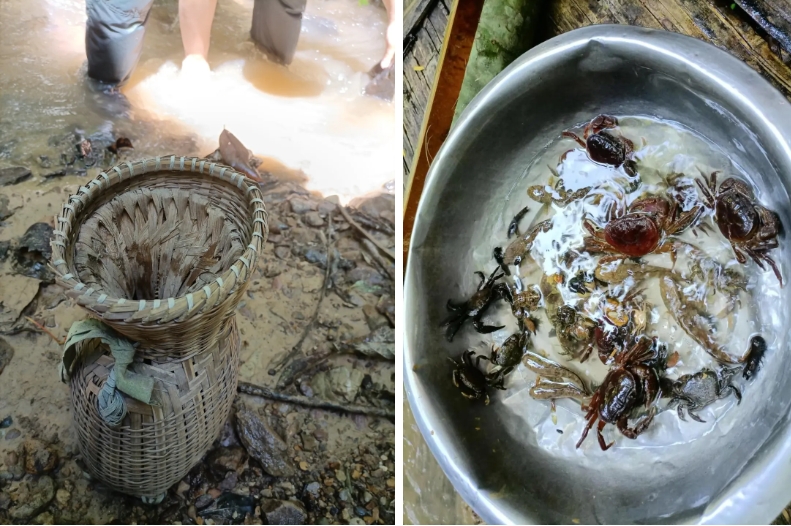
First, we used mud, banana leaves, and stones to create a barrier, diverting the flow of the stream. Armed with iron basins, we continuously scooped water out from the shallower side. This exposed the red-tail fish, water centipedes, crabs, and frogs at the bottom, allowing us to catch them by hand! Sao Qie reminded us that once the fishing was done, we must clear the barriers immediately to restore the stream to its natural state.
Given our efficiency, we would certainly have starved to death in this rainforest if not for Sao Qie and our Jinuo friends. Embracing the spirit that “any bit of meat is still meat”, I struggled to catch a few scorpions and water centipedes. The moment I actually caught them, I was a bit stunned, but I firmly stuffed them into the fish basket nonetheless.
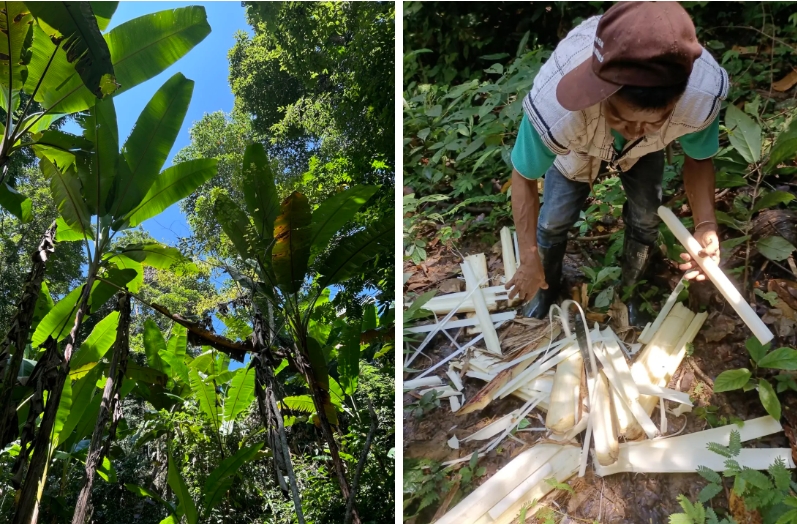
While we were happily “scouring” the stream, Sao Qie was already on the bank chopping down a wild banana tree. To our Jino friends, it is a plant where “every part is a treasure”. As mentioned earlier, the leaves can be used to wrap food for roasting; during an outdoor feast, they also serve as tablecloths; the white tender core of the stem tastes astringent but is excellent for quenching thirst; and the banana blossom can be stir-fried with minced meat.
Before we had even caught our breath, a towering banana tree had been completely “dismantled” for the purposes described above, leaving me in silent admiration of the survival wisdom of the Jino people.
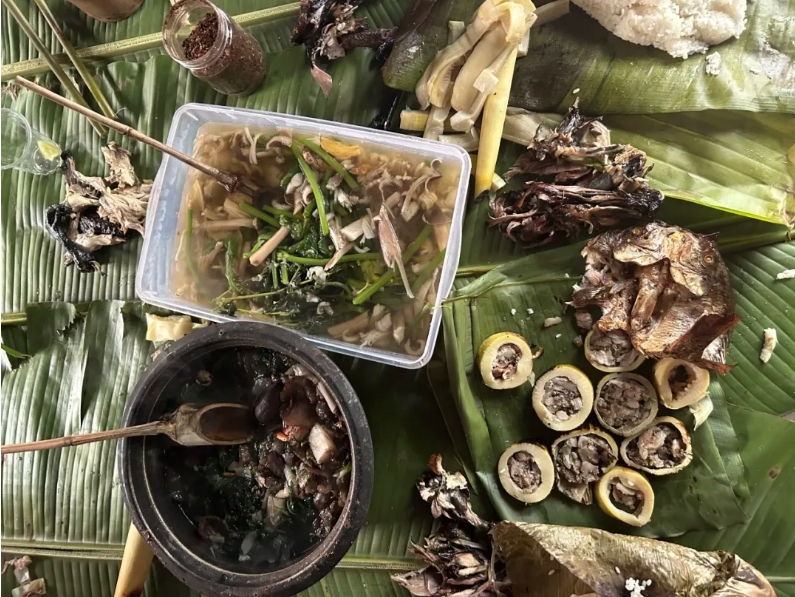
After a long period of bustle, our wild feast was finally complete. We first tried the roasted pork, which everyone praised highly, followed by meat wrapped in bamboo shoots and a fresh river fish soup—both equally delicious!
Sao Qie smiled and asked, “Do you know the secret to why our cooking is so tasty?” We all looked at him with confusion. “It’s because we wear you out first!” he exclaimed, followed by his characteristic hearty laugh, and we all joined in.
The meal was truly satisfying, and our Jino friends sang a drinking song for us. I felt a genuine, heartfelt joy in the music—an intuition that was later confirmed during my conversation with Sao Qie.
Times changed; by the 1980s, the Jino mountains gave way to the cultivation of cash crops such as rubber, cardamom, and tea. Now, rainforest trekking has become the new trend, yet few people care how the lives of the Jino people have changed through these successive waves of popularity.
Nowadays, the Jino people rarely go hunting and gathering in the mountains. Home-grown vegetables and livestock meet some of their food needs, while the rest is bought from the market. But at least during the years Sao Qie grew up, wild cooking remained one of their primary ways of life.
Sao Qie mentioned that when leading trekking tours, they must strictly follow the itinerary set by the travel agency, and tourists do not gather their own ingredients. He was happy that we had the chance to understand their traditions; perhaps he was reminiscing about the past through this feast himself.
III. Farewell, Sao Qie! Farewell, Rainforest!
Sao Qie has his worries, too. He is saddened by the weakening cultural identity of the younger Jino generation and anxious that he lacks sufficient knowledge to answer all the tourists’ questions. Even so, he loves his work as a guide; he hopes to meet people from all over the world and share with them every leaf and tree of the Banna rainforest.
That evening, Sao Qie shared a favourite Jino ancient song with me. Accompanied by ethereal drumming, the song spoke of earthly love:
Thinking and thinking, so much helplessness floods out
Flooding into my heart, the sorrow cuts to the bone
Deep in my heart, I only long for
A girl as bright as a sunny day
From the first moment we met
You and I felt a mutual attraction, love at first sight
Deeply drawn to one another
…
Many years later, when heaven lets my body return to the earth
The heart that loves you will never die
It will be buried in the soil, longing for you
Perhaps it is not only our narrow imagination of the rainforest that we should cast off, but also the way we imagine the Jino people. The rainforest is not a static “pristine” entity, nor are the Jino people; they continue to evolve through real history and daily life. Authentic Jino culture is hidden within the meanings and emotions of people’s everyday lives.
Editor: Ze En