Chasing Market Winds on a Five-Mu Field: A Shaanxi Farmer’s 30 Years

One of the most famous labels of my hometown, Liquan, is apples; it has even been celebrated with the saying, “For apples in China, look to Shaanxi; for apples in Shaanxi, look to Liquan.” In the past, almost every farming household there grew apples, and also grew other fruits such as peaches and pears as a supplement, but apples were the undisputed star. From the 1990s onward, our family grew apples too, and made money from them.
More than thirty years have passed. The fruit trees from those days have grown old, apples are no longer as profitable as they once were, and my father kept agonising over whether to grow grain or fruit trees. On our family’s five mu of land, he shifted from grain to fruit trees, then back to grain, and then to fruit trees again. The changes in what is planted on the land are changes in farmers’ lives, in their fates, and in the times.
Apples Made Liquan Rich
The first variety we grew was Qin Guan. In the 1950s, Qin Guan was developed through crossbreeding and selection at Northwest A&F University. As it could withstand cold and drought and was easy to manage, it was once widely grown in the Liquan area.
When Liquan apples were at their peak, that is, in the early 1990s, my father planted apples on the four mu of private plot closest to our home. Those were the first apple trees in our village, and the fruit they bore later became the earliest batch of apples our village produced. In 1993, the first year our family’s apple trees properly came into fruit, when it came to picking apples, villagers and neighbours all came to help, and the orchard was unusually lively, as if a family wedding or funeral were taking place.
In that year, our family harvested more than 4,000 jin of apples. At a little over 80 fen a jin, they ultimately sold for more than 3,200 yuan. It was the first time our family had ever earned that much. When the buyer handed my parents a thick wad of cash, I could see clearly that they were at a loss; I knew it was due to the pleasant surprise.
At that time, our family’s savings were less than 1,000 yuan. After the money from the first year’s apple sales came in, my parents were both delighted and worried. With so much money, they felt uneasy wherever they kept it. They kept moving it, hiding it in several places, but still could not put their minds at ease. Fortunately, the cashier at the village committee, who kept the accounts, could help villagers make deposits; in the end, my father took the money over, and only then was a difficult problem solved.
It can be said that for a long time, many people in Liquan saw their finances improve thanks to Qin Guan. Later, Fuji appeared. In both taste and appearance, Qin Guan was far behind Fuji, so everyone basically switched to growing Fuji. Today, the Qin Guan variety has become something like a dinosaur fossil.
Uprooting Trees and Growing Grain
On our family’s land, there are now more than 80 Red Fuji apple trees; the rest of the land is mainly used for growing grain.
These apple trees were planted seven or eight years ago. After the first four years of growth, they have come to bear fruit steadily, and they are my parents’ pride and joy. Fruit trees cannot do without people. During those years when my parents were in Xi’an helping me look after the children, every weekend my parents would make use of the two full days to rush back to Liquan and work in the apple orchard. Squeezing in work whenever they could, they did not miss a single task in the orchard.
When I went home during the May holiday this year, I caught my parents in the middle of fruit bagging. As it neared noon, the sun was fierce and the orchard was extremely hot and muggy, but they were still deeply absorbed in the work. Each had a lighted incense stick in hand and a stack of thin plastic bags hanging in front of them. They moved through the orchard, searching among the branches for apples the size of marbles, and each time they found one, they deftly slipped a bag over it and sealed it with the incense.
“This year is not bad; we can bag 5,000 apples, which counts as a bumper year.” Fruit bagging is one of the most important techniques in cultivating apples. In recent years, the family’s extremely limited income has come mostly from these apples. With the yield at stake, they dare not be careless. Every year when this time comes, they spend about ten days bagging the apples tree after tree. By the end of a day, each of them had to put on two or three hundred bags. In the past, our family’s fruit bagging period could last just over a month, because then we had two or three hundred trees.
As spring turned to summer in 2019, our area experienced a severe hailstorm. At the time, the apple trees were in the fruit-setting stage, and the fruit was severely damaged. By the autumn harvest that year, apple prices had hit rock bottom. By then, Liquan’s Red Fuji apples had already fallen behind; compared with the famous Luchuan and Baishui apples from our major apple-producing province, they were simply not on the same level. More importantly, these fruit trees had been growing for thirty years, and all of them were old trees, plagued with apple canker, no longer able to bear more or better apples.
My father was thoroughly disillusioned with growing apples. That winter, he uprooted all of these apple trees and began growing grain on this land. Like my father, many people in the village also chose this approach: uprooting trees and growing grain.
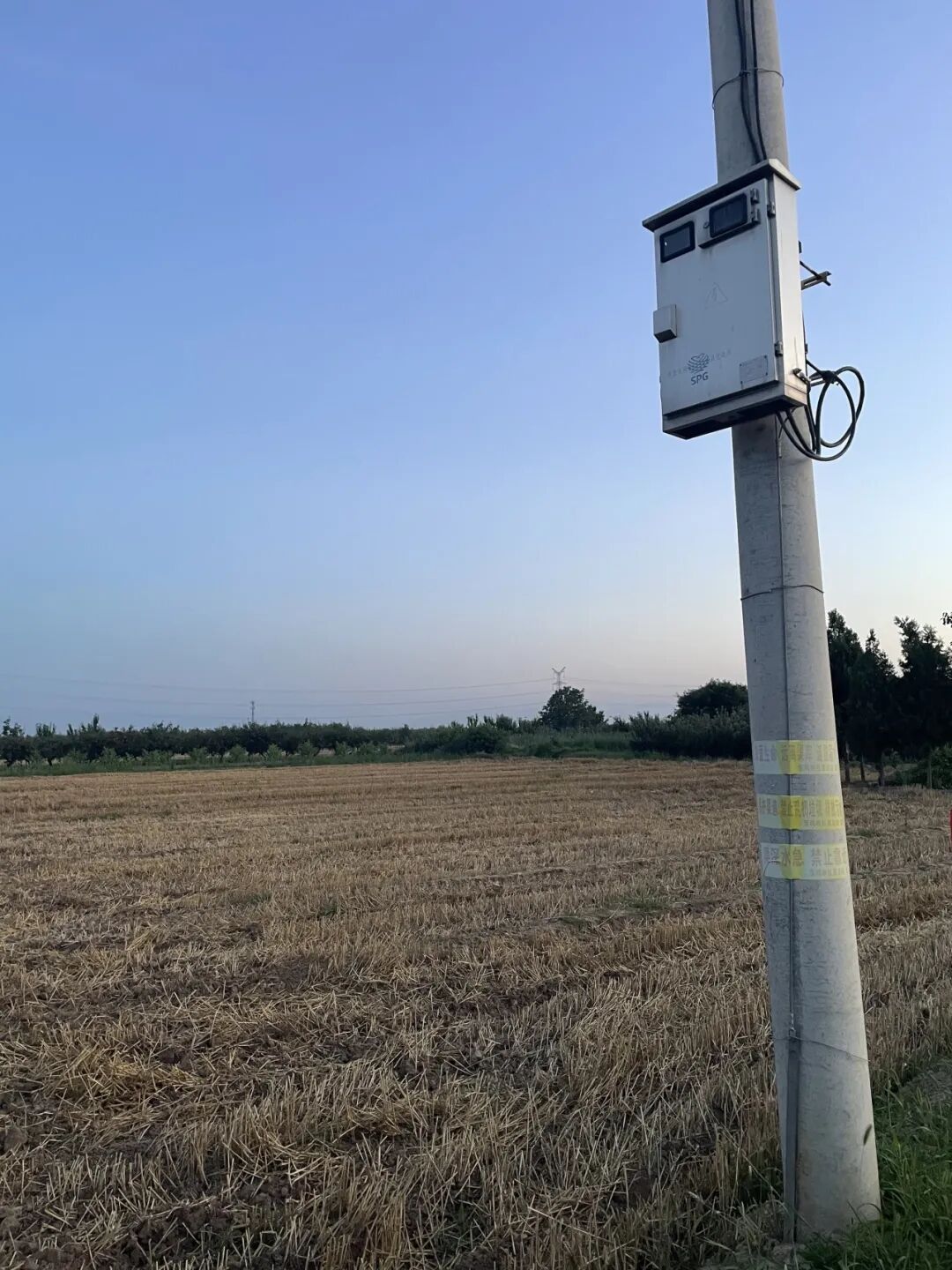
◉ Land converted to grain.
Planting Fruit Trees Again
Grain is grown on a “two crops a year” cycle (note: this is Shaanxi dialect; locally the usual system is two crops in three years): wheat is sown in autumn, harvested in June of the following year, then maize is sown. The maize grows until it is harvested in autumn, after which wheat is sown again, and so the cycle continues. Compared with growing apples, growing grain requires less worry, less time, and less effort. Once the seeds are in the ground, apart from a few pesticide applications during the season and any necessary irrigation, there is hardly any need for anyone to go into the field and attend to anything. When the wheat and maize are ripe, combine harvesters come to the village to help with the harvest, and there is no heavy work to speak of.
So after switching to grain crops, many people in the village chose to go out for work. During the busy farming season, they would come back, finish the work, and then go out again. My father had been in this state for the previous two years. But he was getting old, after all; after working for a few years, employers no longer dared let him carry on. So he became a full-time farmer again and began to give his full attention to farming.
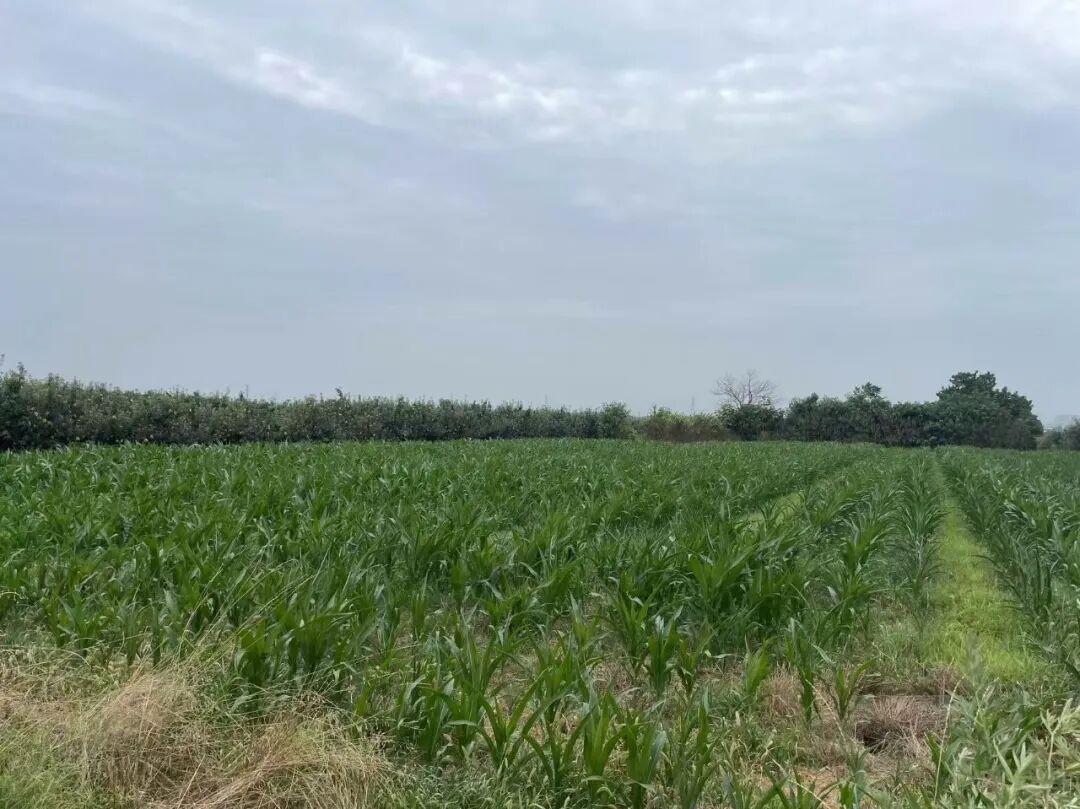
◉ The maize field that needs no fuss.
Farming did not require him to stay in the fields all day, and with more spare time, he often frequented mahjong rooms. Life was freer, but when the harvest season came, his face darkened. Growing grain was indeed much less demanding, but it was also a hard fact that it did not bring in money.
My father began to envy those still tending fruit trees. He said, “Growing fruit is hard enough, but by the end of the year, money does come in after all; in a year when prices are good, one can earn even more. Growing wheat and maize is fine for our own eating. As for making money, don’t even think about it!”
He had done the sums carefully. Over the past few years, the family had been growing wheat and maize. After deducting essential outgoings such as seeds, chemical fertiliser, pesticide, machinery for ploughing, sowing and harvesting, and irrigation, the net annual income from one mu of land was only around 1,400 yuan, and that was still under favourable weather conditions; if drought or waterlogging struck, even this much could not be earned. Even at its worst, the income from fruit trees was still five or six thousand yuan per mu; if a high-price year came, an income of over 10,000 yuan per mu was quite normal.
So, being a man of action, he could not wait; he joined forces with my mother and planted fruit-tree seedlings in these four mu of land again. But this time it was not apples, but peaches and plums. In recent years, peaches and plums have become sought-after scarce goods. When the market is good, a jin sold at the buying point can fetch a high price of 3–4 yuan. Taking peaches alone, there are so many newly introduced varieties that one is dazzled; all sorts of yellow peaches and flat peaches, all of excellent quality, so prices are naturally very high.
He had a further consideration: aside from the good prices, the growing cycle for peaches and plums was shorter than for apples. Apples had a longer growing cycle and were not harvested until September or October; peaches and plums could be harvested in May or June. Although they did not keep well and had to be sold quickly, they were comparatively less troublesome than apples.
As for returning to fruit trees, my father and I, two generations apart, actually did not think quite the same. Everyone who grows fruit knows that, if the fruit is to sell well in the future, variety is key. It was much like how our family back then had relied on the brief variety premium of Qin Guan and Red Fuji. For this planting of peaches and plums, I specially contacted a skilled fruit-tree grower. He had connections with fruit-tree experts at the Shaanxi Yangling Academy of Agricultural Sciences. Every time a new variety came out, his orchard was one of the earliest to produce it on a large scale. I asked him to keep aside for us some peach-tree branches suitable for grafting. But my father thought that person’s place was too far and did not want to go and get the scion branches. In the end, like most people, he found a variety nearby, in a field belonging to a household in the neighbouring village.
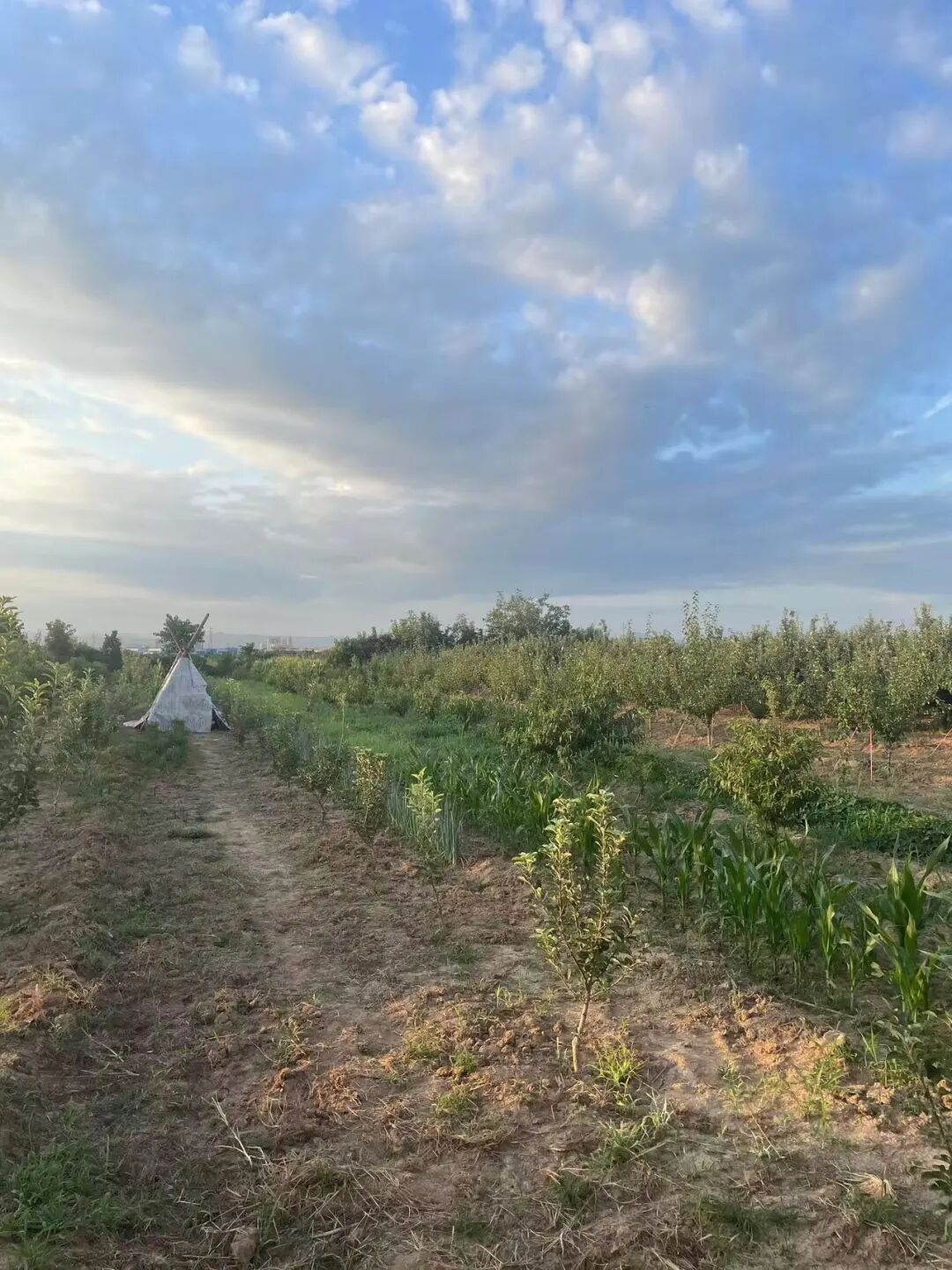
◉ Fruit trees planted among the grain.
Reaping Wheat by Hand
Planting fruit trees is no overnight job. When apples were grown before, fruit saplings were first planted in the wheat field; as the fruit trees grew up, the wheat gave way. This time it is the same: my father planted the saplings in the middle of the wheat field, and four rows of saplings divided the field into five sections.
At the Dragon Boat Festival in 2025, the wheat in the field had turned yellow. The saplings were not yet very tall, so they would not get in the way of the combine harvester. But a strip of land by the eastern edge was too narrow for the combine harvester to go in, so we had to reap the wheat by hand. My father, my mother, I, and my sister made up a temporary team. We took three sickles; three of us cut, and the fourth was responsible for tossing the sheaves of cut wheat into the field beside us, so that when the combine harvester came, the wheat could be harvested and threshed together with the rest.
In the first half of that year, most of Guanzhong suffered a severe drought. For more than two months, not a drop of rain fell from the sky, and the sun scorched the earth as if mad. Even though the villagers had given the fields two or three irrigations, the wheat still grew far below expectations; every plant looked as if it had dwarfism, with stalks at least a third shorter than in previous years. Everyone said the wheat crop would certainly be reduced. But the short stalks had one advantage: they were easier to cut, and that actually came in handy for us.
We had not been cutting for long before the sun grew fierce and the heat made our heads buzz. I was getting tired. I straightened up in the wheat and said, “If we had known we were reaping wheat today, we should have come over earlier to cut it while it was cool. It’s too hot and too sunny now; it’s really an ordeal.” My father said that in the morning the wheat was damp, so it certainly could not be cut; one had to wait until the sun had dried the wheat before it could be cut with the sickle.
This stretch of field was not very long, so we soon finished harvesting it. We cleared the area in front of the house and waited to dry the freshly threshed wheat.
We had only just cleared the ground when my father came back on an electric three-wheeler. The land was close to 5 mu in area, and in all six loads of wheat had been brought back. The cargo bed of the three-wheeler was full of pale yellow wheat grain, giving off the characteristic smell of grain. We unloaded the grain from the cargo bed, then used a push board, a wooden rake, and other tools to spread it thin and lay it out to dry in front of the door.
Many of the villagers came to help. This kind of help has now become a regular practice among the wheat growers in the village: they join forces, first harvesting for your family, then for mine, and finally for his family. From transporting the wheat out of the field to spreading it out in front of the house, and including the times when a thunderstorm comes and they rush together to harvest and dry the wheat, it is all done this way.
This year, the fruit trees we newly planted have also begun to put out branches and leaves, and they have begun to take on the basic shape of a fruit tree. The land available for growing wheat was a little less than last year. This year we planted only about 3 mu of land and harvested 800 jin of wheat. But because the season was better, we actually harvested 100 jin more than last year.
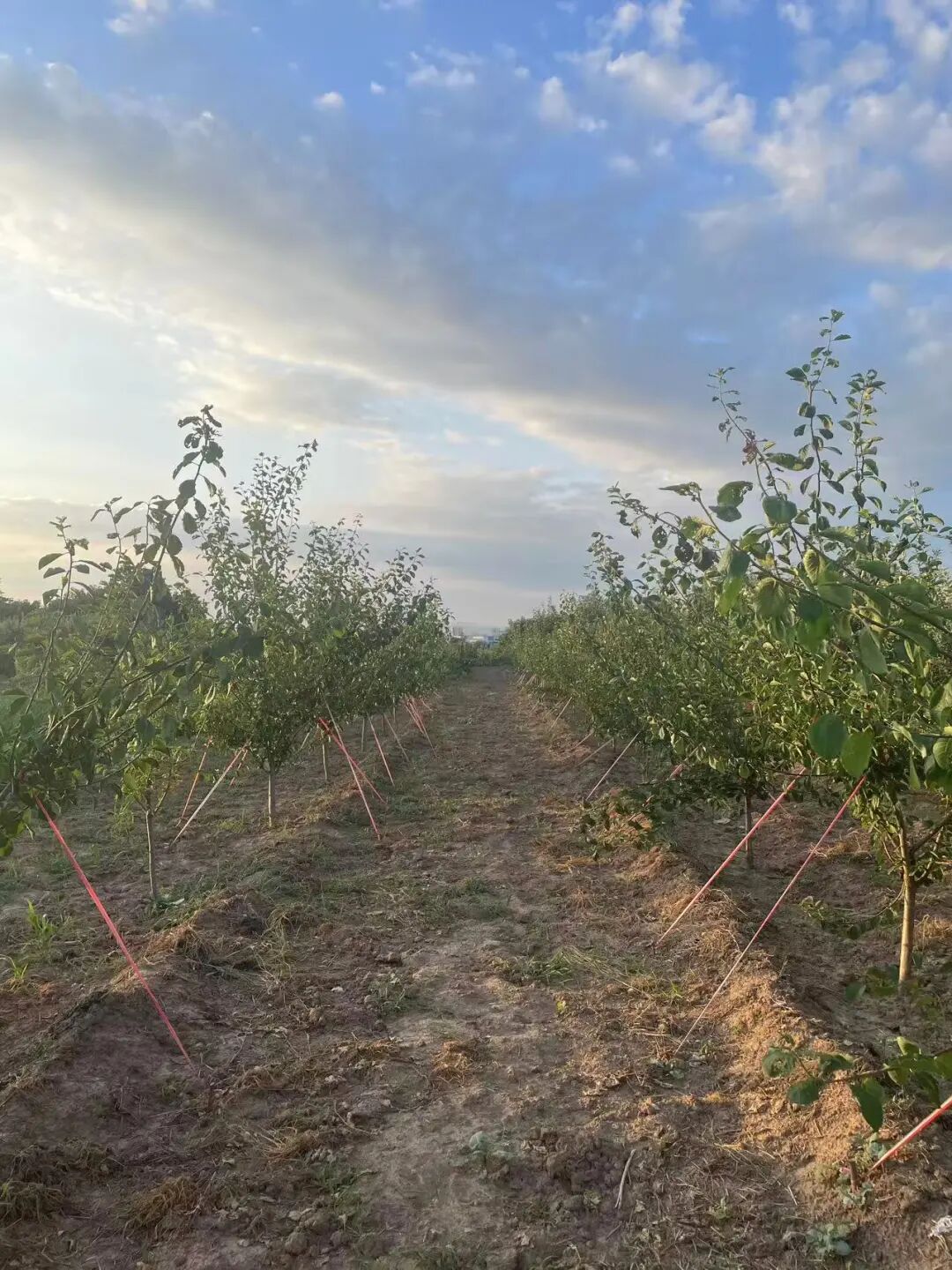
◉ The fruit trees planted back then have gradually grown larger.
Future Worries
By next year, the fruit trees ought to be bearing fruit. But who can guarantee the future of growing fruit? Even if peaches and plums sell well now, no one can say for certain what the market will look like in a few years, or even longer. Will they still be scarce then? Will they still bring in money?
Looking at these saplings hidden in the gaps of the wheat field, I could not help but tell my father about my worries. But he did not give it so much thought. Or rather, he did not want to think so far ahead; he just wanted to get the work in front of him done well.
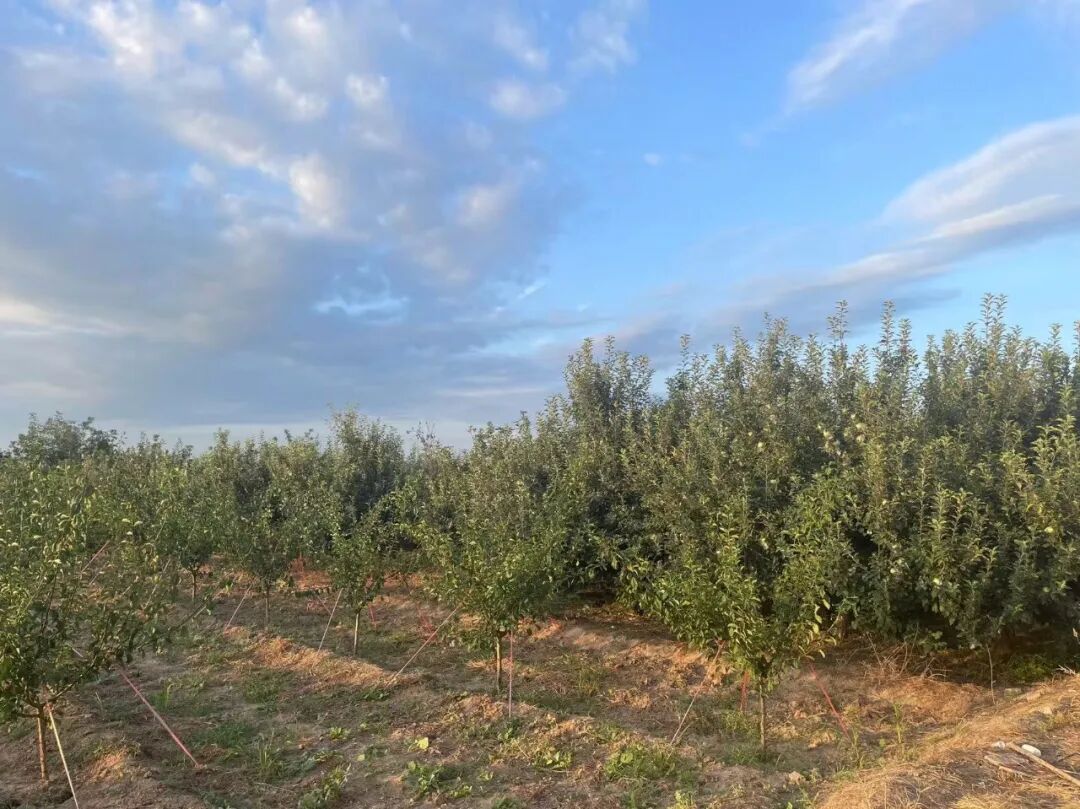
◉ The fruit trees have grown.
I have another worry. In the early 1990s, when my parents were young, they had strength to spare and could dream of future income and a better life. But now they are already close to seventy; how much enthusiasm and strength do they still have?
My classmate’s parents have been growing apples all these years. They have an orchard of several mu at home, and with the children all in the city, the old couple look after everything themselves. In previous years, when the apples were being picked, the old couple could manage on their own. But these past two years, his parents have had to call him home to help. He is busy with work; sometimes he can go back, and when he really cannot get away he tells his parents to hire help. But the old couple think the cost is too high and are always reluctant. As a result, one year, while picking fruit, his mother accidentally slipped down a fruit-picking ladder. Fortunately, it had just rained and the ground was soft, so she came to no serious harm; she only broke a bone and spent months nursing the injury. Later, he had to take time off and go back to help.
He has long been urging his parents to stop growing fruit, but they are unwilling. He also has a younger brother, over thirty and still unmarried. His parents have always been eager to earn more money, so that his chances at matchmaking might be a little better. Once the youngest son has taken a wife, perhaps they can stop growing apples and finally settle down and rest comfortably.
This is also a difficult problem for our family. Once cash crops such as fruit are planted, the orchard is like an enormous magnet, and older fruit growers are like tiny iron filings, firmly stuck to it. All year round, one has to be in the orchard, doing flower thinning, fruit thinning, weeding, loosening the soil, watering, fertilising, pesticide spraying, fruit picking, and pruning. Every one of them has to be attended to carefully, and every one has to be done with genuine physical effort; at present, none of these tasks has yet been truly mechanised; they are all physical labour. I started working in the orchard with my parents when I was a child, and after more than ten years the toil of it is still fresh in my memory. During just those few days of fruit picking, you lose a layer of skin. A full load of apples in a carrying basket weighs at least about 30 jin, and from beginning to end it has to change hands at least four times; none of picking the fruit, transporting it, or piling it up is easy.
And the cost of growing fruit is getting ever higher. If the fruit does not sell well, a loss is quite likely. Putting everything else aside, labour costs alone are staggering. Every year, when it comes to fruit bagging and fruit picking, fruit growers with somewhat larger orchards simply cannot manage it with their own family alone. The cost of hiring labour has been rising year on year, now at least 120 yuan a day. These are real, out-of-pocket expenses; some people spend 10,000 to 20,000 yuan on hired labour in a single year. Add all the other costs in and it is truly hard to imagine.
What the future will be like, no one can say for certain. There are now almost no young people to be seen in the village; they have all gone to the provincial capital or other places to make their way in the world. When this generation of parents has stepped off the historical stage, what fate will be in store for this land?
– This is Foodthink’s 833rd original article –
Foodthink
By
Liu Lei
Born in 1984, Liu Lei is from Liquan, Xianyang, Shaanxi. He has long resided in Xi’an and currently works for a manufacturing company in Xi’an. His work has appeared in print media such as “Shanghai Stories”, “Xi’an Daily”, and “Western Development”, as well as on official-account platforms such as “Wangyi Renjian”, “Yishitan”, and “Nanfang Zhoumo”.
All images in the article were provided by the author.
Editor: Xiaodan
Layout: Xiaoshu
Scan the QR code to send a tip and support original food knowledge
▼

▼
Click the image to read related articles.
▼
Click a keyword to open more article collections.
Seeds | Agritech | Policy | Fermentation | Nutrition | Fruit | Fisheries | Events | Recruitment | Takeaway | Market | Livestock | Food Talk | Sharing Session | Book Club | Harvest Festival | Smallholder Stories | Climate Change | Rural Development | Co-operative Economy | Urban Farmer | Food Safety | Digital Technology | Biodiversity | Pandemic and Food | False Solutions | Ecological Farming Internship Programme
Beijing | Hebei | Shanghai | Guangdong | Guangxi | Henan | Sichuan | Jiangxi | Xinjiang | Shaanxi | Hong Kong | Chongqing | Zhejiang | Jiangsu | Guizhou | Taiwan | Inner Mongolia | Philippines | Canada | Russia | Mexico | Italy | United States | United Kingdom | Germany | Netherlands | Thailand | Sweden | Japan