In Memory of a Good Friend of Us All
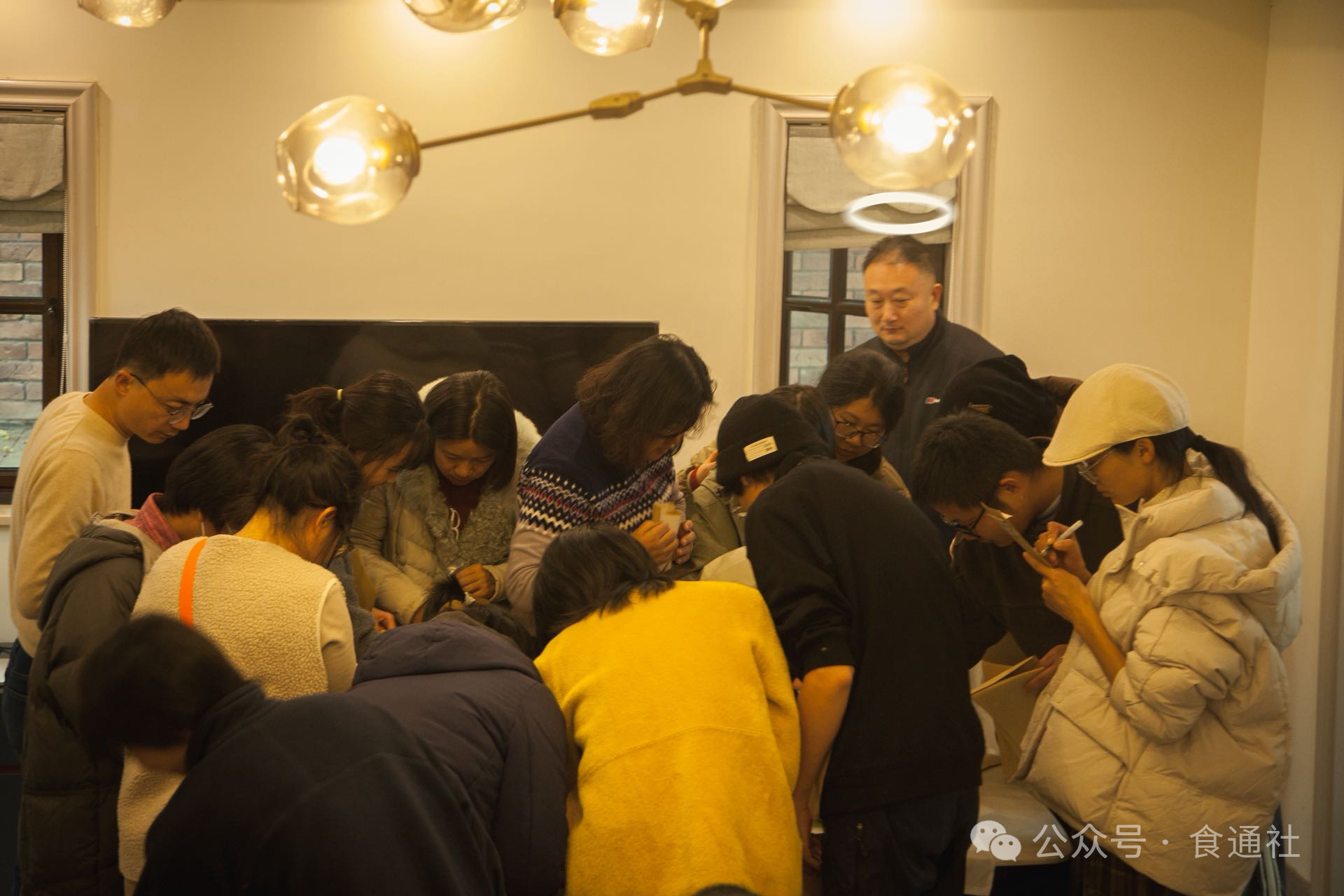
Whether Guan Qi was an introvert or an extrovert, his friends could not agree. Several had asked him to his face and received a different answer each time. After he passed away, when everyone got together, they discovered that this was a question that could never be settled. Thinking back on his signature sly, mischievous grin, you couldn’t help but hear his favourite crosstalk master Ma Sanli’s famous catchphrase: “Dou Ni Wan” (Just kidding you).
Perhaps the question itself was the foolish one. Guan Qi was not someone who liked to slap on labels, and he had no patience for black-and-white thinking. He was also a person who defied labelling – too many identities and qualities, some of them seemingly irreconcilable, were woven together in him. After he was gone, we found that explaining to a stranger, or even someone who only knew him slightly, what kind of person Guan Qi really was, was no easy task. And when the question was why so many people who had been, seemingly, nothing more than work colleagues missed him so profoundly, it was even harder to put into a few sentences. In fact, the very act of searching for the right words might bring the speaker to tears all over again.
After Guan Qi passed, a friend sent us his Instagram account. It looked as though it had been registered years ago, and his bio read: In the countryside, seeking a stance of quiet self-possession. Whether those words meant discovering such a stance in others, or finding his own footing and purpose in life, he must have fulfilled that wish he once set for himself.

From the moment Foodthink was founded in 2017, Guan Qi felt like a member of our team in all but name. As a core member of the Farmer Seed Network, he was the one and only person we turned to on questions of seeds and agricultural biodiversity. Back in 2017, he wrote us two long pieces – A New Path for Seed Conservation: Breaking Free from Corporate Absorption, Rekindling Public Value (Part One) (Part Two) – explaining to readers why farmer seed systems matter and how we should safeguard and support the practices and rights of farmers who conserve and breed seeds. Over the years, he became increasingly involved in our online and in-person events as well.
A remarkable person, remarkable writing ▼
Should You Order Takeout in a Downpour? A Discussion
The New Seed Law Takes Effect: Can the Law Protect Farmers’ Breeding Rights?
Is the Loss of Food’s Flavour Starting with Seeds?
Small Seeds, Big Questions | Food Studies Academy Course Preview
Marvelous Seeds – See You Sunday
Under Commercial Hybrid Dominance, Why Do Farmers Still “Have Seeds”?
From the Dining Table: Rethinking Scientific Discourse in the Public Sphere
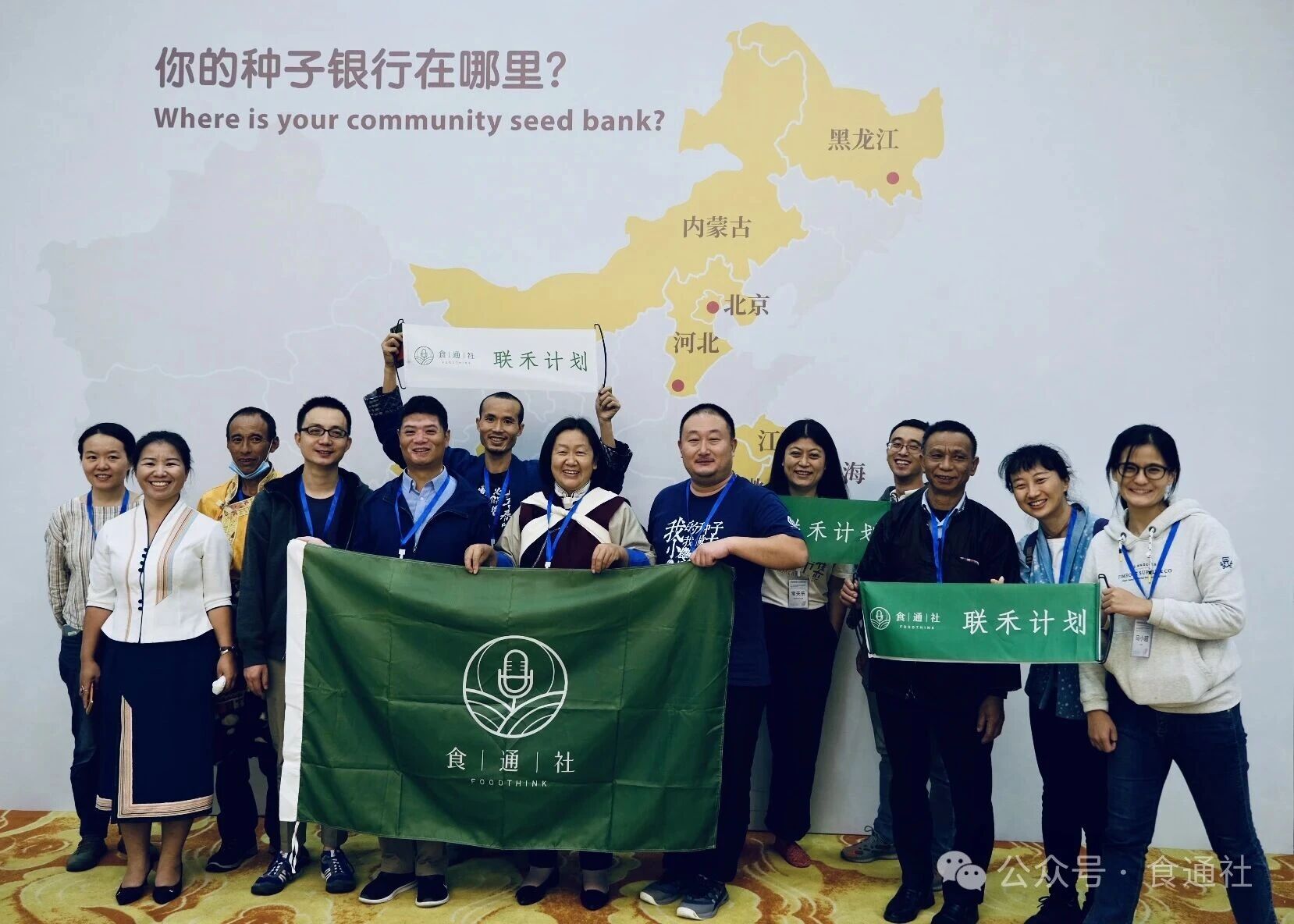
Foodthink’s team has grown from two or three people to a small group of nearly ten, and over the years close to twenty full-time colleagues have come and gone. Almost every one of them has had some degree of interaction with Guan Qi. Teacher Guan is probably the most-mentioned name in our editorial office. Between the various combinations of us going on trips together, and the different group chats we share with him, you could almost always spot him in one of the groups every single day.
Beyond proper work discussions, the chats were usually just food recommendations being passed back and forth. But what Guan Qi did most often was drop a scholarly reference into the group out of nowhere – typically a newly published or important English-language report or paper, or a new book recommendation, and sometimes a digital copy of a book. It got to the point where we joked that he was everyone’s study monitor, and we’d occasionally ask each other: Have you seen the paper Teacher Guan posted?
If you had a specific question to ask Teacher Guan, he would always patiently give a precise and concise answer, then thoughtfully attach the relevant research. If even he didn’t know the answer, most likely a few days later he’d send a link or a paper, sharing his latest findings.
Then there were questions that genuinely no one had researched yet. Teacher Guan would say, “Well, why don’t we look into it together?” And so we got It Turns Out Chinese Smallholder Farmers Have Been Bearing So Much in the Fight Against Climate Change. At the time, a colleague worried the data wasn’t authoritative enough. He pulled out a book by Philip Huang, saying that Philip Huang had also gathered data using a similar method. A year later, the same research approach was scaled up globally, and we had Latest Research: Two Trillion Yuan a Year – the World’s Smallholder Farmers Are the Unnamed Heroes of Climate Action. And Guan Qi, too, was one of those “unsung heroes” behind these studies and the grassroots seed-conservation work.
These are all the visible, public, project-report-worthy aspects of his work. But for all the friends who miss him so deeply, it was those informal exchanges and interactions that made Guan Qi who he was.
For instance, almost everyone’s most vivid memory of Guan Qi is how much he loved to eat and drink. If you went on a trip or travel with him, there was a good chance he’d drag you along to explore new eateries and try craft beer, and the whole experience would spawn countless jokes, quotable lines, original memes, and reaction stickers that circulated whether he was present or not.
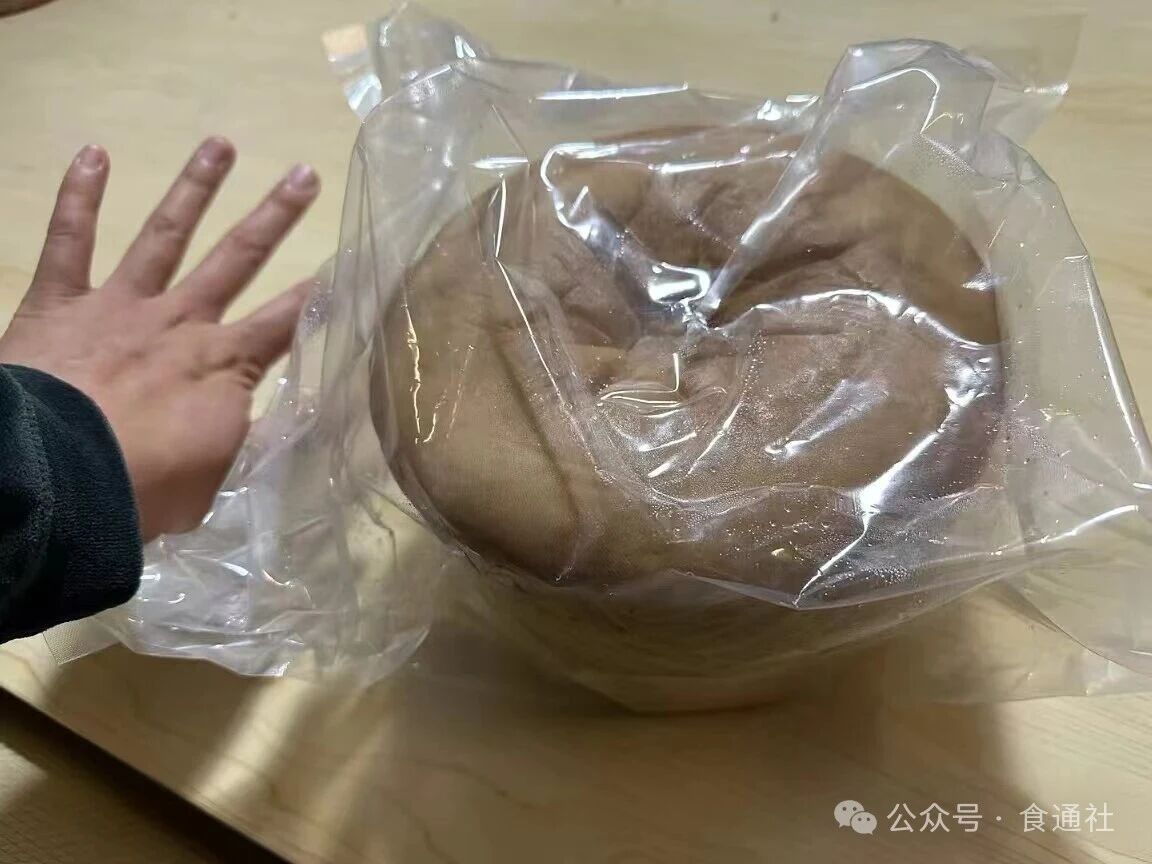
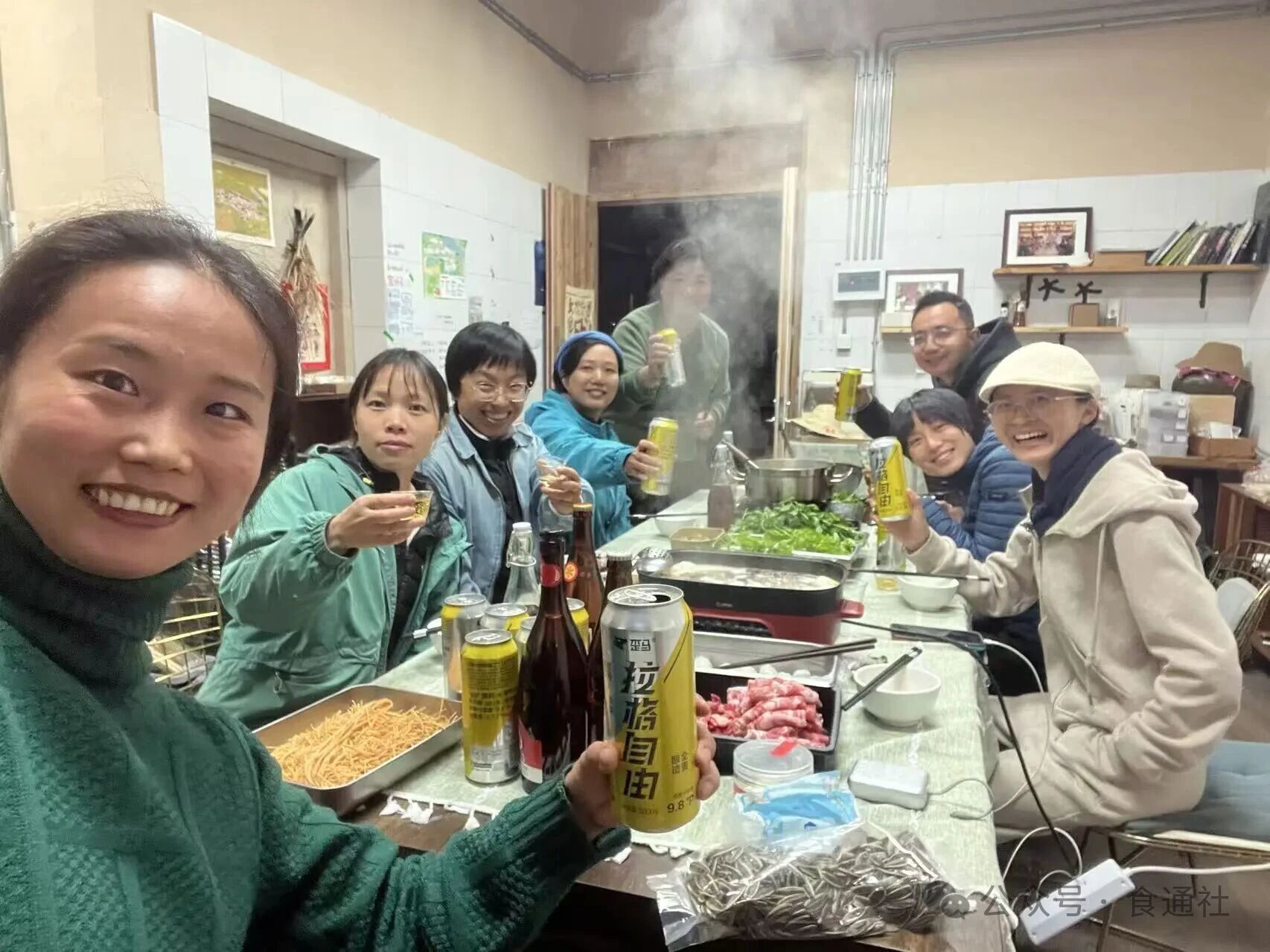
Even when we weren’t on the road with him that often, our editorial office would receive a few care packages from him every year, always filled with highly local ingredients that opened our eyes and delighted our taste buds – a real treat for us, tucked away in Beijing, this culinary wasteland. He wasn’t just sharing good food this way; he was also doing his best to support the workshops and farming friends who still make the dishes that carry local culture, history, and terroir. In the past four weeks, friends all over the country have been digging out the unopened local specialities Guan Qi sent them, and the partners in Hangzhou even organised a meal together!
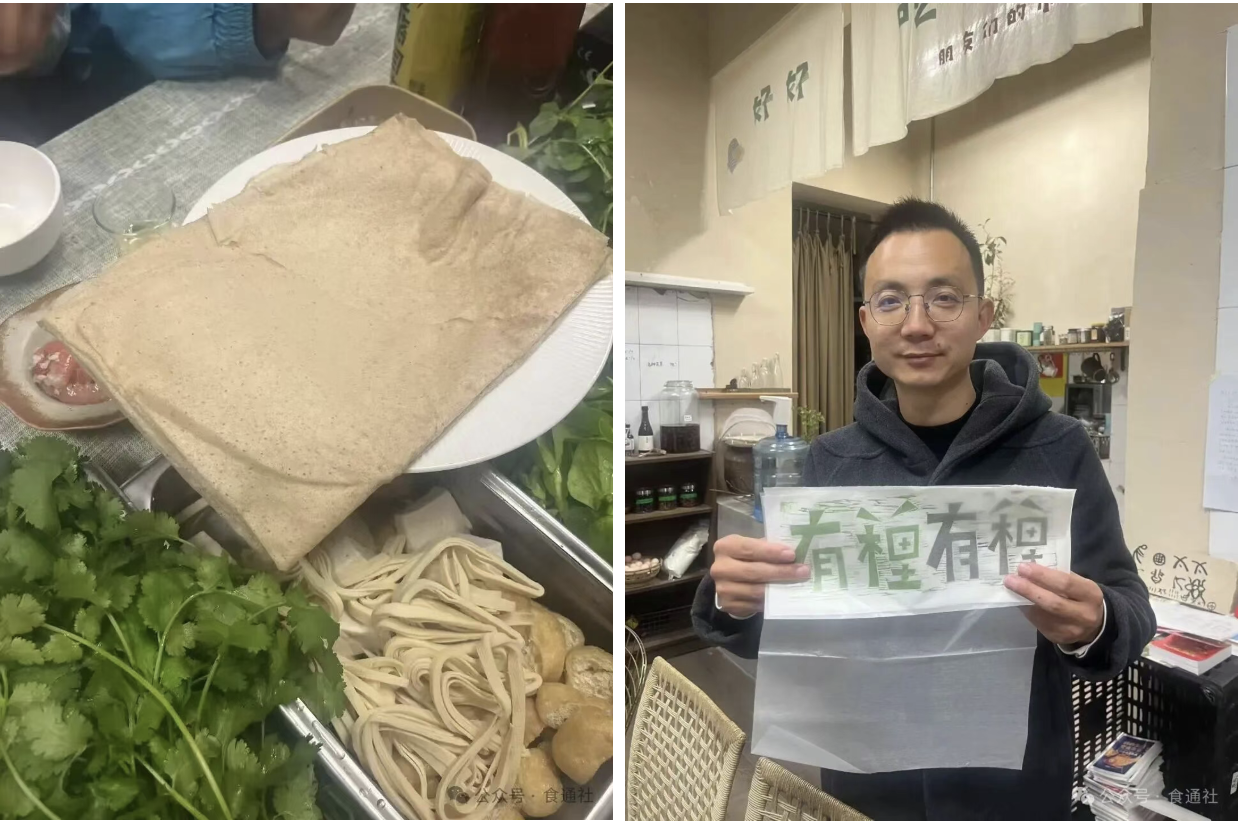
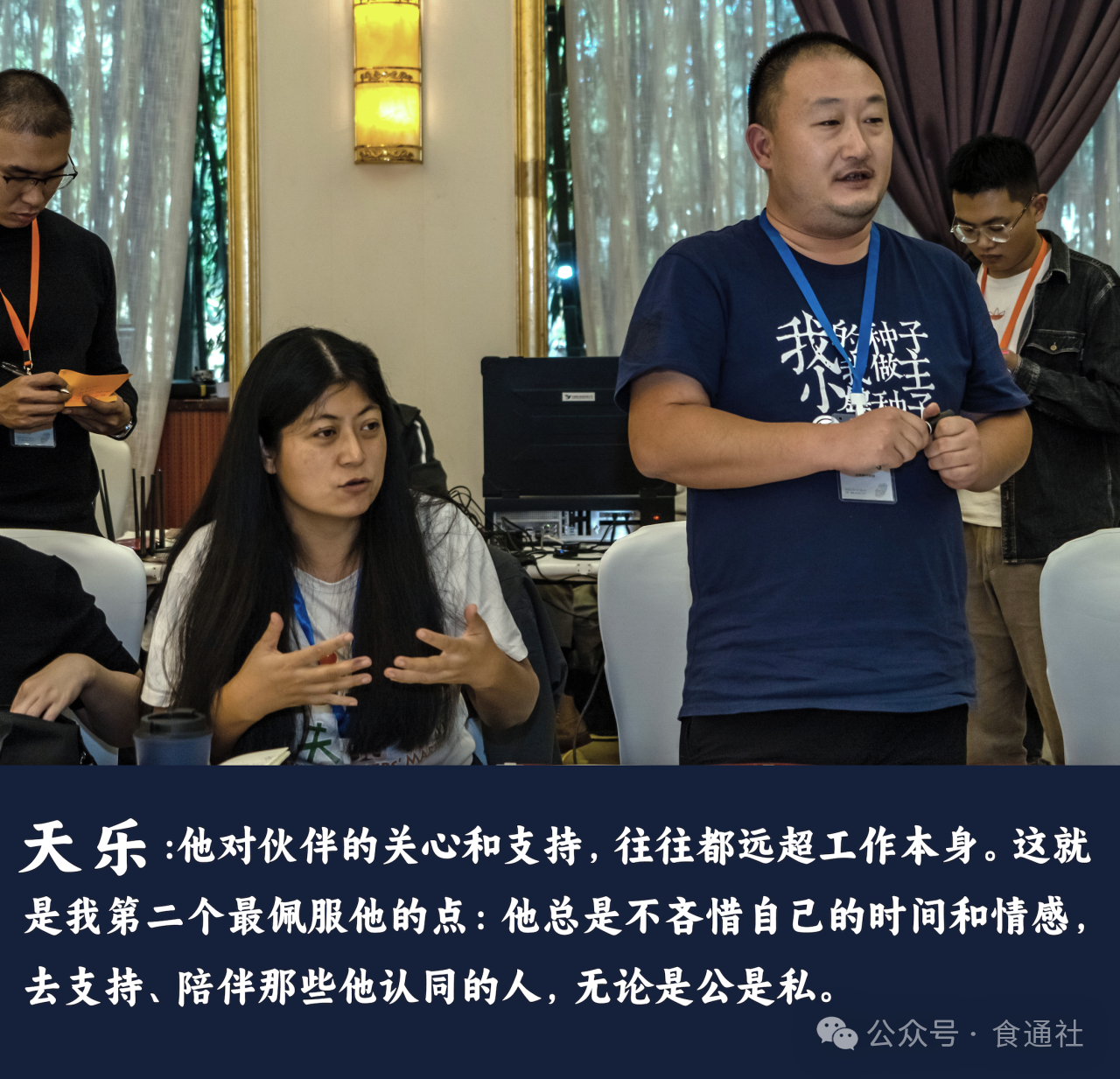
I have known Guan Qi for over ten years now, but the first time we properly worked together was in 2016, when a large group of us went on a business trip lasting more than ten days. In the crowd, he was extremely low-key, hardly said a word – you could say he barely registered as being there. The one lasting impression was that he was always diligently taking notes, and that his English – listening, speaking, reading, and writing – was excellent. I ran into him again at various conferences, and the impression was much the same. I assumed he was a serious person who was, well, a bit of a bore.
It was only as we gradually got to know each other that I saw the real Guan Qi. The true icebreaker, the moment trust was built, may have been when we discovered we both loved food and both had a deep allergy to hypocrisy – and when it came to roasting each other, we each had our own brand of sharp tongue. One year, just before Mid-Autumn Festival, we were both in Nanning on business and agreed to celebrate together. He took us hunting for food all over the city, and even now I can picture him walking ahead, hailing a taxi.
In recent years, whenever we have been in the same city, we have always met up for a meal. It was never just about discovering new restaurants – there was always something to learn and something to laugh about. When I have been on a trip, I would ask him for food recommendations, and he would throw a load of links at me. Not all of them were necessarily reliable, but judging by the speed at which he could fire them off, they were clearly the product of years of accumulated knowledge released all at once.
His erudition – not just on serious academic topics but across a vast range of obscure and mainstream knowledge alike – his humour, and his impeccable taste in all things made us close friends in both work and life. But there are two things I admire most about him.
In his work, he has constantly been pushing the boundaries of what the seed network could do. He proactively reached out to botanic gardens, artists, independent publishers, podcasters, the restaurant world – all kinds of groups that had never been within the NGO sector’s purview – drawing them into the work of farmers preserving old seeds and spreading the concept of farmer seed systems into new communities. He opened up quite a few new pathways for the work. When we met in Beijing before Chinese New Year, he quietly announced a new initiative he had already set in motion – one that was genuinely exciting and full of promise.
As a fellow practitioner, I know all too well how much mental and emotional energy it takes to maintain a kind of informal, cross-sector network like this. And his care and support for his partners often went far beyond the work itself. That is the second thing I admire most about him: he was never stingy with his time or his emotions, always there to support and walk alongside the people he believed in, whether in a professional or a personal capacity. This also meant his sources of information were remarkably wide-ranging and reliable – we even joked that he was the “Farmer Gossip Centre.” Yet he had the deepest respect for his friends. As sharp-tongued as he was, he would never say a single word that put a friend down.
In this industry, the first is a rare skill; in society at large, the second is a rarer still quality of character.
Over the past month, reading and hearing the stories people have shared about Guan Qi has made me feel that he truly lived his life as a seed: one with public value.
I have read many of the tribute pieces people have written about Guan Qi, and a good number of them are set after 2020. A doubt crept in: how much did the Teacher Guan I knew really match these vivid, recent memories?
Soon after Foodthink was founded in 2017, we published a piece on seed breeding that Guan Qi had written. He was one of the very first authors to write for Foodthink. I still remember the thrill I felt editing his piece back then: the logic was crystal clear, the structure generous and spacious, the density of information almost explosive. It was professional writing, yet it respected its readers – none of that impenetrable, insular academic jargon. It had a point of view without the ego. That is the particular happiness that only a veteran editor knows when she lands a good piece.
Out of curiosity, I quietly looked into Guan Qi’s background. I learned that he had been involved in rural construction from an early stage of his career, and that he had done a postgraduate degree in economics at Renmin University. At the time, I must have been a little snobbish, thinking to myself: was it not a pity for a young person outside the establishment, who looked like he had such a promising future ahead, to put his feet in the mud and step into rural issues with so little in the way of reward? In retrospect, that was probably the first moment Guan Qi’s idealism reached me.
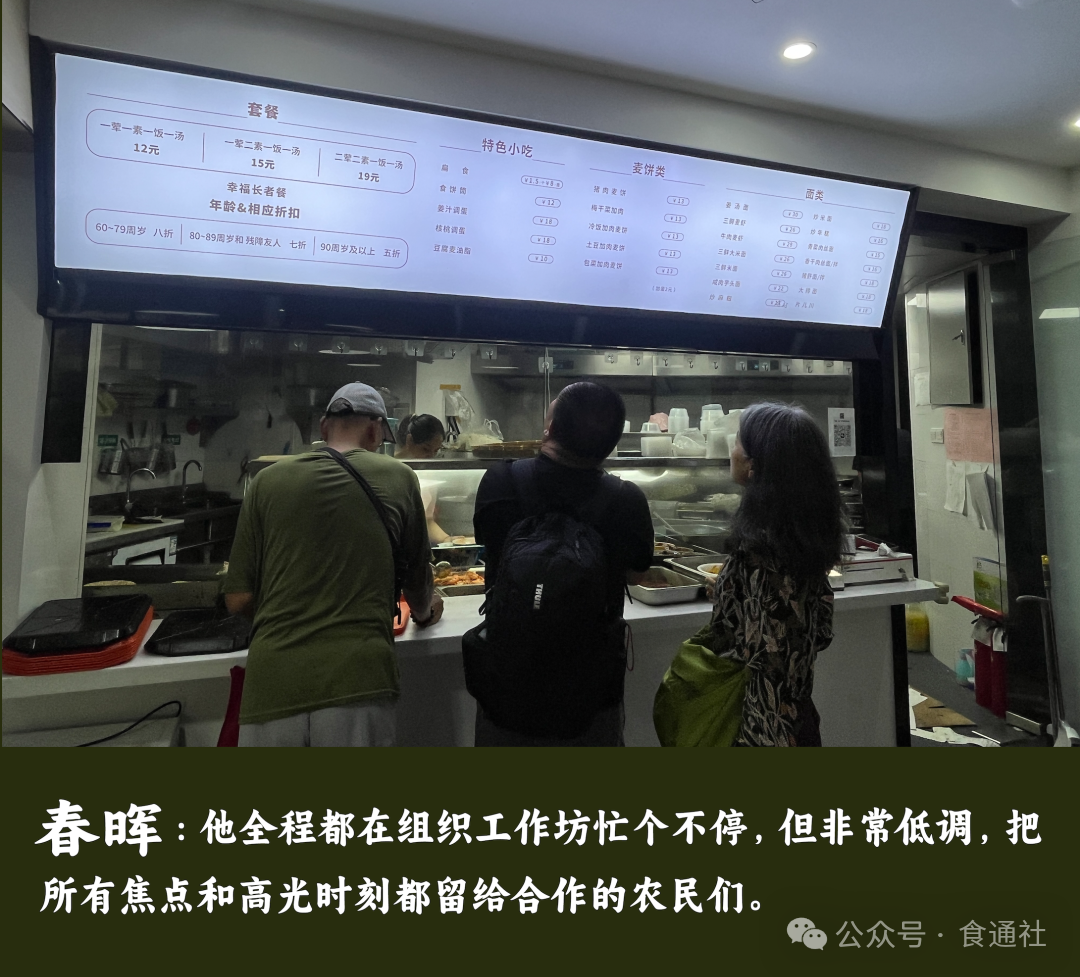
In 2018, I attended a Farmer Seed Network event and saw Guan Qi in person for the first time, at a workshop. He was busy throughout, organising the workshop nonstop, but incredibly low-key, leaving all the focus and the spotlight for the farmer partners he was working with. The Guan Qi of that period, online and offline, struck me as someone who did a great deal but said relatively little – a person with real substance, but a fairly quiet one.
People’s paths always cross and then diverge again. Later, when I left Foodthink, we had little work contact left. On the rare occasions I needed to ask him something for a piece, given my impression of Guan Qi’s “silence,” I would always approach him with careful politeness first. Sometimes I needed longer-term guidance, but he was darting around the country, always too busy to spare the time. I had to spend considerable effort “catching” him, squeezing precious advice and opinions out of him by any means necessary. Although Guan Qi is younger than me, he has always been, in the most literal sense, “Teacher Guan Qi” to me.
In 2023, I went on a work trip to Indonesia, attending an event hosted by my then-employer, where I happened to run into the Malaysian organisation “Third World Network” (TWN), which works on seed conservation. I have since returned to my old field of public health, and there is very little crossover between the different topics I work on, so seeing them at an event like this felt like a warm, cross-over encounter – a rare “breaking of circles” moment. Over casual chat after the session, I learned they were also long-time friends of the domestic Farmer Seed Network, so I immediately dropped the names of Teacher Song Yiqing and Guan Qi. Of course, I got a response. I messaged Guan Qi on WeChat immediately, which seemed to open the floodgates – I got a stream of messages pouring in. He didn’t just send me all sorts of TWN institutional profiles, information pages, and project descriptions; he also, as a matter of course, laid out the threads of their collaborations within China. I asked if I should bring back some of the event brochures for him. Guan Qi replied: “I already have everything you sent.”
Oh – in a flash, Guan Qi no longer seemed like the slightly reserved person of before.
And then came 2024. That was the year I quit my job – a middle-aged person who had gone off to Hangzhou to simply hang out with her younger friends – and I ran into Guan Qi again, who at the time was based in Suzhou for work. With work entirely off the table, I could already tease him with the nickname “Boss Guan.” Those few days, Boss Guan was in full command, showing us all the great food Jiangnan has to offer. Listen as I might, I realised his favourite foods still carried the soul of the north – or more precisely, of his home province, Shandong: all manner of stuffed pastries and noodle dishes, big chunks of meat, plain noodles, and rich, savoury sauces. It also gave me a glimpse of how the so-called Jiangnan water-town cuisine has, in large part, retained the northern palate imprinted by waves of migration, population movement, and the southward shift of the political centre. He was also full of enthusiasm for craft beer, lager above all, and took us on a bar crawl through whatever remained of Hangzhou’s nightlife, eating skewers and Wenzhou fish balls on the street. I was staggered: so this was the “refined boy” (a friend’s phrase) – Guan Qi, so utterly devoted to the pleasures of life! Little did I know these would be my last memories of Teacher Guan Qi.
In the process of dredging up these fragments of memory, I became aware of how Guan Qi’s image had shifted in my mind. It really had changed – from the quiet, earnest, impossibly busy, impossibly hard-to-catch Teacher Guan Qi of before, to the later Boss Guan who could talk endlessly about work and whose approach to life was both refined and varied. I think Guan Qi had genuinely entered a new territory, opened up new possibilities, and was ready to make a real mark in the not-too-distant future! I never imagined that at precisely this moment, heaven would “take him away.” He is frozen in a moment of vibrant aliveness. The regret belongs to those of us still here, and to the entire seed-conservation field. If someone like me, who only knew him on a superficial level, has so much to say, then what must his parents, his friends of many years, his colleagues, the partners who were closest to him in life – how many words must be stuck, unspoken, in their hearts, and how painful it must be.
This piece is my small tribute to Guan Qi. May you still watch over us from above. Next time I go to Jiangnan, I will carry those last memories and images with me.
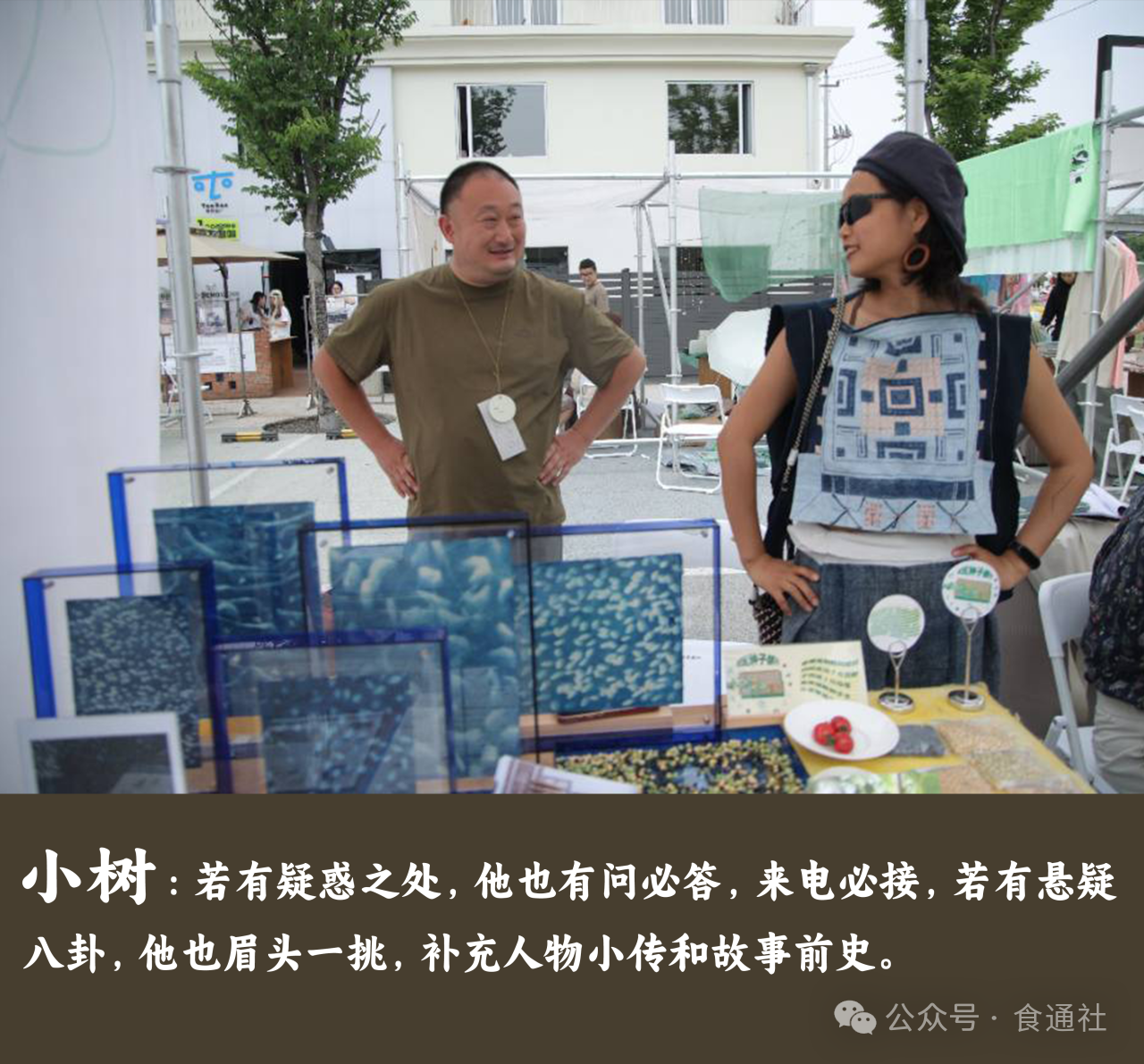
The first time I met Guan Qi was on 1 August 2019, at a team-building gathering put on by Foodthink and the Farmer Seed Network. He was still wearing his glasses then. I had a cold that day and did not sit at the table; I asked to sit on the sofa in the corner and just listen in. I had already been working there for a year, but I still felt as though I had wandered into the food and agriculture world by accident – full of inner friction and self-doubt. Later, when we became friends, Guan Qi would often say to me, “You’ve really got to value yourself, you know.”
We did grow to know each other gradually. In 2020, a journal republished the two-part series Guan Qi had written for Foodthink – A New Path for Seed Conservation: Breaking Free from Corporate Absorption, Rekindling Public Value – and I handled the liaison, which led to one-on-one WeChat conversations with him. Publishing during the pandemic was full of twists and turns; the project timeline stretched, and so did our exchanges. In December 2021, the Farmer Seed Network organised a training workshop at a farm on the outskirts of Chengdu. A farming friend asked me how to write a project proposal. Guan Qi happened to walk by, and I casually tossed the question his way. He actually stopped and walked us through how to structure a proposal. Later, I left my full-time role at Foodthink to carry out my own fieldwork in Qiandongnan, the mountainous south-east of Guizhou. I used the proposal structure he had taught me to apply for funding, and whenever I hit a snag in the field, he would answer every question and pick up every call. If there was some mystery or bit of gossip, he would raise an eyebrow, fill in the character backstories and the story behind the story, and laugh about how things had changed – but he never judged right from wrong.
By April 2022, he had moved to Suzhou. In the early days of building the Eastern Network, he started a small group chat called the “Jiangnan Reading Group.” The first book we read together was 猛将还乡 (A Fierce General Returns Home). It was a chaotic spring – in fact, we only gathered for an online reading session once, and most of the time we were just talking about food and life. Everyone’s movements were restricted, each of us trapped in different places, but our bonds grew closer. To this day, we have not finished the book. The extraordinary man has gone home to Shandong, and to the soil. The food and agriculture world, and seed conservation work, have lost a fierce general.
Over these past few years, Guan Qi’s work and life centre of gravity shifted to the eastern region. The Eastern Network, too, grew steadily tighter and more lively under his support. Beyond the public calls and rallying he did in his professional capacity, there was his indispensable private matchmaking, his generous organising of gatherings, his eagerness to show up wherever he was invited. The Eastern Network, as he had wished, slowly grew into a decentralised, multi-node community, and I, a loose and scattered individual, was welcomed in too. His sudden departure has left an enormous void in this network, but his character and his passion have let new threads reach out from the rupture. Many people and threads of work that had never crossed before have grown close because of him. Beyond the east, Guan Qi had many other networks, and the grief has resonated through all of them, because this person was extraordinary, and so is the mourning – so true, so precious. Because of Guan Qi, no one is lonely.
As a partner, he welcomed me in. As a friend, he caught me, again and again. All these years, he has witnessed and taken part in my growth. And yet I seem to have never once formally thanked him.
I first got to know Teacher Guan five years ago, when I was working on an article about farmers conserving heritage seeds. The year before, the State Council General Office had issued an opinion calling for stronger protection and use of agricultural plant genetic resources. Everyone knows how important seeds are. It is not just a question of national food security – seeds are the bedrock of human agricultural civilisation. But what is actually the best way to conserve them? Reporting on that article, I was struck by a sharp split between two approaches. One held that conservation is the government’s job – build seed gene banks – while seed R&D is best left to industry, with hybridisation, genetic modification, and the like. The other encouraged farmers to conserve old varieties, achieving a living, place-based protection of seeds. On paper they seemed complementary, even compatible. In practice, the tension between them was far more tangled than a single word like “conflict” can capture.
The central government had only just passed the Seed Industry Revitalisation Action Plan, stressing the need for self-reliance and controllability over seed sources. I asked a leading expert whether this meant the spring of old-seed conservation was finally on its way. He let out a hearty laugh, clearly taken aback by what he must have considered naivety. “This is a signal to support the seed industry,” he said. “Calling it a spring for old seeds? That is a bit of a stretch.”
My other key interview subject was a representative of the old-seed camp – Teacher Guan. Our editor, Teacher J, had helped make the introduction. Teacher Guan was most gracious in answering my seemingly endless questions about heritage seeds, coming from a complete novice. In retrospect, answering all those shallow questions was probably a waste of his time. Throughout our exchange, not a single word was superfluous. There was no “haha,” no “okay,” no emoji or other social lubricant. It was as though speaking with me were a task he was reluctantly obliged to complete. And yet, he answered every question and sent me reference materials. When I mentioned wanting to interview some farming friends, he helped make the connections. Sometimes he would go a day or two without replying. Teacher J sighed, “That is just who Guan Qi is.”
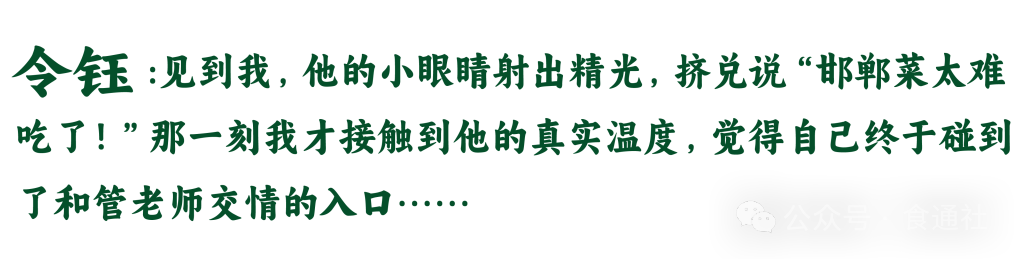
Then I joined Foodthink and saw a whole other side of him – almost a different person entirely. I heard all sorts of amusing stories about Teacher Guan from colleagues who were close to him. The “study monitor” thing, the “hometown treasure” thing – and through them I could feel his real passion for agricultural questions and his deep care for the farming friends. We did not treat Teacher Guan as an outsider either; we put him to work without much mercy. But I never quite got the chance to collaborate with him directly, and so for a while we stayed in that comfortably distant, purely professional orbit. Until one day, after he had been to the Xiangtangshan Grottoes, he caught sight of me. His small eyes lit up, and he teased, “Handan food is absolutely dreadful!”
That was the moment I finally felt his real warmth. I felt like I had at last found the entrance to a friendship with Teacher Guan – after all these years of knowing him. I had no idea it would be the last time I saw him.
Even as I set these words down, there is still a sense of unreality. Teacher Guan is truly gone. Life has to go on; the days are busy and they just carry you along, so that in some moments I forget that he is no longer here – or rather, my sense of this world still lingers in the time when he was. When I come across something vague and half-remembered, and the urge to check his WeChat chat history rises, I end up holding back. I do not want to confirm, one step further, that no one will be there to answer on the other side. So I can only write from what I hold in my mind. As for whether any of the details are exactly right, I do hope Teacher Guan could point out the errors one more time.
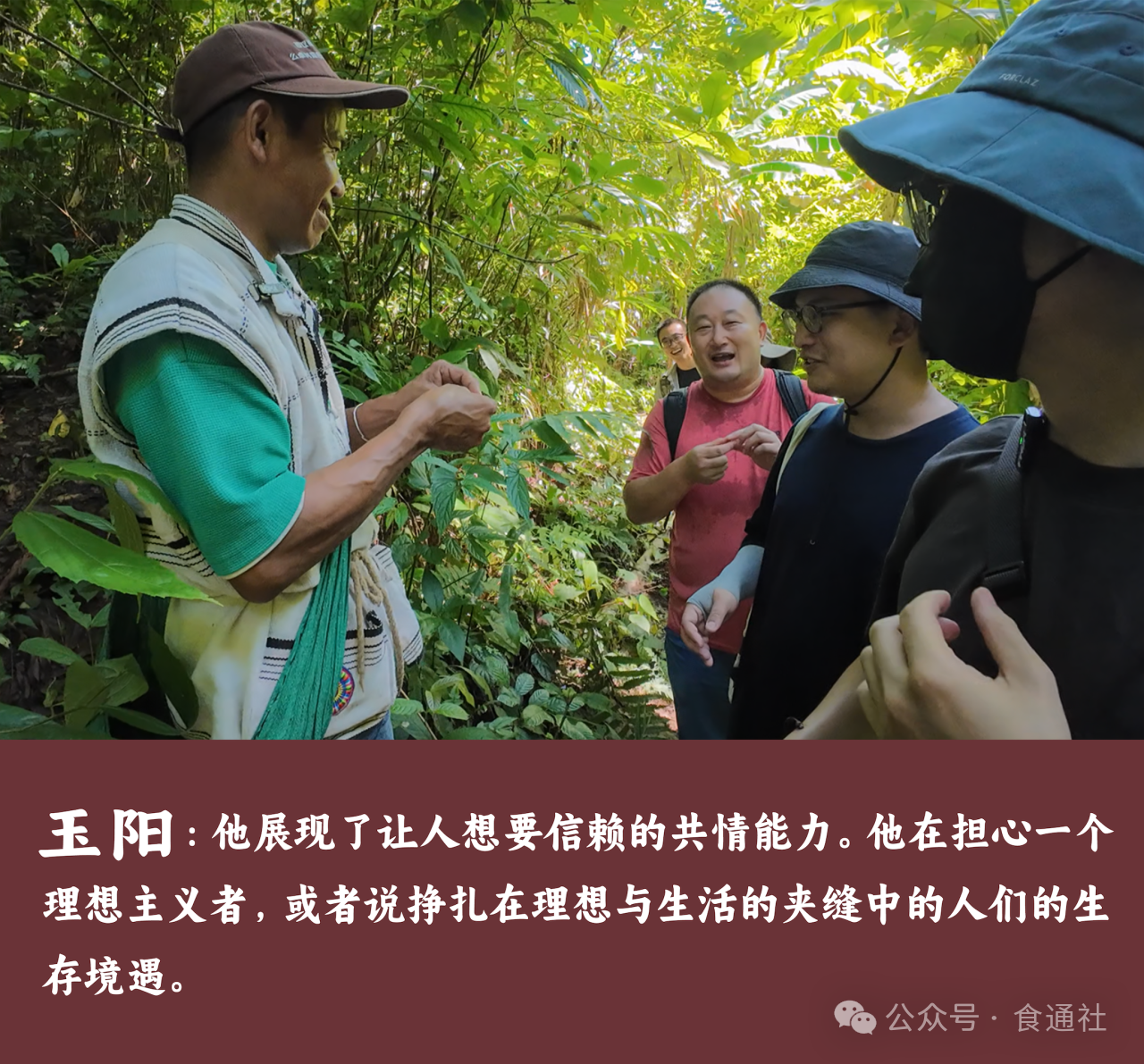
The phrase that stayed with me most from Teacher Guan was about someone I do not know at all. It came up like this: we were soaking in the hot springs in Mile, and he asked me about my old job doing food delivery. I told him the truth. He said it reminded him of a friend who had always cared deeply about labour rights – a Tsinghua graduate – and a few years ago, when he ran into him in Beijing, he found out the friend was working as a security guard. Teacher Guan said, “When I was leaving, I told him to take care of himself, because I was a little worried about how he was holding up.” The tone was lightly teasing, but I was genuinely warmed by what he said, because it showed a kind of empathy you could trust. He was worried about an idealist – or rather, about the people who are caught in the narrow space between their ideals and the realities of life. I think, for anyone in this era, that is a rare form of understanding and kindness. Hearing him say those words, I let my body sink a little deeper into the hot spring water and just let the warmth wash over me.
He himself was, of course, an idealist – just the more optimistic, open-hearted kind. He once told me about a time, when he was younger, that he had “infiltrated” a cola bottle processing factory to investigate the workers’ conditions. He did not last long before he quit. With his eyes narrowed to slits, he said, “It was not anything dramatic, really. It was just that the more I worked, the more efficient I got, and on top of that I could read and write English, so the boss wanted to promote me to team leader. I thought to myself: there is no way I can keep doing this.” That day, in the tea room, Teacher Guan talked a great deal about his earlier years, and I could not stop giggling. When we left, it was pouring, and we had to part in a great rush.
I saw him again just two or three months later. He was in Beijing once more, and I thought to myself: with someone who flies around the country as much as Teacher Guan, there will be plenty more chances to meet. I gave him a copy of Cultural Studies 1988 – not just to return the birthday gift he had given me the year before, a book on agrarian capitalism, but because he always remembered that I loved the British New Left and cultural studies. I am not the kind of person who eagerly shoves my own favourite things on others; I worry about being a burden, unless I already feel a real sense of trust. Teacher Guan always made me feel close, so I handed over that copy of Cultural Studies 1988, full of my own marginal notes, without a second thought. That was the last time we met.
In Lijiang – in Stone City, in Youmi Village, at Lugu Lake – I walked a stretch of the old-seed conservation road alongside Teacher Guan, and that was only a small fragment of the path of his life. His life was so vast. He had walked so many roads. He cared about the big things, and yet he always kept so many specific people, so many specific stories, alive in his heart. I am lucky to be one of them. Losing you makes me so sad. I feel that if I had had more time to learn from you – from this wonderful teacher and friend – my life would have been better. And yet I will carry this regret with me, and I will keep pushing in that direction, toward becoming better.
We have always called him “Teacher Guan.” In fact, he does not have the surname Guan, and he is not a teacher. People call him that because he knows so much, and he is the kind of person who can catch whatever you throw at him. Whether it is academia, the entertainment world, or anything properly related to seeds and agriculture, ask him and he will send you a link, an article, or a paper. He never launched into a lecture at every turn, but whenever you came to him with something, he would answer with genuine care.
Teacher Guan was calm and also a great conversationalist. I have never met anyone as steady as he was. It was only once we got to know him that we realised he truly was a treasure. Not only was his professional knowledge vast, but he also knew how to eat – really knew how to eat. Everyone loved being around him, whether at work or in life. I still remember attending meetings with him: the moment they wrapped up, if you just followed him, you could always find a wonderful restaurant right away.
To me, he was also a gentle, generous, and deeply caring person. When I first joined Foodthink, I knew nothing about agriculture or seeds. Every time I asked him a question, he was patient. He never showed the slightest impatience, and never made you feel like, “How can you not even know this?” Looking back now, those questions were probably rather naive. But it was precisely his patience, kindness, and inclusiveness that made me feel that in this field, newcomers are welcomed – that there is room to learn, to adapt, and gradually find your place.
Teacher Guan cared deeply about smallholder farmers and about keeping old seed varieties alive, but he rarely put it into words. It simply came through in the way he worked.
He understood policy and he understood local development. He travelled to ethnic minority villages and rural communities across the country, telling farmers why old seeds matter and teaching them to save their own seed stock. At the same time, he was broadening public and consumer awareness of heritage varieties and championing the idea of seed diversity as a social value. At public events in different places, at markets in various cities, he would recommend the old varieties grown by farmers at partner sites, and he would always bring along Foodthink’s promotional leaflets.
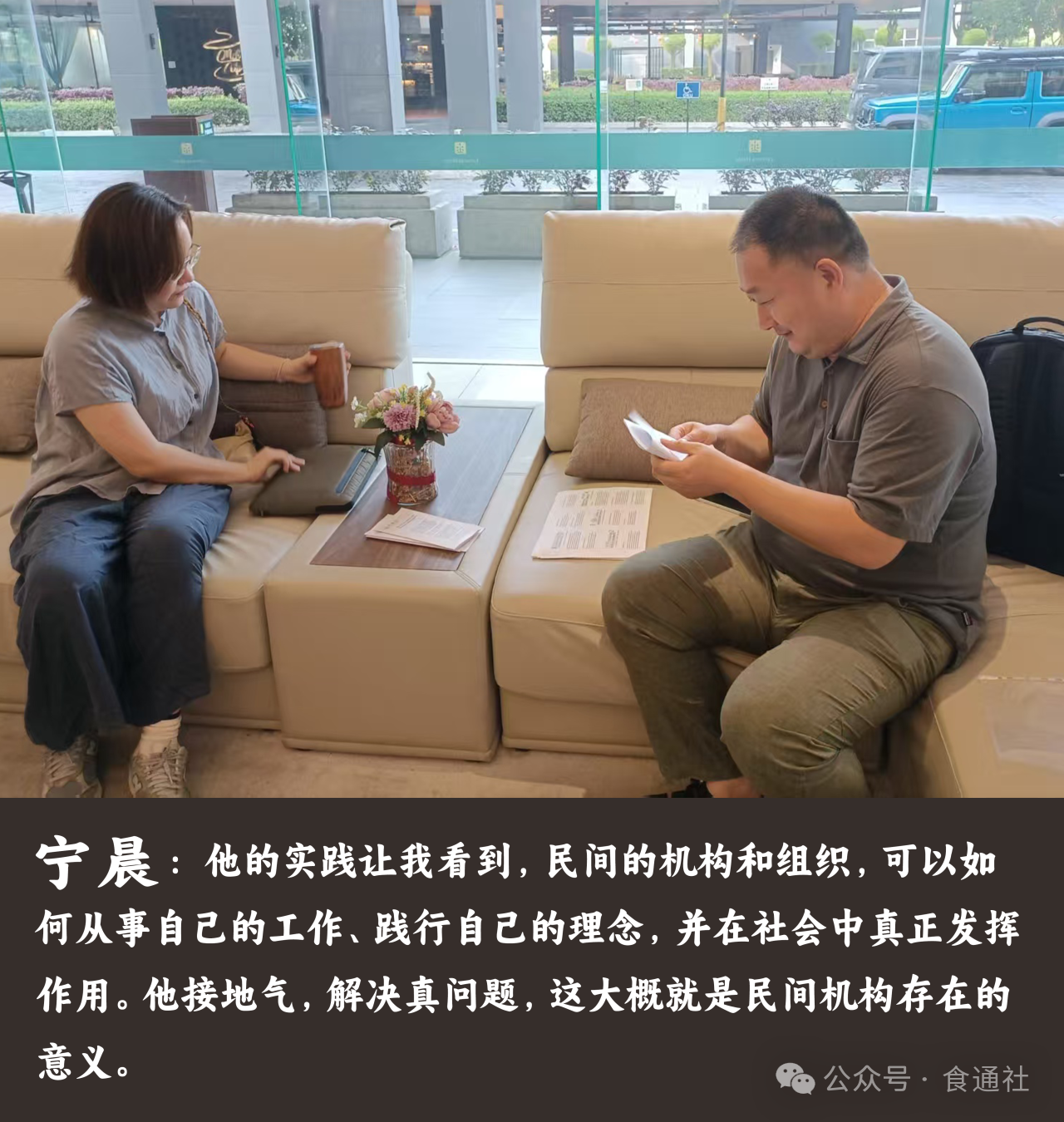
Teacher Guan’s work bridged the land with academia and policy, and he was steadily expanding the market for community-grown heritage varieties. His practice showed me how civil-society organisations and grassroots groups can carry out their own work, live by their own values, and make a genuine difference in society. He was grounded. He tackled real problems. I suppose that is what grassroots organisations are for.
It also helped me understand, little by little, that so much work has to be done one small step at a time – each step tiny, but also essential.
Now we have lost Teacher Guan – a seed specialist, an outstanding colleague – but for me personally, I have also lost a dear friend to eat, drink, and have fun with.
Teacher Guan, we will miss you always!
There are probably very few people in this world better suited to be a friend than Guan Qi. The tragedy is that I had barely begun a real friendship with Teacher Guan before it ended.
Every one of my encounters with Teacher Guan involved drink. Guan Qi’s art of beer connoisseurship was something none of us escaped witnessing. His material life was simple – he could go on a two-week business trip with nothing but a light backpack – but over the years, he must have contributed a good deal to the craft beer industry through sheer consumption. In front of a hotel in Aohan Banner, a few of us went out for a night meal, all raring to go, and we nearly knocked the table over. But around Guan Qi it was as if there were a kind of protective field. He bought two four-litre cans of craft beer from the little shop by the entrance, then at the barbecue stall ordered chicken gizzards, wheat gluten, lamb skewers, and roasted mantou. Whether there were three of us at the table or twenty-three, Guan Qi kept the same calm composure, drinking his beer at a steady, even pace, like a precisely calibrated beer digestor. Every now and then he would drop a piece of sensational gossip for everyone to savour.
Beyond beer and coffee, reading critical theory was Teacher Guan’s other form of sustenance. The more you know, the less you say. I get a bit loose with my shallow academic knowledge whenever I drink too much, and I wince just listening to myself. Guan Qi was nothing of the sort. Though he had read a great deal, he never opened his mouth with “I think …” – it was always “I would recommend …” How rare that is! No wonder Guan Qi was so beloved – he was always genuinely trying to help others. I often had the nerve to come to Teacher Guan for help, and I never quite knew how to repay him, but I figured there would always be another chance to return the favour, so I did not worry about it. I never imagined I would not get that chance.
I have always called myself a materialist, but Guan Qi’s passing has made me believe in another world. I hope he is in a better place.
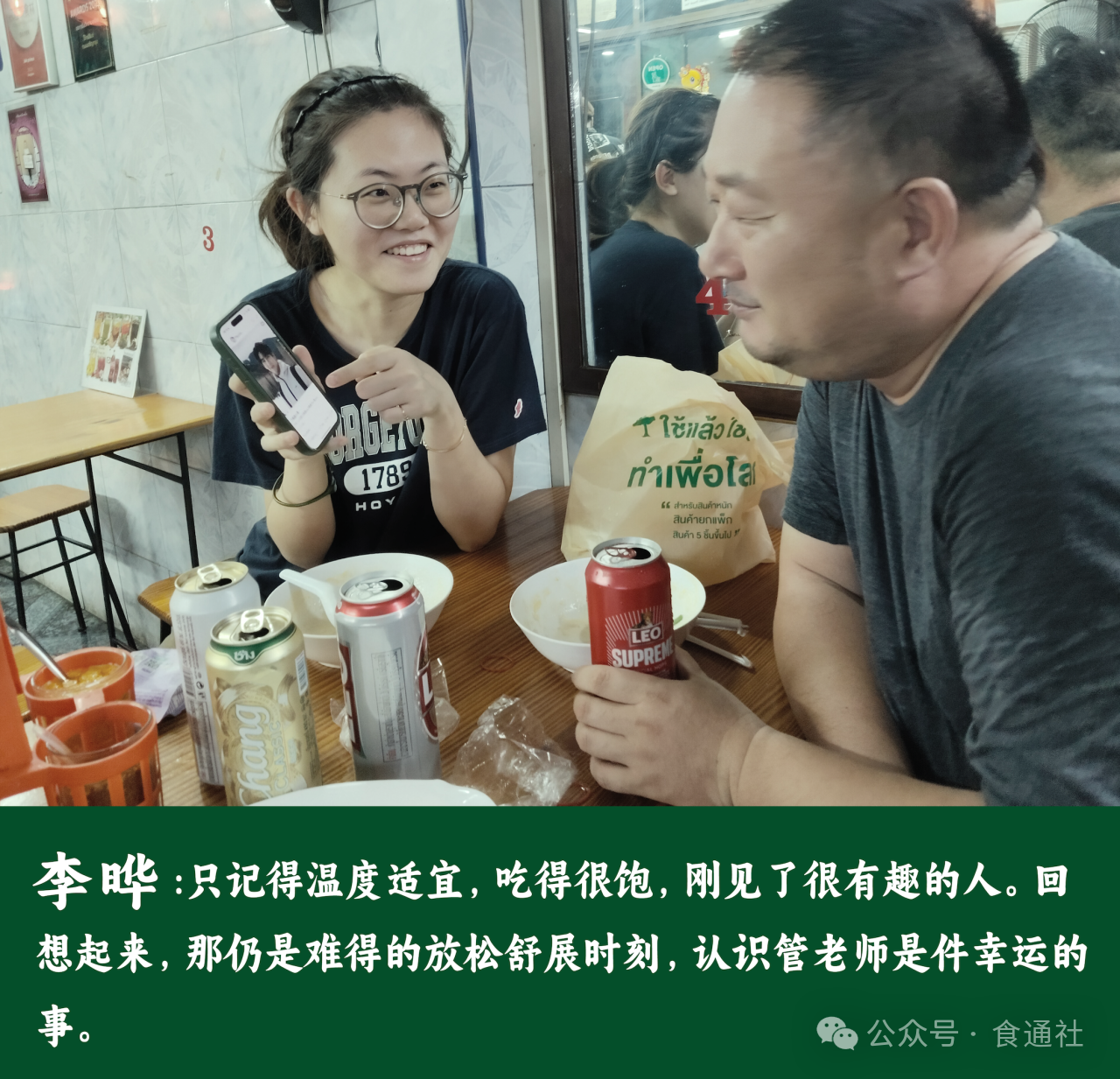
I have only met Teacher Guan twice, but I still want to write a few words.
Both times, it was over food.
The first meal was also my first with Foodthink – a Wenzhou-style street food stall. I vaguely remember Teacher Guan performing a bit of table-side showmanship during the meal, keeping rhythm with his elbows, or some other form of physical theatre. A remarkable person, that one.
After we added each other on WeChat, his first message was: “I thought we still hadn’t sorted the bill..”
Take note: this is a clean-cut middle-aged man who uses Jennie stickers.

The second meal – and the last – was in Bangkok.
At the time, Teacher Guan was up in the mountains on retreat, and this was a rare holiday when he came down. Spotting him from across the station, he really did have the air of a master descending from the peaks.
We bought beer at the 7-Eleven nearby and found a little shop for a simple bowl of pork congee.
The beer was probably just average. To go with it, we added a pack of pork skin, and the skin was not all that good either.
But no matter how fancy it could have been, a pack of pork rinds was all we could manage.
The core of this retreat was “seeing yourself.” As it happened, right next to where he was sitting was a big mirror – turn your head any time, and there you are. I thought at the time: how convenient – why bother going up a mountain to meditate when a simple turn of the head is practice enough. Thinking back now, perhaps wherever he sat was his practice ground.
I invited him to come with me the next day to King Power to look at handsome men. His face fell into an expression of mild distress, like an old man on the metro checking his phone. But his earnest reluctance, and just how generous a person he was, made me genuinely think for a moment that he would go.
After the meal we walked back toward the hotel. Bangkok’s streets were very clean. I do not quite remember what we talked about. Maybe it was that it was going to rain the next day. Maybe which mall to go to for a one-stop shop of souvenirs. Or maybe a sharp-tongued review of just how far Thai people were taking the whole bro-romance thing …
After all, it was just an ordinary day. There would be many more meals like this to come with him.
All I remember is that the temperature was just right, I was full, and I had just spent time with a wonderfully interesting person. Looking back, it was a rare moment of easy, unguarded ease. Knowing Teacher Guan was a lucky thing.
That kind of comfort was also how he made me feel.
At ease, like the wind.
When will you come again?

Date
28 April 2026
Venue
Liangzhu, Hangzhou, Zhejiang
You are warmly invited to a gathering filled with warmth
Join us to
honour the memory of this precious friend and colleague
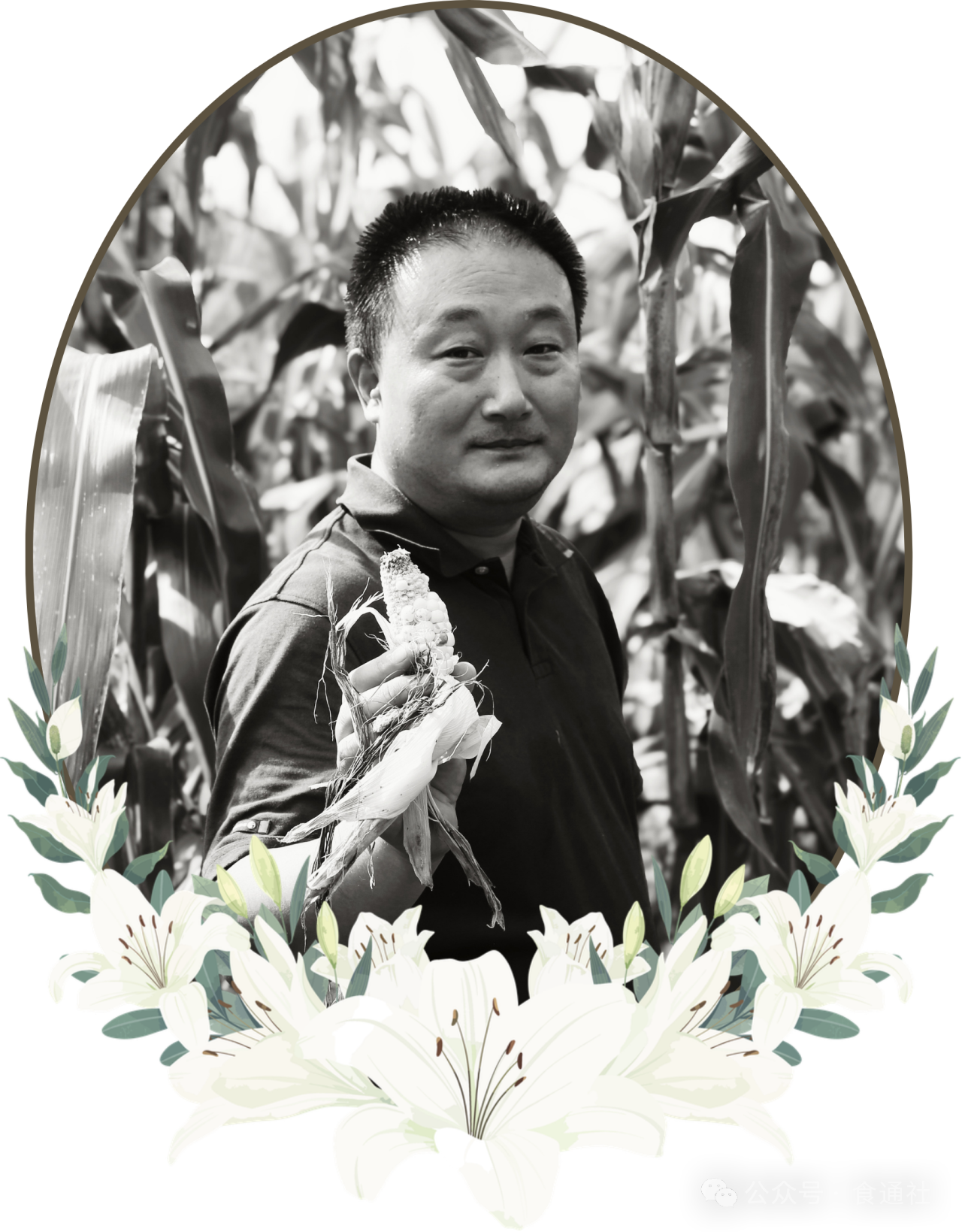
and see our Guan Qi on his final journey
To join the remembrance, please fill in the form