
Raising Sheep in Debt: Qinghai Herders Weather Another Year

I. Summer Pasture: The Last Pastoral Idyll
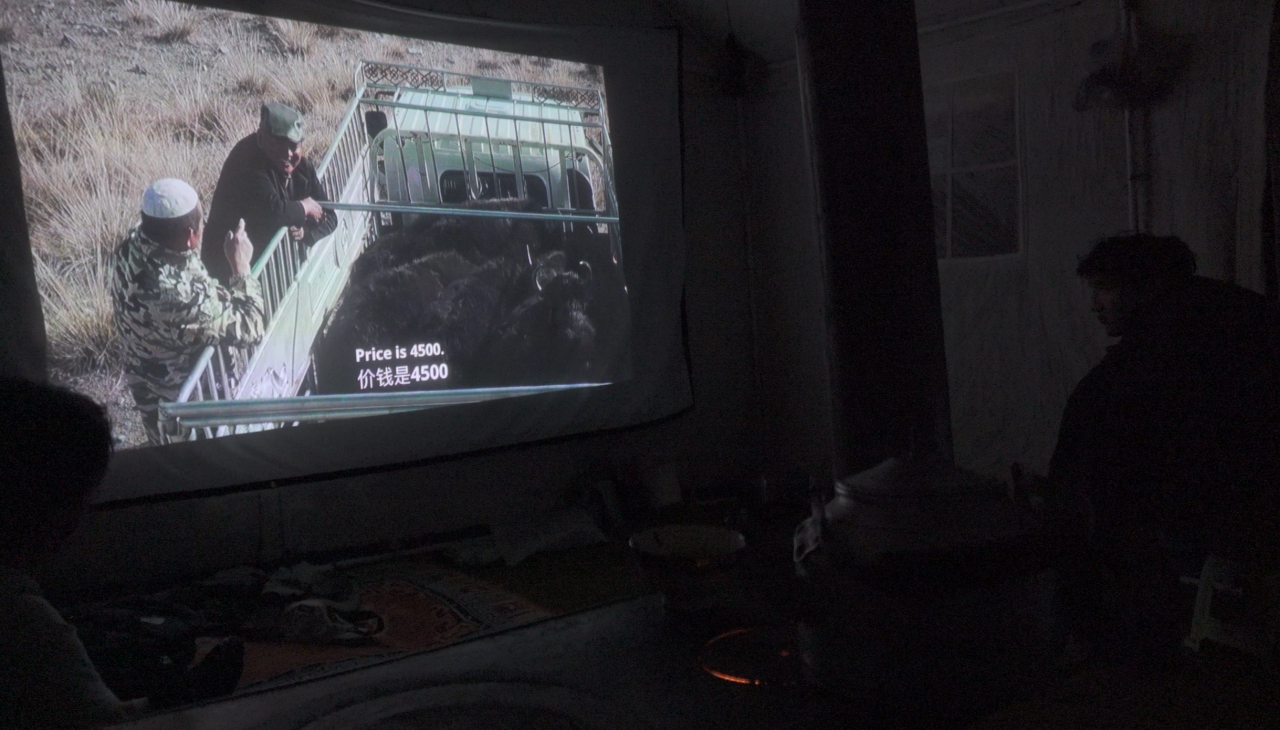
Niang E Jia’s family is a typical Tibetan pastoralist family around Qinghai Lake, still grazing in a traditional way. They are one of the main subjects of the documentary I filmed last year, “Whose Table, Whose Pasture”. A year has passed since filming, and I have returned to Qinghai both to let the people I interviewed see the finished film and to find out more about how they are doing.
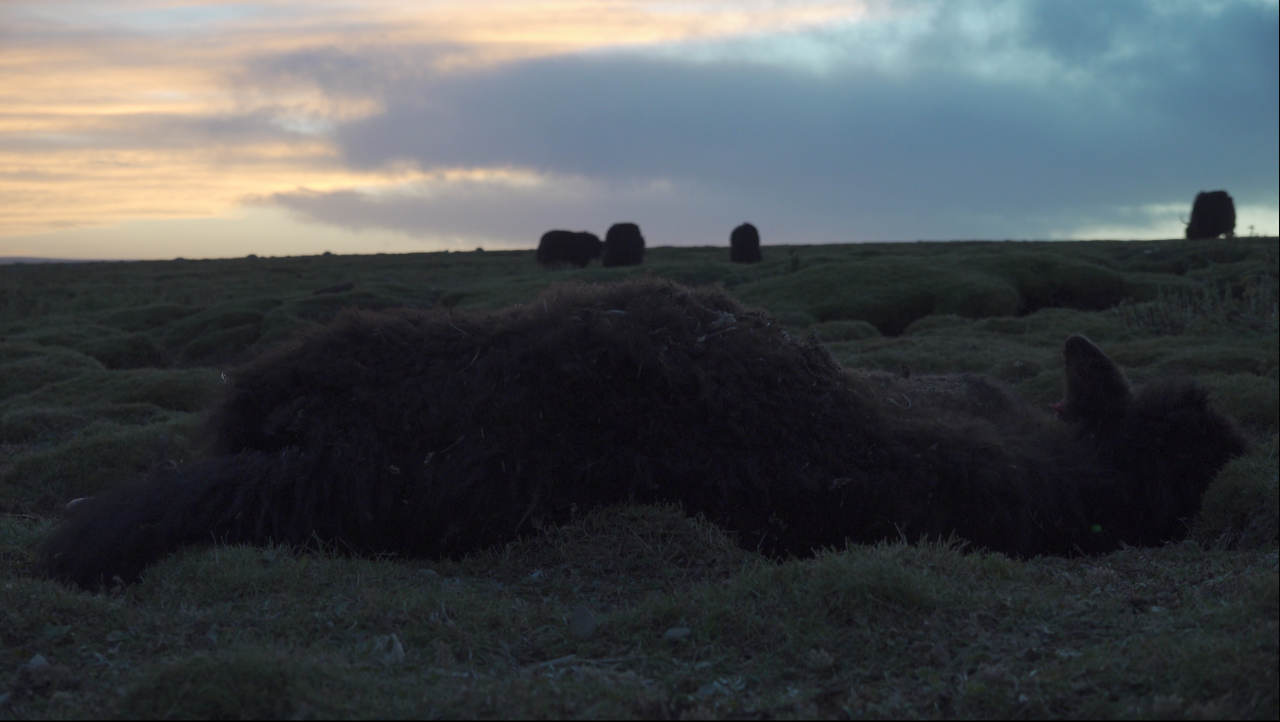
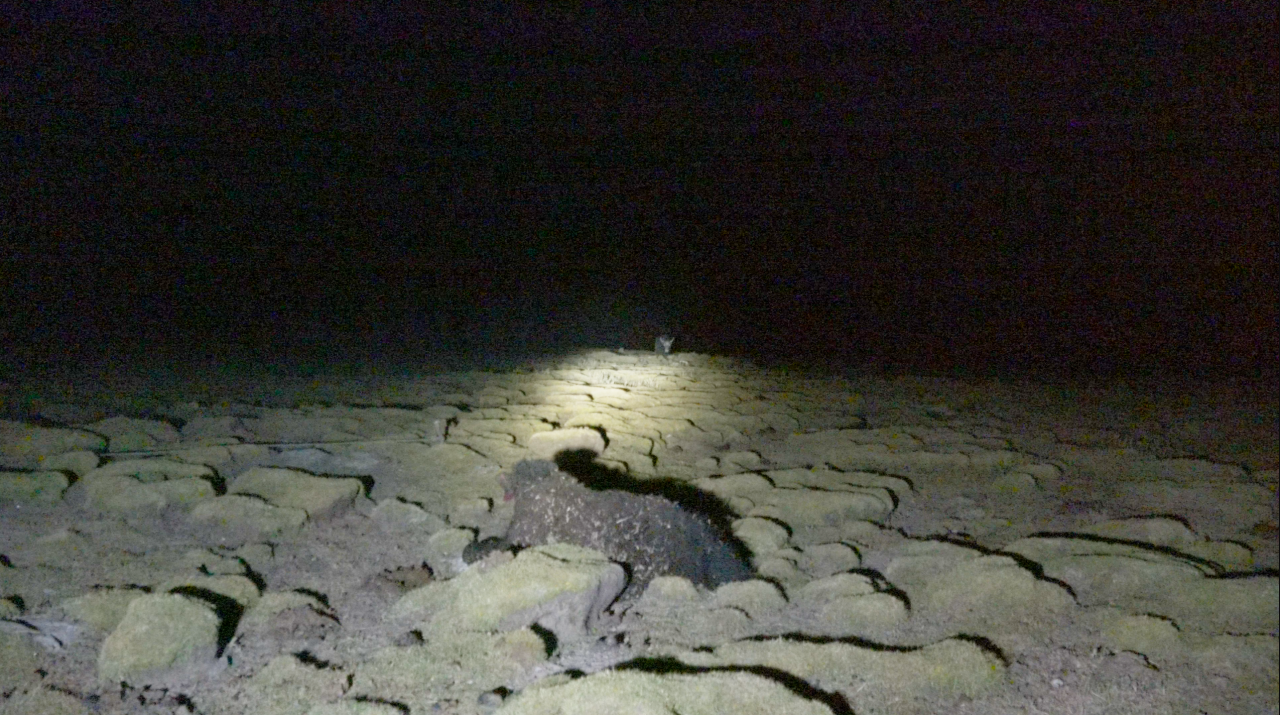
As summer on the grassland was drawing to a close, Niang E Jia’s family moved to this shared communal summer pasture at Caohun, a local name written phonetically. Outsiders rarely come here. Apart from Niang E Jia’s third uncle, who lives one or two kilometres up the mountainside, the other households are several kilometres away. There is almost no sign of people around; one can only see the white tents on the pasture from a distance. Apart from cattle, sheep and Tibetan mastiffs, the most common animals are plateau pikas and white-rumped snowfinches, and, occasionally, wolves that visit at night.
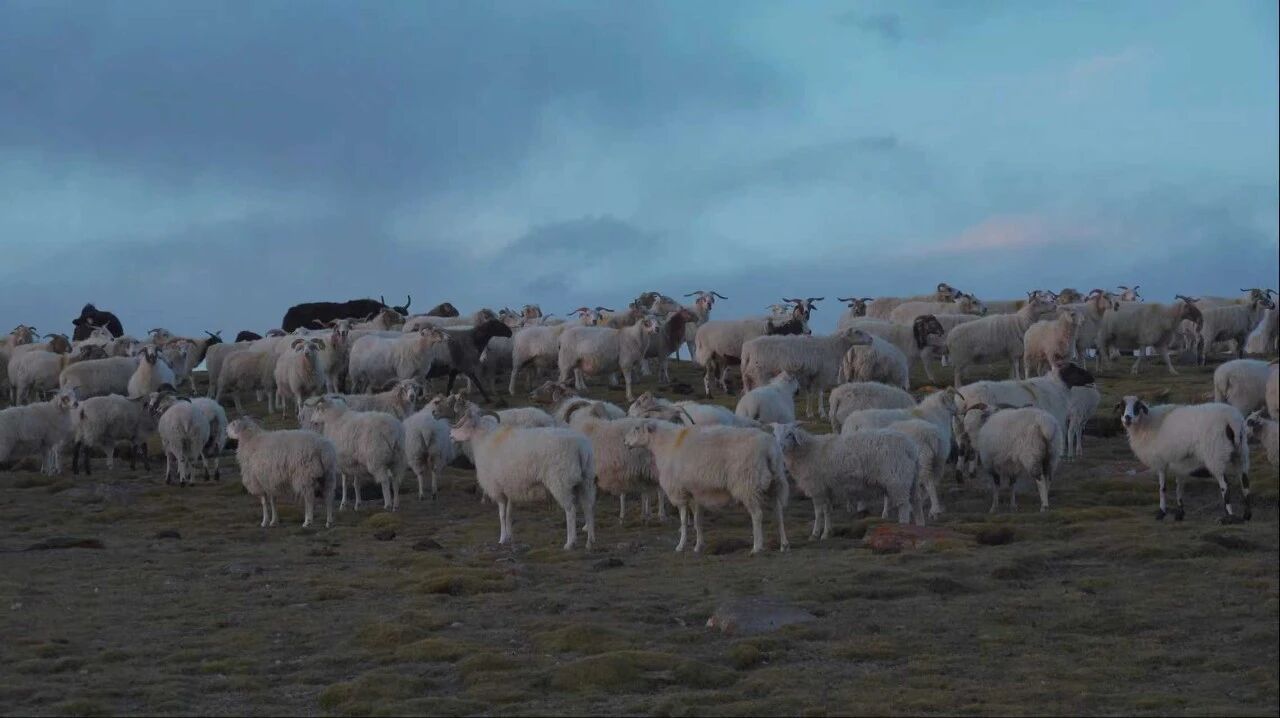
Beyond the postcard-perfect scenery, the livelihoods of herders on the grassland are growing harder. Since 2023, while working on pastoralist community video around Qinghai Lake, we learned that cattle and sheep prices had fallen sharply and that imported frozen meat was hitting pastoralist markets. We then joined Foodthink’s Lianhe Plan, wanting to document the impact of new market changes on herders’ lives. Last November, my partner and I completed filming after a full circuit of Qinghai Lake.
Qinghai Province is not one of China’s main cattle and sheep production areas, but it is one of the five major pastoral areas, and it has the highest volume of yaks and Tibetan sheep sold for slaughter in the country. More than half of the income of herders and farmers in the pastoral area around Qinghai Lake comes from the Tibetan sheep industry. Falling prices directly affect their livelihoods. The herders recall that they have struggled through four or five years of falling cattle and sheep prices.
National data also show that mutton prices entered a downward cycle in 2021, and live sheep prices have continued to fall. Cattle prices have also fallen badly. In 2024, domestic beef prices at one point reached their lowest level in nearly five years, and live cattle prices fell to their lowest in nearly ten years.
Under such pressure, some herders have not weathered the market slump and have completely sold off their cattle and sheep to leave the trade.
This year, Niang E Jia’s family has not yet sold any sheep. They plan to move to the winter pasture and wait for buyers. They have also learned that prices have risen a little compared with last year. So, will rising prices make life a little easier for the herders? My return visit began amid such a faint thread of hope.
II. Qieji West Road: The Bargaining Game
National market data show a similar picture: throughout September, the national average price of beef was 70.90 yuan per kilogram, and mutton 69.59 yuan per kilogram. But compared with 2023, beef and mutton prices were still about 10 yuan lower per kilogram.
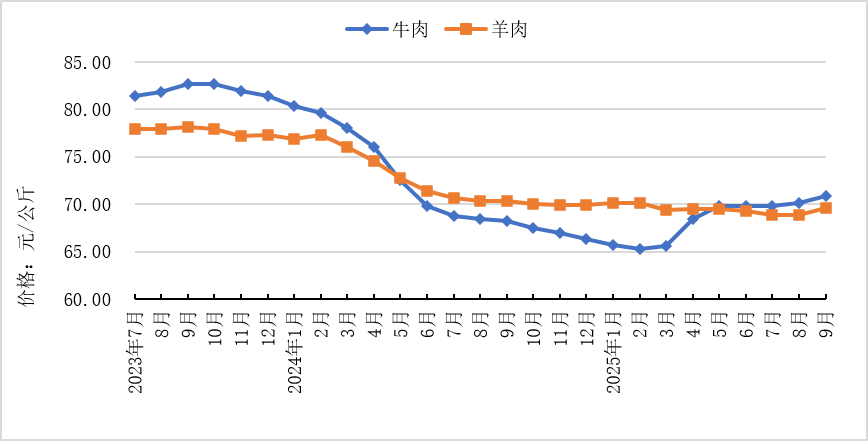
I went into the shop to ask why meat prices had risen. The shop assistant told me that in winter cattle and sheep are basically fed on fodder, whereas in summer they eat grass. The way they are reared clearly affects the mouthfeel of beef and mutton. Generally speaking, fattening cattle and sheep are too fat after slaughter, with a lot of belly fat and a thick fat cover. For local consumers accustomed to eating hand-grabbed meat, grass-fed meat is naturally more popular. That is why prices in September were already a little higher.
Leaving Xining, the proper return-visit journey began in Gonghe County, 142 kilometres away. The G6 highway leading to Gonghe County is flanked on both sides by continuous pastures, and signs on both sides of the road said look out for livestock, with flocks of yaks and Tibetan sheep standing or lying in the pastures. Gonghe County is the seat of Hainan Prefecture, and by common practice, Qieji West Road in Gonghe County has become the live sheep trading centre, with herders from the surrounding area coming here to sell sheep.
Last year, I happened to meet another group of filming subjects on this very road — Markali’s father. At the time, he and his companions were waiting on this road to buy sheep. Sheep buyers are like brokers in the livestock industry, and most of them are local Hui people. The cattle and sheep that herders raise enter the market and make their way to the table, step by step, through them.
The summer grass-fed season is one of the busiest periods of the year for sheep buyers. I had arranged to meet Markali in the evening, but he stood me up at the last minute, saying he had to go to Heishui River to collect payment. So I had no choice but to return to Qieji West Road again, as I had last year, and try my luck.
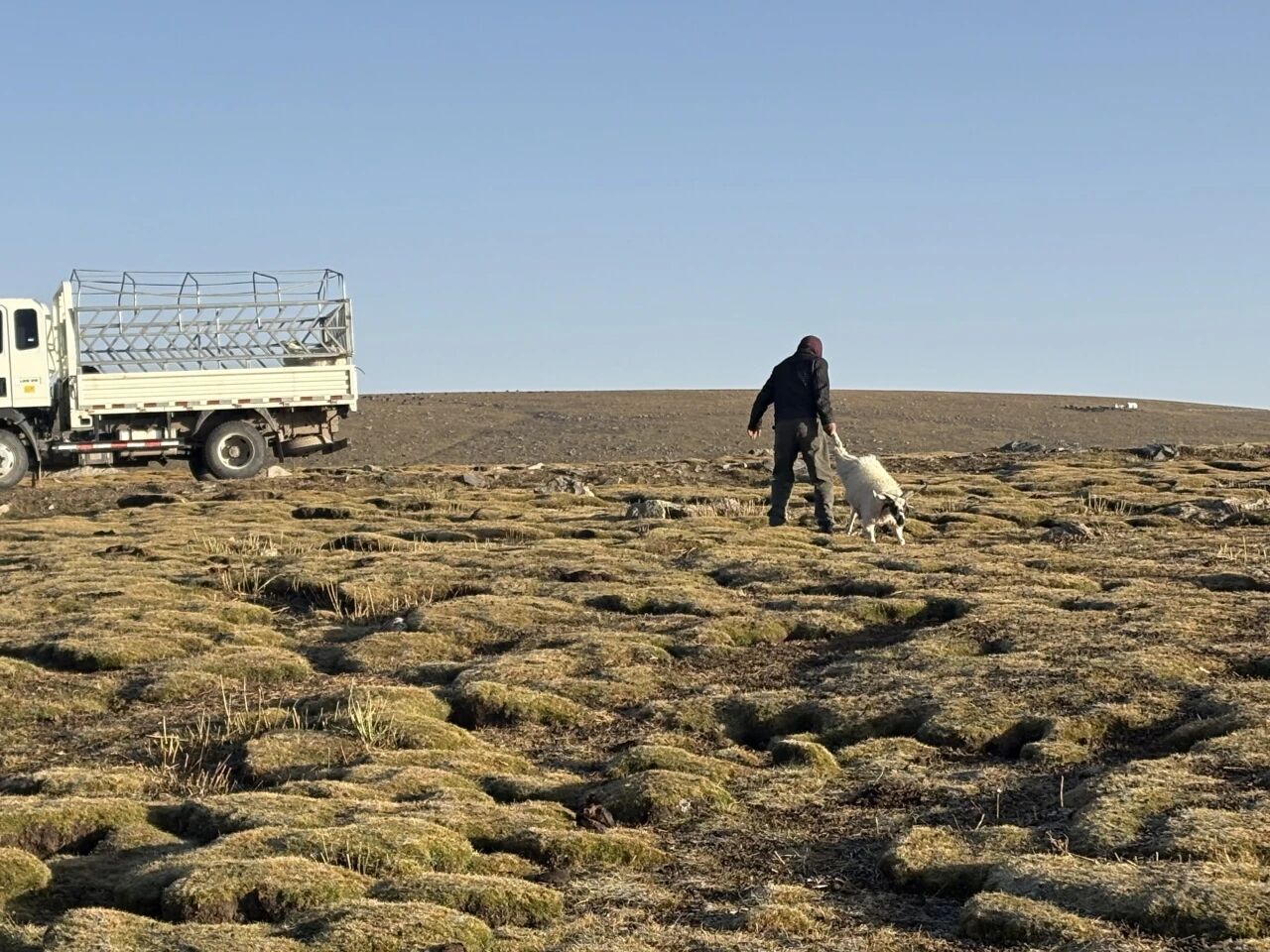
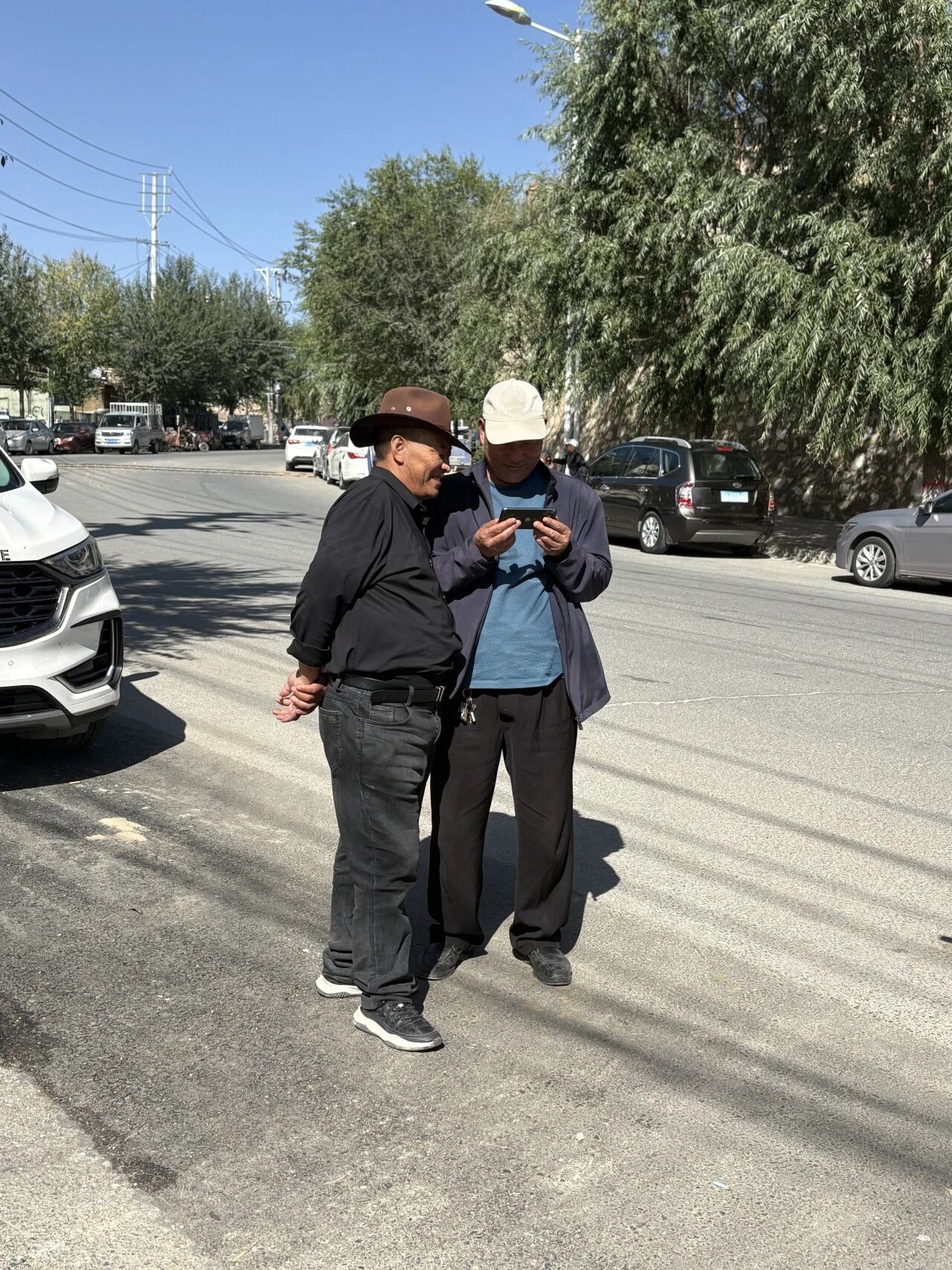
Live sheep trading is generally conducted only in the morning. On this day, only one sheep came. Five or six sheep buyers gathered by the roadside, now and then looking at videos of cattle and sheep sent by herders on their phones, appraising them and chatting. They were not worried about business. In this season, transactions are usually conducted up on the mountains. The young people had all gone up there, where they could buy seventy or eighty sheep in one go, or even more than a hundred, so herders no longer needed to come to the market.
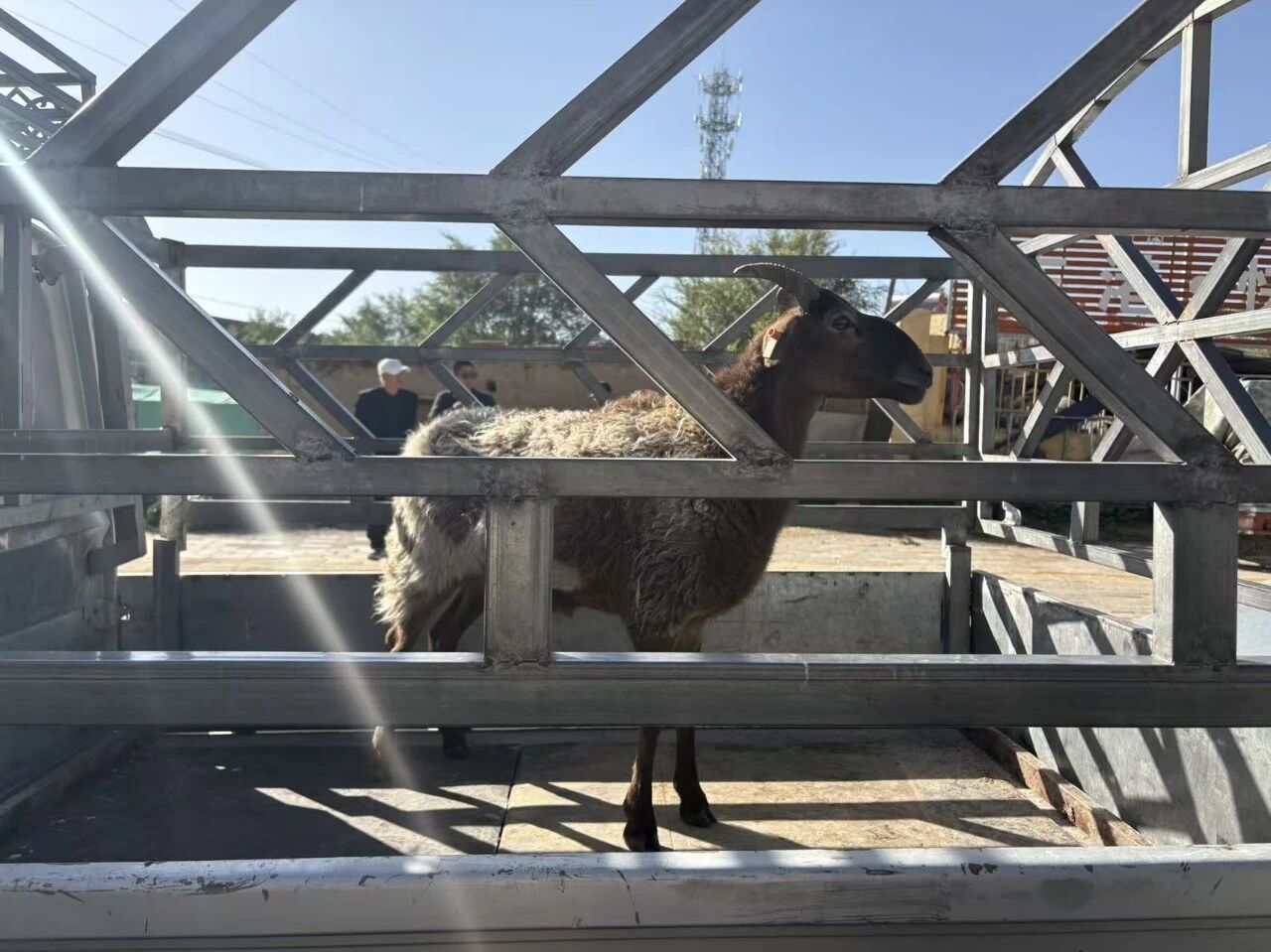
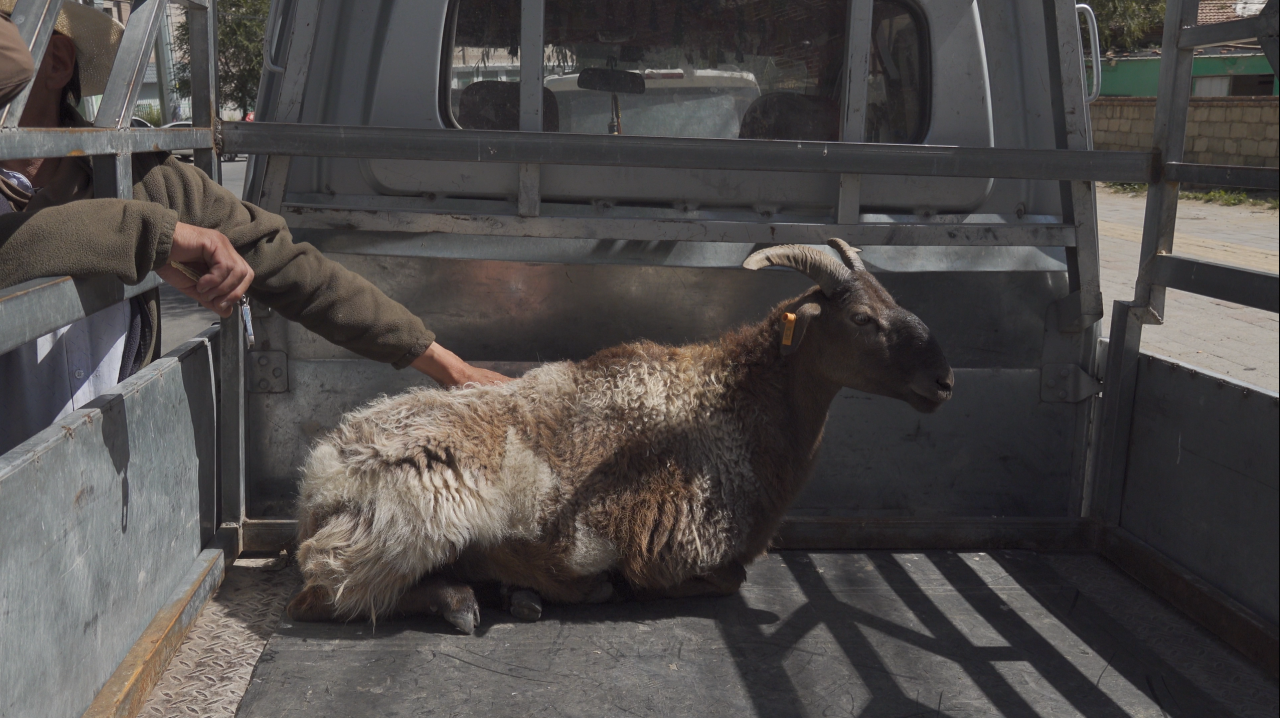
But they were all uninterested in this sheep. The sheep buyers said there was something wrong with the sheep, and the problem was in its head. That is why its gaze was sidelong and it walked at an angle, unable to walk in a straight line.
No matter how I looked, I could not see any sign that this sheep was ill. More likely, the reason was that they could not agree on a price. An experienced sheep buyer can estimate by intuition each sheep’s meat yield after slaughter and, taking market prices into account, make a reasonable bid. If the bid is too high, there will be a loss; if it is too low, other buyers will take the sheep.
According to them, this ewe, a little over two years old, was too thin and small, with only a little over 20 jin of meat. Calculated at this year’s wholesale price of 25 yuan per jin for sheep and 27 yuan per jin for yaks, it was worth at most 600 yuan.
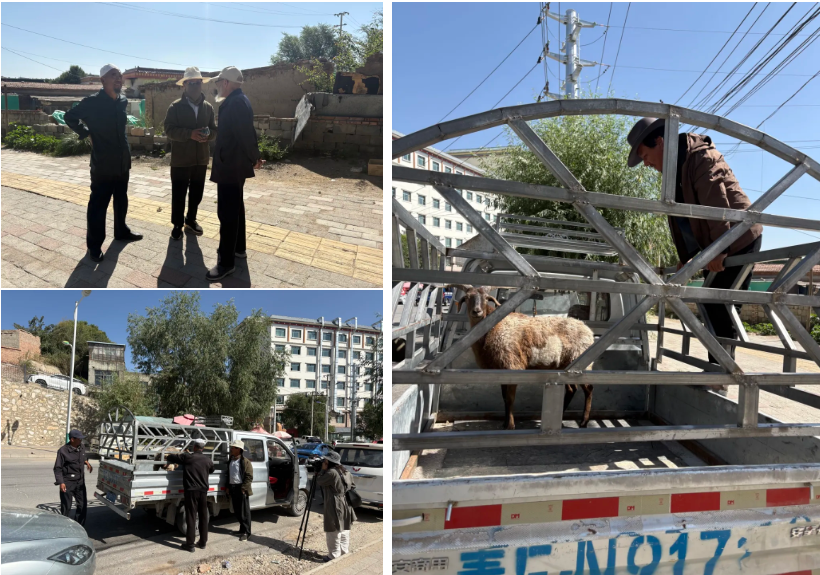
The owner of this sheep was a Tibetan man. He said the sheep was not ill! To sell it, he had driven his small truck from 30 or 40 kilometres away early in the morning. He wanted 900 yuan, which put off a few buyers who had come up to look at the sheep. After successive groups of buyers had each exchanged a few low words with the Tibetan man, they all left.
It was not until 12 o’clock that the sheep buyers waiting on Qieji West Road went their separate ways, and the only sheep in the end did not find a buyer.
III. Sheep Herders Trapped in Debt
Falling prices also reduced their income. At the same time, the fixed costs of livestock keeping and their annual spending did not decrease. All the herders I filmed mentioned that their own pasture was not enough. To make sure cattle and sheep had sufficient food, they either had to rent more pasture or buy feed. When cattle and sheep prices were unattractive, in order to maintain their income level, they would also expand the size of their herds, creating a vicious cycle.
He used the remaining few tens of thousands of yuan to repay the loan. By the time I came again this year, 200,000 yuan of the loan still remained. Every year, when the repayment date arrives, he has to borrow from relatives and friends first, and only repay them once the new loan is paid out; this cycle of borrowing has continued for seven or eight years.
By Wang Sheng’s own calculation, it will take him at least four more years to pay off the loan.
That, of course, is on the assumption that the present days of secret grazing can continue.
IV. The Single Men’s Alliance in the Grazing Ban Area
To save on fodder costs, the herders in the village have resorted to guerrilla tactics, sneaking back to graze on the pasture. Without this, their loan-funded grazing would be hard to sustain.
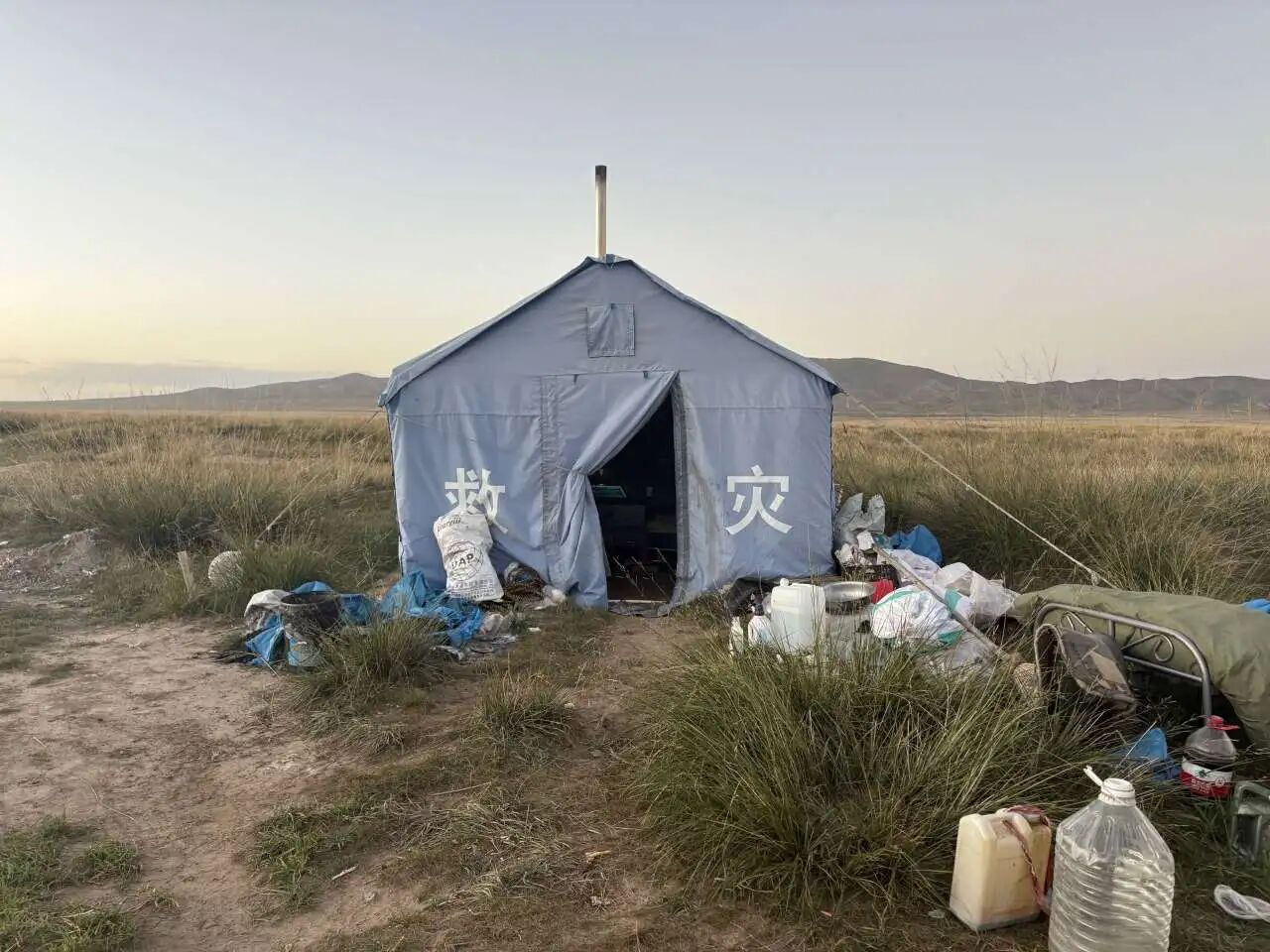
These herders almost all live in emergency relief tents, far from their families. The furniture in the tent is simple: a bed, a stove, and a basic table or shelf holding daily necessities, instant noodles and biscuits. The tent migrates with the flock. Wang Sheng has a house in a village dozens of kilometres away, but because it has been unoccupied for a long time, it has long fallen into disrepair, “How can we afford repairs?”
Besides, the flock cannot be left alone. Every morning, Wang Sheng drives the sheep out to the pasture to graze and brings them back in the evening, repeating the actions of turning the sheep out and rounding them up every day. He also has to keep watch over the flock’s health; if he finds a sick sheep, he needs to buy medicine and treat it in time.
On 13 September this year, when I arrived where Wang Sheng was, he was rounding up the sheep.
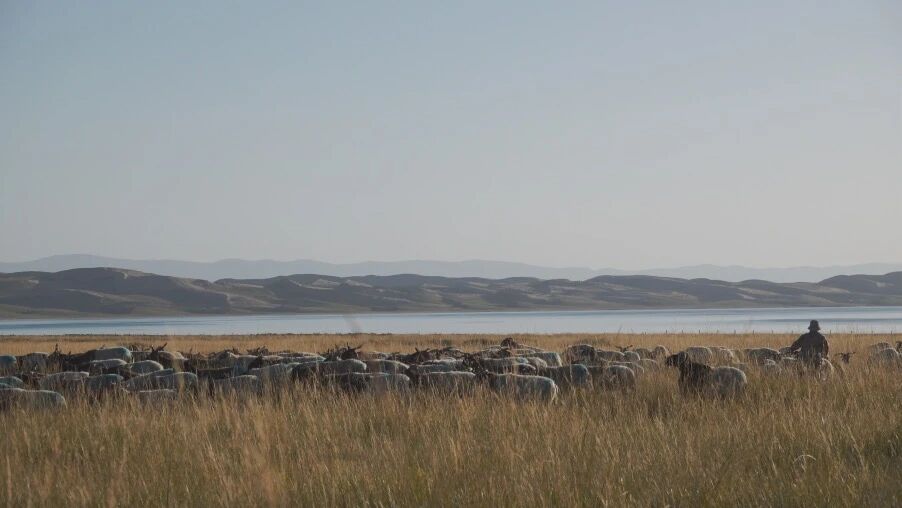
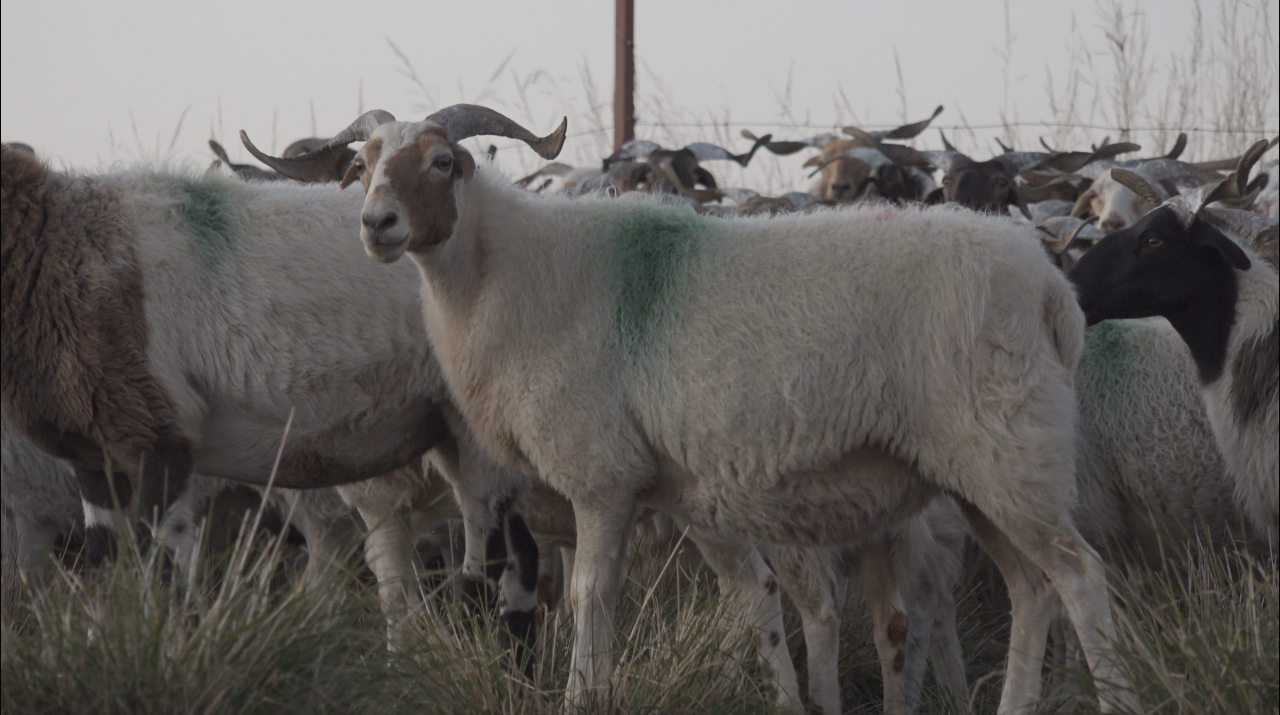
The flock grazed right by Qinghai Lake, moving through waist-high feather grass, with the grass around them already largely grazed down. Wang Sheng has to ride his motorbike to where they are grazing and, with the other herders from the village, ride into the flock on motorbikes, calling out loudly now and then. Once startled, the flock scatters and flees in all directions. The herders watch the flock’s movements, chasing or blocking them by bike and guiding the scattered sheep back into their own flocks.
It took more than an hour before the village’s 3,000-odd sheep finally returned home.
“Do you have any cordyceps?” During my days in Qinghai, I had already heard that other herders could earn extra income by digging cordyceps. “We don’t even have cordyceps here.”
What about going out to work? “A little over a hundred yuan a day — when will the loan be repaid?”
What about e-commerce? Doing butchering and processing themselves, or even bypassing the sheep buyers to find customers directly? Are there other subsidies? Every idea they could think of was ruled out by them.
“So what will you do in the future?” I pressed, feeling a little anxious for them.
Their answer was simple — hope. Hope for higher sheep prices, hoping from this year into next, and next year into the year after.
V. A Way Out?
When I returned to Qinghai to contact Danzeng Zongzhi, I found that he had already moved to Gonghe County, renting a small room for 190 yuan a month with his wife and his son, who was nearly three years old.
Coincidentally, his current home is very close to Qieji West Road, where live sheep are traded. As soon as I stepped out of the courtyard gate, I could hear sheep bleating in nearby courtyards.
Prices have recovered a little this year. Mentioning the cattle and sheep he had sold last year, Danzeng Zongzhi looked somewhat resigned: “Prices were very bad then, but if we didn’t sell, the grass wasn’t enough either. It was really a huge loss.”
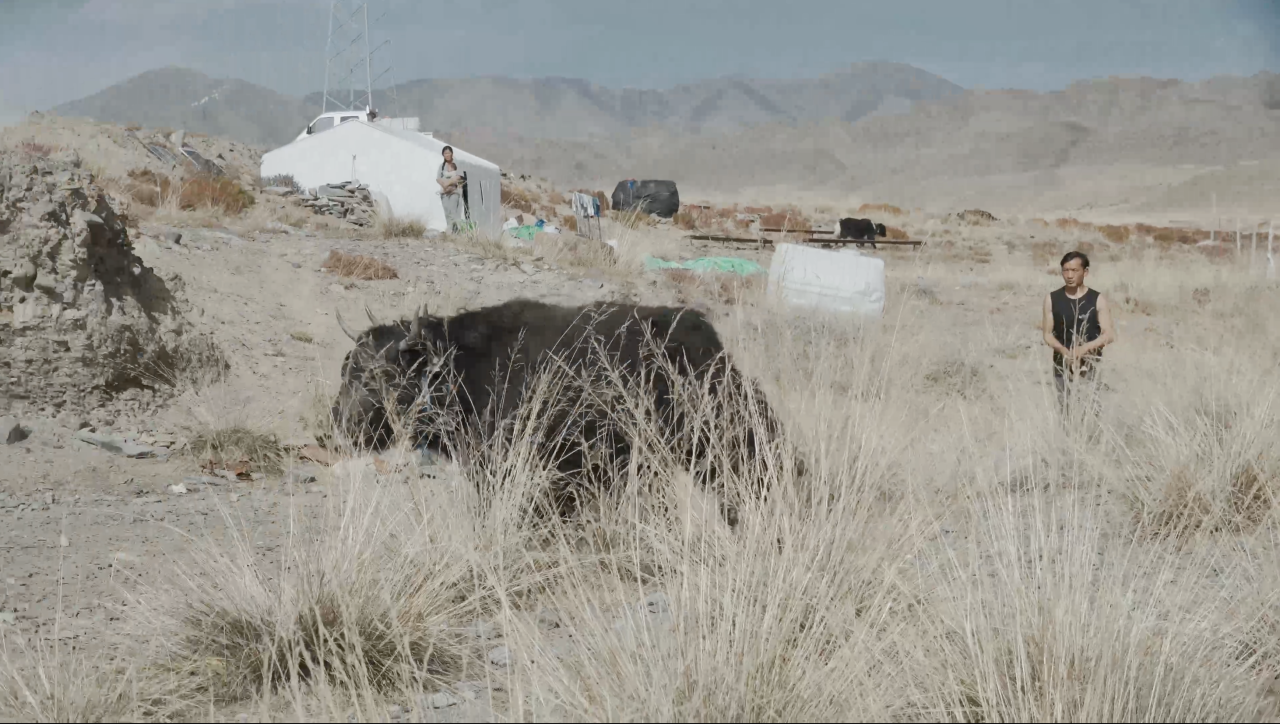
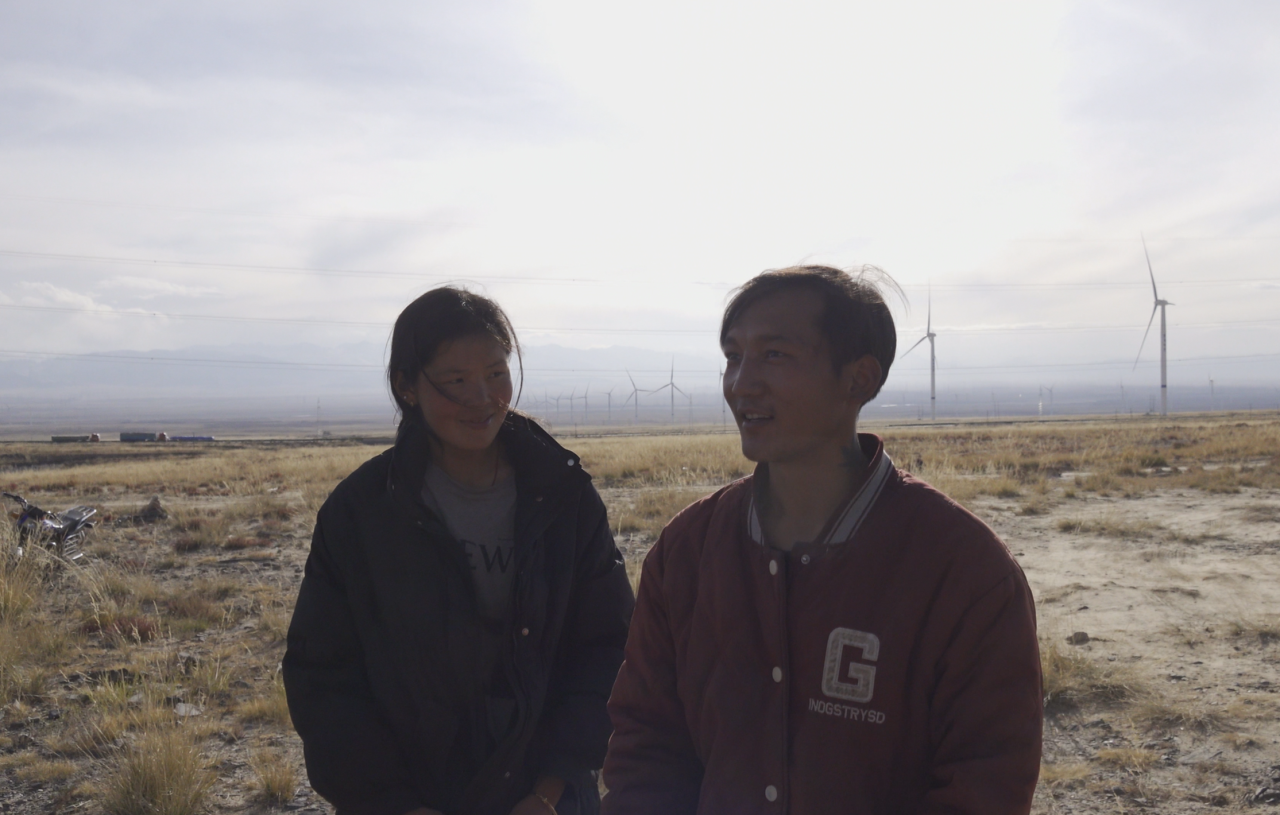
I was curious what Danzeng Zongzhi relied on to make a living in Gonghe County. The answer was somewhat surprising. After being turned down again and again in his job search, he chose to deliver food, completing at least 30 orders a day. This was the first time for him, in his twenties, to leave the pastoral area and work in the city. City life often left him without energy; no matter how late he got up, he felt tired, whereas in the pastoral area he was full of energy every day.
“Grazing is much simpler than this.” From a free herder to a delivery rider trapped in an algorithm, he had to struggle to adapt to the change of identity. In his eyes, this job was full of danger; he had to ride very fast to avoid being late. Not long before, he had just been fined 200 yuan for being late, which was equivalent to two days’ income. Danger also came from theft. After becoming a delivery rider, he had lost meals, and over the past two days he had even lost his own phone through carelessness, so he had no choice but to keep doing deliveries using his wife’s phone.
He also had to avoid, as far as possible, conflicts with rude people when delivering food. Once, a customer humiliated him: “Aren’t you just a delivery guy?” He was so angry that he threw the person’s food down.
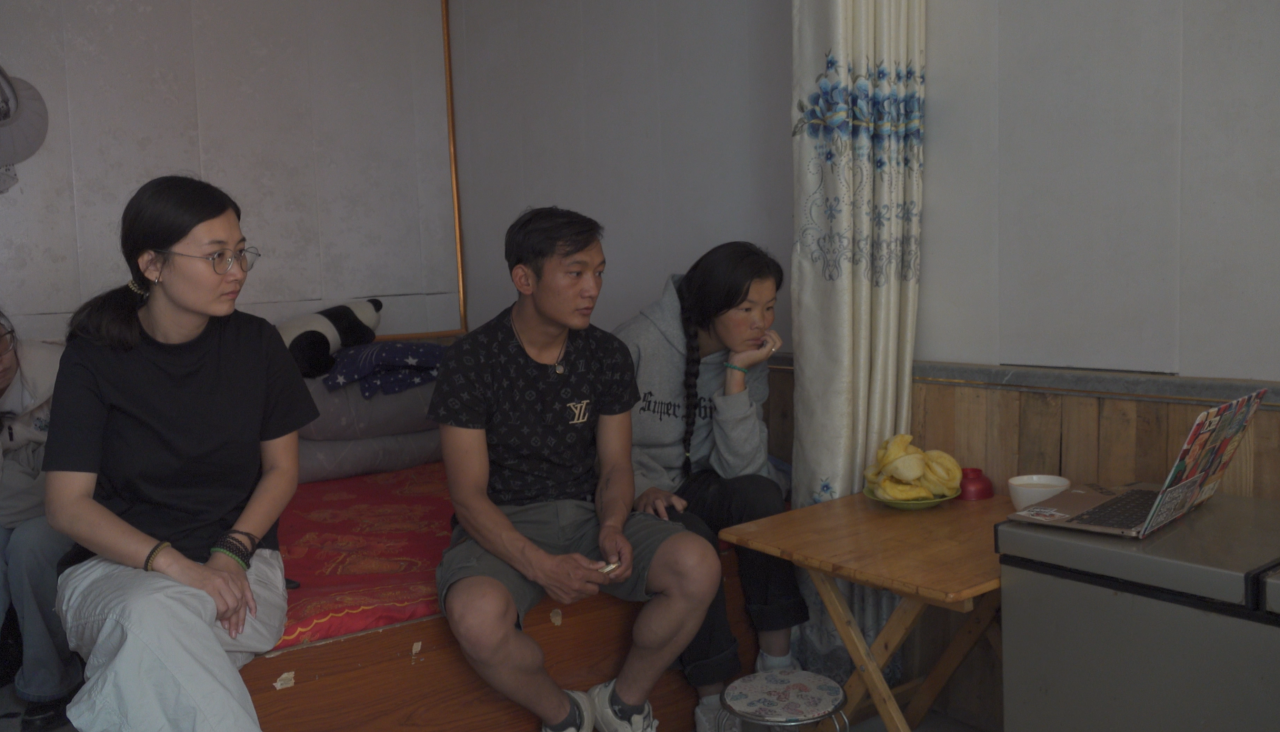
I had originally planned to carry on filming Danzeng Zongzhi’s story, following on from last year’s story. He agreed happily and asked me to follow and film him the next day. As it turned out, when I arrived at his rented room at the agreed 9 a.m. the following morning, I found he had not yet got up. I instinctively thought I had run into a young man who liked sleeping in. But after a while, he came out listlessly, washed his face and told me that the previous evening he had taken on a last-minute all-night delivery shift and had only returned at 6 a.m., so now he was too exhausted to take us out filming.
He missed pastoral life very much. “The most comfortable thing is grazing at home. But not having enough pasture is a huge problem. If there are too few cattle and sheep, a family of five or six cannot rely on them for a living. Feeling helpless, I wondered whether there might be another way out, and that is why I chose to come and work here.”
Perhaps this attempt to find a way out will ultimately end in failure. He told me that in a few months he planned to go back, perhaps to start grazing again.
However, even though prices have risen a little this year, the underlying market imbalance has not been fundamentally reversed. For example, imported meat is still flooding the market in large quantities. In the first three quarters of 2025, cumulative import volume of beef and mutton remained steady; of this, beef alone accounted for 2.125 million tonnes, a year-on-year increase of 1.0%.
Imported meat prices also rose sharply — beef had an average landed price of 5,225.12 US dollars per tonne (about 37.88 yuan per kilogram), and mutton an average landed price of 3,846.16 US dollars per tonne (about 27.88 yuan per kilogram), a year-on-year increase of 23.5%. Yet even after successive mark-ups from the border to retail, they still have a clear price advantage over local meat at 60–70 yuan per kilogram.
As a result, there has also been a trend of farmers exiting cattle and sheep farming nationwide. By the end of the first three quarters of 2025, the national cattle inventory was 99.32 million head, down 2.4% year-on-year and 0.6% period-on-period; the national sheep inventory was 290 million sheep, down 6.9% year-on-year and 3.7% period-on-period.
Will the better cattle and sheep prices that the herders are hoping for really come?


At 19:40 on the evening of 19 December, the documentary “Whose Table, Whose Pasture” directed by Jiao Xiaofang and Qiong Wu Danzeng will be screened at Guangzhou Pazhou South TOD [Fengnianqing Space], and, after the screening, director Jiao Xiaofang will join online for a Q&A. You are welcome to watch!
A Cleaner Named A-Mei Just Wants to Eat Properly | Workers’ Table
In Malaysia, Chinese Traders Only Want Grade-A Durians
“Fake Meat” Ousts Real Meat: Herders, Tables, Amazon
Watermelons Guaranteed Sweet, Growing Watermelons Guaranteed Bitter
Ma Lan in Shenzhen, Without a Meal Companion
Why Has the Sweetness of Childhood Disappeared?
Technology, Pesticides and Drone Operators: The Other Side of the “Technical Revolution”
Who Drove Away the Wet Market?
Will Fresh-Food E-commerce Make Wet Markets Disappear?
When Drones Become New Farm Tools: Who Is Defining “Scientific Farming”?