From a Children’s Playground to a Workhorse Restaurant: McDonald’s 90-Second High-Pressure Cycle

Foodthink says
McDonald’s has two faces: it used to be the children’s playground we loved, but now it is a quick-fix restaurant where young “workhorses” can quickly fill their bellies. It is both a place of consumption and a small factory.
McDonald’s back kitchen is open-plan, yet we cannot see the highly precise “production campaign” taking place inside. In the myth of the fast-food empire, everything is standardised: chicken thighs thawing at 1–4°C, fryers held at a constant 160°C, bag after bag of vacuum-packed shredded lettuce, and the ear-piercing beeping.
A serving of chicken nuggets, a burger: for consumers, these are commonplace fast-food items. Why do they trap employees in a high-pressure 90-second cycle? Do crispy chips need ketchup? Why does this seemingly small question provoke an angry complaint?
In episode 61 of the “Food Talk” podcast, we invited Jiang Ke, who had worked as a duty manager at McDonald’s for seven months. She joined with a passion for running a restaurant and researching food and beverage operations, yet under the hard target of getting each order out within 90 seconds, she experienced the pressure of “human-machine unity” every day. This article is compiled from this podcast episode.
This/Episode’s/Guest

Jiang Ke | A F&B beginner who loves analysing the people, food and operations of a restaurant; usually watches Yong Ge while eating
This/Episode’s/Host

Yu Yang | Foodthink editor who, as a child, once “got a beating” for insisting on McDonald’s

Li Ye | A person with ADHD who has been a plane chef, rolled shawarma, and opened a breakfast shop on the iPad
From a Children’s Playground to a Workhorse Restaurant
Jiang Ke: I have always been interested in the food and beverage industry. When I was looking for a job in March 2025, I also asked DeepSeek how I could systematically learn about the industry. It recommended several major fast-food chains, such as McDonald’s, KFC, Yoshinoya, and Lao Xiang Ji, and said that McDonald’s is known as the industry’s “military academy”. At the time, I happened to see a McDonald’s vacancy on a recruitment app, so I decided to give it a try.
I have many friends who really love McDonald’s, but I am not, in the conventional sense, one of those so-called ardent fans of McDonald’s, and I only eat there a few times a year. Before working at McDonald’s, I knew relatively little about it; my main impression was simply that it was a very popular restaurant. It was only after I had started working there and become involved in its actual operations that I realised just how large its overall scale was, and gained a clearer understanding of its identity as the world’s number-one food and beverage enterprise.
Yu Yang: I don’t go to McDonald’s all that often either, but in my childhood, I definitely felt that McDonald’s was a lively, modern space. A lot of children used to go there to play, the McDonald’s aunties would look after them, and there were clown shows. But in recent years, I feel McDonald’s has become a relatively quiet place. Workhorses keep quiet and just wolf down their food. What is it like when you actually go to work at McDonald’s?
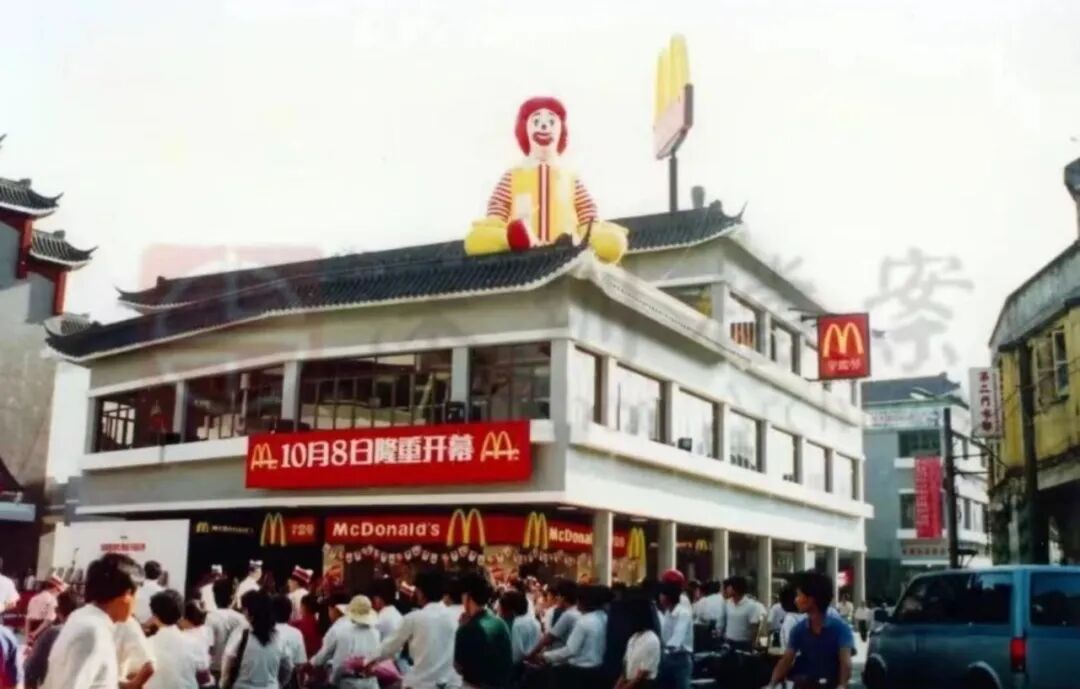
◉On 8 October 1990, the first McDonald’s in Mainland China opened on Guanghua Road in Shenzhen. At the time, McDonald’s represented a vibrant modern lifestyle for Chinese people. Image source: McDonald’s official website.
Jiang Ke: Yes, I think that over the years people’s impressions of McDonald’s have become quite consistent. As a child, you might only have been rewarded with a McDonald’s meal if you had done well in an exam. Why did I say I used to go there less? It’s because in my hometown, a county town in Guangxi, there used to be very few McDonald’s restaurants in that area. But there were a lot of knock-offs, like “麦xx” and the like. Once there was a real McDonald’s, I noticed the average spend per person was quite high; a McDonald’s meal used to cost more than 20 yuan. Now a McDonald’s meal may still be more than 20 yuan, but with overall prices rising, the service you get for the same per-person price is certainly different. McDonald’s positioning has also changed from before; it used to be a warm, friendly community.
Yu Yang: Now it feels more like a workhorse restaurant.
Jiang Ke: Those people from back then have grown up, too, and become the new workhorses.
Li Ye: McDonald’s in the past was a bit like today’s Xi Bei, the choice of this generation of parents. Both have been family-oriented, with staff specifically taking the children to play inside. That is why their prices have been a little higher.
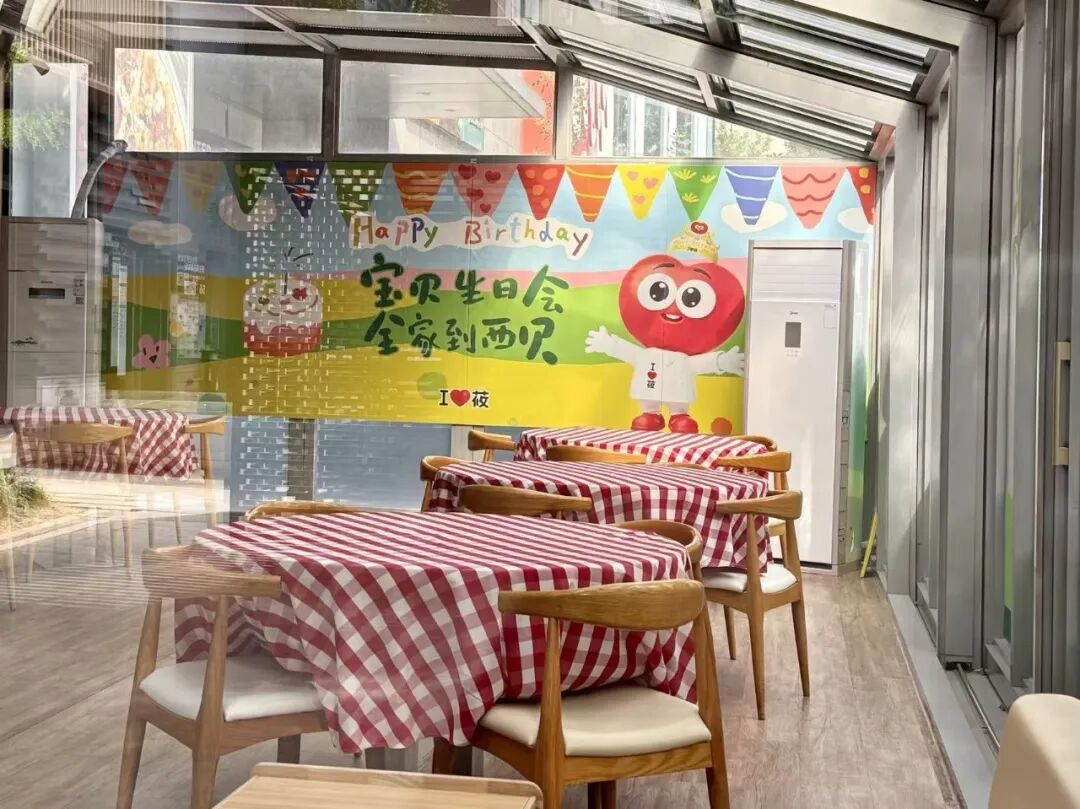
◉The “child-friendly” atmosphere was once one of Xi Bei’s marketing strategies. Image source: Xiaojing
Jiang Ke: Right, all these additional services come at a price. If you want to create a children’s play area in the restaurant, you definitely need to consider rent and space utilisation, and you also need one or two employees there to look after the children. These are all costs, and as things stand it does not seem very feasible.
It Turns Out McDonald’s Is a Small Factory
Yu Yang: McDonald’s back kitchen looks open-plan, and customers outside can see it. In your day-to-day workflow, what is it like working in this space? In total, how many areas can McDonald’s space be divided into?
Jiang Ke: The simplest job is working in the dining area with customers: clearing trays, mopping the floor, or taking orders and asking for good reviews. Apart from floor duties, for newcomers, the first station they learn is making drinks, called the “C line” in McDonald’s jargon. Making drinks is actually quite complicated: five or six types of drink, different ice levels, and you have to keep up with the pace of serving orders. Some employees in their 60s might not be assigned to the drink-making area. It is a fast-paced role. Because at McDonald’s virtually every order includes at least one drink, when it is especially busy, you are almost constantly making drinks.
In addition to the drinks area, the most important part is our production area, for example the burger assembly area, and the fry area, the area where the chicken wings are fried. That is the basic division, and when it is particularly busy, it can actually be subdivided even more finely. Within the fry area, because McDonald’s chicken wings are coated on the spot, there is a dedicated wing-coating station, and there is also a station for frying chips, called the chip station.
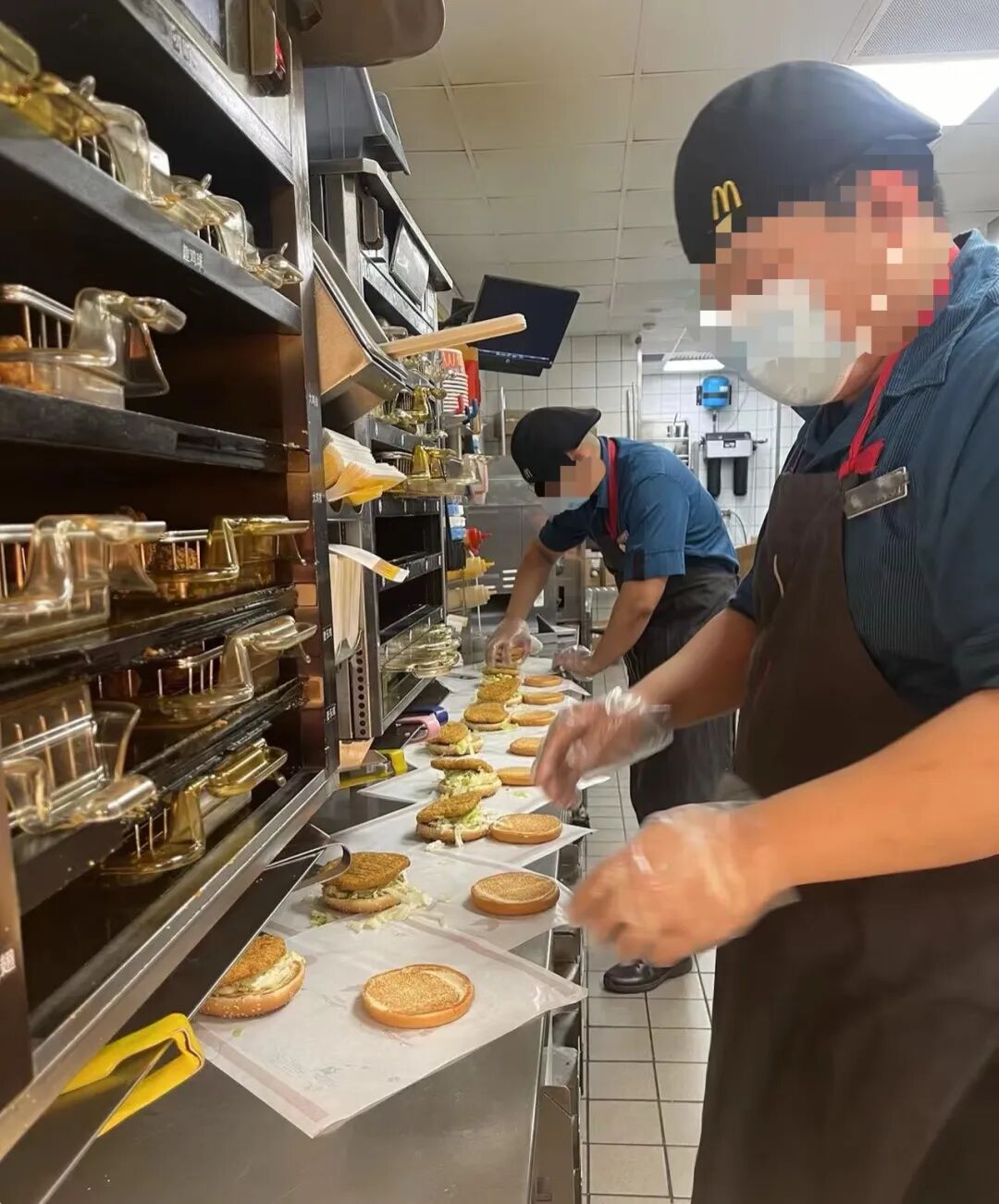
◉During peak order times, staff at a McDonald’s restaurant are hurriedly making burgers. Image source: Xiaohongshu user @大黄跟小展还有阿铭
For example, there may be three people in the production area: one person puts different buns into the bun toaster according to the order, a role called the starter; another person is responsible for grilling the patties, in the grill area; and the third person is responsible for assembly. This is McDonald’s most standard assembly line. In practice, though, it rarely reaches that standard, and if it is not busy, one person covers all of these jobs.
Yu Yang: So, as the duty manager, do you keep working at one station, or do you oversee the whole operation?
Jiang Ke: In principle, a duty manager should not be stuck at a single station. For example, you cannot just stay there coating chicken wings all the time. You need to maintain overall control. The most suitable station for a duty manager is the handover or collection point, because from there you can see both the customers and the kitchen.
Yu Yang: Looking at the workflow, what do you do first when you arrive in the morning to start the day?
Jiang Ke: When I arrive at 5 a.m., it is just the duty manager and one employee. To keep labour costs in check, not everyone needs to be in. At that time of day there are few orders, so the duty manager does some administrative work, while one all-round employee does some production work. First, all the machines and equipment have to be switched on; they need a warm-up period. For example, the coffee machine needs to warm up for half an hour before it can run normally. The griddle and fryer also need to heat up.
The duty manager has to take temperature readings of all the ice storage, cold storage, and chilled food. Roughly a dozen or so different temperatures need to be checked, and then uploaded to a system to verify whether your equipment is up to standard. For instance, to determine whether a thawed item is acceptable, you have to check whether its temperature is between 1 and 4°C. For example, three items need to be thawed: the grilled chicken thigh, the chicken wings, and the chicken thigh in the McSpicy Chicken burger.
Once the equipment has warmed up, our staff in charge of cooking the meat grill and fry the pork, beef, and chicken patties needed for breakfast. At this point, these foods also need to be temperature-checked. They all have a temperature standard; for example, chicken must reach 165°F. Once that standard is met, this data is also uploaded to the system to prove that your grill is working properly. If a food safety issue were to arise, we can say that a variety of standards are in place, and that data records are kept.
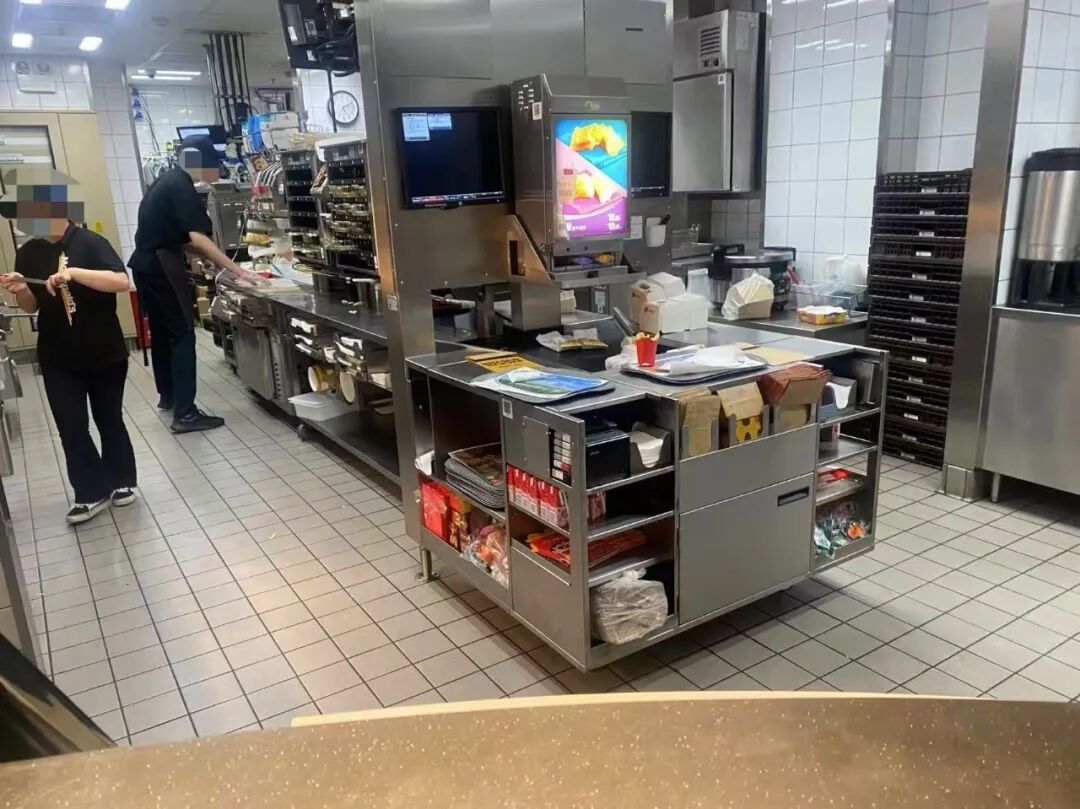
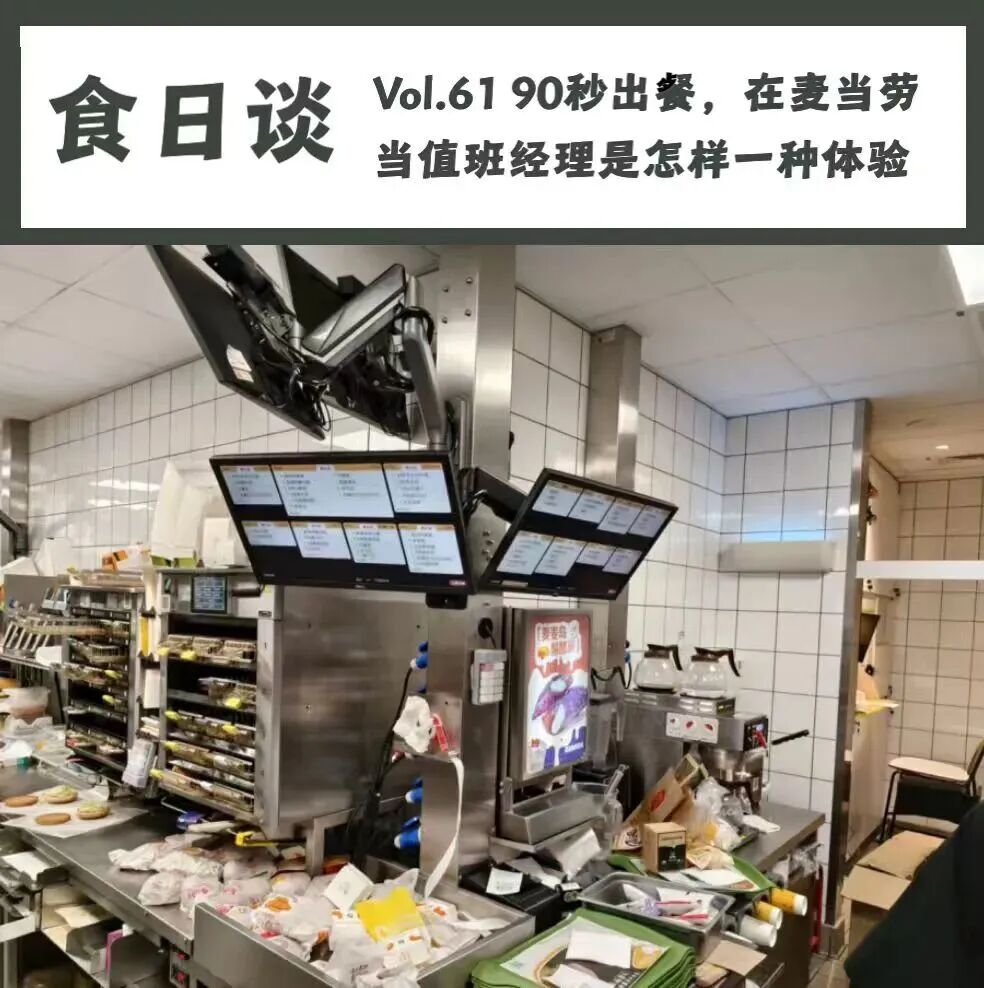
◉Compared with a manufacturing plant, McDonald’s back kitchen is only a cramped space, yet it is almost entirely made up of automated machines and electronic equipment. Image source: Qingtai Yinwu
Li Ye: From what I can tell, it requires the duty manager—or, indeed, anyone working at McDonald’s—to be a multitasker, someone who has to do many things at once. For someone like me with ADHD, whose attention is already scattered, could I actually be quite good at this kind of work?
Jiang Ke: Although the work is fragmented, you still need to keep a very clear head. While you are doing one step, you have to work out the next step, or even the one after that, and know exactly what you are supposed to be doing.
For example, between 10 p.m. and midnight, only one employee and the duty manager are working, and it is another busy period. By then it is close to closing time, so you are unlikely to have prepared a lot in advance. You need to keep track of how much you have on hand, and if it is not enough, how long each item takes to prepare: fried chicken nuggets take three minutes, fried chicken wings take seven minutes, and chips take three minutes. In other words, you need to organise your work according to orders and the varying preparation times for different foods.
Li Ye: You need to keep a clear head, know what to fry first and what to grill afterwards, so you can arrange your work sensibly and not fall into a panic.
Jiang Ke: Yes, many customers just cannot understand that we have no chicken wings. They may not know that the wings are coated and fried on the spot. They would just think, “Wow, this is fast food, and I actually have to wait more than ten minutes for an order? You really are unreasonable.”
Li Ye: Then would there be customers who just want it freshly fried, and would they be willing to wait?
Jiang Ke: Many customers make this request. McDonald’s has a concept called golden quality. For chips, once they come out of the fryer, they must be sold within seven minutes; if they are more than seven minutes old, in principle they should be discarded. But from a practical operational standpoint, I don’t think any restaurant in Beijing or across China has reached this so-called golden quality standard. Because the time is far too short: frying a batch of chips takes three minutes, and you only have seven minutes to sell them. There is not enough staff, so it is impossible to have a dedicated person watching the chips.
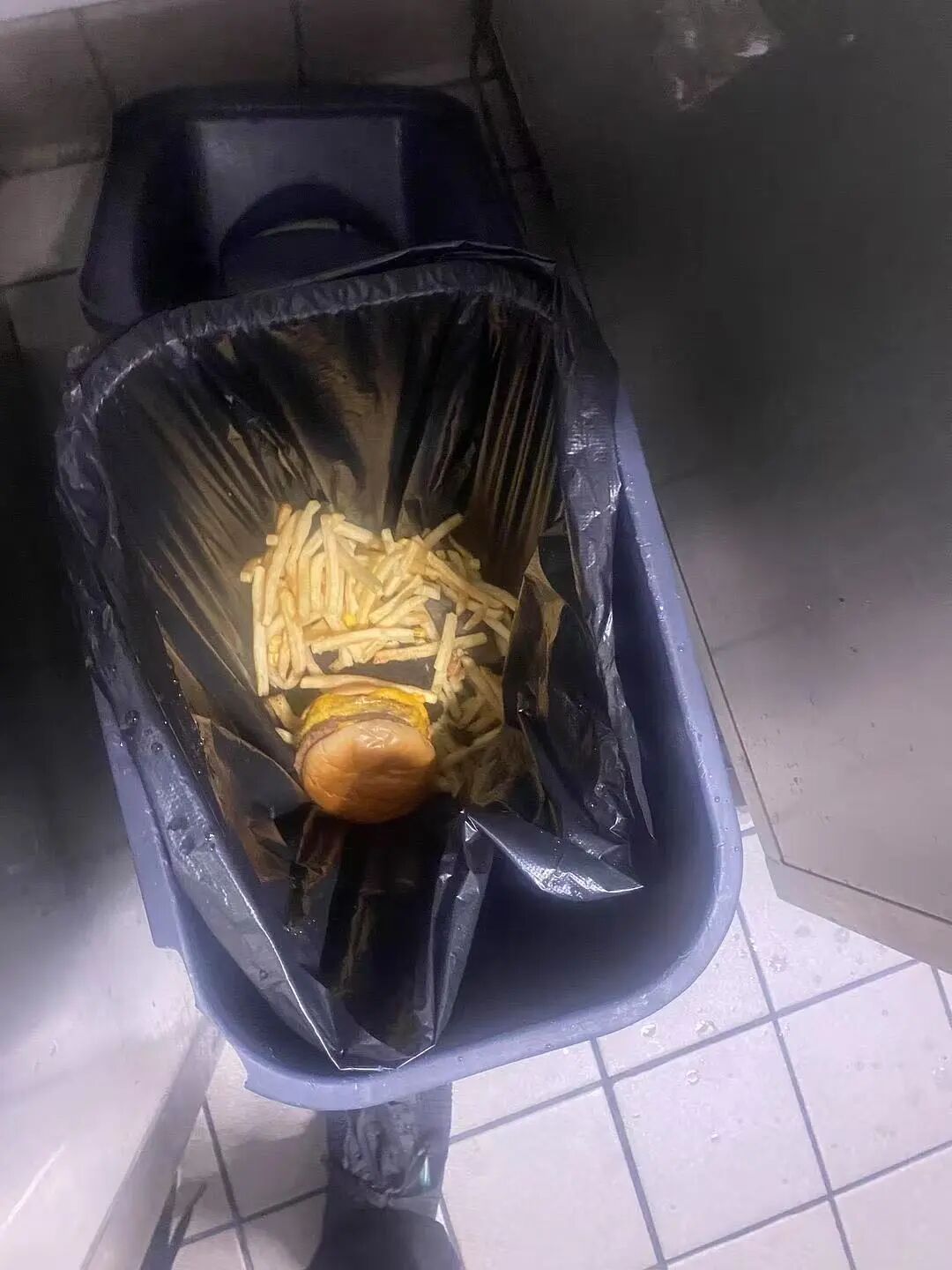
◉Chips and burgers thrown into the bin. McDonald’s once claimed that it could improve service efficiency by predicting customer demand: before customers had even ordered, the food had already been made. If a burger is left unsold for more than 10 minutes, or chips for more than 7 minutes, they are thrown away. Image source: Qingtai Yinwu
Yu Yang: It seems as though work at McDonald’s is standardised, and every step involves working with the machines, but in practice it really tests how you organise your workflow. You mentioned just now that the fryer temperature is fixed; in these rather busy conditions, can some items become burnt because they have been left frying for too long?
Jiang Ke: McDonald’s equipment is quite intelligent. There are seven or eight different fryers, each of which can be set to different temperatures and corresponding times. For chips, the time is three minutes and the temperature is 160°C. When the time is up, it beeps, something like “beep beep beep beep” or “VerVerVerVer”, and at that point you need to lift out the basket of chips.
This kind of situation can put us under a certain amount of pressure, because the sound is especially sharp, like the whistles you hear in many factories. The intention behind these methods is to ensure the products are up to standard. But if you spend a long time in the fry area, it can make you feel a bit dizzy, because the piercing sounds keep ringing out.
Yu Yang: It sounds as though McDonald’s back kitchen is like a small factory, and the level of smart automation is quite high.
Jiang Ke: McDonald’s really does work like a factory, not like an ordinary kitchen as we usually understand it. This relates to an interesting fact about McDonald’s. One day a customer brought over a piece of fruit and asked, “Can you peel it for me?” We told him, “I’m sorry, we don’t have any knives here.” Yes, McDonald’s has no knives. By the time the lettuce gets to us, it is already cut into lettuce strips and packed in vacuum packaging. For example, there is a dedicated tomato slicer for cutting tomatoes.
Crispy Chips Without Sauce
Yu Yang: What share of a restaurant’s overall orders do delivery orders make up?
Jiang Ke: In terms of order volume, a restaurant may have 700 to 800 dine-in orders and 100 to 200 delivery orders. In terms of revenue, though, the average dine-in order value is around 27 to 30 yuan, whereas the average delivery order value is around 50 yuan. I don’t remember the exact figures all that precisely, but the gap in average order value is very large, so in revenue terms delivery may account for roughly a quarter to a third.
Because the minimum order value for delivery is fairly high, it is not possible to order just a single cola or one burger and have it delivered. Some discounted meals are also not sold online; for example, the much-loved “poor ghost” meal cannot be ordered online.
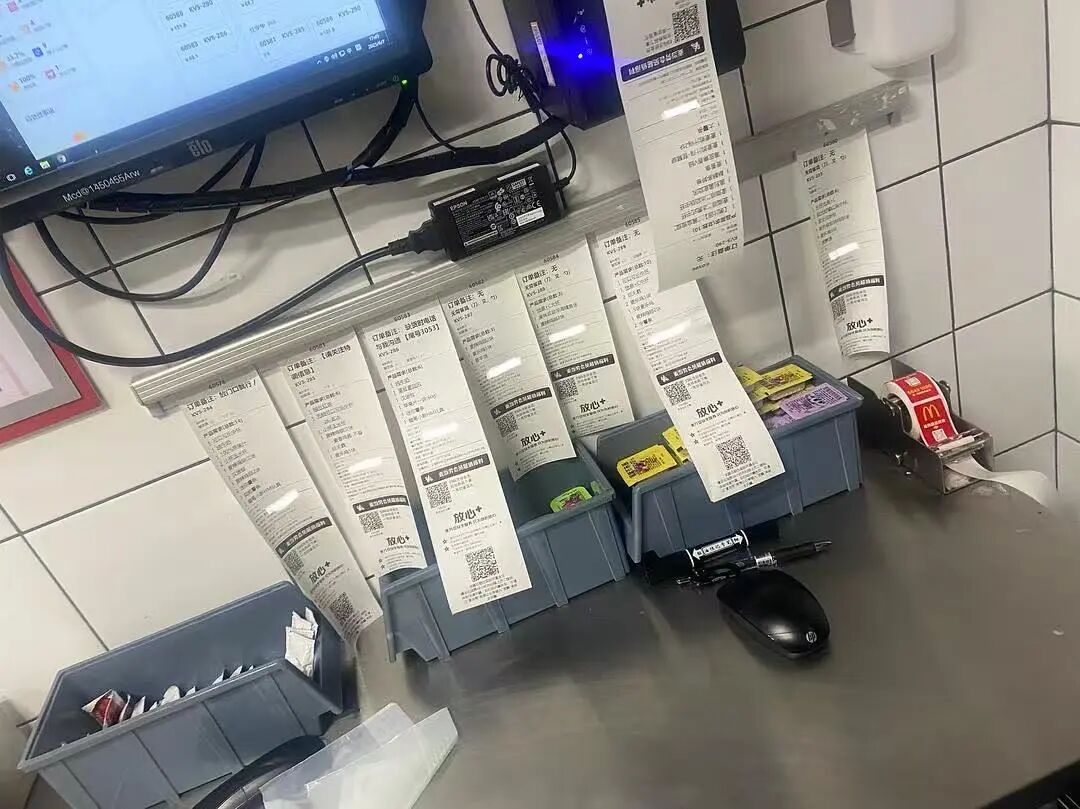
◉Delivery orders flooding into McDonald’s on a rainy day. Image source: Qingtai Yinwu
Yu Yang: I used to see a lot of McDonald’s delivery riders wearing red, but I have seen fewer of them lately. Does McDonald’s still have its own delivery riders?
Jiang Ke: McDonald’s used to advertise that it had its own delivery riders, and many customers also mistakenly thought that we had delivery riders. But in fact, now, for cost reasons, McDonald’s mainly partners with third-party platforms such as Meituan, JD and Ele.me. These platforms assign stationed riders to McDonald’s, so a fixed number of riders are based there taking orders, but they are certainly not as bound to keep taking orders for McDonald’s as McDonald’s own delivery riders used to be.
What often happens is that when it is raining heavily, the price per order a stationed rider gets for taking one of our orders is the same as what they usually get, perhaps around 6.5 yuan or 7.2 yuan. But when it is raining, prices per order are soaring all over the place, so why should I be taking McDonald’s orders? Many stationed riders simply do not take McDonald’s orders at that point, and there is a serious shortage of delivery capacity. At such times, McDonald’s, like every other restaurant, outsources the orders to all the platforms.
On one occasion, when it was hailing, many riders were unwilling to work; there was even an hour when no one would take the order. But we had a huge number of orders, so all we could do was call customers one by one to apologise, asking whether they wanted to cancel or wait a little longer. Customers would say, “Can’t you just have your own riders deliver it?” Then we had to explain from scratch that we do not have our own riders now.
Yu Yang: Then do you get complaints from delivery customers?
Jiang Ke: Our order volume is fairly large; including delivery, it comes to around 1,000 orders a day, and complaints are a regular occurrence. The most common are customers telling you in person, “I don’t think the chips are quite okay” or “This meat has gone a bit cold.” That means we have not met the golden quality standard mentioned earlier, so we immediately make it again for them, and the duty manager also has the authority to do so. When delivery customers call to complain, we may agree to give them a voucher.
All of the above are complaints that do not involve the McDonald’s system; complaints that do involve the system are further divided into three levels. The first level is that each time customers place an order through the mini-program or app, they receive a service feedback survey; that feedback is logged in our McDonald’s system. If there is a complaint about hygiene issues, it is fed back to headquarters through this channel, after which it affects your store’s rating, and that rating in turn affects the store manager’s bonus. I don’t know whether any of you have ever had an employee at McDonald’s ask you for a positive review; this is to boost the store’s rating.
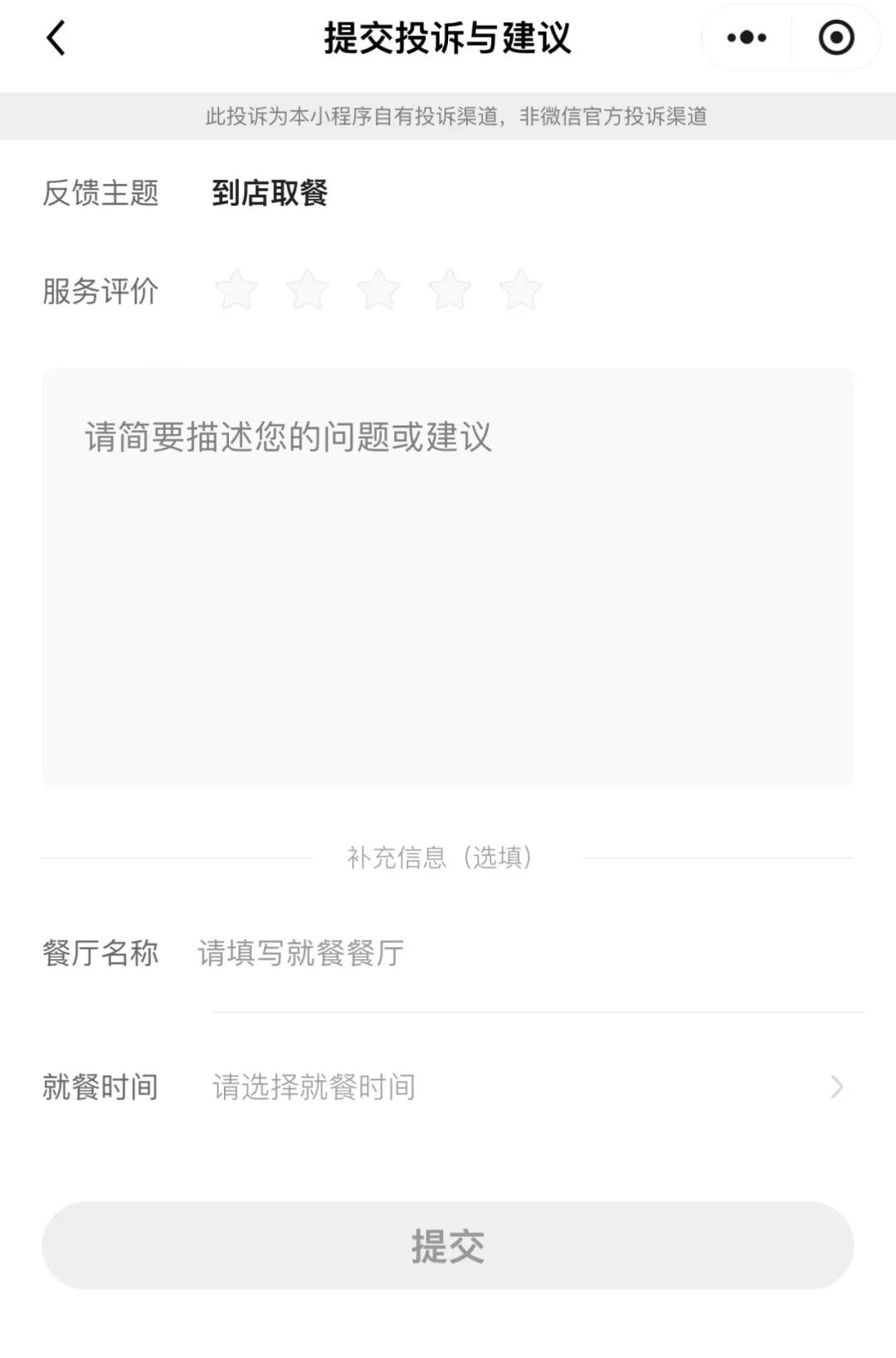
◉The complaint page on the McDonald’s mini-program.
Jiang Ke: The second level is receiving complaints on delivery apps or Dianping. We look after the ratings on these platforms, because the higher those ratings are, the more promotion we get, and this actually affects delivery revenue.
The third level is calling McDonald’s complaints hotline to make a complaint. Within McDonald’s, this situation is even more urgent; it requires you to analyse and handle the matter immediately. On one occasion, I had a customer complain that I had not put sauce on his chips, but he had ordered crispy chips, and in principle crispy chips do not come with sauce. I explained to him that crispy chips do not come with sauce, and that if he wanted sauce, he could add a note next time; I could give him as many sachets of ketchup as he wanted, or, on this occasion, I could also immediately have a delivery rider bring the sauce to him. But he would not let it go and insisted on calling to complain about me. Afterwards, we received a call from headquarters about it almost immediately. In the end, however, it was resolved; as long as your explanation is reasonable and backed by evidence, headquarters will not mark it in the system as the restaurant’s responsibility.
Yu Yang: It sounds as though, when it comes to complaints, McDonald’s is relatively reasonable, a bit better than many food and beverage businesses now, such as delivery platforms or tea and coffee shops.
90-Second High-Pressure Cycle
Yu Yang: Every time I order at McDonald’s and see the staff work together to send out meals, I inexplicably get a very exhilarating feeling, as though you were all waging a campaign together. Perhaps some people share the same feeling. But in reality, we don’t really understand what kind of pressure you face during peak dining times.
Jiang Ke: Peak periods are indeed quite energising. They fall mainly into two kinds: the kind I can predict, and the kind that is completely unpredictable and comes out of nowhere. For predictable peaks, such as breakfast from 7 to 9, lunch from 11 to 1 and dinner from 5 to 7, or similar busy periods, we first arrange for more staff and stock more supplies, such as ingredients like vegetables and meat, keeping them in the freezers nearby, or we fry more chips, make more cola and bread more chicken wings. Once we have those preparations in place, things come together quickly; we can immediately get the orders to the customers waiting up front, and the whole process feels smooth and comfortable.
But if 10 orders suddenly flood in, and you then discover that there are no burgers to be found and no chips left, a serious bottleneck will occur. Our standard for frying one batch of chips is three minutes. If I have not a single chip left, but people coming to McDonald’s these days usually order chips as well, that means those orders cannot be sent out for three minutes.
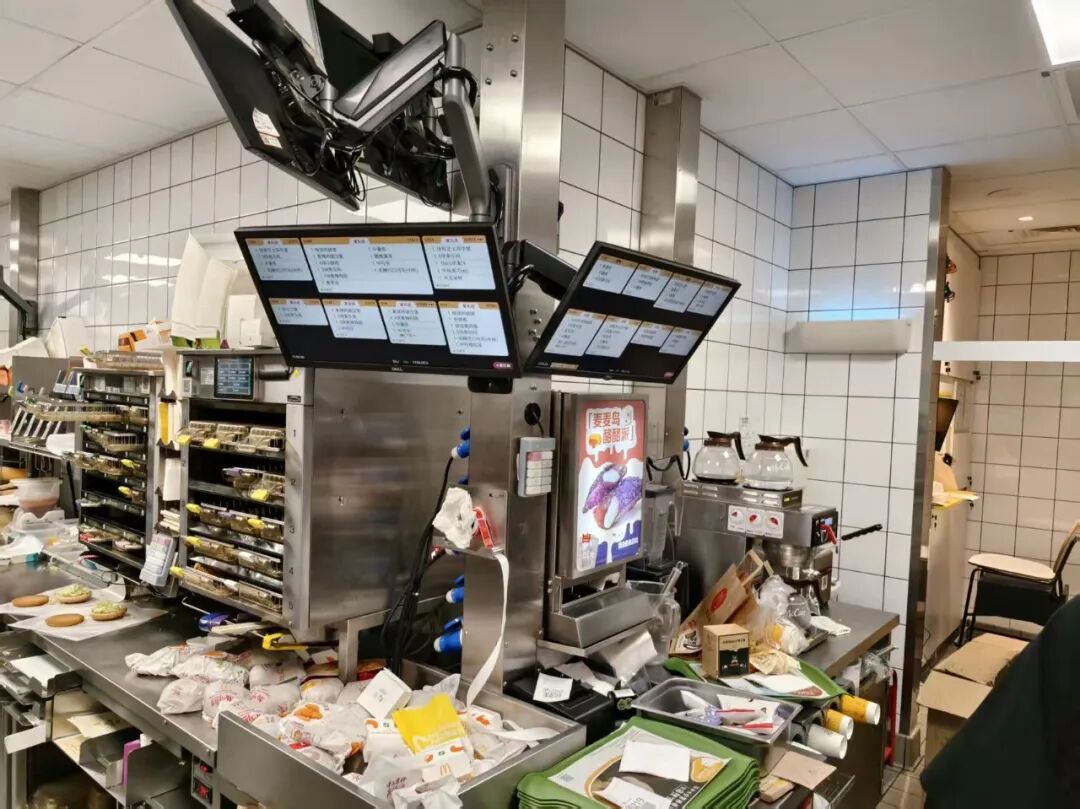
◉The chaos at the restaurant where Jiang Ke works after a sudden surge of orders: both screens are full of orders waiting to be sent out, enough to make every McDonald’s worker feel like they are about to break down. Image source: Jiang Ke
Jiang Ke: McDonald’s has a 90-second serving-time standard. I don’t know whether anyone who eats at McDonald’s has encountered this, where your phone notifies you that your meal is ready, but when you get to the front counter you find that it actually has not been made yet, and the staff member says to you, “No problem, just come back when I call you.” That is because the system requires orders to be completed within 90 seconds. To meet the 90-second target, I can only mark it as ready first, and then call you over to collect it once I have actually made it. If the customer is in a hurry, they may feel that this is deceptive behaviour: “It is not even ready yet, why did you call me?” This kind of rule gives customers a very unfriendly experience.
Li Ye: In fact, it is not friendly to workers, either, because it amounts to staff first telling customers that their order is ready, and then customers coming back to pressure the staff into rushing it, which feels as though the conflict is being shifted onto workers and consumers.
Jiang Ke: It certainly can cause some friction, especially during peak periods, but there is nothing that can be done about it. The 90-second standard is effectively a hard rule, and it can only be broken if you are overwhelmed on that day.
Yu Yang: It sounds as though you must be working at full stretch every day. So how are your pay and benefits?
Jiang Ke: It is 5,000 yuan pre-tax each month; once social insurance and the housing provident fund are deducted, I take home a little over 4,000 yuan. In fact, by Beijing standards, this pay is still quite low. The hourly rate is around 21 to 22 yuan; it may have been raised once at the end of 2025, to around 23 yuan. And your working hours cannot exceed 200 hours a month, so it basically stays at a level of just over 4,000 yuan.
This article is a written transcript of the first half of this podcast episode. The written version of the second half will be published this weekend; please stay tuned. Jiang Ke will discuss: how, starting from the small matter of the change to McDonald’s toilets, one can trace shifts in McDonald’s market positioning over the years; how McDonald’s uses “price anchoring” to engage in a psychological game with consumers; and how ingredient costs are kept under control, among other interesting topics.
– This is Foodthink’s 826th original article –
Editor: Yu Yang
Layout: Ming Lin
Scan to tip, supporting original food knowledge
▼

▼
Click the image to read related articles
▼
Click a keyword to explore more article collections
Seeds | Ag Tech | Policy | Fermentation | Nutrition | Fruit | Fisheries | Events | Recruitment | Takeaway | Wet Market | Livestock | Food Talk | Sharing Session | Book Club | Harvest Celebration | Smallholder Stories | Climate Change | Rural Development | Cooperative Economy | Urban Farmers | Food Safety | Digital Technology | Biodiversity | Pandemics and Food | False Solutions | Ecological Agriculture Internship Programme
Beijing | Hebei | Shanghai | Guangdong | Guangxi | Henan | Sichuan | Jiangxi | Xinjiang | Shaanxi | Hong Kong | Chongqing | Zhejiang | Jiangsu | Guizhou | Taiwan | Inner Mongolia | Philippines | Canada | Russia | Mexico | Italy | United States | United Kingdom | Germany | Netherlands | Thailand | Sweden | Japan