
Hand-Dug a Valley, Gifted Me Gardenias | Grandma Kouzi
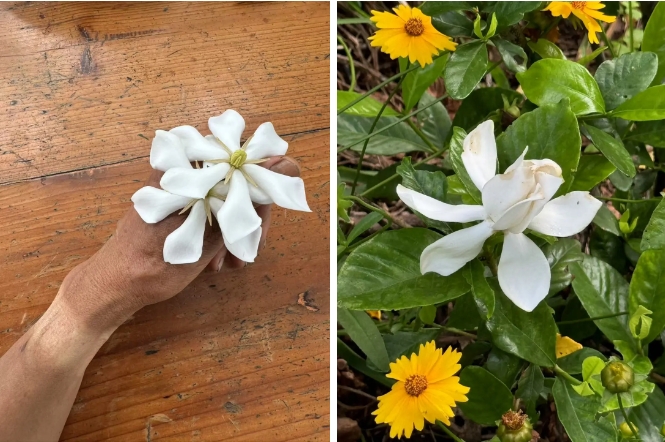
Gardenias are in first bloom in the mountain valley. My flowers have finally opened.
On 16 June, just a month ago, came the anniversary of Eren Gu. In 2025, it is the fourth.
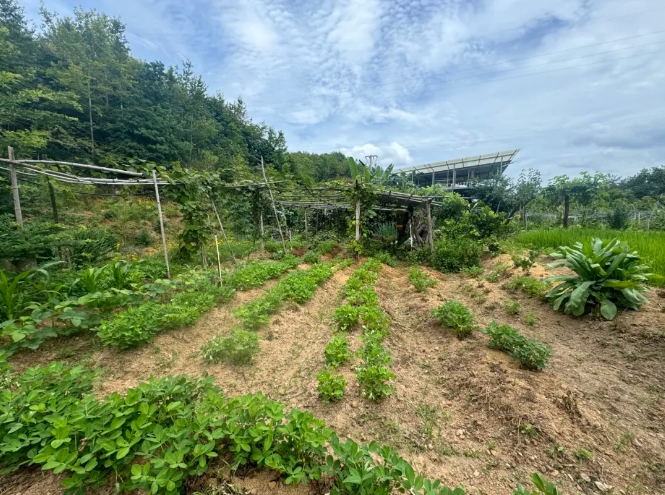
The little plot in front of the house is more than enough for self-sufficiency, while the mountain valley behind it—once no place for humans—now drifts with the scent of blossoms. I must thank these scarred hands that, over four years, hand-dug a valley and gifted me gardenias.
I. Gift Me a Gardenia
In June 2021, I arrived here with a dream of self-sufficiency, ready to clear land and farm. The first year’s central task was preparing the ground. I don’t set high standards—being able to grow something is enough; whatever it is, as long as I can eat it.
The difficulty of clearing the land exceeded anything I had imagined. It took four months, and only by autumn did I finally have a patch ready to till. I started with vegetables: the first wave was fast-growing leafy greens; the second, overwintering crops. The following spring, rice, other grains, and fruit trees would go in. Gardenias had no part in any of this. In my vision for the land, there were no gardenias—that is a novelty for people from the north.
In late spring 2022, I spotted white blossoms by the roadside on a morning jog. After giving them the full inspection—looking, sniffing, asking, and feeling—I confirmed them to be the legendary gardenia: single-petal gardenia, to be precise. Wildflowers by the roadside are a shame to leave unpicked, so I set about picking blooms and tangling with the weeds every day since.
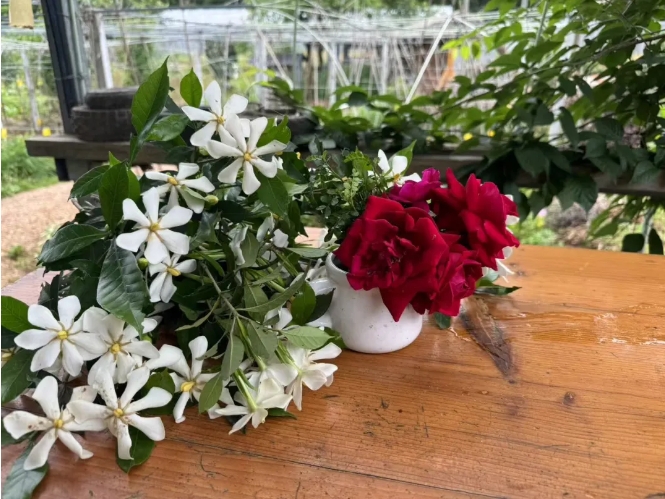
And then, following the foodie instinct of daring to dream and daring to try, I tested the gardenia on myself and confirmed that it is edible—and delicious.
Picked petals are air-dried to half-dry, rinsed and drained, then preserved in sugar to become a fresh-flower jam, which in turn becomes a gardenia fresh-flower cake—superior to the rose fresh-flower cakes commonly found on the market, sitting at the very top of the food chain in Eren Gu.
Self-sufficiency in gardenias takes at least three years, if not longer.
II. The Three-Year Rule of Self-Sufficiency
Fujian is damp and rainy, so most oilseeds that prefer dry conditions and fear moisture are out of the question. I tried sunflowers (both oil sunflower and grain sunflower), and failed; flax, also a failure; sesame—I did not even dare try. Red-skin peanut is a landmark crop here, but the oil yield is low, so I grow a variety from my home region called Xiaobasha. The 2021 land clearing dragged on so long that I missed the autumn peanut planting season. In 2022 I planted both spring and autumn crops and barely recovered my seed. By 2023 I had enough to eat and enough for planting, but still not enough for oil. There was, however, an unexpected bonus: after pulling up the autumn peanuts, I planted rapeseed as green manure. This spring, from that golden sea of flowers, I harvested an unexpected crop of rapeseed—about twenty-five kilograms—and self-sufficiency in oil is no longer a problem.
The bees went from two hives to six; honey is now more than self-sufficient. And so, salt is the only thing I still have to buy. The next small goal: self-sufficiency in gardenias.
In gardenia season in Eren Gu, petals are everywhere—on the dining table, in the bedroom, on the workbench. It looks a mess, but there is a quiet, deliberate intention underneath. Wherever I appear, a faint fragrance lingers in the air, and the tiger inside is very pleased. The mouth and the body need to be well fed; the tiger in the heart needs to recognise a flower by its scent.
Gift me a gardenia, and I will not forget myself. In a busy life racing along for the sake of the next meal, sometimes I forget the little soul beyond the mouth and the body. The gardenias in the valley are a gift to myself.
III. Capability and Boundaries
At the time I was a fourth-year “veteran farmer” — two years of rice farming in Taiwan, a year of vegetables and rice in Gutian, and a year of clearing land in Eren Gu. In Taiwan, the paddy and vegetable plots totalled roughly half an acre. Apart from machine tilling and harvesting, everything was done single-handedly, and I managed it with ease.
My Eren Gu experiment came to an end on 13 October 2022. The rice was ripe and had to be harvested, but I had been running a fever for a week and it simply would not break.
The most painful loss was not the five kilos of Ruiyan rice, but having to acknowledge the limits of my capability.
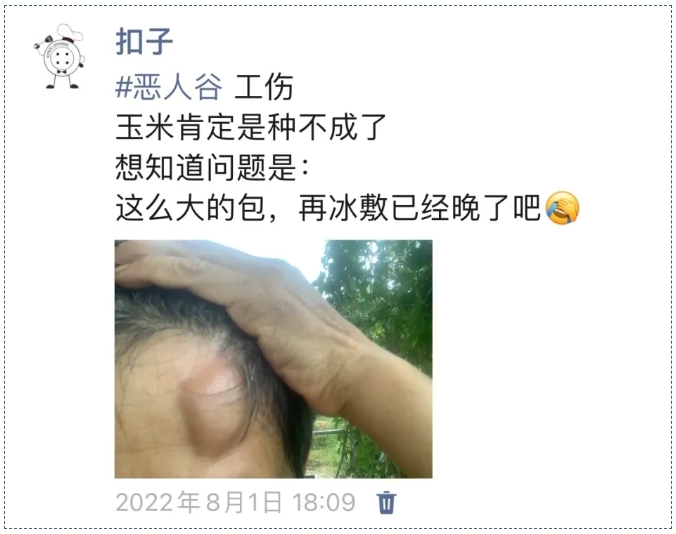
That year seemed to be an ongoing process of getting injured. Cutting my hand or bumping my head were minor things. What was genuinely dangerous was tripping while pushing a heavy flatbed cart and being sent flying sideways, or lifting a heavy door panel with all my might and having it come crashing down on my chest. Fortunately, both times I walked away unscathed. These were carts I normally had full control over, weights I could normally bear, yet time after time they slipped beyond my grasp without warning — a clear sign that my ambitions had outstripped what my body could endure.
Back then, as a novice farmer in Taiwan, I could manage everything single-handedly, thanks to the flat, fertile Lanyang Plain with its efficient, well-regulated irrigation and drainage systems, and a comprehensive surrounding support infrastructure. Eren Gu tests not only physical strength and skill but is an all-round challenge to judgement, choice, and adaptability. What I need to learn is not just the full arsenal of skills for clearing and farming — I also need to acknowledge the boundaries of my capability, to admit my own helplessness.
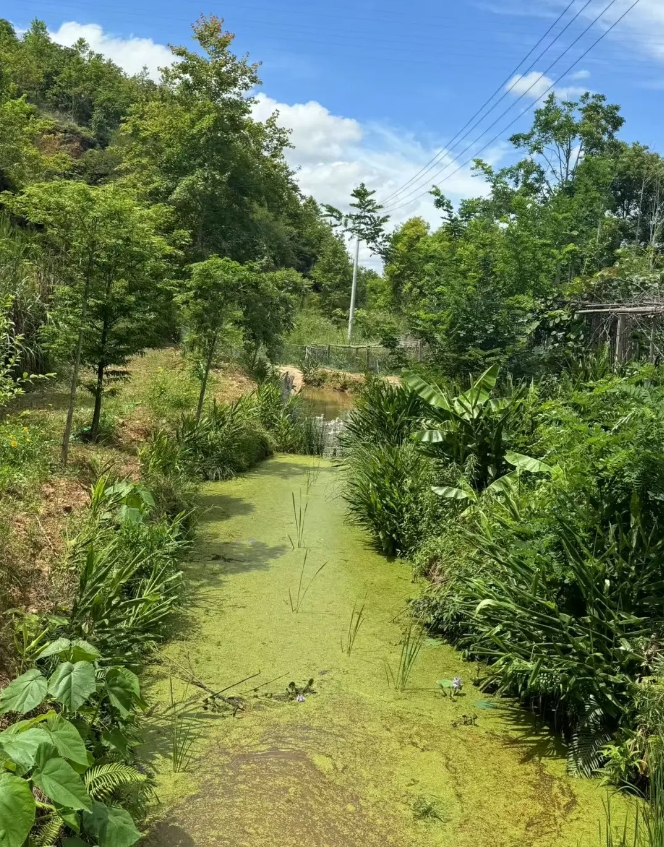
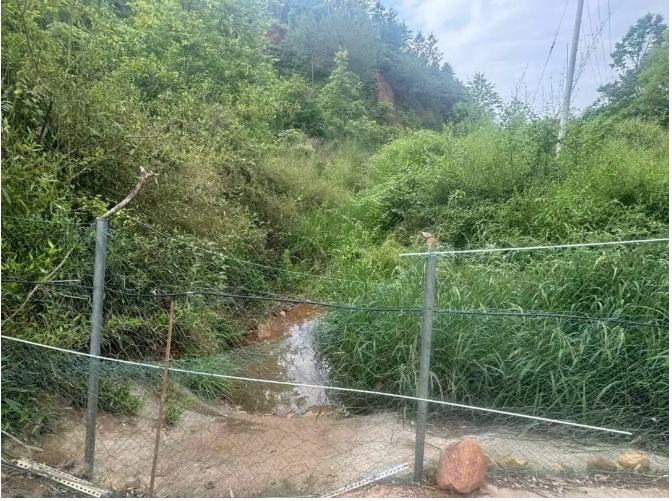
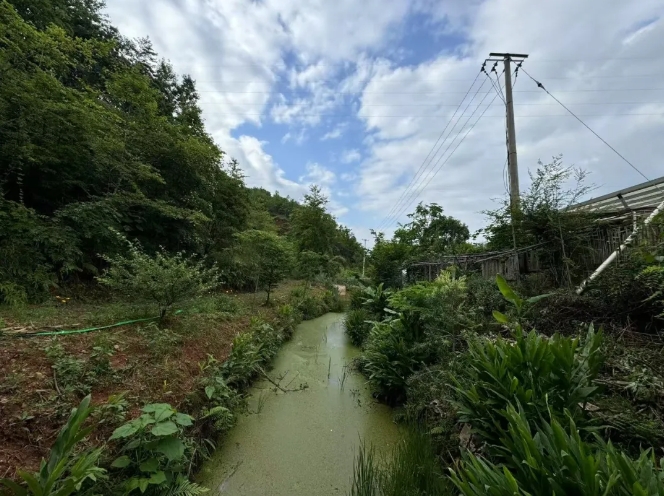
The eastern boundary of Eren Gu is a country road; the western boundary is a mountain valley. During the land-clearing and preparation period, my use of the valley was entirely passive. The dug-up bamboo roots and mixed scrub piled up in heaps, and I simply shoved them into the nearest gully to save on disposal costs. How much rubble was dug out? As the image below shows, the field ridge on the right marks the original boundary of the land. Beyond the ridge, the steep slope was gradually filled in during the clearing process, creating a strip of field about three metres wide.
The first batch of seed — thirty kilos, costing over a thousand yuan — germinated well enough, but I overlooked the weed seeds already in the soil. The lucerne could not compete with the native weeds and was simply overwhelmed to death. I pulled all the weeds and sowed more lucerne, weeding again and again, but the dominant plant here is still grass. Later I hired an excavator to dig up the silt from the bottom of the valley and spread it on the top layer. I figured the silt would be free of weed seeds, and the lucerne would finally become the dominant plant — but I miscalculated again, forgetting the wind that comes and goes without a trace, and the weed seeds it carries on its breath. Pulling weeds hurts not just the hands but the heart.
IV. A Compromise Between the Ideal and Reality
I learned from the old farmer in Taiwan that making the field ridges as vertical as possible makes weed control easier. If the valley slope could also be made steeper, it would not only help with the weeds but also serve to tame the gully as a whole.
The idea sounded good in theory: dig out the years of accumulated silt from the valley floor and use it to fill in the slope face. The slope steeper, the gully narrower, the water deeper, more field, less grass, and room to plant lotus and keep fish in the water — a win on every count. But in reality, the valley-renovation project became a bottomless pit. 2023 was Eren Gu’s “excavator year” — six excavator operators in succession.
There is an old saying: “Mould cannot be made to hold a wall.” The watery, soupy mud in the valley: the guai shou would scoop a bucket of this thin gruel and dump it on the slope, and it would immediately slide right back down the gully edge, barely clinging to the slope face as a thin layer, only to be washed away again after a single rain.
The mud refuses to hold to the wall, and I refuse to give up on this valley. So I called in the excavator again and again, only to be slapped in the face by the mud again and again. It was not until the fifth excavator operator, who first scraped the dry soil from the cliff face down into the valley, creating a soil wall about a metre wide and just over a metre high — nearly vertical — between the overhanging slope and the valley floor, then filled in the valley-floor mud into it, yielding a brand-new planting area.
Once the mud was dealt with, I built two small dams just over a metre high, creating two plantable water areas of over a hundred square metres each. Water chestnut kernels, water caltrop, water chestnut — every kind of aquatic plant, buy buy buy. I bought the most lotus roots, both starchy lotus root and crisp lotus root. I wanted to turn this mosquito-and-fly-breeding mud gully into a dream lotus pond: white lotus blossoms covering the north bank, red lotus on the south.
Alas, after planting everything and working all year, not a single lotus plant survived, nor did anything else. Perhaps it was because the soil was raw, uncultivated earth. And then the earthen dams simply would not hold water properly.
The 2023 construction season ended, at year’s end, with my acceptance of concrete dams.
I had always resisted concrete, tried to avoid hardening the landscape, to reduce the damage humans inflict on the land. At the start, both dams were earthen. Of course I knew not only that mould will not hold a wall but that yellow earth will not withstand erosion either. I had taken precautions in advance: timber stakes were driven into the dam base both vertically and laterally. The entire dam structure was layered — a layer of soil, a layer of camouflage netting, a layer of soil, a layer of netting — a sort of “mud concrete.” On the dam surface, the water-crossing section was lined with double-layer reinforced plastic sheeting; elsewhere I planted grass to anchor the loose topsoil above and reinforce the dam body below.
This idea, like the lucerne, was all rosy in theory and bone-thin in reality. Fujian is rainy; every downpour swept away the surface vegetation and washed the topsoil bare. After each rain I covered it back with soil and replanted, then came another rain, until I knelt in submission to the concrete dam.
V. Sowing Wildflowers on Purpose
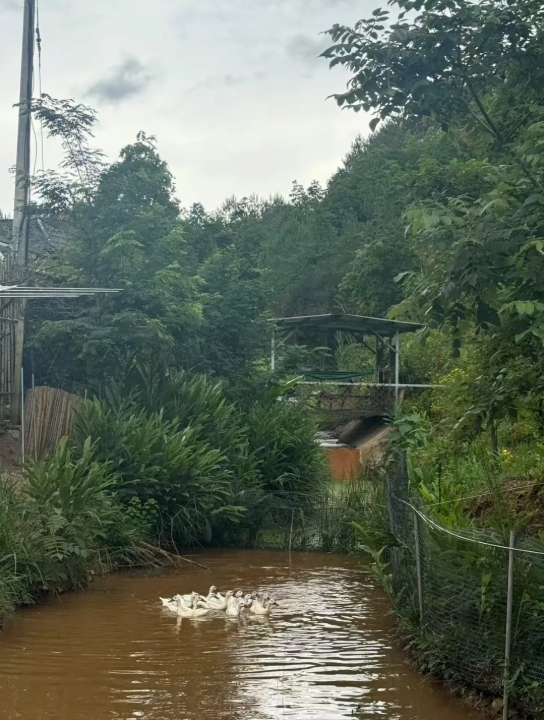
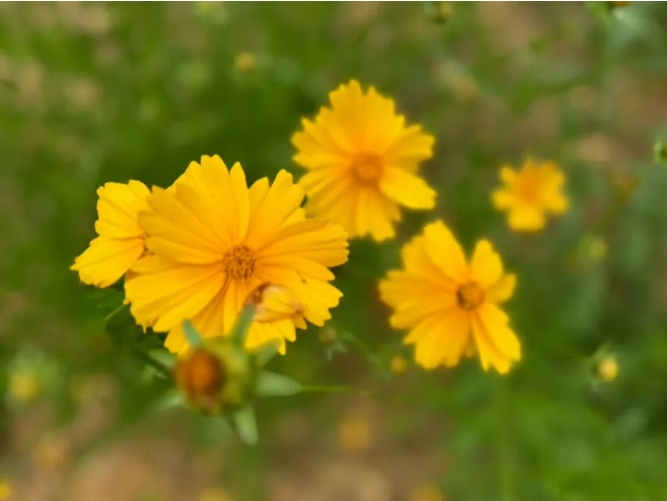
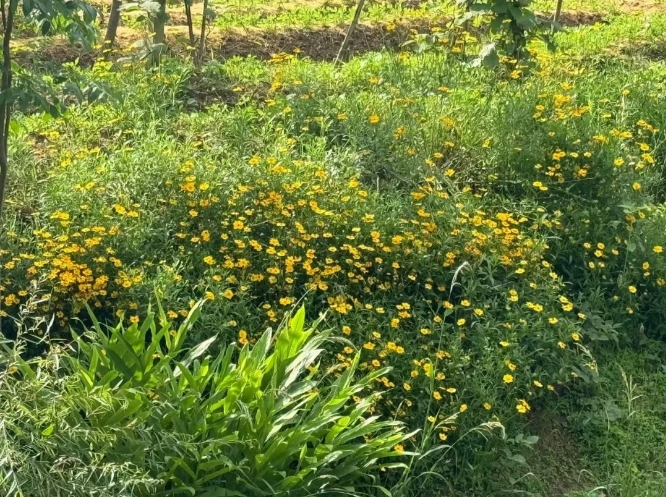
But I cannot say 2024 was a complete failure because of this. Lost the lotus, gained the wild ginger and the coreopsis.
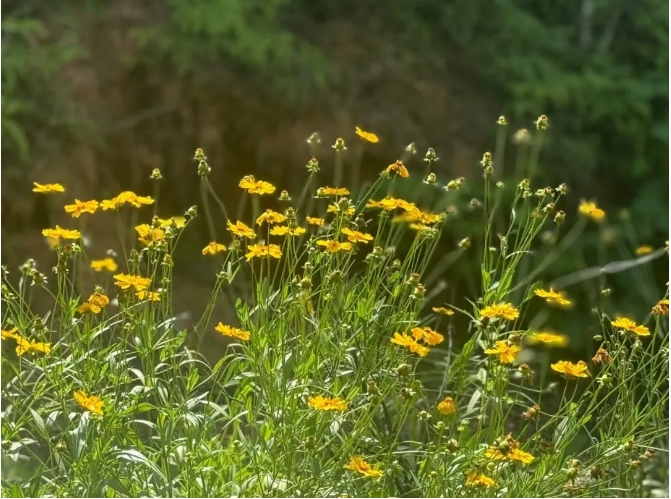
Both wild ginger and coreopsis grew wild by the roadside and cost not a penny. The wild ginger rhizomes came from a creek in the neighbouring village; the coreopsis was a chance encounter on a morning jog.
The coreopsis burns like flame, a high-intensity gold that sets the mood alight. The wild ginger is pure white and fragrant, its scent almost overwhelming. I favour every one of them equally, without ranking.
I planted the coreopsis on the slightly higher bank of the valley, level with the ground. The wild ginger likes water, so I planted a row along the waterline. They are both herbaceous perennials and are locally dominant vegetation — in the second year, a single plant grows into a clump. Now there are small patches of golden flower carpet along the valley edge. Next year the carpets will merge into one, and in three years there will be walls of wildflowers on both banks.
VI. The Heart of the Flower Hides in Its Stamen
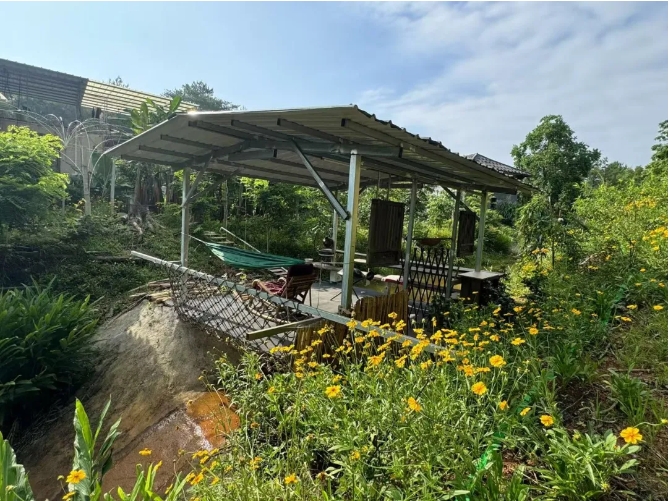
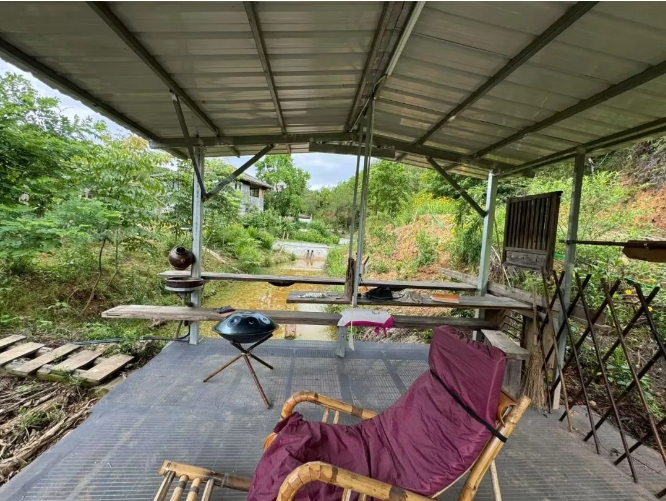
Though Eren Gu is small, the work never ends from morning to night; only at the scorching midday must I stop. Fujian summers are hot and long, and the over-water pavilion is a cool refuge from the heat. The hammock sits a little higher, facing west, where the view is filled with golden coreopsis; the rocking chair is a little lower, facing east, where the view looks straight at my gardenia slope. In the moments between work, I flop into the hammock or the rocking chair, flip through a light book or read nothing at all, think about useless questions like “why do people live” or think of nothing at all.
I love that Sartre line: “No matter what hellish circumstances we find ourselves in, I think we have the freedom to shatter them, and if someone does not shatter them, it is because they freely remain in them — that is, they freely place themselves in hell.”
Everyone has their own fate. It can be destiny — formless, invisible, impossible to fathom. It can also be life — the flesh that eats three meals a day. Settling this body of mine this way, there is fate, the invisible nudging of providence in the dark, but also the shaping by my own hands, done with my own effort.
I have spent four years building a life of shutting the door and facing the sky. The pavilion in the valley is a gift I give myself — the cherry on the cake.
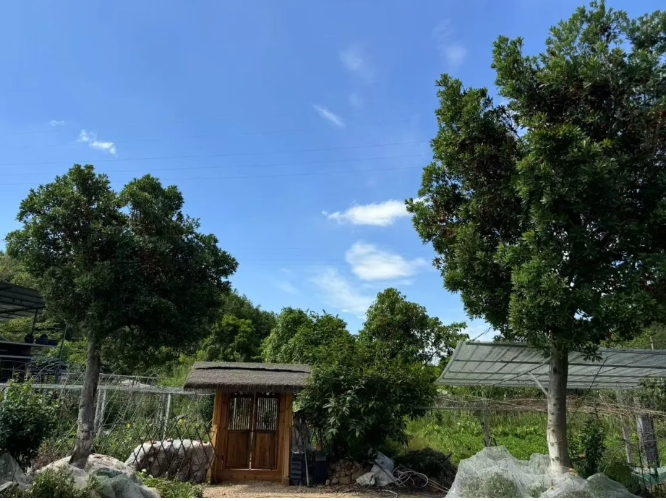
The two slopes right next to the pavilion are planted full of double-petal gardenias. The ones with large petals and large leaves are the tall ones; the ones with small petals and small leaves hug the ground and can also form a green carpet. The first gardenias I planted: first year, cuttings and seedlings; second year, transplanting; those that survive, third year, first blooms. Although there are only a handful for now, I am not in a hurry. Each year after the flowering season I prune and take cuttings, slowly, bit by bit, transplanting and expanding. I believe that one day I will have planted with my own hands a slope carpeted in blossoms.
Beauty before the eyes, fragrance in the air — ruling from a southern throne is no easy feat.
Unless otherwise credited, all images are provided by the author.
Edited by: Tianle